

11 March 1975: the coup that pushed Portugal's revolution to the left
Planes from Tancos strafed a Lisbon barracks, paratroopers argued with gunners in front of television cameras, and by evening General Spínola was in Spain. Within a week the men he had tried to stop owned Portugal's banks.
At a glance
- On 11 March 1975 officers loyal to General António de Spínola, Portugal's first president after the revolution of 25 April 1974, launched a coup from the Tancos air base.
- Aircraft and helicopters attacked the RAL 1 artillery regiment in north Lisbon shortly before midday, killing one soldier, Joaquim Carvalho Luís; the paratroopers sent to take it gave up after a parley filmed by RTP.
- Spínola fled by helicopter to the Spanish air base of Talavera la Real that afternoon with between 15 and 18 officers, by different counts, and went on to exile in Brazil.
- That night an assembly of the Armed Forces Movement, with sergeants and privates present for the first time, created the Council of the Revolution, set up by law on 14 March.
- The council nationalised the banks on 14 March and the insurers on 15 March; by the end of 1975 the state controlled the oil, electricity, steel, cement, tobacco, brewing and transport companies too.
Planes over the Encarnação
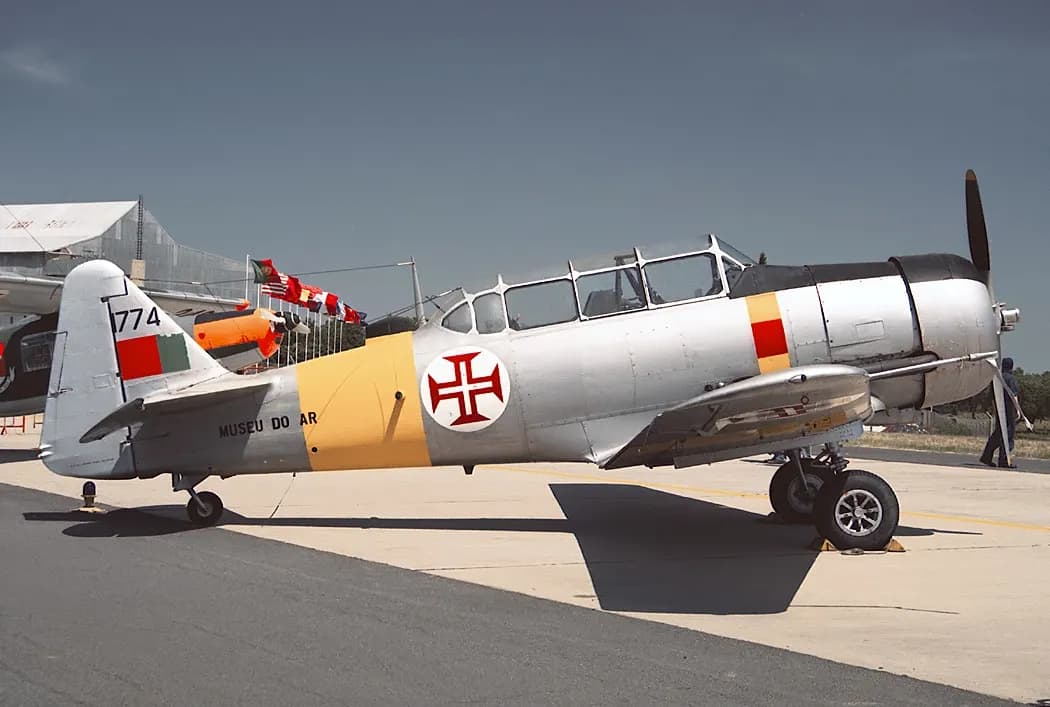
The first pair of T-6 trainers took off from the Tancos air base at 10.50 on the morning of Tuesday 11 March 1975, with helicopters behind them. Under the plan only the first two planes carried rockets; the rest were to circle over Lisbon and frighten people. Their target was the Light Artillery Regiment No. 1, RAL 1, also known as RALIS, a barracks in the Encarnação district on the northern edge of the capital.
Shortly before midday the planes opened fire on the barracks. Helicopters tried to land a group of 40 paratroopers inside the walls, but the sentries shot back, hitting one helicopter and wounding two of its crew, and the paratroopers were set down outside. One soldier of the regiment, Joaquim Carvalho Luís, was killed and several others were wounded.
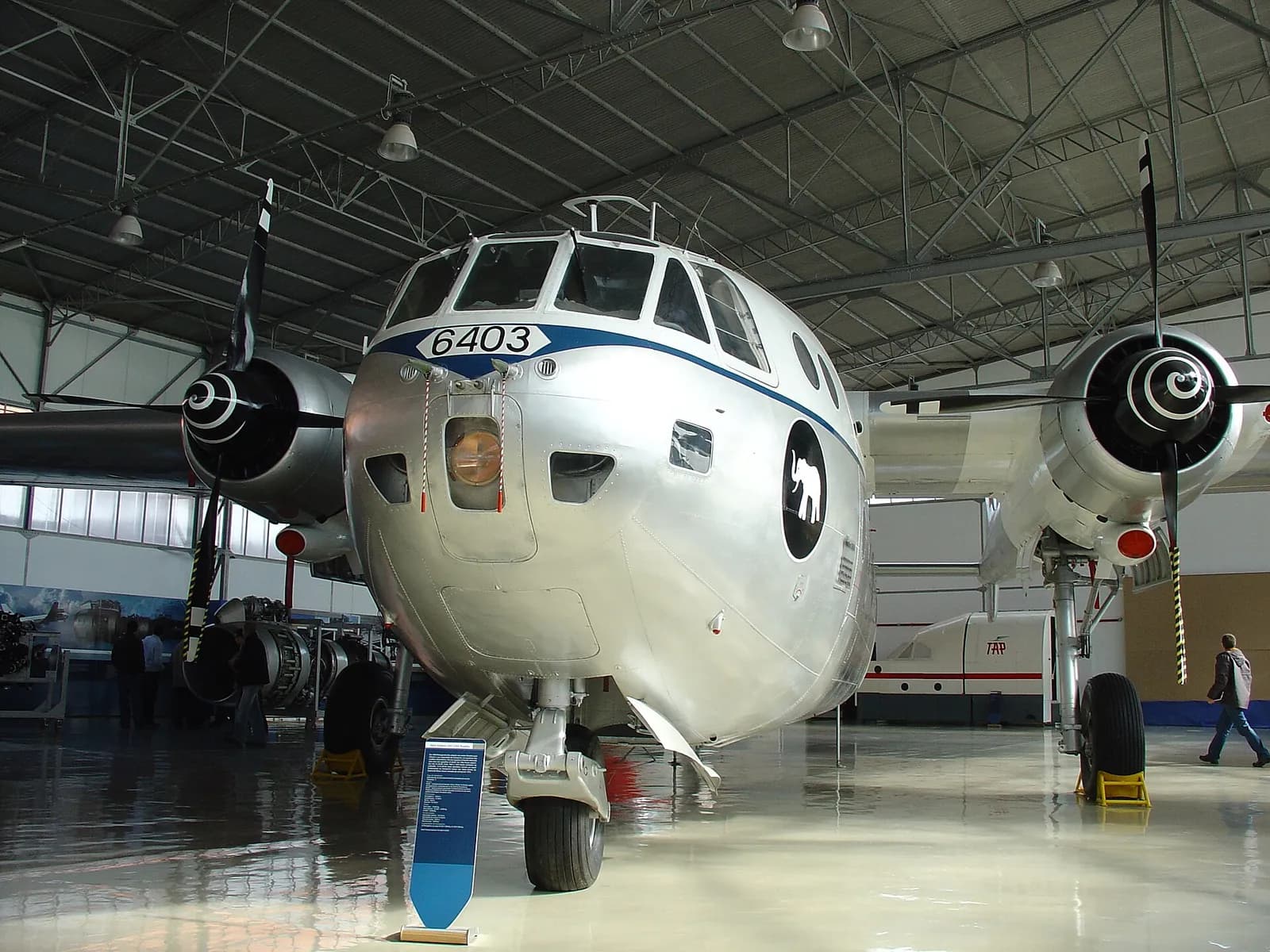
Three Nord Noratlas transport planes landed a company of paratroopers at Lisbon airport, and they surrounded the barracks. But the defenders had occupied three ten-storey blocks of flats next to it, which gave them the high ground. From about one o'clock, hundreds of civilians, thousands by some accounts, gathered in the streets around the regiment after the state radio broadcast news of the attack.
A ceasefire was arranged, and Captain Dinis de Almeida, who led the defence, walked out to talk with Captain Sebastião Martins, the paratrooper commander, in front of RTP's cameras, which had arrived minutes after the attack began. A navy officer, Costa Correia, helped to mediate. The paratroopers had been told they were restoring the purity of the original MFA, and they found themselves facing other soldiers of the same movement.
The two sides sent their senior officers to the operational command in Lisbon to find out what was going on. Soon afterwards the paratroopers were ordered back to Tancos, and the soldiers of both units began to embrace. Forty years later Dinis de Almeida told RTP that his regiment had been ready for an attack, and that it was the paratroopers who were taken by surprise.
A revolution with two camps
Less than a year earlier, on 25 April 1974, a group of junior officers calling themselves the Armed Forces Movement (MFA) had overthrown the dictatorship of Marcelo Caetano. The best-known soldier in the country, General António de Spínola, had led the Junta of National Salvation and became the first president nominated by the MFA. Early in 1974 his book Portugal e o Futuro had argued that the African wars could not be won by arms.
Spínola and the MFA soon fell out, over how to end the colonial wars and over what kind of regime should follow. He resigned on 30 September 1974, after a failed show of strength two days earlier, and moved to a house in Massamá, outside Lisbon. He went on receiving officers and politicians there and, by his own later account, encouraged a movement to get rid of the MFA's coordinating committee, which he called Marxist.
From December 1974 officers close to Spínola were preparing a “palace coup”. The plan was for a paratrooper captain guarding the Belém presidential palace to arrest the members of the Council of the Twenty they saw as communists at one of its weekly meetings, and to bring Spínola back. It was set for 20 February and kept being put off. A far-right network under General Tavares Monteiro joined in, as did exiles in Madrid who had just founded the Portuguese Liberation Army (ELP).
The MFA's leaders knew much of this. On 20 February, Vasco Lourenço described to the Council of the Twenty a plan to attack RAL 1 from the air base at Tancos. On 30 January someone on the Portuguese right had asked the United States embassy for help with a coup. The new ambassador, Frank Carlucci, warned Washington against any part in it, since nothing would please the Communist leader Álvaro Cunhal more than a failed counter-coup linked to the United States.
The “Easter massacre” and the road to Tancos
What set things moving was a rumour. On 8 March Barbieri Cardoso, one of the plotters, told General Tavares Monteiro that communist brigades were planning arrests or killings in the coming days. The next day, at a meeting in Madrid, the former governor of Angola Fernando Santos e Castro showed a photocopied list of businessmen, officers and right-wing politicians to be killed in an operation called the “Easter Massacre”, supposedly set for the night of 12 March.
On the night of 9 to 10 March the news reached Spínola's house, and the officers who brought it advised him to take refuge at Tancos, the air base where the MFA's coordinators had least influence. On the afternoon of the 10th a meeting in the Lisbon district of Lumiar counted on the paratroopers, the bases at Tancos and Montijo, army engineers and the cavalry of the Republican National Guard (GNR). Spínola went to Tancos that night.
There was no real plan when he arrived. The officers at the base found that nobody knew which units would join, and Spínola, by one officer's account, wanted to leave and had to be talked out of it. An armoured advance on Lisbon was dropped for fear of RAL 1's guns and of roadblocks. In its place came the air attack: 40 paratroopers by helicopter into the barracks, a company of 120 by Noratlas to the airport, and the cavalry school's tanks in support once fighting had started.
Units that stayed in barracks
The coup depended on other units joining once the shooting began, and almost none did. At the Practical Cavalry School (EPC), the commander told his officers at 10.45 that Spínola was at Tancos and a massacre was coming. Captain Salgueiro Maia, the hero of 25 April, refused to obey two of his superiors, and the school's tanks never left for Lisbon. Spínola was furious.
Elsewhere officers waited. Colonel Jaime Neves of the Commando battalion at Amadora put his men on alert after a visit from one of Spínola's circle, then held back when he heard that the cavalry school had stayed out. The 7th Cavalry Regiment in Ajuda declined too. In the Carmo barracks a GNR captain arrested the force's commander, General Pinto Ferreira, but a platoon sent to switch off the RTP aerial at Monsanto found COPCON troops already there.
The radio war went the same way. A party led by Alpoim Calvão, the naval officer who had led the 1970 raid on Conakry, flew to Porto Alto and wrecked the transmitter of Rádio Clube Português. But the workers of Rádio Renascença, on strike for 22 days, broke off the strike to lend the station their frequency, and the state broadcaster went on calling people into the streets.
Night of 10 to 11 March
Spínola arrives at the Tancos air base (BA3)
Officers there improvise a plan of operations.
10.45
Cavalry school officers are told of Spínola and the “massacre”
Salgueiro Maia refuses to march.
10.50
First pair of armed T-6s takes off from Tancos, followed by helicopters
11.30
Noratlas transports start leaving Tancos
They land at Lisbon airport half an hour later.
Shortly before 12.00
RAL 1 is attacked from the air
Lusa gives 11.50. Soldier Joaquim Carvalho Luís is killed.
c. 13.00
GNR rebels arrest their commander at Carmo; the state radio announces the attack
Civilians gather around RAL 1.
13.45
Calvão's party returns to Tancos after wrecking the Rádio Clube transmitter
14.00
The Lisbon bank workers' union closes the banks
14.40
The attacking force at RAL 1 gives up, according to the Torre do Tombo's account
c. 15.00
Officers sent by the army and air force chiefs reach Tancos
Spínola leaves by helicopter with his family.
c. 17.00
Spínola lands at Talavera la Real in Spain and asks for asylum
Night of 11 to 12 March
The MFA assembly meets and decides to create the Council of the Revolution
The air force's role is still the least clear. Noronha writes that all the evidence suggests its chief of staff and others in the chain of command were involved until early afternoon, when the failure at RAL 1 made them back off; a pair of F-86 jets was cleared to take off from Monte Real at 13.30 after an ambiguous phone call to him. The chief of staff was not arrested but was pushed to resign in the days that followed.
At Tancos, soldiers and conscript officers who had heard the radio surrounded the operations centre where Spínola was following events. Shortly before three o'clock officers sent by the army and air force chiefs arrived with Salgueiro Maia. Only then, Noronha writes, did Spínola grasp that the units on his list had not joined. He left by helicopter with his family.
Spain, Buenos Aires, Brazil
Spínola landed at the Spanish air base of Talavera la Real, near Badajoz, in the late afternoon. Three more helicopters brought officers involved in the coup: eighteen by the historian Luís Nuno Rodrigues's count, sixteen in the list Noronha gives, and about fifteen according to RTP. Others were arrested in Portugal or gave themselves up, and Calvão reached the border overland some days later.
General Franco's government did not want him. On 12 March it denied any part in the coup, and on 14 March Spínola, his wife and his officers were put on an Iberia flight to Brazil without the Brazilians being asked. Brazil refused to let them land, and the plane went on to Buenos Aires, where they negotiated for about seventeen hours inside the aircraft. The Chilean government of Augusto Pinochet let the Americans know it would take him if nobody else did.
Once the group signed written promises to stay out of politics, Brazil relented. Spínola reached São Paulo on the night of 15 March and moved to Rio de Janeiro on 19 March. In a letter to the Brazilian president, Ernesto Geisel, on 26 March he called the coup a “last resort to prevent the establishment of a communist regime in Portugal” (translated from Portuguese), and said he had been warned of the killing list by the Spanish general staff and the French secret services.
At the end of March the Council of the Revolution expelled him and the other officers from the armed forces and suspended their political rights for 20 years. In May 1975 he agreed to lead the Democratic Movement for the Liberation of Portugal (MDLP), founded by exiles in Spain. He flew home on 10 August 1976 and was held at the Caxias military prison for two days of questioning.
The “wild assembly” and the Council of the Revolution
On the night of 11 to 12 March the winners of the day met in an improvised assembly of the MFA. For the first time sergeants and privates took part alongside officers. RTP later broadcast the original recording of the meeting, which became known as the “wild assembly” because of calls to execute those behind the coup. Many of the accused had taken part in 25 April themselves, and who proposed the death penalty is still argued over.
Nobody was executed. The assembly instead gave the prime minister full powers to form a new government and decided to institutionalise the MFA as a permanent body with its own council. It put back the elections for the Constituent Assembly, which were held on 25 April 1975, a year to the day after the revolution. RTP's documentary sets out both views of the night: a chaotic meeting that took rash decisions, or the moment the MFA reined in its radicals and kept the vote.
Law 5/75, promulgated by President Costa Gomes on 14 March, put the decision into law. It abolished the Junta of National Salvation and the Council of State and created the Council of the Revolution, chaired by the president, together with an MFA assembly whose composition the council would decide. The council took over the old bodies' powers, the power to make laws and constituent powers until a new constitution was promulgated.
- Created by
- Law 5/75 of 14 March 1975, approved by the outgoing Council of State
- Chair
- The President of the Republic, Francisco da Costa Gomes
- Members
- The armed forces chief and deputy chief of staff, the three service chiefs, COPCON's deputy commander, the seven-man MFA coordinating committee, eight members chosen by the MFA, the former Junta members and the prime minister, if a soldier
- Powers
- Those of the Junta and the Council of State, plus law-making and constitutional powers until the new constitution
- MFA assembly
- 120 army, 60 navy and 60 air force delegates, by Noronha's account
- Abolished
- By the constitutional revision of 1982; its archive went to the Torre do Tombo on 5 January 1983
“The MFA will guarantee democratic freedoms and the holding of the elections for the Constituent Assembly.”
The same communiqué promised to honour Portugal's treaties and protect foreigners and their property. It also warned that violence, theft and other “disrespect for the democratic order” would be treated as counter-revolutionary and severely punished.
Bank clerks hold the keys
The biggest change did not come from the soldiers alone. When news of the attack on RAL 1 reached the Lisbon bank employees' union, it ordered the banks shut from two in the afternoon. Its pickets guarded the branches, took the keys to the vaults and kept the boards of directors out. They held the banks from 11 to 15 March.
“Comrades, in the face of the desperate attempt by the remnants of the fascist scum, the Lisbon union has decided: to close the banks, keeping the union structure watching over the key sectors; not to allow the boards access to the bank premises.”
Over the next days bankers and industrialists accused of backing the coup were arrested. Union delegates detained the board of the Banco Espírito Santo e Comercial de Lisboa at its head office and handed them to COPCON; the council ordered them freed on 15 March, but two were rearrested days later for “economic sabotage” and held until July. Noronha notes that the businessmen's part in the coup was never shown.
In the early hours of 14 March the Council of the Revolution nationalised every credit institution based in Portugal, except the Crédit Franco-Portugais, the Portuguese branches of the Bank of London and South America and the Banco do Brasil, and the savings and rural credit banks. The decree's preamble cited “the recent events of 11 March” and “the capacity shown by bank workers” in controlling the sector. Insurance companies followed on 15 March.
The finance minister, José da Silva Lopes, later said that once the union had taken over, the only way to reopen the banks was to remove the old boards. He resigned when the unions rejected his first list of managers. The banks reopened on Saturday 15 March, and the crowds at the counters were, one paper reported, much as on any day before a weekend.
“The big capitalists have ceased to be the kings of Portugal. The nationalisation of the banks and insurance companies is the death knell of the monopoly groups.”
Because the big banks owned large stakes in industry, nationalising them brought around 1,300 companies, wholly or partly, under indirect state control, according to the economist Eric Baklanoff; a Lusa account gives about 1,200. A wave of direct nationalisations followed. By the count of a 1979 study, 244 companies were nationalised outright between 14 March 1975 and 29 July 1976, most of them between March and May 1975.
| Date | Decree-Law | What was nationalised |
|---|---|---|
| 14 March | 132-A/75 | Commercial banks (foreign branches, savings banks and rural credit banks excepted) |
| 15 March | 135-A/75 | Insurance companies |
| 16 April | 205/75 | Oil refining (SACOR, Petrosul, SONAP, CIDLA), the railways, two shipping lines, TAP, Siderurgia Nacional and the electricity companies |
| 9 May | 221/75 | Cement and paper pulp |
| 13 May | 228/75 | Tobacco |
| 5 June | 280/75 | Public transport companies, including the Lisbon Metro |
| 3 July | 346/75 | Carris, Lisbon's buses and trams |
| 22 August | 457/75 | Heavy chemicals |
| 30 August | 474/75 | Breweries |
| 1 September | 478/75 | The shipyards of Viana do Castelo and Setenave |
Dates as given by Noronha, who lists further decrees for mining and other firms. The banks' decree and the insurers' decree are reproduced in Textos Históricos da Revolução.
Weight of non-financial state enterprises in Portugal's economy, 1979
% of national total
OECD figures quoted by Baklanoff. They cover companies at least 50 per cent state-owned and leave out the nationalised banks and insurers.
Show the data
| State enterprises' share | |
|---|---|
| Value added | 25 |
| Gross fixed investment | 52 |
| Employment | 12 |
Towards the hot summer
On 26 March Vasco Gonçalves swore in his fourth provisional government. Its four ministers without portfolio were Álvaro Cunhal, Francisco Pereira de Moura, Joaquim Magalhães Mota and Mário Soares. In April the government passed a decree setting out a new economic policy, with workers' control, the nationalisation of basic sectors and a land reform.
In the south, farm workers occupied large estates in the Alentejo and the Ribatejo. Violence ran the other way too. RTP's Memórias da Revolução counts 64 violent actions, among them assaults and arson, in July 1975 alone, most of them against left-wing parties and their members. Rodrigues writes that Spínola's MDLP was clearly involved in the attacks on party offices in the north. The crisis ended with the moderates' victory on 25 November 1975.
Why it still matters
The Constitution of 1976 wrote the nationalisations of 1975 and 1976 in as “irreversible conquests of the working classes”. The Council of the Revolution became one of the organs of sovereignty, with the job of checking that laws were constitutional, until the first revision of the constitution abolished it in 1982 and created the Constitutional Court in its place.
Undoing the economic side took longer. The revision of 1989, passed by Cavaco Silva's government with Socialist votes, dropped the irreversibility of the nationalisations and opened the way to privatising the companies taken over in 1975. Until then, the economist Jorge Braga de Macedo argued, the clause had all but frozen the public sector.
The day itself is still argued over. For Vasco Lourenço the men of 11 March were the same plotters as on 28 September; for Jaime Nogueira Pinto it was a set-up. In 2022, after Lourenço proposed honouring Spínola, left-wing figures including the historians Fernando Rosas and Manuel Loff signed an open letter against it. In July 2023 President Marcelo Rebelo de Sousa gave Spínola and Costa Gomes the Order of Liberty posthumously, but the presidency's website left it out until Público reported it in April 2024.
FAQs
What happened in Portugal on 11 March 1975?
Officers loyal to General António de Spínola tried to seize the initiative from the left wing of the Armed Forces Movement. From the Tancos air base, planes and helicopters attacked the RAL 1 artillery regiment in Lisbon and paratroopers surrounded it, but other units refused to join, and the attack ended after a televised parley. Spínola fled to Spain the same afternoon.
How many people died in the 11 March coup attempt?
One. Joaquim Carvalho Luís, a soldier at RAL 1, was killed in the air attack on the barracks, and several others were wounded, including two crew members of a helicopter hit by the defenders.
What was the Council of the Revolution?
A military body created by Law 5/75 of 14 March 1975, after the failed coup. Chaired by the president, it replaced the Junta of National Salvation and the Council of State and held law-making powers. Under the 1976 Constitution it became an organ of sovereignty that checked the constitutionality of laws. The 1982 revision abolished it.
Why were Portugal's banks nationalised in March 1975?
The nationalisation of the banks was not in the MFA's programme. On 11 March the Lisbon bank workers' union shut the banks and kept the boards out, accusing bankers of backing the coup. On 14 March the new Council of the Revolution nationalised them, citing the events of 11 March and the bank workers' control of the sector. Insurers followed the next day.
Was the 11 March coup a trap?
Nobody has proved it either way. The coup was triggered by a rumoured “Easter Massacre” list of right-wing figures, which has never been substantiated. On the right, Jaime Nogueira Pinto calls the affair a provocation and a set-up; Vasco Lourenço, of the MFA, says foreign secret services spread the rumour. The historian Ricardo Noronha says the list's origin remains a mystery and that it may have grown as it travelled to Madrid.
On the timeline
Open the timelineNearby moments from revolution and democracy (1974–1986).
The planned 'silent majority' demonstration in support of President António de Spínola is thwarted as left-wing militants and soldiers erect barricades across Lisbon and the country. The failed conservative show of strength shifted the balance of the Portuguese revolution decisively leftward, and Spínola resigned two days later.
General António de Spínola resigns as President of Portugal, two days after the failure of the 'silent majority' demonstration, citing the country's leftward drift. General Francisco da Costa Gomes succeeds him as head of state, and decolonisation accelerates under his presidency.
The Alvor Agreement is signed in the Algarve between Portugal and Angola's three liberation movements, formally ending the Angolan War of Independence and setting 11 November 1975 as independence day. The transitional government it created soon collapsed, plunging Angola into a civil war that lasted until 2002.
The failed coup of 11 March 1975
A right-wing military coup attempt led by General António de Spínola is defeated in Lisbon. The failed coup pushes the Portuguese Revolution sharply to the left, leading to the creation of the Council of the Revolution and the nationalisation of banks and major industries.
On the revolution's first anniversary Portugal elects its Constituent Assembly, the first election in its history held by truly universal suffrage. Turnout reaches 91.7%. The Socialist Party of Mário Soares wins the most votes and 116 of the 250 seats, a key step in Portugal's transition to democracy.
The workers' committee of the Lisbon daily 'República', led by its print workers, ousts the Socialist-leaning editors and takes over the paper. The 'República Affair' that followed led the Socialists to quit the provisional government in July.
Portugal's Constituent Assembly — 250 deputies chosen on 25 April 1975 in the country's first free elections with universal suffrage — holds its opening session in São Bento. Given ninety days to write a new constitution, it needs ten tumultuous months of revolution; the Constitution it approves on 2 April 1976 is still in force.
Coming up in history
All long reads
13 sources
Archives, scholarship and reporting this article was checked against.
- 1
“A Banca ao Serviço do Povo”: Política e Economia Durante o PREC (1974-75) (Ricardo Noronha)Imprensa de História Contemporânea, NOVA FCSH, 2018 (open access)
- 2
António de Spínola no exílio: a estadia no Brasil (Luís Nuno Rodrigues)História (São Paulo), vol. 33, no. 1, 2014, pp. 66-96
- 3
Conselho da Revolução, in Textos Históricos da Revolução (organised by Orlando Neves, 1975)Marxists Internet Archive, Portuguese section
- 4
O Conselho da Revolução (Maria do Céu Filipe)Arquivo Nacional Torre do Tombo, 2014
- 5
Breve experiência de socialismo em Portugal: o sector das empresas estatais (Eric N. Baklanoff)Análise Social, vol. XXXI (138), 1996, pp. 925-947
- 6A Gravação Secreta da Assembleia “Selvagem” (Jacinto Godinho)RTP Play, 2019
- 7
Em 1975, o ‘Verão Quente’ começou com uma “intentona” a 11 de marçoExecutive Digest with Lusa, 11 March 2025
- 811 de Março, o dia de todas as tensões que só se resolveu a 25 de Novembro (Vítor Moita Cordeiro)Diário de Notícias, 10 March 2025
- 9O 11 de Março 40 anos depois: entrevista com Dinis de AlmeidaRTP Notícias, 2015
- 10Marcelo Rebelo de Sousa condecorou Spínola sem divulgar no site da Presidência. Marcelo admite falhaObservador, 10 April 2024
- 11
IV Governo Provisório: composiçãoGoverno de Portugal, arquivo histórico
- 12
O início do Verão QuenteRTP and Instituto de História Contemporânea (NOVA FCSH), Memórias da Revolução
- 13Nos 40 anos da Constituição portuguesa, já aprovadas sete revisões ao textoObservador, 1 April 2016
Image credits
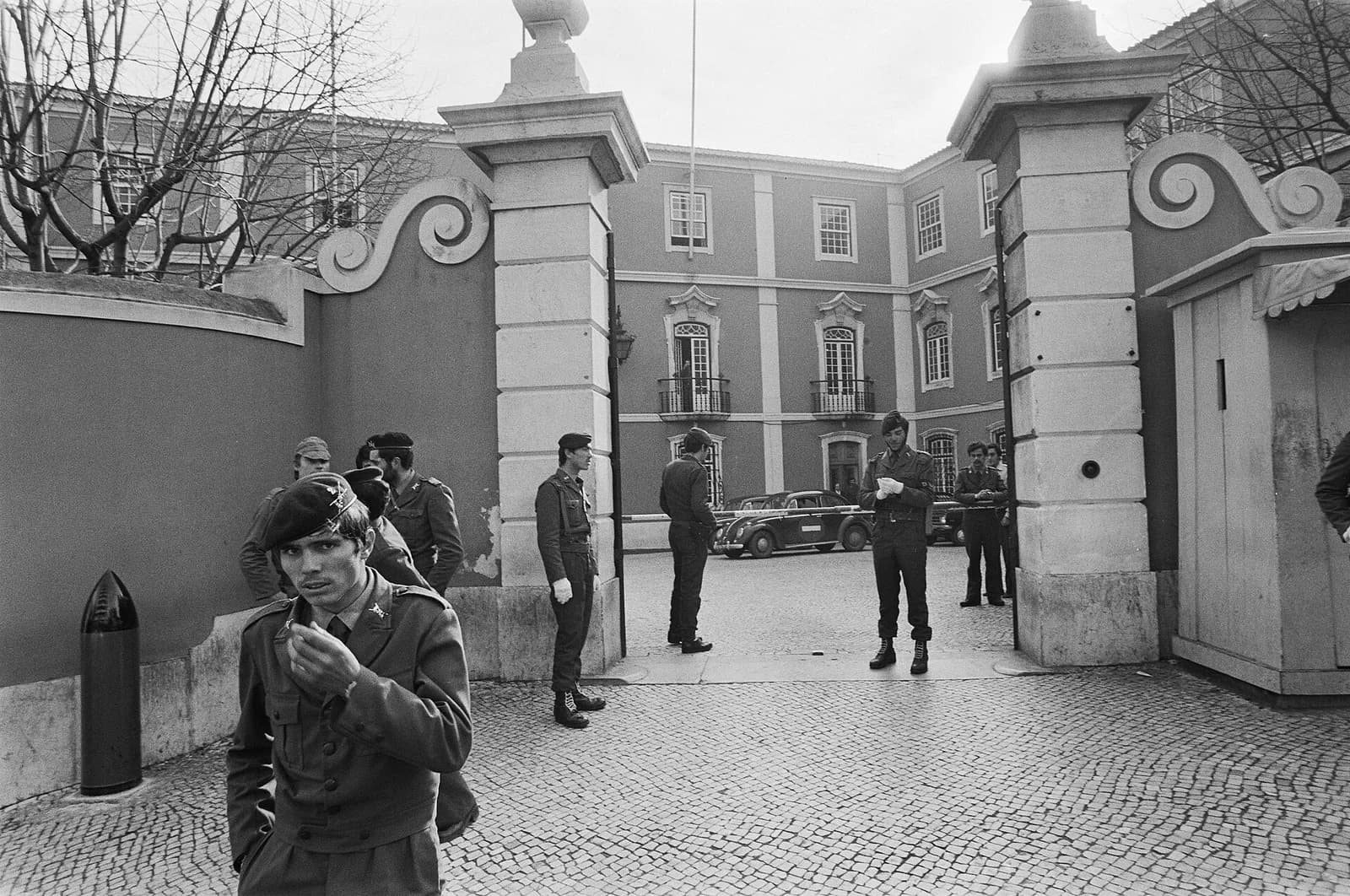
- Soldiers at the entrance to a building of the Armed Forces Movement (MFA), photographed by Rob Mieremet for the Dutch agency Anefo in February 1975 (the archive dates it 11 February), a month before the coup attempt. Rob Mieremet / Anefo, CC0, via Wikimedia Commons.
- A Harvard Mk 4, the Canadian-built version of the North American T-6 trainer, in Portuguese Air Force markings at Beja in 1996. T-6s from Tancos led the attack on RAL 1. Pedro Aragão, CC BY-SA 3.0, via Wikimedia Commons.
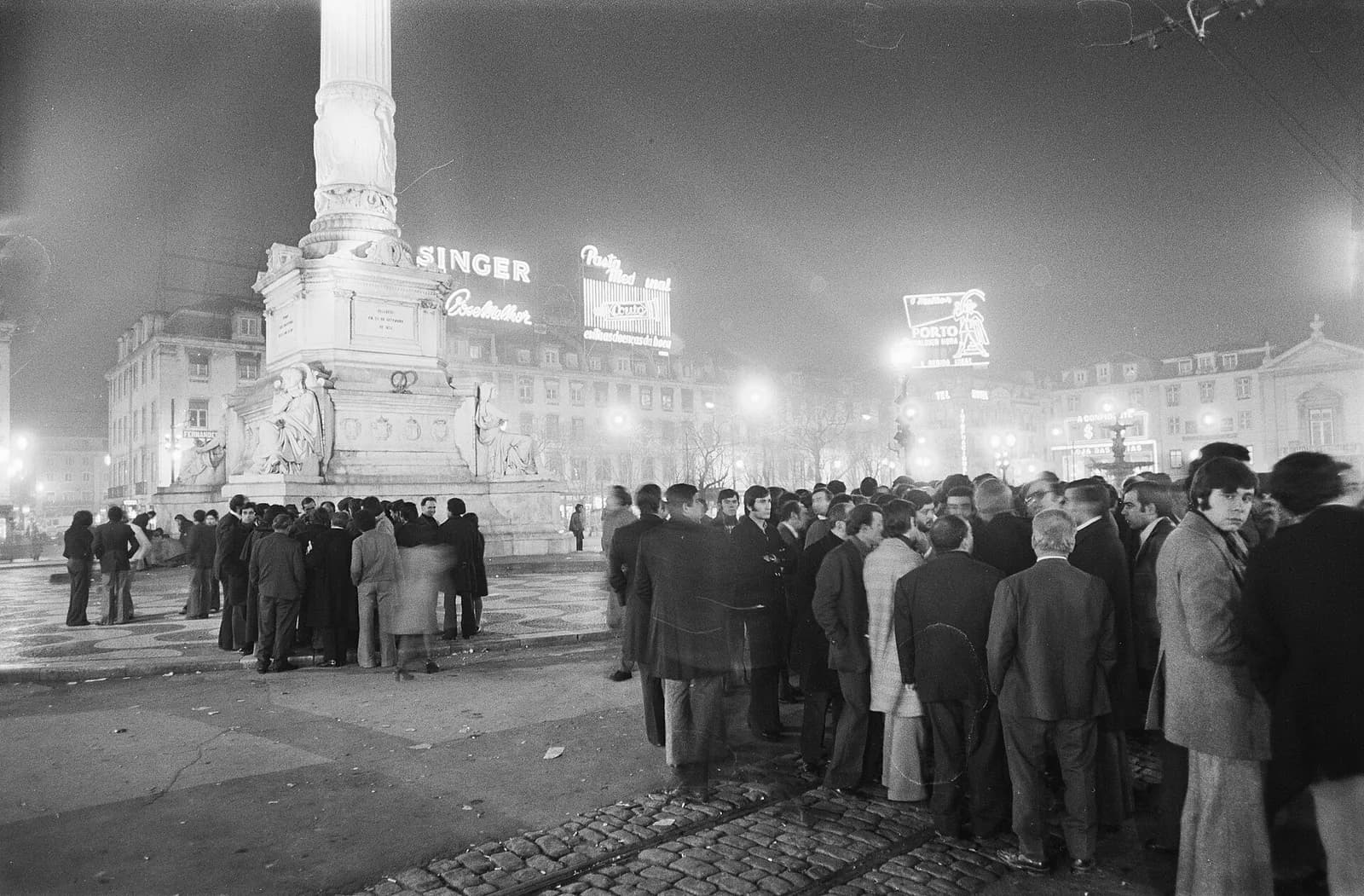
- A night-time crowd in Rossio square, Lisbon, early in 1975. The Anefo archive describes it as a demonstration on 1 February but dates the photographer's reportage 11 February. Rob Mieremet / Anefo, CC0, via Wikimedia Commons.
- A Nord Noratlas of the Portuguese Air Force, now at the Museu do Ar, photographed in 2010. Three Noratlas carried a company of paratroopers from Tancos to Lisbon airport on 11 March 1975. Ricardo Reis from Lisboa, Portugal, CC BY-SA 2.0, via Wikimedia Commons.
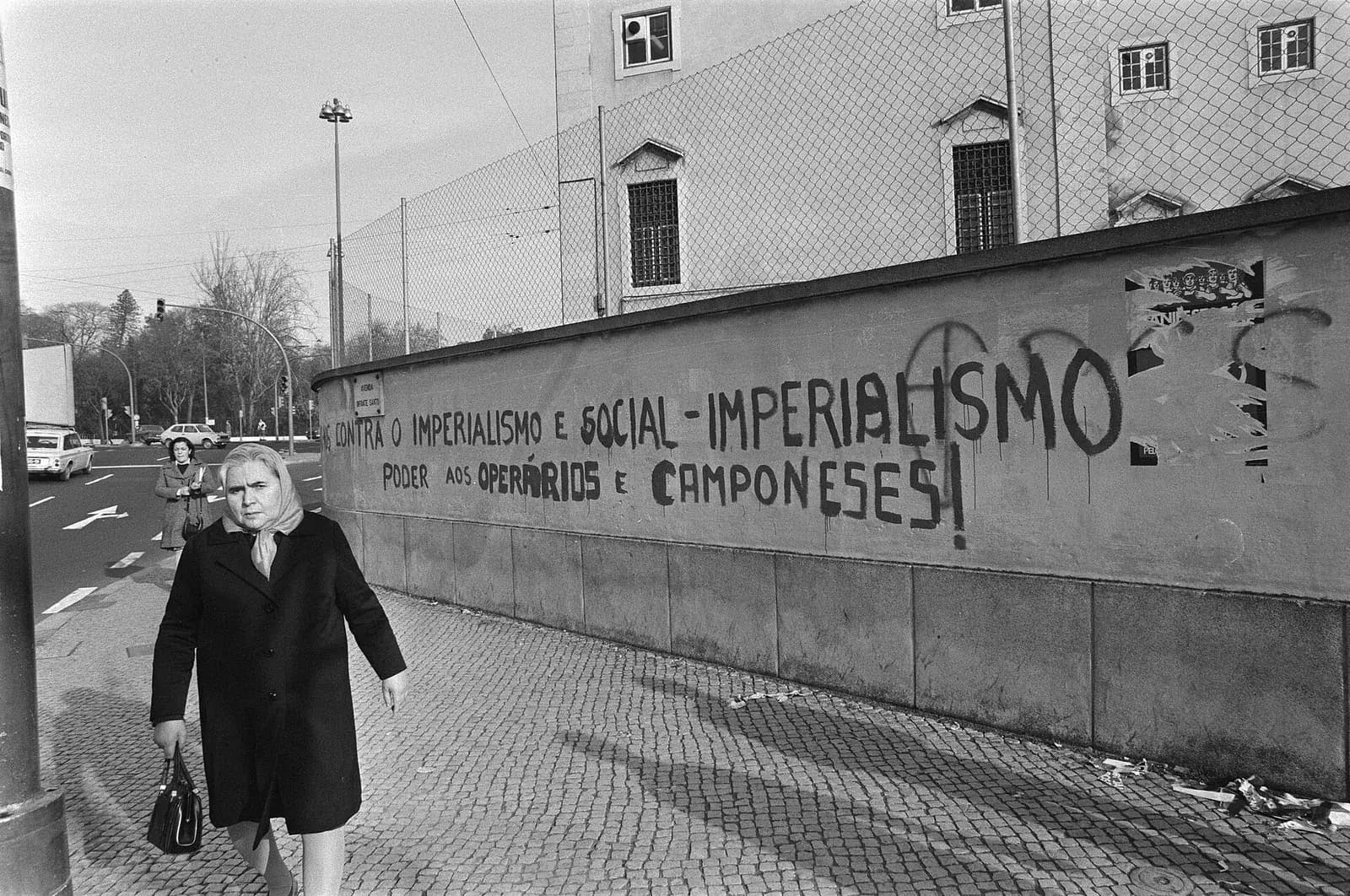
- “Against imperialism and social-imperialism. Power to the workers and peasants!”: a far-left slogan on a Lisbon wall, photographed by Rob Mieremet for Anefo in February 1975 (archive date 11 February). Rob Mieremet / Anefo, CC0, via Wikimedia Commons.