

Celeste Rodrigues: the fado singer who sang for 73 years
Born in Fundão on 14 March 1923, Celeste Rodrigues lived her whole career beside the most famous fado singer of all, her sister Amália. She kept to her own style, ran a fado house, sang across four continents and was still on stage at 95.
At a glance
- Maria Celeste Rebordão Rodrigues was born in Fundão, in the inland province of Beira Baixa, on 14 March 1923, three years after her sister Amália.
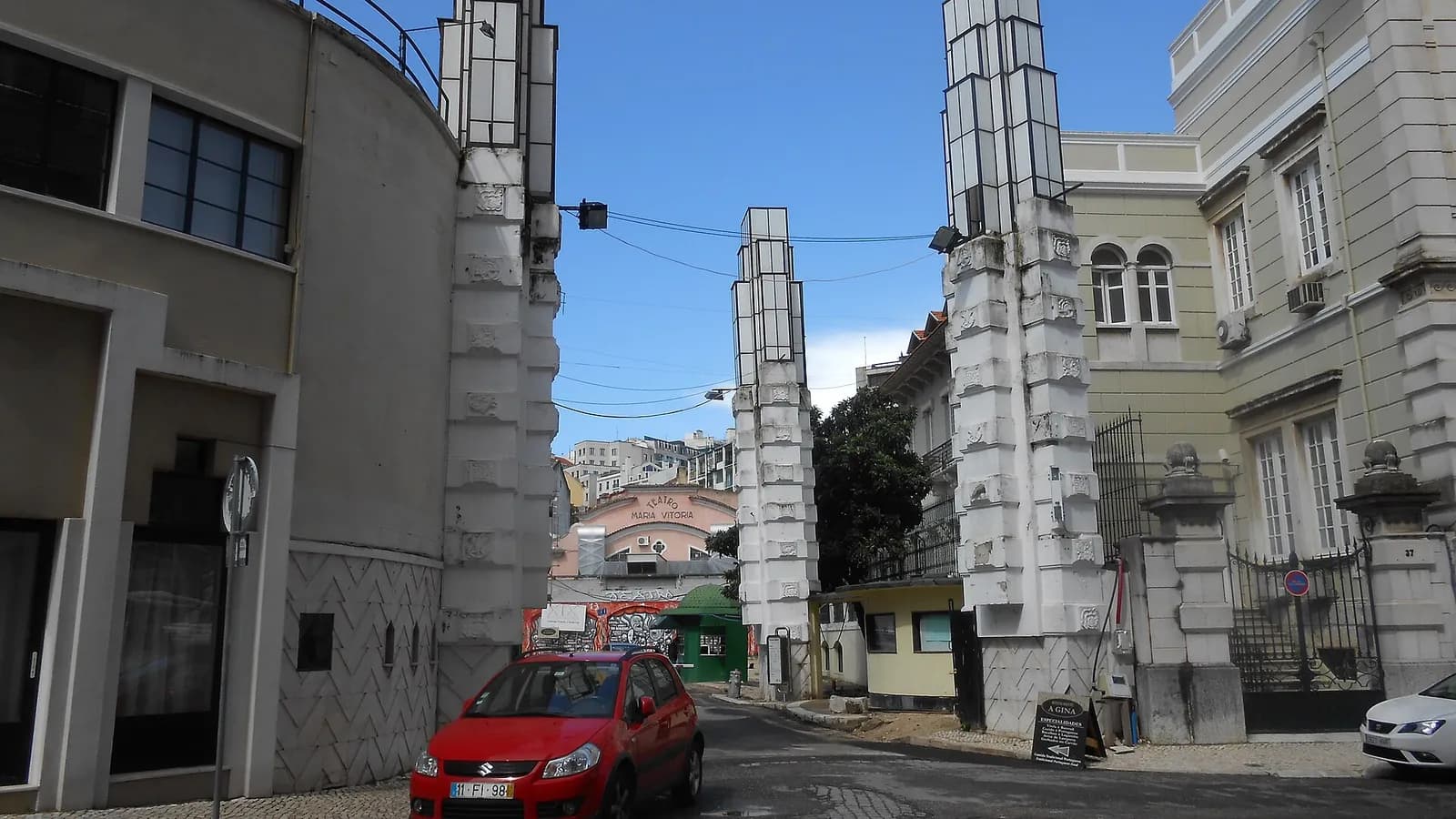
- She made her professional debut in 1945 at the Casablanca, a Parque Mayer theatre that is now the Teatro ABC, and left for Brazil two months later with a touring company in which Amália was the star.
- From 1957 she and her husband owned the Lisbon fado house A Viela for four years, and she sang for at least a decade each at the Parreirinha de Alfama and the Taverna do Embuçado.
- Her best-selling record was “Olha a Mala”, and she made around 60 discs in all; she sang in Brazil, Africa, Europe and the United States.
- She gave her last concert in Lisbon on 11 May 2018 and died on 1 August 2018, aged 95, after 73 years as a professional fado singer.
A push onto the stage
In 1945 Celeste Rodrigues was 22 and had never meant to sing in public. On the night of her debut at the Casablanca, a theatre in Lisbon's Parque Mayer, someone had to give her a push to get her onto the stage. The house was full, and her elder sister Amália, the country's best-paid fado singer since 1940, was her madrinha, or sponsor, for the night.
It had started by accident. The Rodrigues sisters were regulars at the Adega Mesquita, a tavern in the Bairro Alto where fado was sung over Saturday lunch. One day Celeste overcame her shyness and joined a desgarrada, a sung exchange of improvised verses, and “sang a quatrain”. In the room was José Miguel, Amália's impresario, who owned the Casablanca and several fado houses. He hired her and insisted she turn professional.
“My dream wasn't to be an artist. I loved singing among the fado singers, not in public, but it happened.”
She went on singing for 73 years. When she gave her last Lisbon concert, at the Teatro Tivoli in May 2018, she was 95 and the longest-serving fado singer still at work.
From Fundão to the Alcântara docks
Maria Celeste Rebordão Rodrigues was born on 14 March 1923 in Fundão, a town in Beira Baixa, a poor inland province. One DN obituary places the birth in Alpedrinha, a village in the same municipality. Portugal was then a republic, proclaimed in 1910, whose governments rose and fell until a military coup ended the regime in 1926.
Her father was a shoemaker who played the cornet, the saxophone and the trumpet. Her mother sang the folk songs of the Beira and never got used to leaving it. There were ten children, five boys and five girls, and the parents saw five of them die. Amália was the eldest girl. By 2018 Celeste was the last of the ten still alive.
Amália, born in Lisbon in 1920, had been left there with her grandparents when her parents went back to Fundão. When Celeste was five, the rest of the family came to the capital, first to Campolide, where the father had a contract with a local recreational society, and then to Alcântara, the docks district in the west of the city. Amália's foundation gives a later date, 1934, for the parents' return and for Amália moving in with them. Either way, the sisters met almost as strangers.
“We didn't remember each other, only from photographs.”
From then on they were rarely apart. Celeste went to the primary school at the Tapada and remembered herself as a tomboy, mischievous but shy. She started work at nine, against her parents' wishes, in a cannery in Alcântara and then in a cake factory in Santos. With her mother she sold fruit sent from Fundão at the Ribeira market, and with Amália she worked at a stall selling regional crafts on the Rocha Conde de Óbidos quay, a job she got because she spoke some English, learned from a friend of her father's. Like her sister, she had only primary schooling.
Music was always in the house. “It was my mother who woke our interest in singing,” she said, and her father, grandfather and great-grandfather were all musicians. She was seven or eight when she first heard fado, from blind street singers with an accordion or a guitar, and on gramophones.
- Full name
- Maria Celeste Rebordão Rodrigues
- Born
- 14 March 1923, Fundão (Beira Baixa); one obituary says Alpedrinha, in the same municipality
- Family
- One of ten children, five of whom died before their parents; younger sister of Amália Rodrigues
- Debut
- 1945, the Casablanca (now the Teatro ABC), Parque Mayer, Lisbon
- Best-selling record
- “Olha a Mala”, by Manuel Casimiro
- Last concert
- 11 May 2018, Teatro Tivoli, Lisbon
- Died
- 1 August 2018, Lisbon, aged 95
Brazil and the fado houses
Two months after her debut she joined a theatre company bound for Brazil, where Amália was the star. They played the operetta Rosa Cantadeira and a revue, and in Rio de Janeiro she sang with Amália at the Urca casino. The tour lasted about a year. All her life Celeste was offered parts in plays and turned them down.
Back in Lisbon she joined the casts of the Café Latino, the Marialvas and the Urca at the Feira Popular, the city's fun fair. She moved from the Café Luso to the Adega Mesquita, where she stayed four years, and then sang at the Tipóia and the Adega Machado. In the early 1950s she went back to Brazil to sing on radio and television and at Fado, a restaurant run by the Portuguese singer Tony de Matos.
| Fado house | Neighbourhood | When | Note |
|---|---|---|---|
| Casablanca (now Teatro ABC) | Parque Mayer | 1945 | Debut, hired by José Miguel |
| Café Latino, Marialvas, Urca, Luso | The Urca was at the Feira Popular | From about 1946 | After the first Brazil tour |
| Adega Mesquita | Bairro Alto | Four years | Where José Miguel first heard her |
| Tipóia, Adega Machado | Not given | Before the early 1950s | |
| A Viela | Not given | 1957 to about 1961 | Owned with her husband, Varela Silva |
| Parreirinha de Alfama | Alfama | From the early 1960s; more than 10 years, or 12 | Argentina Santos's house |
| Taverna do Embuçado | Not given | 10 or 25 years, by different accounts | Invited by João Ferreira-Rosa |
| Bacalhau de Molho, Casa de Linhares | Not given | Later years | |
| Café Luso, Parreirinha de Alfama, Mesa de Frades | Bairro Alto; Alfama | Last years | Among her last regular stages |
The Museu do Fado gives more than ten years at the Parreirinha and 25 at the Embuçado; Diário de Notícias gives 12 and ten. The Museu do Fado names Celeste as owner of A Viela; Observador and DN say the couple ran it together. Neighbourhoods are given only where a cited source names them.
A Viela, early television and “Olha a Mala”
In 1953, at 30, she married the actor Varela Silva, after an engagement to the horseman bullfighter José Casimiro had broken off. (One DN obituary puts her age at the wedding at 32.) They had two daughters. In January 1957 she and her husband took over A Viela, a fado restaurant where poets, intellectuals and singers sat late into the night. She gave it up four years later, admitting she had no “knack for business”.
Portuguese television arrived in the same years. RTP ran trial broadcasts from a studio at the Feira Popular from 4 September 1956 and began regular broadcasting from its studios in Lumiar on 7 March 1957. Celeste told the magazine Álbum da Canção in 1967 that she was among the first to sing in the Feira Popular trials, and the first to face the cameras when Lumiar moved from experiments to regular programmes.
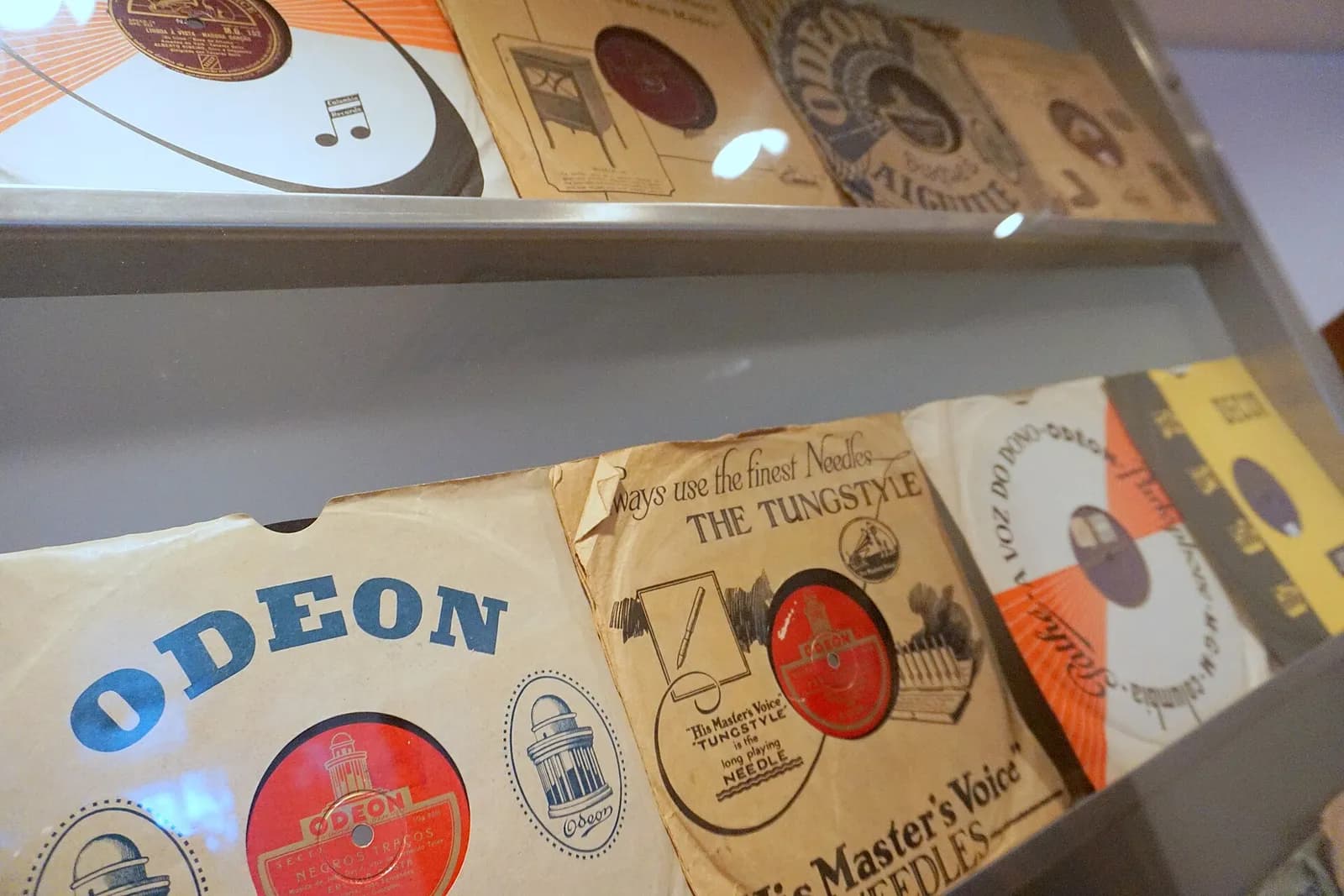
In the 1950s she also recorded “Olha a Mala”, a song by Manuel Casimiro that sold for more than a decade and became the biggest seller of her career. “I stopped being Amália's sister,” she said. Her repertoire grew to include “A Lenda das Algas”, “Saudade Vai-te Embora”, “O Meu Xaile”, with words by her husband, and “Fado das Queixas”. The Museu do Fado counts almost 60 records; Diário de Notícias says more than 60.
She was also travelling. A 1956 interview with the newspaper A Voz de Portugal listed Brazil, Spain, the Belgian Congo, British colonies in Africa, Angola, Mozambique and the Portuguese islands. The Museu do Fado says she was invited to record for the BBC programme Panorama in London, at the broadcaster Richard Dimbleby's invitation, and for The Ed Sullivan Show on the American network CBS. No other source we found records either appearance.
Alfama, the revolution and Washington
In the early 1960s she joined the cast of the Parreirinha de Alfama, the house of another veteran singer, Argentina Santos. She stayed more than ten years. Then João Ferreira-Rosa invited her to join the cast of the Taverna do Embuçado. The Museu do Fado says she sang there for 25 years; a DN obituary gives ten.
Years at four Lisbon fado houses
years
Figures from the Museu do Fado's biography. For the Parreirinha it says “more than 10 years”, plotted here as 10, the minimum. Diário de Notícias gives 12 years at the Parreirinha and ten at the Embuçado, so the Embuçado figure is uncertain.
Show the data
| Museu do Fado figures | |
|---|---|
| Adega Mesquita | 4 |
| A Viela (as owner) | 4 |
| Parreirinha de Alfama (over 10) | 10 |
| Taverna do Embuçado | 25 |
The Carnation Revolution of 25 April 1974, the military coup that ended the dictatorship, was followed by changes in her private life. She spent six months in Canada and divorced Varela Silva after about 20 years of marriage.
At some point, the Museu do Fado says, she went to live in Washington, for family reasons, with her daughters and grandchildren, and kept singing in fado houses whenever she could. It gives no dates. Later Lisbon stages included the Bacalhau de Molho and the Casa de Linhares.
Her own fado
Amália became a world star with fado shaped as popular song. Celeste stayed with the traditional fado of the Lisbon taverns and neighbourhoods, the fado castiço, and with the songs of the Beira she had learned as a child. The film director Bruno de Almeida, whom Amália introduced to her sister at the end of the 1970s, heard the difference in their temperaments.
“Amália was very outgoing and she was shyer. That shows a lot in Celeste's way of singing, more restrained, more turned inwards.”
She was asked about her sister all her life, and her answers hardly changed. In April 2018, weeks before her last Lisbon concert, she told Diário de Notícias that the two were alike in many things but felt differently.
“I have my fado, she had hers. Hers was very good, but mine isn't so bad either. We are different.”
She said she did not understand fado so much as feel it. “For me the poem is very important,” she told Lusa. “And then I hear the trill of the guitars and it happens.” Argentina Santos, who worked beside her for years, said she had “a little music box in her throat”.
Late fame
Recognition came again when she was past 80. In 2005 the director Ricardo Pais, then head of the Teatro Nacional São João in Porto, cast her in Cabelo Branco é Saudade, a show with three other fado voices: Argentina Santos, Alcindo de Carvalho and Ricardo Ribeiro. It toured Europe.
In 2007 the album Fado Celeste, produced by Luís Varatojo and released in the Netherlands, mixed traditional fados with new lyrics by Hélder Moutinho, José Luís Gordo and Tiago Torres da Silva. In 2008 she toured the Netherlands, including the Concertgebouw in Amsterdam. Her grandson, the film-maker Diogo Varela Silva, made a documentary about her, Fado Celeste, released in 2010.
She took up painting late, at 78 by DN's account and after 80 by the Museu do Fado's, and in July 2017 showed her work in an exhibition called Cores do Fado, at the urging of her friend the Mozambican painter Roberto Chichorro. She slept little, she used to say, because she “didn't want to lose any of life's time”.
| Year | Honour or tribute |
|---|---|
| 2007 | Tribute from the Associação Portuguesa dos Amigos do Fado at the Museu do Fado, in October |
| 2010 | Silver Medal of the City of Lisbon, presented at the Cinema São Jorge in the year the documentary Fado Celeste premiered |
| 2012 | Commander of the Order of Prince Henry (Ordem do Infante D. Henrique), from President Cavaco Silva in June |
| 2012 | Gold Medal of the City of Lisbon |
| 2013 | 90th-birthday tribute at the Museu do Fado, with a film by Bruno de Almeida and a CD and DVD |
| 2015 | A new cut of the documentary, Celeste, opens the Heart Beat section of the Doclisboa festival for her 70 years on stage |
| 2019 | Tribute concert Fado Celeste at the Centro Cultural de Belém, 21 March, directed by Diogo Varela Silva |
| 2023 | Centenary exhibition Celeste at the Museu do Fado, opened 14 March |
The 2012 Lisbon gold medal is reported by Observador only.
In mid-December 2017 Madonna, who had moved to Lisbon, heard her at the Mesa de Frades, a fado house in Alfama. The two sang Elvis Presley's “Can't Help Falling in Love” together, and Madonna posted the video on Instagram, calling her a living legend. Celeste, who said she preferred David Bowie, then flew to New York at 94 with her grandson and her great-grandson, the guitarist Gaspar Varela, to sing at Madonna's New Year's Eve party.
She treated the attention lightly. “She was nice to like my voice and that was all,” she told DN. Her last two concerts were full: the Town Hall in New York on 7 April 2018, on a fado festival bill with Carlos do Carmo, and the Teatro Tivoli in Lisbon on 11 May, a celebration of 73 years on stage.
Death and memory
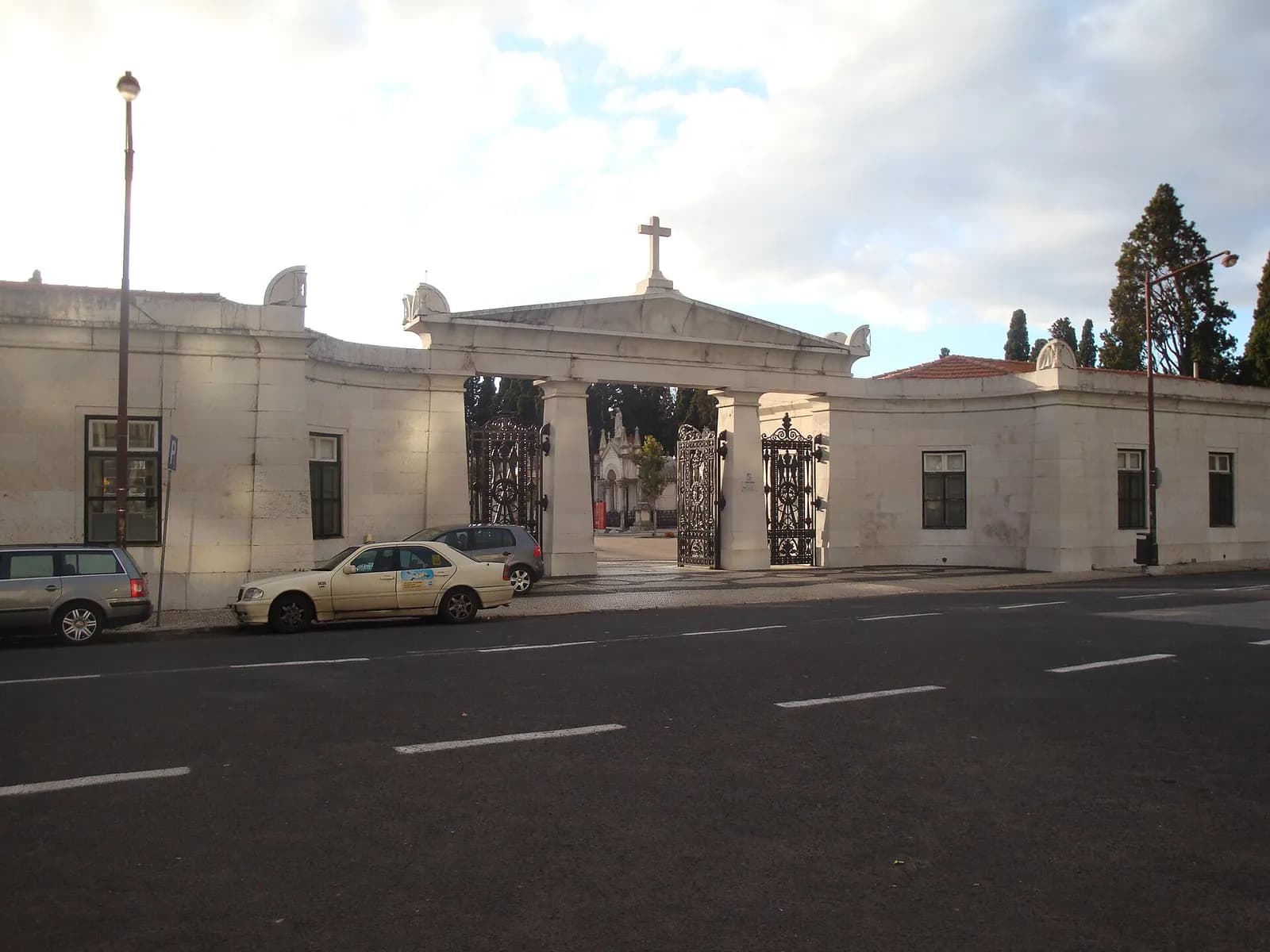
Celeste Rodrigues died in Lisbon on Wednesday 1 August 2018, aged 95. Her grandson Diogo announced it on Facebook, calling her “the foundation stone of our family”. The Ministry of Culture said she had left her voice tied to “traditional fado, street fado and its roots”. She was buried in the Talhão dos Artistas, the artists' plot of the Prazeres cemetery.
“A unique voice, distinct from her mother's voice, distinct from the voice of her sister Amália, distinct in its independence, autonomy and above all joy.”
Lisbon City Council said that Lisbon had been the city of her life, although she was born in Fundão. Madonna posted a video of her singing “A Noite do Meu Bem” and wrote that she had been lucky to meet, hear and sing with her.
On 14 March 2023, the day she would have turned 100, the Museu do Fado opened a centenary exhibition curated by Diogo Varela Silva, with her records, trophies and awards, stage props, press cuttings, paintings and films. A book published with it gave access to two unreleased recordings she made at 95, “Se Alguém me Procurar” and “A Noite do Meu Bem”. Gaspar Varela played Portuguese guitar at the opening.
14 March 1923
Born in Fundão
c. 1928
Family moves to Lisbon, first Campolide, then Alcântara
Celeste's biographies say she was five; Amália's foundation dates the parents' return to 1934.
1945
Debut at the Casablanca; a year in Brazil with Amália
Early 1950s
Second stay in Brazil; “Olha a Mala” in the 1950s
1953
Marries the actor Varela Silva
1956–57
Among the first fado singers on RTP
January 1957
Takes over A Viela, which she gives up four years later
Early 1960s
Joins the Parreirinha de Alfama
After 1974
Six months in Canada; divorce from Varela Silva
2005
Cabelo Branco é Saudade, Porto, then a European tour
2007
Album Fado Celeste
2012
Commander of the Order of Prince Henry
December 2017
Sings with Madonna at the Mesa de Frades
11 May 2018
Last concert, Teatro Tivoli, Lisbon
1 August 2018
Dies in Lisbon, aged 95
14 March 2023
Centenary exhibition at the Museu do Fado
Why she still matters
Her 73 years on stage were, as her grandson put it, one of the longest careers in fado. She was among the first fado singers on Portuguese television and, the Museu do Fado says, one of the first to build a real international career, in halls from the Concertgebouw to Carnegie Hall and the Cité de la Musique in Paris.
Younger singers knew her well. Bruno de Almeida remembered that she helped young musicians and gave advice, and that she was nicknamed the grandmother of fado. For her 90th birthday in 2013 the Museu do Fado showed a film by Bruno de Almeida in which singers including Camané, Carminho, Ricardo Ribeiro, Aldina Duarte and Gisela João took part.
Her family carries on. Diogo Varela Silva has made films about her and curated her centenary exhibition, and Gaspar Varela learned the Portuguese guitar so that he could accompany his great-grandmother on stage.
FAQs
When and where was Celeste Rodrigues born?
She was born Maria Celeste Rebordão Rodrigues on 14 March 1923 in Fundão, in the inland province of Beira Baixa. Her family moved to Lisbon when she was five. One obituary names the village of Alpedrinha, in the same municipality, as her birthplace.
Was Celeste Rodrigues Amália Rodrigues's sister?
Yes. She was Amália's younger sister, born three years after her. The two sold fruit and crafts together as girls, and Amália was beside her at her debut in 1945, but Celeste kept a more traditional style and always said they each had their own fado.
What are Celeste Rodrigues's best-known songs?
Her biggest seller was “Olha a Mala”, by Manuel Casimiro. Others include “A Lenda das Algas”, “Saudade Vai-te Embora”, “O Meu Xaile” and “Fado das Queixas”, and the 2007 album Fado Celeste.
Did Celeste Rodrigues sing with Madonna?
Yes. In December 2017, at the Mesa de Frades fado house in Alfama, they sang Elvis Presley's “Can't Help Falling in Love” together. Madonna then invited her to sing at her New Year's Eve party in New York.
When did Celeste Rodrigues die, and where is she buried?
She died in Lisbon on 1 August 2018, aged 95, less than three months after her last concert at the Teatro Tivoli. She is buried in the artists' plot of the Prazeres cemetery.
On the timeline
Open the timelineNearby moments from the first republic (1910–1926).
Agustina Bessa-Luís, one of the towering figures of twentieth-century Portuguese fiction, is born at Vila Meã near Amarante. Her novel 'A Sibila' (1954) brought her national fame, and she received the Prémio Camões in 2004.
José Saramago is born into a family of landless peasants in Azinhaga, in the Ribatejo. The village clerk added the family nickname 'Saramago' (wild radish) to his name, and his parents registered the birth two days late, as the 18th, to avoid a fine. He went on to write 'Memorial do Convento' and 'Ensaio sobre a Cegueira'.
Poet Eugénio de Andrade, born José Fontinhas, comes into the world in Póvoa de Atalaia, near Fundão. His spare, sensual poems of light, water and the body made him one of the best-loved Portuguese poets of the 20th century, translated into many languages, and he won the Camões Prize in 2001.
Celeste Rodrigues born, 1923
Birth in Fundão of fado singer Celeste Rodrigues, younger sister of Amália. She made her debut in 1945 and kept performing into her nineties, a career of 73 years that ended only with her death in 2018.
Birth of Eduardo Lourenço in São Pedro de Rio Seco, near Almeida. One of Portugal's most influential essayists and thinkers of the 20th century, he examined how the Portuguese see themselves in 'O Labirinto da Saudade' (1978).
Death of Abílio Manuel Guerra Junqueiro in Lisbon, aged 72. Poet, journalist and Republican militant, his violently anti-clerical and anti-monarchical verses had been instrumental in popularising the cause of the Republic in the years leading up to the 1910 revolution.
Mário Cesariny de Vasconcelos, poet and painter regarded as the leading figure of Portuguese surrealism, is born in Lisbon.
Coming up in history
All long reads 16 March 1974The Caldas uprising: a column marches on Lisbon alone, 16 March 1974
 17 March 1939The Iberian Pact: Salazar and Franco's treaty of 17 March 1939
 18 March 1900António Nobre, the poet of Só, dies at Foz do Douro: 18 March 1900
 19 March 1933The 1933 plebiscite: how silence approved Salazar's constitution
23 sources
Archives, scholarship and reporting this article was checked against.
- 1
Celeste Rodrigues (biography)Museu do Fado, Lisbon (EGEAC)
- 2Morreu a fadista que nunca deixou de cantarDiário de Notícias, 1 August 2018
- 3Morreu a fadista Celeste RodriguesObservador, 1 August 2018
- 4Celeste Rodrigues (1923-2018): “Amália? Somos diferentes. Tenho o meu fado, ela tinha o dela”Diário de Notícias, 1 August 2018
- 5
Celeste Rodrigues, a fadista que tinha uma caixinha de música na garganta (Lusa)Sábado, 1 August 2018
- 6
- 7
Uma estranha forma de vida (chronology of Amália Rodrigues, 1920–2011)Fundação Amália Rodrigues
- 8Morreu fadista Celeste Rodrigues aos 95 anos (Lusa)RTP Notícias, 1 August 2018
- 9
Centenário de fadista Celeste Rodrigues celebrado hoje com exposição em Lisboa (Lusa)DNOTICIAS.PT, 14 March 2023
- 10
Morreu Celeste RodriguesTime Out Lisboa, 1 August 2018
- 11
A 1.ª República (1910-1926)Assembleia da República
- 12
- 13
- 14
Fado, urban popular song of Portugal (Representative List, decision 6.COM 13.39, 2011)UNESCO Intangible Cultural Heritage
- 15
Década de 50: “RTP: Estreia na Feira”RTP 50 Anos de História (text by Vasco Hogan Teves, 2007), Museu Virtual RTP
- 16
- 17
Celeste Rodrigues (English biography)Museu do Fado, Lisbon (EGEAC)
- 18
- 19“Celeste Rodrigues era uma espécie de pulso do fado”Diário de Notícias, 1 August 2018
- 20Celeste 100RTP Antena 1, March 2023
- 21A noite em que Celeste Rodrigues e Madonna cantaram Elvis PresleyDiário de Notícias, 1 August 2018
- 22Os músicos de Lisboa que inspiraram MadonnaDiário de Notícias, August 2018
- 23
Image credits
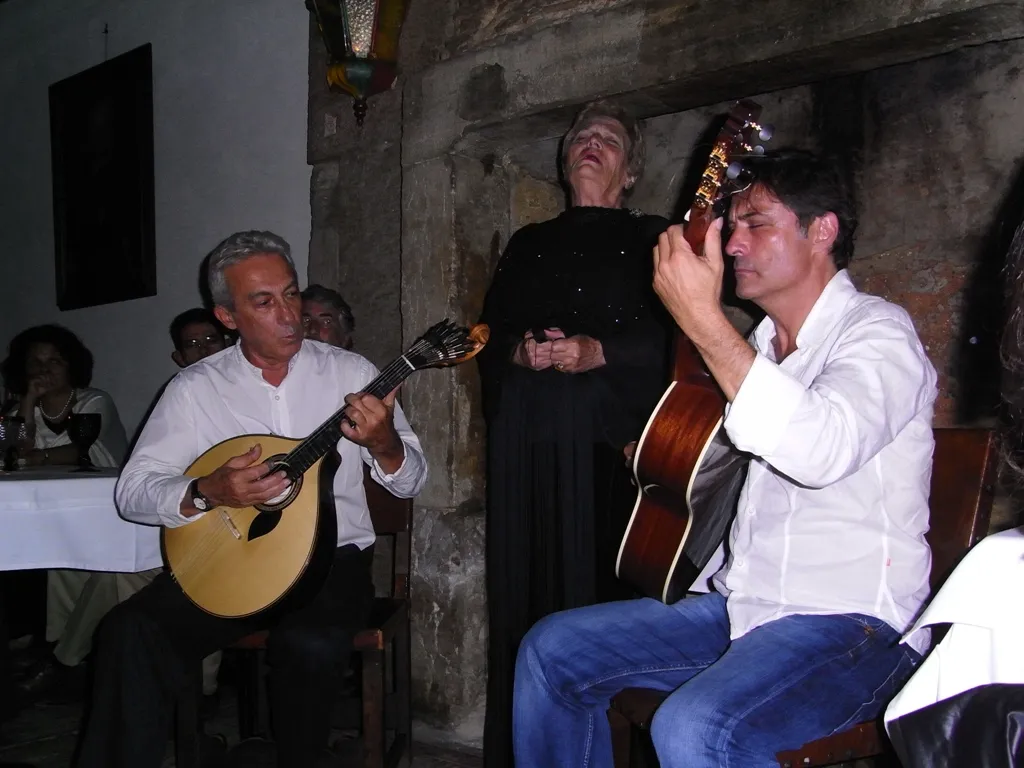
- Celeste Rodrigues, aged 85, singing at the Casa de Linhares fado house in Lisbon in September 2008, with a Portuguese guitar and a viola beside her. Javier Lastras, CC BY 2.0, via Wikimedia Commons.
- The entrance to Parque Mayer, Lisbon's theatre park, in March 2014, with the Teatro Maria Vitória beyond. The Casablanca, where Celeste Rodrigues made her debut in 1945, stood inside the park and later became the Teatro ABC. 69joehawkins, CC BY-SA 3.0, via Wikimedia Commons.
- Fado records on 78 rpm discs in a display case at the Museu do Fado in Alfama, photographed in December 2019. By the museum's count Celeste Rodrigues made almost 60 records of her own. Matt Kieffer from London, United Kingdom, CC BY-SA 2.0, via Wikimedia Commons.
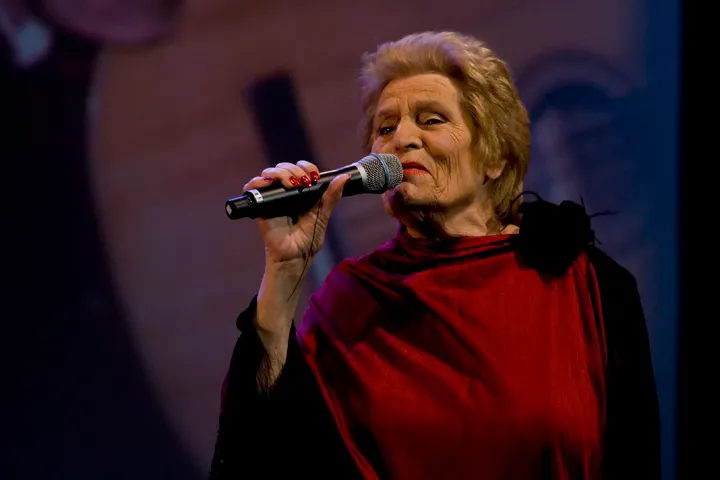
- Celeste Rodrigues on stage in December 2008, aged 85. akaTolan, CC BY 2.0, via Wikimedia Commons.
- The entrance to the Prazeres cemetery in western Lisbon, photographed in November 2008. Celeste Rodrigues was buried in its artists' plot in August 2018. Lijealso, CC BY-SA 3.0, via Wikimedia Commons.