

The Caldas uprising: a column marches on Lisbon alone, 16 March 1974
Two days after the dictatorship sacked its two most senior generals, young officers in a provincial barracks locked up their commander and drove south to take Lisbon airport. Nobody followed them.
At a glance
- Before dawn on Saturday 16 March 1974, officers of the 5th Infantry Regiment (RI5) in Caldas da Rainha arrested their commander and sent a column of about 200 men towards Lisbon to bring down the Estado Novo dictatorship.
- They acted two days after Prime Minister Marcelo Caetano dismissed Generals Francisco da Costa Gomes and António de Spínola, who had stayed away from a ceremony of loyalty by the military chiefs.
- Other units expected to join, from Lamego, Mafra, Santarém and Vendas Novas, stayed put or turned back. Short of the capital the column learned it was alone and drove back to Caldas.
- Loyal forces surrounded the barracks and the rebels surrendered at about 5 pm. About 200 men were arrested; the officers were held at Trafaria until 25 April 1974.
- The Armed Forces Movement, whose leaders by most accounts had not authorised the march, drew its lessons and set its own coup for late April. It succeeded on 25 April, 40 days later.
Four in the morning at the barracks gate
The sky over Caldas da Rainha was grey at midnight, as Friday 15 March 1974 turned into Saturday, when Captain Virgílio Varela, armed, detained the second-in-command of his own regiment. Two other officers, Rocha Neves and Silva Carvalho, helped him take over the headquarters of the 5th Infantry Regiment, known by its initials as RI5. The commanding officer woke up and was arrested as soon as he got out of bed.
At four in the morning a column of army lorries passed through the gate: 14 Berliet trucks with Unimogs, GMCs and jeeps, carrying about 30 officers and 200 to 300 sergeants and soldiers. They were commanded by Captain Armando Marques Ramos, then 31. Their orders were to drive to Lisbon and seize the airport.
They thought they were late. Units from Lamego in the north, from Mafra, Santarém and Vendas Novas were supposed to be on the roads too, converging on the capital to overthrow the government of Marcelo Caetano. The lorries could manage about 40 kilometres an hour. By six they were on the edge of Lisbon, and there they found out that nobody else had come.
A tired regime and its restless captains
Portugal had been a dictatorship since a military coup in May 1926. The Estado Novo, or New State, that António de Oliveira Salazar built on it was authoritarian and repressive: it had a political police, the PIDE, renamed the DGS under Caetano, and censors who read everything the newspapers printed, down to football reports. Marcelo Caetano took over as President of the Council, in effect prime minister, in 1968. His early promise of a gradual opening had stalled by January 1973, when most deputies of the Liberal Wing, a group of reformers in the National Assembly, walked out of it.
The regime was also fighting three colonial wars, which began in Angola in 1961, Guinea in 1963 and Mozambique in 1964. By early 1974 the fighting had gone on for thirteen years; in the view of Spínola's biographer, Luís Nuno Rodrigues, the independence movements had by then lost any willingness to negotiate.
The captains' revolt began as a professional grievance. In July 1973 a decree let conscript officers with a tour of war service join the regular officer corps after a two-semester course, overtaking graduates of the Military Academy. On 9 September 1973, 136 captains and lieutenants met secretly at Alcáçovas, near Évora. Their movement grew quickly and its aims widened from careers to the war itself, then to the regime.
Caldas was involved early. Officers of RI5, 14 of whom were represented at the meeting, organised the movement's second plenary, held on 1 December 1973 in the Casa do Povo, a community hall, in Óbidos. Some 170 to 180 officers attended. The third plenary, in an architect's studio in Cascais on 5 March 1974, drew about 200. There, 111 of those present signed a first political text, “O Movimento, as Forças Armadas e a Nação” (The Movement, the Armed Forces and the Nation).
Officers at the captains' movement's three plenary meetings
officers present
Alcáçovas: 136 signed the meeting's document. Óbidos: “about 170 delegates” in the 50th-anniversary commission's text, “nearly 180” in Vasco Lourenço's account in the same booklet, speaking for 426 officers. Cascais: “about 200” in both texts, speaking for more than 600 (the commission); Lourenço says the 185 army officers among them spoke for more than 450. RTP's Antes da Revolução gives “more than 180” for Cascais.
Show the data
| Officers present (approximate except Alcáçovas) | |
|---|---|
| Alcáçovas, 9 Sep 1973 | 136 |
| Óbidos, 1 Dec 1973 | 170 |
| Cascais, 5 Mar 1974 | 200 |
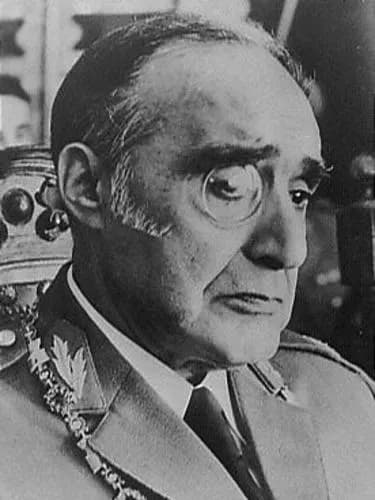
Two generals overshadowed the captains. Francisco da Costa Gomes was Chief of the General Staff of the Armed Forces and António de Spínola, the former governor of Guinea, his deputy. On 22 February 1974 Spínola published Portugal e o Futuro (Portugal and the Future), in which a senior figure of the regime admitted that the wars could not be won by arms and needed a political solution. It was widely read and shook the regime.
Nine days in March
The government struck first. On 8 March four captains of the movement, Vasco Lourenço among them, were told they were being transferred: two to the Azores, one to Madeira and one to Bragança. The movement spirited two of them away. The next day a fellow officer, Pinto Soares, handed them over at the Lisbon military headquarters, hoping to get the orders cancelled; instead all three were locked up at Trafaria. On 9 March the armed forces were put on strict alert for the first time since 1961.
Caetano, pressed by the President of the Republic, Américo Tomás, then summoned the military chiefs to declare their loyalty in public. On 13 March he received Costa Gomes and Spínola, who explained why they would not attend; he told them that in that case they would be dismissed. The next day generals and admirals of all three services gathered at São Bento for a ceremony of solidarity with the government. It went down in history as the Brigada do Reumático, the Rheumatic Brigade.
“The country is sure that it can count on its Armed Forces, and at every level of them there can be no doubt left about the attitude of their commanders.”
Costa Gomes and Spínola stayed away, and so did the Navy chief, Admiral Tierno Bagulho. All three were dismissed the same day; by one account the two generals were out of office by four in the afternoon. The same day Captain Varela of RI5 told Casanova Ferreira, one of the conspirators, that if the movement did not react he would go out alone with his unit. Casanova Ferreira asked him to wait. Varela kept his men on standby.
Plans for some kind of action had been in the air for days. On 11 March Spínola's aide-de-camp suggested to Otelo Saraiva de Carvalho that the movement protest against the generals' ceremony. On 12 March Otelo, Casanova Ferreira, Manuel Monge and others drafted an operations plan at Casanova Ferreira's home. A move first planned for the night of 13 to 14 March was put off. On 15 March Spínola met officers he trusted, and 19 March was mentioned as the date for a coup. A hurried meeting the same day failed to head off a revolt at the special operations training centre in Lamego.
That evening, in Correio da Manhã's reconstruction, the plan was confirmed at Manuel Monge's house in Lisbon with Otelo and Casanova Ferreira present. Ramos left at half past nine and drove straight back to Caldas. Whose orders he carried is disputed. The Gazeta das Caldas says the column had an operations order from the movement's military commission. Otelo later said the march went ahead without the approval of the coordinating committee, and that Spínola had asked him, through his aide-de-camp, to “do something”.
The road south
- Unit
- 5th Infantry Regiment (RI5), Caldas da Rainha
- Commander of the column
- Captain Armando Marques Ramos
- Left barracks
- About 4 am, Saturday 16 March 1974
- Objective
- Lisbon airport
- Furthest point
- About 3 km short of the Sacavém toll gates, on the northern edge of Lisbon
- Surrender
- About 5 pm, at the barracks in Caldas
- Bloodshed
- None
The rain that soaked the soldiers also played havoc with their radios, and the column drove south with little idea of what was happening elsewhere. The Lamego centre, which had been first to stir, did not move. At Mafra a force set out, drove about 13 kilometres and went back. Vendas Novas would not join, Ramos recalled, and at Santarém the key to the arms store was in the wrong hands.
Some three kilometres before the toll gates at Sacavém, Monge and Casanova Ferreira caught up with the column in a Mini. Their news was that it was alone and should go back. Ramos wanted to carry on and take the airport anyway; if things went badly, he argued, they could fly out on two of the planes, to Sweden or anywhere. Monge and Casanova Ferreira persuaded him that at the airport they would be isolated, while in the barracks at Caldas they would be better protected. The column turned round, and the two men went back with it.
| Source | Men in the column | Other details |
|---|---|---|
| Government communiqué, 16 March 1974 | “A lorry-borne company” | Officers arrested the commander, his deputy and three majors |
| Diana Andringa, RTP documentary, 1999 | 170 | Says the action was first planned for the night of 13 to 14 March |
| Correio da Manhã, 2008 | 33 officers and more than 200 soldiers | Reconstruction drawing on an interview with Armando Marques Ramos |
| Joana de Matos Tornada, 2009 (as summarised in a review) | About 200 | Book-length study based on army and GNR reports |
| Gazeta das Caldas, 2014 | 30 officers and about 300 sergeants and soldiers | 14 Berliet lorries plus Unimogs and GMCs |
| RTP, Os Dias da História, 2018 | About 200 | Calls Ramos a major; most sources say captain |
| RTP Play, Antes da Revolução, 2024 | More than 200 | Several combat and transport vehicles |
| Associação 25 de Abril chronology | About 200 arrested | Names Almeida Bruno, Monge, Casanova Ferreira, Ramos and Varela |
| Arquivo Distrital de Leiria, 2017 | About 200 | Says the Lamego, Santarém and Mafra units had promised to join |
Most counts settle on about 200 men.
Siege at Caldas
Wet, hungry and asking for breakfast, the men were back inside the barracks by about a quarter past eight, or ten o'clock in another account. They shut the gates. Soon the regiment was surrounded by units of the Tomar military region: the 7th Infantry Regiment from Leiria, the Cavalry Practical School from Santarém and, in one account, the 15th Infantry Regiment from Tomar, with riot police, the GNR gendarmerie and agents of the political police, the DGS.
The brigadier commanding the siege, named as Serrano in one account, threatened to open fire and cut off the water, electricity and telephones. Townspeople gathered at a careful distance to watch. Inside, the rebels played for time, hoping the attempt would echo across the country and abroad. Several officers later said they never believed fellow soldiers would shoot at them.
15 March, about 9.30 pm
Ramos leaves Lisbon
Armando Marques Ramos leaves the meeting at Manuel Monge's house and drives to Caldas.
Around midnight
RI5 taken over
Varela and others detain the second-in-command; the commander is arrested in his quarters. The communiqué adds three majors.
16 March, 4 am
The column leaves
Lorries carrying about 200 men head south for Lisbon airport.
About 6 am
Edge of Lisbon
About 3 km short of the Sacavém tolls, Monge and Casanova Ferreira bring word that no other unit has moved.
8.15 to 10 am
Back in Caldas
The column re-enters the barracks and closes the gates; accounts differ on the time.
Late morning
Siege
Loyal troops from Leiria and Santarém, police, GNR and DGS surround the regiment.
About 5 pm
Surrender
After hours of negotiation the rebels give up without resistance.
After the surrender
Arrests
Officers are taken to Lisbon and then the military prison at Trafaria; sergeants and soldiers to the Santa Margarida camp.
At about five in the afternoon, after hours of talks, the rebels surrendered. The loyal forces entered the barracks. The officers were gathered in the library, where the brigadier lectured them; sergeants and soldiers were held in the mess hall. The leaders took responsibility and tried to clear their subordinates by saying they had only obeyed orders.
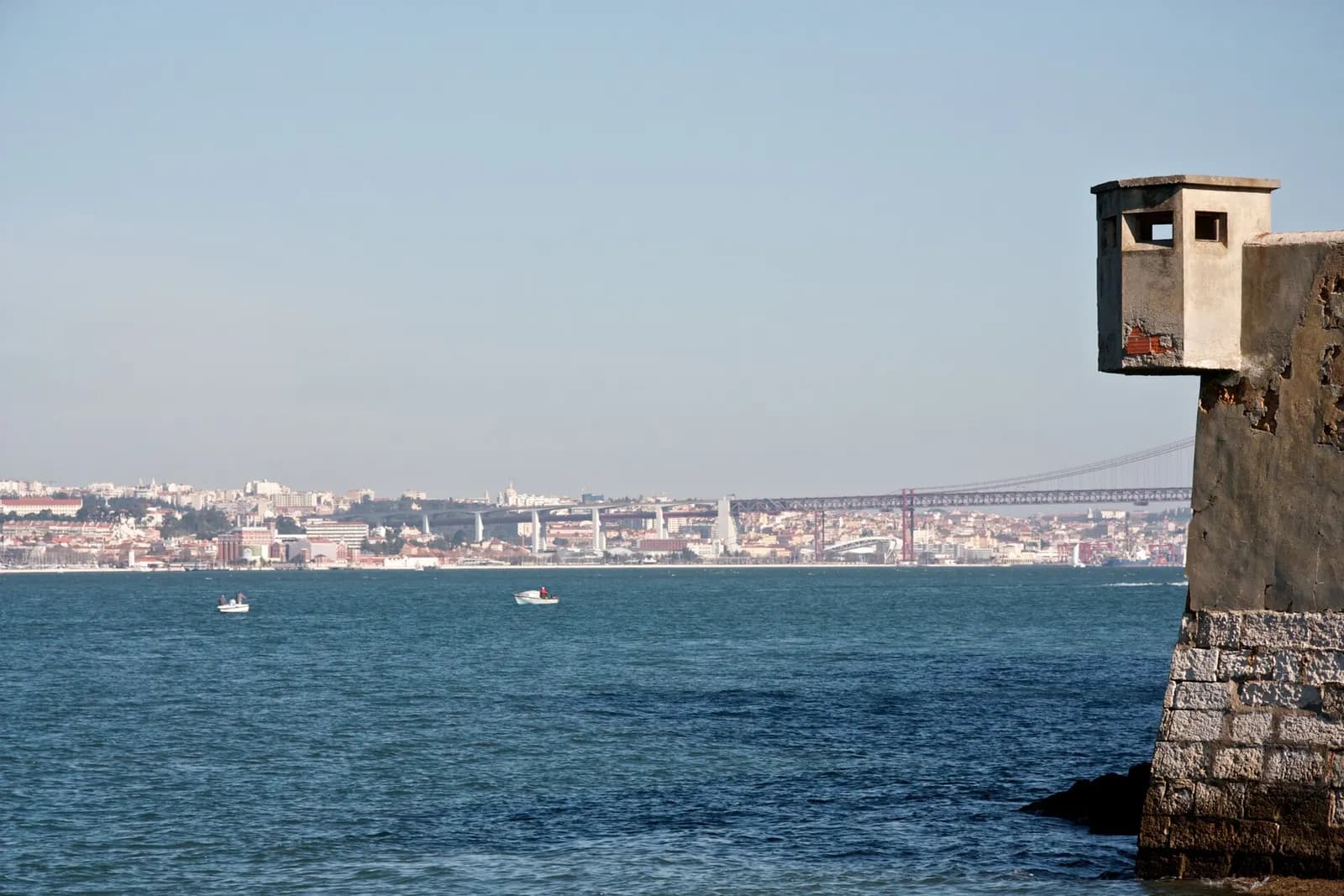
About 200 men were arrested. The officers were taken first to a Lisbon barracks; Ramos, Monge, Casanova Ferreira and the others most involved went on to the military prison at Trafaria, across the Tagus from the capital. Most of the rank and file were sent to the army camp at Santa Margarida; within a week, one account says, RI5 was full of new faces.
The arrests reached beyond Caldas. On 16 March the GNR surrounded the Military Academy and arrested members of the movement there. João de Almeida Bruno, one of Spínola's officers, escaped arrest at a house in Monte Estoril by minutes, according to the account of the DGS inspector sent to fetch him. He was taken into custody the next day and ended up at Trafaria.
“Order reigns throughout the country”
The government sent the newspapers a communiqué and banned them from commenting on it. It said the authorities had known that a movement “of ill-defined character and aims” was being prepared, and that attempts to raise other units had failed. It ended on a reassurance.
“After receiving the summons to give themselves up, the insubordinate officers surrendered without resistance, the barracks was at once occupied by the loyal forces and the lawful command was restored. Order reigns throughout the country.”
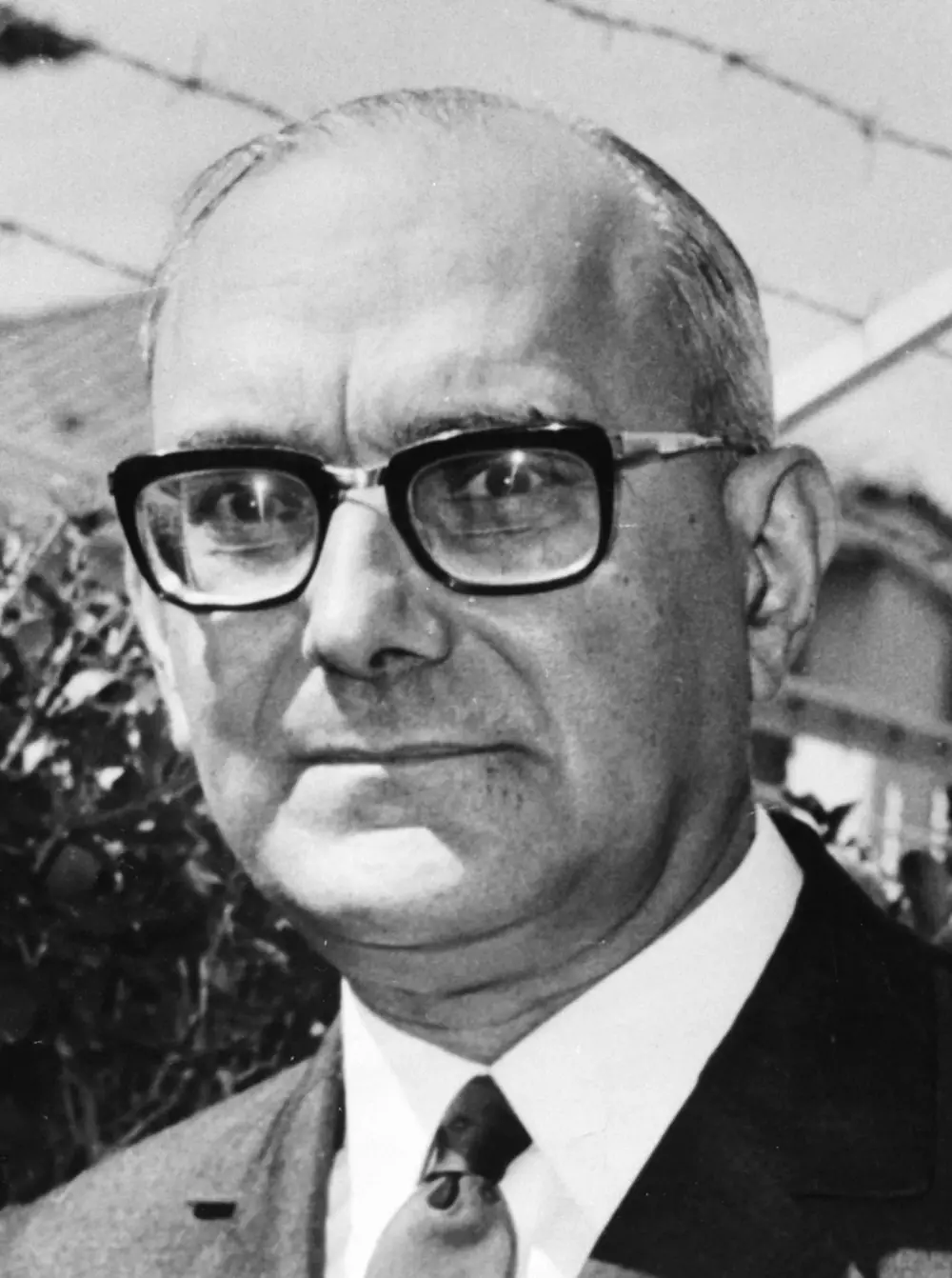
Caetano spoke about the affair on television, reshuffled his government and let himself be seen in public. He dismissed the coup as “irreflexão, talvez ingenuidade”, thoughtlessness, perhaps naivety. On 28 March he gave the last of his fireside television talks, the Conversas em Família, and on 31 March he went to watch Benfica play Sporting.
“When the loudspeaker announced that I was in the main box, the crowd, reckoned at 80,000 spectators, as if moved by a spring, gave me a long ovation.”
In Caldas itself the local weekly, Gazeta das Caldas, used its editorial of 20 March to distance the town and its people from what had happened and to defend the regime.
A rehearsal for 25 April
For the movement's leaders the march was a near disaster. Vasco Lourenço, one of them, still called it “the disastrous adventure of 16 March” fifty years later, and others feared it could have wrecked everything they had built. Joana de Matos Tornada, whose 2009 book a reviewer called the first systematic study of the coup, reads it differently: in the review's summary, it laid bare the regime's inability to keep order and discipline in the armed forces, and pushed the movement towards an outcome by force from which there was no going back.
The captains moved fast. On 18 March Otelo met Vítor Alves and Melo Antunes, who was given the job of drafting a political programme. On 20 March a meeting at Parede concluded that a reasonably well organised military movement would probably win, and decided that every key member should have a shadow, ready to take over if he was arrested.
On 24 March the coordinating committee met for the last time, at the home of Captain Candeias Valente. Otelo took charge of the operations plan and Vítor Alves of political direction. The coup was set for the week of 22 to 29 April, and the committee stopped meeting and sending circulars. Ramos blamed poor communications for the failure of 16 March; the movement's leaders concluded that the next attempt had to be planned in far more detail, and soon, before the government could transfer more of them.
The revolution of 25 April 1974, told in its own article, overthrew Caetano in a day. Spínola received power from him at the Carmo barracks in Lisbon. The Caldas officers were freed from Trafaria the same day, Almeida Bruno late in the afternoon.
“We were going to free the country. And let nobody forget: if there had been no 16 March 1974, there would have been no 25 April.”
Why it still matters
How much the 16th of March counted is still argued over. Veterans of the movement's majority remember it as a reckless adventure by Spínola's followers. Its leaders, like Ramos, see it as the step without which 25 April would not have happened. Tornada found that the march had no political, economic or social organisation behind it and was driven more by emotion than by strategy.
Caldas da Rainha has adopted the date. In March 2018, five years after it was first announced, a monument to 16 March by the sculptor José de Santa Bárbara was unveiled in front of the barracks, at a cost of €80,000, in a ceremony led by the secretary of state for defence, Marcos Perestrello, who said the date should be part of the school curriculum. The town marks the anniversary each year. In 2026 the council held a ceremony at the monument on the day, and two days earlier the historian Maria Inácia Rezola, executive commissioner of the official 50th-anniversary commemorations of the revolution, gave a talk on 16 March and the building of Portuguese democracy.
The split that sent the column out alone did not end with the revolution. Spínola wanted a controlled transition with himself at the head, and the movement's majority wanted elections and decolonisation. The quarrel ran on until his failed coup of 11 March 1975, after which Almeida Bruno, freed from Trafaria less than a year earlier, was arrested again, this time on Otelo's orders.
FAQs
What was the Levantamento das Caldas?
It was a failed military uprising on 16 March 1974. Officers of the 5th Infantry Regiment in Caldas da Rainha arrested their commander and sent a column of about 200 men towards Lisbon to overthrow Marcelo Caetano's dictatorship. No other unit joined them, and they turned back and surrendered the same afternoon. It is also called the Golpe, Revolta or Intentona das Caldas.
Why did the Caldas uprising fail?
It was rushed and poorly coordinated. The units expected to march with it, from Lamego, Mafra, Santarém and Vendas Novas, did not join it, radios failed in the rain, and, by Otelo Saraiva de Carvalho's account, the march went ahead without the approval of the captains' movement's coordinating committee. Alone outside Lisbon, the column went back to its barracks, which loyal troops then surrounded.
What happened to the soldiers who took part?
About 200 were arrested. The leading officers were held at the military prison at Trafaria, across the Tagus from Lisbon, and most sergeants and soldiers were sent to the Santa Margarida camp. The officers were freed on 25 April 1974, when the revolution overthrew the regime.
Was General Spínola behind the Caldas uprising?
Not openly, and how far he encouraged it is still debated. The march followed his dismissal on 14 March and was driven, by most accounts, by officers close to him. On 15 March he met trusted officers who spoke of a coup on 19 March, and Otelo Saraiva de Carvalho later said Spínola had asked him, through his aide-de-camp, to “do something”.
How is 16 March 1974 linked to the Carnation Revolution?
It is often called a rehearsal. The failure taught the Armed Forces Movement to plan its coup in far more detail, and quickly, before the government could transfer more of its members. Within eight days the movement had put Otelo Saraiva de Carvalho in charge of the operations plan and set the coup for late April; it succeeded on 25 April, 40 days after Caldas.
On the timeline
Open the timelineNearby moments from dictatorship and the estado novo (1926–1974).
General António de Spínola publishes 'Portugal e o Futuro' (Portugal and the Future), arguing that the colonial wars could not be won by military means. Written by the newly appointed deputy chief of the armed forces staff and former governor of Guinea, it called for a political solution and helped build momentum toward the Carnation Revolution two months later.
Some 200 officers, representing more than 600, meet clandestinely in an architect's studio in Cascais and approve 'O Movimento, as Forças Armadas e a Nação', the manifesto that turns the Captains' Movement into the MFA. The coup followed 51 days later, on 25 April.
General António de Spínola and General Francisco da Costa Gomes are dismissed from their posts as Deputy Chief and Chief of the General Staff by Prime Minister Marcelo Caetano after refusing to attend a ceremony pledging loyalty to the regime's colonial policy. This galvanises the MFA and accelerates planning for the April 25 coup.
The Caldas uprising of 1974
In the 'Levantamento das Caldas', a column of about 200 men from the 5th Infantry Regiment sets out from Caldas da Rainha to march on Lisbon and topple the Estado Novo. Finding itself alone, it turns back short of the capital and surrenders at its barracks that afternoon, a failed rehearsal for the Carnation Revolution of 25 April.
At 10:55 pm, Emissores Associados de Lisboa radio plays 'E Depois do Adeus' by Paulo de Carvalho, Portugal's Eurovision entry that year. It is the first secret signal to the Armed Forces Movement, telling rebel units to begin the operations of the Carnation Revolution.
Coming up in history
All long reads 18 March 1900António Nobre, the poet of Só, dies at Foz do Douro: 18 March 1900
 19 March 1933The 1933 plebiscite: how silence approved Salazar's constitution
 20 March 1602The Dutch East India Company and Portugal's war for Asia, 1602–1663
 21 March 1846Rafael Bordalo Pinheiro: the Lisbon cartoonist who invented Zé Povinho
39 sources
Archives, scholarship and reporting this article was checked against.
- 1
Review of Joana de Matos Tornada, Nas vésperas da democracia em Portugal: o golpe das Caldas de 16 de Março de 1974 (Almedina, 2009), by Rafael Marques VigárioRevista de História da Sociedade e da Cultura 9 (2009), Universidade de Coimbra
- 2
Pronunciamento das Caldas, 16 March 1974 (chronology entry)Associação 25 de Abril
- 3
A coluna das Caldas que marchou sozinha para fazer HistóriaGazeta das Caldas, 16 March 2014
- 4A Revolução a 40 km/h das Caldas para LisboaCorreio da Manhã (Domingo magazine), 20 April 2008
- 5
Levantamento militar nas Caldas da Rainha (from Os Dias da História, Antena 2, 2018)RTP Ensina
- 6
Recordando o dia 16 de Março de 1974 (há cinquenta anos)Largo dos Correios (blog), 16 March 2024
- 7
16 de março de 1974: o levantamento das Caldas na imprensa regional da épocaArquivo Distrital de Leiria (DGLAB), 9 March 2017
- 8
O caminho da liberdade: a reunião de Cascais, 5 de março de 1974Comissão Comemorativa 50 Anos 25 de Abril, 2024
- 9
- 10
- 11Quatro linhas e entrelinhasDiário de Notícias, 19 April 2018
- 12
Marcelo José das Neves Alves Caetano (Os Procuradores da Câmara Corporativa)Assembleia da República
- 13
Os capitães: uma revolução na forja (Maria Inácia Rezola), in Os Anos de Abril, vol. 2 (abstract)Repositório do Instituto Politécnico de Lisboa
- 14‘Portugal e o Futuro’ de Spínola “funcionou como uma verdadeira pedrada no charco” (Leonídio Paulo Ferreira)Diário de Notícias, 20 February 2024
- 15
- 16
- 17Antes da Revolução: 1973-1974 (episode on 16 March 1974)RTP Play, March 2024
- 18
O “Levantamento das Caldas” em 16 de março de 1974 (Louro Carvalho, opinion)sinalAberto, March 2023
- 19
- 20
- 21
- 22
- 23
- 24
- 25
- 26
- 27
- 28
- 29
- 30
- 31A PIDE/DGS tentou matar o general Almeida Bruno? (João José Brandão Ferreira, opinion)Observador, 7 September 2022
- 32
- 33
- 34
- 35
- 36
- 37
- 38
- 39
16 de março 2026 (commemorations programme)Município das Caldas da Rainha
Image credits
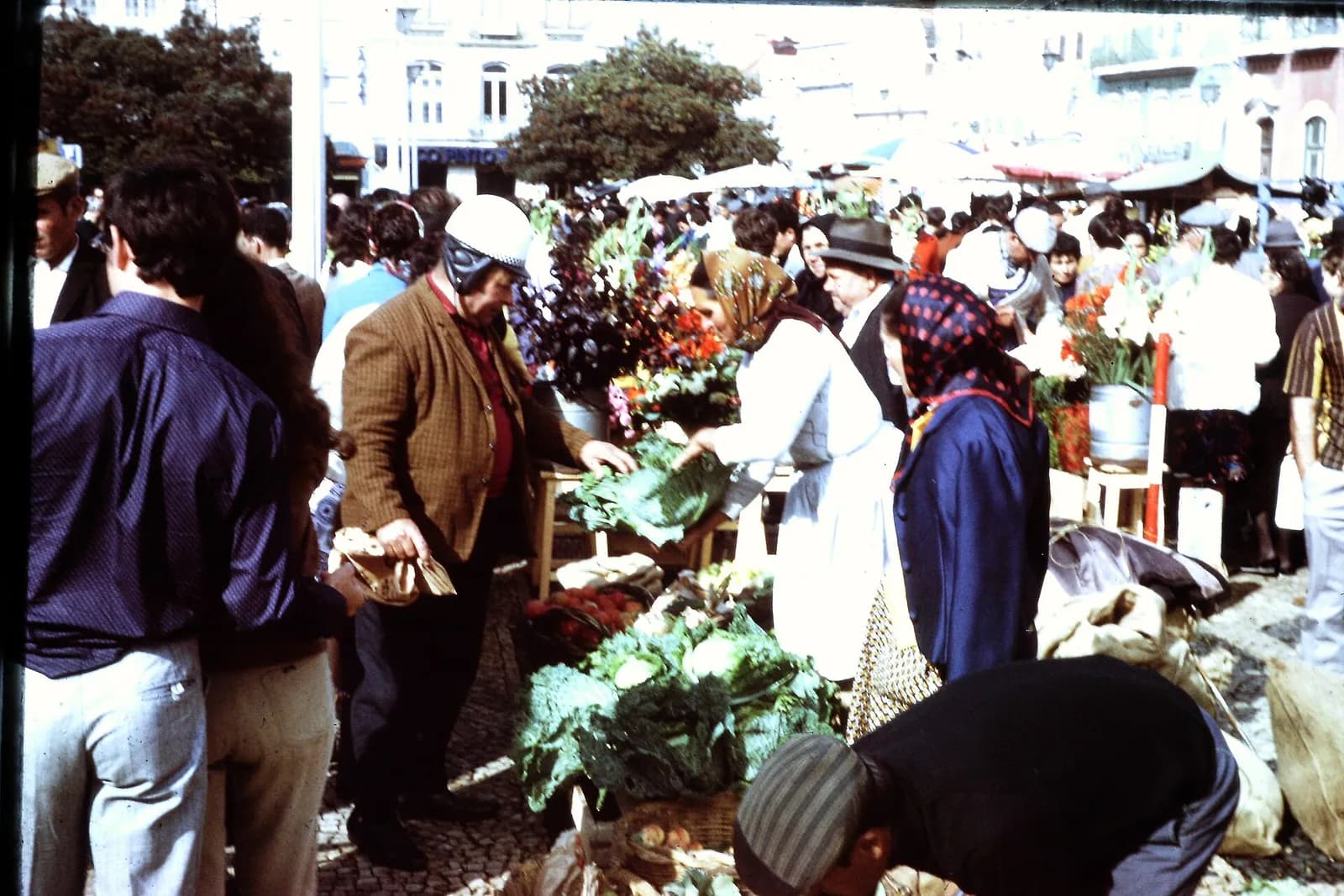
- The open-air market in Caldas da Rainha in the early 1970s. The spa town in the Oeste region, north of Lisbon, was home to the 5th Infantry Regiment. Donald Judge, CC BY 2.0, via Wikimedia Commons.
- General António de Spínola, with his monocle, in autumn 1974, when he resigned as president. His dismissal as deputy chief on 14 March was the trigger for the Caldas officers. Keystone Press / Nationaal Archief, CC BY-SA 3.0, via Wikimedia Commons.
- A sentry box on the old fort at Trafaria, on the south bank of the Tagus, looking across to Lisbon, in January 2012. The leading Caldas officers were held in the military prison at Trafaria until 25 April 1974. Nuno Morão, CC BY-SA 2.0, via Wikimedia Commons.
- Marcelo Caetano, President of the Council from 1968, photographed in October 1968, soon after he succeeded Salazar. Anefo, CC0, via Wikimedia Commons.