

António Nobre, the poet of Só, dies at Foz do Douro: 18 March 1900
He wrote his only book as a lonely student in Paris, then spent five years chasing a cure from the Alps to Madeira. When he died, facing the sea at Foz, the papers gave him two lines.
At a glance
- The poet António Nobre died of tuberculosis on 18 March 1900 in a small house facing the sea at Foz do Douro, on the edge of Porto, in the arms of his brother Augusto. He was 32.
- His one book published in his lifetime, Só (Alone), was printed in Paris in April 1892 while he was a student there, in an edition of a few hundred copies that he paid for himself.
- Só was written out of homesickness for the north of Portugal: the beaches of Leça da Palmeira, Porto, the family farm at Seixo and student Coimbra. A revised edition followed in Lisbon in 1898.
- From 1895 the illness took him to Swiss sanatoriums, Lisbon, the United States and, from February 1898 to April 1899, Madeira, which he left saying he was worse than when he came.
- Few people attended his funeral, but his reputation grew after it: the poems of his last years appeared as Despedidas in 1902, and in 1915 Fernando Pessoa wrote in his memory for a Coimbra magazine's special issue.
A house facing the sea
The house was small and stood at Carreiros, on the seafront of Foz do Douro, where the river Douro meets the Atlantic on the western edge of Porto. Today the street is the Avenida do Brasil. Paula Morão, his modern editor, calls it the house of his brother Augusto, a naturalist. On 18 March 1900 António Nobre died there in Augusto's arms. Miranda de Andrade, who told the story from the poet's letters and friends, wrote that he had wanted to hear the sea in his last moments.
He was 32, and he had been ill with tuberculosis for almost five years. A fortnight earlier he had still wanted to go to the country to make clean copies of all his poems and finish O Desejado, a long poem he carried in his head. Then Justino de Montalvão, one of his oldest friends, arrived unannounced at the house of the writer Sampaio Bruno and asked him to be at the church that night to help carry the coffin.
Raul Brandão, a friend since their teenage summers, described the burial years later in his Memórias, in an entry headed with the date of the death. It was a cold, dirty day of rain, and what he called a scant half-dozen stood at the grave: a friend Brandão calls only Frei, Justino, Eduardo de Sousa and Brandão himself. The newspapers gave the death two quick lines.
“Today he is one of the Portuguese poets with the most admirers. He is a poet people take to. He never had any luck until after he was dead.”
A poet of the 1890s
Nobre was born in 1867 in a narrow three-storey house on Rua de Santa Catarina in Porto. His family was wealthy, and much of its income came from Brazil. In “Memória”, the poem that opens Só, he describes his father as the man who sailed away on the brig Boa Nova and came home years later on the barque Oliveira.
He came of age with the British Ultimatum of 11 January 1890, when London forced Portugal to drop its claims to the land between Angola and Mozambique. When Fernando Pessoa wrote in Nobre's memory in 1915, he began at “the hour of the ultimatum” and cast the two leading poets of the 1890s as the two faces of Janus.
“Junqueiro, the poet of Pátria and Finis Patriae, was the face that looks to the Future, and exults. António Nobre was the face that looks to the Past, and grows sad.”
Critics have filed him in more than one place. Morão reads Só as a mix of the Romantic tradition with the Decadent and Symbolist styles of the 1880s, written in a voice so close to speech that it can be mistaken for naive. Pessoa, sorting the Portuguese Symbolists in an undated note, called Nobre's branch the Lusitanian one and wrote that his school gave Portugal its new poetry.
Leça, Seixo and the tower in Coimbra
The happiest years of his life were the summers at Leça da Palmeira, the fishing village and resort just north of Porto. With Alberto de Oliveira, Raul Brandão, Justino de Montalvão and other friends he read Junqueiro and Victor Hugo, went to sea in the fishermen's boats and swam in the river. He dressed like a fisherman, in a jersey and beret, and smoked a charred pipe. An English girl, Charlotte, shortened his name to Anto, and he kept it for the rest of his life.
“On the beach out at Boa Nova, one day, I built (and that was a great wrong) a tower of glory, such is fancy, all of lapis lazuli and coral!”
The other country of his poems was Seixo, a village in the Douro region where he had a farm, spent long stays and wrote many of his verses. In October 1888 he went to Coimbra to study law, and it went badly. Students mocked his pride and his clothes and put him through the full rough initiation of the freshman. His sharp verses about the professors cannot have helped, and he failed the first year twice.
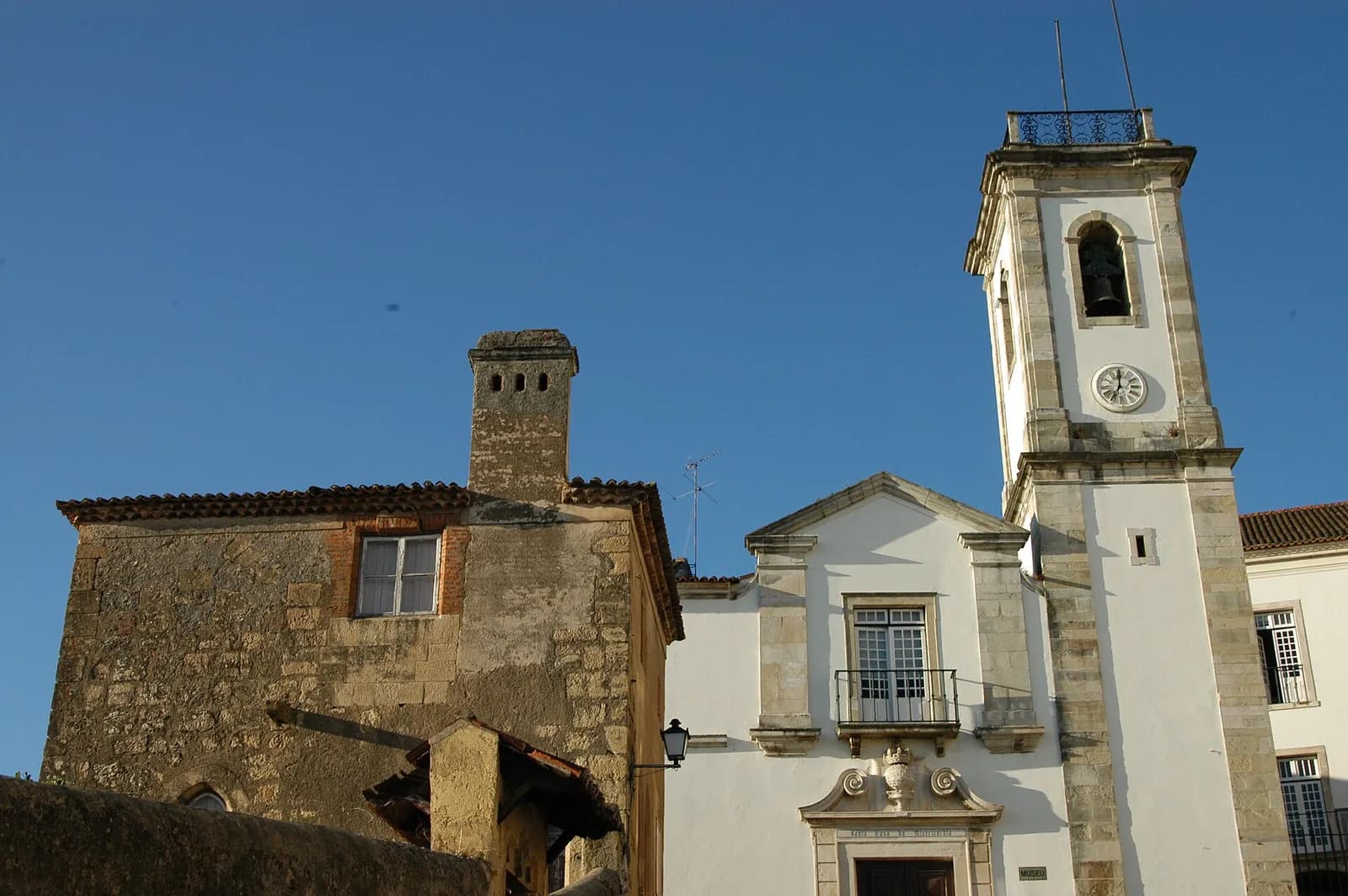
He found a small circle of admirers, among them Alberto de Oliveira and Agostinho de Campos, and with them launched a literary magazine, Boémia Nova, in February 1889. Oliveira edited it, and it lasted only a few months. For a time he lived in a medieval tower in the old city walls on Rua de Sub-Ripas, now known as the Torre de Anto. He hated the university and loved the city, which stayed in his poems long after he had left it.
One sonnet in Só, dated Coimbra, 1889, announces the birth of a poet in a kingdom on the corner of the planet, who would have done better never to see the light. It ends with this line.
“What a misfortune, to be born in Portugal!”
Paris, 1890 to 1892: writing Só
On a cold, drizzly Sunday morning in October 1890 Nobre arrived at the Gare d'Orléans in Paris to take at the Sorbonne the law degree that Coimbra had refused him. He wanted to become a consul, like the novelist Eça de Queirós, who was then Portugal's consul in Paris. One of his first errands was to have his documents legalised at the consulate, carrying a letter of introduction from the poet Guerra Junqueiro. Eça liked him and invited him home.
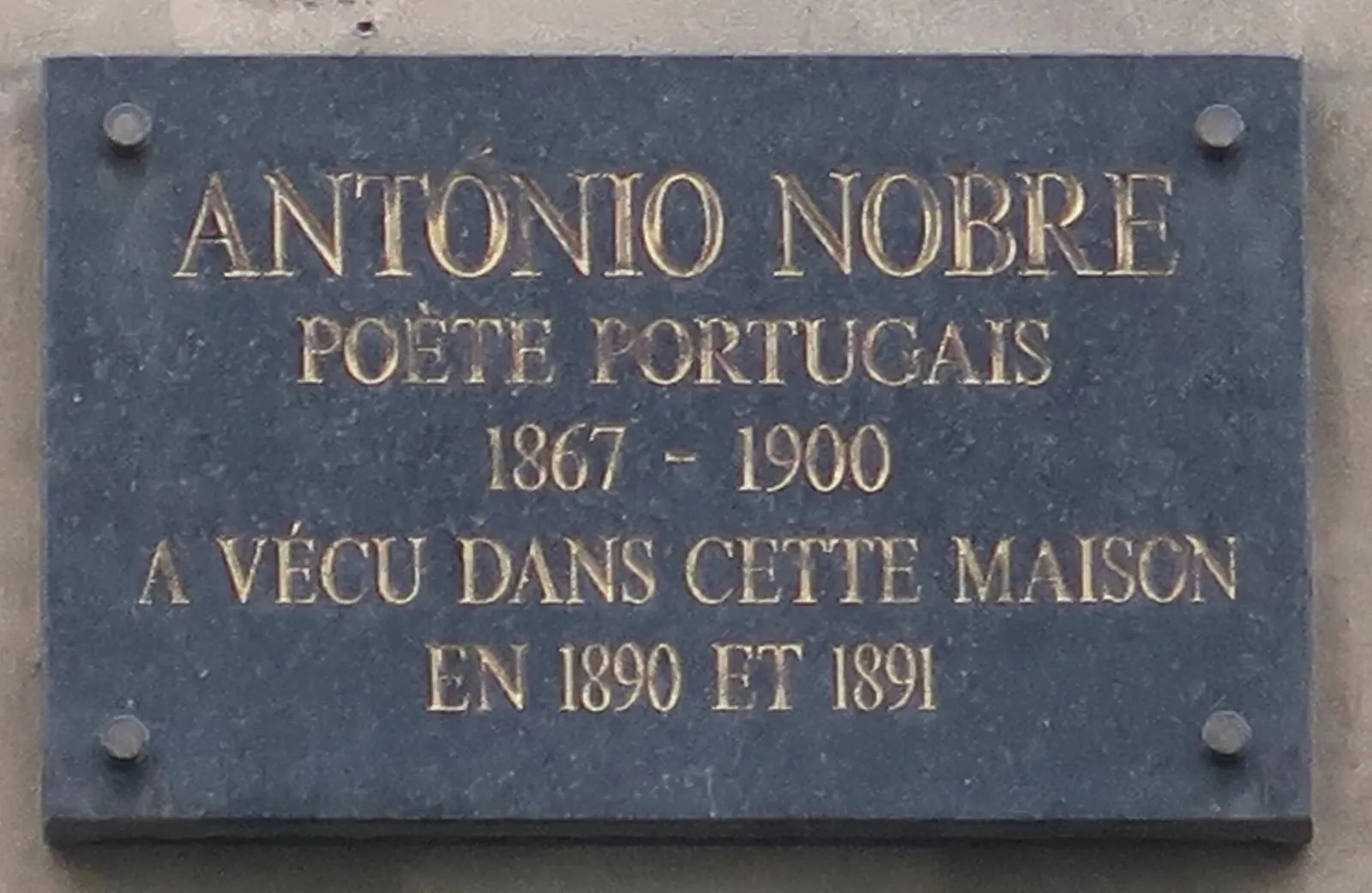
He moved between cheap rooms in the Latin Quarter: Rue Racine, Rue Valette, Rue de la Sorbonne and, longest, a family boarding house at 14 Rue des Écoles. He lived on money from home, and when the family's Brazilian income shrank he went short of food and heat. According to Alberto de Oliveira, who visited him in 1892, the students of the Boulevard Saint-Michel called him le petit évêque, the little bishop.
Loneliness made the book. Nobre told a friend that it was in Paris that he began truly to love Portugal, and in about a year and a half the poems he had carried since Leça and Coimbra became a volume. Many of them describe the north from memory: pilgrimages and processions, fishermen, fig trees and the moon. The title, Só, means alone.
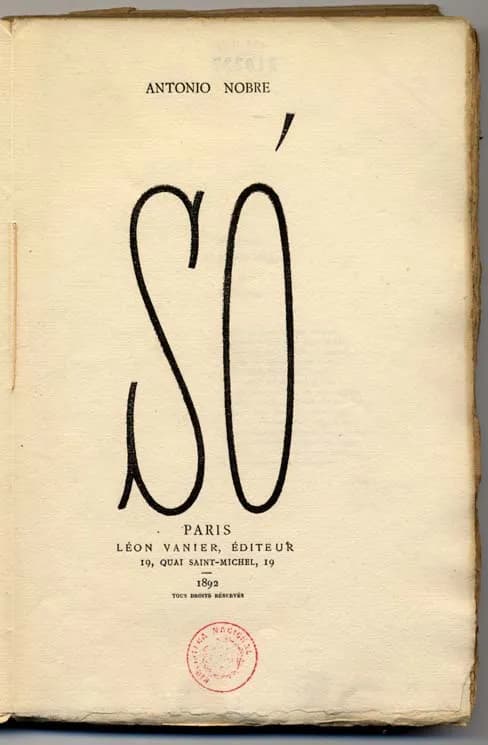
Léon Vanier, the publisher of Verlaine and the younger Symbolists, issued it from his shop on the Quai Saint-Michel, and the printer finished it on 2 April 1892. Nobre paid for paper and printing himself. Miranda de Andrade gives the print run as 200 copies, while other accounts put it at about 300.
Under almost every poem Nobre printed the place and year where it was written. Counting those datelines shows how the book was put together: a third of them say Paris, but 14 point back to Leça, Porto and Seixo and 13 to Coimbra. The poems written after the illness, gathered after his death in Despedidas, come from a different map.
Where Nobre dated his poems
datelines
- Só, first edition (1892)
- Despedidas (1902)
Lisboeta's count of the place-and-year lines printed under the poems in the first edition of Só (51 datelines) and in the first edition of Despedidas (28 with a place). At sea covers the Atlantic, the Bay of Biscay, the Channel and the North Sea; elsewhere is Hamburg, Cologne and Bellos-Ares in Só, and Pampilhosa and Baltimore in Despedidas.
Show the data
| Só, first edition (1892) | Despedidas (1902) | |
|---|---|---|
| Paris | 17 | 0 |
| Coimbra | 13 | 0 |
| Leça, Porto, Seixo, Foz | 14 | 1 |
| At sea | 4 | 0 |
| Switzerland | 0 | 10 |
| Lisbon | 0 | 4 |
| Madeira | 0 | 11 |
| Elsewhere | 3 | 2 |
Reviews in Portugal were mostly hostile or puzzled, and parodies circulated. Brandão praised it in the Correio da Manhã on 28 April 1892. The critic Moniz Barreto, a realist by conviction, rejected its aesthetics in the Revista de Portugal, which Eça edited, but still called it a considerable display of talent and one of the most notable books of recent years.
Nobre finished his studies in Paris, though the sources disagree on when: Paula Morão says he graduated in 1893, while a 2010 article dates the degree to 1895, and other accounts have him in Paris for almost five years, until 1895. He sat the Foreign Ministry's competitive examination for consuls and, by Miranda de Andrade's account, came top with Alberto de Oliveira. Brandão remembered it differently: the examiners wanted to fail him until Oliveira explained who the poet was.
Five years in search of a cure
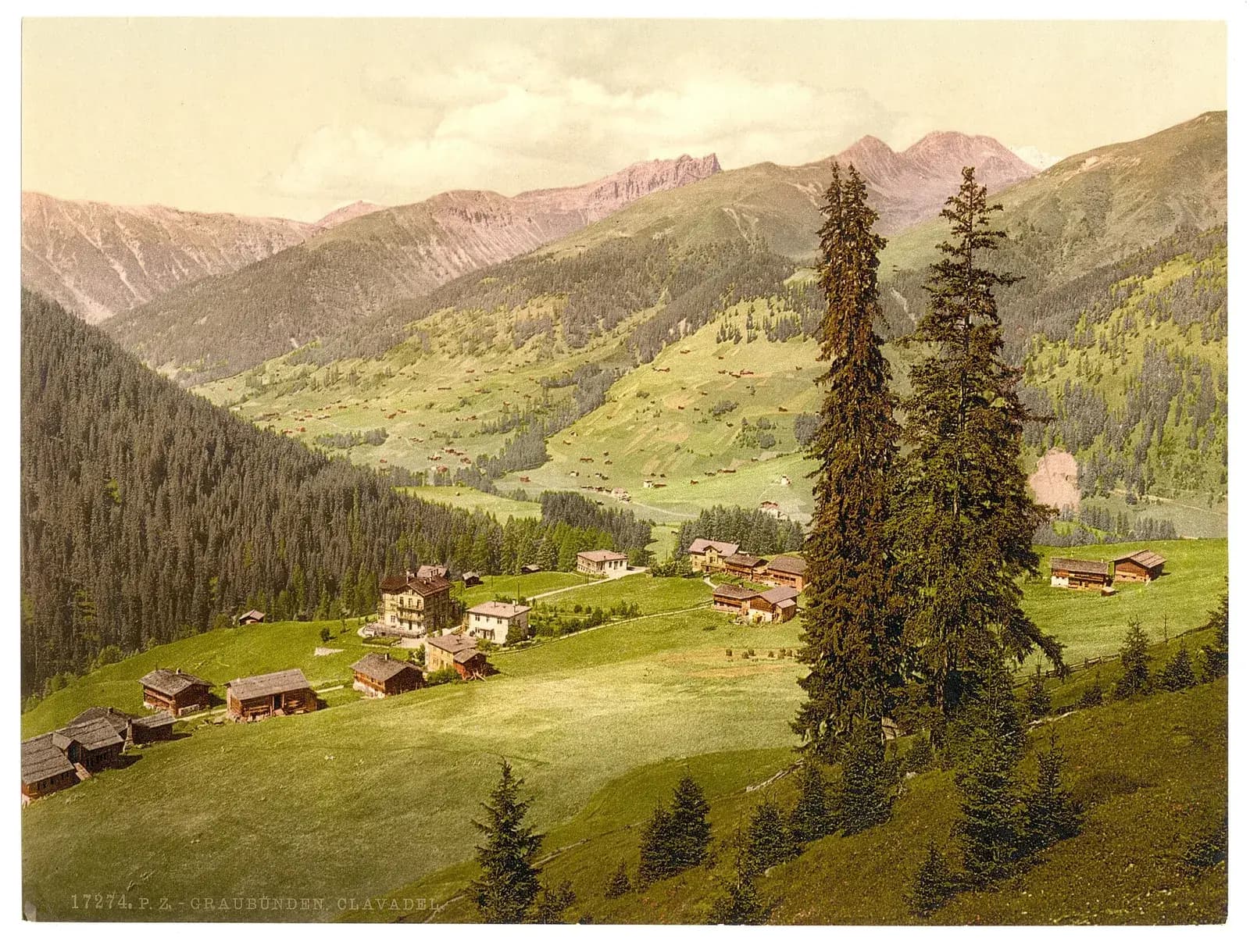
Before he could choose a consulate, the illness declared itself. Tuberculosis showed in the summer of 1895, and that same summer he went to Clavadel, near Davos in the Swiss Alps, and put himself in a doctor's care there. Repeated haemorrhages from the lungs left him frightened and restless, and in 1896 he moved on to Davos-Platz, Bern, Lausanne and Bex.
The doctors then advised the opposite: low ground and a mild sea climate. Nobre believed in what he called Doctor Ocean, and in 1897 he crossed the Atlantic to New York, Washington, Baltimore and Philadelphia. He made a pilgrimage to the grave of Edgar Allan Poe in Baltimore and wrote home that America was a country without a heart, all electricity. The voyage did nothing for his lungs.
In the spring of 1897 he had met Alfredo de Freitas Leal, a Madeiran friend from Coimbra, in Lisbon and asked him many questions about Madeira's climate for consumptives. On 3 February 1898 he arrived in Funchal. He lived at the Royal Hotel, at the Pensão Almeida and for a time in a small house at Boliqueme, in the parish of Santo António.
Leal found him there trying to look cheerful. He liked the people and the scenery, he said, but he thought he had come too late. In Madeira he fell in love with Constança Teles da Gama, a daughter of the Countess of Cascais, and wrote sonnets to her. He left on 24 April 1899, after a stay of less than fifteen months, blaming the climate and his doctor.
“I come back worse than I went. A dreadful climate. Warm and damp, exactly the opposite of what my illness needs.”
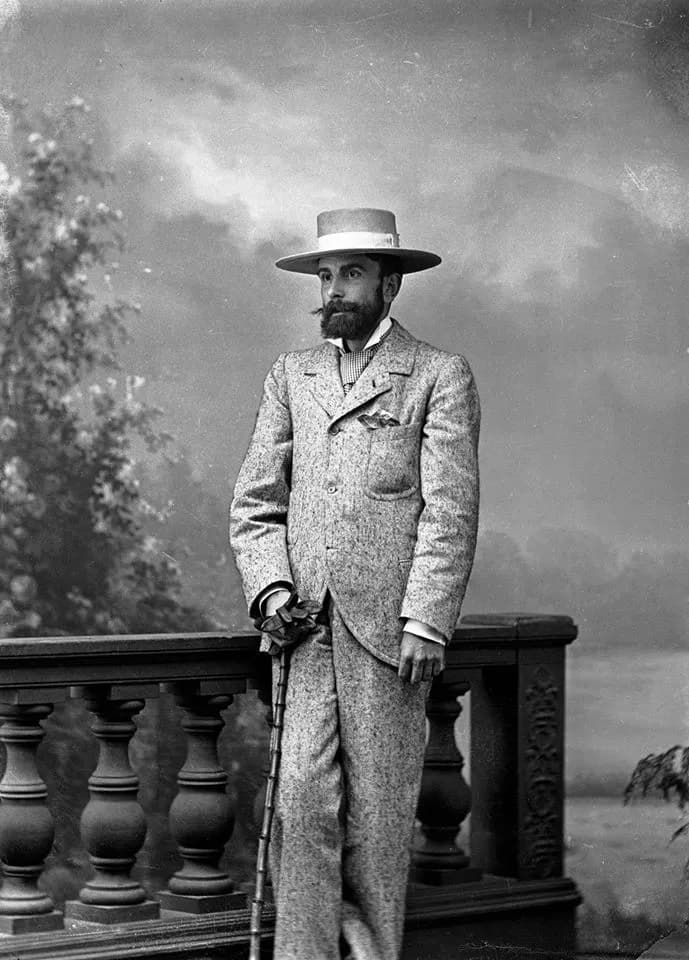
Back in Lisbon, the worst months began. His cough gave him away, and hotels and boarding houses around the capital turned him out one after another; he pawned belongings to pay his way. His family sent him back to Switzerland, where he dated a poem at St. Johann am Platz, in Davos, in October 1899. In December he came home to Portugal for good, thin and without hope.
| Where | When | Trace in the record |
|---|---|---|
| Clavadel, Switzerland | From summer 1895 | Sonnet dated Clavadel, October 1895 |
| Davos-Platz, Bern, Lausanne, Villeneuve, Bex | 1896 | Poems dated May and June 1896 |
| Lisbon and Foz do Douro | 1897 to January 1898 | Poems dated Lisbon, January 1897 and January 1898, and Foz, 1897 |
| New York, Washington, Baltimore, Philadelphia | 1897 | Poem dated Baltimore, 1897; visit to Poe's grave |
| Funchal, Madeira | 3 February 1898 to 24 April 1899 | Eleven sonnets dated in Madeira |
| Lisbon and its outskirts | 1899 | Turned away by hotels and boarding houses |
| Davos-Platz, Switzerland | Autumn 1899 | Poem dated October 1899 |
| Foz do Douro and Seixo | December 1899 to March 1900 | Dies at Foz, 18 March 1900 |
The last three months
He spent the winter between Foz do Douro and Seixo, where he went for the country air. In one of his low moments he asked that, if he died before he could publish another book, it should be called Despedidas, Farewells. He meant it at first as a farewell to literary life; later he made clear that he had chosen it because these were his last poems and he no longer hoped to be cured.
- Date
- 18 March 1900
- Place
- A small house at Carreiros, Foz do Douro, Porto (today the Avenida do Brasil), described by Paula Morão as his brother Augusto's
- Cause
- Pulmonary tuberculosis, which first showed in summer 1895
- Age
- 32
- With him
- His brother Augusto Nobre
- Books in his lifetime
- Só (1892; revised edition 1898)
- Grave
- The cemetery of Leça da Palmeira, Matosinhos
Sources differ slightly on his age. Miranda de Andrade gives a life of 32 years and some months and EBSCO's reference entry says 32, while a 2010 article says 33 and Paula Morão rounds it to thirty. Brandão wrote that he went to the grave to complete thirty-three years, which fits a man of 32 in his thirty-third year.
Brandão's memoir is the harshest account of how Nobre's contemporaries treated him. People avoided him before Só appeared and the poets of his generation hated him after it. Brandão confessed that they had all wanted to be rid of the eternal consul without a consulate, the Coimbra student the professors failed, who made the rest of them look small.
After his death
Augusto Nobre published the last poems in Porto as Despedidas, in an edition of 2,000 copies that the printer finished on 18 March 1902, the second anniversary of the death. At his and Justino de Montalvão's request, Sampaio Bruno wrote the preface. He warned readers that the poet had never been able to revise these poems, and that no one else had dared to correct them. The juvenilia, Primeiros versos, written between 1882 and 1889, followed in 1921.
Augusto went on to become rector of the University of Porto and minister of public instruction. He was devoted to his brother's memory. In September 1927 he visited the little house at Boliqueme in Madeira, met the hammock bearer who had worked for the poet, and paid a monthly allowance to the old servant who had looked after him, and then to her daughter. Augusto himself died at Foz do Douro in 1946.
The poet's tomb is in the cemetery of Leça da Palmeira, the resort of his happiest summers. On the 74th anniversary of his death, in March 1974, pupils of Porto's Liceu António Nobre, a secondary school named after him, took buses there to lay a laurel wreath on it, then left flowers on the rocks of Boa Nova beach.
Younger writers took Nobre up. In 1914 Mário de Sá-Carneiro counted Só among the finest Portuguese books of the previous thirty years, and in 1915 the Coimbra magazine A Galéra gave its last issue, a double number, to his memory. Pessoa's essay for it ends on a line Portuguese critics still quote.
“When he was born, we were all born. The sadness each of us carries with him, even in the sense of his joy, is still him, and his life, never perfectly real nor surely lived, is after all the sum of the life we live.”
An undated note in English among Pessoa's papers is blunter.
“Thoroughly Portuguese in his way of longing, of sadness of the past, of aspiration; personally unhappy, consumptive.”
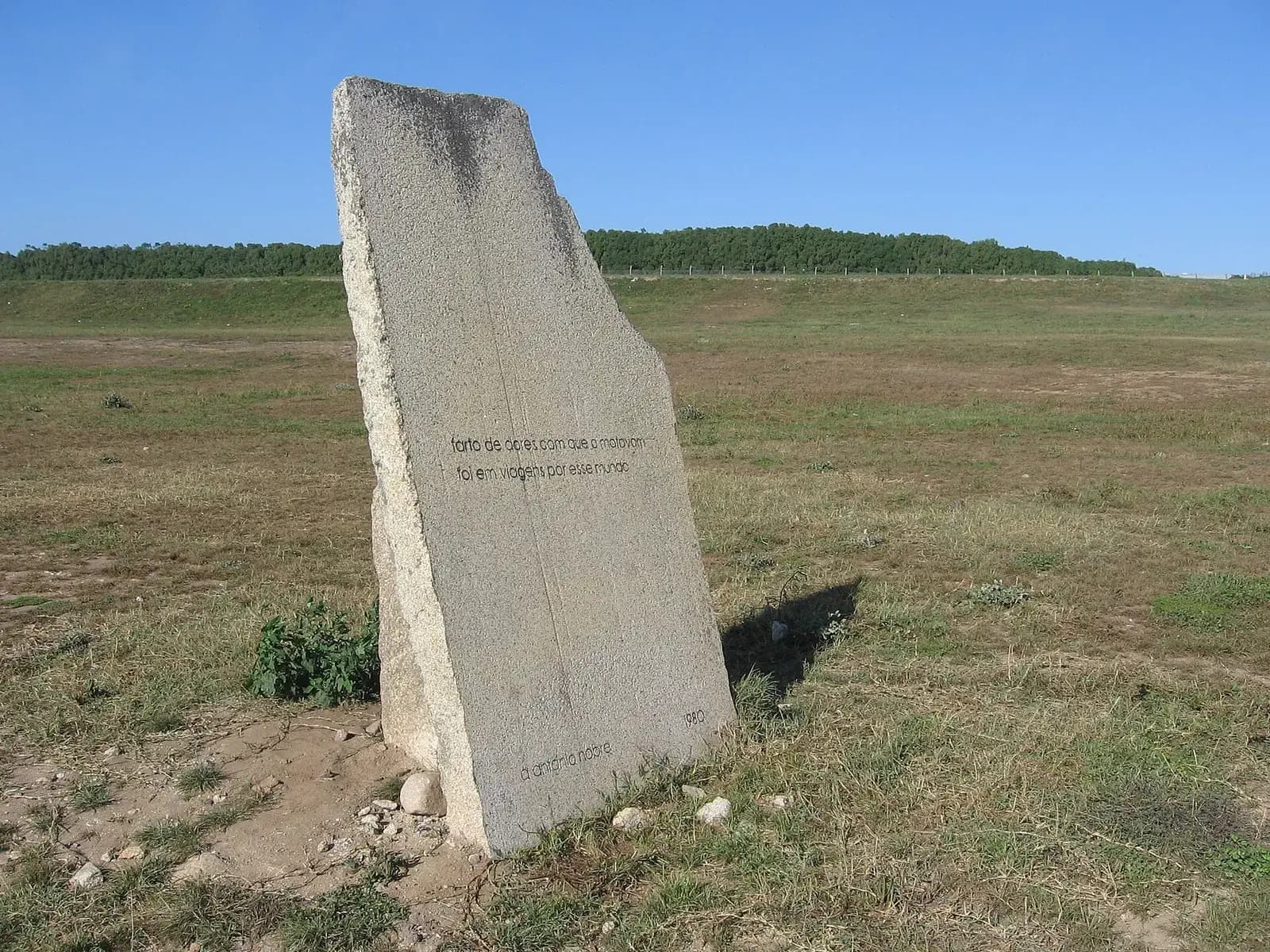
Funchal named a square near the Ponte Monumental after him in 1927, close to the hotel where he had stayed, and unveiled a bust of him there on 28 December 1941. At Leça da Palmeira, the architect Álvaro Siza worked with the sculptor Barata Feyo on a bronze monument near the Boa Nova tea house in 1967, and in 1980 he set up a stone engraved with a quotation from the poet, with steps and a ramp up to it.
Why he is still read
Só has been reprinted many times, and Morão links that success to a singing rhythm any reader can follow, built from careful, varied metres. Its subjects are homesickness, the pull of the sea and the village, and a young man's feeling that he was born in the wrong country at the wrong time.
Critics now read him as a link between the nineteenth century and the modernists of Orpheu, the 1915 magazine of Pessoa and Sá-Carneiro. In Morão's reading, the poet who split himself into António and Anto, adult and child, anticipated the divided self of the modernists. Pessoa took it furthest with his heteronyms, the invented poets with their own names and styles under whom he wrote. Morão places Nobre with Cesário Verde and Camilo Pessanha: poets of almost a single book who remain landmarks of Portuguese literature.
FAQs
When and where did António Nobre die?
He died of tuberculosis on 18 March 1900 in a small house facing the sea at Foz do Douro, the seaside district of Porto, in the arms of his brother Augusto.
What is Só about?
Só (Alone) is a book of poems put together mostly in Paris in 1891 and 1892 and published there in 1892, though many poems date from his years in Porto, Leça and Coimbra. It remembers the north of Portugal from exile: childhood at Leça da Palmeira, Porto, the family farm at Seixo and student life in Coimbra. Nobre revised and enlarged it for a second edition in 1898.
Did Nobre write Só while he was ill?
No. The first edition was printed in April 1892, and his tuberculosis declared itself only in the summer of 1895. The poems he wrote while ill were published after his death as Despedidas (1902).
Why did António Nobre go to Madeira?
Madeira's mild climate was then recommended for tuberculosis. Nobre lived in Funchal from 3 February 1898 to 24 April 1899, but left saying he was worse than when he arrived and blaming the warm, damp air.
How many books did António Nobre publish?
Only one in his lifetime: Só, in 1892, with a revised second edition in 1898. Despedidas appeared in 1902 and his early poems, Primeiros versos, in 1921. His letters have also been published.
On the timeline
Open the timelineNearby moments from regeneration and the last kings (1851–1910).
Birth of novelist José Maria Ferreira de Castro in Ossela, near Oliveira de Azeméis. Emigrating to Brazil at the age of 12, he spent almost four years on an Amazon rubber estate on the Madeira river, the experience behind his novel 'A Selva' (1930). A pioneer of Portuguese social realism, he was nominated seven times for the Nobel Prize.
António Aleixo is born in Vila Real de Santo António. A barely literate weaver's son who sold lottery tickets and sang his verses at Algarve fairs, he became one of Portugal's best-loved popular poets, his ironic four-line 'quadras' written down and published by a friend, Joaquim de Magalhães.
In a secret declaration signed in London by Lord Salisbury and Portugal's minister Luís de Soveral, Britain and Portugal reaffirm their ancient alliance, including the treaties of 1642 and 1661. Portugal undertakes to stop arms reaching the Boers through its territory and not to declare neutrality, while Britain's old pledge to defend Portugal's colonies is restated.
The death of António Nobre
The poet António Nobre dies of tuberculosis at Foz do Douro, aged just 32. His book 'Só' (1892), with its homesick, saudade-steeped verses about his native north, later made him one of the defining voices of Portuguese symbolist poetry.
José Maria Eça de Queirós, master novelist of Portuguese realism and author of 'Os Maias' and 'O Crime do Padre Amaro', dies near Paris, where he was serving as Portuguese consul.
Lisbon's first electric trams enter commercial service, running between Cais do Sodré and Algés — the beginning of the electric tram network that remains an icon of the city.
The writer and poet José Régio, a central figure of Portuguese modernism and co-founder of the influential literary magazine Presença, is born in Vila do Conde.
Coming up in history
All long reads 20 March 1602The Dutch East India Company and Portugal's war for Asia, 1602–1663
 21 March 1846Rafael Bordalo Pinheiro: the Lisbon cartoonist who invented Zé Povinho
 22 March 1312Vox in excelso: how Portugal's Templars became the Order of Christ
 23 March 2011Sócrates resigns and Portugal heads for a bailout: 23 March 2011
17 sources
Archives, scholarship and reporting this article was checked against.
- 1
António Nobre (Paula Morão)Camões, Instituto da Cooperação e da Língua, Figuras da Cultura Portuguesa
- 2
Vida e lirismo de António Nobre (Miranda de Andrade)Separata da Revista Labor no. 270, 1968; lecture given at the Biblioteca Pública de Braga on 15 December 1967 (digitised by Aqualibri, CIM Cávado)
- 3
Só, by António Nobre (Paris, Léon Vanier, 1892)Project Gutenberg, eBook 17193, transcribed from the Biblioteca Nacional de Portugal copy
- 4
- 5
- 6
Nobre (António), article no. 2530Elucidário Madeirense (1921, revised 1940), digital edition
- 7
Homenagear Anto: a revista A Galéra e a leitura de António Nobre no início do séc. XX português (Ingred Georgia de Sousa Silva, MA dissertation)Universidade Federal de Minas Gerais, 2023
- 8
O insigne naturalista Prof. Augusto Nobre ... faleceu ontem nesta cidade, à Foz do Douro (O Primeiro de Janeiro, 14 September 1946)Repositório Temático da Universidade do Porto, Arquivo Digital da U.Porto
- 9
Apontamentos sobre Os pescadores de Raul Brandão, com lembranças para António Nobre e Luísa Dacosta (Paula Morão)In Textualidade e memória, ed. John Greenfield and Francisco Topa, CITCEM, Universidade do Porto, 2018
- 10
Política externa e política interna no Portugal de 1890: o Ultimatum Inglês, by Nuno Severiano TeixeiraAnálise Social, vol. XXIII (98), 1987, pp. 687–719
- 11
Fernando Pessoa, Os três simbolistas portugueses (BNP/E3, 14-4-25)Arquivo Virtual da Geração de Orpheu, from the Fernando Pessoa papers at the Biblioteca Nacional de Portugal
- 12
A escrita de si em Só de António Nobre (Tatiana Aparecida Picosque)Revista Criação & Crítica no. 4, Universidade de São Paulo, April 2010
- 13
António Nobre (Susan Furlong-Bolliger)EBSCO Research Starters, 2024
- 14
- 15
- 16
Monumento ao poeta António Nobre, Leça da Palmeira (1967)Canadian Centre for Architecture, Álvaro Siza fonds
- 17
Image credits
- The stone that Álvaro Siza designed for António Nobre near the Boa Nova beach at Leça da Palmeira, dated 1980. Its inscription, which Siza's archive calls a quotation from the poet, reads “farto de dores com que o matavam foi em viagens por esse mundo” (weary of the pains that were killing him, he went travelling the world). Photographed in 2008. Christian Gänshirt, CC BY-SA 4.0, via Wikimedia Commons.
- The Torre de Anto, the stone tower house on the left, beside the church of the Colégio Novo in Coimbra's upper town. Nobre rented rooms in the medieval tower as a law student. Photographed in 2011. HenGomes, CC BY-SA 3.0, via Wikimedia Commons.
- The plaque at 12 Rue de la Sorbonne in Paris reads: António Nobre, Portuguese poet, 1867 to 1900, lived in this house in 1890 and 1891. Photographed in 2018. Celette, CC BY-SA 4.0, via Wikimedia Commons.
- Title page of the first edition of Só (Paris, Léon Vanier, 1892), from the copy digitised by Portugal's Biblioteca Nacional. António Pereira Nobre (1867 — 1900), Public domain, via Wikimedia Commons.
- Clavadel, above Davos in the Swiss canton of Graubünden, on a photochrom print made in the 1890s. Nobre was there in 1895 and dated a sonnet Clavadel, October 1895. Photochrom Print Collection, Public domain, via Wikimedia Commons.
- António Nobre photographed by the Photographia Vicente studio of Funchal, in a portrait dated 15 April 1899, nine days before he left Madeira. Photographia Vicente, Public domain, via Wikimedia Commons.