

The Iberian Pact: Salazar and Franco's treaty of 17 March 1939
Eleven days before Franco's troops entered Madrid, Portugal and Nationalist Spain promised to respect each other's borders. Salazar then spent the Second World War using the treaty to press his neighbour to stay out of the fighting.
At a glance
- On 17 March 1939 António de Oliveira Salazar and Spain's ambassador Nicolás Franco, the general's brother, signed a Treaty of Friendship and Non-Aggression in Lisbon. It is known as the Iberian Pact.
- Each side promised absolute respect for the other's borders, never to attack it, not to help an attacker and not to join any alliance aimed at it. The treaty ran for ten years and renewed itself unless denounced.
- Portugal had helped Franco's Nationalists throughout the Spanish Civil War. Estimates of the Portuguese volunteers who fought for him run from a few hundred to 30,000.
- A protocol of 29 July 1940 obliged the two governments to consult each other whenever their territory or independence was in danger. Salazar used it, and a meeting with Franco in Seville in February 1942, to press Spain to stay out of the war.
- The pact was renewed by a protocol in 1948, given a third protocol in 1970 and repealed by the Treaty of Friendship and Cooperation signed by Adolfo Suárez and Mário Soares on 22 November 1977.
Eleven days before Madrid
On Friday 17 March 1939, two men signed a short treaty at a desk in Lisbon. In the middle was António de Oliveira Salazar, head of the Portuguese government and also its foreign minister. At his right, at one end of the table, was Nicolás Franco Bahamonde, Spain's ambassador and the brother of General Francisco Franco. More than half a dozen advisers and aides were gathered around them.
The text ran to six articles. Portugal and Spain bound themselves to absolute respect for each other's borders and territories, and promised never to attack or invade each other. Neither would help an aggressor against the other, or join a pact aimed at it. The treaty was written in Spanish and Portuguese, both versions of equal value, and was to last ten years.
The Spain that signed was Franco's, not yet the whole country. The Spanish Civil War, which had begun with a military uprising in July 1936, was almost over: on 28 March Franco's Nationalist troops entered Madrid. Salazar was in a hurry to fix his idea of a peninsular bloc in writing before the end of the Spanish war could upset the premises of his foreign policy.
It became known as the Iberian Pact. For almost forty years it framed relations between the two countries. During the Second World War it was one of the ways Lisbon, Britain's oldest ally, tried to keep Franco's Spain, which leaned towards Germany and Italy, out of the fighting.
Two dictatorships and a civil war
Portugal had long feared its larger neighbour. Spain's kings had ruled Portugal for sixty years until the revolt of 1 December 1640, and since 1801 Spain had held Olivenza, a border town Portugal still claimed. Relations in the early twentieth century were wary.
By the 1930s Portugal was ruled by Salazar's Estado Novo, or New State, an authoritarian regime built on corporatism and Catholic nationalism. Salazar ran the government and from 1936 to 1947 also kept the foreign ministry for himself. Spain, meanwhile, was a republic, and in February 1936 the left-wing Popular Front won its elections. Salazar saw that victory as a threat to his own regime.
When Spanish generals rose against the Republic on 18 July 1936, Salazar welcomed the coup. Along with Germany and Italy, Portugal backed the rebels from the start. Men, war material and food crossed Portuguese territory, letting the rebels link up zones cut off from each other; foreign arms came in through Portuguese ports; Spanish republicans and refugees were handed over to the rebel side; and the controlled press cheered them on.
The border mattered from the first weeks. Franco's columns marching north from Seville turned aside to take Badajoz, the Spanish city closest to the Portuguese frontier, on 14 August 1936. In October Portugal broke off relations with the Republic. It joined the international Non-Intervention Committee all the same, and kept helping the rebels behind a show of neutrality.
Portuguese volunteers fought for Franco too. The press called them Viriatos, after the Lusitanian chief who resisted Rome. Unlike the Germans and Italians, they never formed their own unit: they joined the Spanish Foreign Legion, the Falange militias and the Carlist requetés, partly because Lisbon did not want to antagonise Britain. Nobody knows how many there were.
How many Portuguese volunteers fought for Franco?
people
Estimates vary more than tenfold. Kaczorowski (2016) reports that archive searches in Spain and Portugal have identified 2,654 people by name, that historians' estimates range from a few hundred to 30,000, and that César Oliveira put the number at about 8,000. The Virtual Spanish Civil War exhibition calls about 10,000 the most widely accepted figure; the Museu do Aljube cites unofficial estimates of about 20,000.
Show the data
| Estimate or count | |
|---|---|
| Identified by name | 2,654 |
| César Oliveira | 8,000 |
| Most accepted figure | 10,000 |
| Unofficial estimates | 20,000 |
| Highest estimate | 30,000 |
From 1937, once London had decided that Franco would win and could live with it, Salazar let British observers watch the Portuguese border and stopped backing Franco openly. In 1938 Portugal recognised Franco's government in Burgos as the legitimate government of Spain.
A Spanish idea on Portuguese terms
The idea came from Spain. In July 1938 Nicolás Franco suggested from his embassy in Lisbon that the two regimes find a formula to bind themselves closer, and talks began between Pedro Teotónio Pereira, Portugal's envoy to Franco's government in Burgos, and the Nationalist foreign minister, Count Jordana. Burgos was in a hurry and even drafted a text.
Lisbon stalled. At first it offered only spoken assurances of sympathy. Salazar did not want anything that could look like a step away from the alliance with Britain, the pillar of Portuguese foreign policy, while Franco was winning his war with German and Italian help.
On 8 February 1939 Portugal finally agreed to discuss articles. The civil war was practically over, Britain and France were about to recognise Franco (they did so that month), and it seemed likely that the Italian and German troops would leave Spain when the war ended. The initiative had been Spanish, but Portugal chose the moment, proposed the articles and led the discussion of them.
Britain was kept informed and did not object. It hoped Portugal might temper Franco's pro-Axis leanings. For Franco, the attraction was a friendly neighbour with a privileged line to London; for Salazar, the essential point was that Spain should not remain inside the Axis camp when the next war came.
There was a shadow over the signing. Spain had also agreed, in secret, to join the Anti-Comintern Pact, which aligned it with Germany and Italy. Gómez de las Heras and Sacristán date its signature to 21 February 1939, before the Lisbon treaty, and say Salazar claimed he had been told; Rezola places it just after. Once Spain's accession was made public, it undercut the image of an independent, neutral Spain that Lisbon had hoped to present to Europe.
What the treaty said
- Signed
- Lisbon, 17 March 1939
- For Portugal
- António de Oliveira Salazar, President of the Council of Ministers and Minister of Foreign Affairs
- For Spain
- Nicolás Franco Bahamonde, ambassador in Lisbon
- In the names of
- President Óscar Carmona and General Francisco Franco
- Length
- Preamble and six articles, in Spanish and Portuguese
- Term
- Ten years, then renewed tacitly unless denounced with six months' notice
| Article | What it said |
|---|---|
| 1 | Absolute respect for each other's borders and territories; no act of aggression or invasion. Violence against either territory counts as a violation even without a declaration of war. |
| 2 | No help or assistance to anyone who attacks the other party, and no attack on the other to be launched from one's own territory, by land, sea or air. |
| 3 | Neither party will join a pact or alliance directed against the other or aimed at attacking its territory. |
| 4 | Any future alliance with third states must safeguard the commitments in this treaty. |
| 5 | In force for ten years, then tacitly extended unless denounced six months in advance. |
| 6 | Ratification, with entry into force on the exchange of ratifications. |
Summarised from the Spanish text. The second protocol of 1948 gives 30 March 1949 as the end of the first ten-year term.
“Convinced that everything that contributes to maintaining and securing peace between Spain and Portugal is an important factor for the peace of Europe.”
In the preamble the two sides also declared that none of the obligations either had already taken on towards other powers stood in the way of their friendship, and that the treaty did not alter them. For Portugal that meant the British alliance; for Spain, its ties to Germany and Italy. Nothing in the text bound Portugal to choose between Madrid and London.
1940: France falls and a protocol is added
When war came, the two neutralities looked different. Portugal stayed neutral inside its alliance with Britain. Spain watched the course of the fighting and leaned towards the Axis. When Italy entered the war in June 1940, Lisbon proposed that the two countries declare their neutrality together.
The collapse of France in June 1940 brought the danger to the Pyrenees. On 12 June, days after Spain had assured Teotónio Pereira that it would remain neutral, it declared itself a non-belligerent (the decree is dated the 13th), the step Mussolini had taken before entering the war. Lisbon had not been told in advance. Two days later Spanish troops occupied Tangier; on the 16th a Spanish general handed Hitler a letter in which Franco offered to join the war in return for territory in Morocco.
The Spanish press, controlled by Franco's brother-in-law Ramón Serrano Súñer, then the interior minister, opened a campaign against Portugal's English alliance. On 28 June Serrano Súñer told the Portuguese ambassador that the British alliance was a danger, since Germany could use it as a pretext to invade the peninsula. He proposed going beyond the 1939 treaty to a full alliance that would defend both countries, by force of arms if necessary.
Lisbon answered with a weaker formula of its own. The foreign ministry's secretary-general, Teixeira de Sampaio, drafted an entente cordiale; Salazar struck the phrase out and put in a duty merely to consult. Franco wanted the arrangement kept secret. Salazar refused, arguing that secrecy would only breed suspicion, and insisted on a public text. Franco accepted, provided the wording implicitly covered Spain's claim to Gibraltar.
“The Portuguese and Spanish Governments agree, and by this Protocol undertake, to consult each other on the best means of safeguarding, as far as possible, their mutual interests, whenever events are foreseen or occur which by their nature may compromise the inviolability of their respective metropolitan territories or constitute a danger to the security or independence of one or the other of the two Parties.”
Each side read the protocol its own way. Britain accepted the Portuguese view that it strengthened the neutrality of the peninsula against Axis pressure. Germany and Italy concluded that Spain was drawing Portugal away from Britain. “Everyone is happy” (todos contentos), the Spanish foreign minister, Juan Beigbeder, remarked to Teotónio Pereira.
Beigbeder told the Germans something else. According to a report the German ambassador, Eberhard von Stohrer, sent to Berlin on 20 August 1940, Beigbeder confided that alongside the protocol there was a secret oral agreement under which Portugal would leave Spain a free hand to attack Gibraltar. The historian Manuel Ros Agudo cites the report from the published German documents; it is Beigbeder's word, as relayed to Berlin.
Hendaye and the dangerous winter of 1940
In October 1940 Serrano Súñer, the man who had pressed Portugal to drop Britain, became Spain's foreign minister. On 23 October Franco met Hitler at Hendaye, on the French side of the border. They could not agree. Franco asked for a great deal, including French colonies in North Africa, and had little to offer in return, though he said he would enter the war if Hitler asked.
Spain was preparing for war all the same. Ros Agudo found that Franco's military advisers had been planning a purely Spanish attack on Gibraltar since the summer of 1939, and that on 12 November 1940 Franco received a plan to mobilise up to 50 divisions, about 900,000 men. The Spanish general staff also drew up a plan for a preventive invasion of Portugal in case Britain moved against Gibraltar or the Canary Islands.
Hitler, for his part, saw no point in pressing Lisbon. Portugal could not be pulled away from Britain without losing its Atlantic islands, he reasoned, and the Portuguese question would be settled by force when Gibraltar was attacked. German pressure on Madrid over Gibraltar was strongest between September 1940 and February 1941, then faded as Hitler turned towards Russia.
Salazar's reading of his position was bleak. Spain could choose to be belligerent or neutral, he concluded; Portugal could only be neutral or occupied. He chose to treat Franco's verbal assurances of neutrality as sincere. Gómez de las Heras and Sacristán judge that this was probably wishful thinking, since Spain came closer to entering the war than Salazar admitted.
Seville, February 1942
The two dictators first met in Seville in February 1942. Rezola dates the meeting from 11 to 13 February; Gómez de las Heras and Sacristán give 12 and 13 February. They talked in Franco's office in the Real Alcázar and then lunched with their ambassadors, senior aides and the head of the Portuguese police.
The meeting was Portugal's idea. Teotónio Pereira had proposed it after the British urged direct pressure on Spain, and Salazar revived it after Australian and Dutch troops landed in Portuguese Timor. It was a rare journey for him: apart from a trip to France and Belgium in 1927, his meetings with Franco were the only times Salazar left Portugal.
They discussed supplies and strategy. A defensive alliance came up again and was again set aside. What they agreed was that neither country would enter a political agreement without first consulting the other, and Salazar left convinced that Franco would not accept any step that cost the peninsula its neutrality.
What Madrid told the belligerents depended on who was listening. Serrano Súñer told the American chargé d'affaires that Spain had requested the meeting under the 1939 treaty, prompted by rumours of an American move against the Azores, and that Spanish policy was aimed squarely at keeping out of the war. To the German ambassador he said that Portugal and Spain would join the Axis if the Allies landed in the Azores, and falsely claimed that the 1940 protocol had a secret military clause.
Before leaving Seville, Franco spoke to the garrison. Germany, he said, was Europe's bulwark against communism, and if the road to Berlin were ever opened, it would be a million Spaniards who went, rather than a division of volunteers. Spain's Blue Division was then fighting alongside the Germans in Russia.
“Our conclusion on the available information, is that the meeting accomplished little and was only a qualified success. One of Salazar’s main objects was, no doubt, to strengthen the neutrality of the Peninsula, and it is known that he hopes to extend this neutral bloc to include France.”
Spain's course shifted later that year. In September 1942 Franco replaced Serrano Súñer with Count Jordana, who made no secret of his liking for Portugal's policy, and on Jordana's visit to Lisbon from 18 to 22 December the two governments announced an Iberian Bloc. The speeches proclaimed a Peninsular Bloc of mutual friendship and eternal peace.
From the Azores to 1977
A last test came in 1943, when Britain invoked the old Anglo-Portuguese alliance to ask for bases in the Azores and Salazar agreed (Lisboeta tells that story in its article on the Azores agreement). On 8 October Salazar met Jordana secretly at Ciudad Rodrigo, a Spanish town about 30 kilometres from the border, to explain the concession and assure him that no agreement between them had been broken.
Madrid took it calmly. When London let it be known that the main consequence would be the transfer of German spies from Lisbon to Madrid, Jordana told Franco (in translation): “if it is no more than this, we can rest easy.” That October Spain returned to formal neutrality.
After 1945 the roles reversed. The United Nations condemned Franco's regime in December 1946 and Spain was left isolated, while Portugal was a founder member of the Organisation for European Economic Co-operation in 1948 and of NATO on 4 April 1949. Franco's regime now saw Portugal as an essential partner. On 20 September 1948 Caeiro da Matta, for Portugal, and Nicolás Franco extended the treaty for another ten years from 30 March 1949.
Spain was not invited into NATO, and Madrid argued that under the treaty and its protocol Portugal should not have joined alone, or should at least have pleaded Spain's case. The negotiations were tense, but Salazar was not going to turn the invitation down. In October 1949 Franco paid a state visit to Portugal, arriving by sea from Vigo, staying at the Queluz palace and receiving an honorary doctorate from the University of Coimbra. It was the only state visit he ever paid abroad.
A third protocol followed on 22 May 1970. By then Salazar had been incapacitated by a domestic accident in 1968, and he died that year. Portugal's dictatorship fell in 1974 and Franco died in 1975. On 22 November 1977 Adolfo Suárez and Mário Soares, the democratic prime ministers of Spain and Portugal, signed a Treaty of Friendship and Cooperation in Madrid. Its Article XII repealed the 1939 treaty and all three protocols. It entered into force on 5 May 1978.
18 July 1936
Military uprising in Spain; Salazar backs the rebels
October 1936
Portugal breaks off relations with the Spanish Republic
1938
Portugal recognises Franco's government in Burgos
8 February 1939
Lisbon agrees to negotiate the articles
17 March 1939
Salazar and Nicolás Franco sign the treaty in Lisbon
28 March 1939
Franco's troops enter Madrid
September 1939
War in Europe; both countries declare neutrality
12 June 1940
Spain declares itself non-belligerent
29 July 1940
Additional protocol obliges the two governments to consult
23 October 1940
Franco and Hitler meet at Hendaye
February 1942
Franco and Salazar meet in Seville
18–22 December 1942
Jordana in Lisbon; the Iberian Bloc is announced
8 October 1943
Salazar explains the Azores bases to Jordana at Ciudad Rodrigo
20 September 1948
Second protocol renews the treaty for ten years
October 1949
Franco's state visit to Portugal
22 May 1970
Third additional protocol
22 November 1977
Treaty of Friendship and Cooperation repeals the pact
5 May 1978
The new treaty enters into force
Why it still matters
The democracies kept the core of the old bargain. The 1977 treaty again affirmed the inviolability of the two countries' common borders and the integrity of their territories, and set up a Council for Hispano-Portuguese Cooperation, chaired by the two foreign ministers and meeting in turn in Madrid and Lisbon.
Historians still weigh how much the pact achieved. Rezola calls the view that it was about guaranteeing Iberian neutrality the predominant one, and sees the meetings it made possible as a basic expression of a new Iberian relationship, though never free of ambiguity. Kaczorowski argues that Portugal, as a link between Madrid and London, strengthened Franco's will to stay neutral.
Gómez de las Heras and Sacristán stress its limits: what kept Spain out of the war was mainly its internal difficulties, British pressure on its supplies and Hitler's growing interest in Russia. Portugal, in their account, kept its own neutrality inside the British alliance.
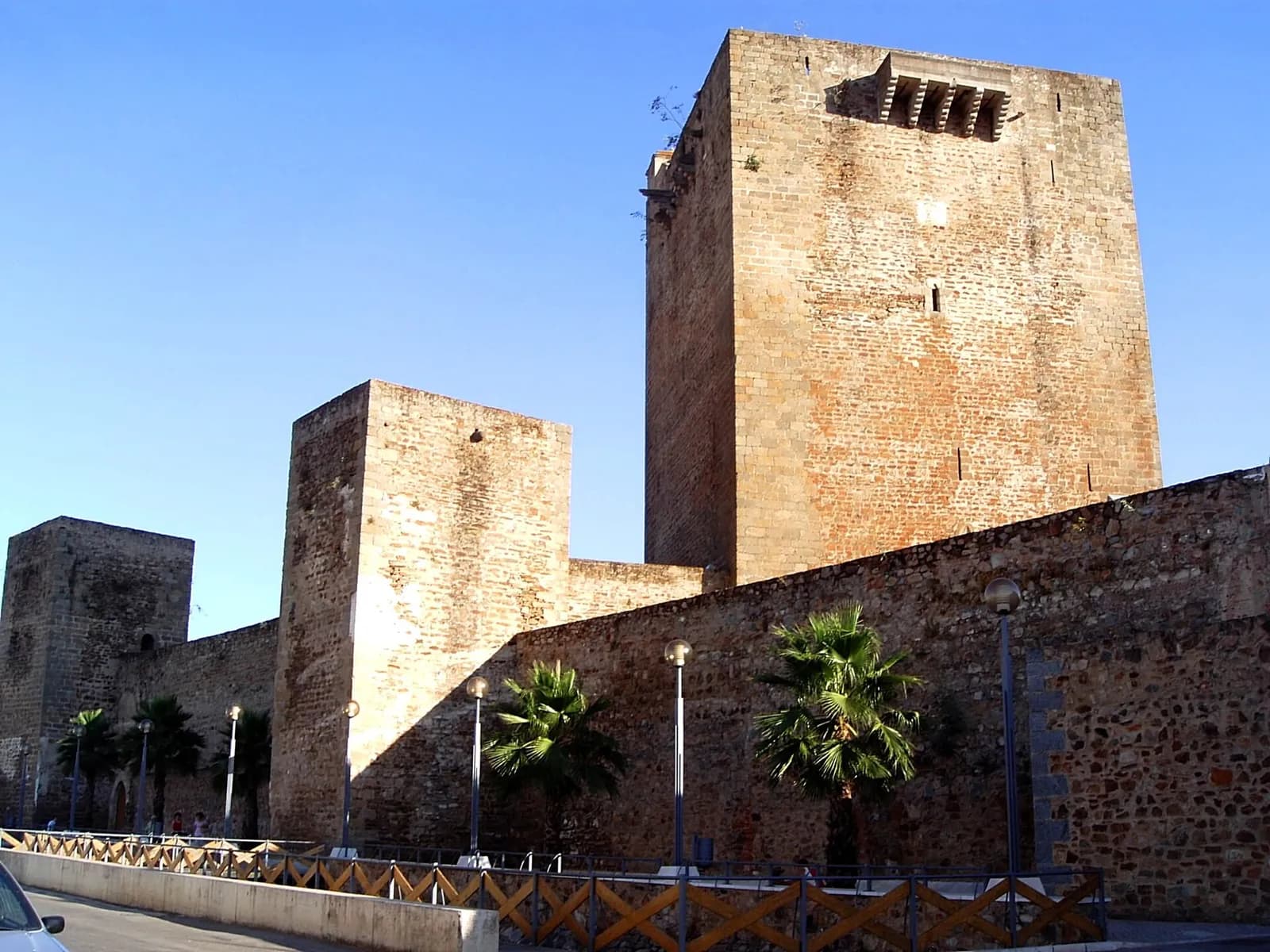
The promise to respect borders also left one question open. Portuguese nationalist groups, among them a Sociedade Pró-Olivença registered in 1938 and later the Grupo dos Amigos de Olivença, kept up the claim to Olivenza throughout the life of the pact, to the irritation of both dictatorships. The town remained under Spanish rule, and the dispute outlived Salazar and Franco.
For Portugal's democratic memory the pact is part of the record of the dictatorship. Lisbon's Museu do Aljube, a museum of resistance and freedom, marked its anniversary in 2026 by recalling the Viriatos, the arms that reached Franco through Portuguese ports and the refugees handed over to his side.
FAQs
What was the Iberian Pact?
It was the Treaty of Friendship and Non-Aggression between Portugal and Spain, signed in Lisbon on 17 March 1939 by Salazar and Nicolás Franco. Each country promised to respect the other's borders, not to attack it, not to help an attacker and not to join an alliance against it.
Did the Iberian Pact keep Spain out of the Second World War?
It helped Salazar press Franco towards neutrality, through the 1940 protocol, the Seville meeting of 1942 and the Iberian Bloc. Historians differ on how much it counted. Kaczorowski credits Portugal with strengthening Franco's will to stay neutral; Gómez de las Heras and Sacristán argue that Spain came close to joining the Axis in 1940 and stayed out mainly because of its weakness, British pressure on its supplies and Hitler's turn against the Soviet Union.
How did the pact fit with Portugal's alliance with Britain?
The preamble stated that neither side's existing obligations to other powers conflicted with the treaty, which left the Anglo-Portuguese alliance intact. Britain was kept informed during the negotiations and raised no objection.
When did the Iberian Pact end?
It was renewed in 1948 and given a third protocol in 1970. The Treaty of Friendship and Cooperation, signed in Madrid on 22 November 1977 by Adolfo Suárez and Mário Soares, repealed it, and came into force on 5 May 1978.
What was the Iberian Bloc?
It was the name given to the closer Portuguese-Spanish understanding announced during the Spanish foreign minister Count Jordana's visit to Lisbon from 18 to 22 December 1942, when both governments proclaimed a bloc of mutual friendship and peace that would keep the peninsula out of the war.
On the timeline
Open the timelineNearby moments from dictatorship and the estado novo (1926–1974).
Anarchists including Emídio Santana detonate a bomb hidden in a sewer on Avenida Barbosa du Bocage in Lisbon as António de Oliveira Salazar steps out of his car to attend Sunday Mass at a friend's private chapel. The blast goes off only a few metres away but the dictator is unhurt; thanksgiving Masses are said across the country and the failed attack burnishes his providential image.
Jorge Nuno Pinto da Costa is born in Porto. President of FC Porto for 42 years, from 1982 to 2024, he oversaw two European Cups (1987 and 2004), two UEFA Cup/Europa League titles and more than 20 league championships, and turned the club into the dominant force in Portuguese football. He died in February 2025.
Film-maker João César Monteiro is born in Figueira da Foz. The great provocateur of Portuguese cinema, he won a Silver Lion at Venice for 'Recordações da Casa Amarela' (1989), playing his own lecherous alter ego, João de Deus, and later scandalised audiences with 'Branca de Neve', a film that is largely a black screen.
The Iberian Pact of 1939
Portugal and Spain sign the Treaty of Friendship and Non-Aggression (Iberian Pact) in Lisbon, each promising to respect the other's borders and not to help an attacker. Salazar later used it to press Franco's Spain to stay out of the Second World War.
As Germany invades Poland, António de Oliveira Salazar's government announces that Portugal's centuries-old alliance with Britain remains intact but that, since London has not asked for its help, the country will stay neutral — a position the Estado Novo maintained throughout the Second World War.
Jorge Sampaio, lawyer, opponent of the Estado Novo dictatorship and later Mayor of Lisbon and President of Portugal from 1996 to 2006, is born in Lisbon.
Carlos do Carmo is born in Lisbon, the son of the fadista Lucília do Carmo, and grows up around his parents' fado house, O Faia. His 1977 album 'Um Homem na Cidade' became a landmark of modern fado, and in 2014 he became the first Portuguese artist to receive the Latin Grammy lifetime achievement award.
Coming up in history
All long reads 19 March 1933The 1933 plebiscite: how silence approved Salazar's constitution
 20 March 1602The Dutch East India Company and Portugal's war for Asia, 1602–1663
 21 March 1846Rafael Bordalo Pinheiro: the Lisbon cartoonist who invented Zé Povinho
 22 March 1312Vox in excelso: how Portugal's Templars became the Order of Christ
16 sources
Archives, scholarship and reporting this article was checked against.
- 1
España y Portugal (José Sebastián de Erice), with the texts of the Treaty of Friendship and Non-Aggression of 17 March 1939 and its protocols of 29 July 1940 and 20 September 1948Cuadernos de Política Internacional, no. 1 (1950), pp. 215–223; Centro de Estudios Políticos y Constitucionales
- 2
España y Portugal durante la segunda guerra mundial (M. Soledad Gómez de las Heras and Esther Sacristán)Espacio, Tiempo y Forma, Serie V, Historia Contemporánea, no. 2 (1989), pp. 209–225, UNED
- 3
The Franco–Salazar Meetings: Foreign policy and Iberian relations during the Dictatorships (1942–1963) (Maria Inácia Rezola)e-Journal of Portuguese History, vol. 6, no. 2 (Winter 2008), via CEPESE
- 4
El incordio ibérico: Oliven(z/ç)a, el lobby ultranacionalista portugués y la frontera irredenta (c. 1936–1968) (Carlos Píriz)Rubrica Contemporanea, vol. XI, no. 22 (2022), Universitat Autònoma de Barcelona
- 5
Instrumento de Ratificación del Tratado de Amistad y Cooperación entre España y Portugal, hecho en Madrid el día 22 de noviembre de 1977Boletín Oficial del Estado, no. 128, 30 May 1978, pp. 12443–12444
- 6
Preparativos secretos de Franco para atacar Gibraltar (1939–1941) (Manuel Ros Agudo)Cuadernos de Historia Contemporánea, no. 23 (2001), pp. 299–313, Universidad Complutense de Madrid
- 7
Crónicas de guerra: la matanza de Badajoz y la batalla del Alcázar de Toledo en la prensa portuguesa (Clara Sanz-Hernando)Ler História, no. 77 (2020), pp. 159–180
- 8
Viriatos. Portugalscy żołnierze generała Franco (Bartosz Kaczorowski)Acta Universitatis Lodziensis. Folia Historica, no. 97 (2016), pp. 165–181
- 9
A short story of 1st December (José Miguel Sardica)Universidade Católica Portuguesa
- 10
O franquismo e o salazarismo (Ana Vicente)Janus 1999–2000, Universidade Autónoma de Lisboa and Público
- 11
The Viriatos: Portugal Supports FrancoVirtual Spanish Civil War (online exhibition)
- 12
Pacto IbéricoMuseu do Aljube: Resistência e Liberdade (EGEAC), 17 March 2026
- 13
Meeting Between Franco and Hitler in Hendaye, 23 October 1940Virtual Spanish Civil War (online exhibition)
- 14
Franco y Salazar en Sevilla, cuando España y Portugal se hicieron “amigos” (Manuel Yaben)El Independiente, 12 February 2022
- 15
The Chargé in Spain (Beaulac) to the Secretary of State, Madrid, 4 March 1942 (telegram 216)Foreign Relations of the United States, 1942, vol. III, Europe, document 238, Office of the Historian, US Department of State
- 16
Real Alcázar de Sevilla: official websitePatronato del Real Alcázar de Sevilla
Image credits
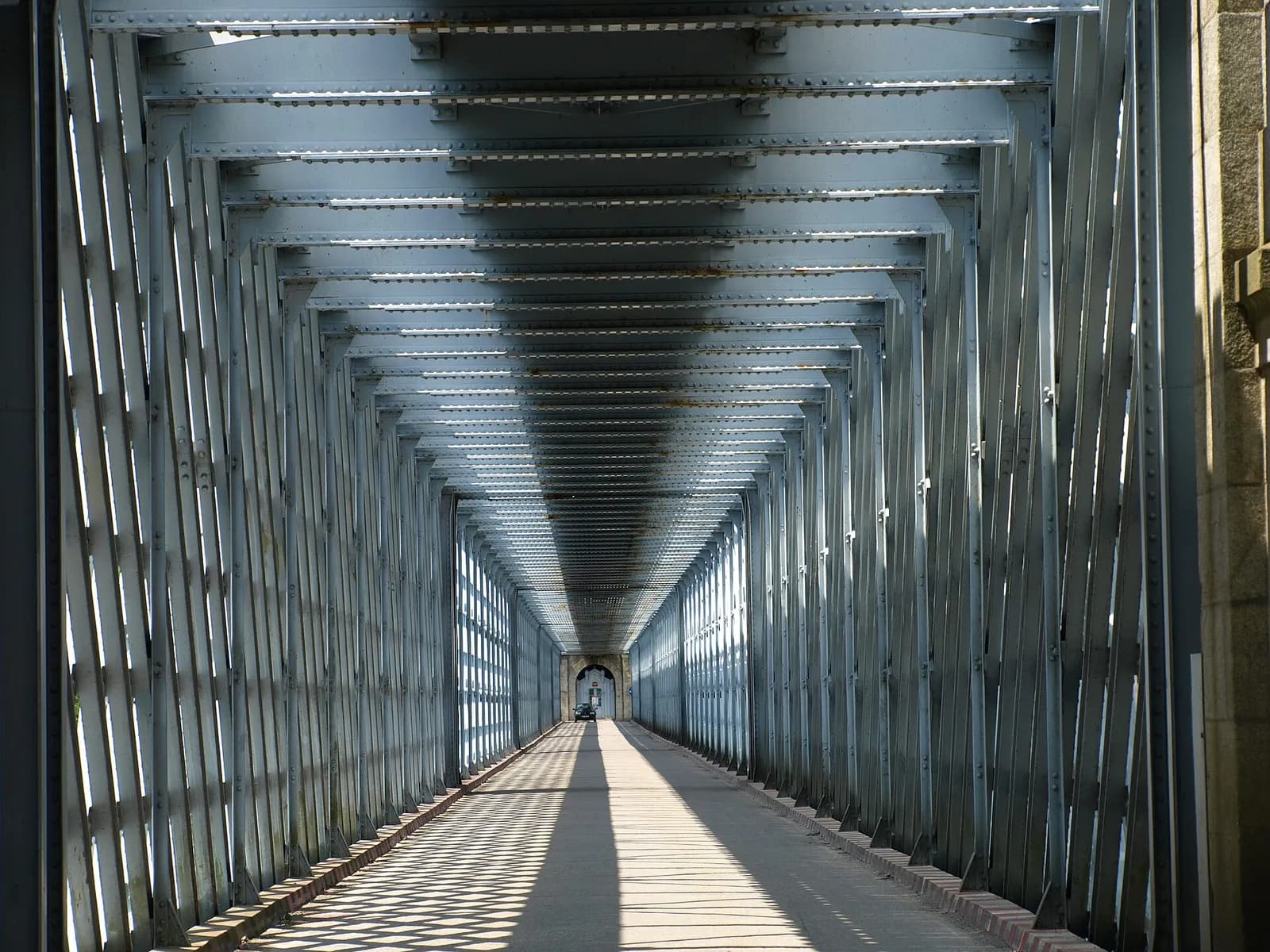
- Inside the international bridge over the river Minho between Valença, in Portugal, and Tui, in Spain, photographed in 2008. The first article of the 1939 treaty bound both countries to absolute respect for this border. Francisco Puente, CC BY-SA 2.0, via Wikimedia Commons.
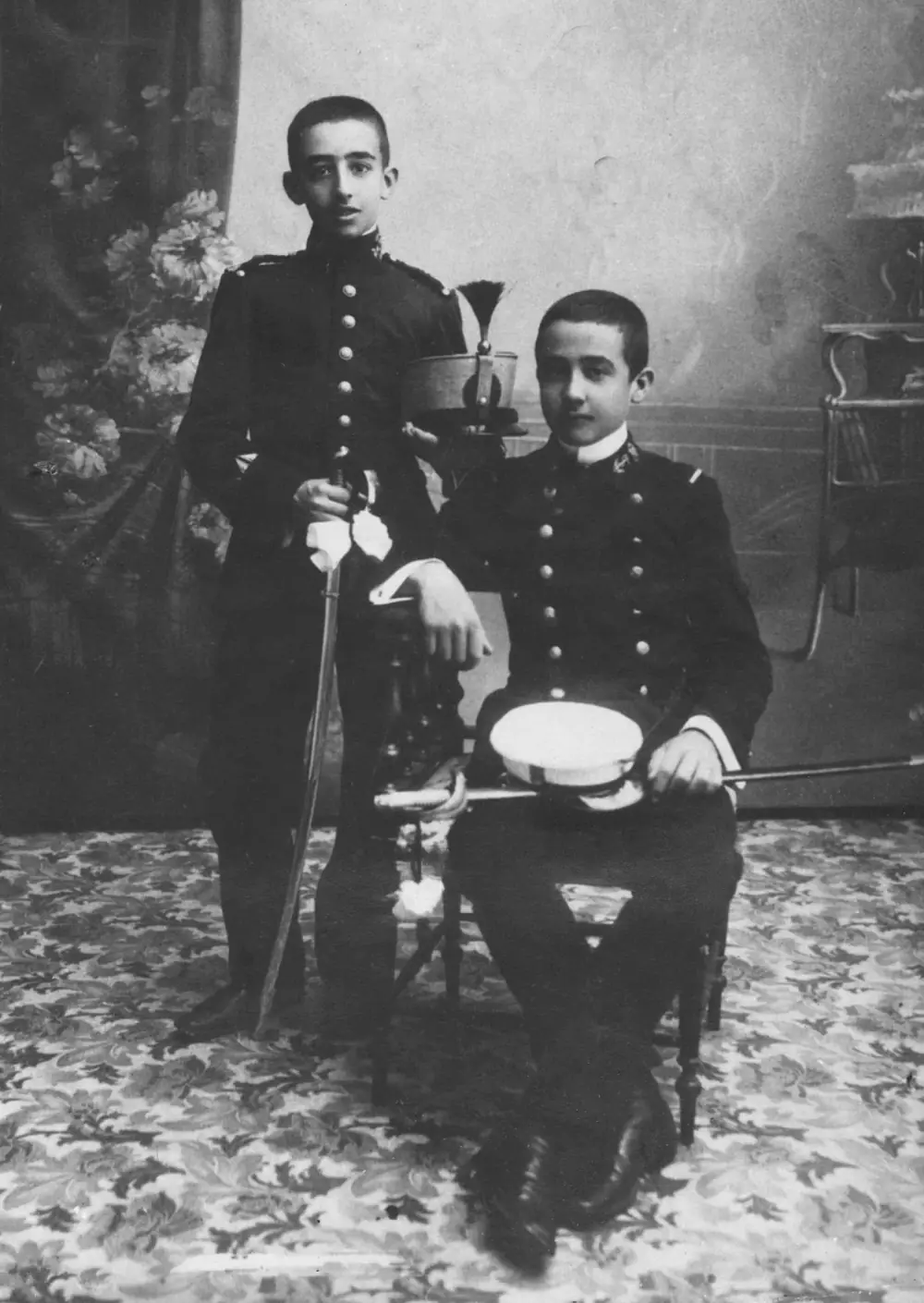
- Francisco Franco, standing in infantry uniform, and his brother Nicolás, seated in the uniform of a naval cadet, in 1907. Thirty-two years later Nicolás, by then Spain's ambassador in Lisbon, signed the Iberian Pact on his brother's behalf. Unknown author, Public domain, via Wikimedia Commons.
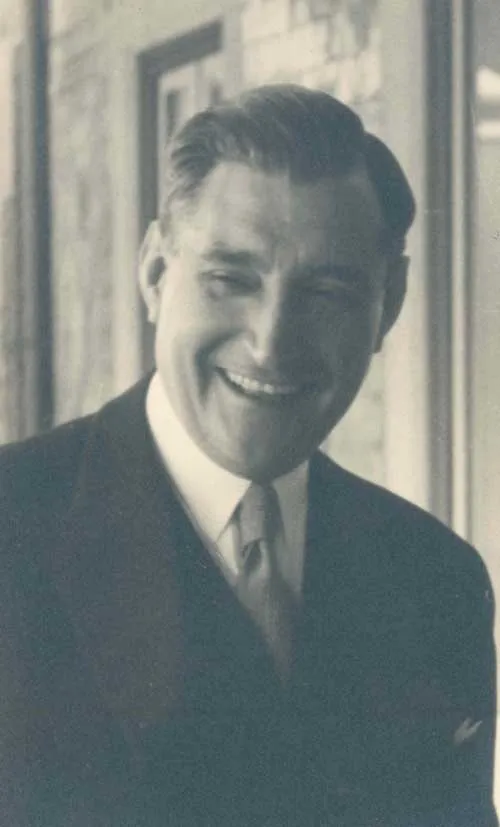
- António de Oliveira Salazar in a photograph dated 1939, the year he signed the Iberian Pact. He was then both head of the Portuguese government and foreign minister. Unknown author, Public domain, via Wikimedia Commons.
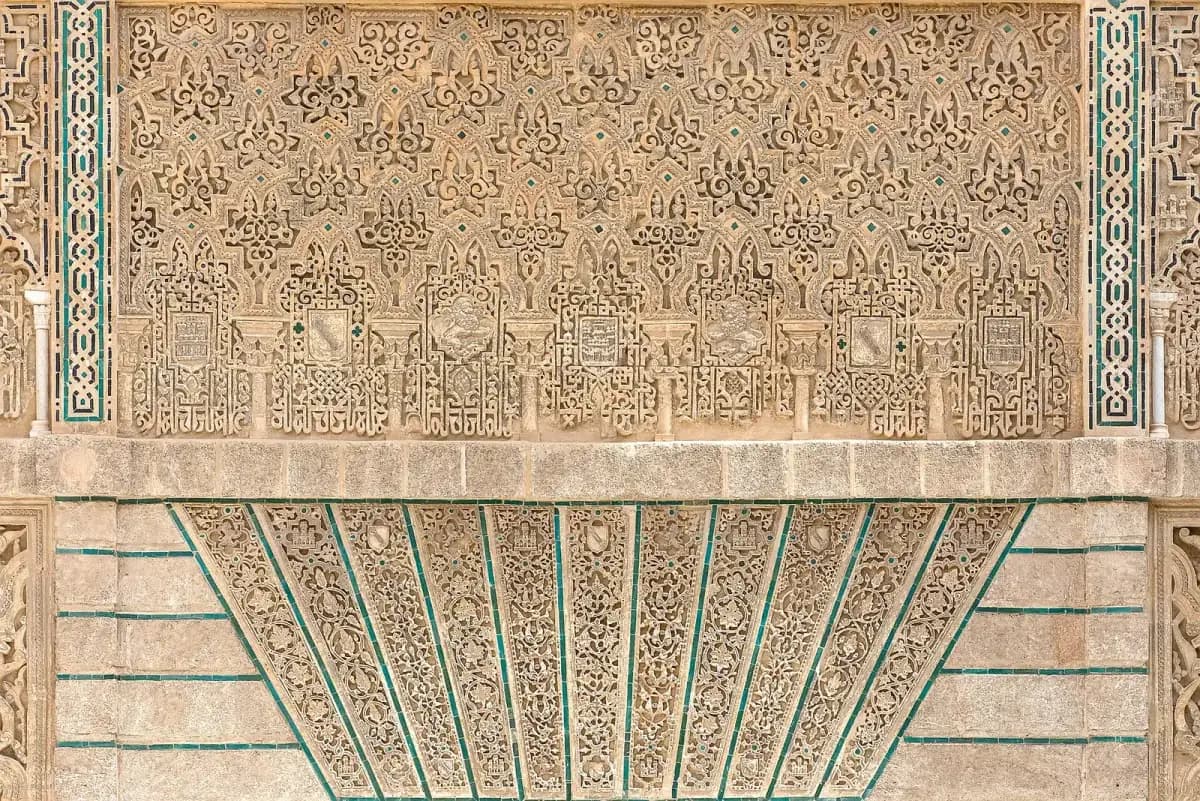
- Carved decoration on the facade of the Palace of Peter I in the Real Alcázar of Seville, photographed in 2024. Franco received Salazar in his office in the Alcázar in February 1942. Benjamin Smith, CC BY-SA 4.0, via Wikimedia Commons.
- The castle of Olivenza (Olivença in Portuguese), a town held by Spain since 1801 and still claimed by Portuguese nationalist groups while the Iberian Pact was in force. User:Alfons024, Public domain, via Wikimedia Commons.