

Mozambique's midnight: independence at Machava, 25 June 1975
Ten years of guerrilla war ended with nine months of shared government, two bloody riots in the capital and a midnight ceremony in a stadium once named after Salazar. Tens of thousands of Mozambique's white residents had already gone.
At a glance
- At midnight on 24 to 25 June 1975, in the Machava stadium outside Lourenço Marques, Samora Machel proclaimed the independence of the People's Republic of Mozambique and became its first president.
- The date was the 13th anniversary of the founding of FRELIMO, the Mozambique Liberation Front, which had fought Portuguese rule since 25 September 1964.
- The Lusaka Accord of 7 September 1974 handed power to FRELIMO without a referendum or elections, through a transitional government in which FRELIMO named the prime minister and six of nine ministers.
- Riots in Lourenço Marques in September and October 1974 killed anything from dozens to thousands of people by the widely differing estimates, mostly Black residents of the suburbs in September, and sped up the departure of the settlers.
- Most of the white population, almost 200,000 in 1974 by one estimate, left within about a year and a half, many for South Africa and Rhodesia. The 1981 census counted 158,945 people in Portugal who had come from Mozambique, not all of them white.
Midnight at Machava
The stadium at Machava, on the outskirts of Lourenço Marques, had been built as the Estádio Salazar. That is where, in the night of Tuesday 24 June 1975, the country was born. At midnight the Portuguese flag came down and the flag of the new state went up, and Samora Machel, the president of FRELIMO, read out the proclamation.
“In your name, at zero hours today, 25 June 1975, the Central Committee of FRELIMO solemnly proclaims the total and complete independence of Mozambique and its constitution as the People's Republic of Mozambique.”
He began with words FRELIMO had used almost eleven years earlier, on 25 September 1964, when it proclaimed “general armed insurrection” in the name of “workers and peasants”, students and “Mozambican soldiers in the Portuguese army”. He recalled the founding of the front under Eduardo Mondlane, and declared that the new republic “is born of the blood of the People”.
Near the end he turned to the flag. “As we salute our flag, symbol of our victory,” he said, “let us salute its honourable emblems of study, production and combat.” He closed with the movement's slogans: long live FRELIMO, long live the People's Republic of Mozambique, “A luta continua”, the struggle continues.
Portugal sent a large delegation. It was led by the prime minister, General Vasco Gonçalves, and included the ministers Mário Soares, Ernesto Melo Antunes, Álvaro Cunhal and Joaquim Magalhães Mota, and Otelo Saraiva de Carvalho, commander of the revolutionary security force COPCON.
The date had been chosen nine months before, in the Lusaka Accord. It was the anniversary of FRELIMO's founding in 1962.
A colony of eight million
The Portuguese presence in Mozambique went back to the late fifteenth and early sixteenth centuries. Under the Estado Novo, Salazar's dictatorship, the colony relied on African forced labour, which was abolished only in 1961 and had largely disappeared by about 1965. Lisbon held back local industry and foreign investment, which began to arrive in earnest only after 1965.
The regime also encouraged settlers to go, with planned farming colonies such as those in the Limpopo valley. Mozambique had 27,438 white residents in 1940 and 162,967 in the census of 1970, when they were 2 per cent of a population of 8.2 million. By 1974 there were probably close to 200,000. Michel Cahen, a French historian of Mozambique, notes that more than 80 per cent of them lived in towns. The image of Portuguese peasants farming the tropics fitted only a small minority.
White population of Mozambique, 1928 to 1974
people
Census figures for 1928 to 1970 as given by Fernando Tavares Pimenta (2017). The 1974 bar is his estimate of “almost 200,000”, not a count.
Show the data
| White residents | |
|---|---|
| 1928 | 17,842 |
| 1940 | 27,438 |
| 1950 | 48,213 |
| 1960 | 97,245 |
| 1970 | 162,967 |
| 1974 | 200,000 |
FRELIMO and ten years of war
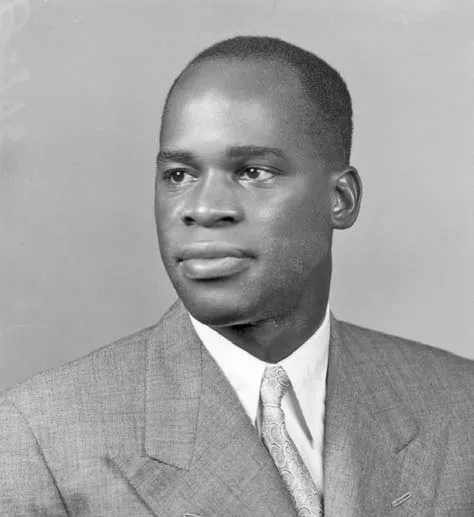
FRELIMO, the Frente de Libertação de Moçambique, was founded in Dar es Salaam, in Tanganyika (now Tanzania), on 25 June 1962. It brought together exile groups such as UDENAMO, and not all of their leaders came along. Its first president was Eduardo Mondlane.
The war began on 25 September 1964. Its main theatre was the far north, in Cabo Delgado, where the Makonde people were the backbone of the insurgency. In the early years the Portuguese controlled some 80,000 Makonde and FRELIMO an estimated 120,000. From 1966 the army kept the fighting contained in the north.
On 3 February 1969 Mondlane was assassinated in Dar es Salaam. The leadership passed to a three-man presidency of Uria Simango, Samora Machel and Marcelino dos Santos, which Cahen says was never meant to work. Simango was pushed aside and expelled, and Machel, a former nurse who commanded the guerrilla army, emerged as leader.
In July 1970, by the historians Bruno Cardoso Reis and Pedro Aires Oliveira's dating, General Kaúlza de Arriaga launched Operation Gordian Knot against the northern bases with some 8,000 men, which they call the largest Portuguese force ever used in a single operation. The offensive sped up FRELIMO's move into Tete and the centre of the country. There Arriaga resettled villagers and recruited Africans until locally raised troops were more than half his army. The massacre at Wiriyamu in December 1972 came out of that campaign.
By 1972 the guerrillas had reached Manica and Sofala, near Beira, and the settlers grew afraid. In January 1974, after a settler was reportedly killed in a FRELIMO attack, white crowds in Beira and Vila Pery demonstrated against the army. Cahen sees those protests, and the officers' sense that they were fighting for people who did not value them, among the reasons the Captains' Movement grew in Mozambique as well as in Guinea.
From the revolution to the table
The revolution of 25 April 1974 promised to end the wars, but the new government's first offer fell far short of independence. When Portuguese and FRELIMO delegations first met formally in Lusaka, the capital of Zambia, on 5 and 6 June, Mário Soares and his colleagues were sent to obtain a ceasefire with only a general reference to self-determination, and to press for a referendum.
FRELIMO demanded three things: recognition of the right to complete independence, transfer of sovereignty to the institutions representing the Mozambican people, meaning FRELIMO, and recognition of itself as their legitimate representative.
The talks were suspended and FRELIMO stepped up the fighting. Portuguese units began making their own local truces, and on 1 August an army company at Omar, on the Tanzanian border, was surrounded, disarmed and taken prisoner to Tanzania. The Armed Forces Movement (MFA) in Mozambique told Lisbon that the alternative to recognising FRELIMO was military collapse.
Lisbon gave way. Law 7/74 of 27 July accepted that the colonies had a right to independence. Between 30 July and 2 August, in secret, Melo Antunes met Machel in Dar es Salaam and agreed to negotiate on FRELIMO's terms. Portugal proposed a transition of four or five years; FRELIMO wanted nine months and independence by 25 January 1975. On 29 August the Council of State approved the draft unanimously. Spínola called it “more painful” than the deal with Guinea's PAIGC.
Nineteen points signed in Lusaka
The final round took place in Lusaka from 5 to 7 September 1974. Machel signed for FRELIMO; Melo Antunes, Soares, António de Almeida Santos, Vítor Crespo and four others signed for Portugal. In Lourenço Marques, according to the Lisbon paper A Capital, more than 60,000 people went to a FRELIMO rally at the Machava stadium on 5 September to mark the reopening of the talks.
| Point | Provision |
|---|---|
| 1 | Portugal, having recognised the Mozambican people's right to independence, agrees with FRELIMO to transfer its powers over the territory progressively |
| 2 | Full independence to be proclaimed on 25 June 1975, the anniversary of FRELIMO's founding |
| 3 to 4 | A High Commissioner named by Portugal's president represents Portuguese sovereignty and promulgates the transitional government's decrees |
| 6 to 7 | A transitional government: a prime minister named by FRELIMO and nine ministers, two-thirds named by FRELIMO and one-third by the High Commissioner |
| 8 to 9 | A joint military commission with equal numbers from each side; ceasefire from 00:00 on 8 September 1974, Mozambique time |
| 15 | Being Mozambican defined by voluntary identification with the nation, not by skin colour; status of Portuguese residents left to later agreements |
| 16 | A central bank to take over the Mozambique business of the Banco Nacional Ultramarino |
Summarised from the published text of the 19 points. Point 14 also made FRELIMO responsible for debts Portugal had taken on in Mozambique's genuine interest.
The accord made no provision for a referendum on independence or for multiparty elections. Every other political group was left out. For many settlers that was the point of anger: nobody had asked them. Machel had answered the referendum idea in advance.
“You do not ask a slave whether he wants to be free.”
Point 15 was FRELIMO's offer to the settlers. In translation, it said that “the quality of being Mozambican is not defined by the colour of one's skin, but by voluntary identification with the aspirations of the Mozambican nation”. The accord was published in Lisbon's official gazette on 9 September.
Four days at Rádio Clube
On the day of the signing, a crowd in Lourenço Marques seized Rádio Clube de Moçambique, the main radio station, and for a time the airport. Behind it were the Movimento Moçambique Livre, which joined white and Black opponents of FRELIMO, and a youth militia called the Dragões da Morte. Renamed Rádio Liberdade, the station appealed to Portuguese special forces in the north and to South African troops on the border. Neither came.
Armed young extremists raided the poor suburbs, the “cidade do caniço” (reed city), and shot at Black residents. The suburbs rose and thousands marched on the “cement city” where the whites lived, and white people were killed in turn.
Commandos led by an officer who was secretly a FRELIMO member retook the station and broadcast the code phrase “Galo amanheceu”, meaning that FRELIMO's clandestine “Galo” (Rooster) group had taken it back. The rebels surrendered on 10 September, according to the Portuguese commission marking 50 years of the revolution; Pimenta writes that paratroopers ended it on the 11th.
Nobody knows how many died. The commission speaks of dozens of dead and hundreds wounded. Cahen cites estimates from 400 to 3,000. Carlos Camilo, an MFA officer, reported 7 white and 300 Black dead; Ricardo Saavedra, in a book published in Johannesburg in 1975, put the total at 1,500.
On 21 October 1974 a clash involving a company of Portuguese commandos set off new riots, this time aimed mostly at white people. Pimenta counts 50 white dead; Cahen writes of “hundreds and hundreds” of white victims, including whole families burned alive in their cars. Thousands more white residents left for South Africa.
Nine months of shared government
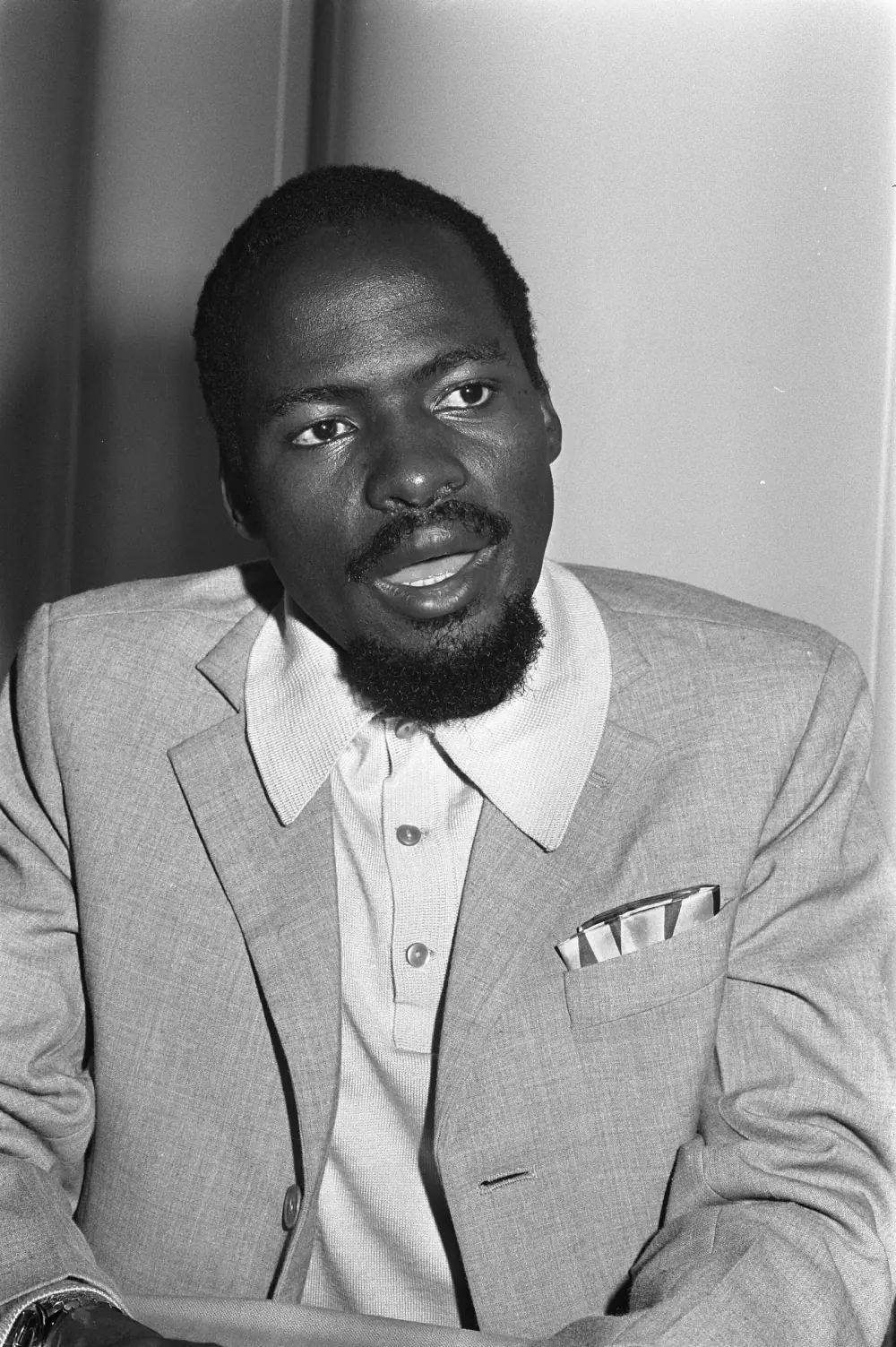
Admiral Vítor Crespo took office as High Commissioner on 10 September and arrived in Lourenço Marques two days later. The transitional government was sworn in on 20 September, according to Cahen; other accounts give the 21st or 22nd. Its prime minister was Joaquim Chissano of FRELIMO, and six of its nine ministers were FRELIMO's choices.
FRELIMO's opponents had nowhere to go. Uria Simango had appeared at Rádio Clube in September. In May 1975, at FRELIMO's camp at Nachingwea in Tanzania, he was made to read a self-criticism and ask to be “re-educated”. He was later shot without trial, probably in 1977, along with Joana Simeão and other opponents.
Machel himself came back only in May 1975. He began at the Rovuma river, on the Tanzanian border, and travelled the length of the country to the capital, which he had left to join the struggle. His radical speeches on that journey alarmed many of the remaining settlers.
25 June 1962
FRELIMO founded in Dar es Salaam
25 September 1964
FRELIMO launches the armed struggle
3 February 1969
Eduardo Mondlane assassinated in Dar es Salaam
July 1970
Operation Gordian Knot in the north
25 April 1974
Revolution in Lisbon
5 to 6 June 1974
First talks in Lusaka end without agreement
27 July 1974
Law 7/74 recognises the colonies' right to independence
1 August 1974
A Portuguese company is captured at Omar
7 September 1974
Lusaka Accord signed; revolt at Rádio Clube begins
8 September 1974
Ceasefire from midnight
20 to 22 September 1974
Transitional government under Joaquim Chissano sworn in (sources differ on the day)
21 October 1974
New riots in Lourenço Marques
May 1975
Machel returns and begins a tour of the country
25 June 1975
Independence proclaimed at the Machava stadium
A people's republic under one party
The new constitution was written by FRELIMO's Central Committee and dated independence day. It made the president of FRELIMO the president of the republic and commander-in-chief. Machel, aged 41, held both posts. The proclamation said the state would be directed by FRELIMO and that “the primacy of the decisions and structures of the Party over those of the Government” would be asserted at every level.
Vasco Gonçalves came home pleased. Speaking on his return on 26 June, he praised Admiral Crespo and the friendship being built since Lusaka.
“We have done everything to bury the past, so that there are no more scars.”
Relations between the two countries were cordial but cool, and strained in 1976 when Portugal was slow to recognise the new government in Angola, which had become independent on 11 November 1975 in the middle of a civil war. Closer cooperation began only around 1980. The historian Norrie MacQueen judges Portugal's relations with Mozambique the most difficult it had with any of its former colonies.
The settlers leave
The exodus had begun before the accord. In August 1974 armed groups attacked white and Indian families around Quelimane and Nampula, and about a thousand white people a week were leaving. After the September and October riots thousands more crossed to South Africa and Rhodesia, or flew to Portugal.
Independence did not stop it. In July 1975 the new state nationalised education and social services, and in February 1976 land and housing. Thousands of people judged “reactionary” or “unproductive” were sent to re-education camps, and by 1978 about 200 Portuguese citizens were reportedly held without trial. The Ismaili Muslim community also left, between 1973 and 1976, and regrouped in Portugal.
- White residents, 1970 census
- 162,967 (2 per cent of 8,168,933)
- White residents, 1974
- Almost 200,000 (estimate)
- People in Portugal who came from Mozambique, 1981 census
- 158,945
- Share of all people displaced from the colonies
- 33.7 per cent; 61.6 per cent came from Angola
- Weekly departures, August 1974
- About 1,000 white people
In Portugal they were all called “retornados”, returnees, though about a third had been born in the colonies. The sociologist Rui Pena Pires's figures are quoted two ways. Pimenta, citing him, gives 471,427 people displaced from all the colonies in the 1981 census, 158,945 of them from Mozambique; Maria João Duarte, also citing Pires, gives 505,078, a third of them from Mozambique. Cahen notes that Mozambique's white population had on average more schooling than Angola's, and more than the population of Portugal itself.
War again, then peace
Peace did not last. According to the Portuguese commemorative commission, Rhodesia's intelligence service founded RENAMO, the Mozambican National Resistance, in 1975 around agents of the Portuguese secret police who had fled Mozambique; former colonial auxiliaries joined it later, and South Africa took over its backing in 1980. Cahen dates it later: a revolt in Zambézia in 1976 began, he writes, before RENAMO existed.
RENAMO's guerrillas killed villagers and destroyed schools, hospitals and railway lines. By the end, 3.7 million people had been displaced inside the country and 1.3 million had fled abroad.
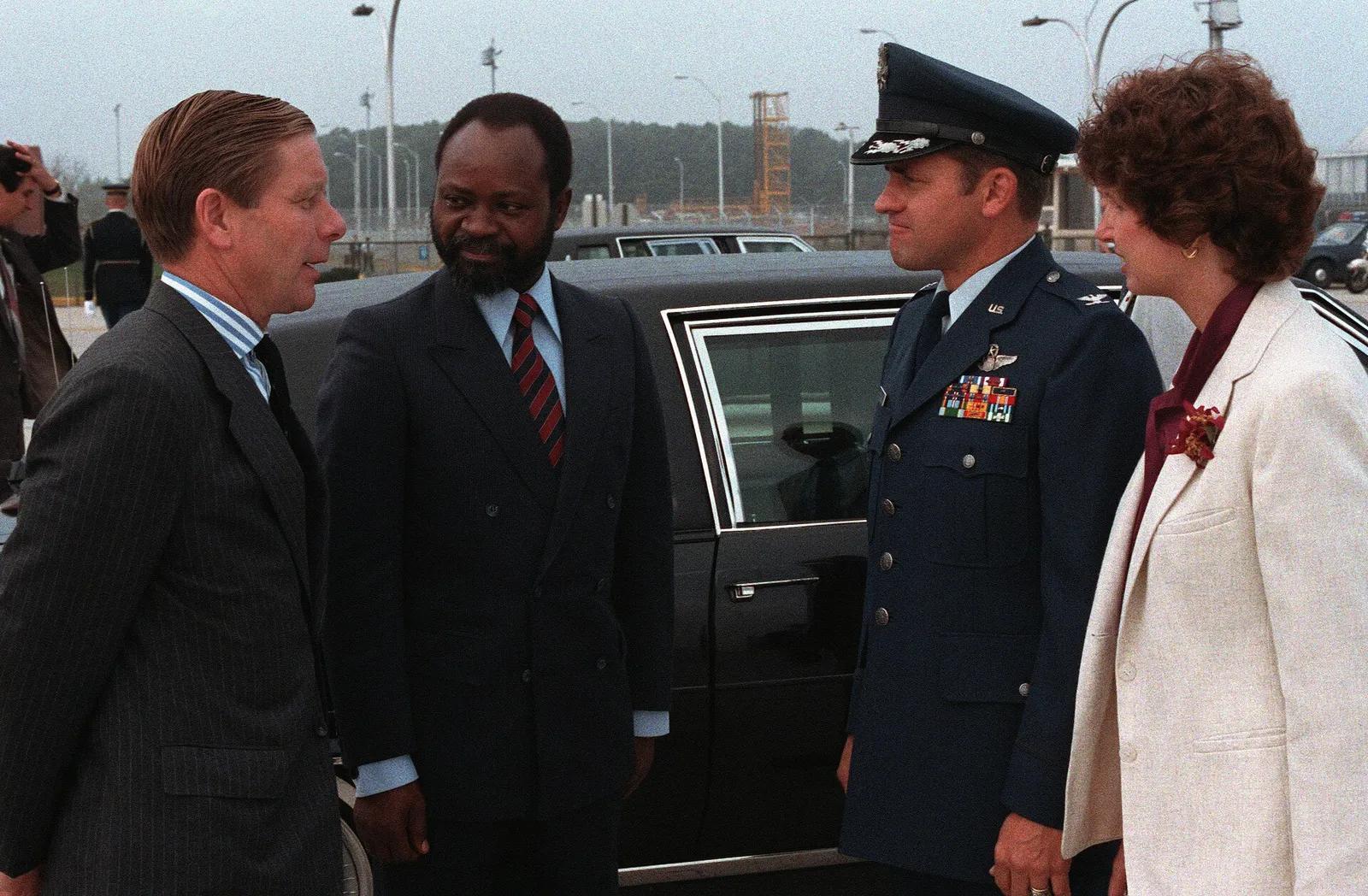
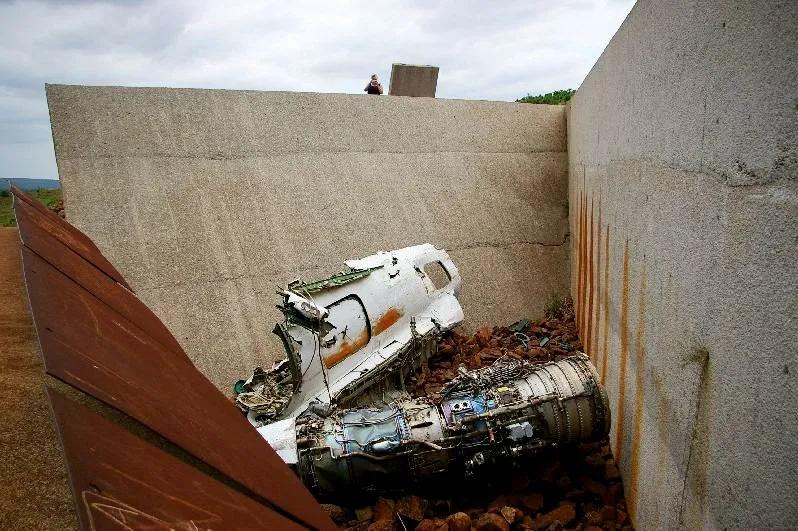
Machel did not see the end of it. On 19 October 1986 his plane crashed in the Lebombo mountains near Mbuzini, in South Africa close to where its borders with Mozambique and Swaziland meet. Accounts of the toll differ. South Africa's Truth and Reconciliation Commission wrote that he and 24 others died; the memorial at the crash site has 35 poles, for Machel and 34 others. Nine passengers survived. He was 53. The cause has never been settled, and many suspected the apartheid government.
The one-party state did not outlive him by long. A new constitution in 1990 broke with the one-party, state-run model and allowed other parties. The government and RENAMO signed a General Peace Agreement in Rome on 4 October 1992, and in October 1994 Mozambique held its first multiparty elections. By the official results, FRELIMO's Joaquim Chissano won the presidency with 53.3 per cent of the vote to 33.7 per cent for RENAMO's Afonso Dhlakama.
Why it still matters
In Portugal the clearest trace is in families. The 1981 census counted 158,945 people in Portugal who had come from Mozambique, about a third of all those displaced from the colonies, and about a third of the retornados had been born in the colonies.
The capital kept its colonial name until 1976, when Lourenço Marques became Maputo. Fifty years on, the anniversary was celebrated in the same stadium at Machava. On 25 June 2025 Portugal's president, Marcelo Rebelo de Sousa, was among the guests. Earlier that morning in Maputo he told reporters that “all of Portugal is with Mozambique”.
FAQs
When did Mozambique become independent from Portugal?
At midnight on 24 to 25 June 1975. Samora Machel, president of FRELIMO, proclaimed the People's Republic of Mozambique at the Machava stadium outside Lourenço Marques, in front of a Portuguese delegation led by Prime Minister Vasco Gonçalves.
What was the Lusaka Accord?
The agreement signed in Lusaka, Zambia, on 7 September 1974 between Portugal and FRELIMO. It set a ceasefire from 8 September, a transitional government led by a FRELIMO prime minister with a Portuguese High Commissioner, and independence on 25 June 1975. It provided for no referendum or elections.
Who was Mozambique's first president?
Samora Machel, born on 29 September 1933 in the village of Chilembene. A former nurse, he joined FRELIMO in 1962, commanded its army and emerged as its leader after Eduardo Mondlane's murder in 1969. He was president from independence until his death in a plane crash at Mbuzini on 19 October 1986.
How many Portuguese left Mozambique at independence?
There are no exact figures for departures, and many went to South Africa and Rhodesia. Of a white population estimated at almost 200,000 in 1974, most left within about a year and a half, the historian Fernando Tavares Pimenta writes of Angola and Mozambique together. The 1981 census counted 158,945 people in Portugal who had come from Mozambique, about a third of all the retornados; not all were white, and the count leaves out those who had moved on or died.
When was Lourenço Marques renamed Maputo?
In 1976, the year after independence. The city had kept its colonial name, after a sixteenth-century Portuguese explorer, through the independence ceremony.
On the timeline
Open the timelineNearby moments from revolution and democracy (1974–1986).
On the revolution's first anniversary Portugal elects its Constituent Assembly, the first election in its history held by truly universal suffrage. Turnout reaches 91.7%. The Socialist Party of Mário Soares wins the most votes and 116 of the 250 seats, a key step in Portugal's transition to democracy.
The workers' committee of the Lisbon daily 'República', led by its print workers, ousts the Socialist-leaning editors and takes over the paper. The 'República Affair' that followed led the Socialists to quit the provisional government in July.
Portugal's Constituent Assembly — 250 deputies chosen on 25 April 1975 in the country's first free elections with universal suffrage — holds its opening session in São Bento. Given ninety days to write a new constitution, it needs ten tumultuous months of revolution; the Constitution it approves on 2 April 1976 is still in force.
Mozambique's independence, 1975
Mozambique becomes independent from Portugal after nearly five centuries of Portuguese presence and a decade of liberation war. At midnight in the Machava stadium, outside Lourenço Marques (renamed Maputo in 1976), FRELIMO's leader Samora Machel proclaims the People's Republic of Mozambique and becomes its first president.
Cape Verde becomes independent from Portugal after more than five hundred years of Portuguese presence. In Praia the new National Assembly proclaims the republic and elects Aristides Pereira of the PAIGC as its first President, another chapter in the decolonisation that followed the Carnation Revolution.
São Tomé and Príncipe becomes independent from Portugal after five centuries of colonial rule, with Manuel Pinto da Costa of the MLSTP sworn in as the new republic's first President.
Portugal's Sixth Provisional Government, led by the naval officer José Pinheiro de Azevedo, is sworn in. The last of the provisional governments after the 1974 revolution, it stays in office until July 1976.
Coming up in history
All long reads 27 June 1214The will of Afonso II, 1214: a king's wishes in early Portuguese
 29 June 1958Rosa Mota, the girl from the Foz who became Olympic marathon champion
 30 June 1991Rui Costa's penalty at the Luz: Portugal's second youth world title, 1991
 1 July 1867Portugal abolishes the death penalty for civil crimes: 1 July 1867
21 sources
Archives, scholarship and reporting this article was checked against.
- 1
Declaração de Independência de Moçambique, de 25 de Junho de 1975: mensagem da proclamação da independência proferida pelo Presidente Samora Machel no Estádio da MachavaCEDIS, Faculdade de Direito da Universidade Nova de Lisboa
- 2
Texto da declaração Portugal-PAIGC (Algiers, 26 August 1974) and Declaração sobre a independência da República da Guiné-Bissau (10 September 1974)Textos Históricos da Revolução, ed. Orlando Neves, reproduced by the Marxists Internet Archive
- 3
O Essencial sobre a Descolonização Portuguesa (António Duarte Silva)Imprensa Nacional-Casa da Moeda, 2026
- 4
7-10 de Setembro de 1974 em Lourenço Marques (Moçambique): uma tentativa de independência branca? (Michel Cahen)Estudos do Século XX 24 (2024), Imprensa da Universidade de Coimbra
- 5
- 6
Moçambique (Portugal na hora da descolonização)Comissão Comemorativa 50 Anos 25 de Abril
- 7
Cutting Heads or Winning Hearts: Late Colonial Portuguese Counterinsurgency and the Wiriyamu Massacre of 1972 (Bruno Cardoso Reis and Pedro Aires Oliveira)Civil Wars, vol. 14, no. 1 (2012), pp. 80–103; copy in the digital library of the Centro de Documentação 25 de Abril, Universidade de Coimbra
- 8
Document of the month, June 2026: the independence of MozambiqueCentro de Documentação 25 de Abril, Universidade de Coimbra
- 9Moçambique: o dia em que o içar de uma nova bandeira pôs fim a 500 anos de colonialismo (César Avó)Diário de Notícias, 24 June 2025
- 10
Samora MachelSouth African History Online
- 11
Moçambique: política de defesa, alianças e ameaçasJanus 2013, Universidade Autónoma de Lisboa
- 12
- 13
- 14
Sob fogo cruzado: da independência à Guerra Civil de Angola (Rui Bebiano)Setenta e Quatro, 23 March 2023 (copy in the Centro de Estudos Sociais catalogue, Universidade de Coimbra)
- 15
Os «retornados» das ex-colónias portuguesas: representações e testemunhos (Maria João Domingues Duarte)Omni Tempore: atas dos Encontros da Primavera 2018, Faculdade de Letras da Universidade do Porto, 2019
- 16
Mozambique: ONUMOZ, summaryUnited Nations Peacekeeping
- 17
Special investigation into the death of President Samora Machel (Truth and Reconciliation Commission of South Africa Report, vol. 2, ch. 6)Truth and Reconciliation Commission, 1998; SABC and South African History Archive
- 18
South Africa builds a fitting memorial to Samora MachelThe World (PRX), 10 March 2017
- 19
MaputoLex.dk (Den Store Danske)
- 20Marcelo diz-se “emocionado” na festa da independência de MoçambiqueObservador / Lusa, 25 June 2025
- 21
Chapo considera 7 de Setembro data para moçambicanos celebrarem a vitóriaAIM, Agência de Informação de Moçambique, 7 September 2024
Image credits
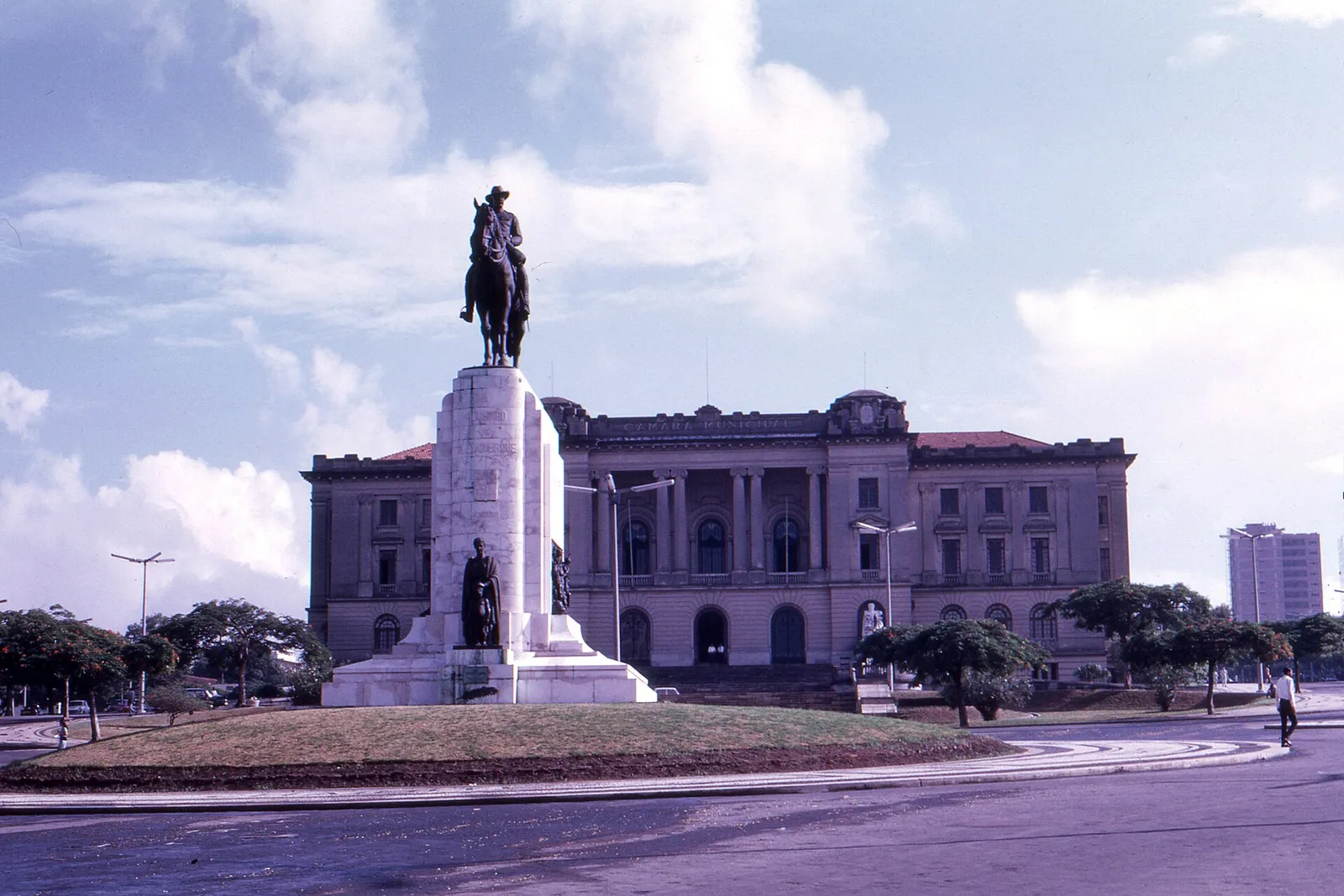
- The main square of Lourenço Marques in 1971, with the statue of the colonial soldier Mouzinho de Albuquerque in front of the city hall. After independence the city became Maputo and the square Praça da Independência. René Speur from The Netherlands, CC BY-SA 2.0, via Wikimedia Commons.
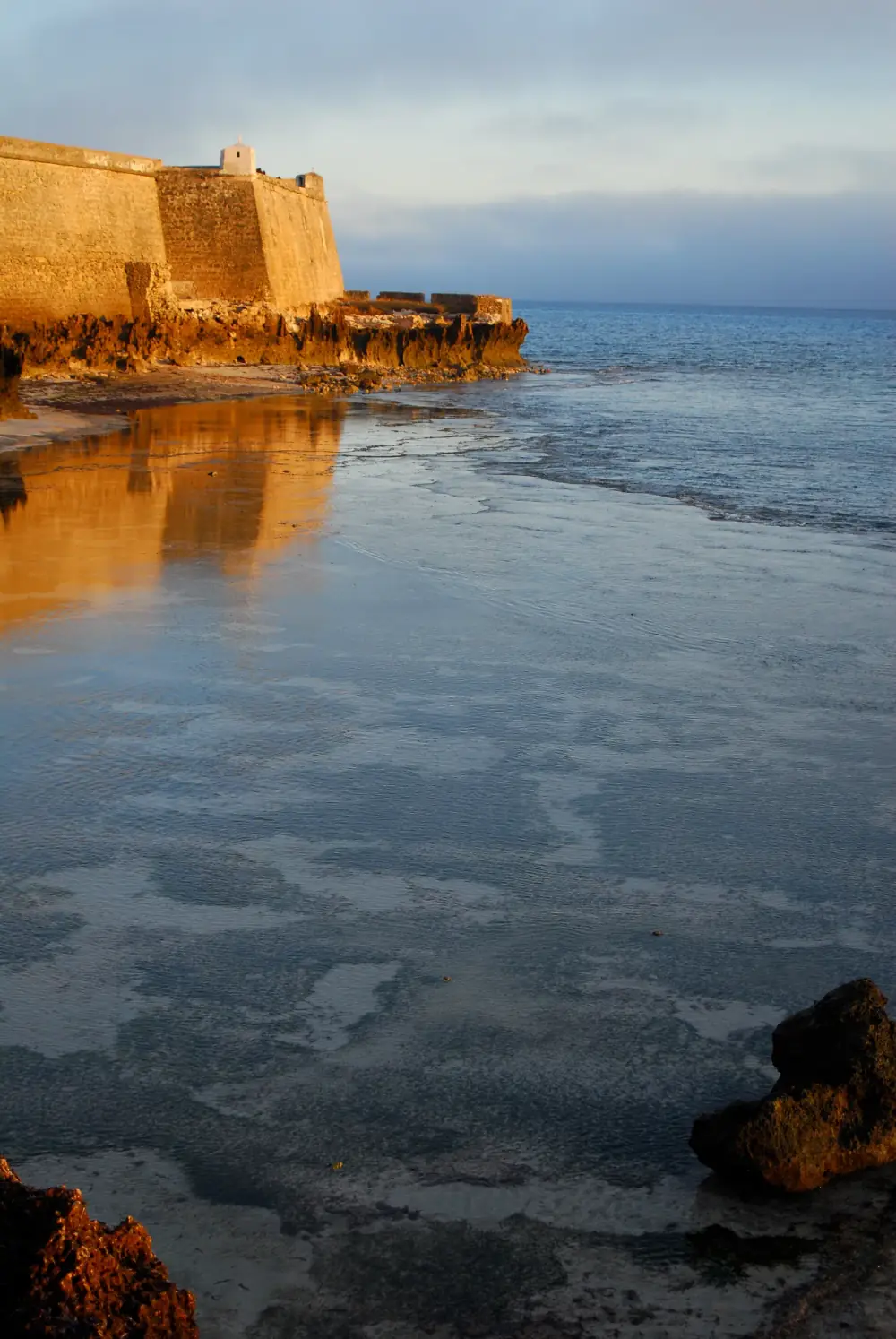
- The Fortress of São Sebastião on the Island of Mozambique, begun by the Portuguese in the sixteenth century on the sea route to India, at dawn in August 2009. F Mira from Lisbon, Portugal, CC BY-SA 2.0, via Wikimedia Commons.
- Eduardo Mondlane in his senior class photograph at Oberlin College, Ohio, in 1953. He later became FRELIMO's first president and was assassinated in Dar es Salaam in 1969. Oberlin College, Public domain, via Wikimedia Commons.
- Joaquim Chissano, then FRELIMO's representative in Tanzania, at Schiphol airport near Amsterdam on 25 August 1972. Two years later he was prime minister of the transitional government. Rob Mieremet / Anefo, CC0, via Wikimedia Commons.
- Samora Machel, president of Mozambique, with US officials as he left the United States at the end of a visit, 21 September 1985. SRA James Simpson, US Department of Defense, Public domain, via Wikimedia Commons.
- Wreckage of Machel's aircraft at the Samora Machel memorial at Mbuzini, South Africa, in 2006. Peter A Levey, CC BY 2.0, via Wikimedia Commons.