

The Belfastada: the steamer that carried Porto's liberal leaders off in 1828
Porto rose for the young Queen Maria II in May 1828 and waited six weeks for generals from London. They arrived in a hired Irish Sea packet, stayed seven days, and left on the same ship while their army marched into Spain.
At a glance
- On Thursday 26 June 1828 the steamer Belfast slipped past a blockade and landed 29 exiled liberals near Matosinhos, north of Porto, led by the Marquis of Palmela.
- They had come from England to take charge of the revolt that Porto's garrison had begun on 16 May against Dom Miguel, who was making himself absolute king in place of his niece, Maria II.
- They arrived as the liberal army was falling back from Coimbra. On 2 July the Porto Junta dissolved itself, and at dawn on 3 July the Belfast sailed for England with the leaders on board.
- General Saldanha had agreed to lead the troops into Spain, went aboard when the officers refused, and woke up at sea. The soldiers and volunteers left behind marched north and reached the Galician frontier on 6 July.
- The episode was mocked as the Belfastada. Thousands of liberals spent the next years in exile in Plymouth, France and Brazil, while the island of Terceira, in the Azores, held out for the queen.
A steamer off Matosinhos
Porto had just heard bad news when the ship appeared. On Thursday 26 June 1828 word reached the city that its little army had abandoned Coimbra and was retreating north. Then a vessel driven by steam was seen north of the mouth of the Douro, heading for the bar. Everyone guessed who was on board: the generals the city had been waiting for since May.
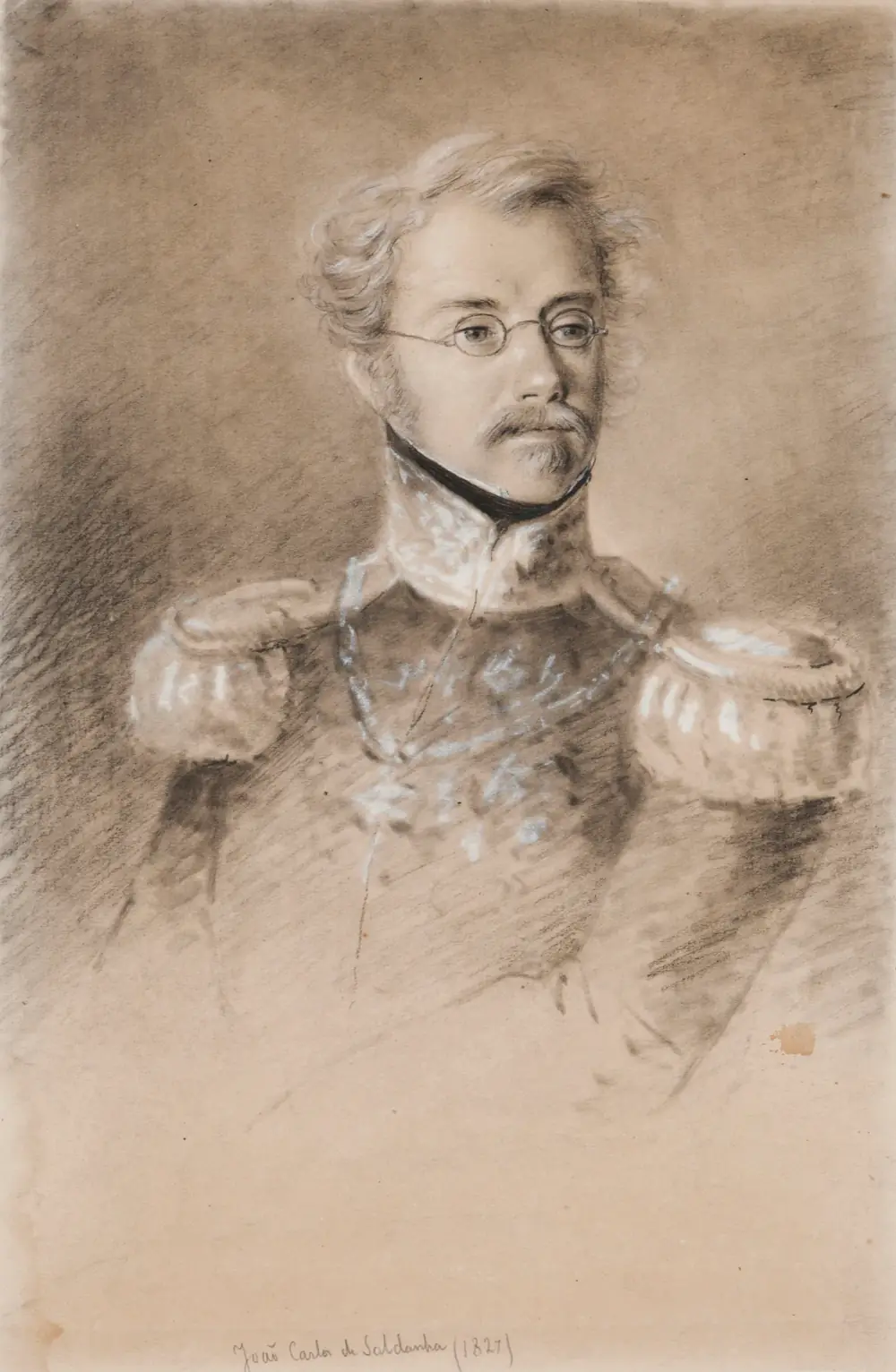
The ship was the Belfast, a wooden paddle steamer hired in England. It slipped past the absolutist warships blockading the river and anchored north of Matosinhos, a fishing town about four miles from Porto. Twenty-nine people came ashore, by the count of Simão José da Luz Soriano, a liberal veteran who wrote the history of these years: the Marquis of Palmela, the Counts of Vila Flor, Sampaio, Taipa and Calhariz, Generals João Carlos de Saldanha and Thomas William Stubbs, and others.
The Countess of Vila Flor had come with her husband, and the walk to the city was too far for her. The Count da Taipa went to a nearby farm to hire an ox cart. The farmer refused at any price, even for the countess and the marquis, until Saldanha's name was mentioned. “What! João Carlos, is he here?” he said, according to Saldanha's biographer, and offered his oxen and everything else. Saldanha had once been governor of Porto.
Crowds packed the streets as the party entered Porto, looking at so many generals and titled men as the saviours of a cause in danger. Seven days later most of them were back on the Belfast, steaming out of the Douro at dawn, and their troops were marching towards Spain.
A regent who made himself king
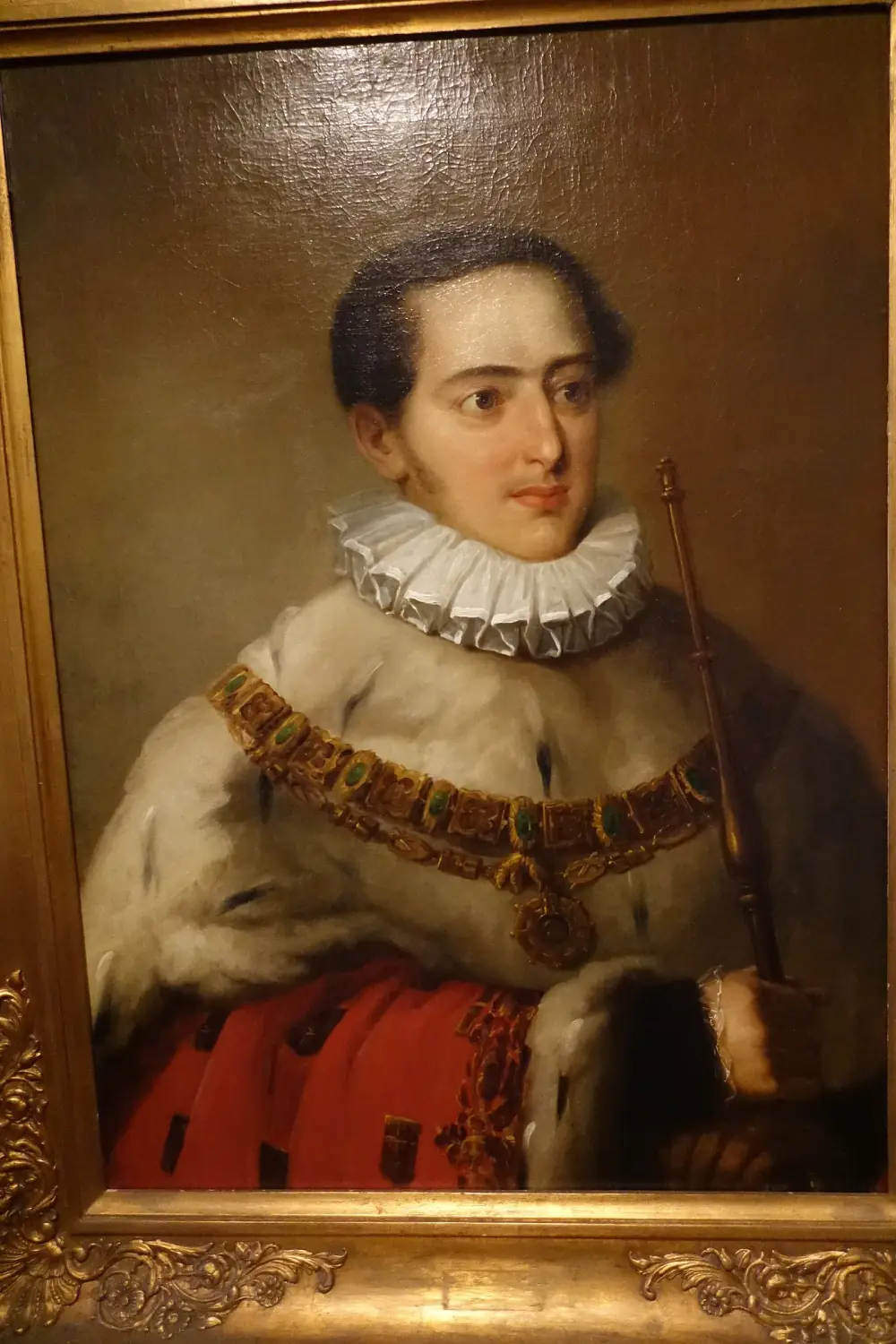
When King João VI died in 1826, his heir Pedro was already Emperor of Brazil. Pedro gave Portugal a Constitutional Charter, with an elected Chamber of Deputies, and abdicated in favour of his daughter Maria, aged seven, on condition that she married her uncle Miguel. Miguel, whom the absolutists saw as their champion, swore to the Charter in Vienna, and Pedro named him regent.
Miguel landed in Lisbon on 22 February 1828 and swore again to uphold the Charter. In March he dissolved the Chamber of Deputies. On 25 April a crowd in Lisbon burned a copy of the Charter while the city council drew up a petition begging him to rule as absolute king. On 3 May he summoned the old Cortes of the three estates, clergy, nobility and towns, which had not met since 1697, to settle the succession.
Not everyone signed up. In Porto the absolutist city council urged Miguel to take the crown on 29 April, but by 2 May only 506 people had signed its petition to him. Even after two more rounds, one of them a summons to ladies of the nobility, the total reached only 968, at least 43 of them from outside the city, according to António Barros Cardoso, a historian at the University of Porto, who follows an 1896 study of the city's politics.
Porto rises, 16 May 1828
The first shout came from Aveiro. On the morning of 16 May the 10th Caçadores, a light infantry battalion, declared Miguel deposed as regent, acclaimed Pedro again at the town hall and marched for Porto. That afternoon in Porto the 6th Infantry Regiment, about 800 men who, by António Barros Cardoso's account, had just returned from Trás-os-Montes after fighting the absolutist rising of the Marquis of Chaves, left its barracks with its band playing the hymn of the Charter, which Miguel had banned in March.
The 6th marched to the Campo de Santo Ovídio, the square in front of the barracks of the 18th Infantry. The 18th's colonel shut the gates, but the band slipped in through a wicket, played the hymn inside, and the companies came out to join them; the colonel followed. The artillery came over, and by the early hours of 17 May so had cavalry and caçadores. The governor, Gabriel António Franco de Castro, left the city to raise the countryside for Miguel.
A provisional Junta was set up on 20 or 22 May, depending on the account, to govern in the name of Pedro IV, and on 28 May it published a manifesto explaining why the army and people had taken up arms. Garrisons in Braga, Penafiel, Coimbra and other towns joined within ten days, and students of Coimbra University took up arms. The army, about 6,000 men in a British count and 5,000 in Saldanha's, advanced south to Coimbra and stopped there.
It stayed on the Mondego for about a month under Brigadier Francisco Saraiva, a commander the soldiers hardly knew. Most observers thought a quick march on Lisbon would have won: Saldanha wrote later that only one infantry brigade stood between Coimbra and the capital. Lisbon used the time. It declared Porto blockaded on 22 May, raised forced loans, filled the city's prisons, nearly 3,000 people by mid-June in one British count, and sent troops north under Álvaro Xavier da Fonseca Coutinho e Póvoas.
Rivals in London
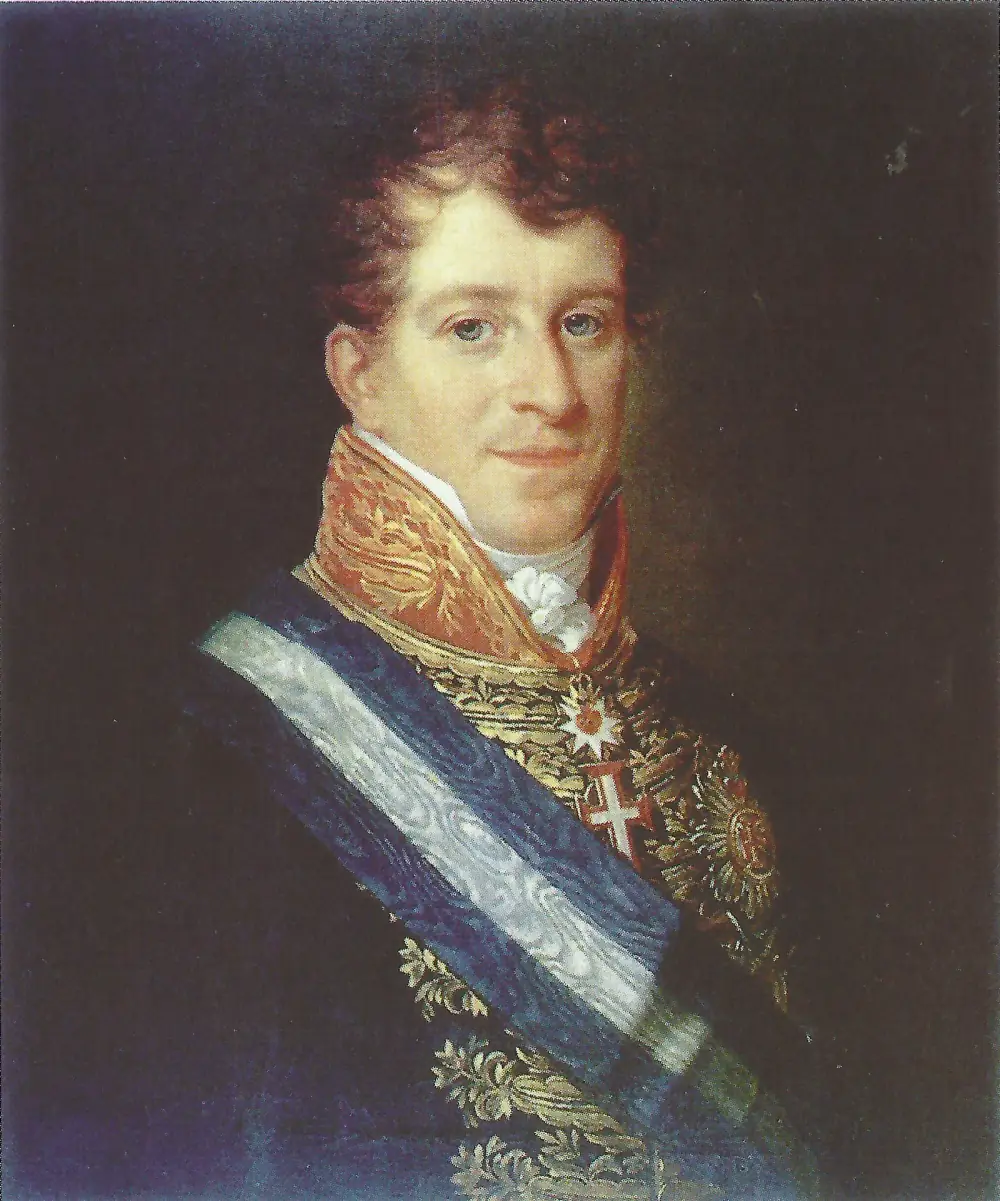
The men who could have led the revolt were in England. Palmela, a diplomat, had been the regency's ambassador in London and resigned when Miguel's decree of 3 May appeared. Saldanha, aged 37, a soldier and former minister of war, had left Portugal in 1827. The Junta sent word to London at once, and the Brazilian envoys representing Pedro, the Marquis of Resende and the Viscount of Itabaiana, recognised its authority.
Saldanha wanted to go immediately. A small schooner was chartered for him at Plymouth, and he had agreed with Itabaiana to sail with General Stubbs. Then Palmela asked to be part of it. The liberals were split between moderates, led by Palmela, and progressives, who looked to Saldanha, and some feared that a victorious Saldanha would become, in a phrase his biographer reports, the “virtual King of Portugal”.
Palmela came, and the expedition changed shape. The schooner was dropped for a steamer, Saldanha signed an undertaking to obey the Junta in everything, and the party grew. The Belfast sailed from Plymouth (one account says Falmouth), expecting to reach Porto by 20 June. On the third day an accident to the engines forced it into port, and it arrived six days late.
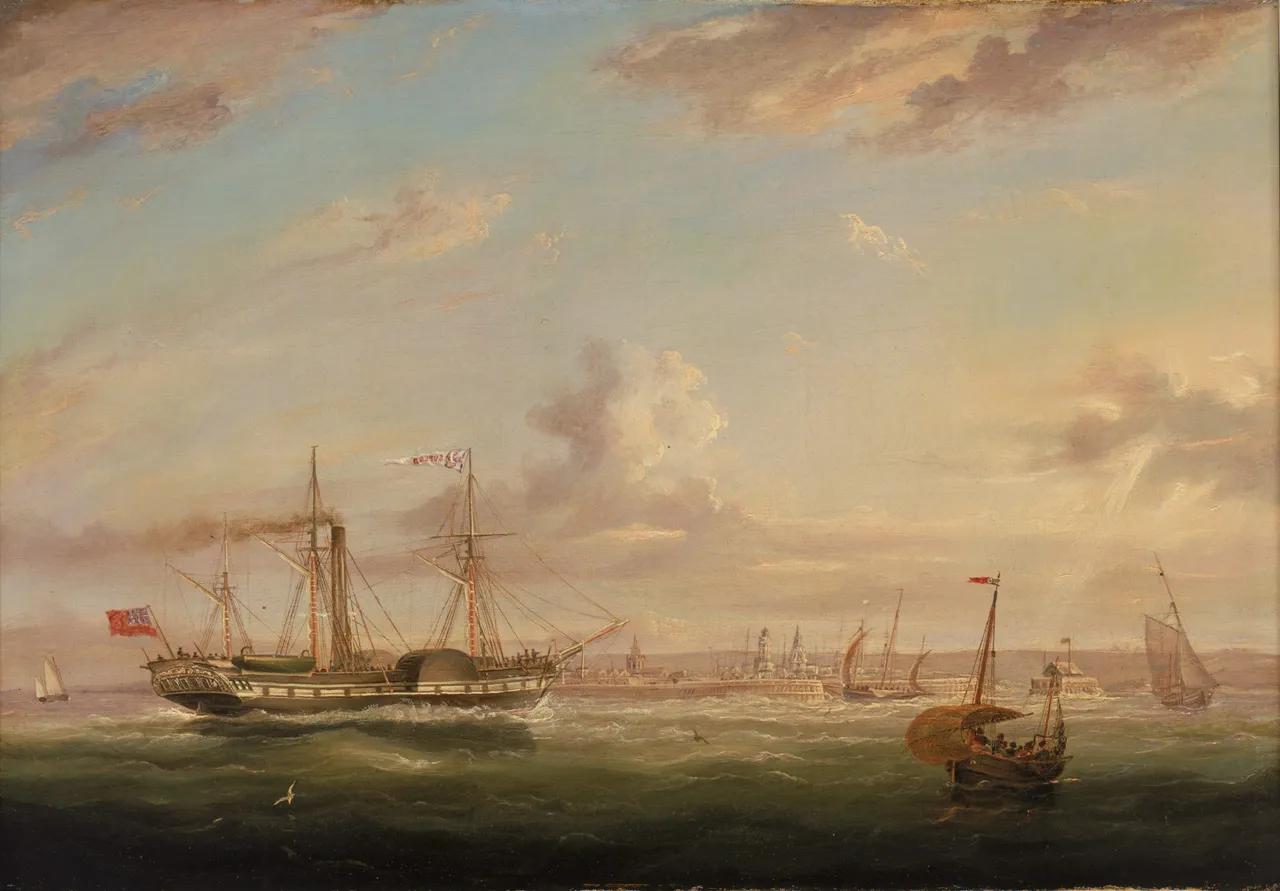
The Belfast was no warship. According to Chris Michael, a historian of early steamships, it was built in Belfast in 1820 by Ritchie, it was a wooden paddle steamer of about 190 tons and 120 feet, with 60-horsepower engines by Napier, and had worked the Irish Sea between Liverpool, Dublin and Belfast. In a hurricane in December 1822 it was driven ashore north of Liverpool with all aboard saved. By 1828 it was said to be old and in poor condition.
Seven days in Porto
Palmela himself later counted the delay among the main causes of the failure. On 24 June the liberal army fought a ten-hour action at the Cruz dos Morouços, just outside Coimbra, and held its ground. But a report that Miguelist cavalry had crossed the Mondego started a panic, and in the early hours of 26 June, the day the Belfast arrived, the army began falling back towards the river Vouga. Its militia went home and desertion thinned the regiments.
The Junta made Palmela commander-in-chief, with Saldanha's and Vila Flor's approval, and Stubbs became commandant of the city. On the evening of 28 June the generals rode south to meet the army. That day, at the Marnel bridge on the Vouga, the rearguard beat off attacks for nine hours. After a league the generals met wounded men coming the other way, and Palmela and Vila Flor turned back for Porto.
Saldanha asked who would come with him. Of more than thirty officers in the party, three did. They rode through the night and found the retreating division near Oliveira de Azeméis at dawn on 29 June. Reviewing it at Grijó on 30 June, Saldanha counted 3,200 men of all arms, and he wrote to Palmela that he did not consider the cause lost if Porto made the effort the moment required.
Porto saw it differently. Two Miguelist frigates and two smaller warships blockaded the river. Columns were closing in from the north, and Póvoas's main army was coming up from the south. Already on 30 June the captain of the British brig Cordelia, in the Douro, had written to Palmela about giving the marquis and his companions asylum on board.
Troops around Porto on 2 July 1828, as the Junta counted them
men
Figures read out at the Junta's last session, as given by Soriano: Póvoas 8,000 to 10,000 with 900 horse; the three generals in the north “more than 4,000”; the liberals 3,400 bayonets with some 200 horse and six guns south of the river, and Azeredo's 1,400 bayonets and 90 horse to the north. Saldanha's biographer has the Junta's spokesman claiming 11,000 for Póvoas and 9,000 more elsewhere; the Annual Register gives the liberals about 3,000 regulars, 1,000 men north of the river and 1,500 Porto volunteers. Soriano calls the Junta's picture exaggerated by fear.
Show the data
| Men (lowest figure given) | |
|---|---|
| Póvoas's army, south | 8,000 |
| Other Miguelist forces, north | 4,000 |
| Liberal division, south of the Douro | 3,400 |
| Azeredo's liberal division, north | 1,400 |
At two in the afternoon of 2 July, by the liberal accounts (the Annual Register, a British yearbook, says the morning), the Junta met with the generals. One of its members, Sarmento, listed the forces against them and proposed dissolving the government and taking the army into Spain. Saldanha said there were provisions in the city for more than seven months and offered to make Porto “a second Saragossa”, after the Spanish city that had held out against Napoleon. The Junta would not expose the kingdom's second city to a sack.
Palmela announced that he would re-embark that night and that members of the Junta would find room on board. The Junta dissolved itself, handing power to Saldanha and two of its members, Colonel Francisco da Gama Lobo Botelho and Joaquim António de Magalhães, to lead the troops to the frontier. The decision was kept secret: one member warned that the people, finding themselves deserted, would kill them.
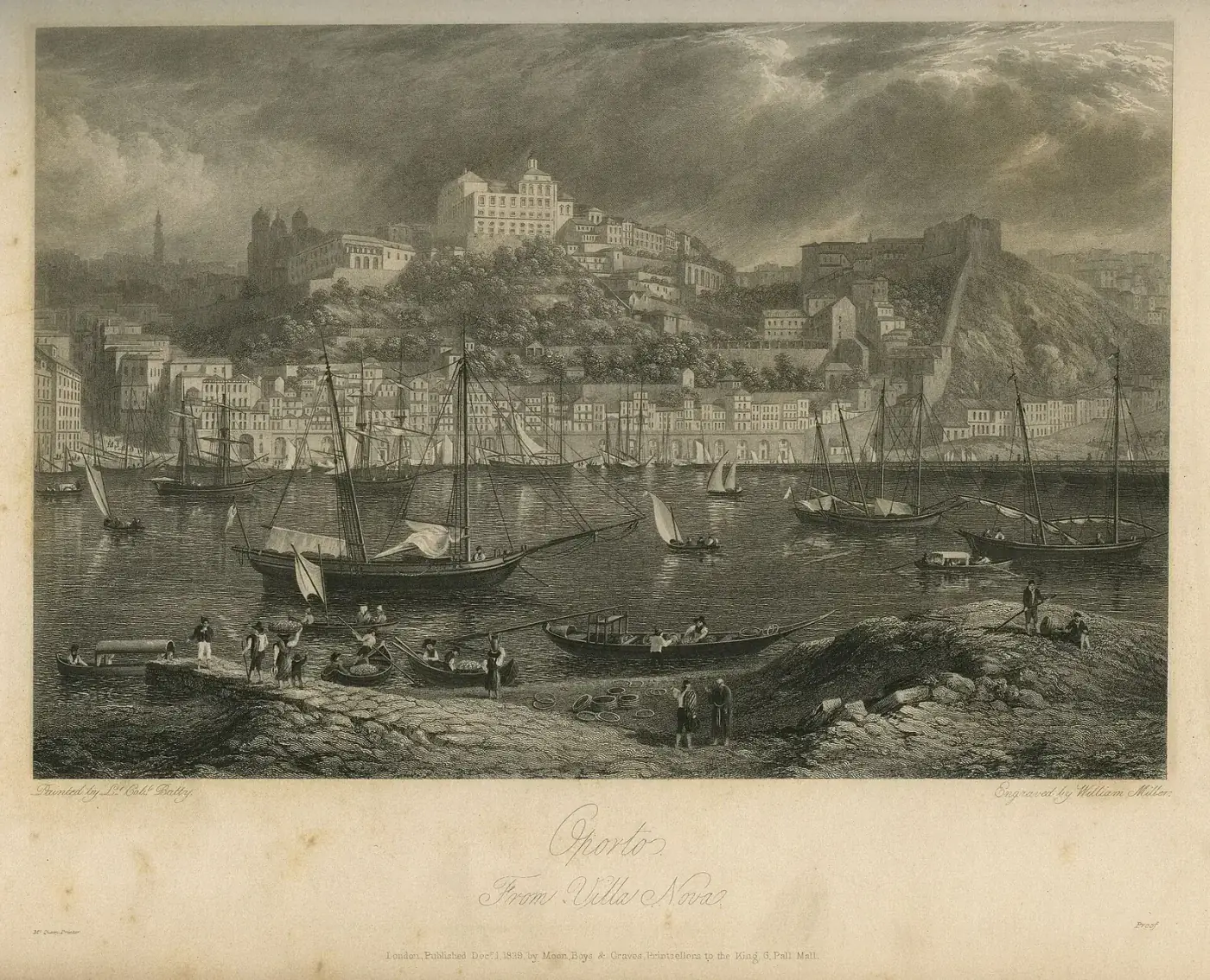
Saldanha rode out to the camp at Santo Ovídio, on the Vila Nova de Gaia side. The commanders refused, to a man, to retreat into Spain. He asked them to put it in writing and took the paper back to the city, where he found Palmela and the Junta already aboard the Belfast. He went on board to report. After five nights almost without sleep, he wrote later, he broke down.
“In a dreadful agitation, and even (I am not ashamed to admit it) weeping hot tears like a child, I threw myself into a cabin, where, as soon as my agitation lessened, I fell asleep, because for five nights I had not slept.”
During the night Brigadier Saraiva and two officers came aboard with a second declaration: the commanders had changed their minds and would obey. Palmela received it and did not wake Saldanha. He was acting as a friend, he said later: the affair could bring Saldanha nothing but hard work and fruitless danger. At sunrise on 3 July the Belfast dropped down the river with the generals, the Junta and two battalion commanders on board. Saldanha woke at sea.
26 June
The Belfast lands 29 exiles near Matosinhos
The army begins its retreat from Coimbra the same day.
28 June
Rearguard action at the Marnel bridge on the Vouga
That evening the generals ride out of Porto.
29 June
Saldanha meets the retreating division near Oliveira de Azeméis
30 June
Saldanha reviews 3,200 men at Grijó
2 July, 2 pm
The Junta meets the generals and dissolves itself
Palmela and the Junta go aboard the Belfast that night.
3 July, dawn
The Belfast leaves the Douro
The troops cross to the north bank and march for Galicia.
6 July
The liberal division reaches the Galician frontier at the Portela do Leonte
Mid-July
The Belfast reaches Plymouth
The march into Galicia
The troops crossed the Douro bridge in good order on the night of 2 to 3 July and marched north under Brigadier Joaquim de Sousa Quevedo Pizarro, the only general left. Major Bernardo de Sá Nogueira, who had turned down a berth on the Belfast, kept the rearguard together. On the first night, at Santo Tirso, Soriano counted at least 6,000 men, regulars, militia and volunteers, with 400 horses and nearly 20 guns.
Families followed in carts and on foot. At Braga the column fought its way through guerrillas, and friars fired on it from the windows of a convent.
Near the bridge of Caldelas two units mutinied, shouting for Dom Miguel, and the guns were abandoned on the mountain road. On 6 July the division reached the Spanish frontier at the Portela do Leonte in the Gerês mountains, near Lóbios. It camped there for days in rain and cold, waiting for the Spanish general at Ourense to decide its fate, and the men gave up their arms before being quartered in Spanish villages. A maize loaf sold for three duros, and some soldiers wept as they said goodbye to their officers and walked home.
The refugees were eventually allowed through to Ferrol and Corunna and shipped to England. In Porto, meanwhile, Póvoas entered without resistance and at first kept his troops from taking revenge. In Lisbon the Cortes of the three estates, which had opened at the Ajuda palace on 23 June, declared Miguel the rightful king and the Charter void, on 26 June by the Annual Register's account, and on 7 July Miguel took possession of the crown as absolute king.
Plymouth, Terceira and the gallows
The Belfast had a bad voyage home. It put into Corunna for repairs, and the Spectator reported it entering Plymouth in mid-July, damaged, with 63 officers, officials and others aboard. London papers said the ship had left Porto on the 5th; the men on board give dawn on the 3rd.
“from the endeavour of each to throw off from himself and let fall on others, the responsibility, or, perhaps, the fault, of the unfortunate termination of so noble and generous an undertaking.”
He was right. The Junta wrote to Pedro blaming Saldanha for abandoning the troops; Saldanha's friends blamed Palmela for the delay in London and for the retreat. The quarrel between moderates and progressives ran through the whole emigration and the later siege of Porto.
The soldiers and volunteers who came from Galicia were lodged in a depot at Plymouth. Maria herself, sailing from Rio towards Vienna, was diverted to England when she heard what her uncle had done, and George IV received her as queen on 22 December 1828. The British government was cooler: the Duke of Wellington's ministry demanded that the Plymouth depot be broken up.
- Came to Plymouth via Corunna and Ferrol
- 2,386 people
- In the Plymouth depot, January 1829
- 3,127, with refugees from Madeira and from every packet out of Portugal
- Left in the depot, early April 1829
- 450, later moved to Ostend and Bruges
- Landed on Terceira by the end of March 1829
- More than 1,000 men
One piece of Portugal still flew Maria's flag. On 22 June 1828, four days before the Belfast landed, the 5th Caçadores and townspeople in Angra, on the island of Terceira in the Azores, arrested Miguel's captain-general and proclaimed Pedro and the Charter again. In January 1829 Saldanha sailed from Plymouth with four transports to reinforce it, but on 16 January the British frigate Ranger fired on them off Praia, killing a soldier, and he had to take them to Brest.
Smaller groups got through, and Vila Flor took command on the island. On 11 August 1829 his garrison threw back a Miguelist landing at Praia. Terceira became the base from which Pedro, who gave up the Brazilian throne in 1831, sailed with his army to land at Mindelo, north of Porto, on 8 July 1832.
Porto paid for May 1828. A special court, an alçada, was set up to try the rebels, with powers to arrest without charge and judge without appeal. On 7 May 1829, by Soriano's account (Carnota's source says 9 April), ten men, among them a judge of the appeal court, a treasury accountant and a militia lieutenant-colonel, were hanged on two gallows in the Praça Nova. Their heads were cut off and displayed in Porto, Feira, Aveiro and Coimbra.
On 21 August 1829 the men of the Belfast were sentenced in their absence. Palmela, Vila Flor, Saldanha, Stubbs and others were to be strangled on a scaffold in the same square, their bodies burned and the ashes thrown into the sea; their heads were to stand on poles along the road from Porto to Matosinhos, facing the beach where they had landed. Palmela's young son, who had sailed with his father, was sentenced to banishment in India.
Why it still matters
The Belfastada became shorthand among liberals for leaders who run. When Pedro's army was in Porto in August 1832 and a council of war debated abandoning the city, Soriano wrote (in Portuguese) that some members were arguing, in effect, for a repeat of “the shameful scenes of the steamer Belfast in 1828”, with the same excuse of sparing the inhabitants a siege. This time the army stayed, and Porto held out through a siege of 13 months.
Several of the men of 1828 later held power. Vila Flor led the liberal march on Lisbon in 1833 and later took his title, Duke of Terceira, from the island. Palmela served more than once as a minister under the Charter and led a government, and the split between moderates and progressives outlived the war. Bernardo de Sá Nogueira, the major who stayed with the troops, became Viscount and later Marquis of Sá da Bandeira.
FAQs
What was the Belfastada?
The mocking name for the failed liberal expedition of June and July 1828. Exiled leaders including the Marquis of Palmela and General Saldanha sailed from England on the steamer Belfast to lead Porto's revolt against Dom Miguel, landed near Matosinhos on 26 June, and sailed away on the same ship at dawn on 3 July as the revolt collapsed.
Why did the 1828 Porto revolt fail?
The army sat at Coimbra for about a month instead of marching on Lisbon, while Miguel raised money and troops. The generals from London arrived six days late, just as the army was retreating, and the Junta, divided and afraid of a siege, chose to dissolve itself and send the troops into Spain rather than defend Porto.
What happened to the liberal soldiers after the Belfast left?
The division, at least 6,000 regulars, militia and volunteers by Soriano's count, marched north and reached the Galician frontier on 6 July 1828. Spain disarmed them and later let them go to Ferrol and Corunna, from where they were shipped to a depot at Plymouth. Many went on to Terceira, Brazil or Belgium.
What kind of ship was the Belfast?
A wooden paddle steamer built in Belfast in 1820, of about 190 tons and 120 feet, which had carried passengers across the Irish Sea from Liverpool. It was chartered for the exiles in 1828 and broke down both going out and coming home.
How did Miguel's government punish the rebels?
A special court tried the people of Porto. Ten men were hanged in the Praça Nova on 7 May 1829 and their heads displayed in four towns. On 21 August 1829 the leaders who had come on the Belfast were sentenced to death in their absence.
On the timeline
Open the timelineNearby moments from invasions, brazil and the liberal wars (1807–1851).
King João VI dies in Lisbon under suspicious circumstances (possible arsenic poisoning), triggering a succession crisis between his sons Pedro (Emperor of Brazil) and Miguel, which would lead to the Portuguese Civil War.
In Rio de Janeiro, Pedro IV — also Emperor Pedro I of Brazil — grants Portugal the Constitutional Charter, a more conservative liberal constitution with a hereditary Chamber of Peers. With interruptions, it would remain in force until the fall of the monarchy in 1910.
Death in Rio de Janeiro of Leopoldina of Austria, wife of Pedro I and Empress of Brazil, aged 29. A Habsburg archduchess with a passion for natural science, she played an important part in Brazil's independence, chairing the council that sent urgent letters to Pedro days before he declared it in September 1822; she was the mother of Portugal's Queen Maria II and of Brazil's last emperor, Pedro II.
The Belfastada, 1828
The 'Belfastada': the steamer 'Belfast' lands 29 exiled liberals led by the Marquis of Palmela near Matosinhos, north of Porto, to take charge of the city's revolt against Dom Miguel. With Miguelist armies closing in, the leaders sail away on the same ship a week later, the loyal troops retreat into Galicia, and thousands of liberals begin years of exile.
The Cortes of the Three Estates, summoned by Miguel of Braganza, close with a formal act ('assento') declaring him the rightful King Miguel I, in defiance of the Constitutional Charter granted by his brother Pedro IV and of the claim of Pedro's daughter Maria. The usurpation leads to the Liberal Wars, which pit absolutists against constitutionalists until 1834.
The botanist Félix de Avelar Brotero dies in Belém, Lisbon. Having fled to Paris when he fell under suspicion of the Inquisition, he returned to teach botany at Coimbra, wrote 'Flora Lusitanica' (1804), the first flora of Portugal, and later took charge of the Ajuda Botanical Garden.
Birth of João de Deus de Nogueira Ramos in São Bartolomeu de Messines, Algarve. The most popular Portuguese poet of his day, he also wrote the 'Cartilha Maternal' (1876), a reading primer used for generations.
Coming up in history
All long reads 29 June 1958Rosa Mota, the girl from the Foz who became Olympic marathon champion
 30 June 1991Rui Costa's penalty at the Luz: Portugal's second youth world title, 1991
 1 July 1867Portugal abolishes the death penalty for civil crimes: 1 July 1867
 3 July 1850Alfredo Keil: the Lisbon painter who wrote the music of A Portuguesa
16 sources
Archives, scholarship and reporting this article was checked against.
- 1
Historia do cerco do Porto, vol. I (Simão José da Luz Soriano), Discurso preliminar, part IIImprensa Nacional, Lisbon, 1846; digitised by the Internet Archive
- 2
- 3
- 4
Liberais e absolutistas no Porto (1823-1829) (António Barros Cardoso)Estudos em homenagem ao Professor Doutor José Marques, vol. 1, Faculdade de Letras da Universidade do Porto, 2006, pp. 259-280
- 5
News of the weekThe Spectator, 26 July 1828 (Spectator Archive)
- 6
P S Belfast 1822 (early steamships)Chris Michael, University of Liverpool personal pages
- 7
22 February 1828: Miguel disembarks in Lisbon and takes on the regencyParques de Sintra, Palácio Nacional de Queluz (D. Pedro IV chronology)
- 8
- 9
- 10
- 11
- 12
- 13
- 14
- 15
- 16
Come and discover the places on the Porto Liberal RouteMuseu Nacional Soares dos Reis
Image credits
- Porto from Vila Nova de Gaia, across the Douro, engraved by William Miller after a painting by Robert Batty and published in London on 1 December 1829. The liberal division camped on the Gaia side in the first days of July 1828. William Miller, Public domain, via Wikimedia Commons.
- Dom Miguel in royal robes with a sceptre, painted by João Baptista Ribeiro in 1828, the year he took the crown. The portrait is in the Museu Nacional Soares dos Reis in Porto. Joseolgon, CC BY-SA 4.0, via Wikimedia Commons.
- Pedro de Sousa Holstein, then Count of Palmela, painted between about 1812 and 1823 by an unidentified artist. By 1828 he was a marquis and the leading moderate among the liberal exiles. Unidentified painter, Public domain, via Wikimedia Commons.
- The cross-Channel steam packet Superb, painted by William Adolphus Knell in about 1825. We know of no freely licensed picture of the Belfast, which was a paddle steamer of the same type and period. William Adolphus Knell, Public domain, via Wikimedia Commons.
- João Carlos de Saldanha, drawn by Domingos Sequeira in about 1827, the year before the Belfast expedition. The inscription gives his name and the date. Domingos Sequeira, Public domain, via Wikimedia Commons.