

Alfredo Keil: the Lisbon painter who wrote the music of A Portuguesa
The son of a German court tailor, Alfredo Keil was a painter first, then an opera composer, then a collector. A tune that, by the magazine O Occidente's account, he improvised at a dinner in the week of the 1890 British Ultimatum became Portugal's national anthem.
At a glance
- Alfredo Keil was born in Lisbon on 3 July 1850, the son of the German tailor Christiano Keil and Josefina Stellpflug, and died in Hamburg on 4 October 1907, aged 57.
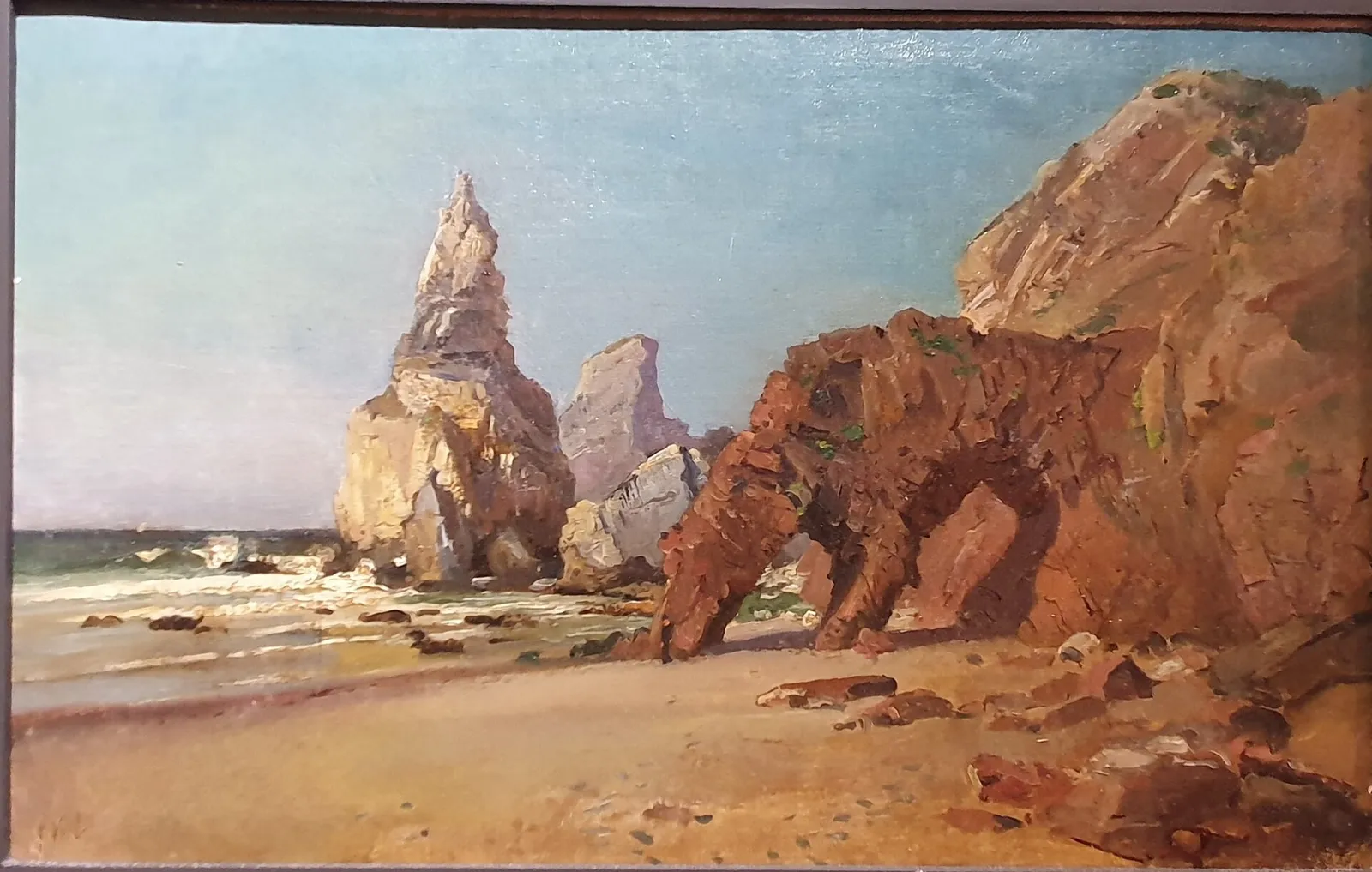
- He trained as a painter in Nuremberg and Lisbon, won medals from 1874 and left hundreds of landscapes, many of Colares and the Sintra coast.
- His operas Dona Branca (1888), Irene (Turin, 1893) and Serrana (1899) were staged at Lisbon's São Carlos; Serrana stayed in the repertoire for most of the twentieth century.
- In 1890, after the British Ultimatum, he wrote the march A Portuguesa with the naval officer and poet Henrique Lopes de Mendonça; the Republic made it the national anthem in 1911.
- His collection of 250 to 300 musical instruments, open to visitors in his rooms on the Avenida by 1905, was one of the founding collections of the Museu Nacional da Música, which opened in Mafra in 2025.
Three rooms on the Avenida
In the spring of 1905 a writer from the Lisbon music fortnightly A Arte Musical visited a private museum and found three rooms too small for what was in them: costumes, weapons, jewels, clocks, snuffboxes, tiles, furniture, keys, coins and miniatures. The owner, the painter and composer Alfredo Keil, showed him round in person.
The visitor had come for the instruments. Keil had gathered 250 of them: a viola da braccio, two tromba marinas, small portable organs of the sixteenth century, five clavichords, harps signed by Erard and Cousineau, a Russian balalaika and a Norwegian Hardanger fiddle. One of its treasures was a virginal by the Antwerp maker Ruckers, covered in fine paintings and still pleasant to hear.
The magazine had argued more than once that the country's scattered musical heritage, from rare scores to old instruments, should be gathered under one roof, and the state had done nothing. One man, it wrote, had done the work alone. Keil was 54. Fifteen years earlier he had written the tune that the Republic would adopt as Portugal's national anthem, and he is remembered today chiefly for that.
A court tailor's son
Alfredo Cristiano Keil was born in Lisbon on Wednesday 3 July 1850. His father, Johan Christian Keil, known in Lisbon as Christiano, was a German tailor who dressed King Luís and much of the Lisbon aristocracy. His mother, Josefina Stellpflug, was of Alsatian origin; her father was shoemaker to King Fernando II.
Tailoring and investments in securities and Lisbon property made the family rich, and the boy had the education of a wealthy heir, with schooling at the English College and travel in Europe. He studied the piano with the Hungarian concert pianist Oscar de la Cinna and harmony with Ernesto Vieira. At 12 he wrote a piano piece, Pensée musicale, published in 1864. He never enrolled at the Lisbon Conservatoire, and critics held that against him.
Painting came first. In 1868 or 1869 he went to Nuremberg to study under August von Kreling at the academy of fine arts. He was back in Lisbon in 1870: the 1907 obituary in A Arte Musical says for his health, later accounts point to the Franco-Prussian War. He went on studying painting in Lisbon, under Joaquim Gregório Tunes Prieto according to the obituary, and Miguel Lupi according to a 2022 study.
- Born
- 3 July 1850, Lisbon
- Died
- 4 October 1907, Hamburg, aged 57
- Parents
- Christiano Keil, German tailor; Josefina Stellpflug
- Married
- Cleyde Cinatti, 1876; four children
- Operas staged
- Susana (1883), Dona Branca (1888), Irene (1893), Serrana (1899)
- Best known for
- The music of A Portuguesa (1890)
A painter first
Keil's reputation in the 1870s was as a painter, and his prizes came quickly. The Sociedade Promotora de Belas-Artes gave him two bronze medals in 1874, and two silver medals followed in 1876. His Melancolia won an honourable mention at the Paris Universal Exhibition of 1878, his pictures took a gold medal in Rio de Janeiro in 1879, and Spain decorated him with the Order of Carlos III after a Madrid exhibition in 1886.
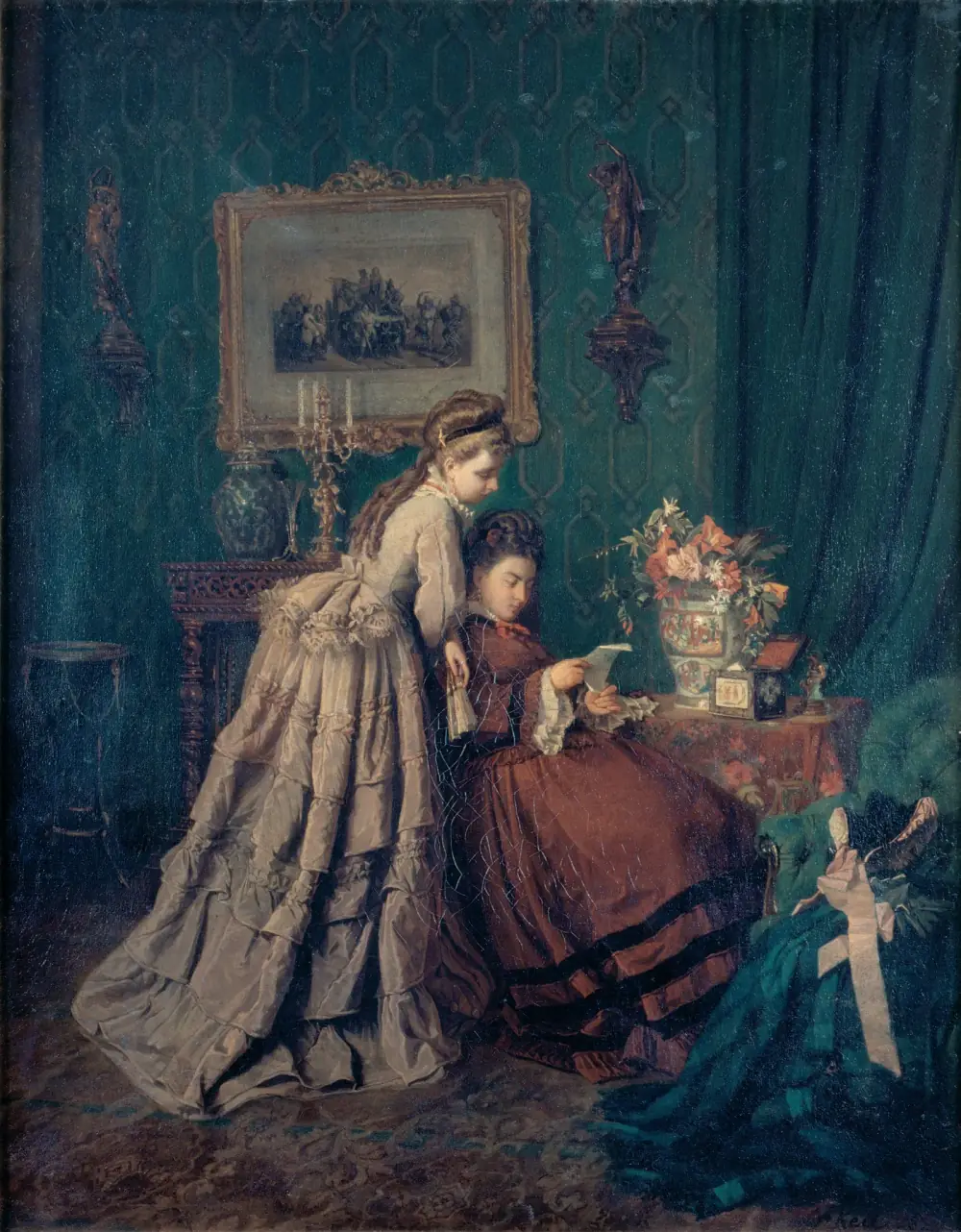
Landscape was his favourite subject: pinewoods, clouds, rocky shores, mills and farmhouses. He worked over and over around Colares and Praia das Maçãs on the Sintra coast, in the Zêzere valley and at Abrantes, and painted at Barbizon in France. He also painted genre scenes such as Leitura de uma carta, two women reading a letter in a green drawing room, now in the Museu Nacional de Arte Contemporânea in Lisbon. Like many painters of his time he used photographs as aids.
In 1890 he opened his studio on the Avenida da Liberdade and showed about 300 canvases, which sold fast. Others were lost at sea: paintings he sent to the Paris exhibition of 1900 went down with the ship bringing them home. After his death the Academia Real de Belas-Artes held a sale of what remained, and its catalogue lists 474 paintings and studies, with prices. A 2022 study puts his whole output at about 2,000 paintings and drawings.
Opera at São Carlos
Keil's first stage work, the one-act comic opera Susana, opened at the Teatro da Trindade on 9 January 1883, when he was 32. Critics found the libretto weak and the music good. The Academia de Amadores de Música, a society of amateur players, then performed his cantatas and a symphonic poem, and made his name in Lisbon.
Opera in Lisbon meant the Teatro de São Carlos, and at São Carlos opera was sung in Italian, even when the composer was Portuguese. Keil's Dona Branca, on Almeida Garrett's narrative poem about the reconquest of the Algarve, opened there on 10 March 1888 with an Italian libretto by César Fereal. The obituary counts about 30 performances in that season and the next; the 2022 study, ten in 1888 and eleven in 1889.
Irene, on the legend of Saint Iria, had its premiere abroad, at Turin on 22 March 1893. Puccini was in Turin that winter for Manon Lescaut, and a signed photograph he dedicated to Keil is dated Milan, 1 April 1893. Irene reached São Carlos on 21 February 1896 and had ten performances, with harsh reviews at home. India, a lyric and symphonic poem to words by Lopes de Mendonça for the 1898 centenary of Vasco da Gama's voyage, was dropped when the organisers found they had no money to stage it.
| Work | First performance | Libretto | Notes |
|---|---|---|---|
| Susana (comic opera, 1 act) | Teatro da Trindade, Lisbon, 9 January 1883 | Hygino de Mendonça | His first stage work |
| Dona Branca (prologue and 4 acts) | São Carlos, Lisbon, 10 March 1888 | César Fereal, after Almeida Garrett | About 21 to 30 performances in two seasons |
| Irene (4 acts) | Teatro Regio, Turin, 22 March 1893 | César Fereal | São Carlos from 21 February 1896, 10 performances |
| Serrana (3 acts) | São Carlos, Lisbon, 13 March 1899 | Henrique Lopes de Mendonça, after Camilo Castelo Branco; Italian version by César Fereal | Sung in Italian; in Portuguese from 1909 |
| Simão o Ruivo | Never staged | Not recorded | Unfinished at his death |
Performance counts for Dona Branca differ: about 30 in the 1907 obituary, 10 plus 11 in the 2022 study. The obituary makes Keil 33 at the premiere of Susana; from his birth date he was 32.
Serrana, a tragedy of the Serra da Estrela
For Serrana, after two operas on legend and history, Keil turned to village life. The poet Henrique Lopes de Mendonça made the libretto from Como ela o amava, a story by Camilo Castelo Branco. It is set in 1820 in Malhada, a hamlet in the Serra da Estrela, during the feast of its patron saint.
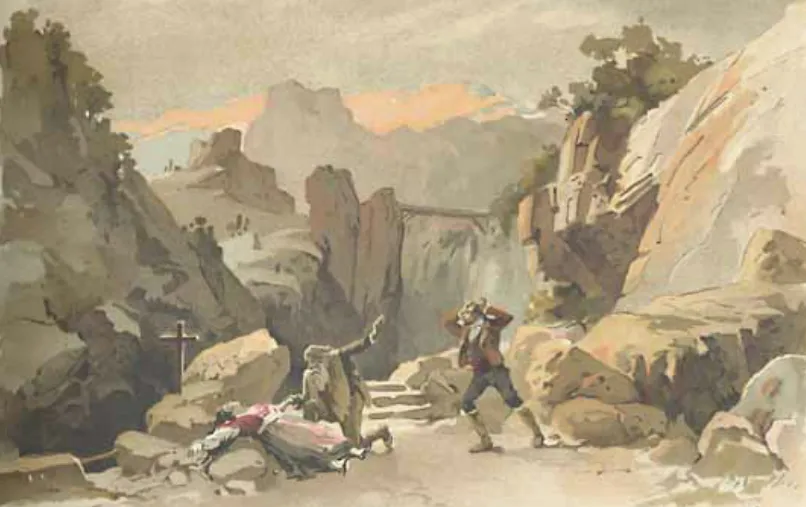
Zabel, the serrana or mountain girl, has left her first love, Pedro of the rival village of Alfatema, for the richer Marcelo, who means to take her to Brazil. She agrees to run away with Pedro, but stops to gather Marcelo's gold; Pedro, fleeing through the window, strikes his head on a rock and dies. Next morning Marcelo shoots Zabel, and she dies on Pedro's grave.
Serrana opened at São Carlos on Monday 13 March 1899, sung in Italian by a company that included the soprano Eva Tetrazzini and the baritone Mario Ancona. Keil dedicated it to his friend Jules Massenet. Ninety subscribers, Portuguese residents of Brazil led by the tenor Gaspar do Nascimento, paid for a printed score engraved in Leipzig, and Keil described it in the dedication as the first opera printed with a Portuguese text.
“We will say only that it is a work of great value, and that it deserves a careful and unhurried study, as is the custom, and as has indeed been done with operas of foreign origin of far less worth that have been presented at São Carlos.”
It was first sung in Portuguese in 1909, at the Trindade, two years after Keil's death. Raimundo counts nine São Carlos seasons with Serrana between 1900 and 1979, as well as runs at the Coliseu, Porto's São João and Rivoli theatres and the Liceu in Barcelona, and writes that it was certainly the most often sung of all nineteenth-century Portuguese operas. Its style, he finds, is markedly mixed: folk tunes and village scenes sit beside Italian and French operatic models.
A march against the cannons
On 11 January 1890 Britain sent Portugal an ultimatum to withdraw its forces from the lands between Angola and Mozambique, and the government gave way. The next evening, a Sunday, Keil was at dinner with friends while crowds in the streets shouted for the fatherland. According to the magazine O Occidente of 21 March 1890, he improvised a tune between dessert and coffee.
He asked Henrique Lopes de Mendonça to write the words. Lopes de Mendonça, born in Lisbon in 1856, was a serving naval officer who had entered the Naval School in 1871 and wrote plays, novels and naval history; he later presided over the Lisbon Academy of Sciences. The song, called A Portugueza, was printed in leaflets given away free; in February 1890 the music publisher Neuparth issued more than 22,000 copies.
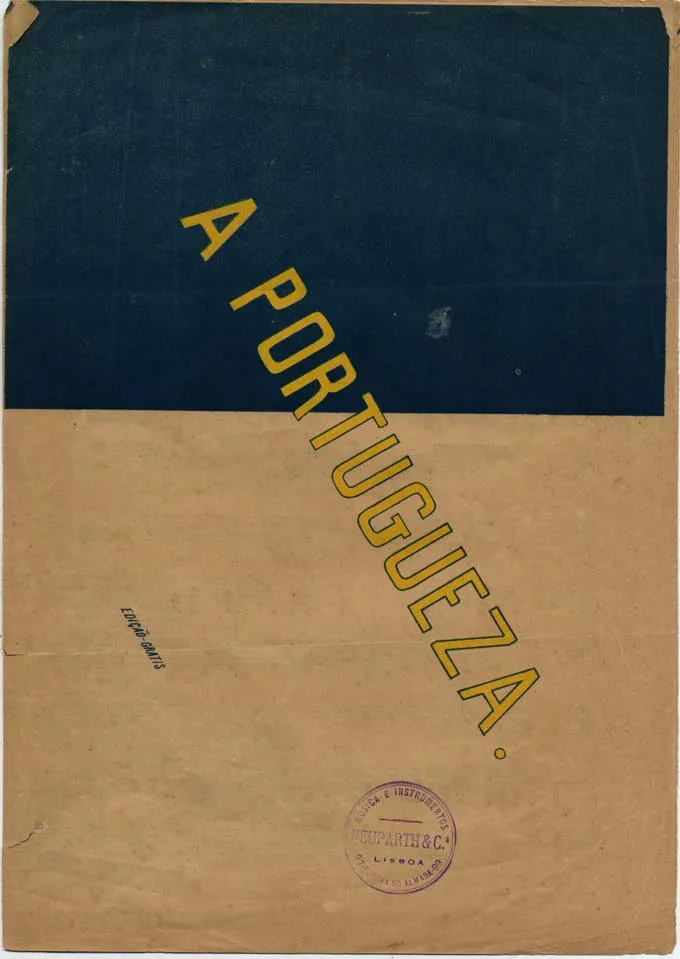
It was first heard in public on 6 March 1890, at a benefit in the Teatro Avenida for the Great National Subscription, a public fund for national defence. On 29 March students sang Keil's older cantata Pátria at São Carlos for the same cause.
Then A Portuguesa spread beyond his control. In late April Keil and Lopes de Mendonça publicly disowned its political use, but republicans took it up, and the rebels of 31 January 1891 in Porto marched to it. After that the regimental bands stopped playing it. Later accounts say the monarchy banned it; the 1907 obituary says so too, but adds a question mark.
Keil did not live to see what followed. After the Republic was proclaimed on 5 October 1910, the Constituent Assembly declared A Portuguesa the national anthem at its first session, on 19 June 1911. Only the first verse and the refrain are sung as the anthem.
The collector
Keil collected all his life. In a letter to his mother from Nuremberg on 6 August 1869 he listed what he had already bought from his student savings: old jewellery, enamels, fans, miniatures, buttons, clocks, costumes, glass, ceramics, furniture and some European instruments. He haunted auctions, antique fairs and the sales of convent and church goods.
The turn to music came after a jibe. Ernesto Vieira, his old harmony teacher, visited the museum on the Avenida and remarked that Keil devoted himself to music but despised its objects, collecting breeches and snuffboxes instead. From 1900 Keil kept a catalogue of instruments, and he bought through agents and dealers in St Petersburg, Macau, Goa and Ghent. The violin maker Louis Pierrard alone found him 50 pieces.
Not everything was what it seemed. A small keyboard instrument in his collection, sold to him as an antique clavichord, was made up by the Florentine dealer Leopoldo Franciolini, a notorious faker, from parts of different ages with a papal coat of arms that does not belong. Conservators at the Laboratório José de Figueiredo in Lisbon studied and treated it in 2023 and 2024, and it was chosen for a section of the museum at Mafra called Verdadeiros falsos?, true fakes.
| Date | Instruments | Source |
|---|---|---|
| April 1905 | 250 pieces | A Arte Musical, after a visit |
| 1904 | About 300 summarised in his printed Breve notícia, numbered only to 254 | Silva, 2022 |
| October 1907 | About 300 | A Arte Musical obituary |
| Keil's own lists | 376 (365 in another passage) | Silva, 2022 |
| Early 1930s | About 319 recovered from a combined collection of about 500 | Silva, 2022 |
| 2022 | 158 identified in the Museu Nacional da Música, of about 1,650 instruments | Silva, 2022 |
The counts come from different moments and different ways of counting; the 2022 report gives both 365 and 376 for the full collection. The 1930s figures cover the combined collection of Keil, Lambertini and Carvalho Monteiro.
He wrote about it as well. In 1904 he published a short guide to the instruments, and in 1905 a pamphlet on art collections and museums in Lisbon. The country needed public museums, he argued, and above all a museum of music. In 1907 he was preparing to turn his own collection into one.
Death in Hamburg
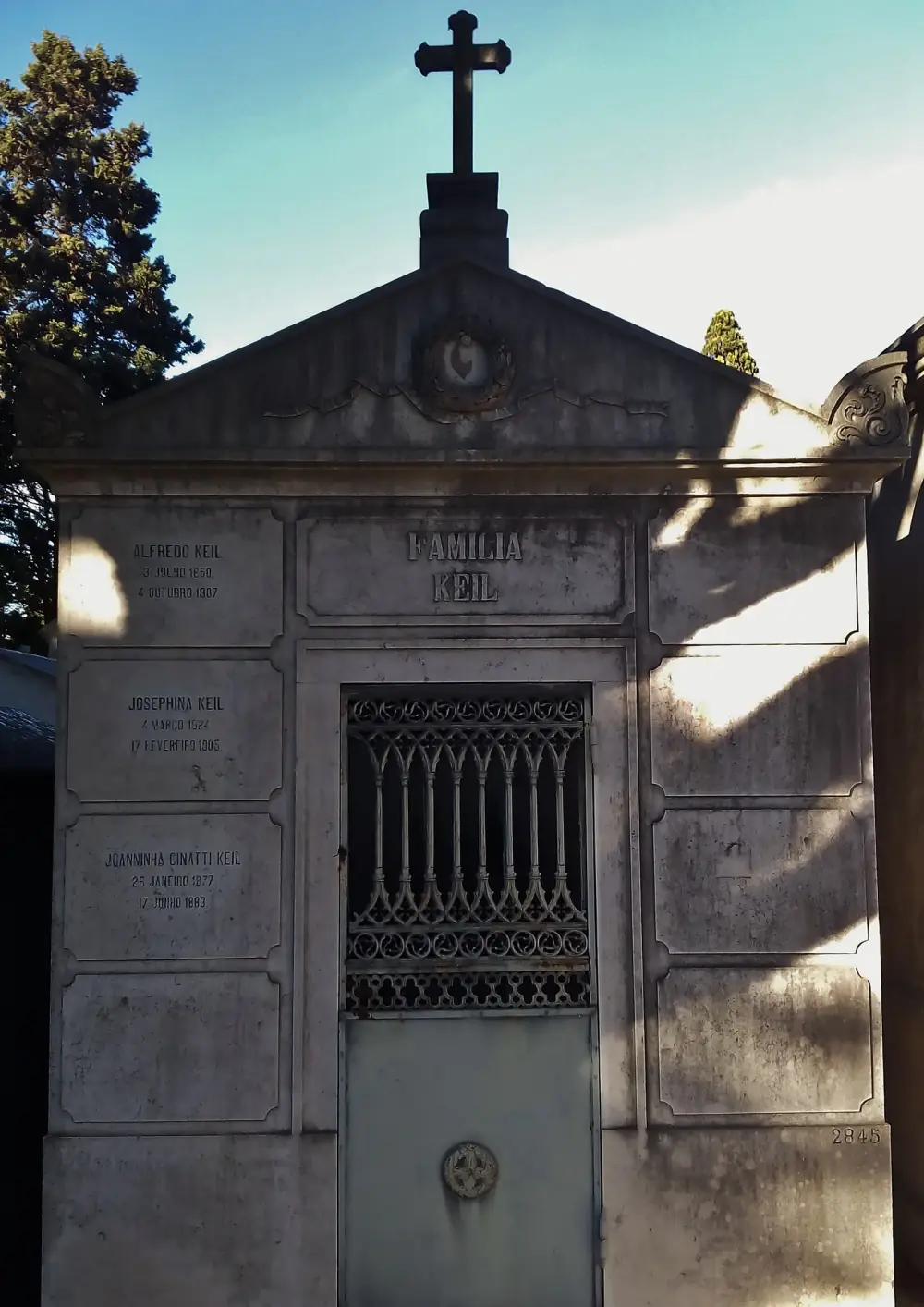
On 31 January 1907 Keil was taken to the Hospital de São José in Lisbon for a tracheotomy. The operation went well, but an infectious pneumonia followed, perhaps on top of an old heart complaint. He travelled to Hamburg, where surgeons operated twice more, and he died there on Friday 4 October 1907, aged 57. That is the date in the obituary published that month and on his tomb; a 2022 study gives 7 October.
“On the 4th of this month the sad news went round all Lisbon, passing from mouth to mouth with the speed at which great news usually spreads: Alfredo Keil had died that day in Hamburg.”
His body lay in the parish church of São José, and on 23 October a large crowd of artists and friends followed it to the Prazeres cemetery, where he was laid in the family vault. A sextet played his music in the church and the band of the Municipal Guard at the cemetery gate.
The obituary ended with a worry. If the family sold the instruments, would they cross the border in the hands of foreign dealers and speculators? The state, it argued, should buy them and found an instrument museum.
From the Avenida to Mafra
The state did not buy. The collection passed to Keil's widow, Cleyde Cinatti Keil, and his son Luís, and for years risked being sold abroad. The editor of A Arte Musical, Michel'angelo Lambertini, took up the cause. A decree of 28 June 1915 created a music museum at the Conservatoire on paper, but six months later the Conservatoire had still not bought Keil's instruments.
In the end a private fortune did it. Lambertini persuaded the millionaire music lover António Augusto de Carvalho Monteiro to buy the collection, and in 1916 the two founded the Museu Instrumental de Lisboa with Keil's instruments and Lambertini's own. The 2022 study dates the purchase to 1916 in one chapter and 1919 in another.
Both men died in 1920 without settling the museum's future, and the instruments lay for a decade in a building in the Rua do Alecrim. Much of what survived went to the Conservatoire's instrument museum. Short of space, the Conservatoire moved it out in the 1970s, to the Palácio Pimenta, then the Biblioteca Nacional, then Mafra, and then, under an agreement made for Lisbon's year as European Capital of Culture in 1994, to the Alto dos Moinhos metro station, until the Museu Nacional da Música opened in the palace at Mafra in 2025.
3 July 1850
Born in Lisbon
1868–1870
Studies painting in Nuremberg
1874
First medals from the Sociedade Promotora de Belas-Artes
1878
Honourable mention at the Paris Universal Exhibition
9 January 1883
Susana opens at the Trindade
10 March 1888
Dona Branca opens at São Carlos
January to March 1890
A Portuguesa written and first performed
22 March 1893
Irene opens in Turin
13 March 1899
Serrana opens at São Carlos
1904–1905
Publishes his instrument guide; his museum is open to visitors
4 October 1907
Dies in Hamburg
19 June 1911
A Portuguesa becomes the national anthem
1916
Keil's instruments become the core of the Museu Instrumental de Lisboa
2025
Museu Nacional da Música opens in Mafra
Why he still matters
Keil's tune is still Portugal's national anthem. The man who wrote it made his name first as a landscape painter, and the song outgrew its author within a year, when republicans made it their march.
Musicologists still study Serrana as an example of Portuguese national opera, and his landscapes are in public collections such as the Museu Nacional de Arte Contemporânea. His instruments, joined with Lambertini's and paid for by Carvalho Monteiro, were one of the founding collections of the national collection of musical instruments, which now has more than a thousand pieces in its stores.
FAQs
Who wrote the Portuguese national anthem?
The music of A Portuguesa is by Alfredo Keil and the words by Henrique Lopes de Mendonça. They wrote it in January 1890 as a protest against the British Ultimatum, and the Constituent Assembly declared it the national anthem on 19 June 1911. The first verse and refrain are sung today.
When and where was Alfredo Keil born and when did he die?
He was born in Lisbon on 3 July 1850 and died in Hamburg on 4 October 1907, aged 57, after operations there. He is buried in the Keil family vault at the Prazeres cemetery in Lisbon.
What operas did Alfredo Keil write?
Susana (1883), Dona Branca (1888), Irene (first staged in Turin in 1893) and Serrana (1899), with Simão o Ruivo left unfinished. Serrana, on a libretto by Lopes de Mendonça after Camilo Castelo Branco, was the most often staged.
Was Alfredo Keil a painter?
Yes, first of all. He trained in Nuremberg and Lisbon, won medals from 1874, and painted mostly landscapes of Colares, the Sintra coast and the Zêzere valley. The Museu Nacional de Arte Contemporânea in Lisbon holds works by him, including Leitura de uma carta (1874).
Where is Alfredo Keil's instrument collection now?
After Keil's death the millionaire António Augusto de Carvalho Monteiro bought it for Michel'angelo Lambertini's museum project. With Lambertini's own instruments it became one of the founding collections of the Museu Nacional da Música, which opened in the palace at Mafra in 2025. A 2022 study identified 158 of the museum's instruments as Keil's.
On the timeline
Open the timelineNearby moments from invasions, brazil and the liberal wars (1807–1851).
Eça de Queirós is born in Póvoa de Varzim, the illegitimate son of parents who married only years later. The great realist novelist of 'O Crime do Padre Amaro' and 'Os Maias' spent much of his life as a consul abroad — in Havana, Newcastle, Bristol and Paris — turning a sharply ironic eye on Lisbon society.
Rafael Bordalo Pinheiro is born in Lisbon into a family of artists. In satirical papers such as 'O António Maria' he mocked kings, ministers and Britain alike, and in 1875 he gave the nation its enduring cartoon alter ego, Zé Povinho, the shrugging, put-upon everyman.
In the palace coup known as the Emboscada, Queen Maria II dismisses the Duke of Palmela's government and hands power to Marshal Saldanha, reigniting the unrest of the Maria da Fonte revolt and precipitating the Patuleia civil war.
Alfredo Keil born, 1850
Birth of Alfredo Keil in Lisbon. The painter and composer wrote the music of 'A Portuguesa', with words by Henrique Lopes de Mendonça, in protest at the 1890 British Ultimatum; the Republic adopted it as Portugal's national anthem in 1911.
Coming up in history
All long reads 5 July 1975Cape Verde becomes independent: Praia, 5 July 1975
 6 July 2010Matilde Rosa Araújo, teacher and children's writer, dies in Lisbon: 6 July 2010
 7 July 1923Guerra Junqueiro, the poet who mocked God and king, dies in Lisbon
 8 July 1832The landing at Mindelo: Dom Pedro's 7,500 come ashore, 8 July 1832
15 sources
Archives, scholarship and reporting this article was checked against.
- 1
“Alfredo Keil”, obituary with a chronology of his life and works, A Arte Musical, year IX, no. 212, 15 October 1907Hemeroteca Digital, Câmara Municipal de Lisboa
- 2
Para uma leitura dramatúrgica e estilística de Serrana de Alfredo Keil, by Luís RaimundoRevista Portuguesa de Musicologia, no. 10 (2000), pp. 227–274
- 3
A Coleção de Alfredo Keil no Museu Nacional da Música: o itinerário dos instrumentos musicais através da sua inventariação, by Beatriz SilvaUniversidade de Coimbra, Faculdade de Letras, master's internship report, 2022
- 4
Museu Nacional da Música: apresentação e históriaMuseu Nacional da Música (Museus e Monumentos de Portugal)
- 5
Era a pensar nos bretões, mas a marcha é contra os canhões: a história do hino nacional, composto ao jantar, entre a sobremesa e um caféVisão, 14 January 2023
- 6
- 7
Estudo e intervenção de um manicórdio italiano (sécs. XVIII–XX), do Museu Nacional da Música, by Francisca Fernandes MachadoRes Mobilis, vol. 14, no. 21 (II), 2026, pp. 70–81 (Universidad de Oviedo)
- 8
Alfredo KeilMACAM (Museu de Arte Contemporânea Armando Martins)
- 9
Catalogo da exposição de pintura: quadros de Alfredo Keil, na Academia Real de Bellas ArtesLisboa, Typographia “A Editora”, c. 1910 (digitised by the Getty Research Institute, Internet Archive)
- 10
Alfredo Keil, Leitura de uma carta, 1874 (inv. 455)Museu Nacional de Arte Contemporânea do Chiado
- 11
- 12
Efeméride: nascimento do Comandante Lopes de MendonçaDireção Cultural da Marinha, Museu de Marinha, 12 February 2021
- 13
Hino NacionalMuseu da Presidência da República
- 14
Política externa e política interna no Portugal de 1890: o Ultimatum Inglês, by Nuno Severiano TeixeiraAnálise Social, vol. XXIII (98), 1987, pp. 687–719
- 15
Image credits
- Praia da Ursa, on the coast near Colares, painted by Alfredo Keil in 1878. Oil on canvas in the Sintra municipal art collection, photographed at MU.SA in 2022. GualdimG, CC BY-SA 4.0, via Wikimedia Commons.
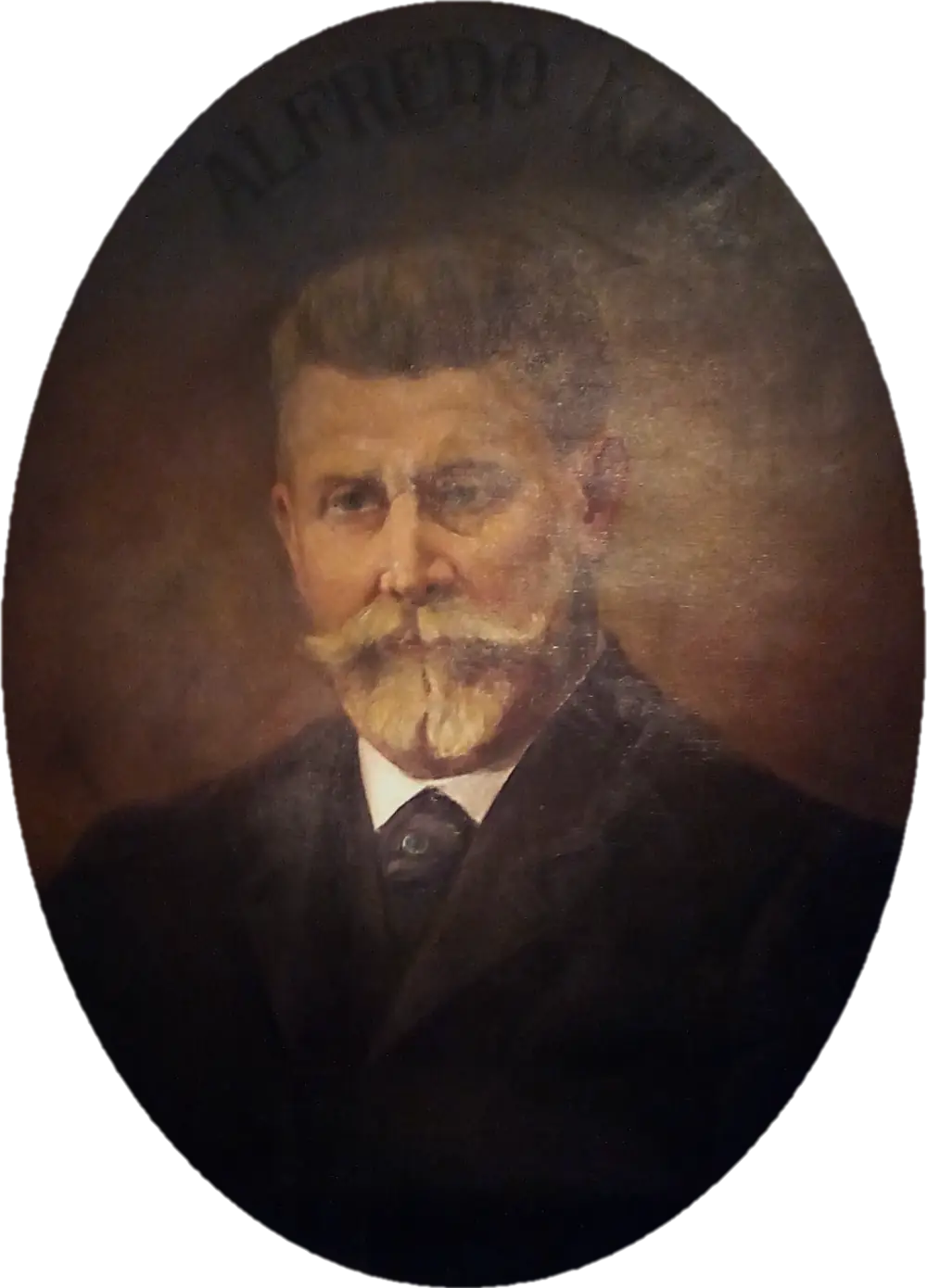
- Alfredo Keil in an undated oil portrait by an unknown painter, in the Museu da Presidência da República, Lisbon. RickMorais, CC BY-SA 4.0, via Wikimedia Commons.
- Leitura de uma carta (Reading a letter), 1874, oil on canvas, in the Museu Nacional de Arte Contemporânea do Chiado, Lisbon. Alfredo Keil, Public domain, via Wikimedia Commons.
- The death of Zabel, the last scene of Serrana, in an 1899 watercolour held by the Biblioteca Nacional de Portugal. Unknown author, Public domain, via Wikimedia Commons.
- Cover of the free edition of A Portugueza, 1890, from the copy in the Biblioteca Nacional de Portugal. The stamp is that of the Lisbon music dealers Neuparth & C.ª. Alfredo Keil, Public domain, via Wikimedia Commons.
- The Keil family vault in Lisbon's Prazeres cemetery, photographed in 2017. Alfredo Keil's plaque is at top left; below are those of his mother Josefina and his daughter Joana, who died in childhood. RickMorais, CC BY-SA 4.0, via Wikimedia Commons.