

Guerra Junqueiro, the poet who mocked God and king, dies in Lisbon
His verse mocked the Church and insulted the House of Bragança, and the Republic buried him as a national hero. He had asked for a simple religious funeral.
At a glance
- Abílio Manuel Guerra Junqueiro died in Lisbon on 7 July 1923, aged 72, at the house of his son-in-law in the parish of Santa Isabel.
- A Velhice do Padre Eterno (1885), his satire on the Church, sold more than 500 copies on its first day, a figure the Porto press called unheard of for verse.
- After the British Ultimatum of January 1890 he left the monarchist Progressive Party and attacked King Carlos in Finis Patriae (1890, though some date it 1891) and the verse drama Pátria (1896).
- The Republic made him its minister in Switzerland: he presented his credentials in Bern on 12 June 1911 and resigned in January 1914 after long spells of sick leave in Portugal.
- He asked for a simple religious burial but was given a national funeral on 14 July 1923. He has lain in the Panteão Nacional since 1966, and his collection fills a museum in Porto.
A simple funeral, refused
Guerra Junqueiro died on Saturday 7 July 1923 in Lisbon, in the house of his son-in-law, Luís Pinto de Mesquita Carvalho, a former justice minister who presided over the Supreme Administrative Court, in the parish of Santa Isabel. He was 72. Eight days earlier the President of the Republic, António José de Almeida, had called on him before leaving for the Gerês.
His instructions were short. He wanted a religious and simple burial. His family was to accept no wreaths or flowers, and no speeches were to be made at the grave. He asked to take with him a small image of Saint Francis of Assisi.
The writer Raul Brandão, a friend for twenty years, sat with the body that day and later described it in his memoirs. His sketch ends with Nuno Álvares Pereira, the commander whose victories over Castile in the 1380s kept Portugal independent.
“In the coffin, in his shabby little black suit, he looked even more spiritual. Pointed beard, enormous forehead, two wisps of hair like Nuno Álvares.”
The Republic had other plans. On 9 July the Chamber of Deputies took up a proposal for a funeral at the nation's expense, with full honours, burial in the Jerónimos Monastery near Camões, Garrett, Herculano and João de Deus, and the funeral day made a holiday of national mourning.
The funeral was held on Saturday 14 July. A cameraman filmed five minutes of it: the procession leaving the Basílica da Estrela, a homage at the parliament building and the arrival at the Jerónimos. Antunes's chronology has the cortège setting out from parliament, where delegations had taken turns beside the coffin. Public buildings were hung with black crêpe, and the streets on the route were strewn with rosemary and lavender.
A law graduate from the north
He was born in Freixo de Espada à Cinta in September 1850: on the 15th according to his baptismal record as summarised by Manuel Antunes, on the 17th in António Cândido Franco's chronology. His mother died when he was small. He went to school in Porto and Coimbra, and in 1864 published a first booklet of verse, Duas Páginas dos Catorze Anos (Two Pages at Fourteen).
At the University of Coimbra he studied theology from 1866 and then law, graduating in 1873. He became a civil servant, secretary-general of the civil government in Angra do Heroísmo in the Azores and then in Viana do Castelo. In 1879 he joined the monarchist Progressive Party, which came to power that June, and in October he was elected to the Chamber of Deputies for a seat in Trás-os-Montes (Moncorvo according to Franco; Antunes gives Macedo de Cavaleiros).
On 10 January 1880 he married Filomena da Silva Neves in Viana do Castelo. They had two daughters, Maria Isabel and Júlia. In September 1884 he joined Antero de Quental, Eça de Queirós, Oliveira Martins and Ramalho Ortigão at a lunch in Porto remembered as that of the Group of Five; Franco dates the photograph of the five, which took the same name, to 1885. In 1888 he was among the friends who called themselves the Vencidos da Vida, the Defeated by Life, and met for dinners in Lisbon.
- Born
- 15 or 17 September 1850, Freixo de Espada à Cinta
- Died
- 7 July 1923, Lisbon, aged 72
- Studied
- Theology, then law, University of Coimbra (law degree 1873)
- Main works
- A Morte de D. João (1874), A Velhice do Padre Eterno (1885), Finis Patriae (1890 or 1891), Os Simples (1892), Pátria (1896)
- Offices
- Member of parliament at intervals, 1879–1890; minister to Switzerland 1911–1914
- Buried
- Jerónimos Monastery, 1923; Panteão Nacional since 1966
Fifty bullets: A Velhice do Padre Eterno
Junqueiro first made his name in 1874 with A Morte de D. João, a long poem that drags Don Juan and his mistress into old age and a cheap provincial circus. He then set out to do the same to the God of the Bible. The result, A Velhice do Padre Eterno (The Old Age of the Eternal Father), came out in Porto on 24 August 1885, Saint Bartholomew's Day, dedicated to Eça de Queirós and to the memory of the poet Guilherme de Azevedo.
“A collection of 50 poems, which are 50 bullets that set out from different points and all strike the same target.”
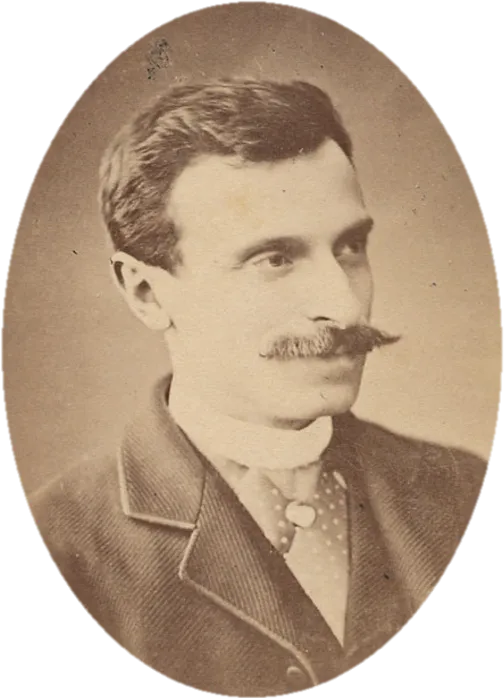
The target was the Catholic Church. In the book priests are tightrope walkers of the cross, Saint Peter is a banker and the Pope a millionaire. One poem says that if the miraculous water of Lourdes deserves a chapel, quinine deserves a temple. Junqueiro asked a friend to make sure it did not go on sale before the 20th. He would be in Braga on the 19th, he explained, and if the book came out on the 18th he risked going from Braga to eternity with his head broken by a holy-water sprinkler.
It sold. The Porto paper A Província reported more than 500 copies sold on the first day, a success it said no book of verse in Portugal had ever had. The Pope did not excommunicate him, but two months later Father José Simões Carreira condemned the magazine that had printed the Group of Five photograph and called Junqueiro the devil.
Copies had already been shipped to Brazil, where an unauthorised edition was reported by the end of the year, and in 1886 Father Sena Freitas published a rebuttal in São Paulo, A Autópsia da Velhice do Padre Eterno.
The book and Pátria were later called the gospel of anticlericalism in Portugal. Franco reads it differently. Junqueiro, he argues, attacked the old God of dogma to make room for a younger one, and the poems end in reverence for nature rather than in atheism.
After the Ultimatum: Finis Patriae and Pátria
On 11 January 1890 Britain demanded that Portugal withdraw its forces from the Shire valley and Mashonaland, ending its plan to link Angola and Mozambique across Africa, and the government gave way. The humiliation turned many patriots against the monarchy (the British Ultimatum has its own article). Junqueiro left the Progressive Party and declared for the Republic.
He had first cursed “cynical England”. In the first days of April 1890 he turned on the crown with Finis Patriae (The End of the Fatherland), full of insults to the House of Bragança, including “O caçador Simão” (Simão the Hunter), a savage satire on the young King Carlos. Nuno Severiano Teixeira dates it to the first days of April 1890, and Franco's bibliography to 1890; Manuel Antunes's chronology and Carlos Nogueira give 1891.
“Republican and patriot have become synonyms. Today, whoever says Fatherland says Republic.”
He was still in parliament, now as deputy for Quelimane in Mozambique. He spoke there on 18 June, 8 July and 15 October 1890, and on the last of those days gave up his seat. Teixeira describes him that autumn delivering a real tirade that spared neither the government, the monarchist parties nor the crown.
Pátria (Fatherland), a verse drama in 23 scenes, came out in Porto in 1896. It mocks the convention signed with Britain on 20 August 1890 and puts the Bragança kings on stage one after another. Its central figure is the Doido, a ragged old giant begging for bread, who stands for Portugal. Franco writes that Junqueiro found the model at a village fair in the summer of 1891. He sold the rights to the Porto publisher Lello & Irmão for six contos.
“Ideas! What human idea, however sublime, can compare with or come near a turkey with rice, nice and fat and well browned? What is life? Dinner! And death? Being dined on!”
Poet of the Republic
When the republican rising in Porto on 31 January 1891 failed, Junqueiro found guides in Viana do Castelo to smuggle fugitives over the border, among them the philosopher Sampaio Bruno. In 1905 he settled in Porto, in a house in Rua da Alegria.
On 21 November 1906 the republican deputy Afonso Costa, taking his cue from Junqueiro according to Antunes, called King Carlos a thief in parliament and was expelled from the chamber. On 2 December Junqueiro used the Porto paper A Voz Pública to call a rally, on ground behind his house, in defence of Costa and Alexandre Braga, who had been thrown out with him. He was tried for the article in Porto on 10 April 1907, convicted of offending the king and fined.
On 1 February 1908 the king and his heir were shot dead in Lisbon's Terreiro do Paço. In a letter printed in A Voz Pública on 12 February, Junqueiro wrote that the Republican Party had neither organised nor advised the attack, and called the two gunmen heroes. Franco believes the regicide later finished off the poet in him, already quiet since Oração à Luz in 1904, and pictures him haunted by the thought that his satire had armed the killers. That is a reading, not a documented confession.
He was in Salamanca, staying with his friend Miguel de Unamuno, the rector of the university, when the Republic was proclaimed on 5 October 1910. In the paper A Luta on 21 November he argued that the new flag should keep the blue and white of the liberal campaigns of 1828 and 1834, which he called the colours of the national soul. He lost: on 29 November the Provisional Government chose red and green. When the Law of Separation of Church and State was passed in April 1911 he disagreed with it entirely.
Minister in Bern
The Provisional Government gave him a diplomatic post. A decree of 22 November 1910 named him envoy extraordinary and minister plenipotentiary to the Swiss Confederation, at the invitation of Bernardino Machado, the republican leader he had known since his schooldays in Porto. He chose as his secretary the anarcho-syndicalist Emílio Costa.
“I have the honour to present to Your Excellency the letters that accredit me as Envoy Extraordinary and Minister Plenipotentiary of the Portuguese Republic to the Swiss Confederation. … Economic relations, modest today, ought to grow considerably.”
He spent less time in Switzerland than the dates suggest. Two months after presenting his credentials he asked for sick leave, and a Swiss doctor later diagnosed chronic bronchitis. He resigned in January 1914 and presented his letters of recall in August, after the outbreak of the First World War had postponed the ceremony.
22 November 1910
Appointed minister to Switzerland by decree
12 June 1911
Presents his credentials in Bern
September 1912
Diagnosed with chronic bronchitis; back in Lisbon on 14 September
28 January 1914
Resigns; the resignation is accepted on 9 May
13 August 1914
Presents his letters of recall, postponed by the outbreak of war
Germany declared war on Portugal in March 1916, and Junqueiro backed Portugal's part in the fighting on the side of France and of Britain, the country he had cursed in 1890. When the first Portuguese troops left for France in January 1917, he published an appeal to them that ended in a prayer.
Antiques, vines and money
Junqueiro collected antiques, bric-à-brac as he called it, and for years bought and sold them. In March 1919 he told Raul Brandão that he had paid for his collecting out of his wife's fortune. Antunes notes that the documents put his wife's inheritance from her father higher, at just over 42 contos.
“I married in Viana do Castelo, everyone says to a very rich woman. Do you know how much she had? Thirty contos. I spent twelve on old things, mainly pieces of religious art, paintings, sixteenth-century Portuguese pottery and some Italian or Hispano-Arab pieces.”
The other passion was land. From about 1883 he assembled the Quinta da Batoca at Barca d'Alva on the upper Douro, 50 hectares with 6,500 olive trees and about 80,000 vines, mostly Touriga Nacional. In 1888 he told a friend he meant to turn his luxurious bric-à-brac into a fine vineyard on the Douro cliffs, and he experimented with sunlight against the diseases of the vine.
Between 1895 and 1903, short of money for the vines, he sold most of his collection. Four lots went in 1897 and 1898 to José dos Santos Libório's Empresa Liquidadora on Avenida da Liberdade in Lisbon, for 2,916 mil réis by Junqueiro's own account, just under three contos; some of the pieces are said to have been bought by King Carlos and Queen Amélia. In 1910 the journalist Homem Cristo accused him of passing off worthless objects as treasures, and Junqueiro answered with a list of what he had sold and for how much.
In October 1911 he sold 39 paintings, watercolours and drawings to the Academy of Fine Arts in Lisbon for 1,700 mil réis, a token price in Antunes's words. He told Brandão they were worth twenty contos and that he had needed the money for the wedding of his elder daughter, Maria Isabel. They are now in the Museu Nacional de Arte Antiga.
Jerónimos, Santa Engrácia and a house in Porto
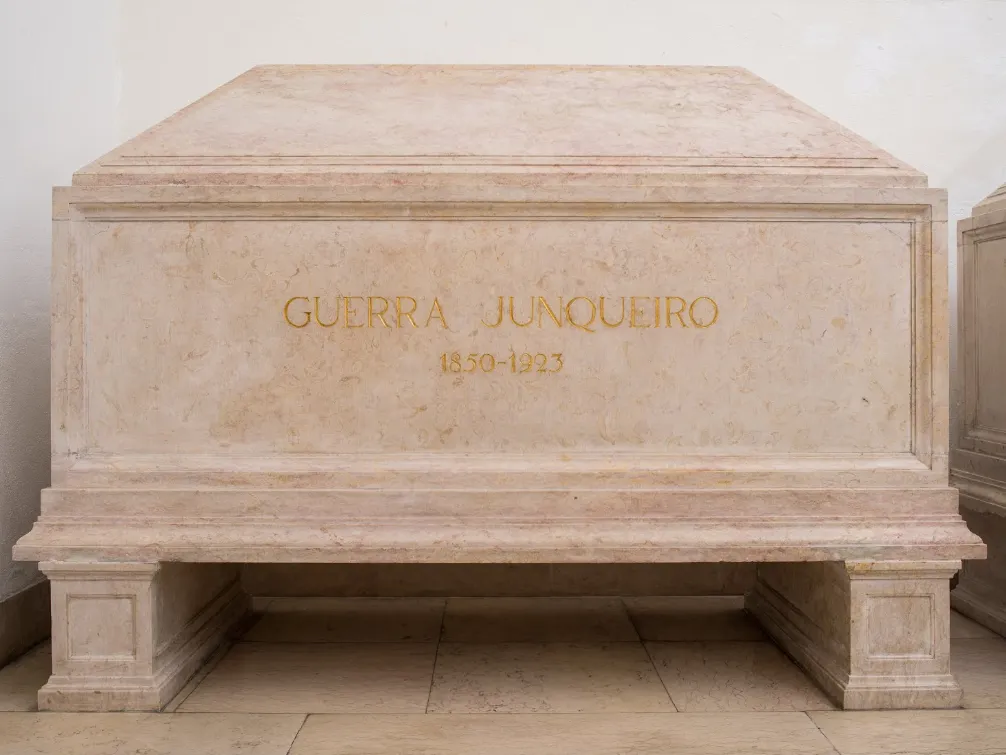
The Jerónimos chapter house served then as the national pantheon. Junqueiro lay there until 1966, when the long-unfinished church of Santa Engrácia was at last completed as the Panteão Nacional and six men were moved there from the monastery: the former presidents Teófilo Braga, Sidónio Pais and Óscar Carmona, and the writers Almeida Garrett, João de Deus and Junqueiro.
Porto, his home since 1905, honoured him too. On 30 July 1923 the city council voted to name a future square after him, to raise a monument there and to put in every primary school a medallion with his bust and a framed panel of lines from Os Simples and Pátria.
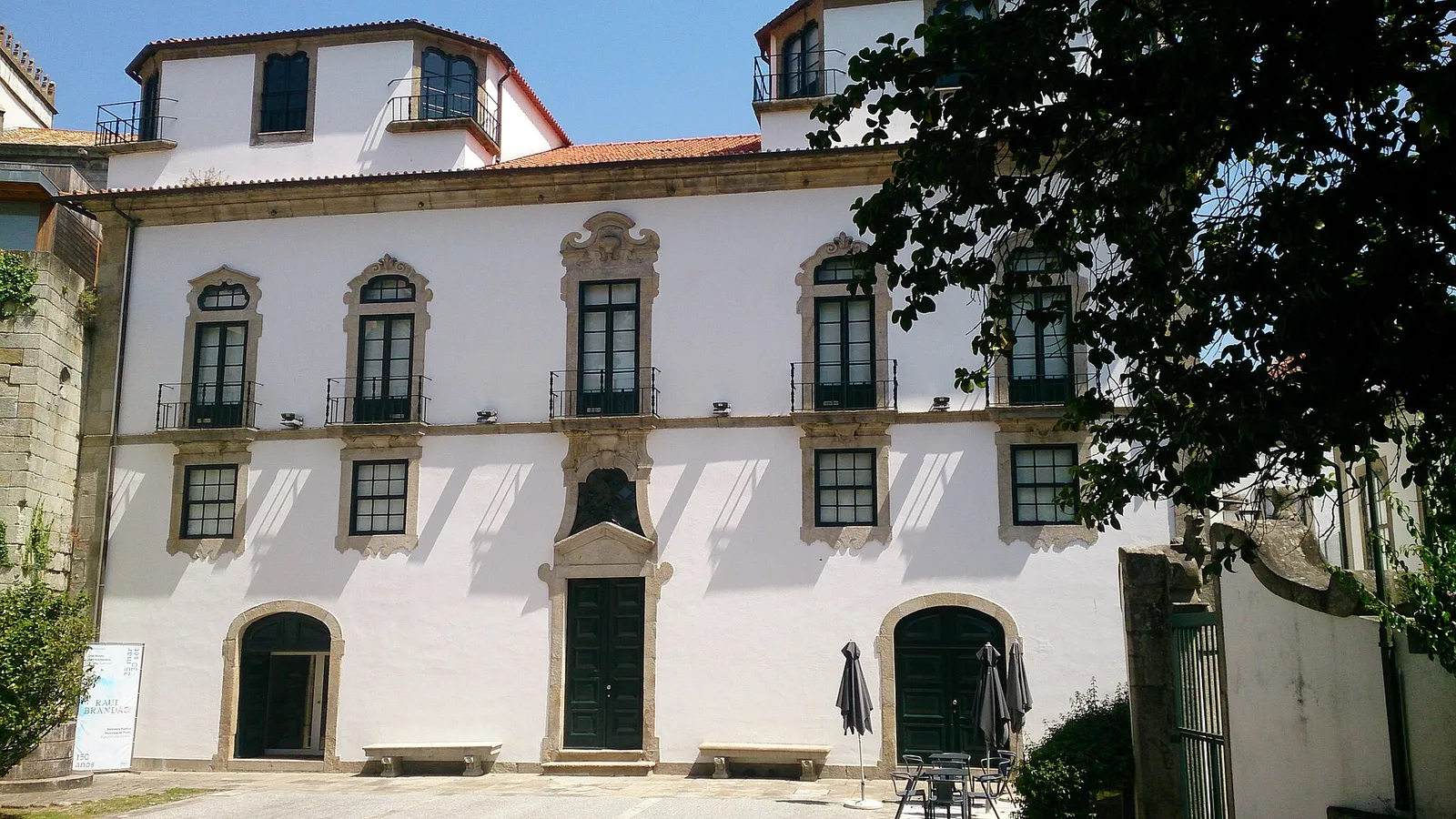
His elder daughter, Maria Isabel, built a memorial of another kind. In 1934 she bought a house in Rua de D. Hugo, near the cathedral, and in 1940 she and her mother gave it to the city with 623 pieces from the collection. The council created the museum by resolution on 11 April 1940 and it opened on 19 June 1942, its rooms arranged to recall those of Junqueiro's last home in Rua de Santa Catarina.
Why he still matters
Few people read Junqueiro now. Carlos Nogueira, writing in 2024, calls him almost completely forgotten. Yet his diagnosis of a country in decline still surfaces. In a 2005 interview with Público, the novelist José Saramago began with him: Guerra Junqueiro wrote that book, Finis Patriae, and Saramago saw Portuguese history since as a long decline with occasional jolts, the Republic and the revolution of 25 April 1974 among them.
In 2023, a hundred years after his death, the Imprensa Nacional published a revised edition of Franco's study, and in January 2025 the Panteão Nacional opened an exhibition on Junqueiro as a collector and connoisseur.
His death in July 1923 showed what he had meant to the Republic he had campaigned for. He had asked for a simple religious burial, with no flowers and no speeches. The Republic gave him a national funeral and a grave in the Jerónimos near Camões, Garrett and Herculano, and Porto voted to put a medallion with his bust and lines from Os Simples and Pátria in every primary school.
FAQs
When and where did Guerra Junqueiro die?
He died in Lisbon on 7 July 1923, aged 72, at the house of his son-in-law Luís Pinto de Mesquita Carvalho in the parish of Santa Isabel. He had a national funeral on 14 July and was buried in the Jerónimos Monastery.
What is A Velhice do Padre Eterno about?
It is a book of satirical poems, published in Porto on 24 August 1885, that attacks the Catholic Church, its clergy and its dogmas. Junqueiro called its 50 poems 50 bullets aimed at the same target. It sold more than 500 copies on its first day.
How did the British Ultimatum change Guerra Junqueiro?
After Britain's ultimatum of 11 January 1890 he left the monarchist Progressive Party, declared himself a republican and attacked King Carlos in Finis Patriae (1890, or 1891 by some accounts) and later in the verse drama Pátria (1896). In October 1890 he gave up his seat in parliament.
Where is Guerra Junqueiro buried?
In the Panteão Nacional, the former church of Santa Engrácia in Lisbon. He was moved there from the Jerónimos Monastery in 1966.
Did Guerra Junqueiro live in the Casa-Museu in Porto?
No. His daughter bought the house in Rua de D. Hugo in 1934, eleven years after his death, and gave it to the city in 1940 with 623 pieces of his collection. The rooms were arranged to recall his last Porto home in Rua de Santa Catarina.
On the timeline
Open the timelineNearby moments from the first republic (1910–1926).
Poet Eugénio de Andrade, born José Fontinhas, comes into the world in Póvoa de Atalaia, near Fundão. His spare, sensual poems of light, water and the body made him one of the best-loved Portuguese poets of the 20th century, translated into many languages, and he won the Camões Prize in 2001.
Birth in Fundão of fado singer Celeste Rodrigues, younger sister of Amália. She made her debut in 1945 and kept performing into her nineties, a career of 73 years that ended only with her death in 2018.
Birth of Eduardo Lourenço in São Pedro de Rio Seco, near Almeida. One of Portugal's most influential essayists and thinkers of the 20th century, he examined how the Portuguese see themselves in 'O Labirinto da Saudade' (1978).
Death of Guerra Junqueiro
Death of Abílio Manuel Guerra Junqueiro in Lisbon, aged 72. Poet, journalist and Republican militant, he mocked the Church in A Velhice do Padre Eterno and turned on the monarchy after the 1890 British Ultimatum, and the Republic gave him a national funeral.
Mário Cesariny de Vasconcelos, poet and painter regarded as the leading figure of Portuguese surrealism, is born in Lisbon.
Birth in Fajã de Baixo, on São Miguel in the Azores, of Natália Correia, poet, playwright and firebrand of Portuguese letters. An Estado Novo court fined her in 1970 over an anthology of erotic and satirical verse; in 1971 she co-founded Lisbon's Botequim bar, and after 1974 she sat in parliament and wrote the words of the Azorean anthem.
Birth in Lisbon of the novelist Urbano Tavares Rodrigues, son of Alentejo landowners from Moura. He taught Portuguese at Montpellier, Aix and Paris from 1949 to 1955, was barred from university teaching in Portugal for political reasons and, as an active opponent of the Estado Novo, was jailed in the Aljube in 1963 and arrested again later. After 1974 he taught at the Lisbon Faculty of Letters and became one of the most prolific Portuguese writers and critics of his generation.
Coming up in history
All long reads 9 July 1955Alves dos Reis and the banknote fraud that shook Portugal in 1925
 10 July 2016Éder's goal in Saint-Denis: Portugal win Euro 2016, 10 July 2016
 11 July 2018The Aga Khan makes a Lisbon palace the Ismaili Imamat's seat, 2018
 12 July 1780Mouzinho da Silveira and the decrees that ended Portugal's old regime
15 sources
Archives, scholarship and reporting this article was checked against.
- 1
O Essencial sobre Guerra Junqueiro (António Cândido Franco), 2nd revised editionImprensa Nacional, 2023
- 2
Mobiliário de assento civil da Casa Museu Guerra Junqueiro (Manuel Antunes, MA dissertation in art history), vol. IFaculdade de Letras da Universidade do Porto, 1998 (Repositório Aberto)
- 3
Guerra Junqueiro e a teopoética da negação como afirmação: entre A Velhice do Padre Eterno e A Lágrima (Henrique Manuel Pereira)Teoliterária, vol. 10, no. 22 (2020), PUC-SP
- 4
Política externa e política interna no Portugal de 1890: o Ultimatum Inglês, by Nuno Severiano TeixeiraAnálise Social, vol. XXIII (98), 1987, pp. 687–719
- 5
Casa Guerra JunqueiroMuseu do Porto, Câmara Municipal do Porto
- 6
Funeral de Guerra Junqueiro (1923), unedited 35 mm footageCinemateca Portuguesa – Museu do Cinema, Cinemateca Digital
- 7
A Batalha de Trancoso (with the political background and a narrative of 1383 to 1385)Fundação Batalha de Aljubarrota, Centro de Interpretação da Batalha de Aljubarrota
- 8Panteão Nacional dedica exposição a Guerra Junqueiro e à sua relação com a arteObservador (Lusa), 20 January 2025
- 9
Eça de Queirós 1845-1900: biobibliografia, 1880-1888 (long chronology)Biblioteca Nacional de Portugal (scientific coordination Carlos Reis), 2000
- 10
História do Panteão NacionalPanteão Nacional, Museus e Monumentos de Portugal
- 11
Raízes de um cristianismo exacerbado: o anticlericalismo de Junqueiro (Henrique Manuel Pereira)Revista Lusófona de Ciência das Religiões, no. 20 (2017), pp. 207–228
- 12
Junqueiro e Saramago: Portugal, Deus e o ser humano (Carlos Nogueira)Études romanes de Brno, vol. 45, no. 3 (2024), pp. 207–224
- 13
1908: do Regicídio à ascensão do Republicanismo (exhibition catalogue, with an essay by Jorge Couto and a chronology of January 1908)Biblioteca Nacional de Portugal, 2008
- 14
- 15
Palavras de Guerra Junqueiro (ao tomar posse do seu lugar de nosso ministro na Suíça), 1911A Águia, nos. 13–14 (1923), pp. 94–95, Hemeroteca Digital de Lisboa
Image credits
- The Casa-Museu Guerra Junqueiro in Rua de D. Hugo, near Porto Cathedral, in 2017. Junqueiro never lived here: his daughter bought the house in 1934 and gave it to the city in 1940 with 623 pieces of his collection. Paula Cardona, CC0, via Wikimedia Commons.
- Guerra Junqueiro in 1885, the year of A Velhice do Padre Eterno. He grew the full beard of his later portraits only from 1898. Photographia Contemporanea, Public domain, via Wikimedia Commons.
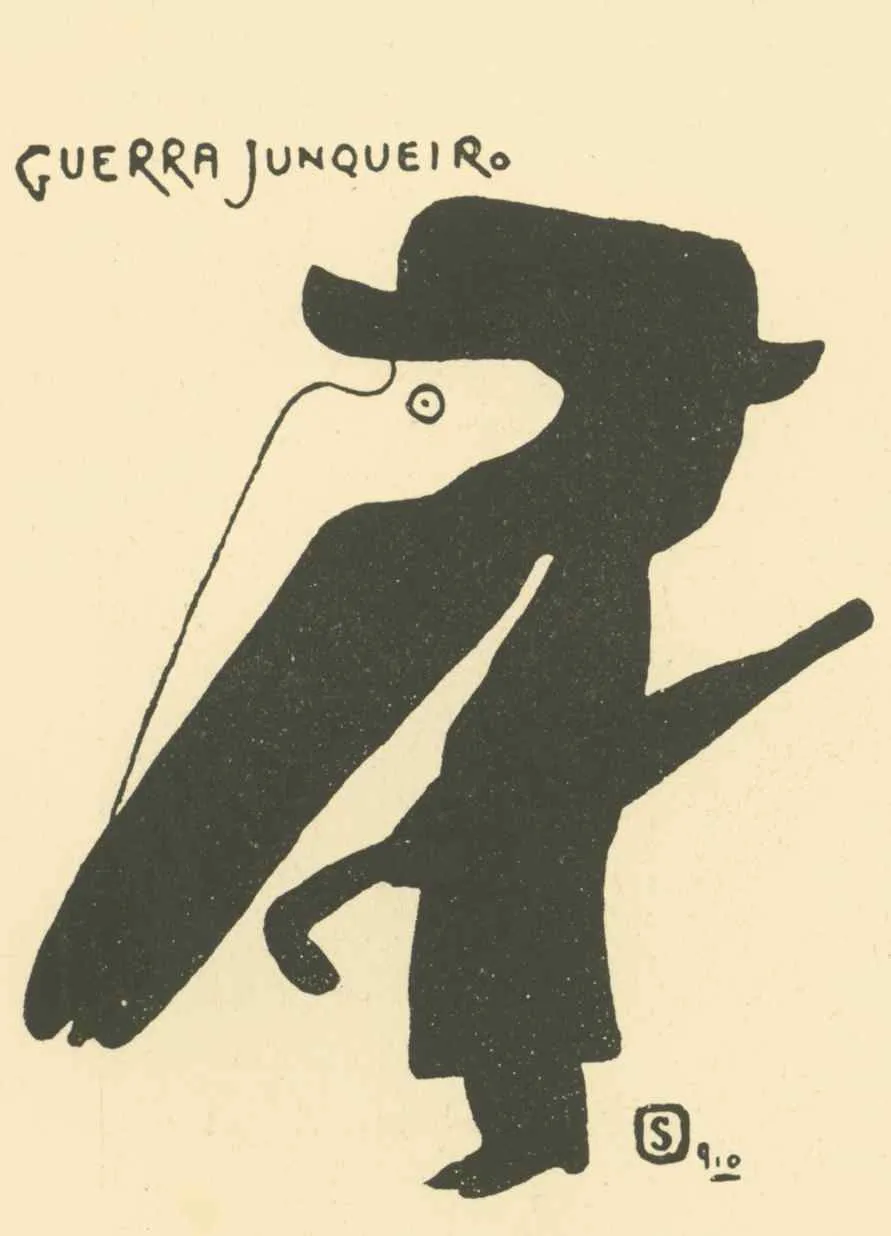
- Guerra Junqueiro caricatured by Alberto Sanches de Castro in 1910, the year the Republic was proclaimed: bowler hat, pince-nez and the beard he had let grow since 1898. Alberto Sanches de Castro (1888-1934), Public domain, via Wikimedia Commons.
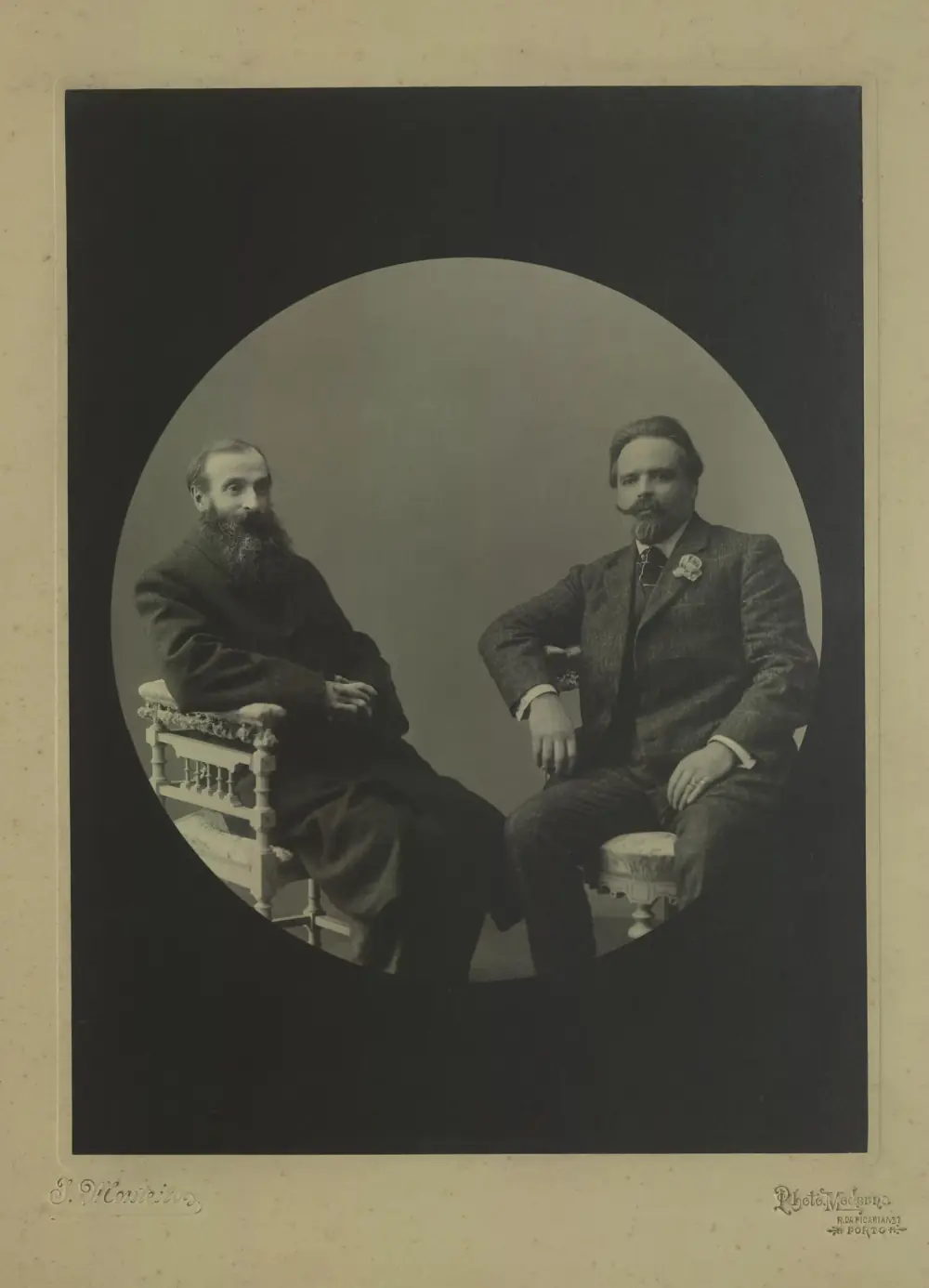
- Guerra Junqueiro, bearded, with the republican leader António José de Almeida in 1909. Almeida, later President of the Republic, visited him in Lisbon eight days before his death. Photo Moderna, Public domain, via Wikimedia Commons.
- Guerra Junqueiro's tomb in the Panteão Nacional, the former church of Santa Engrácia in Lisbon, in 2020. António Fragoso, CC BY 2.0, via Wikimedia Commons.