

Alves dos Reis and the banknote fraud that shook Portugal in 1925
He never forged a banknote. He forged a contract, and the firm that printed Portugal's money in London printed 290 million escudos for him, most of it numbered to match notes already in people's pockets.
At a glance
- Artur Virgílio Alves Reis, known in Portugal as Alves dos Reis, died poor at his home in Lisbon on 9 July 1955, aged 58, thirty years after the fraud that made his name.
- In 1925 forged contracts persuaded Waterlow & Sons of London, the Bank of Portugal's own printers, to print 580,000 genuine-looking 500-escudo Vasco da Gama notes and hand them to his Dutch partner, Karel Marang.
- More than 100 million escudos of the notes, about £1 million at the time, reached circulation, much of it through his own Banco Angola e Metrópole, licensed in June 1925.
- Duplicate serial numbers found in Porto on the night of 5 to 6 December 1925 exposed the scheme. The Bank of Portugal withdrew the whole issue and found 209,718 unauthorised notes among those handed in.
- Reis was sentenced in Lisbon in 1930 and freed in 1945. In 1932 the House of Lords, by three votes to two, made Waterlow pay the bank £610,392.
Two notes, one number
Late on Saturday 5 December 1925, in the Porto branch of the Bank of Portugal, officials who had come up from Lisbon the evening before were sorting 500-escudo notes into series. That day the police had searched the Porto office of a new bank, the Banco Angola e Metrópole, and found packets of crisp Vasco da Gama notes that were not in numerical order. Now every note of that type in the branch was being laid out by serial letter and number.
Some time that night or early on Sunday they found what they were looking for: four notes, each with a twin bearing exactly the same serial number. Eight notes in all. For the bank this was conclusive proof that unauthorised notes were circulating, and nobody could yet say how many, where they came from or how to tell them from the real thing.
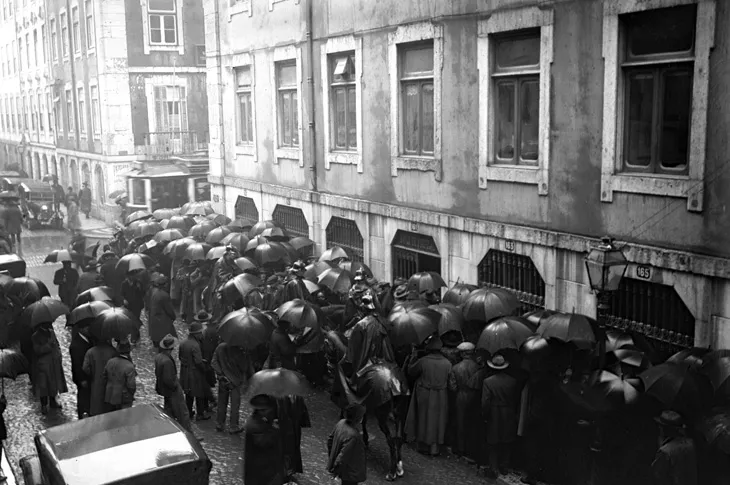
That weekend the police arrested the founder of the Banco Angola e Metrópole, Artur Virgílio Alves Reis, aboard the ship bringing him home from Angola. On Sunday evening the bank's directors met in Lisbon and decided to withdraw every 500-escudo Vasco da Gama note and give holders a good note in exchange. The notice appeared in the Diário de Notícias and O Século on Monday 7 December, and a run on the bank began.
The man behind it, remembered in Portugal as Alves dos Reis, was 29. He spent almost all of the next twenty years in prison and died, poor, in Lisbon on 9 July 1955. The lawsuit his fraud produced in London made legal history, and historians still argue over what it did to the First Republic.
A shaky republic and a bank that printed money
Portugal had been a republic since October 1910, and an unstable one. Between 1910 and 1926 it had eight presidential terms (Bernardino Machado served two of them), 45 governments, 25 uprisings and three short-lived dictatorships. There were two failed military revolts in 1925 alone, in April and July.
To pay for the First World War and its aftermath, the bank lent heavily to the state in newly printed notes. Henry Wigan, in a paper for the economic history department of the London School of Economics, cites estimates that prices rose by an average of 48.4% a year between 1919 and 1924. On the yearly figures he uses, the escudo slid from 18 to the pound in 1920 to 134 in 1924. It touched bottom at about 155 in July 1924 and was back near 100 by the end of that year.
The escudo against sterling, 1920 to 1928
escudos per pound sterling (annual figure)
Annual escudo-sterling exchange rates, rounded to one decimal place, from Table 3.5 of Wigan (2004), which takes them from the Bank of Portugal's historical estimates by Batista, Martins, Pinheiro and Reis (1997). The fraud ran through 1925, after the escudo had begun to recover.
Show the data
| Escudos per £1 | |
|---|---|
| 1920 | 18.3 |
| 1921 | 39.4 |
| 1922 | 65.1 |
| 1923 | 109.7 |
| 1924 | 134 |
| 1925 | 99.2 |
| 1926 | 94.8 |
| 1927 | 108.4 |
| 1928 | 108.3 |
Alves dos Reis noticed two things about this system. A note cost the bank little more than the printing. And the bank had no department whose job was to stop two notes from carrying the same number.
A diploma from a school that never existed
Artur Virgílio Alves Reis was born in Lisbon in 1896. In 1916 he went out to Angola, Portugal's largest African colony, armed with a certificate from a “Polytechnic School of Engineering” of Oxford University. No such school existed. The certificate made him a graduate in almost everything, from geology and metallurgy to palaeography, and it got him into the colony's public service and then onto the railways, where he rose to acting chief engineer.
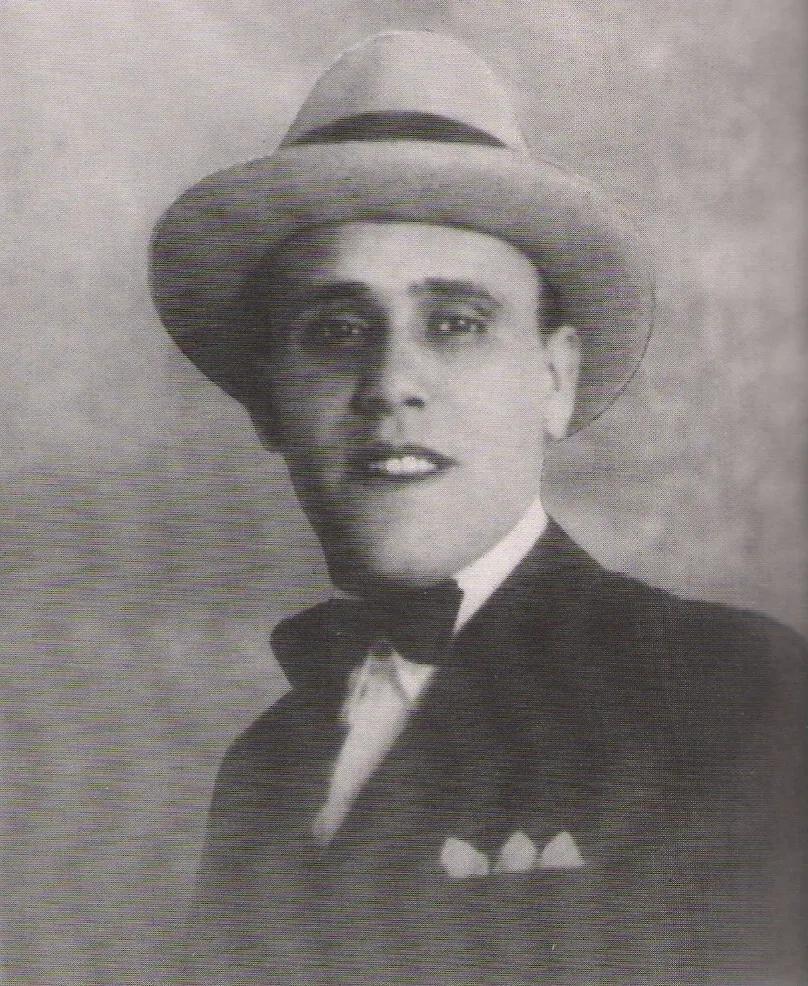
Back in Lisbon in 1922 he took control of Ambaca, an Angolan railway company, by buying its shares with cheques he could not cover and then paying the cheques out of Ambaca's own cash. In July 1924 the fraud caught up with him and he spent 54 days in jail, released on 27 August.
He used the time to study the Bank of Portugal. In his own account, written in prison while awaiting trial and published in 1927, he reckoned that a private issue of 300 million escudos would neither arouse suspicion nor upset the banking system.
A contract for the printers
He needed people with doors he could not open himself. José Bandeira, a small-time crook he had met in Angola, was the brother of António Bandeira, Portugal's minister at The Hague. Through them came Karel Marang van Ysselveere, a Dutch businessman, and Adolf Hennies, a German whose real name was Döring. Reis told none of them the whole plan.
The story he gave them was a secret loan to develop Angola. A foreign syndicate would lend the colony money and, in return, receive the right to issue Bank of Portugal notes there. The bank's directors were said to be divided, so only the governor and vice-governor knew, and Reis was to be the only channel to the bank. He forged the contracts on official stamped paper, had them notarised, and had them authenticated at the British, French and German consulates.
“…the First Contracting Party authorises the Second Contracting Party to cause to be manufactured up to two hundred thousand Bank Notes of five hundred Escudos and one hundred thousand of one thousand Escudos of the issue of the First Contracting Party…”
Marang first tried the Dutch printers Joh. Enschedé, who sent him to Waterlow & Sons in London, the firm that held the plates for the bank's current 500-escudo note, with Vasco da Gama's portrait. On 4 December 1924 Marang called on the chairman, Sir William Waterlow. The notes, he explained, had to be identical to those already circulating in Portugal and would be overprinted “ANGOLA” on arrival.
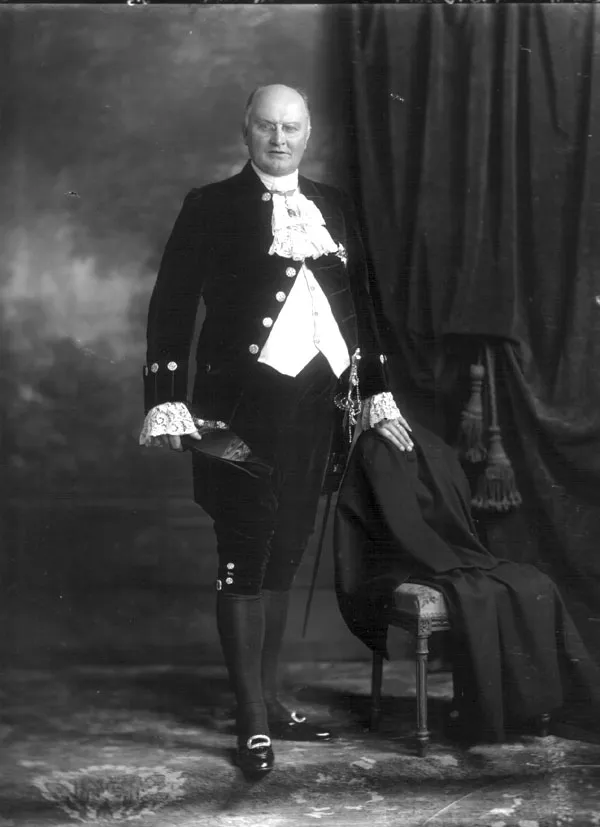
Waterlow asked for the bank's own authority to use its plates. A letter from the governor arrived, written by Reis. The firm's man in Lisbon, Henry Romer, wrote to Sir William several times that the scheme looked illegal and was overruled. On 6 January 1925 Waterlow and Marang signed for 200,000 notes, all of 500 escudos, at a printing charge of £1,500; the 1,000-escudo notes the forged contract also allowed for were never printed. A letter Sir William sent to the bank itself never reached it.
A fortune in suitcases
The first notes were delivered in February 1925, and by the end of March Marang had all 200,000. They travelled to Lisbon as diplomatic baggage, helped by António Bandeira's papers. Reis had reconstructed the bank's numbering from notes he examined, but not perfectly: on Spink's count, 90,000 notes carried prefixes the bank had never used, and he held them back.
In Porto he hired freelance currency dealers to change the notes for foreign money, and opened accounts in suburban branches that he then drew on in genuine notes. When one suspicious bank manager sent a note to the Bank of Portugal, the bank replied that it was perfectly good. Reis bought the Menino de Ouro palace in Lisbon, three country estates and a fleet of taxis.
His next step was a bank of his own. The Minister of Finance authorised the Banco Angola e Metrópole on 27 June 1925, on condition that its minimum capital of 20 million escudos was paid in full. With 100 million escudos already in hand, that was easy.
Through the bank and front men he began buying Bank of Portugal shares, aiming at control of the only body entitled to prosecute counterfeiters of its notes. Wigan, citing a 1932 account, puts the shares he needed for control at 45,000; Spink puts them at about half the 97,000 in issue. By November he had about 10,000.
In July Marang placed a second order, for 380,000 notes, delivered between August and November. By then Sir William had noticed that the numbers duplicated the bank's own, and another forged letter told him that was intended. Some cases of notes waited in the left-luggage office at Liverpool Street station.
| Notes | Number | Face value (escudos) |
|---|---|---|
| Printed for the Bank of Portugal, delivered 1923 to 1924 | 600,000 | 300 million |
| Printed for Marang, delivered February to March 1925 | 200,000 | 100 million |
| Printed for Marang, delivered August to November 1925 | 380,000 | 190 million |
| All notes printed for Marang | 580,000 | 290 million |
| of which exact duplicates of genuine notes | 490,000 | 245 million |
| Vasco da Gama notes in the bank's hands after the exchange | 799,190 | about 400 million |
| of which printed for Marang | 209,718 | 104.9 million |
Figures as found by the English courts and set out by the Lord Chancellor in 1932; face values are the number of notes multiplied by 500. The total note circulation was about 1,700 million escudos, so the notes printed for Marang equalled about one-sixth of it (Andrew Bull gives about 16.5%), and those that reached circulation over 100 million escudos. Wigan gives 115,000 notes withdrawn by 26 December, which cannot be reconciled with the court's figures: Lord Macmillan put the notes withdrawn by that date at 791,533, of which he estimated 207,706 were unauthorised.
December 1925
A bank that lent freely without taking deposits drew attention. On 19 November the Minister of Finance ordered an inspection of the Banco Angola e Metrópole. From 23 November the Lisbon daily O Século ran articles asking where its money came from; some suggested Germany, working through Hennies, was after Portugal's colonies. On Friday 4 December a Lisbon banker told Dr Ulrich, a director of the Bank of Portugal, about suspicious dealings at its Porto office.
19 November 1925
Inspection ordered
The Minister of Finance tells the banking inspector to investigate the Banco Angola e Metrópole.
23 November
Press campaign
O Século begins a series of articles on the bank's money.
Friday 4 December
The tip-off
Officials of the state and the bank leave for Porto that evening.
Saturday 5 December
Search in Porto
Police search the Banco Angola e Metrópole's Porto premises; O Século breaks the story.
Night of 5 to 6 December
Duplicates found
Four pairs of notes with identical numbers turn up in the Bank of Portugal's Porto branch.
Sunday 6 December
Withdrawal decided
The bank's directors resolve to call in every 500-escudo Vasco da Gama note.
Monday 7 December
Notice published
Holders are told to exchange the notes at the bank's offices; the bank cables Waterlow for an expert.
13 December
Waterlow in Lisbon
Sir William Waterlow arrives and is treated with suspicion.
26 December
Deadline passes
The last day for exchanging the notes, first set by the Ministry of Finance for 22 December and then extended.
The bank chose to pay out on every note, good or bad, rather than refuse any. On 8 December the Lisbon paper A Capital reported that 34,800 notes, worth 17,400 contos (17.4 million escudos), had been exchanged the day before. Dr Ulrich later explained the choice to the English court.
“…the people in Portugal would have taken the most severe violences against the Bank, and I am sure that a Revolution would have been brought about by this fact.”
Even the bank's governor and vice-governor were briefly arrested, and warrants went out for Waterlow's representatives in Portugal. Police seized four trunks of notes at Marang's home in The Hague and some 85,000 more in the Lisbon flat of the Venezuelan minister, who had carried shipments for the gang. Hennies, who had sailed from Angola with Reis, slipped away to Germany.
“The political atmosphere, all of it arising from the events surrounding the Banco Angola e Metrópole, was today in the Chamber something you could cut with a knife. In every group, in every party, nobody talked of anything else, nobody discussed anything else.”
Parliament debated the case again and again until it was shut down in May 1926. The Socialists' call for a commission of inquiry was voted down, and the other parties left the matter to the courts. A new government under António Maria da Silva took office on 17 December. On 21 December he told the deputies that the facts would be cleared up “whatever the responsibilities” (translated from Portuguese).
Trials in The Hague, Lisbon and London
Marang was tried in the Netherlands in 1926 and given eleven months. He moved to France, prospered, and died in Cannes in 1960. Hennies was caught in Germany in 1932 and sentenced to a year in prison there. Reis waited more than four years for trial, in prison, forging new papers meant to prove that the bank's own directors had been in on it.
The trial opened in Lisbon in May 1930. Reis admitted the plan was his and insisted that his co-defendants had followed him in good faith; his aim, he said, had been to develop Angola. In June he was sentenced to 20 years. Wigan calls it twenty years' imprisonment; Spink describes eight years in prison followed by twelve of exile. Either way he stayed in prison until 1945. José Bandeira received the same sentence.
The Bank of Portugal, meanwhile, sued Waterlow in London in April 1928. It claimed £1,115,613 and credited the £488,430 it had recovered from the liquidation of the Banco Angola e Metrópole, leaving £610,392. The trial judge, Mr Justice Wright, awarded £569,421 on 12 January 1931. The Court of Appeal cut this to £300,000; Lord Justice Scrutton, dissenting, would have given the bank only £8,922, roughly the cost of printing replacement notes.
The question was whether a bank whose notes could not be redeemed in gold lost anything when it swapped a bad note for a good one. On 28 April 1932 the House of Lords held, by three votes to two, that it did, and gave the bank its full net claim of £610,392. Lord Macmillan, one of the majority, wrote of a crime “for which in the ingenuity and audacity of its conception and execution it would be difficult to find a parallel”.
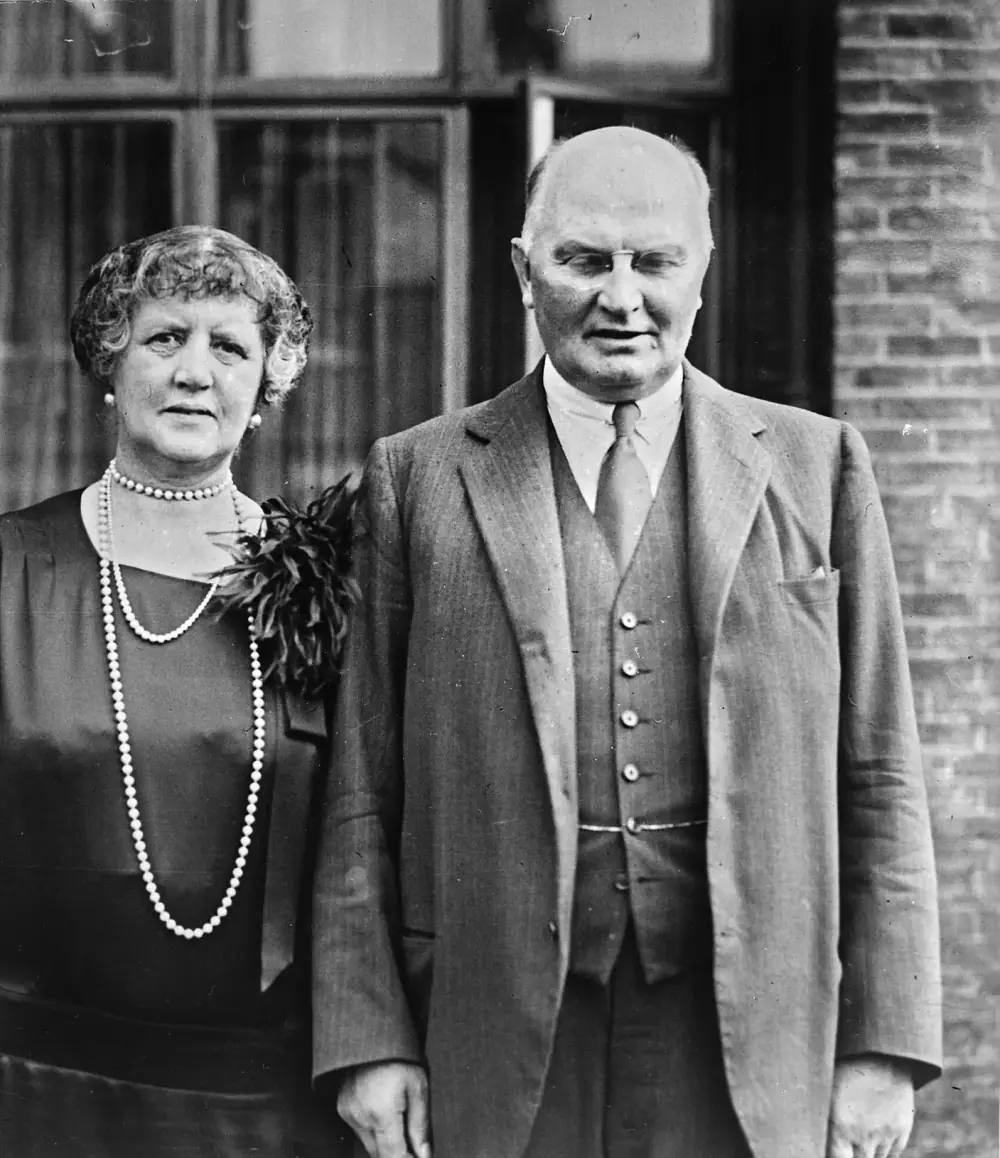
Sir William did not live to hear it. His board removed him as chairman in July 1927, yet in November 1929 he became Lord Mayor of London. He died in 1931. The courts accepted that his firm had been as much a victim of Marang as the bank, but its reputation never fully recovered, and its security printing passed in the end to its rival, De La Rue.
Did it bring down the Republic?
Five and a half months after the duplicates turned up, on 28 May 1926, army officers rose against the government, and within days the parliamentary republic was gone. One of its last laws dealt with the scandal. Law 1,873, which put the Banco Angola e Metrópole into liquidation under a commission of three judges and two banking experts, bears the date 31 May 1926 and the signatures of President Bernardino Machado and Commander José Mendes Cabeçadas, the coup leader to whom Machado handed his powers that day.
The new military government then settled the bank's position. A decree of 19 July 1926 put the Bank of Portugal's loss at about 100 million escudos and let it issue the same amount in new notes, to be withdrawn as compensation came in from the bank's liquidation and from the English printers.
- Unauthorised notes in circulation
- Over 100 million escudos (about £1 million)
- Share of Portugal's 1925 GDP
- About 0.88%
- Increase in high-powered money (Wigan)
- About 5.9%
- Bank of Portugal's loss, per the decree of 1926
- About 100 million escudos
- Damages from Waterlow (1932)
- £610,392
Historians disagree about how much the fraud mattered. Murray Teigh Bloom, whose book The Man Who Stole Portugal made the story famous, said it brought on the dictatorship. The historian Douglas Wheeler wrote that it rocked but did not topple António Maria da Silva's government. Wigan's own calculation is that the extra notes raised high-powered money (notes in circulation plus bank reserves) by about 5.9% and equalled 0.88% of GDP, in a year when prices were falling.
His conclusion is that the damage was more political than economic. Officers already angry about their pay saw a government that could not even protect its own money, and the right-wing press used the scandal against the governing Democratic Party. Wigan calls the crisis “a trigger event”, one that made a coup more likely, though a coup might have come without it. The coup of 28 May began the military dictatorship from which Salazar's Estado Novo grew.
Lisbon, 9 July 1955
Reis left prison in May 1945. He had spent almost all the years since his arrest in December 1925 in prison, first awaiting trial and then under sentence, and there he had become an evangelical Protestant. His wife and three sons followed him into the faith.
Free, he wrote and spoke for his church, and still tried his hand at deals, without much success. The others had fared in their own ways. Sir William Waterlow had died in 1931, after his board removed him as chairman; Marang, sentenced to eleven months in the Netherlands, had moved to France and prospered.
Alves dos Reis died at home in Lisbon on 9 July 1955, aged 58, without a fortune, in the words of the Bank of Portugal's own biography of him. The Menino de Ouro palace in Príncipe Real, which he had bought around 1925, had housed the British Council since 1942.
His story is still retold. RTP made his life into a 50-episode television series, Alves dos Reis, um Seu Criado, in 2000. In 2026 a feature film based on Bloom's book, The Man Who Stole Portugal, began shooting in the United Kingdom, Portugal and South Africa, with James Nelson Joyce as Reis.
FAQs
Who was Alves dos Reis?
Artur Virgílio Alves Reis (1896 to 1955), known as Alves dos Reis, was a Lisbon fraudster who in 1925 used forged contracts to get Waterlow & Sons, the Bank of Portugal's London printers, to print 580,000 500-escudo notes for his associates. He was sentenced in 1930, released in 1945 and died poor in Lisbon on 9 July 1955.
How much money did Alves dos Reis have printed?
Waterlow printed 580,000 notes of 500 escudos, 290 million escudos in all, about one-sixth of Portugal's note circulation. Over 100 million escudos, about £1 million or 0.88% of 1925 GDP, reached circulation before the scheme was exposed; 209,718 unauthorised notes were handed in when the bank called in the issue.
How was the Portuguese banknote fraud discovered?
After a press campaign and a government inspection of Reis's Banco Angola e Metrópole, police searched its Porto office on 5 December 1925. Sorting the Bank of Portugal's Porto notes by number that night, they found four pairs with identical serial numbers.
Did the Alves dos Reis scandal cause the 1926 coup?
It contributed, but historians differ on how much. The coup of 28 May 1926 followed years of instability and two failed revolts in 1925. Henry Wigan argues the scandal's main effect was a loss of confidence in the regime, and calls it a trigger event that made a coup more likely rather than a necessary cause.
What happened to Waterlow & Sons?
The Bank of Portugal sued the firm in London. In 1932 the House of Lords, by three votes to two, ordered it to pay £610,392. Its chairman, Sir William Waterlow, had been removed in 1927 and died in 1931, and the firm's security printing later passed to De La Rue.
On the timeline
Open the timelineNearby moments from dictatorship and the estado novo (1926–1974).
Catarina Eufémia, a 26-year-old harvest worker from Baleizão in the Alentejo, is shot dead by a GNR lieutenant during a strike for higher wages, as she and other women approach workers brought in to break it. Most accounts say she was carrying her baby son. She became a symbol of resistance to the Estado Novo.
The Ponte de Santa Clara over the Mondego at Coimbra, designed by the engineers Edgar Cardoso and António Franco de Abreu, is inaugurated by Salazar, replacing the iron bridge of 1875.
General José Norton de Matos dies in his home town of Ponte de Lima aged 87. As war minister he built the expeditionary force sent to Flanders in 1917, as governor of Angola he founded the city of Huambo, and in 1949 he stood as the first opposition candidate for president against the Estado Novo, withdrawing before the vote.
Alves dos Reis and the 1925 note fraud
Death of Artur Alves dos Reis, author of one of history's boldest frauds. In 1925, with forged contracts, he persuaded the London printers Waterlow & Sons to print genuine-looking Bank of Portugal 500-escudo notes, flooding the country with money worth about 1% of GDP. The scandal shook the First Republic months before the 1926 coup.
Death of Calouste Gulbenkian in Lisbon, aged 86. The Armenian oil magnate — known as 'Mr Five Per Cent' for his stake in Middle Eastern oil — had taken refuge in neutral Portugal in 1942, living at the Hotel Aviz, and left most of his fortune and his celebrated art collection to a foundation based in the city.
Carmen Miranda, the Portuguese-born singer and actress who became a Hollywood and Brazilian music icon, dies in Beverly Hills aged 46. Born in Marco de Canaveses in northern Portugal, she was for a time the highest-paid woman in American show business.
Construction work begins on the Lisbon Metropolitano, Portugal's first underground railway. The inaugural line opened to the public in December 1959.
Coming up in history
All long reads 11 July 2018The Aga Khan makes a Lisbon palace the Ismaili Imamat's seat, 2018
 12 July 1780Mouzinho da Silveira and the decrees that ended Portugal's old regime
 13 July 1491A fall by the Tagus: the death of Prince Afonso, 13 July 1491
 14 July 1976Ramalho Eanes sworn in: the general who sent the army back to barracks
12 sources
Archives, scholarship and reporting this article was checked against.
- 1
Banco de Portugal v Waterlow & Sons Ltd; Waterlow & Sons Ltd v Banco de Portugal [1932] UKHL 1 (28 April 1932)House of Lords; full text of the BAILII transcript reproduced by LawCare Nigeria
- 2
The Effects of the 1925 Portuguese Bank Note Crisis (Henry Wigan), Economic History Working Paper 82/04Department of Economic History, London School of Economics, February 2004
- 3
Caso Angola e Metrópole: burla Alves dos Reis (1925)Assembleia da República
- 4
Lei n.º 1:873, de 31 de Maio de 1926 (liquidation of the Banco Angola e Metrópole), Diário do Governo, I série, n.º 123, 11 June 1926Diário do Governo; scan published by the Assembleia da República
- 5
- 6
The Portuguese banknote case: the scam of the centurySpink Insider, 14 September 2021
- 7História do burlão Alves dos Reis inspira filme britânico “O homem que roubou Portugal” (Lusa)Observador, 7 May 2026
- 8
A história da burla de Alves dos Reis vai chegar ao cinemaJornal de Negócios, 7 May 2026
- 9
Alves Reis and the Portuguese Bank Note Scandal of 1925 (Andrew Bull), abstractBritish Historical Society of Portugal, Annual Report 24 (1997)
- 10
Letter from Bernardino Machado to José Mendes Cabeçadas Júnior, 31 May 1926Diário do Governo, I série, no. 124, 12 June 1926
- 11
Menino de Ouro Palace – British CouncilOpen House Lisboa, Trienal de Arquitectura de Lisboa
- 12
Fim de uma era em Lisboa: governo inglês vende palacete do British Council (Marco Alves)Sábado, 1 September 2026
Image credits
- A crowd under umbrellas in a Lisbon street on 8 December 1925, the day after the Bank of Portugal began exchanging every 500-escudo Vasco da Gama note. The photograph is recorded as showing the rush to the bank. Unknown author, Public domain, via Wikimedia Commons.
- Artur Virgílio Alves Reis, about 1925. Unknown author, Public domain, via Wikimedia Commons.
- Sir William Waterlow, chairman of Waterlow & Sons, in court dress, photographed by the Lafayette studio on 10 June 1926, six months after the fraud came to light. Lafayette photography studio, CC BY-SA 4.0, via Wikimedia Commons.
- Sir William and Lady Waterlow in 1929, the year he became Lord Mayor of London. He had been removed as chairman of his firm in 1927. Central News (Agence photographique), for Agence Rol, Public domain, via Wikimedia Commons.