

A fall by the Tagus: the death of Prince Afonso, 13 July 1491
Seven months after weeks of wedding festivities in Évora, the sixteen-year-old heir to Portugal raced a friend along the river at dusk. His death left João II with no lawful son and opened the door to his cousin Manuel.
At a glance
- Prince Afonso, born in Lisbon on 18 May 1475, was the only legitimate son of King João II and Queen Leonor, and in 1479, aged four, he was promised to Isabel, eldest daughter of Ferdinand and Isabella of Castile and Aragon.
- The couple were married by proxy in Seville on 18 April 1490 and in person at Estremoz in November; Isabel entered Évora on 27 or 28 November for weeks of banquets, masques, bullfights and jousts paid for partly by a grant of 100,000 cruzados from the Cortes.
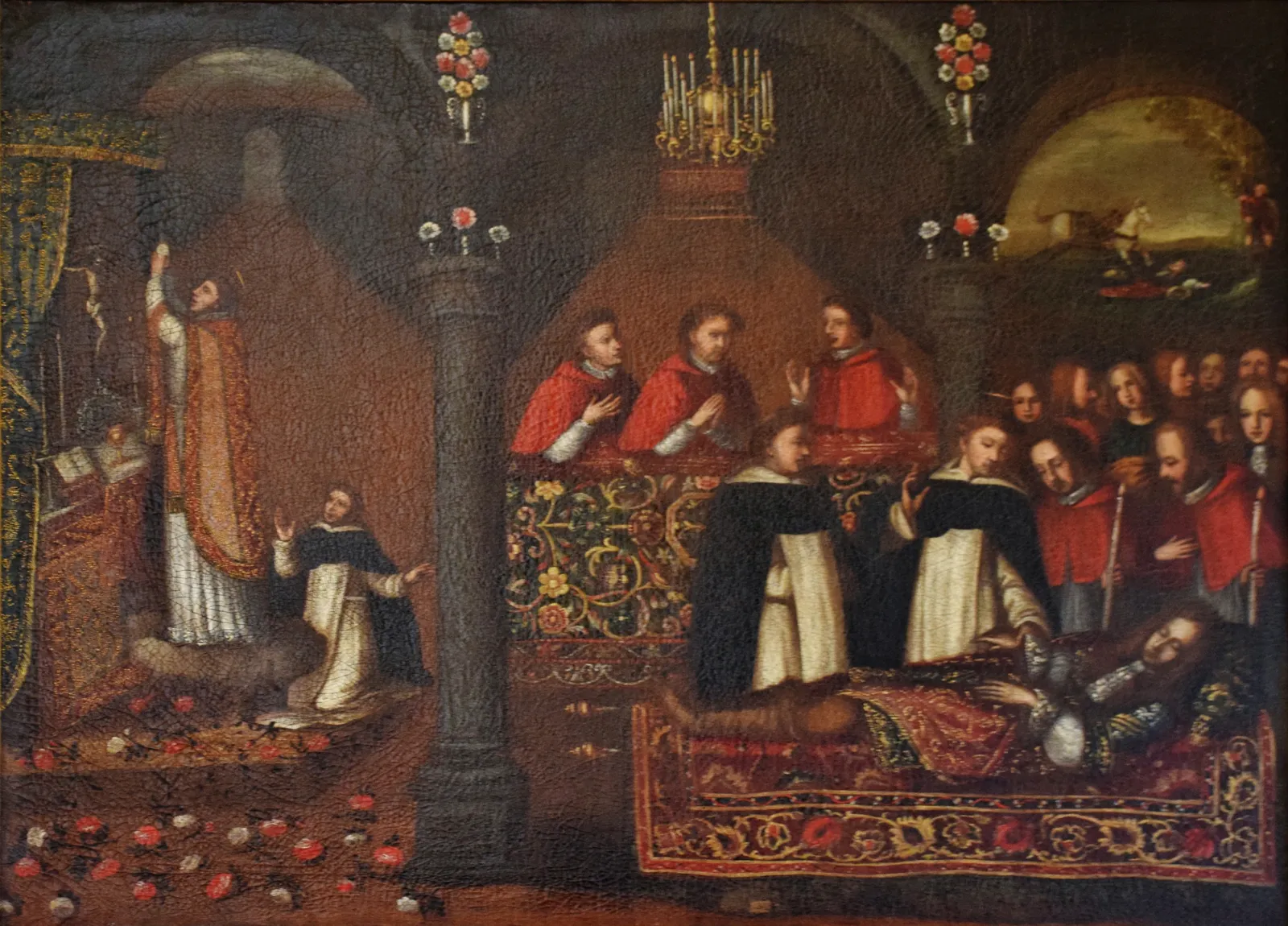
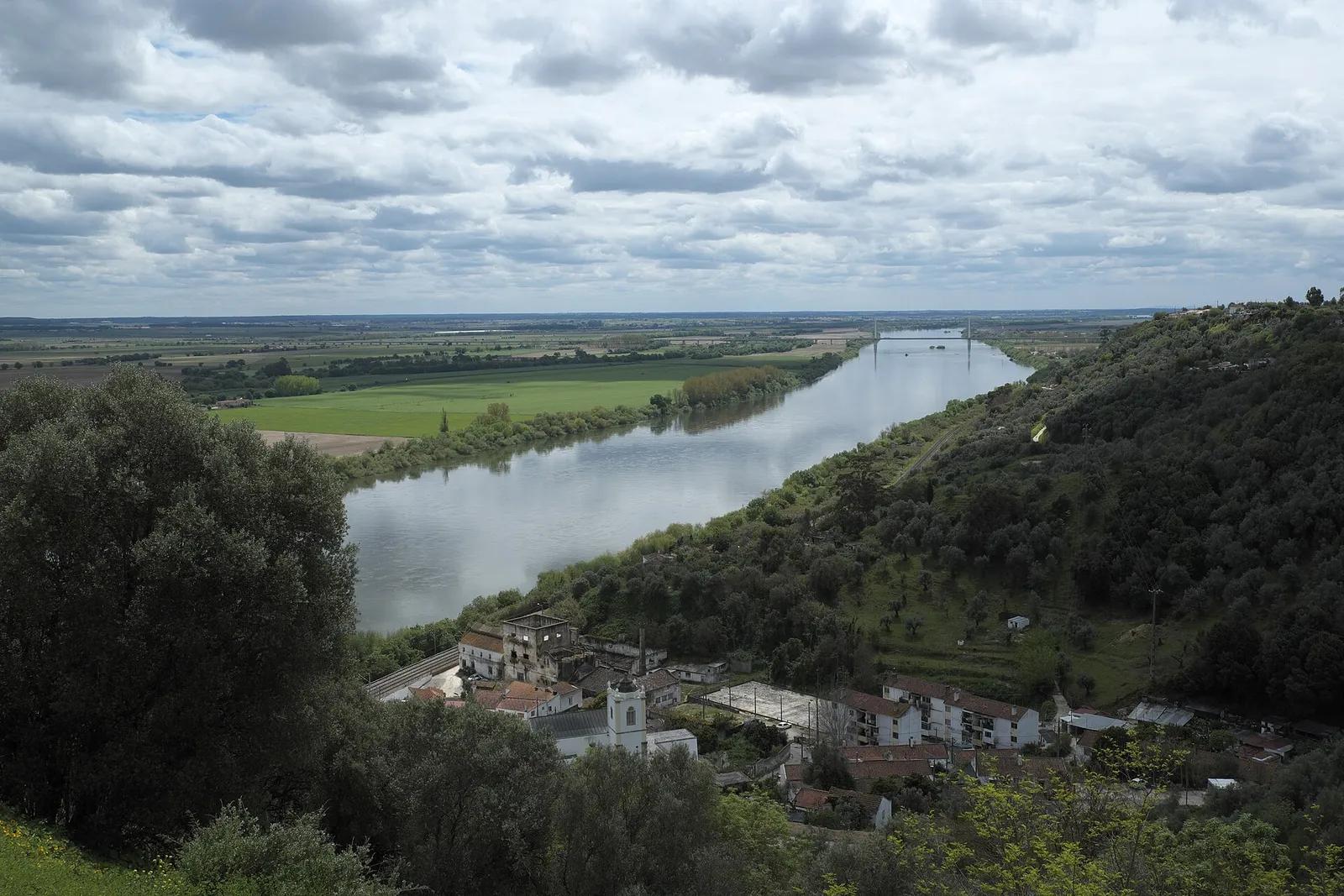
- On the evening of Tuesday 12 July 1491, on the bank of the Tagus below Santarém, Afonso's horse fell during a race and came down on top of him. He never spoke again and died in a fisherman's house on the night of Wednesday 13 July.
- João II tried to have his illegitimate son Jorge accepted as heir, but Queen Leonor would not agree, and in his will the king named her brother Manuel, Duke of Beja, who succeeded in October 1495.
- Manuel married Afonso's widow in 1497. Their son Miguel was sworn heir to Castile, Aragon and Portugal but died in 1500, before his second birthday, and the hope of joining the crowns through these marriages died with him.
A race at dusk
It was hot in Santarém in July 1491, and on summer afternoons King João II liked to swim in the Tagus. On Tuesday the 12th he sent word to his son, the sixteen-year-old Prince Afonso, asking if he wanted to come. Afonso said no. He had been out hunting at Almeirim, across the river, the day before, and he was tired.
Riding out of the palace yard, the king stopped at the door of the prince and his wife, Princess Isabel, and asked after them. Afonso came down still undressed from his siesta. From the outer yard João looked back and saw the couple together at a window, and doffed his cap to them. Afonso took this as a sign that his father wanted him along after all.
His mule had not arrived, so he mounted a fast jennet that his master of the horse had been riding and caught up with the king at the river. Garcia de Resende, a young servant of the king who later wrote his chronicle, remembered that the prince wore black that day, on a horse trimmed in black silk and velvet, in a season of brocade: “I do not remember seeing others like them.” Resende took it as a clear sign of the disaster to come.
On the bank Afonso did not swim. He galloped about on the jennet and challenged Dom João de Meneses to a race. Meneses said it was too late, night was falling. The prince got down to change to a mule, the stirrup leather broke, and he climbed back on the horse and insisted. Meneses gave in and took his hand, and the two rode off side by side. At full gallop the prince's horse fell and dragged him under it. When the courtiers reached him he was senseless and could not speak.
A bride chosen when he was four
Afonso was born in Lisbon on 18 May 1475, in the palace of the Alcáçova, while his grandfather Afonso V and his father were gathering an army to invade Castile. The war was over a crown. Afonso V claimed Castile for his niece and bride Juana against her aunt Isabella, who held it with her husband Ferdinand of Aragon. Isabella won.
The bride, also called Isabel, had been born at Dueñas on 2 October 1470 and was nearly five years older than Afonso. She spent the years until 1483 at Moura. Beatriz's youngest son, Manuel, born in 1469, grew up beside the little prince, though he and his brother Diogo also took turns as hostages in Castile. Resende says the two boys were raised “at one table and in one bed”.
When the arrangement at Moura was dissolved in 1483, Afonso's betrothal was switched to Isabel's younger sister Juana, with a proviso. If Isabel was still unmarried when Afonso reached fourteen, he would marry her after all. In the summer of 1488 João II, king since 1481, put the question to a council at Almada. The Portuguese wanted the elder sister, who was more honourable, more profitable and nearer to bearing children, and the Catholic Monarchs agreed.
There was a dynastic calculation too. Isabel had stood second in line to Castile behind her brother Juan, born in 1478. Had Juan died, Afonso would have been husband to the heiress of Castile, and João II had already shown interest in reaching the Castilian throne by marriage. David Nogales Rincón, who has studied the matches, thinks the main aim on both sides was a lasting peace, with union at most a hope.
The wedding in Évora
In March 1490 the Cortes, the kingdom's assembly of estates, met at Évora and voted João 100,000 cruzados for the wedding. On Low Sunday, 18 April, Fernão da Silveira married Isabel in Seville as Afonso's proxy, before her parents and Cardinal Mendoza. João had posted riders in relays along the road, and when the news reached Évora the next day he had trumpets, guns and bonfires set off together.
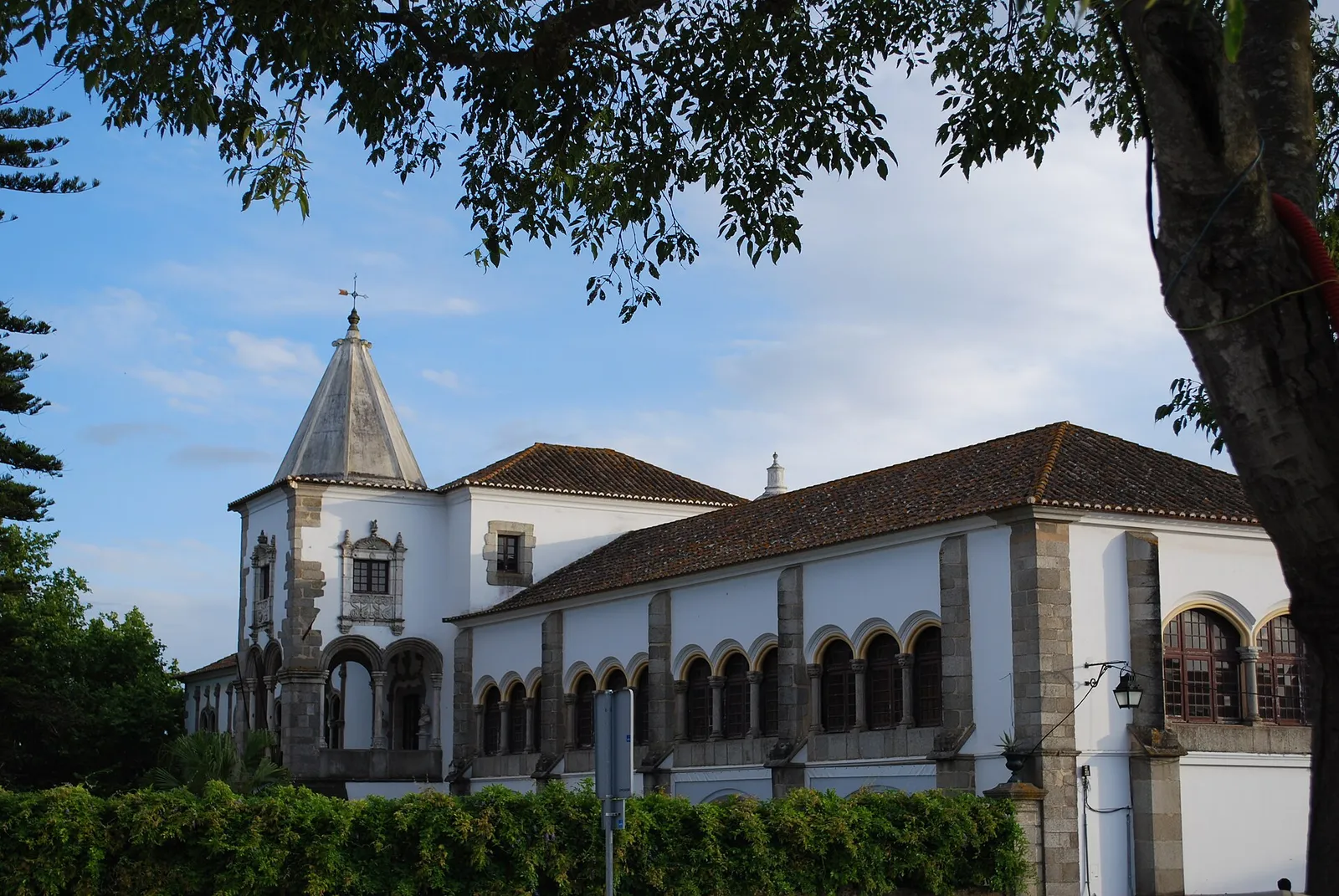
Plague kept the court out of Lisbon, so the celebrations were held in Évora, then the second city of the kingdom. In the garden of the friary of São Francisco, beside his palace, João built a wooden hall a hundred cubits long, lit by 120 torches, and his agents bought brocade and silk in Florence, Genoa and Venice. On the doctors' advice the whole population left the city for fifteen days in September while cattle were driven in to sleep in the streets.
Isabel crossed the border on the Caia stream on 22 November. The next evening, at Estremoz, Afonso married her in person before the Archbishop of Braga. Her entry into Évora followed on the Sunday, which the chroniclers date 27 November, though the weekdays they give put it on the 28th. João tied his cord of the Order of the Garter to the reins of her mule and led her in. Afonso was fifteen, Isabel twenty.
Banquets in the wooden hall ran into December. After Christmas the king rode into the hall as the Knight of the Swan to issue the challenge for the jousts, which ran for four days in snow and cold, and the judges gave him both prizes. Then new rumours of plague broke up the party, and the foreign guests were sent home with gifts.
A night in a fisherman's house
The court had moved to Santarém in June 1491. Isabel and Afonso were received there on 14 June, crossing the Tagus in decorated barges, and the town's officials, Jews and Moors brought the princess cartloads of cattle, sheep and game. The festivities were still running when the prince fell.
- Accident
- Evening of Tuesday 12 July 1491, at nightfall
- Place
- The bank of the Tagus below Santarém, on the way to Alfange
- Cause
- His horse fell at full gallop during a race and came down on him
- Death
- Night of Wednesday 13 July 1491, soon after the doctors gave him up (after 9 pm by Pina, an hour into the night by Resende)
- Age
- 16 (born 18 May 1475); the chroniclers say 16 years and 20 days
- Married
- Seven months and 22 days, by the chroniclers' count
- Burial
- Chapter house of Batalha monastery, beside his grandfather Afonso V
He was carried into the nearest house, a poor fisherman's on the riverbank. The queen and Isabel, with the king's illegitimate son Jorge, came down from the town on mules borrowed from people they met on the road. Afonso showed no sign of hearing them. The physicians tried every remedy they knew, and that night the clergy and townspeople went barefoot from church to church, some of them stripped, crying for mercy.
The parents and the princess stayed in the fisherman's house all Wednesday. In the evening the doctors told João that his son was dying. He kissed him on the cheek, gave him his blessing, led the two women out, and at the door turned back to the men in the room.
“There you have your prince, my son.”
The king went on foot, and the two women were carried across mules, to the house of Vasco Palha on the same bank. There news came that Afonso had died after the last rites. His uncle Manuel, Duke of Beja, had ridden in from Tomar. The chroniclers insist that his grief was real, though the death made him the lawful heir.
Burel and black cloth
The body was taken to the Dominican monastery at Batalha and buried in the chapter house next to Afonso V. João cropped his hair and dressed in coarse black cloth. Isabel cut off her golden hair and put on coarse undyed wool and a black veil.
Resende says that no lord or man of note in the kingdom left his hair uncut. Burel, the rough brown wool of mourning, cost 300 réis a vara, about a yard, so poor people wore their clothes inside out, and when it ran short country people sold their bed covers at the price of fine cloth.
Ferdinand and Isabella, then camped before Granada, sent their mayordomo Enrique Enríquez to Santarém, and solemn exequies were held in Castile. When João finally rode out to hear Mass, he waited on his mule and, asked why, said he was waiting for the prince his son to ride with him. Another day, out riding, he said he wanted to see what he could not see, because Afonso had been the mirror in which he saw himself.
The formal funeral rites were held at Batalha in late August, but the queen and the princess were kept away for fear of what the grief might do to them. Isabel had kept a household of her own in Portugal, with towns including Torres Vedras, Torres Novas and Alvaiázere in her dower. In August and September 1491 she was still signing appointments as lady of Torres Vedras.
Under the marriage treaty she was free to go home in such a case. In September João rode with her as far as two leagues beyond Abrantes, and they parted with many tears and few words. The Archbishop of Braga handed her over to the Master of Santiago at Olivença, on the frontier. In Castile she resolved never to marry again and turned to fasting and prayer.
Jorge or Manuel
João II was 36 and had no other legitimate child. He had a son, Jorge, born in August 1481 to Ana de Mendonça, a noblewoman. The boy had been raised by the king's sister Joana in Aveiro. After her death in 1490 João asked Leonor to let him come to court, and the queen asked to bring him up in her own household. After Afonso's death the king took him out of the queen's household so that, Pina explains, the sight of him would not renew her pain.
Leonor read it as a slight. When João later asked her to take the boy back, she refused for the rest of his life, and the couple grew estranged. Both chroniclers say João now hoped to have Jorge legitimised and made his successor, ahead of the Duke of Beja, to whom the crown rightly belonged. They also say the queen, Manuel's sister, would never consent to that.
João did what he could for Jorge. He asked Pope Innocent VIII to make him perpetual administrator of the military orders of Avis and Santiago, and on 12 April 1492 their commanders and knights swore obedience to the ten-year-old in São Domingos in Lisbon. Manuel's mother Beatriz put the weight of her house behind her son's claim.
In the end the king gave way. In a will made in 1495, before he left Alcáçovas for the hot springs of the Algarve, he secretly declared Manuel his sole lawful heir and commended Jorge to him; Pina says the king and queen were reconciled. João died at Alvor, in the Algarve, on 25 October 1495, and Manuel became king. The will asked him to make Jorge Duke of Coimbra and give him Madeira and the Order of Christ. Manuel gave Jorge the ducal title but kept Madeira and the Order for the crown.
The Spanish marriages
The Catholic Monarchs did not give up on Portugal. By early 1495 there was talk at their court of marrying the widowed Isabel to the Duke of Beja, and she refused. When Manuel became king he turned down her younger sister María and held out for Isabel. The contract was signed on 30 November 1496. Its price, according to the historian Gretchen Starr-LeBeau, was the expulsion of Portugal's Jews, decreed five days later.
They married at Valencia de Alcántara, on the border, on 30 September 1497. Four days later Isabel's brother Juan, heir to Castile and Aragon, died, and the king and queen of Portugal became heirs to Spain. At the Cortes of Lisbon in February 1498 the town representatives asked that Portugal never pass to an heir of Castile. At Zaragoza on 23 August 1498 Isabel gave birth to a son, Miguel, and died the same day.
Miguel was sworn heir in Aragon, Castile and, on 7 March 1499, Portugal. He died in Granada on 19 July 1500, before his second birthday. Manuel then married María, and after her death Leonor of Austria, sister of the emperor Charles V, in 1518.
Ages at death of the heirs the marriages depended on
years
Ages worked out from the dates of birth and death in Pina (Afonso: 18 May 1475 to 13 July 1491) and Ávila Seoane (Juan: 30 June 1478 to 4 October 1497; Isabel: 2 October 1470 to 23 August 1498; Miguel: 23 August 1498 to 19 July 1500).
Show the data
| Age at death | |
|---|---|
| Afonso (d. 1491) | 16.2 |
| Juan of Castile (d. 1497) | 19.3 |
| Isabel (d. 1498) | 27.9 |
| Miguel (d. 1500) | 1.9 |
Why it still matters
The fall at Santarém changed the line of the Portuguese crown. Manuel I came to the throne from a cadet branch: he was the grandson of King Duarte, not of Afonso V, and became king only because his grandfather's senior line died out and his five older brothers were dead. Portuguese tradition calls him o Venturoso, the Fortunate. His reign saw Vasco da Gama's voyage to India in 1497 and Cabral's landfall in Brazil in 1500.
The death also left a long trail in Portuguese writing. Pina and Resende turned it into the emotional centre of their chronicles of João II, and court poets wrote laments for the prince. To Pina it was proof of how vain and uncertain worldly hope was. João II, a king who had killed to impose his authority, spent his last years on the succession and left the crown to his cousin.
FAQs
How did Prince Afonso of Portugal die?
On the evening of 12 July 1491 he raced Dom João de Meneses along the bank of the Tagus below Santarém. His horse fell at full gallop and came down on him. He never spoke again and died in a fisherman's house on the night of 13 July, aged 16.
Who was Prince Afonso married to?
Isabel, eldest daughter of Ferdinand and Isabella of Castile and Aragon, born in 1470. They were married by proxy in Seville on 18 April 1490 and in person at Estremoz in November 1490, before her entry into Évora. After his death she returned to Castile, and in 1497 she married his uncle Manuel I.
Why did Manuel I, not João II's son Jorge, become king?
Jorge was illegitimate. João II hoped to have him legitimised and made heir, but Queen Leonor, Manuel's sister, refused to agree. In his will of 1495 the king named Manuel his lawful heir and asked him to provide for Jorge.
Where is Prince Afonso buried?
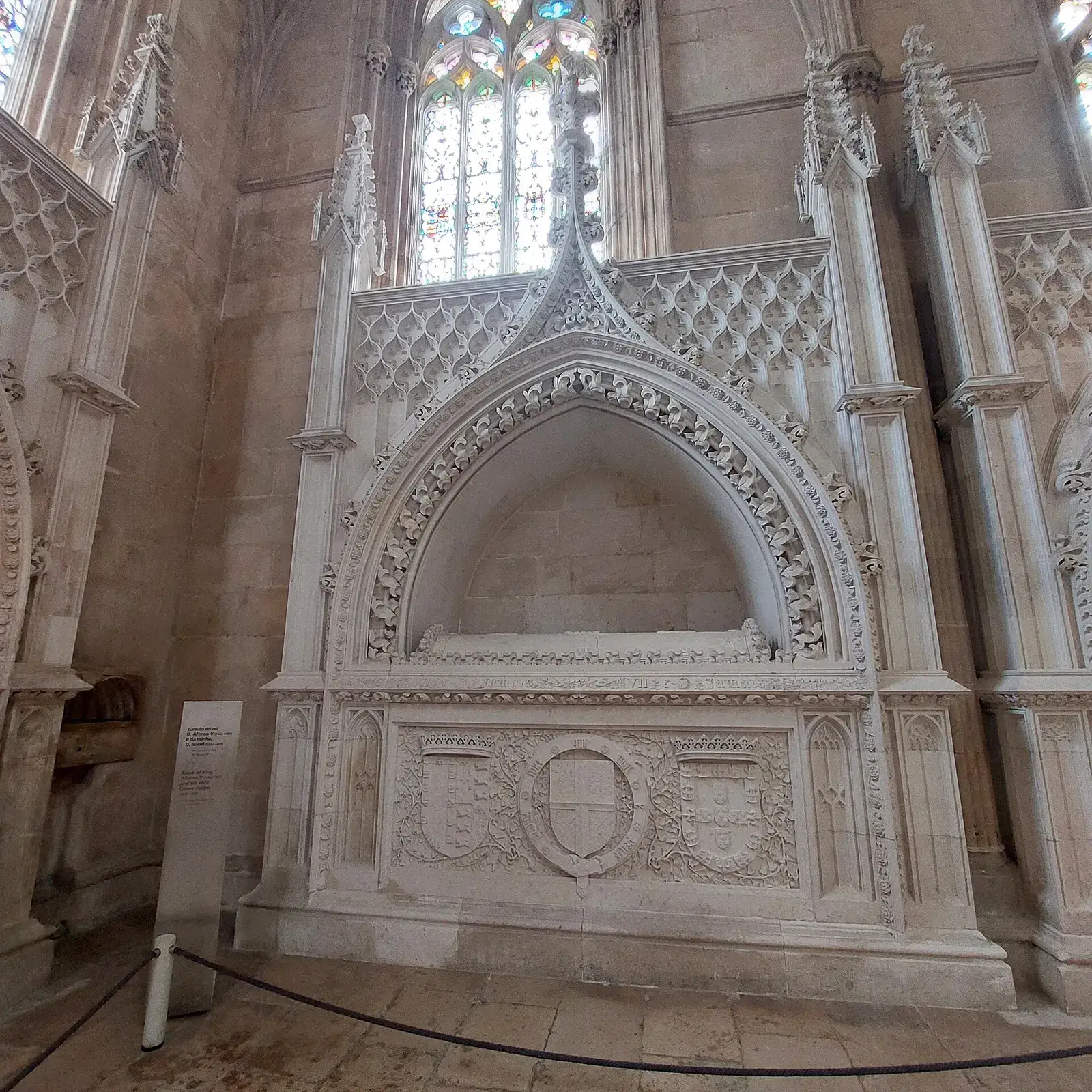
At the monastery of Batalha. He was first buried in the chapter house next to his grandfather Afonso V; his remains now lie in one of three neo-Gothic tombs added in the late nineteenth century on the west wall of the Founder's Chapel.
On the timeline
Open the timelineNearby moments from the age of discoveries (1415–1580).
Pêro da Covilhã and Afonso de Paiva set out from Santarém on João II's secret overland mission to find the spice route to India and the court of Prester John. Travelling disguised as merchants via Cairo and Aden, Covilhã would reach India years before Vasco da Gama.
Bartolomeu Dias lands at Mossel Bay, South Africa, on the day usually reckoned from its old name, São Brás (St Blaise's day). He had passed the Cape of Good Hope unseen, the first known European to sail beyond Africa's southern tip.
Nzinga a Nkuwu, ruler of the Kingdom of Kongo, is baptised by Portuguese missionaries and takes the Christian name João, after Portugal's king. The alliance brings priests and masons, but within a generation his son Afonso I is writing to João III to protest that Portuguese slave traders are depopulating his kingdom.
The death of Prince Afonso
Prince Afonso, 16, only legitimate son and heir of King João II and Queen Leonor, dies at Santarém the night after his horse fell on him during a race on the bank of the Tagus. Unable to make his illegitimate son Jorge his heir, João II is succeeded in 1495 by his cousin Manuel, who in 1497 marries Afonso's widow, Isabel of Castile.
Ferdinand and Isabella of Spain sign the Alhambra Decree, ordering the expulsion of all Jews who refuse to convert. Tens of thousands of Spanish Jews flee to Portugal, significantly increasing the Jewish population until Manuel I's own expulsion edict in 1496.
Christopher Columbus, returning from his first voyage to the Americas, is driven by a storm into the Tagus and anchors at Restelo, near Lisbon. João II receives him on 9 March and claims the new lands for Portugal, a dispute settled by the Treaty of Tordesillas.
Pope Alexander VI's bull 'Inter caetera', dated this day but issued in June, grants Castile all lands west of a line 100 leagues beyond the Azores and Cape Verde islands. Portugal's objections to the line lead to the Treaty of Tordesillas the following year.
Coming up in history
All long reads 15 July 1912Francisco Lázaro: the Lisbon carpenter who died in the 1912 Olympic marathon
 16 July 1590Bartolomeu dos Mártires: the archbishop who took Trent home to Braga
 17 July 1859Queen Estefânia's death in 1859 and the hospital it left Lisbon
 18 July 197418 July 1974: Vasco Gonçalves becomes the MFA's prime minister
18 sources
Archives, scholarship and reporting this article was checked against.
- 1
Chronica d'ElRey D. João II (Rui de Pina), chapter LXVI, “Descubrimento das Ilhas de Castella per Collombo”, in Collecção de livros ineditos de historia portugueza, vol. IIAcademia Real das Sciencias, Lisbon, 1792 (Internet Archive)
- 2
- 3
Documentos de las hijas de los Reyes Católicos: Isabel (Nicolás Ávila Seoane)De Medio Aevo 8 (2015/2), Universidad Complutense de Madrid
- 4
- 5
Dom Manuel I (1469-1521) (João Paulo Oliveira e Costa)Encyclopaedia of Portuguese Expansion (EVE), CHAM, NOVA FCSH, 2009
- 6
Chronica de El-Rei D. Affonso V, vol. III (Rui de Pina, ed. Gabriel Pereira, 1902)Project Gutenberg
- 7
- 8
- 9
- 10
Review of Ruth Martínez Alcorlo, Isabel de Castilla y Aragón: princesa y reina de Portugal (1470–1498) (Silex, 2021)Estudios de Historia de España (Universidad Católica Argentina), XXIII/1–2, 2021, pp. 329–332
- 11
Jews, Expulsion of (Spain; Portugal)Gretchen D. Starr-LeBeau, Europe, 1450 to 1789: Encyclopedia of the Early Modern World, via Encyclopedia.com
- 12
Um rei indesejado: notas sobre a trajetória política de D. Antônio, Prior do Crato (Jacqueline Hermann)Revista Brasileira de História, vol. 30, no. 59, 2010, pp. 141-166
- 13
Revisitar a Batalha de Alcácer Quibir (Luís Filipe Guerreiro da Costa e Sousa)e-Stratégica, no. 1, 2017, pp. 111-159 (via Dialnet)
- 14
História do Mosteiro da BatalhaMosteiro da Batalha (Museus e Monumentos de Portugal)
- 15
- 16
Jardim Público de Évora: jardim históricoArquivo Municipal de Évora, Câmara Municipal de Évora
- 17
O convento e a igreja de S. Francisco (visitor leaflet)Igreja de São Francisco, Évora
- 18
Image credits
- The death of Prince Afonso at Santarém in 1491, as an unknown painter imagined it in the eighteenth century. The fall from his horse is shown in the small scene at the upper right. The painting hangs in the Sintra National Palace. Unknown author, Public domain, via Wikimedia Commons.
- The Tagus below Santarém, seen from the Portas do Sol on the edge of the old town in 2016. The prince's fall happened on the riverbank below the town. GFreihalter, CC BY-SA 3.0, via Wikimedia Commons.
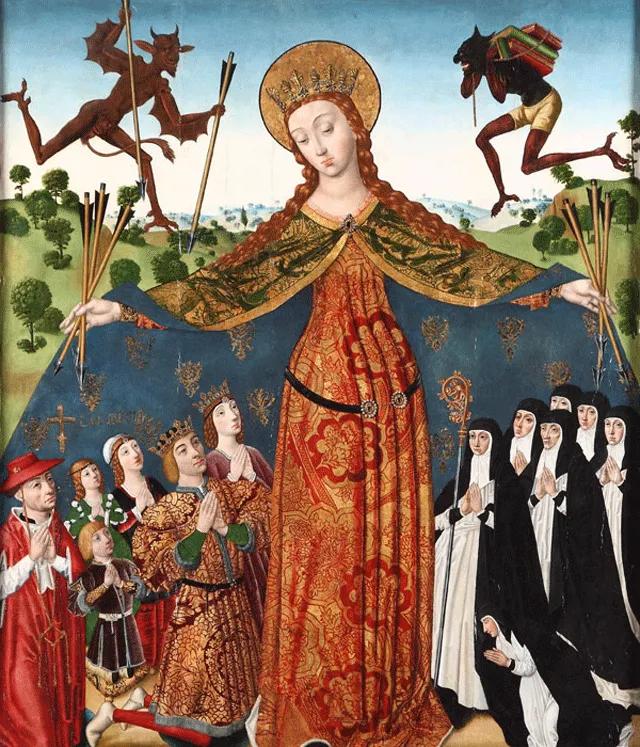
- The Virgin of Mercy with the Catholic Monarchs and their family, by Diego de la Cruz, about 1486, in the monastery of Las Huelgas in Burgos. Among the kneeling figures are Prince Juan and the Infantas Isabel and Juana, with Cardinal Pedro González de Mendoza in red. Diego de la Cruz, Public domain, via Wikimedia Commons.
- The Galeria das Damas, known as the Palace of D. Manuel, in Évora's public garden, photographed in 2010. It is the only surviving part of the royal palace of São Francisco, though it dates from the early sixteenth century and was restored after a fire in 1916. Concierge.2C, CC BY-SA 3.0, via Wikimedia Commons.
- The neo-Gothic tomb of Afonso V on the west wall of the Founder's Chapel at Batalha, photographed in 2026. The remains of João II and of Prince Afonso lie in the matching tombs beside it, added in the late nineteenth century. Threeohsix, CC BY-SA 4.0, via Wikimedia Commons.