

18 July 1974: Vasco Gonçalves becomes the MFA's prime minister
Twelve weeks after the Carnation Revolution, the officers who made it put one of their own in charge of the government. Over the next fourteen months he presided over Portugal's most radical changes, until the army itself turned him out.
At a glance
- On 18 July 1974, President António de Spínola swore in Colonel Vasco Gonçalves, aged 53, as prime minister of Portugal's Second Provisional Government.
- He replaced Adelino da Palma Carlos, a liberal law professor who resigned on 9 July after the Council of State unanimously rejected his plan to elect a president quickly and postpone the Constituent Assembly elections.
- Gonçalves, a leading member of the Armed Forces Movement (MFA) that had overthrown the dictatorship on 25 April, led four provisional governments in 428 days, the longest run of any prime minister of the revolutionary period.
- Under his governments Portugal nationalised its banks, insurers and heavy industry, and agrarian reform laws were approved for the large estates of the south.
- Isolated by the Socialists, the moderate officers of the Group of Nine and finally his own army, he was removed in a presidential communiqué of 30 August 1975 and left office when the Sixth Provisional Government was sworn in on 19 September.
A colonel in the prime minister's chair
On Thursday 18 July 1974, General António de Spínola, President of the Republic, gave the oath to a new prime minister. Vasco Gonçalves was a 53-year-old colonel of engineers and one of the leaders of the Armed Forces Movement (MFA), the officers who had overthrown the dictatorship on 25 April.
Spínola had not wanted him. In his speech he praised the colonel's “moral and intellectual stature” and called him the brain of the MFA's Coordinating Committee, “the person chiefly responsible for its ideas”. Then he turned to the country and spoke of excesses in the streets, the workplaces and the schools, and of a threat that had to be faced in time.
“Either the silent majority of this country wakes up and takes up the defence of its freedom, or 25 April will have lost, before the world, history and ourselves, the meaning of the heroic deed of a people that found itself.”
It was the first time he used the phrase. The new prime minister answered with a promise to carry out the MFA's programme “scrupulously”, to impose a “serious moralisation of national life” and to call on workers and employers alike for austerity and hard work. He also tried to calm the business world.
“The Programme of the Armed Forces Movement does not allow radical or revolutionary transformations of the socio-economic structure of Portuguese society to be carried out.”
Within a year his governments had nationalised the banks, the insurance companies, the oil refineries, the steelworks and the railways, and the large estates of the Alentejo were being occupied by farm workers. The man and the slogan “Força, força, companheiro Vasco” (“Go on, go on, comrade Vasco”) became the face of the most radical stretch of the revolution, which the Portuguese call the PREC, and of the backlash against it.
Two months of a liberal government
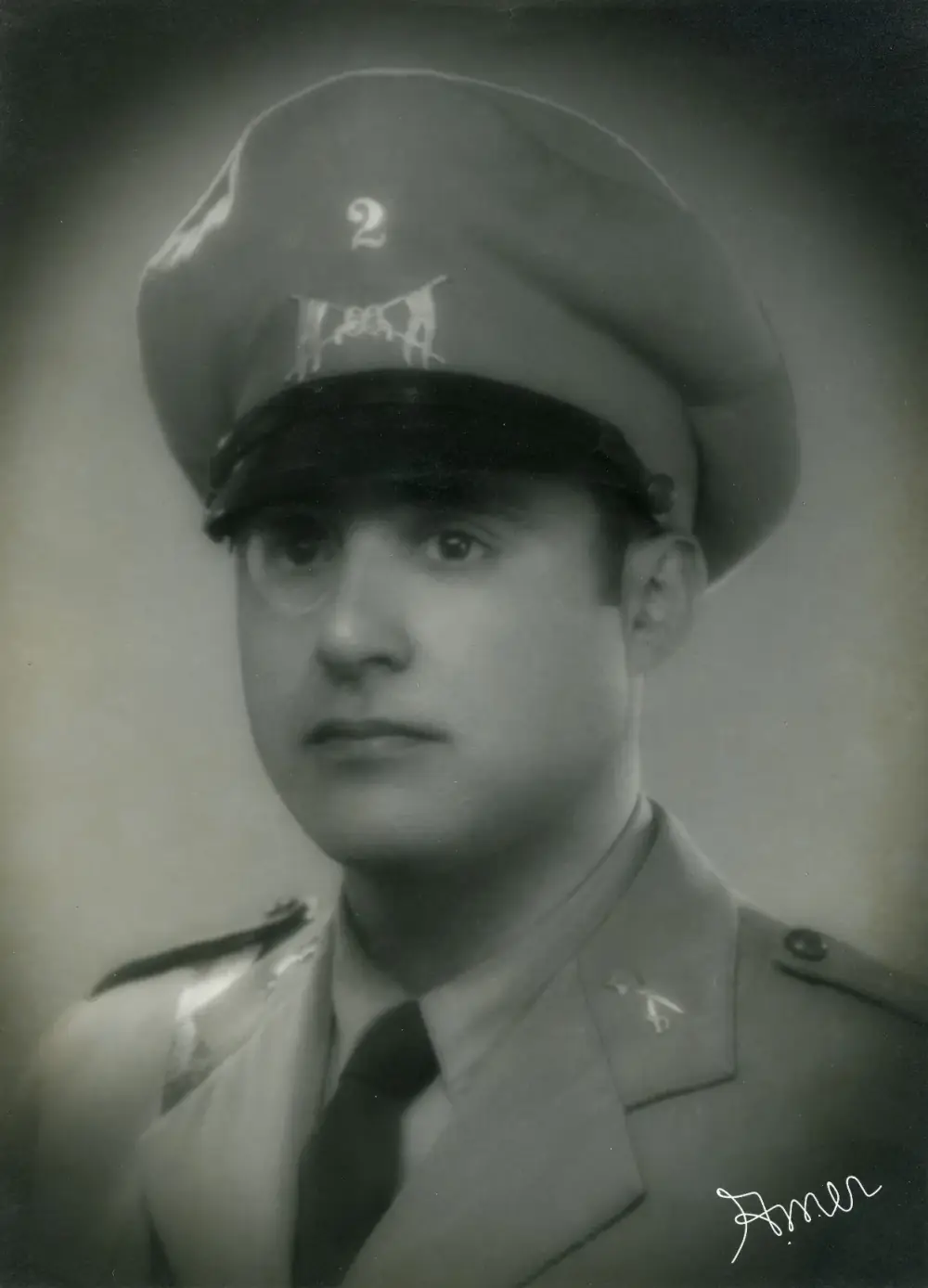
The coup of 25 April 1974 ended 48 years of dictatorship, the regime known from 1933 as the Estado Novo. Power passed to a National Salvation Junta of senior officers, with Spínola at its head. He had governed and commanded in Guinea from 1968 to 1973, and in February 1974 published a book, Portugal e o Futuro, arguing for a federal solution to the colonial wars and a gradual, presidential transition at home.
Spínola became President on 15 May and the next day swore in the First Provisional Government. To lead it he chose Adelino da Palma Carlos, a law professor, former head of the Bar Association and a man of liberal and democratic views. His cabinet ran from the Socialist Mário Soares and the Communist Álvaro Cunhal to Francisco Sá Carneiro of the new Popular Democratic Party (PPD). Some officers of the MFA disliked the choice from the start.
The country did not wait for laws. A wave of strikes over pay and dismissals spread through May, families occupied empty flats, and on 26 May the government set Portugal's first national minimum wage at 3,300 escudos a month. Spínola toured the barracks and gave speeches about a slow, staged decolonisation, while the MFA's Coordinating Committee wanted the wars ended and the colonies freed.
The Palma Carlos crisis
In early July Palma Carlos asked the Council of State, a body set up on 31 May with seven members each from the junta, the MFA and the President's own nominees, to change the rules. He wanted stronger powers for the executive (the prime minister's, in one contemporary account; the President's, according to the Presidency Museum), an early election for the President of the Republic and a later date for the Constituent Assembly elections.
The MFA's officers read the plan as a way to give Spínola a popular mandate of his own, and to sideline the movement and its programme. On 8 July the Council of State rejected the proposals unanimously. The next day Palma Carlos resigned, saying he could not go on in such uncertainty, and four ministers, two of them from the PPD, went with him. This time the MFA imposed its own choice, and Spínola, reluctantly, had to accept one of the movement's leaders as prime minister.
8 July
Proposals rejected
The Council of State unanimously rejects Palma Carlos's plan.
9 July
Palma Carlos resigns
Four ministers leave with him.
12-13 July
Gonçalves chosen
Spínola names him to form a government (sources give either day).
Mid-July
COPCON
Major Otelo Saraiva de Carvalho is named deputy commander of the new Continental Operations Command (COPCON) and commander of the Lisbon military region.
18 July
Swearing-in
The Second Provisional Government takes office.
27 July
Decolonisation
Spínola announces on television that the colonies have the right to independence.
The new cabinet looked different. Gonçalves kept Soares at Foreign Affairs and Cunhal as a minister without portfolio, and the PPD stayed in, but members of the MFA now sat at the table as well, among them Vítor Alves and Ernesto Melo Antunes as ministers without portfolio. Mário Firmino Miguel stayed at Defence.
Who was Vasco Gonçalves?
Vasco dos Santos Gonçalves was born in Lisbon on 3 May 1921. He joined the army in the 1940s and trained as an engineer officer, served in Portuguese India in 1955 to 1957, and in 1959 was linked to the failed Sé conspiracy, a plot by officers and civilians against Salazar. He then did tours in Angola, from 1965 to 1967, and Mozambique, from 1970 to 1972.
Older than the captains who made the coup, he was, as his admirers still point out, the most senior officer among the MFA's founders, and he sat on the committee that drafted its programme. Spínola's praise came with a condition: with one of the MFA's own at the head of the government, he said, the movement's programme would not be exceeded.
- Born
- 3 May 1921, Lisbon
- Arm
- Engineers; a colonel in July 1974, a general by 1975
- Sworn in
- Thursday 18 July 1974, aged 53
- Governments led
- Second to Fifth Provisional Governments
- Time in office
- 428 days, 18 July 1974 to 19 September 1975
- Died
- 11 June 2005, Almancil (Algarve), aged 84
Four governments in fourteen months
The duel with Spínola filled the summer of 1974. On 27 July, under pressure from the MFA, the President recognised the colonies' right to independence; the Lusaka agreement with Frelimo and the recognition of Guinea-Bissau followed in September. Spínola then appealed again to the silent majority, and his supporters called a march on Lisbon for 28 September.
It never happened. On the night of the 27th, left-wing parties and unions put up barricades on the roads into Lisbon, COPCON arrested more than a hundred people, and the Council of State refused Spínola the state of siege he asked for. On 30 September he resigned. General Francisco da Costa Gomes became President and swore in Gonçalves's second cabinet, the Third Provisional Government, the same day.
| Government | In office | Days | What happened |
|---|---|---|---|
| Second Provisional | 18 July to 30 September 1974 | 74 | Decolonisation recognised; Spínola's fall after 28 September |
| Third Provisional | 30 September 1974 to 26 March 1975 | 177 | A Sunday's unpaid “day of work for the Nation”; Spínola's failed coup of 11 March; Council of the Revolution created; banks and insurers nationalised |
| Fourth Provisional | 26 March to 8 August 1975 | 135 | Constituent Assembly elected; wave of nationalisations; Socialists and PPD walk out in July |
| Fifth Provisional | 8 August to 19 September 1975 | 42 | Backed formally only by the Communists and the MDP; Gonçalves removed on 30 August, his government stays as caretaker |
Dates from the Portuguese government's archive; days counted from swearing-in to swearing-in. The 428 days in total are 18 July 1974 to 19 September 1975. Press obituaries in 2005 and 2021 end his time in office on 10 September 1975 instead.
How long each provisional government lasted, 1974 to 1976
days in office
Days between swearing-in dates in the Portuguese government's list of heads of government: 16 May 1974, 18 July 1974, 30 September 1974, 26 March 1975, 8 August 1975, 19 September 1975 and, for the end of the Sixth, 23 July 1976.
Show the data
| Days in office | |
|---|---|
| I (Palma Carlos) | 63 |
| II (Gonçalves) | 74 |
| III (Gonçalves) | 177 |
| IV (Gonçalves) | 135 |
| V (Gonçalves) | 42 |
| VI (Pinheiro de Azevedo) | 308 |
Gonçalves governed by speaking. He went on television to explain his policies in plain language, and on Sunday 6 October 1974 he asked workers to give a day's work to the nation for free; RTP's chronology puts the proceeds at about 13,000 contos. After the failed coup by Spínola's supporters on 11 March 1975, the MFA replaced the junta and the Council of State with a Council of the Revolution, and the radical wing of the movement took the lead.
“First of all in all frankness let me say that we are not a trojan horse in NATO.”
The banks, the factories and the land
The government programme of May 1974 had not foreseen large-scale nationalisation. That changed after 11 March. On 14 and 15 March 1975 the Portuguese banks and insurance companies were nationalised, which brought about 1,300 companies they owned in whole or in part under indirect state control. In April and May came the national airline TAP, the railways, the steelworks, the oil, electricity, cement and tobacco companies and most urban transport.
Gonçalves announced a programme of economic transition to socialism on 8 April 1975. The decrees are listed in this site's account of the 11 March coup attempt; the Constitution of 1976 later declared them “irreversible conquests of the working classes”, and they stayed so until the constitutional revision of 1989.
In the south the change came from below. Farm workers in the Alentejo and the Ribatejo, a region of very large estates worked by landless day labourers, began occupying land in February 1975. At the end of July Gonçalves's government approved the expropriation laws of the agrarian reform, beginning with Decree-Law 406-A/75 of 29 July. They were published only on 11 August.
The sociologist António Barreto found that most of the land was taken after the laws came out, and most of it after Gonçalves had gone. By the end of June 1976 about one million hectares had been occupied and expropriated, around 500 cooperatives and collective production units had been formed, and some 50,000 workers farmed the land.
| Period | Share of the land eventually occupied | What made the difference |
|---|---|---|
| 25 April 1974 to end of July 1975 | Under 12% (about 10% between April and July 1975) | No general law; occupations encouraged by the April 1975 policy and regional councils |
| August to mid-September 1975 | About 25% more | The expropriation laws of 29 July, published on 11 August |
| End of September to end of November 1975 | More than 60% | Decree-Law 541-B/75 of 27 September let emergency farm credit pay the wages of collective units |
Barreto's estimates, as shares of the total area occupied by 1976. They do not add up to exactly 100% because he gives them as rounded orders of size. About 200,000 hectares, mostly irrigated land, were also nationalised by law without being occupied first.
The hot summer and the fall
The election of 25 April 1975 for the Constituent Assembly drew a turnout of 91.7 per cent. The Socialists won 37.9 per cent and the PPD 26.4 per cent; the Communists, Gonçalves's most loyal allies, took 12.5 per cent.
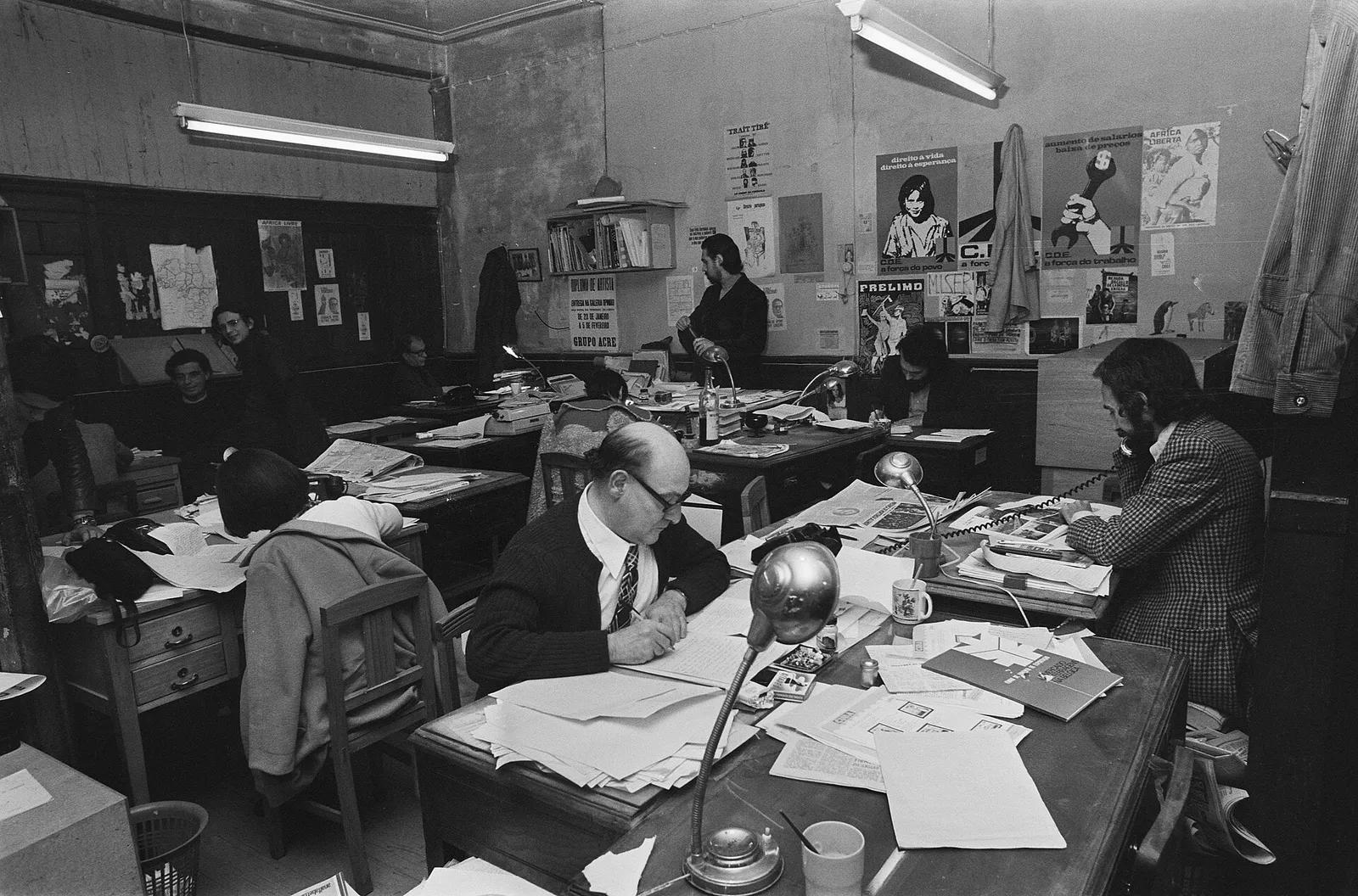
The break came in July. When República reappeared under its workers' committee, the Socialists decided to leave the Fourth Provisional Government, on 10 July according to Raquel Varela and CIDOB (RTP's chronology gives 16 July), and the PPD followed a week later. The Socialists packed the Fonte Luminosa in Lisbon on 19 July, and Soares demanded Gonçalves's removal.
That month RTP's history project counts 64 violent acts, mostly against left-wing parties and their members; the attacks were worst in the north and centre.
At the end of July an MFA assembly put power in a triumvirate of Costa Gomes, Gonçalves and Otelo Saraiva de Carvalho, who ran COPCON. It did not hold. Melo Antunes left the Foreign Ministry on 29 July, and on 4 August Otelo refused COPCON's support for a “strong” government under Gonçalves.
Late on 7 August nine members of the Council of the Revolution, led by Melo Antunes, published the Document of the Nine, rejecting both the Eastern European model and Western social democracy. The next day Gonçalves swore in his fifth government, made up of officers, independents and members of the MDP/CDE. Raquel Varela notes that it had the formal support only of the Communists and the MDP, and that even the Communist leadership kept its distance.
“Our Revolution will be in danger, and in mortal danger, as long as they persist in dividing the working classes, in intimidating the petty and middle bourgeoisie, in dividing the Armed Forces Movement, in wrecking the People-MFA Alliance.”
In Almada he called the Document of the Nine a stroke of “low politics”, timed, he said, to stop his government taking office. Two days later Otelo barred him from military units and told him to go and rest, and he was gradually eased out of the triumvirate. On 30 August a communiqué from the presidency named him chief of the armed forces general staff and named Admiral José Pinheiro de Azevedo prime minister in his place.
The army would not have him even there. On the morning of 5 September, at a meeting of army delegates that Gonçalves left before the vote, a motion rejecting him as chief of staff passed by 180 votes to 47, with 38 abstentions. That afternoon the MFA assembly at Tancos removed him and his allies from the Council of the Revolution. Pinheiro de Azevedo's Sixth Provisional Government, with the Socialists and the PPD back in, took office on 19 September.
July
Socialists and PPD leave
The República affair breaks the coalition.
Late July
Triumvirate
Costa Gomes, Gonçalves and Otelo are put at the head of the MFA.
7 August
Document of the Nine
Moderate officers break with the Gonçalves line.
8 August
Fifth government
Sworn in without the Socialists or the PPD.
18 August
Almada speech
Gonçalves attacks the Nine.
30 August
Removed
Named armed forces chief; Pinheiro de Azevedo to be prime minister.
5 September
Tancos
Army delegates reject him as chief of staff; he leaves the Council of the Revolution.
19 September
Sixth government
Pinheiro de Azevedo sworn in.
After the fall
Gonçalves did not resist. Varela finds that his fifth government fell without much resistance from its own members, and that he later judged the balance of forces in that summer had made his project impossible. Two months later, on 25 November 1975, the moderates defeated the military left and the revolutionary period ended.
He left active service soon after, in 1975 or 1976 depending on the account, and lived quietly, still defending the revolution in interviews. In 2005 he called the Portugal of the day “a dictatorship of the bourgeoisie with a democratic facade”. He died on the afternoon of 11 June 2005, aged 84, while swimming in a pool at his brother's house in Almancil, in the Algarve. Álvaro Cunhal died two days later.
President Jorge Sampaio said Gonçalves had “marked deeply with his personality” the revolutionary period; the Socialist prime minister José Sócrates called him “a man of convictions and ideals”. Press reports in 2005 and 2021 gave his age at death as 83, but his birth date of 3 May 1921 makes him 84.
Why it still matters
The state that Gonçalves's governments built lasted. In 1979, according to OECD figures cited by the economist Eric Baklanoff, non-financial state enterprises produced about a quarter of value added and more than half of gross fixed investment. Undoing that took the constitutional revision of 1989 and the privatisations that followed it.
His name also stayed in the political vocabulary. “Gonçalvismo” is still used by the right for left-wing extremism. In November 2023, at the PSD congress in Almada, the town of his most famous speech, Luís Montenegro called the “geringonça”, the left-wing alliance that had kept the Socialists in power, a modern version of gonçalvismo and Pedro Nuno Santos, then running for the Socialist leadership, its “most fanatical defender”.
Admirers keep his memory too. For his centenary in 2021 the Associação Conquistas da Revolução held a session at A Voz do Operário in Lisbon, and in 2022 it announced a plan for a monument in Lisbon designed by Álvaro Siza, a friend of his. For the association the revolution was the “most luminous moment” in Portugal's history, and Gonçalves its prime minister.
FAQs
When did Vasco Gonçalves become prime minister of Portugal?
He was sworn in by President António de Spínola on 18 July 1974 as head of the Second Provisional Government, after Adelino da Palma Carlos resigned on 9 July. He went on to lead the Third, Fourth and Fifth Provisional Governments.
Why did Palma Carlos resign in July 1974?
The Council of State unanimously rejected his proposals on 8 July: stronger powers for the executive, an early presidential election and a later date for the Constituent Assembly elections. He resigned the next day, and four ministers left with him.
How did Vasco Gonçalves fall?
After the Socialists and the PPD left his government in July 1975 and nine moderate officers published the Document of the Nine on 7 August, he lost the support of most of the armed forces. A presidential communiqué of 30 August replaced him with Admiral Pinheiro de Azevedo, army delegates rejected him as armed forces chief at Tancos on 5 September, and the new government took office on 19 September.
What was gonçalvismo?
The name given to Gonçalves's time in government, from July 1974 to September 1975, associated with the nationalisation of banks and industry and the agrarian reform. His opponents use it as shorthand for left-wing extremism; his supporters see the period as the high point of the revolution.
On the timeline
Open the timelineNearby moments from revolution and democracy (1974–1986).
Just six days after the Carnation Revolution, Portugal celebrates its first free May Day in nearly half a century. Hundreds of thousands pour into Lisbon's streets, and the Socialist Mário Soares and the Communist Álvaro Cunhal, both just back from exile, march side by side. A year later they marched apart.
Eleven days after the Carnation Revolution, Francisco Sá Carneiro, Francisco Pinto Balsemão and Joaquim Magalhães Mota found the Partido Popular Democrático. Renamed the Social Democratic Party (PSD) in October 1976, it became one of the two great parties of Portuguese democracy, producing prime ministers including Sá Carneiro, Cavaco Silva and Luís Montenegro.
General António de Spínola is sworn in as President of the Republic in Lisbon, three weeks after the Carnation Revolution; the First Provisional Government under Adelino da Palma Carlos takes office the following day.
Vasco Gonçalves becomes prime minister
Less than three months after the Carnation Revolution, President António de Spínola swears in Colonel Vasco Gonçalves, a leader of the Armed Forces Movement, as Prime Minister of the Second Provisional Government. He replaces the liberal law professor Adelino da Palma Carlos, who had resigned on 9 July, and goes on to lead four governments during the most radical phase of the revolution.
Three months after the Carnation Revolution, Law no. 7/74 is published, recognising the right of the peoples of the overseas territories to self-determination, including independence. A constitutional law passed by the Council of State and promulgated by President António de Spínola the day before, it is the legal basis of the decolonisation that would transform Africa and Portugal alike.
Portugal and FRELIMO sign the Lusaka Accord, by which Portugal recognises Mozambique's right to independence after a decade of colonial war; independence followed on 25 June 1975.
At Belém Palace, President António de Spínola signs the protocol by which Portugal formally recognises the independence of Guinea-Bissau, the first of Portugal's African colonies to have its independence recognised after the Carnation Revolution.
Coming up in history
All long reads 20 July 2012José Hermano Saraiva: the minister who became Portugal's TV historian
 22 July 1684Josefa de Óbidos: the woman who ran a painter's business in Baroque Portugal
 23 July 1833Cova da Piedade, 1833: the fight that handed Lisbon to the liberals
 24 July 18751875: the French president's ruling that kept Delagoa Bay Portuguese
30 sources
Archives, scholarship and reporting this article was checked against.
- 1
António de Spínola (biography and presidential term)Museu da Presidência da República
- 2
O Governo e as crises, in Textos Históricos da Revolução (organised by Orlando Neves, 1975)Diabril, 1975; transcription in the Marxists Internet Archive (Creative Commons)
- 3
Tomada de posse do II Governo ProvisórioRepública Portuguesa, Arquivo Histórico do Governo
- 4
“Um, dois, três MFA...”: o Movimento das Forças Armadas na Revolução dos Cravos, do prestígio à crise (Raquel Varela)Revista Brasileira de História, vol. 32, no. 63, 2012, pp. 403-425
- 5
O Estado e a Reforma Agrária: 1974-76 (António Barreto)Análise Social, vol. XIX (77-78-79), 1983, pp. 513-575
- 625 de Abril. Os anos da Revolução dos Cravos (chronology)RTP Notícias, compiled from the Centro de Documentação 25 de Abril (University of Coimbra) chronology and other works
- 7
- 8
Memorandum of conversation: President Ford, Secretary Kissinger and Prime Minister Gonçalves, Brussels, 29 May 1975Gerald R. Ford Presidential Library, National Security Adviser's Memoranda of Conversation Collection
- 9Associação quer criar monumento a Vasco Gonçalves em Lisboa projetado por Álvaro SizaDiário de Notícias (Lusa), 17 January 2022
- 10
- 11Vasco Gonçalves, primeiro-ministro durante o PREC, vai ter centenário com sessão evocativa em LisboaObservador (Lusa), 7 May 2021
- 12
- 13
- 14
- 15
Cronología de gobiernos de Portugal (1974-2025) (Roberto Ortiz de Zárate)CIDOB, Barcelona Centre for International Affairs
- 16
Chefes do Governo desde 1821República Portuguesa, Governo de Portugal
- 17Síncope cardíaca vitima general Vasco GonçalvesCorreio da Manhã, 12 June 2005
- 18
- 19
- 20
- 21
- 22
- 23
“A Banca ao Serviço do Povo”: Política e Economia Durante o PREC (1974-75) (Ricardo Noronha)Imprensa de História Contemporânea, NOVA FCSH, 2018 (open access)
- 24
Saída do PS do IV Governo ProvisórioRTP and Instituto de História Contemporânea (NOVA FCSH), Memórias da Revolução
- 25
- 26
- 27
- 28É um mito o agosto sem alguns picos de calor políticoDiário de Notícias, 31 July 2016
- 29
- 30
Pedro Nuno Santos diz que Montenegro atacou Governo de “memória boa”DNoticias.pt (Lusa), 25 November 2023
Image credits
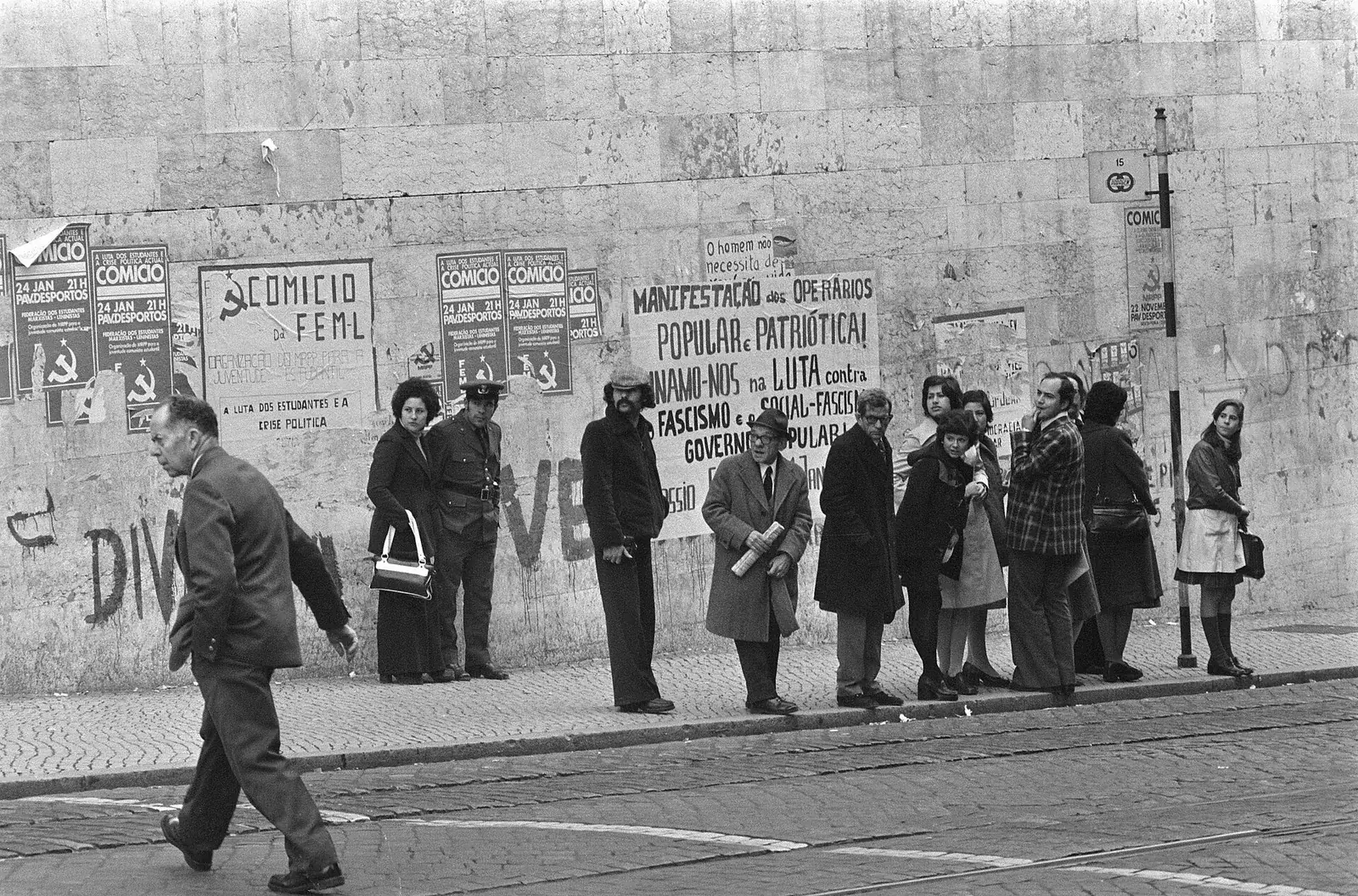
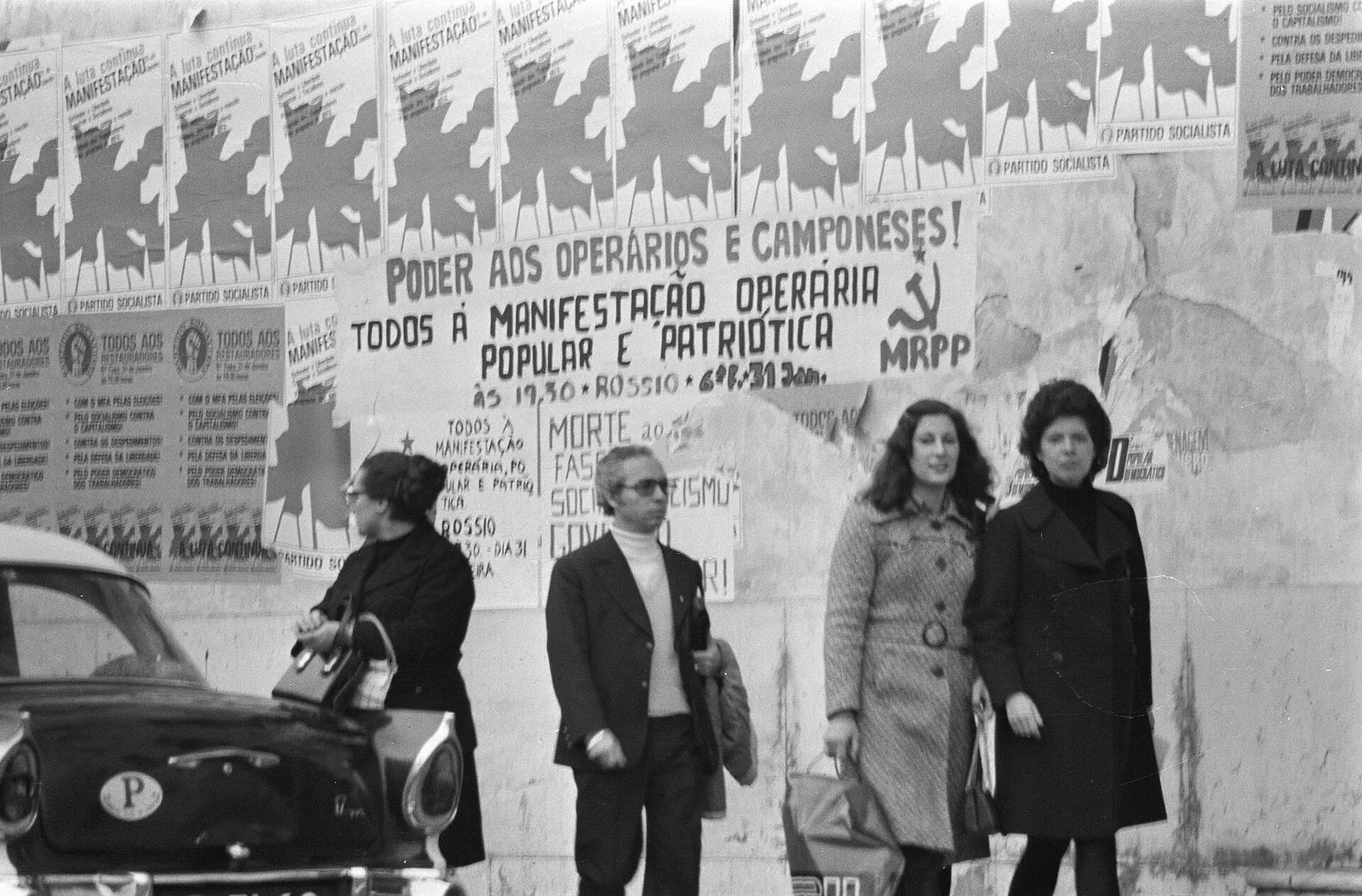
- A tram stop in Lisbon on 11 February 1975, during the Third Provisional Government, Vasco Gonçalves's second cabinet. The posters are those of the Maoist MRPP and its student federation; the banner calls a workers' demonstration and demands a “popular government”. Rob Mieremet / Anefo, CC0, via Wikimedia Commons.
- António de Spínola in 1944, when he commanded the 2nd Lancers Regiment in Lisbon. Thirty years later, as President, he swore in Vasco Gonçalves, and he resigned on 30 September after losing his struggle with the MFA. Amer, Lisbon, Public domain, via Wikimedia Commons.
- The newsroom of the Lisbon daily República on 11 February 1975. In May its workers' committee pushed out the director, Raul Rêgo, accusing him of making it a Socialist mouthpiece, and the dispute led the Socialists to leave the government in July. Rob Mieremet / Anefo, CC0, via Wikimedia Commons.
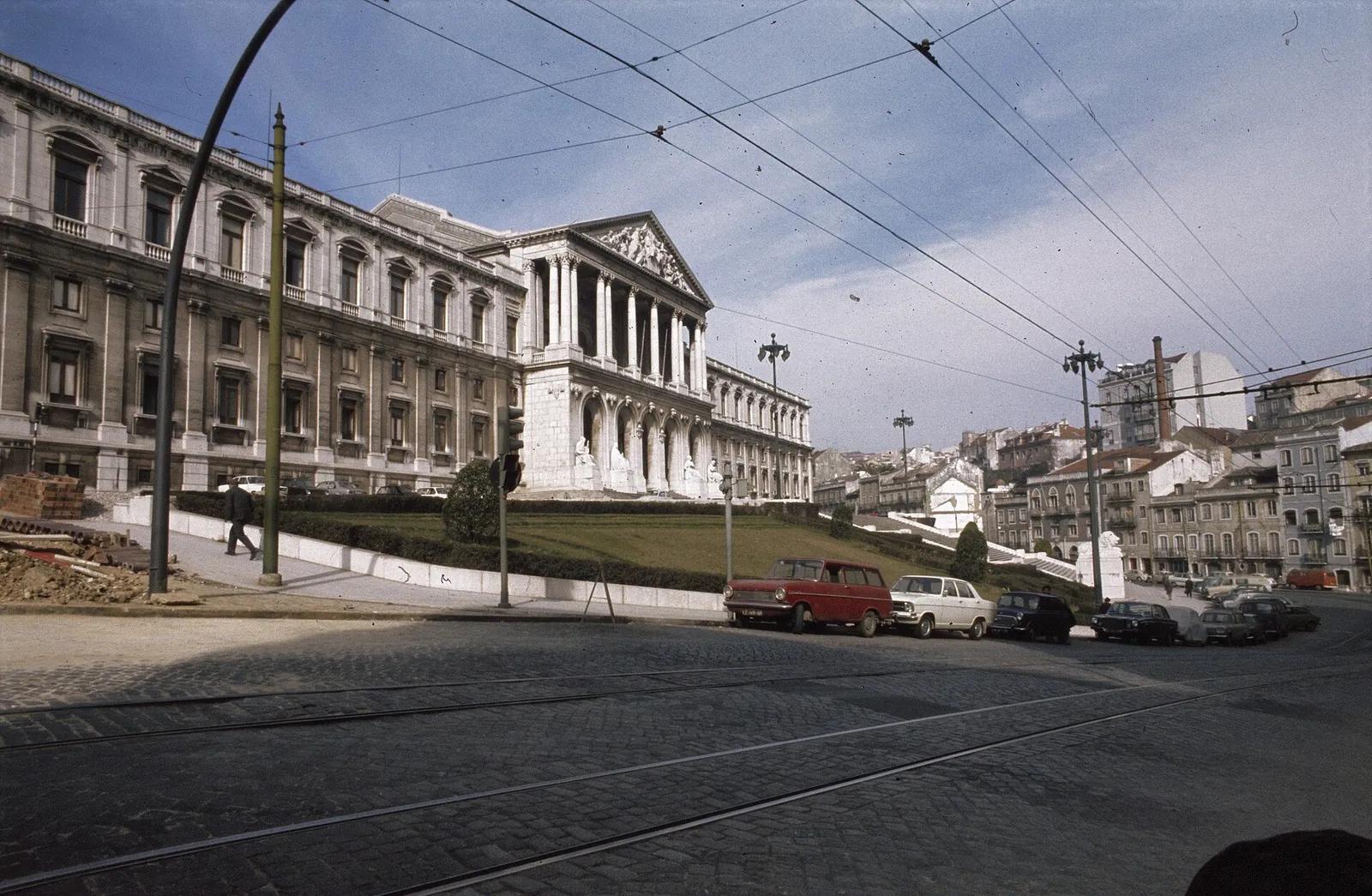
- The Palácio de São Bento in Lisbon in early 1975. The Constituent Assembly elected that April sat here, and its Constitution of 1976 kept the nationalisations of Gonçalves's governments as irreversible until 1989. Rob Mieremet / Anefo, CC0, via Wikimedia Commons.
- Socialist Party posters (“The struggle goes on”) above a Maoist MRPP banner calling for “power to the workers and peasants” and a demonstration at the Rossio on Friday 31 January. Lisbon, 11 February 1975. Rob Mieremet / Anefo, CC0, via Wikimedia Commons.