

Portugal's ships against the Ottoman fleet at Matapan, 19 July 1717
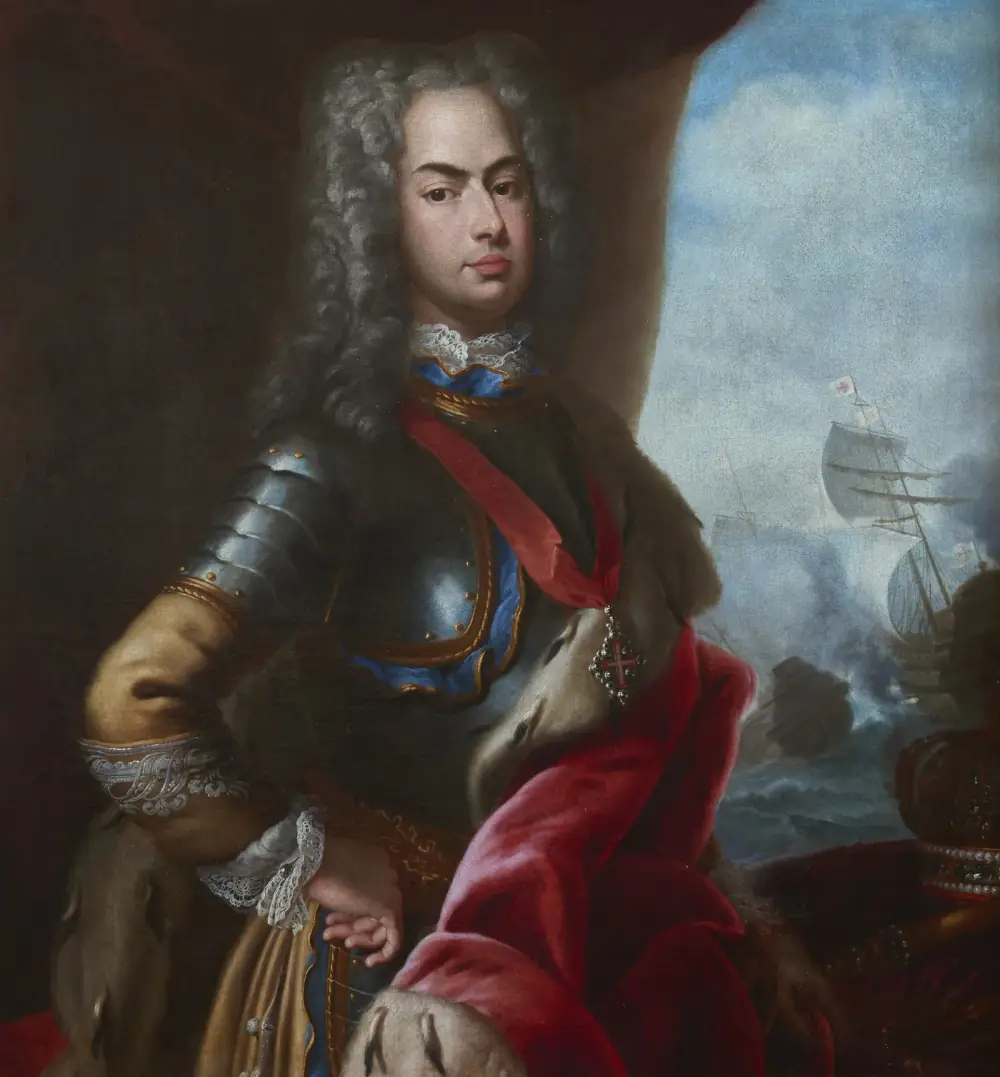
Answering Pope Clement XI's call against the Ottomans, João V sent seven ships of the line to the coast of southern Greece. They held the rear of the Christian line through a long day of cannon fire, and the king had a medal struck to celebrate it.
At a glance
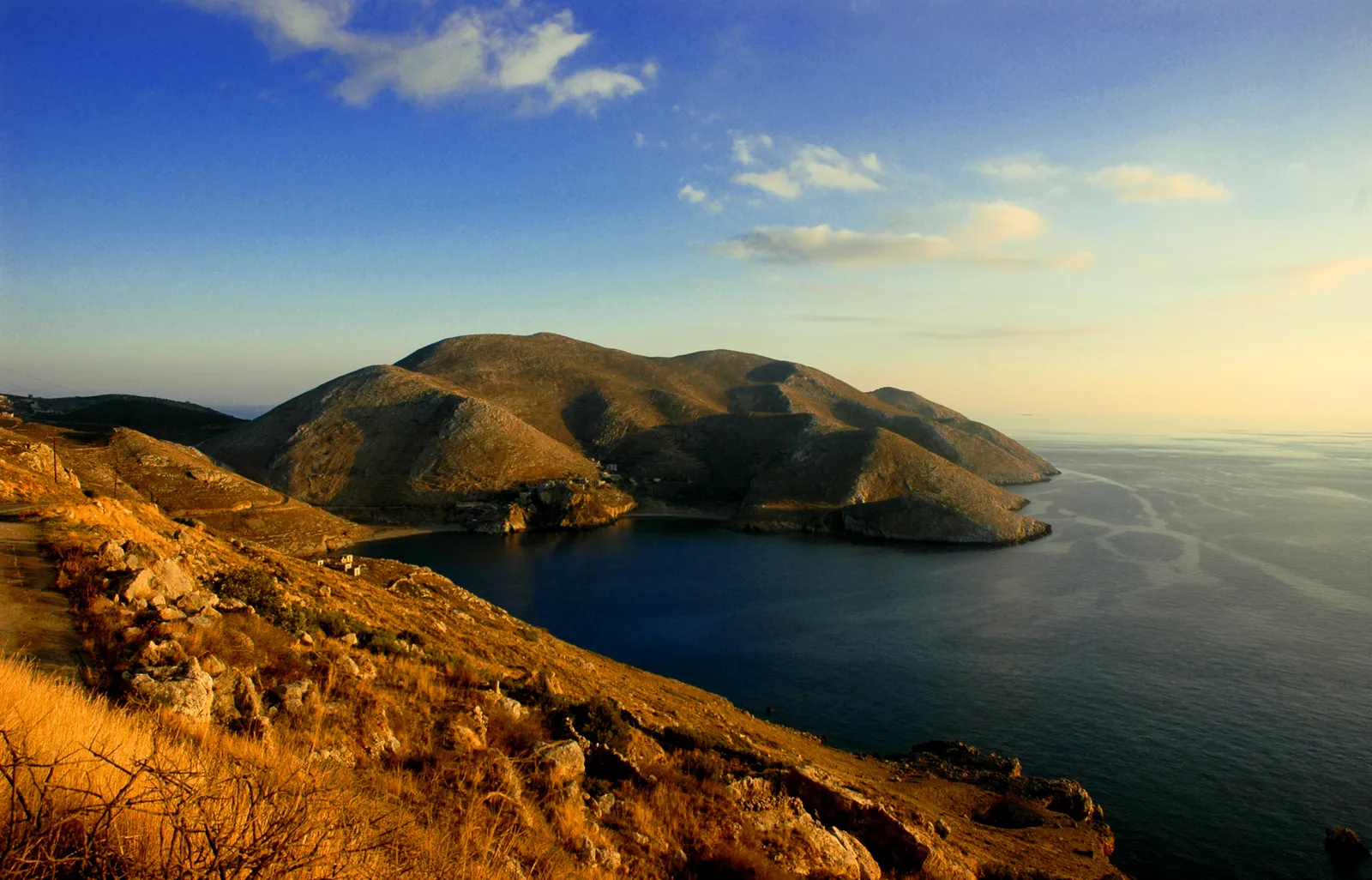
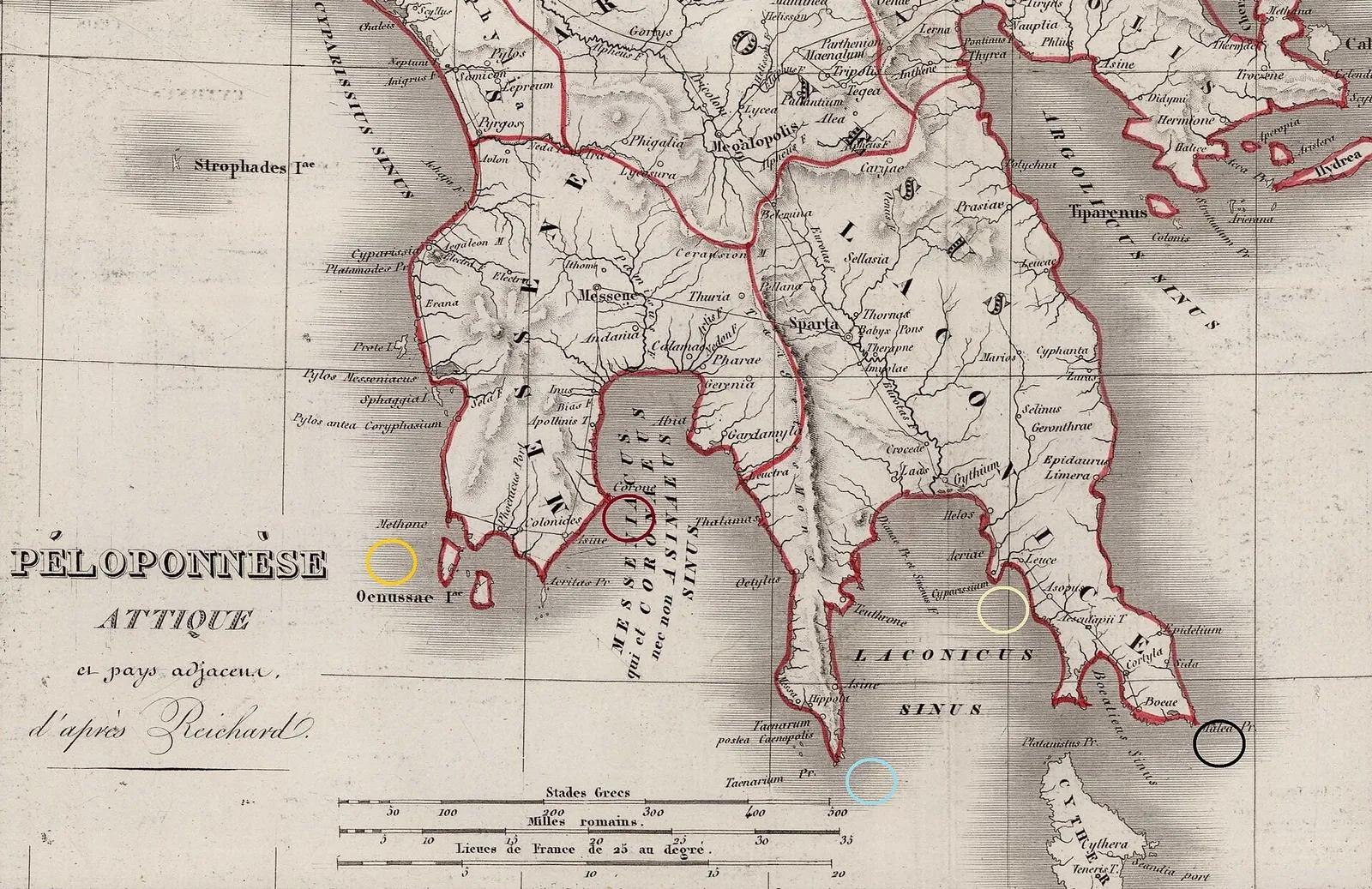
- On Monday 19 July 1717 an allied Christian fleet of 34 ships of the line, Venetian, Portuguese and Maltese, fought an Ottoman fleet of some 40 to 48 ships in the Laconian Gulf, beside Cape Matapan at the southern tip of mainland Greece.
- Portugal's seven ships of the line, carrying 472 guns, were sent by João V in answer to Pope Clement XI's appeals for help for Venice, then at war with the Ottoman Empire. With two fireships, a hospital ship and a dispatch vessel, the squadron had 526 guns and 3,840 men.
- The squadron, under Lopo Furtado de Mendonça, Count of Rio Grande, held the rear of the allied line, where much of the afternoon's fighting took place. Portuguese losses are put at about 50 killed and 150 wounded.
- By the account of the naval historian Saturnino Monteiro, no ship was sunk. The Ottomans withdrew at the end of the day, and each allied navy afterwards claimed the credit for itself.
- The pope sent the squadron a letter of thanks, João V had a medal struck to celebrate the battle, and another was made in Rome. The pope had already made Lisbon a patriarchate in November 1716; the title of Most Faithful King came only in 1748.
A morning in the Laconian Gulf
After days of calm, a light breeze came up from the south-south-east on Monday 19 July 1717. With it came the Ottoman fleet, close to forty sailing warships and four galleys, seen to the south at the western side of the entrance to the Laconian Gulf, the wide bay east of Cape Matapan at the southern end of mainland Greece. The Ottomans had the wind behind them, and they attacked.
Waiting for them was a Christian fleet of 34 ships of the line, the big three-masted warships that fought in a single file, broadside to broadside. Most were Venetian. At the back of the file, the rear, sailed seven ships flying the flag of Portugal, two from the Order of Malta and one Venetian.
The Venetian commander could not get round to the west of the enemy, so he led the line slowly east across the bay, trying all the while to keep the allied galleys out of danger. For about an hour and a half his leading ships traded fire with the Turks.
At around half past eight the Ottoman ships came within range of the rear. Later that morning the Ottoman commander, Ibrahim Pasha, in a flagship of 110 guns and escorted by fifteen “sultanas”, as contemporaries called the big Ottoman warships, bore down on the Portuguese, and was forced back.
A pope's appeal and a king's answer
Portugal had no quarrel of its own with the Ottoman Empire. The war was Venice's. By the Treaty of Karlowitz in 1699 the Ottomans had lost the Morea, as Europeans then called the Peloponnese, to the Venetian Republic. In 1714 the sultan went to war to win it back, and between May and September 1715 an army of 100,000 men and a fleet of 58 ships and 30 galleys retook the peninsula while the much smaller Venetian fleet stayed out of the way.
The next target was Corfu, the Venetian island that guarded the entrance to the Adriatic. In July 1716 more than 33,000 Ottoman soldiers landed there and laid siege to the town. Pope Clement XI, alarmed to see the Ottomans so close to Italy, appealed to the Catholic powers for help. The Austrian emperor Charles VI went to war with the Ottomans in the Balkans in 1716, and Spain, Malta, Tuscany, Genoa and the Papal States sent ships to Venice's aid.
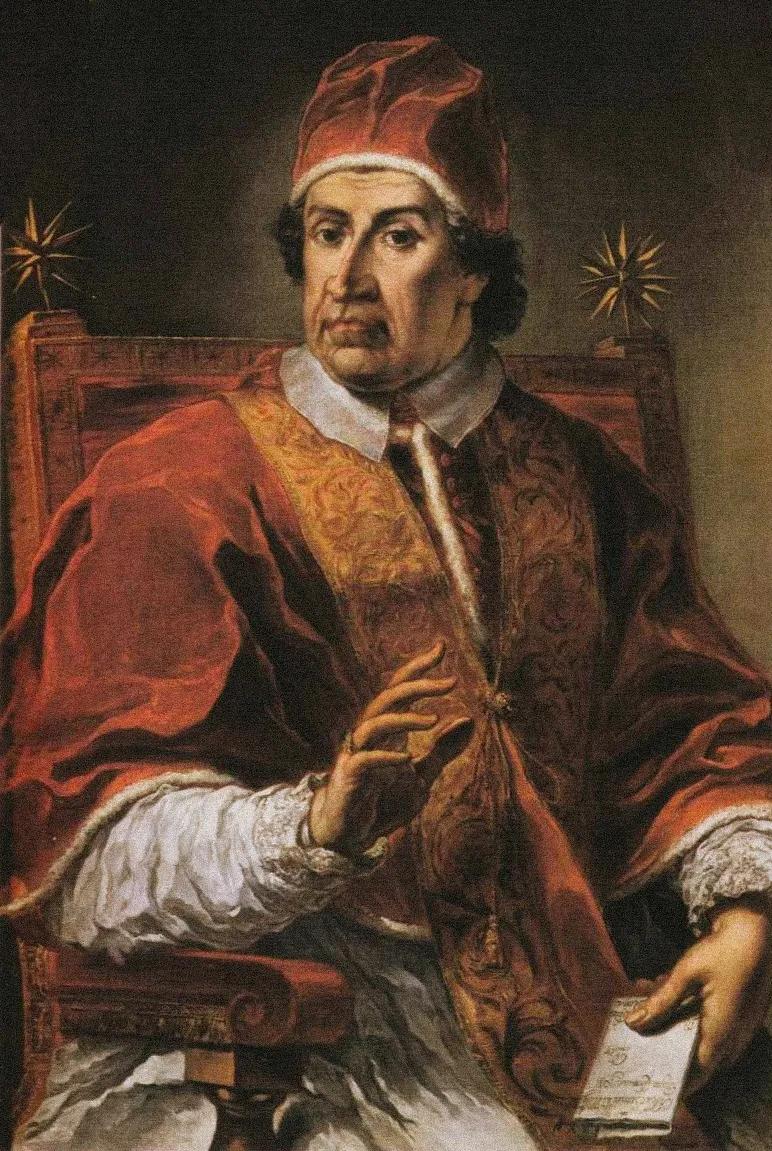
João V seems to have ignored the pope's first appeal, of 17 January 1715. He answered the second, of 6 January 1716. That was out of character. Since 1715 Portugal had kept out of Europe's wars, relying on its alliance with Britain, confirmed by the Methuen Treaty of 1703, to protect Brazil and the sea routes to it.
Rome was the exception. The historian Nuno Gonçalo Monteiro argues that João V's one great investment in European diplomacy was winning the same treatment from the Holy See as the other great Catholic monarchies, as Portugal had enjoyed before it fell under Spanish kings in 1580. Ships for the pope's war were a way to earn it.
Corfu, 1716: too late
The first squadron, put together in a hurry, sailed from Lisbon in the summer of 1716 (accounts give dates from 4 June to 15 July) under Lopo Furtado de Mendonça, Count of Rio Grande, watched by the royal family, the papal nuncio and crowds on the shore. Contrary winds and a long stop at Livorno, while an envoy went to Rome for instructions, held it up. By the time it reached Corfu the Ottomans had given up the siege, in late August.
Why they gave up is still argued over. The Austrian victory at Peterwardein on 5 August, the death of the grand vizier, Ali Pasha, the arrival of six Spanish warships on 21 August and word that the Portuguese were coming have all been put forward. The squadron never met the Ottoman fleet. Its only fight was off Almería on 24 July, when it sank one of two North African corsair galleys and drove the other ashore. It was back in the Tagus in late November.
Rome paid anyway. By the bull In supremo apostolatus solio of 7 November 1716, Clement XI raised João V's royal chapel to a patriarchal church and divided the city into two dioceses, Western Lisbon and Eastern Lisbon, the first under a patriarch. In December the pope asked for help again.
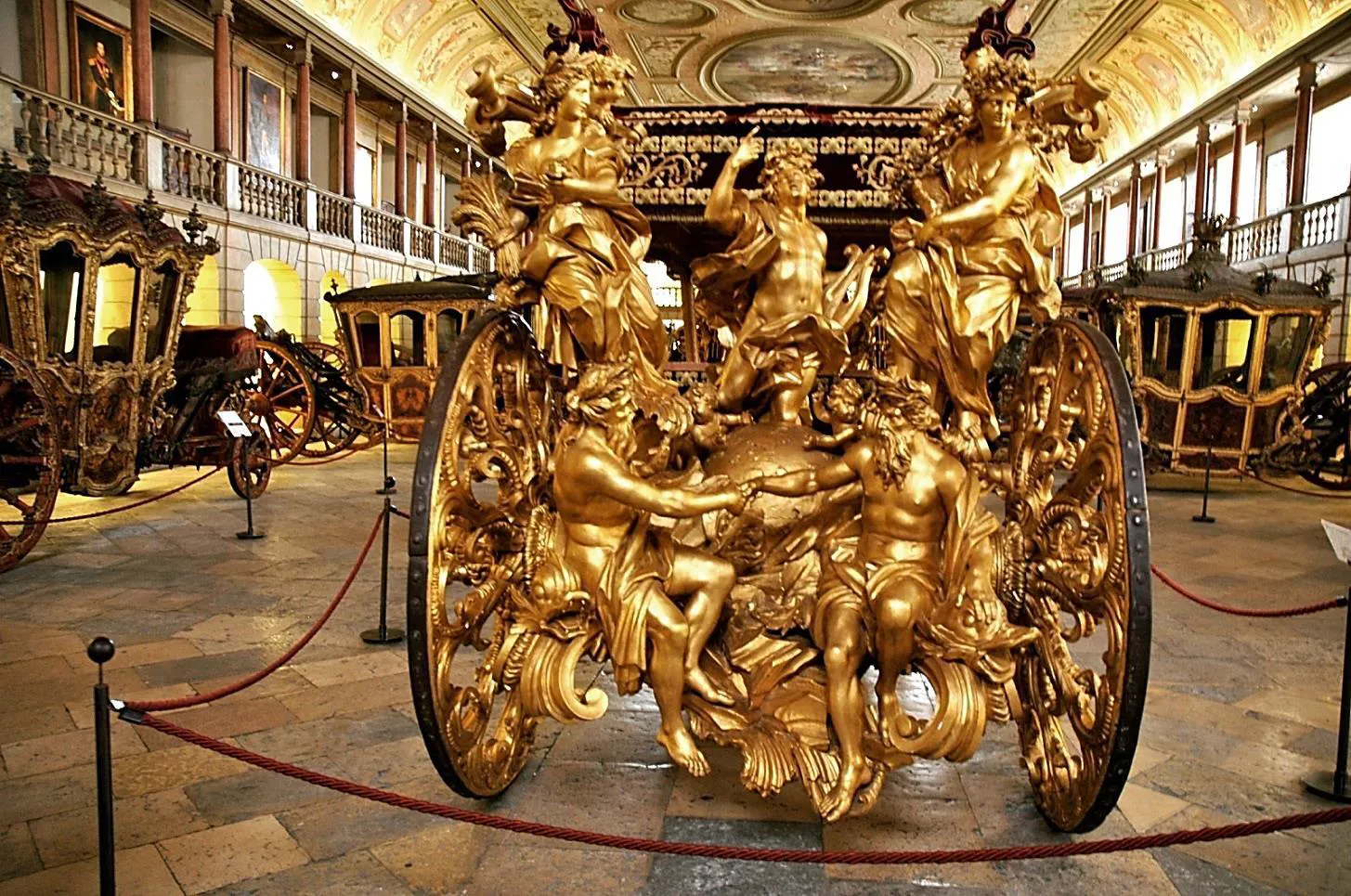
Portugal's ambassador in Rome had already put on a show of his own. In 1716 the Marquis of Fontes rode in procession from his residence in Piazza Colonna to the pope's Quirinal Palace with five gilded triumphal coaches and ten more in support, carved with allegories of Portugal's power and its voyages. The National Coach Museum in Lisbon describes it as one of the most ostentatious embassies of all time.
The squadron of 1717
The second squadron was larger and better armed. It left the Tagus on 25 April 1717, again under Rio Grande, with the Count of São Vicente as his vice-admiral. Four of its seven ships of the line dated from 1716, and the vice-admiral's ship, Nossa Senhora do Pilar, was new from the shipyard at Bahia, in Brazil. The two biggest carried 36-pounder guns on their lower decks, heavier than the lower-deck guns of comparable British ships.
| Ship | Type | Commander | Guns | Crew |
|---|---|---|---|---|
| Nossa Senhora da Conceição (1701) | Flagship | Count of Rio Grande | 80 | 700 |
| Nossa Senhora do Pilar (1716) | Vice-admiral's ship | Count of São Vicente | 80 | 700 |
| Nossa Senhora da Assunção e São Pedro (1705) | Ship of the line | Pedro de Sousa Castelo Branco | 66 | 500 |
| Nossa Senhora das Necessidades (1708) | Ship of the line | Gillet Dedois du Bocage | 66 | 500 |
| Santa Rosa (1716) | Ship of the line | João Batista Rolhano | 66 | 500 |
| São Lourenço (1716) | Ship of the line | Bartolomeu F. Araújo | 58 | 350 |
| Rainha dos Anjos (1716) | Ship of the line | José Pereira de Ávila | 56 | 350 |
| Santo António de Lisboa and Santo António de Pádua | Two fireships | Jorge M. Souto Maior; Tomás Tully | 8 each | 40 each |
| São Tomás de Cantuária | Hospital ship | António dos Santos | 20 | 100 |
| Unnamed tartan | Dispatch vessel | José Baganha | 18 | 60 |
| Total, 11 vessels | 526 | 3,840 |
Figures from Saldanha's Tabela 18 in the Academia de Marinha history (2022); the totals are the sum of the rows and match Saldanha's 526 guns and the navy library's 526 guns and 3,840 men. The Academia de Marinha's summary of Nuno Gonçalo Monteiro's lecture gives different gun counts for several ships (78 for Conceição, 82 for Pilar) and a total of 448 guns, although the guns in its own list add up to more than 500. When Pilar arrived from Bahia in 1716, the Gazeta de Lisboa called her a 70-gun ship. Fireships were small vessels meant to be set alight and steered into enemy ships.
It reached Corfu on 10 June. Venice's sailing fleet had just fought the Ottomans alone off the island of Imbros, near the Dardanelles, on 12, 13 and 16 June. Its commander, Lodovico Flangini, was mortally wounded and died on the 22nd, and his ships came back battered and short of water and ammunition. On 2 July they joined the allied ships and galleys off the southern Peloponnese.
Spain did not come. Its fleet took the pope's subsidy and put to sea, but never joined the allies. Then, a month after the battle, to everyone's surprise, a Spanish force landed in Sardinia on 20 or 22 August 1717 (accounts differ) and seized the island from the Austrian emperor. Clement XI, who had promised Vienna that it would not be attacked, was furious.
There was also a quarrel over rank. The pope had named a knight of Malta, the Bailli de Bellefontaine, to command all the auxiliary squadrons, above the Count of Rio Grande, and under the Venetian captain general, Andrea Pisani. The naval historian Armando Saturnino Monteiro told what happened next.
“Under the hierarchy the pope had laid down, the Count of Rio Grande was subordinate to Bellefontaine and Bellefontaine to Andrea Pisani, which to some extent showed a lack of consideration for Portugal, given the importance of its contribution. So the Count of Rio Grande seems to have understood it, for he not only refused to replace the Portuguese flag with the papal flag, as Bellefontaine had ordered him to, but declared to him flatly that he did not consider himself his subordinate, but only Pisani's!”
A long day of gunfire
From 3 to 14 July the allies cruised off Cape Matapan, the galleys to the south-east of the headland and the sailing ships further south, waiting for the Ottomans. On the morning of the 19th the Christian fleet was in the Laconian Gulf in three divisions: nine Venetian ships in the van, fifteen Venetian ships in the centre and the mixed rear of ten.
Guns in the allied line of battle at Matapan, by division
guns
Totals of the guns listed for each ship in Saldanha's table of the allied fleet (2022), 2,224 in all. The Portuguese seven carried nearly three-quarters of the rear's 644 guns. Other lists of the fleet differ in names and gun counts.
Show the data
| Guns | |
|---|---|
| Van (9 Venetian) | 610 |
| Centre (15 Venetian) | 970 |
| Rear: 7 Portuguese | 472 |
| Rear: 2 Maltese, 1 Venetian | 172 |
The wind kept dying, and the fleets lay becalmed for long stretches, firing at long range. At one point the Count of São Vicente turned the Pilar towards the enemy as if to take on the whole Ottoman fleet alone, and Rio Grande had to signal him back into line.
In the early afternoon the fighting narrowed to the ten ships of the allied rear, most of them Portuguese, against about fifteen Ottoman ships. By Saturnino Monteiro's account, the Pilar, Santa Rosa, Conceição and Assunção, with the Venetian Fortuna Guerriera, bore the brunt for about three hours.
“The Venetians kept themselves the whole time in an inexplicable confusion, without forming a line or taking any formation, putting themselves out of the fight, as if they had come only to witness what the Portuguese were doing in defence of the states and interests of their Republic.”
Nuno Saldanha, who wrote the chapter on the campaign in the Academia de Marinha's 2022 history of the navy, doubts it. When the Ottoman ships were pounding the Pilar at the head of the Portuguese column, the nearest Venetian ship, the San Pio V of 70 guns, was hit so hard that it lost all its masts. The Pilar suffered most of the Portuguese ships, with about a quarter of their casualties.
Late in the day the wind changed, and the Ottoman fleet broke off and withdrew. Saturnino Monteiro thought its leading ships were probably short of ammunition after two earlier battles with the Venetians and a day of heavy firing. The Portuguese were badly cut up aloft, their masts, sails and rigging torn and their hulls holed, but the squadron lost no ships. Its losses are put, with some uncertainty, at about 50 killed and 150 wounded.
May–Sept 1715
The Ottomans retake the Morea from Venice
6 January 1716
Clement XI's second appeal; João V agrees to send ships
June–July 1716
First Portuguese squadron sails; Ottomans besiege Corfu
Late August 1716
Siege of Corfu lifted before the Portuguese arrive
7 November 1716
Bull creating the Patriarchate of Lisbon
25 April 1717
Second squadron leaves the Tagus
10 June 1717
Squadron reaches Corfu
12–16 June 1717
Venetians fight the Ottomans off Imbros
19 July 1717
Battle in the Laconian Gulf, off Cape Matapan
24 Aug–2 Oct 1717
Repairs at Messina, in Sicily
6 November 1717
Squadron back in Lisbon
1718
Peace of Passarowitz: Venice gives up the Morea for good
Whose victory?
Every ally went home with a different battle. The British naval historian R. C. Anderson, who compared the accounts in 1952, picked the nineteenth-century Portuguese writer Celestino Soares as his best example of bias: in his Quadros Navais, Soares had written that the Portuguese squadron did more than the Venetian, papal, Neapolitan, Maltese and Spanish ships put together.
“The battle which followed is remarkable for the utter lack of resemblance in the accounts given by different authorities. According to the sympathies of the narrator the credit for such success as there was on the Christian side is given to each section of the Allied fleet to the complete exclusion of the rest.”
Saturnino Monteiro, a Portuguese naval officer and historian, was blunter still. With almost no wind, he wrote, the ships hardly moved and the battle had little tactical interest.
“A showy artillery duel at a distance: thousands of shots fired, yards and topmasts broken, ropes cut, sails torn to pieces and a few hundred dead and wounded, but without any ship seriously damaged in the hull, let alone sunk or set on fire.”
Saldanha, writing for the Academia de Marinha in 2022, takes a middle line. The Portuguese did fight well, he concludes, and so many different witnesses could hardly all be lying at once, but the habitual exaggerations should be set aside. A full study would have to set the hundreds of Portuguese letters and reports against Italian, Maltese, British, German and, above all, Ottoman sources, which are the least known.
Medals, ships and the road to Rome
The squadron left Corfu on 16 August and spent from 24 August to 2 October repairing at Messina, in Sicily, where it was feted and visited by the city's authorities. A letter of thanks from the pope reached it there. On 6 November 1717 it sailed back into the Tagus. Eleven days later the first stone of João V's great church and friary at Mafra was laid, a story Lisboeta tells separately.
The king had a medal struck by Antonin Mengin. Its Latin inscription says the Turkish fleet was put to flight in the Laconian Gulf by the Portuguese warships, and the galleys of the Romans, Venetians, Tuscans and Maltese saved. In Rome, Otto Hamerani made another, with João V in armour on one side and a ship passing between the Pillars of Hercules on the other. Duprà's portrait of the king with the battle behind him followed around 1719.
The expedition also left a stronger navy. The fleet roughly doubled between 1710 and 1719, when it had close to twenty ships of the line, and no year of João V's reign added as many as 1717. Four warships bought from the Amsterdam admiralty, two of about 70 guns and two of 64, arrived in Lisbon in November 1717, too late for the battle.
The war itself ended the next year. At Passarowitz, in 1718, the Ottomans gave up territory in Serbia and the Balkans to Austria but kept the Morea. Matapan was the last battle in which Venice's sailing ships and galleys fought together, and when the Venetians met the Ottomans off the same cape in 1718 they left their galleys in the Adriatic.
Why it still matters
Anderson counted Matapan among the few occasions when a Portuguese squadron operated in the eastern Mediterranean. He also called it the last battle in which the Venetians had western allies against the Turks, and probably the last time Mediterranean galleys took part in a battle fleet.
For João V, the prize that mattered was in Rome. Nuno Gonçalo Monteiro lists the gains the king pursued for decades: the patriarchate in 1716, a cardinal's hat for the patriarch in 1737, the crown's right to present its bishops in 1740 and, in 1748, the title of Most Faithful King.
The Portuguese navy still keeps the dates. On the anniversary in 2020 its cultural directorate published a note crediting the defeat of the Ottoman fleet largely to Rio Grande's squadron, which pressed its attack after some allies had begun to draw back. In November 2022 the navy marked 305 years since the squadron sailed back into the Tagus on 6 November 1717.
FAQs
Who won the Battle of Matapan in 1717?
The Ottoman fleet withdrew at the end of the day, so the Christian allies claimed the victory, but by Saturnino Monteiro's account no ship was sunk on either side, and at the peace a year later the Ottomans kept the Morea. Portuguese, Venetian and Maltese accounts each give the credit to their own ships. Monteiro called it a showy artillery duel at long range; Nuno Saldanha (2022) concludes that the Portuguese squadron in the rear did fight well.
Why did Portugal send ships to fight the Ottomans in Greece?
Pope Clement XI asked the Catholic powers to help Venice, which was at war with the Ottoman Empire from 1714. João V answered the pope's second appeal in 1716 and sent a squadron again in 1717. He wanted Portugal treated in Rome as an equal of the great Catholic monarchies.
Who commanded the Portuguese squadron at Matapan?
Lopo Furtado de Mendonça, Count of Rio Grande, in the flagship Nossa Senhora da Conceição, with the Count of São Vicente as vice-admiral in the Nossa Senhora do Pilar. Rio Grande refused to serve under the pope's chosen commander, the Maltese knight Bellefontaine, and answered only to the Venetian captain general, Andrea Pisani.
Did the Battle of Matapan make Lisbon a patriarchate?
No. Clement XI created the Patriarchate of Lisbon by a bull of 7 November 1716, eight months before the battle, after the first Portuguese expedition and the Marquis of Fontes's embassy. The title of Most Faithful King came in 1748.
On the timeline
Open the timelineNearby moments from restoration and the gold of brazil (1640–1750).
Birth in Rio de Janeiro of António José da Silva, 'O Judeu' ('the Jew'), whose witty comic operas, performed by puppets at Lisbon's Bairro Alto theatre, were a great success. Condemned by the Inquisition as a relapsed Judaiser at an auto-da-fé in 1739, he was handed to the secular courts, strangled and burned.
Joseph Vaz (José Vaz), a priest from Portuguese Goa, dies in Kandy after more than two decades secretly ministering to the Catholics of Ceylon, who were persecuted under Dutch Calvinist rule. Revered as the 'Apostle of Ceylon', he was canonised by Pope Francis in Colombo in 2015.
Birth in Lisbon of the Infanta Maria Bárbara, daughter of João V. A gifted keyboard player, she was taught by the Neapolitan composer Domenico Scarlatti, who followed her to Spain when she married the future Fernando VI in 1729 and remained her music master for the rest of his life. She became Queen of Spain in 1746.
The Battle of Matapan
Battle of Cape Matapan. A Portuguese squadron under Lopo Furtado de Mendonça, Count of Rio Grande, fights alongside the Venetian fleet and its allies, among them Malta, against the Ottoman navy off the southern tip of the Peloponnese. Sent in answer to Pope Clement XI's appeals, the squadron held the rear of the allied line, where Portuguese accounts place the heaviest fighting, and the pope sent it a letter of thanks.
The first stone of the Palace-Convent of Mafra is laid in the presence of King João V, in fulfilment of a vow he had made for children. Paid for with Brazilian gold and raised by tens of thousands of workers, the vast Baroque complex was consecrated in 1730 and later inspired Saramago's 'Memorial do Convento'.
Death at the Convent of the Conception in Beja of Sister Mariana Alcoforado, 83, the nun long named as the author of the 'Letters of a Portuguese Nun', five anguished love letters to a French officer published in Paris in 1669. Most scholars now credit them to the French courtier Guilleragues, though some still defend her authorship.
On his forty-first birthday, João V attends the consecration of the basilica of the Palace-Convent of Mafra, begun in 1717 in fulfilment of a vow he had made for children; the ceremonies lasted eight days. The vast building was paid for with gold from Brazil.
Coming up in history
All long reads 22 July 1684Josefa de Óbidos: the woman who ran a painter's business in Baroque Portugal
 23 July 1833Cova da Piedade, 1833: the fight that handed Lisbon to the liberals
 24 July 18751875: the French president's ruling that kept Delagoa Bay Portuguese
 25 July 1139The Battle of Ourique, 1139: a raid, a victory and a miracle
9 sources
Archives, scholarship and reporting this article was checked against.
- 1
História da Marinha Portuguesa: viagens e operações navais (1668–1823), coordinated by Augusto Alves Salgado, with Nuno Saldanha and Vitor Gaspar Rodrigues; section 4.2.1, “Campanha de Corfu e Batalha de Matapão (1716–1717)”, by Nuno Saldanha, pp. 191–203 (PDF)Academia de Marinha, Lisbon, 2022
- 2
Relações de Portugal com a Santa Sé no reinado de D. João V (Nuno Gonçalo Monteiro)Janus 1999–2000, Universidade Autónoma de Lisboa
- 3
- 4
305 anos do regresso ao Tejo da armada do Conde do Rio GrandeBiblioteca Central da Marinha, Marinha Portuguesa
- 5
Mythology and carriages: an ancient journeyMuseu Nacional dos Coches, on Google Arts & Culture
- 6
- 7
War of the Quadruple Alliance (Ken MacLennan)EBSCO Research Starters, 2019
- 8
Monumento sacro da fabrica, e solemnissima sagração da Santa Basilica do Real Convento, que junto à villa de Mafra (Frei João de São José do Prado, Lisbon, 1751)Internet Archive (digitised by the Getty Research Institute)
- 9Coche dos Oceanos voltou a sair à rua (12 May 2015)Diário de Notícias
Image credits
- King João V in armour, with the battle of Matapan raging behind him, painted by Giorgio Domenico Duprà around 1719. Domenico Duprà, Public domain, via Wikimedia Commons.
- The rocky end of the Mani peninsula near Cape Tainaron, the ancient name of Cape Matapan, in October 2013. The battle of 1717 was fought in the Laconian Gulf, to the east of the cape. G Da, CC BY-SA 3.0, via Wikimedia Commons.
- Pope Clement XI, Giovanni Francesco Albani, pope from 1700 to 1721, painted by Pier Leone Ghezzi around 1708 to 1712. His appeals for help against the Ottomans took Portugal's navy to Greece. Pier Leone Ghezzi, Public domain, via Wikimedia Commons.
- The Oceans Coach, one of the five triumphal coaches of the Marquis of Fontes's embassy to Clement XI in 1716, photographed in the National Coach Museum's old home, the former royal riding school in Belém. The two old men shaking hands are the Atlantic and Indian Oceans. Igor Zyx, CC0, via Wikimedia Commons.
- The 1717 campaign as a Wikimedia contributor marked it in 2014 on an old French map of the Peloponnese: gold, off Modon, where he places the allied fleet's meeting with the Venetian sailing ships on 2 July (Saldanha puts it at Cape Matapan); blue, Cape Matapan, patrolled from 3 to 14 July; black, Cape Malea, which the Ottomans rounded on 5 July; red, Coron, their base after they rounded Matapan on 10 July; white, the battle on the 19th. Igor Zyx, CC BY-SA 3.0, via Wikimedia Commons.