

Cova da Piedade, 1833: the fight that handed Lisbon to the liberals
A month after landing in the Algarve, the Duke of Terceira reached the south bank of the Tagus with a column half the size of the force sent to stop him. In one evening he broke it, and that night Dom Miguel's government left the capital.
At a glance
- On Tuesday 23 July 1833 the liberal Duke of Terceira routed a Miguelist force under General Joaquim Teles Jordão in the valley of Piedade and at Cacilhas, on the south bank of the Tagus opposite Lisbon.
- Terceira had landed in the eastern Algarve on 24 June with about 2,500 men and marched north through the Alentejo; he reached Almada with about 1,500.
- Teles Jordão had crossed from Lisbon that morning with about 3,000 infantry and three squadrons of cavalry. He was killed at Cacilhas; the accounts disagree on whether he died fighting or after he was taken.
- Around midnight the Duke of Cadaval, Miguel's commander in Lisbon, decided to abandon the city, and by dawn on 24 July the garrison had marched out to Campo Grande and on towards Loures.
- Terceira crossed to Lisbon on the afternoon of 24 July, a date the city remembers in the Avenida 24 de Julho. The war went on until the Convention of Evoramonte in May 1834.
Dusk on the Cacilhas quay
The light was going when the 2nd Caçadores, a battalion of light infantry, drove the retreating enemy down the main street of Cacilhas at bayonet point. Their commander, Romão José Soares, pushed through to the quay to stop them getting away by boat. Across the river lay Lisbon, the capital of Dom Miguel, who had ruled Portugal as an absolute king for five years.
The men on the quay were what was left of the force that had crossed from Lisbon that same morning to stop the Duke of Terceira. Now soldiers, officers and generals fought for places in the boats. Some ended up in the river and drowned. Their commander, Joaquim Teles Jordão, was killed at Cacilhas, though the accounts differ on how.
“It is impossible to describe the spectacle that place presented. Infantry, cavalry, artillery, baggage, generals, officers and soldiers flung themselves in confusion into the boats near the quay, a confusion that the darkness of the night made still greater, so that it looked like true chaos.”
Terceira wrote that within half an hour the beaten men and the victors, mixed together on the quay, looked like brothers long reconciled. That night Miguel's government lost its nerve. By the next afternoon the queen's blue and white flag flew over Lisbon, and Terceira's dusty column was being rowed across the river in triumph.
A war for the crown
Portugal's civil war was a quarrel between two brothers that became a war between two systems. When King João VI died in 1826, his elder son Pedro, already Emperor of Brazil, gave Portugal a constitutional Charter and passed the throne to his daughter Maria, then seven. Pedro's younger brother Miguel was to marry her and rule as regent. Instead, in 1828, Miguel had himself proclaimed absolute king, and the liberals who backed Maria and the Charter went to prison or into exile.
In 1831 Pedro gave up the Brazilian throne to lead his daughter's cause. His army of about 7,500 landed near Porto in July 1832 and took the city, and Miguel's much larger forces then besieged it. A year later the liberals were still shut inside Porto, short of food and stricken with cholera, and Britain was close to recognising Miguel as king.
The way out was organised in London. The Duke of Palmela, Pedro's leading diplomat, working with the Spanish financier Mendizábal and others, raised money, steamers, foreign volunteers and a new admiral, the British naval officer Charles Napier, who reached Porto with the steamers at the beginning of June 1833.
Napier pressed for a bold stroke at Lisbon, either straight up the Tagus or by way of a landing in the south. On 10 or 11 June a council of war agreed to send 2,500 men, since 5,000 could not be spared without risking Porto, under the Count of Vila Flor, by then Duke of Terceira.
The Algarve in six days
The troops began embarking on 12 June, rowed out at night over the Douro bar under fire from the Miguelist batteries. Napier dates the sailing to 20 June; Simão da Luz Soriano, the war's nineteenth-century historian, has the squadron getting under way at seven on the morning of the 21st. To keep Lisbon guessing, it showed itself off Peniche and the Rock of Lisbon before heading south. Nobody on board yet knew where they would land, which, Napier observed, was the best way of keeping the secret.
On 24 June the ships anchored off the beach between the fort of Cacela and the battery of Monte Gordo, near the Spanish border. A few shots silenced the one gun on shore, and by midnight the division and its stores were on the beach. Miguel's government had expected the blow to fall on Lisbon, and its governor of the Algarve, the Viscount of Molelos, only sent troops to look for the invaders the next morning.
They met at the stream of Almargem on 25 June, and Molelos's men gave way after a brief exchange, leaving a gun behind; Terceira lost one officer and two soldiers wounded. Tavira, its people told that the liberals were robbers and murderers, was found empty. Olhão cheered them on the 26th, and on the 27th Terceira entered Faro, the provincial capital, where Palmela set up a civil government for the queen. By 30 June Molelos had retreated over the hills, and Terceira reported the province free “in six days”.
The welcome was warier than the speed suggests. Napier doubted the division had gained 500 recruits. Officers in uniform turned up in numbers, but most were old men who, he wrote, showed no wish to make themselves useful. Terceira halted at São Bartolomeu de Messines to bring up his guns and powder, then fell back to Loulé on 4 July while he weighed three routes into the Alentejo.
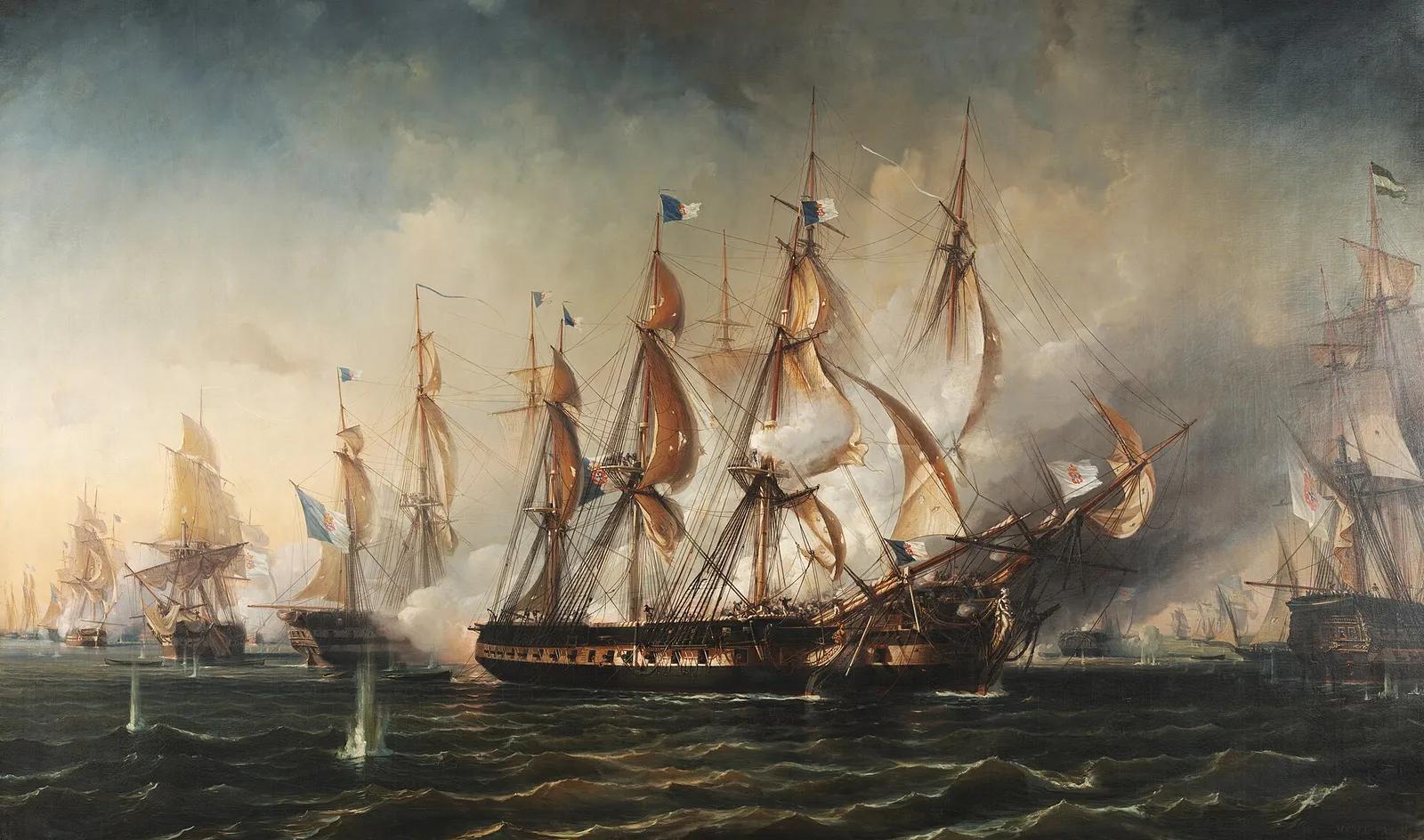
The sea settled the question. On 5 July, off Cape St Vincent, Napier's smaller squadron boarded and took Miguel's two ships of the line, a frigate, a 50-gun ship and a corvette, for about 90 killed and wounded of his own. Only two corvettes made it back to Lisbon. Terceira went to Lagos to see the prizes on 8 July and decided to march north at once.
“To Almada, to Lisbon!”
Terceira crossed the hills by São Marcos da Serra and Santa Clara, and at Garvão had it confirmed that Molelos had made a mistake. Beja had risen for the queen, and Molelos had marched there to punish it, leaving the road to the capital open. Terceira reckoned he could gain at least two days' march on him.
On the night of 17 July, at Messejana, he called his brigadiers and battalion commanders together, set out the plan and its risks, and they agreed unanimously. Soriano says the duke had been wavering between going after Molelos and falling back on the Algarve, and that two of his staff, José Jorge Loureiro and Luís Mouzinho de Albuquerque, pushed him to call the council. Napier, who heard the story over dinner in Lisbon after the city fell, says Terceira told his officers the venture would end in “immortal glory or a halter”.
Next morning, when the soldiers saw the column leave the road to Aljustrel and Beja and turn on to the road for Alvalade, the shout went down the ranks: “To Almada, to Lisbon!”
They forded the Sado at Porto de El-Rei on the 20th, scattered a party of royalist volunteers outside Alcácer do Sal on the 21st, and on the 22nd found a Miguelist force drawn up in front of Setúbal. It fired a few rounds and ran as the column came on at the double. The forts of São Filipe and Outão opened their gates.
From 12 June
Embarkation at Porto
The troops are rowed out under fire over the Douro bar; all aboard by the 14th in Soriano, by the 18th in Napier.
20-21 June
The fleet sails south
Napier gives 20 June; Soriano and Bonifácio give 21 June.
24 June
Landing near Cacela
On the beach between the fort of Cacela and Monte Gordo, all ashore by midnight.
25-27 June
Almargem, Tavira, Olhão, Faro
A brief skirmish, then the coast towns; Palmela sets up a government in Faro.
4 July
Back to Loulé
Terceira gathers guns and transport and weighs his routes north.
5 July
Cape St Vincent
Napier captures most of Miguel's fleet.
13-16 July
Over the hills
São Marcos da Serra, Santa Clara, Garvão; news that Molelos has turned to Beja.
17 July
Council at Messejana
The officers agree to march on Lisbon.
20-22 July
Sado, Alcácer, Setúbal
A royalist party scattered; the force in front of Setúbal routed.
23 July
Cova da Piedade and Cacilhas
Teles Jordão's force broken; the column reaches the quay at nightfall.
24 July
Almada surrenders; Lisbon
The castle gives up at first light; Terceira crosses in the afternoon.
Lisbon takes fright
In Lisbon the Duke of Cadaval, who headed Miguel's government and commanded its troops, had been told by the optical telegraph that 5,000 or 6,000 men were marching on Setúbal. He declared the city under siege and promised death within a day for anyone who spread alarm or revolt. On 23 July, according to Soriano, a political prisoner was executed at Cais do Sodré; Napier says two were put to death in a public square the night before the evacuation.
“Soldiers! I am in your front, and I rely on the divine mercy that I shall not prove unworthy of the name I have inherited with my blood.”
When fugitives from Setúbal brought word of the rout, Cadaval sent part of the garrison over the river to Almada on the morning of the 23rd: about 3,000 infantry and three squadrons of cavalry under General Joaquim Teles Jordão. He was to gather the men who had fled Setúbal and work with Molelos, who was by then following Terceira north.
The fight in the valley of Piedade
On the morning of 23 July Terceira's column crossed the three leagues of sand between Azeitão and Amora without meeting a picket. Near Amora a few horsemen appeared and rode off. Local people said the Miguelists were waiting on the low hills above Corroios. Their skirmishers fell back from ridge to ridge as the liberal light infantry spread out on the flanks.
The road ran through a cutting between the banks of the Alfeite estate and opened into the valley of Piedade, a small flat plain where an inlet of the Tagus ran in behind Cacilhas, below the heights of Almada. Roads left it for Pragal, Almada and, by Mutela, Cacilhas. Teles Jordão was stronger in cavalry and had chosen to fight there; Terceira, who knew the ground, wrote that he had expected it.
As the head of the column came out of the cutting, two squadrons of cavalry charged at the gallop from the Cacilhas road. Napier says the infantry began to waver until Terceira and his staff, at the front, steadied them. The skirmishers ran back into the ranks, and the 2nd and 3rd Caçadores, under Brigadier Schwalbach, met the charge with a volley that brought down the leading men and horses. The survivors fled behind the warehouses of Cova da Piedade.
Terceira left the 6th Infantry to block the roads from Pragal and Almada and sent the rest straight for Cacilhas to cut off the retreat. At the entrance to Mutela two field guns covered the road; the caçadores charged them with the bayonet and took them. The head of the column reached the Cacilhas quay with the last light of the day.
Almada itself had not surrendered. Terceira halted at the edge of the town rather than storm it in the dark, and Schwalbach sent his aide-de-camp, Ensign Jorge, under a flag of truce to call on the garrison to lay down its arms. Some Miguelist cavalry attacked him, and he was carried back mortally wounded. At first light on the 24th the castle surrendered, and its garrison piled their arms on the esplanade.
Counting the armies
Every account agrees that Terceira was heavily outnumbered, and none agrees on by how much. He had left garrisons in Faro, Lagos and Olhão, so the column that fought at Cova da Piedade was smaller than the force that landed. Every one of these counts comes from the winning side.
| Napier (1836) | Owen (1836) | Soriano (1849) | Terceira's report | |
|---|---|---|---|---|
| Landed in the Algarve | 2,500 ordered; Pedro's letter of 11 June gives 2,672 | 2,500, incl. 50 dismounted lancers | 2,500 | In an annexed return not printed with it |
| Liberals at Cova da Piedade | Less than 1,500 | 1,500 infantry and 16 lancers | 1,600 | Not given |
| Teles Jordão's force | Infantry and three squadrons; double Terceira's numbers | 3,000 and three squadrons | 3,000 infantry and three squadrons | Part of the Lisbon garrison, three squadrons |
| Molelos's division | 4,000 | 3,000 | 4,000 to 5,000 with its reinforcements | Not given |
| Garrison that left Lisbon on 24 July | Upwards of 6,000 troops and police (elsewhere 8,000) | 6,000 | 10,000 to 12,000 | Not given |
| Liberal losses | Not given | Not given | 3 killed, 12 wounded, 3 missing | Not given |
| Miguelist losses | At least 1,000 killed, wounded and drowned | Prisoners outnumbered the victors | About 1,000 dead or fled to Lisbon; those taken nearly double the victors | More than 1,000 prisoners, 160 horses, 28 guns |
Napier commanded the liberal fleet and was not at the battle; he took his account from Terceira and his staff. Terceira's figures for prisoners, horses and guns are in a note to his report of 29 July 1833. Bollaert also gives 2,500 for the landing.
The night Lisbon changed sides
The men who got across the river, Teles Jordão's son among them, brought the news to Lisbon, and the lights of Cacilhas could be seen from the city. Around midnight Cadaval held a council of war. It concluded that the troops could not be trusted, that Napier's fleet could now enter the river under cover of the south-bank batteries, and that the city could not be held while it might rise behind them.
Before dawn on Wednesday 24 July the garrison assembled at Campo Grande, on the northern edge of the city, on the pretext of a review, and marched off towards Loures. General Álvaro Xavier Póvoas, a Miguelist commander who was at home in Lisbon, wrote in his diary that at dawn a lieutenant-colonel of the royalist volunteers came to his house with the news, his moustache already shaved off and dressed as a civilian so as not to be stopped by the liberals. By the time Póvoas reached Campo Grande, the troops had gone.
Lisbon woke up to find itself free of its garrison. Crowds broke open the prisons; Soriano puts the prisoners released at more than 5,000. Blue and white flags appeared on the Castle of São Jorge and the river forts. In the town hall, a declaration signed that day proclaimed Maria II queen, “the city being forsaken by the troops”. Napier, who saw the aftermath, wrote that only one or two lives were lost.
At Almada, as the queen's flag went up over the castle, Terceira heard the salutes from the north bank. He could hardly believe it at first, Soriano says, and suspected a trap until messengers from Lisbon convinced him. Boats crowded with people rowed over to Cacilhas to fetch his men, and between two and three in the afternoon the expedition from the Algarve landed at the Terreiro do Paço, where the crowd carried the duke almost bodily to the town hall.
“This standard, under which the loyal supporters of the throne and the charter have served in the midst of persecutions, of exile, and of battles, was never the symbol of war or vengeance, but the sign of peace and concord.”
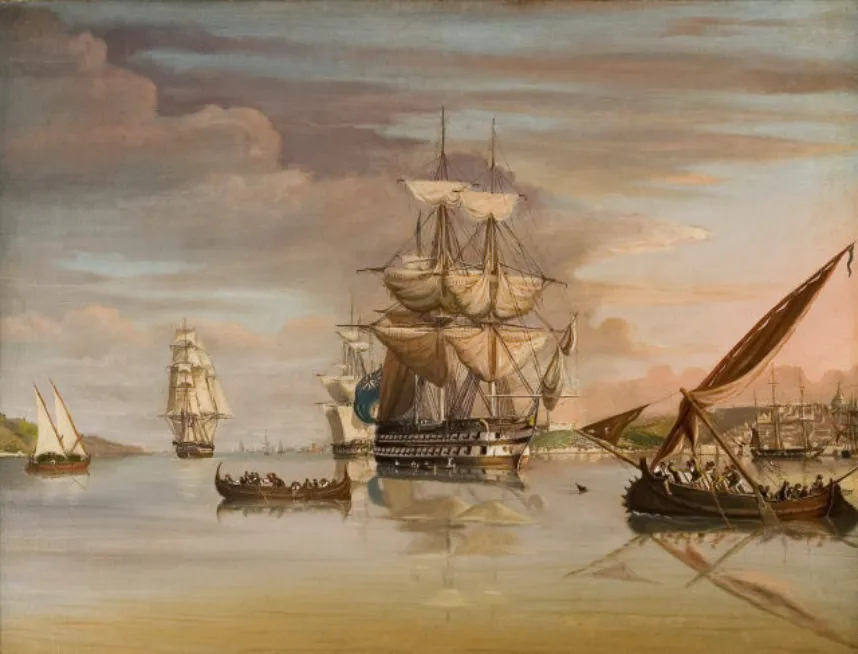
The fleet had been becalmed and battered by cholera, and Napier had all but given Terceira up for lost. Off the bar on the 24th a British brig told him Lisbon was taken, and at two that afternoon Palmela wrote from the flagship to announce the news to Porto. The forts at the river mouth were abandoned that night; Napier and Palmela rowed up to the city on the 25th, and the ships followed in the afternoon breeze. Napier sent the frigate Dom Pedro up to Aldeia Galega to stop Molelos crossing there.
A capital won, a war not yet over
Napier thought the city would have been lost again if Cadaval had shown any enterprise. Molelos's disorganised division, which had reached Setúbal on 24 July, was allowed to cross the Tagus upstream at Valada and join the troops who had left Lisbon. Its chief of staff, Augusto Xavier Palmeirim, urged him to negotiate; he refused, and Palmeirim later went over to Terceira.
In Porto, Miguel's army under the French marshal Bourmont made a last great assault on 25 July and was driven back. When the news from Lisbon arrived, Pedro sailed south, and he landed in the capital on 28 July. The besiegers soon gave up Porto and marched on Lisbon, but their attack on the new lines around the city on 5 September failed, and the queen herself arrived from France on 22 September.
The war lasted ten more months. It ended after Terceira's victory at Asseiceira, with the Convention of Evoramonte on 26 May 1834, which sent Miguel into exile. Lisbon stayed in liberal hands throughout.
Why it still matters
The fight at Cova da Piedade was small, but it decided who would hold the capital and its arsenals. A government besieged in Porto became a government in Lisbon, and that August Britain formally recognised it. From Lisbon the liberals fought and won the rest of the war.
Lisbon keeps the date in its street names. The Rua Vinte e Quatro de Julho was named in 1878 along the new riverside landfill and became an avenue in 1928. In April 1932 the city renamed it after the medieval hero Nuno Álvares Pereira; the outcry was such that the old name came back that June. In 1984 the toponymy commission added “1833” to the signs so nobody would mistake the date. Across the river, Almada has an Avenida 23 de Julho.
FAQs
Where was the Battle of Cova da Piedade fought?
On the south bank of the Tagus opposite Lisbon, in what is now the municipality of Almada. The cavalry charge was met where the road from the Alfeite estate opened into the valley of Piedade, and the fighting ended at dusk on the quay at Cacilhas. Soriano calls it the action of Cacilhas or of Piedade.
Why did Lisbon fall without a fight?
After Teles Jordão's force was broken, the Duke of Cadaval's council of war decided the troops could not be trusted, that Napier's fleet could now force the river and that the city might rise. Before dawn on 24 July the garrison marched out to Campo Grande and on towards Loures, and the people of Lisbon declared for Maria II.
How many men did the Duke of Terceira have?
About 2,500 landed in the Algarve on 24 June 1833. After leaving garrisons behind, he fought at Cova da Piedade with about 1,500 men according to Napier and Owen, or 1,600 according to Soriano, against about 3,000 infantry and three squadrons of cavalry.
Did the capture of Lisbon end the civil war?
No. Miguel's army attacked the new lines around Lisbon in September 1833 and fought on until May 1834. The war ended with the Convention of Evoramonte, signed on 26 May 1834 after the liberal victory at Asseiceira.
Why is there an Avenida 24 de Julho in Lisbon?
It is named after 24 July 1833, the day the Duke of Terceira's troops entered Lisbon. The street was named in 1878, became an avenue in 1928, and has carried the year 1833 on its signs since a decision of the city's toponymy commission in 1984.
On the timeline
Open the timelineNearby moments from invasions, brazil and the liberal wars (1807–1851).
Pedro I abdicates the Imperial Crown of Brazil in favour of his five-year-old son Pedro II, adopting the title of Duke of Bragança. He returns to Portugal to lead the liberal cause in the Civil War against his brother Miguel.
Dom Pedro, the former Emperor of Brazil, lands on the beach of Arnosa de Pampelido, near Mindelo, north of Porto, with some 7,500 men from the Azores. Nobody opposes the landing, his army enters Porto the next day, and the civil war that ends at Evoramonte in 1834 begins in earnest.
During the Liberal Wars, the Liberal squadron under the British-born Charles Napier inflicts a decisive defeat on the Miguelist fleet at the Battle of Cape St. Vincent. With command of the sea, the Duke of Terceira's army, landed in the Algarve on 24 June, marches on Lisbon, which it enters on 24 July.
Battle of Cova da Piedade
Battle of Cova da Piedade (or of Cacilhas). The Duke of Terceira's small liberal division, which had marched up from the Algarve through the Alentejo, routs a Miguelist force under General Teles Jordão on the south bank of the Tagus opposite Lisbon. That night Dom Miguel's government abandons the capital, which the liberals enter on 24 July.
The day after the victory at Cova da Piedade, with the Miguelist forces having withdrawn from the capital, the Liberal commander Duke of Terceira enters Lisbon unopposed to the cheers of crowds. Losing the capital is a heavy blow to Dom Miguel, though the civil war goes on until the Concession of Evoramonte in May 1834.
Liberal forces under the Duke of Terceira rout Dom Miguel's army on the heights of Asseiceira near Tomar, taking some 1,400 prisoners. The last and decisive battle of the Liberal Wars forces Miguel to capitulate ten days later at Évoramonte.
The Convention of Evoramonte is signed, ending the Portuguese Civil War (Liberal Wars). Miguel's army lays down its arms and he agrees to leave Portugal for good, securing the throne of the young Queen Maria II and the constitutional monarchy.
Coming up in history
All long reads 25 July 1139The Battle of Ourique, 1139: a raid, a victory and a miracle
 26 July 1582The Battle of Ponta Delgada, 26 July 1582: the Azores fight for Dom António
 27 July 1970The death of Salazar, 27 July 1970: the dictator who was never formally told
 28 July 1723Mariana Alcoforado, the nun of Beja and the Portuguese Letters
16 sources
Archives, scholarship and reporting this article was checked against.
- 1
Extracto official das operações da expedição commandada pelo duque da Terceira (the Duke of Terceira's report to the war minister Agostinho José Freire, Lisbon, 29 July 1833), with the 2nd Caçadores' list of distinguished officers and General Póvoas's diary, in Simão José da Luz Soriano, Historia da guerra civil, 3rd epoch, vol. VII, documents 263 and 263-AImprensa Nacional, Lisbon, 1890; digitised by the Internet Archive
- 2
- 3
- 4
- 5
A «causa» de D. Maria II (1826-1834) (M. Fátima Bonifácio)Análise Social, vol. XXXIX (172), 2004
- 6
24 July 1833: The liberal army enters LisbonParques de Sintra, Palácio Nacional de Queluz (D. Pedro IV chronology)
- 7
A Avenida 24 de Julho de 1833Toponímia de Lisboa (Câmara Municipal de Lisboa), 24 July 2013
- 8
A Carta Constitucional portuguesa de 1826 (José Miguel Sardica)Historia Constitucional, no. 13 (2012), pp. 527-561, Universidad de Oviedo
- 9
- 10
The Portuguese Navy and the Liberal WarsBiblioteca Central de Marinha (Portuguese Navy), on Google Arts & Culture
- 11
- 12
- 13
[Convenção de Évora Monte, estabelecida entre os Comandantes dos Exércitos de Dona Maria II e de Dom Miguel, a 26 de Maio de 1834] (manuscript, 4 folios, MSS 250, n.º 23)Biblioteca Nacional de Portugal, Biblioteca Nacional Digital
- 14
- 15
- 16
Ligação Cais do Sodré - Cacilhas (ferry timetable)Transtejo Soflusa
Image credits
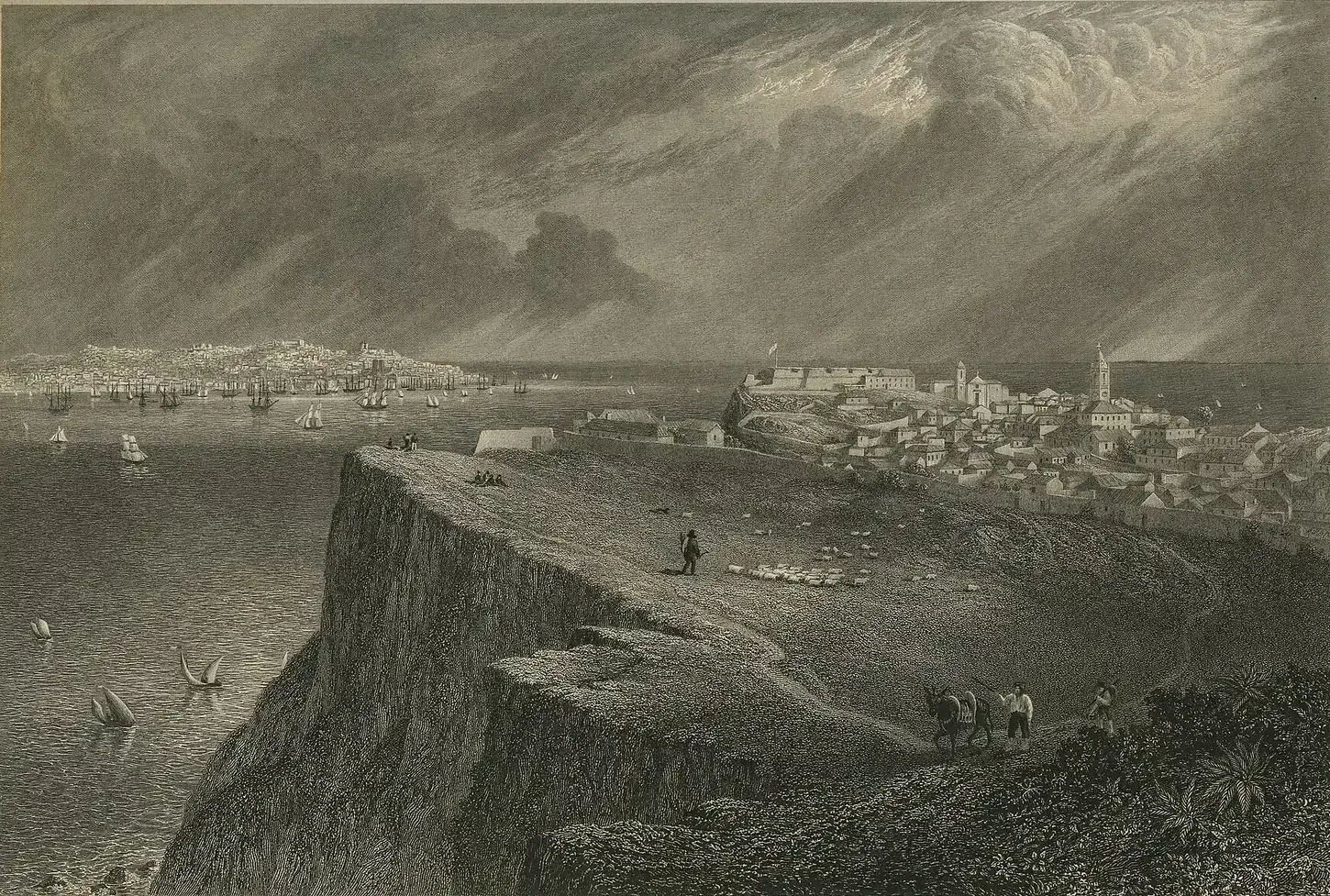
- Lisbon from Almada: the castle and town of Almada on the right, the capital across the Tagus on the left. Drawn by Lieutenant-Colonel Robert Batty, engraved by William Miller and published in London on 1 July 1830, three years before Terceira's men looked across the same water. William Miller, Public domain, via Wikimedia Commons.
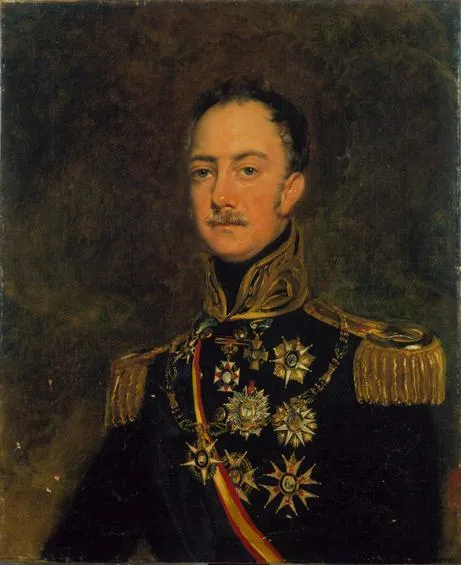
- The Duke of Terceira in a portrait attributed to the British painter John Simpson, painted around 1832 to 1834. Museu Nacional Soares dos Reis, Porto. John Simpson, Public domain, via Wikimedia Commons.
- The battle off Cape St Vincent on 5 July 1833, painted by the French marine painter Antoine-Léon Morel-Fatio in 1842. Napier's victory left Lisbon without a fleet and freed Terceira to march. Antoine Léon Morel-Fatio, Public domain, via Wikimedia Commons.
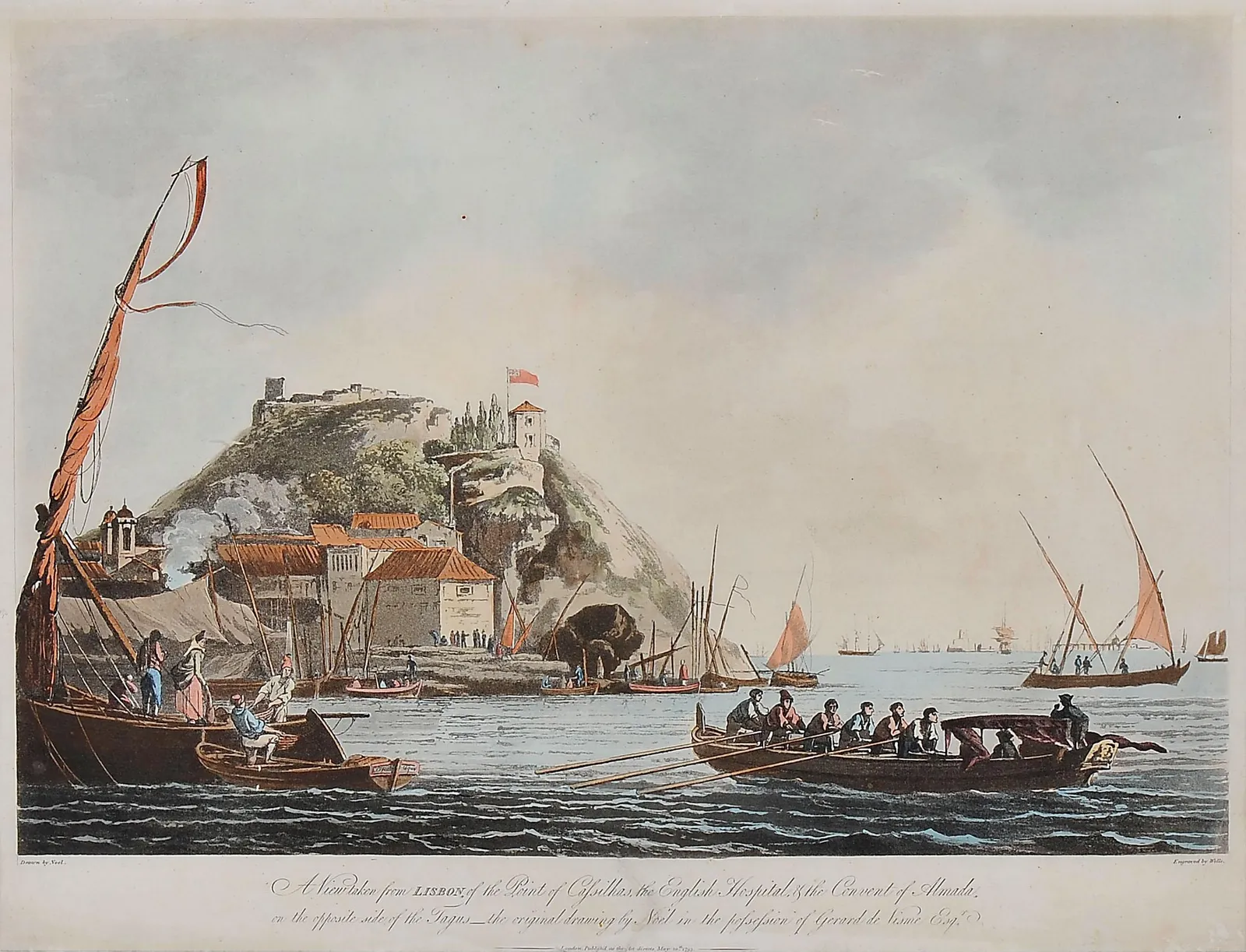
- The point of Cacilhas seen from Lisbon, with the English Hospital and the convent of Almada on the hill above, in an aquatint after Alexandre-Jean Noël engraved by John Wells, dated 1793. Forty years later the beaten Miguelist troops crowded this waterfront looking for boats. Alexandre Jean Noël, Public domain, via Wikimedia Commons.
- Napier's squadron in the Tagus after the capture of Lisbon, in a painting dated 1833 by M. Yarwood in the Museu de Marinha, Lisbon, whose title names the flagship as the Rainha de Portugal. Napier himself wrote that he had moved his flag to the captured Dom João before sailing north. M. Yarwood, Public domain, via Wikimedia Commons.
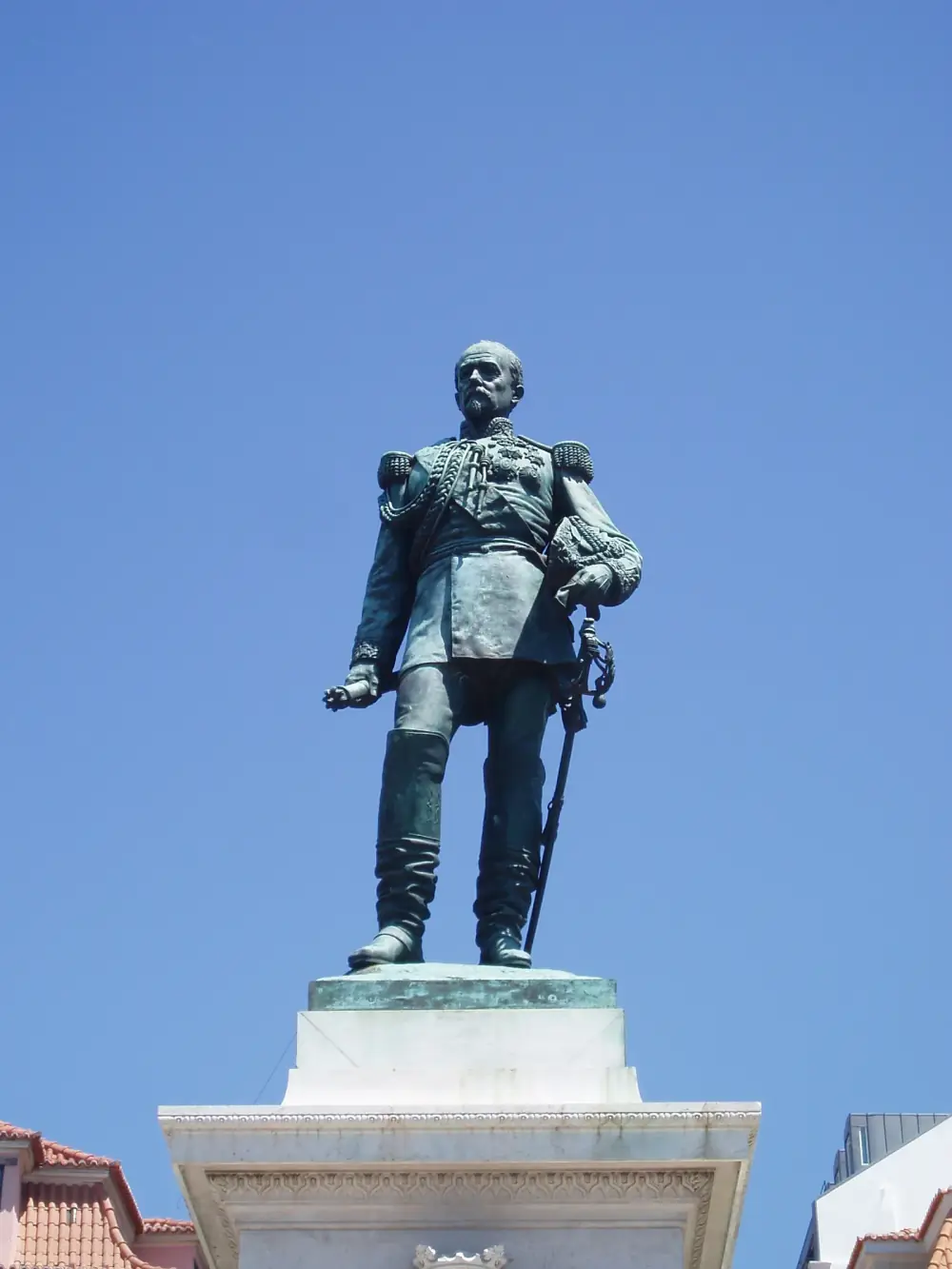
- José Simões de Almeida's bronze statue of the Duke of Terceira in the Praça Duque da Terceira at Cais do Sodré, inaugurated on 24 July 1877. Photographed in 2010. Carcharoth (Commons), CC BY-SA 3.0, via Wikimedia Commons.