

The death of Salazar, 27 July 1970: the dictator who was never formally told
A fall in the summer of 1968 ended 36 years in charge of Portugal's government. For almost 18 months after he came home from hospital, ministers kept visiting António de Oliveira Salazar as if he still ran the country. He died in his official residence at a quarter past nine on a Monday morning.
At a glance
- António de Oliveira Salazar, who led Portugal's government from 1932 to 1968, died at 9.15 a.m. on Monday 27 July 1970 in his official residence beside the Palácio de São Bento in Lisbon. He was 81; the death record gives a pulmonary embolism as the cause.
- In early August 1968 he fell at his summer residence, the Forte de Santo António da Barra near Estoril. Surgeons removed a blood clot from his brain on 7 September, and on 16 September he suffered a stroke.
- On 27 September 1968 President Américo Tomás dismissed him, saying all hope of his governing again was lost, and appointed Marcelo Caetano. Salazar kept all the honours of the office.
- He was never formally told. Back at São Bento from February 1969, he received the president and ministers as if they came on government business; his biographer Franco Nogueira believed he never knew, though Nogueira's wife thought he did.
- His coffin lay in state at the Jerónimos Monastery in Lisbon from 28 July, with the funeral there on the 29th or 30th (accounts differ). On 30 July it went north by train, and he was buried the same day in a plain grave beside his parents at Vimieiro.
A quarter past nine at São Bento
At 10.42 on Monday 27 July 1970 Marcelo Caetano, in a black tie, walked into the residence beside the Palácio de São Bento in Lisbon with his Minister of the Interior. Salazar had died there at a quarter past nine. Caetano had been head of government in his place for almost two years. Eighteen minutes later, the Diário de Notícias reported, he went to his own office.
At five that afternoon the Minister of Justice himself declared the death to the registrar at his ministry. Mário Júlio de Almeida Costa stated that Doutor António de Oliveira Salazar, single, aged 81, born in the village of Vimieiro, had died at nine hours and fifteen minutes that morning. Under cause of death the registrar wrote two words: embolia pulmonar, a pulmonary embolism.
By the end of the morning the Diário de Notícias had a special edition on the streets: “Portugal está de luto - Morreu o Presidente Salazar”, Portugal is in mourning, President Salazar has died. The paper still gave him the title he had lost in 1968. So did almost every other paper, and so, since his return to São Bento in February 1969, had everyone around the old man himself.
- Died
- Monday 27 July 1970, 9.15 a.m.
- Where
- Residence beside the Palácio de São Bento, parish of Lapa, Lisbon
- Age
- 81 (born 28 April 1889)
- Recorded cause
- Pulmonary embolism
- Declared by
- Mário Júlio de Almeida Costa, Minister of Justice
- Buried
- Vimieiro cemetery, Santa Comba Dão, 30 July 1970
A village boy who ran Portugal for 36 years
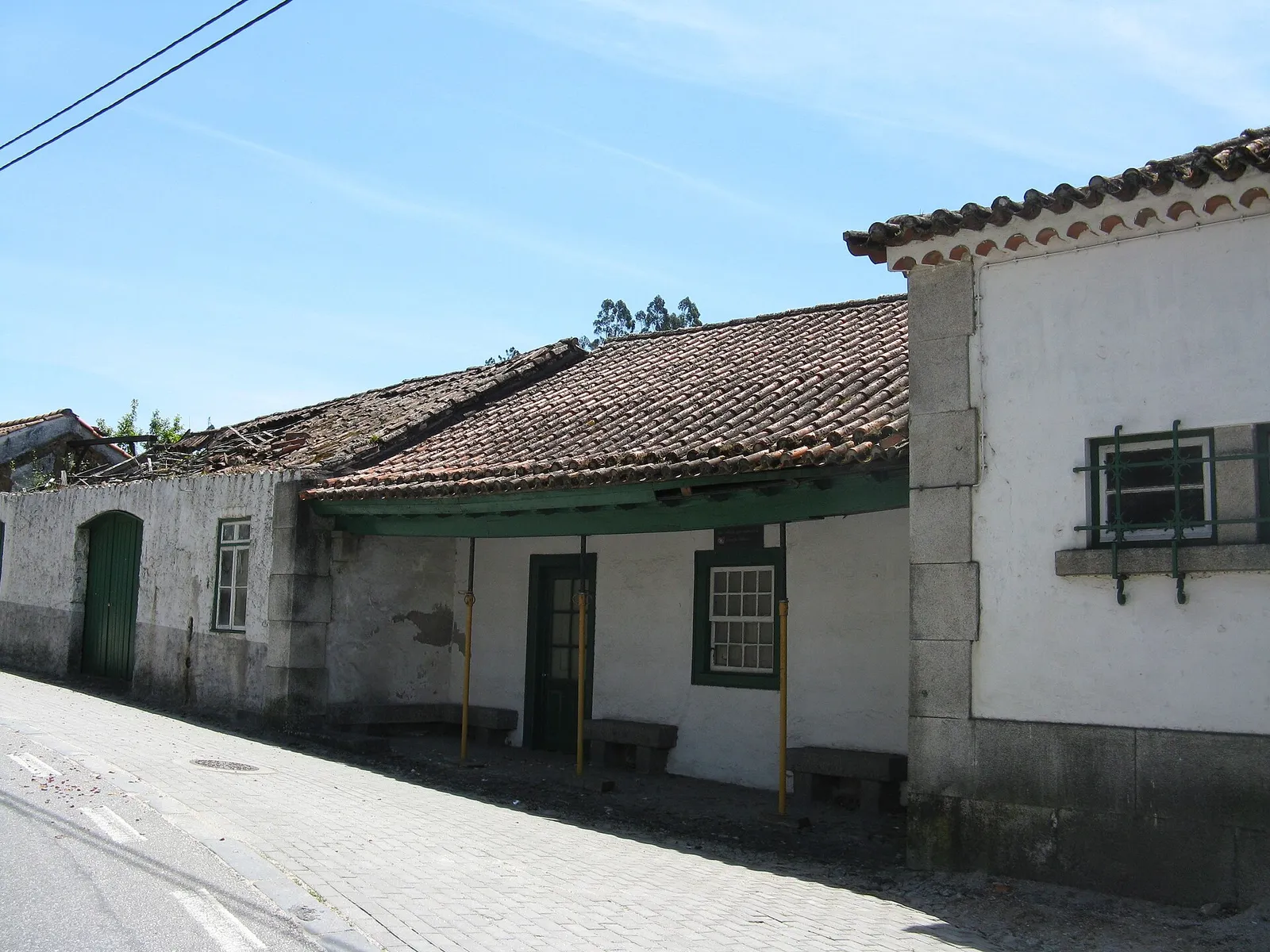
Salazar was born on 28 April 1889 in Vimieiro, a village in the municipality of Santa Comba Dão, in the district of Viseu. He was the fifth child and only son of António de Oliveira, who managed a landowner's estates, and Maria do Resgate. He spent eight years at the seminary in Viseu, then turned to law at Coimbra, graduating in 1914 with 19 marks out of 20, and stayed on to teach economics.
The military dictatorship that overthrew the First Republic in 1926 made him finance minister for a few days that year, and again on 27 April 1928, this time on terms he set himself. On 5 July 1932 he became President of the Council of Ministers, the head of government. A constitution drafted under him and approved by plebiscite in 1933 founded the Estado Novo, or New State, which left free speech, assembly and association to “special laws”.
His regime had one official political organisation, prior censorship of the press and a political police, whose agents killed the opposition leader Humberto Delgado in Spain in 1965. From 1936 it sent opponents to a prison camp at Tarrafal in Cape Verde. Salazar kept Portugal neutral in the Second World War, and in 1949 it was a founding member of NATO. When the liberation movements took up arms in Angola in 1961, then in Guinea in 1963 and Mozambique in 1964, he sent the army to fight them.
| Date | Event |
|---|---|
| 28 April 1889 | Born in Vimieiro, Santa Comba Dão |
| 27 April 1928 | Becomes finance minister of the military dictatorship, after a brief spell in 1926 |
| 5 July 1932 | Becomes President of the Council of Ministers |
| 19 March 1933 | Plebiscite approves the constitution of the Estado Novo |
| 1936 | Decree creates the Tarrafal camp for political prisoners |
| 1939 to 1945 | Portugal stays neutral in the Second World War |
| 1949 | Portugal is a founding member of NATO |
| 1958 | Humberto Delgado's presidential campaign shakes the regime |
| 1961 | War begins in Angola; India takes Goa |
| 1963 and 1964 | War spreads to Guinea and Mozambique |
| 27 September 1968 | Dismissed as head of government after his fall |
| 27 July 1970 | Dies at São Bento |
From 5 July 1932 to 27 September 1968 he was head of government for 36 years, 2 months and 22 days.
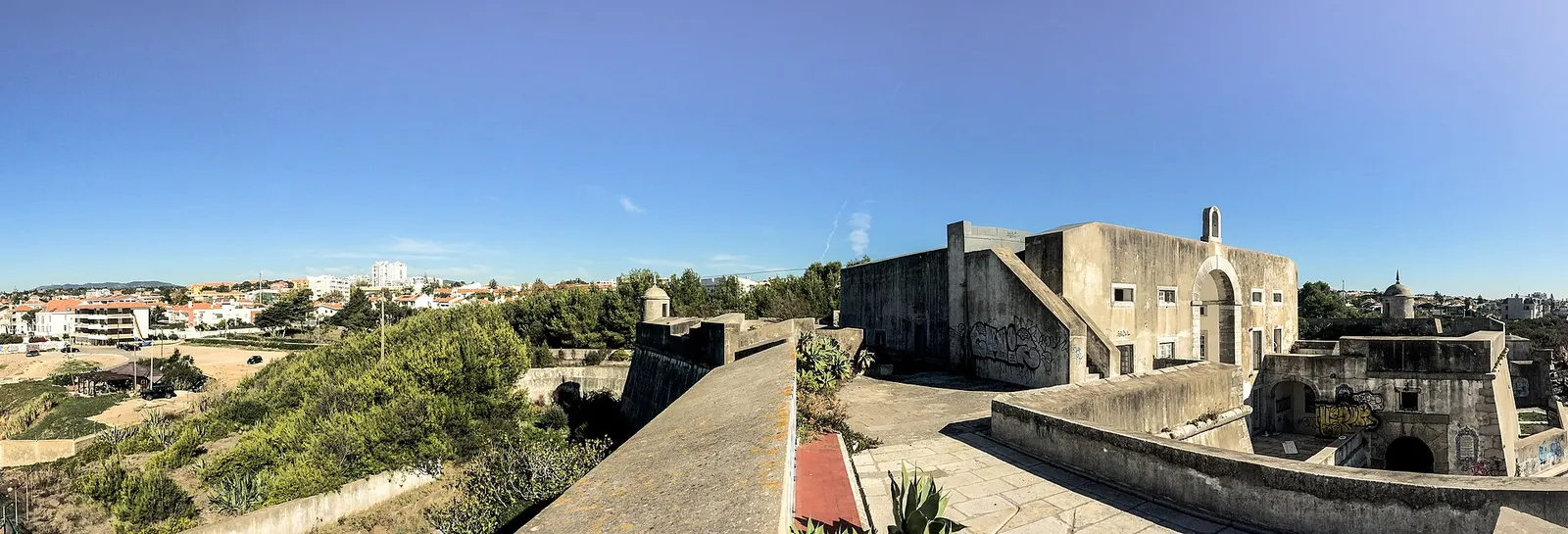
He never married. His household was run by his housekeeper, Maria de Jesus Caetano Freire, known as D. (Dona) Maria, and from the mid-1930s it included a girl he had taken in, Maria da Conceição de Melo Rita, known as Micas. In summer he moved from São Bento to the Forte de Santo António da Barra, an old fort on the shore near Estoril that had been his seasonal residence since 1950.
A fall at the fort
On 12 July 1968 Salazar received a delegation of Lisbon tram workers from the Carris company at São Bento. It was the last public appearance the Diário de Notícias photographed before he fell. He was 79, and his doctor, Eduardo Coelho, saw him every fortnight.
Early in August he was at the fort. In the most detailed reconstruction, by the journalist Miguel Pinheiro, it was the morning of Thursday 1 August, shortly after nine. Augusto Hilário, the chiropodist who treated Salazar's feet every three weeks, had come from Lisbon with the morning papers. Salazar chose the Diário de Notícias. He had a habit of dropping into chairs rather than sitting down, and this time he misjudged the distance to a canvas director's chair and fell, hitting his head hard on the floor.
He was “white as chalk”, Hilário said, but he refused help and made the chiropodist promise to tell no one. D. Maria, who had heard the crash, could not persuade him to call a doctor. Hilário wrote him an anxious note, dated 1 August, and Salazar replied that there seemed to be no consequences beyond aches. When Coelho examined him on 6 August he found nothing suspicious, but warned that a blood clot could form inside the skull and stay silent for weeks.
The headaches began on 4 September. In the early hours of Saturday 7 September Salazar sat in room 68 of the Red Cross hospital in Lisbon while his head was shaved, and was then wheeled to the operating theatre; by four in the morning he was on the table. The neurosurgeon, António de Vasconcelos Marques, had a file at the political police, which in 1946 had listed him as “politically suspect” for signing an opposition list.
The operation found a large haematoma, a pool of blood pressing on the brain. That day the government's first official note and the medical bulletins were the first the public heard of his illness: he had been “operated on successfully for an intracranial, subdural haematoma”. The next day's bulletin found his heart, lungs and kidneys normal, but noted “signs of weak motor and sensory recovery”.
On 16 September he had a stroke. He lay in a coma at the Red Cross hospital, on a ventilator.
Replaced, with all the honours
President Tomás waited ten days. Then, after hearing the Council of State, he signed Decree 48 597, published on Friday 27 September 1968. Its preamble called Salazar a benefactor of the fatherland who had served it “with genius” for more than 40 years.
“The President of the Council, Doutor António de Oliveira Salazar, remaining very gravely ill, and all hope being lost, even should he survive, of his being able to return to exercising in full the functions of his high office...”
The decree dismissed Salazar, “who will keep all the honours inherent in the office”, and appointed Marcelo Caetano, a law professor and former minister. Caetano was sworn in that day. Tomás announced the change on radio and television. Decrees in the same issue relieved all 15 of Salazar's ministers of office and at once reappointed 11 of them under Caetano, among them the foreign minister, Alberto Franco Nogueira.
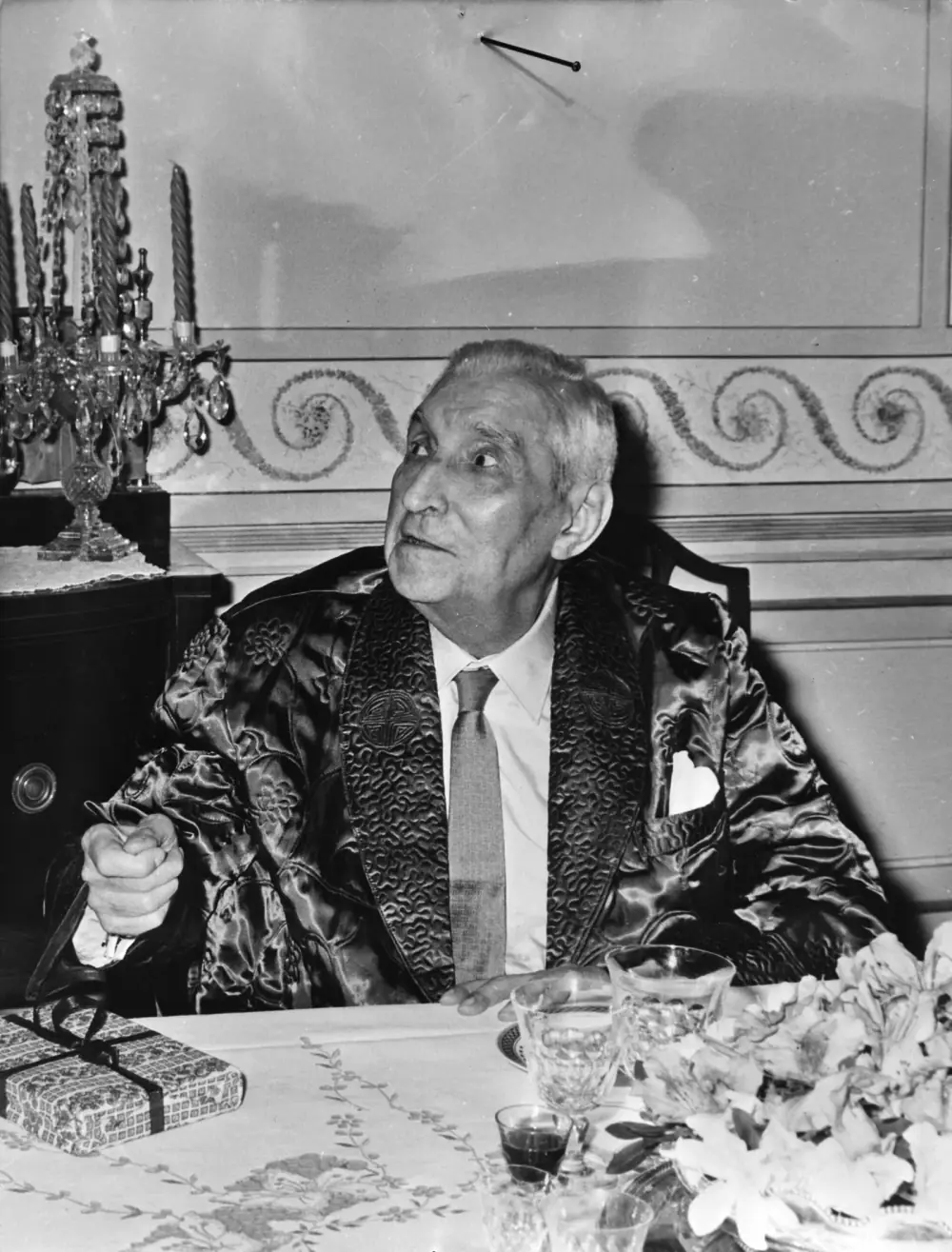
Salazar did not die. He came out of the coma, and on 5 February 1969, after five months at the Red Cross, he went back to his residence at São Bento. Nobody had the courage to tell him that he was no longer head of government.
Governing nothing
Everything at São Bento was arranged so that he would not find out. The President of the Republic visited him regularly. Serving and former ministers came as if to the despacho, the meeting at which ministers took business to the head of government, though they brought him no papers and discussed no state affairs. He saw no newspapers and no television.
He was confined to the first floor. A woman came to read to him, in the hope that he would reconnect with the world, and someone set up a record player so that he could hear classical music in small doses. The historian António Simões do Paço describes moments of lucidity between “periods of prostration”.
Outsiders wondered whether he knew. On 6 September 1969 the French daily L'Aurore published an interview by its journalist Roland Faure under a headline that, in Portuguese translation, reads: one year after illness removed him from power, I found Salazar in his Lisbon palace, and he thinks he still governs Portugal.
Franco Nogueira, who visited him and later wrote his six-volume biography, called those months a “fiction of tragedy put on stage”, and was sure of the answer.
“...that Salazar was entirely unaware that he was no longer President of the Council. It did not even occur to him that, because of illness, he could cease to be so; he was not conscious of how serious the illness was, did not realise how long he had been ill, did not notice the mental impairments he had suffered.”
Nogueira's wife, who visited Salazar often and went out walking with him, thought the opposite: that he knew, but that his illness kept him from admitting it to himself. The question has never been settled.
12 July 1968
Last photographed public appearance
Salazar receives Carris workers at São Bento.
1 to 5 August 1968
The fall
At the Forte de Santo António da Barra; the exact day is disputed.
6 August 1968
Doctor's visit
Eduardo Coelho finds nothing wrong but warns of a possible clot.
7 September 1968
Brain surgery
A subdural haematoma is removed at the Red Cross hospital; the public learns he is ill.
16 September 1968
Stroke
Salazar falls into a coma.
27 September 1968
Replaced
Decree 48 597 dismisses him and appoints Marcelo Caetano.
5 February 1969
Back at São Bento
He leaves hospital and returns to his official residence.
6 September 1969
The L'Aurore interview
A French paper reports that he thinks he still governs.
27 July 1970
Death
At 9.15 a.m., at São Bento.
28 to 30 July 1970
Funeral
Lying in state at the Jerónimos and the funeral there (29 or 30 July; accounts differ), then on the 30th the train north and burial at Vimieiro.
A national funeral
The government met the day he died. Decree-Law 353/70, published that day in a supplement to the official gazette, ordered general mourning until the day of the funeral, the closure of public offices on that day, and no public shows either that day or on the day of publication. The mourning would follow the forms laid down for the death of a head of state, and the funeral would be a national one, paid for by the state.
Caetano also signed the promulgation himself, for the Presidency of the Republic, citing Article 80 of the Constitution: Tomás was away on an official visit to São Tomé and Príncipe. The president ordered that the funeral wait for him and flew back to Lisbon.
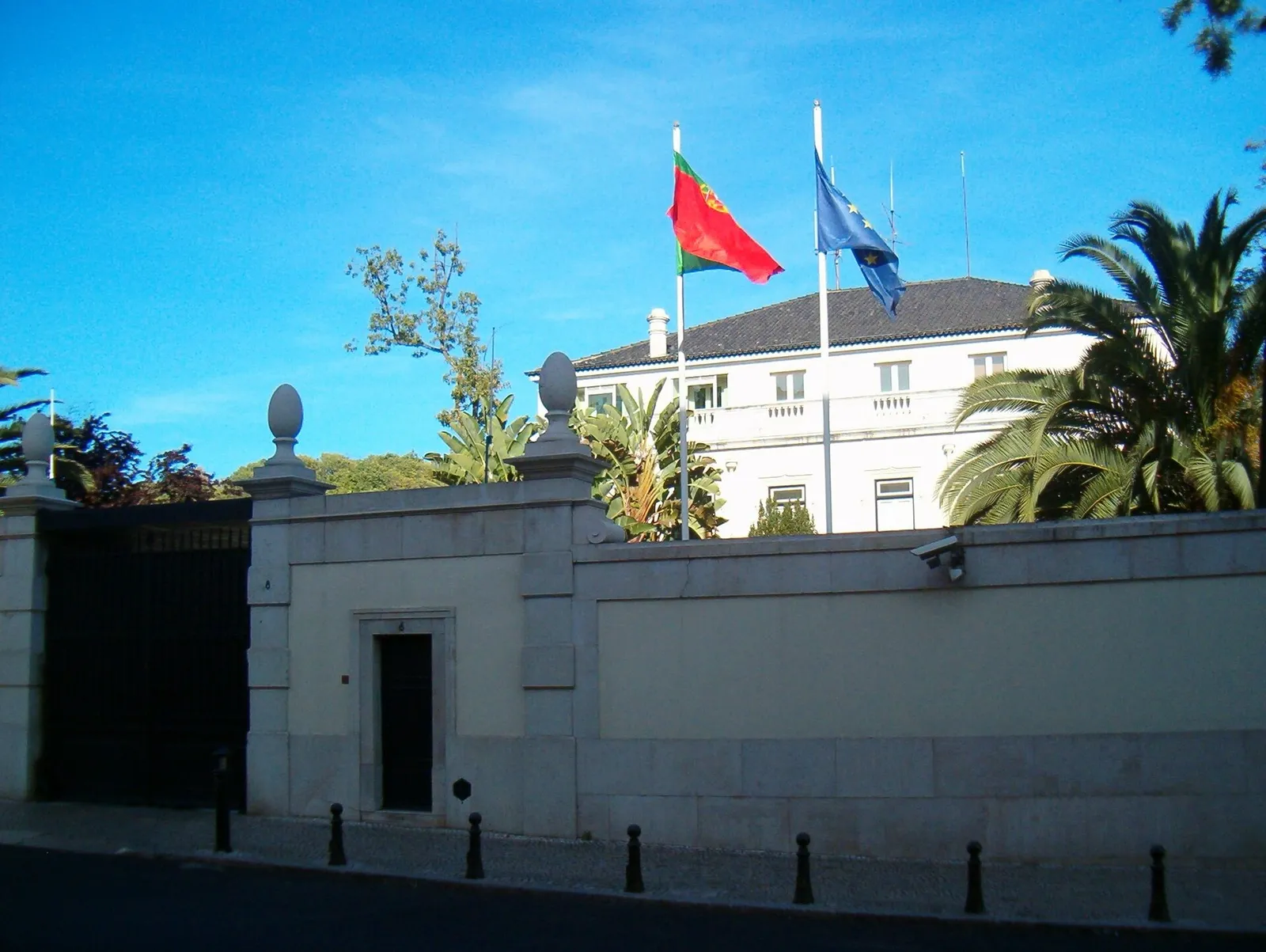
On 28 July the coffin, draped in the national flag, left São Bento on a plain army gun carriage, escorted by mounted men of the GNR, the National Republican Guard. It passed the National Assembly and crossed the city to the Jerónimos Monastery at Belém, where it lay in state.
“Thousands of people filed past the remains of Salazar”, ran the Diário de Notícias headline on 29 July, under the line “For two days at the Jerónimos beside Gama and Camões”, the navigator and the poet whose tombs are in the monastery church.
Tomás was back in Lisbon by 29 July. The Diário de Notícias dates the funeral at the Jerónimos to Thursday 30 July; Joana Mota's study of the press puts the funeral rites there on the 29th.
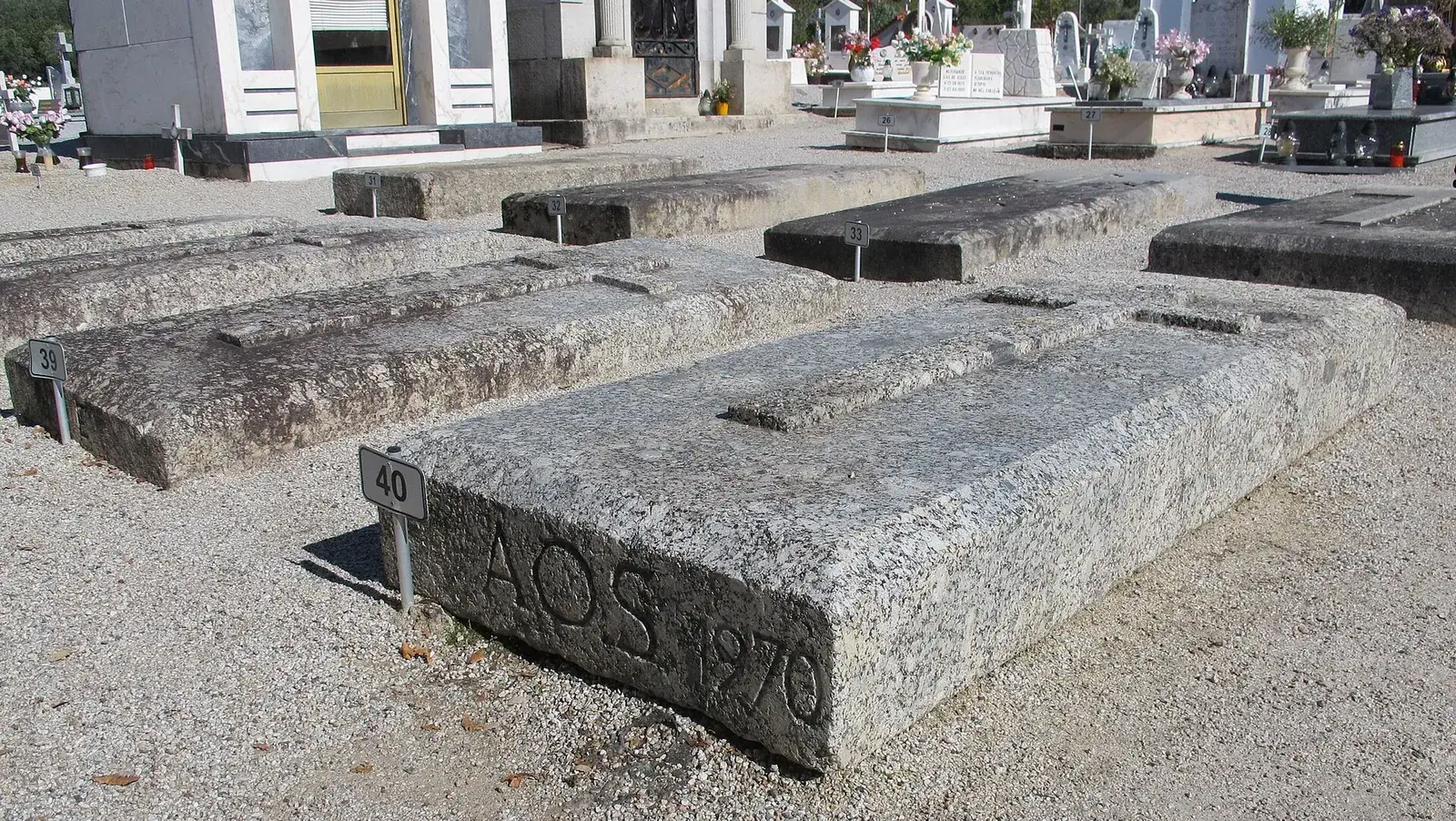
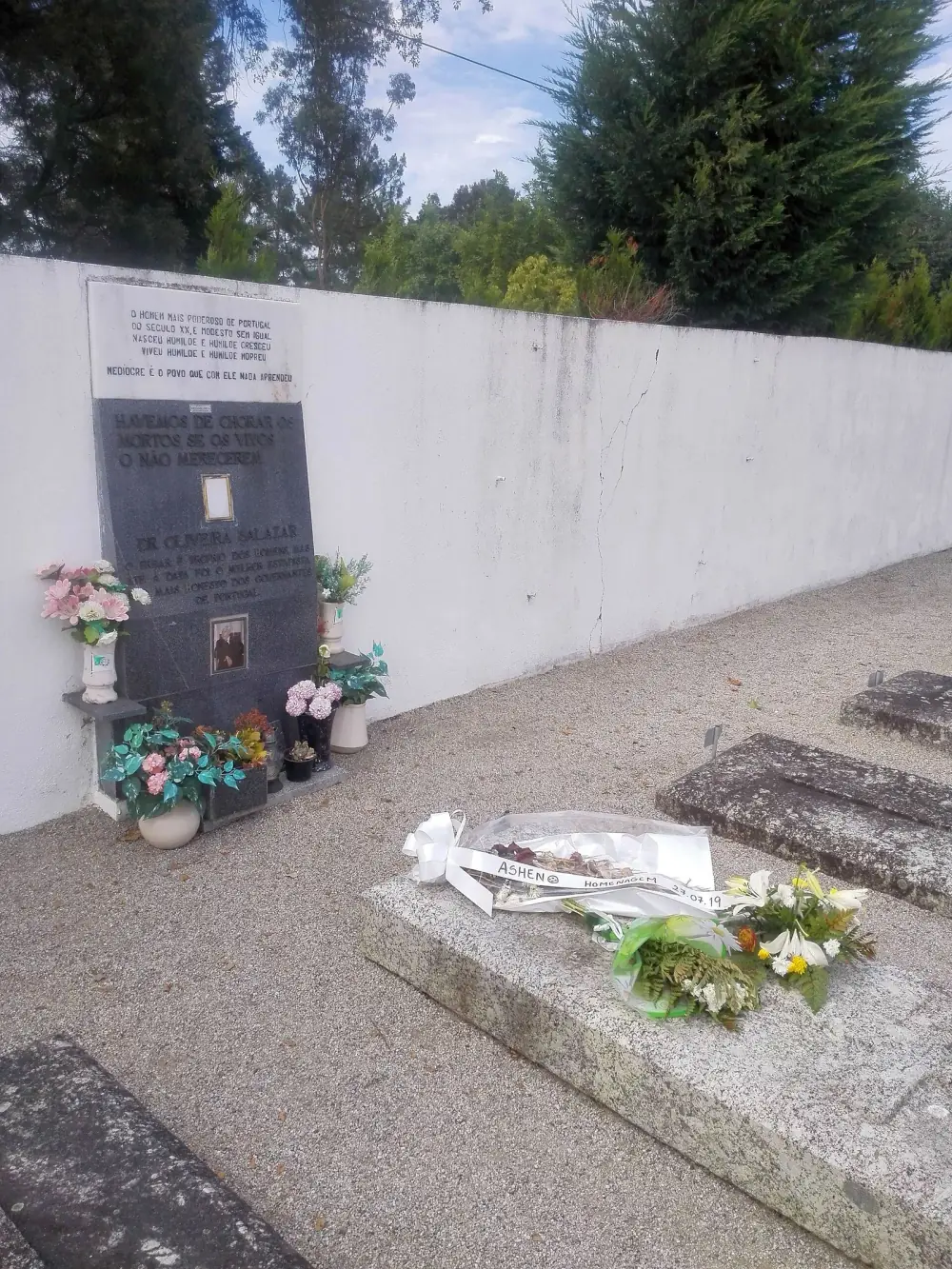
On the 30th the coffin went by train to Santa Comba Dão, with hundreds of public figures on board and crowds at the stations on the way. That same day Salazar was buried in the cemetery of Vimieiro, in a flat grave beside his parents and his sister Elisa, under a stone he had prepared for himself. It bears his initials and the year: A. O. S. 1970.
The press needed little prompting. Censorship stayed in force, but many papers were also loyal to the regime. On 28 July the Diário de Notícias gave Salazar 16 of its 32 pages and 82 photographs, among them pictures of his body. The Jornal de Notícias in Porto gave him 7 of 22 pages. Its front page after the burial was headlined “Return of the son of the poor”.
Pages that mentioned Salazar, 28 July to 7 August 1970
pages
- Diário de Notícias (Lisbon)
- Jornal de Notícias (Porto)
Number of pages in each day's edition with an item about Salazar's death, funeral or memory. The Diário de Notícias issues of those days had 22 to 32 pages each. The funeral and burial on 30 July were reported on 31 July.
Show the data
| Diário de Notícias (Lisbon) | Jornal de Notícias (Porto) | |
|---|---|---|
| 28 Jul | 16 | 7 |
| 29 Jul | 6 | 4 |
| 30 Jul | 8 | 3 |
| 31 Jul | 6 | 4 |
| 1 Aug | 2 | 1 |
| 2 Aug | 1 | 1 |
| 3 Aug | 3 | 1 |
| 4 Aug | 1 | 0 |
| 5 Aug | 1 | 0 |
| 6 Aug | 2 | 0 |
| 7 Aug | 1 | 0 |
“A crushing wave of sadness plunged the Portuguese soul when the cruel news of the death of Prof. Doutor António de Oliveira Salazar, former President of the Council of Ministers, became known on the morning of the 27th.”
The regime without its founder
By the time Salazar died, his successor had already renamed the single official party: the União Nacional became Acção Nacional Popular in February 1970. In 1969 the opposition had been allowed to campaign for a month for the National Assembly, though it won no seats. In Africa the wars went on.
The Estado Novo outlived its founder by less than four years. The military coup of 25 April 1974 ended it, and on 27 July 1974, four years to the day after Salazar's death, a constitutional law recognised the colonies' right to independence. Caetano died in exile in Brazil in 1980.
Why it still matters
Salazar is still argued over. In March 2007 viewers of the public broadcaster RTP's programme Os Grandes Portugueses, modelled on the BBC's Great Britons, voted him the greatest Portuguese of all time, with 41 per cent, ahead of the communist leader Álvaro Cunhal with 19. The vote was not a scientific poll, and a sociologist quoted at the time warned against reading it as a wish to return to dictatorship.
His grave draws both admirers and the curious. On 26 July 2020, the eve of the 50th anniversary of his death, fewer than a hundred people gathered at the Vimieiro cemetery, with his former private secretary, António da Silva Teles, in the front row. A plan revived in 2019 for a museum in the village met a petition with more than 11,000 signatures, and in February 2021 the University of Coimbra's research centre withdrew from the project.
The project came back in another form. A Centro Interpretativo do Estado Novo, Regime e Resistência, covering both the regime and the resistance to it, was due to open on 23 October 2026 in the Escola Cantina Salazar, a model school of the 1940s in Vimieiro. Its scientific coordination is by the Ephemera association, and its first exhibition is on censorship. The council's vice-president said it would not be a museum to the dictator.
In 2020 historians noted that, apart from Franco Nogueira's, he had had only one full biography, by Filipe Ribeiro de Meneses. Meneses said Portugal had not yet moved past his legacy; Fernando Rosas said he survived only as a symbol for part of the far right, which turned him into a myth. His last months at São Bento still draw filmmakers: José Filipe Costa's Pai Nosso, Os Últimos Dias de Salazar, which draws on the notes of Salazar's doctor, reached Portuguese cinemas on 28 May 2026.
FAQs
When and how did Salazar die?
He died at 9.15 a.m. on Monday 27 July 1970, aged 81, in his official residence beside the Palácio de São Bento in Lisbon. His death record gives the cause as a pulmonary embolism. He had been in poor health since a fall in August 1968, brain surgery on 7 September 1968 and a stroke on 16 September.
Did Salazar really fall from a chair?
The standard account says he fell while sitting down in a canvas chair at the Forte de Santo António da Barra in early August 1968 and hit his head, which led to a subdural haematoma. The date is disputed between 1 and 5 August, and the journalist José António Saraiva has argued that the chair never existed.
Did Salazar know he had been replaced?
Probably not. From February 1969 he lived at São Bento and received the president and ministers as if they came on government business. His biographer Franco Nogueira was sure he never knew, though Nogueira's wife believed he knew but could not admit it to himself. A French journalist who interviewed him in 1969 reported that he thought he still governed.
Who replaced Salazar?
Marcelo Caetano, a law professor and former minister, appointed by President Américo Tomás through Decree 48 597 of 27 September 1968. Caetano led the government until the revolution of 25 April 1974.
Where is Salazar buried?
In the cemetery of Vimieiro, the village in the municipality of Santa Comba Dão where he was born. He was buried there on 30 July 1970 in a flat grave beside his parents, under a stone carved only with A. O. S. and 1970.
On the timeline
Open the timelineNearby moments from dictatorship and the estado novo (1926–1974).
Portugal holds its first legislative election under Marcelo Caetano. Although no opposition candidate is elected, the vote brings into the National Assembly the 'liberal wing' of Sá Carneiro, Pinto Balsemão and Miller Guerra, who would press for reform from within.
Death of Cassiano Branco, one of the most inventive Portuguese architects of the Art Deco years, designer of Lisbon's Hotel Vitória on Avenida da Liberdade, the Coliseu do Porto and Coimbra's miniature park Portugal dos Pequenitos. An outspoken opponent of Salazar who worked mostly for private clients, he was detained by the PIDE in June 1958 for backing Humberto Delgado.
Death of José de Almada Negreiros in Lisbon. Born in São Tomé in 1893, painter, novelist, dramatist and provocateur, Almada wrote for the first issue of the magazine 'Orpheu' (1915) alongside Fernando Pessoa and Mário de Sá-Carneiro and is considered the most exuberant figure of Portuguese modernism. His 14 murals at Lisbon's maritime stations of Alcântara and Rocha do Conde de Óbidos are among the great monuments of 20th-century Portuguese art.
The death of Salazar
Death of António de Oliveira Salazar at the São Bento residence in Lisbon, aged 81. Removed from office in September 1968 after suffering a brain haemorrhage, Salazar was never formally told he had been replaced, and visitors kept up the pretence that he was still Prime Minister. His passing closes the personal chapter of the Estado Novo, even as the regime would stagger on for almost four more years under Marcelo Caetano.
In Operation Green Sea (Operação Mar Verde), Portuguese commandos led by Alpoim Calvão land at Conakry, capital of the Republic of Guinea, and free 26 Portuguese soldiers captured by the PAIGC independence movement. The raid failed to topple President Sékou Touré and was condemned by the UN Security Council.
Death of António Silva, the irascible, bumbling star of the golden age of Portuguese film comedy. From 'A Canção de Lisboa' (1933) to 'O Pátio das Cantigas' (1942) and 'O Leão da Estrela' (1947), his films remain much-loved classics of Portuguese cinema.
Jorge Costa is born in Porto. Nicknamed 'Bicho', the tough centre-back captained FC Porto to the UEFA Cup in 2003 and the Champions League under José Mourinho in 2004, and died in August 2025, aged 53, after collapsing at the club's training ground while serving as its director of football.
Coming up in history
All long reads
28 sources
Archives, scholarship and reporting this article was checked against.
- 1
Assento de óbito n.º 618: Doutor António de Oliveira Salazar (5.ª Conservatória do Registo Civil de Lisboa, 27 July 1970)Scan of the civil death record, Wikimedia Commons
- 2
Diário do Governo, I série, n.º 229, 27 September 1968: Decreto n.º 48 597Imprensa Nacional, via Diário da República Eletrónico
- 3
- 4
A morte na imprensa: a evolução no tratamento mediático da morte de figuras públicas, Apêndices (Joana Mota, PhD thesis)Faculdade de Letras da Universidade de Coimbra, 2017
- 5
Mourning Salazar: the ideologic oriented grief in the Portuguese newspapers during the dictatorship (Joana Martins Mota)Observatorio (OBS*) Journal, vol. 14, no. 3, 2020
- 6
O conto “Cadeira” a partir de jornais e biografias da época (Daniel Vecchio Alves)Confluenze, vol. XV, no. 1, Università di Bologna
- 7Os dois meses entre a queda da cadeira e a operação a Salazar (excerpts from Miguel Pinheiro, A Noite Mais Longa)Observador, 2018
- 8
Cabeludos e guedelhudos: o rock no Brasil e em Portugal e sua recepção na imprensa (1970/1985) (Paulo Gustavo da Encarnação)ArtCultura, vol. 17, no. 31, Universidade Federal de Uberlândia, 2015
- 9
O Barcelense, ano 60, n.º 3080, 1 August 1970Aqualibri, Comunidade Intermunicipal do Cávado
- 10
Julho de 1970: com a morte de Salazar acabou o Estado Novo (Agostinho Chaves)A Voz de Trás-os-Montes, 21 July 2023
- 11Morte e funeral de Salazar em 1970Diário de Notícias, 8 August 2016
- 12
Centro Interpretativo do Estado Novo abre em Santa Comba Dão após avanços e recuosLusa, via DNOTICIAS.PT, 2 October 2026
- 13
O Estado Novo (1933-1974)Assembleia da República
- 14
- 15
- 16
Início da Guerra ColonialArquivo Nacional Torre do Tombo
- 17
Forte de Santo António da BarraCâmara Municipal de Cascais, Cascais Cultura
- 18Foi com pessoal da Carris a última aparição de Salazar: as imagensDiário de Notícias
- 19Reflexo de Salazar no espelho português está a ficar menos nítido (João Céu e Silva)Diário de Notícias, 25 July 2020
- 20Uma vida de sacrifício ao serviço da Pátria (Manuel Catarino)Diário de Notícias, 15 January 2024
- 21“Pai Nosso — Os Últimos Dias de Salazar”: entre o simplismo e a caricatura (Eurico de Barros)Observador, 27 May 2026
- 22
Marcelo José das Neves Alves Caetano (Os Procuradores da Câmara Corporativa)Assembleia da República
- 23
- 24
Portugal: elections of 26 October 1969 (Chronicle of Parliamentary Elections)Inter-Parliamentary Union, PARLINE archive
- 25
- 26
PORTUGAL: Salazar “Greatest Portuguese Ever”, TV Viewers Say (Mario de Queiroz)Inter Press Service, 30 March 2007
- 27
Salazar et le salazarisme (Yves Léonard)Le Grand Continent, 25 April 2021
- 28Filme “Pai Nosso - Os Últimos Dias de Salazar” estreia-se a 28 de maioRTP Notícias (Lusa), 2026

Image credits
- Salazar's grave in the cemetery of Vimieiro, his birthplace, photographed in 2015. The stone, which he had chosen for himself, bears only his initials and the year of his death. Gadogado123, CC BY-SA 4.0, via Wikimedia Commons.
- The house in Vimieiro where Salazar was born in 1889, photographed in 2009. Gadogado123, CC BY-SA 4.0, via Wikimedia Commons.
- The Forte de Santo António da Barra at São João do Estoril, Salazar's summer residence from 1950, where he fell in August 1968. Photographed in November 2017. Rúdisicyon, CC BY-SA 4.0, via Wikimedia Commons.
- Salazar at 80, in a photograph dated 2 May 1969 in the archive of the Dutch agency Anefo, a few days after his birthday on 28 April and three months after he returned to São Bento. Anefo, CC0, via Wikimedia Commons.
- The Palacete de São Bento, the residence beside the parliament building where Salazar lived and died. It is now the official residence of Portugal's prime minister. Koshelyev, CC BY-SA 3.0, via Wikimedia Commons.
- Salazar's grave at Vimieiro on 31 July 2019, days after the anniversary of his death. Admirers have fixed plaques to the wall behind it; one calls him the most powerful man in 20th-century Portugal, who was born, lived and died humble. Gadogado123, CC BY-SA 4.0, via Wikimedia Commons.