

Bartolomeu dos Mártires: the archbishop who took Trent home to Braga
A Lisbon-born friar who never wanted a mitre spoke for the reformers at the Council of Trent and spent nearly two decades applying its decrees in the vast archdiocese of Braga. When he died, the people of Viana mounted a guard on his body.
At a glance
- Bartolomeu dos Mártires, born in Lisbon in May 1514, was a Dominican friar and teacher who became Archbishop of Braga in 1559 and governed it until he resigned in 1582.
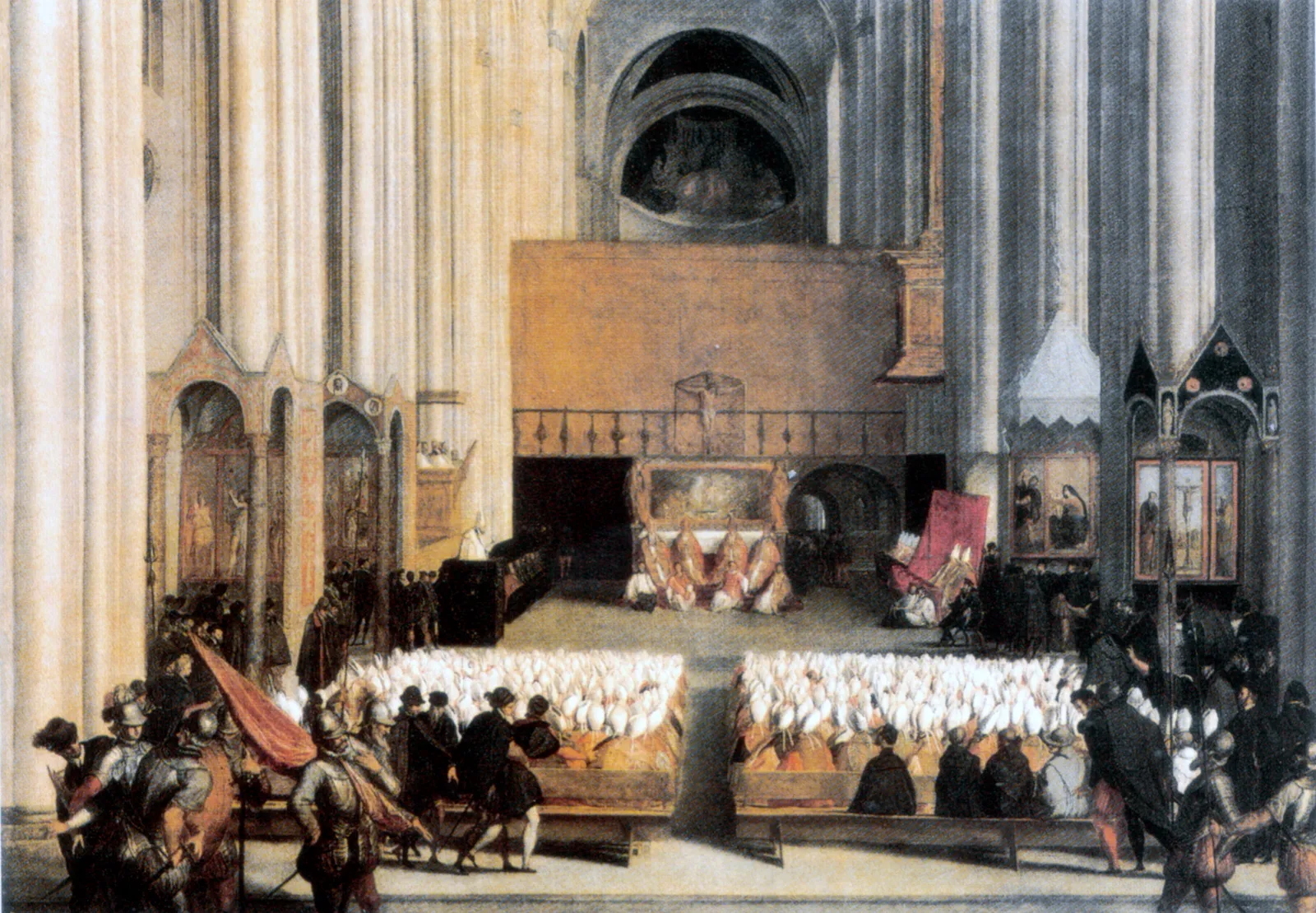
- At the Council of Trent, from 1561 to 1563, he wrote a list of reform demands that attacked absentee bishops and the privileges of cardinals, and a handbook for bishops, the Stimulus Pastorum.
- Back in Braga he held a synod in 1564 and a provincial council in 1566 to apply the council's decrees, and built a seminary to train priests, whose portal inscription is dated 1572.
- He died at the Dominican convent of Santa Cruz in Viana do Castelo on Monday 16 July 1590, and the town refused to hand his body to Braga's cathedral chapter.
- Gregory XVI declared him Venerable in 1845, John Paul II beatified him in 2001, and Pope Francis declared him a saint on 5 July 2019 without a further miracle.
A Monday evening in Viana
Between seven and eight on the evening of Monday 16 July 1590, in a cell of the Dominican convent of Santa Cruz in Viana do Castelo, an old friar stopped breathing. He was 76. The rector of the Jesuit college of Braga had taken the breviary from the hands of the Archbishop of Braga, who was too choked with tears to keep reading the office at the bedside.
The convent bells rang, the nunneries answered, then every church in town. Soon, his biographer wrote, all Viana knew, and a general weeping went up, "as if each one had lost his own father". There was hardly a house in the town that he had not helped with alms, advice or prayer.
The dead man was Bartolomeu dos Mártires, archbishop of Braga for 23 years and for the last eight a simple friar again. Viana's councillors suspected that Braga would try to take him. At first they refused to leave the cell. When the friars persuaded them out, they posted guards at the door and below the window and lit torches outside, afraid that someone might spirit the body away through the window, the plank floor or even the roof.
They were right. Next morning a canon of Braga cathedral stood up beside the body and, with two apostolic notaries as witnesses, formally demanded the body for the cathedral, where earlier archbishops who died far from Braga had all been brought back. A Braga councillor followed with a second demand, offering to carry the body at the city's expense and build it a noble chapel.
“We are, sir, at an hour that asks for tears and prayers more than for controversies and lawsuits.”
A church in crisis, a kingdom about to change hands
Bartolomeu's working life coincided with the Protestant Reformation and the Catholic response to it. Reformers inside the Church blamed many of its troubles on the clergy: bishops who never lived in their dioceses, ignorant parish priests, and cardinals who held bishoprics far from Rome for their income.
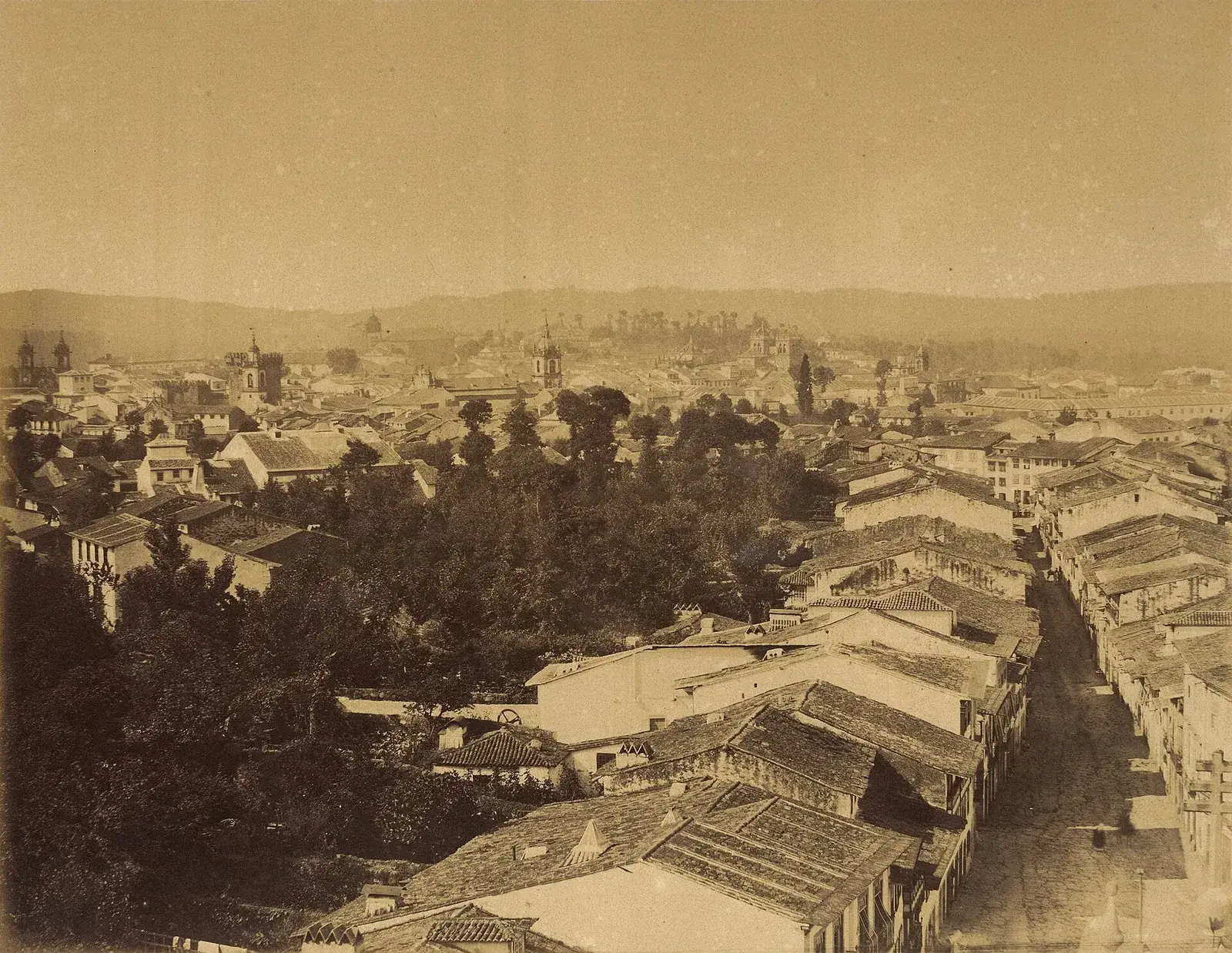
Braga mattered. Its archbishop claimed the title Primate of the Spains, precedence over every bishop in the peninsula, a claim Toledo disputed. Its archdiocese was huge: about 1,300 parishes across the Minho and Trás-os-Montes, with lands that today belong to the dioceses of Viana do Castelo, Vila Real and Bragança.
By the time he died, Portugal itself had changed hands. King Sebastião vanished at the battle of Alcácer Quibir in Morocco in 1578, and by 1581 Philip II of Spain had made himself King of Portugal. Viana in 1590 had a Castilian garrison, and its captain took Viana's side in the quarrel over the body.
The friar who did not want a mitre
He was born Bartolomeu Fernandes in Lisbon, in May 1514; the Vatican gives the day as 3 May. He took the name dos Mártires from the church of Nossa Senhora dos Mártires, where he was baptised. He received the Dominican habit at the convent of São Domingos in Lisbon in 1528 and made his profession on 20 November 1529, at 15.
For two decades he taught philosophy and theology in Dominican houses at Lisbon, Batalha and Évora. From 1552 he was tutor at Évora to Dom António, the son of Prince Luís, who would one day claim the throne. In 1557 or 1558 he became prior of the convent of Benfica, outside Lisbon.
Queen Catarina, then regent, first chose for Braga the celebrated Dominican writer Luís de Granada. Granada declined and named Bartolomeu, who accepted only because Granada, as his provincial superior, ordered him to. Paul IV confirmed him on 27 January 1559. He was consecrated in Lisbon on 3 September and entered Braga on 4 October 1559.
He spent much of the next 23 years trying to give the job back. According to his biographer he asked Paul IV, Pius IV, Pius V and Gregory XIII in turn to accept his resignation, and each refused. Granada later recalled him saying he could not hang himself, since that was a sin, but felt the agonies of those who go to the gallows, "drowned in a bottomless pool of business".
He ran the archdiocese on the road. Cardinal Angelo Becciu, celebrating his canonisation in Braga in 2019, said he visited every one of its 1,300 parishes every three years. In 1560, before leaving for Trent, he handed Braga's public schools to the Jesuits, and they became the College of São Paulo. In 1561 he founded the Dominican convent of Santa Cruz at Viana, for study and preaching.
Fifty-six days to Trent
He set out from Braga on 24 March 1561 without, according to one historian, even asking the crown's permission. He wanted to travel as a poor friar, lodging in Dominican and Franciscan houses along the way, and kept a travel diary, the Itinerarium, of the whole journey.
He reached Trent on 18 May 1561, after 55 days on the road, eight months before the council's first session. Only three Portuguese bishops attended its last period: Gaspar do Casal of Leiria, João Soares of Coimbra and Bartolomeu. He used the wait to write.
| Date | Place | What happened |
|---|---|---|
| 24 March 1561 | Braga | Leaves for Trent |
| 10 May 1561 | Milan | 285 leagues covered since Braga |
| 18 May 1561 | Trent | Arrives, 55 days after leaving (56 in Castro's count) |
| 18 January 1562 | Trent | First session of the council's third period |
| 29 September to 16 October 1563 | Rome | Meets Pius IV, Charles Borromeo and Cardinal Ghislieri, the future Pius V |
| 4 December 1563 | Trent | Closing ceremonies of the council |
| 8 December 1563 | Trent | Portuguese party leaves by river for Verona |
| Late January 1564 | Bellpuig, Catalonia | Meets Philip II and urges him to enforce the decrees in Spain |
| 1 February 1564 | Zaragoza | Lodges with the Dominicans |
| 23 February 1564 | Freixo de Espada à Cinta | Re-enters his archdiocese |
| 27 February 1564 | Braga | Back in his cathedral |
Dates from his Itinerarium and Frei Luís de Sousa's Vida as reconstructed by Maria de Fátima Castro, who reckons his journeys at about 943 leagues in all. 24 March to 18 May is 55 days; Castro's figure of 56 counts both the first and last day. Juliana Pereira gives January 1561 for his arrival, but the legates' letter she cites for it is dated 16 May 1561, two days before the arrival date in the Itinerarium.
Out of those months came the Petitiones, a list of reform demands for the dioceses and for Rome. They covered parish priests, cathedral chapters, bishops, the papal court and the pope himself. Four of them went into a joint memorandum of the Iberian bishops sent to Rome on 6 April 1562, which Pius IV reportedly called insolent and malicious.
“Let the cardinals, apart from their titles, be held ineligible for all churches, ecclesiastical benefices and pensions. Let each of them, however, have fixed and equal revenues from the patrimony of Saint Peter … Let their number be restricted and let them reside in Rome.”
His target was absenteeism. Most cardinals held a bishopric somewhere with a papal dispensation to live in Rome. The Iberian bishops wanted the council to declare that bishops held their office directly from God, which would make residence a duty of conscience. Pius IV resisted, and after months of argument the council settled for a compromise. Even so, the reform decree of the 23rd session called residence a duty laid down by God for everyone with the cure of souls, cardinals included.
He also wrote a handbook for bishops, the Stimulus Pastorum, or "Goad for Pastors", drawn from the Church Fathers. His biographer says he meant it as a guide for himself; it was Charles Borromeo, the reforming Archbishop of Milan, who had it printed in Rome. A Roman edition of 1572 survives, and the Vatican counts 22 editions. Portugal's bishops gave copies to the fathers of the First and Second Vatican Councils.
Trent comes to Braga
Back home in February 1564, he held a diocesan synod that year to promulgate the decrees, followed in 1566 by a council of the bishops of his province. He wrote a catechism, the Catecismo ou Doutrina Cristã e Práticas Espirituais, so that parish priests had something to teach from; it reached its fifteenth edition in 1962.
In 1567 a press in Braga printed a new collection of saints' lives, in Portuguese, that he had commissioned from the Dominican Diogo do Rosário. Its job was to replace the older collections, which, Rosário wrote, contained "some very uncertain and apocryphal things". It appeared a year before the reformed Roman breviary.
Trent had ordered every diocese to found a seminary, a college where boys would be brought up for the priesthood. Bartolomeu persuaded his clergy, against loud protests from the cathedral canons, to pay a levy of 2 per cent of the income of every benefice in the archdiocese, and put in 300 cruzados of his own. His biographer, who places this just after Easter 1564, says rooms for 60 students were ready within seven months.
On 10 February 1570 a physician in Braga declared that plague had reached the city. All the cathedral dignitaries and most of the canons fled, and both the king and Cardinal Henrique, the king's great-uncle, ordered the archbishop to leave too. He went back into the city instead, housed and fed the sick in buildings put up outside the walls, and on 4 March wrote to the cardinal asking for leave to remain.
“I ask Your Highness not only not to oblige me to leave this city, but to obtain for me the King our lord's leave to stay in it and fulfil my obligation, because I cannot bring my conscience to do otherwise.”
In 1574 the harvest failed in Trás-os-Montes and the region between the Douro and the Minho. By early 1575, Sousa wrote, a measure of wheat sold for a cruzado, and nearly 3,000 poor people gathered at the archbishop's palace for food each day. John Paul II quoted his reply to those who said he lived too meanly: he would never be so foolish as to spend on the idle what could keep many poor alive.
1580: neutral in a war of succession
In 1580 the crown was up for grabs. The claimants included Philip II of Spain and Dom António, Bartolomeu's former pupil. Braga's people pressed the archbishop to declare for António. He refused to choose a king himself, but to calm the city he had the townsmen vote one by one. According to Sousa, a large majority chose Philip, and the city grew more restless, not less.
With António's supporters holding the towns around Braga and threatening the voters, he crossed the Minho into Galicia and waited at Tui, where he fell gravely ill with fever and made his will. He left 5 contos de réis, which Gregory XIII had allowed him to bequeath, to Braga's Misericórdia, the city's charitable brotherhood, and nothing to his relatives.
Sousa presents his hero as above the quarrel. Once Philip was accepted as king, Bartolomeu went back to Braga, and in April 1581, after the king insisted, he attended the Cortes at Tomar. There, by Sousa's account, it was the primate who brought the missal on which Philip swore to keep Portugal's laws and privileges, and who walked in the procession that followed behind his primatial cross.
He now asked the new king to back his resignation. He submitted it in 1581, and it took effect on 23 February 1582. He retired to his convent of Santa Cruz in Viana, and kept preaching and teaching the catechism.
Death in Viana and the fight for his body
In practice, the dispute that began at his deathbed was decided the same morning. Viana's councillor argued that the dead man had renounced the church of Braga to die a friar among his brothers, that the pope had accepted the renunciation and the king had agreed, and that his signed will asked to be buried in the convent. The Castilian garrison captain told the prior not to let the body leave under any circumstances.
The archbishop, Agostinho de Jesus, tried a middle way: he would leave the body "on deposit" with the friars until it was decided who had the right to it. The prior, Francisco do Espírito Santo, refused to receive it on those terms. He buried it, he declared, as a friar of his own order, in the convent where he had lived and died.
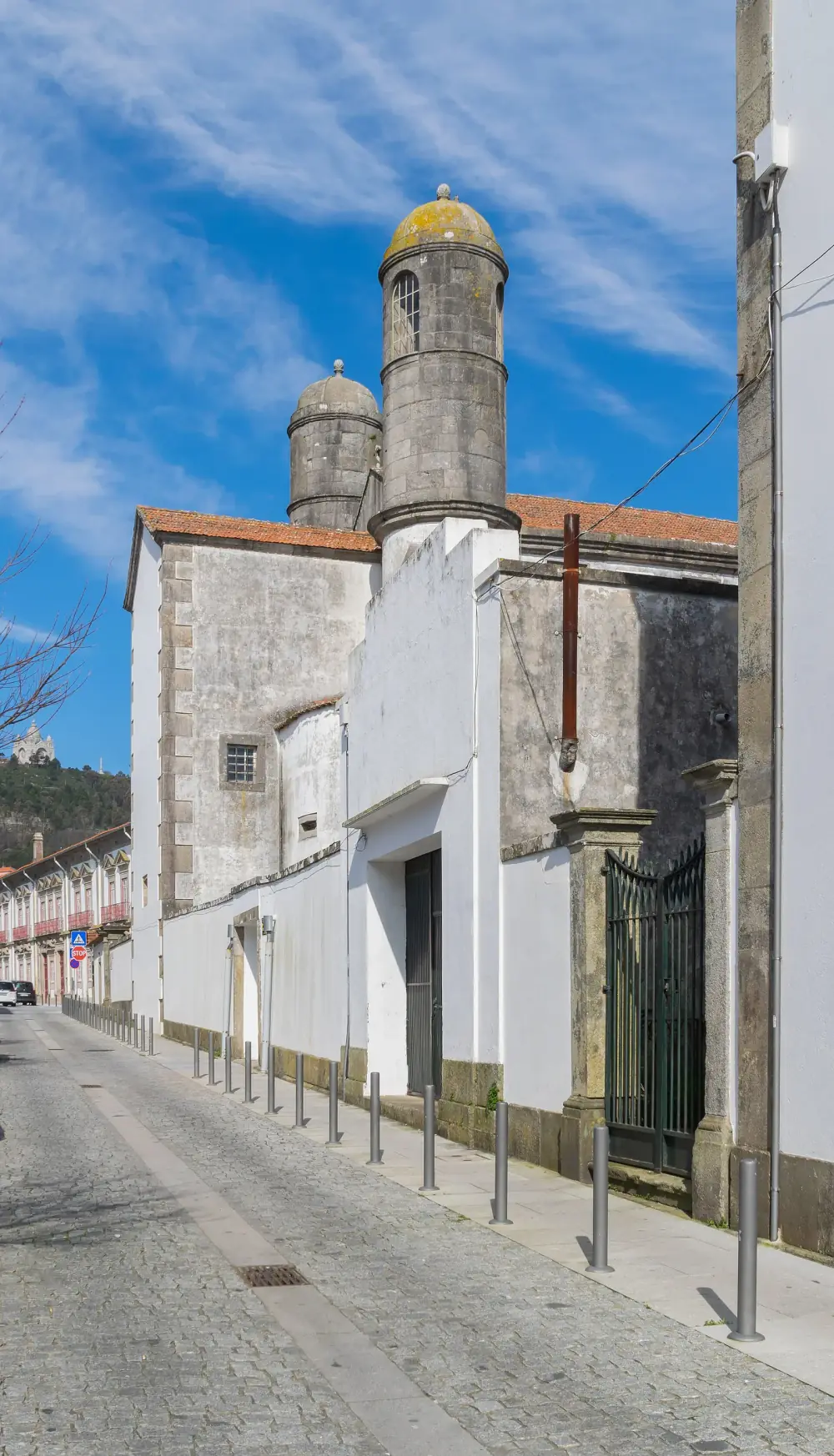
The funeral procession could barely move. The church, cloister, dormitories and churchyard were full, and the streets and windows around them packed with people from the town and the whole district. Visitors who filed past the body in his cell had already torn his sheets and pillows into strips to keep as relics. His tomb remains in the old Dominican church of Viana.
May 1514
Born in Lisbon
The Vatican gives 3 May.
20 November 1529
Professed as a Dominican in Lisbon, aged 15
27 January 1559
Confirmed Archbishop of Braga by Paul IV
4 October 1559
Enters Braga
1561 to 1564
Journey to the Council of Trent and back
1564 and 1566
Diocesan synod and provincial council apply Trent's decrees
1570
Stays in Braga through the plague
1571 to 1572
Seminary of São Pedro built in the Campo da Vinha; its portal inscription is dated 1572
1580 to 1581
Succession crisis; Cortes of Tomar
23 February 1582
Resigns and retires to Viana do Castelo
16 July 1590
Dies at the convent of Santa Cruz, Viana
From 'archbishop saint' to saint
In Braga and Viana he was already "the archbishop saint" and "father of the poor and the sick". The Church moved more slowly. His cause for beatification opened in 1631, but the decree on his heroic virtues, which made him Venerable, came only on 23 March 1845, from Gregory XVI.
Steps of the cause: years after his death in 1590
years after 1590
The year of each step minus 1590, the year of his death; full years from 16 July 1590 are one fewer for 1845 and 2019. Dates from the Portuguese Bishops' Conference, the Vatican biography and the Holy See Press Office.
Show the data
| Years after his death | |
|---|---|
| Cause opened (1631) | 41 |
| Venerable (1845) | 255 |
| Beatified (2001) | 411 |
| Canonised (2019) | 429 |
On 7 July 2001 John Paul II recognised a miracle attributed to him, and beatified him in Rome on 4 November, the feast of Charles Borromeo. The Portuguese bishops noted that it came a week after the close of a synod of bishops on the bishop as servant of the Gospel.
In February 2015 the Archbishop of Braga, Jorge Ortiga, handed Pope Francis a dossier asking for canonisation. In January 2019 Francis allowed the usual second miracle to be waived, and on 5 July he extended the archbishop's cult to the universal Church and inscribed him in the book of saints. The Vatican calls this an equipollent, or equivalent, canonisation. The Vatican announced it the next day, and the decree was solemnly read on 10 November 2019.
Less than a month before the announcement, a reliquary holding one of his vertebrae had been stolen from the church of São Domingos in Viana. The Polícia Judiciária, Portugal's criminal police, recovered it; the newspaper reported that the alleged thief was a 25-year-old man.
Why he still matters
Bartolomeu was one of the bishops who turned Trent's decrees into practice: a bishop who lived in his diocese, visited it, examined his priests and trained new ones in a seminary. Historians put him alongside Borromeo in Milan and Gabriele Paleotti in Bologna as models of the reforming pastor-bishop.
His old archdiocese is now four dioceses, Braga, Viana do Castelo, Vila Real and Bragança. Announcing his canonisation in 2019, the Archbishop of Braga wrote that crisis had entered the Church and everyone knew it needed reform, and that Bartolomeu, who had lived through a similar time, was a true reformer.
FAQs
Why is he called Bartolomeu dos Mártires?
He was born Bartolomeu Fernandes and for a time used the name Vale, in memory of his grandfather, so the bishops' conference also calls him Bartolomeu do Vale. He took the name dos Mártires, 'of the Martyrs', from the Lisbon church of Nossa Senhora dos Mártires, where he was baptised.
What did Bartolomeu dos Mártires do at the Council of Trent?
He attended its last period, from 1562 to 1563, after arriving in May 1561. He wrote the Petitiones, reform demands against absentee bishops and the privileges of cardinals, some of which went into the Iberian bishops' memorandum of 1562, and he backed the decrees on bishops' residence and the training of clergy.
What is the Stimulus Pastorum?
A Latin handbook on the duties of bishops, compiled from the Church Fathers while he was at Trent. Charles Borromeo had it printed in Rome; the Vatican counts 22 editions, and copies were given to the bishops at the First and Second Vatican Councils.
When was Bartolomeu dos Mártires made a saint?
Pope Francis approved his equipollent canonisation on 5 July 2019, and the Vatican announced it on 6 July. No second miracle was required. He had been beatified by John Paul II on 4 November 2001.
Where is Bartolomeu dos Mártires buried?
In the church of São Domingos in Viana do Castelo, the church of the former Dominican convent of Santa Cruz, where he died on 16 July 1590. Braga's cathedral chapter claimed the body, but Viana and the friars kept it.
On the timeline
Open the timelineNearby moments from the iberian union (1580–1640).
Portugal adopts the Gregorian calendar by a law signed by Philip I: Thursday 4 October is followed directly by Friday 15 October, and the ten days in between never take place in the country's calendar.
Around this date the Spanish Armada, which included Portuguese-built galleons taken over during the Iberian Union, begins to leave Lisbon for England, putting to sea from off Cascais on 30 May. Lists give it some 130 to 150 ships. The fleet would be scattered in the Channel and wrecked off Scotland and Ireland.
Birth of Manuel de Faria e Sousa, the historian and poet who spent most of his life in Madrid writing Portugal's history in Spanish. His vast commentary on Camões's 'Os Lusíadas' (1639) drew the Inquisition's suspicion and was banned in Lisbon in 1640.
Bartolomeu dos Mártires
Death in Viana do Castelo of Bartolomeu dos Mártires, the Lisbon-born Dominican Archbishop of Braga who was a leading voice at the Council of Trent and founded one of the first seminaries under its reforms. So revered was he as 'father of the poor' that Viana's townsfolk guarded his body against claims from Braga; Pope Francis declared him a saint in 2019.
Roderigo Lopes, a Portuguese New Christian physician who had become chief doctor to Elizabeth I, is hanged, drawn and quartered at Tyburn in London, convicted of plotting to poison the queen after the Earl of Essex accused him. Historians still dispute his guilt, and some think his case helped inspire Shylock in Shakespeare's 'The Merchant of Venice'.
Philip II of Spain, who had ruled Portugal as King Filipe I since 1580, dies at the palace-monastery of El Escorial; the crowns of the Iberian Union pass to his son Philip III.
The Dutch East India Company (VOC) is formally established in the Netherlands, creating a powerful rival to Portugal's Estado da Índia trading empire. The VOC would systematically challenge Portuguese dominance in the Indian Ocean, capturing key fortresses in the Spice Islands, Malacca, and Ceylon.
Coming up in history
All long reads 18 July 197418 July 1974: Vasco Gonçalves becomes the MFA's prime minister
 19 July 1717Portugal's ships against the Ottoman fleet at Matapan, 19 July 1717
 20 July 2012José Hermano Saraiva: the minister who became Portugal's TV historian
 22 July 1684Josefa de Óbidos: the woman who ran a painter's business in Baroque Portugal
14 sources
Archives, scholarship and reporting this article was checked against.
- 1
Vida de D. Fr. Bertolameu dos Martyres (Frei Luís de Cácegas, reworked by Frei Luís de Sousa, first printed 1619), vol. 2Typographia Rollandiana, Lisbon, 1853 (Internet Archive scan)
- 2
Bartolomeu Fernandes dos Mártires (1514-1590): biographical note for the beatification of 4 November 2001Holy See, Office for the Liturgical Celebrations of the Supreme Pontiff
- 3
Uma proposta de reforma para o Concílio de Trento: as Petições do Arcebispo de Braga d. Frei Bartolomeu dos Mártires (Juliana Pereira)Topoi, Revista de História, vol. 20, no. 41 (2019), pp. 515-538
- 4
De Braga a Roma: relíquias no caminho de D. Frei Bartolomeu dos Mártires (Maria de Fátima Castro)Via Spiritus 8 (2001), pp. 31-57, Universidade do Porto
- 5
Promulgation of the Decrees of the Congregation for the Causes of Saints (bulletin of 6 July 2019)Holy See Press Office
- 6
A Beatificação de Dom Frei Bartolomeu dos Mártires: nota pastoralConferência Episcopal Portuguesa, 27 October 2001
- 7
San Bartolomeo dei Martiri: omelia del cardinale Becciu a Braga (Roberta Barbi)Vatican News, 10 November 2019
- 8
- 9Portugal tem um novo santo em novembro: Bartolomeu dos Mártires (João Céu e Silva)Diário de Notícias, 6 July 2019
- 10
- 11
Um legendário à saída de Trento (Frei Diogo do Rosário, 1567) (Cristina Sobral)Studia Aurea 11 (2017), pp. 253-272
- 12
- 13
Memória histórica dos concílios nacionaes, provinciaes e synodos da antiga e muito illustre egreja de BragaO Consultor do Clero, no. 9, Braga, 15 May 1883 (Casa de Sarmento, Universidade do Minho)
- 14
Image credits
- The 23rd session of the Council of Trent, on 15 July 1563, in the cathedral of Trento, painted in the second half of the sixteenth century by an artist once thought to be Titian. Bartolomeu dos Mártires sat among the bishops in the council's last period, 1562 to 1563. Formerly attributed to Titian, Public domain, via Wikimedia Commons.
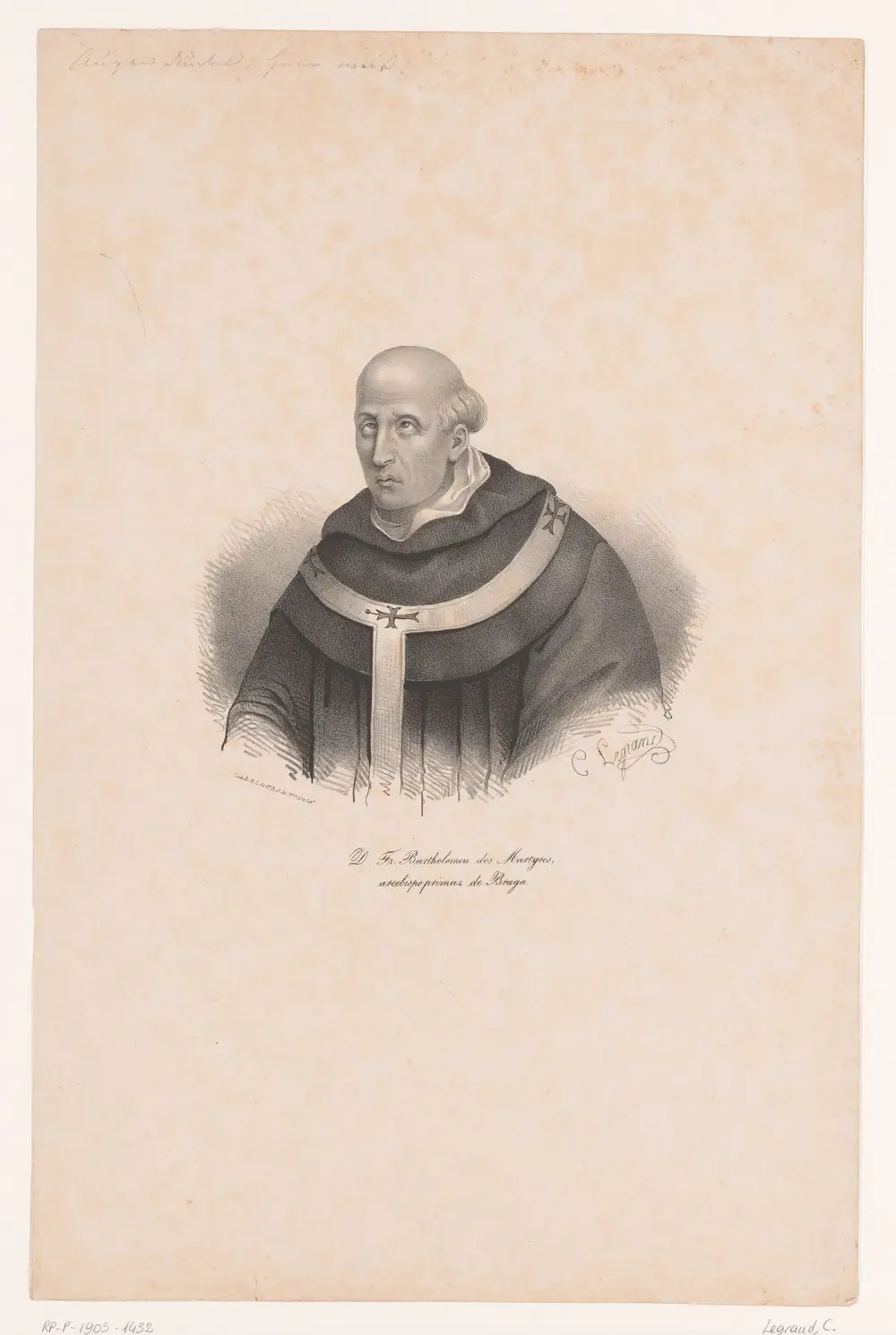
- Bartolomeu dos Mártires as imagined by the lithographer C. Legrand, in a print made in Lisbon before 1864. Rijksmuseum, CC0, via Wikimedia Commons.
- Braga photographed from a church tower between about 1849 and 1873, for the Album pittoresco e artistico de Portugal. Its archdiocese had about 1,300 parishes in Bartolomeu's time. Vigé & Plessix, Public domain, via Wikimedia Commons.
- The side of the church of São Domingos in Viana do Castelo, photographed in 2020. It was the church of the Dominican convent of Santa Cruz, where Bartolomeu dos Mártires retired in 1582, died in 1590 and is buried. Krzysztof Golik, CC BY-SA 4.0, via Wikimedia Commons.
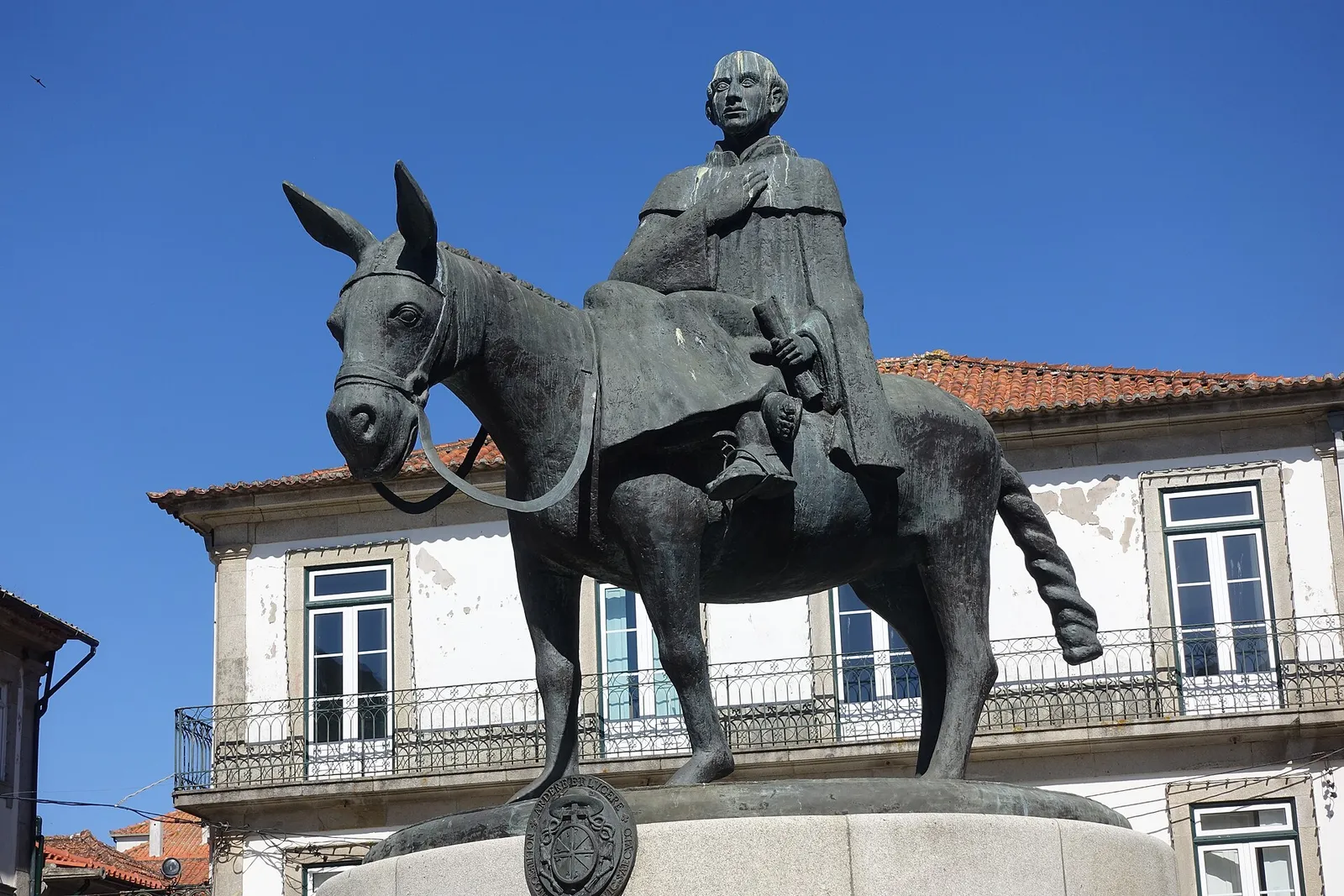
- The statue of Bartolomeu dos Mártires riding a donkey in Viana do Castelo, photographed in 2020. The medallion on the plinth carries his arms and his motto, Ardere et lucere, "to burn and to shine". Joseolgon, CC BY-SA 4.0, via Wikimedia Commons.