

Mouzinho da Silveira and the decrees that ended Portugal's old regime
In five months of civil war a deaf, untidy magistrate from the Alentejo signed the laws that took apart Portugal's old regime. One of them went much further than he had planned.
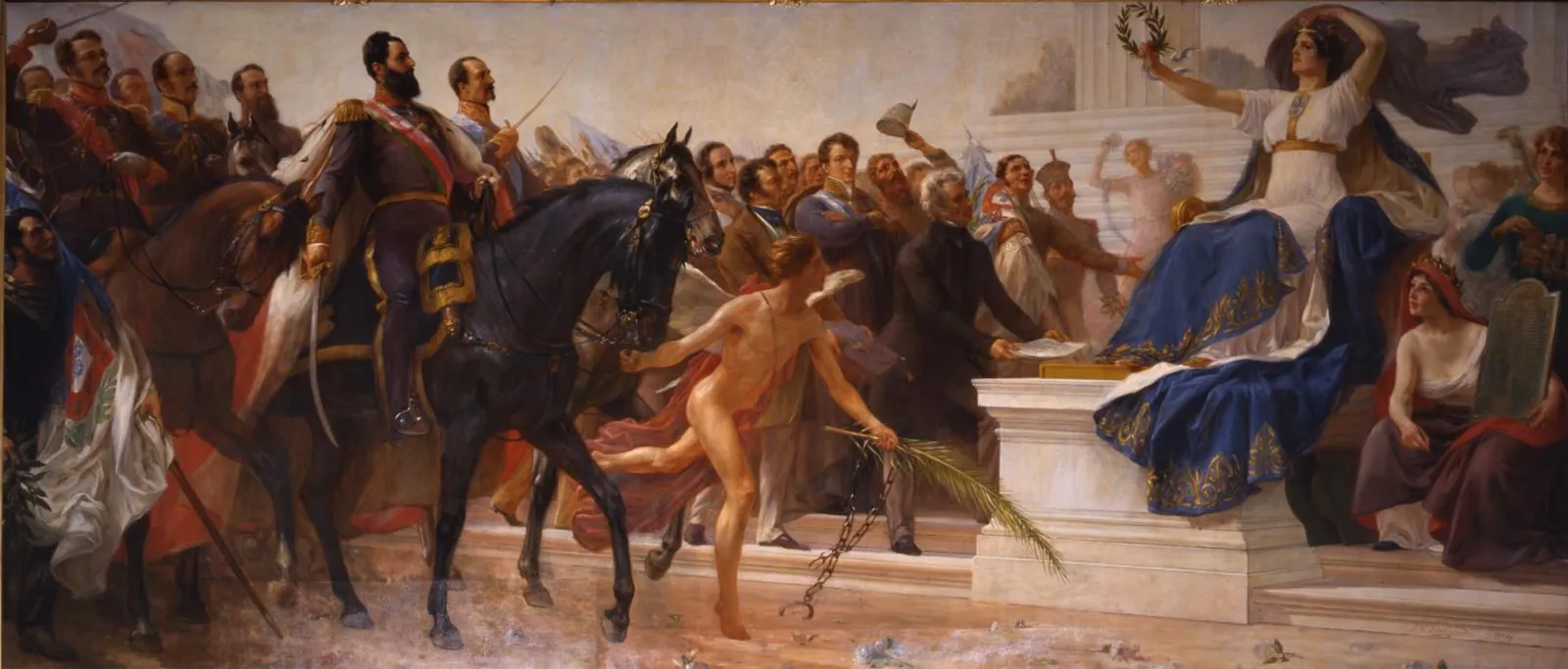
At a glance
- José Xavier Mouzinho da Silveira was born in Castelo de Vide, in the Alto Alentejo, on 12 July 1780 and died in Lisbon on 4 April 1849, aged 68.
- A crown magistrate and customs administrator, he was finance minister for three weeks in 1823 and spent 1828 to 1832 in exile in Paris after Dom Miguel seized the throne.
- Named minister of finance, with temporary charge of justice, by Pedro aboard a frigate at Angra on 3 March 1832, he signed decrees in the Azores and in besieged Porto from March to August 1832, and left office that December.
- His decrees abolished entails worth less than 200,000 réis a year (4 April), the royal treasury (16 May), the tithes (30 July) and the forais and their dues (13 August), and created a new local government and a Supreme Court.
- At his own wish he was buried in the village cemetery of Margem, in the municipality of Gavião, where a monument with his bust was unveiled on 15 June 1875.
A minister appointed at anchor
On 3 March 1832 the frigate Rainha de Portugal lay at anchor off Angra, on the Azorean island of Terceira. On board, Pedro, Duke of Bragança, signed a decree in the name of his 12-year-old daughter, Queen Maria II. It named José Xavier Mouzinho da Silveira minister of finance and put him in temporary charge of justice and church affairs as well.
The new minister was 51 and did not look like a revolutionary. He was deaf, dressed plainly and carelessly, wore his whitening hair unkempt and spelt badly.
“He passed for a visionary, and on top of that he was deaf. He had no party, not even disciples. He was a singular individual in the crowd of émigrés.”
Over the next five months, from March to August 1832, first in the Azores and then in a besieged Porto, he signed the decrees that took apart the legal frame of Portugal's old regime. They ended the tithes paid to the Church, the medieval town charters called forais and the dues collected under them, and small entailed estates. They replaced the royal treasury and redrew local government and the courts. The historian Luís Augusto Rebelo da Silva wrote in 1862 that the minister used to exclaim: “These laws are worth armies!”
Civil war, and a regency in the Azores
When João VI died in 1826, his elder son Pedro was emperor of Brazil. Pedro gave Portugal a Constitutional Charter with a king's moderating power and an upper house of peers, then abdicated the Portuguese crown in favour of his daughter Maria, who was to marry her uncle Miguel. In 1828 Miguel, back in Lisbon as regent, had himself acclaimed absolute king, and the Charter fell.
Mouzinho left Lisbon on 3 April 1828, citing his health, and spent the next four years in Paris. Liberals who refused to accept Miguel held out on Terceira, in the Azores, and the quarrel became a civil war between Miguel's absolutists and the liberals. In 1831 Pedro gave up the Brazilian throne to lead the liberals and govern in his daughter's name, and on 10 February 1832 his expedition sailed from Belle-Isle, off Brittany, for the Azores with Mouzinho on board.
In Paris, Mouzinho had watched the restored Bourbon government try to undo the French Charter of 1814 before the revolution of July 1830. The Charter survived, he concluded, because the Revolution's laws on land and property had given the French a material stake in it. Portugal's Charter had changed nobody's property, and it had fallen in 1828. He later told the Chamber of Deputies that whoever makes a revolution must also change the material world, or the revolutionaries can count on the gallows.
A magistrate from the Alentejo
He was born on 12 July 1780 in Castelo de Vide, a hill town near the Spanish border in the Alto Alentejo, in a house on the rossio, the main square, by the church of São João Baptista. He was the eldest of six children of Francisco Xavier de Gomide, a doctor at the town's military hospital, and Domingas da Conceição Mousinho da Silveira, from a family of local landowners.
He went to Coimbra in October 1796, enrolled in law a year later and finished his studies in 1802. His father had died in 1799, leaving him houses and farmland around Castelo de Vide, Marvão and Nisa. He practised law in Lisbon and in March 1807 passed the reading at the Desembargo do Paço, the royal tribunal that admitted men to the crown magistracy.
His first post was juiz de fora, a career judge sent by the crown to a town not his own, in Marvão. His local biographer dates the appointment to 23 October 1808; the municipality of Castelo de Vide and the jurist Micaela Lopes give 1809. There he helped organise resistance to the French. He moved to Setúbal in 1813, was also made judge of the land register of the royal estates around Lisbon, and in 1817 became provedor, a crown supervisor, of the district of Portalegre.
After the liberal revolution of 24 August 1820 the new government put him in charge of Lisbon's customs in April 1821. Customs duties were then one of the state's main sources of income, and smuggling drained them. In 1823, after the revolt known as the Vilafrancada ended the first constitutional regime, João VI made him finance minister on 28 May. He was out by 19 June, accused of being a freemason, though he kept the honours of a minister and went back to the customs.
During the Abrilada, Prince Miguel's attempted coup of April 1824, he was arrested and held for 14 days in the castle of São Jorge. In 1825 he wrote that the treaty recognising Brazil's independence, which let João VI take the title of emperor of Brazil in the same act that gave the country up, was “in the highest degree odious”. In October 1826 he was elected a deputy for the Alentejo under the new Constitutional Charter and sat on the finance committee.
12 July 1780
Born in Castelo de Vide
1796 to 1802
Studies at Coimbra, law from 1797
1808 or 1809
Appointed juiz de fora in Marvão
1817
Provedor of the district of Portalegre
April 1821
Put in charge of Lisbon's customs
28 May to 19 June 1823
Finance minister of João VI
April 1824
Held for 14 days in the castle of São Jorge after the Abrilada
3 April 1828
Leaves Lisbon for exile in Paris
3 March 1832
Named minister of finance, and interim minister of justice, at Angra
3 December 1832
His resignation is accepted in Porto
19 March 1833
Leaves Porto for Paris
1834 to 1836
Deputy in the Chamber of Deputies
1836 to 1839
Refuses to swear to the 1822 Constitution and returns to France
4 April 1849
Dies in Lisbon
5 October 1849
Buried at Margem, Gavião
Five months of decrees, from the Azores to Porto
As minister, he started with property. A decree of 7 March cancelled a seizure of the rebels' assets: Pedro's government, Mouzinho wrote, did not want the rebels' goods, and Europe would see in Pedro a great and generous prince. On 4 April he abolished every morgado and capela whose net income was below 200,000 réis a year. A decree of 18 April bound magistrates to protect private property, and on 19 and 20 April he abolished the general sisas, the duties on sales, and set a single duty of 1 per cent on exports of Portuguese goods.
On 16 May 1832, at Ponta Delgada on São Miguel, he published three decrees with one long report. Decree no. 22 abolished the Real Erário, the royal treasury set up under Pombal in 1761, and put a Tesouro Público in its place, with a minister obliged to present a budget. Decree no. 23 reorganised local government. Decree no. 24 reorganised the courts and created a Supremo Tribunal de Justiça; a further decree, dated at Ponta Delgada on 19 May, fixed its powers.
“In what I propose there will be a thousand defects, but there is room in the plan for amendments; in the old one it was necessary to destroy in order to amend, and so irregular was the building that it was impossible to correct it within its own plan.”
Decree no. 23 divided the kingdom into provinces, comarcas and concelhos, run by a prefeito, a subprefeito and a provedor, all appointed by the crown, on the model of Napoleon's prefects. The provedor took over the running of each municipality; the elected câmara, the town council, kept only the right to propose and advise. The jurist Marcelo Caetano, who later succeeded Salazar, argued in the late 1960s that the reform was partly original and had been on the liberal programme since 1822.
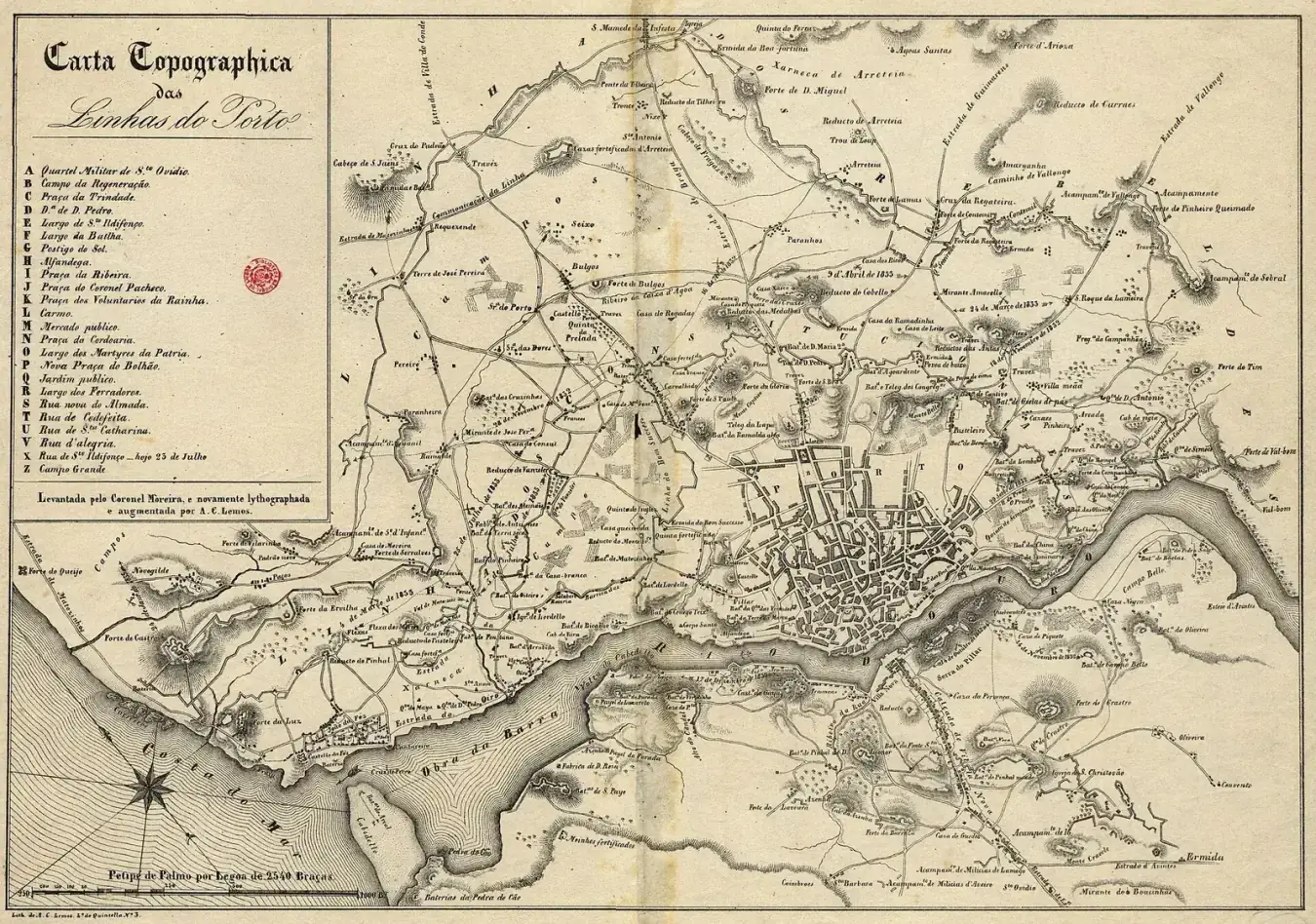
On 27 June the expedition sailed for the mainland, and on 8 July it landed on a beach near Mindelo, north of Porto. The liberals took the city and were soon besieged in it by Miguel's army. Mouzinho kept legislating. On 14 July the privileges of the Alto Douro wine company were revoked. On 30 July he abolished the tithes, and on 13 August came the law of forais.
| Date | Where | What it did |
|---|---|---|
| 7 March | Azores | Annulled a seizure of the property of Miguel's supporters |
| 4 April | Azores | Abolished morgados and capelas with a net income under 200,000 réis a year |
| 18 April | Azores | Required magistrates to protect private property |
| 19 April (no. 13) | Azores | Abolished the general sisas on sales |
| 20 April (no. 14) | Azores | Freed exports, with a single 1 per cent duty on Portuguese goods |
| 16 May (no. 22) | Ponta Delgada | Abolished the Real Erário and created the Tesouro Público |
| 16 May (no. 23) | Ponta Delgada | New local government: provinces, comarcas and concelhos under crown officials |
| 16 May (no. 24) | Ponta Delgada | New courts, including a Supremo Tribunal de Justiça |
| 30 July (no. 40) | Porto | Abolished the tithes throughout Portugal and the Algarve |
| 13 August (no. 44) | Porto | Revoked royal grants of crown property, extinguished the forais and their dues and repealed the Lei Mental of 1434 |
Decree numbers are those of the government's collection of decrees, as cited by Lopes (2024) for the April, July and August decrees, by Benavente Rodrigues and Dias da Silva for nos. 22 and 23, and by the municipality of Castelo de Vide for no. 24. The government sat at Angra, on Terceira, until 23 April 1832 and then at Ponta Delgada until the expedition sailed on 27 June. On 16 and 17 March earlier decrees had already cut the tithes in the islands and closed their convents.
Ending the tithes and the forais
The tithe decree of 30 July declared that the tithes paid on the fruits of the land and of trees, on pasture, timber, animals and “all productions” were extinct and would not be paid again. Its report argued that farmers' net income was rarely as large as the tithe, so that land which might return 5 to 10 per cent over its costs was left unfarmed. Only farmers paid the tithe, he added, though every class should pay taxes.
“In the following decree I propose to Your Imperial Majesty an immense glory, and to the Portuguese nation the capacity to rise out of misery and to become populous and rich; I propose the creation of the only source of taxable wealth that can be perennial and inexhaustible, because it is not mortal like conquests, but immortal like the nature of things.”
The report ran through argument after argument and then stopped itself. “The ninth argument consists… but I must stop,” he wrote, “because otherwise there would be matter for volumes.”
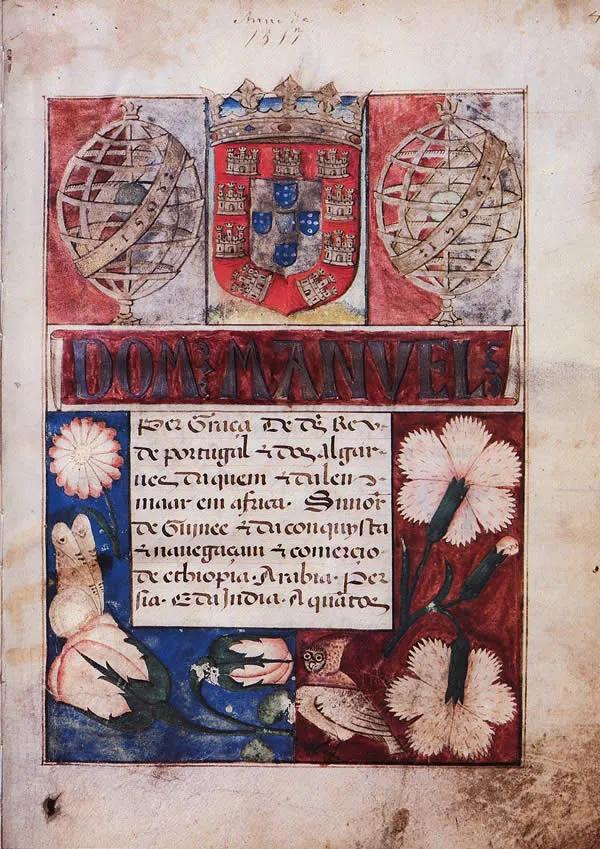
The law of 13 August went further. It cancelled the kings' grants of crown property to any person or corporation and extinguished every foral, whether issued by a king or by the holder of a crown grant. The rents, quotas and other dues imposed by forais or on crown land ended, and so did the yearly foros of emphyteusis wherever the lease rested on a crown grant or a foral.
Land held under such grants became “free and allodial”, the full property of those who held or worked it, and the Lei Mental of 1434, which had kept crown grants revocable and undivided, was repealed. Owners who lost income were to be compensated, except Miguel's supporters.
His aim was political. In the preamble he argued that the high nobility had turned against the Charter for fear of losing the crown grants that paid for their households. Freeing the land would create an independent class of owners who would defend the new order.
“The decree of 13th August is highly political and highly economic because it ends the ideas that have produced everywhere and at all times thousands of revolutions, these are the feudal ideas.”
Out of office, and into exile again
In besieged Porto money ran short, and the minister lost his allies. He objected to the loans raised by Palmela, the liberals' leading diplomat, and he refused to let the government sell the port wine stored in the merchants' lodges at Gaia, because property was sacred. Colleagues accused him of radicalism. He asked to resign on 9 August, four days before the date of the law of forais; Pedro accepted by a decree of 3 December 1832, his local biographer records.
He went on serving the cause into the new year, first raising funds and then as director of the customs, and left for Paris on 19 March 1833. After the liberal victory of 1834 he sat in the Chamber of Deputies until 1836 and again ran the customs. When the September Revolution of 1836 restored the radical Constitution of 1822, he refused to swear to it, resigned and went back to France. He returned in 1839, sat as a deputy for the Alentejo for a year, then left politics for good.
A law that went further than he meant
The law of forais only took effect once the liberals had won, and by then the country had changed. In 1834 the male religious orders were dissolved and their vast estates passed to the state. Common opinion now treated those lands as crown property, so the farmers who had paid rents to the monasteries stopped paying, and the treasury could neither collect nor sell those rents as it had planned.
The bigger shock was lower down. Much land, above all in the Minho, was held at two levels: a foreiro paid a foro to the landlord and in turn collected a rent of his own, the subforo, from the family that farmed it. To make the farmer the full owner, Mouzinho's law abolished the subforo too. That expropriated many middle-class holders of rents, probably including some deputies, and in 1835 the Misericórdia of Porto complained of tenants refusing to pay well outside the law's intended scope.
The promised compensation was beyond the state's means. In 1835 the deputy Passos Manuel put the lowest estimate at 40 million cruzados, or 16,000 contos: a fifth of the national product, if that is reckoned at 80,000 contos as Dores Costa does. Palmela opposed the law, and in 1839 the Count of Taipa told the Chamber that his household had lost 18,000 cruzados. A peer, the Viscount of Vilarinho de São Romão, proposed in January 1836 to restrict it to property registered as the crown's own, and a less radical law replaced it in 1846.
The local government reform did not last either. Municipalities protested at the loss of their autonomy, and a law of 25 April 1835 widened the council's powers and renamed the provedor the administrador do concelho. In November 1836 Passos Manuel's reform cut the number of concelhos from about 800 to 351, a reduction Mouzinho's decree had never attempted.
Number of concelhos (municipalities) in Portugal, 1827 to 1878
concelhos
Mouzinho's decree of 1832 changed who ran the municipalities, not how many there were; the cut came with the reform of 1836. Figures from César de Oliveira's history of the municipalities, after António Pedro Manique, as tabulated by Henrique Dias da Silva; the Assembleia da República gives the same peak of 806 (1827) and low of 268 (1853). Dias da Silva also says the 1836 decree abolished 498 mainland concelhos, more than the net fall of 448 shown here.
Show the data
| Concelhos | |
|---|---|
| 1827 | 806 |
| 1832 | 796 |
| 1835 | 799 |
| 1836 | 351 |
| 1842 | 381 |
| 1853 | 268 |
| 1878 | 290 |
A grave in Margem
He spent his last years between Lisbon and Castelo de Vide, short of money and in poor health; his wife and only son stayed in Paris. He died at eight in the evening of 4 April 1849, aged 68, in the Lisbon house of his friend Francisco José da Costa Amaral in the Rua do Moinho do Vento, today Rua de Dom Pedro V.
His will, dated 12 March 1849, asked to be buried on Corvo, the smallest island of the Azores. The will as quoted by his biographers gives no reason. Pedro's government had raised Corvo to a town with its own council on 20 June 1832, while Mouzinho was minister, and the island still honours him for it.
“…but if that cannot be, for any reason, or even because my executor does not want to take on this chore, I want my body to be buried in the cemetery of the parish of Margem, belonging to the municipality of Gavião.”
Margem is a parish of Gavião, in the district of Portalegre, where, the municipality of Gavião says, he had hoped to spend a quiet old age and had been warmly received. He was buried there on 5 October 1849, six months after his death, under a plain stone; his local biographer does not say where the body lay in the meantime. Rebelo da Silva, in 1862, wrote of the “simple slab” that had covered his ashes since 1849.
By the 1870s the grave was neglected. Letters from a priest of Castelo de Vide, João Crisóstomo Ribeiro Coelho, led the Lisbon Jornal do Comércio to organise a tribute, and on 15 June 1875 a marble monument with his bust by the sculptor Anatole Calmels was unveiled at Margem. After a requiem mass his remains were moved beside it, in the presence of an admiral representing King Luís and the councils of Castelo de Vide and Gavião.
Why he still matters
Alexandre Herculano, who landed near Mindelo with Pedro's army in July 1832, held that liberalism owed more to Mouzinho's laws than to the bayonets of the revolution. Not all of those laws lasted. His local government survived three years before the law of 1835 gave the councils back their powers, and the law of forais was replaced by a less radical one in 1846.
Other parts are still there. A law of 19 May 1863 finished his work on entails by abolishing all the remaining morgados and capelas. The Supremo Tribunal de Justiça, created by his decree of 16 May 1832, named its first judges on 15 September 1833 and still sits in the north-east wing of the Praça do Comércio in Lisbon.
Corvo, raised to a town with its own council on 20 June 1832 while he was minister, is still a municipality. In 2025 its council unveiled a basalt and marble sculpture outside the town hall to mark its Municipal Day, carved with the words of 1832 that made it a town.
His home town has honoured him more than once. In 1910 Castelo de Vide unveiled his family's coat of arms on a house in the street now named after him, believing he had been born there; in 1918 his biographer Laranjo Coelho showed he was born on the rossio. For the bicentenary, on 28 December 1980, the town unveiled a monument with a bronze effigy by Fernando Fonseca in the Jardim Gonçalo Eanes.
FAQs
Who was Mouzinho da Silveira?
José Xavier Mouzinho da Silveira (1780 to 1849) was a Portuguese magistrate and liberal politician from Castelo de Vide. As minister of finance, and interim minister of justice, to Pedro, Duke of Bragança, in 1832, during the civil war against Dom Miguel, he wrote the decrees that abolished the tithes, the forais and small entailed estates.
What did the decrees of 1832 abolish?
The main ones abolished entailed estates with a net income under 200,000 réis a year (4 April), the general sisas on sales (19 April), the old royal treasury (16 May), the tithes paid to the Church (30 July) and the forais, with the dues and crown grants attached to them (13 August). Other decrees of 16 May reorganised local government and the courts and created the Supremo Tribunal de Justiça.
Did the law of forais work as he intended?
Not entirely. After the religious orders were dissolved in 1834, farmers stopped paying rents on former monastic land, and the law's abolition of subforos took income from many middle-class rent-holders. Compensation proved unaffordable, and a more limited law replaced it in 1846.
Where is Mouzinho da Silveira buried?
In the cemetery of Margem, in the municipality of Gavião, Portalegre district. His will asked first for the island of Corvo and then for Margem. He was buried there in October 1849, and a marble monument with his bust by Anatole Calmels was added in 1875.
On the timeline
Open the timelineNearby moments from earthquake and enlightenment (1750–1807).
King José I dies in Lisbon after a 27-year reign. Within weeks his daughter and successor, Maria I, removed the all-powerful Marquis of Pombal and freed many of his political prisoners — the change of course remembered as the 'Viradeira'.
Portugal and Spain sign the preliminary Treaty of San Ildefonso on South American borders: Portugal cedes Colónia do Sacramento and drops its claim to the Sete Povos mission lands, while Spain returns the island of Santa Catarina and recognises Portuguese rule in Rio Grande de São Pedro, today's southern Brazil.
By the Treaty of El Pardo, Portugal hands Spain the islands of Fernando Pó (Bioko) and Annobón in the Gulf of Guinea, in return for settling the borders of southern Brazil. They become the nucleus of Spanish Guinea — today's Equatorial Guinea, where Annobón still speaks a Portuguese-based creole.
Mouzinho da Silveira, born 1780
Birth in Castelo de Vide of José Xavier Mouzinho da Silveira, the liberal jurist whose sweeping decrees of 1832, issued in the Azores and besieged Porto during the civil war, abolished tithes, the medieval 'forais' (feudal charters and dues) and small entailed estates. Historians often credit him with laying the legal foundations of modern Portugal.
The Marquis of Pombal dies in disgrace at Pombal, aged 82. Minister of King José I from 1750 to 1777, he rebuilt Lisbon after the 1755 earthquake and expelled the Jesuits; under Maria I he lost office, and a 1781 decree declared him guilty but spared him for his age.
João Carlos de Saldanha, later Duke of Saldanha, is born. A grandson of the Marquis of Pombal, he fought in the Peninsular War, commanded liberal forces in the civil war of 1832–34 and dominated politics for decades, serving several times as prime minister and twice seizing power by military pronouncement.
Joaquim José da Silva Xavier, known as Tiradentes ('Tooth-Puller'), is hanged in Rio de Janeiro for his leading part in the Inconfidência Mineira, a plot for Brazilian independence from Portugal betrayed in 1789. He is now Brazil's national hero.
Coming up in history
All long reads 14 July 1976Ramalho Eanes sworn in: the general who sent the army back to barracks
 15 July 1912Francisco Lázaro: the Lisbon carpenter who died in the 1912 Olympic marathon
 16 July 1590Bartolomeu dos Mártires: the archbishop who took Trent home to Braga
 17 July 1859Queen Estefânia's death in 1859 and the hospital it left Lisbon
19 sources
Archives, scholarship and reporting this article was checked against.
- 1
Mouzinho da Silveira or the Unforeseen Revolution (Fernando Dores Costa)e-Journal of Portuguese History, vol. 20, no. 2 (December 2022), pp. 191-217
- 2
Notas sobre o reformismo liberal em matéria fiscal no ordenamento jurídico português (Micaela Andreia Monteiro Lopes)Historia Constitucional, no. 25 (2024), pp. 1503-1515
- 3
José Xavier Mousinho da Silveira (Diogo Salema Cordeiro)Fonte da Vila, Castelo de Vide: História e Património
- 4
José Xavier Mousinho da Silveira (Luís Augusto Rebelo da Silva)Revista Contemporânea de Portugal e Brasil, vol. IV, no. 3 (1862-63), Hemeroteca Digital de Lisboa
- 5
Reformas administrativas em Portugal desde o século XIX (Henrique Dias da Silva)Jurismat, no. 1 (2012), pp. 65-97
- 6
Extinção dos morgados e capelasArquivo Nacional Torre do Tombo, virtual exhibition
- 7
- 8
2 May 1826: Pedro abdicates the crown of Portugal in favour of his daughter Maria da GlóriaParques de Sintra, Palácio Nacional de Queluz: King Pedro IV chronology
- 9
- 10
Mouzinho da SilveiraMunicípio de Castelo de Vide (Visit Castelo de Vide)
- 11
A desagregação do império: Portugal e o reconhecimento do Estado brasileiro (1824-1826) (Valentim Alexandre)Análise Social, vol. XXVIII (121), 1993
- 12
Extinção do Erário Régio em 1832 (Manuel José Benavente Rodrigues)APOTEC, Associação Portuguesa de Técnicos de Contabilidade
- 13
A criação de municípios: “Haverá câmaras onde convier ao bem público”Assembleia da República, Comunicar, July 2021
- 14
Decree of 19 May 1832 fixing the powers of the Supremo Tribunal de Justiça (facsimile)Ministério Público, Procuradoria da República da Comarca de Beja
- 15
- 16
Municipal Day marked by a tribute to Mouzinho da Silveira in CorvoMunicípio do Corvo, June 2025
- 17
Busto Mouzinho da Silveira, Vale de GaviõesMunicípio de Gavião
- 18
Herculano, Alexandre (Lisbon, 1810 - Azóia de Baixo, Santarém, 1877) (Arthur Alfaix Assis)Dicionário de Historiadores Portugueses, Biblioteca Nacional de Portugal
- 19
HistóriaSupremo Tribunal de Justiça
Image credits
- A Pátria Coroando os Seus Heróis (The Motherland Crowns Her Heroes), Veloso Salgado's 1904 allegory of the liberal victory of 1834, in the Museu Militar, Lisbon. Pedro rides the black horse; the white-haired civilian laying papers before the throne is identified on the file's Commons page as Mouzinho da Silveira. Veloso Salgado, Public domain, via Wikimedia Commons.
- The opening page of the foral of Guimarães, one of the charters reissued under King Manuel I and dated 1517. Mouzinho's decree of 13 August 1832 extinguished all forais and the dues paid under them. Outorgado por D. Manuel I, Public domain, via Wikimedia Commons.
- Topographic map of the Lines of Porto, the liberal defences during the siege of 1832 to 1833, from a survey by Colonel Francisco Pedro de Arbués Moreira, lithographed with additions by A. C. Lemos in about 1835. The tithe and foral decrees were signed inside these lines. Lemos, A. C., fl. ca 1833-1843; Moreira, Francisco Pedro de Arbués, 1777-1843, ant. bibliog., Public domain, via Wikimedia Commons.
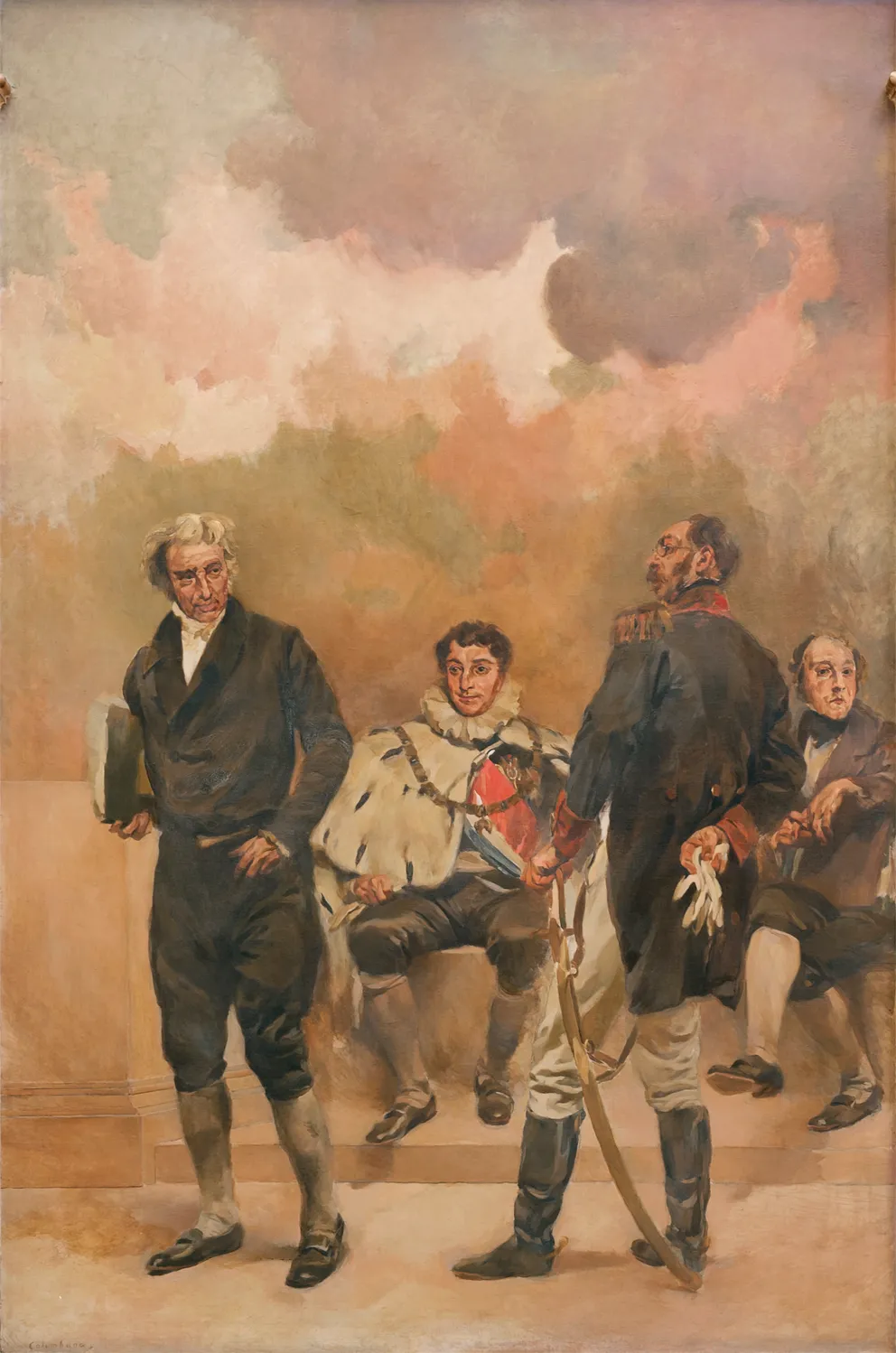
- Mouzinho da Silveira (left) with the Duke of Palmela, the Duke of Saldanha and José da Silva Carvalho, painted by Columbano Bordalo Pinheiro in 1926 for the Palácio de São Bento, the seat of Portugal's parliament. Columbano Bordalo Pinheiro, Public domain, via Wikimedia Commons.
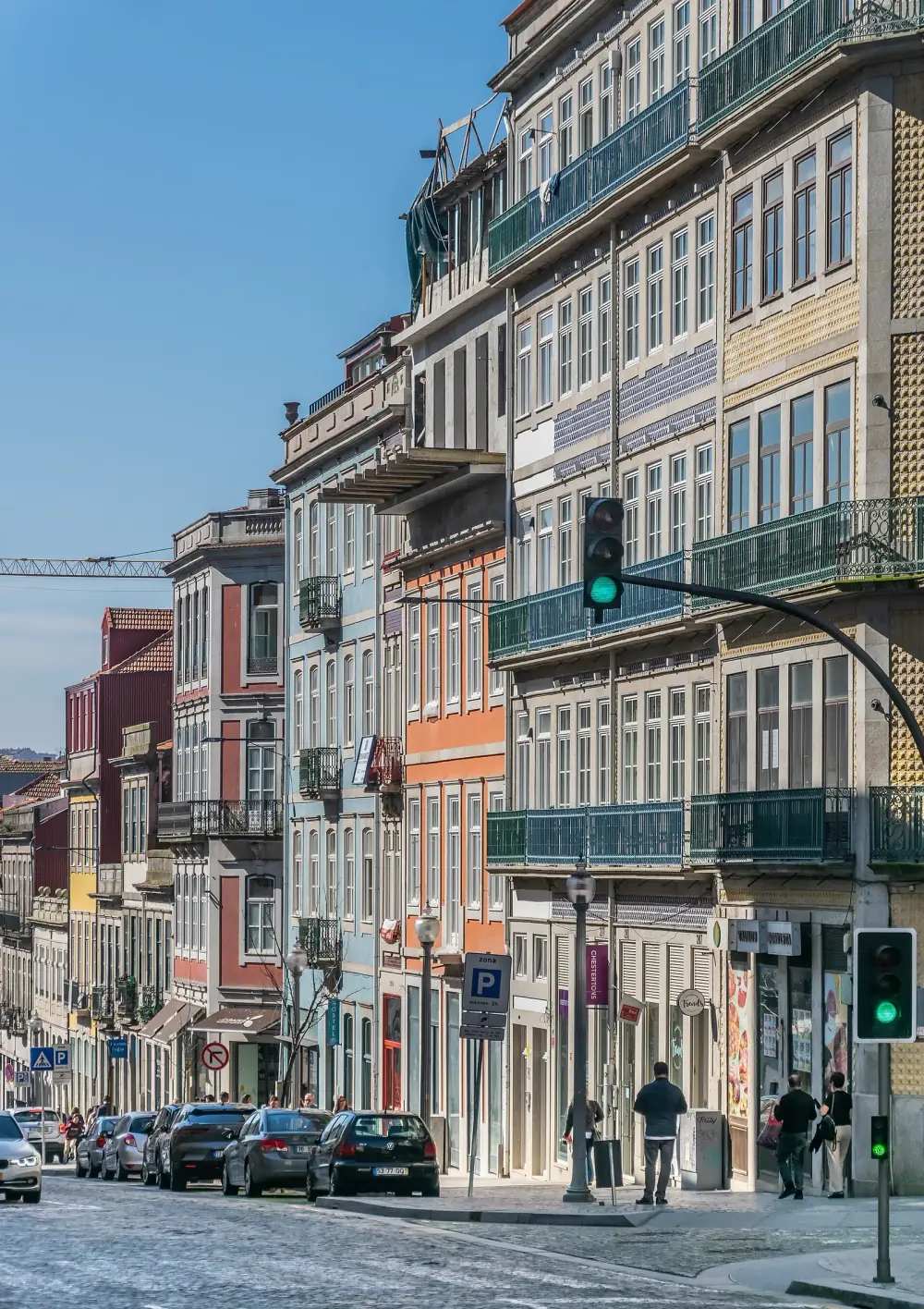
- Rua de Mouzinho da Silveira in Porto, photographed in February 2020. Krzysztof Golik, CC BY-SA 4.0, via Wikimedia Commons.