

The will of Afonso II, 1214: a king's wishes in early Portuguese
An ailing king of 29, fresh from a war with his own sisters, set out who would rule after him and who would pray for his soul. His chancery wrote it in the language people spoke, and it is now the oldest dated royal document in Portuguese.
At a glance
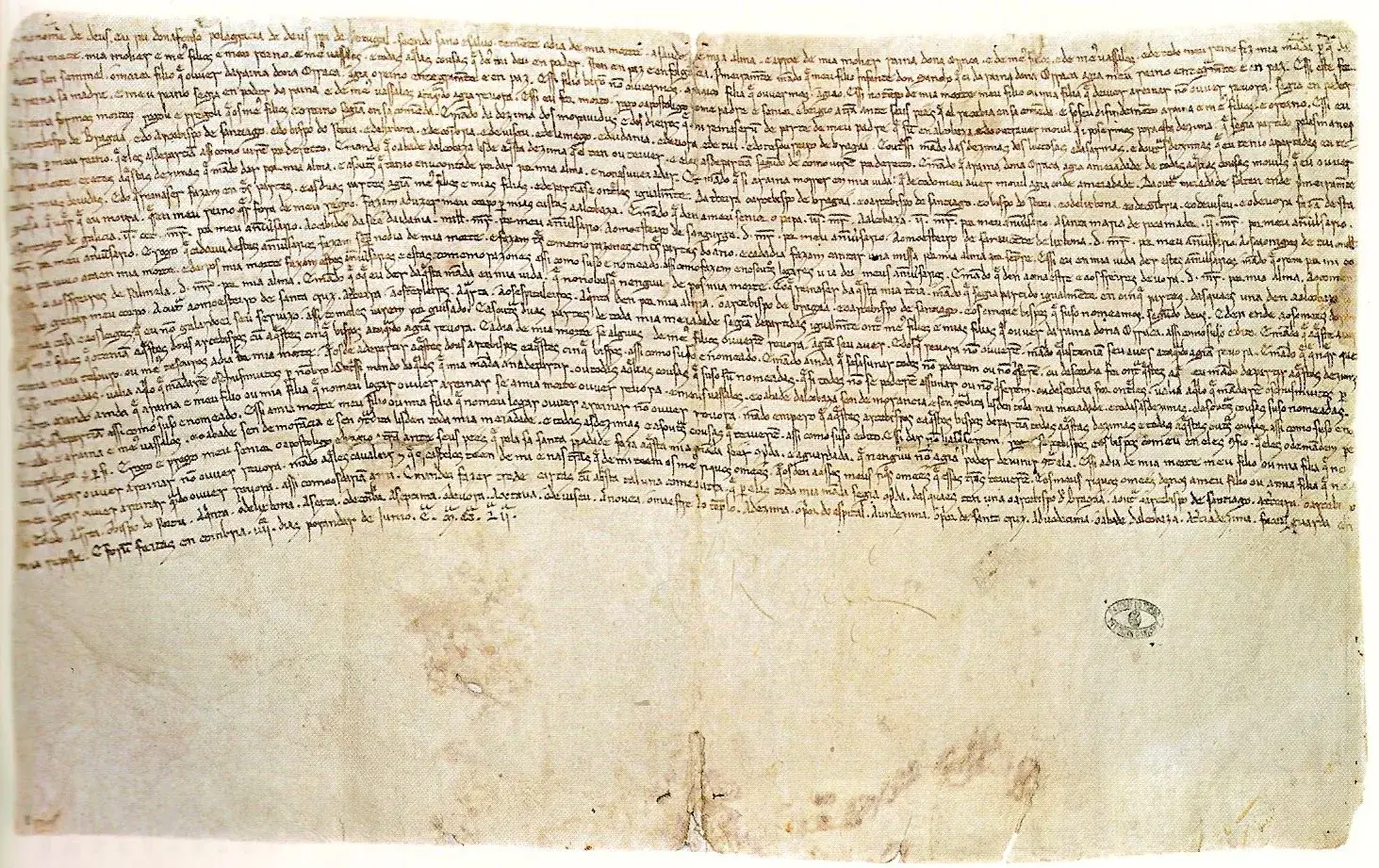
- On 27 June 1214, in Coimbra, King Afonso II of Portugal had his will drawn up in the vernacular, the language now called Galician-Portuguese, at a time when royal documents were written in Latin.
- The will names his son Sancho as heir, makes the queen and the great lords regents if the heir is under age, asks the pope to protect his family and sets fixed bequests of about 13,300 morabitinos: 3,000 to the pope and the rest to churches and military orders.
- Thirteen copies were made: twelve for archbishops, bishops, the military orders and two monasteries, and one for the king's own store. Only two are known today, one in the Torre do Tombo in Lisbon and one in the cathedral archive of Toledo.
- It is the oldest dated royal document in Portuguese. Private notes such as the Notícia de Torto may be as old or older, and scholars still argue over whether some twelfth-century texts, such as a list of 1175, already count as Portuguese.
- Afonso II made two later wills, in 1218 and 1221, both in Latin. He died on 25 March 1223, before his settlement with the archbishop of Braga was concluded, and was buried at Alcobaça as the 1214 will asked.
Coimbra, June 1214
In the last week of June 1214 the scribes of the king of Portugal finished a long document at Coimbra, the city on the Mondego that was then the capital of the kingdom. They dated it the way Iberian scribes then did, by the Spanish Era, which runs 38 years ahead of the Christian count: four days still to run in June, Era 1252. That is 27 June 1214, a Friday.
The document was the will of Afonso II, the third king of Portugal. It runs to about 1,400 words. What makes it remarkable is the first line. Royal charters were written in Latin, but this one opens in the language people spoke.
“In the name of God. I, King Afonso, by the grace of God king of Portugal, being sound and well, fearing the day of my death, for the health of my soul and the good of my wife Queen Urraca and of my sons and my vassals and all my kingdom, made my will, so that after my death my wife and my sons and my kingdom and my vassals and all the things that God gave into my power may be in peace and at rest.”
Sound and well was a formula. The king was 29 and already ill. Twelve days earlier, on 15 June, Queen Urraca had made her own will, asking to be buried in the Cistercian abbey of Alcobaça and leaving it 2,000 maravedis for a daily mass.
A young kingdom that wrote in Latin
Portugal was then less than a century old as a separate kingdom, and the Almohads, the Muslim power ruling al-Andalus, had pushed its southern frontier back to the Tagus in 1190 and 1191. Its first king, Afonso Henriques, died in 1185. His son Sancho I died in March 1211, and his eldest son, Afonso II, succeeded him.
In the north-west of the Iberian peninsula people spoke a Romance language that scholars now call Galician-Portuguese, the ancestor of modern Portuguese. Almost nobody wrote it down. Notaries, monks and royal clerks wrote in Latin, though their Latin had for centuries been bending towards the vernacular, with Romance words, word order and spellings slipping in.
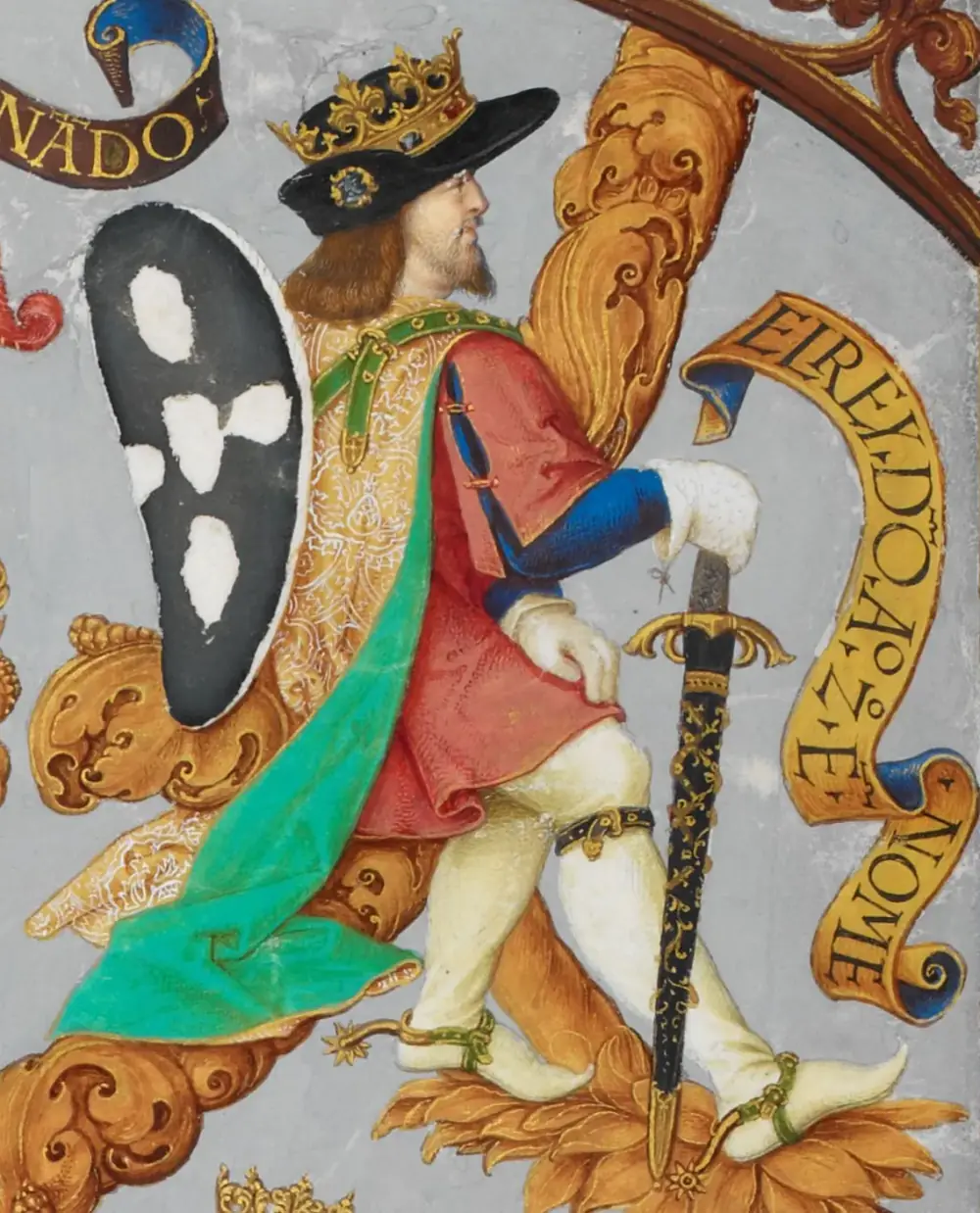
Afonso was born in Coimbra on 23 April 1185 and married Urraca, daughter of Alfonso VIII of Castile, in 1208. Posterity called him o Gordo, the Fat. He suffered from a disabling illness, perhaps leprosy, and did not lead his armies in person. Two witnesses in the inquiries of his son Afonso III's reign spoke of him as the king who was gafo, a leper.
- Born
- 23 April 1185, Coimbra (one set of annals gives 1186)
- Parents
- Sancho I and Dulce of Aragon
- Married
- Urraca of Castile, in 1208
- King
- March 1211 to March 1223
- Wills
- June 1214 (Portuguese), January 1218 and November 1221 (Latin)
- Died
- 25 March 1223, aged 37
- Buried
- Abbey of Alcobaça
A war with his sisters
The will of 1214 was written by a king who had nearly lost his throne. Sancho I had left lordships to his daughters: Montemor-o-Velho and Esgueira to Teresa, the former queen of León, and Alenquer to Sancha. When Afonso claimed royal authority there over coinage, castle commanders and military service, the sisters refused, and in November 1211 his troops besieged Montemor, 30 kilometres downriver from Coimbra, where both had taken refuge.
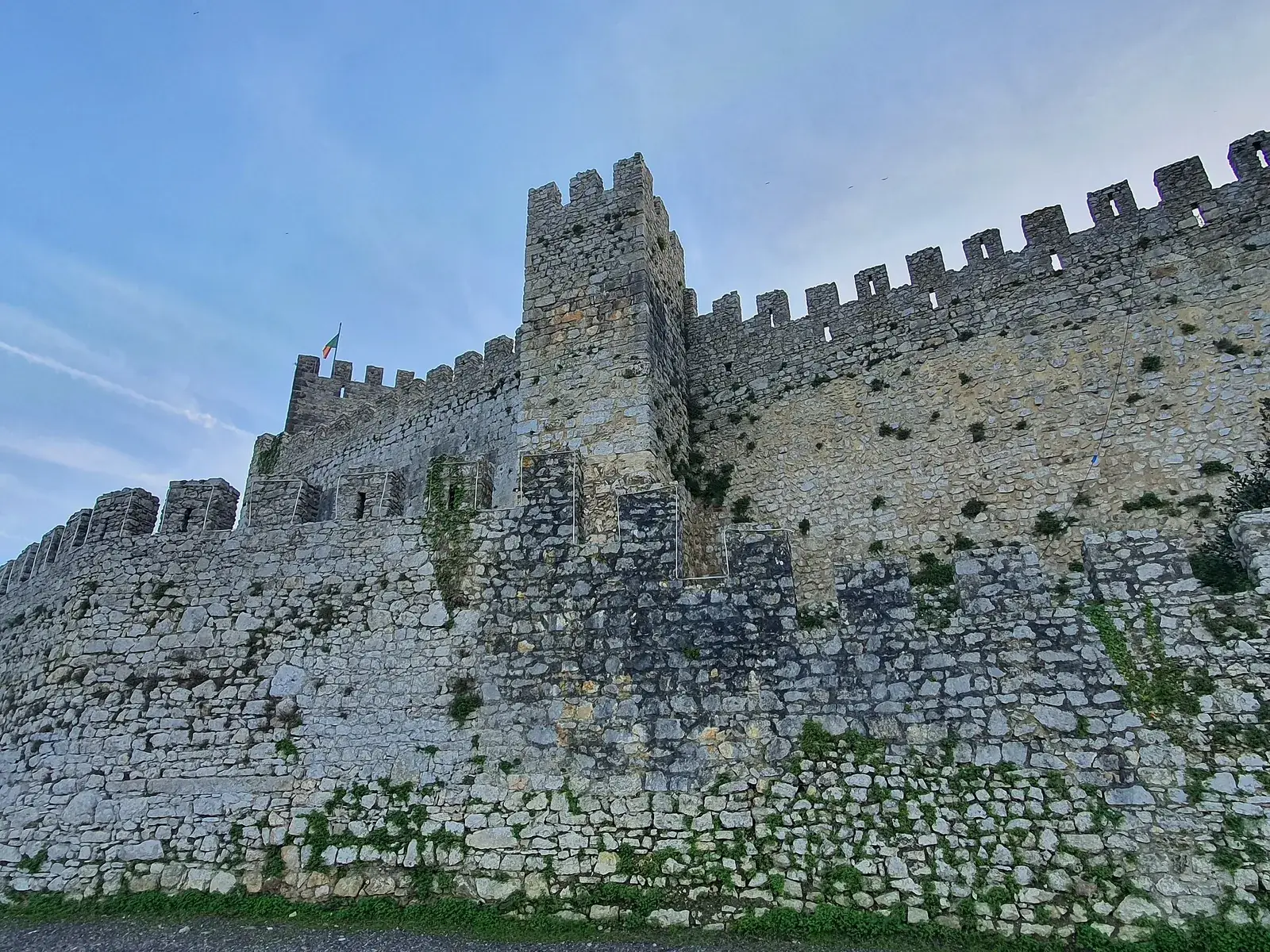
The defenders shouted the name of Alfonso IX of León as their king. In March 1212 Alfonso IX, Teresa's former husband, invaded with Afonso's exiled brother Pedro, the siege was lifted, and for a few months the king held out in Guimarães while Leonese troops occupied Coimbra.
Rome and Castile rescued him. In November 1212 the kings of Portugal, León and Castile met at Coimbra and agreed a truce, and a second campaign against the sisters, at the turn of 1213, ended in a clear royal victory.
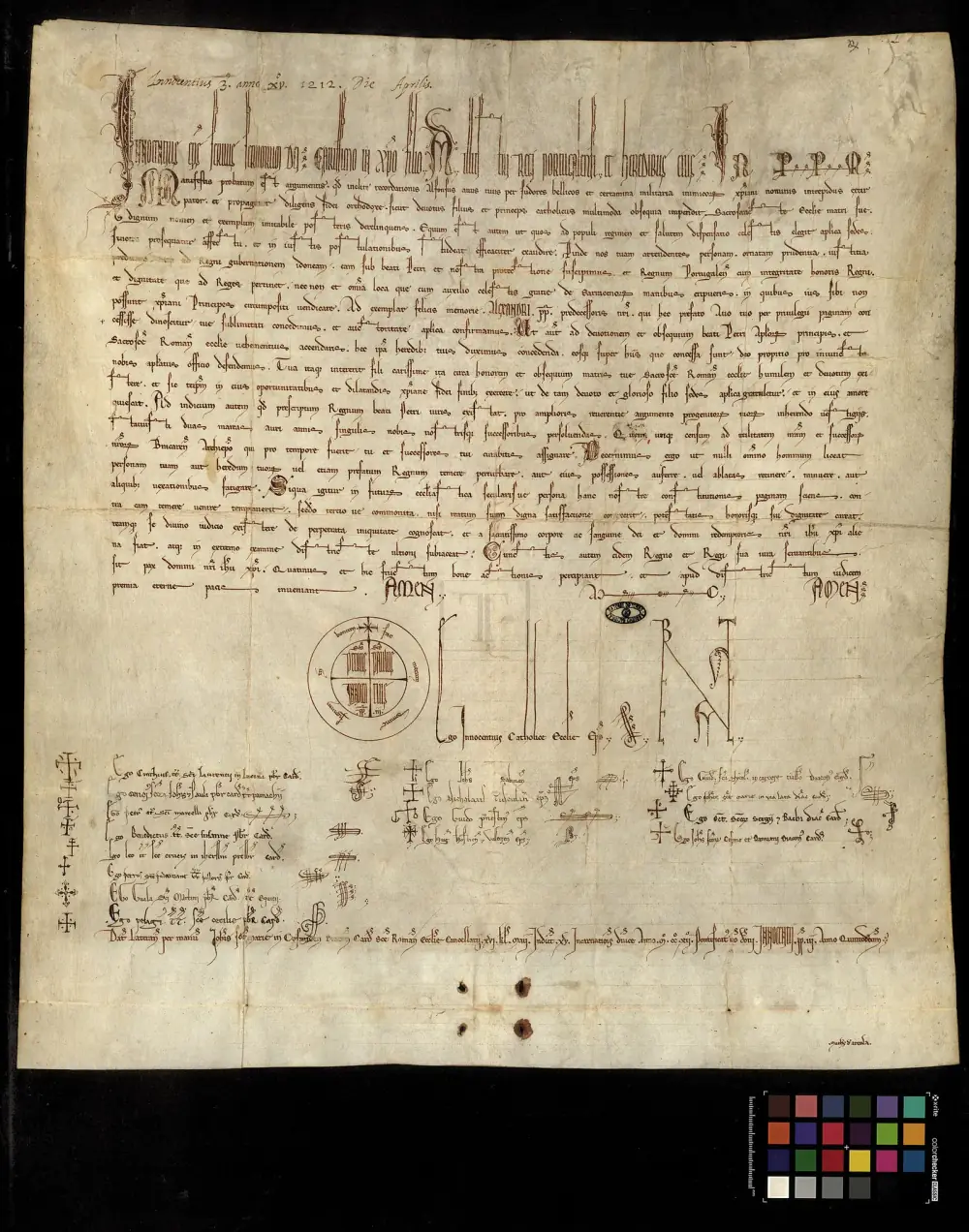
Papal support had a price. In April 1212 the same pope had confirmed Afonso's kingdom, taken it under papal protection and accepted a yearly tribute, to be paid through the archbishop of Braga. The will of 1214 shows the debt: it begs the pope, as father and lord, to protect the queen, the children and the kingdom.
What the will says
The first concern is the crown. The kingdom goes whole to the infante Sancho, Afonso's son by Urraca. If Sancho dies without children it passes to the eldest son of the marriage and, if there are no sons, to the eldest daughter. If the heir has not reached revora (robora in Latin), the age of majority, the child stays with the queen, and the kingdom is held by the queen and the king's vassals until then.
“And if I am dead, I beg the pope as father and lord, and I kiss the ground before his feet, that he receive into his keeping and under his protection the queen and my sons and the kingdom.”
The castles were the other worry. If the heir is a minor, the knights who hold the king's castles are to hand them to the great lords, the ricos-homens, who will give them to the new ruler on coming of age. The king had just seen what happened when castles answered to someone else.
Then comes the money. The queen gets half of everything movable. From the other half the king's debts are paid first; two thirds of what remains goes in equal shares to his children by Urraca, and one third is for his soul. That third pays for his body to be carried to Alcobaça wherever he dies, and for fixed sums in morabitinos, most of them to churches that must keep the anniversary of his death, say a mass for him every day and remember him three times a year.
Fixed bequests in Afonso II's will of 1214
morabitinos
Sums as written in Roman numerals in the Braga copy, a bar over a numeral meaning thousands. They add up to 13,300 morabitinos, before the rest of the king's third was split five ways between Alcobaça, Santa Cruz of Coimbra, the Templars, the Hospitallers and gifts made by the prelates for his soul.
Show the data
| Bequest | |
|---|---|
| The pope | 3,000 |
| Santiago de Compostela | 2,300 |
| Alcobaça abbey | 2,000 |
| Santa Maria de Rocamador | 2,000 |
| Chapter of Idanha | 1,000 |
| Canons of Tui | 1,000 |
| Monastery of São Jorge | 500 |
| São Vicente, Lisbon | 500 |
| Knights of Évora | 500 |
| Knights of Palmela | 500 |
The list leaves out every cathedral of the kingdom except Idanha, the old see restored at Guarda, and favours Santiago and Tui across the border in Galicia. Herculano, Portugal's great nineteenth-century historian, read the same pattern in the king's will of 1221 as a sign of his ill will towards his own bishops.
The executors are two archbishops, Braga and Santiago, and five bishops. If they cannot agree, the majority decides. Near the end the king asks the pope again to see that the will is carried out and that nobody can go against it.
Thirteen copies, two survivors
Royal wills did not go into the chancery's books. They circulated only as sealed originals, entrusted to churchmen whose archives were the safest places in the kingdom. Afonso II had 13 made, each the same as the others, so that his wishes could be carried out from any of them.
| Copy | Keeper | Known today |
|---|---|---|
| 1 | Archbishop of Braga | Yes: Torre do Tombo, Lisbon |
| 2 | Archbishop of Santiago de Compostela | No |
| 3 | Archbishop of Toledo | Yes: cathedral archive, Toledo |
| 4 to 8 | Bishops of Porto, Lisbon, Coimbra, Évora and Viseu | No |
| 9 | Master of the Templars | No |
| 10 | Prior of the Hospitallers | No |
| 11 | Prior of Santa Cruz, Coimbra | No |
| 12 | Abbot of Alcobaça | No |
| 13 | The king's own store (reposte) | No |
The Braga copy is catalogued as Mitra Arquiepiscopal de Braga, maço 1, n.º 48; Pedro de Azevedo first published it in 1903 to 1905. The Toledo copy was found in the cathedral chapter's archive by José Antonio García Luján of the University of Toledo, and Avelino de Jesus da Costa published the two together in 1977.
The two survivors are not identical. The Lisbon copy has 1,412 words and the Toledo copy 1,413, with small variations between them. Saul António Gomes, a historian of the royal wills, thinks both were copied in translation from a common draft, perhaps in Latin, by professional scribes of the chancery.
The sources do not say why the will was written in the vernacular. The chancellor was still Julião Pais, a lawyer probably trained in Bologna, in office since the early 1180s; on 8 April 1214, at Santarém, he had signed the king's confirmation of that town's charter. Afonso's later wills went back to Latin.
| Date | Language | Copies | Note |
|---|---|---|---|
| 27 June 1214, Coimbra | Galician-Portuguese | 13 | Two known copies, Lisbon and Toledo |
| 28 January 1218 | Latin | 13 | Sealed with the king's lead seal |
| November 1221 | Latin | 8 | The will in force at his death; one copy kept by the king |
The oldest Portuguese text?
In the first half of the twentieth century the will of 1214 was the accepted starting point of written Portuguese. Philologists dated the beginning of the language's archaic period from it, an early outlier, since documents in Portuguese only multiplied in the chancery of Afonso III from 1255.
Older candidates have come and gone. Two private documents dated 1192 and 1193, an Auto de Partilhas and the will of one Elvira Sanches, turned out to be later Portuguese versions of Latin originals, made in the late thirteenth century or after. The historian Avelino de Jesus da Costa argued this from the late 1950s, and the philologist Luís Filipe Lindley Cintra agreed.
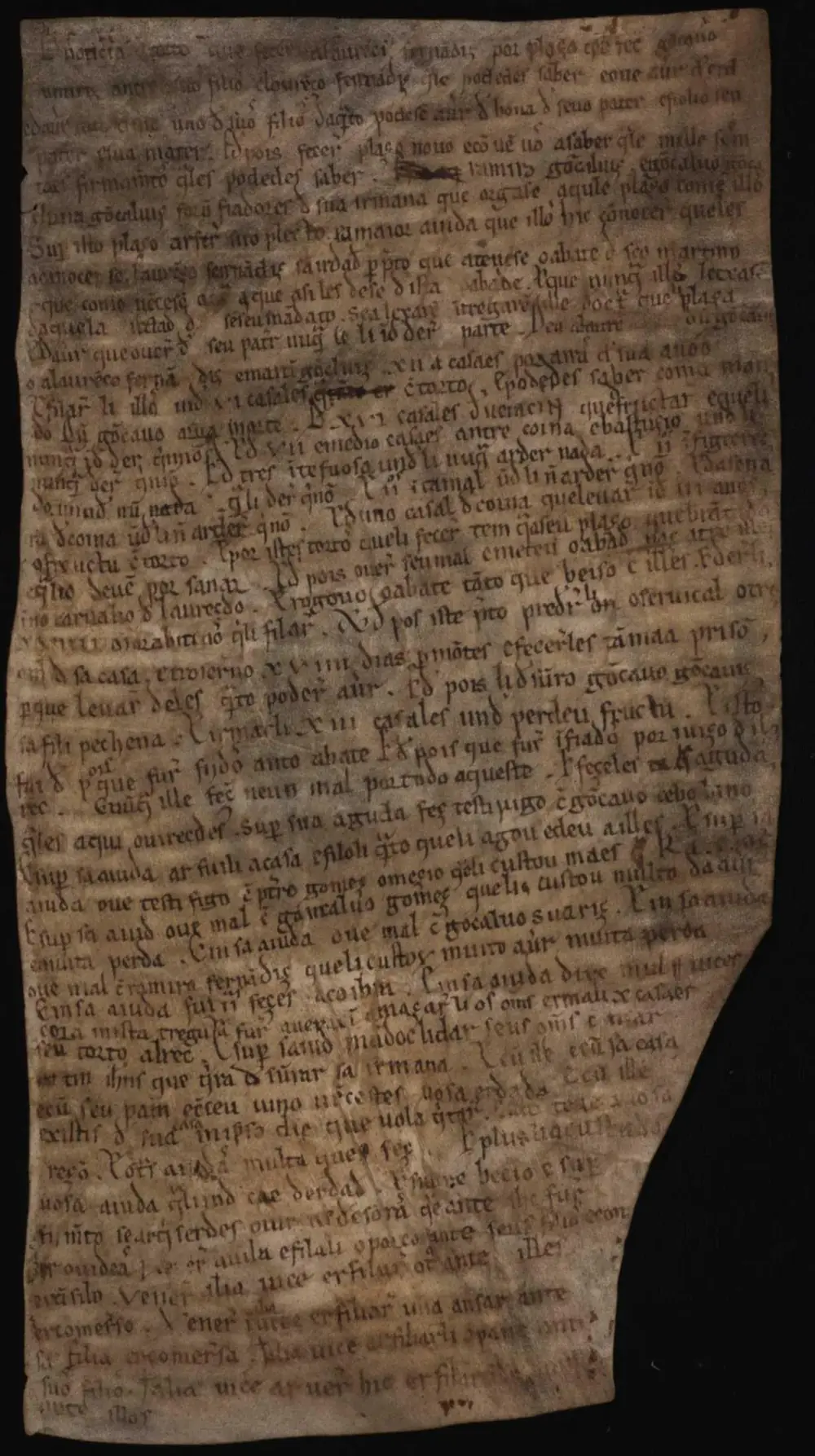
The Notícia de Torto is the will's closest rival. It is a private record, kept by the monastery of Salvador de Vairão, of the wrongs done to a nobleman, Lourenço Fernandes da Cunha, by the sons of Gonçalo Ramires in a quarrel over an inheritance. It carries no date. Avelino de Jesus da Costa placed it between 1211 and 1216, perhaps about 1214, and most scholars follow him; one has argued for a date before 1206. It may be a little older than the will, or a little younger.
In 1999 the linguist Ana Maria Martins went further back. In monastic archives in the Torre do Tombo she found notes, lists and wills written between 1175 and 1252 and argued that, whatever their spelling, their grammar was already Portuguese. The oldest is the Notícia de fiadores of 1175, a list of men who stood surety for the nobleman Paio Soares Romeu (Pelágio Romeu in the text) and the sums in soldos each was liable for.
On 5 December 2001 the Galician philologist José António Souto Cabo, going through the same bundle of the Braga archbishops' papers that holds the will, found a pact between two brothers, Gomes Pais and Ramiro Pais, who agreed not to harm each other and to give each other help. He dates it to the second half of the twelfth century and counts it, with three other texts he puts before 1200, as Galician-Portuguese.
António Emiliano disagreed. For him these texts belong to a long Latin-Portuguese notarial tradition that bent towards the spoken language without breaking from Latin, and he held that the will and the Notícia de Torto are the oldest known texts in Portuguese. The argument turns on where a Latin written with Portuguese habits ends and Portuguese begins.
“The Latin-Portuguese notarial tradition never reached, except sporadically and at isolated points, the level of vernacularisation that the royal will of 1214 shows.”
| Text | Date | Kind | Status |
|---|---|---|---|
| Pact of Gomes Pais and Ramiro Pais | Undated, second half of the 1100s | Private agreement between brothers | Galician-Portuguese for Souto Cabo, who found it in 2001 |
| Notícia de fiadores | 1175 | Private list of guarantors | Portuguese for Martins; Latin-Portuguese for Emiliano |
| Notícia de Torto | Undated, about 1211 to 1216 | Private account of a feud | Accepted as Portuguese, though still close to Latin habits |
| Will of Afonso II | 27 June 1214 | Royal will | Oldest dated royal document in Portuguese |
| Auto de Partilhas; will of Elvira Sanches | Dated 1192 and 1193 | Private documents | Later Portuguese versions of Latin originals, late 1200s or after |
After 1214: laws, an archbishop and two Latin wills
The will fits a reign that put a great deal in writing. Gomes calls Afonso II a king of strong legal instincts who deserves to be remembered as a lawgiver rather than as the Fat. The general laws issued at Coimbra in 1211 survive only in copies made in Portuguese in the fourteenth and fifteenth centuries, and in 1217 the chancery began a register, copying in the full text of the documents it issued.
In August 1220 royal commissioners questioned witnesses parish by parish between the rivers Lima, Douro and Tua, largely in the lands of the archbishop of Braga, Estêvão Soares da Silva. King and archbishop were in open conflict from 1219 over taxes, church land and clerics tried in royal courts; the archbishop excommunicated Afonso and fled to Rome.
Rome, whose protection the will of 1214 had begged, took the archbishop's side. On 22 December 1220 Pope Honorius III ordered an interdict on Portugal, halting church services, if the king did not submit. Afonso made his third will, in Latin, in November 1221, under Rome's censures.
A reconciliation was negotiated in 1222, but by August of that year the king could no longer sign his own charters, and the talks dragged on. He died on 25 March 1223, aged 37. His son Sancho II, the infante named as heir in 1214, became king at 13, and the final peace with the princesses of Montemor was signed only in the new reign.
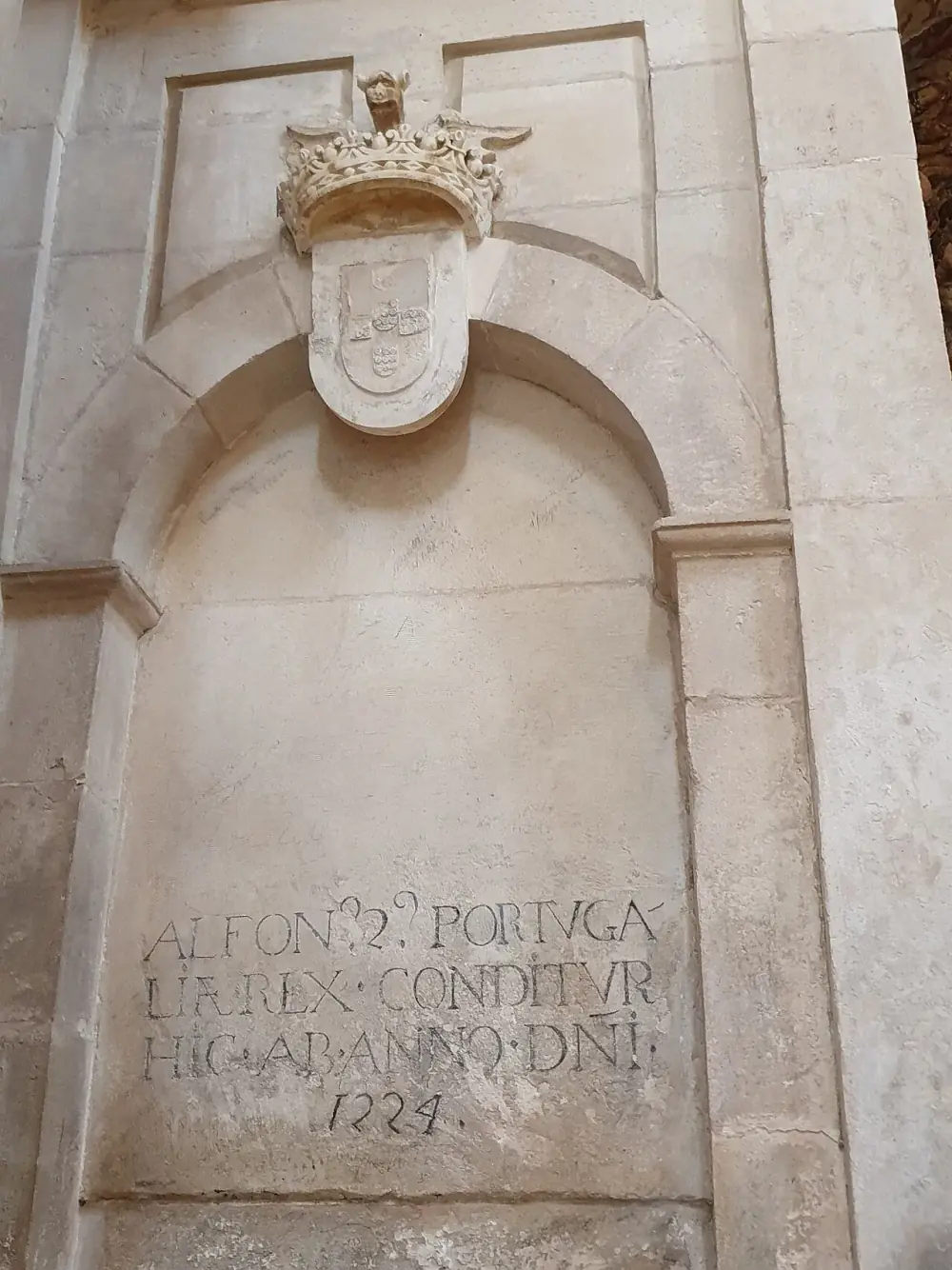
Afonso was buried at Alcobaça, as his will of 1214 asked. His tomb now stands in a side chapel of the abbey church, facing that of his son Afonso III.
23 April 1185
Born in Coimbra
1208
Marries Urraca of Castile
1211
Becomes king in March; general laws issued at Coimbra
November 1211
Siege of his sisters in Montemor-o-Velho
16 April 1212
Innocent III's bull Manifestis probatum
November 1212
Three kings agree a truce at Coimbra
15 June 1214
Queen Urraca makes her will
27 June 1214
The king's will, in Portuguese, in 13 copies
1217
Chancery register begins
28 January 1218
Second will, in Latin
August 1220
General inquiries in the north
22 December 1220
Honorius III threatens an interdict
November 1221
Third will, in Latin
25 March 1223
Dies; Sancho II succeeds
Why it still matters
The will did not make Portuguese the language of government. Afonso's own later wills were in Latin, and royal charters only tilted towards Portuguese under his grandson Dinis, mainly from 1284. What it shows is that by 1214 the king's scribes could write a long, careful legal text in the vernacular.
Read aloud, much of it is still recognisable to a Portuguese speaker: mia molier for minha mulher, my wife; meu reino, my kingdom; en paz, in peace. The Torre do Tombo built its online exhibition on eight centuries of the Portuguese language around it, and in May 2020 featured it again for World Portuguese Language Day.
FAQs
What is the will of Afonso II?
It is the will that King Afonso II of Portugal had drawn up in Coimbra on 27 June 1214. It names his son Sancho as heir, sets out a regency if the heir is a minor, asks the pope to protect his family, divides his movable wealth and leaves sums to churches and military orders in return for masses. It is written in Galician-Portuguese, not Latin.
Is the will of Afonso II the oldest text in Portuguese?
It is the oldest dated royal document in Portuguese. The undated Notícia de Torto, usually placed between 1211 and 1216, may be as old or a little older. Ana Maria Martins argues that private documents from as early as 1175, such as the Notícia de fiadores, are already Portuguese, and José António Souto Cabo puts a pact between two brothers in the second half of the twelfth century. Others, such as António Emiliano, see texts like the Notícia de fiadores as Latin written with Portuguese habits.
Where are the copies of the will today?
Thirteen were made. Two are known: the copy kept by the archbishops of Braga, now in the Torre do Tombo in Lisbon, and the copy sent to the archbishop of Toledo, in that city's cathedral archive.
Why was it written in Portuguese and not Latin?
No document explains it. The historian Saul António Gomes suggests the two surviving copies were translated by chancery scribes from a common draft, perhaps in Latin. The king's two later wills, of 1218 and 1221, are in Latin.
When did Portuguese become the language of royal documents?
Gradually. After 1214 royal documents in Portuguese remain rare until the chancery of Afonso III from 1255, and Portuguese became the usual language of royal charters under King Dinis, mainly from 1284.
On the timeline
Open the timelineNearby moments from from county to kingdom (1096–1249).
Birth, probably in Coimbra, of Afonso III, the king who completed Portugal's share of the Reconquista by taking Faro in 1249 and fixed the Guadiana border with Castile in 1267. Under him Lisbon gradually became the court's main seat, though the king kept travelling.
King Sancho I of Portugal dies in Coimbra. Remembered as 'the Populator' (o Povoador) for resettling the frontier, he granted charters to towns such as Guarda (1199) and briefly took Silves from the Almohads in 1189.
Battle of Las Navas de Tolosa. The combined armies of Castile, Aragon and Navarre crush the Almohad Caliph al-Nasir on a plain in the Sierra Morena. Afonso II, ill and at war with his sisters and León, sends no royal army, but Portuguese knights and many foot soldiers fight as volunteers, as Rodrigo of Toledo and Lucas of Tuy note; the victory tips the Iberian balance decisively against the Almohads.
Afonso II's will, 1214
King Afonso II of Portugal, ill and not yet 30, has his will drawn up in Coimbra. Written in Galician-Portuguese rather than Latin and made in 13 copies, of which two are known (in Lisbon and Toledo), it is the oldest dated royal document in Portuguese and a landmark in the history of the written language.
King Afonso II of Portugal dies, aged 37. Known as 'the Fat' (o Gordo), he issued the kingdom's first general laws at an assembly in Coimbra in 1211, often counted as the first Cortes (parliament).
Death of Saint Anthony of Padua at Arcella, on the outskirts of Padua, after he fell ill at Camposampiero and asked to be carried to the city. Born in Lisbon in the 1190s and baptised Fernando (later tradition adds the surname Martins de Bulhões), he is canonised 352 days after his death, one of the swiftest canonisations of the Middle Ages, and is Lisbon's best-loved saint: his feast day, 13 June, is the city's municipal holiday.
Sancho II dies in exile in Toledo. The king who had taken much of the Alentejo and Algarve from the Moors was declared unfit to rule by Pope Innocent IV and lost a civil war to his brother, the future Afonso III. Legend says the alcaide of Coimbra, Martim de Freitas, refused to surrender his castle until he had seen the dead king in Toledo with his own eyes.
Coming up in history
All long reads 30 June 1991Rui Costa's penalty at the Luz: Portugal's second youth world title, 1991
 1 July 1867Portugal abolishes the death penalty for civil crimes: 1 July 1867
 3 July 1850Alfredo Keil: the Lisbon painter who wrote the music of A Portuguesa
 4 July 1937The bomb in Avenida Barbosa du Bocage: the 1937 attempt on Salazar
20 sources
Archives, scholarship and reporting this article was checked against.
- 1
Transcrição do Testamento de D. Afonso II (after Avelino de Jesus da Costa)Arquivo Nacional Torre do Tombo
- 2
The wills of the kings of Portugal between the 12th and 14th centuries (Saul António Gomes)Rättshistoriska studier 33, Institutet för rättshistorisk forskning (Olin Foundation), Stockholm, 2025
- 3
Novos indicadores para os limites do português arcaico (Rosa Virgínia Mattos e Silva)Revista do GELNE, vol. 4, no. 2, 2002
- 4
A edição e interpretação da documentação antiga de Portugal: problemas e perspectivas da filologia portuguesa face ao estudo das origens da escrita em português (António H. A. Emiliano)Aemilianense I (2004), pp. 33-63 (via Hispadoc)
- 5
A guerra em Portugal no reinado de Afonso II, no contexto de las Navas de Tolosa (Miguel Gomes Martins)La Península Ibérica en tiempos de Las Navas de Tolosa, Madrid, 2014, pp. 443-458 (via medievalistas.es)
- 6
Inquirir em nome de Afonso II: a jurisdição régia a serviço da aristocracia cristã (Portugal, século XIII) (Maria Filomena Coelho)Tempo, vol. 26, no. 1, 2020 (SciELO)
- 7
História de Portugal, vol. II (Alexandre Herculano)Bertrand, Lisbon, 1846 (Internet Archive)
- 8
- 9
- 10
Corpus Informatizado do Português Medieval: Testamento de D. Afonso II, manuscritos de Lisboa (TL) e de Toledo (TT)Centro de Linguística da Universidade NOVA de Lisboa
- 11
“E meu reino siga”: a leitura digital do testamento de Afonso II (Dália Guerreiro)Universidade de Évora / CIDEHUS, II Seminário Internacional História e Língua, 2014
- 12
- 13
O retábulo do Trânsito de São Bernardo do Real Mosteiro de Santa Maria de Alcobaça: história, execução e conservação (André Varela Remígio)Conservar Património, 15-16, 2012 (Associação Profissional de Conservadores-Restauradores de Portugal)
- 14
Em português, parecido com o da “Notícia de Torto”: os mais antigos documentos em (galego-)português e o Pe. Avelino de Jesus da Costa (José António Souto Cabo)Madrygal. Revista de Estudios Gallegos 27 (2024), e104502, Universidad Complutense de Madrid
- 15
- 16
- 17
- 18
- 19
Sancho II de Portugal (Humberto Baquero Moreno)Real Academia de la Historia, Diccionario Biográfico Español (Historia Hispánica)
- 20
A relevância da escrita e a oficialização do uso da língua portuguesa na documentação régia de Portugal no tempo de D. Dinis (1279–1325)Cleusa Teixeira de Sousa, Acta Scientiarum. Education, vol. 44 (2022), e54713
Image credits
- The copy of Afonso II's will that was kept by the archbishops of Braga, dated at Coimbra on 27 June 1214. The parchment, 245 by 495 millimetres, is now in the Torre do Tombo in Lisbon. Afonso II de Portugal, Public domain, via Wikimedia Commons.
- Afonso II as imagined by António de Holanda in the Genealogia dos Reis de Portugal, painted between 1530 and 1534. No portrait from his lifetime survives. António de Holanda, Public domain, via Wikimedia Commons.
- The castle of Montemor-o-Velho, near the mouth of the Mondego, where Teresa and Sancha held out against their brother's troops in the winter of 1211 to 1212. Photographed in 2022. Hugo Ferreira, CC BY-SA 4.0, via Wikimedia Commons.
- The bull Manifestis probatum of Innocent III, dated 16 April 1212, which reused the name and opening words of Alexander III's bull of 1179 recognising Afonso Henriques as king. In it the pope confirmed Afonso II's kingdom and took it under papal protection. Torre do Tombo, Lisbon. The colour chart was added by the archive's photographer. Pope Innocent III, Public domain, via Wikimedia Commons.
- The Notícia de Torto, an undated account of a family feud from the monastery of Salvador de Vairão, written about 1210 to 1216. Torre do Tombo, Lisbon. Unknown author, Public domain, via Wikimedia Commons.
- Afonso II's burial place in the abbey church of Alcobaça. The later Latin inscription says the king has lain here since 1224, the year after his death. Photographed in 2022. GualdimG, CC BY-SA 4.0, via Wikimedia Commons.