

The Hotel da Penina, Henry Cotton and the making of the Algarve, 1966
When the Hotel da Penina opened on drained rice fields outside Portimão, the Algarve had had an airport for barely a year. Six years later foreign guests were spending almost 1.5 million nights a year in the region's hotels, and the coast is still paying for how fast it grew.
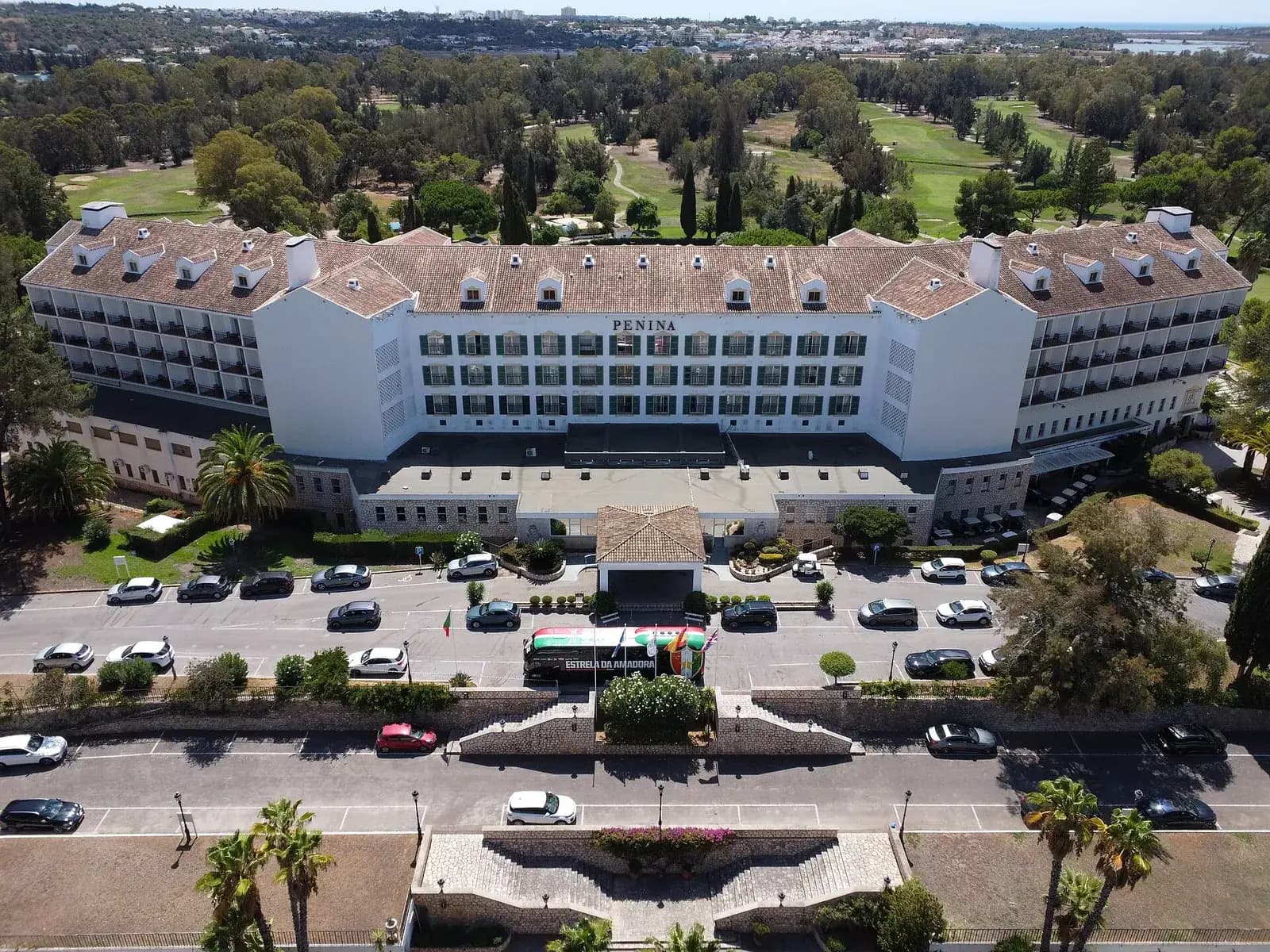
At a glance
- On 5 November 1966 President Américo Tomás opened the Hotel do Golfe da Penina and its golf course, about four kilometres outside Portimão on the road to Lagos.
- The 18-hole course, designed by the British three-time Open champion Henry Cotton on drained rice fields, had opened to the public on 1 June 1966. It was the Algarve's first grass golf course.
- The hotel, built by an Anglo-Portuguese company whose managing directors included John Stilwell, had 214 air-conditioned rooms; a regional weekly called it the largest and most luxurious hotel in the Algarve.
- Faro airport had opened in July 1965. Nights spent by foreign guests in Algarve hotels rose from about 30,000 in 1960 to almost 1.5 million in 1972.
- Planners warned from 1961 that the coast would be spoiled. Their plans were never enforced, and unchecked building, sewage, erosion and water shortages followed.
A president at the golf hotel
On Saturday 5 November 1966 the President of the Republic, Admiral Américo Tomás, began a three-day official visit to the Algarve by opening a hotel. The Hotel do Golfe da Penina stood about four kilometres outside Portimão, on the road to the neighbouring town of Lagos. Tomás declared the golf course and the hotel open, lunched there and took his time touring what the Lisbon paper Diário de Lisboa called its luxurious and functional facilities.
At the town hall in Portimão, the mayor told him that the hotel and its course made up “a tourist complex unique in the country”. By mid-afternoon the presidential party had moved on to Tavira, where Tomás and the justice minister, Antunes Varela, opened a new courthouse. That night the President slept at the inn of São Brás de Alportel.
The Tavira weekly Povo Algarvio called the Penina “the largest and most luxurious hotel in the Algarve”, with one of the biggest golf courses in Europe. The tour was part of the regime's celebrations of the fortieth anniversary of what it called the National Revolution of 1926. In Tavira the crowds turned out in persistent rain and unusual cold.
That day's Diário de Lisboa put the opening at the top of its front page, beside Florence under floodwater and an interview in which the dictator, António de Oliveira Salazar, discussed Portugal's overseas territories with the French paper Le Figaro.
A remote province with no airport
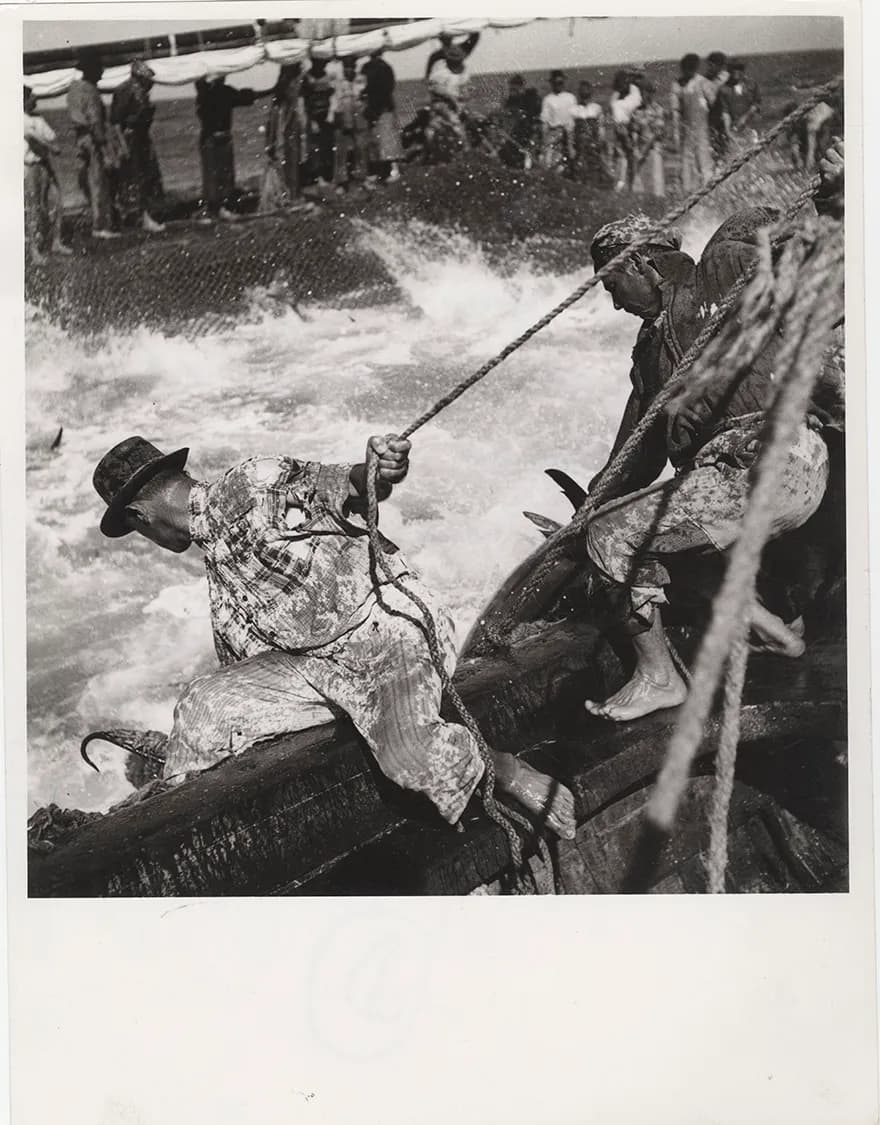
At the start of the 1960s the Algarve, Portugal's southern coast, was still cut off from the rest of the country. The historian Joana Gaspar de Freitas and the marine geologist João Alveirinho Dias describe a region with no airport, no port able to take cruise ships, badly laid roads, an obsolete railway to Lisbon and far too few hotel beds. Its people lived mostly from farming and fishing, and the state's first tourism plan, in 1963, promised that planned growth would not harm either.
The Estado Novo, the authoritarian regime that would fall in April 1974, wanted foreign currency, and by the mid-1960s it was fighting a colonial war on several fronts in Africa. Spain was already earning millions from tourists. In 1965 the government's interim development plan declared the Algarve a privileged tourism region, and the state backed private investors there.
Some saw the danger early. In February 1961 the architect Francisco Keil do Amaral warned in Diário de Lisboa that speculators after “large and quick profits” were already spoiling the coast. Keil himself finished a tourism study of the Algarve for the public works minister in 1962, and state bodies commissioned a string of others, among them a regional plan by the Italian architect Luigi Dodi that divided the coast into eleven sectors. Dodi wanted stretches of the cliffs between Sagres and Quarteira left unbuilt and limits on height and density in the towns, but his plan was never made binding.
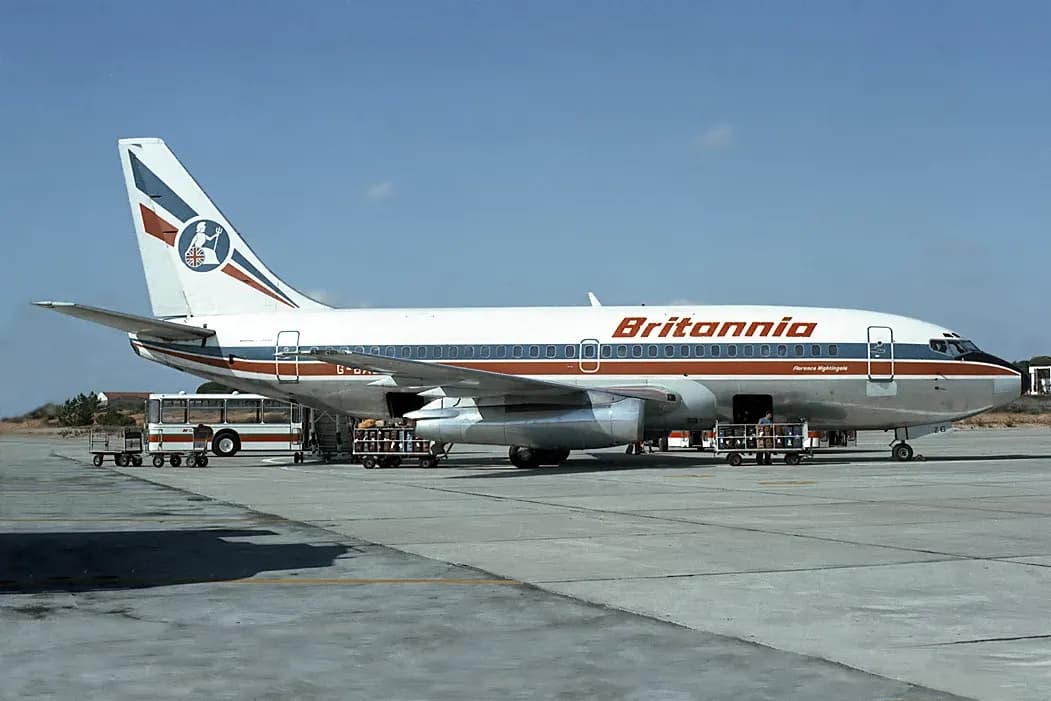
The change that mattered came by air. Américo Tomás opened Faro airport on 11 July 1965, and a TAP aircraft from Lisbon landed just before 12.30 carrying dozens of guests. In 1966, the year the Penina opened, nearly 59,000 passengers passed through it.
“It is not only an improvement for the Algarve, because it is an improvement for the whole country.”
From rice fields to fairways
The Penina was a British idea. John Stilwell, whom Observador credits with imagining and founding it, invited Henry Cotton in the early 1960s to design a golf course on a rice field at the Tapada da Penina. Cotton had won the Open Championship three times, in 1934, 1937 and 1948, and eleven national Opens elsewhere in Europe.
The land was flat and waterlogged. Cotton had to dry it out, and he used the drainage ditches as hazards. Then he planted trees, though the number depends on who tells it: about 250,000 trees and flowering shrubs according to the local paper in 1966, about 300,000 according to Observador, and close to 400,000 in an American golf writer's account quoted by the resort.
The course opened to the public on 1 June 1966, five months before the hotel. The weekly Comércio de Portimão described 18 holes over 72 hectares, 6,739 metres long, which it called the longest course in Europe. An automatic sprinkler system fed by 39 kilometres of irrigation pipes watered it, using 2,000 cubic metres of water a day. Because of the mild climate, the paper added, it could be played all year round.
- Course opened
- 1 June 1966, to the public
- Hotel opened
- Saturday 5 November 1966, by President Américo Tomás
- Place
- About 4 km from Portimão on the road to Lagos
- Course
- 18 holes on 72 hectares, 6,739 metres, designed by Henry Cotton
- Hotel
- 214 air-conditioned rooms on three floors, designed by Leonardo de Castro Freire
- Owners
- Sociedade Turística da Penina, an Anglo-Portuguese company, with the Swiss firm Gauer Hotels
The architect Leonardo de Castro Freire designed the hotel as a long, low building of only three floors in what the paper called the Algarve style, with 214 air-conditioned rooms decorated by the Conde de Lencastre. Its owner, the Sociedade Turística da Penina, was run by Stilwell, Vasco Taborda Ferreira and Lionel E. Webb, and worked with the Swiss company Gauer Hotels.
The plans went well beyond a hotel. They included a riding school, two swimming pools, one of them Olympic size, tennis courts, clay-pigeon shooting, a beach club at Alvor with a planned cable car link, an airstrip and about 150 private villas. The paper concluded that the Penina was the most notable venture for the development of tourism in the Algarve.
It was the region's first grass golf course, though not the first golf of any kind. Golf reached the Algarve in 1937, when nine holes of packed earth and burnt oil were laid out at Praia da Rocha, near Portimão. Little is known about that course, the president of the Portuguese Golf Federation told Observador, except that it soon closed. Within a few years of the Penina, Vale do Lobo and Vilamoura were being developed further east.
A Beatle in the bar
Two years after the opening, the Penina got publicity no tourist board could have bought. In December 1968 Paul McCartney was on holiday at the hotel with Linda Eastman, whom he later married. In the version told by Observador, at about one in the morning the couple stopped at the hotel to change five pounds into escudos before heading on to Sobe e Desce, a nightclub in Carvoeiro. The resident band, Jotta Herre, recognised him, and he stayed playing with them until four.
That night he made up a tune and named it after the hotel. McCartney later recalled sitting in on drums and the band asking him for a song. Jotta Herre released “Penina” on an EP in March 1969, and the Portuguese singer Carlos Mendes recorded his own version the same year. On 9 January 1969, during the Beatles' Get Back sessions in London, McCartney played it with John Lennon and Ringo Starr.
The song brought foreign music journalists to the Algarve, from the Daily Mail and the New Musical Express in London to Rock and Folk in Paris. Jornal do Algarve, reporting in July 1969 that the song had just come out on record abroad, described it as a short refrain McCartney had composed during his stay in the Algarve. It noted drily that the visitors liked the hotel more than the tune.
“If they did not always appreciate the bars of “Penina”, they were delighted by the views of the great hotel that received them and by the typical scenery of our province.”
McCartney never released the song himself. Asked in 1994 whether he ever would, he answered: “I shouldn't think I'd ever record it myself!”
From thousands of nights to millions
The Penina opened as the Algarve took off. Foreign guests spent about 30,000 nights in the district's hotels in 1960, 500,000 in 1967 and almost 1.5 million in 1972. Freitas and Dias put the growth down partly to Faro airport and partly to northern European tour operators looking for beaches that were not yet crowded.
Nights spent by foreign guests in Algarve hotels, 1960 to 1972
thousand nights
Figures from the geographer Carminda Cavaco, as cited by Freitas and Dias (2016). They give only these four years; the Penina opened in 1966 and Faro airport in 1965.
Show the data
| Foreign guests' nights in hotels in the district of Faro | |
|---|---|
| 1960 | 30 |
| 1967 | 500 |
| 1970 | 1,114 |
| 1972 | 1,494 |
The whole country was changing the same way. Portugal received a million tourists in 1964, two million in 1967 and three million in 1970, according to the national statistics cited by the architectural historian Susana Lobo.
Golf grew with it. By 2015 the region had more than 40 courses, and golfers played more than 1.2 million rounds there that year, a record. In 2019 more than 700 golf tour operators voted the Algarve the world's best golf destination for 2020. Of the roughly 90 courses in Portugal in 2024, nearly half were in the Algarve.
The Penina kept a place in national life. In January 1975, nine months after the revolution of April 1974 ended the dictatorship, troops cordoned off the area, set up road checkpoints and moved the hotel's guests out for the summit between Portugal and Angola's three liberation movements that produced the Alvor Agreement on Angolan independence. The Portuguese Open was first played on Cotton's course in 1973, when the Spaniard Jaime Benito beat Bernard Gallacher in a play-off, and came back nine more times.
1937
A short-lived nine-hole earth course is laid out at Praia da Rocha
23 February 1961
Keil do Amaral warns in Diário de Lisboa that speculation is spoiling the coast
1962
Keil do Amaral finishes a tourism study of the Algarve for the public works minister
1965
The Algarve is declared a privileged tourism region
11 July 1965
Américo Tomás opens Faro airport
1 June 1966
Henry Cotton's course at Penina opens to the public
5 November 1966
Tomás opens the Hotel do Golfe da Penina
December 1968
Paul McCartney improvises “Penina” with the hotel band
1973
The Portuguese Open is played at Penina for the first time
January 1975
The Penina hosts the summit on Angolan independence
1999
A coastal zone plan for Burgau to Vilamoura is approved
June 2023
Drought: golf irrigation allowances are cut to 20 per cent
2025
Faro airport handles more than 10.3 million passengers
What the coast paid
The planners' fears came true. Freitas and Dias describe building outrunning the rules from the 1960s on, with breaches accepted as the price of progress. After April 1974 came what one writer called the first great wave of building in the Algarve, when dozens of hotels and holiday villages were approved with no thought for their setting, or for whether they could be supplied with drinking water and had somewhere to send their sewage.
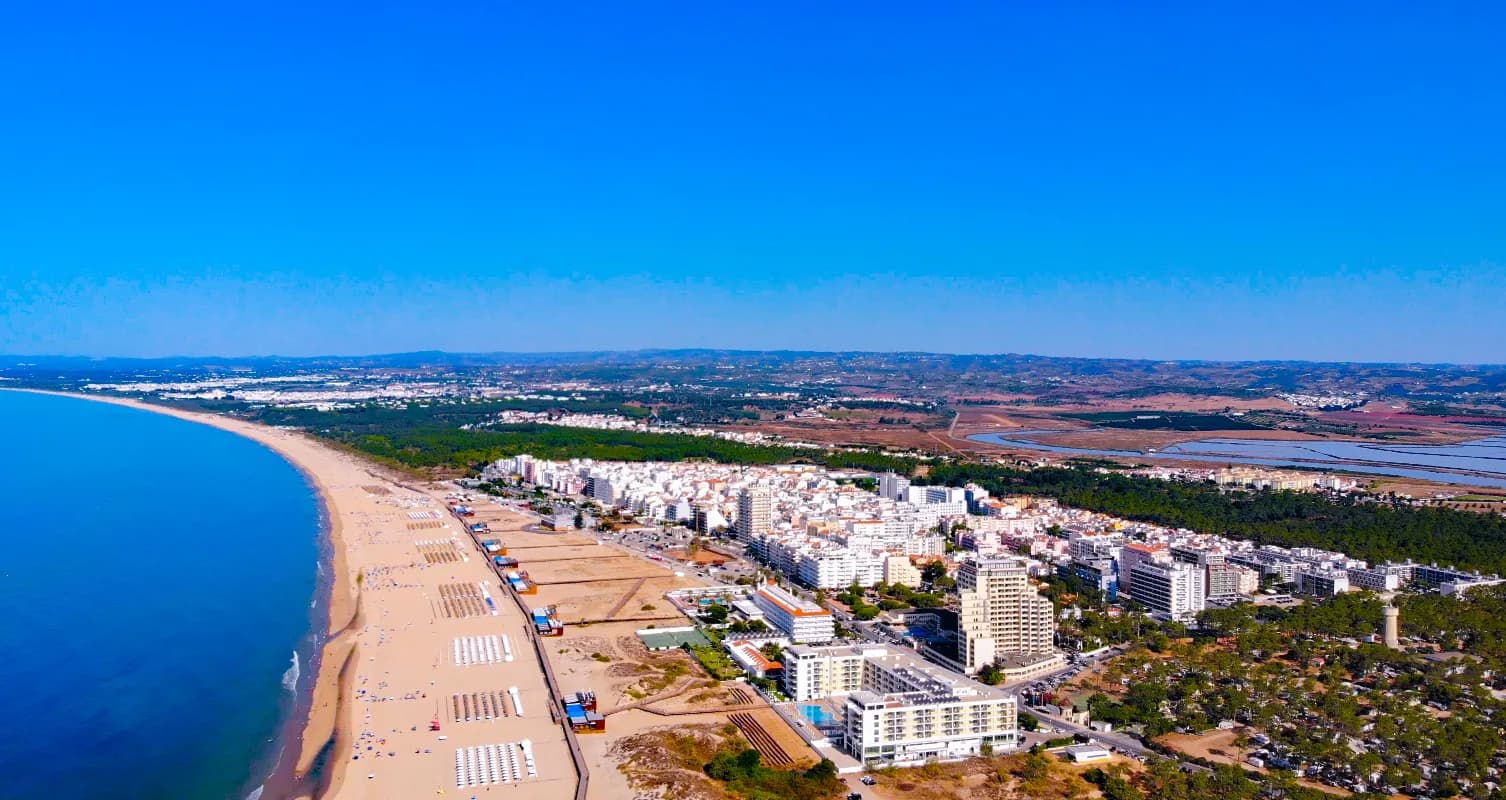
By the early 1980s the bills were arriving. In summer the taps ran short, and what water came out was often brackish. In Albufeira the town's sewage reached the sea through a pipe on the beach, and every year tourists went home with dysentery. At Monte Gordo, near the Spanish border, a ten-storey hotel went up without a permit, and a beach of small houses turned into a town of large blocks.
The shore itself began to give way. Erosion is natural on this coast, but building on the seafront and the loss of river sand to dams, marinas and groynes have sped it up since the middle of the twentieth century. Buildings on the cliffs have collapsed, among them the old Forte Novo and houses at Vale do Lobo, and at spring tides the sea floods streets on the Ilha de Faro.
When coastal zone plans finally came in the 1990s, they had to accept what was already there. The plan for the coast between Burgau and Vilamoura, approved in 1999, in effect ratified the building of the 1970s and 1980s. Exemptions for “projects of national interest” kept new resorts coming: in 2009 there were twelve in the Algarve, representing 14,000 more beds.
Golf brought its own bill. In 1966, by the local paper's account, the Penina course alone used 2,000 cubic metres of water a day. In January 2024, with the Algarve's reservoirs at a quarter of capacity, Diário de Notícias reported that in the drought of the previous June the government had cut golf courses' irrigation quotas to 20 per cent, or 50 per cent for courses able to reuse treated wastewater. The paper put tourism's share of the region's water use at about 12 per cent, an environment agency estimate, and golf's at about 6 per cent, a figure from the golf industry.
The Penina today
The Penina is still a golf hotel, now a five-star resort with three courses: Cotton's 18-hole Championship course, one of the oldest in the country, and two shorter ones. Among its furnishings is a piano that once belonged to Queen Amélia.
Cotton spent much of his later life in Portugal and Spain. English Heritage says he moved back to London in 1986, four years after the death of his partner, Toots, and died in 1987 of a heart attack, having accepted a knighthood he did not live to receive. He was the first golfer to be knighted. Observador's account says he died at the Penina.
The traffic has kept growing. Faro airport, officially named Aeroporto Gago Coutinho since 2022, handled more than 10.3 million passengers in 2025, its sixtieth year, and 33 airlines flew there.
| Measure | Year | Figure |
|---|---|---|
| Nights spent by foreign guests in Algarve hotels | 1960 | About 30,000 |
| Nights spent by foreign guests in Algarve hotels | 1972 | About 1.5 million |
| Hotel guests in the Algarve | 2013 | 2.22 million foreign and 930,000 Portuguese |
| Passengers at Faro airport | 1966 | Nearly 59,000 |
| Passengers at Faro airport | 2025 | More than 10.3 million |
| Grass golf courses in the Algarve | 1966 | 1 |
| Golf courses in the Algarve | 2019 | 40 |
| Rounds of golf played in the Algarve | 2015 | More than 1.2 million |
| Water for the Penina course | 1966 | 2,000 cubic metres a day |
| Golf's share of Algarve water use | 2024 | About 6 per cent |
Hotel nights and guests are different measures and should not be compared directly. Guest figures for 2013 are from Turismo do Algarve, as cited by Freitas and Dias. Golf's share of water use is the golf industry's own estimate.
FAQs
When did the Hotel da Penina open?
Its golf course opened to the public on 1 June 1966. President Américo Tomás formally opened the hotel and the course on Saturday 5 November 1966, at the start of a three-day visit to the Algarve.
Was Penina the first golf course in the Algarve?
It was the first grass course, designed by Henry Cotton. A nine-hole course of packed earth and burnt oil had been laid out at Praia da Rocha in 1937, but it closed soon afterwards.
Did Paul McCartney really write a song called Penina?
Yes. In December 1968, on holiday at the hotel, he played with the resident band, Jotta Herre, and made up a tune he named after the hotel. The band released it in 1969, Carlos Mendes recorded another version, and McCartney never released it himself.
When did the Algarve become a tourist destination?
The Algarve joined international tourism in the late 1950s, but the big growth came after Faro airport opened in July 1965. Nights spent by foreign guests in the region's hotels rose from about 30,000 in 1960 to almost 1.5 million in 1972.
What damage did tourism do to the Algarve coast?
Planning rules drawn up in the 1960s were never enforced. Unplanned building, untreated sewage, coastal erosion made worse by construction and dams, and pressure on scarce water followed, and the coastal plans of the 1990s largely had to accept what had been built.
On the timeline
Open the timelineNearby moments from dictatorship and the estado novo (1926–1974).
Portugal beat the Soviet Union 2–1 at Wembley to finish third at the FIFA World Cup in England, on their first appearance at the tournament. Eusébio converts a penalty to end as the competition's top scorer with nine goals, and José Torres strikes the late winner.
The Salazar Bridge over the Tagus, linking Lisbon and Almada, is inaugurated as the longest suspension bridge in Europe at the time. After the Carnation Revolution it was renamed the Ponte 25 de Abril.
Birth in Praia da Vitória, on Terceira in the Azores, of Nuno Bettencourt, youngest of ten children of a family that emigrated to Massachusetts when he was four. As guitarist of Extreme he co-wrote the 1991 US number one 'More Than Words', and later played for Rihanna, including at the 2023 Super Bowl half-time show.
The Hotel da Penina opens, 1966
The Hotel da Penina opens near Alvor, on former rice fields outside Portimão, with a golf course designed by the British champion Henry Cotton — the Algarve's first grass course. The press of the day called it the region's largest and most luxurious hotel. Paul McCartney later made up a song, 'Penina', for its resident band.
During the night of 25 to 26 November, torrential rain sets off flash floods across the Lisbon region, sweeping away shanty towns and villages in Loures, Odivelas, Vila Franca de Xira and Alenquer. The censored official count stopped at 462 dead, though historians estimate about 700, in Portugal's deadliest storm since at least the early nineteenth century. Students' relief work fuelled opposition to the regime.
António de Oliveira Salazar falls from a deckchair at his summer residence in Estoril, striking his head. The resulting brain injury led to his replacement as Prime Minister by Marcello Caetano the following month, ending his decades-long rule.
Marcelo Caetano takes office as President of the Council of Ministers, succeeding António de Oliveira Salazar, who had been incapacitated by illness. Caetano would be the Estado Novo's last leader, governing until the Carnation Revolution of 1974.
Coming up in history
All long reads 7 November 1933A Canção de Lisboa: the 1933 talkie that made Lisbon laugh
 8 November 1822Pirajá, 8 November 1822: the battle for Salvador da Bahia
 9 November 1975“O povo é sereno”: smoke over the Terreiro do Paço, 9 November 1975
 10 November 1913Álvaro Cunhal: prisoner, escapee and Portugal's communist leader
18 sources
Archives, scholarship and reporting this article was checked against.
- 1
“O Chefe do Estado inaugurou o Hotel da Penina e o Palácio da Justiça de Tavira”, Diário de Lisboa, 5 November 1966Casa Comum, Fundação Mário Soares e Maria Barroso (digitised Diário de Lisboa)
- 2
“Hotel do Golfe da Penina: inauguração do seu campo de golfe”, Comércio de Portimão, 16 June 1966Hemeroteca Digital do Algarve, Universidade do Algarve
- 3
- 4
Turismo de massas versus proteção da orla costeira no Algarve: uma reflexão (Joana Gaspar de Freitas and João Alveirinho Dias)Estudos do Quaternário 14 (2016), APEQ; repository of Universidade Nova de Lisboa
- 5O dia em que o golfe (com estilo) chegou ao Algarve (Catarina Moura)Observador, 27 November 2016
- 6
Penina (song)The Paul McCartney Project
- 7
- 8
Há 61 anos Américo Tomás inaugurava o aeroporto de Faro (Miguel Frazão)Postal do Algarve, July 2026
- 9
Sun, Sand, Sea & Bikini. Arquitectura e turismo: Portugal anos 60 (Susana Lobo)Revista Crítica de Ciências Sociais 91 (2010)
- 10
Henry Cotton (1907–1987): blue plaqueEnglish Heritage
- 11
How Penina made the Algarve a golfing meccaPenina Hotel & Golf Resort
- 12
Golf records tumble as the Algarve turns 50Golf365, 15 June 2016
- 13Algarve escolhido como melhor destino de golfe do Mundo para 2020ECO, with Lusa, 18 October 2019
- 14Seca no Algarve: “Se tivermos de fechar a torneira, todos os setores vão sofrer”Diário de Notícias / Dinheiro Vivo, 9 January 2024
- 15
- 16
Penina Hotel e Golf Resort no AlgarveVida Económica, 31 March 2023
- 17
Did you know? Portugal MastersEuropean Tour, 2010
- 18Aeroporto de Faro vai atingir recorde de 10 milhões de passageiros em 2025RTP Notícias
Image credits
- The Penina hotel from the air in September 2023, with Henry Cotton's course laid out behind it on the old rice fields. The building is now taller than the three-storey hotel described in 1966. Bextrel, CC BY-SA 4.0, via Wikimedia Commons.
- Fishermen hauling a tuna net off Tavira in 1965, the year Faro airport opened. The photograph comes from the archive of the Touring Club Italiano. Unknown author, CC BY-SA 4.0, via Wikimedia Commons.
- A Britannia Airways Boeing 737 on the apron at Faro airport in 1980, with luggage carts and an airport bus beside it. Pedro Aragão, CC BY-SA 3.0, via Wikimedia Commons.
- Monte Gordo from the air in 2019. Freitas and Dias use it as their example of a beach village of small houses that became, in two or three decades, a town of large blocks. Lucidedits, CC BY-SA 4.0, via Wikimedia Commons.