

A Canção de Lisboa: the 1933 talkie that made Lisbon laugh
A medical student who never studies, two rich aunts from the north and a stolen hat. The first sound feature made entirely in Portugal opened in Lisbon in November 1933 and set the pattern for a generation of Portuguese comedies.
At a glance
- A Canção de Lisboa (The Song of Lisbon) premiered at the São Luiz in Lisbon on 7 November 1933. It was directed by the architect José Cottinelli Telmo and produced by Tobis Portuguesa, founded in June 1932.
- It was the first sound feature shot and sound-recorded entirely in Portugal, but not the first Portuguese talkie: A Severa (1931) had recorded its sound scenes near Paris.
- Vasco Santana plays Vasco Leitão, a medical student who lives off two aunts from Trás-os-Montes and fails his final exam just as they come to visit; Beatriz Costa is Alice, the seamstress he loves; António Silva is her father, the tailor Caetano.
- Its zoo scene gave Portuguese the phrase “Chapéus há muitos, seu palerma!” (“There are plenty of hats, you idiot!”), still used to shrug off a small loss.
- Scholars treat it as the founding film of the “comédia à portuguesa”, the popular Lisbon comedies of the 1930s and 1940s that the Estado Novo’s propaganda chief, António Ferro, called a “cancer” of national cinema.
A night at the São Luiz
On the evening of 7 November 1933 a reporter from Cinéfilo, the film magazine of the Lisbon daily O Século, put on a suit and tie like the rest of the audience and took his place at the São Luiz, the theatre and cinema in the Chiado. Everyone had come for A Canção de Lisboa, a comedy with songs made in Lisbon by a company that had not existed a year and a half before.
“It is beyond my powers to describe all the grandeur of the party at the São Luiz. … Everyone has a cheerful, satisfied face, seeming to trust entirely in the success of the ‘Canção’.”
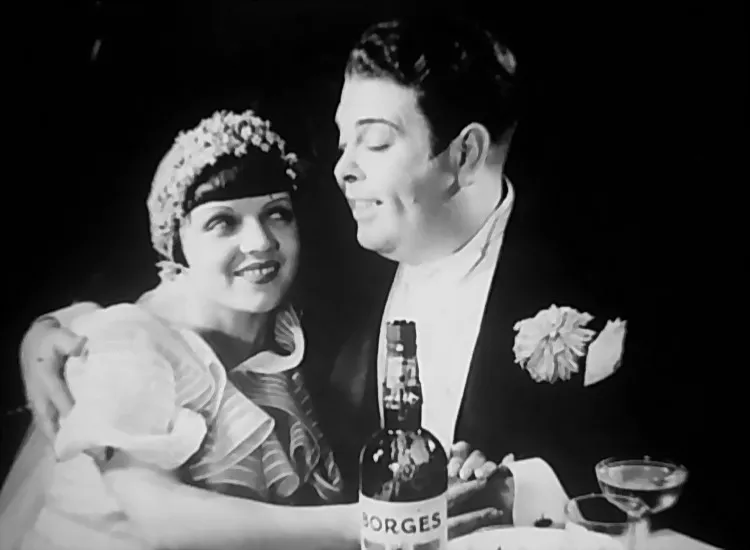
The film opened on a long, slow pan across Lisbon while a woman sang a melancholy tune. It closed at a wedding feast, with Vasco Santana turning to face the audience, glass in hand, to prescribe his cure for everything, “alegroterapia”, or joy therapy: “morrer por morrer, que seja a rir”, if we must die, let it be laughing.
The reporter admitted that he had applauded too, and forgot he was there as a journalist. The film press of 1933 greeted the film with the words “Enfim! A Canção!”, “At last! The Canção!”, and called it “the springtime of national production”. Talking pictures had been playing in Lisbon for three and a half years. This was the first made entirely at home.
A new state and a new sound
Sound films reached Lisbon’s cinemas in April 1930. Hollywood’s answer to small language markets was to shoot the same story several times in different languages. Paramount filmed Portuguese-language versions of its pictures at its studios in Joinville, near Paris, with actors from Lisbon’s popular theatre and revue. The first, A Canção do Berço, opened in December 1930.
Subtitles for foreign talkies drove part of the audience away, above all in neighbourhood and provincial cinemas. The hunger for films spoken in Portuguese grew. Critics wanted more than Portuguese dialogue in Paris studios: in the slogan of the critic M. Félix Ribeiro, they wanted Portuguese cinema, made by Portuguese, in Portugal.
Not quite the first talkie
A Canção de Lisboa is sometimes called the first Portuguese talkie. It was not. That title belongs to A Severa, José Leitão de Barros’s version of Júlio Dantas’s play about the nineteenth-century fado singer Maria Severa. With no sound studio in Portugal, Leitão de Barros shot the outdoor scenes at home without sound, then filmed the interiors with synchronised sound and did the post-production at the French Tobis studios at Épinay, outside Paris.
A Severa opened at the São Luiz in June 1931, with the President of the Republic and members of the government in the audience, and was a box-office hit for half a year. Leitão de Barros later said its success was what led him, the director Chianca de Garcia, João Ortigão Ramos, the distributor Castello Lopes and others to found Tobis Portuguesa.
| Film | Opened in Lisbon | Where it was made | Sound |
|---|---|---|---|
| A Canção do Berço (Paramount) | December 1930 | Joinville, near Paris; Portuguese version of the US film Sarah and Son | Sound throughout, recorded in France |
| A Severa (Leitão de Barros) | June 1931 | Exteriors in Portugal, interiors at Tobis in Épinay, near Paris | Interiors with direct sound; sound edited in France |
| Os Campinos (António Luís Lopes) | 6 August 1932 | Portugal | Planned with sound, released silent with a live orchestra |
| A Canção de Lisboa (Cottinelli Telmo) | 7 November 1933 | Lisbon (Quinta das Conchas, Rossio station, the zoo) and Sintra | Shot and recorded in Portugal |
Os Campinos was conceived as a sound film, but its producer dropped the plan because of the cost and technical difficulty; Tiago Baptista calls it the last Portuguese silent film.
So the claim for A Canção de Lisboa is narrower: it was the first sound feature both shot and sound-recorded entirely in Portugal. The words matter. The art historian Hugo Barreira calls it the first sound film “entirely produced in Portugal”, while Tiago Baptista, a Cinemateca curator, calls A Severa the first sound film produced in Portugal, because a Portuguese company made it.
Even the narrower claim has a footnote. Tobis Portuguesa’s equipment was bought from the international Tobis group, and the crew mixed Portuguese and foreign technicians, some of them there to prepare Portuguese professionals for the switch to sound.
Tobis, and a studio in a barn
The Companhia Portuguesa de Filmes Sonoros Tobis Klangfilm was formally created in June 1932, after a public share subscription that Cinéfilo hailed as a success. Its base was the Quinta das Conchas, an estate in Lumiar, in the north of Lisbon. The state helped with a five-year exemption from property and industrial taxes and from import duties on equipment. Among the founders, with a seat on its production council, was the journalist António Ferro.
“We are moved, much more than by any industrial or commercial consideration, by an eminently patriotic thought: that of making possible the creation of a national art which in many respects and on many counts can and should have a vast influence on the life and progress of the Nation.”
A decree-law of 1933 granting tax breaks to the new laboratories put the government’s interest plainly: sound cinema was “a powerful means of education and culture” whose influence could be used “with great profit for the Nation”.
The studios were not finished in time for the company’s first film. Cottinelli Telmo’s crew built six interior sets in the estate’s abegoaria, a farm outbuilding: three rooms of the tailor’s shop, the medical school’s exam hall, the aunts’ parlour and a recreation club. Other sets on the estate stood in for a small Lisbon square and a fado house.
Much of the rest was shot on real locations: the arcades of the Praça do Comércio, Rossio station, with the noise of its locomotives left on the soundtrack, the Jardim Zoológico, and a dream wedding in Sintra filmed without sound. The press reported that it was the first Portuguese film shot after dark, under lamps so strong that one projector alone was rated at 10,000 candles.
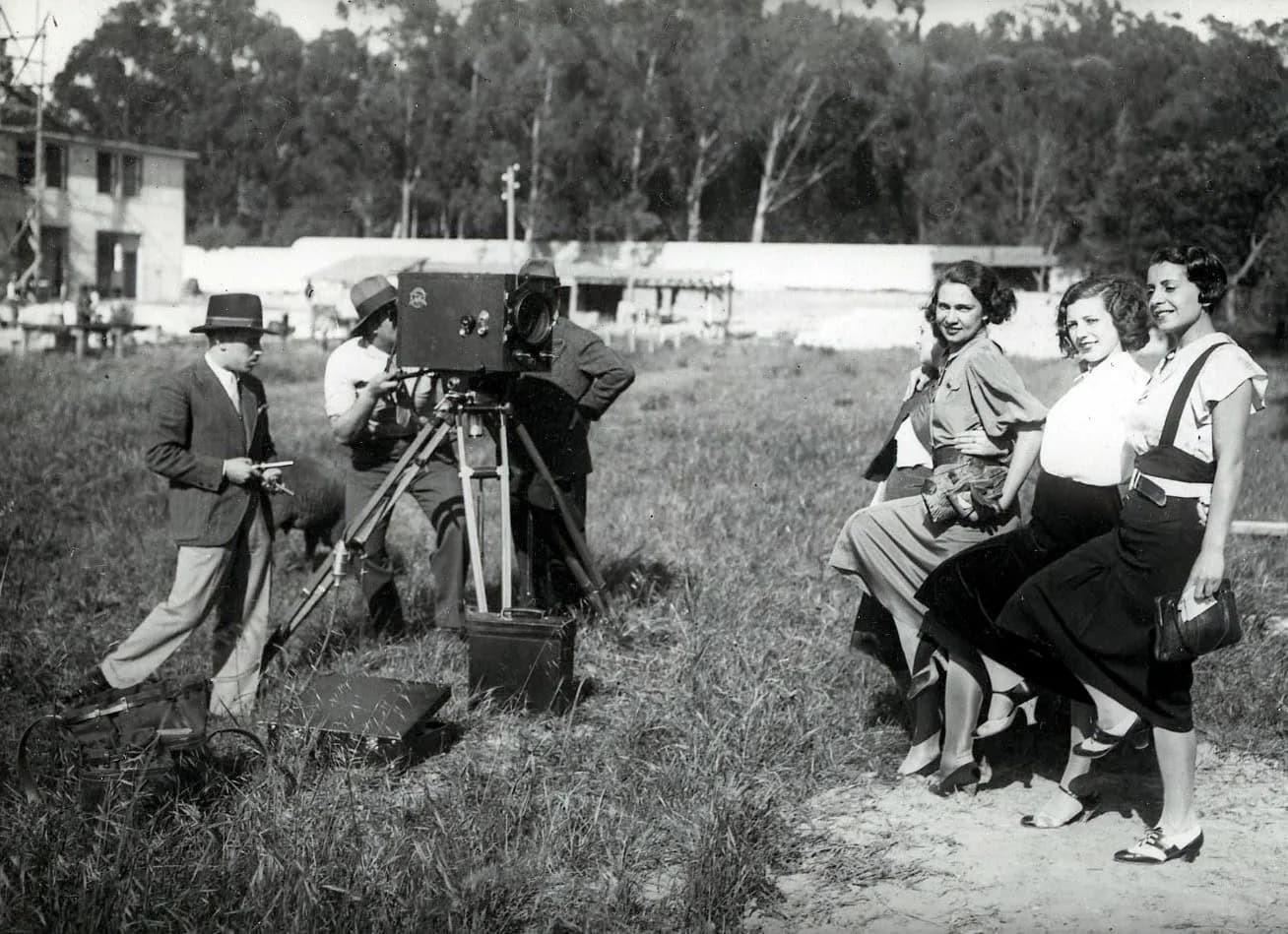
Casting drew crowds. On 1 May 1933 about 200 young women tried for parts at the Automóvel Clube de Portugal. Young men gathered outside to heckle them as they left, and a policeman had to be called when the crowd threatened to push its way in. The monkeys at the zoo were harder to direct. Cinematógrafo reported that they must have had indigestion from peanuts and carrots.
- Premiere
- 7 November 1933, São Luiz, Lisbon
- Director and writer
- José Cottinelli Telmo, with uncredited help from Chianca de Garcia
- Producer
- Tobis Portuguesa; production director João Ortigão Ramos
- Dialogue and lyrics
- José Galhardo
- Songs
- Raúl Portela and Raúl Ferrão; one fado sung by Maria Albertina
- Posters
- Almada Negreiros
- Running time
- 92 or 93 minutes in the Cinemateca’s copies
- Cost
- 870 contos
A student, two aunts and a hat
Vasco Leitão is a medical student who lives on an allowance from two aunts in Trás-os-Montes. They trust him and have never seen Lisbon. He prefers parties, popular songs and pretty women, above all Alice, a seamstress in the Castelo neighbourhood, whose father, the tailor Caetano, disapproves of Vasco’s debts. On the same day he fails his final exam, a letter arrives: the aunts are coming to visit.
They find his furniture out in the square, put there by his landlord, the shoemaker. Vasco is about to confess when the shoemaker and the tailor, who both have their eyes on the old ladies’ money, rescue him with a tale of his feats as a doctor who “sacrificed opulence to scientific discovery”. Their patter turns into a cegada, a sung street routine, the neighbours join in and a policeman marches the whole troupe off to the station.
After a row at a June street party Alice stops speaking to him, and her father withdraws his support. Then the lie falls apart at the zoo, and Vasco loses the aunts’ money and their trust. Drunk, in a fado house, he delivers a tirade against fado, then sits alone on the steps, sings his misfortune and turns out to be the best fadista in the room.
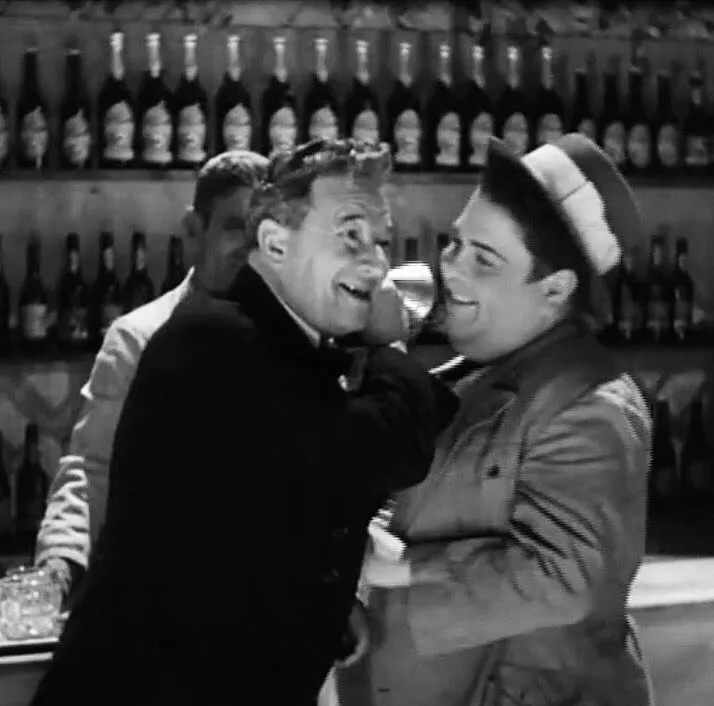
The cast came from Lisbon’s stage. Vasco Santana, born in Benfica in 1898, had worked in revue and operetta since 1917, and this was his first leading role on screen. Beatriz Costa, born in 1907, had started as a chorus girl at 15; the film made her name, and she became an icon of the revue theatre. António Silva played Caetano. Manoel de Oliveira, then a young actor from Porto who later turned director, played Vasco’s friend Carlos and wrote up the shoot for the magazine Imagem.

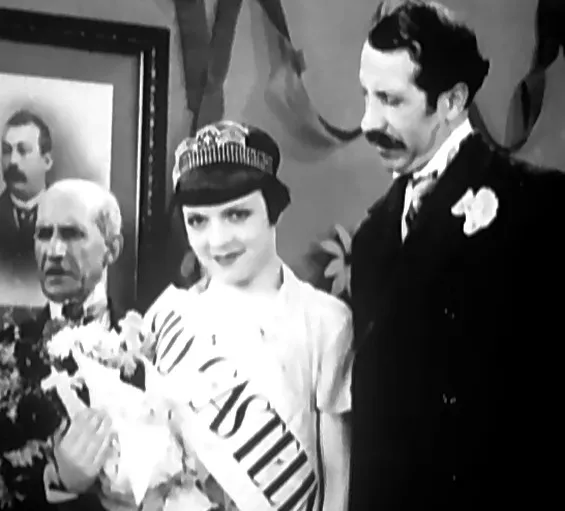
The songs grow out of the action, as the cegada does. The June street party ends in a torchlight march as a paper balloon rises over the crowd. Alice, who dreams of the stage, is crowned Miss Castelinho, queen of the neighbourhood’s seamstresses, then stumbles through the one-step “A Agulha e o Dedal” (“The Needle and the Thimble”). Barreira points to the joke: Beatriz Costa, a revue star, playing an amateur who makes a hash of a revue number.
The scene everyone remembers is the one at the zoo, where his rival Quincas and the aunts catch Vasco out. Between failed attempts to make off with other men’s hats he shouts “Chapéus há muitos, seu palerma!”, “There are plenty of hats, you idiot!” He keeps repeating it to an invisible listener as he walks away, and audiences took the line home with them.
Applause, prices and a charge of copying
Not everyone was won over. Tickets cost more than cinemas usually asked, and in October Cinéfilo ran a headline asking why Portuguese films were dearer. The magazine argued that anyone happy to pay 8 escudos would gladly pay two more, since foreign films, opera and theatre also cost more, and called the grumblers the “worst fauna” of the public. The film had cost 870 contos, a fortune at the time. The row did not hurt the box office: like A Severa, it drew more than 100,000 spectators in the 1930s.
Some critics accused Cottinelli Telmo of copying the French director René Clair, especially his 1933 film Quatorze Juillet. Barreira finds Clair in the sound gags, such as a line of passing lorries whose din lets Vasco escape, much as banging café doors play with what we hear in Clair’s film. But he notes that the plot and the use of music are clearly different.
In Porto, the critic Alberto Armando Pereira called it “a conscious, positive piece of work” in the weekly Cinema on 25 November 1933. The writer José Gomes Ferreira, an assistant editor on the film, wrote a report of the premiere that Barreira cites among the texts naming Clair as a main influence.
The comédia à portuguesa and the regime
A Canção de Lisboa is treated as the founding film of the “comédia à portuguesa”, the Portuguese comedy. The film historian João Bénard da Costa wrote that there was not one comedy after it that did not depend on it. The recipe came from revue theatre: a string of sketches, social stereotypes, comic actors from the revue stage and songs.
| Film | Year | Opened at | Note |
|---|---|---|---|
| A Canção de Lisboa | 1933 | São Luiz | Vasco Santana, Beatriz Costa, António Silva |
| O Pai Tirano | 1941 | Éden | Produced by António Lopes Ribeiro; Vasco Santana and Ribeirinho |
| O Pátio das Cantigas | 1942 | Éden | Vasco Santana as Narciso |
| O Costa do Castelo | 1943 | São Luiz | António Silva as Mr Costa |
| O Leão da Estrela | 1947 | São Luiz | Last of the five, made before the 1948 film law |
Opening cinemas as given by Diogo, who notes the irony of popular comedies premiering in Lisbon’s smarter houses.
The regime’s attitude to these films was mixed. In September 1933, two months before the premiere, it created the Secretariado de Propaganda Nacional (SPN) and put António Ferro in charge. Ferro wanted a dignified, artistic cinema that could be shown abroad. He called the comedies a “cancer of national cinema”.
“[Comic films] may go on existing if they contain no obscenities, for there is still, unfortunately, a large public for them, but (we take this opportunity to declare it firmly) outside the National Cinema Fund.”
Law 2027 of 18 February 1948, the law for the protection of national cinema, created a National Cinema Fund run by the SNI, as the propaganda office was by then called. Its money went to films judged to express the Portuguese spirit, and it made a censorship certificate a condition for screening any film. The comedies were private ventures that had to fill cinemas and get past the censors.
Vasco Diogo argues that, within those limits, the comedies were the freest films of their time. In A Canção de Lisboa a label reading “Estado Novo”, pinned to a coat in the tailor’s shop, ends up on a customer’s backside. At the Miss Castelinho contest the jurors vote by the colour of the dresses, in a black-and-white film, and a woman in the audience declares that it was all a swindle and they should leave.
April 1930
Sound cinema reaches Lisbon
December 1930
A Canção do Berço
Paramount’s first Portuguese-language version, made near Paris, opens in Lisbon.
June 1931
A Severa opens at the São Luiz
The first Portuguese sound feature, with sound scenes made near Paris.
June 1932
Tobis is founded
The sound-film company sets up at the Quinta das Conchas in Lumiar.
6 August 1932
Os Campinos opens silent
1 May 1933
Casting call
About 200 young women try for parts at the Automóvel Clube de Portugal.
25 September 1933
SPN created
António Ferro heads the regime’s new propaganda office.
7 November 1933
A Canção de Lisboa premieres at the São Luiz
1941 to 1947
The comedy cycle
O Pai Tirano, O Pátio das Cantigas, O Costa do Castelo, O Leão da Estrela.
18 February 1948
Law 2027
The film protection law creates the National Cinema Fund.
Why it still matters
The hat line outlived the hats. Portuguese still say “chapéus há muitos” to shrug off a small loss, and in 2023 an Observador columnist borrowed it for a piece about ministers resigning. Mário Soares’s presidential campaign of 1985–86 used “chapéus há muitos” to mock the plastic hats worn by supporters of his rival, Diogo Freitas do Amaral. Vasco Diogo points out that the line works because the film repeats it until it can be lifted out of the story and used anywhere.
The comedies it started are probably the most-watched Portuguese films of all, counting cinema, television and video audiences, and many people remember them as a single film “with Vasco Santana and António Silva”. A new version directed by Pedro Varela opened in cinemas in 2016.
The film is also a record of Lisbon in 1933: the Praça do Comércio, the Rossio station, the zoo, and the trams and street cries that Cottinelli Telmo put on the soundtrack. The Cinemateca still screens it, with a programme note by Luís de Pina that ends with the verdict that it “continues new”.
FAQs
Was A Canção de Lisboa the first Portuguese sound film?
No. A Severa, directed by José Leitão de Barros, opened in June 1931 and is the first Portuguese sound feature, but its sound scenes were filmed and edited at the French Tobis studios at Épinay, near Paris. A Canção de Lisboa (1933) was the first sound feature shot and recorded entirely in Portugal.
Where does “Chapéus há muitos, seu palerma!” come from?
From the zoo scene in A Canção de Lisboa, where Vasco Santana’s character keeps trying to snatch other men’s hats and shouts the line, “There are plenty of hats, you idiot!”. It passed into everyday Portuguese as a way of shrugging off a small loss.
Where was A Canção de Lisboa filmed?
Interiors were built in a farm building at the Quinta das Conchas in Lumiar, where the Tobis studios were still unfinished. Other scenes were filmed at Rossio station, the Jardim Zoológico and in Sintra.
Was it a propaganda film for the Estado Novo?
Not directly. It was a private, commercial production, and the regime’s propaganda chief, António Ferro, later called the comedies it inspired a “cancer” of national cinema. They still had to pass the censors, and historians such as Vasco Diogo read them as cautious, limited spaces for irreverence.
On the timeline
Open the timelineNearby moments from dictatorship and the estado novo (1926–1974).
Birth of Álvaro Siza Vieira in Matosinhos. Portugal's most celebrated architect and winner of the 1992 Pritzker Prize, his works — from the Boa Nova Tea House to the rebuilt Chiado and the Portuguese Pavilion at Expo '98 — define modern Portuguese architecture.
The historian A. H. de Oliveira Marques, author of landmark histories of Portugal and pioneering studies of daily life in the Middle Ages, is born in São Pedro do Estoril, near Lisbon.
A decree-law creates the PVDE (Polícia de Vigilância e de Defesa do Estado), the Estado Novo's political police and forerunner of the PIDE, which would enforce the dictatorship's repression for four decades.
A Canção de Lisboa, 1933
'A Canção de Lisboa', the first sound feature film made entirely in Portugal, premieres at the São Luiz theatre in Lisbon. Directed by José Cottinelli Telmo and starring Vasco Santana, Beatriz Costa and António Silva, its comedy of a medical student fooling his rich aunts left lines and songs the Portuguese still quote.
An insurrectionary general strike against the Estado Novo's corporatist labour laws is attempted across Portugal, most dramatically in Marinha Grande, where glassworkers cut roads, telephone lines and the railway and seize the post office and GNR post; some accounts add the town hall and a short-lived “soviet”. The revolt is crushed within hours and followed by mass arrests, and the regime uses it to justify deeper repression of the labour movement.
Paula Rego is born in Lisbon. Settling in London, she became one of the great figurative painters of her time, known for unsettling fairy-tale scenes and her 'Abortion' series; the Casa das Histórias in Cascais is dedicated to her work.
Death in Setúbal of Ana de Castro Osório, writer, suffragist and republican. In 1908 she co-founded the Liga Republicana das Mulheres Portuguesas with the doctor Adelaide Cabete and others, helped Afonso Costa draft the Republic's divorce law, and with her 18-volume series 'Para as Crianças' became a founder of Portuguese children's literature.
Coming up in history
All long reads 9 November 1975“O povo é sereno”: smoke over the Terreiro do Paço, 9 November 1975
 10 November 1913Álvaro Cunhal: prisoner, escapee and Portugal's communist leader
 11 November 1975Angola's independence at midnight, 11 November 1975
 12 November 1991Santa Cruz, 12 November 1991: the Dili massacre the world saw
15 sources
Archives, scholarship and reporting this article was checked against.
- 1
A Canção de Lisboa / 1933: programme note by Luís de Pina, with full credits (De se tirar o chapéu cycle, 5 August 2022)Cinemateca Portuguesa–Museu do Cinema
- 2
Imagens sonoras: uma proposta de leitura de A Canção de Lisboa (Hugo Barreira, Revista Livre de Cinema, vol. 5, no. 1, 2018)Repositório Aberto da Universidade do Porto
- 3
Comédias cinematográficas dos anos 30-40 em Portugal (Vasco Diogo, Análise Social, vol. 36, nos. 158-159, 2001)Análise Social, Instituto de Ciências Sociais da Universidade de Lisboa
- 4
António Luís Lopes entre el nacimiento del cine sonoro y el final del cine mudo portugués (Tiago Baptista, Revista de Estudios Taurinos, no. 41, 2017)Revista de Estudios Taurinos, via Dialnet
- 5
António Ferro e a projeção atlântica de Portugal através do cinema (Carla Ribeiro, Aniki, vol. 1, no. 2, 2014)Aniki: Revista Portuguesa da Imagem em Movimento
- 6“A Canção de Lisboa”. Como foi a estreia de 1933 (Rita Neves Costa, 14 July 2016)Observador
- 7
Um golpe na República: 28 de Maio de 1926, da Ditadura Militar ao Estado NovoMuseu da Presidência da República
- 8
O Estado Novo (1933-1974)Assembleia da República
- 9
Cinema: semanário cinematográfico (Porto, 1932-[1934]), ficha históricaHemeroteca Municipal de Lisboa
- 10
Missão e HistóriaSão Luiz Teatro Municipal, Lisbon
- 11Vasco Santana. Bem-amado, mulherengo e boémioObservador
- 12
A Canção de Lisboa (1933)Cinemateca Digital, Cinemateca Portuguesa–Museu do Cinema
- 13
Padrão dos Descobrimentos: a obraPadrão dos Descobrimentos, EGEAC, Lisbon
- 14Beatriz Costa, Tributo em EstúdioRTP
- 15Demissões há muitas (opinion, Bruno Campos, 2023)Observador
Image credits
- Young women pose for a Tobis film camera in Lisbon on 26 April 1933, in a photograph from the Diário de Notícias archive that Wikimedia Commons describes as candidates for parts in A Canção de Lisboa. Unknown author, Public domain, via Wikimedia Commons.
- Silvestre Alegrim, as the deaf waiter of the fado house, and Vasco Santana as Vasco Leitão, in a publicity photograph from A Canção de Lisboa (1933). Tóbis, Public domain, via Wikimedia Commons.
- Beatriz Costa, photographed around 1934, the year after A Canção de Lisboa made her name. Unknown author, Public domain, via Wikimedia Commons.
- Beatriz Costa as Alice, crowned Miss Castelinho, with António Silva as her father, the tailor Caetano (right). Publicity photograph, 1933. Tóbis, Public domain, via Wikimedia Commons.
- Beatriz Costa and Vasco Santana at the wedding feast that ends the film. Hugo Barreira suggests the Borges wine, like the adverts for the Portugália beer hall seen elsewhere, may have been a commercial arrangement. Publicity photograph, 1933. Tóbis, Public domain, via Wikimedia Commons.