

Pirajá, 8 November 1822: the battle for Salvador da Bahia
A Portuguese general held Salvador after the rest of Brazil had broken with Lisbon. His attempt to break the siege at Pirajá failed, and eight months later his garrison left for Lisbon by sea.
At a glance
- On 8 November 1822 Portuguese troops from Salvador attacked the Brazilian siege lines at Pirajá and the Engenho do Cabrito, north of the city, and were driven back after a long day's fighting.
- The Portuguese commander, Brigadier Inácio Luís Madeira de Melo, had been governor of arms in Bahia since February 1822 and answered to the Cortes in Lisbon, not to Prince Pedro in Rio de Janeiro.
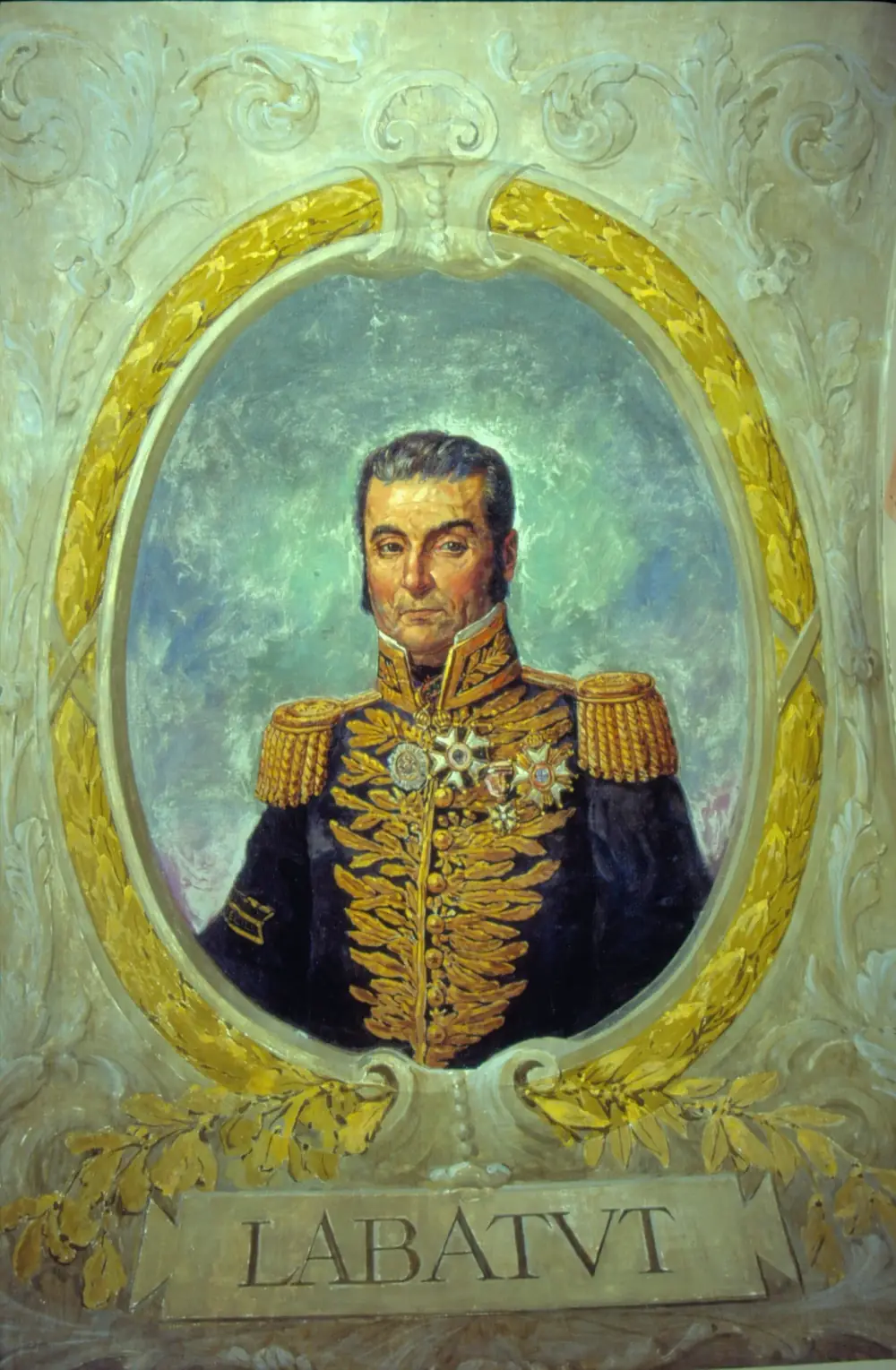
- The Brazilian side, which called itself the Exército Pacificador, was led by the French general Pierre Labatut; the action at Pirajá was directed by Major José de Barros Falcão de Lacerda.
- The story that the bugler Luís Lopes won the day by sounding a cavalry charge instead of the retreat first appears in print in the 1830s and has never been confirmed from documents of the day.
- Hungry and blockaded, Madeira's garrison embarked before dawn on 2 July 1823 and sailed for Portugal; Bahia still celebrates that date, the Dois de Julho, as its independence day.
Five hours under fire at Cabrito
Before first light on 8 November 1822, boats from Salvador put 250 picked Portuguese soldiers ashore on the beaches of Itacaranha and Plataforma, on the bay side of the peninsula that holds the city. As day broke they pushed inland. At the same moment a sizeable column marched out along the land route, hoping to catch the Brazilian posts on the heights of Pirajá by surprise.
The outposts at Coqueiro and Bate-Folha, on the Pirajá road, saw them coming and opened fire. Soon the firing ran along the whole line. The Portuguese threw their main weight against the Engenho do Cabrito, a sugar estate on the hills, and nearly took it before Lieutenant Alexandre Gomes de Argolo Ferrão brought up his battalion and spread it across the slopes.
After more than five hours of continuous fire the Portuguese were still advancing from Itacaranha, working round behind the Brazilian positions. Major José de Barros Falcão de Lacerda, who was directing the action, judged that his men could not hold and ordered the bugle to sound the retreat.
By nightfall it was the Portuguese who had gone back to the city. How that happened is the most retold story of the war, and the hardest to pin down.
A Portuguese garrison in a Brazilian city
Salvador, founded in 1549 as the seat of Portuguese power in Brazil, was in 1822 the capital of the province of Bahia and a major Atlantic port. Since the royal court's flight to Rio de Janeiro, which reached Brazil in 1808, the colony had been the seat of the monarchy and a kingdom joined with Portugal. The liberal revolution of 1820 in Porto changed that. The new Cortes, the parliament in Lisbon, brought King João VI home in 1821 and wanted Brazil's provinces answering to Lisbon again.
A royal letter of 9 December 1821 named Colonel Inácio Luís Madeira de Melo, newly promoted brigadier, governor of arms of Bahia. The news reached Salvador on 11 February 1822 and the letter itself on the 15th. Under a decree of 1 October 1821, a governor of arms answered only to the Cortes and the king, not to the provincial junta, and residents of Salvador petitioned for the post to go instead to a local hero, Brigadier Manuel Pedro de Freitas Guimarães.
On 19 and 20 February the two sides fought in the streets. Troops loyal to Madeira stormed the barracks of the 1st Regiment and went on to loot houses. At the Convent of the Lapa they killed the abbess, Joana Angélica, with a bayonet as she opened the door, and clubbed the elderly chaplain with musket butts. Brazilian-born soldiers and many families fled the city for the Recôncavo, the sugar country round the bay.
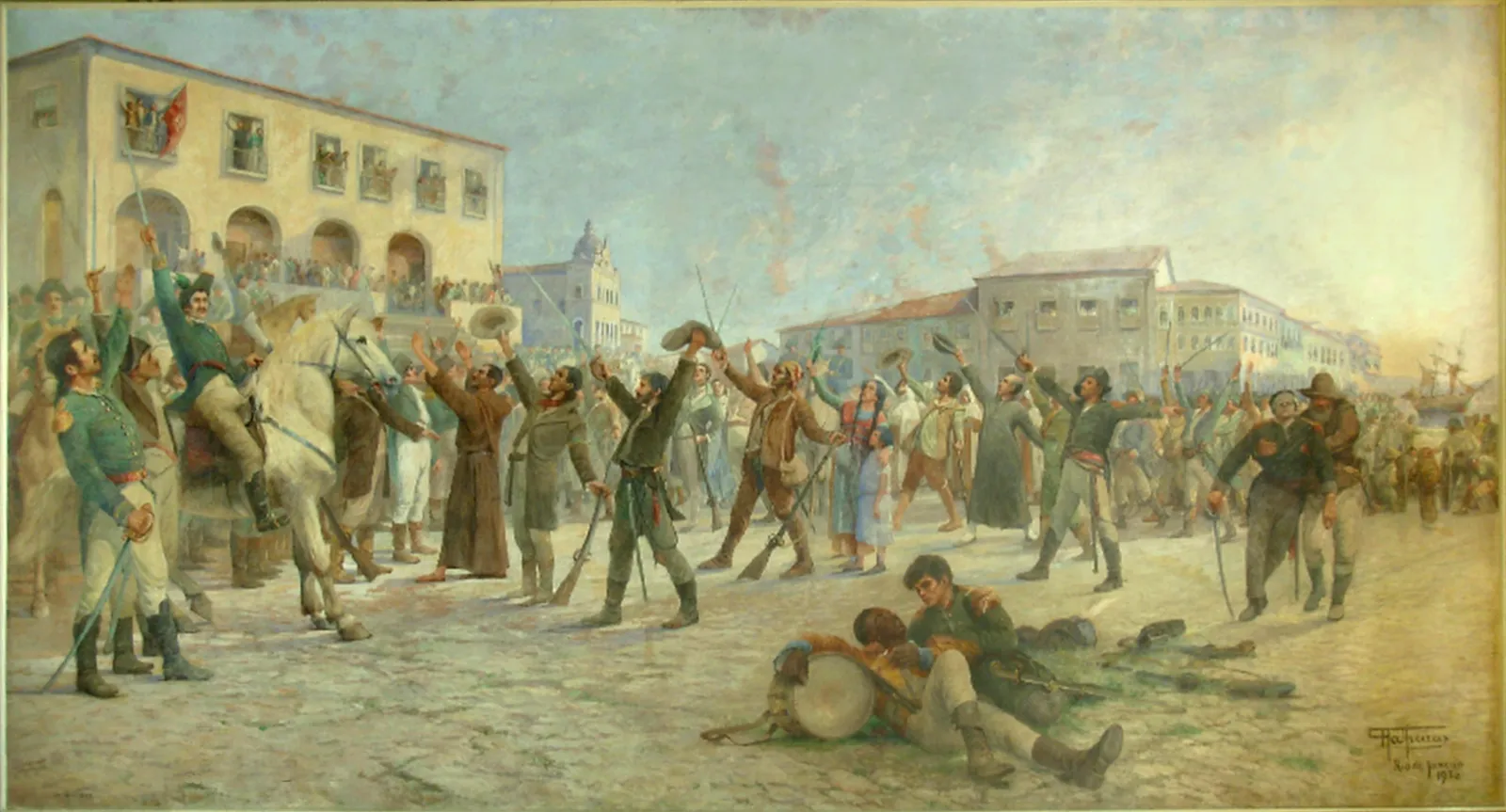
The break came from the towns of the Recôncavo. On 25 June 1822 the council of Cachoeira, on the Paraguaçu river, acclaimed Pedro as regent. Other towns followed, refused to recognise Madeira and stopped sending food to Salvador, and a provisional government formed in Cachoeira. The historian Luís Henrique Dias Tavares dated the war itself from February 1822, which makes it about seventeen months long.
Labatut and the siege lines
The patriot army began as a mixture of rural militias, regular soldiers and officers who had escaped from Salvador, the city's non-white militia and volunteer companies raised in the towns. Pedro sent a professional to command it. Pierre Labatut, a French officer who had fought in Europe and in the Spanish American wars of independence, left Rio on 14 July 1822 with a small squadron carrying 200 militiamen, 40 light infantry and 34 officers.
He reached the front at the end of October, with arms and a larger force raised in Pernambuco and the town of Penedo: 550 light infantry and gunners under Major Barros Falcão. He tightened discipline, and coin that absent Portuguese planters had buried on their estates, dug up in October, gave the army funds. On 5 November he split his forces into two brigades. Colonel Felisberto Gomes Caldeira took 600 men of the Torre battalions to hold the left at Itapuã, on the Atlantic coast. Barros Falcão held the right, from Itapuã's boundary to the Engenho do Cabrito.
The line ran for about 17 kilometres across the neck of the peninsula, from Cabrito and Pirajá to Itapuã, and blocked the roads that fed the city from the interior. A 2022 study in the Revista Brasileira de História Militar puts about 1,000 men at the Pirajá and Cabrito end, where the main supply road came in, and about 300 at Itapuã. Accioli gives Caldeira 600 at Itapuã.
Ignacio Accioli, whose history of the province was printed in Salvador in the 1830s, says Madeira had the larger force but stayed inside the city, treating the rebels as a mere faction. On 29 October his soldiers fired volleys at an envoy Labatut had sent to the trenches under a flag of truce. Pressed by the pro-Portuguese party and its newspapers, which wanted the roads to the food-growing Recôncavo reopened, Madeira at last decided to attack.
The fight for the heights
- Date
- Friday 8 November 1822, from before dawn into the afternoon
- Place
- Pirajá and the Engenho do Cabrito, on the hills north of Salvador, with landings at Itacaranha and Plataforma
- Portuguese command
- Brigadier Inácio Luís Madeira de Melo, governor of arms of Bahia
- Brazilian command
- General Pierre Labatut; Major José de Barros Falcão de Lacerda directed the action
- Forces
- 250 Portuguese landed by boat plus a sizeable column overland, against roughly 1,000 Brazilians in the Pirajá and Cabrito sector; no reliable count of the whole engagement survives
- Result
- The Portuguese fell back into Salvador; the siege lines held
Accioli is the fullest early narrative. In his account the Portuguese fought well and held the better ground, and would have won. When their attack broke, the Pernambuco soldiers seized the moment and inflicted heavy losses on them as they fell back in disorder. News of the rout spread quickly in the city through the men who got back.
Braz do Amaral, writing in 1923, summed up the result in a sentence: Madeira tried to cut off the independents at Pirajá, his columns were beaten, and the metropolitan army shut itself up in the city, which it did not leave again except to embark. A 2022 military study describes Pirajá as the action that turned the patriot army from defence to offence.
Nobody agreed on the losses. Accioli admitted that neither side's could be known exactly, and he trusted neither side's published figures.
| Source | Brazilian losses | Portuguese losses |
|---|---|---|
| Labatut's official correspondence, November 1822 | 5 dead and about 40 wounded | 200, or in another report 300, dead |
| Idade d'Ouro do Brasil, Salvador's pro-Portuguese paper, 12 November 1822 | Very heavy, with artillery captured | 30 wounded and few dead |
| Accioli, from “the best information”, 1830s | Among them an artillery captain and a lieutenant | About 80 dead among the troops from the city, and slightly more wounded |
| A Tarde, Salvador newspaper, 2023 | About 200 victims on both sides together | Included in the previous figure |
Accioli called Labatut's figures for the enemy “certainly exaggerated” and said the Idade d'Ouro's account showed the paper's lack of truthfulness. The wounded figure in Labatut's report reads 41 or 44 in the scanned first edition.
The bugler who sounded the wrong call
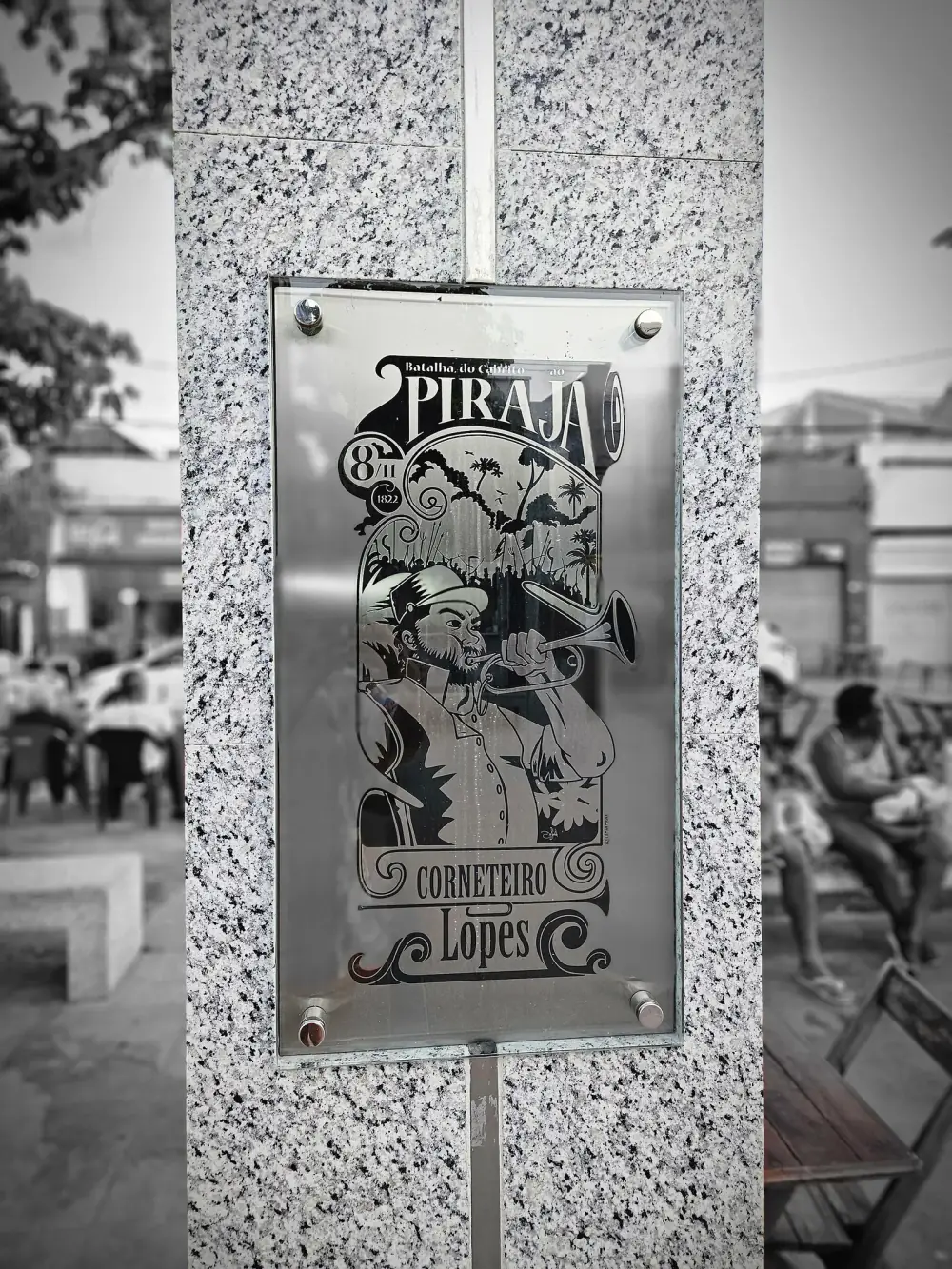
The story goes like this. Barros Falcão ordered the retreat. The bugler, Luís Lopes, instead blew “cavalry, advance” and then the call to give no quarter, known as “à degola”, which means to cut throats. The Portuguese, believing that Brazilian horsemen had arrived, broke and ran.
Accioli is one of the earliest writers to tell it, and he adds two details that later versions often drop. Lopes was “a Portuguese in Brazil's service”, and he played the calls on the clarion he used for the light infantry drill. Accioli did not doubt the story, and he lamented that Lopes's part had been so quickly forgotten.
“It was in this way that pure chance decided an important action, and, sad to say, the said bugler Lopes today begs for the bread that feeds him.”
The other early source is the poet Ladislau Titara, who wrote the words of the Dois de Julho hymn and, according to the Bahian historian Jorge Ramos, was charged with cataloguing Labatut's correspondence. His epic Paraguassu, published in 1835, mentions the bugler in a footnote that calls the call “a decision, or mistake”. Accioli's second volume followed in 1836, so both accounts appeared more than a decade after the battle.
Siege, hunger and the sea
Eight days after the battle Labatut wrote to Madeira. He accused the Portuguese of flogging, flaying and quartering Brazilian prisoners and announced that he had ordered the same treatment for Portuguese ones.
“You know that the cruel law of war commands reprisal. Be mild, and I shall be the same; be cruel, and I shall be crueller still. Withdraw to Europe, or else you will receive the reward of your crimes.”
The siege army kept growing. In mid-November Labatut asked the provisional council for as many freed men of colour as it could find for a new freedmen's battalion. By December he had gone further and formed a battalion of enslaved men, African and Brazilian-born, taken from absent Portuguese planters. The council called it a “horrifying” measure. In January 1823 the Batalhão do Imperador, about 800 men, arrived from Rio.
The Portuguese squadron attacked the island of Itaparica, across the bay from the city, on 7 January 1823 and was beaten off. In May a weak imperial squadron under the Scottish admiral Lord Cochrane appeared off the coast. It came off worse in its first brush with the Portuguese fleet, but went on cruising off Bahia and cut the city's supplies by sea as well as by land.
The besiegers suffered too. Tavares lists tuberculosis, malaria and typhus in the trenches. Labatut quarrelled with the council and with his own officers, and in May 1823, after he had Colonel Felisberto Gomes Caldeira arrested, the officers of the left brigade deposed him. Colonel José Joaquim de Lima e Silva took command, with his headquarters at Pirajá.
The Exército Pacificador at the end of the siege, by unit
men
Strength in July 1823 from the monthly musters, as given by Accioli (Braz do Amaral's 1933 edition): 8,783 men without the Batalhão do Imperador, 9,515 with it and not counting civilian staff, so the Imperador figure (732) is the difference. The units listed add up to 9,448; the remaining 67 are probably the Torre cavalry, which the text names without a number. Kraay puts the army at close to 15,000 by the end of the siege.
Show the data
| Men on the monthly musters | |
|---|---|
| Bahian battalions 1 to 8 | 4,861 |
| Provisional battalions 1 and 2 | 826 |
| Batalhão do Imperador | 732 |
| Satyro da Cunha's brigade | 713 |
| Artillery | 576 |
| Paraíba light infantry | 540 |
| Pernambuco battalion | 439 |
| Freedmen's battalion | 327 |
| City cavalry | 186 |
| Court and Penedo companies | 160 |
| Santo Amaro volunteers | 88 |
Totals for the whole war vary with what is counted. Tavares estimated 9,000 to 10,000 Portuguese, including the navy, against about 12,000 Brazilians. The 2022 military study gives 1,000 to 2,000 dead for the whole conflict in Bahia.
The garrison sails: 2 July 1823
By June the city was starving. On the 21st Madeira called a council of his battalion and ship commanders, who agreed with him that the city must be evacuated. He told the Portuguese junta the same day, but refused to tell even them the date of departure.
“The shortage of provisions had reached the last extremity; the troops were already suffering many privations... the people were already going hungry: there was no military operation that could be carried out to remedy this evil.”
On 30 June he sent word informally to Lima e Silva asking to be allowed to embark in peace. In the silence before dawn on 2 July a single cannon shot from the fort of Santo Alberto gave the signal. At four in the morning the garrison boarded launches at Gamboa, the Arsenal and the Noviciado. At daybreak the streets were almost empty and the guard posts abandoned.
Madeira later told the king that the division had embarked without losing a single man. At about eleven the whole convoy put to sea for Portugal, with merchants and their money aboard, and Cochrane followed it out, taking prizes. João Francisco de Oliveira, known as João das Botas, who had commanded the patriot boats in the bay, occupied the Fortaleza do Mar and raised the national flag over it.
Lima e Silva got the news at Pirajá at nine and rode into the city at one in the afternoon at the head of the army. Behind the Pernambuco battalion, Accioli wrote, marched a great crowd of the homeland's defenders, almost naked and barefoot.
“...the most shameful and precipitate embarkation that has ever been seen! In the last extremity of hunger, he left on the quay more than 20 head of cattle, 7 quarters of fresh meat, barrels of biscuit and flour, artillery, muskets and powder.”
9 December 1821
A royal letter names Madeira de Melo governor of arms of Bahia
19–20 February 1822
Street fighting in Salvador; the abbess Joana Angélica is killed
25 June 1822
Cachoeira acclaims Prince Pedro as regent
14 July 1822
Labatut sails from Rio de Janeiro
7 September 1822
Pedro declares Brazil independent
Late October 1822
Labatut takes command of the siege, with troops from Pernambuco
8 November 1822
Battle of Pirajá
7 January 1823
Portuguese attack on Itaparica beaten off
January 1823
The Batalhão do Imperador arrives from Rio
May 1823
Cochrane's squadron off Bahia; Labatut deposed, Lima e Silva takes command
21 June 1823
Madeira's council of war decides to evacuate
2 July 1823
The garrison sails for Portugal; the Exército Pacificador enters Salvador
Aftermath
In Lisbon, Madeira was arrested in November 1823. At his trial, Tavares said, he was presented as solely responsible for the defeat of Portugal's army and navy. His report on the evacuation survives in the Arquivo Histórico Militar, filed with the proceedings against the commander of Bahia.
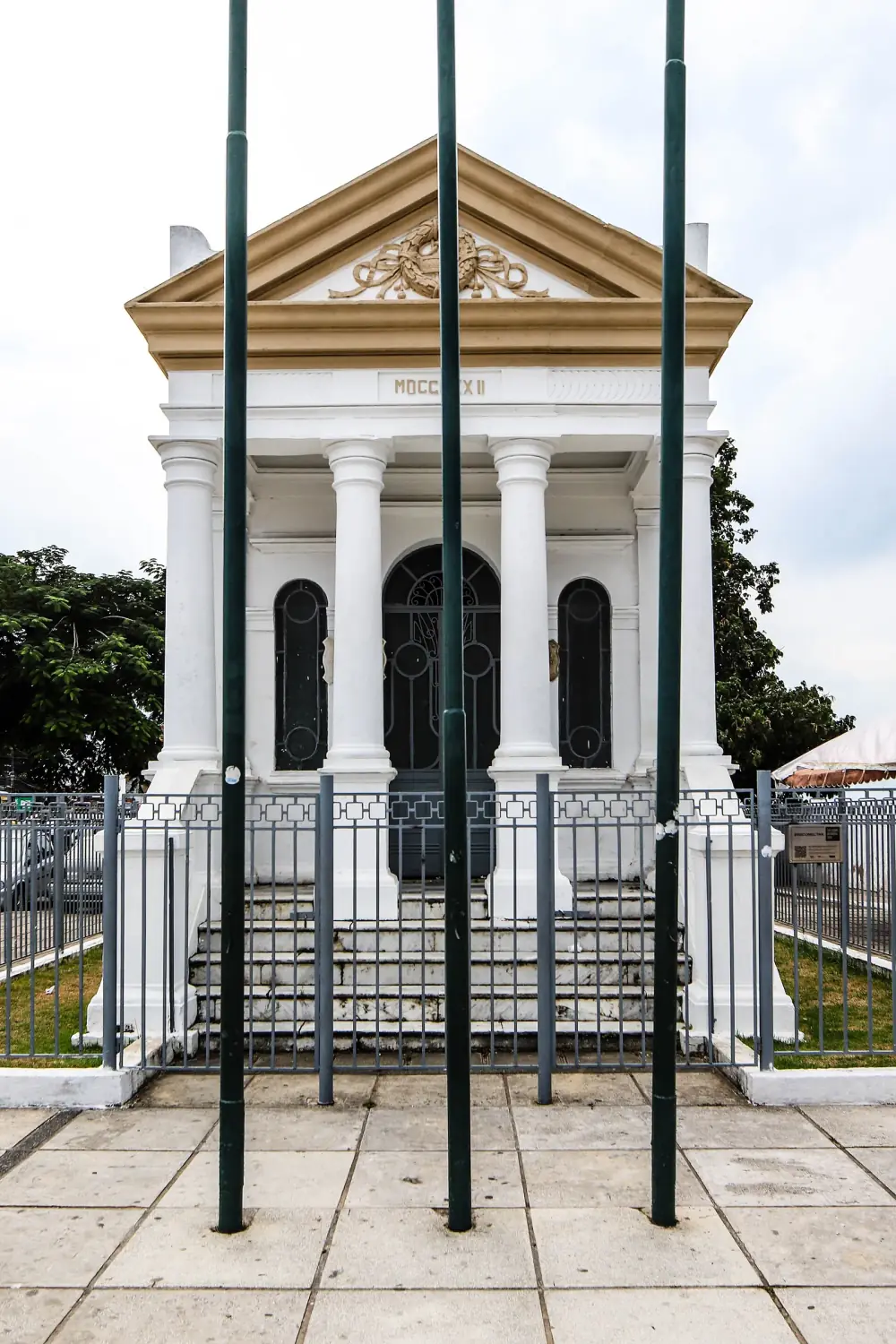
On 8 November 1823 the victory was marked for the first time, with a thanksgiving in the parish church of São Bartolomeu de Pirajá. The bones of some of the men killed in the battle were then carried in procession to the church of the Soledade, outside the city walls.
Victory left Bahia's planters with a problem. The army now held many former slaves and enslaved men. The government freed those who had served officially as soldiers, compensating owners, and returned the rest to slavery. After the revolt of the Periquitos battalion in late 1824, seen as a rising of Black soldiers and former slaves, most of them were moved out of the province.
Portugal recognised Brazil's independence in 1825. That September Labatut came back to Bahia from France, and Braz do Amaral wrote in 1923 that he had been “in reality, the victor over Madeira and the Portuguese”. Tavares disagreed: he saw no reason for Bahia to go on honouring Labatut every Dois de Julho, and gave the credit to the fighters of the Recôncavo and the interior.
Why it still matters
Brazil dates its independence to 7 September 1822. Tavares called that “a symbolic date, not really the date of Brazil's independence”, because a huge part of the country was not yet independent: a Portuguese army held Salvador for ten more months. He argued that the north-east fought a real war for independence, unlike the negotiated separation in Rio de Janeiro.
In Bahia the Dois de Julho became a civic festival almost at once. In the 1830s Accioli could write that every year people and troops gathered at the Lapinha square and went in triumph into the city, retracing the army's entry. Kraay argues that the festival represented Bahian society as a whole while marking its divisions of origin, class and race, and that by celebrating popular mobilisation it told a story of Brazil's origins at odds with the official cult of Emperor Pedro I as founder.
The bugler belongs to that popular memory. Pinho sees legends such as Lopes's as a way for ordinary Bahians to place themselves in the story of a war that was fought by the people, enslaved men among them, while warning that historians must keep their distance from the episode itself.
FAQs
Who won the Battle of Pirajá?
The Brazilian independence forces. Madeira de Melo's Portuguese troops attacked the siege lines at Pirajá and Cabrito on 8 November 1822 and nearly broke through, but fell back into Salvador. In Braz do Amaral's words, the Portuguese army then shut itself up in the city until it left by sea.
How many soldiers fought at Pirajá?
No reliable count survives. Accioli gives 250 Portuguese landed by boat plus a sizeable overland column, and says the Portuguese outnumbered the Brazilians; a 2022 study puts about 1,000 Brazilians in the Pirajá and Cabrito sector. The figure of 10,000 sometimes quoted is close to the size of the whole Brazilian army in July 1823, 9,515 men by the musters, not the force engaged on 8 November.
Did the bugler Luís Lopes really win the battle?
It cannot be proved. The story first appears in books published in the mid-1830s by Accioli and the poet Ladislau Titara, about thirteen years after the battle. Historians such as Luís Henrique Dias Tavares say Lopes is not documented; others think the episode plausible.
Why is 2 July a holiday in Bahia?
On 2 July 1823 Madeira de Melo's garrison embarked before dawn and sailed for Portugal, and the Brazilian army entered Salvador that afternoon. Bahians have marked the day with a procession from the Lapinha into the city since at least the 1830s.
On the timeline
Open the timelineNearby moments from invasions, brazil and the liberal wars (1807–1851).
On the banks of the Ipiranga stream near São Paulo, Prince Regent Dom Pedro proclaims Brazil's independence from Portugal with the celebrated 'Grito do Ipiranga', ending three centuries of Portuguese rule in Brazil.
The Constituent Cortes approve the Portuguese Constitution of 1822, the country's first constitution, which sought to end absolutism and establish a constitutional monarchy; King João VI swore his oath to it on 1 October.
On his twenty-fourth birthday, Prince Regent Pedro is acclaimed Constitutional Emperor and Perpetual Defender of Brazil at the Campo de Santana in Rio de Janeiro, a month after the Cry of Ipiranga had proclaimed the country's separation from Portugal.
The Battle of Pirajá
At Pirajá, outside Salvador da Bahia, Brazilian independence forces beat back General Madeira de Melo's Portuguese troops in the main battle of Bahia's war of independence. Tradition, first printed in the 1830s, says the tide turned when the bugler Luís Lopes, a Portuguese in Brazil's service, sounded 'cavalry, advance' and 'no quarter' instead of the ordered retreat, though no Brazilian cavalry was on its way.
Prince Miguel launches the Vilafrancada in Vila Franca de Xira, an absolutist military coup against the liberal Constitution of 1822 that ends Portugal's first constitutional experiment and restores the traditional powers of King João VI.
The Abrilada (April Revolt): Infante Miguel, commander-in-chief of the army, turns the Lisbon garrison against his father's moderate ministers and holds King João VI in the Bemposta palace. Backed by the diplomatic corps, the king takes refuge on a British warship, strips Miguel of his command and sends him into exile.
By the Treaty of Rio de Janeiro, mediated by Britain, Portugal formally recognises the independence of Brazil, ending the Brazilian war of independence.
Coming up in history
All long reads
8 sources
Archives, scholarship and reporting this article was checked against.
- 1
Memorias historicas e politicas da provincia da Bahia, tomo II (Ignacio Accioli de Cerqueira e Silva)Typ. do Correio Mercantil, de Précourt e C., Bahia, 1836 (first edition); scan on the Internet Archive
- 2
- 3
Historia da Bahia do Imperio á Republica (Braz do Amaral)Imprensa Official do Estado, Bahia, 1923; digital copy in the Biblioteca Digital do Senado Federal
- 4
“Em outra coisa não falavam os pardos, cabras, e crioulos”: o “recrutamento” de escravos na guerra da Independência na Bahia (Hendrik Kraay)Revista Brasileira de História, vol. 22, no. 43 (2002), pp. 109–126
- 5
Luís Henrique Dias Tavares: uma guerra na Bahia (interview by Mariluce Moura)Pesquisa FAPESP, no. 119, January 2006
- 6
História do Corneteiro Lopes é controversa, mas tem importância (Priscila Dórea)A Tarde, 25 June 2023
- 7
A Independência do Brasil na Bahia e o surgimento do Exército Imperial Brasileiro (Lucas Cerqueira Viana Pio)Revista Brasileira de História Militar, year XIV, no. 32 (November 2022)
- 8
Between Brazil and Bahia: celebrating Dois de Julho in nineteenth-century Salvador (Hendrik Kraay)Journal of Latin American Studies, vol. 31, no. 2 (1999), pp. 255–286
Image credits
- Antônio Parreiras's O Primeiro Passo para a Independência da Bahia (1931) imagines Cachoeira on 25 June 1822, when the town acclaimed Prince Pedro as regent and the Recôncavo turned against Madeira de Melo's garrison in Salvador. The painting hangs in the Palácio Rio Branco, Salvador. Antônio Parreiras, Public domain, via Wikimedia Commons.
- Pierre Labatut as imagined by Oscar Pereira da Silva about a century later, around 1925, for the Museu Paulista in São Paulo. Oscar Pereira da Silva, Public domain, via Wikimedia Commons.
- The Corneteiro Lopes plaque in the memorial to the heroes and heroines of the Dois de Julho, Largo da Lapinha, Salvador, photographed in 2024. SouDiana, CC BY-SA 4.0, via Wikimedia Commons.
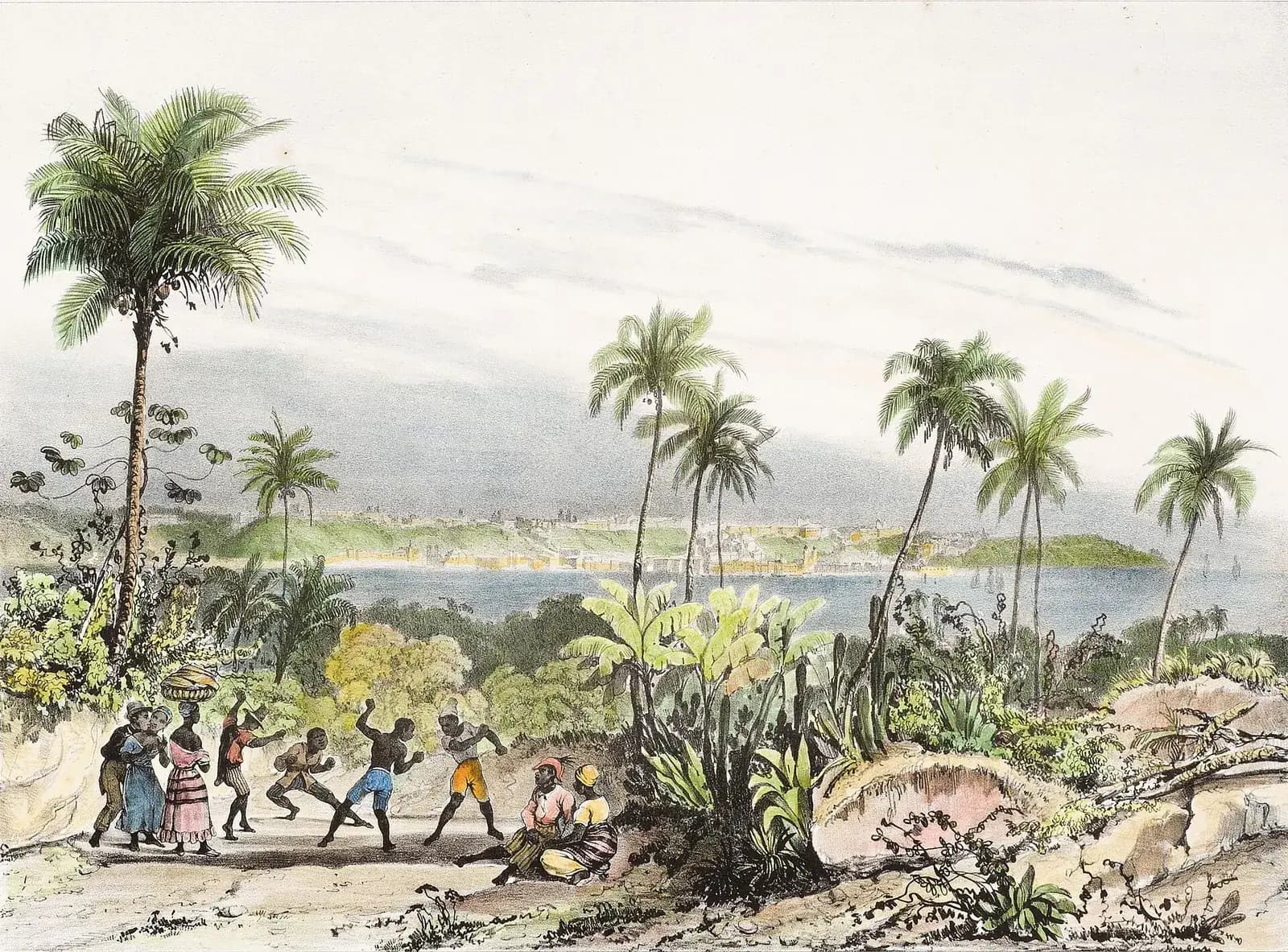
- San-Salvador, a hand-coloured lithograph after a drawing by Johann Moritz Rugendas, printed in Paris by Thierry Frères around 1835. The city on its ridge is seen across the bay; the men in the foreground are playing capoeira. After Johann Moritz Rugendas, Public domain, via Wikimedia Commons.
- The Panteão de Pirajá, a neoclassical monument to General Labatut built in 1914 beside the church of São Bartolomeu in the Largo de Pirajá, photographed in 2019. Paul R. Burley, CC BY-SA 4.0, via Wikimedia Commons.