

The night Luanda's prisons were attacked: 4 February 1961
About two hundred men from Luanda's poor districts tried to free political prisoners from the jails of the colonial capital. They failed, white vigilantes and police took revenge in the musseques, and Angola now keeps the day as the start of its armed struggle.
At a glance
- In the early hours of Saturday 4 February 1961, about 200 men armed mostly with machetes and knives attacked the São Paulo prison, the military prison and a police barracks in Luanda, the capital of Portuguese Angola.
- Their aim was to free nationalists arrested by the political police, PIDE, in 1959 and 1960. No prisoner was freed. Seven Portuguese policemen and soldiers died; counts of the attackers killed range from 9 to 40.
- The MPLA claimed the attack in a communiqué from Conakry the next day. Historians disagree on who organised it: MPLA sympathisers, UPA militants, a loose network linked to Canon Manuel das Neves, or an improvised group acting on its own.
- At the police funeral on 5 February shooting broke out, and in the following days white civilians and police killed Black residents of the musseques. The censored Lisbon press reported 4 dead at the cemetery; French papers reported about 20 casualties, and the Museu do Aljube speaks of hundreds of dead and wounded.
- Angola keeps 4 February as a public holiday, the Day of the Start of the National Liberation Armed Struggle. The UPA's northern rising of 15 March 1961 is a day of national celebration but not a holiday.
Three in the morning in Luanda
The first trouble came half an hour early, in Casablanca, a poor district on the edge of Luanda. According to the news agency report printed in Lisbon the next day, it was a feint, meant to draw the police away. At about three in the morning on Saturday 4 February 1961, small groups of men moved on their real targets: the city's prisons.
There were about 200 of them, and they came from the musseques, the poor neighbourhoods that ringed the colonial city. Most carried machetes and knives; a few had pistols. They attacked the Casa de Reclusão Militar, the army's prison, the barracks of the mobile company of the PSP, the city police, and the São Paulo prison run by the civil administration. The Museu do Aljube adds a fourth target, the Companhia Indígena. They wanted to free the nationalists jailed in 1959 and 1960 and to seize guns and ammunition.
They freed no one. By daylight seven Portuguese policemen and soldiers were dead, along with dozens of the attackers, and more than a hundred people were in the hands of PIDE, the political police, and the PSP. Plans to hit the airport and the post office had come to nothing.
The city was getting ready for Carnival. That afternoon the Diário de Luanda ran a short note on its front page: the government had known for some days of “a plan of agitation organised from outside”. The phrase set the line the authorities would hold for the rest of the war. The revolt, in their telling, was never Angolan.
Luanda was also full of foreign reporters. They had come in case Henrique Galvão, who had seized the Portuguese liner Santa Maria in the Caribbean, sailed her to Angola. By the account Lusa gave in 2005, the timing was deliberate: when it became clear the ship would not come and the reporters began to leave, the organisers struck before they had all gone. Their presence is one reason the Luanda attacks reached the world's papers while a far larger peasant revolt inland, then at its height, did not.
What you need to know first: Angola in 1961
On paper, Angola was not a colony. In 1951 the Estado Novo, the dictatorship of António de Oliveira Salazar, folded its Colonial Act into a revised constitution and renamed the colonies “overseas provinces”, and an Organic Law of the Overseas followed in 1953. Portugal now presented itself as a single nation spread over several continents. The historian Fernando Tavares Pimenta calls the change mostly one of terminology.
In practice, race still decided who was a citizen. Under the Estatuto do Indigenato, whites were citizens automatically. Black Angolans had to prove they lived by European customs to become assimilados. When the statute was finally repealed in September 1961, legal assimilados were no more than 1% of the Black population.
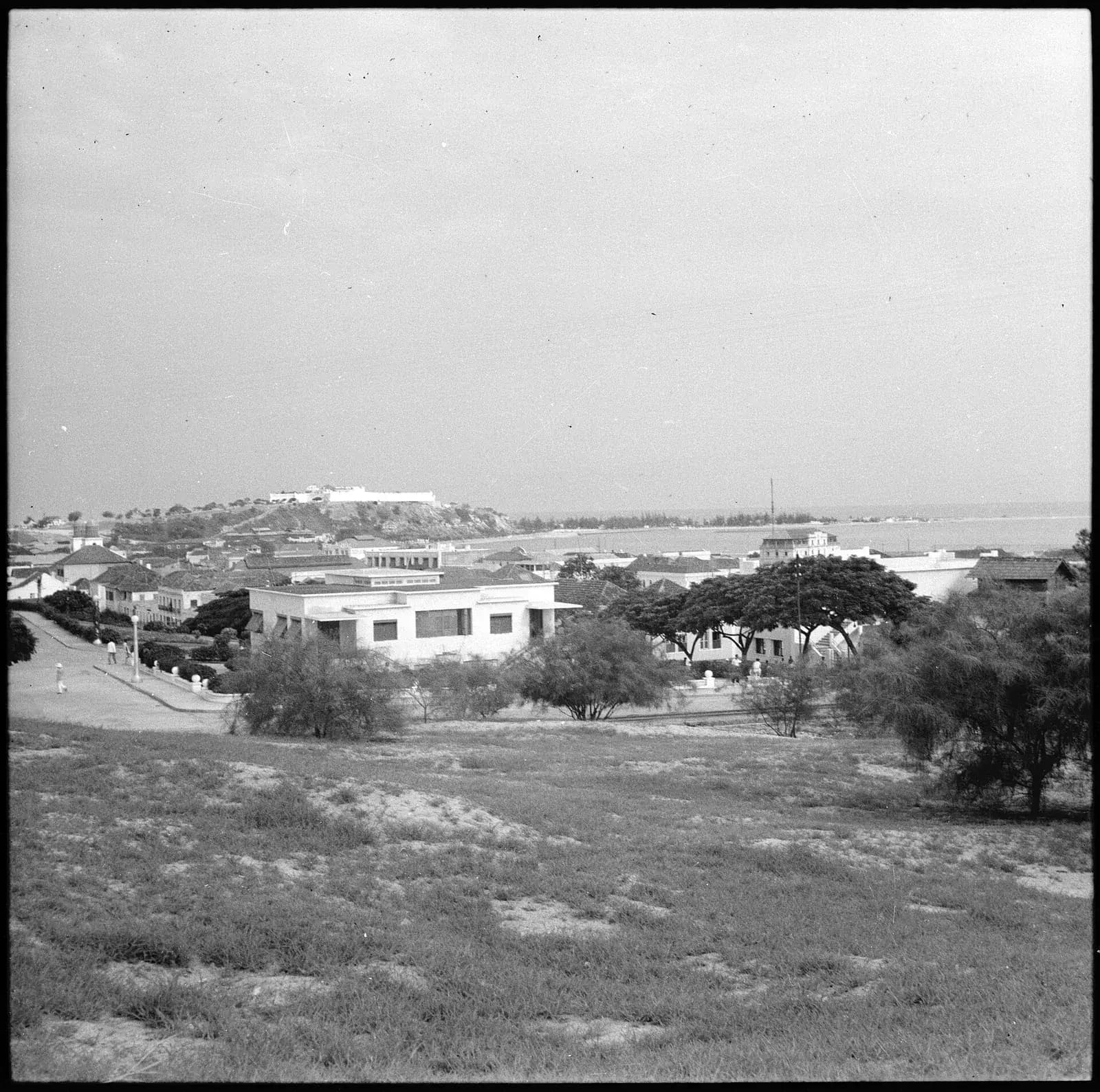
Luanda itself was split between the “city of asphalt”, almost entirely white, and the musseques around it. Many musseques were mixed, with poor Portuguese immigrants living among Black residents, but not on equal terms. Europeans were 14.6% of the city's people in the 1950s and 26.3% by 1970, by the sociologist Ramiro Monteiro's figures.
PIDE opened in Angola in 1957 and within a few years broke up the clandestine nationalist cells that had formed in Luanda during the 1950s. Between March 1959 and June 1960 it arrested the leaders the new MPLA had inside the country. Agostinho Neto, one of its founders, was arrested on 8 June 1960.
The trials that followed, known as the Processo dos 50, reached more than two hundred people, Black, mixed-race and white. On 21 December 1960 a military court in Luanda sentenced 20 Angolan nationalists to between 3 and 10 years in prison. The men arrested in this sweep were the prisoners the attackers of 4 February set out to free.
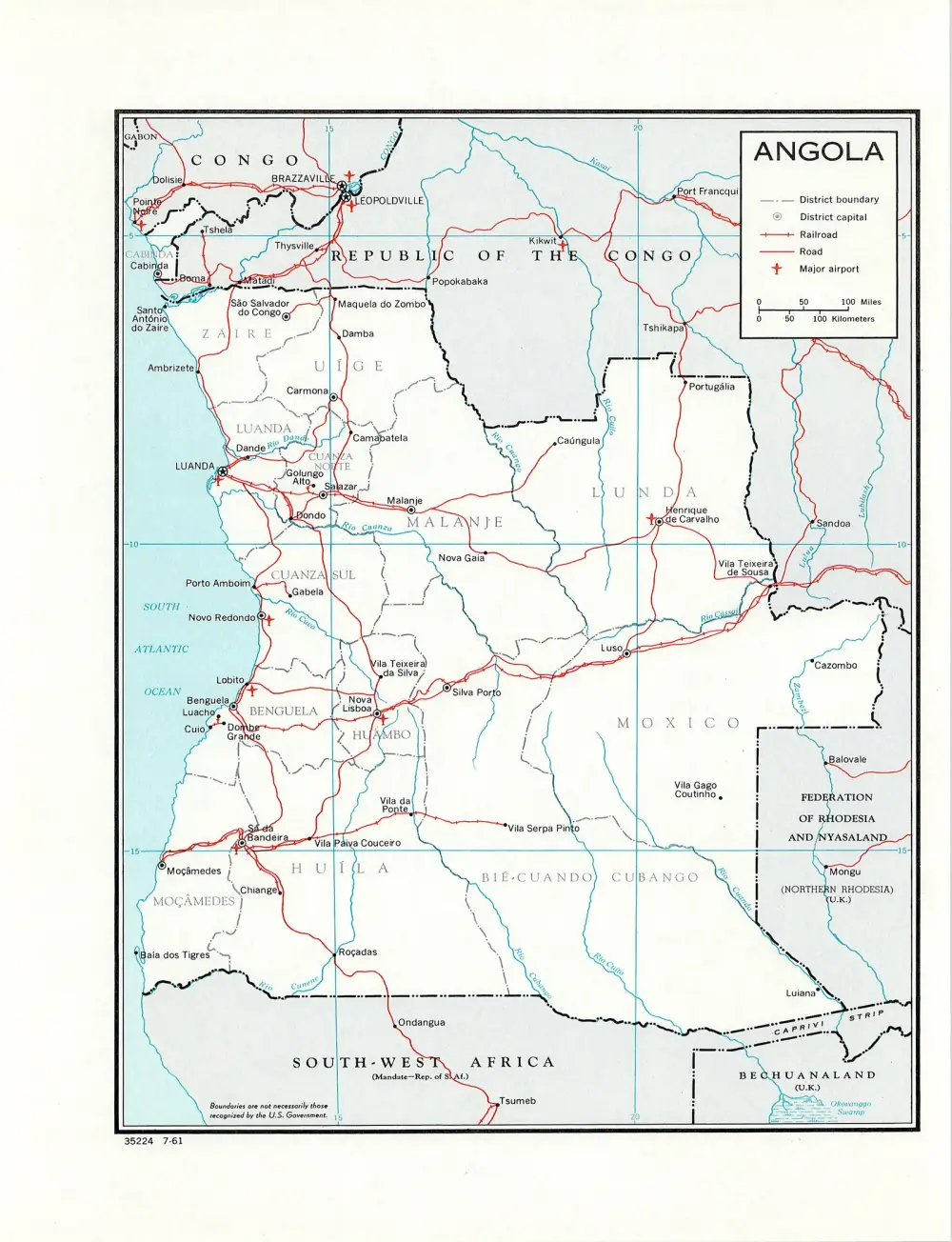
Inland, the cotton growers of the Baixa de Cassanje, in Malanje district, had stopped work in the last months of 1960. When the Luanda attacks came, troops and aircraft were putting down their revolt. Lisbon kept that story out of the papers at home and abroad.
The attacks and the counts
- When
- Night of 3 to 4 February 1961, from about 03:00
- Where
- Luanda, capital of Portuguese Angola
- Targets
- Casa de Reclusão Militar, São Paulo prison, PSP mobile company barracks
- Attackers
- About 200, from the musseques; 200 to 250 by historians' estimates
- Weapons
- Mostly machetes and knives, a few pistols
- Result
- No prisoners freed; 7 police and soldiers killed
The plan had been far bigger. Participants, especially those linked to the MPLA, later said preparations began in October 1960, with night-time training at Cacuaco and then in Cazenga, where a monument to 4 February now stands. Some 2,100 people were meant to take part, by the account Lusa gave in 2005, but arrests after several denunciations in the days before cut that to just over two hundred.
Accounts of the night still differ. The Angolan official version has four groups, led by Neves Bendinha, Paiva Domingos da Silva, Domingos Manuel Mateus and Imperial Santana. It adds an ambush of a military police patrol, the jail of the 7th police station and an attempt on the official radio station; other versions add the post office. Ver Angola, reporting on the anniversary in 2023, noted that the competing versions still did not allow a clear story.
21 December 1960
Nationalists sentenced
A military court in Luanda gives 20 Angolan nationalists 3 to 10 years.
Late January 1961
Reporters arrive
Foreign journalists fly to Luanda in case the hijacked Santa Maria heads for Angola.
4 February, c. 02:30
Feint in Casablanca
A disturbance in a poor district draws police attention.
4 February, c. 03:00
Prisons attacked
Simultaneous attacks on the military prison, the São Paulo prison and the PSP barracks. No prisoner is freed.
5 February
Funeral and shooting
Shots near the cemetery after the police funeral; white crowds turn on Black Angolans. The MPLA claims the attacks in a communiqué from Conakry.
6 February
“Calm”
The Governor-General tells the Minister of the Overseas by telephone that the city is calm.
Before 12 February
Another attempt
Survivors try again to break into the São Paulo prison and fail; Lisbon papers report it on the 12th.
15 March
Rising in the north
The UPA launches its uprising in the coffee districts.
The first figures appeared in the censored Lisbon press. The Diário de Notícias reported on 5 February that six PSP guards and one soldier had died and that the attackers had lost nine. A day later O Século put the attackers' dead at 13 or 14. The Angolan official version now gives 40 guerrillas, six policemen and one army corporal. Fernando Martins, writing in 2014, settles for “some dozens” dead and wounded on both sides.
| Source | Police and soldiers killed | Attackers killed |
|---|---|---|
| Diário de Notícias, Lisbon, 5 February 1961 | 7 (6 PSP, 1 soldier) | 9 |
| O Século, 6 February 1961 | Not given | 13 or 14 |
| Angolan official version, as reported by Ver Angola (2023) | 7 (6 police, 1 army corporal) | 40 |
| Museu do Aljube, Lisbon (2023) | 7 | Dozens |
| Fernando Martins, Observador (2014) | Some dozens dead and wounded on both sides | Included in that figure |
The 1961 newspaper figures are quoted by Tânia Alves. Ver Angola gives the same 40 attackers alongside an unofficial count of six Portuguese military dead.
Attackers killed on 4 February 1961, as counted over time
attackers killed
The count rose as the story was retold. O Século gave “13 or 14”; the chart shows the higher number. The first two figures are quoted by Tânia Alves, the third by Ver Angola.
Show the data
| Attackers killed | |
|---|---|
| Diário de Notícias, 5 Feb 1961 | 9 |
| O Século, 6 Feb 1961 | 14 |
| Angolan official version | 40 |
The Lisbon press filled the gaps with the regime's story. The agency Lusitânia said most of the attackers were foreigners who “cannot even speak Portuguese”, with three white men from Portugal among them who had blackened their faces. O Século said they were drunk. An agency report claimed witch doctors had sold them amulets against bullets for thirty escudos. All of it pointed one way: the revolt had to come from outside.
Whose attack was it?
On 5 February the MPLA issued a communiqué in Conakry claiming the attacks. Its president, Mário Pinto de Andrade, and its secretary-general, Viriato da Cruz, were in exile, and the claim has been argued over ever since. The movement later made 4 February the starting point of its revolution.
The MPLA's own papers suggest its leaders were taken by surprise. In a communiqué reproduced in Lúcio Lara's collection of MPLA documents, Lara, a member of the leadership in Conakry, admitted they had taken the attacks for a reply to the appeal that nationalist leaders from Portugal's colonies had made to Salazar in London two months earlier, asking him to negotiate self-determination.
Since the late 1990s the historian Carlos Pacheco has argued, on the testimony of Mário de Andrade and the priest Joaquim Pinto de Andrade, that the movement had little or nothing to do with the night.
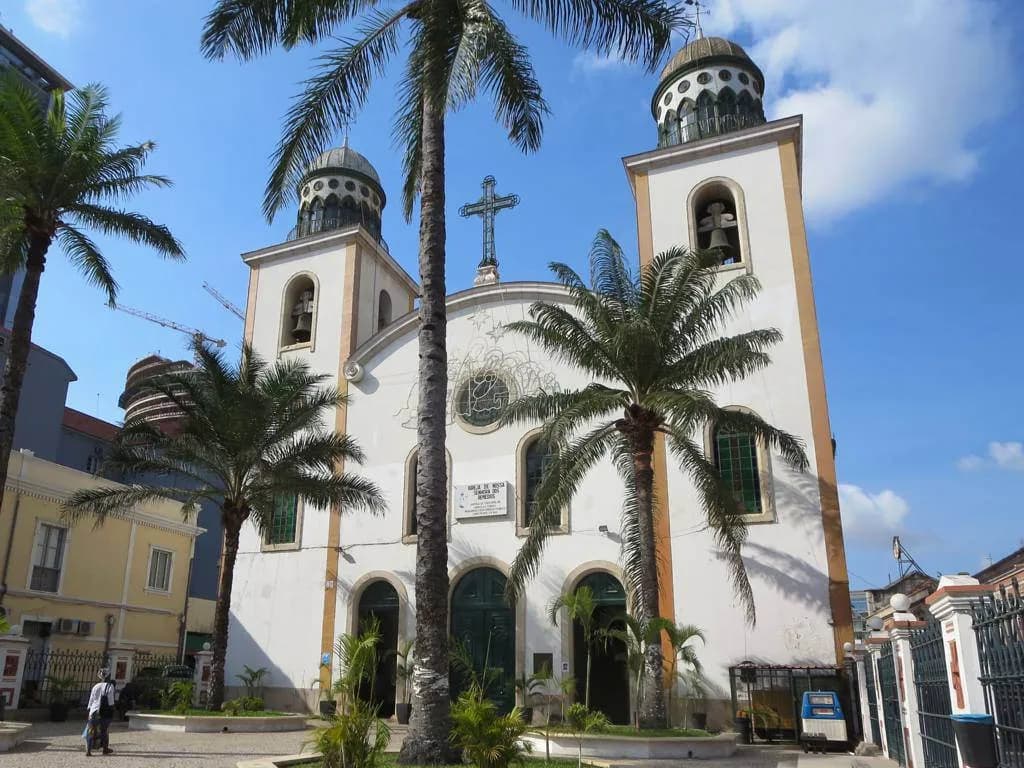
Other historians offer other organisers. Marcelo Bittencourt describes a constellation of small groups without much political structure, orchestrated by Canon Manuel Joaquim Mendes das Neves, vicar-general of the archdiocese of Luanda. Dalila Cabrita Mateus and Álvaro Mateus see an action launched outside the movements by an improvised leadership, pushed by prisoners who faced transfer to other jails.
Canon das Neves was one of the best-known voices of Angolan nationalism until PIDE arrested him in the spring of 1961: in March, according to a 2017 Lusa report on his biography, or in April, according to the historian Anabela Silveira. That February, with the Cassanje revolt at its height, he wrote to UPA leaders in Léopoldville about the killings there.
Lino Ucaca, who leads the veterans' association of the FNLA, the movement that grew out of the UPA, says the canon gave the order for 4 February as a UPA militant, and that its aim was to draw attention to the planned transfer of prisoners to Cape Verde and São Tomé, not to start a war.
Valentim Alexandre, whose 2021 history of the Angolan revolts rests on Salazar's own archive, finds no single command centre behind the night. In Pedro Aires Oliveira's reading of the book, the attackers' loyalties were fluid, and they were driven largely by a mix of despair and messianic belief. Many of them later joined the MPLA, which helped the claim stick.
The funeral and the musseques
On 5 February Luanda buried its dead policemen. Large crowds lined the route. After the burial shots were fired near the cemetery. The ANI agency counted four more dead and seven wounded, and O Século's man in Luanda blamed surviving attackers who had hidden in a sawmill and fired into the crowd.
Foreign reporters saw something else. George Clay of The Guardian, filing from Johannesburg to escape the censors, described the riot as racial hatred by a white crowd against Black people. Daniel McGeachie of the Daily Express wrote that white Portuguese had beaten Africans to death. The Paris-Presse headline on 7 February read “20 dead, 7 wounded in Angola”.
The killing did not stop at the cemetery. Gangs of whites went into the musseques; the police, keen to avenge their colleagues, at first went along with it. Fernando Tavares Pimenta, drawing on the American historian John Marcum, writes that the murders in the poor districts, mostly of Black and mixed-race people by far-right whites organised by PIDE men, began in February 1961 as revenge for the policemen and continued after the March rising.
“There were lynchings in the middle of the street, there were cases of lynching. It was a very traumatic situation for living together. [...] Which the police themselves later had to stop. First they encouraged it, then they had to stop it.”
There is no reliable count of the dead. The Museu do Aljube speaks of hundreds of people dead and injured among the Black population in the days after 4 February, in raids and attacks on the musseques by soldiers, police and white militias. The Governor-General, Álvaro Silva Tavares, reported to the Minister of the Overseas on 6 February that the city was calm, then described an African population “terrified” of the whites and whites rushing to the gun shops.
“If the events of the 3rd frightened the white population, giving it the feeling of being at the mercy of the terrorism of the Blacks, the events of the 5th gave the Blacks the feeling of being at the mercy of the vengeance of the whites, which in a certain way balanced the situation.”
| Source | What it reported |
|---|---|
| ANI agency, in Diário de Notícias and O Século, 6 February 1961 | 4 dead and 7 wounded near the cemetery, blamed on surviving attackers |
| Paris-Presse Intransigeant, 7 February 1961 | 20 dead and 7 wounded in Angola |
| Le Figaro, February 1961 | About 20 casualties over the two days of unrest |
| Museu do Aljube (2023) | Hundreds of dead and injured among Black Angolans in the following days |
The 1961 newspaper figures are quoted by Tânia Alves.
Lisbon's answer to the foreign reports was to remove the reporters. Within days four British journalists were expelled from Angola, Clay and McGeachie among them. The correspondent of The Daily Telegraph, friendlier to the regime, was allowed to stay. Reports from the district governor and the PSP commander to the ministry called the city a “powder keg”.
After February
A few days later, men who had escaped the police tried again to break into the São Paulo prison, and failed again. Arrests went on. Abroad, papers reported that Portugal was sending a company of paratroopers trained in guerrilla techniques, and that Portuguese officials were confiscating reporters' film of the riots.
On 15 March the war moved north. UPA fighters from the Congo led a rising in the coffee districts. By the Museu do Aljube's account, they killed hundreds of white settlers and thousands of mixed-race people and Black Angolans who were not Bakongo, the main people of the north, and the Portuguese army and settler militias answered with a counter-terror of their own. That rising, and the April crisis in Lisbon over how to respond, belong to separate stories.
In Luanda the attacks hardened the colour line. Police files read by Bosslet show residents in the months that followed reporting Black employees who missed work, or Black neighbours seen coming and going, as possible “bandits”. Police raids on the musseques, called “clean-up operations” in the papers, became more frequent, and most of those held had no papers allowing them to live in the capital.
The regime also moved on paper. In September 1961 it repealed the Estatuto do Indigenato, ending the legal split between “natives” and citizens. Bosslet argues the repeal made racial discrimination illegal without ending it, and counts it among the first results of the war and of the attention the 1961 revolts drew abroad.
For Portugal the night began a war. Tânia Alves argues that the military response the Luanda attacks set off makes it plausible to see them as the beginning of the end of the Portuguese empire in Africa. Alexandre, in Oliveira's account, adds that the violence of 1961 delayed the growth of anti-colonial thinking inside Portugal.
How Angola remembers 4 February
Independent Angola wrote the date into its founding text. Agostinho Neto's proclamation of independence, read in Luanda on 11 November 1975, named 4 February as the moment the MPLA set the country's war in motion.
“The galvanising force and vanguard of our people, the MPLA heroically begins, in the early hours of 4 February 1961, the general armed insurrection of the Angolan people against Portuguese colonial domination.”
Angola's law on holidays of 16 February 2011 made 4 February the Dia do Início da Luta Armada de Libertação Nacional, the Day of the Start of the National Liberation Armed Struggle, and a public holiday. The 2018 revision kept it. The UPA's 15 March is the Day of the Expansion of the Armed Struggle, and 4 January, for the Baixa de Cassanje, the Day of the Martyrs of Colonial Repression; both are dates of national celebration, not holidays.
The state holds a central ceremony every year. In 2023, the 62nd anniversary, it was in Mbanza Congo, capital of Zaire province, under the local motto “Preserving the Values of the Homeland, We Will Honour Our Heroes”. In 2005, Lusa reported, the programme in Luanda included a pilgrimage to the graves of the attack's main organisers.
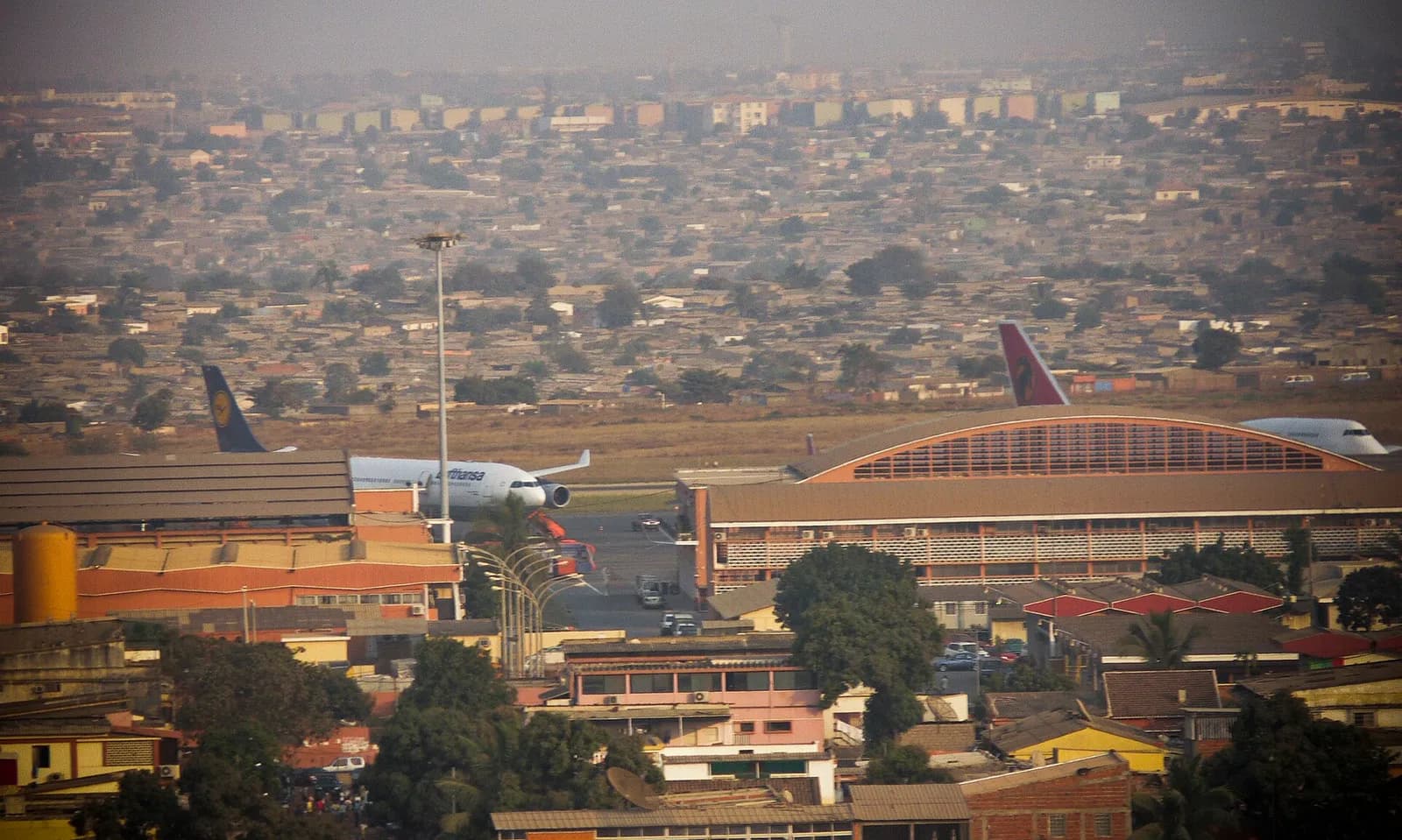
The ranking of the dates is political. Angolan historians such as Maria da Conceição Neto have argued that official commemorations centre on the MPLA's 4 February and leave the UPA's 15 March and the revolts in the north in the shadow. The head of the FNLA veterans' association still says the war began on 15 March, and that the order for 4 February came from a UPA militant.
In Portugal, memories of the UPA's massacres in March long crowded out the reprisals. Pedro Aires Oliveira credits recent work, Alexandre's book and Joaquim Furtado's television series A Guerra (2007 to 2012) among it, with giving the colonial counter-terror of 1961 the weight it lacked in Portuguese memory and history writing.
FAQs
What happened in Luanda on 4 February 1961?
In the early hours, about 200 men armed mostly with machetes and knives attacked the military prison, the São Paulo prison and the barracks of the PSP mobile company in Luanda to free political prisoners and seize weapons. They freed no one. Seven Portuguese policemen and soldiers died, with somewhere between 9 and 40 attackers, depending on the source.
Did the MPLA organise the 4 February attacks?
The MPLA claimed them in a communiqué from Conakry on 5 February 1961, and Angola's official history follows that claim. Many historians doubt it: the MPLA leadership seems to have been surprised, Carlos Pacheco argues it had little or no part, and others point to Canon Manuel das Neves or to an improvised group. FNLA veterans say it was a UPA action.
How many people died in the reprisals after 4 February?
There is no reliable count. The censored Lisbon papers reported 4 dead and 7 wounded in the shooting after the police funeral on 5 February; French papers reported about 20 casualties over the two days. In the following days white vigilantes, police and soldiers attacked the musseques, and the Museu do Aljube speaks of hundreds of Black Angolans killed or injured.
Is 4 February a holiday in Angola?
Yes. Under Angola's holidays law of 2011, kept in the 2018 revision, 4 February is a public holiday called the Day of the Start of the National Liberation Armed Struggle. The UPA's rising of 15 March and the Cassanje revolt of 4 January are dates of national celebration but not holidays.
Was 4 February 1961 the start of the Portuguese Colonial War?
It is usually taken as the start of the war in Angola, the first of Portugal's colonial wars. The MPLA and the Angolan state date the armed struggle from 4 February; FNLA veterans and others prefer the UPA's rising of 15 March 1961.
On the timeline
Open the timelineNearby moments from dictatorship and the estado novo (1926–1974).
The Lisbon Metro is inaugurated after more than four years of work, opening to the public the next day. The first network had 11 stations on a Y-shaped line running from Restauradores, splitting at Rotunda towards Sete Rios and Entre Campos, served by two-carriage trains. Almost every station carried azulejos by the painter Maria Keil.
Cotton growers in the Baixa de Cassanje, in Angola's Malanje region, rise against the forced-cultivation regime of the Cotonang company, refusing to work and burning their seed. The colonial repression that follows kills hundreds, by some estimates thousands, and 4 January is now marked in Angola as the Day of the Martyrs of Colonial Repression.
Exiled opposition leader Henrique Galvão and a band of Portuguese and Spanish rebels seize the liner 'Santa Maria' in 'Operation Dulcineia', killing one officer. Broadcasting denunciations of Salazar's dictatorship from the ship, they hold the world's attention for eleven days before landing at Recife on 2 February and receiving asylum in Brazil.
Luanda prison attacks, 1961
About 200 men armed mostly with machetes attack the São Paulo prison, the military prison and a police barracks in Luanda, trying to free political prisoners. Claimed by the MPLA, whose role historians dispute, the attack is regarded as the start of the Angolan War of Independence and of Portugal's 13-year Colonial War.
The UPA (Union of the Peoples of Angola) launches a large-scale uprising in northern Angola, killing settlers and African workers on the coffee farms. Six weeks after the Luanda attacks of 4 February, it turns the revolt into full-scale war, the first front of Portugal's 13-year Colonial War.
After seeing off an attempted coup by his defence minister, Júlio Botelho Moniz, Salazar takes over the defence portfolio himself and, in a broadcast address, says the aim is to move 'rapidamente e em força' — rapidly and in force — to defend Angola, at the start of 13 years of colonial war.
Benfica win the European Cup for the first time, beating Barcelona 3–2 at the Wankdorf Stadium in Bern. It is the first final not won by Real Madrid, and Benfica would retain the trophy the following year.
Coming up in history
All long reads 6 February 1608António Vieira: the Lisbon-born Jesuit who preached to the fish
 7 February 1992Maastricht, 7 February 1992: Portugal signs the treaty that made the EU
 8 February 2002Alqueva: the day the Guadiana was stopped, 8 February 2002
 9 February 1927The February 1927 revolt: Porto and Lisbon rise against the dictatorship
16 sources
Archives, scholarship and reporting this article was checked against.
- 1
1961 sob o viés da imprensa: os jornais portugueses, britânicos e franceses na conjuntura da eclosão da guerra no império português (Tânia Alves)Instituto de História Contemporânea, NOVA FCSH, 2021 (open-access book, DOI 10.34619/zlqi-8ok3)
- 2
A Luanda que a guerra deixou ou a guerra travada pelos que ficaram (1961-74) (Juliana Bosslet)Revista TEL, vol. 7, n.º 2, 2016, pp. 118-139, Universidade Estadual do Centro-Oeste
- 3
Assault to Luanda's Jails (#Inthisday, 4 February 2023)Museu do Aljube Resistência e Liberdade, Lisbon
- 4
Review of Valentim Alexandre, Os Desastres da Guerra. Portugal e as Revoltas em Angola (1961: janeiro a abril) (Pedro Aires Oliveira)Análise Social, vol. LVII, n.º 243, 2022, pp. 441-445
- 5Angola 1961: como os independentistas prepararam a guerra (Fernando Martins)Observador, 23 August 2014
- 6
Acto central do 4 de Fevereiro vai decorrer em Mbanza Congo (Graciosa Silva)Ver Angola, 3 February 2023
- 7
O Estado Novo português e a reforma do Estado colonial em Angola: o comportamento político das elites brancas (1961-1962) (Fernando Tavares Pimenta)História (São Paulo), vol. 33, n.º 2, 2014, pp. 250-272
- 8Luta armada pela independência de Angola começou há 44 anosRTP Notícias, with Lusa, February 2005
- 9
A Baixa de Cassange: o prenúncio da luta armada (Anabela Silveira)Revista Porto, n.º 3, 2013, pp. 39-57, Universidade Federal do Rio Grande do Norte
- 10
O 4 de fevereiro de 1961 e a guerra colonial em Angola (Diana Andringa)Esquerda.net, 4 February 2021 (text written in 1969 for Vida Mundial and cut by the censors)
- 11
- 12
Luta Armada: antigos combatentes relembram 4 de Fevereiro como marco para a independência nacional (Neusa Felipe)OPAÍS, Luanda, 2 February 2024
- 13
Proclamação da Independência, 11 de Novembro de 1975 (Agostinho Neto)Editorial Vanguarda, Teoria & Prática 2 (scan at the Marxists Internet Archive)
- 14
Lei n.º 10/11, de 16 de Fevereiro: Lei dos Feriados Nacionais e Locais e Datas de Celebração NacionalAssembleia Nacional de Angola, via Lex.AO
- 15
- 16
As revoltas na Baixa de Cassange e o direito à memória e história nas lutas de libertação de Angola: entre o 04 de janeiro e o 15 de março de 1961 (Giselda Brito Silva)Cadernos do Tempo Presente, vol. 12, n.º 2, 2021, pp. 13-33, Universidade Federal de Sergipe
Image credits
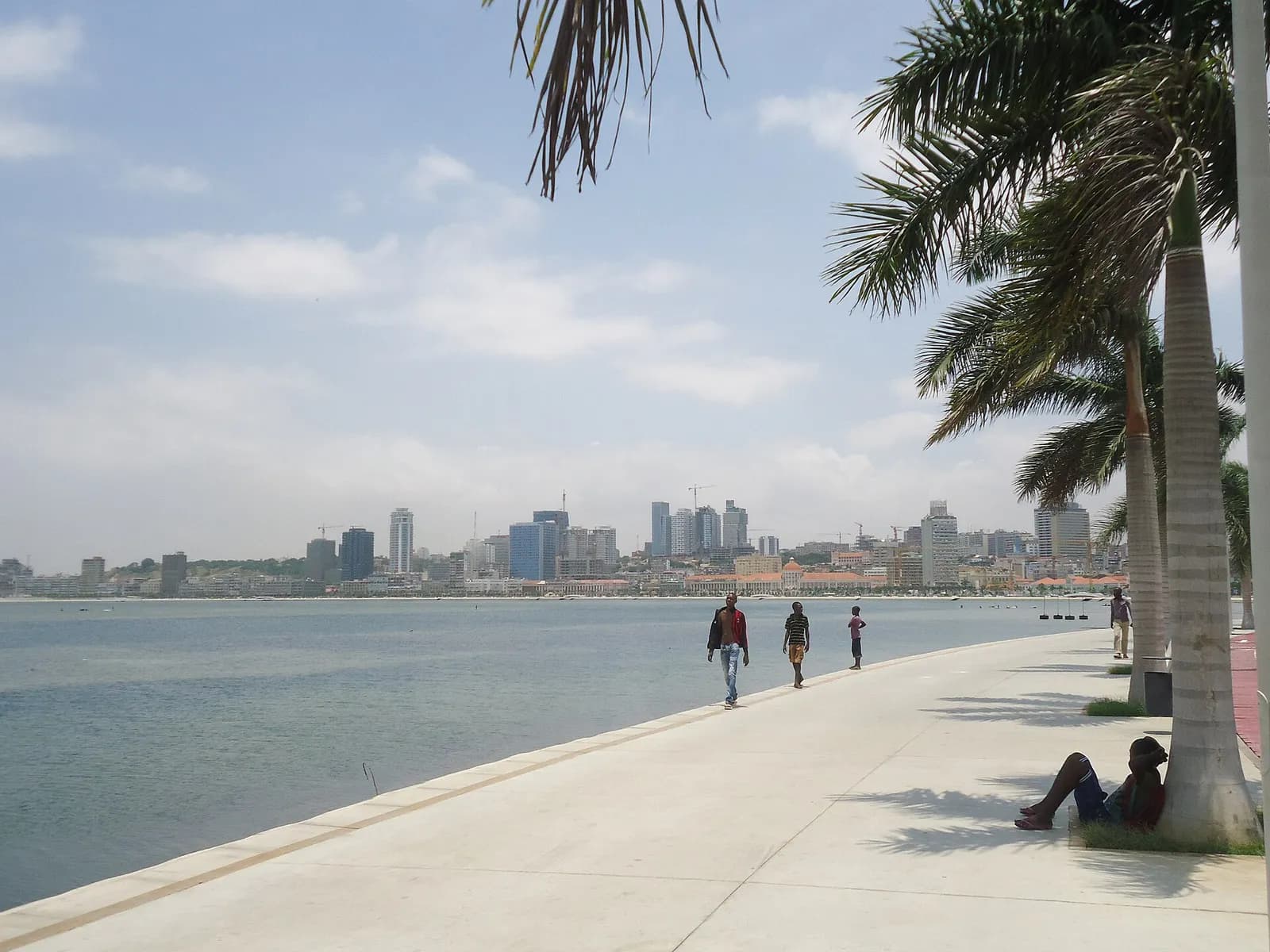
- The Marginal, Luanda's seafront avenue, in February 2013. Its official name, Avenida 4 de Fevereiro, carries the date of the 1961 attacks. Fabio Vanin, CC BY-SA 3.0, via Wikimedia Commons.
- Luanda's harbour and the houses above it, photographed by the Swiss writer Annemarie Schwarzenbach between May 1941 and March 1942, two decades before the attacks. Annemarie Schwarzenbach, Public domain, via Wikimedia Commons.
- A US Central Intelligence Agency map of Angola, marked July 1961. Luanda is on the coast; the cotton revolt was in Malanje district, inland; Léopoldville, the UPA's base, lies across the northern border. Central Intelligence Agency, Public domain, via Wikimedia Commons.
- The Igreja de Nossa Senhora dos Remédios, Luanda's cathedral, in April 2015. Canon Manuel das Neves, a vicar of the cathedral in 1961, is named by several historians as a figure behind the attacks. David Stanley from Nanaimo, Canada, CC BY 2.0, via Wikimedia Commons.
- Luanda's international airport, the Aeroporto 4 de Fevereiro, in July 2009, with a Lufthansa Airbus A340 and an Angola Airlines Boeing 747 on the apron. Manuel Dohmen, CC BY-SA 3.0, via Wikimedia Commons.