

The Goa satyagraha of 1955: unarmed marchers shot
On the eighth anniversary of Indian independence, volunteers from all over India walked into Portuguese Goa carrying the Indian flag. Portuguese police and soldiers opened fire; the count of the dead still depends on who is counting.
At a glance
- On 15 August 1955, India's eighth Independence Day, about 3,000 unarmed volunteers, or satyagrahis, walked into Portuguese Goa, Daman and Diu carrying the Indian flag.
- Portuguese police and soldiers fired on several groups. India first counted at least 15 dead and 10 missing; later Indian figures run from 22 to 32 killed, with about 225 wounded. Portugal gave no figure.
- Jawaharlal Nehru's government had asked Portugal since 1950 to negotiate a handover. Salazar's government refused, saying Goa was an inseparable part of Portugal.
- India had already closed the Portuguese legation in New Delhi on 8 August. After the shootings it shut its consulate in Goa from 1 September, sealed the border and banned further marches.
- After that India barred its citizens from further marches and squeezed Goa with an economic blockade instead. In December 1961 it sent in the army.
Rain at Patradevi
The night of 14 August 1955 was wet and tense on the Indian side of Goa's border. Hundreds of camps had gone up between Sawantwadi and Majali, and a few hundred volunteers with no transport had trekked long distances to reach them. Reports reaching India said that along the whole 160-mile frontier Portuguese troops and police, European and African, were waiting with rifles and Sten guns.
At Patradevi, a village on the road from Banda in the north, 500 or 600 satyagrahis, depending on the account, had gathered behind V. D. Chitale, a veteran of the Communist Party of India. Their leaders had told them to lie flat if they were fired on. The first 35 had gone barely 20 yards into Goa when the police opened fire.
Sahodrabai Rai, a widow and Congress member from Madhya Pradesh, took the flag from Chitale and walked on. A bullet hit her in the arm and she fell. Karnail Singh Benipal, a 24-year-old primary-school teacher from Punjab who had married that May, ran up from the back of the column and shouted at the police to shoot him instead.
They shot him in the chest, and he died where he fell.
Foreign reporters had come to watch. John Hlavacek of United Press and a correspondent for the American network CBS carried two of the dead and the wounded woman back over the line into India.
- Date
- Monday 15 August 1955, India's eighth Independence Day
- Where
- Border crossings into Goa from Majali in the south to Tiracol in the north, and into Daman and Diu
- Marchers
- About 3,000, 1,711 of them into Goa, by Nehru's count to Parliament; the 1979 Goa gazetteer says about 4,000
- Organisers
- Goa Vimochan Sahayak Samiti (all-party Goa liberation committee), Pune, with the National Congress (Goa)
- Killed
- 22 by India's final official count; others run from “at least 15” (India's first note) to 32
- Governor-General of Goa
- General Paulo Bénard Guedes
A question Lisbon would not discuss
When Britain left India in 1947, Portugal still held three territories on the subcontinent's west coast: Goa, the enclave of Daman with two small inland pockets, Dadra and Nagar Haveli, and the island of Diu. Together Lisbon called them the Estado da Índia, the State of India. Goa, by far the largest, had about 550,000 people in 1950, and the three territories about 600,000 between them.
Portugal itself was a dictatorship, the Estado Novo (New State) of António de Oliveira Salazar. It treated its colonies as overseas provinces, legally part of Portugal. On 27 February 1950 India proposed negotiations on the future of the territories. Lisbon replied that it was “unable to discuss, and much less accept” the proposal, because the territories were an integral part of Portugal. A second Indian note in January 1953 got no answer, and India withdrew its legation from Lisbon on 11 June 1953.
Jawaharlal Nehru, India's prime minister, wanted Goa but would not take it by force. Seizing it, he said in August 1955, would be easy, but it would betray “all that we have stood for” in a foreign policy built on settling disputes peacefully. The first border marches were Goan: on 15 August 1954 three small groups crossed with the Indian flag, and one held the old fort at Tiracol overnight before they were arrested.
Between 21 July and 11 August 1954, activists had overthrown Portuguese rule in Dadra and Nagar Haveli. India refused to let Portuguese troops cross its territory to retake the two pockets. From then on the border was a front line.
A summer of batches
In 1955 the campaign spread beyond the Goans. On 14 May an all-party committee in Pune, the Goa Vimochan Sahayak Samiti, began recruiting volunteers from across India. Its first batch crossed on 18 May. Socialists, Communists and Hindu nationalists followed in groups of 50 to 100, and the Portuguese arrested them, beat many and pushed most back into India.
Some batches were led by members of the Indian Parliament. Others came back with stories of beatings in police stations and nights in the jungle. On 25 June the leader of the sixth batch was shot dead at Kiranpani, and on 6 July two more volunteers were killed at Patradevi.
Nehru tried to hold the line. In Pune on 4 June he warned that anyone expecting “police action” over Goa was “entirely mistaken”, and that he did not want a mass satyagraha by Indians, so the world would not think India was forcing the Goans' hand. On 20 July the Pune committee went ahead anyway and called a mass march for 15 August. Three days later the Congress Working Committee said it opposed mass entry, in wording that was read as letting individual Congressmen take part.
Lisbon would not move either. On 22 July a communiqué from Salazar's office answered Nehru's latest press conference.
“If by “the Goa question” is meant the transfer to the Indian Union of sovereignty over the Portuguese territories of India, it is certain that the question will not be resolved by peaceful means.”
The same communiqué said Portugal wanted to live in peace and friendship with India. If the Goa question meant the everyday problems of two neighbours, it went on, it was “not only possible, but relatively easy” to solve.
On 25 July Nehru told the Lok Sabha that India was asking Portugal to close its legation in New Delhi from 8 August, which ended direct diplomatic contact between the two capitals. The same day railway traffic between India and Goa stopped at Castle Rock, the Indian border station, because India said the Portuguese had mined the line.
On 12 August the Portuguese foreign minister, Paulo Cunha, asked India to stop the march “so that the provocation being prepared in the Indian Union may be avoided”. Portugal, he said, “takes note of offences but does not commit them”.
15 August 1947
India becomes independent
Portugal keeps Goa, Daman and Diu.
27 February 1950
India asks to negotiate
Lisbon refuses to discuss a transfer.
11 June 1953
Indian legation in Lisbon withdrawn
15 August 1954
First border satyagraha
Three groups of Goans cross; Tiracol fort held overnight.
July–August 1954
Dadra and Nagar Haveli lost
India refuses Portuguese troops passage.
14 May 1955
Pune committee formed
Batches of Indian volunteers cross from 18 May.
25 June–6 July 1955
First deaths of the year
Three volunteers shot at Kiranpani and Patradevi.
22 July 1955
Salazar's communiqué
No transfer of sovereignty by peaceful means.
25 July 1955
India acts
Portuguese legation told to close; trains to Goa stop.
8 August 1955
Legation closed
Brazil's embassy begins looking after Portuguese interests in India (formally named in 1956).
Monday the fifteenth
The marchers crossed in the small hours and in torrential rain, in groups, at points along the whole border. Three groups of 20, 39 and 16 went in from Majali in the south at midnight. In the north 49 crossed near Aronda, and six more groups followed them over the next two hours, while 300 others waited to cross the Terekhol river under the beams of Portuguese searchlights.
Satyagrahis entering each territory on 15 August 1955
volunteers
Figures Nehru gave the Indian Parliament, as reported by R. P. Rao (1963). They add up to 3,041, the “about 3,000” of most accounts; Lopes (2017) gives the same split with Goa rounded to 1,700, while the 1979 Goa gazetteer puts the marchers at about 4,000. Of those who entered Goa, 1,691 were turned back; in Daman all but five were pushed back into India.
Show the data
| Entered | |
|---|---|
| Goa | 1,711 |
| Daman | 1,249 |
| Diu | 81 |
At Palva, near Aronda, volunteers raised the Indian flag on a temple at daybreak. When they refused to take it down the police fired, killing one. At Castle Rock 185 volunteers entered in two groups: the first was beaten back with lathis, long bamboo staves, and the police fired on the second, killing six. At Sasoli three of 101 marchers were wounded and died after being carried back into India.
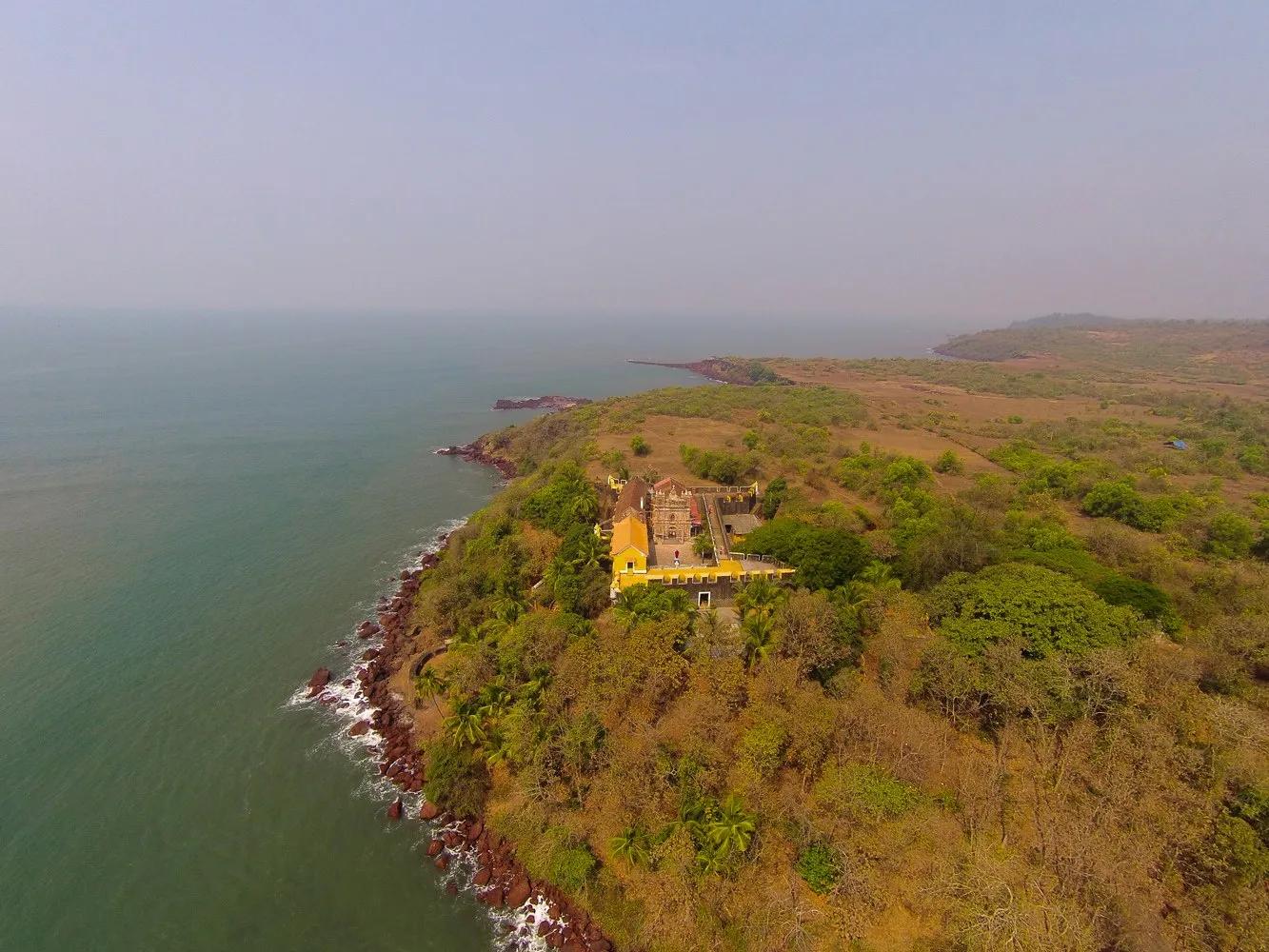
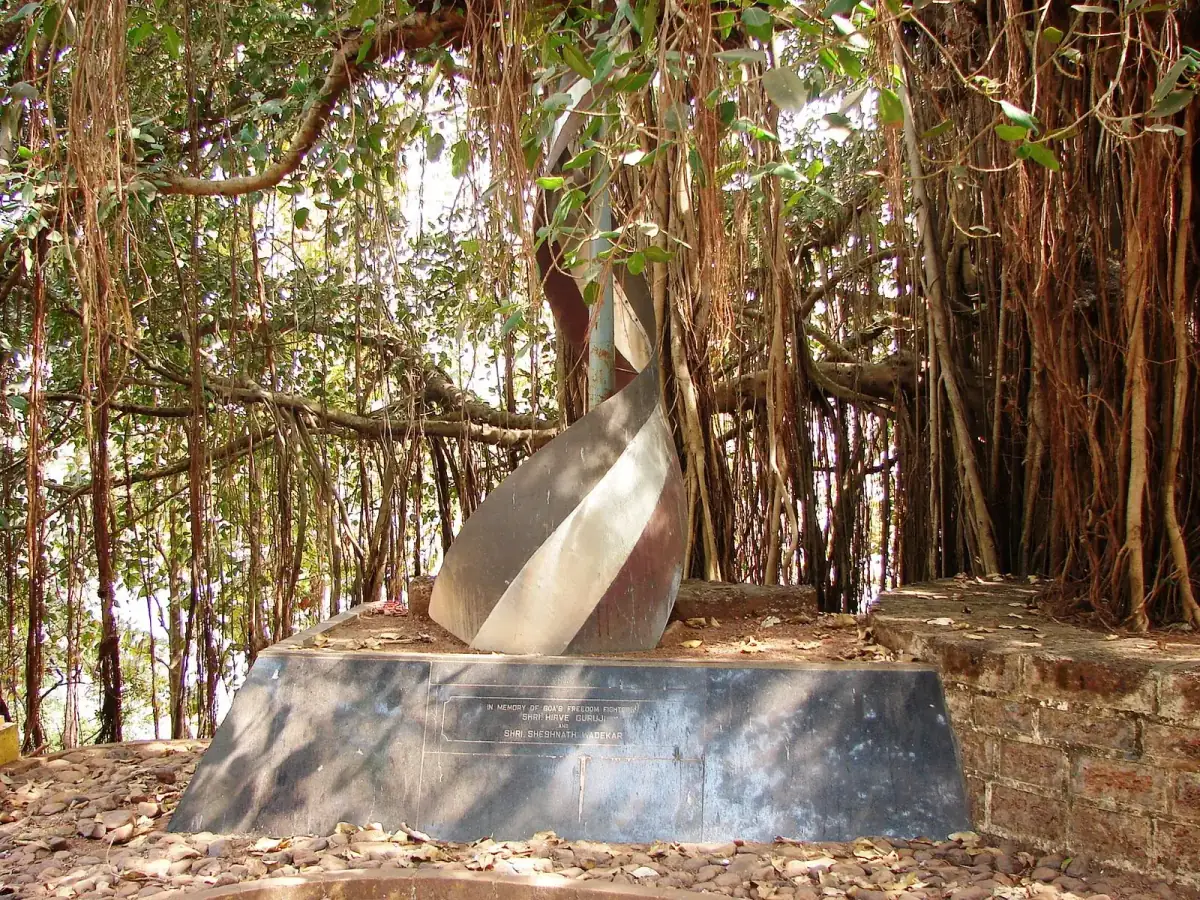
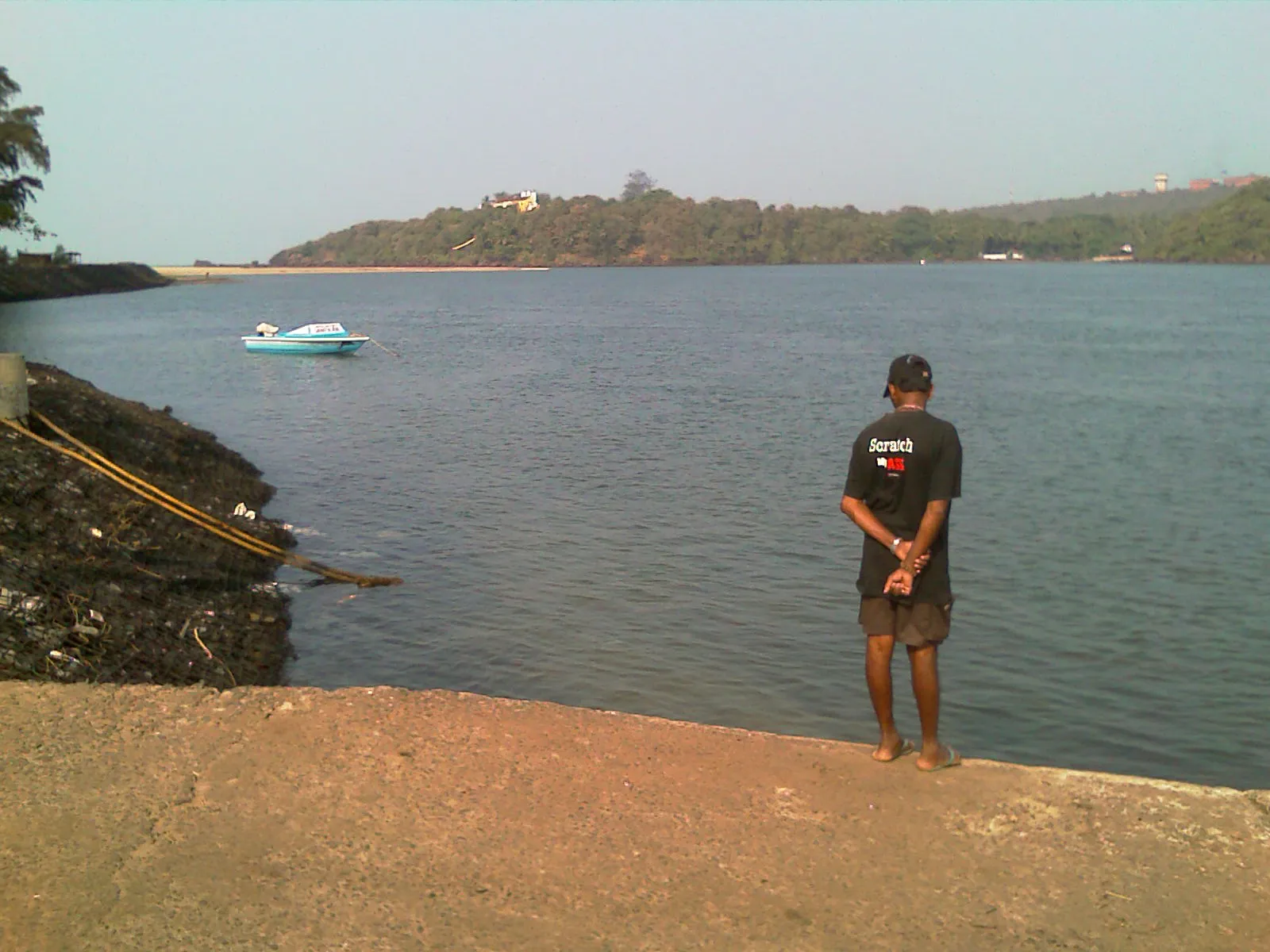
Another party waded across the Terekhol and at 11 in the morning raised the flag over Fort Tiracol, the same fort Goans had held for a night a year earlier. People on the Indian side of the border heard a shot, another five minutes later, then about 60 rounds from a Bren gun. Hirve Guruji, secretary of the All India Primary Teachers' Federation, was among the dead.
About 1,200 volunteers entered Daman, where police beat them back and, by Indian accounts, the governor himself joined in. When one group refused to turn round, the police fired, killing an elderly sadhu, a Hindu ascetic. Inside Goa, local people raised Indian flags in several places; about 40 were arrested in Mormugão and Bicholim and beaten.
Counting the dead
Nobody agreed then on how many died, and nobody agrees now. Some of the wounded died after being carried back into India, some volunteers were missing for days, and Lisbon's protest note gave no figure. India's first official count, sent to Lisbon four days later, was at least 15 dead, 225 wounded and 10 missing, most of them presumed dead.
| Source | Killed | Wounded | What it covers |
|---|---|---|---|
| Government of India, note of 19 August 1955 | At least 15, plus 10 missing | At least 225 | Goa, Daman and Diu, as known on 19 August |
| Indian officials' final figures, as given by Rao (1963) | 22 | 225, 38 of them seriously | The whole day |
| Portuguese Communist Party, statement of August 1955 | 31 | More than 100 | Goa, Daman and Diu |
| Gazetteer of Goa, Daman and Diu (1979) | 32 in Goa, 1 in Daman | 225 in Goa, 3 in Daman | Reported dead on the spot |
| Government of Portugal, note of 17 August 1955 | No figure | No figure | Admits “deaths and wounded to be deplored” |
The gazetteer cites the Bombay Marathi fortnightly Dudha Sagar of 1 September 1955 and India's pleadings at the International Court of Justice. The Communist Party, then banned in Portugal, issued its statement through its secretariat; it is quoted in Lopes (2017), who also cites about 22 dead and 38 seriously wounded from Desai (2011). A memorial at Patradevi was later dedicated to 32 satyagrahis. The Government of Goa's 2026 figure of “around 74” satyagrahis killed covers the whole struggle, not one day.
Lisbon's version was different. Its protest note of 17 August called the marchers “invaders in an aggressive attitude and with a seditious purpose” and said “several thousands” had crossed. The authorities had tried to make themselves respected without force, it said, but where marchers went as far as trying to entrench themselves, the police fired first into the air, then at the ground, and only as a last resort at people.
“The Portuguese authorities were thus compelled to defend themselves from violence by violence.”
The note blamed India for the bloodshed and said Indian troops, “Gorkhas and Sikhs”, had appeared near the border without trying to stop the crossings. India's reply of 19 August called these statements “completely untrue” and said it had no armed forces anywhere along the frontier.
Indian and foreign journalists who watched said the police fired without warning, and Nehru told Parliament that in several cases marchers were sitting on the ground when they were shot. In Portugal, where the press was censored, the clandestine Communist Party called the shootings “a crime” and complained that newspapers had hidden the deaths from the Portuguese.
Hartals, a sealed border and a ban
On 16 August Delhi closed for a hartal, a general shutdown in protest, and in Bombay more than 300,000 workers stayed away from mills and offices. Crowds broke the police cordon round the Portuguese consulate to hoist the Indian flag, and others forced their way into the state secretariat. Calcutta and Madras closed on the 18th.
Nehru told the Lok Sabha that the firing had been “brutal and uncivilized in the extreme” and paid tribute to Sahodrabai Rai's courage. He had already said at a meeting in Delhi on the day itself that India would not use force.
“Let us take note and let the world take note as to how far it is proper for any Government or country to open fire on peaceful people who carry no arms.”
On 19 August India's consul-general handed the governor-general a note. India would close its consulate-general in Goa from 1 September and wanted Portugal's consulate-general in Bombay and its honorary consulates in Calcutta and Madras shut by the same date. Lisbon sent the note back the next day as couched in “unacceptable terms”, but withdrew its consuls. Money orders to the enclaves had already been stopped.
On 4 September Nehru's party called the campaign off. The All India Congress Committee noted that the government had “closed and sealed” the borders and said that even individual satyagraha by Indians should be avoided. Indian police began turning volunteers back before they reached the line. Peter Alvares of the National Congress (Goa) said the decision had thrown “the safety and lives of Goans to the wolves of Portuguese imperialism”.
The blockade
With marches banned, India relied on money and trade. Its squeeze on Goa had begun before 1955, and sources date the start of the “economic blockade” anywhere from late 1953 to January 1955. In September 1955 Nehru told the Rajya Sabha that a government could not offer satyagraha, but it could take economic action, and that his had been doing so for six or eight months.
Goa's economy faced India, not Portugal. Before the blockade more than 60 per cent of its trade was with India and under 8 per cent with Portugal, and by one estimate more than 150,000 Goans lived in Bombay alone, many of them sending money home. When transfers from India stopped, families who lived on those remittances were hit hardest.
Money sent to and from Goa in 1951
million rupees
- Into Goa
- Out of Goa
Remittances between Goa and India, and between Goa and Portugal, in 1951, from R. P. Rao (1963), who gives them in lakhs (100,000s) of rupees. Valmiki Faleiro, citing Arthur Rubinoff (1971), gives the same inflows rounded to 68 million and 4 million. The blockade stopped transfers from India.
Show the data
| Into Goa | Out of Goa | |
|---|---|---|
| India | 68 | 46 |
| Portugal | 4.1 | 11.6 |
| Date | Measure |
|---|---|
| 25 July | Trains between Castle Rock and Goa suspended |
| 28 July | Bombay dock workers boycott foreign ships carrying cargo to and from Goa |
| 18 August | Money orders between India and the Portuguese enclaves suspended |
| 24 August | Three shipping companies told to stop their services to Goa |
| 1 September | Indian consulate-general in Goa closes |
| 4 September | Congress resolution says the borders are “closed and sealed” |
Portugal looked elsewhere. In September 1955 Lisbon Radio announced a tax on Indian merchants in Angola, Mozambique and other colonies to pay Goan families who had lived on money from India, and Goa found new suppliers.
Rice and vegetables came from Pakistan, which also let Portuguese aircraft fly between Karachi and the enclaves from August 1955; potatoes came from the Netherlands and cement from Japan. Goa's iron and manganese mines were mechanised with foreign capital, and by 1961 Goa was exporting about six million tonnes of ore a year, much of it to Japan and West Germany.
From Washington to December 1961
Goa became a small Cold War quarrel. Touring India in November 1955, the Soviet prime minister Nikolai Bulganin said the continued existence of the Portuguese colony on Indian territory was “a shame to civilized people”. On 30 November in Washington, Paulo Cunha told John Foster Dulles, the American secretary of state, that India had backed the “peace marches” and that Goa was “constitutionally inseparable” from Portugal. A plebiscite, he said, was politically impossible. Dulles said that “in his own mind” there was “no such thing as peaceful invasion”.
Their joint communiqué of 2 December criticised Soviet “allegations concerning the Portuguese provinces in the Far East”, and India took it as American support for Portugal's claim to Goa. Washington's aim, as the State Department's historians describe it, was a peaceful settlement that kept the United States friends with both: Portugal was a NATO ally with American bases in the Azores, and India the largest power in South Asia.
Portugal was admitted to the United Nations on 14 December 1955, and on 22 December it sued India at the International Court of Justice over Dadra and Nagar Haveli. The court ruled in April 1960 that Portugal had a right of passage across India for civilians, officials and goods, but none for troops, armed police or weapons. The National Congress (Goa) formally ended its satyagraha on 19 April 1958, and the next day India abolished the permits its citizens had needed to travel to the Portuguese territories.
Indian troops entered Goa, Daman and Diu on 18 December 1961, a story told in a separate article.
Explaining the decision at a press conference on 28 December, Nehru said that if the government had not acted, hundreds of Indians would have marched into Goa, and the choice would have been “to let them be massacred by the Portuguese”, as in 1955, “or to shoot them down ourselves”.
Why it still matters
A bust of Karnail Singh has stood since 2015 at the Patradevi primary school that bears his name, and his home village of Issru has his statue, a park and a school. In August 2026 India's defence minister opened a rebuilt martyrs' memorial at Patradevi, where the first marchers of 1955 crossed.
Most of the marchers came from outside Goa, and Goa now honours them with its own dead. The historian Prajal Sakhardande counts 75 martyrs of the struggle against Portuguese rule between 1583 and 1961, 33 of them Goans and the rest from other parts of India. Of all their stories, he told O Heraldo, Karnail Singh's is the one he finds most remarkable.
For Portugal, the summer of 1955 cut its last direct channels to India: it had no legation in Delhi and no consulates. Diplomatic relations were restored only after the Carnation Revolution of April 1974 ended the Estado Novo. On 31 December 1974 the two countries signed a treaty recognising Indian sovereignty over Goa, Daman, Diu, Dadra and Nagar Haveli.
FAQs
What happened in Goa on 15 August 1955?
About 3,000 unarmed Indian volunteers, called satyagrahis, crossed into Portuguese Goa, Daman and Diu carrying the Indian flag to demand the end of Portuguese rule. Portuguese police and soldiers fired on several groups, killing 22 people by India's final official count and as many as 32 by later Indian counts.
How many people were killed in the 1955 Goa satyagraha?
India's note of 19 August 1955 gave at least 15 dead and 10 missing; Indian officials later settled on 22 dead and 225 wounded, and the 1979 Goa gazetteer gives 32 dead in Goa and 1 in Daman. The banned Portuguese Communist Party counted 31 dead. The Portuguese government gave no figure.
Who was Karnail Singh Benipal?
A schoolteacher from Issru, near Khanna in Punjab, born on 9 September 1930. At Patradevi on 15 August 1955 he ran forward when Sahodrabai Rai was shot carrying the flag, dared the Portuguese to shoot him instead and was killed by a bullet in the chest.
Why did Nehru not send the army into Goa in 1955?
Nehru held that India should settle the Goa question peacefully, partly to keep its standing as a non-aligned peacemaker. After the shootings his party banned further marches and India turned to diplomatic isolation and an economic blockade. The army went in only in December 1961.
On the timeline
Open the timelineNearby moments from dictatorship and the estado novo (1926–1974).
Death of Calouste Gulbenkian in Lisbon, aged 86. The Armenian oil magnate — known as 'Mr Five Per Cent' for his stake in Middle Eastern oil — had taken refuge in neutral Portugal in 1942, living at the Hotel Aviz, and left most of his fortune and his celebrated art collection to a foundation based in the city.
Carmen Miranda, the Portuguese-born singer and actress who became a Hollywood and Brazilian music icon, dies in Beverly Hills aged 46. Born in Marco de Canaveses in northern Portugal, she was for a time the highest-paid woman in American show business.
Construction work begins on the Lisbon Metropolitano, Portugal's first underground railway. The inaugural line opened to the public in December 1959.
The Goa satyagraha of 1955
On India's Independence Day, about 3,000 unarmed satyagrahis march across the borders of Portuguese Goa, Daman and Diu to demand integration with India. Portuguese police and troops open fire, killing 22 by India's official count and up to 32 by later counts. The bloodshed hardened Indian opinion against Lisbon's rule, which ended when India annexed Goa in December 1961.
Francisca Van Dunem is born in Luanda, Angola. A public prosecutor for more than three decades, she became the first Black woman to serve as a minister in Portugal when António Costa appointed her Minister of Justice in 2015, a post she held for six years.
Birth in Lisbon of the poet Ana Luísa Amaral. A Porto professor who translated Emily Dickinson and Louise Glück, she won the Reina Sofía Prize for Ibero-American Poetry in 2021, the year before her death.
The Calouste Gulbenkian Foundation is formally established in Lisbon under the will of the Armenian oil magnate who had spent his last years in the city. Endowed with his vast fortune and art collection, it becomes Portugal's leading private patron of the arts, science, education and charity.
Coming up in history
All long reads
19 sources
Archives, scholarship and reporting this article was checked against.
- 1
Portuguese Rule in Goa, 1510–1961 (R. P. Rao)Asia Publishing House, Bombay, 1963 (Digital Library of India copy, Internet Archive)
- 2
- 3
As vozes da oposição ao Estado Novo e a questão de Goa (1950–1961) (Filipa Alexandra Carvalho Sousa Lopes, PhD thesis)Faculdade de Letras da Universidade do Porto, 2017
- 4
Foreign Relations of the United States, 1955–1957, vol. XXVII, document 148: Memorandum of a conversation, Washington, 30 November 1955Office of the Historian, US Department of State
- 5
Punjabi hero of Goa's liberation struggleThe Tribune (Chandigarh), 18 December 2021
- 6
Operation Vijay: The Liberation of ‘Estado da India’ – Goa, Daman and Diu (Brigadier A. S. Cheema)Journal of the United Service Institution of India, vol. CXLIII, no. 594, October–December 2013 (PDF)
- 7
Goa: the liberators and the lesson (Ajoy Ghosh)Mainstream Weekly, vol. L no. 9, 18 February 2012, reprinting New Age, 7 January 1962
- 8
60 years later, Sardar Karnail Singh lives onO Heraldo (Panjim), 20 June 2015
- 9
10. The Economic Blockade (Valmiki Faleiro)The Goa Book Club (Google Groups), 24 October 2021
- 10
Satyagraha in South Africa (M. K. Gandhi), chapter 12, “The Advent of Satyagraha”Navajivan Publishing House, translated from the Gujarati by Valji Govindji Desai (mkgandhi.org PDF)
- 11
Goa Revolution Day to be observed on June 18Department of Information and Publicity, Government of Goa, 14 June 2023
- 12
- 13
- 14
- 15
- 16
Right of Passage over Indian Territory (Portugal v. India): summary of the Judgment of 12 April 1960International Court of Justice
- 17
From Goa Liberation to Op Sindoor, India's resolve to defend its sovereignty remains unwavering: Raksha MantriOffice of Rajnath Singh, Defence Minister of India, press release, 26 August 2026
- 18
India–Portugal RelationsEmbassy of India, Lisbon
- 19
Image credits
- Fort Tiracol, on a headland at the mouth of the Terekhol river, the northern tip of Goa, photographed from the air in 2015. On 15 August 1955 satyagrahis waded the river and raised the Indian flag over the fort; the shooting that followed killed at least one of them. Cajie, CC BY-SA 4.0, via Wikimedia Commons.
- A memorial at Fort Tiracol. The plaque on its base reads “In memory of Goa's freedom fighters” and names Hirve Guruji, killed in the firing at the fort on 15 August 1955, and Sheshnath Wadekar. Mvkulkarni23, CC BY 3.0, via Wikimedia Commons.
- The mouth of the Terekhol river in 2010, with Fort Tiracol on the wooded headland across the water. The fort and its village are the only part of Goa on the river's north bank; upstream, the river forms Goa's border with Maharashtra. Ssr, CC BY-SA 4.0, via Wikimedia Commons.