

Aljubarrota, 1385: how João I kept Portugal's crown
On a Monday evening in August 1385, behind ditches and pits on a narrow plateau near Leiria, a small Portuguese army with English archers destroyed the army of Juan I of Castile. The victory ended the crisis of 1383 to 1385.
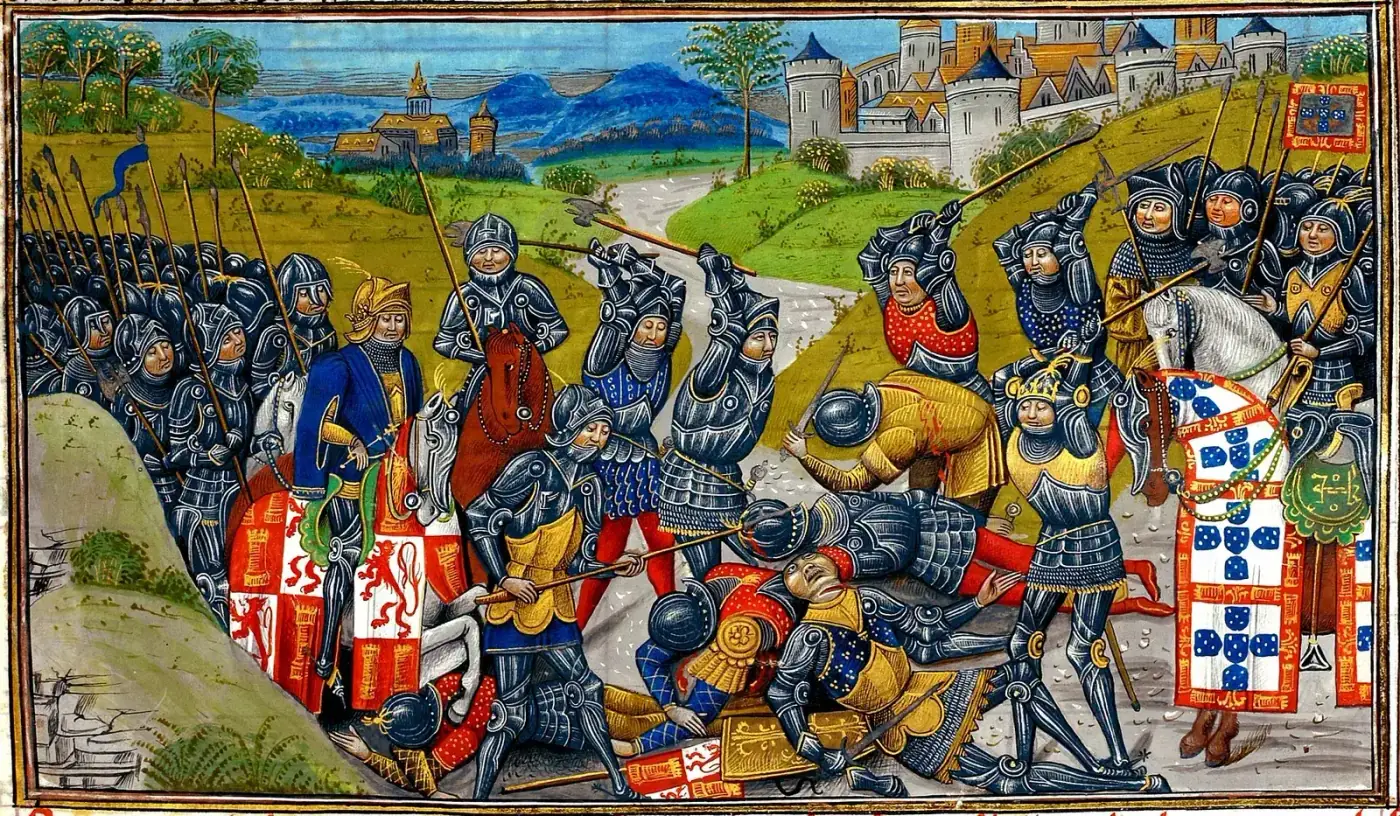
At a glance
- The Battle of Aljubarrota was fought on the evening of Monday 14 August 1385 on the plateau of São Jorge, on the road south from Leiria, about 11 km from the village that gave it its name.
- João I, chosen king by the Cortes of Coimbra that April, and his constable Nuno Álvares Pereira beat Juan I of Castile, who claimed Portugal through his wife Beatriz, Fernando I's only daughter.
- Fernão Lopes counted 6,500 Portuguese against a little over 30,000; the historian João Gouveia Monteiro suggests fewer than 10,000 against perhaps 20,000, not all of whom reached the fight.
- Ditches, pits and a front only about 300 to 360 metres wide funnelled the attackers into crossbow and longbow fire. The decisive fighting lasted a short half hour by the count of both chroniclers, Portuguese and Castilian.
- João I vowed a monastery for the victory: Santa Maria da Vitória at Batalha, begun in 1386 or 1387. The battlefield centre run by the Fundação Batalha de Aljubarrota opened in 2008.
Sixteen guns and a long wait
By dawn on Monday 14 August 1385 the king's army was drawn up across the old road south of Leiria. The men stood in armour through the heat of the afternoon, most of them without food or drink, because it was the eve of the feast of the Assumption. The sun, the dust and the wind were all in their faces, the chronicler Fernão Lopes wrote.
A foreign knight in the Portuguese ranks, Micer João de Monferrara, whom Lopes elsewhere calls a Gascon, told the king he was sure of victory. He had fought in seven pitched battles, this would be his eighth, and he had never seen such cheerful faces on so few men about to fight so many.
He was among the dead that evening.
Late in the day, some 800 metres away, the Castilians fired sixteen guns, trons, throwing stone balls. Most did no harm. One killed two Portuguese squires, brothers, and another killed a foreigner, by the Fundação's reading an English archer. Most of the Portuguese men-at-arms had never seen a gun, and fear ran down the line until a squire called out that he had watched the two dead brothers murder a priest at Mass eight days earlier, so God did not want them to share in the victory.
Then the Castilian vanguard, most of it French horsemen, came on. Within about an hour the army of Juan I of Castile had broken, and its king was riding for Santarém.
A crown with two claimants
Fernando I died on 22 October 1383 without a son. His only daughter, Beatriz, had married Juan I of Castile under the Treaty of Salvaterra de Magos that spring, so a Castilian king stood to inherit Portugal. On 6 December the Master of the military Order of Avis, João, an illegitimate son of King Pedro I, killed the queen's favourite, Count Andeiro, and the people of Lisbon proclaimed him regent and defender of the kingdom.
Juan invaded at the queen mother's request. His army besieged Lisbon by land and sea from May 1384, until plague, killing up to 200 men a day at the end, forced him home on 3 September. In April 1385 the Cortes of Coimbra, the assembly of the clergy, nobles and towns, made the Master King João I, and the next day he named Nuno Álvares Pereira, then 24, constable, commander of the army.
In May the lords of the Beira destroyed a Castilian raiding column at Trancoso. Fernando's death, the Cortes and Trancoso each have their own Lisboeta article.
The road to São Jorge
Juan I crossed the border again on 8 July 1385 at Almeida and marched by Trancoso, Celorico da Beira, Coimbra, Soure and Leiria towards Lisbon, which his fleet had blockaded since April. João I waited at Abrantes on the Tagus and sent for Nuno, who was raising men in the Alentejo. Nuno arrived on 3 August.
At a council of war on 6 August the king argued against risking a battle and proposed a raid into Andalusia instead, to draw Juan home. Nuno refused and offered to fight the Castilians alone with his own men, and the next day he left for Tomar. The king changed his mind and joined him there on 8 August.
On 13 August Nuno rode towards Leiria with a hundred horsemen to look for the enemy. He did not find them, but he found the ground: the plateau of São Jorge, where the road from Leiria to Lisbon crossed a narrow tongue of high land between streams. The army was in place there at first light.
6 April
João I proclaimed king
At the Cortes of Coimbra.
29 May
Trancoso
A Castilian raid into the Beira is destroyed.
June
Elvas holds
Juan I lifts his siege and withdraws to Ciudad Rodrigo.
8 July
The invasion
Juan I enters Portugal at Almeida.
6 August
Council at Abrantes
Nuno insists on battle and leaves for Tomar.
8 August
The armies join
João I reaches Nuno at Tomar.
13 August
The ground chosen
Nuno scouts towards Leiria with 100 horsemen.
14 August
Aljubarrota
Battle on the plateau of São Jorge.
How many men?
Fernão Lopes, keeper of the royal archive in the Torre do Tombo from 1418 and later the chronicler of João I's reign, complained that some writers inflated the Castilian host to 60,000 or 100,000, a hundred Castilians to every Portuguese, while others swelled the Portuguese army to 2,200 lances and 10,000 foot.
Lopes set out what he called the true figures: 6,500 Portuguese, of whom 1,700 were lances (mounted men-at-arms, who fought on foot that day), and a little over 30,000 on the other side, with 700 carts, more than 8,000 head of livestock, most of them taken in Portugal, and sixteen guns.
| Source | João I's army | Juan I's army |
|---|---|---|
| Figures Lopes rejected | 2,200 lances and 10,000 foot and crossbowmen | 60,000 to 100,000 |
| Fernão Lopes, fifteenth century | 6,500 | A little over 30,000 |
| Fundação Batalha de Aljubarrota, English summary | About 7,000 | 40,000 on invading |
| Fundação Batalha de Aljubarrota, CIBA booklet | About 8,000 | Not totalled |
| João Gouveia Monteiro, 2006 | Fewer than 10,000, with non-combatants | Perhaps 20,000 |
Lopes calls his Castilian total a little over 30,000, but his own sub-totals add up to exactly 30,000. The Fundação's two pages give different totals for the same army. Medieval army figures are rarely more than informed guesses.
Monteiro, of the University of Coimbra, accepts that Castile had far more men but argues that many never fought. The marching column from Leiria was many kilometres long, and its head reached the open ground of Chão da Feira only after five in the afternoon, an hour or two before the attack. The narrow plateau then kept much of the rest out of the fight.
João I also had foreign help. The English force raised for him numbered at least 800 men by Monteiro's count, many of them veterans of the Hundred Years War, and the Fundação places about 200 English archers on one wing under the banner of Saint George. On the other side, the Castilian vanguard was made up mostly of French knights.
Ditches, pits and a narrow front
Nuno's first position, at the northern end of the plateau, faced Leiria. When the Castilian vanguard saw it in the late morning, its commanders refused to attack uphill and led the army round to the west, by side roads, to rejoin the main road further south at Chão da Feira. The Portuguese marched about two kilometres south and turned to face them, the vanguard passing through the rearguard.
The new front was narrow, with streams in ravines on both sides. In the hours of waiting the Portuguese dug ditches and rows of pits, called covas de lobo or wolf pits, piled felled trees into barricades and hid much of it under grass and branches. Lopes says nothing of these works and insists the field was level and gave neither side an advantage. The Castilian king saw it differently.
“They placed themselves in a strong position between two streams, 15 metres deep, and when our people reached that place they found: first, tree trunks piled up that protected the Portuguese, and that came up to our waists; second, in front of the Portuguese, a ditch dug in the ground, as deep as a man up to his throat.”
In the same letter Juan wrote that the streams hemmed the Portuguese front to the width of 340 to 400 lances, which Monteiro reckons at roughly 300 to 360 metres. Pero López de Ayala, a Castilian eyewitness who later wrote Juan's chronicle, records the warning given to the king that the two wings of his army would run into valleys and never reach the enemy. That is what happened: the vanguard fought alone.
Lopes describes two small battles, or bodies of troops. In front stood the constable with 600 lances, flanked by two wings: one under Mem Rodrigues and Rui Mendes de Vasconcelos, called the Ala dos Namorados, the Lovers' Wing, with 200 lances; the other under Antão Vasques with the English archers and other foreigners. The king held the rearguard behind them with 700 lances, and the baggage, pages and horses were kept in a large pen at the back, ringed by foot soldiers and crossbowmen.
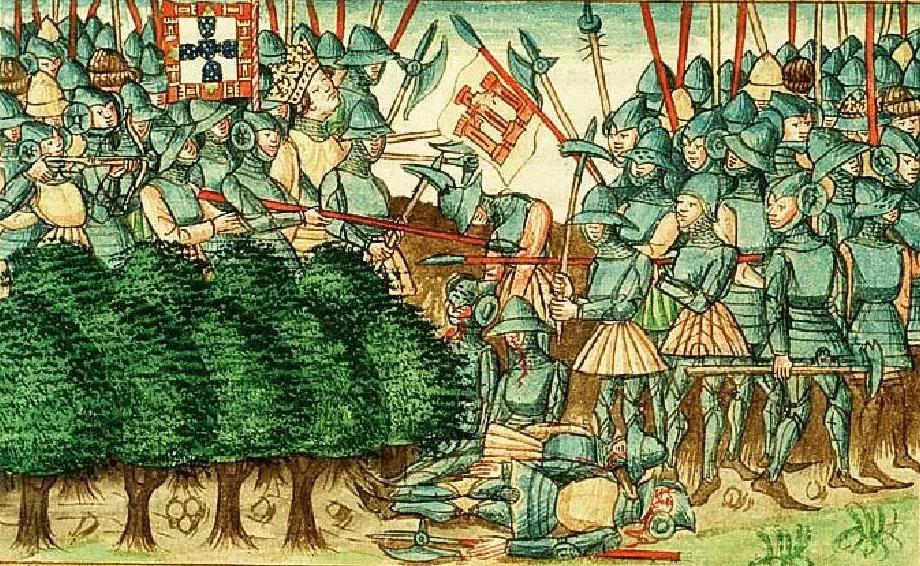
Half an hour on the plateau
Juan's council was divided. Some advised waiting, since it was late and the men were tired and unfed; others, led by the Portuguese count João Afonso Telo, said it would be shameful to fear so small an army. Juan was ill, and Ayala says young knights who had never been in a battle called caution cowardice and attacked anyway.
The first charge, of about 2,000 mostly French horsemen, began at about a quarter to six. Crossbow bolts reached them at about 400 metres and English arrows at less than 300. As the plateau narrowed, horses fell into the pits and ditches and brought down others. Knights who got through dismounted, failed to break the Portuguese line and surrendered: the Fundação counts about 1,000 French prisoners.
From about a quarter past six the main army followed with the royal standard. Most of its men-at-arms dismounted and cut down their long cavalry lances for fighting on foot, which, Lopes says, did them more harm than good. Crushed into the funnel, they could not use their crossbows, and some of the dead, Lopes adds, bore no wound at all. Monteiro reads them as men smothered in the press, as at Dupplin Moor in Scotland in 1332.
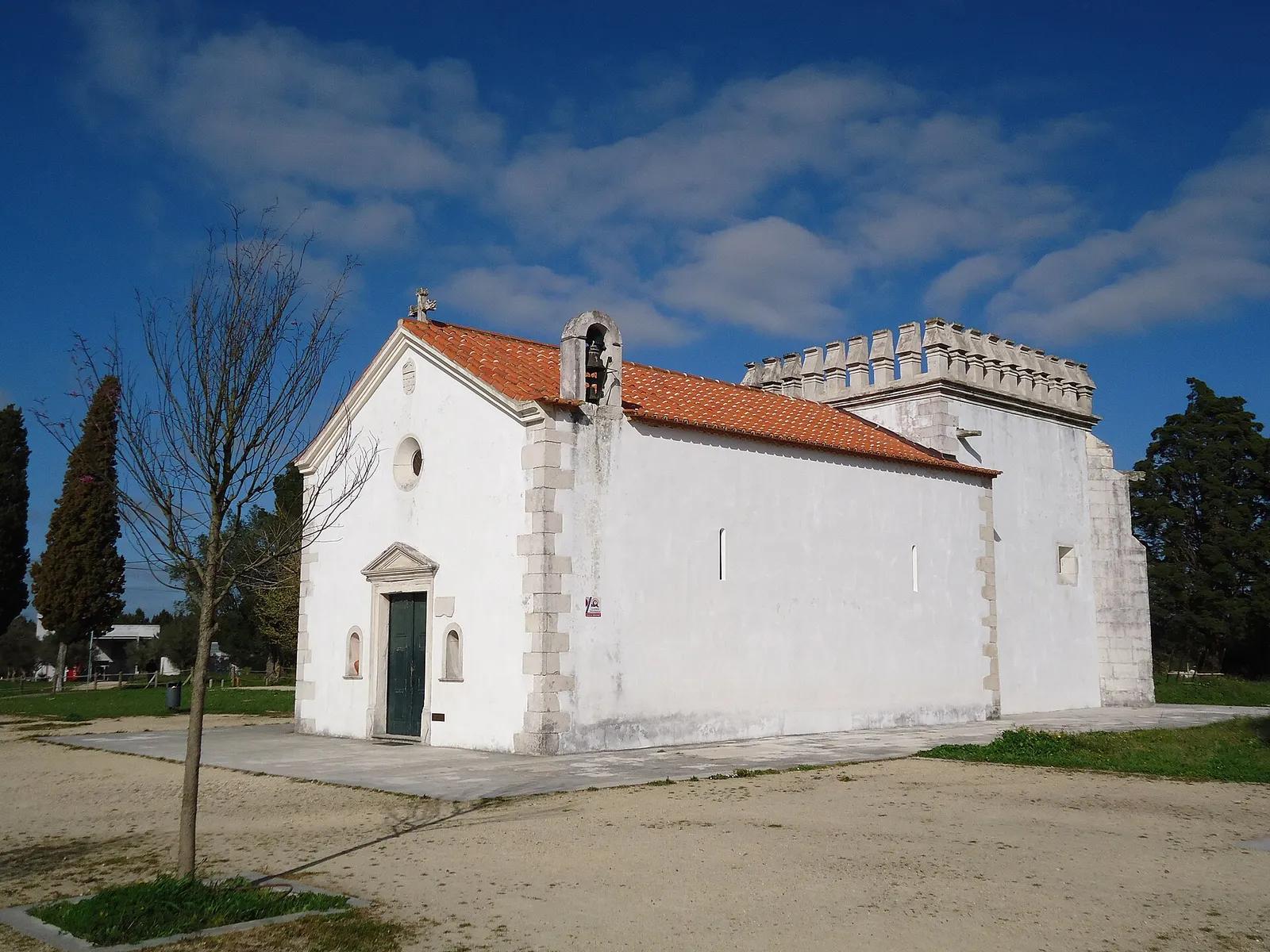
The weight of the attack broke the Portuguese vanguard beside Nuno's banner, where the chapel of São Jorge stands today, and the Lovers' Wing took the heaviest losses. The wings folded inwards and shot into the breach. João I led the rearguard forward shouting “ávante, ávante, S. Jorge Portugal, S. Jorge Portugal, que eu sou el-rei” (“forward, forward, Saint George for Portugal, for I am the king”).
In the mêlée a young Castilian knight, Álvaro Gonçalves de Sandoval, wrenched the king's axe from his hands and forced him to his knees. Martim Gonçalves de Macedo stepped between them, and Sandoval was cut down.
Then the Castilian royal standard went down.
Portuguese pages shouted that the enemy were fleeing, and the survivors of the assault ran for their camp. Ayala, on the losing side, timed the decisive fighting at “media hora asaz pequeña”, a short half hour, and Lopes gave the same figure. The whole action, with the rout and the attack on the baggage, ran about two hours: by the Fundação's reconstruction, from about 17:45 to 19:45. That included a late attack by some 700 riders under Gonçalo Nunes de Guzmán, Master of Alcántara, who circled the Portuguese left and fell on the baggage. Nuno, borrowing a horse, drove them off.
Before 17:45
Guns fire
Sixteen Castilian trons open from about 800 metres.
17:45 to 18:15
First assault
About 2,000 mostly French horsemen charge; some 1,000 are taken prisoner.
18:15
Second assault
The main Castilian body advances, most of it on foot.
After 18:15
The breach
The vanguard gives way by the Lovers' Wing; João I's rearguard counter-attacks and the Castilian standard falls.
18:45
The rout
The Portuguese pursue on horseback as far as Juan's tent.
19:00 to 19:45
Attack on the baggage
About 700 riders strike the Portuguese rear and are driven off.
From 19:15
Juan I flees
His guard puts the sick king on a horse with an escort of 100.
Midnight
Santarém
Juan reaches the town, then sails down the Tagus to his fleet.
Counting the dead
Juan I had been carried onto the field in a litter, Ayala wrote, and was taken off it on a mule and then on a horse. He rode through the night to Santarém, close to 50 km away, took a boat down the Tagus to his fleet off Lisbon, which he reached on the morning of the feast, and on Thursday 17 August sailed for Seville. He wore black, Lopes says, and Castile mourned its dead, by the Fundação's account until Christmas 1387.
Among the dead on the Castilian side were Portuguese who had chosen Juan: João Afonso Telo, the queen mother's brother, and Nuno's own brothers Pedro and Diogo Álvares Pereira. Fleeing soldiers were hunted down by villagers well into the next day. Lopes, writing for the winners, admitted that the people of the land, remembering the damage and cruelties they had suffered, could not stop themselves from taking revenge.
| Source | Portuguese | Castilians and allies |
|---|---|---|
| Fernão Lopes | A few named gentlemen and up to 150 foot soldiers | Up to 2,500 lances, by João I's letter to Lisbon; foot soldiers uncounted |
| Fundação Batalha de Aljubarrota | About 1,000 dead | About 4,000 dead and 5,000 prisoners on the field, and about 5,000 killed by villagers in the following days |
| Mass grave found in 1958 | Not separated | Bones of 414 individuals, described as Castilians and Frenchmen |
Lopes says he gave only the smallest Castilian figure in circulation, the one in João I's letter to Lisbon, and ignored the larger totals other writers offered.
João I stayed three days on the field, as custom required, then left because of the stench of the dead, after burying only João Afonso Telo. He went on to Alcobaça, whose abbot had sent men to cut off the fugitives. Santarém, Leiria, Óbidos, Alenquer and other towns that had held for Beatriz soon gave in, though some castles held out for Beatriz for a while longer. Peace with Castile came only at Ayllón, near Segovia, on 31 October 1411.
Lopes dated the battle Monday 14 August of the Era of Caesar 1423, the old Hispanic reckoning that ran 38 years ahead of the Christian era. The victory also opened the way to the Treaty of Windsor with England in May 1386 and to João's marriage to Philippa of Lancaster, daughter of John of Gaunt.
A monastery for a vow
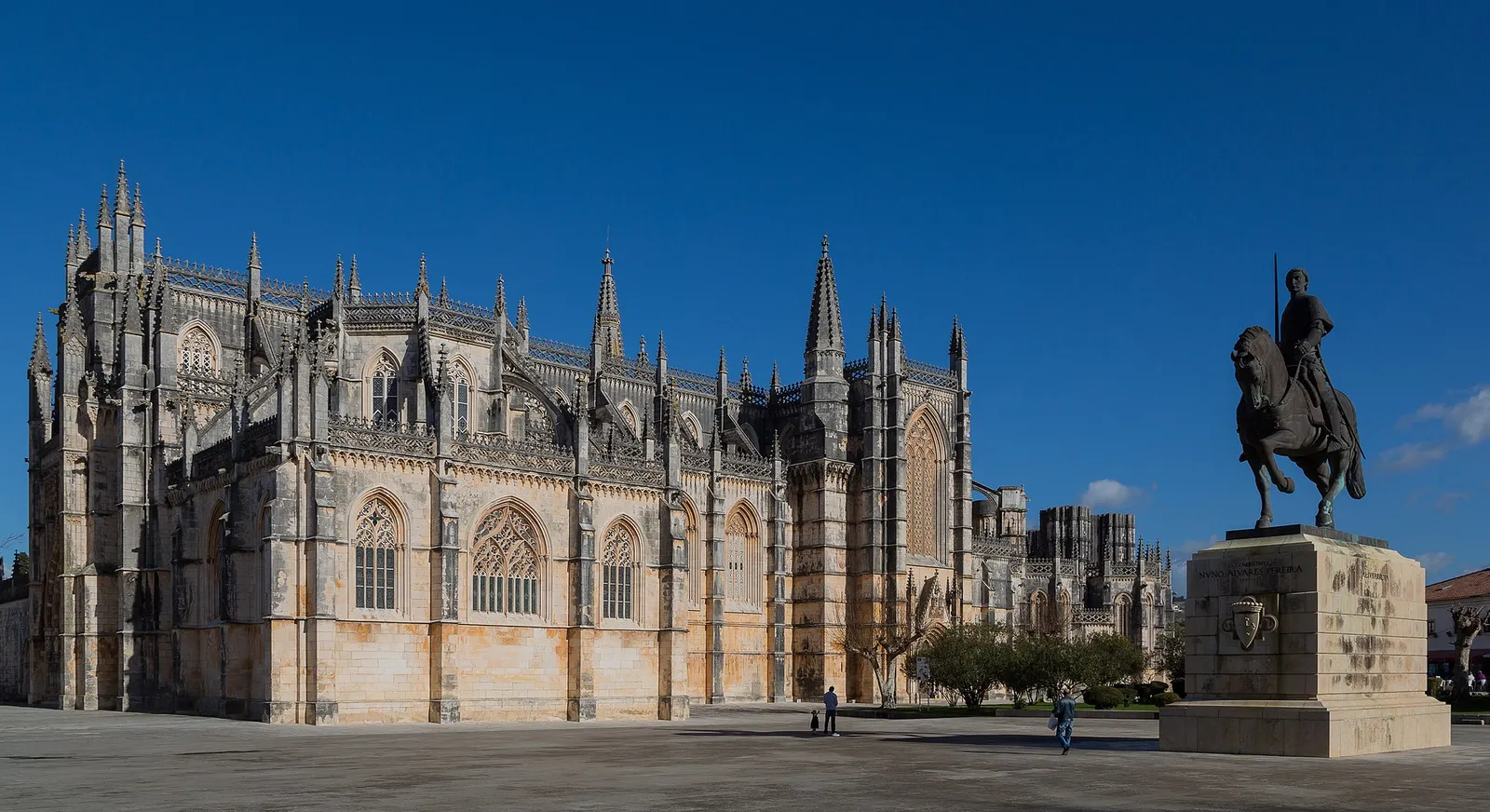
João I had promised a monastery to the Virgin in thanks for the victory. The Mosteiro de Santa Maria da Vitória, St Mary of the Victory, is better known as the Mosteiro da Batalha, the Monastery of the Battle. By the monastery's own chronology work began in 1387 under master Afonso Domingues, though its long-serving director, Joaquim Ruivo, told Diário de Notícias in 2025 that the first workers arrived in 1386. In 1388 the king gave it to the Dominican friars.
Building went on for more than 150 years, in Gothic with Manueline additions. The Founder's Chapel, finished by 1435, holds the joint tomb of João I and Philippa; the so-called Unfinished Chapels were begun for their son King Duarte in 1437. The monastery became a national monument in 1907, received the tomb of Portugal's Unknown Soldier in 1921 and has been a UNESCO World Heritage Site since 1983.
The baker with the shovel
The best-known figure of the battle never appears in its chronicles: the Padeira de Aljubarrota, the baker Brites de Almeida, who is said to have found seven Castilian fugitives hiding in her oven after the battle and killed them with her bread shovel. Later versions gave her six fingers on each hand, a youth in Faro, captivity in Algiers and a militia of village women.
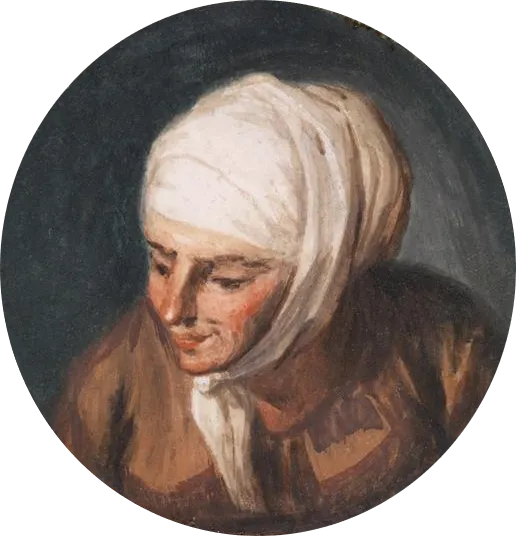
“This traditional event, whether real or fabulous, has in either case a historical value, because it is a symbol, an expression of the living and general idea of the Portuguese of that time, the hatred of foreign rule, the rancour with which every class of people made war on those who sought to subject them to that rule.”
Why it still matters
For the rest of the war, which ended with the peace of 1411, Castile never again raised an army large enough to threaten the kingdom, by the Fundação's account. The battle confirmed the new House of Avis, and the conquest of Ceuta in 1415 followed a few years after the peace.
The alliance with England, sealed at Windsor in 1386, has lasted to this day, the Fundação notes.
Monteiro argues that most of the men who fought for João I did so for land, advancement or duty to their lords rather than love of country, and that the Estado Novo dictatorship of the twentieth century fed the patriotic legend. Nuno himself, he notes, nearly left for Castile in a later quarrel over his lands.
The site itself nearly disappeared. The EN1 national road was driven across the plateau in 1960, and houses, a tavern and a dump for rubbish and old cars went up where the armies had stood. The Fundação Batalha de Aljubarrota, set up by the businessman António Champalimaud in 2002, took over the state land around the old army museum. The army proposed protecting the battlefield in 2001, and a decree classified it as a national monument in December 2010.
Archaeology settled what Lopes left out. In 1958 to 1960 the army archaeologist Afonso do Paço uncovered a ditch about 182 metres long north and east of the chapel, some 830 wolf pits and a mass grave. Later digs found a ditch and nine more pits in front of the Portuguese centre in 1999, a ditch dug after the battle on the northern side in 2005 to 2007, and further ditches and pits in 2018 and 2019. The bones, studied at the University of Coimbra, show the violence of the blows.
FAQs
Who won the Battle of Aljubarrota?
The Portuguese army of João I and his constable Nuno Álvares Pereira, with an English contingent, beat the Castilian and French army of Juan I of Castile on 14 August 1385. Juan fled to Santarém and then by sea to Seville.
How many soldiers fought at Aljubarrota?
The sources disagree. Fernão Lopes gave 6,500 Portuguese and a little over 30,000 Castilians and allies. The Fundação Batalha de Aljubarrota gives 7,000 to 8,000 Portuguese, and the historian João Gouveia Monteiro suggests fewer than 10,000 against perhaps 20,000, many of whom never reached the fighting.
Did English archers fight at Aljubarrota?
Yes. Monteiro puts the English force at at least 800 men, and the Fundação places about 200 English archers on one wing of João I's army, under the banner of Saint George. Their longbows, with Portuguese crossbows, broke up the Castilian charges.
Was the Padeira de Aljubarrota a real person?
Probably not as told. Fernão Lopes's chronicle does not mention the baker Brites de Almeida, and the oldest testimony cited in a study of the legend is a 1642 inquiry into local tradition, known through later writers. Historians treat her as a legend.
Where was the Battle of Aljubarrota fought?
On the plateau of São Jorge, on the road south from Leiria, in an area now shared by the municipalities of Porto de Mós and Batalha, about 11 km from the village of Aljubarrota. The battlefield interpretation centre and the chapel of São Jorge are there today.
On the timeline
Open the timelineNearby moments from crisis and the house of avis (1383–1415).
Battle of Atoleiros: near Fronteira in the Alentejo, Nuno Álvares Pereira has his roughly 1,400 men fight on foot in a tight formation that breaks the mounted charges of a Castilian army of some 5,000. The victory, early in the 1383–1385 crisis, showed that Castile could be beaten.
The Cortes of Coimbra elect João, Master of the Order of Avis, as King João I of Portugal, founding the House of Avis. Nuno Álvares Pereira is made Constable of the Kingdom the next day, and the succession war is decided at Aljubarrota that August.
Just over 300 Portuguese men-at-arms and local levies, under Beira nobles who had just settled a feud, rout a Castilian raiding force near Trancoso as it heads home with captives and plunder from the sack of Viseu; nearly all its men-at-arms die. In the midst of the 1383–85 succession crisis, the victory is a prelude to Aljubarrota that August.
Battle of Aljubarrota
King João I and his constable Nuno Álvares Pereira rout the invading Castilian army at the Battle of Aljubarrota, ending the crisis of 1383–85, securing Portuguese independence and establishing the House of Avis on the throne.
The Treaty of Windsor is signed, sealing the Anglo-Portuguese Alliance first agreed in 1373 — the oldest diplomatic alliance in the world still in force. The following year João I married John of Gaunt's daughter, Philippa of Lancaster.
The future King Duarte, 'o Eloquente', is born in Viseu, son and from 1400 heir of João I and Philippa of Lancaster. A scholar-king and author of the 'Leal Conselheiro', his short reign was marked by the disastrous expedition to Tangier in 1437.
Birth in Lisbon of the Infante Pedro, Duke of Coimbra, son of João I and Philippa of Lancaster. Called 'Pedro of the Seven Parts of the World', he toured Europe from 1425 to 1428, served in Emperor Sigismund's army in Hungary and, by tradition, brought home from Venice a copy of Marco Polo's book. Regent from 1439, he was killed at Alfarrobeira in 1449 fighting his nephew Afonso V's army.
Coming up in history
All long reads
17 sources
Archives, scholarship and reporting this article was checked against.
- 1
A Batalha de AljubarrotaFundação Batalha de Aljubarrota, Centro de Interpretação da Batalha de Aljubarrota
- 2
Chronica de el-rei D. João I, Part II (Fernão Lopes), volumes 4 to 6Bibliotheca de Classicos Portuguezes, Lisbon, 1897 (digitised by Internet Archive)
- 3
A Batalha de Aljubarrota. Novas Interpretações (João Gouveia Monteiro)Revista de História da Sociedade e da Cultura 6 (2006), pp. 105-122, Universidade de Coimbra
- 4
- 5
- 6
Mosteiro da BatalhaCultura Portugal (Government of Portugal)
- 7
A padeira de Aljubarrota: um mito glorioso contado a duas vozes (Inês Moura)Universidade de Aveiro, paper for the Europe and its nations conference (estudosculturais.com)
- 8
- 9
Fernão Lopes, guardador das escrituras do Tombo (1418-1454): exhibition leafletArquivo Nacional Torre do Tombo, October 2018
- 10
- 11
História do Mosteiro da BatalhaMosteiro da Batalha (Museus e Monumentos de Portugal)
- 12“Portugueses emocionam-se na Batalha por aqui estarem sepultados protagonistas maiores da nossa História”Diário de Notícias, 16 March 2025
- 13
Brites de Almeida, Padeira de AljubarrotaA Minha Terra, Câmara Municipal de Alcobaça
- 14
- 15
- 16
- 17
Image credits
- The battle of Aljubarrota as imagined about 1480 in a copy of Jean de Wavrin's Chronique d'Angleterre. British Library, Royal MS 14 E IV, folio 204 recto. Jean d'Wavrin (Chronique d'Angleterre), Public domain, via Wikimedia Commons.
- The chapel of São Jorge on the battlefield in March 2015. Nuno Álvares Pereira had it built in 1393 where his banner stood and the fighting began. Carlos Luis M C da Cruz, CC BY-SA 4.0, via Wikimedia Commons.
- Aljubarrota in a Dutch translation of Froissart's Chronicles made about 1450 to 1460. Froissart heard the story from João Fernandes Pacheco, who fought for João I. Gerrit Potter van de Loo ?, Public domain, via Wikimedia Commons.
- The monastery of Santa Maria da Vitória at Batalha in December 2012, with the equestrian monument to Nuno Álvares Pereira on the right. CEphoto, Uwe Aranas, CC BY-SA 3.0, via Wikimedia Commons.
- An undated miniature of the Padeira de Aljubarrota by José de Almeida Furtado, “o Gata”, who died in 1831. Grão Vasco National Museum, Viseu. José de Almeida Furtado, Public domain, via Wikimedia Commons.