

Eça de Queirós, author of Os Maias, dies in 1900
Portugal's great realist novelist spent his working life as a consul abroad, writing about Lisbon from Newcastle, Bristol and Paris. He died near Paris before three of his books came out in book form, and his remains have been moved three times since.
At a glance
- José Maria Eça de Queirós died on Thursday 16 August 1900 at his house in Neuilly-sur-Seine, outside Paris, aged 54. He had been Portugal's consul in Paris since September 1888.
- Born in Póvoa de Varzim on 25 November 1845, he studied law at Coimbra and spoke for literary realism at the Casino Conferences in Lisbon on 12 June 1871.
- From 1872 he served as consul in Havana, Newcastle upon Tyne, Bristol and Paris, and wrote his Lisbon novels abroad: O Crime do Padre Amaro, O Primo Basílio and Os Maias among them.
- A Ilustre Casa de Ramires and A Cidade e as Serras appeared only after his death. The second is set at Tormes, modelled on his wife's family estate in the Douro, now home to the Fundação Eça de Queiroz.
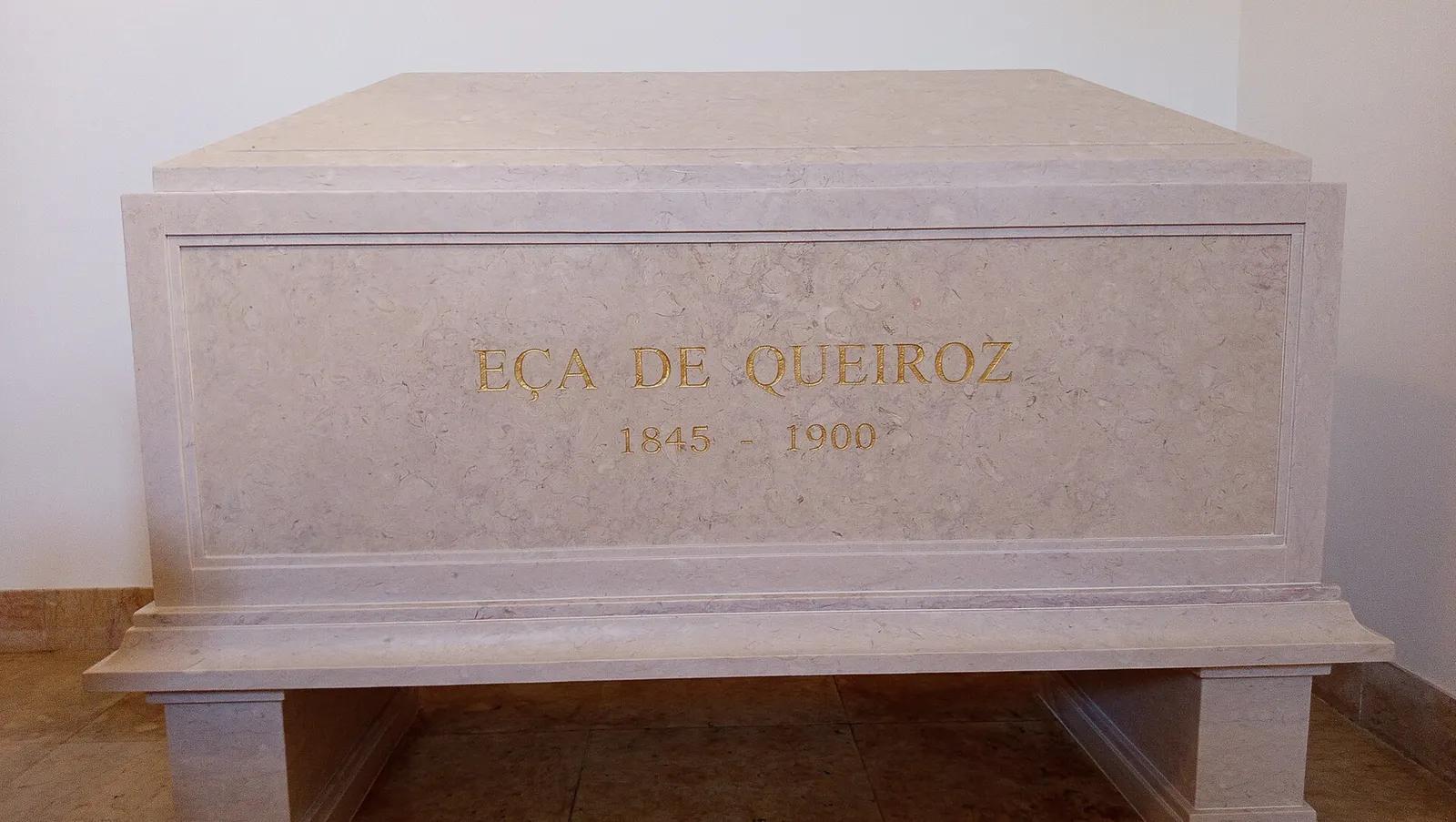
- Buried in Lisbon in 1900, he was moved to the family vault at Santa Cruz do Douro in September 1989 and, after a court fight among his great-grandchildren, to the National Pantheon on 8 January 2025.
A garden full of lime trees
In the summer of 1900 Eça de Queirós was at Glion, above Lake Geneva, on a cure that was not working. His friends Ramalho Ortigão and Eduardo Prado left him there to travel on to Italy, and he wrote to his wife, Emília, in Paris.
“I am no better. On the contrary. Ramalho and Prado left today on their journey to Italy. I am left in complete solitude.”
He tried Lucerne next, then hurried back to Paris, arriving on 11 August.
Five days later, on Thursday 16 August 1900, he died at his house in Neuilly-sur-Seine, just west of Paris. In A. Gomes da Costa's centenary account, the window was open onto a garden of lime trees and Emília was sobbing at the foot of the bed. He was 54.
The dying man had been Portugal's consul in Paris for almost twelve years, and he was the author of Os Maias. Three books he had been revising for years would come out in book form only after his death.
- Died
- Thursday 16 August 1900, at home in Neuilly-sur-Seine, near Paris
- Age
- 54 (born Póvoa de Varzim, 25 November 1845)
- Post
- Consul of Portugal in Paris since 20 September 1888
- Illness
- Years of chronic intestinal illness, probably tuberculosis
- Funeral
- Lisbon, 17 September 1900
- Resting place
- National Pantheon, Lisbon, since 8 January 2025
His illness had dragged on for years: chronic diarrhoea, weight loss, neuralgia, fever and, at the end, swollen legs. He took one spa cure after another. In February 1900 he tried Biarritz, and in May the well-known French physician Dr Bouchard prescribed a cure at Glion in Switzerland. He is thought to have died of visceral tuberculosis, which had killed some of his forebears and later killed three of his brothers and sisters.
A boy without a mother on the register
José Maria Eça de Queirós was born in Póvoa de Varzim, a fishing town north of Porto, on 25 November 1845. He was a natural son: his father, José Maria de Almeida Teixeira de Queirós, was a magistrate, and his mother, Carolina Augusta Pereira de Eça, was the daughter of a colonel who opposed the match. The baby was born in a relative's house with no mention of his mother, handed to a wet nurse in Vila do Conde and baptised there on 1 December.
His parents married in 1853, after the colonel's death, and had four more children, but José Maria grew up apart from them, first with his nurse and then with his father's parents at Verdemilho, near Aveiro. Only on 25 December 1885, as he prepared to marry, did his parents declare him their legitimate son.
In 1855 he was sent to school in Porto, at the Colégio da Lapa, whose head was the father of Ramalho Ortigão; Ramalho himself taught French there and became his lifelong friend. In October 1861 Eça enrolled in law at the University of Coimbra and took a room on the Rua do Loureiro.
Lawyer, editor, lecturer
Eça graduated on 22 July 1866, moved into his family's flat on the Rossio in Lisbon and signed up as a lawyer that October. The legal career went nowhere. By then he was writing chronicles for the Gazeta de Portugal, and in January 1867 he moved to Évora to found and almost single-handedly write a weekly opposition paper, O Distrito de Évora. It lasted 59 issues.
Back in Lisbon, Eça joined the Cenáculo, an informal club of friends who met in Jaime Batalha Reis's rooms and read Proudhon. Together they invented a poet, Carlos Fradique Mendes, and published his verses in 1869. That October Eça left for Egypt with Luís de Castro, the young Count of Resende, to see the opening of the Suez Canal, and went on to Palestine. He came home on 3 January 1870.
In July 1870 the government named him administrator of the municipality of Leiria, and with Ramalho he began a mystery in the form of letters to the Diário de Notícias, O Mistério da Estrada de Sintra. In May 1871 the two friends launched As Farpas (The Barbs), monthly pamphlets of satire on Portuguese life.
That spring the Cenáculo organised a series of public lectures at the Casino Lisbonense, near the Chiado. Antero opened them on 22 May. On Monday 12 June 1871 Eça spoke on realism as a new expression of art. Drawing on Proudhon and the French critic Hippolyte Taine, he argued that literature should show people as their surroundings made them, and set this against the “scenic realism” of the popular novelist Júlio Dinis. He never published the text, and it is lost.
After the next lecture, on teaching, the government of the Marquis of Ávila banned the series and closed the Casino on 26 June. Eça signed the speakers' protest. He had come first in the consular examination in 1870, but the post he wanted, in Bahia, went to someone else, and he spent the next months pressing for an appointment.
A consul's life: Havana, Newcastle, Bristol, Paris
On 16 March 1872 he was appointed consul in the Spanish Antilles. After three months waiting in Cádiz he sailed on 9 November and reached Havana on 20 December. In Cuba his main work was defending the coolies, Chinese labourers shipped through Portuguese Macau to work on the great plantations.
“Chinese emigration is the treacherous disguise of slavery.”
In 1873 Portugal's envoy to the United States sent him on a six-month tour to report on Portuguese settlers: New York, Philadelphia, Chicago, New Orleans, Niagara and Montreal. America cooled the young radical. He wrote that he could now look at capitalists without turning pale, and examine a saw or a hammer without feeling the urge to sing a hymn.
In late 1874 he was moved to Newcastle upon Tyne, the coal port of north-east England, and arrived on the last day of December. He found the crowded mining city depressing (“I am at the focal point. The focal point is disagreeable,” he wrote), but these were his most productive years. The consulate was on the first floor of 53 Grey Street, where a city plaque now misspells his name and wrongly says he lived there.
A decree of 30 July 1878 transferred him to Bristol. Pleading ill health, he left Newcastle on 20 April 1879 and stayed in Bristol nearly a decade, with long spells of home leave. In August 1888 he asked his friend Oliveira Martins to help him to the post he wanted most. “Well, Paris, as you also know, has been my dream,” he wrote. The appointment was decreed on 28 August, and he took office on 20 September.
Eça's consular posts: approximate years in each
years
Lisboeta's calculation from the dates in the Biblioteca Nacional chronology and Conceição Pereira's study: Havana from arrival on 20 December 1872 to leave of absence on 20 March 1874; Newcastle from 31 December 1874 to 20 April 1879; Bristol from 20 April 1879 to 20 September 1888; Paris from 20 September 1888 to his death on 16 August 1900. The figures include home leave, which in some years lasted months.
Show the data
| Years in post | |
|---|---|
| Havana | 1.2 |
| Newcastle | 4.3 |
| Bristol | 9.4 |
| Paris | 11.9 |
Lisbon, written from England
Almost all his great novels were about Portugal and written outside it. O Crime do Padre Amaro, the story of a young priest's affair with a devout girl, Amélia, in the cathedral town of Leiria, came out in instalments in the Revista Ocidental in 1875. Eça was unhappy with the result and rewrote it, for a book of 800 copies in 1876, and recast it again in 1880.
O Primo Basílio, begun on holiday in Lisbon in September 1876 and written mostly in Newcastle, followed in 1878. It is the story of Luísa, a bored Lisbon wife seduced by her cousin and blackmailed by her maid, Juliana. Eça called it a thesis novel, “perhaps a little violent and raw”, but not written to be read aloud in convent schools. It sold out, and the Brazilian novelist Machado de Assis attacked it.
Critics also called the books copies. He was accused of lifting O Primo Basílio from Flaubert's Madame Bovary and O Crime do Padre Amaro from Zola, and drafted a long reply, Idealismo e Realismo, that he left unpublished. In the 1880s he turned towards fantasy and farce, in O Mandarim (1880) and A Relíquia (1887). He entered A Relíquia for the Academy of Sciences' prize in 1887 and lost to Henrique Lopes de Mendonça's O Duque de Viseu.
| Work | First appeared | Notes |
|---|---|---|
| O Mistério da Estrada de Sintra (with Ramalho Ortigão) | Diário de Notícias, 24 July to 27 September 1870; book 1870 | A mystery told in letters to the paper |
| O Crime do Padre Amaro | Revista Ocidental, from February 1875 | Book in July 1876; recast third version 1880 |
| O Primo Basílio | 28 February 1878 | Sold out; second edition the same year |
| O Mandarim | Diário de Portugal, 1 to 18 July 1880 | His first work of fantasy, written at Angers |
| A Relíquia | Gazeta de Notícias, Rio de Janeiro, 24 April to 10 June 1887 | Book the same year |
| Os Maias | June 1888, two volumes | Announced as early as 1880 |
| A Ilustre Casa de Ramires | Revista Moderna, from November 1897 | Book only after his death, 1900 |
| A Cidade e as Serras | 1901, Porto, Livraria Chardron | Grew from the 1892 story Civilização; posthumous |
Dates from the Biblioteca Nacional chronology, Carlos Reis and the 1901 first edition. Sources differ on the first print run of O Primo Basílio: 3,000 copies in the Biblioteca Nacional chronology, 800 in Maria Filomena Mónica's biography as cited by Conceição Pereira.
Os Maias, his longest novel, went on sale in June 1888. It follows three generations of a Lisbon family through the century and turns on Carlos da Maia's discovery that the woman he loves is his sister. Carlos Reis reads it as a history of nineteenth-century Portugal, from absolutism to the rotation of two parties in power, told through one household. It is still widely regarded as the best Portuguese realist novel of the century.
In its last pages Carlos, back in Lisbon after years away, walks with his friend João da Ega down to the river, and the two agree on a philosophy of life: desire nothing, fear nothing, never hurry. Then Carlos remembers he is late for dinner.
““Indeed, it is not worth making an effort, running eagerly after anything...” ... Then, to catch the tram, the two friends broke into a desperate run down the Rampa de Santos and along the Aterro, under the first light of the rising moon.”
The Paris years
In February 1886 he had married Emília de Castro Pamplona, of the family of the Counts of Resende, in the private chapel of their palace at Santo Ovídio in Porto. They had four children: Maria and José Maria, born in Bristol, and António and Alberto, born in Paris and Neuilly. Accounts of the move to Neuilly differ: October 1893 in the Biblioteca Nacional chronology, about 1891, to a first house on the rue Charles-Laffitte, in LusoJornal.
On visits home he dined with the Vencidos da Vida, the “Defeated by Life”, a club of disillusioned writers and courtiers that included Oliveira Martins, Guerra Junqueiro and Ramalho. He founded and edited a review, the Revista de Portugal, in 1889. When Britain forced Portugal to give up its claim to the lands between Angola and Mozambique in the Ultimatum of January 1890, he distrusted the patriotic leagues that sprang up, and in his review he wrote sarcastically of a people that was “educating itself for insurrection” through patriotism.
Carlos Reis calls the writer of the 1890s “the last Eça”: less bound by the realist school, drawn to lives of saints, short stories and the Portuguese past, but still critical. He serialised A Ilustre Casa de Ramires, about a provincial nobleman writing a novella about his medieval ancestors, in the Revista Moderna from 1897, and kept revising it and A Cidade e as Serras. Both, and the letters of Fradique Mendes, came out only after 16 August 1900.
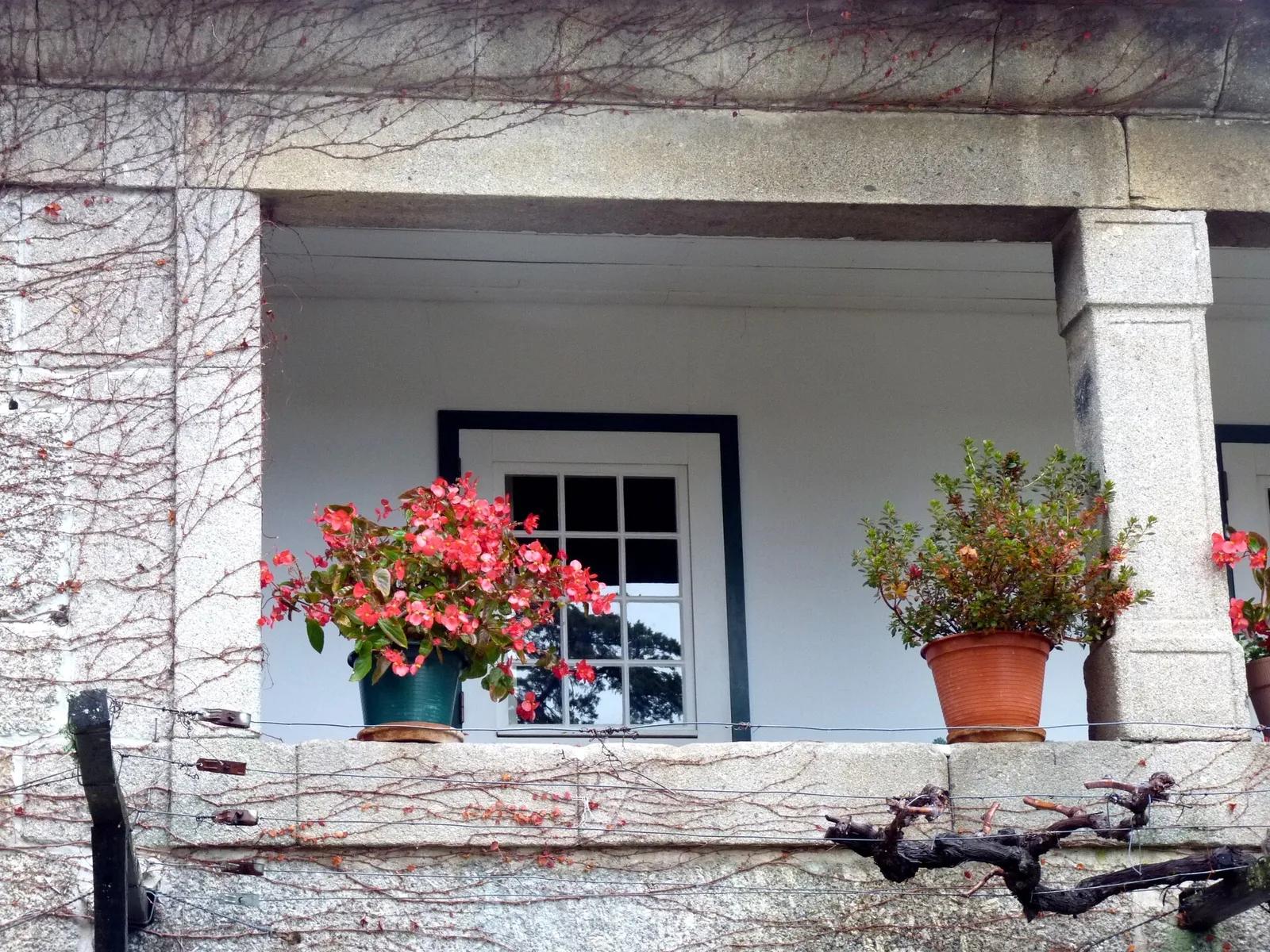
A Cidade e as Serras (The City and the Mountains) is the comic story of Jacinto, a Portuguese millionaire who has always lived in his Paris mansion and finds contentment on his neglected estate at Tormes, in the hills of the Douro. The model for Tormes was a real place: the Quinta de Vila Nova at Santa Cruz do Douro, in the municipality of Baião, which had come to his wife, Emília de Castro, from her family.
“His estate and manor house of Tormes, in the Lower Douro, covered a whole hill. ... But the palace where Jacinto was born, and where he had always lived, was in Paris, on the Champs-Élysées, number 202.”
A funeral in Lisbon and a scandalous statue
His body was brought home from France. The funeral took place in Lisbon on 17 September 1900, and he was buried in the Alto de São João cemetery, from which he was exhumed in 1989 (one LusoJornal profile names the Prazeres cemetery instead). The Paris consulate passed to Armando de Navarro.
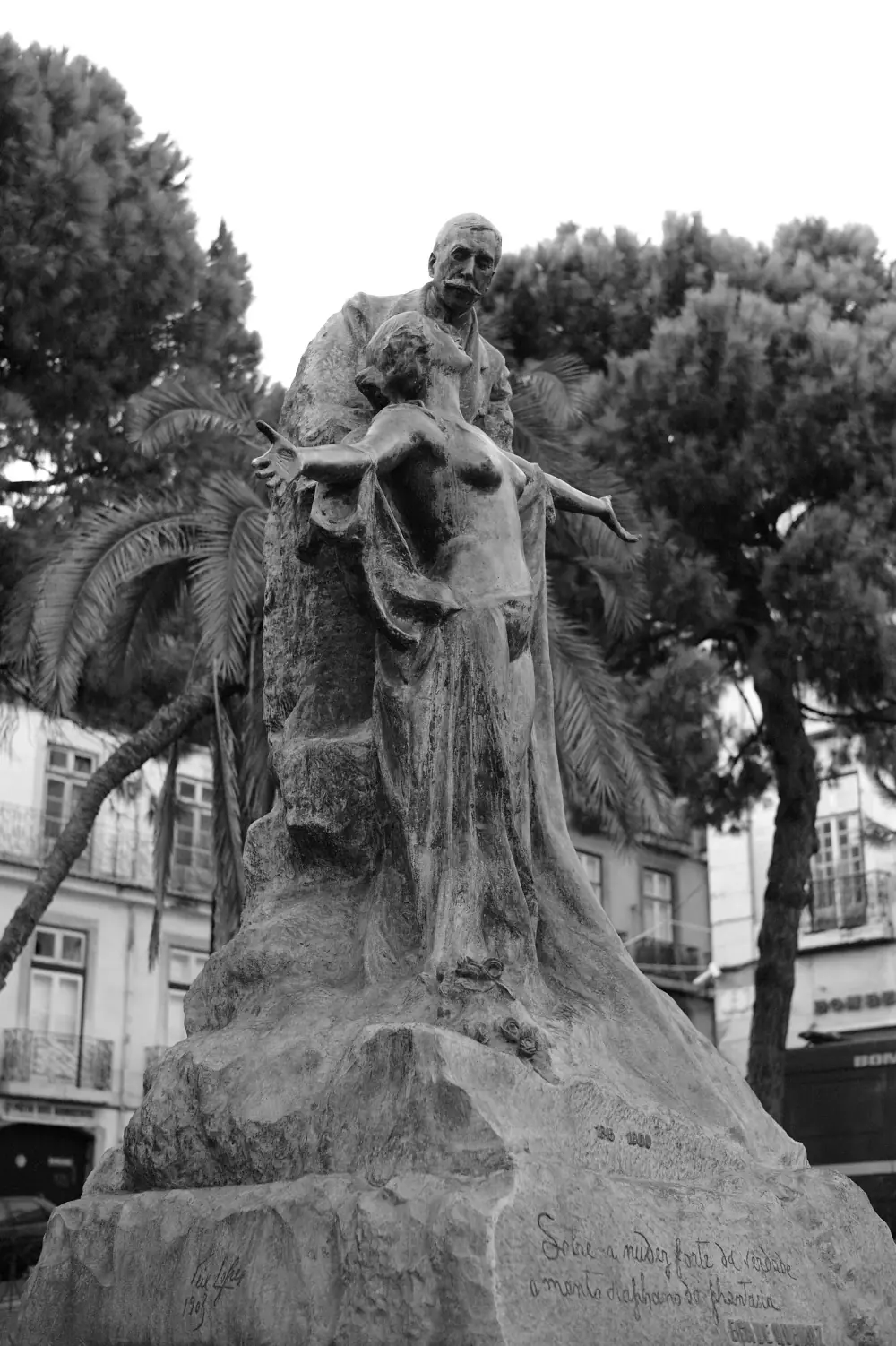
His friends soon raised a monument. Sculpted by António Teixeira Lopes, it was unveiled in 1903 in the Largo do Barão de Quintela, a small square near the Chiado. It shows Eça leaning over a half-naked woman, Truth, and carries one of his phrases: over the strong nakedness of truth, the diaphanous cloak of fantasy.
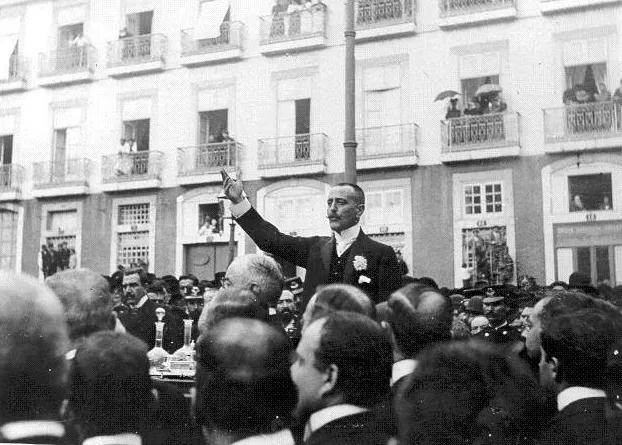
Not everyone liked it. Letters to the newspaper Correio Nacional called the statue “so provocative and lascivious” that it shamed the city to allow it in one of its squares. The quarrel ran for years. In 2001, after repeated vandalism, the city moved the marble original to its museum and put a bronze copy in the square.
From Tormes to the Pantheon
Eça lay in Lisbon for 89 years. In September 1989 his remains were moved from Alto de São João to a family vault in the cemetery of Santa Cruz do Douro, near Tormes. The move was the work of Maria da Graça Salema de Castro, wife of one of his grandsons, with the unanimous support of the grandchildren then alive. The stone reads: “Here lies José Maria de Eça de Queiroz among his own.”
On 9 September 1990 she and a company, João Pires S.A., created the Fundação Eça de Queiroz, endowed with the house and estate, valued in 1989 at about €933,000. The house was restored as a museum, library and archive of his papers, and President Jorge Sampaio opened it to the public on 25 November 1997. Since 2022 the foundation has been run by Afonso Reis Cabral, one of Eça's great-great-grandchildren.
In January 2021, at the foundation's request, the Assembly of the Republic voted unanimously to grant him the honours of the National Pantheon, the domed church of Santa Engrácia in Lisbon, where Amália Rodrigues and Sophia de Mello Breyner Andresen already lay. Some of his descendants objected and went to court to stop the move. On 25 January 2024 the Supreme Administrative Court ruled against six great-grandchildren: of the 22, 13 had agreed and three had abstained, and the judges held that a majority could decide.
The judges also rejected the argument that the grandchildren's wishes of 1989 still applied. It would be unthinkable, they wrote, for a position taken by the descendants of one moment to rule out every future tribute. In Baião some residents protested. A former head of the parish council said nobody had asked them, and that Eça had plainly wanted to rest in the hills he described.
On Sunday 5 January 2025 the coffin, draped in the flag, lay at Tormes beside his letters to Emília and his Havana reports on the Chinese labourers.
On Wednesday 8 January it stopped first at the parliament and then reached the Pantheon at 11.10, escorted by mounted guards, in pouring rain and almost without onlookers. Inside, more than 300 guests, including the President, the Prime Minister and the President of the Assembly, heard readings from his books.
25 November 1845
Born in Póvoa de Varzim
1861 to 1866
Law student at Coimbra
12 June 1871
Lecture on realism at the Casino Conferences, Lisbon
20 December 1872
Arrives in Havana as consul
31 December 1874
Arrives in Newcastle upon Tyne
28 February 1878
O Primo Basílio goes on sale
April 1879
Moves to the Bristol consulate
10 February 1886
Marries Emília de Castro in Porto
June 1888
Os Maias published
20 September 1888
Takes office as consul in Paris
16 August 1900
Dies at Neuilly-sur-Seine
17 September 1900
Funeral in Lisbon; burial at Alto de São João
September 1989
Remains moved to Santa Cruz do Douro, Baião
9 September 1990
Fundação Eça de Queiroz created at Tormes
January 2021
Parliament votes Pantheon honours
8 January 2025
Remains placed in the National Pantheon
Why he is still read
His novels map a Lisbon readers can still walk: the Chiado, the Aterro, the Rampa de Santos, and Sintra beyond. His characters became household names in Portugal and Brazil, from Luísa and her maid Juliana to the pompous Counsellor Acácio of O Primo Basílio.
The decline of Portugal was Eça's great subject. The 1880 version of O Crime do Padre Amaro ends at the statue of the poet Camões in the Chiado, and Os Maias returns to it in its last pages. In Carlos Reis's reading the bronze poet watches over a country that has forgotten its past.
FAQs
When and where did Eça de Queirós die?
On Thursday 16 August 1900, at his house in Neuilly-sur-Seine, just outside Paris, where he was Portugal's consul. He was 54. His funeral was held in Lisbon on 17 September 1900.
Where is Eça de Queirós buried?
In the National Pantheon in Lisbon, since 8 January 2025. He was first buried at the Alto de São João cemetery in Lisbon, and from September 1989 to January 2025 lay in a family vault at Santa Cruz do Douro, Baião.
Is it Queirós or Queiroz?
Both spellings are used. Queiroz is the older spelling, printed on his first editions such as A Cidade e as Serras (1901) and kept by the Fundação Eça de Queiroz and the National Pantheon. Queirós follows modern Portuguese spelling and is used by the Biblioteca Nacional de Portugal.
What is Eça de Queirós's most famous novel?
Os Maias (1888), the story of three generations of a Lisbon family, is the best known; Carlos Reis reads it as a history of nineteenth-century Portugal told through one household. O Crime do Padre Amaro, O Primo Basílio and A Cidade e as Serras are also widely read.
Did Eça de Queirós live in Tormes?
No. Tormes, the setting of A Cidade e as Serras, was based on the Quinta de Vila Nova at Santa Cruz do Douro, his wife's family estate in the Douro hills. He knew it as a neglected property; it was rebuilt after his death and is now the seat of the Fundação Eça de Queiroz.
On the timeline
Open the timelineNearby moments from regeneration and the last kings (1851–1910).
António Aleixo is born in Vila Real de Santo António. A barely literate weaver's son who sold lottery tickets and sang his verses at Algarve fairs, he became one of Portugal's best-loved popular poets, his ironic four-line 'quadras' written down and published by a friend, Joaquim de Magalhães.
In a secret declaration signed in London by Lord Salisbury and Portugal's minister Luís de Soveral, Britain and Portugal reaffirm their ancient alliance, including the treaties of 1642 and 1661. Portugal undertakes to stop arms reaching the Boers through its territory and not to declare neutrality, while Britain's old pledge to defend Portugal's colonies is restated.
The poet António Nobre dies of tuberculosis at Foz do Douro, aged just 32. His book 'Só' (1892), with its homesick, saudade-steeped verses about his native north, later made him one of the defining voices of Portuguese symbolist poetry.
Death of Eça de Queirós
José Maria Eça de Queirós, master novelist of Portuguese realism and author of 'Os Maias' and 'O Crime do Padre Amaro', dies near Paris, where he was serving as Portuguese consul.
Lisbon's first electric trams enter commercial service, running west along the river to Algés. The Carris Museum starts the line at Cais do Sodré, a Carris stamp brochure at the Terreiro do Paço; its descendant is today's route 15E.
The writer and poet José Régio, a central figure of Portuguese modernism and co-founder of the influential literary magazine Presença, is born in Vila do Conde.
Joaquim Mouzinho de Albuquerque, the cavalry officer hailed as a national hero for capturing the Gaza emperor Gungunhana at Chaimite in Mozambique in 1895, takes his own life in Lisbon at the age of 46.
Coming up in history
All long reads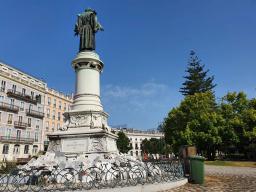
28 sources
Archives, scholarship and reporting this article was checked against.
- 1
Eça de Queirós 1845-1900: biobibliografia, 1888-1900 (long chronology)Biblioteca Nacional de Portugal (scientific coordination Carlos Reis), 2000
- 2
- 3
A Ilustre Casa de Ramires, edited with an introduction by Carlos Reis (Biblioteca Fundamental da Literatura Portuguesa), sample pagesImprensa Nacional-Casa da Moeda, 2014
- 4
Percurso queirosiano em Newcastle-Upon-Tyne: comemoração dos 150 anos da chegada de Eça de Queirós a Inglaterra (Conceição Pereira)LIT&TOUR, International Journal of Literature and Tourism Research, vol. 4 (2024), pp. 32-41 (Newcastle University ePrints)
- 5
Centenário de Eça de Queirós (A. Gomes da Costa)Convergência Lusíada, Real Gabinete Português de Leitura, Rio de Janeiro (2001)
- 6
História e MissãoFundação Eça de Queiroz
- 7Restos mortais de Eça de Queiroz transladados para o Panteão a 8 de janeiroDiário de Notícias (with Lusa), 2024
- 8
Restos mortais de Eça de Queirós chegam ao Panteão às 11h10 com chuva e sem povoDNoticias.pt (Lusa), 8 January 2025
- 9
Eça de Queirós: um dos mais ilustres escritores portugueses foi Cônsul de Portugal em ParisLusoJornal
- 10
- 11
- 12
- 13
- 14
Eça de Queiroz (1845-1900)Panteão Nacional, Museus e Monumentos de Portugal
- 15
Por novos horizontes, por um novo Portugal: Eça de Queiroz e a “geração de 1870” nas Conferências do Casino (Virgílio Coelho de Oliveira Junior)Topoi. Revista de História, vol. 23, no. 49 (2022), pp. 284-306, Universidade Federal do Rio de Janeiro
- 16
- 17
- 18A urna, as memórias e as discórdias: o último adeus de Eça de Queiroz a BaiãoObservador, January 2025
- 19
O crime do padre Amaro, scenas da vida devota (Eça de Queirós; third version, 1880)Project Gutenberg, eBook 31971
- 20
- 21
- 22
- 23As peripécias da grandeza (Luís Filipe Castro Mendes)Diário de Notícias, 25 September 2023
- 24Restos mortais de Eça de Queiroz serão trasladados para o Panteão “brevemente”Observador (with Lusa), 12 April 2023
- 25
Rota Estatuária: Eça de Queirós, Largo Barão de QuintelaTurismo de Lisboa (Visit Lisboa)
- 26
- 27
- 28
Fundação Eça de QueirozVisit Portugal (Turismo de Portugal)
Image credits
- Eça de Queirós's tomb in the National Pantheon in Lisbon, where his remains were brought on 8 January 2025, photographed in August 2025. DavidFerreira20048, CC BY-SA 4.0, via Wikimedia Commons.
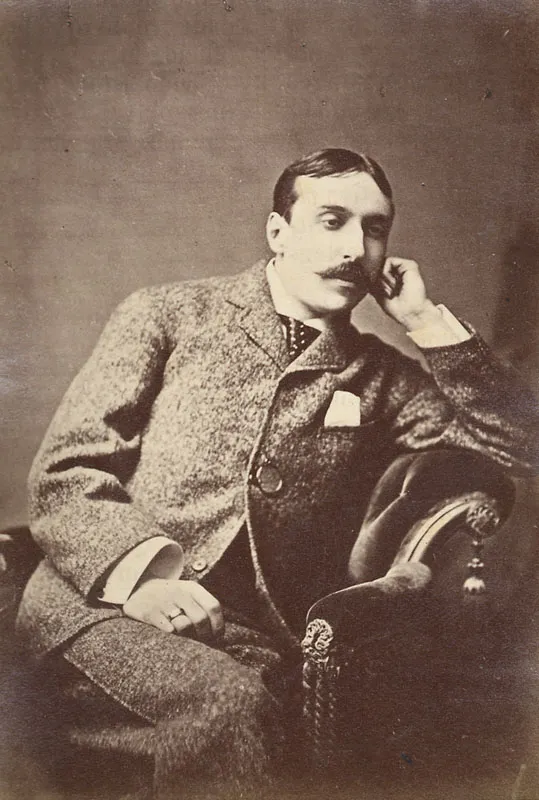
- Eça de Queirós in 1882, during his Bristol years, as published on the front page of the Lisbon magazine O Contemporâneo. Photographia Contemporanea, in O Contemporâneo, no. 108, Lisbon, 1882, Public domain, via Wikimedia Commons.
- The Count of Arnoso, who promoted the monument, speaking at its unveiling in Lisbon on 9 November 1903. Unknown author, Public domain, via Wikimedia Commons.
- The bronze copy of Teixeira Lopes's 1903 monument in the Largo do Barão de Quintela, photographed in 2014. The base carries Eça's phrase about the nakedness of truth and the cloak of fantasy. Pedro Ribeiro Simões from Lisboa, Portugal, CC BY 2.0, via Wikimedia Commons.
- A veranda of the house at Tormes, the seat of the Fundação Eça de Queiroz, in November 2012. Maria Cartas from Porto, Portugal, CC BY-SA 2.0, via Wikimedia Commons.