

Roliça, 1808: Wellesley's first battle in Portugal
Sixteen days after landing in the surf at Lavos, Arthur Wellesley's British and Portuguese troops forced a French rearguard off the hills above Columbeira. The French got away; a colonel who charged too soon did not.
At a glance
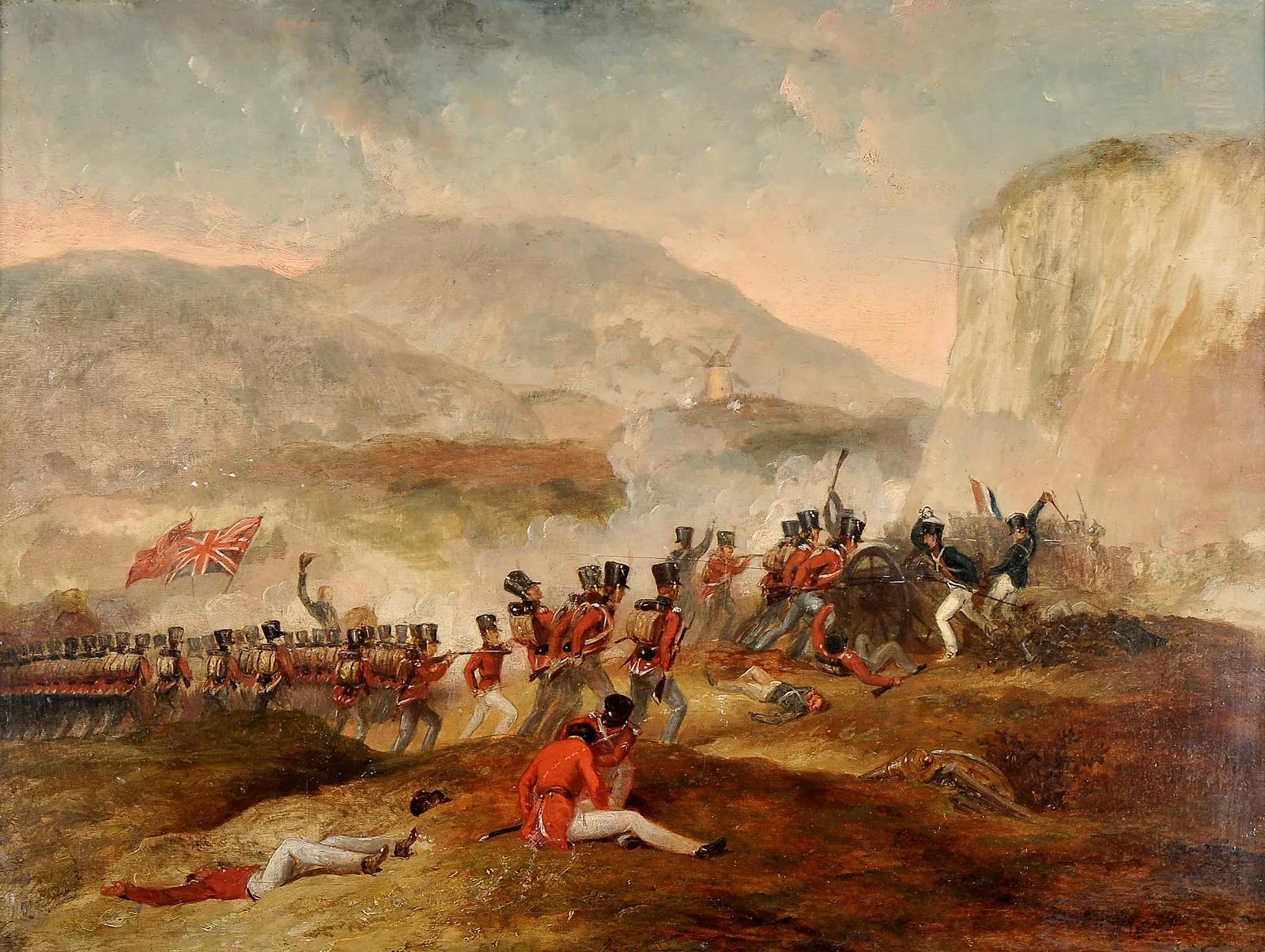
- On Wednesday 17 August 1808 an Anglo-Portuguese army under Sir Arthur Wellesley attacked General Delaborde's French division at Roliça, near Óbidos, and drove it from the heights above the village of Columbeira.
- It was the British army's first battle of the Peninsular War. Wellesley had begun landing his troops at Lavos, on Mondego Bay, on 1 August.
- About 13,000 British and 2,000 Portuguese faced some 4,350 French by Charles Oman's estimate. The Portuguese, under the British officer Nicholas Trant, were sent round the French left.
- The official return gave 479 British killed, wounded and missing; Oman put the French loss at about 600 and three guns. Delaborde escaped south in good order.
- Lieutenant-Colonel George Lake of the 29th Foot was killed leading his men up a gully too early. A cross on the heights marks the spot. Four days later Wellesley beat Junot at Vimeiro.
The gully above Columbeira
Lieutenant-Colonel George Lake rode at the head of the 29th Foot in a uniform so new that an engineer officer, George Landmann, told him he looked dressed to be received by the King. His hair was powdered, his cocked hat square to the front. “Egad, sir,” Lake answered, by Landmann's later account, “if I am killed today, I mean to die like a gentleman.”
It was around midday on 17 August 1808, and the heat in the valley south of Óbidos was suffocating. In front of the 29th rose the ridge above the village of Columbeira, about 300 feet high, cut by steep gullies. French infantry waited at the top, lying behind a broken earthen fence.
Lake took his right wing up the gully beyond the village, the dry bed of a mountain stream where in places only two or three men could climb abreast. The French fired down on them from three sides. Halfway up his horse was shot, and Major Gregory Way gave him the one he was riding. At the brow, with only three or four companies formed, the French rose and opened fire.
“Don't fire, men; don't fire; wait a little, we shall soon charge ... the bayonet is the true weapon for a British soldier.”
As Lake moved to the left to see the line extended, a French skirmisher shot him through the body, and his horse bolted into the French lines.
Two brothers named Bellegarde, in the escort that took the British prisoners away, both claimed the shot; one said he had fired from under a bush close to the colonel.
Portugal in the summer of 1808
Portugal had been occupied since November 1807, when General Jean-Andoche Junot's French army marched into Lisbon the day after the royal family sailed for Brazil, a story told in full elsewhere. In June 1808 the north rose against the French, and so did the Algarve. Junot had about 26,000 men to hold the country.
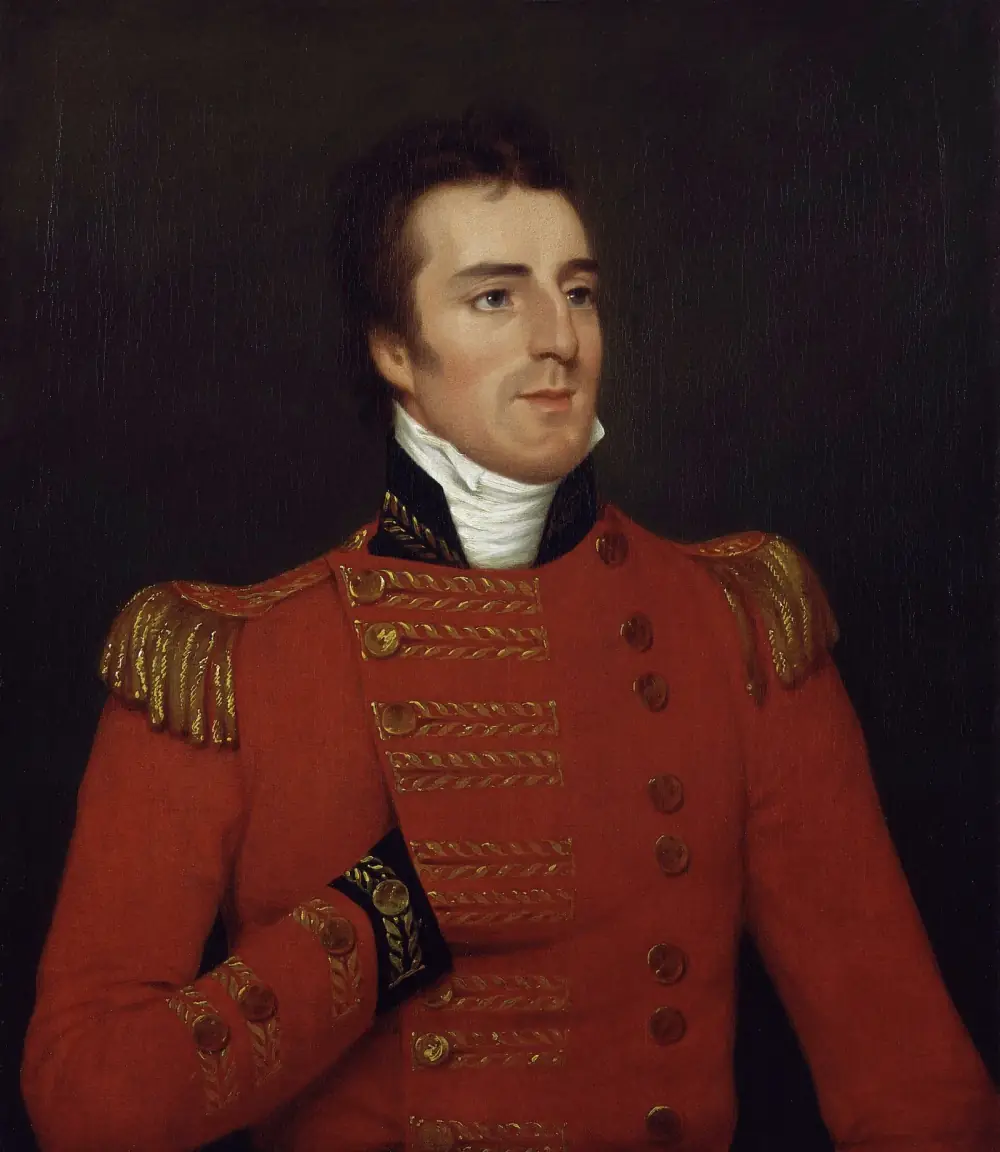
Spain had risen too, and Britain, Portugal's oldest ally, sent an army. Its commander was Sir Arthur Wellesley, the most junior lieutenant-general in the army, who had made his name in India and would become Duke of Wellington. He sailed from Cork on 12 July. On 30 July, as his ships lay in Mondego Bay, he learned that he had been superseded: Sir Hew Dalrymple, in his late fifties, was to take command, with Sir Harry Burrard as his second.
The junta in Porto advised him to land at Mondego Bay, near Coimbra. In June a party of about forty Portuguese from Coimbra, led by the student Bernardo Zagalo, had taken the little fort at Figueira da Foz from the French, and 300 British marines now held it. On 1 August, writing from H.M.S. Donegal off the river, Wellesley reported that he had begun to disembark.
The beach was at Lavos, on the south side of the bay, and the Atlantic surf made the landing dangerous. Boats overturned and a few men drowned. Portuguese fishermen waded out to guide the boats in. Lieutenant Charles Leslie of the 29th, who came ashore on 7 August with Major-General Brent Spencer's troops from Andalusia, spent hours tossing in a flat boat and reached the camp above Lavos after dark.
Spencer's arrival brought the army to about 13,500 men, but it had almost no cavalry and too few horses for its guns. Wellesley handed 5,000 muskets to the Portuguese general Bernardim Freire de Andrade. The two quarrelled at Leiria on 12 August over food and route, and Freire stayed behind. He lent Wellesley a detachment instead, under a British officer.
| Source | Infantry | Cavalry | Total |
|---|---|---|---|
| Wellesley to Lord Castlereagh, 16 August 1808 | 1,400 | 260 | 1,660 |
| Wellesley to the Commander-in-Chief's office, 18 August 1808 | 1,000 regulars and 400 light troops | 250 | 1,650 |
| Wellesley's battle dispatch, 17 August (troops in the columns) | 1,200 with Trant and 400 light infantry in the centre | 50 with Trant, 20 with Ferguson, the rest in the centre | not given |
| Simão José da Luz Soriano, Portuguese official figures (quoted by Oman) | 562 of the 6th Caçadores and 1,514 of the 12th, 21st and 24th line | 258 of the 6th, 11th and 12th regiments | 2,334 |
| Dictionary of National Biography (entry on Trant) | about 1,500 | about 250 | about 1,750 |
Oman thought 2,000 a safe middle figure. Soriano's three components add to 2,334; with 41 troopers of the Lisbon police guard who deserted Junot before Vimeiro, Oman reaches 2,375.
The march south
Wellesley chose the coast road to Lisbon, by Alcobaça, Óbidos and Torres Vedras, to stay in touch with the supply ships and to pick up reinforcements expected from England. Junot sent General Delaborde out of Lisbon on 6 August with a small division to slow him down, while General Loison marched back from the Alentejo to join them.
1 August 1808
Landing begins
Wellesley's corps from Cork starts going ashore at Lavos, on Mondego Bay.
5 to 8 August
Spencer arrives
Spencer reaches the bay on the night of the 5th; his troops are landed by the 8th.
6 August
Delaborde leaves Lisbon
Two battalions of the 70th Line, a regiment of chasseurs and five guns; Thomières joins him with more from Peniche.
10 to 12 August
Leiria
The army marches from Lavos on the 10th. At Leiria on the 12th Wellesley and Freire part company; Freire lends a detachment, which joins the British at Alcobaça.
14 August
Alcobaça
The French have left the night before.
15 August
Skirmish at Óbidos
Riflemen chase the French outposts three miles beyond the town and are nearly cut off. Lieutenant Bunbury of the 95th is killed.
16 August
Halt at Caldas
Wellesley waits for his rear; Delaborde holds his ground at Roliça.
17 August, 7 am
The advance
Three columns move off from Óbidos.
The skirmish of 15 August cost two officers and 27 men, and Wellesley called it useless, the fault of an officer who went further than his orders. The historian Charles Oman thought Lieutenant Bunbury the first British officer killed in the Peninsular War.
Delaborde had about 4,350 men by Oman's count, against an army more than three times his size. His job was to buy time. He had found the ground he wanted at Roliça: an isolated hill in the middle of a sandy plain, and a mile behind it a steeper ridge, three-quarters of a mile wide and covered in brush, through which the road to Lisbon ran in a narrow pass.
The battle
Wellesley meant to trap Delaborde on the hill. Trant's Portuguese went wide to the right to turn the French left. Major-General Ferguson took two brigades and six guns over the hills on the left. In the centre four British brigades, about 400 British and Portuguese cavalry, the Portuguese light infantry (caçadores) and twelve guns advanced across the plain in two lines.
- Date
- Wednesday 17 August 1808, from about 7 am until late afternoon
- Place
- Roliça and the heights above Columbeira, today in the municipality of Bombarral, south of Óbidos
- Allied commander
- Lieutenant-General Sir Arthur Wellesley; the Portuguese under Nicholas Trant
- French commander
- General Delaborde, with General Brenier
- Forces
- About 13,000 British and 2,000 Portuguese against about 4,350 French (Oman)
- Result
- French driven from their position, three of five guns lost; Delaborde retreated in order towards Lisbon
French witnesses called the British advance magnificent. The red lines stopped to dress their ranks, then came on again. Delaborde was not fooled. He waited until British riflemen were already engaged with his skirmishers, then pulled his men back at speed to the ridge behind Columbeira.
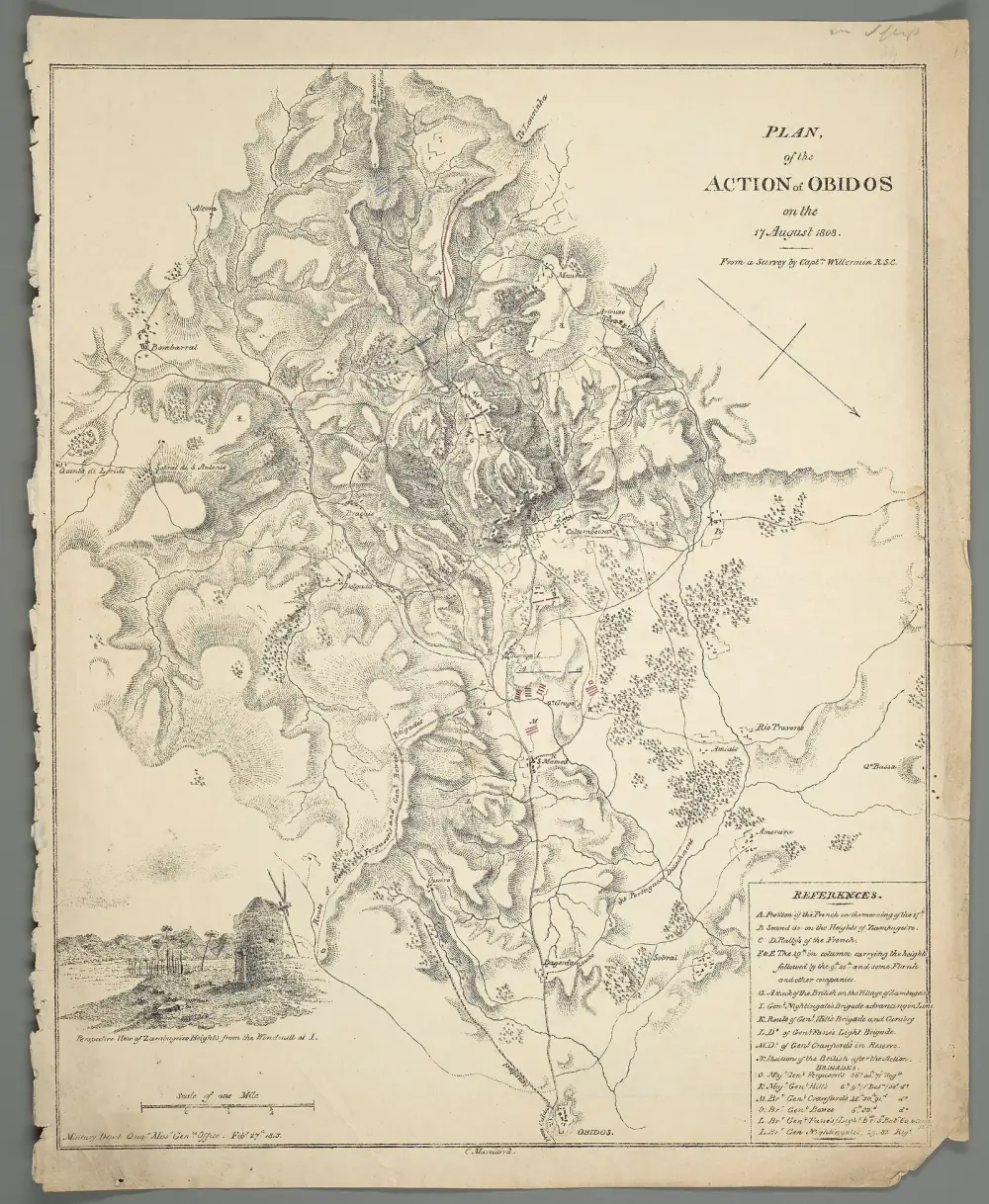
Wellesley repeated the plan. Trant swung out again to the right and Ferguson toiled over the hills on the left, while two batteries by a windmill shelled the ridge. The centre brigades deployed at the foot of the slope. Their light troops were to skirmish until the flanking columns arrived. The face of the ridge was cut by four gullies, which Wellesley called passes.
The 29th was meant to occupy Columbeira and make a show against the centre. Lake went straight up the gully instead, ahead of every other unit. His right wing reached the top, where he fell, and French troops cut off on the slope below then charged up through its rear, carrying off Major Way, five other officers and some 30 men. Some of the Swiss in French service facing them had been calling out that they were friends.
The survivors fell back into a wood, formed on their left wing and went up again with the 9th Foot beside them. Delaborde and Brenier, with four battalions on the ridge, charged each British party as it reached the brow. Three times they drove it back. For two hours the 29th and 9th held on, until the 5th Foot and the light companies came up on their right and Ferguson's column finally appeared on the French flank.
“I never saw such desperate fighting as in the attack of the pass by Lake, and in the three attacks by the French on our troops in the mountains.”
Delaborde then withdrew by alternate battalions, two holding while two ran back. His chasseurs charged the British skirmishers; the Portuguese cavalry would not face them. In the narrow pass behind Zambujeira the French columns jammed and lost three of their five guns and some prisoners. The fighting was over by about 4.30 pm. Delaborde himself was among the wounded.
Wellesley halted. He had too few horsemen to pursue and believed Loison was close. That evening at Vila Verde he wrote his dispatch, blaming the French escape on his want of cavalry and on the difficulty of getting troops and guns up the passes. Two days later, in private, to his brother William, he was blunter: Lake had gone up the wrong pass, hurried his men and attacked before anyone could support him.
Counting the cost
The return signed at Lourinhã on 18 August listed 70 British killed, 335 wounded and 74 missing: 479 men, plus three horses, which made the Gazette's total 482. It names British units only. No separate figure for Portuguese losses appears in the sources used here; Oman counted the four Portuguese battalions among the troops that were never really engaged.
British killed, wounded and missing at Roliça, by unit
men
Figures from the official return of 18 August 1808 printed in the London Gazette; Oman gives the same breakdown. The six named units took 441 of the 479 casualties. The nine other British battalions, the staff, the artillery and engineers and the 20th Light Dragoons lost 38 between them.
Show the data
| Killed, wounded and missing | |
|---|---|
| 29th Foot | 190 |
| 9th Foot | 72 |
| 5/60th Rifles | 66 |
| 5th Foot | 46 |
| 2/95th Rifles | 42 |
| 82nd Foot | 25 |
| All other units | 38 |
Wellesley stressed that only the 5th, 9th and 29th, the riflemen and the flank companies of Hill's brigade had been in the heat of the action, “a number by no means equal to that of the enemy.” The 29th alone lost 190: 34 killed, 118 wounded and 38 missing. Leslie, mustering the regiment after the fight, counted 214 killed, wounded and captured, not including several officers who were hit but not returned as wounded.
| Measure | Figure | Source |
|---|---|---|
| French under Delaborde | about 4,000 | Wellesley, letter of 16 August |
| French under Delaborde | at least 6,000, about 500 of them cavalry, with five guns | Wellesley, dispatch of 17 August |
| French under Delaborde | about 4,350 (4,000 infantry, 250 cavalry, 100 gunners) | Oman, from French returns of 15 July |
| French under Delaborde | 2,500 and 1,900 | the French historians Foy and Thiébault, as cited by Oman |
| Anglo-Portuguese army | about 13,000 British and 2,000 Portuguese | Oman |
| British engaged in earnest | 4,635 in five and a half battalions | Oman |
| British losses | 479 killed, wounded and missing | Official return, 18 August |
| French losses | about 600 men and three guns | Oman |
| British losses | 485 | Norris (1974) |
| French losses | about 700, including about 100 prisoners | Norris (1974) |
| French losses | 1,500, “which is a large amount” | Wellesley, reporting what he had been told, 18 August |
Oman's text gives the British loss as 474 but his own footnote, like the official return, adds to 479. The return lists four officers of the 29th as missing and Major Way, who was also captured, as wounded; Leslie and Oman say six officers were taken prisoner. Thiébault claimed the British lost 2,000.
Oman, who worked through the French regimental returns, judged that Delaborde had fought an admirable rearguard action against odds of four to one, and had perhaps been wrong to fight at all. Loison was still at Cercal, about fifteen miles to the east, and barely heard the guns.
On to Vimeiro
Delaborde fell back towards Lisbon. Wellesley was told that Loison joined him at Torres Vedras that night, with Junot arriving the next morning; Oman has Loison there only on the 18th. On the morning of the 18th Wellesley heard that Brigadier-General Anstruther was off Peniche with the first reinforcements from England. He marched to Lourinhã to cover their landing, then took up a position on the heights of Vimeiro, above the mouth of the little river Maceira.
There, on 21 August, Junot attacked with his whole field army and was beaten. Burrard, who came ashore that morning, stopped the pursuit. Dalrymple landed and took command early the next day, and that afternoon agreed a suspension of arms with Junot's envoy, General Kellermann. The Convention of Sintra, signed on 30 August, shipped Junot's army home in British ships and has its own article.
Under the convention the officers of the 29th taken at Roliça were released. They told how Delaborde had received them courteously: “Gentlemen, now that you are prisoners, we are no longer enemies.” Later, in Lisbon, the French general sent Lake's horse back to the regiment.
On 18 August Wellesley wrote to Lake's brother-in-law, R. Borough. Lake's father, General Gerard Lake, Viscount Lake, who had taken Delhi and Agra in 1803, had died that February; George had been his aide-de-camp in Ireland and India and was wounded at his side at Laswari in 1803.
“He fell in the attack of a pass in the mountains, at the head of his regiment, the admiration of the whole army.”
Why it still matters
Roliça was the first battle the British army fought in the Peninsular War, and Wellesley's first victory in it. For the 29th it became the regiment's first battle honour, spelled Roleia on its insignia, as it was in the London Gazette.
Historians have weighed it differently. The British military historian Michael Glover called it unnecessary, and the Portuguese writer Raul Brandão called both Roliça and Vimeiro mere trifles, holding that the guerrilla rising had already all but beaten the French. Clive Willis, a former professor of Portuguese at Manchester, argued the opposite: a few more days and Wellesley would have been superseded, so the battle was the only way he could show what he could do.
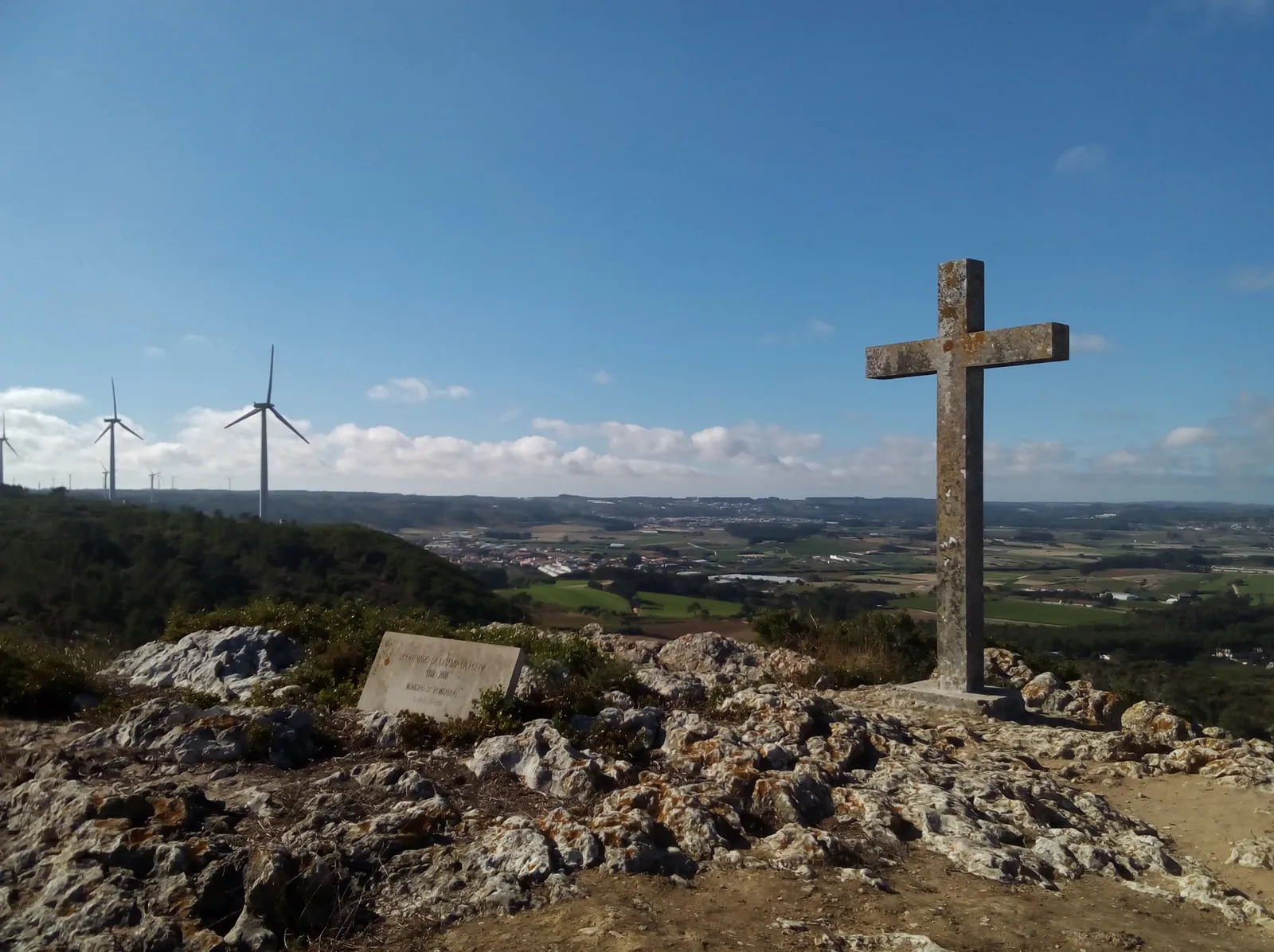
Lake's men paid for two memorials out of so many days' pay each. One is a marble monument by James Smith in Westminster Abbey, put up by the officers, non-commissioned officers, drummers and privates of the regiment. The other is a memorial stone on the heights of Columbeira, today a cross on a plinth.
Leslie found it there in April 1809, among bones, hair and broken muskets that wolves had dug up from the graves.
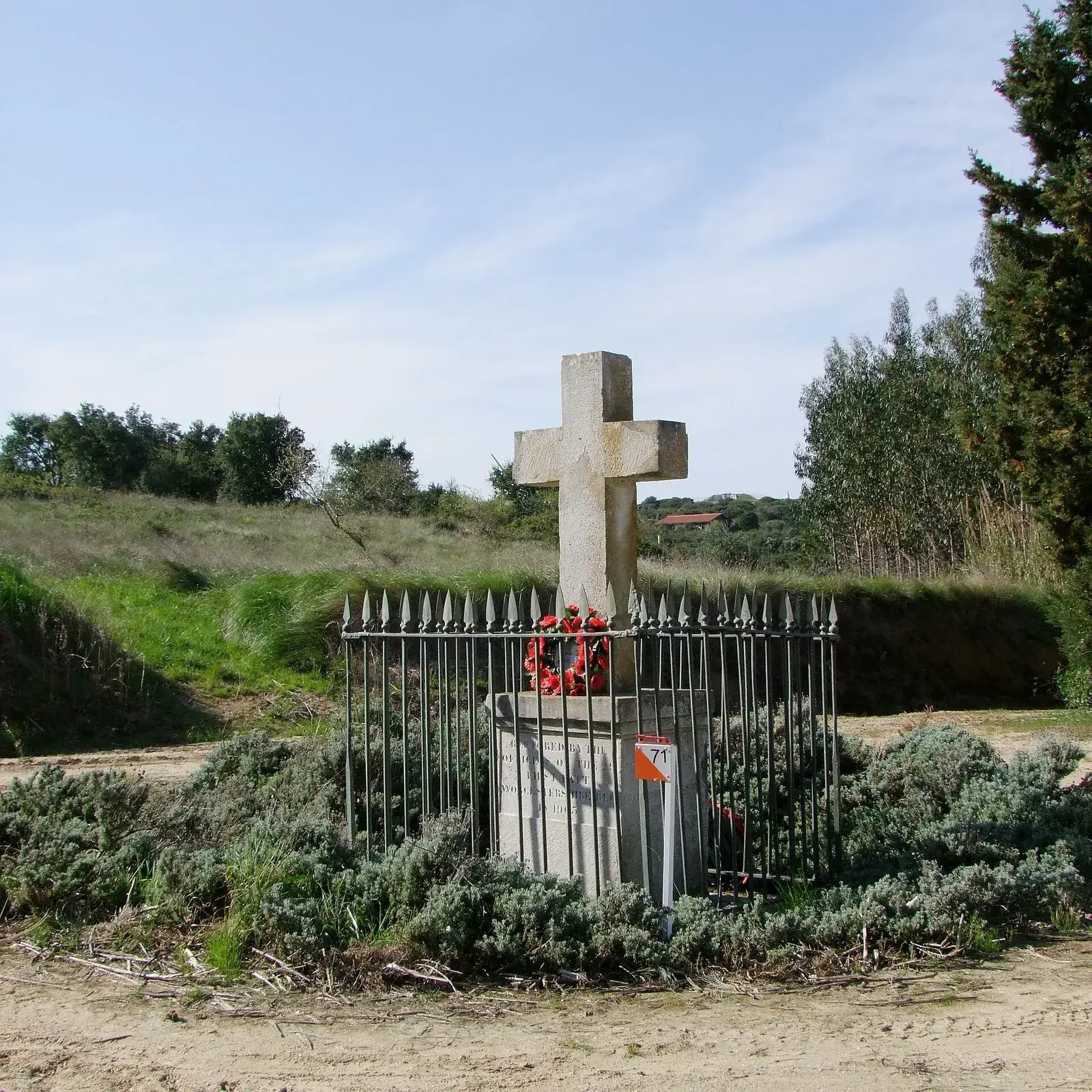
The cross has been repaired several times: by officers of the regiment returning from the Boer War in 1903, when the railings probably went up; by a Portuguese infantry regiment from Caldas da Rainha in 1972; and for the bicentenary in 2008, after a clumsy cleaning in 2004 had left much of the lettering illegible, with the Municipality of Bombarral and the British Historical Society of Portugal sharing the cost.
FAQs
Who won the Battle of Roliça?
The Anglo-Portuguese army under Sir Arthur Wellesley. It drove General Delaborde's French division from its positions near Roliça on 17 August 1808 and took three of his five guns, but Delaborde retreated in good order and was not destroyed.
How many soldiers died at Roliça?
The official British return lists 70 killed, 335 wounded and 74 missing, 479 in all. French losses are less certain: Oman estimated about 600, Norris about 700 including prisoners, and Wellesley passed on a report of 1,500. No separate figure for Portuguese losses has been found.
What part did Portuguese troops play at Roliça?
About 1,650 to 2,375 Portuguese regulars, depending on the source, marched with Wellesley under the British officer Nicholas Trant. Most went with Trant on a wide march round the French left; about 400 light infantry and the Portuguese cavalry stayed with the centre. They saw little close fighting.
Why is Roliça sometimes spelled Roleia?
That was the British spelling of 1808. Wellesley's dispatch as printed in the London Gazette and the inscription in Westminster Abbey both use Roleia, and the 29th Regiment carried it as a battle honour in that form.
On the timeline
Open the timelineNearby moments from invasions, brazil and the liberal wars (1807–1851).
In Porto, the Spanish general Domingo Belestá, on hearing of the uprising against Napoleon in Spain, arrests the French governor, General Quesnel, and marches his 6,000 troops back to Galicia. The coup emboldens the Portuguese: revolt soon spreads across the north, and a Junta Provisional do Supremo Governo do Reino is formed in Porto under its Bishop, beginning organised resistance in the Peninsular War.
Fishermen of Olhão, in the Algarve, rise against the French occupation on the feast of Corpus Christi; three days later Faro follows and the French soon abandon the province. On 6 July, 17 Olhão men sail the caique 'Bom Sucesso' for Rio de Janeiro to carry the news to the Portuguese court.
French troops under General Loison crush a Portuguese-Spanish force outside Évora and then brutally sack the city. Loison, who had lost an arm, was known as 'o Maneta' ('the one-handed'), and popular tradition ties his name to the Portuguese expression 'ir para o Maneta', to be done for.
The Battle of Roliça
An Anglo-Portuguese force under Sir Arthur Wellesley, the future Duke of Wellington, defeats General Delaborde's French troops at the Battle of Roliça — the first battle fought by the British army in the Peninsular War, on Portuguese soil north of Lisbon.
At the Battle of Vimeiro, Wellesley's Anglo-Portuguese army defeats General Junot's French forces, a victory that leads directly to the French evacuation of Portugal under the Convention of Sintra.
The Convention of Sintra is signed, by which the defeated French army under General Junot agrees to evacuate Portugal following the Battle of Vimeiro, ending the first French invasion — though its generous terms caused outrage in Britain.
As Marshal Soult's French army storms Porto during the second French invasion, crowds fleeing across the Ponte das Barcas, the bridge of boats over the Douro, are pushed into a gap in its middle, and hundreds or thousands drown. A shrine on the Ribeira quay still recalls the disaster.
Coming up in history
All long reads
11 sources
Archives, scholarship and reporting this article was checked against.
- 1
The Dispatches of Field Marshal the Duke of Wellington, vol. IV: Peninsula, 1790–1813 (compiled by John Gurwood), new editionJohn Murray, London, 1837; University of Toronto copy on the Internet Archive
- 2
The London Gazette Extraordinary, issue 16177, 3 September 1808: Sir Arthur Wellesley's dispatches of 16, 17 and 18 August 1808 with the returns of killed, wounded and missingThe Gazette (official public record), London
- 3
A History of the Peninsular War, vol. I: 1807–1809, from the Treaty of Fontainebleau to the Battle of Corunna (Charles Oman)Clarendon Press, Oxford, 1902; Project Gutenberg edition
- 4
- 5
Colonel George Lake and the Battle of Roliça (Clive Willis)The British Historical Society of Portugal, Twenty-Third Annual Report and Review, 1996, pp. 95–105
- 6
- 7
Trant, Nicholas (Ernest Marsh Lloyd)Dictionary of National Biography, vol. 57 (1899), on Wikisource
- 8
- 9
George LakeWestminster Abbey
- 10
- 11
George Lake's tomb, 19th century, Bombarral, LeiriaArcheofactu, conservation and restoration
Image credits
- The Battle of Roliça as imagined by the English painter Abraham Cooper (1787 to 1868), with British infantry taking a French gun. The painting is undated and is an artist's reconstruction, not an eyewitness record. Abraham Cooper, Public domain, via Wikimedia Commons.
- Arthur Wellesley in the uniform of a major-general, painted by Robert Home in India in 1804, four years before he landed in Portugal. Robert Home, Public domain, via Wikimedia Commons.
- Plan of the Action of Obidos on the 17 August 1808, from a survey by Captain William Willermin of the Royal Staff Corps, engraved by C. Marcuard and issued by the Quartermaster-General's office in London on 27 February 1815. The British often named the battle after Óbidos, at the bottom, or spelled Roliça as Roleia. Willermin, William ; Marcuard, C., CC0, via Wikimedia Commons.
- A stone wayside cross on the Serra do Picoto, the ridge the French defended in the afternoon, photographed in 2017. It is not Lake's memorial; the stone beside it marks the bicentenary, 1808 to 2008. RickMorais, CC BY-SA 4.0, via Wikimedia Commons.
- The memorial to Lieutenant-Colonel George Lake on the heights of Columbeira, photographed in 2017. The side shown records its restoration by officers of the 29th in 1903. Alta Falisa, CC BY-SA 4.0, via Wikimedia Commons.
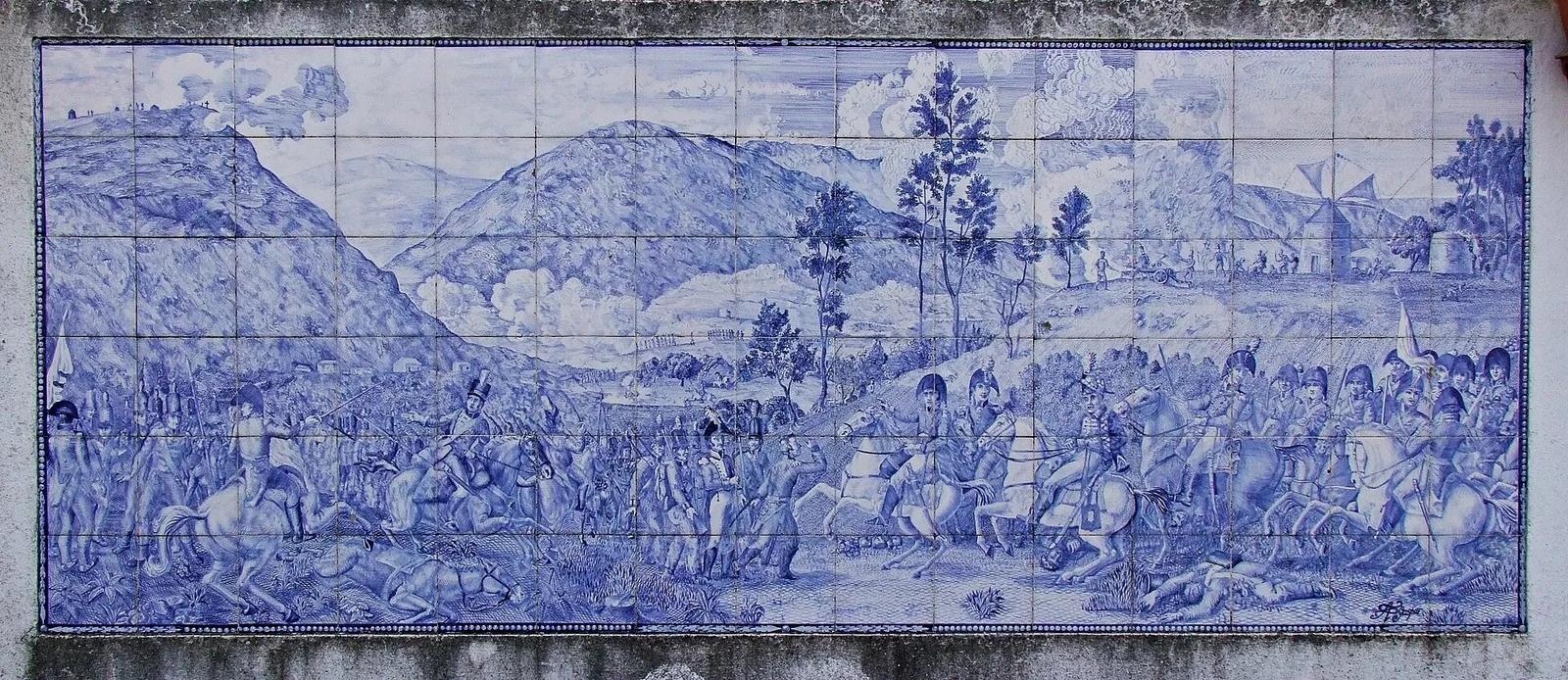
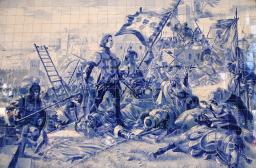
- Tile panel in Roliça, signed A. Gaspar and dated to about 1995, copying Henri L'Évêque's drawing The Attack on the French Corps Commanded by Gen. Laborde, on 17 Aug. 1808, published in 1812. Photographed in 2017. Alta Falisa, CC BY-SA 4.0, via Wikimedia Commons.