

Mendes Cabeçadas, who made and unmade the Republic
A naval lieutenant from the Algarve had the shots fired that began the 1910 revolution. In 1926 he helped lead the coup that ended the parliamentary Republic, was head of state for 17 days and spent his last two decades fighting the dictatorship.
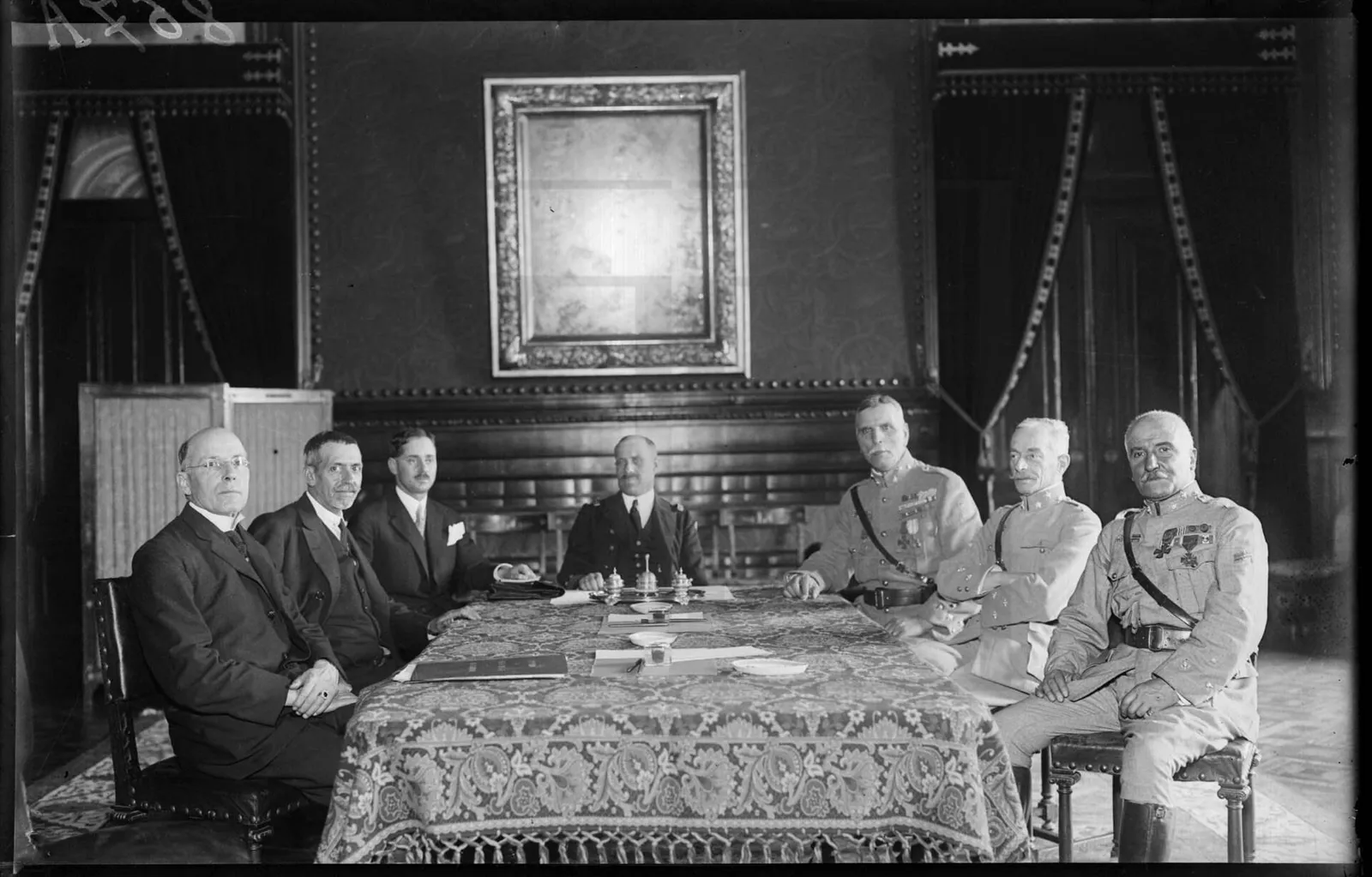
At a glance
- José Mendes Cabeçadas Júnior was born on 19 August 1883 at Lagoa de Momprolé, in the municipality of Loulé in the Algarve, the eldest of eight children.
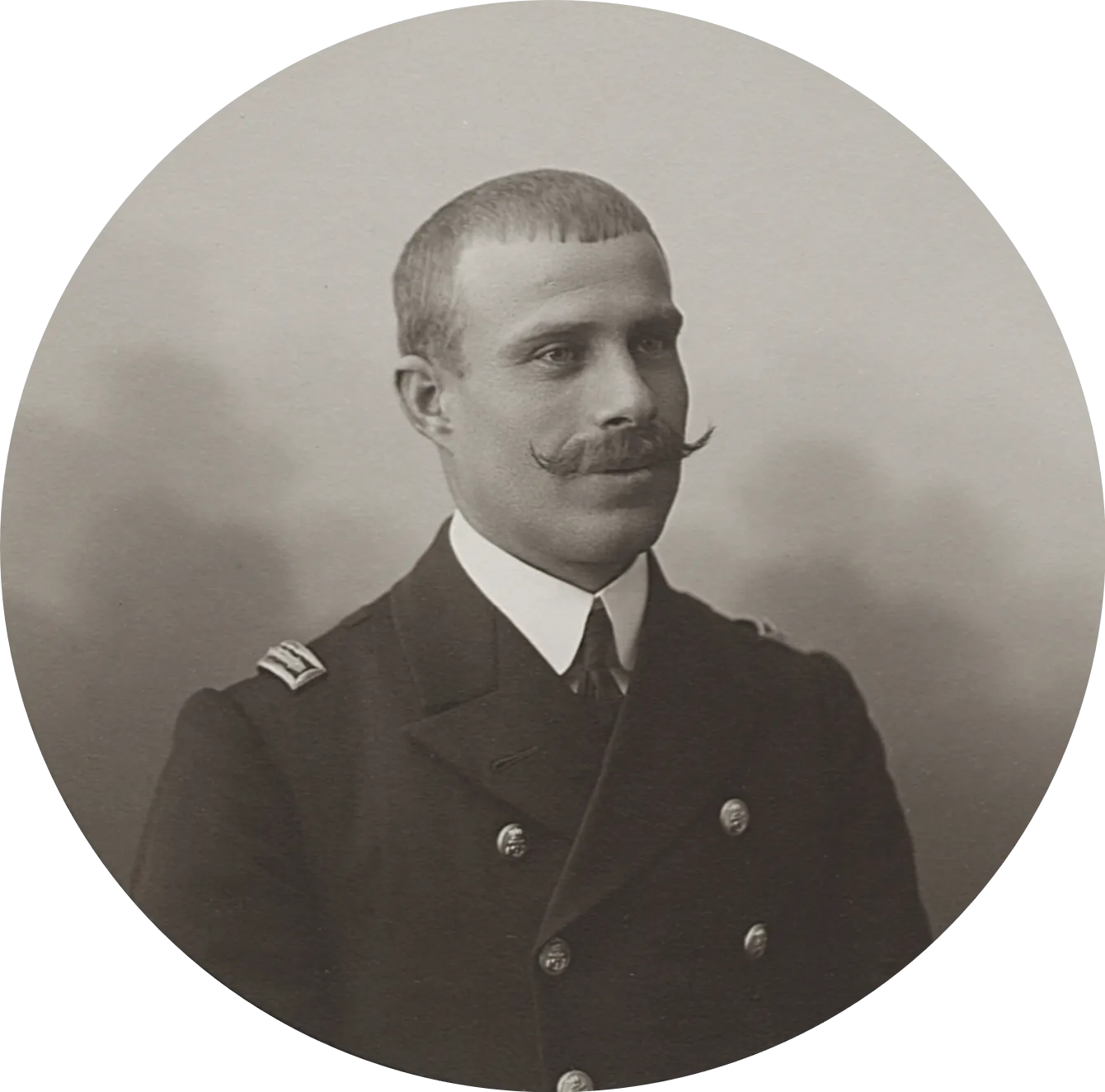
- At about 00:45 on 4 October 1910, by the navy's account, Second Lieutenant Cabeçadas, aged 27, took over the cruiser Adamastor on the Tagus and fired three shots, a signal for the republican revolution that ended the monarchy the next day.
- A conservative republican, he led the Lisbon side of the 28 May 1926 coup. On 31 May President Bernardino Machado handed him his powers, and for 17 days Cabeçadas was head of state and head of government at once.
- General Gomes da Costa forced him out on 17 June 1926. He went back to the navy, rose to vice-admiral in 1937 and from the end of the Second World War helped lead military plots against Salazar, including the Mealhada coup of October 1946.
- Arrested in 1947 and forcibly retired, he stayed in the legal opposition, sat on Humberto Delgado's national campaign committee in 1958 and died in Lisbon on 11 June 1965, with the political police noting the cars at his funeral.
Three shots on the Tagus
In the small hours of Tuesday 4 October 1910, a 27-year-old naval officer led a rising aboard the cruiser Adamastor, moored in the Tagus off Lisbon. Second Lieutenant José Mendes Cabeçadas met little resistance on board. At about 00:45, by the navy's own account, he had three rounds fired from the ship's guns.
The shots were a signal. Republican conspirators, civilians and soldiers, were waiting across the city for the warships to announce the start of a revolution against King Manuel II. The plan, agreed that evening, was a salvo of 31 shots from the warships at one in the morning. The republican leaders waiting in a Lisbon bathhouse heard only three, and by their reckoning not until about twenty past one.
It was enough. Across the water the sailors of the cruiser São Rafael answered the Adamastor and seized their ship, and on land Machado Santos led civilians and soldiers to the Rotunda, the circle at the top of the Avenida da Liberdade. At about seven that morning the leader of one of the civilian groups reported that the Adamastor flew the revolutionary flag, with Lieutenant Cabeçadas her only officer, waiting for orders.
A boy from Loulé
Cabeçadas was born on Sunday 19 August 1883 at Lagoa de Momprolé, in the municipality of Loulé, in the Algarve. He was the eldest of the eight children of José Mendes Cabeçadas, from São Brás de Alportel, and Maria da Graça Guerreiro, from Loulé.
The surname began as a nickname. His grandfather, João Mendes, traded in cork and dried fruit and kept a warehouse at Monte das Cabeçadas near São Brás. When he moved to Loulé he found another dried-fruit merchant there with the same name. To tell the two men apart, one was called Cabeçadas, and the family kept it.
After primary school in Loulé he went to secondary school in Faro and Évora, living in Faro with an uncle, Joaquim Mendes Cabeçadas, an army officer who rose to general. In 1902 he joined the 2nd Cavalry Regiment and a year later moved to the Escola Naval, the navy's officer school. His first posting, in 1908, was to the Indian Ocean naval division, and he spent a year and a half at the naval station in Mozambique. He later told his family the voyage had shaped his politics.
The Adamastor and the Republic
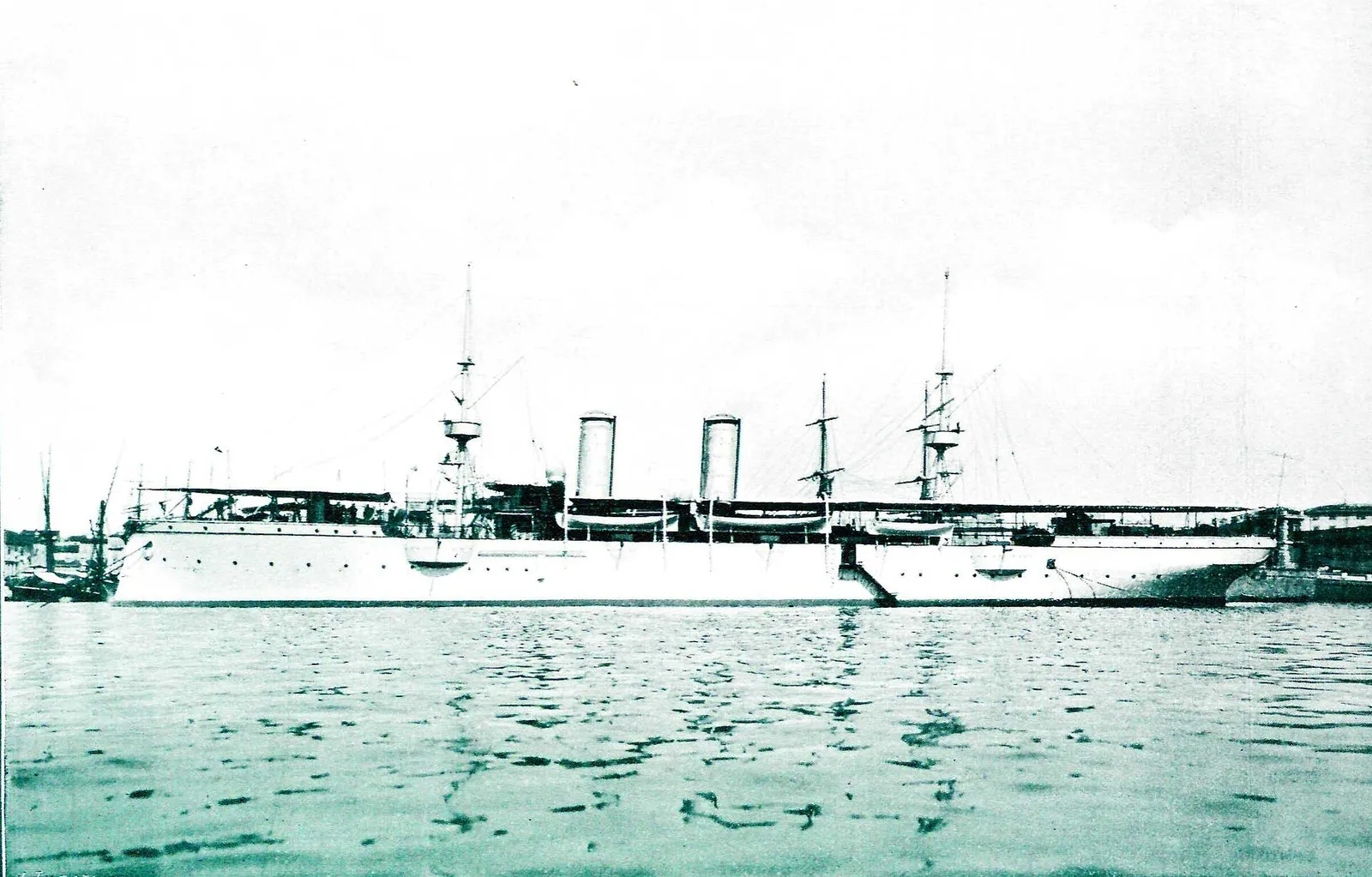
His ship had a political history of its own. The Adamastor was paid for by the national subscription raised after the British Ultimatum of 1890, when Britain forced Portugal to give up its claims to the lands between Angola and Mozambique. Built at the Fratelli Orlando yard in Livorno, Italy, she joined the Portuguese navy in 1897 and displaced 1,757 tons.
On 4 October the rebel ships shelled the Necessidades Palace, where the king was living; according to the navy, they fired more than forty shells, hitting the cornice of the chapel and Manuel II's bedroom. The king left for Mafra, and the defence of the monarchy fell apart. The Presidency Museum says Cabeçadas himself gave the order to bombard the palace.
At dusk the rebels in the naval barracks at Alcântara, about 1,500 men by Abreu's count, began boarding the Adamastor, which later anchored off the Terreiro do Paço. There fifteen men from the cruiser D. Carlos, which still flew the monarchy's blue and white flag, escaped in a boat and asked Cabeçadas for weapons to fight their own officers. He armed them, added a sergeant and some sailors and civilians, and sent them to the São Rafael. Lieutenant Carlos da Maia took command, and at about half past seven that evening the boarding party set off and took the D. Carlos after a brief exchange of fire.
The Republic was proclaimed from the balcony of Lisbon's city hall on the morning of 5 October. Cabeçadas then sailed the Adamastor to Brazil, the first country to recognise the new Portuguese Republic, to represent Portugal at the 21st anniversary of the Brazilian Republic. On his return he became a Freemason, on 4 April 1911, under the symbolic name Adamastor.
A conservative republican
In 1911 he sat in the Constituent Assembly that wrote the Republic's constitution, as a deputy for the Silves constituency. He was elected to the Chamber of Deputies again in 1915 and 1921 and twice served as civil governor of the district of Faro, the government's representative in the Algarve, in 1919 and 1923.
His naval career stayed close to home. He served on the cruisers São Rafael and São Gabriel until he finished sea service in December 1913, then was repeatedly captain of the port of Vila Real de Santo António, on the Spanish border, and commander of the Escola de Alunos Marinheiros do Sul, a school for trainee sailors.
In politics he stood on the moderate right of republicanism. He belonged in turn to the Unionist, Liberal and Nationalist parties, all rivals of the Democratic Party, which dominated the Republic's politics. Early in 1926 he followed Francisco Cunha Leal into a new splinter party, the Liberal Republican Union.
| Year | Rank (Portuguese) | Rough equivalent | Age at promotion |
|---|---|---|---|
| 1903 | Aspirante | Naval cadet | 19 or 20 |
| 1908 | Guarda-marinha | Midshipman | 24 or 25 |
| 1910 | Segundo-tenente | Sub-lieutenant | 27 |
| 1910 | Capitão-tenente | Lieutenant-commander | 27 |
| 1917 | Capitão-de-fragata | Commander | 33 or 34 |
| 1925 | Capitão-de-mar-e-guerra | Captain | 41 or 42 |
| 1930 | Contra-almirante | Rear admiral | 46 or 47 |
| 1937 | Vice-almirante | Vice-admiral | 53 or 54 |
Years as given by the Museu da Presidência da República, which dates the promotion to segundo-tenente to September 1910. Ages are worked out from his birth on 19 August 1883; where only the year of promotion is known, both possible ages are given. Archontology dates the promotion to second lieutenant to 1909 and his entry to the Escola Naval to 1902. English equivalents are approximate.
By 1925 he thought the Republic was being wrecked by the Democrats' grip on power. On 19 July 1925 he led a revolt aboard the cruiser Vasco da Gama, backed by Captain Jaime Baptista. The government declared a state of siege, loyal forces under Agatão Lança put the rising down, and Cabeçadas went to prison. The navy's note says he also took part in the failed revolt of 18 April 1925, which the Presidency Museum attributes to the military and monarchist right.
Seventeen days at the top
Cabeçadas had been plotting for weeks before the coup of 28 May 1926; in April he joined the revolutionary junta formed in Braga. On 26 May he met the other members of the Lisbon revolutionary committee, and they agreed he would head a government after victory. He had first asked General Alves Roçadas, the last commander of the Portuguese troops in France, to lead a rising from Braga; Roçadas was dying, so the choice fell on General Manuel Gomes da Costa.
On 28 May, while Gomes da Costa raised the Braga garrison, Cabeçadas took President Bernardino Machado a letter asking, in the name of a group of officers, for a government outside the parties, made up of republicans who had the country's confidence. Then he set off for Santarém, expecting a rising there, and was arrested by troops loyal to the government. Before it resigned on 29 May, the government ordered him freed.
At eleven on the morning of Sunday 30 May the President asked him to form a government, and he was sworn in at about eight that evening as head of government, minister of the navy and acting holder of every other ministry. The next day parliament was shut and Machado resigned, writing to Cabeçadas that his mission was accomplished.
“With my renunciation, your Ministry will take on all the authority of the fullness of the executive power.”
Under the 1911 constitution, a vacant presidency passed to the ministry as a whole. The ministry was Cabeçadas. From 31 May to 17 June he was head of state as well as head of government, which is why the Presidency Museum counts him among the presidents of Portugal. His government lasted 18 days in all, from 30 May.
He wanted to clean up the Republic, not replace it, and the army's right wing soon saw that. He refused to bring in General Sinel de Cordes, whom he accused of monarchist activity. On 4 June the Diário do Governo carried a law he and Machado had signed on 31 May recognising the civilian and military revolutionaries of 5 October 1910, and the officers of the coup were furious.
One of the ministers named on 3 June was a Coimbra economics professor, António de Oliveira Salazar. He came to Lisbon, went home the next day citing his health, and returned to take the oath as minister of finance on 12 June after an interview with Cabeçadas. He left office with him days later. On 16 June Gomes da Costa put the army's demands to the cabinet, and Cabeçadas did not give way.
On 17 June Gomes da Costa, now calling himself head of government, sent him an ultimatum from Sacavém.
Isolated, and still avoiding an open fight, Cabeçadas signed his own dismissal and Gomes da Costa's appointment.
The decrees are dated 17 June, though the Presidency Museum has him resign the next day, and they appeared in the Diário do Governo on 19 June. Gomes da Costa lasted 22 days before General Óscar Carmona pushed him aside in turn.
Plotting against Salazar
Cabeçadas went back to the navy and promised himself he would stay out of politics. From 1928 he followed the building of the Alfeite naval yard, across the Tagus from Lisbon, and was its intendant for more than a decade. He was promoted rear admiral in 1930 and vice-admiral in 1937, as Salazar, head of government from 1932, built the dictatorship known as the Estado Novo. The navy's note says he was already involved in plots from 1931.
The end of the Second World War brought him back. He publicly backed the MUD, the opposition movement allowed to fight the 1945 election, and when the regime survived with little more than cosmetic change he turned to a military solution. The historian Luís Farinha, who has studied the PIDE files, calls him perhaps the most senior figure in the conspiracy of the Junta Militar de Libertação Nacional, a military front. Farinha traces it to the end of 1945; José Adelino Maltez's chronology dates it to June 1946.
In September 1946 he signed the Pact of Almada with other officers, among them General José Garcia Marques Godinho and Colonel Carlos Selvagem, also known as a writer. It was an appeal to President Carmona: the army would back him if he dismissed Salazar and installed a provisional government to restore civil liberties, release political prisoners and abolish the repressive police.
The first attempt came on 10 October 1946 (11 October in Maltez's chronology), when Captain Fernando Queiroga, the junta's liaison officer, led seventy men of the 6th Cavalry Regiment out of Porto towards Lisbon. A rising expected at Tomar never happened. Loyal troops from Coimbra, Aveiro and Figueira da Foz blocked the road at Mealhada, north of Coimbra, and arrested the leaders. Salazar was on holiday at Santa Comba Dão for the grape harvest.
The junta tried again on 10 April 1947. That day Hermínio da Palma Inácio and Gabriel Gomes sabotaged aircraft at the Sintra air base, but the rising did not come out. The PIDE, the political police, made dozens of arrests. General Marques Godinho was held at the Trafaria fort and died in custody in December 1947, in the Estrela military hospital. Cabeçadas, then 63, was arrested too.
“He had seen with dismay, because of his political ideals, a regime of personal power established in the country, with characteristics similar to those of fascism, and, as the end of the war approached, he thought the country had everything to gain from ending that system, hated all over the world because it was blamed for the war.”
The political police held him for a time in the Júlio de Matos psychiatric hospital in Lisbon. While he and Marques Godinho were both still in custody, a young lawyer, Adriano Moreira, petitioned for habeas corpus for them, arguing that officers could not be held there; it is often called the first such petition in Portugal. Cabeçadas was eventually sentenced to one year's correctional prison, less the time already served.
The government also retired him by force. In the same purge, announced in mid-June 1947, the Council of Ministers removed officers and civil servants accused of disloyalty and sedition, among them several brigadiers and colonels and university professors. The Presidency Museum dates the resolution to 18 June.
The old admiral of the opposition
Retirement did not stop him. Through the 1950s the vice-admiral took part in the liberal republican opposition's campaigns at the regime's elections. A study of his papers by Elsa Santos Alípio describes him as a man of the legal opposition, distinct from the insurrection favoured by the Communist Party.
1945
Backs the MUD
Publicly supports the opposition movement formed for the November election.
Sept 1946
Signs the Pact of Almada
Officers of the Junta Militar de Libertação Nacional appeal to Carmona to remove Salazar.
10 Oct 1946
The Mealhada coup fails
Queiroga's column leaves Porto and is stopped at Mealhada, north of Coimbra.
10 Apr 1947
Second plot fails
Arrested, tried and forcibly retired.
1951
Quintão Meireles campaign
Sits on the committee of the opposition's presidential candidate and helps found the Organização Cívica Nacional.
1953
Opposition candidate
Stands for the National Assembly for the democratic opposition.
1955 and 1956
New groups
Chairs the board of the Causa Republicana, then leads the Frente Nacional Liberal e Democrata.
1958
Humberto Delgado
Sits on the national committee of Delgado's presidential campaign.
1961
A programme for democracy
Among the first signatories of the Programa para a Democratização da República.
11 June 1965
Dies in Lisbon
Aged 81.
In 1958 Cabeçadas sat on the national committee of General Humberto Delgado's presidential campaign. Delgado drew huge crowds and lost an election the Panteão Nacional, where he is now buried, calls fraudulent. In February 1965 Delgado was murdered in Spain, near Olivença.
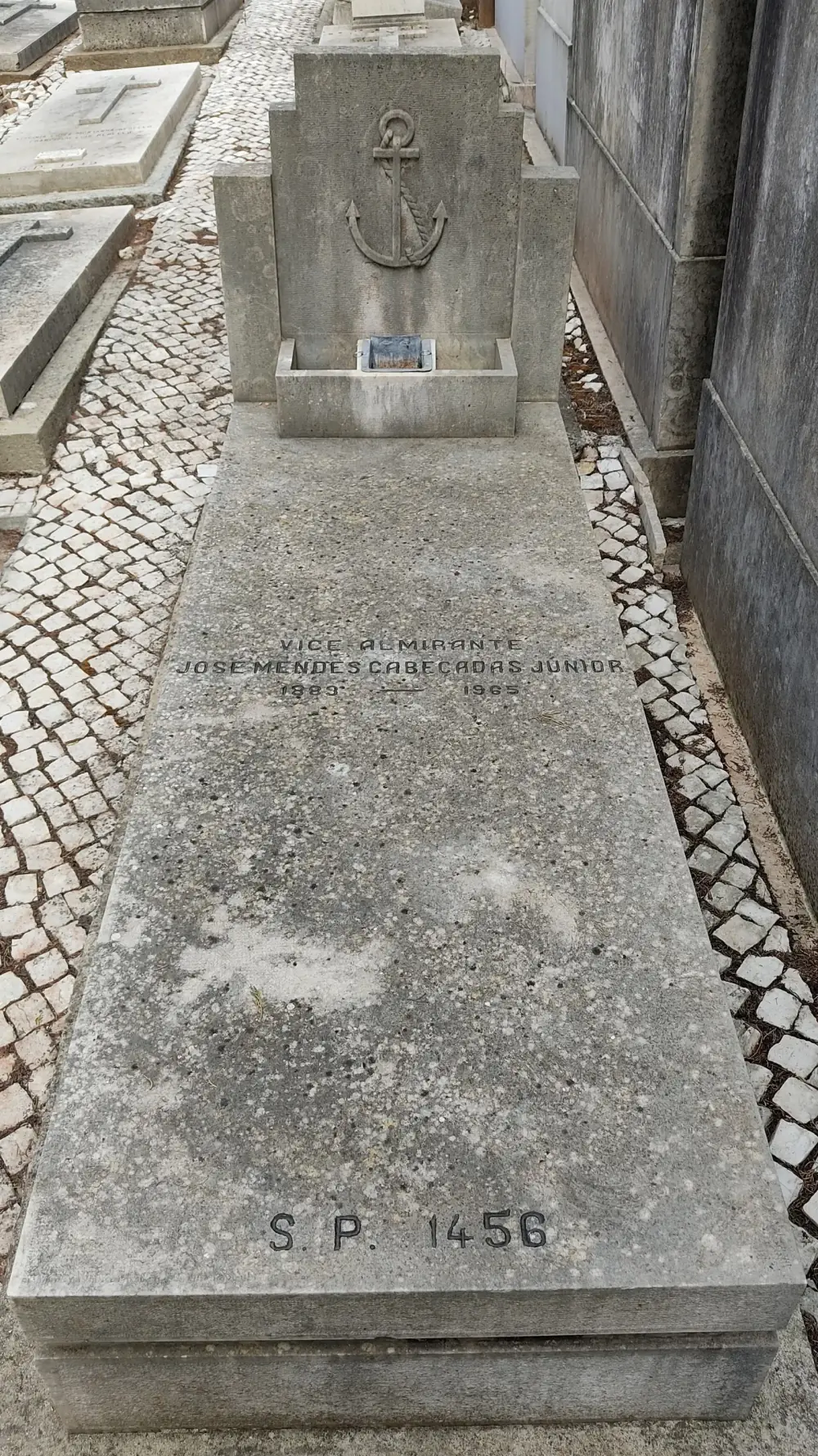
The police watched Cabeçadas to the end. In January 1965, as his health failed, the PIDE stopped tapping his telephone. He died in Lisbon on 11 June 1965, aged 81. Many opposition figures came to the funeral. Inspectors of the political police followed it closely and made a list of the cars in the procession to the Prazeres cemetery.
- Born
- 19 August 1883, Lagoa de Momprolé, Loulé
- Died
- 11 June 1965, Lisbon, aged 81
- Signal shots on the Adamastor
- About 00:45, 4 October 1910 (navy's account)
- Head of government
- 30 May to 17 June 1926 (18 days)
- Acting head of state
- 31 May to 17 June 1926 (17 days)
- Highest rank
- Vice-admiral (1937); forcibly retired 1947
Why he still matters
Cabeçadas is counted as the ninth President of the Republic, and his papers are deposited at the Presidency Museum. The junta he helped lead in 1946 and 1947 was made up of senior army and navy officers, backed by landowners, industrialists, lawyers and socialists, and its pact appealed to the spirit of some of the men of 28 May 1926. Its leaders paid with prison and their careers.
The coup he helped lead in 1926 was meant to rescue a Republic he had helped to found. It opened the way instead to 48 years of dictatorship, and the finance minister who joined his cabinet on 12 June 1926 became its master.
FAQs
Who was Mendes Cabeçadas?
José Mendes Cabeçadas Júnior (1883-1965) was a Portuguese naval officer from Loulé. He signalled the start of the 1910 republican revolution from the cruiser Adamastor, led the Lisbon side of the 28 May 1926 coup, was head of state and government for a few weeks in 1926, and later became a leader of the military opposition to Salazar.
Was Mendes Cabeçadas President of Portugal?
In effect, yes. When President Bernardino Machado resigned on 31 May 1926, the 1911 constitution gave his powers to the ministry, which at that moment was Cabeçadas alone. He held them until 17 June 1926, and he is counted as the ninth President of the Republic, the first of the military dictatorship.
Why did Gomes da Costa remove Cabeçadas?
Cabeçadas wanted to reform the parliamentary Republic, while Gomes da Costa and the officers around him wanted a military government and a new constitution. Cabeçadas refused to bring in Sinel de Cordes, signed a law honouring the revolutionaries of 1910 and would not meet the army's demands. On 17 June 1926 Gomes da Costa sent him an ultimatum and he signed his own dismissal.
What was the Mealhada revolt of 1946?
It was the first military attempt against the Estado Novo after the Second World War. On 10 October 1946 Captain Fernando Queiroga led seventy cavalrymen out of Porto towards Lisbon, in a plot coordinated by Mendes Cabeçadas. Loyal troops stopped them at Mealhada and arrested the leaders.
On the timeline
Open the timelineNearby moments from regeneration and the last kings (1851–1910).
Lisbon marks the tercentenary of Camões's death with a great 'cortejo cívico' through its streets, organised by a commission of the Portuguese press and echoed by processions in towns across the country. The first large civic commemoration of its kind in Portugal turns 10 June into a national symbol and lays the foundations of today's Dia de Portugal.
Birth in Porto of naval officer José Carvalho Araújo (two Navy sources say 1880). In October 1918, commanding the small patrol boat 'Augusto de Castilho', he fought the German submarine U-139 for nearly two hours so that the steamer 'São Miguel', carrying 206 passengers from Madeira to the Azores, could escape. He died in the fight, and his ship was sunk.
Birth of Carlos Sampaio Garrido, Portugal's envoy in Budapest during the Nazi occupation of Hungary. In 1944 he sheltered Jews in the legation's country house, among them relatives of the actress Zsa Zsa Gabor; after he left, his successor Teixeira Branquinho extended Portuguese protection to about 1,000 people. Yad Vashem named him Righteous Among the Nations in 2010.
Mendes Cabeçadas
Birth in Loulé of José Mendes Cabeçadas, the naval officer who helped both to make and to unmake the First Republic. A leader of the mutiny aboard the cruiser Adamastor in the 1910 revolution, he raised the 1926 revolt in Lisbon that toppled the Republic and was briefly head of state, until the generals pushed him aside. He spent his last decades conspiring against Salazar.
The Berlin Conference ends with 14 nations, Portugal among them, signing its General Act on trade and claims in Africa. Its rule that new coastal claims needed 'effective occupation' pushed Lisbon to back its claims with expeditions and the 'Pink Map' plan to link Angola and Mozambique, crushed by Britain's 1890 ultimatum.
Birth of Aristides de Sousa Mendes at Cabanas de Viriato, Beira Alta. As Portugal's consul in Bordeaux in June 1940, he would defy Salazar's standing orders and issue thousands of visas to refugees — many of them Jews — fleeing the Nazi advance, an act of conscience that cost him his career and would later earn him the title 'Righteous Among the Nations'.
The Elevador da Glória opens in Lisbon, linking the Restauradores to the Bairro Alto. Designed by the engineer Raoul Mesnier du Ponsard and electrified in 1915, the funicular became one of the city's best-loved symbols; its derailment on 3 September 2025 killed 16 people.
Coming up in history
All long reads
20 sources
Archives, scholarship and reporting this article was checked against.
- 1
José Mendes Cabeçadas Júnior (biography)Museu da Presidência da República
- 2
Efeméride: Nascimento do Almirante Mendes Cabeçadas JúniorMuseu de Marinha, Direção Cultural da Marinha (19 August 2020)
- 3
- 4
A Revolução Portugueza: O 5 de Outubro (Lisboa 1910), by Jorge d'AbreuLisbon, 1912 (Project Gutenberg edition)
- 5
Fugir das cadeias da PIDE: a fuga de Hermínio da Palma Inácio da prisão do Aljube (Luís Farinha)Biblos, 3rd series, no. 9 (2023), pp. 415-444, Imprensa da Universidade de Coimbra
- 6
José Mendes Cabeçadas Júnior (biography and term of office)Archontology.org
- 7
1926 (Respublica: chronology of Portuguese politics), José Adelino MaltezRespublica, Repertório Português de Ciência Política (maltez.info)
- 8
Revolta da Mealhada de 1946Câmara Municipal da Mealhada
- 9
- 10
- 11
- 12
Letter from Bernardino Machado to José Mendes Cabeçadas Júnior, 31 May 1926Diário do Governo, I série, no. 124, 12 June 1926
- 13
Chefes do Governo desde 1821República Portuguesa, Governo de Portugal
- 14
- 15
- 16
- 17Morreu Adriano Moreira, um transmontano sem ressentimentosDiário de Notícias, 23 October 2022
- 18Adriano Moreira, de ministro do Estado Novo a líder do CDSRTP Notícias, 23 October 2022
- 19
Humberto DelgadoPanteão Nacional
- 20
Loulé expõe percurso de José Mendes Cabeçadas JúniorPostal do Algarve, 21 May 2016
Image credits
- The first council of ministers of the Cabeçadas government, about 7 June 1926. Cabeçadas, in naval uniform, sits at the centre. On the right sit General Gomes da Costa, minister of war and the colonies, and General Óscar Carmona, foreign minister, the two men who would succeed him in turn, then Felisberto Alves Pedrosa. On the left are the ministers Mendes dos Remédios, Jaime Afreixo and Manuel Rodrigues Júnior. Unknown author, CC BY-SA 4.0, via Wikimedia Commons.
- Mendes Cabeçadas photographed by the Lisbon studio Photographia Allemã around 1910, the year of the revolution, when he turned 27. The print is in the Museu da Presidência da República. Photographia Allemã, Public domain, via Wikimedia Commons.
- The cruiser Adamastor at Livorno, where she was built, in a photograph from an edition of the Adamastor episode of Camões's The Lusiads printed in Livorno in 1897, the year she joined the Portuguese navy. S.n., CC0, via Wikimedia Commons.
- Cabeçadas's grave in the Prazeres cemetery in Lisbon, marked with a naval anchor, photographed in 2024. António Fragoso, CC BY 2.0, via Wikimedia Commons.