

Sousa Martins, the doctor Lisbon venerates, died 1897
A carpenter's son who became one of Portugal's most respected doctors, he helped lead scientists up the Serra da Estrela to study its air for tuberculosis. Since his death people have lit candles at his statue and thanked him, in marble, for cures.
At a glance
- José Tomás de Sousa Martins, professor at the Lisbon Medical School and physician at São José hospital, died at Alhandra, the Tagus town where he was born, on 18 August 1897. He was 54.
- The son of a carpenter, he qualified as a pharmacist in 1864 and as a doctor in 1866, and from 1876 held the chair of general pathology, semiology and history of medicine.
- He was famous for his lectures and for treating poor patients without charging them. In 1881 he led the medical section of a scientific expedition to the Serra da Estrela, and he spent the rest of his life arguing for a mountain sanatorium for tuberculosis.
- He fell ill with tuberculosis himself in 1897. His modern biographer writes that, terminally ill, he ended his own life with an injection of morphine; the obituary in O Occidente spoke only of his illness.
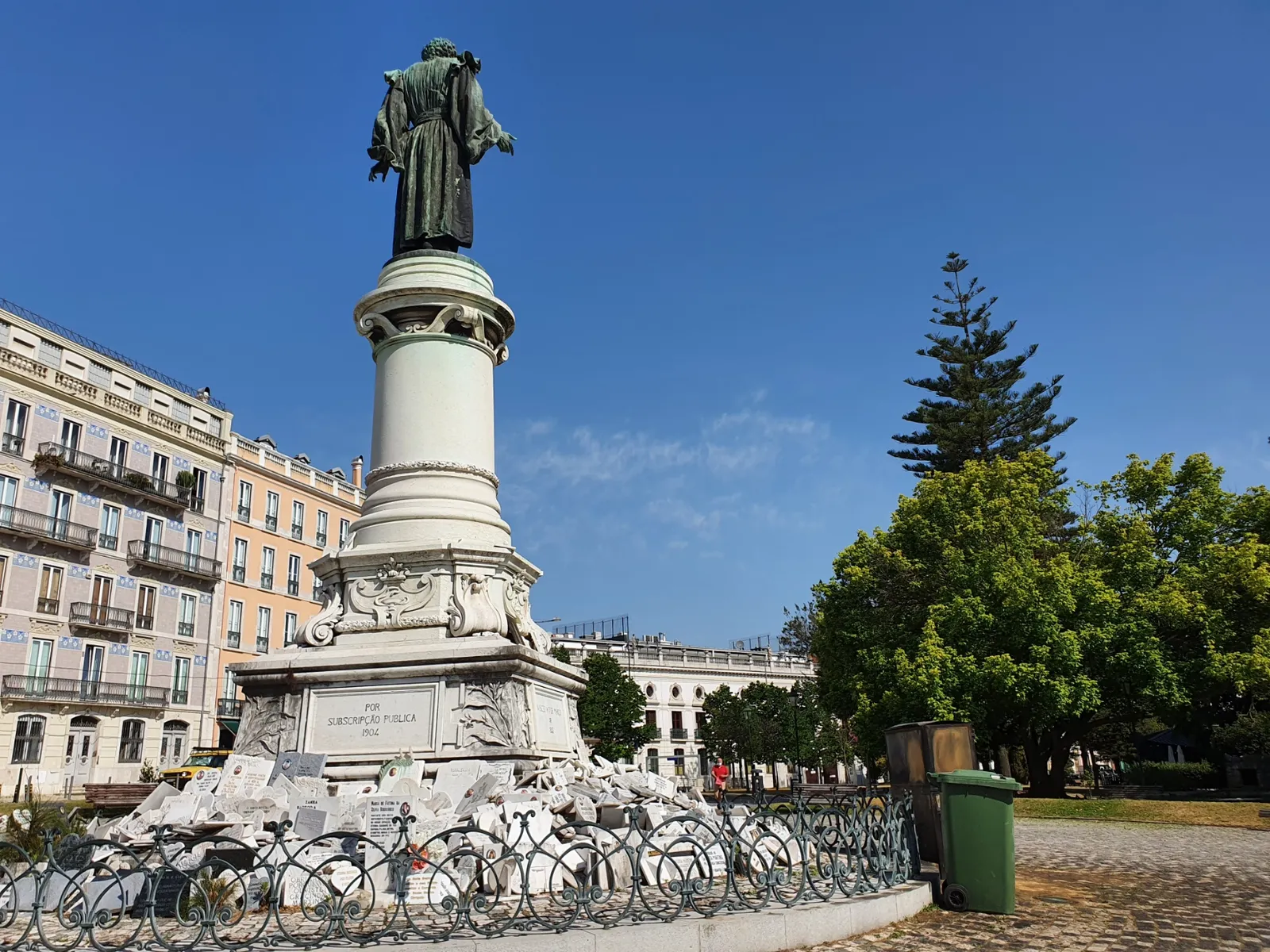
- His bronze statue, unveiled in Lisbon in 1904 after a first monument was pulled down, is still surrounded by candles, flowers and marble plaques from people who credit him with cures.
Sunset on a veranda in Alhandra
The last time João da Câmara saw his friend, Sousa Martins was sitting on the veranda of a house above the road to Arruda, outside Alhandra. He had finished dinner and sat down to watch the sun set, as the shadows spread over the hills opposite, the white road and the distant fields along the Tagus. A book by the French novelist Paul Bourget lay open on his knees.
He looked old, Câmara wrote, wasted, his dark face heavy with illness. A cousin he loved had just died in that house, and as he talked about her the tears ran down his face. Then he talked about life, said that his illness was nothing, and that in October he would go back to work.
He died in that house at about two in the morning on 18 August 1897, two kilometres from the town where he was born. He was 54.
From its terrace you could see Alhandra's cemetery, where he was buried. Two days later the Lisbon illustrated magazine O Occidente printed his portrait and Câmara's farewell, which included the line: “And death knocking at his door, and he, the great doctor, not knowing its footsteps!”
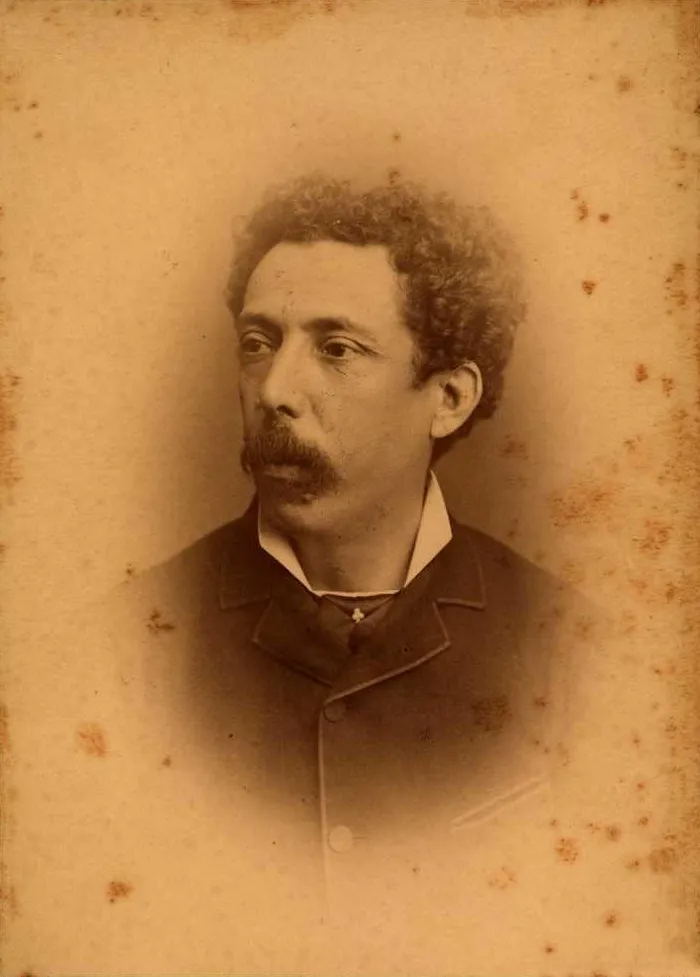
Câmara's obituary already called him something more than a doctor. After his death, people began to light candles to him in Lisbon and to leave marble plaques thanking him for cures, and they still do.
From a pharmacy counter to a professor's chair
José Tomás de Sousa Martins was born in Alhandra, a small town on the Tagus north-east of Lisbon, on 7 March 1843. His father, Caetano Martins, was a carpenter and died when the boy was seven. At twelve he was sent to Lisbon to live with his mother's brother, Lázaro Joaquim de Sousa Pereira, who owned the Farmácia Ultramarina in the Rua de São Paulo, near the Mint.
From 1 April 1856 he worked behind his uncle's counter as an apprentice, while studying at the Lisbon lycée and then the natural sciences course of the Escola Politécnica. In 1861 he enrolled in medicine at the Escola Médico-Cirúrgica de Lisboa, the city's medical school. Eight years of pharmacy practice let him sit the pharmacist's examination, and on 11 July 1864, aged 21, he qualified.
He finished medicine in July 1866, at 23, with a thesis arguing that the vagus nerve governs the tone of the heart muscle. In August 1868 he won a public competition for the post of demonstrator in the school's medical section. When a new chair of General Pathology, Semiology and History of Medicine was created in 1876, he was appointed to it, and he held it until he died.
He was also secretary of the commission that wrote the Farmacopeia Portuguesa, the national list of approved medicines, published in 1876, and represented Portugal at the International Sanitary Conference in Vienna in 1874. These conferences tried to agree how far ships and travellers should be quarantined against cholera and other epidemics without strangling trade.
The doctor who would not take the money
In October 1874 he was appointed, after a competition, as a physician at the Hospital de São José, Lisbon's great public hospital, and from 1884 he ran its St Michael ward. It was there, his modern biographer writes, that his care for the poorest patients made him one of the most respected doctors in Portugal. O Occidente's obituary also remembered him as a brilliant speaker.
A colleague wrote that he never asked for fees and often refused them. In April 1897 his friend and colleague Dr Manuel Bento de Sousa wrote about his return from an international conference in Venice:
“Of glory, he brought back what he had taken with him; his health he compromised; and as for money, he lost it and did not gain it, it being his custom, and an old one, never to demand it and often to refuse it.”
In 1888 he was made honorary physician to the royal household, but the reputation that outlived him was among the poor. Câmara's obituary described what his visits meant to them:
“When the doctor entered the sick man's house, hope entered with him; he was not a doctor commanding the poor resources of an adolescent science, he was a saint who had heaven at his command and could work miracles.”
- Born
- 7 March 1843, Alhandra
- Died
- 18 August 1897, Alhandra, aged 54
- Qualified
- Pharmacist 1864; doctor 1866, Escola Médico-Cirúrgica de Lisboa
- Chair
- General Pathology, Semiology and History of Medicine, from 1876
- Hospital
- São José, from 1874; head of the St Michael ward from 1884
- Buried
- Alhandra cemetery
Mountain air for the lungs: the Serra da Estrela, 1881
Tuberculosis was the disease on which Sousa Martins did his most important work. It was then reaching epidemic levels in Lisbon and Porto. Nobody yet knew its cause: Robert Koch announced the discovery of the tuberculosis bacterium only on 24 March 1882. The treatment on offer was rest in the open air, isolation and good food, and the mountains were thought best for the air.
Sousa Martins wanted to know whether Portugal had such air of its own. The Serra da Estrela, in the centre of the country, holds the highest point of mainland Portugal, and before he could recommend it he needed to know its weather and its health conditions.
In August 1881 the Sociedade de Geografia de Lisboa, of which he was a founding member, sent a scientific expedition into the mountains. The naval officer and explorer Hermenegildo de Brito Capelo and Sousa Martins jointly presided over the commission that ran it, and Sousa Martins led the medical section. For weeks the team mapped the Serra and studied its plants, rocks, lakes, weather, people and ruins.
| Section | Leader | Post |
|---|---|---|
| Medicine | José Tomás de Sousa Martins | Professor, Lisbon Medical School |
| Anthropology | José Joaquim da Silva Amado | Professor, Lisbon Medical School |
| Archaeology | Francisco Martins Sarmento | Archaeologist |
| Botany | Júlio Augusto Henriques | Professor, University of Coimbra |
| Meteorology | Augusto Carlos da Silva | Naval lieutenant, Infante D. Luís observatory |
| Agronomy and forestry | Jaime Batalha Reis | Professor, Instituto Geral de Agricultura |
| Zoology | Fernando Mattoso dos Santos | Professor, Escola Politécnica |
| Photography | Frederico Augusto Torres | Cavalry major |
From the personnel list printed at the head of the expedition's reports. It lists 13 sections in all (the others were chemistry, ethnography, geology, hydrography and animal husbandry), three sub-sections, including ophthalmology and mineral-water medicine under the medical section, and support staff that included 38 men from villages near the Serra.
After the expedition he argued for health houses in the Serra. In 1882 he and Brito Capelo asked the government for a weather station in the Serra, and in 1890 he published a study of pulmonary tuberculosis and the Serra's mountain climate. In 1888 he helped found the Clube Hermínio, which made him its perpetual president, to promote the mountain as a health resort and help poor patients there; that summer it paid for a Coimbra professor, Basílio Freire, to treat the sick in the Serra free of charge.
His real goal was a permanent sanatorium. Using his access to the royal family, he got building started in 1891 on what was to be the Hospital Príncipe da Beira. It was still unfinished when he died. Queen Amélia's National Assistance for Tuberculosis Patients, founded in 1899, finished it, and on 18 May 1907 the king and queen opened it at Guarda as the Sanatório Sousa Martins. It worked as a sanatorium for 67 years.
August 1881
Expedition to the Serra da Estrela
Sousa Martins leads the medical section.
24 March 1882
Koch identifies the tuberculosis bacterium
The cause of the disease is found.
1882
Request for a weather station
With Brito Capelo, to the government.
1888
Clube Hermínio founded
Free treatment for patients in the Serra that summer.
1890
His study of tuberculosis and the Serra's climate
Printed by the Imprensa Nacional.
1891
Building begins on a sanatorium
The future Hospital Príncipe da Beira.
18 May 1907
Sanatório Sousa Martins opens at Guarda
Ten years after his death.
Venice, the Serra and the last summer
In March 1897 he went to Venice as Portugal's delegate to another International Sanitary Conference, the last of the century's meetings on epidemic control. The delegates elected him vice-president, and Bento de Sousa reported that the foreigners there gave him an ovation. He fell ill in Venice and came home very weak.
The diagnosis was tuberculosis. He went to the Serra da Estrela for the treatment he had prescribed to others, seemed to improve, and then moved to the Quinta do Rio Gomes, a country estate two kilometres outside Alhandra. O Occidente called the house his; his modern biographer says it belonged to friends. Câmara thought the doctor would not recognise in himself the symptoms he diagnosed so well in others. “Blindness of friends!” he wrote. “The greatest of all was that of the great master.”
Accounts of the end differ. O Occidente's obituary of August 1897 spoke only of his illness.
His modern biographer, Maria Antónia Pires de Almeida, writes that, terminally ill with tuberculosis and with a lesion of the heart, he ended his own life with an injection of morphine. A 2019 Diário de Notícias review of a documentary about him also says he killed himself, at 54.
His friend and doctor Gregório Fernandes was with him at the end. He never married and had no children. His will left everything he owned to his two sisters, Gertrudes and Leonor, and his scientific books to the Medical School and the Sociedade de Geografia. On 19 August he was buried in the family tomb in Alhandra cemetery.
Two statues on the Campo de Santana
His friends raised money by public subscription for a monument on the Campo de Santana, the square officially called Campo dos Mártires da Pátria, in front of the Medical School. It was officially unveiled on 7 March 1900, his birthday. The sculptor, Aleixo Queirós Ribeiro, made an eight-metre monument with two fountains and the royal arms. At the front sat Sousa Martins in his academic gown, receiving a flower from a slender woman seated on the steps.
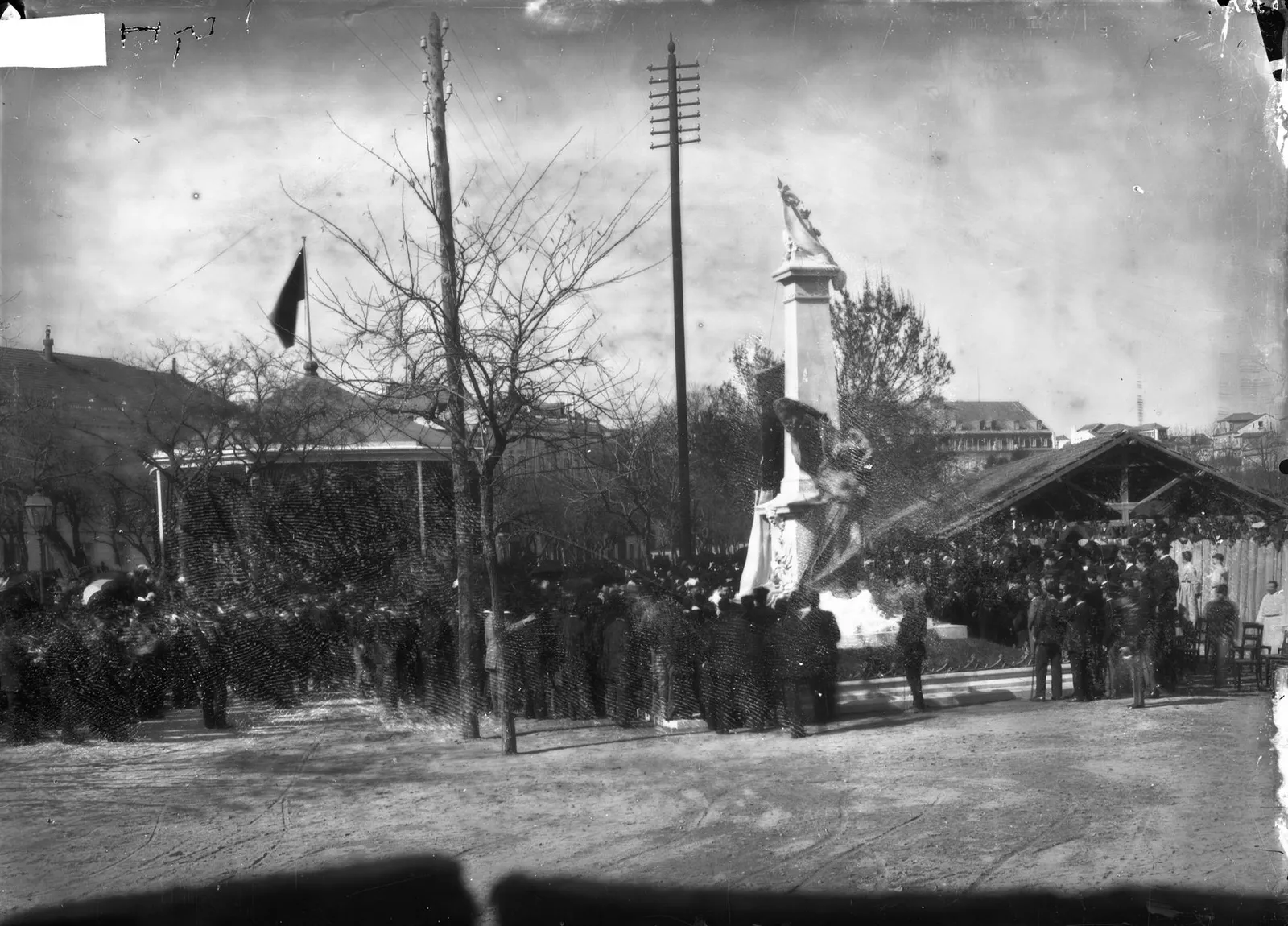
It did not last. Illustração Portugueza reported that people soon began to notice its “ridiculous side, the deep grotesqueness of the work” (in translation), and a real protest followed. His friends and the subscription committee asked the government for leave to demolish it, and in 1902 they commissioned a new design from the sculptor Costa Mota, known as Costa Mota tio (“the uncle”).
His bronze, cast at the army's cannon foundry, shows the professor standing in his gown as if in mid-lecture, with a seated woman at the base who stands for the academy. The king and queen came to see it at the end of February 1904.
Because it only replaced a monument already inaugurated, there were no official festivities. The hoarding came down at midnight on 6 March 1904, on the eve of what would have been his 61st birthday.
On 7 March the committee formally handed the monument over to the city council.
| Year | Place | Sculptor | Notes |
|---|---|---|---|
| 1900 | Campo de Santana, Lisbon | Aleixo Queirós Ribeiro | Mocked as grotesque and pulled down |
| 1904 | Campo de Santana, Lisbon | Costa Mota (tio) | Still standing; the focus of the devotion |
| 1907 | Guarda | Not named in the sources used | In the city of his sanatorium |
| 1908 | Alhandra | Not named in the sources used | In his home town |
Some reference works, including the 1904–1915 Portugal dictionary and the CIUHCT entry, give 1901 for the Lisbon statue. The magazine coverage of 1904, the 2022 study by Daniela Teixeira Simões and the date cut on the monument's base all give 1904. The dictionary's “7 March 1901” looks like a misprint, since the same entry says the committee was only formed in 1902.
A saint the Church never named
Daniela Teixeira Simões, an art historian at NOVA University Lisbon, traces how the square in front of the Medical School came to join two things: science, through his school and his practice, and devotion, through his charity and the cures people said he worked. The statue became the devotion's centre.
Today people still kneel there, cross themselves, pray and light candles to ask for help. Thousands have left flowers and ex-votos, offerings made in thanks for a favour received. Many are small marble plaques, heaped inside the railing round the base. The same happens at his grave in Alhandra, above all on the anniversaries of his birth on 7 March and his death on 18 August.
The cult has no place in the Catholic Church, though some of his devotees also pray to the Virgin Mary. Spiritism is part of the story: the belief, popular in nineteenth-century Europe, that the dead can talk to the living through mediums. His biographer Almeida writes that he was himself a follower of spiritism and that this, with his reputation for charity, is what linked his name to cures claimed after his death. Others remember him as an unbeliever: the Diário de Notícias called him “an atheist doctor”.
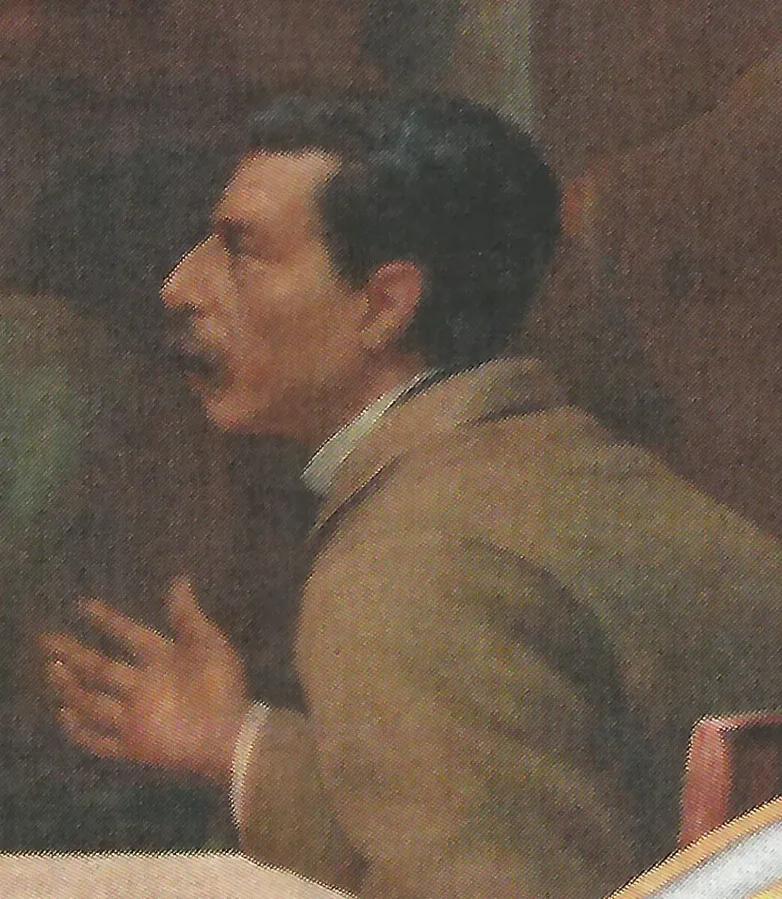
The French film-maker Justine Lemahieu, who came across the cult after moving to a Lisbon neighbourhood, followed it for her 2019 documentary Sousa Martins, from the Campo de Santana into Spain and up the Tagus to Alhandra. The Diário de Notícias review also noted the commerce, sometimes extravagant, that has grown up around it.
Why he is still remembered
The sanatorium he argued for was built. A study in the Anais do Instituto de Higiene e Medicina Tropical calls it the first of Queen Amélia's association, although the association had already opened a seaside sanatorium at Outão in 1900, in a fort given by the royal family. The Guarda sanatorium covered 27 hectares. Part of the old sanatorium was taken over by a city hospital that now carries his name, the Unidade Local de Saúde – Hospital Sousa Martins.
Mountain air did not beat tuberculosis. Until 1930 Portugal had the second-highest death rate from the disease in Europe, and only the drugs streptomycin, discovered in 1943, and isoniazid, from 1952, made it treatable.
The devotion on the Campo de Santana has outlived the disease's worst years and the sanatoriums. More than 120 years after his death, people still kneel at the statue of a professor of pathology, light candles to him and leave flowers and marble plaques inside the railing.
FAQs
Who was Sousa Martins?
José Tomás de Sousa Martins (1843–1897) was a Portuguese pharmacist and physician, professor of general pathology at the Lisbon Medical School and a doctor at São José hospital. He was known for his lectures, for treating poor patients free and for campaigning for a tuberculosis sanatorium in the Serra da Estrela.
How did Sousa Martins die?
Tuberculosis was killing him. He fell ill at a conference in Venice in March 1897, was diagnosed with the disease and died near Alhandra on 18 August 1897, aged 54. O Occidente's obituary spoke only of his illness; his modern biographer writes that, terminally ill and with heart disease, he ended his own life with an injection of morphine.
Why are there candles and marble plaques around the Sousa Martins statue in Lisbon?
They are ex-votos, left by people who pray to him and thank him for cures. The devotion grew after his death from his reputation for charity and is not recognised by the Catholic Church. It is strongest on 7 March and 18 August, the anniversaries of his birth and death.
When was the Sousa Martins statue unveiled?
The bronze by Costa Mota that stands on the Campo dos Mártires da Pátria today was uncovered around midnight on 6 March 1904. It replaced an earlier monument by Aleixo Queirós Ribeiro, unveiled on 7 March 1900 and demolished after it was ridiculed.
What did Sousa Martins have to do with the Serra da Estrela?
He led the medical section of the Sociedade de Geografia's scientific expedition to the Serra da Estrela in August 1881 and argued that its mountain air could treat tuberculosis. The sanatorium he pushed for opened at Guarda in 1907 under his name.
On the timeline
Open the timelineNearby moments from regeneration and the last kings (1851–1910).
Birth of Aníbal Augusto Milhais — better known as 'Soldado Milhões' ('Soldier Millions') — in Valongo, near Murça in Trás-os-Montes, a village later renamed Valongo de Milhais in his honour. In April 1918, at the Battle of the Lys, the private covers the retreat of Portuguese and British troops with his Lewis gun; he later receives the Tower and Sword, Portugal's highest military award.
Poet and educator João de Deus dies in Lisbon aged 65. Celebrated in his day as the great lyric poet of love, he is best remembered for the 'Cartilha Maternal', a method of teaching children to read that was used in Portuguese schools for generations; he lies in the National Pantheon.
Gungunhana, the last ruler of the Gaza empire in southern Mozambique, lands in Lisbon as a prisoner after his capture by Mouzinho de Albuquerque at Chaimite. Jeering crowds line the streets as open carriages take him from the Arsenal to the fort of Monsanto; he was later exiled to Terceira in the Azores, where he died in 1906.
The death of Sousa Martins
Death of José Tomás de Sousa Martins, the Lisbon physician revered for treating the poor and for promoting the Serra da Estrela as a refuge for tuberculosis patients. His statue on the Campo dos Mártires da Pátria is still surrounded by candles, flowers and marble ex-voto plaques from people who credit him with cures.
The architect José Ângelo Cottinelli Telmo is born in Lisbon. He designed the modernist Sul e Sueste ferry station on the Terreiro do Paço, directed the hit comedy 'A Canção de Lisboa' and was chief architect of the 1940 Exposição do Mundo Português. As architect to the regime's prison-building commission from 1934, he is also credited with plans for the Tarrafal prison camp in Cape Verde.
Birth in Lisbon of Amélia Rey Colaço, a towering figure of 20th-century Portuguese theatre. With her husband Robles Monteiro she ran a company that held the concession of the Teatro Nacional D. Maria II from 1929 to 1974, staging Lorca and Tennessee Williams despite the censors and training actors such as Eunice Muñoz.
Birth of novelist José Maria Ferreira de Castro in Ossela, near Oliveira de Azeméis. Emigrating to Brazil at the age of 12, he spent almost four years on an Amazon rubber estate on the Madeira river, the experience behind his novel 'A Selva' (1930). A pioneer of Portuguese social realism, he was nominated seven times for the Nobel Prize.
Coming up in history
All long reads
12 sources
Archives, scholarship and reporting this article was checked against.
- 1
Martins, José Tomás de Sousa (Maria Antónia Pires de Almeida)Dicionário biográfico de cientistas, engenheiros e médicos em Portugal, CIUHCT, 2023 (doi:10.58277/QWUX5682)
- 2
“Sousa Martins” (João da Câmara) and “Notas biographicas”, O Occidente: revista illustrada de Portugal e do extrangeiro, n.º 671 (20 August 1897)Hemeroteca Digital, Câmara Municipal de Lisboa
- 3
- 4
O caso dos Monumentos erigidos ao Doutor Sousa Martins no Campo Mártires da Pátria, em Lisboa (1898-1904): do reconhecimento científico ao culto popular (Daniela Teixeira Simões)RomantHis 1 (2022), pp. 222–255; record at NOVA Research, Universidade NOVA de Lisboa
- 5
Expedição scientifica á Serra da Estrella em 1881: secção de archeologia, relatorio do sr. dr. Francisco Martins SarmentoSociedade de Geographia de Lisboa, Imprensa Nacional, 1883 (scan by the Casa de Sarmento, Universidade do Minho)
- 6O Robin dos Bosques da medicina portuguesaDiário de Notícias, 8 August 2019
- 7
Sousa Martins (José Tomás de)Esteves Pereira and Guilherme Rodrigues, Portugal: Diccionario historico, chorographico, biographico… (João Romano Torres, 1904–1915), vol. VI, pp. 1088–1090; electronic edition by Manuel Amaral, arqnet.pt
- 8
World Tuberculosis DayWorld Health Organization
- 9
O Sanatório Sousa Martins e a transversalidade da doutrina arquitetónica de Raúl Lino (Dulce Helena Pires Borges)Anais do Instituto de Higiene e Medicina Tropical
- 10Passeio a pé evoca expedição científica de 1881 à Serra da EstrelaObservador / Lusa, 25 July 2026
- 11
Luta antituberculosa em Portugal: o contributo da Armada (José Filipe Moreira Braga)Ordem dos Médicos
- 12
Museu de Alhandra – Casa Dr. Sousa MartinsMuseu Municipal de Vila Franca de Xira
Image credits
- The monument to Sousa Martins on the Campo dos Mártires da Pátria, Lisbon, in June 2022. The base carries the words “Por subscripção publica 1904”; the white slabs heaped around it are marble ex-votos thanking him for cures. GualdimG, CC BY-SA 4.0, via Wikimedia Commons.
- Sousa Martins in 1888, aged 45, photographed by João Francisco Camacho. João Francisco Camacho, Public domain, via Wikimedia Commons.
- The crowd at the unveiling of the first monument to Sousa Martins, by Aleixo Queirós Ribeiro, on the Campo de Santana on 7 March 1900. It was pulled down less than four years later. José Artur Leitão Bárcia, Public domain, via Wikimedia Commons.
- Sousa Martins as Veloso Salgado painted him, nine years after his death, in Portuguese Medicine (c. 1906), a canvas at the NOVA Medical School in Lisbon. Detail. Veloso Salgado, Public domain, via Wikimedia Commons.