

1422: how Portugal dropped the Era of Caesar
For about a thousand years Iberian scribes counted the years from 38 BC. In August 1422 João I told Portugal's notaries to count from the birth of Christ instead, decades after Aragon and Castile.
At a glance
- On 22 August 1422 João I's order that notaries and scriveners date their documents by the year of Christ's birth, instead of the Era of Caesar, was proclaimed in the king's palace in Lisbon.
- The Era of Caesar, also called the Hispanic or Spanish Era, counted from 38 BC, so its year numbers ran 38 ahead: Era 1460 is AD 1422.
- Notaries who kept using the old Era faced the loss of their offices. The written order is dated at Peral on 15 August, a week before it was read out in Lisbon.
- Aragon had dropped the Era by about 1350 and Castile in 1383, so Portugal was the last of the three to change.
- To convert a Portuguese Era date, historians subtract 38 years. The calendar itself stayed Julian until 1582.
A Saturday audience in Lisbon
On Saturday 22 August 1422 Diego Afonso, ouvidor (judge) of the court of King João I, sat in audience in the royal palace in Lisbon. Before him a chancery official, Filipe Afonso, deputy to the scrivener of the chancery, read out a short order from the king.
“The King commands all the notaries and scriveners of his kingdom and lordship that from now on, in all the contracts and writings they make, they put the Year of the Birth of Our Lord Jesus Christ, as before they used to put the Era of Caesar; and he commands them to do so on pain of losing their offices.”
Filipe Afonso dated his note of the proclamation the new way: the twenty-second day of August, in the year of the birth of Our Lord Jesus Christ one thousand four hundred and twenty-two.
Under the old reckoning the same day fell in the year 1460.
From then on, the year that Portugal's notaries wrote on deeds, leases and wills dropped by 38. The order changed the number in the dating clause, not the calendar. It applied to the people who wrote the kingdom's records, on pain of losing their offices.
A count that began in 38 BC
The Era of Caesar was a way of numbering years used across the Iberian Peninsula. It counted from 38 BC, so its year numbers always ran 38 ahead of the Christian count; its year 39 matched AD 1. Scholars call it the Hispanic or Spanish Era. The Caesar of the name was Augustus.
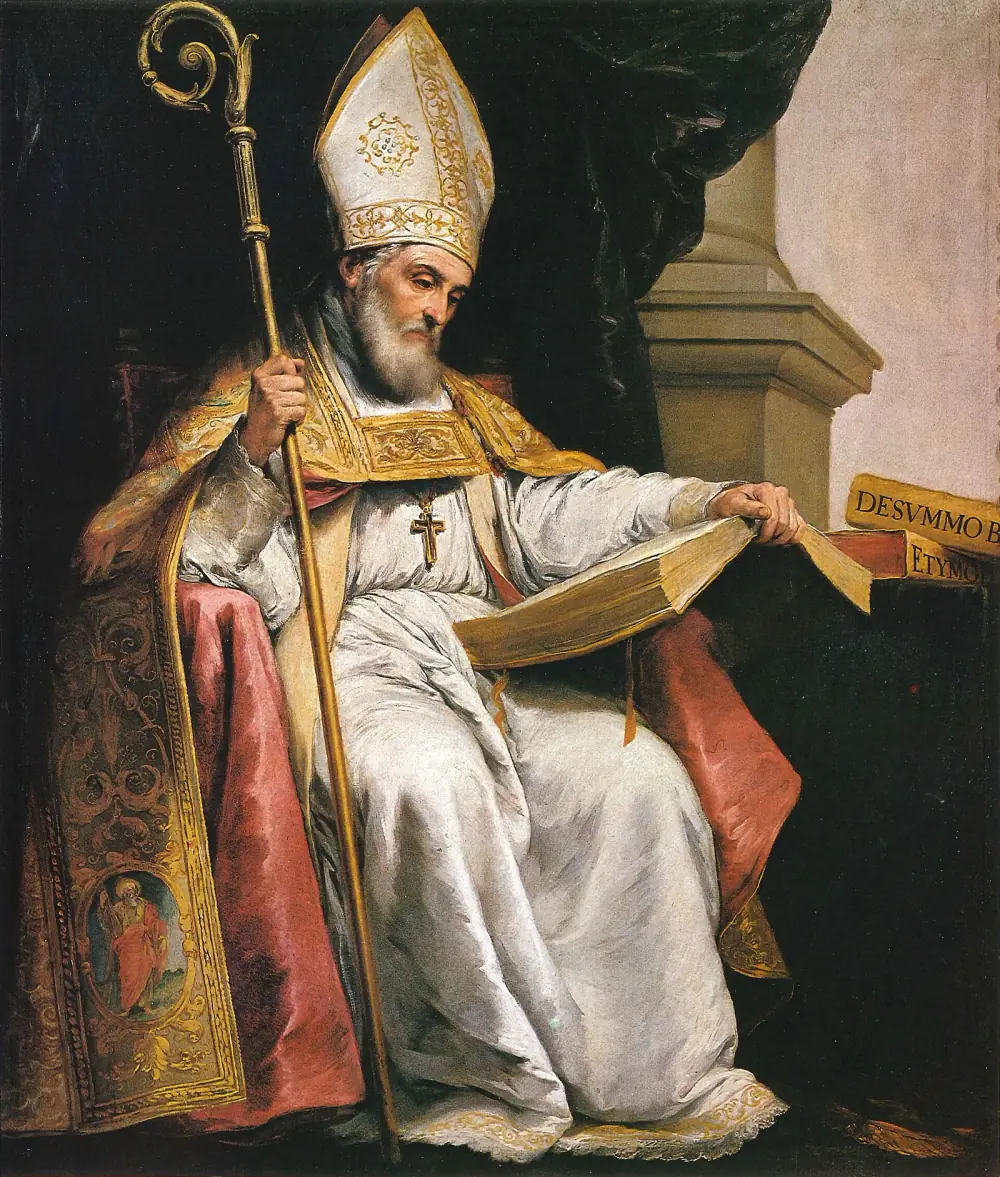
Nobody knows for certain why the count starts in that year. The Gran Enciclopèdia Catalana says it seems to come from an old local reckoning that tied 38 BC to Augustus's pacification of the peninsula. The seventh-century bishop Isidore of Seville offered an explanation that later writers repeated.
“The era of the single years was established by Caesar Augustus, when he first held a census and described the Roman world. It is called aera because the whole world professed to pay bronze [aes] to the state.”
Its use spread from the fifth century. Under the kings of León it was the ordinary way of dating documents, and Portugal kept it after it became a kingdom of its own. The scholar João Pedro Ribeiro, in a study of Portuguese dating published in 1811, found no undisputed Portuguese document dated by the years of Christ before the twelfth century.
From then on the year of Christ appears now and then beside the Era, usually as the year of the Incarnation. A donation by Bishop Gonçalo of Coimbra to his chapter is dated in March of the year of the Incarnation 1116 and Era 1154; a letter of Afonso III on the coinage is dated April, Era 1299, which is 1261. Ribeiro's printed text pairs it with the year of the Incarnation 1361, a misprint for 1261: Afonso III died in 1279, and his settlement of the coinage was made at the Cortes of Coimbra in April 1261. Read that way, the two numbers in each document sit exactly 38 apart.
- Starting point
- 38 BC (Era 1)
- Gap
- 38 years ahead of the Christian count
- New year
- 1 January
- Other names
- Hispanic Era, Spanish Era, Era de César
- Ended in Portugal
- August 1422 (Era 1460)
How a medieval Portuguese date looked
A Portuguese document normally ended with a dating clause: the place, the day and month, and the year of the Era. The will of Afonso II, written at Coimbra in 1214, is dated four days still to run in June, Era 1252, which is 27 June 1214. Latin documents often counted days the Roman way, backwards from the Kalends, Nones and Ides of each month.
The register of King Fernando's chancery opens with the death of his father: Pedro I died at Estremoz on Monday 18 January, Era 1405, at daybreak. That is 18 January 1367, and the weekday is right for that year in the Julian calendar. Fernão Lopes, the chronicler of the kings of Portugal, dated events the same way.
The Christian count was known long before 1422. Some scribes gave both: Ribeiro quotes a document in the royal archive dated the day of Saint Agatha, 5 February, Era 1359, and in the year of the Nativity of Jesus Christ 1321. A public notary at Portel dated a document of 1404 by the era of the Nativity of Our Lord Jesus Christ. But the Era stayed the normal choice for royal and notarial documents until João I's order.
| Era year | AD year | Where it comes from |
|---|---|---|
| 1252 | 1214 | Will of Afonso II, dated at Coimbra, 27 June |
| 1359 | 1321 | Document in the royal archive dated by both reckonings, 5 February |
| 1405 | 1367 | Death of Pedro I at Estremoz, 18 January, in Fernando's chancery register |
| 1421 | 1383 | Death of Fernando I, 22 October, in Fernão Lopes's chronicle |
| 1423 | 1385 | João I raised as king at the Cortes of Coimbra, 6 April, in Lopes |
| 1453 | 1415 | Cut-off year for old contracts in João I's money ordinance of 1422 |
| 1460 | 1422 | The year of the change |
| 1488 | 1450 | Zurara finishes his chronicle of Ceuta, 25 March |
AD year = Era year minus 38. The money ordinance gives its cut-off as the Era of four hundred and fifty-three, leaving out the thousand.
The order of August 1422
João I, the former Master of the Order of Avis, had been king since 1385. On 14 August 1422 a new ordinance on old-currency rents and debts was proclaimed at Óbidos by João Mendes, the corregedor of the king's court, and the note of that proclamation is already dated by the year of the Nativity.
In the Ordenações, the note of the Óbidos proclamation is followed by one more sentence: the king orders notaries and scriveners to write, in all their documents, the year of the birth of Our Lord Jesus Christ, 1422, on pain of losing their offices. Ribeiro found the dating order itself registered in book 5 of João I's chancery, at folio 133, as an alvará, a short royal warrant, dated at Peral on 15 August 1422. So the Óbidos note used the new count a day before the date of the written order.
The money ordinance shows why dates mattered so much. It dealt with rents, debts and fines fixed in old coin, and how much was owed depended on when the contract had been made. Its own cut-off was written in the old reckoning: contracts made up to the Era of 1453, that is 1415. A notary misreading a date by 38 years could get the payment wrong.
The official at Óbidos had the same name as the man João I first charged with gathering the kingdom's laws into a single book. The preamble to book I of the Ordenações calls that compiler João Mendes, knight and corregedor of the king's court, the same office the Óbidos note gives. Neither text says outright that they were one man, but it is likely.
A week later both texts were read out in Lisbon. The Lisbon proclamation of 22 August is the date the change is remembered by.
Friday 14 August
Óbidos
The money ordinance is proclaimed by the corregedor João Mendes; the note is dated by the year of the Nativity.
Saturday 15 August
Peral
The dating order is issued as an alvará, later copied into book 5 of the royal chancery.
Saturday 22 August
Lisbon
Filipe Afonso reads the order and the money ordinance before the ouvidor Diego Afonso in the royal palace.
| Where in the Ordenações | Who must comply | What they must write | Penalty |
|---|---|---|---|
| Book IV, title 1, § 58 | All notaries and scriveners | The year of the birth of Our Lord Jesus Christ, 1422, in all their writings | Loss of office |
| Book IV, title 66 | All notaries and scriveners of the kingdom | The year of the birth of Our Lord Jesus Christ, in all contracts and writings, as before they wrote the Era of Caesar | Loss of office |
Title 1, § 58 calls the new count the Era of the Birth of Our Lord Jesus Christ, using the old word for the new reckoning. Title 66 is the only text headed as a law on the change of era.
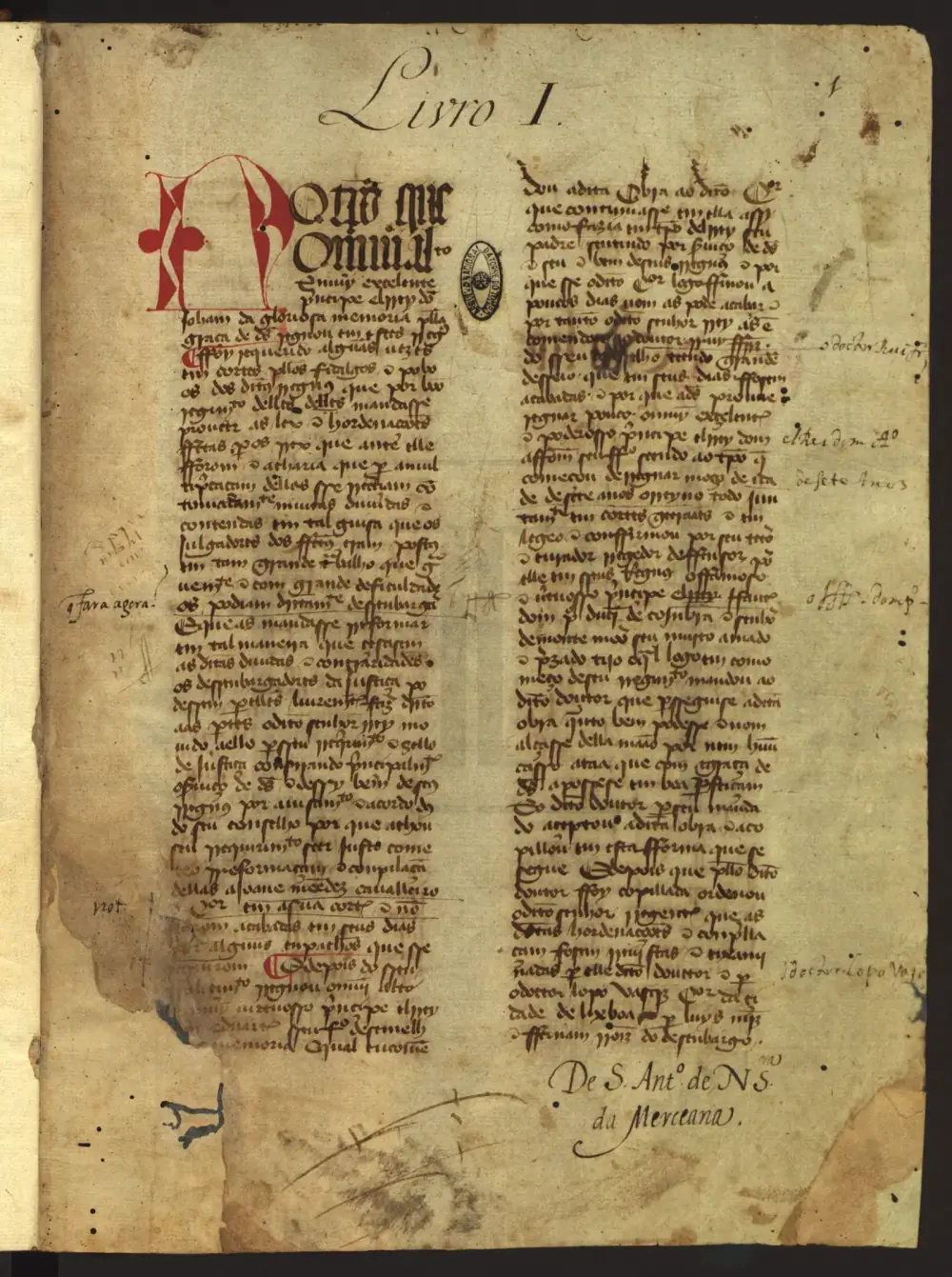
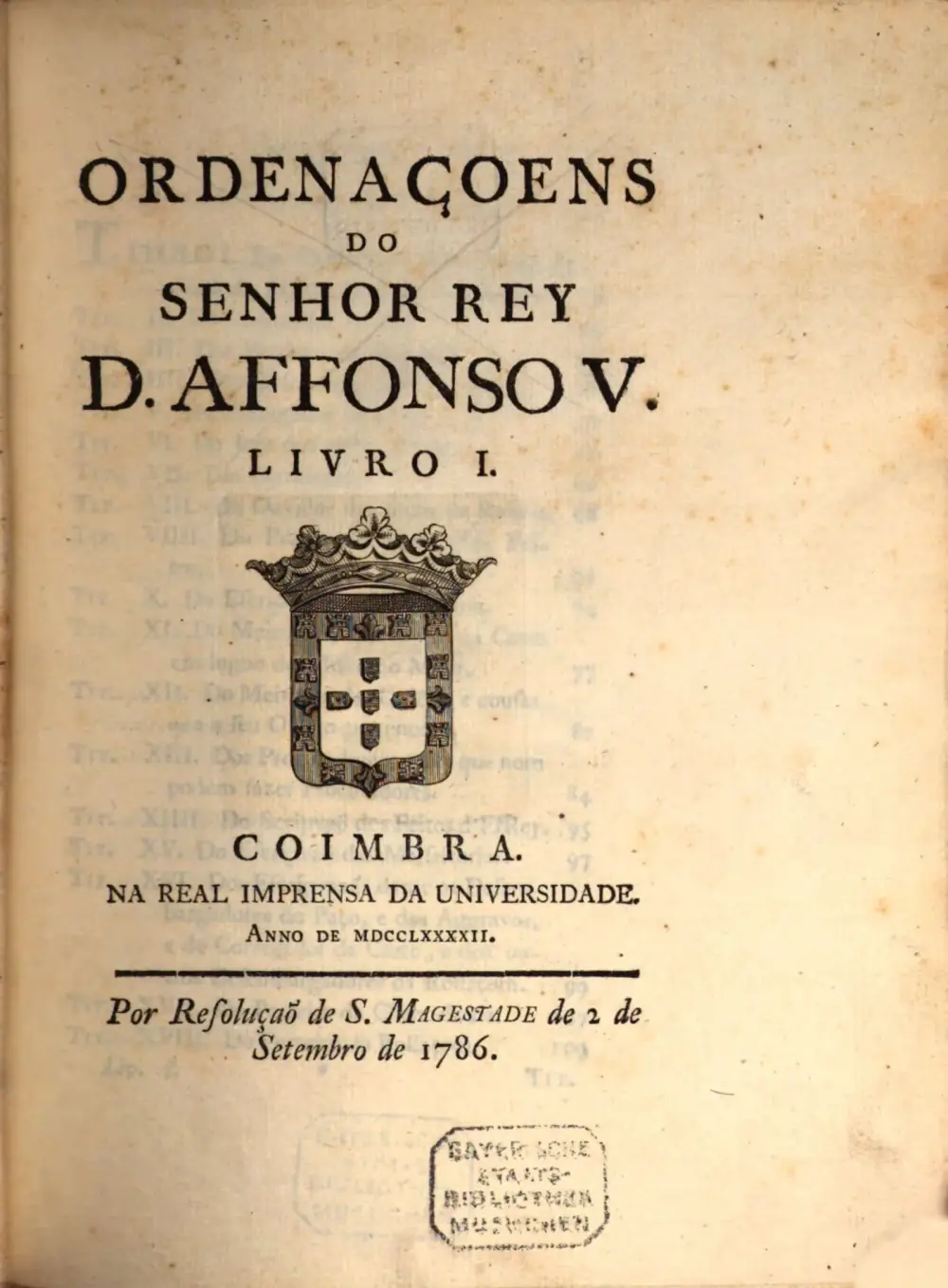
Both versions survive because of a later law book. João I had ordered the kingdom's laws to be gathered into one compilation; the work went on under his son Duarte and the regent Pedro and was finished in July 1446 at Arruda, in the name of the young Afonso V. These Ordenações Afonsinas copy older laws, not always in full, and add a line approving or changing them. After title 66 the compilers wrote: having seen the said law, we order that it be kept as it contains.
Last of the three kingdoms
Portugal's neighbours had moved first. In Catalonia the Era gave way early to the regnal years of the Frankish kings and survived only in some solemn documents; in 1180 the Council of Tarragona ordered dating by the year of the Incarnation. In Aragon the Era ran beside the year of the Incarnation until about 1350, when Pedro IV imposed the year of the Nativity and also banned counting days by Kalends, Nones and Ides.
Castile followed at the Cortes of Segovia in 1383. Its records show the switch: the Cortes of Soria in 1380 are dated by the Era, those of Valladolid in December 1385 by the year of the Nativity. The editors of the Castilian Cortes found the Segovia law only in summary. When the Cortes met there again in 1386, the king still referred to the 1383 ordinance by the Era, though the surviving copies leave its year incomplete.
1383 was also the year Castile's king laid claim to Portugal. Juan I of Castile had married Beatriz, the daughter of Fernando I of Portugal, and when Fernando died in October 1383 he claimed the Portuguese throne through her. In the Segovia ordinance of 1386 he was still styled king of Portugal. Portugal held to the old count for 39 more years.
Neither text of the 1422 order says why the king acted then, and the sources used here do not record a reason. Ribeiro noted only that by 1422 the Era was already banned in Aragon and Castile.
1180
Catalonia
The Council of Tarragona orders dating by the year of the Incarnation; the Era had long been rare in Catalan documents.
c. 1350
Aragon
Pedro IV replaces the Era with the year of the Nativity.
1383
Castile and León
The Cortes of Segovia order the year of the Nativity.
1422
Portugal
João I's order is dated at Peral on 15 August and proclaimed in Lisbon on 22 August.
What changed, and what did not
After 1422 the year of the Nativity became the rule. Ribeiro found only one later document dated by the old Era, and a possible second, an abbot's tomb at Santo Tirso dated Era 1472, which is 1434. The word itself lived on: royal documents of Afonso V's reign could be dated simply era 1457 when they meant AD 1457, and some clerks wrote the era of the Nativity.
The old count also survived as a learned extra. Gomes Eanes de Zurara, the royal chronicler, finished his account of the capture of Ceuta at Silves in 1450 and dated it in a dozen reckonings at once, from the creation of the world to the reign of Afonso V.
“And this work was finished in the city of Silves, which is in the kingdom of the Algarve, on the twenty-fifth day of March, when the era of the world stood at five thousand two hundred and eleven Roman years … and the era of Caesar at one thousand four hundred and eighty-eight years, and the era of Our Lord Jesus Christ at one thousand four hundred and fifty years.”
Zurara's figures for Caesar and for Christ are exactly 38 years apart, and Ribeiro cited this colophon as proof of the rule. Twenty-eight years after the law, a royal chronicler still gave his readers the old count.
The new count came with a different New Year. Era years had begun on 1 January, but Portuguese documents dated by the Nativity started the year on 25 December, Christmas Day. Contracts spelled it out: a lease of 16 June 1479 set the first payment for the coming Christmas, on which the year 1480 would begin.
“The first payment will be made on Christmas Day now coming, on which the year of one thousand five hundred and fifty-two will be named.”
How historians convert Era dates
Subtracting 38 works for every day of the year, because both counts began the year on 1 January. Era years up to 38 fall before Christ: Era 1 is 38 BC.
Two traps follow the change. Between 25 and 31 December, a Portuguese date written by the year of the Nativity is a year ahead of ours. Ribeiro's example is a royal letter of 30 January 1444 confirming a deed of 27 December 1444: the deed belongs to December 1443 in modern reckoning. And every Portuguese date up to 4 October 1582 is in the Julian calendar.
Weekdays help to check. Many dating clauses name the day of the week, and a weekday that matches the converted Julian date is good evidence that the year has been read right. Lopes's Thursday 22 October, Era 1421, is a Thursday in 1383.
Ribeiro used the same test on a case from 1360. The prior and convent of Pedroso dated a power of attorney 24 December, Era 1398, and their proctor served notice on the Bishop of Porto on Sunday 27 December, year of the Nativity 1361. In 1360, 27 December was a Sunday; in 1361 it was a Monday. So both dates belong to the same week of 1360 in modern reckoning.
Why it still matters
Kings' deaths, battles, town charters and wills before 1422 were nearly all recorded by the Era, so every medieval Portuguese date in a modern book has passed through a subtraction of 38. An error of 38 years can move an event into the wrong reign, as Ribeiro warned.
The year count João I imposed is still the one Portugal uses. The calendar under it changed once more, in 1582, when Philip I adopted the Gregorian reform.
FAQs
What was the Era of Caesar?
A count of years used in the Iberian Peninsula that began in 38 BC, so its numbers ran 38 years ahead of the Christian count. It is also called the Hispanic or Spanish Era. Isidore of Seville linked it to a census of Augustus; its real origin is uncertain.
When did Portugal stop using the Era of Caesar?
In August 1422, under João I. His order to date documents by the year of Christ's birth was issued at Peral on 15 August and proclaimed in Lisbon on 22 August 1422, which was Era 1460.
How do you convert an Era date to a modern year?
Subtract 38 from the Era year: Era 1405 is 1367. Remember that Portuguese dates before October 1582 are Julian, and that after 1422 a year dated by the Nativity began on 25 December.
Was Portugal the last Iberian kingdom to drop the Era?
Of Aragon, Castile and Portugal, yes. Aragon had dropped it by about 1350 and Castile in 1383, so the Era was already banned in both when João I acted in 1422. The sources used here do not cover Navarre.
On the timeline
Open the timelineNearby moments from the age of discoveries (1415–1580).
Portuguese forces under King João I, accompanied by his sons including the young Prince Henry the Navigator, storm and capture the Moroccan city of Ceuta in a single day — the conquest that begins the Portuguese overseas empire.
At the request of King João I, the Pope appoints Prince Henry the Navigator administrator of the Order of Christ, the Portuguese successor to the Templars. The order's great wealth would help fund the voyages of exploration down the West African coast.
The end of the Era of Caesar
King João I's order that notaries date documents by the year of Christ's birth, not the Hispanic Era of Caesar (38 years ahead), is proclaimed in Lisbon. Aragon and Castile had already dropped the Era.
In Bruges, Philip the Good, Duke of Burgundy, founds the Order of the Golden Fleece during the celebrations of his marriage to Isabel of Portugal, daughter of King João I and Philippa of Lancaster, who would become a leading figure of Burgundian diplomacy.
The future King Afonso V is born in Sintra, son of Duarte, then heir to the throne. Left king at the age of six, he would earn the nickname 'o Africano' for his conquests in Morocco.
King Duarte I, known as 'the Eloquent' for his philosophical writings, dies at Tomar (the chronicler Rui de Pina's date; others give the 13th). His six-year-old son Afonso V succeeds him, with Queen Leonor named regent under his will.
Coming up in history
All long reads


15 sources
Archives, scholarship and reporting this article was checked against.
- 1
Ordenaçoens do Senhor Rey D. Affonso V, Livro IV (the Ordenações Afonsinas, book IV)Real Imprensa da Universidade, Coimbra, 1792 (digitised by Internet Archive)
- 2
- 3
- 4
Isidore of Seville, Etymologiae, book V, chapter 36 (De annis), Latin textThe Latin Library
- 5
Era hispànicaGran Enciclopèdia Catalana, enciclopedia.cat
- 6
- 7
Ordenações Afonsinas: evolução e distinção social das penas (Josefina Eira)Omni Tempore: Encontros da Primavera 2016, 2 (2017), pp. 41–66, Faculdade de Letras da Universidade do Porto
- 8
- 9
Dating documents: Julian and Gregorian calendarsManuscripts and Special Collections, University of Nottingham
- 10
Documento do Mês – Julho: Lei de adoção do calendário gregorianoArquivo Nacional Torre do Tombo, 1 July 2011
- 11
- 12
- 13
- 14
- 15
Imagens e figuras de um rei sonhador: representações do milagre de Ourique e do juramento de Afonso Henriques no século XVII (Luís Filipe Silvério Lima)História (São Paulo), vol. 26, no. 2 (2007), pp. 311-339 (Redalyc)
Image credits
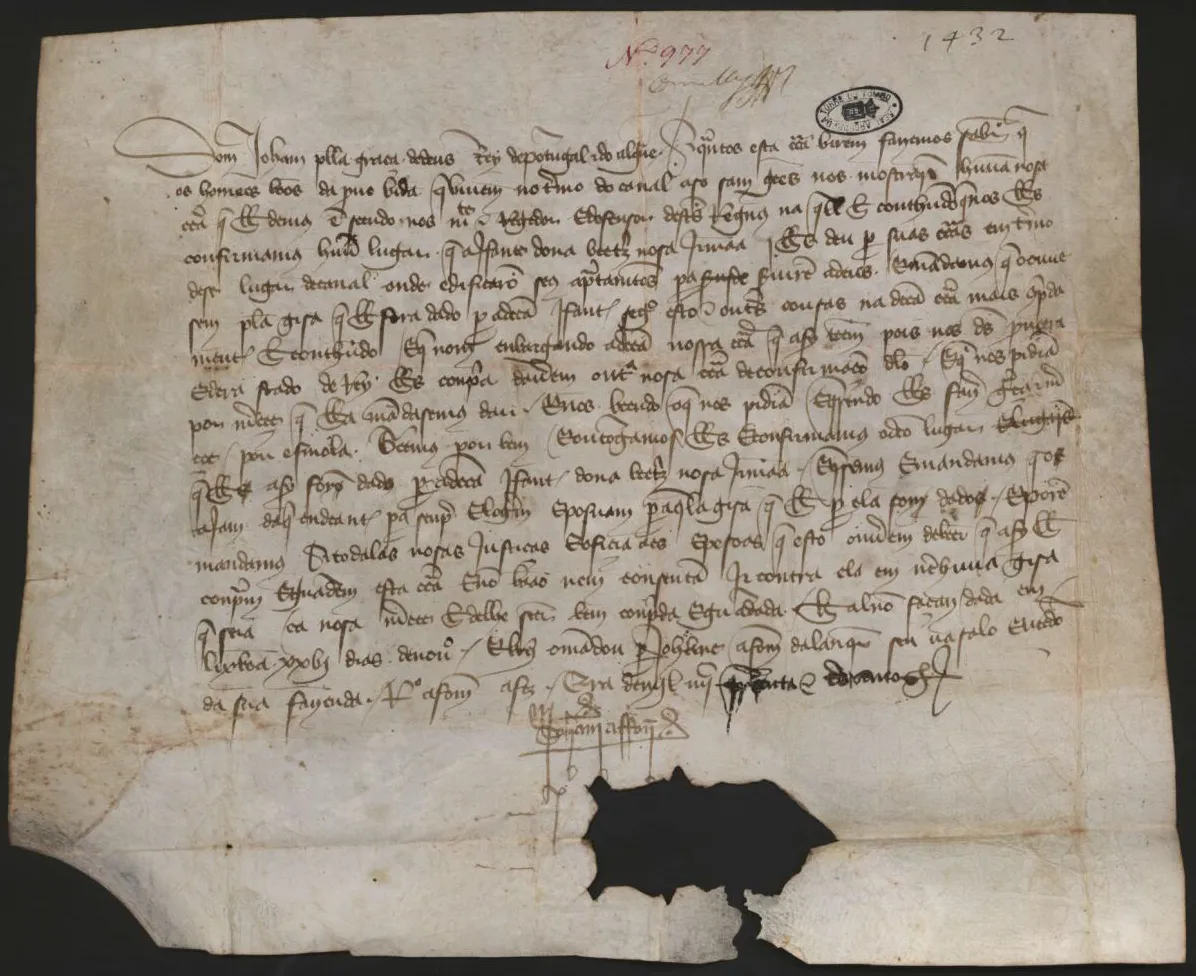
- A letter from the royal chancery of João I, written by the scribe Rodrigo Afonso in 1394. A later hand has noted 1432 at top right: the year in the Era of Caesar, which royal documents used until 1422. Rodrigo Afonso (fl. 1394), Public domain, via Wikimedia Commons.
- Isidore of Seville, painted by Bartolomé Esteban Murillo in 1655 for Seville Cathedral, with his Etymologiae among the books beside him. Isidore linked the Era to a census of Augustus. Bartolomé Esteban Murillo, Public domain, via Wikimedia Commons.
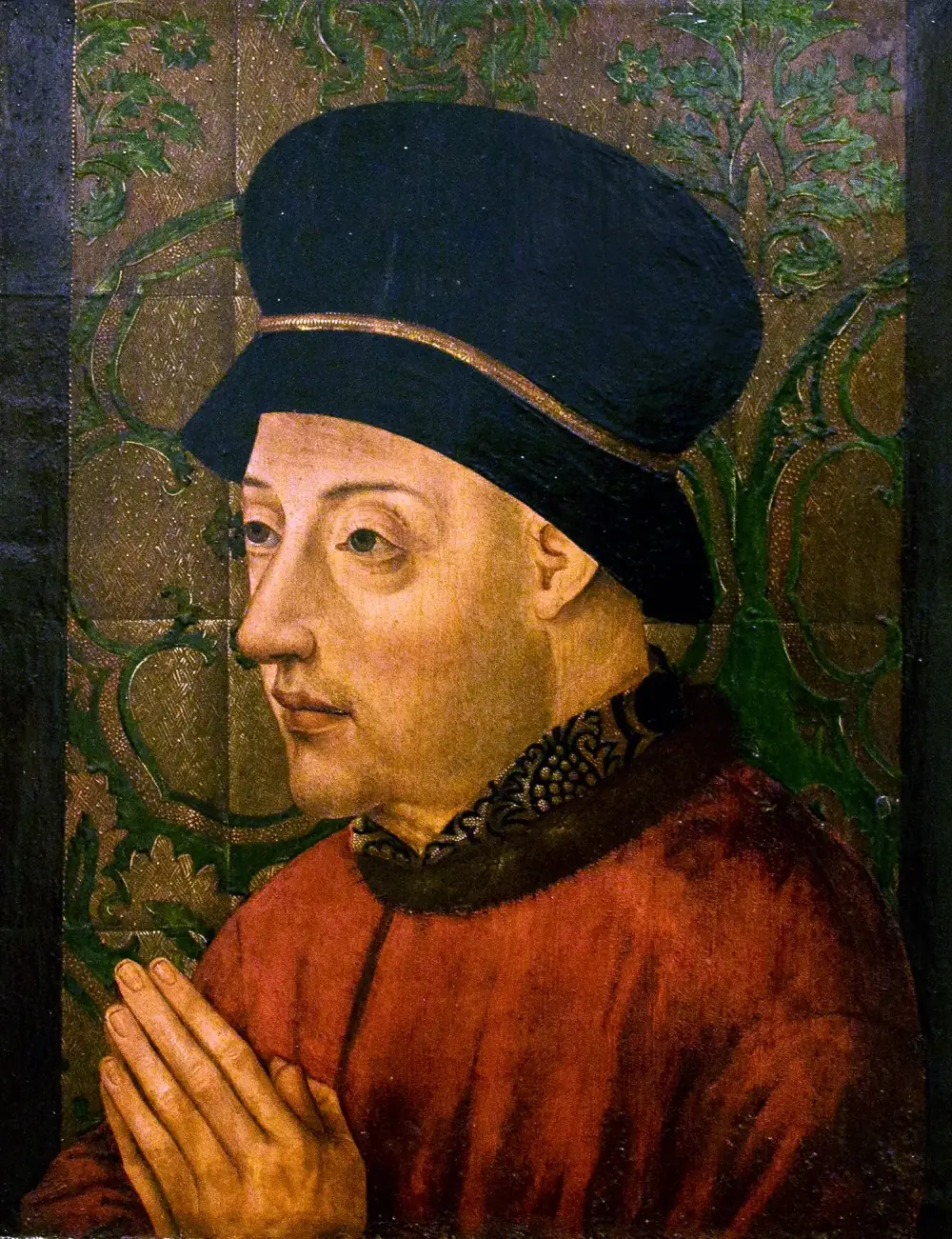
- João I, king from 1385 to 1433, in a fifteenth-century portrait, probably painted after his death. Museu Nacional de Arte Antiga, Lisbon. anonymous, Public domain, via Wikimedia Commons.
- The opening of book I of the Ordenações Afonsinas in a fifteenth-century manuscript at the Torre do Tombo (Núcleo Antigo, códice 4). The preamble tells how João I's law code was begun. Unknown author, CC BY-SA 4.0, via Wikimedia Commons.
- Title page of book I of the Ordenações Afonsinas as printed by the university press at Coimbra in 1792. Book IV of this edition carries both texts of the 1422 order. Unknown author, Public domain, via Wikimedia Commons.