

The conquest of Ceuta, 1415: Portugal goes overseas
After four years of secret planning, a Portuguese fleet crossed to Africa with the king and four of his sons aboard. The city fell before nightfall, and Portugal stayed in Morocco for the next three and a half centuries.
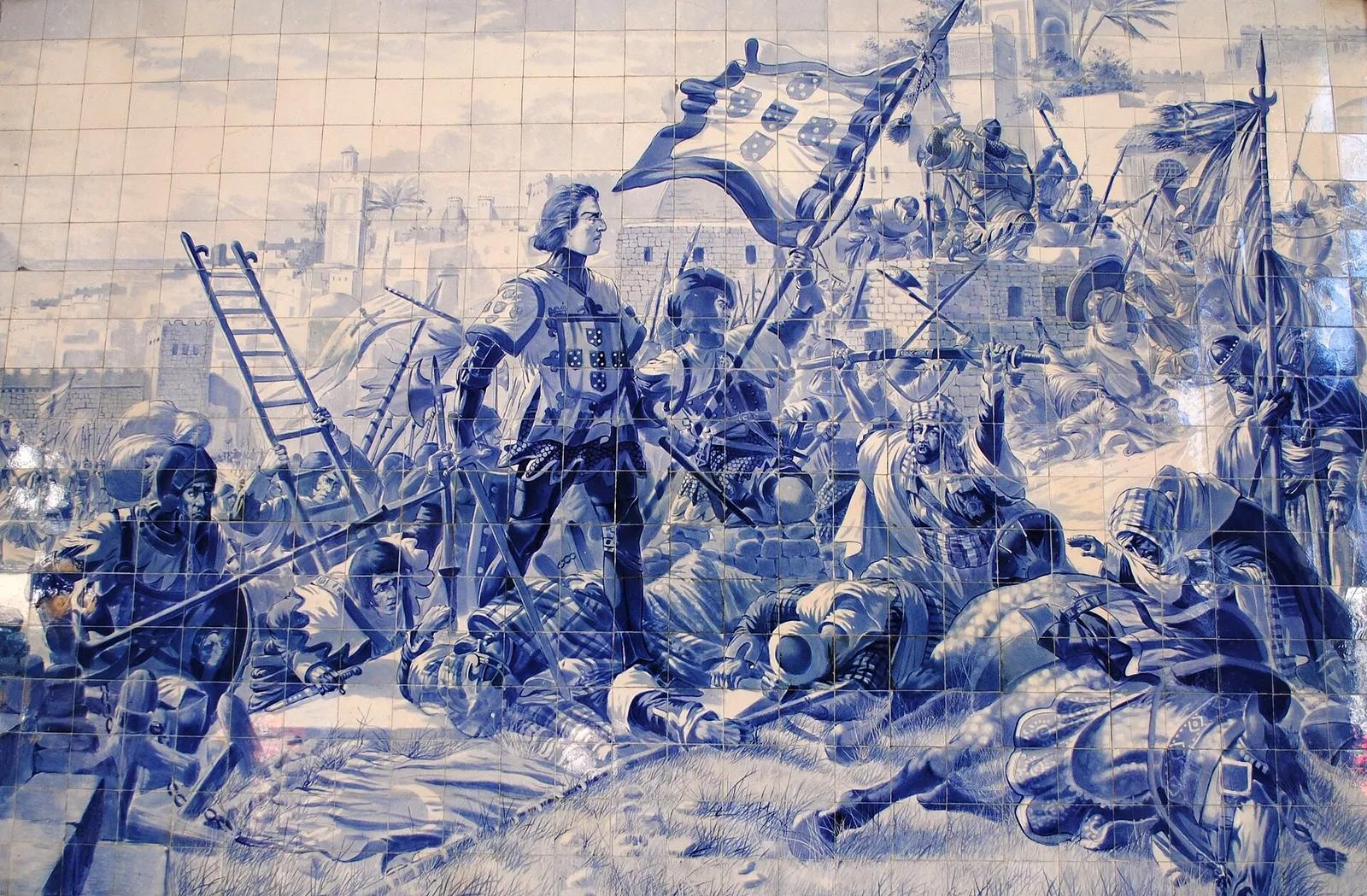
At a glance
- On 21 August 1415 a Portuguese army led by King João I stormed Ceuta, a Muslim port on the African shore of the Strait of Gibraltar, and held the whole city by about half past seven that evening.
- The king had planned it for about four years, since peace with Castile in 1411, and hid the target behind a mission to Sicily and a sham quarrel with the Duke of Holland.
- Estimates of the force run from a few thousand men in a few dozen ships to more than 30,000 in 270; the historian João Gouveia Monteiro puts it at 18,000 to 20,000 in about 200 ships.
- Queen Philippa died of plague on 18 July, a week before the fleet sailed. On Sunday 25 August her sons Duarte, Pedro and Henrique were knighted in Ceuta's main mosque, newly consecrated as a church.
- João I decided to keep the city with a garrison of 2,500 to 2,700 men. It stayed Portuguese until 1640, when it refused the new king João IV, and Spain's title was confirmed in 1668.
Boats before the signal
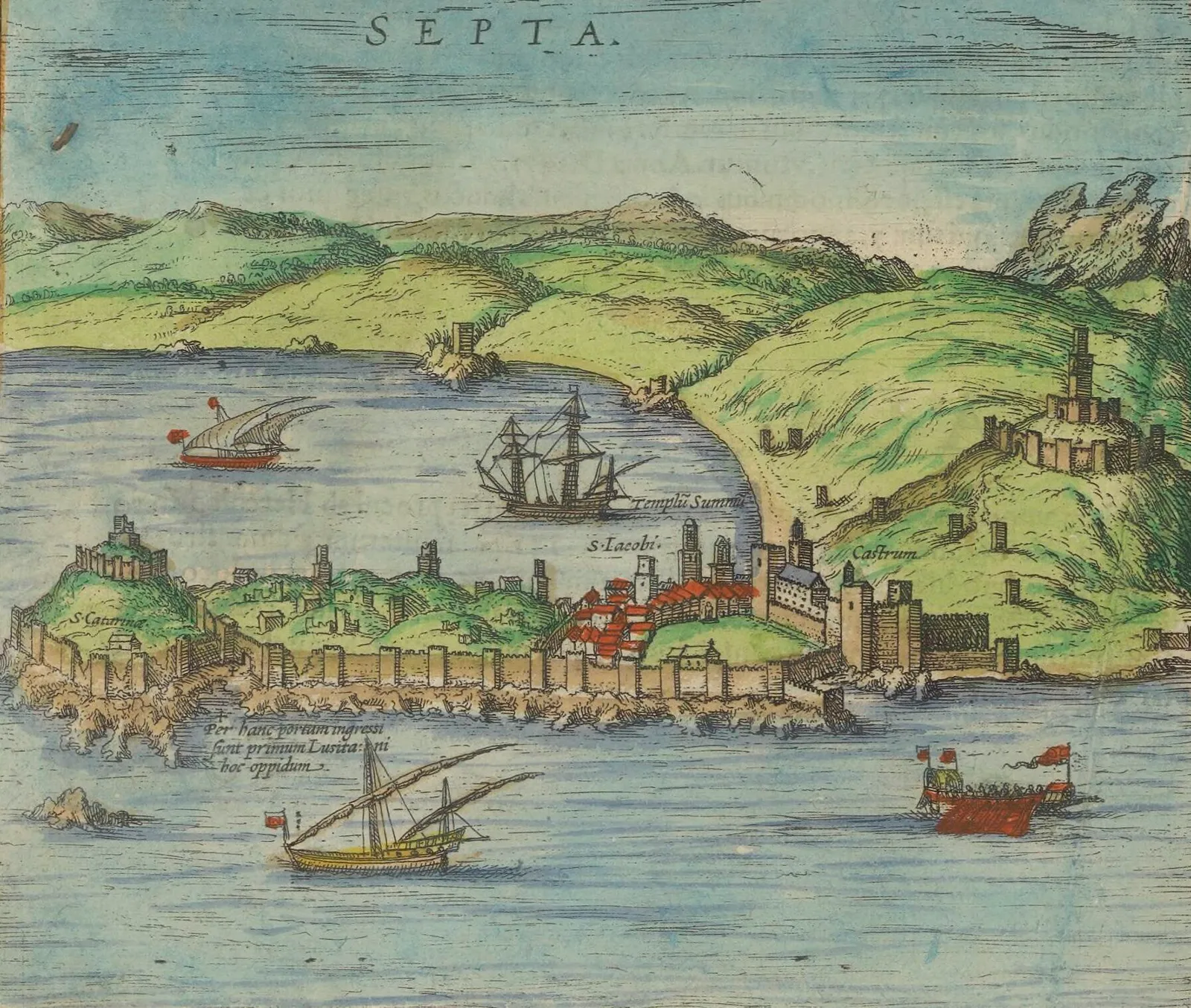
At dawn on Wednesday 21 August 1415 the ships off Ceuta were full of men buckling on armour. The chronicler Gomes Eanes de Zurara describes them testing the straps of their doublets, swinging axes and drawing their swords to see whether the edges would bite. Ahead of them lay the beach of Santo Amaro, on the north-eastern side of the narrow peninsula on which the city stood, and on it the townsmen were waiting.
The plan was for King João I to feint towards the bay on the far side of the city, drawing the defenders away, and then give a signal for the landing. The signal was slow to come. The sun was getting hot, and the men in the ships could see the Moors on the shore making their gestures of defiance.
João Fogaça, steward to the Count of Barcelos, the king's illegitimate eldest son, lost patience and ordered his boat straight for the beach.
The first man to jump ashore was Rui Gonçalves, later a commander of the Order of Santiago.
Prince Henrique, the king's third son by his queen, climbed into a passing boat and followed with his standard-bearer, and his elder brother Duarte, the heir to the throne, left his galley in the king's half of the fleet to join them. Soon about 150 Portuguese were fighting on the sand.
By nightfall the city was theirs.
Christian fleets had attacked North African ports before, the Sicilian Normans in the twelfth century and Castile in 1399, but for loot, to stop piracy or to hold a harbour for a time. Portugal kept Ceuta for more than two centuries.
A new dynasty with nothing to fight
João I was the illegitimate son of King Pedro I. He had taken the throne in the crisis of 1383 to 1385 and kept it by beating Castile at Aljubarrota in August 1385. War with Castile dragged on for another quarter of a century, until the Treaty of Ayllón on 31 October 1411.
Peace brought its own problems. The nobles who had lived off the Castilian wars for honours, grants and loot now had nothing to do, younger sons above all, and the new Avis dynasty still needed to prove itself in the eyes of Christendom. A war against Islam offered both. Granada, the last Muslim kingdom in Spain, was the obvious target, but Castile counted it as its own conquest and would not have Portugal there.
Why Ceuta? The chronicler's answer and the historians'
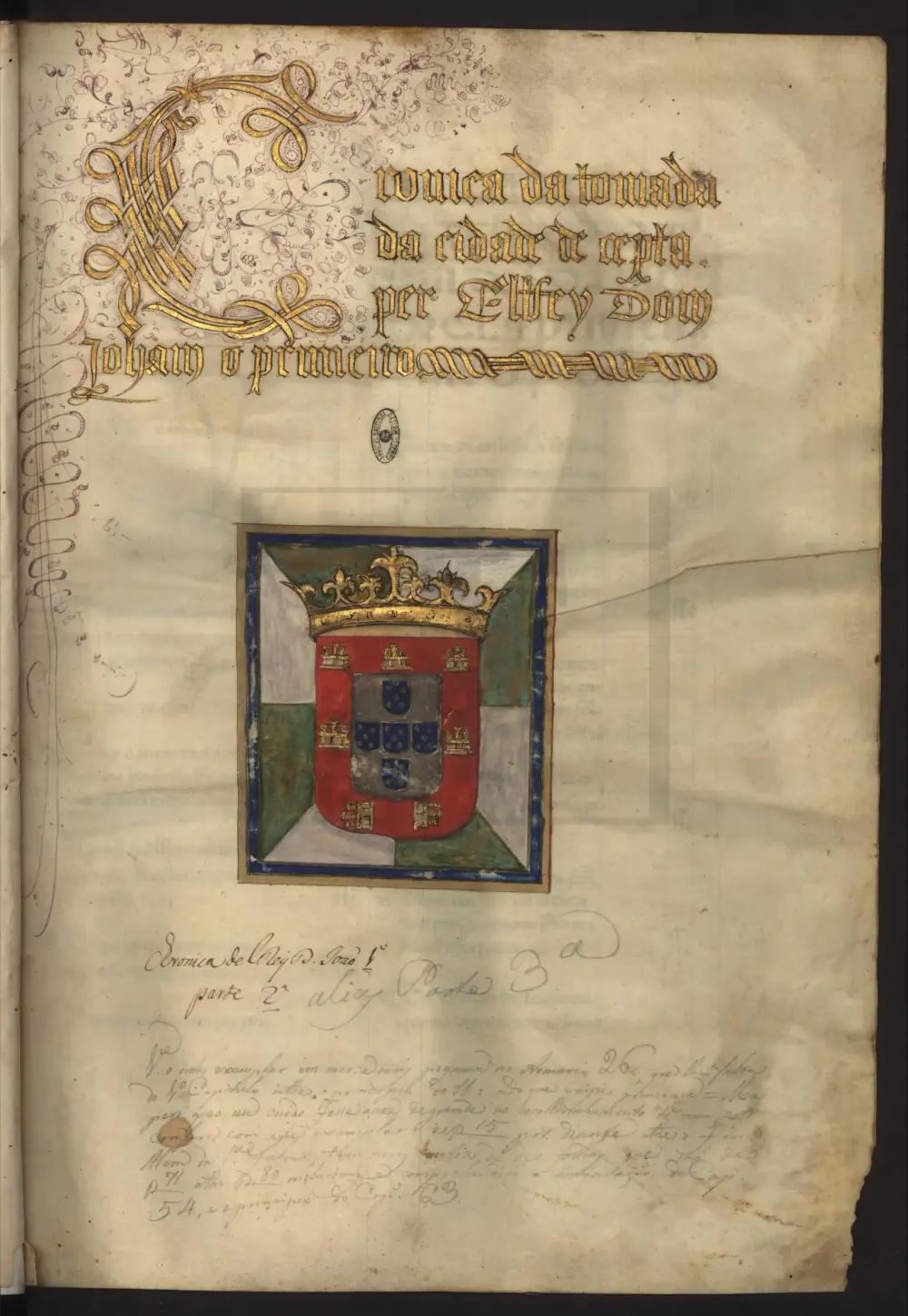
Almost everything known about the campaign comes from Zurara's Crónica da tomada de Ceuta, written around 1449 and 1450 for João's grandson, Afonso V. It praises the military nobility and above all Prince Henrique, but Zurara used documents of the time and was well informed. The main other witness is a set of letters sent to King Fernando I of Aragon in 1415 by a secret agent in Lisbon.
Zurara's story starts with knighthood. Once peace was signed, the king planned a year of royal festivities, with jousts, tournaments and feasts for knights from all of Christendom, at the end of which he would knight his three eldest sons by Philippa of Lancaster, Duarte, Pedro and Henrique. The princes thought this beneath them. Merchants' sons could be knighted at a feast, they said; princes should earn it in battle.
It was João Afonso de Alenquer, the king's comptroller of finances, who named the target. A servant he had sent to ransom captives had told him Ceuta was a great, rich and beautiful city, ringed by sea except for a small strip towards the land. The king laughed the idea off at first. The princes kept at him, arguing that the conquest would serve God, bring him honour won by choice rather than in defence of the kingdom, and let him knight them properly. João asked his learned men whether the war would serve God; they said it would.
| Explanation | Associated with | What it stresses |
|---|---|---|
| Chivalry and the service of God | Gomes Eanes de Zurara, c. 1450 | The princes' wish to be knighted in war; the king's honour; a holy war |
| Trade and grain | António Sérgio; Vitorino Magalhães Godinho | Lisbon merchants wanting Ceuta's caravan trade and Moroccan wheat, with João Afonso de Alenquer as their spokesman |
| Nobles and a new dynasty | The Encyclopaedia of Portuguese Expansion; Luís Filipe Thomaz and Peter Russell on João Afonso's role | Idle nobles after the 1411 peace; the Avis dynasty's need for prestige; Granada closed off by Castile |
| Reconquest | Much recent writing, including A. R. Disney's | The Iberian war against Islam carried across the Strait; Portuguese kings held papal crusade bulls from 1341 |
Thomaz and Russell doubt that João Afonso spoke for the merchants and see him instead as a nobleman pressing nobles' interests. Most historians accept several motives at once; the table separates them for clarity.
Modern historians still argue over the mix. Ceuta also commanded the shipping lane between the Mediterranean and the Atlantic and could serve as a bridgehead into the kingdom of Fez. The Encyclopaedia of Portuguese Expansion concludes that the venture grew out of political, economic, social and religious interests together, worked out over years within the royal family.
Four years of secrets
João I kept the plan to his sons and a handful of officials. He did not even summon the Cortes, the assembly that normally voted extra taxes for a war. In 1412, by Monteiro's dating, he sent the prior of the Hospitallers, Álvaro Gonçalves Camelo, and the fleet captain, Afonso Furtado, on an embassy to Sicily to propose a marriage between Prince Pedro and the Queen of Sicily. Their real orders were to stop at Ceuta and study its walls and anchorages.
Back at Sintra, the captain answered the king's questions with talk of prophecies. The prior refused to report at all until he was given some odd supplies.
“Sir, of anything I saw or found I will give you no answer until you have brought me four things: two loads of sand, a ball of ribbon, half an alqueire of beans and a bowl.”
With them he built a model of Ceuta in the king's rooms. From the bowl and the sand he shaped the hill of Almina and the city's heights and hollows; the ribbon marked the line of the walls and the beans the houses.
To explain the build-up, João staged a quarrel with the “Duke of Holland”, probably the ruler of Zeeland, over attacks on Portuguese merchant ships in northern waters, and the duke played along by roughly dismissing the Portuguese envoy. The neighbouring kingdoms were alarmed all the same. Castile and Aragon sent envoys and spies to Lisbon, and from April 1415 Rui Díaz de Vega reported to Fernando I of Aragon in detail on ships, crews, pay and stores.
Paying for it without the Cortes took ingenuity: the crown minted debased coin night and day, made the bishops lend it silver and taxed the Muslim and Jewish communities heavily. Jorge de Faro, an economic historian, put the total cost at 280,000 dobras.
For eighteen months the kingdom, above all Lisbon and Porto, worked on the fleet. Butchers salted beef into casks, fishermen and their wives gutted and salted hake, and carpenters fitted cannon to their carriages. The ships also carried the parts of a wooden siege tower 28 fathoms high, two stone-throwing engines and scaling ladders, none of which was needed.
A queen's death and a fleet of uncertain size
In July plague broke out around Lisbon. Queen Philippa fell ill and died at the monastery of Odivelas on Thursday 18 July (the Encyclopaedia of Portuguese Expansion gives 19 July), having given each of her three eldest sons a sword to be knighted with. The king cut the mourning short. On 24 July his galley left Restelo and anchored a little downriver, and on 25 July, the feast of Santiago, the fleet sailed for the open sea. Her life and death are told in Lisboeta's article on her birth in 1360.
Almost every great figure of the kingdom went: the king, aged 58, Duarte, Pedro and Henrique, the Count of Barcelos, the Constable Nuno Álvares Pereira, the marshal, the admiral, the masters of the orders of Christ and Santiago. Only the Master of Avis stayed behind to guard the kingdom and the two youngest princes, João and Fernando. Monteiro thinks it almost certain that an English captain based in Dartmouth, Edmund Arnald, came too, with four or five merchant ships carrying many archers.
Zurara lists the captains but gives no total, and the figures that survive for the size of the expedition run from a few thousand men to more than 30,000.
| Source | When | Ships | Men |
|---|---|---|---|
| Rui Díaz de Vega, Aragonese agent in Lisbon | Letter of 23 April 1415 | No total in Monteiro's summary | 18,600 to 19,000 fighting men |
| João Gomes da Silva, royal standard-bearer, to the Archbishop of Santiago | As the fleet left Restelo, July 1415 | 270 sail | 32,000 to 33,500: 7,000 to 7,500 men-at-arms, 5,000 crossbowmen, 20,000 to 21,000 foot |
| A. R. Disney | 2009 | Over 200 transports | Perhaps about 20,000 |
| José Luís Ferreira, Encyclopaedia of Portuguese Expansion | 2009 | A few dozen | A few thousand |
| João Gouveia Monteiro | 2017 | About 200 | 18,000 to 20,000, of whom perhaps 10 to 15 per cent were not fighters |
Gomes da Silva's three categories add up to his totals. Monteiro reckons that the kingdom, of about 1.5 million people, could field at most some 20,000 men at the time, and judges that 1415 came close to that ceiling.
At Lagos, in the Algarve, a friar, João Xira, preached a crusade sermon on 28 July and revealed the target. Many of the men did not believe him.
“The whole world already knows he is going to Sicily, and now he wants us to believe he is going against the city of Ceuta. This one is like the other they told us a year ago, that he was going against the Duke of Holland.”
The weather nearly ended it. Becalmed off Faro until Wednesday 7 August, the fleet reached the bay of Algeciras on 10 August. A first move on Ceuta on 12 August fell apart when fog and currents twice swept the big sailing ships east towards Málaga, and the fleet did not regroup at Algeciras until 16 August. Ceuta's governor, Salah ben Salah, had called in armed men from the places round about; when the ships withdrew he sent many of them home.
At a council at Punta del Carnero on 19 and 20 August, some captains urged going home and others proposed Gibraltar instead. The king refused both and fixed the assault for the next day.
One day in August
Henrique's ships, the ones he had fitted out in Porto, were to anchor off the Almina beach while the king's galleys made for the southern bay. Once Fogaça's boat had broken ranks the plan fell apart. The defenders were pushed back from the beach to the Almina gate, and the Portuguese chased them through it before it could be shut. By late morning about 300 Christians were inside, and soon nearly 500 were in the suburb with the princes.
The rest of the fleet landed in its own time, and the fighting turned into a long afternoon of street battles. Monteiro calls it a kind of medieval and Moroccan Stalingrad, with the attackers split into three columns and racing for the high ground to escape the arrows, spears and stones thrown down by the defenders.
Dawn
Armour on
Men on the ships off the Almina test their gear and wait for the king's signal.
Morning
Landing without orders
João Fogaça's boat heads for the beach; Rui Gonçalves jumps ashore first, followed by Henrique and then Duarte. About 150 men are soon fighting on the sand.
Late morning
Through the Almina gate
About 300 Portuguese follow the retreating defenders inside; nearly 500 are soon in the suburb.
Afternoon
Street fighting
The king's men come ashore and fight through the streets in three columns. Salah ben Salah leaves the city.
Dusk
Banners raised
The castle is found empty but for two men, and Lisbon's banner goes up on its towers. Duarte's banner is raised on the Tower of Fez, at the western end of the city.
After 7.30 p.m.
City taken
Zurara writes that the city was entirely free of Moors by half past seven in the evening.
Resistance was weak. Salah ben Salah slipped away early, help from Fez never came, and the town's population may already have thinned in the days before, once the size of the fleet was known. When the Portuguese reached the castle they found only a Biscayan and a Genoese. The one hard fight was for the Tower of Fez, where Pedro de Meneses, Duarte's standard-bearer, raised the prince's banner as the light failed.
Then came the sack. Zurara writes that the first men into the merchants' shops on the main street destroyed many valuable goods in their rush, and later regretted it.
“As they came in through the doors, without any restraint or care, they struck the sacks of spices with their axes and tore them all open, so that everything was thrown on the ground.”
The killing is harder to measure. Zurara says the dead lay in every street, thickest near the castle where Henrique had fought, and that women and small children were killed in the houses towards nightfall. He would not give a Muslim death toll: some said 2,000, others 5,000, others 10,000. Of the Christians he was sure that eight died that day, among them Vasco Fernandes de Ataíde, governor of Henrique's household, though the breakdown he gives, five at one gate and two inside the city, comes to seven.
Knights in a mosque
On Friday 23 August the king ordered a solemn mass in the main mosque for the Sunday. His chaplains spent Saturday shovelling out layers of rotten prayer mats and brought in a long board for the altar. Henrique remembered two bells that Moorish raiders had once carried off from Lagos; they were found in the city and hung in time for the service.
On Sunday 25 August the clergy blessed salt and water, hung the walls with cloth, sprinkled them and consecrated the building as a church, and more than 200 trumpets sounded at the end of the Te Deum. After mass the three princes came back in full armour, wearing the swords their mother had given them. Duarte knelt first, drew his sword, kissed it and handed it to his father, who knighted him with it; Pedro and Henrique followed. Each then knighted men of his own following. The king, Zurara says, knighted so many that he gave up from weariness.
A captain with something to prove
One man wanted Ceuta badly. Pedro de Meneses, the standard-bearer who had raised Duarte's banner on the Tower of Fez, came from a family that had backed Castile in the crisis of 1383 and lost everything. Ceuta was his way back.
First the council argued over whether to hold a city surrounded by enemies or to sack it and go. The king insisted on keeping it, and from then on styled himself Lord of Ceuta as well as King of Portugal and the Algarve. Finding a captain was harder. The Constable and the marshal, Gonçalo Vasques Coutinho, pleaded their age, and Martim Afonso de Melo said his men would not stay.
With the support of Duarte and of Lopo Dias de Sousa, master of the Order of Christ, Meneses got the post: captain, with near-royal powers over justice, land grants and a fifth of all plunder.
Zurara counts 2,700 men left with him, plus two galleys to watch the Strait; modern accounts usually give 2,500. On Monday 2 September the fleet was ready to sail home. At Tavira, in the Algarve, the king made Pedro Duke of Coimbra and Henrique Duke of Viseu and Lord of Covilhã.
What Ceuta started
Ceuta cost more than it earned. Most of the Saharan trade left the city after the conquest, and everything from wheat to soldiers had to come from Portugal or be bought in Castile and Sicily. The garrison lived inside the walls and learned a new kind of war of watchmen, raids and ambushes, and Meneses turned piracy into his main income. In 1418 and 1419 (1419 and 1420 in Disney's account) the kings of Fez and Granada besieged the city, and Henrique, named its superintendent and defender in 1416, sailed with a relief fleet.
The expansion that followed went in two directions. Portuguese ships explored Madeira and Porto Santo in 1418 and 1419, and in 1434 one finally sailed past Cape Bojador, on the Saharan coast; much of this was organised from Henrique's household. In Morocco the next attempt, on Tangier in 1437, ended in disaster: Prince Fernando, too young to fight in 1415, was left as a hostage for the return of Ceuta and died a prisoner in Fez in 1443. His story is told in Lisboeta's article on his death.
Ceuta only became secure after Alcácer Ceguer was taken in 1458 and Arzila and Tangier in 1471. Lisbon had a Casa de Ceuta, a house to supply and administer the city, before it had the Casa da Índia, and the route to Ceuta trained a generation of seamen. Disney sums it up: an operation over in under two weeks started a commitment in Morocco that lasted, in one form or another, for 350 years.
Portuguese until 1640, Spanish since 1668
From 1580 to 1640 Portugal and Spain shared a king, and Ceuta kept a Portuguese administration. When Portugal broke away in December 1640 and acclaimed the Duke of Braganza as João IV, Ceuta refused to follow him and stayed with Philip IV. The Treaty of Lisbon of 1668, which ended the war of restoration, recognised the city as Spanish.
It is now an autonomous city of Spain, under a statute of 13 March 1995. Its flag, defined in that statute as the traditional one of four white and four black triangles, matches the black and white flag of Lisbon, with the Portuguese royal shield at its centre.
The 600th anniversary in 2015 was handled with care. Officials on both sides avoided the words conquest and capture, speaking instead of “1415” or “the arrival of the Kingdom of Portugal”. Ceuta's mayor, Juan Jesús Vivas, said nobody had tried to celebrate it as a conquest or a battle, but called it a very important leap in the city's history. Portugal sent the sail training ship Creoula and its under-19 football team.
FAQs
When was Ceuta conquered by Portugal?
On Wednesday 21 August 1415. Zurara, who even records the positions of the sun and moon that day, says the city was entirely in Portuguese hands soon after half past seven that evening. One modern survey gives 22 August.
Why did Portugal attack Ceuta?
Zurara says the princes wanted to be knighted in a real war and that the city was suggested by the royal comptroller, João Afonso de Alenquer. Modern historians add the need to occupy the nobility after peace with Castile in 1411, the new dynasty's prestige, crusading tradition, Ceuta's trade and its position on the Strait. They still disagree about which mattered most.
How many soldiers and ships took part?
There is no reliable count. Contemporary figures run from 18,600 to 19,000 fighting men (an Aragonese agent) to more than 32,000 in 270 sail (the royal standard-bearer). Modern estimates range from a few thousand in a few dozen ships to about 20,000 in about 200.
Was Henry the Navigator at Ceuta?
Yes. Prince Henrique, the third son of João I and Philippa of Lancaster, was among the first ashore and fought in the streets; he was knighted by his father in the converted mosque on 25 August and made Duke of Viseu on the way home.
Why is Ceuta Spanish and not Portuguese?
Ceuta stayed loyal to Philip IV of Spain when Portugal restored its independence in 1640, and the Treaty of Lisbon of 1668 left it to Spain. It is now an autonomous Spanish city, though its flag and arms still go back to its Portuguese years.
On the timeline
Open the timelineNearby moments from the age of discoveries (1415–1580).
The conquest of Ceuta
Portuguese forces under King João I, accompanied by his sons including the young Prince Henry the Navigator, storm and capture the Moroccan city of Ceuta in a single day — the conquest that begins the Portuguese overseas empire.
At the request of King João I, the Pope appoints Prince Henry the Navigator administrator of the Order of Christ, the Portuguese successor to the Templars. The order's great wealth would help fund the voyages of exploration down the West African coast.
King João I's order that notaries date documents by the year of Christ's birth, not the Hispanic Era of Caesar (38 years ahead), is proclaimed in Lisbon. Aragon and Castile had already dropped the Era.
In Bruges, Philip the Good, Duke of Burgundy, founds the Order of the Golden Fleece during the celebrations of his marriage to Isabel of Portugal, daughter of King João I and Philippa of Lancaster, who would become a leading figure of Burgundian diplomacy.
Coming up in history
All long reads
12 sources
Archives, scholarship and reporting this article was checked against.
- 1
Crónica da tomada de Ceuta por el Rei D. João I (Gomes Eanes de Zurara), ed. Francisco Maria Esteves PereiraAcademia das Sciencias de Lisboa, 1915 (digitised by Internet Archive)
- 2
A campanha militar de Ceuta (1415) revisitada (João Gouveia Monteiro)Revista de História da Sociedade e da Cultura, 17 (2017), pp. 63-78, Imprensa da Universidade de Coimbra
- 3
A History of Portugal and the Portuguese Empire, vol. 2: The Portuguese Empire, chapter 15, “North Africa” (A. R. Disney)Cambridge University Press, 2009 (publisher's excerpt)
- 4
The Conquest of Ceuta (José Luís Ferreira)Encyclopaedia of Portuguese Expansion (EVE), CHAM, NOVA FCSH, 2009
- 5
- 6
- 7
- 8
Ley Orgánica 1/1995, de 13 de marzo, de Estatuto de Autonomía de CeutaBoletín Oficial del Estado (Spain)
- 9Veleiro Creoula e particular da seleção sub-19 nas comemorações da conquista de CeutaObservador (Lusa), 21 August 2015
- 10Comemorações dos 600 anos da conquista de Ceuta geram críticasObservador (Lusa), 21 August 2015
- 11
Visita ao Mosteiro da BatalhaMosteiro da Batalha (Museus e Monumentos de Portugal)
- 12
Image credits
- Prince Henrique at the taking of Ceuta, as imagined some five centuries later by Jorge Colaço (1864–1942) in an azulejo panel at São Bento railway station in Porto. Photographed in 2014. HombreDHojalata, CC BY-SA 4.0, via Wikimedia Commons.
- Ceuta (Septa) in Braun and Hogenberg's town atlas, Cologne, 1572, when it was still Portuguese. The Latin note on the left marks the gate “through which the Portuguese first entered this town”. Braun, Georg (1541-1622); Hogenberg, Frans (1539?-1590?), Public domain, via Wikimedia Commons.
- Title page of a manuscript of Zurara's Crónica da tomada de Ceuta in the Torre do Tombo national archive (Crónicas no. 9), copied after 1450 and perhaps as late as the early sixteenth century. Zurara finished the chronicle in 1450. Gomes Eanes de Zurara, CC BY-SA 4.0, via Wikimedia Commons.
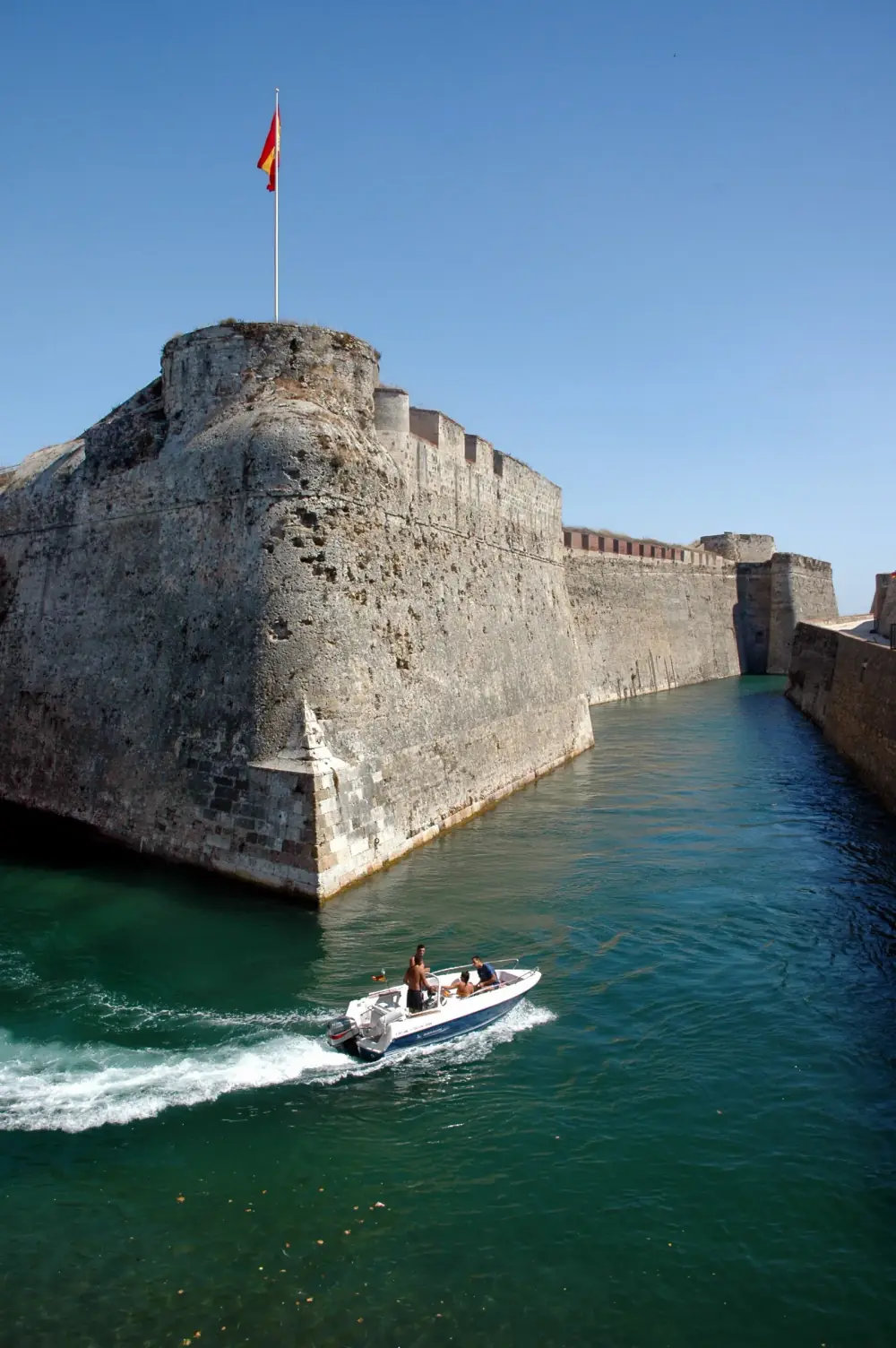
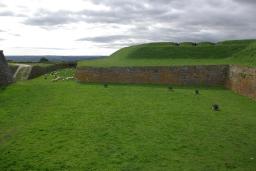
- The Royal Walls of Ceuta and the sea-water moat of San Felipe, on the landward side of the old city, photographed in 2004. Jim Gordon, CC BY 2.0, via Wikimedia Commons.