

Treaty of London, 1890: the Africa deal Lisbon refused
Seven months after the British Ultimatum, Portugal's envoy in London signed a convention that drew new lines across Africa. Lisbon shut its shops, the government fell, and the treaty was never put to a vote.
At a glance
- On 20 August 1890 Lord Salisbury and the Portuguese envoy Barjona de Freitas signed in London a 17-article convention dividing British and Portuguese spheres of influence between Angola and Mozambique.
- It gave Britain the Shire Highlands, Mashonaland and the lands west of Lake Nyasa, left Portugal the Manica plateau, the south bank of the Zambezi and Zumbo, and bound Portugal to free navigation, low transit dues and a railway from Pungwe Bay.
- When its terms reached Lisbon on 22 August, protests revived. On 15 September, the day Parliament met, the shops shut; police charges that week killed an 18-year-old worker, and on 18 September the Serpa Pimentel government resigned.
- The convention was never ratified. A six-month modus vivendi of 14 November 1890 kept its lines as a standstill while the two governments negotiated again.
- The treaty of 11 June 1891 moved most of the Manica plateau into the British sphere. The Chamber of Deputies had approved it in advance by 105 votes to 6, and its lines, adjusted on the ground, still divide Mozambique from Malawi, Zambia and Zimbabwe.
A city with its shutters down
On Monday 15 September 1890 Lisbon's shops did not open. Most of the factories stopped work. People gathered in the main cafés and squares, then set off together for the Palácio das Cortes, the parliament building, where a new session was opening that day.
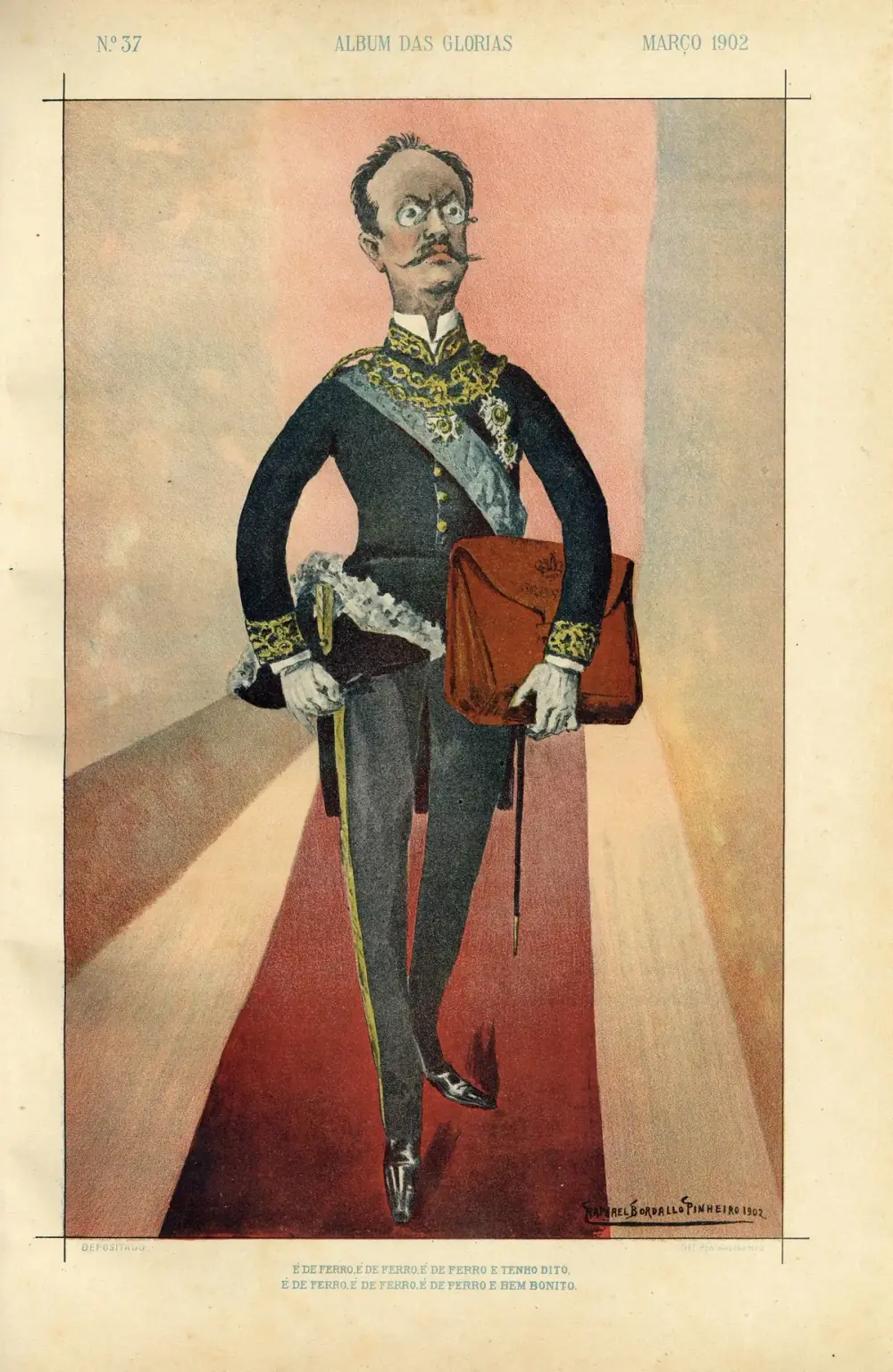
Inside, the foreign minister, Ernesto Hintze Ribeiro, laid before the Chamber of Deputies the text of a convention that Portugal's envoy had signed in London 26 days earlier, with a bill to ratify it. The bill was sent to a committee.
The opposition answered by proposing that João de Azevedo Coutinho, the lieutenant who had crossed the Ruo and pushed up the Shire valley at the end of 1889 until the Ultimatum halted him, be declared “benemérito da pátria”, a benefactor of the nation, and then all of Portugal's African explorers with him. Unexpectedly, deputies of the government's own Regenerator party backed the motion, though it implied criticism of the treaty.
In the streets, police charges that week led to 53 arrests and left an 18-year-old worker, known as António Pardal, dead.
On 18 September the prime minister, António de Serpa Pimentel, told Parliament his government was resigning. The convention of 20 August 1890, Portugal's first attempt to settle with Britain after the Ultimatum, never came to a vote.
From the Ultimatum to the London talks
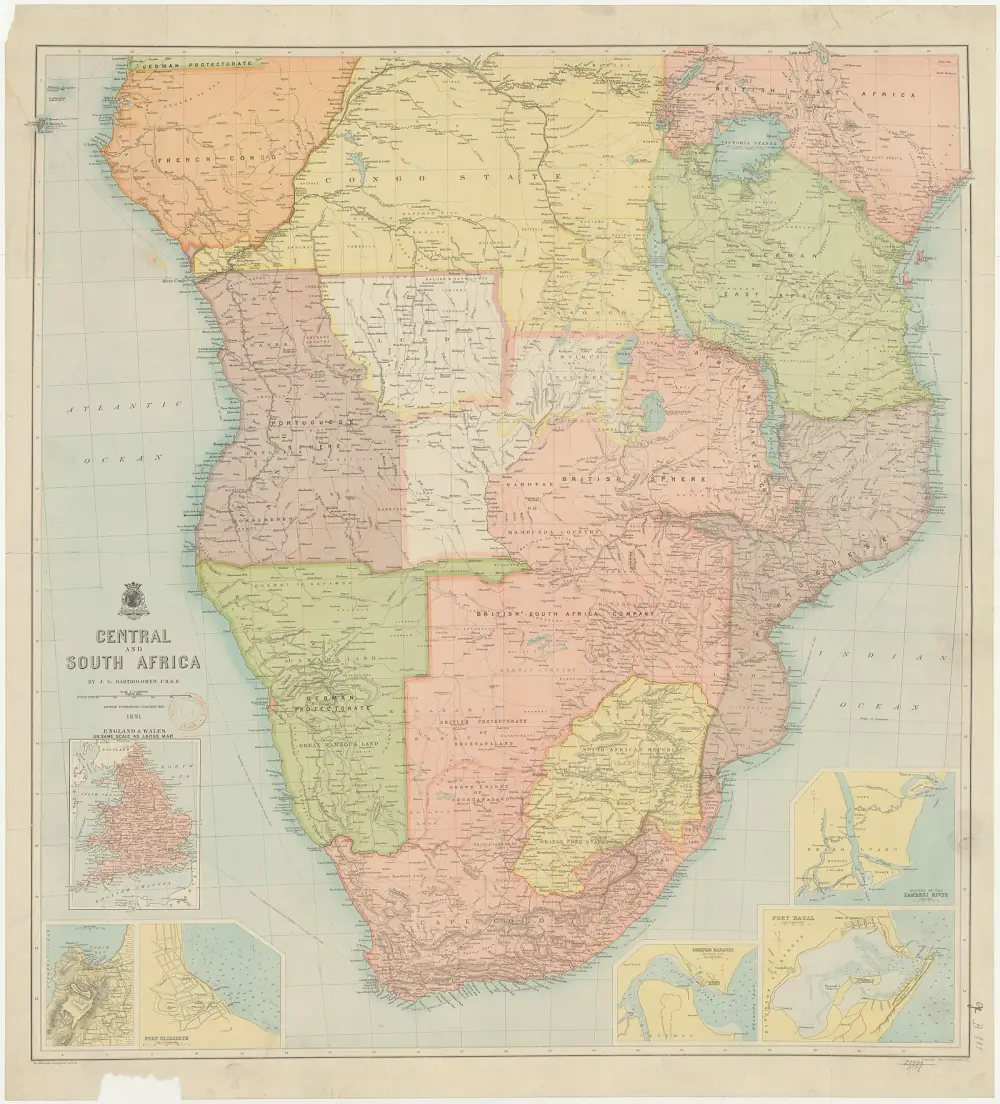
The quarrel began with a map. In 1886 Portugal had published a claim to a belt of land joining Angola to Mozambique across central Africa, coloured pink. Britain, pressed by Scottish missionaries on Lake Nyasa and by Cecil Rhodes's plans in the south, would not accept it. On 11 January 1890 Lord Salisbury's government demanded that all Portuguese forces leave the Shire valley, the Makololo country and Mashonaland, and Lisbon gave way that night. Our article on the Ultimatum tells that story.
The Progressive government resigned, and on 15 January a Regenerator cabinet under Serpa Pimentel took office, with Hintze Ribeiro at the Foreign Ministry. On 18 January Hintze saw George Petre, the British minister in Lisbon, confirmed that Portugal accepted the Ultimatum and offered to negotiate, invoking the old alliance. Two days later the king dissolved Parliament.
Lisbon still hoped for a referee. Britain refused mediation or arbitration on 28 January and closed the subject on 21 March: in the Portuguese text of its note, Her Majesty's Government regretted that it could not settle the dispute by recourse either to a conference or to an arbiter. Augusto César Barjona de Freitas then left for London as Portugal's envoy to negotiate face to face.
At home the government silenced the street. It banned demonstrations, and decrees of 11 March and 7 April, remembered as the Lei das Rolhas or gag law, muzzled the revolutionary press. The election of 30 March gave the cabinet its majority, though three republicans won seats in Lisbon; after that, republican clubs were closed or dissolved. When the new Parliament opened on 19 April, King Carlos said only that he had faith the negotiations would end honourably for both nations. By summer public opinion had lost interest.
What Salisbury and Barjona signed
Talks in London were kept quiet. On 15 August a member of the House of Commons asked whether a convention was about to be signed; the Under-Secretary for Foreign Affairs, Sir James Fergusson, would say only that an agreement was under consideration and that he hoped they were “on the eve of a satisfactory and honourable settlement”.
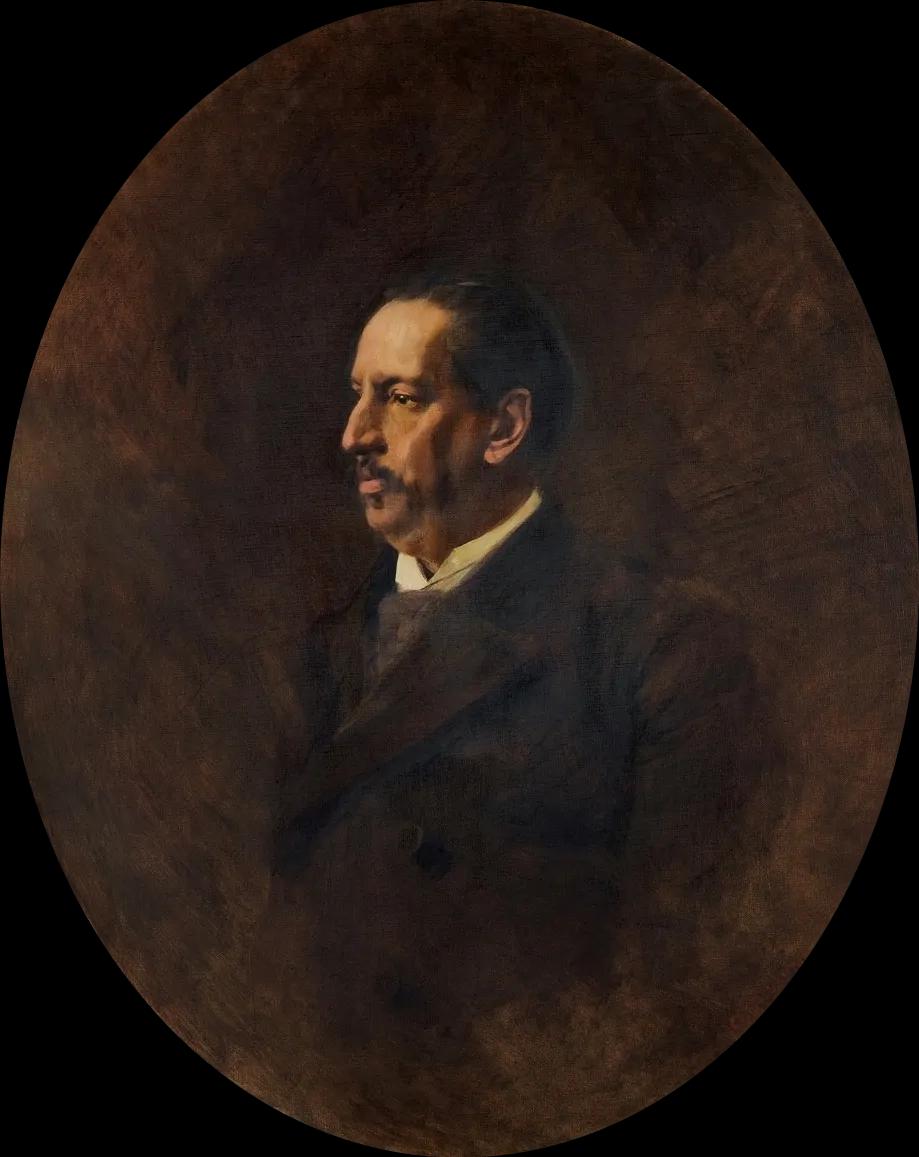
Five days later, on Wednesday 20 August 1890, Salisbury, who was both Prime Minister and Foreign Secretary, and Barjona de Freitas, as Portugal's envoy extraordinary and minister plenipotentiary, signed a convention of 17 articles “with respect to Territories in Africa”. It was done in London in duplicate. In Portugal it became known as the Treaty of 20 August; formally it was a convention, and it required ratification.
- Signed
- London, Wednesday 20 August 1890
- Signatories
- Lord Salisbury; Augusto César Barjona de Freitas
- Length
- 17 articles
- Made public in Lisbon
- Outline 22 August; full text in the Diário do Governo, no. 196, 30 August 1890
- Status
- Never ratified; replaced by the treaty of 11 June 1891
In plain terms, Britain got the Shire Highlands, the country west of Lake Nyasa and Mashonaland. Portugal kept Mozambique north of the Zambezi as far as the eastern shore of Lake Nyasa, the settlement of Zumbo upriver, the south bank of the Zambezi and, above all, the Manica plateau, which Teixeira calls vast and rich and which Rhodes's company had long coveted.
On paper, Article I ran the Portuguese line north of the river from Lake Nyasa at 13° 30' south down the Ruo to the Shire, then straight to a point halfway between Tete and the Cahora Bassa rapids, with a radius of 10 English miles round Zumbo. Article II ran it south of the river down the 33rd meridian to 18° 30' south and then west to the Masheke, a tributary of the Save. Article IV set the western division along the Upper Zambezi, from the Katima rapids to the Kabompo.
The lines came with conditions. Portugal promised not to cede its lands south of the Zambezi, or Zumbo, to any other power without British consent. The Zambezi and the Shire were opened to the ships of all nations. Portugal would charge no more than 3 per cent on goods passing between its coast and the British sphere, build a railway inland from Pungwe Bay with a British engineer on the survey, and, if Britain asked, lease 10 acres at the Chinde mouth of the Zambezi to a company for 100 years.
| Article | What it said |
|---|---|
| I and II | Zumbo, and Portugal's lands south of the Zambezi, not to be transferred to another power without Britain's consent |
| XI | Free trade in both spheres; Portugal's transit dues between the coast and the British sphere capped at 3 per cent |
| XI | Portugal may build roads, railways and telegraphs in a 20-mile zone on the north bank of the Zambezi; both powers in a 10-mile zone on the south bank between Tete and the Chobe |
| XII and XIII | Navigation of the Zambezi and the Shire free to ships of all nations; on Britain's application, a 100-year lease of 10 acres at the Chinde mouth to a company |
| XIV | Free passage between Pungwe Bay and the British sphere; Portugal to build a railway, surveys to begin within four months, or else concede it to a joint Anglo-Portuguese company |
| XVI and XVII | Other disputes to go to arbitration; ratifications to be exchanged in London “as soon as possible” |
Summarised from the English text printed by Hertslet, The Map of Africa by Treaty, vol. III, no. 308.
Lisbon reads the terms
On Friday 22 August the Portuguese papers printed the outline of the agreement, and the full text appeared in the official Diário do Governo on 30 August. Teixeira, whose 1987 study in Análise Social is the fullest account of that autumn, judges the result onerous for Portugal; to readers in 1890 it reopened the wound of January.
The historian Oliveira Martins was first into print against it, in O Tempo of 22 August. António Enes followed, and so did the republicans Latino Coelho and Rodrigues de Freitas in O Século. Progressives and republicans campaigned against the convention, which the Regenerator government had signed and which the king, people said, wanted accepted. Some Regenerators criticised it too.
“To vote for the Treaty is to renounce being Portuguese.”
Business was among the loudest. The commercial associations of Lisbon, Porto, Coimbra and provincial towns, shopkeepers' and clerks' associations, the Associação Industrial Portuguesa and workers' groups all protested to Parliament, and town and parish councils staged meetings of their own. Students in Lisbon and Coimbra joined in, with a congress in Lisbon on 12 September. A Portuguesa, the protest march written after the Ultimatum, was heard again, and the campaign peaked in three large rallies in Coimbra, Porto and Lisbon. In all, 135 petitions against the treaty reached the Cortes.
The government prepared for trouble. It reinforced the troops and police in the capital, and rumour said it had spies all over the city. On 14 September O Século reported that loopholes had been cut in the walls of the Carmo barracks so that soldiers could fire on any crowd in the Rossio below, and the story inflamed the city on the eve of the session.
A government falls and the treaty with it
The demonstrations of 15 September went on for days. António Pardal's funeral became one more patriotic procession. On 17 September police broke up a rally in the Chiado and burst into the Café Martinho, a meeting place for patriots and republicans.
The government's own party was splitting. Among the deputies and in the Chamber of Peers, prominent Regenerators began to break ranks, among them the explorer Serpa Pinto, whose clash with the Makololo in 1889 had set off the crisis. King Carlos tried and failed to save the cabinet with a reshuffle, and on 18 September Serpa Pimentel announced its resignation. Teixeira counts it as the third time in Portuguese history that a government had fallen over foreign policy under the pressure of public opinion.
Finding a successor took almost four weeks. The king summoned Martens Ferrão, Portugal's ambassador to the Holy See, who gave up after both monarchist parties blocked his efforts. Carlos then turned to an elderly general, João Crisóstomo, who formed a cabinet that belonged to no party and presented it to the Cortes on 15 October. He named two special worries: the public finances and the “unhappy disagreement with England”.
London had already drawn its conclusion. On 6 October Salisbury telegraphed Petre to warn the Portuguese government that if it let the parliamentary session close without asking for ratification, Britain would not consider itself bound by its signature. On 24 October the new foreign minister, Barbosa du Bocage, wrote to Luís de Soveral, Portugal's chargé d'affaires in London, that the outgoing cabinet had left office without keeping its promise to put the treaty to a parliamentary vote.
“I accept the abandonment of the Treaty as a fait accompli.”
In southern Africa the collapse suited Cecil Rhodes, newly prime minister of the Cape Colony and the man behind the British South Africa Company, the chartered company then occupying Mashonaland. On 23 September he wrote to Sir Philip Currie at the Foreign Office urging him to “drop this wretched treaty, under which we get nothing and give away a great deal”. It gave away half the Barotse country and the whole of Gazaland, he complained, and Manica too: “My people are now occupying and out of it. They will not go.”
20 August 1890
Convention signed in London by Salisbury and Barjona de Freitas
22 August
Its outline appears in the Lisbon press
30 August
Full text published in the Diário do Governo
15 September
Parliament opens; Hintze Ribeiro tables the convention and a bill to ratify it
Shops close in Lisbon; police charges, 53 arrests and the death of António Pardal follow.
17 September
Police break up a rally in the Chiado and storm the Café Martinho
18 September
Serpa Pimentel announces the government's resignation
23 September
Rhodes urges the Foreign Office to drop the treaty
6 October
Salisbury warns that Britain will not be bound if ratification is not sought
15 October
João Crisóstomo's non-party cabinet meets the Cortes
24 October
Bocage accepts the treaty's abandonment as a fait accompli
Six months of standstill
The new government reopened talks for a provisional arrangement. On 14 November 1890 Salisbury and Soveral signed a modus vivendi of five articles in London. Portugal undertook to decree free navigation of the Zambezi and the Shire at once, to allow transit by the Zambezi, the Shire and the Pungwe and the land routes between them, and to make postal, telegraph and transport links easier between its coast and the British sphere.
Article IV was the heart of it. Both governments would respect the limits of the dead convention to the extent that neither would make treaties, accept protectorates or exercise sovereignty in the sphere it gave the other, without prejudging the final lines. The arrangement was to last six months. Portugal published the decrees on 18 November: goods could cross from Beira, on Pungwe Bay, to the British sphere for a 3 per cent ad valorem duty, and the Zambezi and the Shire were open to the ships of all nations.
Unlike the convention, the modus vivendi was received calmly in Lisbon. The crowds had gone home after the government fell. Petre noticed. On 31 December he wrote privately to Salisbury that a “relative sobriety of tone” had replaced the “hysterical patriotism” which had “cowed the late Government and led to the crowning folly of rejecting the Treaty of August”.
On the Manica plateau the standstill did not hold. By the British government's own account in January 1891, places there had been “taken and re-taken” by Portuguese officers and men of Rhodes's company. The company's acting resident was reported to have told prospectors in October 1890 that an Anglo-Portuguese arrangement had put Manica, for a considerable distance east of Massi-Kessi, under British influence; Fergusson told the Commons that if such an instruction had been given, it was incorrect.
Portugal complained that the company had arrested one of its officers in January, which the company denied. In April 1891 the Foreign Office conceded that Massi-Kessi lay outside the British sphere of the August agreement, but said four company policemen were only guarding the empty buildings of the Mozambique Company, Portugal's own chartered company, until the Portuguese arrived. In May came reports of fighting beyond Massi-Kessi, on which London admitted it had no reliable information.
The treaty of 11 June 1891
The new treaty was drafted in London in English only and initialled by Salisbury and Soveral on 28 May 1891. It was signed in Lisbon on Thursday 11 June 1891, Petre signing the English text and the foreign minister, the Count of Valbom, the Portuguese one. Salisbury laid it before the House of Lords the same day.
“There is a considerable extension of the British sphere upon the Plateau of Manica, where the gold miners are now at work, and there is also an extension of the British sphere on the lower or right bank of the Shiré, which will have the advantage of facilitating the navigation for our gunboats.”
Salisbury called the differences from the August text chiefly territorial and “not of a very wide extent”. In return for Manica, Portugal gained a large area north of the Zambezi, up to the watershed with Lake Nyasa and the Shire but not beyond 14° south. In the west the British sphere now covered the whole Barotse kingdom, whatever a commission found that to be. He would not say who had gained more land, but thought Britain's share was country that could be “worked and occupied by white men”.
| Question | 20 August 1890 (not ratified) | 11 June 1891 |
|---|---|---|
| Manica plateau | Portuguese: the line ran down the 33rd meridian to 18° 30' south, then west to the Masheke | Split along the upper eastern slope; nothing west of 32° 30' east Portuguese; Mutassa British, Massi-Kessi Portuguese |
| North of the Zambezi | Line from the Ruo–Shire confluence straight to a point halfway between Tete and Cahora Bassa; Zumbo with a 10-mile radius | Line down the Shire to below Chiwanga, along the watersheds to 14° south, then to the Luangwa and down it to the Zambezi |
| Barotse country | Western division along the Upper Zambezi and the Kabompo | The whole Barotse kingdom British; its western limit left to a joint commission |
| Transfer of land | Portugal not to cede its lands south of the Zambezi without British consent | Each power to have first refusal if the other parts with land south of the Zambezi |
| Transit dues | At most 3 per cent | At most 3 per cent for 25 years; Britain may buy them out within 5 years at £30,000 a year capitalised |
| Pungwe railway | Survey to start within four months; otherwise a joint Anglo-Portuguese company | Survey to be completed within six months; if the two governments cannot agree on dates, a company named by a neutral power builds it |
| Chinde | Lease of 10 acres for 100 years to a company, on Britain's application | Lease for 99 years to persons named by Britain; Britain to lease Portugal a site on Lake Nyasa |
Summarised from the English texts printed by Hertslet, nos. 308 and 310. The 1891 line on Manica was later settled in part by arbitration, in an award of 30 January 1897.
Teixeira judges the 1891 treaty no better for Portugal than the first and harsher in some clauses. Lisbon accepted it quietly all the same. This time the government went to Parliament before signing: on 6 June the Chamber of Deputies voted by 105 to 6 to authorise it to sign and ratify a treaty on the bases initialled on 28 May. Serpa Pinto was among the six who voted no.
The foreign minister, the Count of Valbom, told the deputies he wanted to avoid a repeat of 1890: “The treaty was neither approved nor rejected; it was abandoned” (translated from Portuguese). On 11 June, the day of signature, Salisbury told the Lords that the treaty had “just been approved by the Cortes at Lisbon”. Teixeira dates its ratification to 27 June 1891, and ratifications were exchanged in London on 3 July.
Salisbury used his speech to answer critics who wanted more. Gungunhana, the Gaza king, claimed most of Portuguese territory south of the Zambezi, and some in South Africa wished Britain had used him to push Portugal off that coast. Salisbury replied that treaties of 1817 and 1847 had recognised the coast from the Zambezi to Delagoa Bay as Portuguese, and added that “very angry things have been said of us at Lisbon”.
Why it still matters
The lines of 1891, adjusted on the ground by boundary commissions between the 1890s and 1907, became the borders between Mozambique and Malawi, Zambia and Zimbabwe. The Barotse line was settled by arbitration: the two governments handed it to the King of Italy, whose award of 30 May 1905 fixed the western limit between Angola and today's Zambia. None of the African rulers whose lands were divided was a party to either text.
In Teixeira's reading the diplomacy mattered less than the politics. Abroad, the settlement did not even change the direction of Portuguese foreign policy, and the old alliance with Britain remained its first choice. At home, one monarchist party had accepted the Ultimatum and the other had signed the August treaty, and both had put down the protests. The republicans came out of 1890 looking like the only defenders of the nation.
Some of them were already thinking of force. On 31 January 1891 a republican rising in Porto was crushed; on 8 February Petre wrote privately that it had left “a feeling of insecurity and revealed a source of weakness”. The monarchy survived for almost two more decades, until 5 October 1910.
Teixeira also argues that once the August treaty fell, Britain became more willing to talk, worried by the changes of government and the unrest in Portugal and the risk to the monarchy, or simply because it already had what it most wanted. The irony, in his account, is that the deal Lisbon rejected in September 1890 left the whole Manica plateau Portuguese, and the one it accepted in June 1891 gave most of it to the British sphere.
FAQs
What was the Treaty of London of 20 August 1890?
It was a convention signed in London by Lord Salisbury and the Portuguese envoy Augusto César Barjona de Freitas after the British Ultimatum of January 1890. It divided British and Portuguese spheres of influence in central and southern Africa, leaving Britain the Shire Highlands and Mashonaland and Portugal the Manica plateau, Zumbo and the south bank of the Zambezi, and bound Portugal to free navigation, low transit dues and a railway from Pungwe Bay.
Why was the 1890 treaty never ratified?
Its terms provoked shop closures, petitions and street protests in Portugal. The Serpa Pimentel government laid it before Parliament on 15 September 1890 but resigned on 18 September, split and under pressure, before any vote. Britain then said it would not be bound if ratification was not sought, and in October the new foreign minister accepted the treaty's abandonment as a fait accompli.
What was the modus vivendi of 14 November 1890?
A six-month interim agreement signed in London by Lord Salisbury and Luís de Soveral. Portugal opened the Zambezi and Shire to free navigation and eased transit from its coast, and both sides agreed not to make treaties or exercise sovereignty in the spheres the unratified convention had given the other.
How did the treaty of 11 June 1891 differ from the 1890 one?
Britain gained most of the Manica plateau and more land on the Shire; Portugal gained a larger area north of the Zambezi up to the watershed with Lake Nyasa. The whole Barotse kingdom became British, transit dues were capped for 25 years and the railway terms changed. Historians such as Nuno Severiano Teixeira consider it no better for Portugal, yet there were no street protests this time, and the Chamber of Deputies approved it in advance by 105 votes to 6.
On the timeline
Open the timelineNearby moments from regeneration and the last kings (1851–1910).
Lord Salisbury's government delivers the British Ultimatum, demanding that Portugal pull its forces out of the Shire valley and Mashonaland, lands it claimed in the 'Pink Map' linking Angola and Mozambique. Lisbon's swift capitulation is felt as a national humiliation and fuels the republican movement that would topple the monarchy twenty years later.
Death of Camilo Castelo Branco at his home in São Miguel de Seide, near Vila Nova de Famalicão. Going blind (a biographer later blamed syphilis) and worn down by years of family misfortune, the prolific Romantic novelist shoots himself with a revolver after an eye specialist confirms there is no cure. His output of more than 200 titles, including 'Amor de Perdição', makes him one of the founders of the modern Portuguese novel.
The Coliseu dos Recreios, Lisbon's great iron-domed performance hall on the Rua das Portas de Santo Antão, is inaugurated with a performance of Franz von Suppé's operetta 'Boccaccio'.
The Treaty of London of 1890
In the aftermath of the British Ultimatum, Portugal and Britain sign the Treaty of London defining the frontiers of Angola and Mozambique; public outrage prevents its ratification in Lisbon, brings down the government, and forces its replacement by a new treaty in 1891.
In the first attempt to found a republic in Portugal, soldiers led mostly by sergeants rise in Porto, angered by the monarchy's surrender to the British Ultimatum. They proclaim the republic from the windows of the town hall before the Municipal Guard crushes the revolt; the street where the fighting raged is now Rua 31 de Janeiro.
The poet Antero de Quental, a central figure of the Generation of '70, dies by suicide in Ponta Delgada on his native island of São Miguel in the Azores.
The Campo Pequeno bullring is inaugurated in Lisbon. Designed by the architect António José Dias da Silva in neo-Moorish style with red-brick towers, it remains the city's principal arena for bullfights and concerts to this day.
Coming up in history
All long reads
12 sources
Archives, scholarship and reporting this article was checked against.
- 1
The Map of Africa by Treaty, 3rd edition, vol. III, by Sir Edward HertsletHis Majesty's Stationery Office, 1909 (digitised by Internet Archive)
- 2
Política externa e política interna no Portugal de 1890: o Ultimatum Inglês, by Nuno Severiano TeixeiraAnálise Social, vol. XXIII (98), 1987, pp. 687–719
- 3
Lord Salisbury's 1890 Ultimatum to Portugal and Anglo-Portuguese Relations, by Teresa Pinto CoelhoSt John's College, Oxford / Universidade Nova de Lisboa (conference paper)
- 4
Anglo-Portuguese African Treaty, HL Deb 11 June 1891, vol. 354, cc. 137–140UK Parliament, Hansard 1803–2005
- 5
- 6
The Barotseland Boundary Case (Great Britain, Portugal), award of 30 May 1905United Nations, Reports of International Arbitral Awards, vol. XI, pp. 59–69
- 7
- 8
- 9
- 10
- 11
- 12
Diário da Câmara dos Senhores Deputados, sessão n.º 13 de 6 de Junho de 1891Assembleia da República, Debates Parlamentares (Monarquia Constitucional)
Image credits
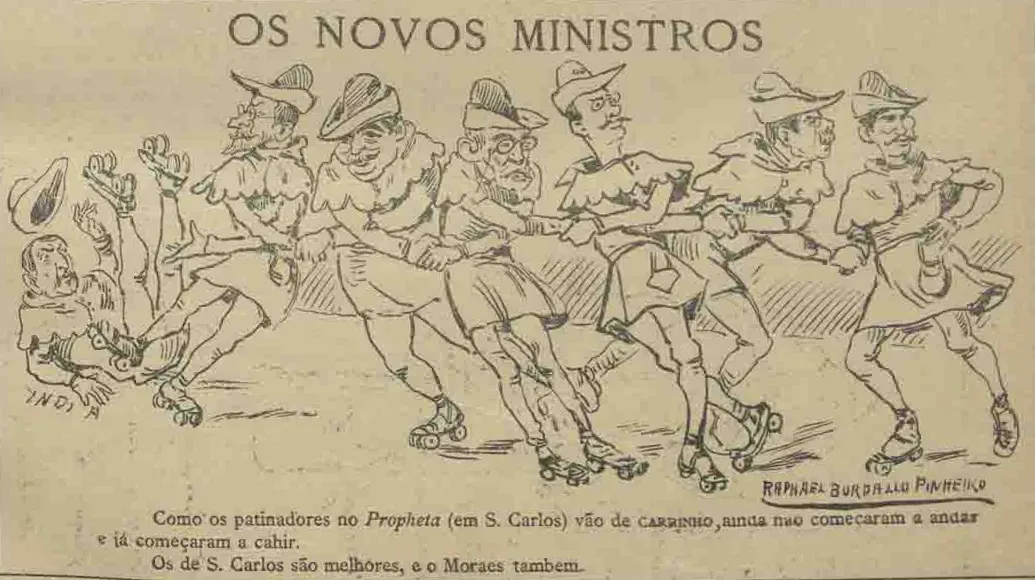
- “The new ministers”: Rafael Bordalo Pinheiro drew António de Serpa Pimentel's Regenerator cabinet as stumbling skaters in Pontos nos ii on 23 January 1890, a week after it took office in the wake of the Ultimatum. Its envoy signed the London convention that August, and in September the cabinet fell over it. Rafael Bordalo Pinheiro, Public domain, via Wikimedia Commons.
- Ernesto Hintze Ribeiro, the foreign minister who laid the London convention before the Chamber of Deputies on 15 September 1890, caricatured by Rafael Bordalo Pinheiro in the Álbum das Glórias in March 1902. Rafael Bordalo Pinheiro, Public domain, via Wikimedia Commons.
- Augusto César Barjona de Freitas (1834–1900), Portugal's envoy in London, who signed the convention with Lord Salisbury on 20 August 1890. Undated portrait by Columbano Bordalo Pinheiro. Columbano Bordalo Pinheiro, Public domain, via Wikimedia Commons.
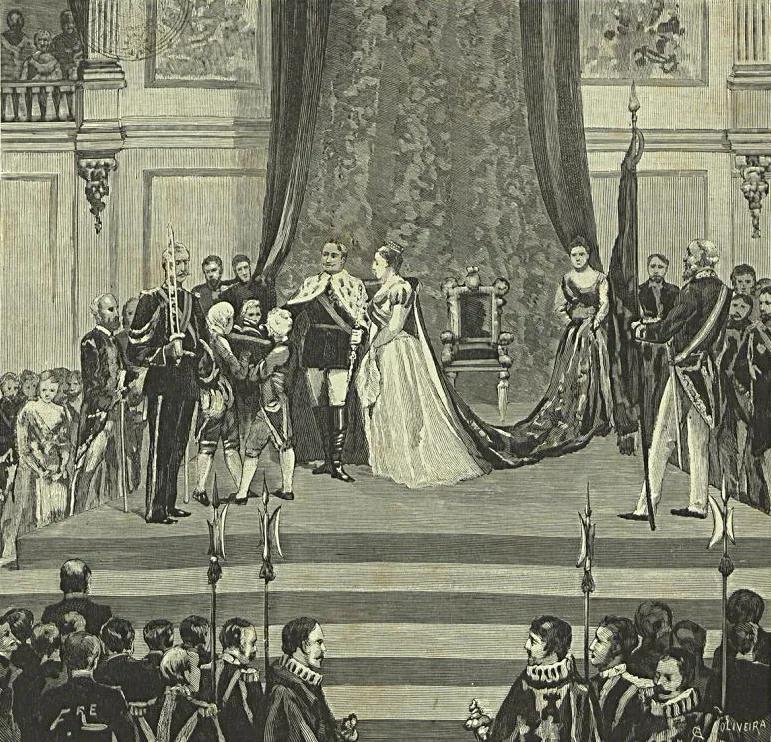
- King Carlos takes his oath before the Cortes in December 1889, as engraved for the magazine O Occidente of 11 January 1890, the day of the Ultimatum. Nine months later his ministers brought the London convention to the same Parliament. Unknown author, Public domain, via Wikimedia Commons.
- Central and South Africa, by J. G. Bartholomew, 1891. The map's key gives British possessions in red (pink here); Angola and Mozambique appear as two separate Portuguese spheres, with the British sphere and the British South Africa Company's lands between them. J. G. Bartholomew, Public domain, via Wikimedia Commons.