

Mário Eloy, the painter Lisbon forgot, dies in 1951
He learned expressionism in Berlin, won the regime's modern art prize and painted Lisbon dancing in electric blue. Huntington's disease took his hands, then his mind; when he died in an asylum near Sintra, his friends did not hear for a month.
At a glance
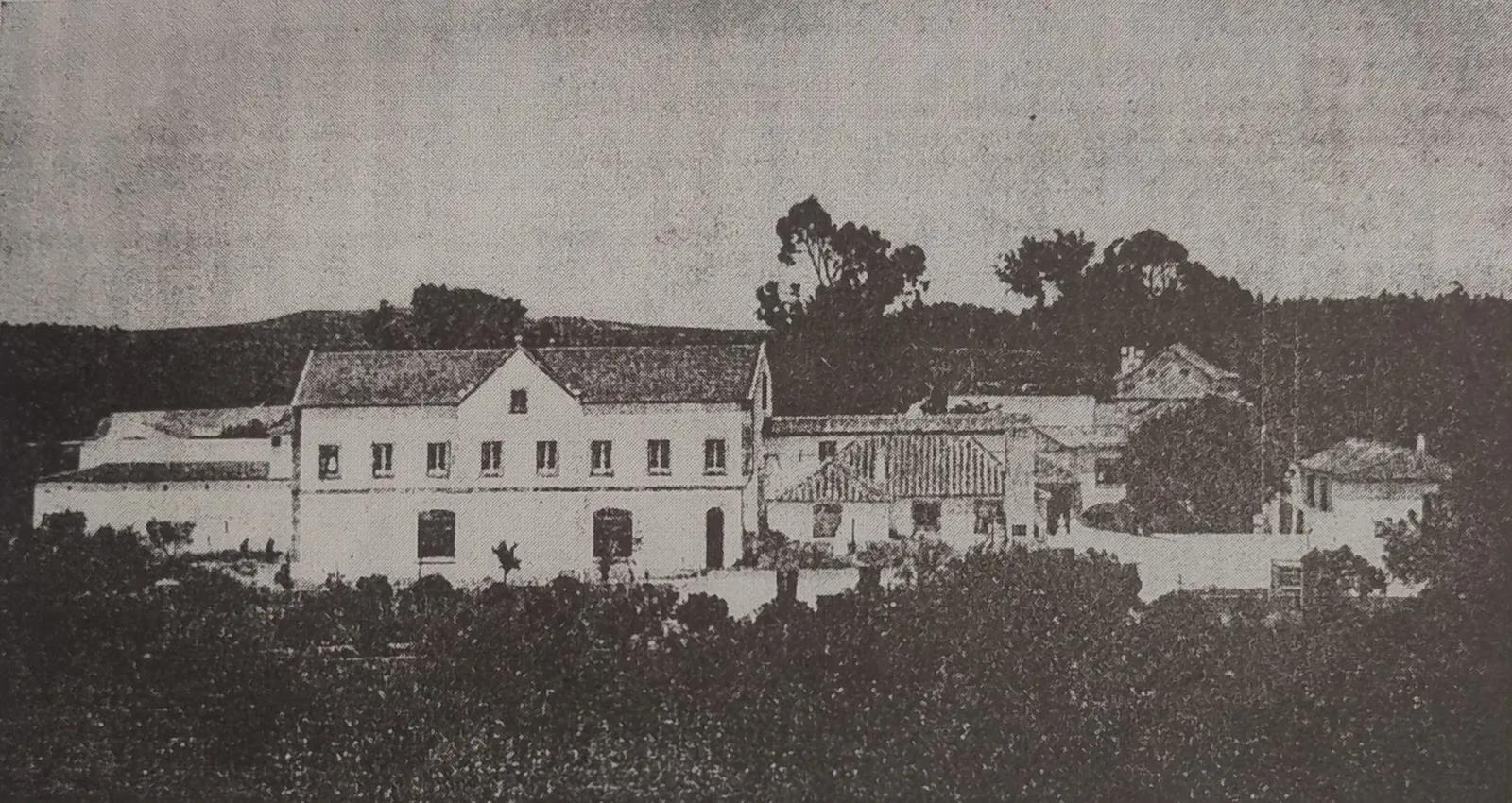
- The painter Mário Eloy died on Wednesday 5 September 1951 at the Casa de Saúde do Telhal, an asylum run by the Hospitaller Brothers of Saint John of God near Sintra, where he had been confined since 15 June 1945. He was 51.
- His friends only learned of his death about a month later, according to the art historian Fernando Rosa Dias. João Gaspar Simões published his tribute, “Morreu Mário Eloy – Viva a sua Arte!”, in the Diário Popular on 17 October 1951.
- Born in 1900 and largely self-taught, Eloy lived in Paris from 1925 and in Berlin from late 1927 to 1932, where he took up German expressionism and was the only foreign member of a Berlin artists' society.
- Back in Lisbon he won the regime's Amadeo de Souza-Cardoso prize for modern painting in 1935. From about 1936 Huntington's disease, an inherited brain disorder diagnosed in 1940, began to show in his hand and his imagery.
- The Museu do Chiado gave him a full retrospective in 1996 and holds his paintings, among them Bailarico no bairro (c. 1936) and O poeta e o anjo (c. 1938); his work is also in the Gulbenkian's modern art centre and at Serralves.
A death nobody noticed
Mário Eloy's friends remembered his walk. In his last years of freedom the painter used to pass through the Chiado throwing his feet out as he went, his body out of control, a cigarette barely held in his strong hands. That is how his friend Diogo de Macedo remembered him.
One morning in 1945, after half a year shut away without speaking to anyone, Eloy came out and fell in the street, unsteady and alone. On 15 June he entered the Casa de Saúde do Telhal, an asylum near Sintra.
Six years later, on Wednesday 5 September 1951, a patient called Mário Eloy de Jesus Pereira died there. He was 51. The disease that killed him had taken his faculties one by one.
The news took weeks to get out. His friends, the art historian Fernando Rosa Dias writes, only realised he was dead about a month later, and only then did the papers report it. On 17 October the writer João Gaspar Simões wrote the obituary in the Diário Popular, under the headline “Morreu Mário Eloy – Viva a sua Arte!” (Mário Eloy is dead, long live his art!). O Século followed on 8 November.
The man they mourned late had once been a much-discussed young painter. He had shown in Paris, joined an artists' society in Berlin, scandalised Lisbon critics with green, rotting nudes and won the Estado Novo's prize for modern painting. The preface to the Museu do Chiado's 1996 retrospective called him probably the most remarkable Portuguese artist of the first half of the twentieth century.
- Died
- Wednesday 5 September 1951, aged 51
- Where
- Casa de Saúde do Telhal, Hospitaller Brothers of Saint John of God, municipality of Sintra
- Confined there
- From 15 June 1945
- Illness
- Huntington's disease, diagnosed in 1940
- Born
- 15 March 1900, Algés, near Lisbon
- Abroad
- Madrid 1919; Paris 1925 to 1927; Berlin late 1927 to 1932
- Main prize
- SPN Amadeo de Souza-Cardoso prize, 1935
The goldsmith's son who ran away
Eloy was born on 15 March 1900 in Algés, just outside Lisbon. His father and grandfather were goldsmiths, and both were passionate amateur actors. He left the liceu, the state secondary school, for the Lisbon School of Fine Arts, but he disliked the academic teaching and did not stay long.
His family wanted him to take a job in a bank; his brother Raul had been chosen to look after the gold at the family firm, the Casa Eloy de Jesus. At the end of 1918 or early in 1919 Mário ran away to Madrid instead. In the Prado he decided to be an artist. He went on to Seville and possibly Tangier before coming home through the Algarve.
A family friend, the stage designer Augusto Pina, lured him back with work in his scene-painting studio at the Teatro Nacional D. Maria II. Eloy even acted for the company of Amélia Rey Colaço and Robles Monteiro, making his debut either in Madame Colibri in December 1922 or in Ribeirinha at the Politeama in 1923; accounts differ.
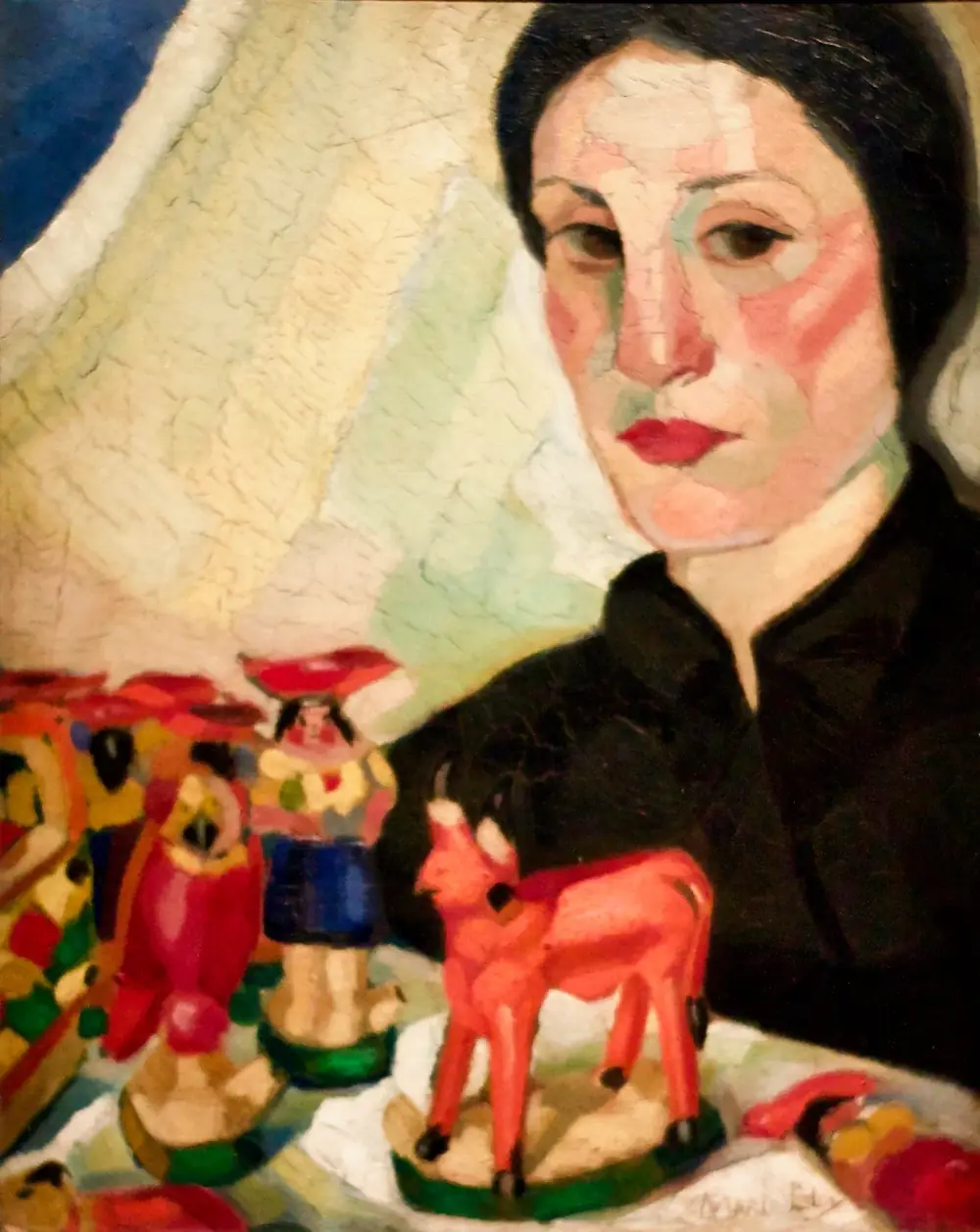
He showed his paintings for the first time in 1924, with his friend Alberto Cardoso, at the exhibition room of the magazine Ilustração Portuguesa. In 1925 he joined the Autumn Salon organised by the painter Eduardo Viana, whose Cézanne-like way of building forms was his main model at the time, and painted the stage curtain for the Teatro Novo, a theatre company that the journalist António Ferro launched in the tea room of the new Tivoli cinema.
Paris, then Berlin
Eloy left for Paris on 1 June 1925. He lived on cheques from his brother and on portrait commissions, slept in friends' studios and was taken under the wing of political exiles who had left Portugal when the Republic was proclaimed in 1910. In 1927 he showed at the gallery Au Sacre du Printemps and then at the tea room Chez Fast. The critic André Warnod wrote in Comoedia of a personality “brutally expressed, audacious, even reckless”, and at once modern and classical.
Paris disappointed him, and at the end of 1927 he moved to Berlin, then the capital of the Weimar Republic. By December he had a one-man show at the A. E. Utsch gallery. In Berlin he found the expressionists, above all the Austrian Oskar Kokoschka, whom he called in a 1928 interview the greatest German painter, and later the tense, compact figures of Karl Hofer.
His first Berlin pictures belong to what Rosa Dias calls his green phase: thick, twisting brushwork and acid greens against black. He painted Lisbon types through this lens, the fado singer and the varina, the fishwife who sold fish from a basket on her head. When he showed them at the Press Union's rooms in Lisbon in 1928, most critics were hostile.
“…is so exaggerated that the naked body of “Pregnant Woman” is green with rot, with patches of gangrene”
Writing in Presença, the young modernists' magazine in Coimbra, Raul Leal said the pictures seemed to have been forged in hell. The Museu do Chiado's own example of the green phase, Menino e varina (1928), shows a gigantic, mask-faced fishwife who fills the canvas and crowds out the boy beside her, with naked varinas and anthropomorphic houses behind.
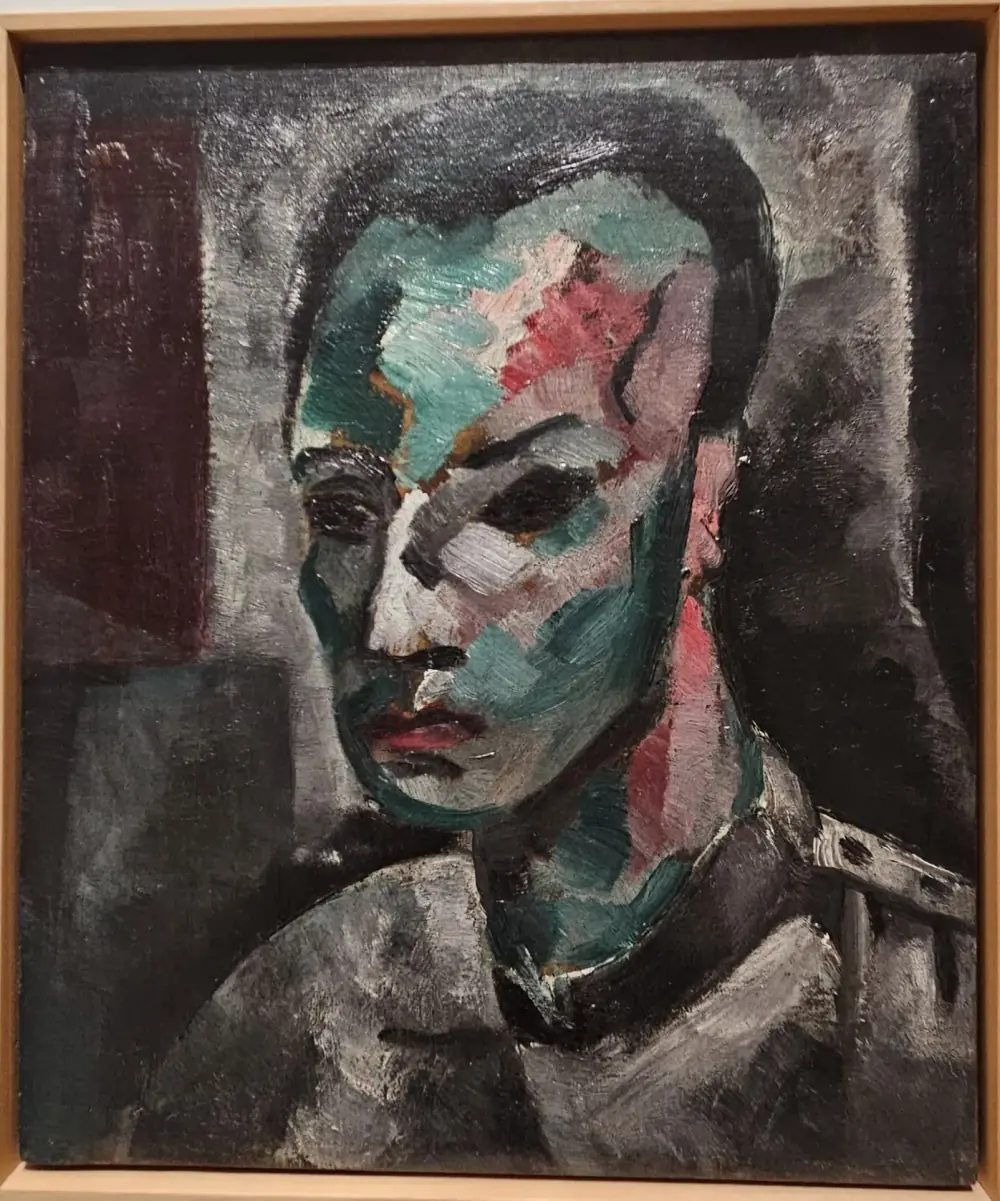
In Berlin he met Theodora Severin, known as Dora, a German of Dutch descent. Their son, also named Mário, was born on 12 January 1929, and they married on 31 January. Money was short; his friend Diogo de Macedo later recalled Eloy queueing as a film extra to earn his bread. He published drawings in the magazine Der Querschnitt and was the only foreigner admitted to the Vereinigung Bildender Künstler, a Berlin artists' society.
He kept a foot in Lisbon. In 1930 he sent eight works to the first Salão dos Independentes, the big gathering of Portugal's modernists, and wrote a credo for its catalogue. He also showed beside Picasso in a Cézanne homage at the Flechtheim gallery in Berlin, in 1929 or 1931 (sources differ).
“I seek the synthesis of form. In each brushstroke I look for a cerebral intention. That is why, when I paint, I would like to have brushes on my head instead of hair.”
A modern classic in Salazar's Lisbon
Eloy came back to Lisbon in 1932, meaning to stay a short while; it became permanent. Dora and the boy, who had come with him on some trips, went back to Germany, and the move parted him from them for good. Portugal was changing: the military dictatorship set up after the coup of 1926 became Salazar's Estado Novo under the Constitution of 1933, and António Ferro, the journalist who had once commissioned Eloy's theatre curtain, now ran the regime's propaganda office, the Secretariado de Propaganda Nacional (SPN).
His painting had already turned. In his last Berlin years he dropped the green frenzy for a severe modern classicism, close to Picasso's neoclassical figures of the early 1920s: solid nudes, heavy volumes and faces like masks. The Museu do Chiado's self-portrait of 1930 to 1932 has a cylindrical face that looks carved from wood. Eloy called his painting “vanguard, which is the same as saying classical”.
Ferro saw no conflict between an authoritarian regime and modern art, and made himself modernism's official promoter. In 1934 he commissioned a painting called Lisboa from Eloy, and with it Eloy won the SPN's Amadeo de Souza-Cardoso prize at the first modern art exhibition in 1935 (MACAM's biography gives 1932). He took to calling himself the “Prince of Modern Art”.
These were his best years. He painted friends from the cafés, among them the painters Abel Manta, Paulo Ferreira and António Pedro and the writer João Gaspar Simões. He painted Russian ballerinas and popular festivals, and drew Lisbon's rooftops and the brothels where artists felt free of family and social constraints.
Bailarico no bairro, of about 1936, drowns a neighbourhood street dance in ultramarine. On the right the couples dance so happily that the perspective bends around them; the houses look faintly human, and an irrational staircase climbs out of the foreground. Pedro Lapa, who wrote the museum's entry, sees paranoid, depressive traits in the left half and euphoria in the right.
| Work | Date | Oil on canvas, cm | Inv. | What the catalogue entry stresses |
|---|---|---|---|---|
| Menino e varina (Boy and fishwife) | 1928 | 49 × 43 | 2356 | Green phase; the monumental varina and the 1928 Lisbon reviews |
| Auto-retrato (Self-portrait) | 1930–1932 | 60 × 52 | 1087 | Painted in Berlin; a mask-like face, after Picasso's neoclassical period |
| Bailarico no bairro (Neighbourhood dance) | c. 1936 | 80 × 100 | 1586 | Ultramarine blues; dancing couples, an irrational staircase |
| O poeta e o anjo (The poet and the angel) | c. 1938 | 80 × 100 | 1468 | The poet as the artist's double, his beloved and an angel |
| Auto-retrato (Self-portrait) | 1936–1939 | 35 × 27 | sec 0445 | His last painted self-portrait; the gaze slides away |
Dates, sizes and inventory numbers from each work's page on the museum's website. The later self-portrait belongs to the state's collection and has been on deposit at the museum since 1996. The Berlin self-portrait's dating is uncertain: Rosa Dias thinks it was perhaps begun in Berlin in 1931 and reworked several times, and laboratory analysis for the 1996 retrospective found several stages of correction.
The hand that began to shake
Rosa Dias puts the first signs of illness around 1936. The firm outlines of Eloy's drawings began to waver and smudge, and black patches crept over clean lines. From 1938, and more so in 1939, his subjects turned fiercely critical, catastrophic and decadent. In 1940 doctors gave the cause a name: Huntington's disease, then also called Huntington's chorea.
In O poeta e o anjo, about 1938, the poet, a stand-in for Eloy, lies with his head in his beloved's lap while an almost weightless angel watches. Behind the angel is a calm horizon with a boat and a setting sun; behind the woman, whose face is acid green under carmine hair, a black window.
A Fuga (The Flight), of 1938 to 1939, shows a lone figure lurching forward on disjointed legs. Rosa Dias reads the figure as Eloy himself and those legs as the best metaphor for his own stumbling walk. The last self-portrait he painted, of 1936 to 1939, sets a carmine face against a green ground, its eyes sliding away from the viewer.
Europe was breaking up around him. In 1939 Dora and their son fled Germany, first to Czechoslovakia and then to the Netherlands; part of Eloy's work had stayed in Karl Hofer's Berlin studio, which a bombing raid burned in 1943, probably with it. In Lisbon he quarrelled with his brother, slept in family houses, friends' studios and once in a tiny room at the national theatre, and painted little, and then only to earn money.
His late drawings fill with monsters, knives, suicides, hanging hands and feet and dismembered bodies. Rosa Dias argues that the shaking hand and the hallucinations worked together: the disease made his old classical line impossible and fed the visions that replaced it. One of his last canvases, No camarote (In the theatre box), was left unfinished at some point between about 1940 and 1945.
Telhal, 1945 to 1951
After his fall in 1945 the doctors had urged rest or admission to “a house of the Hospitaller Order” (Macedo's words, translated from Portuguese). Telhal, founded in 1893 in the municipality of Sintra, was such a house, a psychiatric home of the Hospitaller Brothers of Saint John of God, a Catholic nursing order; it still provides psychiatric care.
In June 1946, a year after the admission, Macedo wrote about the friend he used to see in the Chiado, and about how quickly Lisbon had dropped him.
“whoever saw him go by and commented, with complaints or jokes, on his Van Gogh-like life of a bohemian and true artist, soon forgot him once they knew he had gone to Telhal”
Outside, his reputation grew without him. Two of his pictures, a self-portrait and Jeune Homme, his portrait of the painter Paulo Ferreira, went to the Venice Biennale in 1950 in the Portuguese section. He died at Telhal the following year. The preface to the 1996 retrospective called his confinement there a forced exile.
15 March 1900
Born in Algés, near Lisbon
1912 to 1916
Brief spell at the Lisbon School of Fine Arts
Sources give 1912–13 or two years from 1913; Rosa Dias found enrolments for 1913–14 to 1915–16.
Late 1918 or 1919
Runs away to Madrid and the Prado
1924
First exhibition, with Alberto Cardoso
1 June 1925
Leaves for Paris
Late 1927
Moves to Berlin; solo show at the A. E. Utsch gallery
1928
Green-phase pictures shown in Lisbon cause a scandal
31 January 1929
Marries Dora Severin in Berlin
1930
Eight works at the first Salão dos Independentes
1932
Returns to Lisbon for good
The Camões biography gives 1933.
1935
SPN Amadeo de Souza-Cardoso prize
1940
Huntington's disease diagnosed
15 June 1945
Admitted to the Casa de Saúde do Telhal
1950
Two works at the Venice Biennale
5 September 1951
Dies at Telhal, aged 51
17 October 1951
Gaspar Simões's obituary in the Diário Popular
After his death
In 1958 the regime's information office, the Secretariado Nacional de Informação (SNI), gave him a retrospective in Lisbon and Porto, organised by the painter Paulo Ferreira, with a catalogue preface by the architect Jorge Segurado, who had been at school with him. His son, by then a painter too, came to Portugal for it, and the SNI gave him a show of his own in 1959.
Abroad, his work illustrated the poster of Portuguese Art since 1910, the exhibition the Royal Academy of Arts in London held with the Anglo-Portuguese Society and the Gulbenkian Foundation in 1978. Segurado published a book on his paintings and drawings with the state press in 1982. The full reckoning came in 1996, when the Museu do Chiado held the retrospective that, in its preface's words, had long been overdue, from 12 July to 29 September, with a laboratory study of his paintings.
In 1997 Luís Matos directed the documentary Mário Eloy, o Pintor em Fuga, produced by Zebra Filmes and listed in RTP's archive, and an edict of 30 October 1997 gave his name to a street in Lumiar, in the north of Lisbon. Streets in Algés, Cascais, Rio de Mouro and several other towns around the capital also carry it.
Why he still matters
In 2021 and 2022 the Museu do Chiado hung his last self-portrait and his portrait of João Gaspar Simões in Olhares modernos, its exhibition of modern portraits. His work is also in the Gulbenkian's Centro de Arte Moderna, the Serralves Foundation in Porto and private collections, and MACAM, the Armando Martins contemporary art museum in Lisbon, has his 1931 Frau mit den roten Fischen (Woman with red fish).
Eloy painted for barely twenty years, the last few under the shadow of illness, yet RTP's page on the documentary puts his importance to Portuguese modernism on a par with Amadeo de Souza-Cardoso's. In the Museu do Chiado's account he was the one painter of his generation who looked beyond Paris, to Berlin and German expressionism.
Rosa Dias, writing in 2020 for an issue on art and madness, asks whether the force of the late drawings belongs to the artist or to the disease, and prefers to leave the question open. Gaspar Simões, writing in 1938 before the worst, put it differently: Eloy, he wrote, was the first to bring dreams into Portugal's visual arts.
FAQs
When and where did Mário Eloy die?
He died on 5 September 1951 at the Casa de Saúde do Telhal, a psychiatric house of the Hospitaller Brothers of Saint John of God in the municipality of Sintra, where he had been since 15 June 1945. He was 51. Some references say Lisbon, one study names the Lisbon asylum of Rilhafoles, and one source gives 9 September.
What illness did Mário Eloy have?
Huntington's disease, an inherited brain disorder that causes involuntary movements, mood changes and dementia. Signs appear in his work from about 1936, and it was diagnosed in 1940.
Why is Mário Eloy called an expressionist?
He lived in Berlin from late 1927 to 1932 and took his violent colour and distorted figures from German and Austrian expressionists, above all Oskar Kokoschka and Karl Hofer. The Museu do Chiado singles him out as the one artist of his generation who looked beyond Paris, to Berlin.
Where can I see Mário Eloy's paintings?
The Museu do Chiado in Lisbon holds five, including Bailarico no bairro and O poeta e o anjo. The Gulbenkian's Centro de Arte Moderna, the Serralves Foundation in Porto and MACAM in Lisbon also hold his work.
On the timeline
Open the timelineNearby moments from dictatorship and the estado novo (1926–1974).
Death in Porto of Guilhermina Suggia, aged 65, the cellist who studied with Pablo Casals and Julius Klengel, shared Casals's life and stage in Paris for about six years and became one of the most celebrated musicians in Britain. Augustus John's portrait of her belongs to Tate in London.
Salazar and President Óscar Carmona inaugurate the Castelo do Bode dam on the River Zêzere near Tomar, then the largest hydroelectric scheme in Portugal. Its 115-metre concrete wall holds back a reservoir of more than a billion cubic metres that still supplies much of Lisbon's drinking water.
Francisco Craveiro Lopes, a military aviator, is sworn in as President of the Republic, succeeding the late Óscar Carmona while Salazar keeps real power as head of government. Dropped by the regime in 1958, the former loyalist drew close to the opposition and was linked to the failed Botelho Moniz coup of 1961.
Death of Mário Eloy
Death of the painter Mário Eloy, aged 51, at the Casa de Saúde do Telhal near Sintra, where Huntington's disease had confined him since 1945. A leading figure of Portugal's second modernist generation, he absorbed German Expressionism in Berlin; his surviving paintings include haunted self-portraits and 'Bailarico no Bairro', a Lisbon neighbourhood dance.
Portugal and the United States sign a NATO defence agreement in Lisbon giving the Americans the use of facilities in the Azores, chiefly the Lajes air base on Terceira: for peacetime works and transit until 1956, and in wartime for the life of the alliance.
Poet and teacher Sebastião da Gama dies of tuberculosis in Lisbon, aged just 27. The bard of the Serra da Arrábida, he wrote a letter in 1947 pleading for the hills' protection that led to the founding of the Liga para a Protecção da Natureza, Portugal's first environmental association.
The Batepá Massacre begins in São Tomé, as Portuguese colonial authorities and plantation interests unleash deadly violence against the native forro population; 3 February is commemorated in São Tomé and Príncipe as the Day of the Martyrs of Liberty.
Coming up in history
All long reads
23 sources
Archives, scholarship and reporting this article was checked against.
- 1
Mário Eloy (Helena Vasconcelos), with chronology and bibliographyCamões, Instituto da Cooperação e da Língua, Centro Virtual Camões: Figuras da cultura portuguesa
- 2
O desenho de Mário Eloy: o modernismo em traço delirante (Fernando Rosa Dias)Convocarte: Revista de Ciências da Arte, no. 11 (Arte e Loucura), Faculdade de Belas-Artes da Universidade de Lisboa, December 2020
- 3
Mário Eloy: artist entry (Maria Jesús Ávila)Museu Nacional de Arte Contemporânea do Chiado
- 4
- 5
- 6
- 7
Mário Eloy: artist biography (FMV, October 2020)MACAM, Museu de Arte Contemporânea Armando Martins
- 8
Ordem Hospitaleira de São João de Deus: PortugalHospitaller Order of Saint John of God
- 9
- 10
O encontro de pintores na Rua Mário Eloy nascida na Avenida Maria Helena Vieira da SilvaToponímia de Lisboa (Câmara Municipal de Lisboa), 4 June 2018
- 11
- 12
PresençaModernismo: Arquivo Virtual da Geração de Orpheu
- 13
- 14
History of Amadeo de Souza-CardosoMuseu Municipal Amadeo de Souza-Cardoso, Câmara Municipal de Amarante
- 15
- 16
O Estado Novo (1933-1974)Assembleia da República
- 17
António Ferro e a projeção atlântica de Portugal através do cinema (Carla Ribeiro, Aniki, vol. 1, no. 2, 2014)Aniki: Revista Portuguesa da Imagem em Movimento
- 18
- 19
Huntington's diseaseNHS (UK National Health Service)
- 20
Quinhentos anos de marcos históricos de saúde mental nos Açores e na Madeira, by Aires GameiroIn Phármakon: do combate da enfermidade à invenção da imortalidade, Faculdade de Letras da Universidade do Porto
- 21
Portuguese Art Since 1910, Royal Academy of Arts, London, 1978 (exhibition poster, illustrated by Mário Eloy)Biblioteca Nacional de Portugal, BND
- 22Mário Eloy, o Pintor em Fuga (documentary, Luís Matos, Zebra Filmes, 1997)RTP
- 23
Image credits
- The Casa de Saúde do Telhal, the Hospitaller Brothers' asylum in the municipality of Sintra, photographed in 1904. Mário Eloy was admitted here in June 1945 and died here on 5 September 1951. Unknown author, Public domain, via Wikimedia Commons.
- The Stall Woman at the Fair, oil on cardboard, about 1923 to 1925, one of Eloy's early pictures. It belongs to the municipality of Coimbra and was photographed at the Gulbenkian in Lisbon in 2019. Pedro Ribeiro Simões from Lisboa, Portugal, CC BY 2.0, via Wikimedia Commons.
- O Meu Retrato (My Portrait), a self-portrait in oil of 1928, the year of Eloy's green phase. Its Commons record places it in the Gulbenkian's Centro de Arte Moderna, Lisbon. Mário Eloy (1900-1951), Public domain, via Wikimedia Commons.
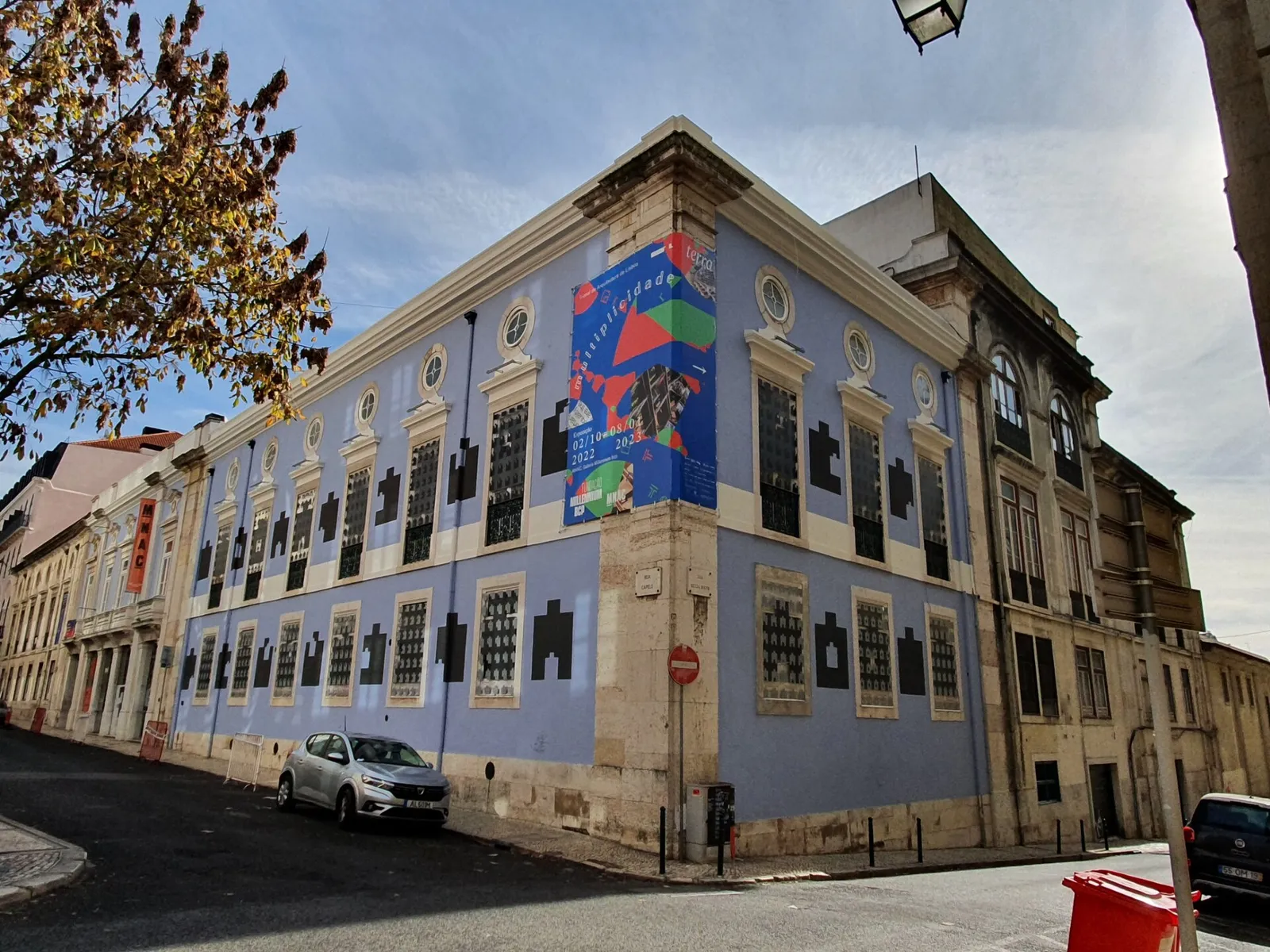
- The Museu Nacional de Arte Contemporânea do Chiado, Lisbon, in November 2022. Its artist page lists five of Eloy's paintings, among them Bailarico no bairro and O poeta e o anjo. GualdimG, CC BY-SA 4.0, via Wikimedia Commons.