

Seventy-four days to Macau: the 1924 flight of the Pátria
Two army officers and a mechanic set out for Macau in an ageing night bomber paid for by public subscription. They wrecked it in India, bought another and reached the colony in a storm too fierce to land in.
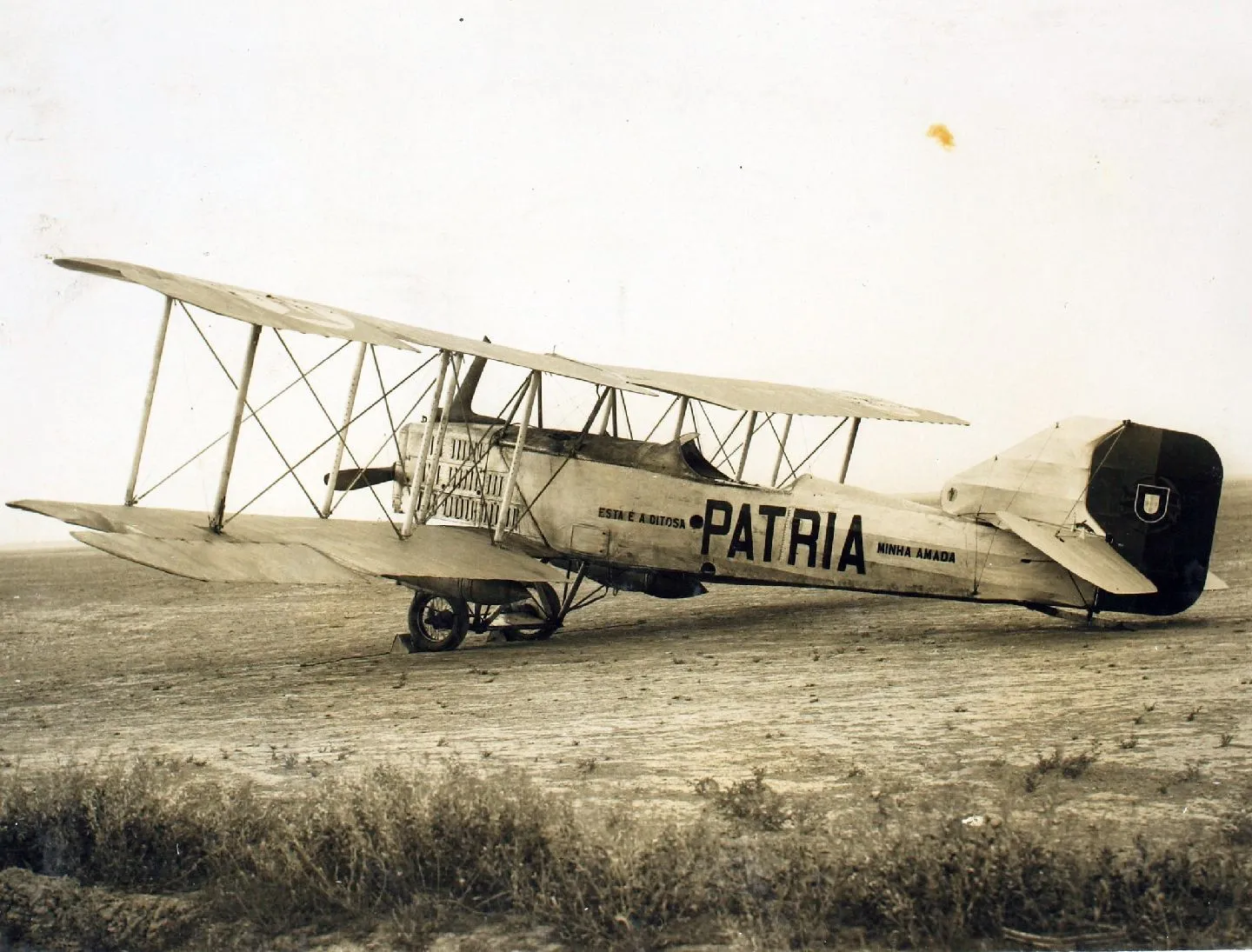
At a glance
- On 7 April 1924 two army captains, António Brito Pais and José Manuel Sarmento de Beires, took off from Vila Nova de Milfontes, on the Alentejo coast, to fly to Macau, Portugal's colony in southern China.
- Their aircraft, a French Breguet night bomber named Pátria, had been bought by public subscription; the government allowed the flight only if it cost the treasury nothing.
- The Pátria was wrecked in a forced landing near Jodhpur, India, on 7 May. A de Havilland DH.9A bought from the Indian government, the Pátria II, carried the two pilots on from Lahore, while the mechanic Manuel Gouveia followed by train and ship.
- On 20 June 1924, 74 days after they set out, the Pátria II flew over Macau in a storm, could not land and came down in a Chinese cemetery near Shum Chun, today's Shenzhen, beside the Hong Kong border.
- By the pilot's count they had covered 16,760 useful kilometres. A Portuguese gunboat brought them to Macau on 25 June, and in Lisbon the opposition turned the news against the government that had refused to fund them, which was out of office by 6 July.
A storm over the Portas do Cerco
At about one in the afternoon of Friday 20 June 1924, Captain António Brito Pais passed his pilot a scrap of paper. “Yang Kiang. 208 km an hour. 150 to go.” They were three hours out from Tông, an airfield near Hanoi, and the last 150 kilometres to Macau lay inside a wall of thunderstorms.
The pilot, Captain José Manuel Sarmento de Beires, climbed to 2,800 metres to get above the weather and failed. Rain hammered on the fabric of the wings, and then the voltmeter showed that the generator had died. In theory the battery would last two hours. Twenty minutes later Brito Pais glimpsed a stretch of coast he knew and told Beires to go down. Lapa island rose on their right, a rounded hump in the mist.
At about half past two the de Havilland Pátria II crossed the isthmus of Macau, over Ilha Verde and the Portas do Cerco, the old gate on the Chinese border. In the city a crowd had gone out to the landing field in the storm, and some people heard an engine. The rain fell in curtains. Beires turned to try again and met a solid black wall of water.
They tried for Canton, then for Hong Kong, flying ten metres above the sea. Over the paddy fields north of Kowloon the engine faltered and the propeller stopped. Beires put the aircraft into the only clear patch he could see, a field about 100 metres by 80. It bounced, hit an earth terrace and broke its propeller and undercarriage. The time by the aircraft's clock was 14.48.
“The journey was over. The Pátria II had flown over the city of Macau, after completing the Portugal–India route in the Breguet in which we had left Vila Nova de Milfontes.”
Why two army airmen wanted to reach Macau
Portugal had been a republic since 1910, and in 1924 its governments rarely lasted more than a few months. Aviation was a source of national pride. In 1922 the naval airmen Gago Coutinho and Sacadura Cabral had made the first flight across the South Atlantic, from Lisbon to Rio de Janeiro, with the state's full backing. Brito Pais and Sarmento de Beires belonged to the other air service, the army's, based at Amadora outside Lisbon.
Their idea was to retrace by air the sea route of Vasco da Gama and the old empire in Asia. The first goal was India; they later stretched it to Macau, the Portuguese settlement at the mouth of the Pearl River that had existed since 1557. In 1920 Macau had only 909 Portuguese residents, about 22 per cent of its non-Chinese population. The flight was also meant as a rehearsal for a Portuguese flight around the world.
The timing fitted the national mood. The year 1924 was celebrated as the fourth centenary of the birth of Luís de Camões, the poet of the voyages, with national ceremonies on 10 June. The airmen painted a line of his epic, Os Lusíadas, on their fuselage.
- Commander and observer
- Captain António Jacinto da Silva Brito Pais, born in Colos, Odemira, 15 July 1884; aged 39
- Pilot
- Captain José Manuel Sarmento de Beires, born in Lisbon, 4 September 1892; aged 31
- Mechanic
- Sergeant-major (sargento-ajudante) Manuel António Gouveia, born in Porto, 4 February 1890; aged 34
- First aircraft
- Pátria, a Breguet 16 Bn2 night bomber, Renault 300 hp engine
- Second aircraft
- Pátria II, a de Havilland DH.9A, 400 hp Liberty engine
- Dates
- 7 April to 20 June 1924 (74 days)
The two officers had flown together before. In 1920 (in October according to Fava and the 2018 edition, in April according to Neves and his co-authors) they had tried to fly a Breguet called Cavaleiro Negro (Black Knight) to Madeira without the war minister's permission. Fog hid the island, they ran out of fuel on the way back and came down in the Atlantic, where the steamer Gambia River picked them up. Instead of punishment they got a public campaign in their favour.
An aeroplane of alms
The state would not pay. On 9 July 1923 an army technical committee, meeting in the war minister's office, voted that the flight was impossible with the resources of Portuguese aviation; only Brito Pais voted against. The authorisation that finally came, in August 1923, allowed the flight “without expense to the national treasury”, using only what military aviation already had.
So the public paid. The aircraft itself had been bought in 1921 with a public subscription opened by three army officers after the Madeira attempt. In November 1923 Brito Pais's sister, Maria do Céu, started a new collection in the Alentejo, and collections followed across Portugal, in the Azores and Madeira, in Brazil and in Macau. Brito Pais put in money of his own, and Beires gave the proceeds of a book of his poems, Sinfonia do Vento. At a club in Macau, Brito Pais later called the Pátria “an aeroplane of alms”.
The Pátria was a Breguet 16 Bn2, a big French night bomber with a 300-horsepower Renault engine. It had been delivered in pieces to Amadora in June 1921 and fitted with extra fuel tanks. A storm damaged it that November and a crash in June 1923 put it out of action again, so it was not ready for load tests until January 1924.
“It was an old Breguet night bomber with a 300 hp Renault engine. Almost a “coucou”. And there were three of them in it.”
From Milfontes to the Indian desert
On 2 April the Pátria flew the 130 km from Amadora to Vila Nova de Milfontes, on the Alentejo coast in the municipality of Odemira, where Brito Pais was born. On 4 April, in drizzle, the Bishop of Beja blessed it and Maria do Céu broke a bottle of champagne on the propeller hub. Then the southwest wind blew for two days.
On Monday 7 April a mare called Boneca pulled the airmen in a cart up to the clifftop field before dawn, where a crowd, mostly fishing people, was waiting. No member of the government came. Brito Pais's father took the family signet ring off his finger and gave it to his son. At two minutes past six Major Cifka Duarte, director of military aviation, gave the signal, and after an 800-metre run the Pátria lifted off and turned east.
Gouveia had gone ahead by sea and joined them at Tunis. From there the three men crossed Libya in sandstorms and the hot desert wind the Italians called the ghibli, which on 16 April blew so hard that 500 km of flying gained them 100. They reached Cairo on 20 April, Baghdad on 26 April and Karachi, then in British India, on 4 May. At Bushehr in Persia the local authorities held them up until money changed hands.
On 7 May they left Karachi for Agra. Past Jodhpur the air turned to a scorching whirlwind and the radiator water neared boiling point. Unable to hold height, Beires picked a field beside a village. Two metres from the ground a gust threw the Breguet down; a wheel came off and the fuselage longerons snapped. The men were bruised, Brito Pais with a bleeding leg. The Pátria was beyond repair.
The village was Budhana, about ten kilometres from Pipar Road station. Its people gave them water, milk and beds in the shade, and Nanu Ram, a slight 18-year-old home on holiday, translated. Beires wrote down what the headman asked him to say: the village was glad to welcome them and sad that their aeroplane was broken.
A second aircraft, and a revolt at home
For three weeks the crew negotiated. On 20 May a telegram from Delhi offered a de Havilland DH.9A, a British day bomber with a 400-horsepower Liberty engine, for £4,700; the editors' introduction to the 2018 edition of Beires's book gives £4,300. Lisbon approved the purchase, and the money again came largely from Portuguese donors. The aircraft was assembled at Lahore and named Pátria II.
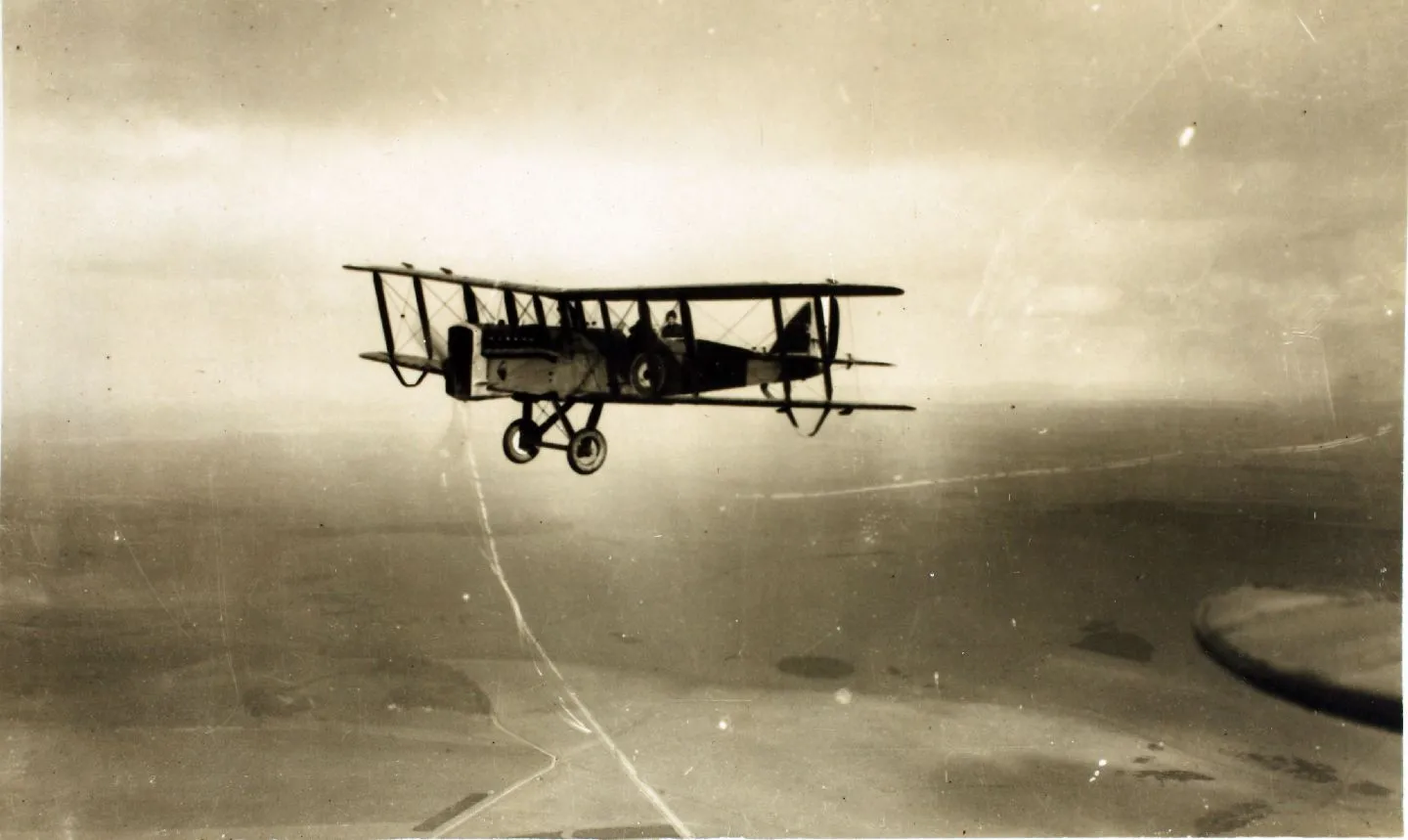
The DH.9A had room for two and their spares. From Lahore on 30 May Brito Pais and Beires flew on alone, through Ambala, Allahabad, Calcutta, Akyab, Rangoon, Bangkok and Ubon to Hanoi, while Gouveia followed by train and ship and met them where he could. The monsoon was arriving: they turned back once at Akyab and landed at Hanoi on 12 June on a waterlogged field.
In Lisbon, meanwhile, a government decree of 30 May removed Major Cifka Duarte as director of aeronautics and barred airmen from the post. The officers at Amadora refused to obey his replacement, flew over Lisbon dropping leaflets and shut themselves in their base. About 2,000 government troops surrounded it. After five days, on 7 June, they surrendered and were taken under arrest to the fort of São Julião da Barra. A note in the second edition of Beires's book dates the revolt to 10 to 15 June instead.
In Hanoi Beires read a short telegram in a French paper: the Portuguese airmen besieged near Lisbon would resist to the death. He understood little more, but wrote that it pushed them on. The field at Bac-Mai was turning into a swamp, so on 17 June they hopped to Tông, a drier strip near Son Tay. The generator failed on the way, and the engine refused to run properly until the evening of 19 June.
The last leg, 20 June 1924
The Pátria II left Tông at 9.58 under a cloudless sky, with its airspeed indicator broken. It crossed Haiphong, the Bay of Ha Long and the Gulf of Tonkin, then Pakhoi and the French leased territory of Kouang-Tchéou-Wan. The weather broke near Yang Kiang. With the French field 200 km behind them and into the wind, Brito Pais chose to press on to Macau, 150 km ahead.
09.58
Take-off from Tông, near Son Tay
Clear sky; average speed about 170 km/h.
c. 13.00
Over Yang Kiang
208 km/h; 150 km to Macau. Thunderstorms ahead.
Early afternoon
The generator fails
The engine runs on the battery.
c. 14.30
Over Macau
Lapa island, Ilha Verde and the Portas do Cerco; landing impossible in the downpour.
Minutes later
Towards Canton, then Hong Kong
Flying about ten metres above the sea.
14.48
Forced landing
A small field, later found to be a Chinese cemetery near Shum Chun; propeller and undercarriage broken.
Afternoon
On foot to the border
A two-kilometre walk to Shum Chun, then to the Chinese customs post and Fanling station, in British territory.
c. 19.00
Arrival in Kowloon
Welcomed by the Portuguese consul, Cerveira de Albuquerque.
After the crash a barefoot Chinese soldier ran up with his rifle. The airmen tried Portuguese, French and English, then mimed a request to guard the aircraft. Two kilometres away was Shum Chun, the town that has since become the city of Shenzhen. Nobody there understood them. Beires drew a steam train with a Chinese brush, and the shopkeeper went off and fetched cigarettes.
The airmen found the station themselves; officials there pointed them to the Chinese customs post 800 metres away, and 500 metres beyond it they reached Fanling station, in British territory.
Beires went back by sedan chair for the bags and instruments and found villagers sheltering from the rain on the lower wings. The field, he learned, was a Chinese cemetery. At about seven in the evening a train brought the two men, soaked and exhausted, to Kowloon, where the Portuguese community received them at the Clube de Recreio.
Beires logged every stage. By his count the 74 days had taken 118 hours 21 minutes in the air and brought them 16,760 kilometres closer to Macau, and for three of those weeks, after the crash at Budhana, they had no aircraft at all.
| Date (1924) | Stage | Aircraft | Distance (km) | Time in the air |
|---|---|---|---|---|
| 7 April | Vila Nova de Milfontes to Málaga | Pátria | 630 | 4 h 30 |
| 9 April | Málaga to Oran | Pátria | 450 | 2 h 45 |
| 12 April | Oran to Tunis | Pátria | 1,100 | 6 h 50 |
| 14 April | Tunis to Tripoli | Pátria | 700 | 6 h 50 |
| 16 April | Tripoli to Homs (turned back by the ghibli) | Pátria | 500 flown, 100 gained | 4 h 00 |
| 18 April | Homs to Benghazi | Pátria | 800 | 6 h 18 |
| 20 April | Benghazi to Cairo | Pátria | 1,350 | 9 h 15 |
| 23 April | Cairo to Rayak | Pátria | 760 | 5 h 10 |
| 26 April | Rayak to Baghdad | Pátria | 850 | 6 h 00 |
| 28 April | Baghdad to Bushehr | Pátria | 860 | 6 h 05 |
| 2 May | Bushehr to Bandar Abbas | Pátria | 670 | 4 h 31 |
| 3 May | Bandar Abbas to Chabahar | Pátria | 550 | 3 h 30 |
| 4 May | Chabahar to Karachi | Pátria | 880 | 6 h 29 |
| 7 May | Karachi to Budhana, near Jodhpur (crash) | Pátria | 820 | 5 h 20 |
| 30 May | Lahore to Ambala | Pátria II | 290 | 2 h 05 |
| 31 May | Ambala to Allahabad | Pátria II | 800 | 4 h 30 |
| 1 June | Allahabad to Calcutta | Pátria II | 800 | 4 h 15 |
| 4 June | Calcutta to Akyab | Pátria II | 650 | 3 h 55 |
| 6 June | Akyab to Rangoon | Pátria II | 650 | 4 h 05 |
| 9 June | Rangoon to Bangkok | Pátria II | 680 | 5 h 15 |
| 11 June | Bangkok to Ubon | Pátria II | 550 | 3 h 05 |
| 12 June | Ubon to Hanoi | Pátria II | 780 | 5 h 50 |
| 20 June | Tông, near Son Tay, over Macau to Shum Chun | Pátria II | 1,050 | 4 h 50 |
From Beires's technical appendix (2018 edition). Not shown: the ferry flight from Amadora to Milfontes on 2 April (130 km), which his totals leave out, and three flights they include: a false start at Baghdad on 27 April (40 km), a turn-back at Akyab on 5 June (260 km) and the hop from Hanoi to Tông on 17 June (100 km). His totals are 17,570 km and 118 h 21 min in the air, of which 16,760 km counted as progress; his useful stages in fact add up to 16,770 km. Neves and his co-authors, using the 1953 edition, give 77 h 11 min for the Pátria and 117 h 41 min in all, 40 minutes less than this table.
Distance gained towards Macau, week by week
km (cumulative)
Running total at the end of each week from the departure on 7 April, summed from the useful stages in Beires's appendix (the Homs leg counted as 100 km). The flat stretch is the three weeks without an aircraft after the crash at Budhana. The total of 16,770 km is 10 km more than the 16,760 his own recapitulation gives.
Show the data
| Useful distance flown | |
|---|---|
| 13 Apr | 2,180 |
| 20 Apr | 5,130 |
| 27 Apr | 6,740 |
| 4 May | 9,700 |
| 11 May | 10,520 |
| 18 May | 10,520 |
| 25 May | 10,520 |
| 1 Jun | 12,410 |
| 8 Jun | 13,710 |
| 15 Jun | 15,720 |
| 20 Jun | 16,770 |
Arrival by gunboat
In Macau the crowd at the field had gone home disappointed. Two hours after the engine was heard, the flag on the governor's palace went to half-mast; it was for a bomb attack in Canton, but people took it for news of a fatal crash. At six that evening the river gunboat Macau, under First Lieutenant Santos Pedro, was sent to Hong Kong. It spent the night crossing 50 miles of storm-tossed sea and anchored there on the morning of 21 June.
That afternoon the larger gunboat Pátria arrived. Its deck, Beires wrote, was the first piece of Portuguese territory they had stood on since Milfontes. Taking the wreck away was harder. The cemetery lay in ground that Sun Yat-sen's army had taken days earlier from the forces of his rival Chen Jiongming, and the local general would not release a foreign aircraft until a Portuguese party called on him on 23 June. Gouveia arrived on 24 June.
On Wednesday 25 June the Pátria carried the three men to Macau, and at half past three they came ashore in a boat rowed by the gunboat's sergeants. The festivities for the day of the city, 24 June, had begun the day before. The governor, Rodrigo Rodrigues, received them, there were torchlight processions and firecrackers, and the government opened a subscription to pay for the celebrations.
The poet Camilo Pessanha, who had lived in Macau since 1894, wrote a short homage, dated 4 July 1924, calling their visit the most honourable Macau had received for centuries. In a speech in Macau Brito Pais said they had needed to come to “Portuguese land among Portuguese lands”.
How Lisbon took the news
The news reached Lisbon on 21 June and filled the front pages. When parliament met on Monday 23 June, deputies used the flight against the government of Álvaro de Castro and its war minister, Américo Olavo, who had refused the airmen money and now held their comrades in prison.
“For forty-eight hours all Portugal has been thrilling with enthusiasm at this stroke of daring.”
Cunha Leal told the chamber that the minister had refused the airmen twelve contos and that the people had paid it instead, coin by coin. On 24 June the Senate unanimously saluted the airmen and the Portuguese people who had funded them, then passed a government bill, tabled in April, promoting the two captains to major and Gouveia to second lieutenant, backdated to 7 April.
On 26 June, Fernando Mendonça Fava writes, the government put a motion of confidence to the chamber and lost it. Álvaro de Castro's cabinet, Américo Olavo included, was out of office by 6 July, and the imprisoned officers of Amadora were later freed.
The long way home
On the governor's orders the crew went home the long way, to meet Portuguese communities abroad. After Canton and eight days in Hong Kong they sailed by way of Shanghai and Japan to Vancouver on the Empress of Canada, crossed the United States from California to Boston and New York, and sailed for Europe on the Aquitania on 28 August. From Southampton the liner Arlanza took them to Lisbon.
Nobody met the ship. The telegram from the embassy in London announcing their arrival had gone astray, and the government promised an inquiry. Beires has the Arlanza entering the Tagus at about midday on 9 September 1924, in the rain, and Neves and his co-authors follow him; Fava gives 8 September. The Aero Club de Portugal organised the welcome that followed. On 14 September, after a parade in the Terreiro do Paço, President Manuel Teixeira Gomes decorated the airmen with the Order of the Tower and Sword.
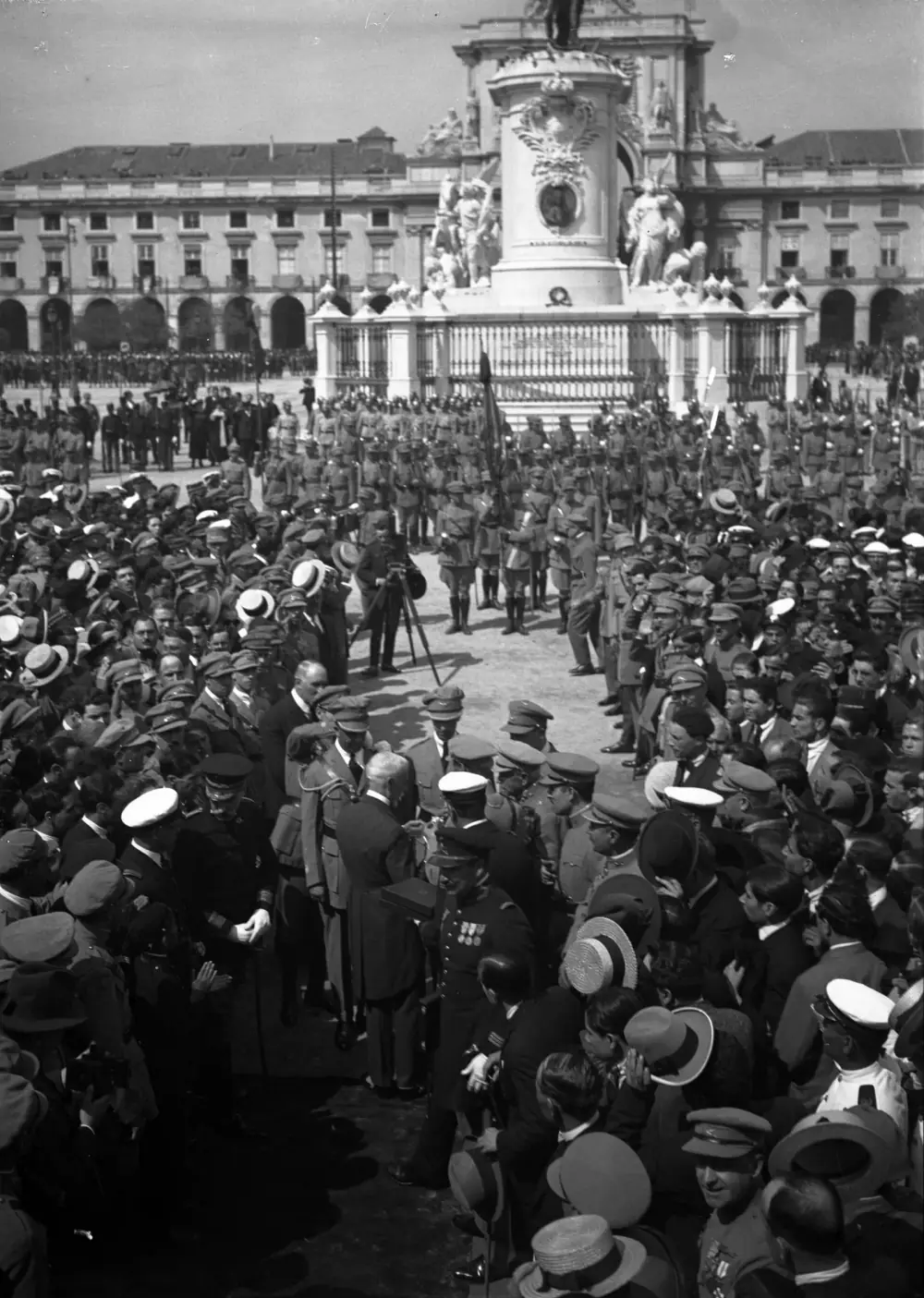
Their later lives went different ways. In 1927 Beires, the navigator Jorge de Castilho and Gouveia made the first night crossing of the South Atlantic by air. Brito Pais was killed on 22 February 1934, aged 49, when two aircraft collided near Algueirão, outside Sintra. Gouveia trained as a pilot, flew on the 1935 air cruise to the colonies and died in Lisbon in 1966.
Beires opposed the military dictatorship that followed the coup of 28 May 1926 and the Estado Novo built on it. He was sentenced in 1933, went into exile and settled in Brazil. Amnestied in 1951 and restored to the army reserve, he was promoted to colonel by distinction in 1972 and died in Porto on 8 June 1974, six weeks after the Carnation Revolution. Morujão argues that his politics are one reason the flight was half-forgotten.
Why it still matters
It was the first flight from Portugal to Macau, though the airmen could only fly over the city and finished the journey by gunboat, 75 years before Portugal handed Macau to China in 1999. It was made with almost no state help: no spare aircraft, no radio, and money raised from ordinary donors. Later that year Sacadura Cabral, the pilot of 1922, disappeared while flying one of the aircraft bought for his own planned flight around the world.
Others have retraced the route. In 1987 two Air Force majors, Jorge Cruz Galego and Armando Leal, and a mechanic flew a single-engined aircraft named Sagres from Lisbon to Macau in the Pátria's wake, in 27 days and 106 hours in the air. Macau and Portugal issued stamps for the 75th anniversary in 1999, and in 2018 Beires's book was republished in Portuguese and Mandarin. The centenary programme ended at Milfontes on 21 September 2024 with Air Force flypasts over the take-off field and a plaque at the monument.
FAQs
Did the first flight from Portugal to Macau actually land in Macau?
No. On 20 June 1924 the Pátria II reached Macau and flew over it at about half past two in the afternoon, but a violent storm made landing impossible. It crash-landed in a Chinese cemetery near Shum Chun, now Shenzhen, beside the Hong Kong border. The airmen reached Macau by gunboat on 25 June.
Who made the 1924 Lisbon–Macau flight?
Captain António Jacinto da Silva Brito Pais, the commander, and Captain José Manuel Sarmento de Beires, the pilot, both army airmen, with the mechanic Manuel António Gouveia. Gouveia flew with them from Tunis to India and followed by train and ship once they changed to a two-seat aircraft.
What aircraft did they use?
Two. The Pátria was a French Breguet 16 Bn2 night bomber with a 300-horsepower Renault engine, bought by public subscription; it was wrecked near Jodhpur on 7 May 1924. The Pátria II was a de Havilland DH.9A with a 400-horsepower Liberty engine, bought from the government of India for £4,700 (the editors of the 2018 edition of Beires's book give £4,300) and flown from Lahore.
How long and how far was the flight?
It took 74 days, from 7 April to 20 June 1924. Sarmento de Beires recorded 17,570 km flown and 16,760 km of real progress, with 118 hours 21 minutes in the air, in the technical appendix of the 2018 edition of his book. Accounts based on the 1953 edition give 117 hours 41 minutes.
Where can you see traces of the flight today?
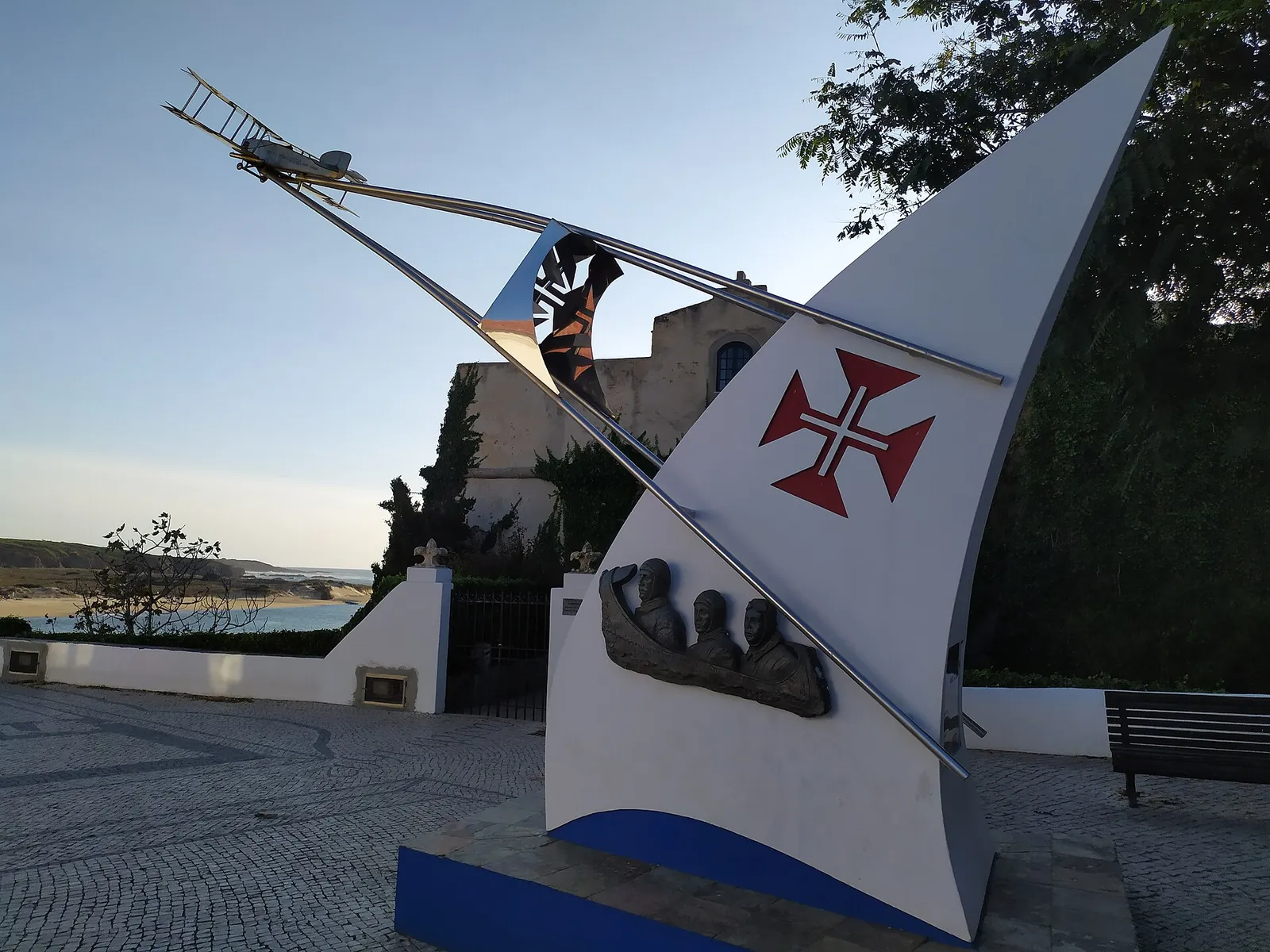
Vila Nova de Milfontes has a monument to the flight in Largo da Barbacã, near the take-off field of Campo dos Coitos. The Museu do Ar near Sintra holds the Pátria's engine and objects from the flight.
On the timeline
Open the timelineNearby moments from the first republic (1910–1926).
Mário Cesariny de Vasconcelos, poet and painter regarded as the leading figure of Portuguese surrealism, is born in Lisbon.
Birth in Fajã de Baixo, on São Miguel in the Azores, of Natália Correia, poet, playwright and firebrand of Portuguese letters. An Estado Novo court fined her in 1970 over an anthology of erotic and satirical verse; in 1971 she co-founded Lisbon's Botequim bar, and after 1974 she sat in parliament and wrote the words of the Azorean anthem.
Birth in Lisbon of the novelist Urbano Tavares Rodrigues, son of Alentejo landowners from Moura. He taught Portuguese at Montpellier, Aix and Paris from 1949 to 1955, was barred from university teaching in Portugal for political reasons and, as an active opponent of the Estado Novo, was jailed in the Aljube in 1963 and arrested again later. After 1974 he taught at the Lisbon Faculty of Letters and became one of the most prolific Portuguese writers and critics of his generation.
The Lisbon–Macau flight of 1924
After 74 days and two aircraft, army aviators Brito Pais and Sarmento de Beires fly over Macau at the end of the first flight from Portugal to Macau, begun on 7 April at Vila Nova de Milfontes. A violent storm stops them landing, and they crash-land in a Chinese cemetery near Shum Chun, just outside Hong Kong, having covered some 16,760 km.
The poet António Ramos Rosa is born in Faro. Jailed for three months for his part in the anti-Salazar MUD movement, he co-founded the influential poetry magazine 'Árvore' in 1951 while earning his living as an office clerk and translator, and won the Prémio Pessoa in 1988.
Sacadura Cabral, who with Gago Coutinho had made the first flight across the South Atlantic in 1922, vanishes in fog after taking off from Amsterdam for Lisbon in a Fokker seaplane with his mechanic, Corporal Pinto Correia. Pieces of a float were found in the Channel days later, but neither man was ever seen again.
The poet Alexandre O'Neill is born in Lisbon. A founder of the Lisbon Surrealist Group in the late 1940s, he wrote sharp, ironic verse about Portuguese life and, as an advertising copywriter, coined one of the country's best-known slogans: 'Há mar e mar, há ir e voltar' ('There's sea and sea, there's going and coming back').
Coming up in history
All long reads 22 June 1874The cable that put Brazil a day from Europe: Carcavelos, 22 June 1874
 23 June 1940The Exposição do Mundo Português: Salazar's empire on show in Belém, 1940
 24 June 1128São Mamede, 24 June 1128: Afonso Henriques defeats his mother
 25 June 1975Mozambique's midnight: independence at Machava, 25 June 1975
8 sources
Archives, scholarship and reporting this article was checked against.
- 1
De Portugal a Macau (A viagem do Pátria), by J. Sarmento de Beires (1925); bilingual Portuguese-Mandarin edition by Isabel Morujão and Rita Pina BritoCITCEM and Edições Afrontamento, Porto, 2018 (repository copy, Faculdade de Letras da Universidade do Porto)
- 2
Asas para Oriente. A primeira viagem aérea de Portugal a Macau (1924): texto, contexto e pretexto (Isabel Morujão)Rotas a Oriente 2 (2022), Universidade de Aveiro
- 3
Para a história do Raide Aéreo Lisboa-Macau (Fernando Mendonça Fava)Revista de Cultura / Review of Culture 52 (2016), Instituto Cultural de Macau
- 4
The First Aerial Journey from Portugal to Macau (Fernando M. S. P. Neves, Jorge M. M. Barata and André R. R. Silva)Open Journal of Applied Sciences 6 (2016)
- 5
Diário da Câmara dos Deputados, session 108, 23 June 1924Assembleia da República, Debates Parlamentares
- 6
- 7
Centenário da Viagem Aérea Portugal-Macau: programa de encerramento, 21 de setembro de 2024Câmara Municipal de Odemira
- 8
Flying into the unknown (Gonçalo César de Sá)Macao Magazine, June 2024
Image credits
- The Breguet Pátria in 1924; the archive dates the photograph to April or May, during the first half of the flight. The fuselage carries a line from Camões, “Esta é a ditosa pátria minha amada” (This is my blessed, beloved homeland). The photographer and the place are not recorded. Unknown author, Public domain, via Wikimedia Commons.
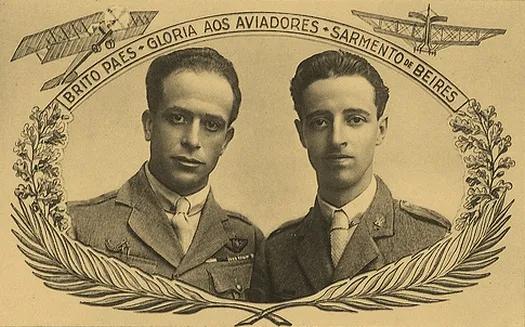
- A commemorative postcard of 1924: Brito Pais (left) and Sarmento de Beires under the words “Gloria aos aviadores” (Glory to the airmen). Postcards, matchboxes and posters carried their faces that summer. Unknown author, Public domain, via Wikimedia Commons.
- A de Havilland DH.9A of the Royal Air Force in flight, photographed from another aircraft. The Pátria II was a machine of this type, bought from the government of India in May 1924. San Diego Air & Space Museum, Public domain, via Wikimedia Commons.
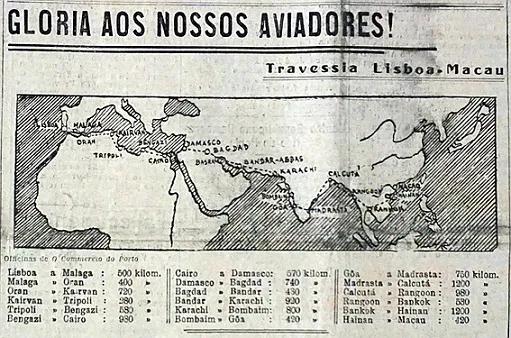
- “Glory to our airmen!”: the route as printed by the Porto daily O Comércio do Porto in 1924. Its table lists a planned route through Kairouan, Damascus, Bombay, Goa, Madras and Hainan; the airmen in fact went by way of Tunis, Rayak, Bushehr, Lahore, Akyab and Hanoi. O Comércio do Porto, Public domain, via Wikimedia Commons.
- The homage to the crew of the Pátria in the Terreiro do Paço, Lisbon, in 1924, with troops drawn up before the statue of King José I and a newsreel camera at work. Beires describes the parade and decoration there on 14 September. Photograph by Joshua Benoliel. Joshua Benoliel, Public domain, via Wikimedia Commons.
- The monument to the flight in Largo da Barbacã, Vila Nova de Milfontes, beside the fort above the mouth of the Mira: a model of the Pátria above a relief of the three airmen. Vanbasten 23, CC BY-SA 3.0, via Wikimedia Commons.