

Vitoria, 21 June 1813: the Portuguese army that helped drive Joseph out of Spain
Four years after a British marshal began rebuilding it, Portugal's army marched across Spain in a single month and fought in the battle that ended King Joseph's reign. Then the soldiers fell on the richest baggage train of the war.
At a glance
- On Monday 21 June 1813, Wellington's British, Portuguese and Spanish army beat King Joseph Bonaparte's French army on the plain of Vitoria in the Basque Country and took 151 of its guns.
- Portuguese troops were 28,792 of the 81,276 men in Wellington's Anglo-Portuguese army when the campaign began, about 35 per cent, and roughly four in ten of its infantry.
- The army had been rebuilt since 1809 by William Carr Beresford, a British general made a Portuguese marshal, who purged the officer corps and placed British officers in its battalions.
- Counts of Portuguese losses range from 921 killed, wounded and missing (Charles Oman, from the regimental returns) to 1,049 killed and wounded (Wellington's return of 22 June 1813).
- The French left behind their treasure, Joseph's baggage and paintings from the Spanish royal collection; Wellington complained that his soldiers took about a million pounds sterling.
Waiting above the Zadorra
By noon on 21 June 1813 a Portuguese brigade had been waiting for hours at Las Guetas, on the slopes of the Monte Arrato above the little river Zadorra in northern Spain. It was the 9th and 21st Line regiments and the 11th Caçadores, about 2,460 men when the campaign began, under Brigadier-General Power, and it formed the third brigade of Sir Thomas Picton's 3rd Division.
From there Picton could watch the allied right wing pushing into the French, and he was fuming. An inflammation of the eyes had him wearing a tall civilian top hat instead of his cocked hat, and as he waited for orders he beat his stick against his cob's mane.
When an aide finally rode up, he was looking for Lord Dalhousie of the 7th Division, who had been given command of the column over Picton's head. His orders were that when Dalhousie attacked the bridge in front of Picton, the 4th and Light Divisions were to support him. Picton told the aide what to tell Wellington.
“You may tell Lord Wellington from me, Sir, that the 3rd Division, under my command, shall in less than ten minutes attack that bridge and carry it, and the 4th and Light may support if they choose.”
His two British brigades went down the hillside at a run, one to the bridge of Mendoza and one to a ford above it. British riflemen drove off the three French guns covering the bridge, and the 3rd Division crossed almost unopposed, with Power's Portuguese behind.
Between two and three in the afternoon the allies were across the Zadorra in force. Power's Portuguese went for the French flank on the hill above the village of Ariñez, the decisive point of King Joseph's line, while the 4th Division ran down the slope opposite with its own Portuguese brigade, under Colonel Stubbs, in front. The next day Wellington wrote to London about both.
“The Portuguese troops in the 3rd and 4th divisions, under the command of Brigadier General Power and Colonel Stubbs, led the march with steadiness and gallantry never surpassed on any occasion.”
Portugal, Spain and a French king
The battle came late in the Peninsular War, which had begun when Napoleon sent an army into Portugal in 1807 and the royal family sailed for Brazil. Portugal was invaded three times. The third invasion was stopped in 1810 before the Lines of Torres Vedras, the chain of forts covering Lisbon, and its army retreated from Portugal in March 1811.
In Spain the French stayed. In 1808 Napoleon removed its Bourbon kings and made his elder brother, Joseph Bonaparte, King of Spain. Spanish armies and guerrillas fought on, and guerrilla bands raided the convoys on the roads between French garrisons.
By 1813 the balance had turned. Wellington, commander of the Anglo-Portuguese army, had won at Salamanca in July 1812 but then failed to take Burgos and retreated to the Portuguese border for the winter. Napoleon's disaster in Russia changed the balance: instead of sending reinforcements to Spain, he began to draw troops away from it. The news of the retreat from Moscow reached Wellington in Lisbon on 18 January 1813.
Beresford's army
In 1808 Portugal hardly had an army. Junot, the French commander, had broken up the old one and sent its best men to serve Napoleon abroad. In February 1809 the British government lent the Regency in Lisbon a general, William Carr Beresford, who was made a Portuguese field marshal and given the job of building a new army. He was 40, junior in rank, and spoke Portuguese.
Beresford started with the officers. Within four months 215 were removed from the service and another 107 retired. Some 350 British officers and sergeants joined the Portuguese army, the officers tempted by a guaranteed step in rank. British drill and bilingual orders came in, degrading punishments were banned, and units commanded by a Briton had a Portuguese second-in-command, and the other way round.
The men were harder to keep. Conscription filled the ranks, and desertion drained them: of 23,885 men recruited between May 1809 and October 1810, 10,224 deserted. Britain paid much of the bill. Its aid to Portugal rose from £140,156 in 1808 to £1,986,000 in 1810, and by the last campaigns the annual subsidy was £2 million.
By 1813 the system was settled. Most of Wellington's divisions paired two British brigades with one Portuguese brigade of two line regiments and a caçador battalion. Many Portuguese brigades were led by British officers in Portuguese service, but Portuguese generals commanded too: Carlos Frederico Lecor had a brigade in the 7th Division, and Francisco da Silveira, Count of Amarante, a whole Portuguese division.
Across Spain in a month
Wellington's plan for 1813 relied on country tracks that he trusted the French would never think usable. While Sir Rowland Hill advanced openly on Salamanca with the southern wing, Sir Thomas Graham took the larger part of the army through Trás-os-Montes, the remote north-east of Portugal. The divisions crossed the Douro on boats gathered at Peso da Régua, São João da Pesqueira and Pocinho, and assembled around Bragança and Miranda do Douro.
Until 26 May nothing crossed the frontier except D'Urban's Portuguese cavalry. If French patrols saw them, they would suspect nothing more than the local militia. Then Graham's three columns marched into Spain by those tracks, crossed the river Esla behind the French line on the Douro and joined Hill. Each time the French stood, the allies went round their right flank, and each time they fell back.
22 May
Hill's wing advances on Salamanca
Wellington leaves his winter headquarters at Freineda, in Portugal, to join it.
26 May
Graham's columns cross the frontier
From Bragança, Outeiro, Vimioso and Miranda do Douro.
31 May
Wellington on the Esla
The French line on the Douro is turned.
13 June
Burgos abandoned
The French blow up the castle that defied Wellington in 1812.
14–16 June
Across the Ebro
About 70,000 allied troops pass the upper Ebro, Graham's wing first.
18 June
Combats at Osma and San Millán
The allies run into French columns north of the Ebro.
19–20 June
Joseph stands at Vitoria
His first convoys leave for France.
21 June
Battle of Vitoria
British and Portuguese infantry in Wellington's army, 25 May 1813
men
- British
- Portuguese
Marching strength at the start of the campaign, from the returns Charles Oman found in the Public Record Office. Every division but the 1st had a Portuguese brigade, and Silveira's division and the independent brigades of Pack and Bradford were all Portuguese. The British figures include officers; the Portuguese returns list no officers separately. The 6th Division was left at Medina de Pomar and missed the battle.
Show the data
| British | Portuguese | |
|---|---|---|
| 1st Div. | 4,854 | 0 |
| 2nd Div. | 7,772 | 3,062 |
| 3rd Div. | 4,977 | 2,460 |
| 4th Div. | 4,974 | 2,842 |
| 5th Div. | 4,353 | 2,372 |
| 6th Div. | 4,872 | 2,475 |
| 7th Div. | 4,850 | 2,437 |
| Light Div. | 3,539 | 1,945 |
| Silveira's Div. | 0 | 5,287 |
| Pack and Bradford | 0 | 4,689 |
- Anglo-Portuguese army, 25 May 1813
- 81,276 (52,484 British, 28,792 Portuguese)
- Portuguese share of the infantry
- 27,569 of 67,760, about 41%
- Spanish troops with Wellington, 1 June
- 25,425
- British and Portuguese rank and file, 17 June
- 67,036, of whom 25,489 Portuguese (Wellington)
- Forces in the battle (Oman)
- About 75,000 allies against 57,000 French fighting men
Four columns on the Zadorra
King Joseph and his chief of staff, Marshal Jean-Baptiste Jourdan, decided to fight in front of Vitoria to cover the huge convoys of treasure, officials and Spanish families fleeing with them. Jourdan was in bed with a fever on 20 June, and the line was never adjusted. Their army faced west, towards the Bayas valley where Wellington had been seen. Not one of the 11 bridges over the Zadorra between Durana and Nanclares was blown up.
Wellington sent in four columns from three directions. At eight in the morning, on a bright clear day, Hill's column, about 20,000 men with Silveira's Portuguese division and Morillo's Spaniards, crossed the river below the defile of La Puebla and climbed the heights on the French left. Two columns, about 30,000 men, came at the centre, one by the bridges of Nanclares and one over the Monte Arrato. Graham, with 20,000, came down the Bilbao road from the north to cut the main road to France.
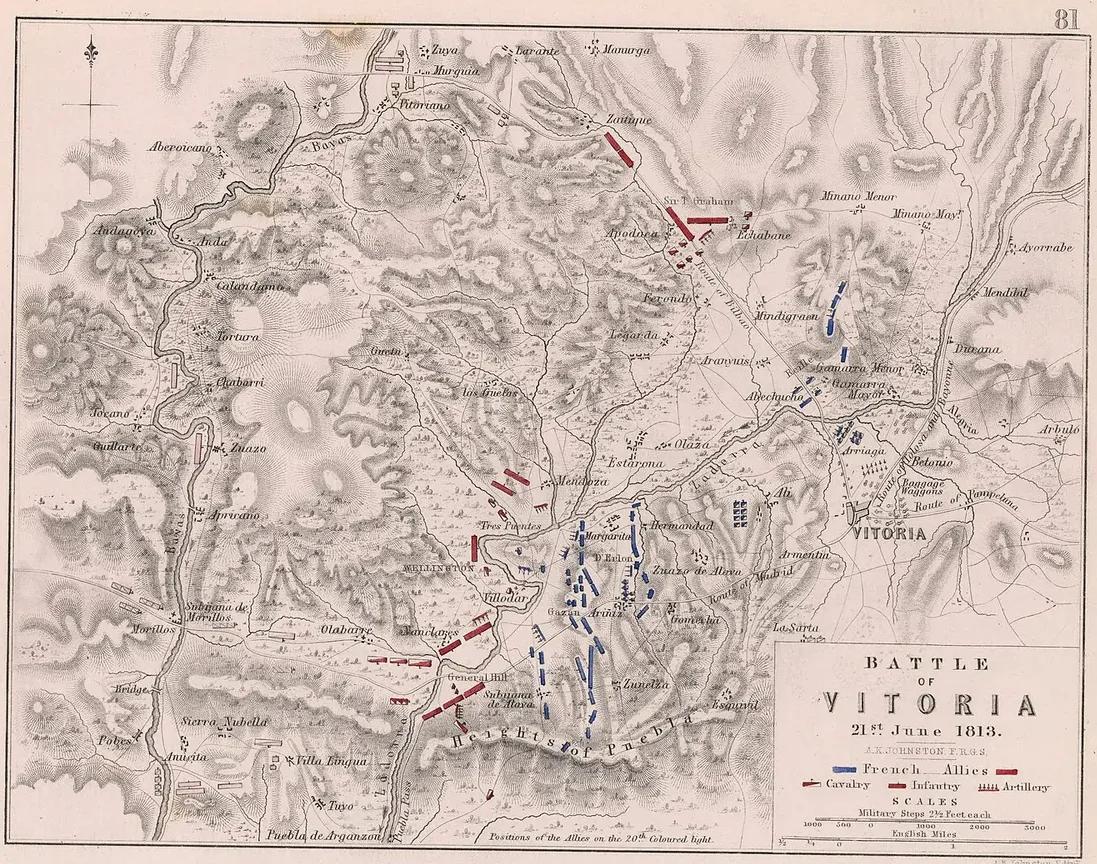
In the north, Portuguese troops went in first. When Graham advanced around midday, the 4th Caçadores of Pack's brigade stormed a hill above Aranguiz. Graham reported that the Portuguese and Spanish troops “behaved admirably” and that the 4th and 8th Caçadores particularly distinguished themselves. A brigade of the British 5th Division then stormed the village of Gamarra Mayor, but the bridge behind it was taken and retaken, and the fight there stayed deadlocked until nearly five o'clock.
In the centre, Picton's attack broke Joseph's line. As the British 74th and 88th stormed the village, Power's brigade seems to have pushed back the French brigade beside it, and the French fell back to a second line nearer Vitoria. There the artillery duel was the fiercest anyone had seen in the Peninsula: 76 French guns against 75 allied ones, 18 of them Portuguese. Oman names Power's and Stubbs's brigades as the special sufferers.
The second line did not hold. Longa's Spaniards had already cut the main road to France at Durana, and when the line gave way late in the afternoon the French army broke for the only road left, east towards Pamplona. Gunners cut their horses loose and abandoned the guns in the ravines. Joseph himself galloped off across the fields as British hussars charged his escort.
Who fought and who bled
Not every Portuguese soldier at Vitoria fired a shot. Lecor's brigade came over the Monte Arrato too late to fire a shot and had no men killed or wounded; Silveira's division, held in reserve, lost 10. The losses fell on the brigades that led the attacks. Power's brigade lost 411 men and Stubbs's 246, about seven-tenths of all the Portuguese casualties.
Portuguese killed, wounded and missing at Vitoria, by brigade
casualties
Totals by brigade from the regimental figures in Oman's appendix, summed from the totals he prints for each regiment. They add up to 917. Oman's own total is 921, and two of his regimental lines do not add up across (the 7th Caçadores and the 24th Line). Lecor's 6 were missing men, whom Oman took for marauders.
Show the data
| Casualties | |
|---|---|
| Power (3rd Div.) | 411 |
| Stubbs (4th Div.) | 246 |
| Spry (5th Div.) | 81 |
| Pack | 75 |
| Light Div. | 33 |
| Bradford | 31 |
| Ashworth (2nd Div.) | 22 |
| Silveira's Div. | 10 |
| Lecor (7th Div.) | 6 |
| Cavalry | 2 |
| Source | Killed | Wounded | Missing | Total |
|---|---|---|---|---|
| Wellington's return, 22 June 1813 | 150 | 899 | Not divided by nation | 1,049 plus missing |
| Wellington to Bathurst, 2 July 1813 (rank and file only) | Not given | Not given | 73 | 1,022 |
| Oman, from the regimental returns (1922) | 242 | 636 | 43 | 921 |
Wellington's return gives 740 killed and 4,174 wounded for the whole army, but its British, Spanish and Portuguese columns add up to 4,170 wounded; its 266 missing were British and Portuguese, not separated. Oman puts the total allied loss at 5,158: 3,675 British, 921 Portuguese and 562 Spanish, though his text gives 3,672 British and 552 Spanish, and his Spanish columns add up to 552.
The French official return, compiled after the army reached France, gave 8,091 killed, wounded and missing. Oman thought the real loss was about 8,000: some of the missing rejoined later, but the Royal Guard and some of the artillery sent no figures. Only about 2,000 were taken prisoner. What the French lost above all was their equipment: 151 guns, 415 caissons and nearly two million musket cartridges. Wellington believed they got away with one gun and one howitzer.
The plunder of King Joseph's baggage
East of Vitoria the roads were jammed with everything the French had carried out of Spain: the army's pay chest, carriages marked as the Emperor's property, church silver, jewels and the King's own baggage. An eyewitness guessed that nearly 20,000 people, soldiers, officials, women and children, were trapped among the wagons. French stragglers began the looting. British and Portuguese soldiers, servants and muleteers joined in.
That night the battlefield became a fair. Mules sold for three guineas and horses for ten, and men paid six or eight silver dollars for a gold coin that was easier to carry. Joseph's treasurer was shot defending his strong-box. Wellington had hoped to capture the five million francs that had just reached the French; about a twentieth was recovered.
“All the Portuguese boys belonging to some divisions are dressed in the uniforms of French officers, many of generals.”
Wellington was furious. On 29 June he told Lord Bathurst, the war secretary, that the battle had “totally annihilated all order and discipline” and that the soldiers had about a million sterling among them. On 2 July he counted the cost. Between 17 and 29 June, he wrote, straggling and plunder had cost the British 2,733 rank and file over and above their losses in the battle, and the Portuguese 1,423, more than the 1,022 (73 of them missing) they had lost in the fighting.
It was in the same letter that he called his British common soldiers “the scum of the earth”.
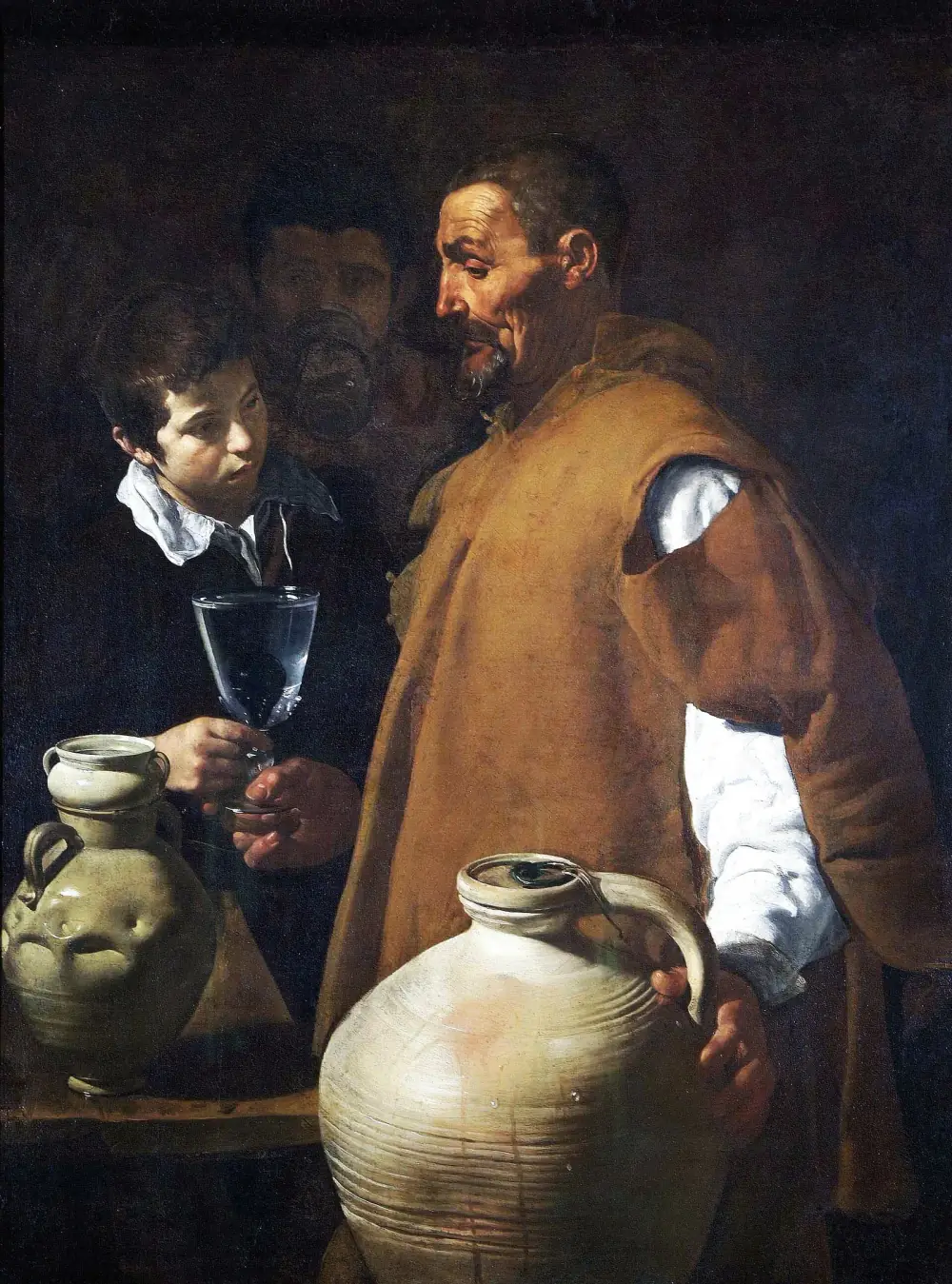
Rolled up in the imperials of Joseph's carriages were paintings taken out of their frames from the Spanish royal collection. About 200 were recovered. Ferdinand VII of Spain later gave them to Wellington, and 83 still hang at Apsley House. Marshal Jourdan's baton, taken by the 87th Regiment, went to the Prince Regent in London. It gave him the idea of a British field marshal's baton, and Wellington received the first one made.
To the Pyrenees and into France
Napoleon blamed his brother. He removed Joseph from command, ordered him to stop at Bayonne and never come to Paris, and sent back Marshal Soult, Joseph's old enemy, to take over the army. Soult counter-attacked in the Pyrenees in late July 1813 and was beaten back. Portuguese brigades fought through those passes and on into France, to the last battle of the war at Toulouse on 10 April 1814.
One Portuguese reading claims more for Vitoria. That June the war in Germany was paused by an armistice. Presenting the historian Mendo Castro Henriques's study of the campaign in 2009, the former president António Ramalho Eanes argued that Vitoria and the expulsion of the French from the Peninsula ended the hesitation of Austria's foreign minister, Metternich, over joining the coalition that beat Napoleon at Leipzig later that year.
Why it still matters
Vitoria was fought on a bigger field, and with more men, than any earlier battle of Wellington's Anglo-Portuguese army. It showed that the army rebuilt by Beresford and the war minister Miguel Pereira Forjaz could attack across open ground under heavy fire. Most of its officers came from the provincial gentry, the towns and the militia leaders of the 1808 risings, and Castro Henriques sees in them “an elite corps that masters military technique and knowledge, and is open to liberal ideas” (translated from Portuguese).
The same system left a grievance. Beresford had brought some 350 British officers and sergeants into the Portuguese army, and after the war he still commanded it. In May 1817 a plot by junior officers in Lisbon to bring down the regency, expel the British officers and arrest Beresford was betrayed, and Gomes Freire de Andrade was hanged as its leader, though the court had no conclusive proof against him.
Three years later officers moved again, and this time they succeeded: on 24 August 1820 a military pronouncement in Porto began the liberal revolution.
FAQs
Did Portuguese troops fight at the Battle of Vitoria?
Yes. On 25 May 1813, 28,792 of the 81,276 men in Wellington's Anglo-Portuguese army were Portuguese, organised as brigades within British divisions, two independent brigades, a cavalry brigade and Silveira's Portuguese division. Wellington singled out the brigades of Power and Stubbs, which led the attack in the centre.
How many Portuguese died at Vitoria?
Wellington's return of 22 June 1813 lists 150 Portuguese killed and 899 wounded. Charles Oman, using the regimental returns, gives 242 killed, 636 wounded and 43 missing, 921 in all. Most of the losses fell on Power's and Stubbs's brigades.
Who commanded the Portuguese army in 1813?
Marshal William Carr Beresford, a British general given a Portuguese field marshal's commission in 1809, commanded and reorganised the army. In the 1813 campaign its brigades served under Wellington's command, and Wellington thanked Beresford for his advice throughout the operations.
What happened to Joseph Bonaparte's treasure after Vitoria?
Most of it was looted by soldiers and camp followers of every nation. Wellington estimated the soldiers took about a million pounds sterling. About 200 paintings from the Spanish royal collection were recovered, given to Wellington by Ferdinand VII, and 83 hang at Apsley House in London.
On the timeline
Open the timelineNearby moments from invasions, brazil and the liberal wars (1807–1851).
Marshal Masséna's starving French army abandons its lines at Santarém and begins its retreat from Portugal, pursued through central Portugal by Wellington's Anglo-Portuguese forces in a month of running rearguard fights.
In thick fog and driving rain on the Côa river, Wellington's Anglo-Portuguese army defeats General Reynier's corps at the Battle of Sabugal. Within days Masséna's exhausted army was back in Spain, ending the third French invasion of Portugal apart from the besieged garrison at Almeida.
At the Battle of Salamanca, Wellington's allied army of about 48,000 routs Marshal Marmont's French Army of Portugal in an afternoon and evening of attacks, taking some 7,000 prisoners. Portuguese brigades — by now seasoned veterans of the Peninsular War — play a central role and suffer 2,037 casualties, and the victory opens the road to Madrid, which Wellington enters on 12 August.
The Battle of Vitoria
At the Battle of Vitoria, in northern Spain, the Marquis of Wellington routs the army of King Joseph Bonaparte. The Anglo-Portuguese-Spanish victory effectively ends French rule in Spain and opens the road to the invasion of France, with Portuguese brigades, over a third of Wellington's Anglo-Portuguese army, leading the attack in the centre.
The Final Act of the Congress of Vienna is dated this day and initialled by the envoys of seven of the eight powers behind the 1814 Peace of Paris, Portugal among them; Spain refuses to sign. Article 105 recognises the justice of Portugal's claim to Olivença, ceded under the Treaty of Badajoz of 1801, and the powers undertake to seek its return by conciliation, though Madrid would never return it.
With the royal court still in Rio de Janeiro after fleeing Napoleon, Prince Regent João raises Brazil from colony to kingdom, creating the United Kingdom of Portugal, Brazil and the Algarves. For a few years Rio was effectively the capital of the Portuguese world — until the 1820 revolution in Porto demanded the king's return and Brazil declared independence in 1822.
Queen Maria I dies aged 81 at the Carmo convent in Rio de Janeiro, where the court had fled from Napoleon. Portugal's first undisputed queen regnant is succeeded by her son João VI; her remains are carried back to Lisbon in 1821 and laid to rest in the Estrela Basilica in 1822.
Coming up in history
All long reads 23 June 1940The Exposição do Mundo Português: Salazar's empire on show in Belém, 1940
 24 June 1128São Mamede, 24 June 1128: Afonso Henriques defeats his mother
 25 June 1975Mozambique's midnight: independence at Machava, 25 June 1975
 26 June 1828The Belfastada: the steamer that carried Porto's liberal leaders off in 1828
14 sources
Archives, scholarship and reporting this article was checked against.
- 1
A History of the Peninsular War, vol. VI: September 1812–August 1813 (Charles Oman)Clarendon Press, Oxford, 1922; Project Gutenberg edition
- 2
The Dispatches of Field Marshal the Duke of Wellington, vol. X (compiled by John Gurwood)John Murray, London, 1838; digitised by the Internet Archive
- 3
O Exército Português e o Apoio Britânico na Guerra Peninsular (Sérgio Veludo Coelho)Revista Militar, no. 2491/2492, August–September 2009
- 4
Caçadores Portugueses na Guerra Peninsular (Humberto Nuno Araújo Barbosa Teixeira)Academia Militar, Lisbon, master's research paper, September 2010; RCAAP repository
- 5
- 6
Apsley House: collection highlightsEnglish Heritage
- 7
The Lines of TorresRota Histórica das Linhas de Torres (association of six municipalities)
- 8
- 9
- 10
- 11
Lisboa e a Revolução Liberal de 1820 (José Manuel Lopes Cordeiro)A Construção da(s) Liberdade(s): Congresso Comemorativo do Bicentenário da Revolução Liberal de 1820, Faculdade de Letras da Universidade do Porto
- 12
140th anniversary of the birth of José de Oliveira FerreiraMuseu Nacional Soares dos Reis, Porto
- 13
Os irmãos Oliveira Ferreira e o Monumento da Guerra Peninsular em Lisboa: uma construção sem fim à vista entre 1916 e 1928 (Isilda Monteiro)Boletim da Associação Cultural Amigos de Gaia; Escola Superior de Educação de Paula Frassinetti repository
- 14
Guerra Peninsular (Carolin Kaufhold and Urs Dresen)Portugiesische Erinnerungskulturen project, Technische Universität Chemnitz
Image credits
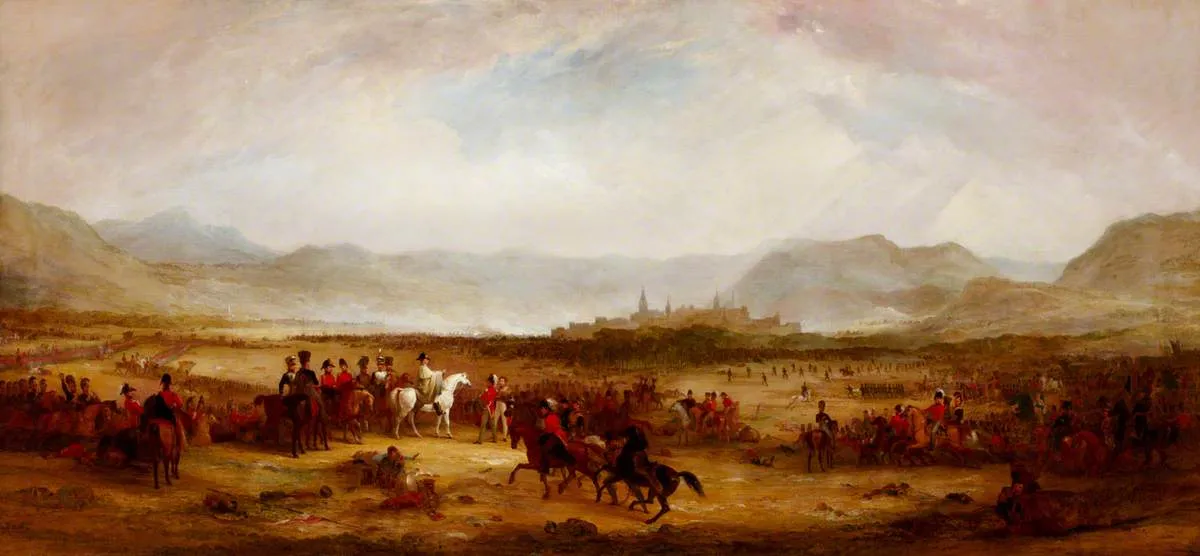
- The Battle of Vitoria, 21 June 1813, painted by the British artist George Jones (1786–1869). The town of Vitoria rises on its hill at the far end of the plain. George Jones, Public domain, via Wikimedia Commons.
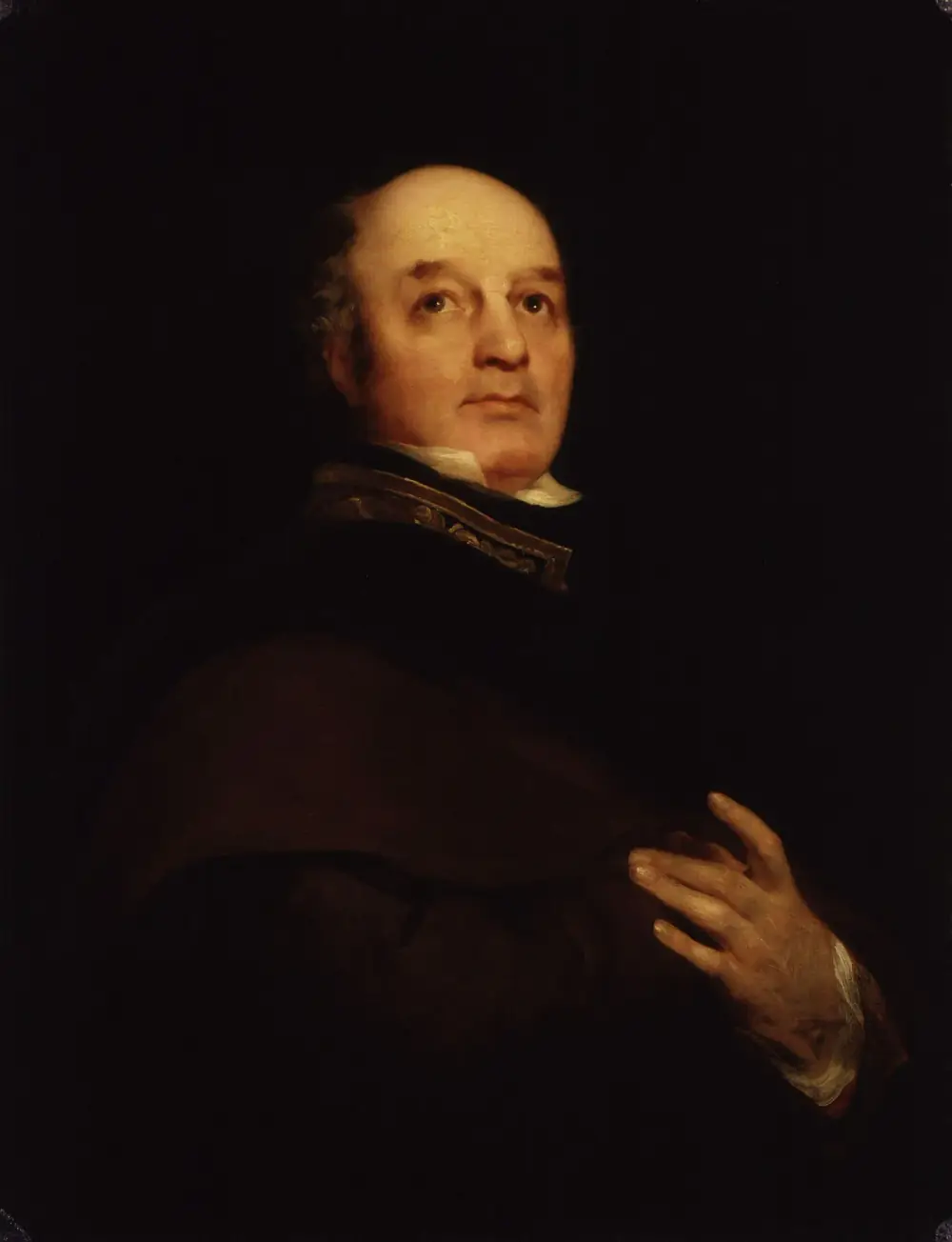
- William Carr Beresford, the British general who commanded the Portuguese army from 1809, painted in later life by Richard Rothwell. Wellington thanked him for his advice throughout the 1813 campaign. Richard Rothwell, Public domain, via Wikimedia Commons.
- The battle as drawn in the atlas to Archibald Alison's History of Europe, engraved by W. and A. K. Johnston in the nineteenth century. French troops are blue and allied troops red; Graham's column is at the top, Hill's at the bottom left by the heights of Puebla. Archibald Alison; Alexander Keith Johnston, Public domain, via Wikimedia Commons.
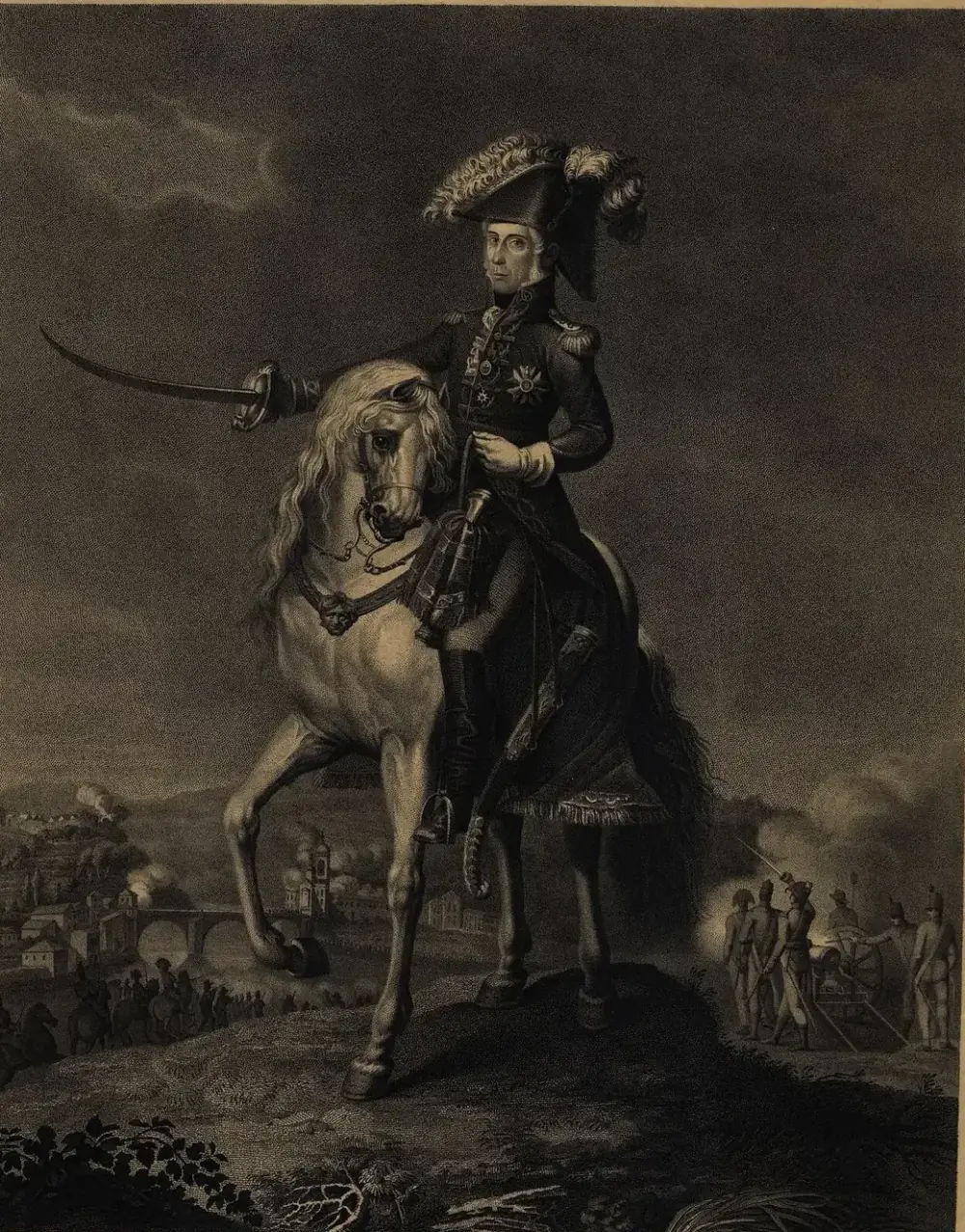
- Francisco da Silveira, Count of Amarante, in a stipple engraving of 1811 by Raimundo Joaquim da Costa after a drawing by João Baptista Ribeiro. At Vitoria his Portuguese division of 5,287 men marched with Hill's column and lost only 10 men. João Baptista Ribeiro, Public domain, via Wikimedia Commons.
- The Waterseller of Seville, painted by Diego Velázquez in Seville between about 1617 and 1623. It was captured with Joseph's baggage at Vitoria and now hangs at Apsley House in London, which Wellington bought in 1817. Diego Velázquez, Public domain, via Wikimedia Commons.
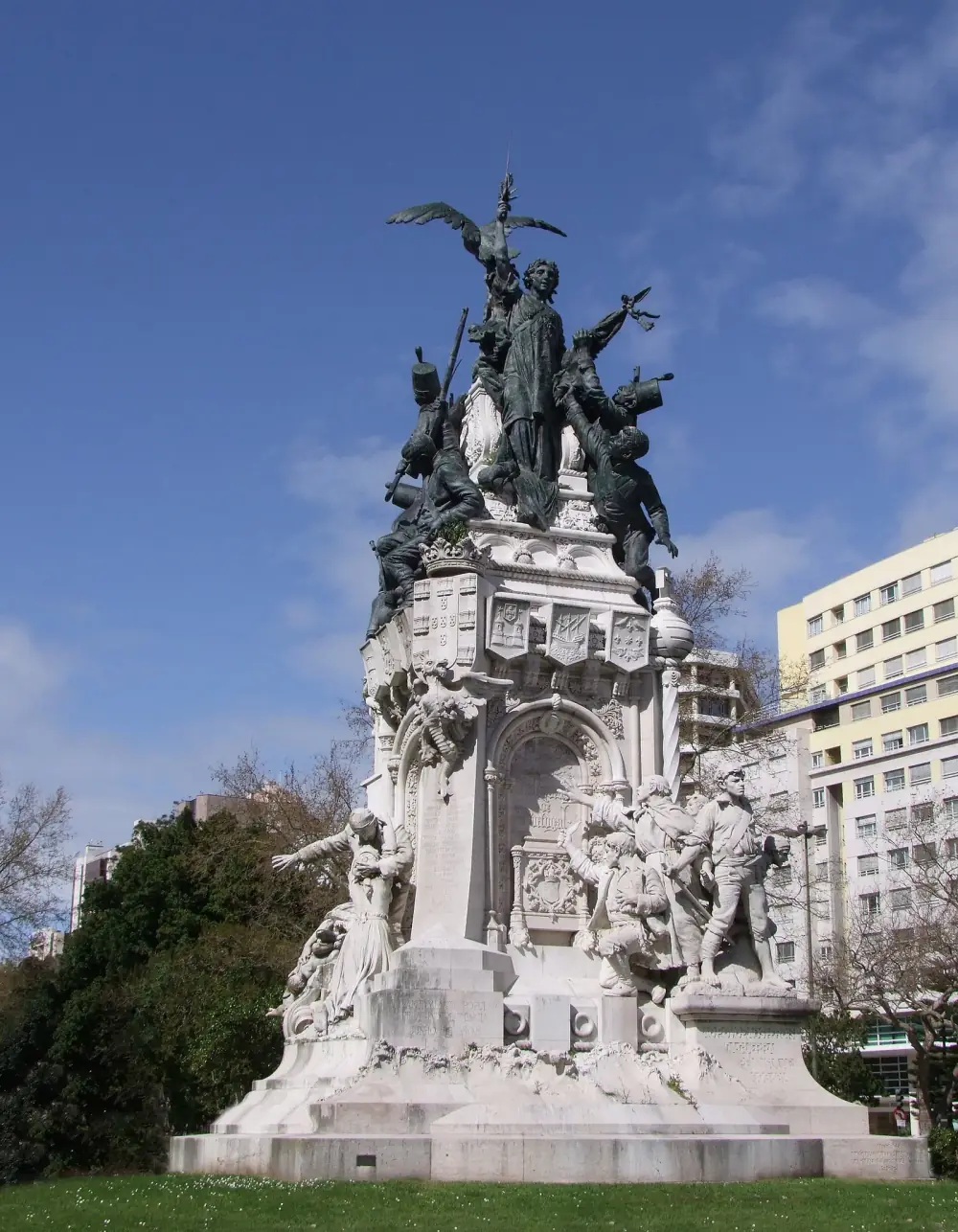
- The Monument to the Heroes of the Peninsular War at Entrecampos, Lisbon, photographed in 2017. It is dedicated to the people and the heroes of the war of 1808 to 1814. Alta Falisa, CC BY-SA 4.0, via Wikimedia Commons.