

The cable that put Brazil a day from Europe: Carcavelos, 22 June 1874
A British company laid a copper cable from the beach at Carcavelos, west of Lisbon, to Brazil by way of Madeira and Cape Verde, and worked it from a station on an old wine estate. News that had crossed the Atlantic in weeks now arrived overnight, and the cable men's club became one of Portugal's first football teams.
At a glance
- In June 1874 a British company completed a submarine telegraph cable from Carcavelos, on the coast west of Lisbon, to Recife (then usually called Pernambuco), with relay stations on Madeira and on São Vicente in Cape Verde.
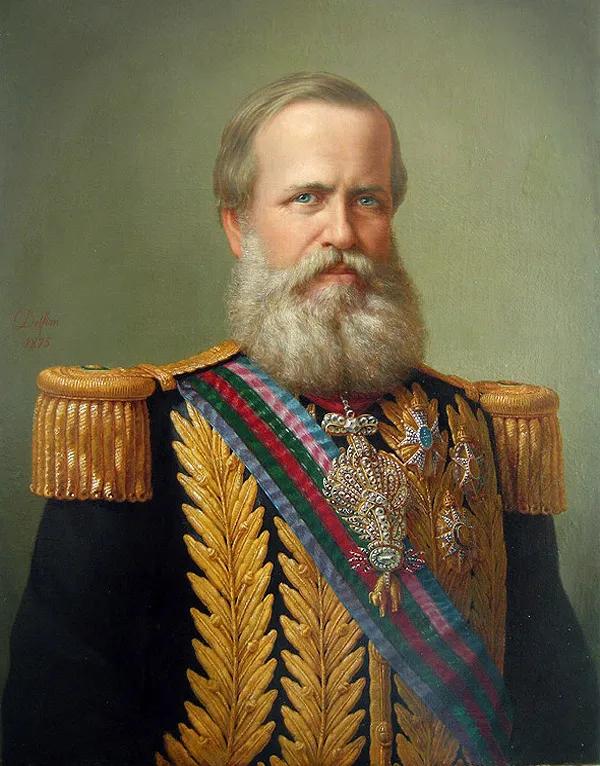
- The last section, from Cape Verde to Brazil, was laid between 8 and 21 June 1874; on 22 June the first private telegrams passed between Recife and London, and replies came back within two hours.
- Before the cable, news from Europe took 15 to 40 days to reach Brazil by steamer. From 1874 Brazilian newspapers could print European news from the previous day.
- The cable station sat in the Quinta Nova, an eighteenth-century estate at Carcavelos that the cable companies used from 1870. Its British staff played tennis, cricket and football there, and their Carcavelos Club was among the strongest football teams in Portugal until about 1910.
- A decree-law of December 1970 let Cable and Wireless close its Carcavelos station, its last in mainland Portugal, on 31 December 1970. The Quinta Nova has housed St Julian's School since 1932.
Two hours to London and back
On Tuesday 23 June 1874 the front page of the Jornal do Recife celebrated a novelty. The day before, private telegrams had gone from the city to London, and the answers had come back the same day.
“We are, then, in instant communication with the whole world, and only yesterday some private dispatches were exchanged with the London market. … Only two hours passed between message and reply. There is no doubting it: a new era began yesterday in our country.”
The wire that made this possible began on a beach in Portugal. It left the sand at Carcavelos, about 20 kilometres west of Lisbon, ran south-west under the Atlantic to Madeira, on to the island of São Vicente in Cape Verde and then across the ocean to Recife, the capital of the Brazilian province of Pernambuco. The whole line was some 3,655 to 3,750 nautical miles long, depending on the source, or roughly 6,770 to 6,945 kilometres.
From Carcavelos the messages went on to England over another cable, and in Recife they joined Brazil's land telegraph and a new cable along the Brazilian coast. For the first time Brazil was wired to Europe.
Weeks by steamer
In 1874 Brazil was an empire, ruled by Pedro II. Letters and newspapers from Europe came by steamship. Journalists and readers in Brazil waited 15 to 40 days for them, according to Pedro Aguiar of the Fluminense Federal University, who studies how international news reached the country.
Even in the months before the Atlantic cable opened, telegraph companies stitched wire and ship together. In January 1874 the Eastern Telegraph Company in London offered to take messages for Pará, Bahia and Rio de Janeiro, wire them to Lisbon, post them by steamer to Pernambuco and telegraph them on from there. Twenty words to Rio cost £3 14s 6d.
Carcavelos was already a cable town. In the summer of 1870 the Falmouth, Gibraltar and Malta Telegraph Company, one of the companies of the Scottish merchant John Pender, landed its line from Porthcurno in Cornwall at Carcavelos on the way to Gibraltar and Malta. The line to Cornwall opened to the public on 12 June. Charles Bright, in his 1898 history of submarine telegraphs, wrote that the cable was brought ashore there after “pressing advances” by the Portuguese government.
That line completed a telegraph route from Britain to Bombay that escaped the political and customs restrictions of land lines through other countries, and, in the British Historical Society of Portugal's account, Britain could now reach India in about 24 hours, where the journey had taken up to two months. The station in Carcavelos was set up in the Quinta Nova de Santo António, an eighteenth-century wine estate in the district that makes Carcavelos wine. In 1872 the company merged with its sister lines into the Eastern Telegraph Company.
A Brazilian concession and a London company
The ocean line needed two governments. In August 1872 Brazil gave the businessman Irineu Evangelista de Sousa, Baron of Mauá, a 20-year concession for a cable to Portugal by way of Cape Verde and Madeira. That November Portugal granted its own concession, for 99 years and at no cost to the state, for a cable landing near the mouth of the Tagus.
Behind both stood John Pender's group in London. Its Brazilian Submarine Telegraph Company, registered in January 1873, took over Mauá's concession, and a sister company, the Western and Brazilian, was formed to link Brazil's ports along the coast. The Telegraph Construction and Maintenance Company, known as Telcon, would lay the ocean cable.
A broken cable and a second summer
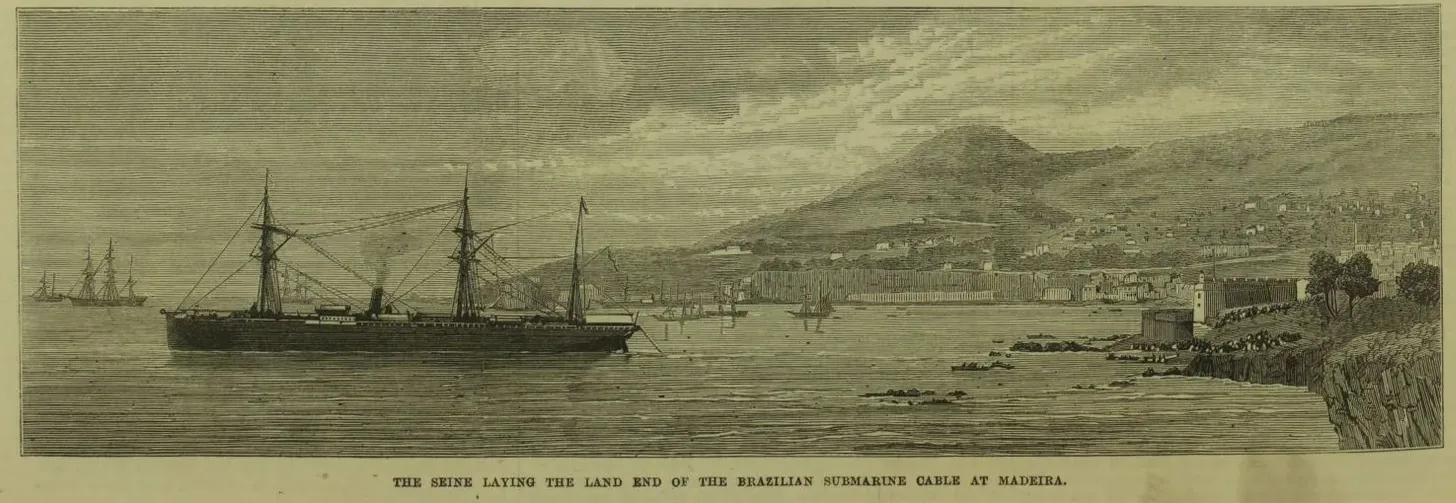
The first attempt went wrong. The cable ships Seine and Minia began laying the Madeira section from Carcavelos in August 1873, and the Telegraphic Journal reported it laid on 10 September. A fault soon appeared. On 26 October, while the contractors were lifting the cable to repair it, it broke, and bad weather and lost grapnel rope stopped the work until the spring.
The work moved south instead. The Hibernia and the Edinburgh laid the cable from Madeira to São Vicente in March 1874, and until Lisbon and Madeira were joined again the company offered a patchwork service: wire to Lisbon, post to Madeira, telegraph to São Vicente, post again to Brazil. The Telegraphic Journal reckoned that the collapse of the coffee market that spring would have filled the new cable with traffic had it been open.
The last and longest link, from São Vicente to Recife, was laid between 8 and 21 June 1874; the repaired Lisbon to Madeira cable opened to the public on 17 June, while the ships were still at sea. The expedition's commander was Robert Halpin, an Irish master mariner from Wicklow who had been chief officer of the Great Eastern on the Atlantic cable of 1865. Aboard the Hibernia a diary was kept of the messages sent along the cable as it was paid out.
| Section | When it was laid | Ships named in the sources | What happened |
|---|---|---|---|
| Carcavelos (Lisbon) to Madeira, 614 nautical miles | August to September 1873; repaired in 1874 | Seine and Minia (1873); Africa and Kangaroo sent to repair it (April 1874) | A fault appeared; the cable broke on 26 October 1873 while being lifted for repair. Open to the public on 17 June 1874 |
| Madeira to São Vicente, Cape Verde, 1,197 nautical miles | 28 February to 17 March 1874 | Hibernia and Edinburgh | Opened in March or April 1874; until the Lisbon section was repaired, messages were to go by post between Lisbon and Madeira |
| São Vicente to Recife (Pernambuco), 1,844 nautical miles | 8 to 21 June 1874 | Hibernia, Seine, Edinburgh, Investigator | Robert Halpin commanding; Bright says nine years passed before any fault showed |
Section lengths are Vilela's; Bright also gives 1,844 nautical miles for the Pernambuco–São Vicente cable. They add up to 3,655 nautical miles. Berthold gives 3,750 for the line laid in 1874 and 3,657 after a second cable was laid in 1884. The Telegraphic Journal says the Madeira section was laid on 10 September 1873; Vilela says the work ended on 22 September.
Open for business
Messages began to flow the day after the last section was finished. On Monday 22 June private telegrams went between Recife and London, and a report from Rio de Janeiro dated 26 June said that Queen Victoria and Emperor Pedro II had exchanged congratulations on the completion of the cable. In London the company told customers to hand in messages for South America at the Eastern Company's station at 74 Old Broad Street. Berthold's 1922 history of the Brazilian telegraph says the service began in July 1874.
- First messages
- Monday 22 June 1874, between Recife and London
- Route
- Carcavelos, Madeira, São Vicente (Cape Verde), Recife
- Length
- 3,655 to 3,750 nautical miles, depending on the source (6,770 to 6,945 km)
- Owner
- Brazilian Submarine Telegraph Company, registered in London on 8 January 1873
- Laid by
- Telegraph Construction and Maintenance Company
- Link to Britain
- The Eastern Telegraph Company's cable from Porthcurno to Carcavelos
Telegrams were expensive. The journalist Matías Molina, using an advertisement in Rio's Jornal do Commercio of 7 July 1874, worked out that 20 words to England cost the equivalent of 94 US dollars of the time. News agencies grew up to sell what came over the cable to the press, investors and coffee traders.
Four months before the cable arrived, the banker Manoel Gomes de Oliveira had opened the Agência Americana Telegráfica in Rio to sell foreign news to Brazilian papers; it lasted until 1875. In July 1874 the French agency Havas, working with the British agency later called Reuters, began supplying Brazilian newspapers and opened offices in Rio, Buenos Aires, Lima and Montevideo. Reuters left Latin America in 1876, and Havas kept a near monopoly of foreign news there for about half a century.
Speed changed the shape of the news. To save money the agencies used clipped abbreviations, and papers often printed the telegrams whole, out of order. When the French politician Léon Gambetta died on 31 December 1882, Rio's Gazeta de Notícias had the news on 2 January; the fuller letters of its Portuguese correspondent, describing his last days, came weeks later by ship.
Telegrams handled by Brazil's state telegraph, 1861 to 1889
telegrams in the year
Every year in Berthold's table of the Brazilian state telegraph, which has no rows for 1875 to 1880 and other gaps; 1886 and 1887 are left out because the table gives them as one 18-month figure. The figures are for the state network, not the cable company's traffic. Over the same years the state network grew from 65 to 18,925 kilometres of wire.
Show the data
| Telegrams | |
|---|---|
| 1861 | 233 |
| 1865 | 3,088 |
| 1870 | 44,775 |
| 1874 | 103,689 |
| 1881 | 383,147 |
| 1882 | 338,053 |
| 1883 | 331,884 |
| 1884 | 367,779 |
| 1885 | 390,277 |
| 1888 | 521,886 |
| 1889 | 637,382 |
The station at the Quinta Nova
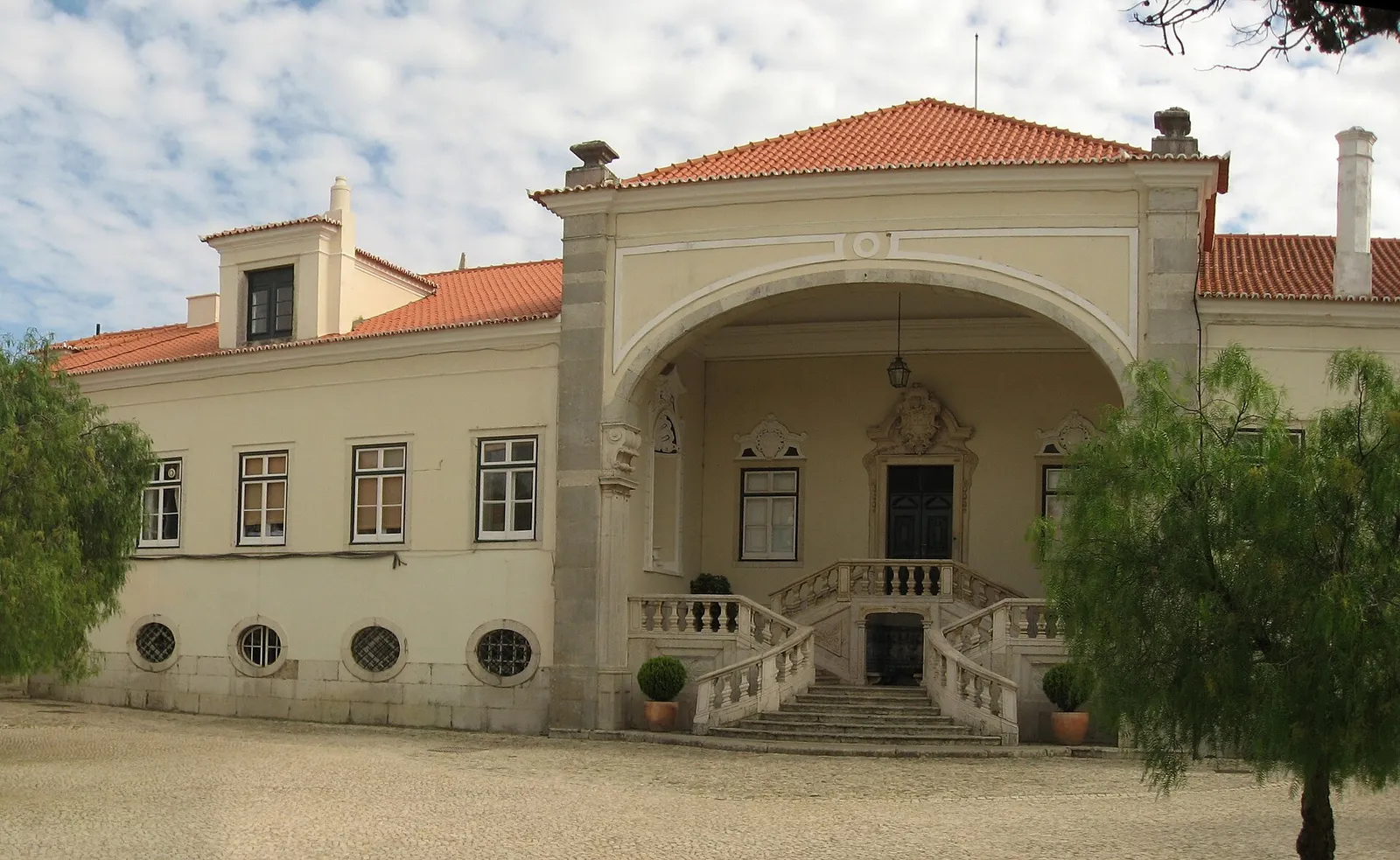
At Carcavelos the Brazil line came ashore beside the Eastern's cable to Cornwall and Gibraltar, and the two companies shared the station at the Quinta Nova. Bright's book printed an illustration of it with the caption “Eastern and Brazilian-Submarine Companies' Telegraph Station at Carcavellos, Lisbon”. The estate came to be known locally as the Quinta dos Ingleses, the English estate.
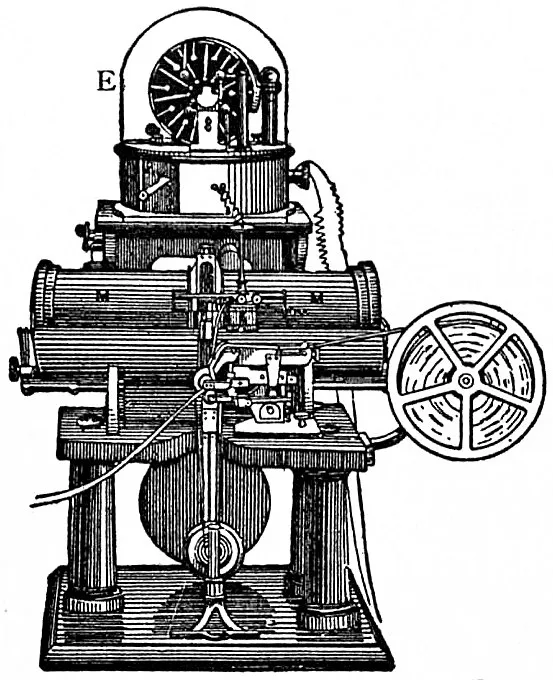
The work was relay work. Messages from Recife, Madeira and São Vicente arrived on one cable and were sent on to England on another, and the reverse. Operators read incoming signals from instruments such as William Thomson's siphon recorder, which wrote the current as a wavy line on a moving paper tape.
The cables were not trouble-free. In 1891 the Lisbon to Madeira cable broke in 1,500 fathoms of water near Madeira on the same day that an immense tidal wave was observed, though nobody could prove a link. The section from Cape Verde to Brazil did better: it lasted nine years before any fault showed, which Bright thought probably the record for freedom from repairs. A second cable, laid in 1884, doubled the route.
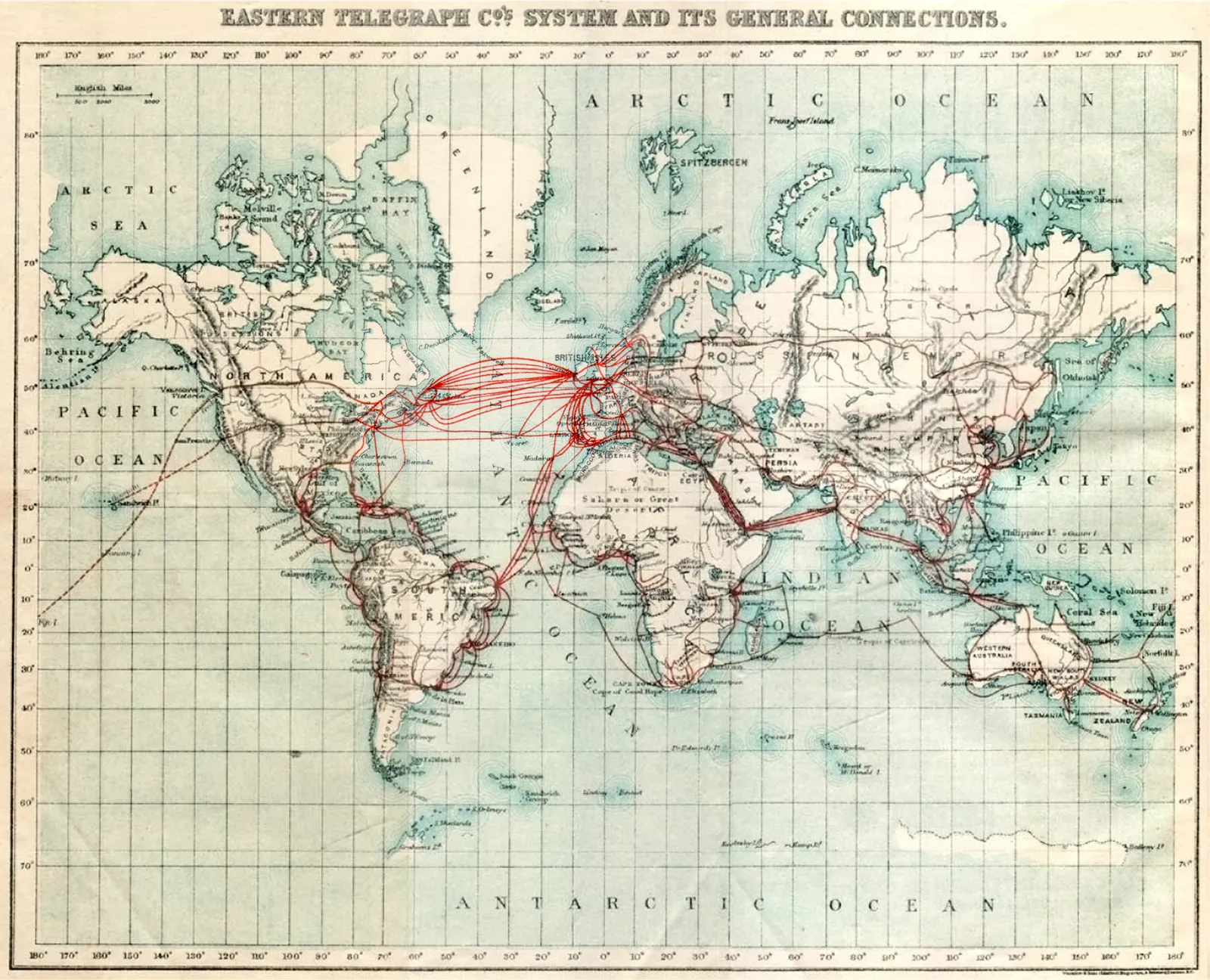
The companies changed names as Pender's group consolidated. In 1899 Brazil approved the merger of the Brazilian Submarine and the Western and Brazilian into the Western Telegraph Company. The Eastern later became part of Cable and Wireless, in 1934 according to the British Historical Society of Portugal, although Vilela has its Portuguese concessions passing to Cable and Wireless only in 1956.
Tennis, cricket and the Carcavelos Club
The station brought young Englishmen to Carcavelos, and they brought their games. Mário Eurico Lisboa, a heritage officer for Cascais council, dates the first tennis courts at the Quinta Nova to 1874 to 1876, very early, since lawn tennis was only patented in England in 1874. The estate also gained a field for cricket and football in grounds that held a golf course. Lisboa writes that this was, “without a great margin of error”, the first sports centre in Portugal.
Football was the game that lasted. Cascais council counts the Carcavelos Club, founded by the cable staff, among the oldest clubs to play football in Portugal, and its pitch, which had rugby posts, was the most sought-after ground of the day. In 1893 a match at Carcavelos produced what the council describes as the first photograph of a football game published in Portugal.
Until then, the council's sheet says, these games had been played almost only by the English at Carcavelos. What is counted as the first game between Portuguese players, organised by Guilherme Pinto Basto, was played on the Parada in nearby Cascais on a Sunday in October 1888. When Lisbon played Porto for the Taça D. Carlos, the first match between two city selections, the Lisbon side included Carcavelos Club men.
The British side stayed on top until about 1910. According to the council, the Carcavelos Cricket and Football Club won every match it played in the first league of the Football Association in 1907 to 1908 and kept its supremacy until the Republic was declared in 1910. It was beaten only in the championship of 1909 to 1910, when Sport Lisboa e Benfica became champions.
A school and a closing order
The British community around Carcavelos grew large enough to need its own school. St Julian's School opened in the grounds of the Quinta Nova on 24 November 1932. Its founders included the British ambassador, Sir Claud Russell, and it took its name from the sixteenth-century fort of São Julião da Barra, which overlooks nearby Carcavelos beach.
Telephone cables ended the telegraph's long run. Vilela dates the closure of the station in the old Quinta Nova palace to 1962, and in 1963 Cable and Wireless decided to sell the estate; the school raised donations to stay. The company still worked a station at Carcavelos in 1970, when it asked the Portuguese government for leave to close it, because new submarine telephone cables from Britain to Portugal and from Portugal to South Africa had cut its telegraph traffic. It was the company's last station in mainland Portugal.
Decree-law 611/70 of 10 December 1970, signed by Marcello Caetano's government, authorised the closure on 31 December 1970. Cable and Wireless kept only its station at São Vicente in Cape Verde, still a Portuguese colony, which had been a relay on the Brazil line since 1874.
Summer 1870
Cable station opens at Carcavelos
The Falmouth, Gibraltar and Malta company's line from Cornwall lands at the Quinta Nova.
16 August 1872
Mauá's concession
Brazil grants the Baron of Mauá 20 years to lay a cable to Portugal.
12 November 1872
Portuguese contract
Signed with Jules Despecher for Telcon and the Falmouth company.
8 January 1873
Company registered
The Brazilian Submarine Telegraph Company is registered in London.
10 September 1873
Lisbon–Madeira laid
A fault follows; the cable breaks on 26 October during repairs.
28 February–17 March 1874
Cape Verde link
The Hibernia and Edinburgh lay the cable from Madeira to São Vicente.
8–21 June 1874
Last section laid
Four ships lay the cable from São Vicente to Recife.
22 June 1874
First telegrams
Private messages pass between Recife and London.
24 November 1877
Telephone trial
Experimental telephone calls between Carcavelos and Lisbon.
1899
Western Telegraph Company
The Brazilian Submarine merges with the Western and Brazilian.
24 November 1932
St Julian's School opens
In the grounds of the Quinta Nova.
1962
Station leaves the palace
The station in the Quinta Nova palace closes.
31 December 1970
Station closes
Decree-law 611/70 lets Cable and Wireless close its Carcavelos station.
Why it still matters
More than 90 per cent of data sent between continents still travels on the sea floor. In 2021 a fibre-optic cable opened between Fortaleza, in north-east Brazil, and Portugal. The computer scientist Michael Stanton points out that it follows much the same course as the telegraph cable of 1874.
The repair work has hardly changed either. A broken fibre cable, like a broken telegraph cable, has to be hauled up from the bottom by a ship, mended on deck and lowered again, as the cable crews did off Madeira in 1873.
In Carcavelos the cable left a school, an estate that came to be called the Quinta dos Ingleses and a place in the early history of Portuguese football. In Brazil, from 1874, newspapers could print European news from the previous day.
FAQs
When did the first telegraph cable between Portugal and Brazil open?
The last section, from São Vicente in Cape Verde to Recife, was laid between 8 and 21 June 1874, and the first private telegrams passed between Recife and London on 22 June 1874. The Lisbon–Madeira section had opened to the public on 17 June. A 1922 history of the Brazilian telegraph gives July 1874 for the start of the service.
Why did the cable to Brazil start at Carcavelos?
Carcavelos already had a cable station. Since 1870 the cable from Porthcurno in Cornwall to Gibraltar and Malta had landed there, after the Portuguese government pressed for it, so the Brazil line could connect to England through the same station at the Quinta Nova.
Who built and ran the cable?
It belonged to the Brazilian Submarine Telegraph Company, registered in London in January 1873 and part of John Pender's group, which took over a concession granted to the Baron of Mauá. The Telegraph Construction and Maintenance Company laid it. In 1899 the company merged into the Western Telegraph Company.
Is the Carcavelos cable station still working?
No. The station left the Quinta Nova palace in 1962, and decree-law 611/70 let Cable and Wireless close its Carcavelos station on 31 December 1970, because telephone cables had taken much of its telegraph traffic. The Quinta Nova estate is now home to St Julian's School, founded there in 1932.
Did the Carcavelos cable staff bring football to Portugal?
They were among the first to play it. Their Carcavelos Club was one of the oldest football clubs in Portugal and the strongest team in the Lisbon area until about 1910, although the first match between Portuguese players was organised by Guilherme Pinto Basto in Cascais in 1888.
On the timeline
Open the timelineNearby moments from regeneration and the last kings (1851–1910).
King Luís I raises Covilhã, the wool-manufacturing town on the slopes of the Serra da Estrela, to the status of city. The date remains the municipal holiday.
Birth of Domitila de Carvalho in Travanca, near Santa Maria da Feira. In 1891 she became the first woman admitted to the University of Coimbra since its 1772 reform — on condition that she always dress in black — and graduated in mathematics, philosophy and medicine; in 1934 she was one of the first three women elected to Portugal's parliament.
The novelist Júlio Dinis, author of 'As Pupilas do Senhor Reitor', dies of tuberculosis in Porto at only 31 years of age.
The Carcavelos–Recife cable, 1874
The first telegrams pass between Recife and London over the new submarine cable from Carcavelos beach, west of Lisbon, by way of Madeira and Cape Verde; its last section had been laid the day before. News that had taken 15 to 40 days to cross the Atlantic by steamer can now appear in Brazilian papers the next day.
António Egas Moniz is born in Avanca, near Estarreja. Neurologist, foreign minister and head of Portugal's delegation to the Paris Peace Conference, he pioneered cerebral angiography and the prefrontal leucotomy, which brought him Portugal's first Nobel Prize, in 1949.
Asked to arbitrate between Portugal and Britain, French President Patrice de MacMahon rules that the land and islands on the south side of Delagoa Bay, today's Maputo Bay, are Portuguese, leaving the whole bay to Portugal. Its town, Lourenço Marques, is now Maputo, where a brewery named MacMahon gave the beer '2M' its name.
The Caixa Geral de Depósitos is created by law in Lisbon, at first to safeguard the deposits that courts and public bodies were required to lodge. Wholly owned by the state ever since, it grew into the country's largest bank and a fixture of every Portuguese high street.
Coming up in history
All long reads 24 June 1128São Mamede, 24 June 1128: Afonso Henriques defeats his mother
 25 June 1975Mozambique's midnight: independence at Machava, 25 June 1975
 26 June 1828The Belfastada: the steamer that carried Porto's liberal leaders off in 1828
 27 June 1214The will of Afonso II, 1214: a king's wishes in early Portuguese
22 sources
Archives, scholarship and reporting this article was checked against.
- 1
O Império conectado com o mundo (Sarah Schmidt)Revista Pesquisa FAPESP, no. 338, April 2024
- 2
Submarine Telegraphs: Their History, Construction, and Working (Charles Bright)Crosby Lockwood and Son, London, 1898 (Internet Archive)
- 3
- 4
- 5
Working chart, Brazilian submarine cable expedition, steam ships Hibernia, Seine, Edinburgh and Investigator laying the third section of the Brazilian cable from June 8th 1874 to June 21st 1874 (GOL213:6/2(1))Royal Museums Greenwich, National Maritime Museum
- 6
The Eastern Telegraph Station at Carcavelos (Mário Eurico Lisboa)British Historical Society of Portugal
- 7
Decreto-Lei n.º 611/70, de 10 de Dezembro (closure of the Carcavelos station of Cable and Wireless)Diário do Governo, I série, no. 285, 10 December 1970
- 8
Datas e Factos do Cabo Submarino em Portugal (1855–2015) (José Vilela)Fundação Portuguesa das Comunicações, 2017
- 9
- 10
Our historySt. Julian's School, Carcavelos
- 11
Cabo submarinoElucidário Madeirense (online edition)
- 12
- 13
- 14
- 15
- 16
- 17
Captain Robert HalpinNational Maritime Museum of Ireland
- 18
CS (Cable Ship) HiberniaPK Porthcurno, Museum of Global Communications
- 19
- 20
O ténis nasceu em Cascais (educational sheet)Câmara Municipal de Cascais
- 21
1888: foi em Cascais que aconteceu o primeiro jogo de futebol entre portugueses! (educational sheet)Câmara Municipal de Cascais, Cascais Cultura
- 22
Image credits
- “The Seine laying the land end of the Brazilian submarine cable at Madeira”, a detail from The Illustrated London News of 1 November 1873. The Lisbon–Madeira cable failed within weeks and was repaired in 1874. The Illustrated London News (Commons credits R. C. Hulme), Public domain, via Wikimedia Commons.
- Emperor Pedro II of Brazil, painted by Delfim da Câmara in 1875, the year after the cable opened. Congratulatory telegrams passed between him and Queen Victoria over the new line in June 1874. Delfim da Câmara, Public domain, via Wikimedia Commons.
- William Thomson's siphon recorder in its original form, patented in 1867, as drawn in the 1911 Encyclopaedia Britannica. Bright's 1898 textbook reproduced signals received with such an instrument on the cable from Pernambuco to São Vicente. Harry Robert Kempe (section author, but probably not the artist), Public domain, via Wikimedia Commons.
- “The Eastern Telegraph Co.: System and its general connections”, a chart printed in 1901 in the A.B.C. Telegraphic Code. By then the Lisbon–Brazil line belonged to the Western Telegraph Company, part of the same group. Unknown author, Public domain, via Wikimedia Commons.
- The Quinta Nova palace at Carcavelos, now St Julian's School, in 2009. The cable station was set up here in 1870 and left the palace in 1962; the school has been in the grounds since 1932. Bernardo Reis, CC BY-SA 3.0, via Wikimedia Commons.