

The Portuguese Communist Party is founded in Lisbon: 6 March 1921
A group of veteran trade unionists, most of them former anarchists, met in an office workers' hall to found a party inspired by the Russian Revolution. Within a decade it was small, banned and hunted, and it still outlasted the dictatorship.
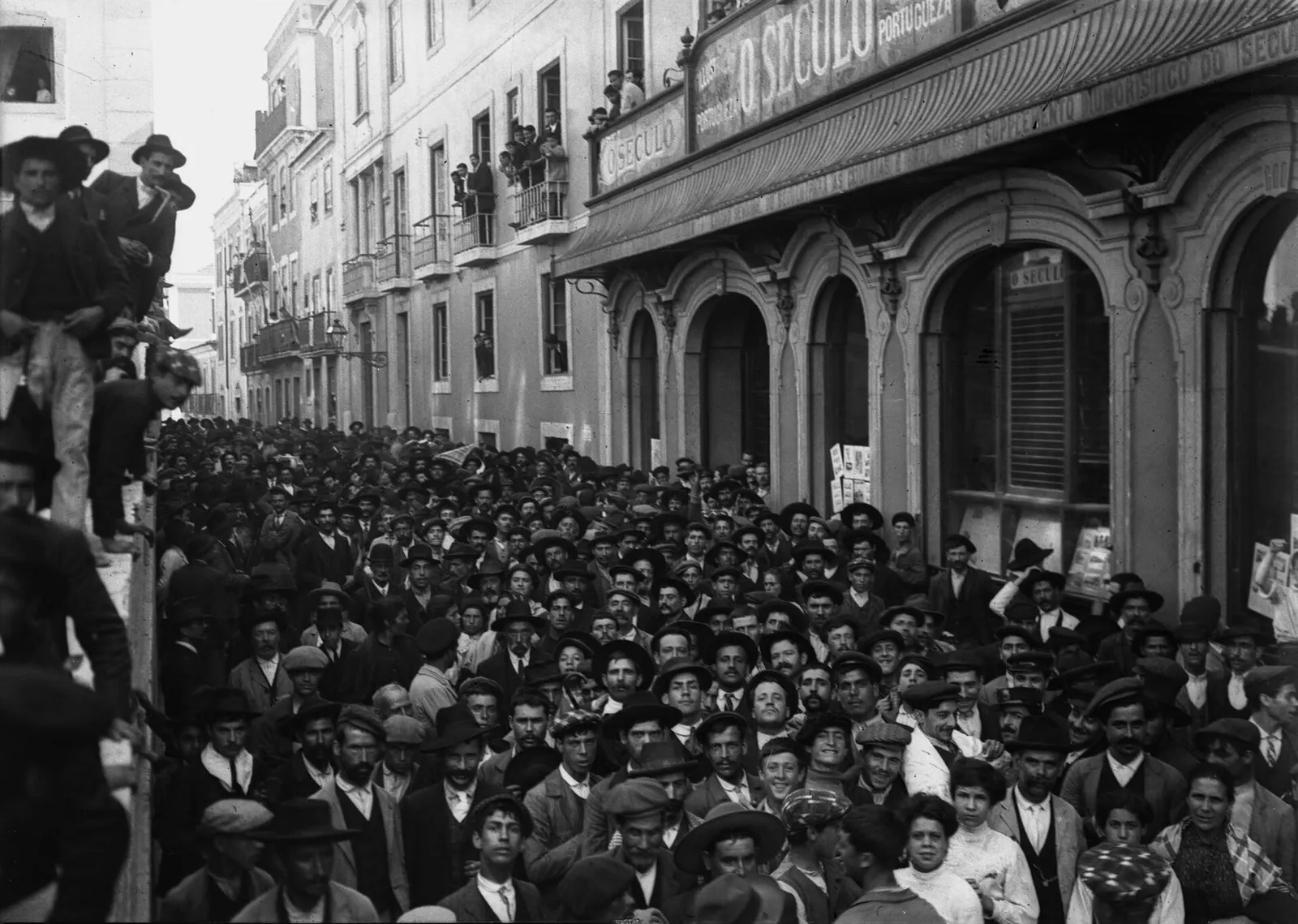
At a glance
- The Portuguese Communist Party (PCP) was founded at a meeting held on Sunday 6 March 1921 at the Lisbon headquarters of the Associação dos Empregados de Escritório, the office workers' association, which elected its first leading bodies.
- Most of its founders were veteran trade unionists and former anarchists. Unlike most communist parties in Europe, it did not come out of a split in a socialist party.
- It was legal for only five years. The military coup of 28 May 1926 drove it underground, its headquarters were closed in 1927, and one count gave it 49 members in 1929.
- Bento Gonçalves rebuilt it from 1929 and launched the clandestine paper Avante! on 15 February 1931. He died in the Tarrafal prison camp in Cape Verde on 11 September 1942.
- After the revolution of 25 April 1974 the party came out of hiding. It was entered in the new register of parties on 26 December 1974 and won 12.46 per cent of the vote in April 1975.
A Sunday meeting in an office workers' hall
On Sunday 6 March 1921 a group of trade unionists gathered at the Lisbon headquarters of the Associação dos Empregados de Escritório, the office workers' association. They had come to found a party. By the end of the meeting the Partido Comunista Português had a National Board, an Economic Council and a General Committee for Education and Propaganda.
The work had started three months earlier. In December 1920 an organising committee was formed to create the party, and in January it began drafting its rules. Its first headquarters was a second-floor flat at number 3, Rua do Arco do Marquês do Alegrete, in Lisbon.
The founders were not young firebrands. In 1925 the party's own youth wing mocked them as the “velhada pacata”, the quiet old crowd: some 60 veteran trade unionists with 15 to 25 years of service. They came from the civil servants' association, the commercial clerks' federation, the unions of the Army and Navy arsenals, the metalworkers, the building trades, the shoemakers and the tailors.
- Date
- Sunday 6 March 1921
- Place
- Headquarters of the Associação dos Empregados de Escritório, Lisbon
- Bodies elected
- National Board (Junta Nacional), Economic Council, General Committee for Education and Propaganda
- Forerunner
- Federação Maximalista Portuguesa, 1919 to December 1920
- Members
- About 1,000 within months, by the party's count
- Newspaper
- O Comunista, from 1921
Unions, anarchists and the news from Russia
Portugal had been a republic since 5 October 1910, and by 1921 it was an unstable one. The end of the First World War left it in political, economic and social crisis, and in December 1918 the president, Sidónio Pais, had been shot dead at Rossio station. Workers struck again and again between 1917 and 1920.
The labour movement belonged to the anarcho-syndicalists. They believed the unions themselves, not political parties, would make the revolution, and they distrusted parties of every kind. Their confederation, the CGT, was founded in September 1919 and soon claimed more than 100,000 members. Its daily, A Batalha, had a wide readership among workers.
Then came the news from Russia. The Bolshevik revolution of October 1917 drew enthusiasm from Portuguese workers who were tired of the war and of the republican parties. In 1919 Manuel Ribeiro founded the Federação Maximalista Portuguesa, with a weekly called Bandeira Vermelha (Red Flag). It stayed small: when Ribeiro was arrested in December 1920 it had five councils and a “communist centre” in Lisbon, another centre in Porto and a third being set up in Silves, and it fell apart.
By then the strike wave was running out. Some union militants concluded that strikes alone would not change anything, and that they needed what the Bolsheviks had: a disciplined party aiming to take power. The historian Arturo Zoffmann Rodríguez argues that the PCP was born from the labour movement's retreat, not from its advance.
A fragile party, 1921 to 1926
At first the party grew quickly. Within months it claimed about a thousand members, and its youth organisation had 260 by October 1921. On 7 July 1921 it presented itself to the country in a manifesto that reprinted the 21 conditions for joining the Communist International, the Moscow-based federation of communist parties, and called for the abolition of private property.
Relations with the anarchists soured within months. By mid-1921 reports of the persecution of anarchists in Soviet Russia had reached Western Europe, and the CGT's leaders turned against Moscow. At the workers' congress in Covilhã in September 1922, a proposal to join the Red International of Labour Unions, Moscow's union international, was drowned out by anarchist uproar before it could be argued, and the CGT later joined the anarchist international based in Berlin.
The communists kept fighting inside the unions. From 1923 their supporters in the CGT organised as Revolutionary Syndicalist Nuclei and put out a paper, A Internacional, with a first print run of 3,000. They held the arsenal and commercial workers' unions, and early in 1925 claimed 18,000 sympathisers in the confederation. In June 1925 the unions closest to them stopped paying their dues to the CGT.
The party then turned on itself. In March 1923 a faction backed by the youth wing and led by Caetano de Sousa held a conference, elected a new Central Committee and expelled supporters of Carlos Rates, a pioneer of trade unionism in the Alentejo. Moscow sent the Swiss communist Jules Humbert-Droz to sort it out. At the party's first congress, which opened in Lisbon on 12 November 1923, Rates won, Caetano de Sousa was expelled and Rates became the first secretary-general.
Even the size of that congress is uncertain. The party's own history speaks of some 90 delegates from 27 organisations; Humbert-Droz reported 129, “about a quarter of the party”. Rates later admitted that the party's real strength at the time was about 300 members, against the 500 it claimed.
Reported membership of the PCP, 1921 to 1931
members
Party claims, not audited counts. 1921 to 1924, 1928 and 1929 from José Pacheco Pereira's table (1981), which calls the 3,000 for 1923 exaggerated and notes that only 1,702 of the 2,900 of 1922 paid dues. September 1925 from Zoffmann Rodríguez (2025), who also gives a claimed 2,000 for late 1921, 300 real members for November 1923 and Rates's figures of 380 to 700 during 1924; a Comintern envoy still wrote of 700 in November 1925. 1930 is Bento Gonçalves's own figure and 1931 an oral estimate, both from João Arsénio Nunes (1981).
Show the data
| Members reported | |
|---|---|
| 1921 | 1,000 |
| 1922 | 2,900 |
| Early 1923 | 3,000 |
| Nov 1923 | 500 |
| 1924 | 700 |
| Sep 1925 | 157 |
| 1928 | 70 |
| 1929 | 49 |
| End 1930 | 130 |
| End 1931 | 700 |
The historian José Pacheco Pereira traced 430 names in the press and archives of the time. Where a trade is known, most were workers, but commercial clerks and civil servants were prominent, especially in the leadership. Almost no women appear, and students were nearly absent, in contrast to the party of the 1930s.
It was a city party. Of the 430 members traced, 199 lived in Lisbon and 80 in Porto. After 1923 its other base grew around Beja, in the Alentejo villages of Moura, Aldeia Nova, Amareleja and Vale do Vargo. In Setúbal, by contrast, it never managed to gain a foothold.
| Trade | Members |
|---|---|
| Commercial clerks and shop assistants | 16 |
| Army and Navy arsenal workers | 16 |
| Civil servants | 10 |
| Railwaymen | 8 |
| Building workers | 8 |
| Metalworkers | 7 |
| Printers | 7 |
| Rural labourers | 7 |
| Tailors | 6 |
| Students and intellectuals | 5 |
| Thirteen other trades | 23 |
From José Pacheco Pereira's survey of members named in the sources of the time, which he says over-represents the most active members and the leadership.
“What shows the great penetration of communism is that, in a country with an enormous anarchist tradition, there is a communist party of 700 members who, apart from two or three who understand French, have not read a single line about communism.”
The Republic's own turmoil pulled at the party. The communists gave critical support to the republican coup of October 1921, and some members joined the left-wing revolts of 1924. On 28 August 1924 a group led by Nascimento Cunha tried to storm the Castelo de São Jorge in Lisbon; the Central Committee, caught by surprise, expelled him.
The party lived on irregular subsidies from Moscow. In October 1924 Rates wrote that its situation was “desperate”: the paper had not appeared for three months and many members had left. In November 1925 eight communists stood on left-wing republican lists; none was elected. Rates was expelled at the end of that year after taking a job at O Século, a big Lisbon daily, and later went over to Salazar's União Nacional.
Underground: Bento Gonçalves and Avante!
The party's second congress was called for Lisbon on 29 May 1926. The day before, on 28 May, a military coup began that would bring down the First Republic, and the congress had to break off with 100 delegates present. In 1927 the party's headquarters were closed. Surviving counts give 70 members in 1928 and 49 in 1929, though Pacheco Pereira thinks they left out many old members who kept in touch.
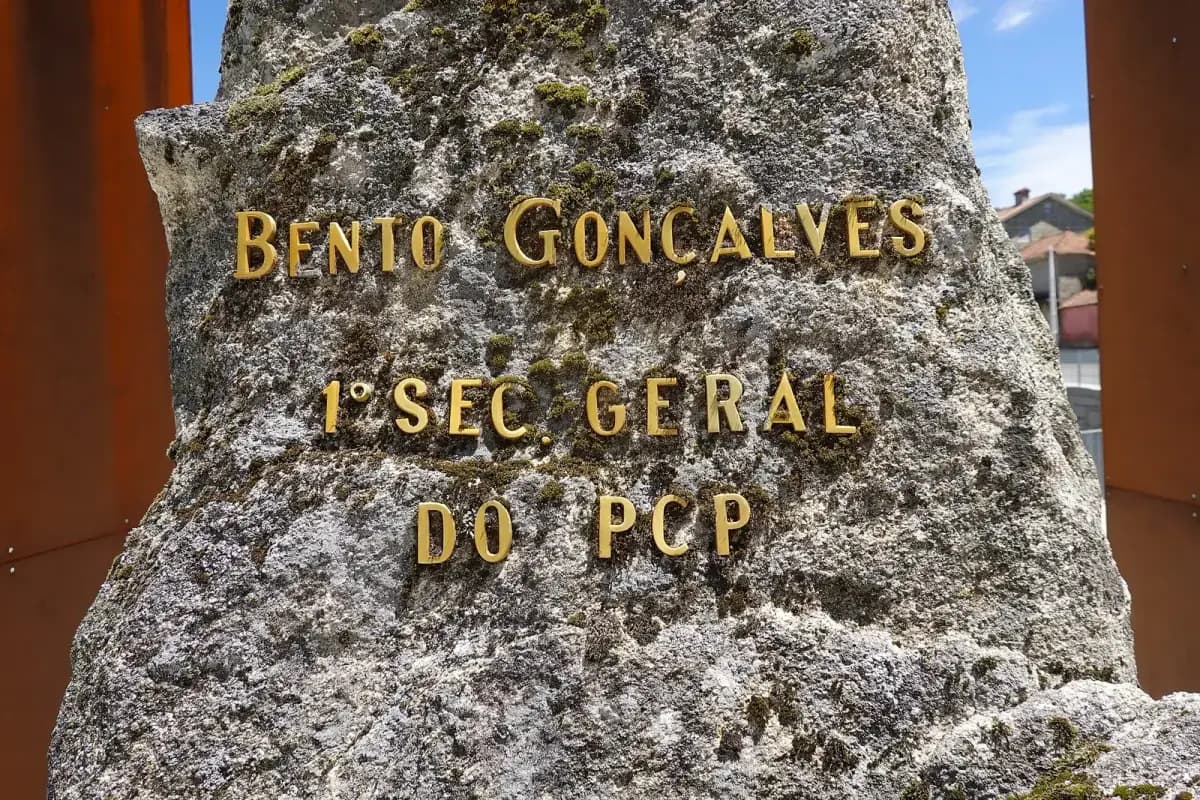
The man who rebuilt it was Bento Gonçalves. Born on 2 March 1902 at Fiães do Rio, in the mountains of Montalegre, he started work in Lisbon in 1915 as a wood turner, trained as a lathe operator and joined the Navy Arsenal in 1919. From 1927 he ran its union. He joined the party only in September 1928. At a conference in April 1929 he was elected secretary-general.
He set out to root the party in the unions and gave it a press. A legal paper, O Proletário, appeared on 1 May 1929, and in 1930 he founded a communist union committee, the Comissão Inter-Sindical, and a secret organisation in the Navy, the Organização Revolucionária da Armada. In September 1930 he was arrested and deported to the Azores and then to Cape Verde, returning in an amnesty in February 1933. While he was away the party grew: from about 130 members at the end of 1930, by his own count, to about 700 a year later, by a party veteran's recollection.
The first issue of Avante! appeared on 15 February 1931. For a decade it came out when it could, weekly, fortnightly or monthly, with long interruptions. At its peaks, by the party's account, more than 10,000 copies were distributed.
Tarrafal and the long night
Salazar's dictatorship, the Estado Novo (“New State”), hunted the communists with its political police, the PVDE. On 11 November 1935 it arrested Bento Gonçalves in Lisbon together with the rest of the party's secretariat, José de Sousa and Júlio Fogaça. Torture was common practice among PVDE agents. On 3 August 1936 a special military court sentenced Gonçalves to six years' banishment.
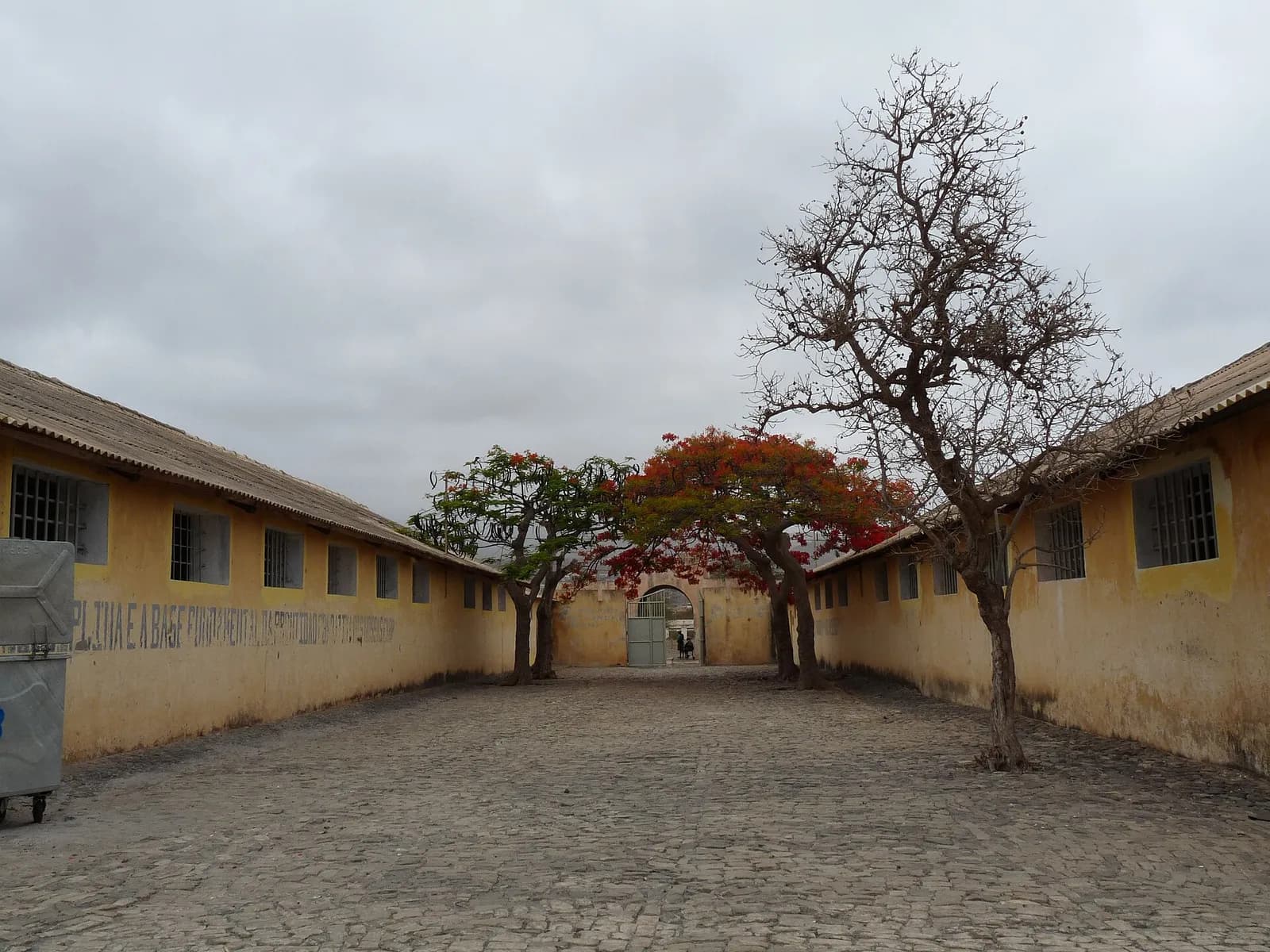
He was among the first prisoners to reach Tarrafal, the penal camp the regime had just built on Santiago island in Cape Verde, on 29 October 1936. Lisboeta's article on Tarrafal tells the story of the camp. He died there on 11 September 1942, aged 40. The camp's telegram gave the cause as blackwater fever. The Museu do Aljube's list of people killed by the dictatorship names him among 33 men who died in the camp between 1937 and 1948.
Even from the camp Gonçalves sent instructions for a new reorganisation. In 1940 an amnesty freed dozens of prisoners, and a group around Júlio Fogaça set out to take the party back from the leadership in place. The rivals accused each other of being police provocateurs, and for a time two editions of Avante! circulated. The old leadership gave way in the summer of 1941. From August 1941 until 25 April 1974, by the party's account, Avante! came out without a break, always printed secretly inside Portugal.
José Pacheco Pereira writes that the communist of the early 1930s was already willing to put discipline before debate, but was “not yet the perfect Stalinist”, a type that in Portugal only the reorganisation of 1940 and 1941 produced (translated from Portuguese).
The third congress, the first held underground, met in 1943. Its report was given by Álvaro Cunhal, who would become secretary-general in March 1961 and lead the party for three decades; Lisboeta's article on his life follows that story. The party calls itself the only one to survive the repression, and the historian Adelino Cunha describes it as the one organised party fighting the Estado Novo; the Socialist Party had dissolved itself in 1933.
It stayed close to Moscow. In August 1968, when the French, Italian and Spanish communist parties held back from backing the Soviet-led invasion of Czechoslovakia, Cunhal supported it, and party members in Prague, Geneva and Paris broke with the leadership in protest.
1919
Manuel Ribeiro founds the Federação Maximalista Portuguesa
September 1919
The anarcho-syndicalist CGT is founded
December 1920
Ribeiro is arrested; an organising committee for a communist party is formed
6 March 1921
Founding meeting at the office workers' association in Lisbon
7 July 1921
First manifesto, with the Comintern's 21 conditions
12 November 1923
First congress opens; Carlos Rates becomes secretary-general
28 May 1926
Military coup; the second congress is broken up
April 1929
Bento Gonçalves elected secretary-general
15 February 1931
First issue of Avante!
11 November 1935
Gonçalves and the secretariat are arrested
11 September 1942
Bento Gonçalves dies in Tarrafal
1943
Third congress, the first held underground
17 May 1974
First legal issue of Avante!
26 December 1974
The PCP is entered in the register of political parties
Out in the open, 1974
On 25 April 1974 a group of junior officers, the Armed Forces Movement, overthrew the dictatorship in a day. Cunhal flew home from exile on 30 April. On 17 May the first legal issue of Avante! went on sale, its front page headed “The Communists in the Provisional Government”: Cunhal was a minister without portfolio in the first four provisional governments.
On 20 October 1974 the party held its first legal congress in 48 years. The Museu do Aljube notes that the 36 members of the Central Committee elected then had spent more than 300 years in prison between them. On 26 December 1974 the PCP was entered in the new register of political parties, the earliest registration date on the list the Constitutional Court keeps today.
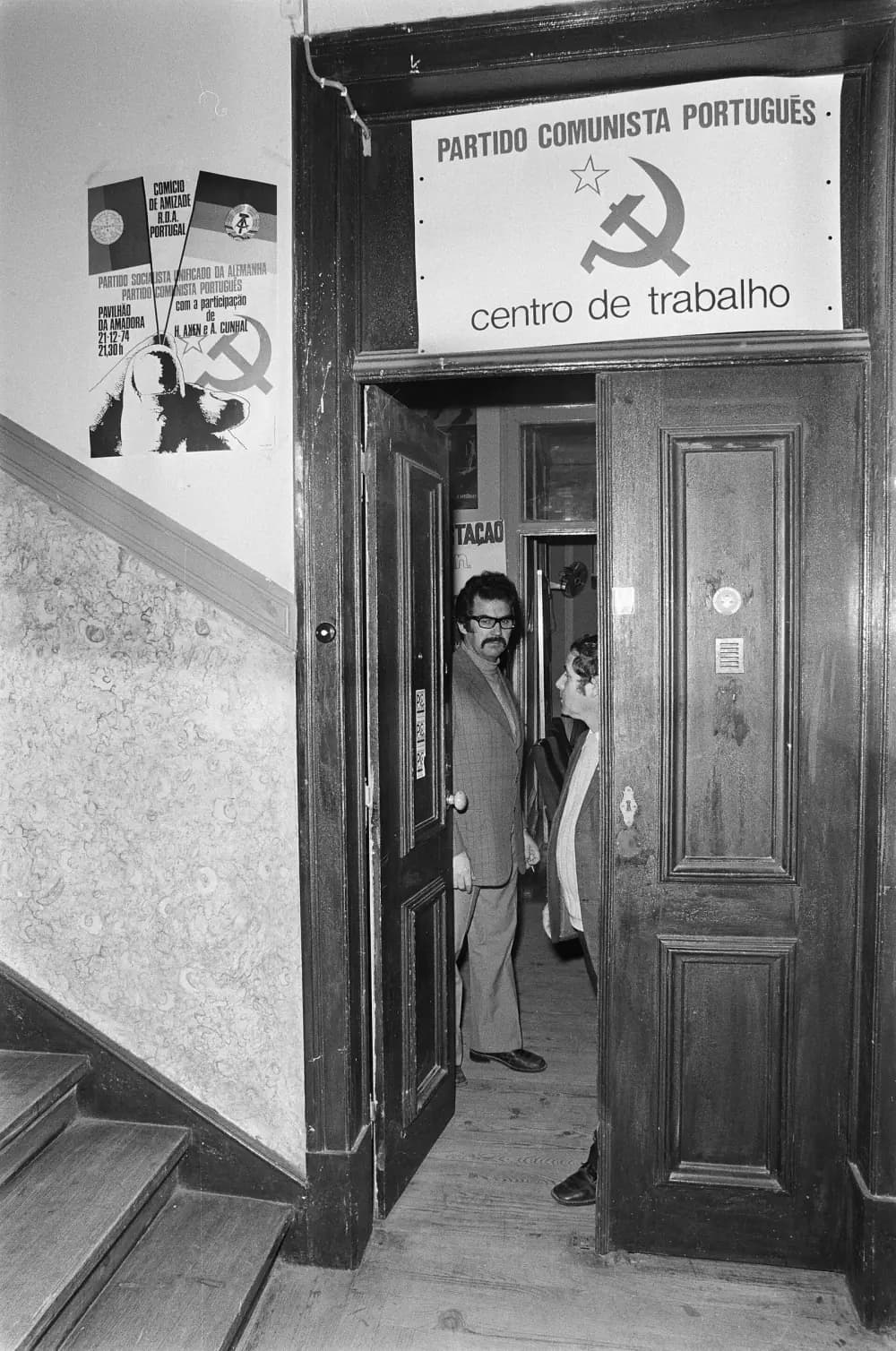
On 25 April 1975, in the election for the Constituent Assembly, the party won 711,935 votes, 12.46 per cent, and 30 seats. It came third, behind Mário Soares's Socialists and the Popular Democrats.
Its part in the revolution is still argued over. The Socialists accused it of wanting a communist dictatorship, which it denied. After a left-wing military revolt was put down on 25 November 1975, every party in the Constituent Assembly except the small MDP/CDE blamed the PCP, which denied planning any coup. Some writers have described its course in 1975 as an attempted “Prague coup”; the historian Raquel Varela, who studied its documents, finds no evidence that it ever attempted a putsch.
Why it still matters
The PCP is the oldest of Portugal's parties still active, and every parliament elected since 1975 has had communist members. Since 1979 it has stood in coalitions with small allies, first the APU and since 1987 the CDU with the Greens. Its vote peaked at 18.8 per cent in 1979 and has fallen most of the way since.
Vote share of the PCP and its coalitions in parliamentary elections, 1975 to 2024
% of votes cast
Figures from Jornal Económico's table of every legislative election since 1975. The 1975 vote was for the Constituent Assembly. In May 2025 the CDU won three seats, one fewer than in 2024.
Show the data
| PCP (1975, 1976), APU (1979 to 1985), CDU (from 1987) | |
|---|---|
| 1975 | 12.5 |
| 1976 | 14.4 |
| 1979 | 18.8 |
| 1980 | 16.8 |
| 1983 | 18.1 |
| 1985 | 15.5 |
| 1987 | 12.1 |
| 1991 | 8.8 |
| 1995 | 8.6 |
| 1999 | 9 |
| 2002 | 6.9 |
| 2005 | 7.5 |
| 2009 | 7.9 |
| 2011 | 7.9 |
| 2015 | 8.3 |
| 2019 | 6.3 |
| 2022 | 4.4 |
| 2024 | 3.2 |
In May 2025 the CDU won three seats in the Assembly. The party, whose headquarters is on Rua Soeiro Pereira Gomes in Lisbon, still publishes Avante!, and every September it holds the Festa do Avante!, a three-day festival of politics and music first held on 24 September 1976. The festival marked its 50 years at Quinta da Atalaia, in Seixal, across the Tagus from Lisbon, on 4 to 6 September 2026.
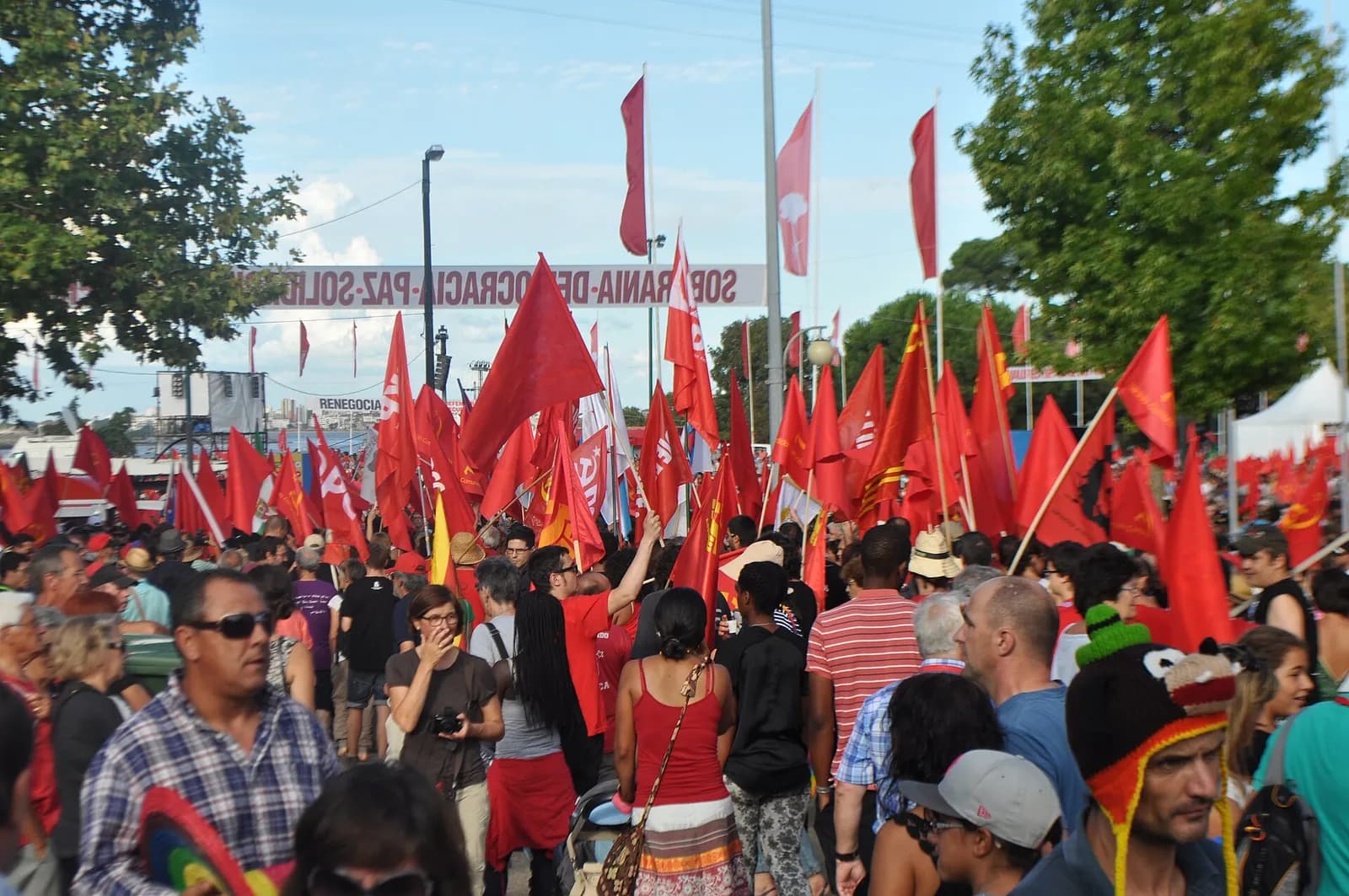
The historian Adelino Cunha calls the PCP the last purely Marxist-Leninist party in Europe. He gives three reasons for its survival: the revolutionary syndicalism of its origins, which made the street its place of action; a shared memory built over the long term, which shuts out dissidents; and its own reading of the doctrine, grounded in the struggle in Portugal, which carried it through Eurocommunism and the end of the Soviet Union.
FAQs
When and where was the Portuguese Communist Party founded?
At a meeting on 6 March 1921 at the Lisbon headquarters of the Associação dos Empregados de Escritório, the office workers' association, which elected the party's first leading bodies. One recent study gives 1 March for the formal founding, but the party and most published accounts use 6 March.
Who was the first leader of the PCP?
In 1921 the party was run by collective bodies, chiefly the National Board. The first secretary-general was Carlos Rates, confirmed at the first congress in November 1923 and expelled at the end of 1925. Bento Gonçalves, elected in April 1929, rebuilt the party under the dictatorship.
How long was the PCP illegal?
From the years after the military coup of 28 May 1926 until the revolution of 25 April 1974, close to five decades. Its headquarters were closed in 1927, and it was entered in the register of political parties on 26 December 1974.
What is Avante!?
The PCP's central newspaper. Its first issue appeared on 15 February 1931. It was published irregularly until 1941 and then, by the party's account, without a break, in secret, until April 1974; the first legal issue came out on 17 May 1974. It is still published, and the party's yearly Festa do Avante! is named after it.
On the timeline
Open the timelineNearby moments from the first republic (1910–1926).
The date entered on the birth registration of Amália Rodrigues in Lisbon's Pena parish. The future queen of fado, who took the genre from Alfama taverns to the world's great stages, always celebrated her birthday on 1 July instead — 'in cherry season', she said — and some researchers believe she was in fact born earlier still.
Birth of Artur do Cruzeiro Seixas in Amadora. A member of the dissident Lisbon surrealist group alongside Mário Cesariny, he joined the merchant navy in 1950 and settled in Angola, where his first solo shows caused a stir, before returning to paint, draw and write poetry — insisting he was not a 'painter' but 'a man who paints'. He died in 2020, weeks short of his 100th birthday.
Artur Agostinho is born in Lisbon. Famous as a football commentator on the state radio, the Emissora Nacional, he also acted in classic comedies such as 'O Leão da Estrela' (1947), emigrated to Brazil for lack of work in 1975 and returned to become a familiar face on television.
The founding of the PCP
The Portuguese Communist Party (Partido Comunista Português, PCP) is founded at a meeting in Lisbon, mostly by veteran trade unionists inspired by the Russian Revolution. Driven underground by the dictatorship for almost five decades, it is the oldest of Portugal's political parties still active today.
In the 'Noite Sangrenta', a revolt by GNR and navy units under Colonel Manuel Maria Coelho turns into a massacre: a 'phantom lorry' crewed by sailors and guards under the navy corporal Abel Olímpio, 'o Dente de Ouro', rounds up republican figures, and outgoing Prime Minister António Granjo, Machado Santos and Carlos da Maia, two of the heroes of 5 October 1910, are murdered.
Portugal's national football team plays its first official match, losing 3–1 to Spain in Madrid. The first win had to wait until June 1925, a 1–0 defeat of Italy.
Death in Lisbon of Anselmo Braamcamp Freire, a nobleman turned republican who sat on Lisbon's republican city council from 1908, as vice-president and then, after the 1910 revolution, as its president until 1913, and was the first president of the Republic's Senate. A pioneer of rigorous genealogy, author of 'Brasões da Sala de Sintra' on the coats of arms in Sintra Palace's heraldic hall, he left his library and art collection to Santarém, whose municipal library keeps them.
Coming up in history
All long reads
25 sources
Archives, scholarship and reporting this article was checked against.
- 1
Radiografia de um partido quebradiço: os primeiros anos do comunismo em Portugal, 1921-1926 (Arturo Zoffmann Rodríguez)Análise Social, 256 (2025), e36609
- 2
Contribuição para a história do Partido Comunista Português na I República (1921-26) (José Pacheco Pereira)Análise Social, vol. XVII (67-68), 1981, pp. 695-713
- 3
- 4
O Partido Comunista Português foi fundado há 100 anos! (João Vasconcelos)Barlavento, 6 March 2021
- 5
Foundation of the Portuguese Communist PartyMuseu do Aljube: Resistência e Liberdade (EGEAC)
- 6
90th Anniversary of «Avante!», the newspaper that gives voice to the organised struggle of the workers and popular masses (speech by Jerónimo de Sousa)Partido Comunista Português, February 2021
- 7
A brief history of Party CongressesPartido Comunista Português
- 8
Partidos políticos registados e suas denominações, siglas e símbolosTribunal Constitucional
- 9
Review of Adelino Cunha, Para que serve o PCP? Os anos da Fundação (Paulo Vasconcelos)História. Revista da FLUP, IV série, vol. 14, n.º 1, 2024, pp. 346-349
- 10
Os primeiros comunistas portugueses: a institucionalização de um partido e as trajetórias de militância (André Pina, research brief)Instituto de Sociologia, Universidade do Porto, July 2023
- 11
Chegam ao Tarrafal os primeiros presos deportadosMuseu do Aljube: Resistência e Liberdade (EGEAC), 29 October 2024
- 12
- 13100 anos de história do PCP: para onde vai o comunismo? (Adelino Cunha)Observador, March 2021
- 14
Elementos biográficos de Álvaro CunhalComissão das Comemorações do Centenário de Álvaro Cunhal, Partido Comunista Português (2014)
- 15Pacheco Pereira: “Cunhal e Fidel quebraram o isolamento dos soviéticos” em 1968Diário de Notícias, 21 August 2018
- 16
Legislativas: da Constituinte de 1975 às eleições antecipadas de 2024Jornal Económico, 18 May 2025
- 17
Mapa nacional da eleição para a Assembleia Constituinte, 25 de Abril de 1975 (Diário do Governo, II série, suplemento ao n.º 115, 19 May 1975)Comissão Nacional de Eleições
- 18PCP ficou isolado na Constituinte no rescaldo das “horas dramáticas” do 25 de NovembroLusa, in Observador, 24 November 2024
- 19
Cunhal não foi Carrillo? Estratégia e táctica do Partido Comunista Português durante a crise revolucionária de 1975 (Raquel Cardeira Varela)Marxists Internet Archive (Portuguese section), 2011
- 20“Olhe que não, olhe que não”: Soares e Cunhal mediram forças nos ecrãs há 50 anosRTP Notícias, November 2025
- 21
Com a contagem encerrada, AD vence e PS e Chega igualam número de deputadosPostal do Algarve (Lusa), May 2025
- 22Comunistas regressam à Quinta da Atalaia para celebrar 50 anos da Festa do Avante!RTP Notícias (Lusa), September 2026
- 23
- 24
- 25
Prisão políticaMuseu Nacional Resistência e Liberdade, Peniche
Image credits
- Strikers called out by the União dos Sindicatos Operários pass the offices of O Século in Lisbon in January 1912. Most of the Communist Party's founders were union men of this generation. Joshua Benoliel, Public domain, via Wikimedia Commons.
- The monument to Bento Gonçalves in his home village of Fiães do Rio, Montalegre, photographed in 2026. It calls him the PCP's first secretary-general, although Carlos Rates held the title from 1923. Joseolgon, CC BY 4.0, via Wikimedia Commons.
- Barrack blocks and the gate of the former Tarrafal camp on Santiago, Cape Verde, now a museum, in 2009. Gagum, CC BY 2.0, via Wikimedia Commons.
- The door of a PCP centro de trabalho, or branch office, in Lisbon on 11 February 1975, photographed for a Dutch news agency. Rob Mieremet / Anefo, CC0, via Wikimedia Commons.
- The closing rally of the Festa do Avante! at Quinta da Atalaia, Seixal, on 7 September 2014. Mar del Sur, CC BY-SA 4.0, via Wikimedia Commons.