

Why Germany declared war on Portugal on 9 March 1916
Portugal had been fighting Germans in Africa since 1914 without being at war. Dozens of idle German steamers in its harbours, a British note and a 21-gun salute on the Tagus changed that in two weeks.
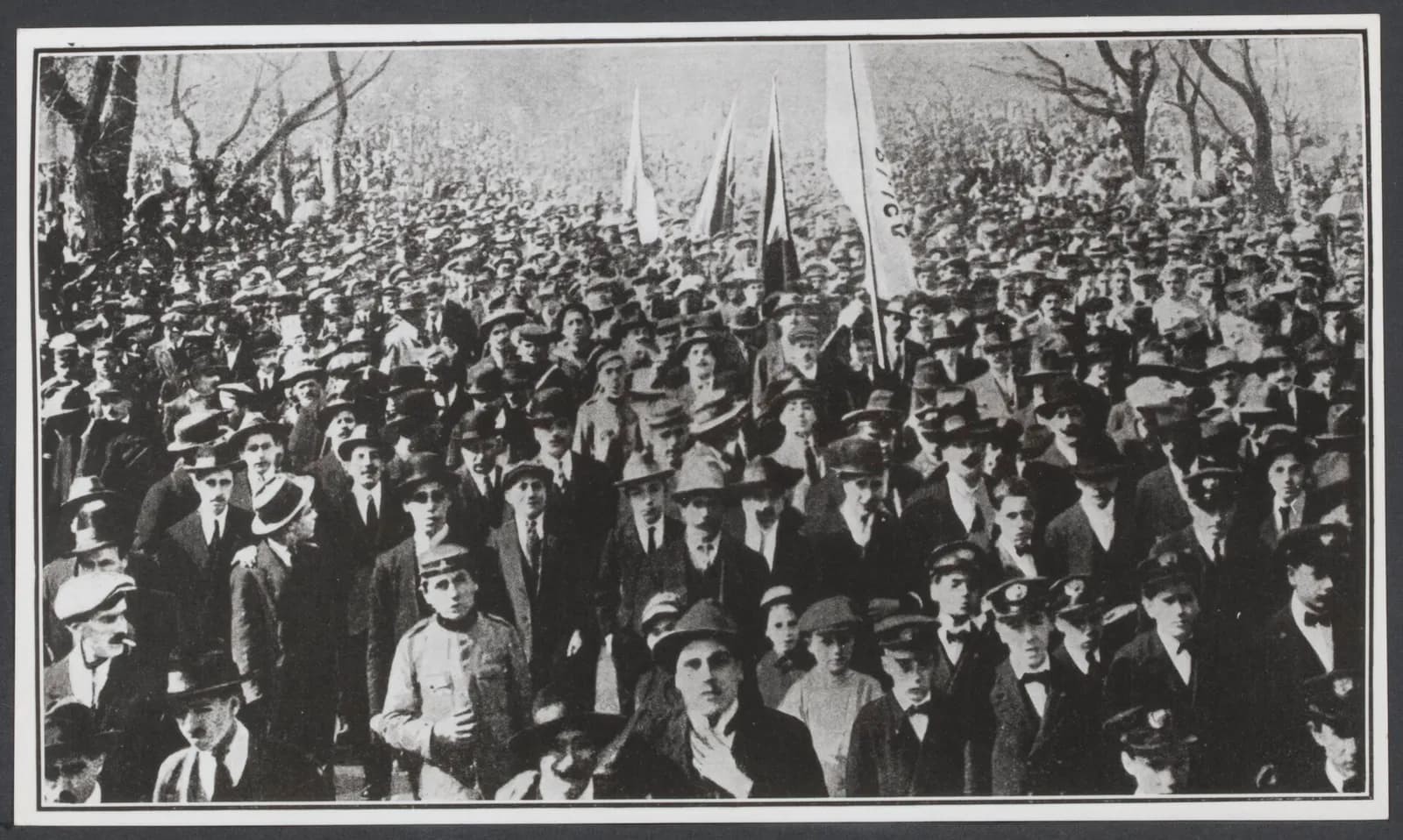
At a glance
- At 6 pm on 9 March 1916 the German minister in Lisbon, Baron Rosen, handed the foreign minister, Augusto Soares, a note saying Germany considered itself at war with Portugal.
- The cause was the seizure on 23 February of the German merchant ships that had sheltered in Portuguese ports since 1914, which Britain had asked for in the name of the alliance on 17 February.
- Counts of the ships differ: 72 (70 German and two Austro-Hungarian) in most accounts, 76 by the Navy museum's count, almost 60 by Luís Alves de Fraga's.
- On 10 March the Congress unanimously gave the government all the powers needed for a state of war, and on 16 March a coalition called the Sacred Union, led by António José de Almeida, presented itself to parliament.
- Britain invited Portugal to fight in Europe on 15 July 1916, and the first troops of the Portuguese Expeditionary Corps sailed for France on 30 January 1917.
Six o'clock at the ministry
On Thursday 9 March 1916 Baron Rosen, the German minister in Lisbon (the head of Germany's legation, one rank below an ambassador), asked to see the foreign minister, Augusto Soares. Soares gave him six in the evening. Rosen arrived on time, dressed in black with a frock coat and top hat, and Soares's secretary, Eugénio Tavares, showed him in. The meeting lasted no more than 20 minutes.
Lisbon had seen it coming. Germans living in the city had been drawing out their savings and packing for neutral Spain, and the press followed Rosen wherever he went. On the night of 8 March the lights of the German legation on Rua do Século burned until dawn. The newspaper A Capital guessed that papers were being burned.
Rosen left a note. After a long list of grievances it ended in two short sentences: the Imperial Government was forced to draw the necessary consequences from Portugal's conduct, and it considered itself from that moment in a state of war with the Portuguese Government. Portugal had been fighting Germans in Africa for 18 months without being at war with Germany. Now it was.
A war that started in Africa
Portugal had been a republic since October 1910. When the war broke out in August 1914 Britain, its most ancient ally, did not ask it to fight. London asked Lisbon not to declare itself neutral, but to stay out of the war as a non-belligerent. On 7 August 1914 the government told Congress, as the two chambers of parliament were called, to unanimous applause, that Portugal would never fail in its duties to the alliance.
In Africa the fighting started anyway. Portugal's two big colonies each bordered a German one: Angola had German South West Africa, today Namibia, to the south, and Mozambique had German East Africa, today mainland Tanzania, across the Rovuma river. At the end of the summer a German party attacked the Portuguese post of Maziua on the Rovuma, sacked it and killed the head of the post. The historians Luís Alves de Fraga and João Freire date the attack to 24 August 1914; the government's statement to Congress in 1916 said early September.
In southern Angola a shooting at the fort of Naulila in October 1914 brought German raids that autumn and a Portuguese defeat at Naulila on 18 December, a story told in our article on Naulila. By the end of the war Portugal had sent about 18,400 men to Angola and 31,700 to Mozambique, by Carlos Lopes's count.
At home the question was whether to go further. The Democratic Party of Afonso Costa wanted Portugal in the war in Europe, because only the war there would decide who kept which colonies. The conservative republicans and much of the public would accept, at most, fighting in Africa. Fraga adds the interventionists' other aims: to make sure of Portugal's independence within the Iberian Peninsula, to depend less on Britain, and to rally the country behind a young and shaky regime.
For more than a year London kept saying no. The historian António Louçã, writing for RTP, dates the change to late 1915, when the war's hunger for men and German submarine sinkings made neutral manpower and neutral shipping worth having.
The ships in the harbours
When the war began, German merchant ships far from home took refuge in neutral ports. One count puts the number that found refuge in neutral waters at 734. Dozens of them were lying in Portuguese harbours, in Lisbon, the islands and the colonies, and they stayed there, idle, for 18 months.
By 1916 the Allies were short of ships. The historian Nuno Severiano Teixeira describes an enormous shortage of tonnage on the Allied side, while the German ships in Portuguese ports came to about 240,000 tons. Portugal was short too: Lisbon's own case was that the idle ships were needed for its trade.
Afonso Costa had returned as prime minister at the end of 1915, at the head of a government beset by shortages, strikes and riots. On 7 February 1916 it passed Law 480, which allowed the state to requisition at any time the raw materials and means of transport the country needed. On 10 February Leote do Rego, a naval officer and deputy, wrote in O Século that the government should not hesitate to use the German steamers.
“His Majesty's Minister has orders, in the name of His Majesty's Government, to urge the Government of the Republic, in the name of the Alliance, to requisition all the enemy ships lying in Portuguese ports.”
Britain's request mattered at home. As the Unionist leader Brito Camacho told Congress on 10 March, once Britain asked in the name of the alliance for something Portugal could do, Portugal could not refuse.
23 February: flags on the Tagus
On the morning of 23 February 1916 the government issued Decree 2,229, which ordered the requisition in the interest of the national economy and its sea transport. Its fifth article promised the owners compensation, the amount to be fixed later. The same day Soares telegraphed the Portuguese minister in Berlin to tell the German government.
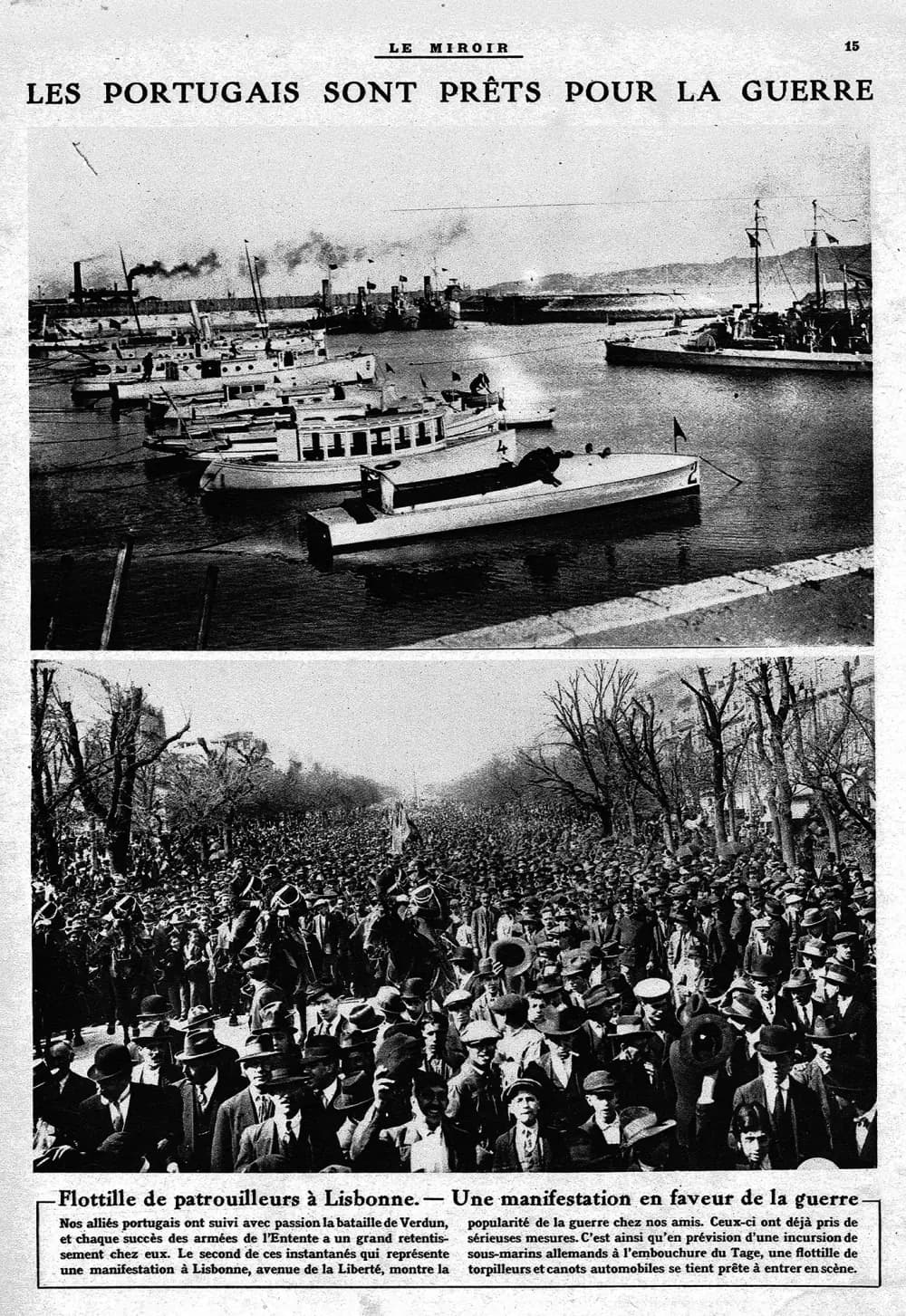
At 5.50 pm the cruiser Vasco da Gama fired a 21-gun salute on the Tagus. The commander of the Naval Division boarded the destroyer Douro and led a flotilla of the destroyer Guadiana and two torpedo boats among the German ships. On each one the German flag came down and the Portuguese flag went up with a war pennant. RTP's account names Leote do Rego as the officer in charge and says no one used force. The weekly Ilustração Portuguesa put the number taken in the Tagus at 36. The ships in the other ports were taken over in the following days.
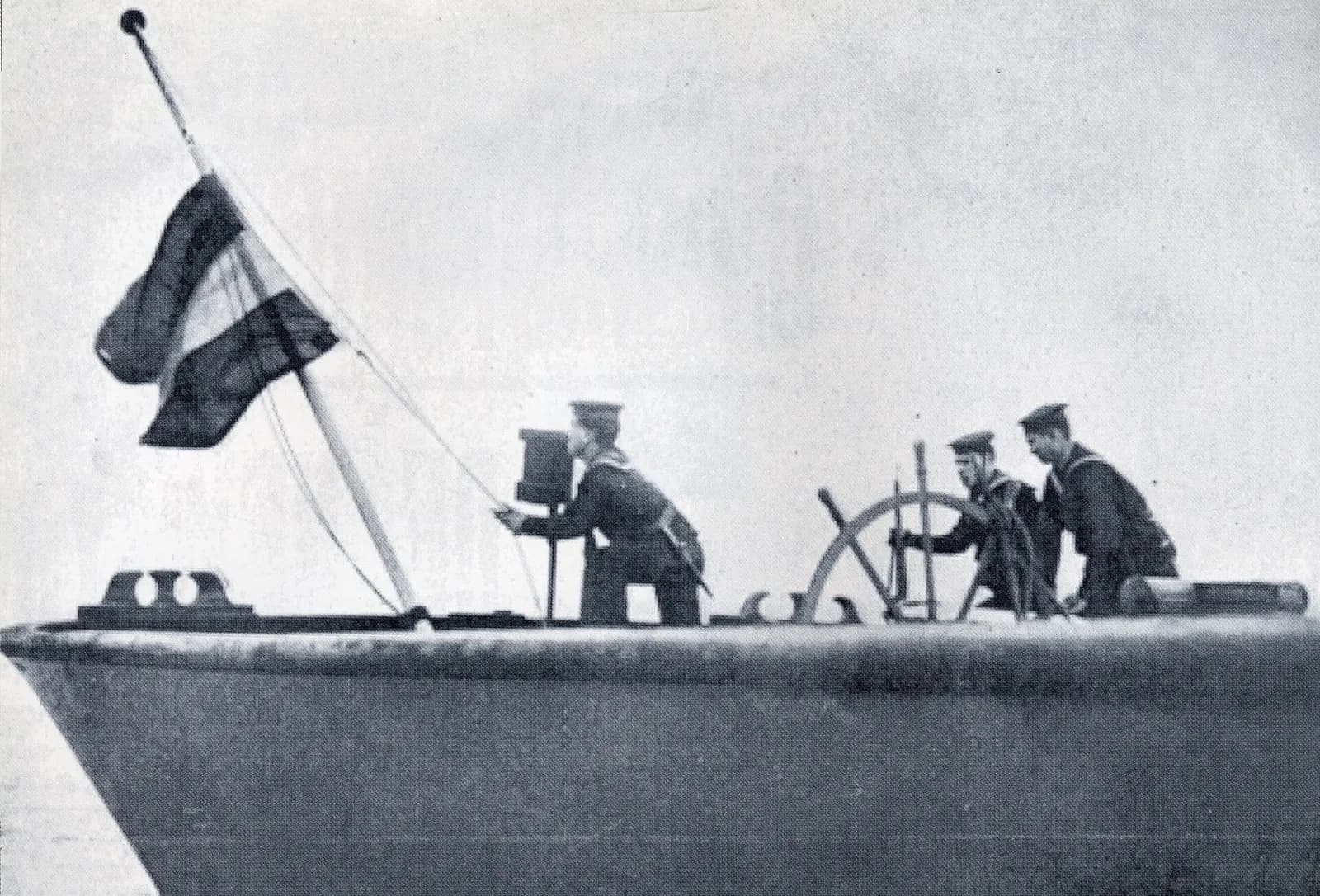
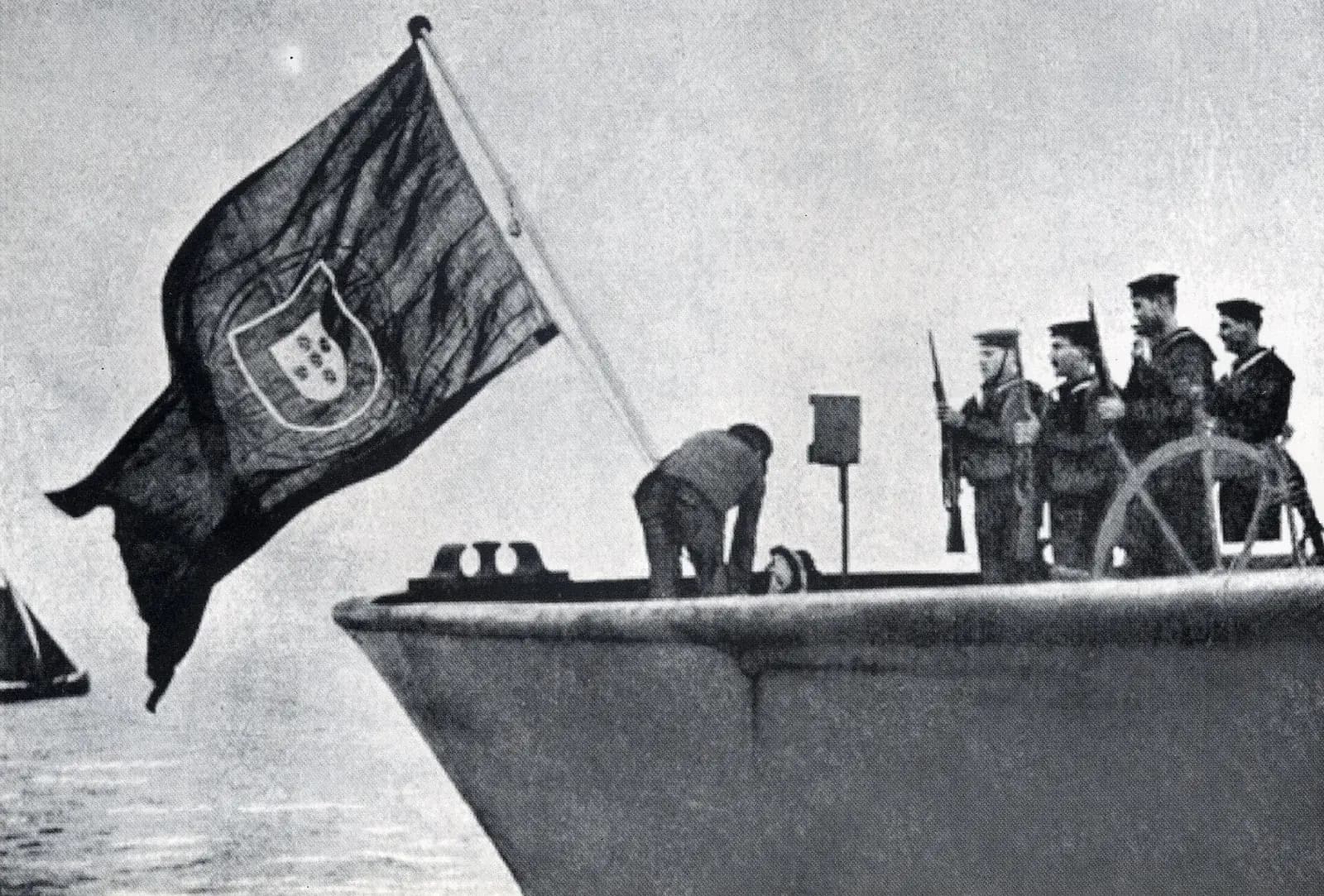
The German captains said they were surprised, then handed over letters of protest written weeks before, with only the date filled in. Inspecting them, the Portuguese found the engines of most of the ships damaged, with parts hidden, thrown overboard or smashed, and two ships' engines booby-trapped to explode. Some repairs took a year.
| Source | Ships | What it counts |
|---|---|---|
| Museu de Marinha (Portuguese Navy) | 76 | German merchant ships in mainland, island and colonial ports, two of them Austro-Hungarian |
| Carlos Lopes, Universidade Aberta (2012) | 72 | 70 German and 2 Austro-Hungarian ships seized on 23 February 1916 |
| RTP and Diário de Notícias (2016) | 72 | Ships seized in every Portuguese territory, from India to Africa |
| Luís Alves de Fraga, Janus | Almost 60 | German and Austrian ships in Portuguese ports |
| Ilustração Portuguesa, 6 March 1916 | 36 | Ships requisitioned in the Tagus alone |
None of these sources explains how its count was made.
German shipping in Portuguese ports, and the share Portugal kept
tons
The total is Nuno Severiano Teixeira's estimate, quoted by Diário de Notícias; the 85,208 tons Portugal kept, about 35 per cent of the whole, is RTP's figure. Most of the rest sailed in British service.
Show the data
| Tonnage | |
|---|---|
| German ships in Portuguese ports (about) | 240,000 |
| Ships Portugal kept | 85,208 |
Berlin's answer
On 27 February Rosen protested at a singular breach of law: Portugal had taken the German ships by an act of force, without any prior negotiation. He asked for the measure to be revoked at once. Lisbon refused. Its reply argued that ships sheltering under Portuguese protection for 18 months fell under the state's right of eminent domain, that Italy had done the same without German objection, and that the owners would be paid.
Rumours of a German ultimatum ran through Lisbon from 28 February, and the government denied them. On 2 March Sidónio Pais, Portugal's minister in Berlin, telegraphed that war could still be avoided if Lisbon promised the ships would not go to Britain. That was a promise Lisbon could not give.
The declaration of 9 March listed what Berlin held against Portugal since 1914. British troops had been let through Mozambique four times; German ships had been refused coal; British warships had stayed in Portuguese ports and used Madeira as a base; guns and a destroyer had been sold to the Entente. It accused Portugal of luring a German official and two officers to Naulila and shooting them, and it complained of insults to the Kaiser in Congress. Then it came to the ships.
“By this conduct the Portuguese Government has shown that it regards itself as England's vassal, subordinating every other consideration to English interests and wishes. Finally, the seizure of the ships was carried out in forms in which an intentional provocation of Germany must be seen.”
Portuguese historians have tended to agree that Lisbon wanted this outcome. Teixeira calls Lisbon's course a strategy of provocation, and Fraga writes that the declaration was above all the result of a manoeuvre by Portuguese diplomacy. London put the blame on Berlin. The British government's statement to the Commons on 14 March said Portugal's action would have been justified even for a neutral, that Britain had urged the requisition too, and that Germany had chosen to precipitate matters.
Congress votes for war
That evening President Bernardino Machado signed a decree calling both chambers of Congress to a joint session the next day at 4 pm. The session opened at 4.55 pm on 10 March with 184 members present and the president in his box. One deputy telegraphed from Benavente that floods and a storm had stopped him crossing the Tagus. The galleries were packed, and diplomats from nine countries, among them the ministers of Britain, France, Russia, Belgium and Italy, watched from the diplomatic box.
Soares read the documents aloud, the British note and the German declaration included, and apologised for not leaving out the German note's unusual language. Costa then put a one-line resolution: Article only. The Executive Power is granted all the powers needed for the state of war with Germany, under Article 26, no. 14 of the Constitution.
Every party spoke for it. António José de Almeida of the Evolutionist Party called on all Portuguese to unite and hoped for a sacred union. Brito Camacho asked for an inquiry to clear Portugal's officers of the Naulila charge. For the Socialists, José António da Costa Júnior said his party had always fought war as a calamity but that every true socialist now stood with the country. Costa's resolution and a motion for a national government both passed unanimously. The session closed at 6.35 pm to cries of long live the Republic.
“We are nobody's vassals, but we are slaves to our obligations, and we know no nobler slavery.”
That night Rosen left Lisbon for Madrid on a special train with his wife, his staff and some German residents. Many other Germans stayed. On 12 March Decree 2,270 let the authorities stop newspapers from circulating on grounds of national defence. By the end of the month this had become prior censorship, and papers appeared with blank spaces where articles had been cut.
London answered on 12 March. The British minister, Lancelot Carnegie, passed on a message from the foreign secretary, Sir Edward Grey: Britain would stand by Portugal against the common enemy and give it all the help possible or necessary. On 14 March Grey read the prime minister's statement to the House of Commons.
“Portugal may rest assured that Great Britain and the Allies will afford her all the assistance that she may require, and that, having been compelled to range herself on the side of the Allies, she will be welcomed as a gallant coadjutor in the defence of the great cause for which the present War is being waged.”
The Sacred Union
Costa resigned the day after the vote and stayed on as caretaker. On 15 March the Chamber of Deputies heard a letter from António José de Almeida, leader of the Evolutionists: the president had asked him to form the national ministry. The new government came to parliament the next afternoon.
It joined Costa's Portuguese Republican Party, known as the Democrats, and Almeida's Evolutionists. Brito Camacho's Unionists promised support but stayed out. Almeida became prime minister and minister for the colonies, and Costa took the finance ministry. Finding a leader had not been easy: several men were approached first and declined, among them the poet Guerra Junqueiro.
Almeida's declaration gave parliament more news: Austria-Hungary had broken off relations the day before, without giving a reason. It was not a declaration of war: the American minister, Thomas Birch, cabled Washington that morning that there had been none. Almeida promised a new Ministry of Labour and tolerance towards the Republic's opponents. Then he gave the government its name.
“Over our heads, like a terrible threat, these words have whistled ... THE FATHERLAND IS IN DANGER. So that it shall not be in danger, let us all unite to defend it. For our part ... we will use every means to reach the final and highest form of the Sacred Union.”
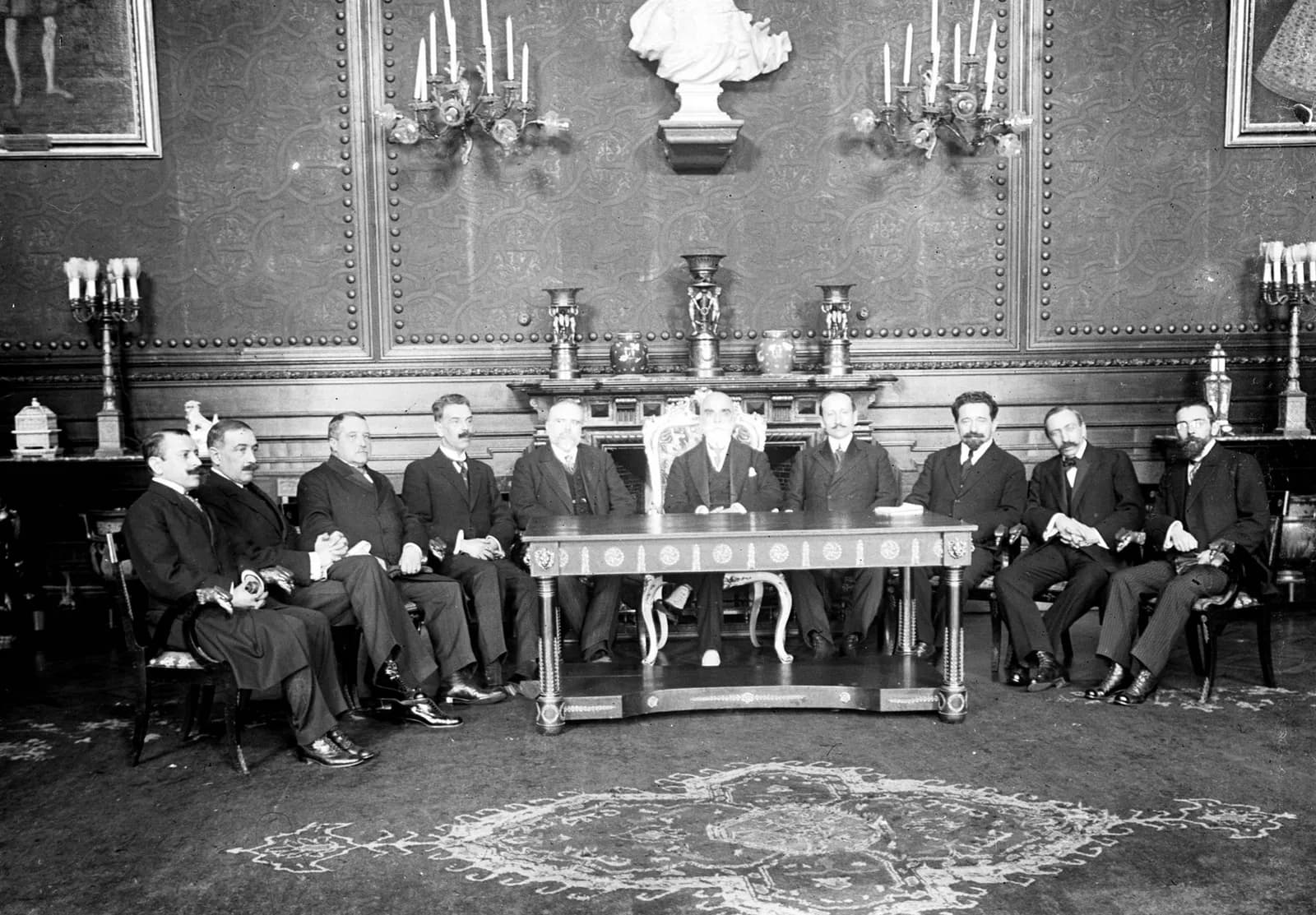
The Sacred Union government lasted from March 1916 to April 1917. Almeida, who had been Costa's rival for years, made his peace with him to lead it.
From declaration to the trenches
The first fighting was in Africa again. From April 1916 Portuguese troops in northern Mozambique went on the offensive towards the Rovuma and the Kionga triangle, a strip south of the river's mouth that Germany had held since 1894. João Freire judges the offensives beyond the river badly planned and badly carried out, and they ended in failure.
In Portugal some 20,000 men were called up in the spring and summer of 1916 and trained as a division at the Tancos firing range, an effort the war minister, Norton de Matos, called the miracle of Tancos. In the summer Costa and Soares went to the Allied economic conference in Paris and then to London, to learn what Britain expected of Portugal at war and to settle questions of money.
“His Majesty's Government fully recognises Portugal's loyalty and the assistance it is already giving, and cordially invites it to a greater military cooperation alongside the Allies in Europe, in so far as it judges itself able to give it.”
On 7 August 1916 Congress resolved to give the invitation full satisfaction. The details were settled in a convention with Britain signed on 3 January 1917, and the first contingent of the Corpo Expedicionário Português sailed from Lisbon on 30 January. Some later accounts say 26 January. Its worst day came at La Lys on 9 April 1918, when between 398 and 614 men were killed, by different counts, and about 6,585 taken prisoner.
7 August 1914
Government tells Congress Portugal will honour the British alliance
24 August 1914
German attack on the post of Maziua, northern Mozambique (early September in the 1916 government statement)
October to December 1914
Naulila incident and German raids in southern Angola
Late 1915
Afonso Costa returns as prime minister; British policy shifts
7 February 1916
Law 480 allows the requisition of means of transport
17 February 1916
British note asks Portugal to requisition the enemy ships
23 February 1916
Decree 2,229; German flags lowered on the Tagus at 5.50 pm
27 February 1916
Rosen protests and demands the ships back
9 March 1916
Germany declares war
10 March 1916
Congress votes the government war powers unanimously
15 March 1916
Austria-Hungary breaks off relations
16 March 1916
The Sacred Union government presents itself to parliament
15 July 1916
Britain invites Portugal to fight in Europe
7 August 1916
Congress accepts the invitation
30 January 1917
First CEP contingent sails for France
What it cost and what it won
The ships were renamed and most of them ended up serving Britain. Many were sunk by German submarines. Portugal also borrowed from Britain to pay for its war: by António José Telo's figures, quoted by RTP, the credit line stood at £15.6 million in 1918, and by 1925 the debt had grown to £22.7 million.
Teixeira's verdict is that Lisbon got what it went to war for in Africa. Portugal sat among the victors and, through the Treaty of Versailles, gained the Kionga triangle. It also won the right to claim for German attacks before 9 March 1916; Swiss arbitrators ruled in 1928 that the Naulila raids had been unlawful.
“All Portugal's colonial objectives were achieved. The empire was not so much as scratched, and it even gained territory.”
At home the Sacred Union did not last. The war had been meant, in part, to rally the country behind the Republic. In December 1917 Sidónio Pais, the envoy who had been in Berlin until the declaration, seized power in Lisbon, and after that, Fraga writes, no more reinforcements reached the corps in France.
Why it still matters
On paper Portugal did not choose the war: Germany declared it. The record shows how much Lisbon did to bring that about, and historians still weigh a British request against a Portuguese plan. The documents to judge it are public: the debates of 10 March 1916, with the British note and the German declaration, can be read in full on the Assembleia da República's website.
Much of the rest of Portugal's war began in these weeks: the Sacred Union's promise of national unity, the reliance on British ships and money, and the road to the trenches of Flanders.
FAQs
Why did Germany declare war on Portugal in 1916?
Because on 23 February 1916 Portugal, at Britain's request, seized the German merchant ships that had sheltered in its ports since 1914. Germany's declaration of 9 March called this a breach of law and a deliberate provocation, and listed earlier grievances, from British troops crossing Mozambique to the Naulila incident in Angola.
Did Portugal declare war on Germany?
No. Germany declared war on Portugal. On 10 March 1916 the Portuguese Congress unanimously gave the government all the powers needed for the state of war with Germany. Austria-Hungary broke off relations with Portugal on 15 March.
How many German ships did Portugal seize?
Most accounts give 72, of which 70 German and two Austro-Hungarian. The Navy museum counts 76 ships in mainland, island and colonial ports, and Luís Alves de Fraga almost 60. The historian Nuno Severiano Teixeira puts their tonnage at about 240,000 tons.
What was the União Sagrada?
The Sacred Union was the coalition government formed after the declaration of war. Led by António José de Almeida of the Evolutionist Party, with Afonso Costa's Democrats and the support of Brito Camacho's Unionists, it presented itself to parliament on 16 March 1916 and lasted until April 1917.
When did Portuguese troops reach the Western Front?
Britain invited Portugal to send troops to Europe on 15 July 1916 and Congress accepted on 7 August. After a convention with Britain signed on 3 January 1917, the first contingent of the Portuguese Expeditionary Corps sailed from Lisbon on 30 January 1917. Some later accounts say 26 January.
On the timeline
Open the timelineNearby moments from the first republic (1910–1926).
German troops from South West Africa attack the Portuguese post at Naulila in southern Angola. Some 70 Portuguese soldiers are killed and the garrison retreats — fighting in Africa more than a year before Portugal formally entered the First World War. The retreat set off uprisings in southern Angola that Portugal crushed in a bloody campaign in 1915.
A violent uprising in Lisbon, led by republicans including Álvaro de Castro, Sá Cardoso and Norton de Matos, topples the dictatorial government of General Pimenta de Castro and restores constitutional rule. One of the bloodiest episodes of the First Republic, it leaves between about 100 and more than 200 dead, depending on the estimate, and soon forces President Manuel de Arriaga to resign.
At Britain's request, Portugal begins seizing the German merchant ships, and two Austro-Hungarian ones, that had sheltered in its ports since 1914: between about 60 and 76 by different counts. Berlin answers by declaring war on 9 March, drawing Portugal into the First World War and, within a year, sending the Corpo Expedicionário Português to Flanders.
Germany declares war, 1916
The German Empire declares war on Portugal, following Portugal's seizure of German and Austro-Hungarian ships sheltering in Portuguese ports. Portugal formally enters World War I on the side of the Allies.
Death of Mário de Sá-Carneiro in Paris at age 25. He was a leading Portuguese modernist poet, a key figure of the 'Geração d'Orpheu' movement, and Fernando Pessoa's close friend and literary collaborator.
The Portuguese Parliament approves Portugal's active participation in the First World War alongside the Allies, following Britain's formal invitation, paving the way for the Portuguese Expeditionary Corps to fight on the Western Front.
Portugal and Britain sign a convention setting out how the Corpo Expedicionário Português (CEP) will serve on the Western Front, within the British army. The first contingent sailed from Lisbon on 30 January; by late October one tally counted 59,388 men sent to France, though other counts of the whole corps are lower, at about 55,000 to 57,000.
Coming up in history
All long reads 11 March 197511 March 1975: the coup that pushed Portugal's revolution to the left
 12 March 1514Hanno, the white elephant Manuel I sent to the Pope: Rome, 12 March 1514
 13 March 1696The 33-month siege of Fort Jesus, Mombasa, 1696 to 1698
 14 March 1923Celeste Rodrigues: the fado singer who sang for 73 years
28 sources
Archives, scholarship and reporting this article was checked against.
- 1
Diário do Congresso, sessão n.º 9, 10 de Março de 1916Assembleia da República, Debates Parlamentares (Congresso da República, II Legislatura)
- 2
- 3
Efeméride: Apresamento de navios alemãesDireção Cultural da Marinha, Museu de Marinha
- 4Porquê e como foram apresados os navios alemães em 1916 (Graça Andrade Ramos)RTP, Portugal na I Grande Guerra
- 5A Alemanha declara guerra a Portugal (Graça Andrade Ramos)RTP, Portugal na I Grande Guerra
- 6
Entry of Portugal into War: statement by Sir Edward Grey (HC Deb 14 March 1916, vol. 80, cc. 1897-9)UK Parliament, Hansard 1803-2005
- 7
Portugal e a Primeira Guerra Mundial (Luís Alves de Fraga)Janus 1999-2000, Universidade Autónoma de Lisboa
- 8Portugal recusou negociar os esforços de paz da AlemanhaDiário de Notícias, 9 March 2016
- 9
Moçambique: perante a hipótese de um ataque alemão em 1914-1915 (João Freire)Faculdade de Letras da Universidade do Porto, 2016
- 10
Responsabilité de l'Allemagne à raison des dommages causés dans les colonies portugaises du sud de l'Afrique (sentence sur le principe de la responsabilité), Portugal contre Allemagne, Lausanne, 31 juillet 1928United Nations, Reports of International Arbitral Awards, vol. II, pp. 1011-1033
- 11
Os portugueses na Grande Guerra: uma experiência de combate e de cativeiro (Carlos Jorge Alves Lopes, MA dissertation)Universidade Aberta, 2012
- 12Entre a aliança e o protectorado britânico (António Louçã)RTP, Portugal na I Grande Guerra
- 13
A arma submarina na estratégia alemã na Primeira Guerra Mundial (Marisa Fernandes)Nação e Defesa 145 (2016), pp. 133-152
- 14
Ilustração Portuguesa, n.º 524, 6 de Março de 1916: Navios alemães (pp. 294-295)Hemeroteca Digital, Câmara Municipal de Lisboa
- 15
- 16
António José de Almeida: biografiaMuseu da Presidência da República
- 17
- 18
The Minister in Portugal (Birch) to the Secretary of State, Lisbon, 16 March 1916 (file no. 763.72/2499)Office of the Historian, US Department of State, Foreign Relations of the United States, 1916, Supplement, The World War, document 13
- 19Como se faz uma trincheira (Graça Andrade Ramos)RTP, Portugal na I Grande Guerra
- 20
Norton de Matos e o milagre de Tancos: entre o mito e a realidade (Helena Pinto Janeiro)Instituto de História Contemporânea, NOVA FCSH (Ponte de Lima: do passado ao presente, no. 3, 2018)
- 21
Afonso Costa e Manuel Teixeira Gomes na missão que negociou em Londres, no verão de 1916, as condições financeiras para a participação de Portugal na I Guerra Mundial (Jorge Pais de Sousa)Revista Universitaria de Historia Militar 3 (5), 2014
- 22
The Portuguese Expeditionary Corps in France (1917-18) and the Long Shadow of the Peninsular War against Napoleon (Filipe Ribeiro de Meneses)e-Journal of Portuguese History 16 (2), 2018; author's copy, Maynooth University Research Archive Library
- 23
A primeira partida para FrançaRTP Ensina (Graça Andrade Ramos, Postal da Grande Guerra, 2017)
- 24
- 25
Evocação da Batalha de La Lys (1924)Assembleia da República, Comunicar
- 26Postal da Grande Guerra: Partidas e Logística (Graça Andrade Ramos)RTP, Portugal na I Grande Guerra
- 27
The monastery that turned into ParliamentVisit Lisboa (Turismo de Lisboa)
- 28
Visitas ao PalácioAssembleia da República
Image credits
- A crowd with flags in Lisbon after the news of Germany's declaration of war, March 1916. The Dutch National Archive, which holds the print, dates it 9 March, the day of the declaration. Radio Times Hulton Picture Library, CC0, via Wikimedia Commons.
- A Portuguese sailor hauls down the German flag on the steamer Energie, one of the seized ships. The photograph appeared in Ilustração Portuguesa on 6 March 1916. Unknown author, Public domain, via Wikimedia Commons.
- Sailors salute the Portuguese flag just raised on the Energie, in a photograph published on 6 March 1916. Germany's declaration of war called such flag ceremonies a deliberate provocation. Unknown author, Public domain, via Wikimedia Commons.
- The Paris weekly Le Miroir of 23 April 1916: patrol boats at Lisbon and a demonstration for the war on Avenida da Liberdade, under the headline The Portuguese are ready for war. Le Miroir, Public domain, via Wikimedia Commons.
- President Bernardino Machado (centre) receives the ministers of the Sacred Union government at Belém Palace in 1916. Photograph by Joshua Benoliel. Joshua Benoliel, Public domain, via Wikimedia Commons.