

João de Deus, the poet whose primer taught Portugal to read
Born in an Algarve village on 8 March 1830, João de Deus wrote love poems that were known across the country. His reading primer, printed in a striped typeface in 1876, made him a national hero in a kingdom where three in four people could not read.
At a glance
- João de Deus de Nogueira Ramos was born on 8 March 1830 in São Bartolomeu de Messines, in the Algarve, and died in Lisbon on 11 January 1896.
- He was the most popular lyric poet of his day, but he is remembered above all for the Cartilha Maternal, a reading primer printed in 1876.
- The primer taught children and adults to read whole words, marking the syllables by printing them alternately in plain black and striped grey type instead of spelling them out letter by letter.
- At the time about three in four Portuguese over the age of seven could not read; the 1890 census put the share at 76 per cent.
- Parliament paid for his funeral, he was buried at the Jerónimos, and in 1966 he was moved to the National Pantheon. The kindergartens his son founded were still teaching with his primer in 2014.
Students under his window
In early March 1895, trains full of students pulled into Lisbon. The Coimbra students got off at the Rossio station, and more came from Porto, Santarém, Braga, Lamego and Portalegre, carrying the banners of their schools. On 8 March, the sixty-fifth birthday of the poet João de Deus, they joined the Lisbon students and marched to his house.
The weather was stormy. The poet watched the procession from his window, and the illustrated Lisbon magazine O Occidente reported that he was moved to tears. The next day was fine, so the students marched again, and the student bands of Coimbra and Porto played in front of his house.
That evening the students held a gala at the Teatro de D. Maria II, with King Carlos and his ministers in the audience. When João de Deus came into his box the cheering went on for more than ten minutes. As he left, students spread their academic capes on the street for him to walk on. Then they unhitched the horses from his carriage and pulled him home themselves with a long rope.
On the birthday itself King Carlos went to the poet's house in person to give him the grand cross of the Order of Santiago, and waived the fees that came with it. The Royal Academy of Sciences and the Instituto de Coimbra made him a member, and some town councils named streets after him. O Occidente called him one of Portugal's greatest benefactors, for his method of teaching reading: a small primer called the Cartilha Maternal.
“Honour to the teacher! Glory to the poet!”
A kingdom that could not read
In 1878 the census found that 79.4 per cent of people in mainland Portugal could neither read nor write. The share fell slowly: 76 per cent of over-sevens in 1890, 74.1 per cent in 1900 and 69.7 per cent in 1911. By 1900 more than 80 per cent of people in England, France and Belgium could read; Portugal only passed 50 per cent around 1950.
Share of people in Portugal who could not read or write
% of population over 7
Census figures for people over seven, as given by Francisco Ribeiro da Silva; the 1878 figure is for mainland Portugal only, and Rui Ramos gives it for people over six. The Cartilha Maternal was printed in 1876, two years before the first of these counts.
Show the data
| Could not read | |
|---|---|
| 1878 | 79.4 |
| 1890 | 76 |
| 1900 | 74.1 |
| 1911 | 69.7 |
Schools were few. In 1843 Portugal had 3.2 schools for every 10,000 people, and 7.8 by 1884. Even in the 1910s many were a single room for all four classes, or a flat adapted for the purpose. Children worked in the fields and came to school only now and then, and many teachers were curates or sacristans who did little more than teach the catechism.
Families got by without reading. When they needed a lease drawn up or a letter written, they used a public letter-writer or a relative who had learned. Reading a little did not get a poor boy a better job, and emigrating to Brazil was a surer way out of poverty than school.
| 1878 | 1890 | 1911 | |
|---|---|---|---|
| Faro district (the Algarve), men | 18.5 | 17.4 | 21.5 |
| Faro district (the Algarve), women | 15.7 | 14.0 | 21.2 |
| City of Lisbon, men | 53.6 | 63.4 | 69.4 |
| City of Lisbon, women | 49.1 | 48.6 | 56.7 |
From Rui Ramos's tables of census results by district (quadros 1 and 2). In 1878 the rate is for people over six. In the Algarve, where João de Deus was born, fewer than one man in five could read in 1878 and 1890.
The way reading was taught made it harder. Children named each letter, then the syllable, then joined syllables into words, and some primers were nothing but lists of syllables to memorise. In 1850 the poet António Feliciano de Castilho published a quicker method using games and rhymes, but it still split words into pieces.
The poet from Messines
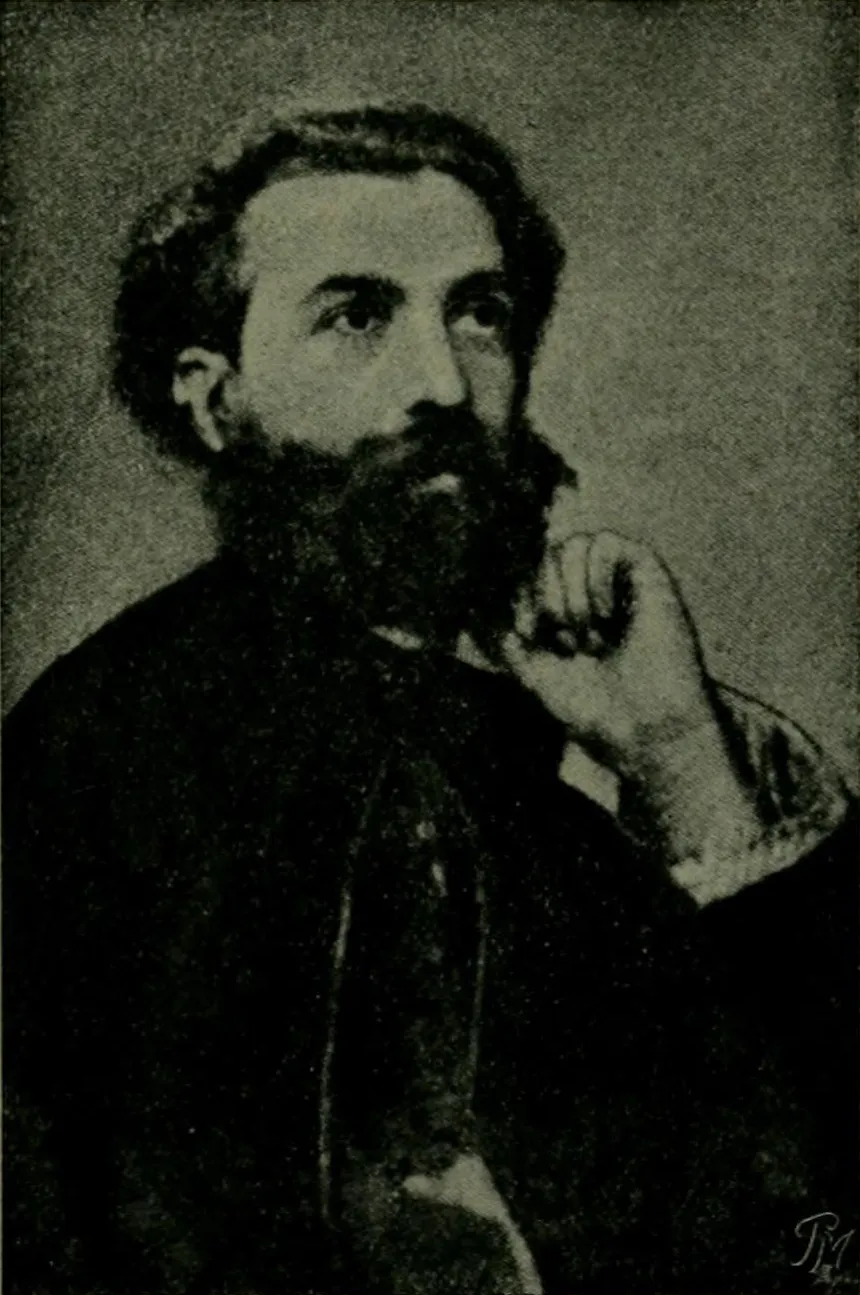
João de Deus de Nogueira Ramos was born on 8 March 1830 in São Bartolomeu de Messines, a village in the municipality of Silves, in the Algarve. He studied law at the University of Coimbra from 1850 to 1859.
His obituary in O Occidente said the degree never interested him much. He wrote his first verses by the willows of the Mondego, took ten years to graduate and stayed on in Coimbra until 1862, when he moved to Beja. There he edited the newspaper O Bejense until 1864, then went home to Silves to work as a lawyer and journalist.
In 1868 he was elected to parliament for Silves and moved to Lisbon; his obituary in O Occidente gives the year as 1869. He refused to join a party, rarely went to the chamber and did not stand again. O Occidente wrote that to make a living he composed rhyming quatrains to go with sweets, at 2,000 réis for every 25.
He cared little about publishing. Friends copied down the verses he recited and sent them to newspapers, and in 1868 one of them, José António Garcia Blanco, published a collection in Lisbon, Flores do Campo (Field Flowers). Ramo de Flores (A Bunch of Flowers) followed in Porto in 1869, and Folhas Soltas in 1876. In 1896 the president of the Chamber of Deputies said that many of the poems would never have been printed without his friends.
“A kiss on the cheek is asked for and given: will you? What does a kiss cost? Don't be shy: go on!”
Lines like these, short and plain, made him the most popular poet in the country. When he died, the president of the chamber said that in the opinion of many he was the greatest Portuguese poet since Luís de Camões, the sixteenth-century author of the national epic.
A primer in black and grey
The method began as private lessons: friends often asked João de Deus to teach their children or protégés to read. The earliest trace is a set of handwritten tables from the summer of 1874, made for teaching a girl called Carolina, whose father, Celestino de Sousa, signed the note on them. In two-syllable words the letters of the second syllable were dotted with white, so that the reader could see where one syllable ended without the word being cut in two.
A village teacher turned the idea into a course. José Cândido Augusto de Madureira, the parish priest (abade) of Arcozelo, in Vila Nova de Gaia just south of Porto, ran the elementary school there. On 17 February 1876 he opened the first school taught by the method, helped by the poet's brother, Father António do Espírito Santo Ramos, who apparently painted large wall charts with the syllables in black and orange.
Printing was harder. The book had to be printed in one ink, and the Porto printer António José da Silva Teixeira did not have enough large type. The answer was to set the syllables alternately in plain black type and in type scored with fine horizontal lines, which looks grey. Letters from June 1876 record the printer's objection that mixing ordinary and striped type went against the rules of his trade.
Finding a publisher was no easier. In a note written while the book was at the press, João de Deus said that in Lisbon he could not get it published even for nothing, though he had offered it to a well-known publisher who was himself a poet and prose writer.
The title page is dated 1876 and gives Porto as the place of printing. The historian Justino Magalhães counts two editions that year, the first called simply Arte de Leitura (Art of Reading). Another historian, Isolina Pereira, suggests the book may in fact have come off the press in 1877.
“That means, or that method, cannot be essentially different from the enchanting method by which mothers teach us to speak, which is by speaking, teaching us living words that engage the mind, and not dead letters and syllables, as schoolmasters do.”
The first lesson taught the five vowels. The next began with v, a sound a child can hold as long as it likes, and used real words straight away: vá, vai, vi, via, viu, vivia (go, goes, I saw, he was seeing, he saw, he lived). There were no pictures, because João de Deus wanted verbs, and a verb cannot be drawn. Before capital letters appeared the book used 718 common words.
The teacher's notes were blunt. “Read them, and never spell,” he told teachers. Asking a child to believe that the letters cê, agá and á added up to the word chá “may be teaching to read, but it is at the same time dulling the mind. A thousand times better illiterate than an idiot.”
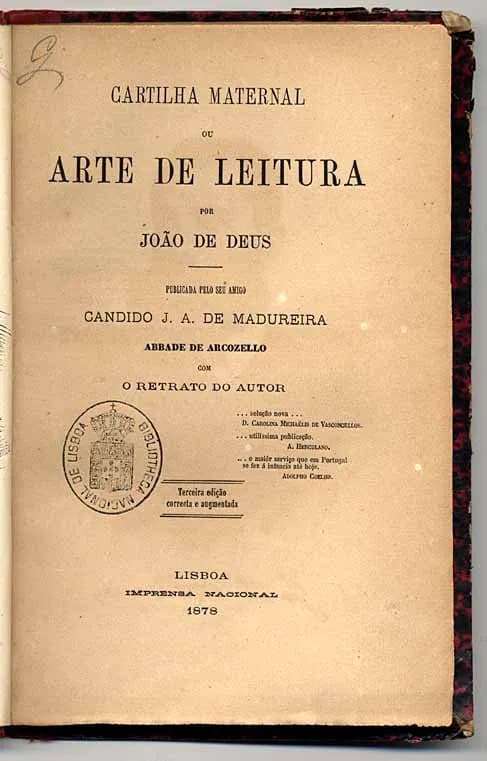
The method had critics, who argued over the sounds of the letters and the place of spelling. A decree of 20 April 1878 ordered a test comparing classes taught by his method and by the old one, but it never took place. Magalhães sees the resistance as mostly about tradition and about competing publishers. João de Deus registered the striped syllables as a trademark and initialled the copies to stop pirate editions. The book went through eight editions before 1900 and twenty more in the twentieth century.
Schools on the move
In 1882 Casimiro Freire, a republican industrialist and a friend of the poet, founded the Associação de Escolas Móveis pelo Método João de Deus, the Association of Mobile Schools. It sent teachers qualified in the method to any town or parish that asked, as far as its funds allowed, where they taught children and adults of both sexes.
The missions usually went where there was no public school. A teacher could enrol up to 60 pupils in several classes; the evening classes were meant for adults but also took working children. A mission was meant to last three or four months and ended with an examination held in public before the local authorities.
- Missions sent out
- 487, from November 1882 to August 1921
- Pupils enrolled
- 28,656
- Pupils who passed the final test
- 12,515
- Where
- Mainland Portugal, Madeira, the Azores, Brazil and Portuguese Africa
The state took notice. In 1888 Augusto Ribeiro, a deputy for the Azores, proposed a law declaring the Cartilha Maternal the national reading method and creating a post of commissioner-general for it, held for life by its author with a pension of 900,000 réis a year. It passed unanimously, and a decree of 2 August 1888 created the post, which let him contract with town councils to train their teachers.
It did not last. The post was abolished in 1892 for lack of money, and in 1895, the year of the student homage, the education directorate withdrew the method from the schools. When a law of 1905 imposed a single set of school textbooks, the beginners' reading book was the one exception: teachers could pick any approved primer, and many picked his.
A funeral paid for by the nation
João de Deus had a heart condition and knew he was dying. He died in Lisbon on Saturday 11 January 1896. The city was celebrating news from Mozambique, where Mouzinho de Albuquerque had just taken the African ruler Gungunhana prisoner, and the week after the funeral it welcomed the victorious soldiers home.
Two days later, in the Chamber of Deputies, the prime minister, Ernesto Hintze Ribeiro, laid a bill before the house: the Treasury would pay for the funeral, and his widow, Guilhermina Bataglia Ramos, and their four children would receive a tax-free pension of 1,000,000 réis a year. “He died poor!” Hintze Ribeiro told the house, adding that the king had been the first to ask the government to help the family. The deputies approved the bill by acclamation and closed the sitting at 3.35 in the afternoon.
“For us, João de Deus was not only a glory; he was a feeling. We were enraptured not only by the radiance of his genius; we were held equally by the trembling notes of his heart.”
His body lay in the Estrela basilica, guarded day and night by students in turns. It was the students who first asked the government to bury him in the Jerónimos monastery, near the remains of Camões and the historian Alexandre Herculano. Wreaths piled up around the coffin, many with no name on them. O Occidente wrote that everyone wanted to call him a saint, as his friends did: São João de Deus, Saint John of God.
On Wednesday 15 January the funeral left the Estrela. Students marched behind the student band, followed by schools, academies, the press and many private people; carriages carrying envoys of the king and queen, the prime minister and several ministers came behind the pupils of the Casa Pia orphanage. Women filled the windows along the route. Outside the Jerónimos the minister of public works, for the government, and speakers for the Royal Academy of Sciences, the press and the students of Coimbra, Lisbon and Porto gave farewell speeches.
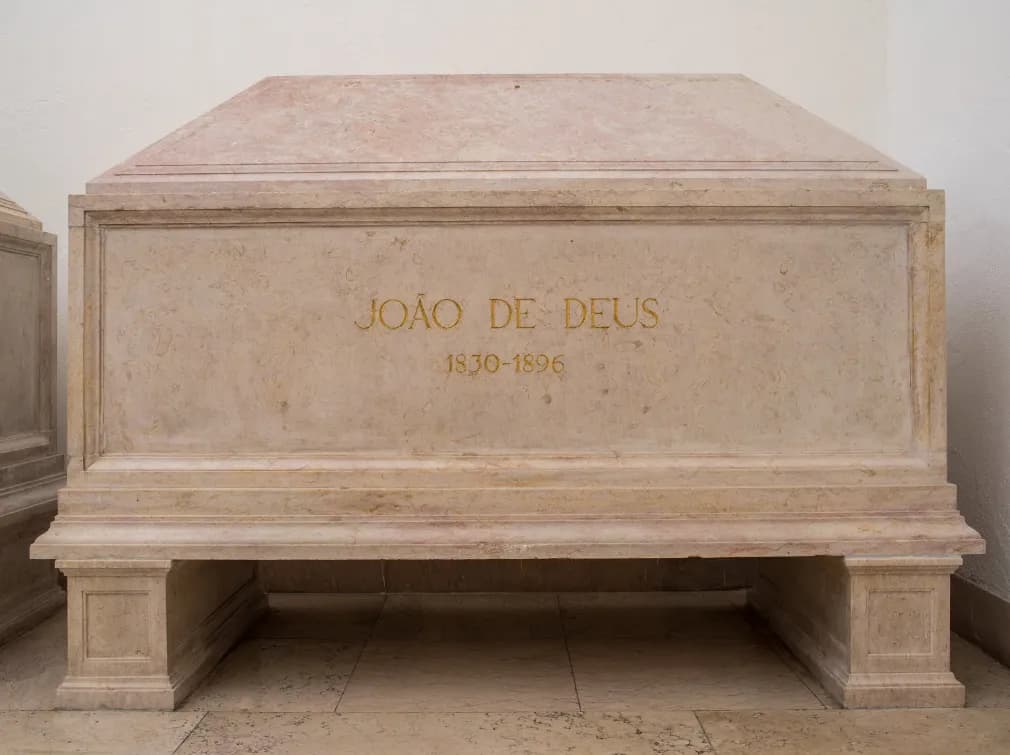
He rested at the Jerónimos for seventy years. In 1966 his remains were moved to the National Pantheon in the church of Santa Engrácia.
8 March 1830
Born in São Bartolomeu de Messines, Algarve
1850 to 1859
Studies law at Coimbra
1868
Elected to parliament; moves to Lisbon
Summer 1874
Handwritten reading tables for a pupil, Carolina
17 February 1876
First class by the method opens at Arcozelo
1876
Cartilha Maternal printed in Porto
1882
Casimiro Freire founds the mobile schools association
2 August 1888
Decree creates the post of commissioner-general of the method
8 and 9 March 1895
Student processions and gala in his honour
11 January 1896
Dies in Lisbon
15 January 1896
Funeral from the Estrela to the Jerónimos
1966
Remains moved to the National Pantheon
Kindergartens, a museum and a primer still in use
His son, João de Deus Ramos, carried the method on. He toured schools in Spain, France, Italy and Switzerland and studied Froebel, Pestalozzi and Montessori. In 1908 he had the mobile schools association add Jardins-Escolas, kindergartens for children of three to seven, to its name and aims.
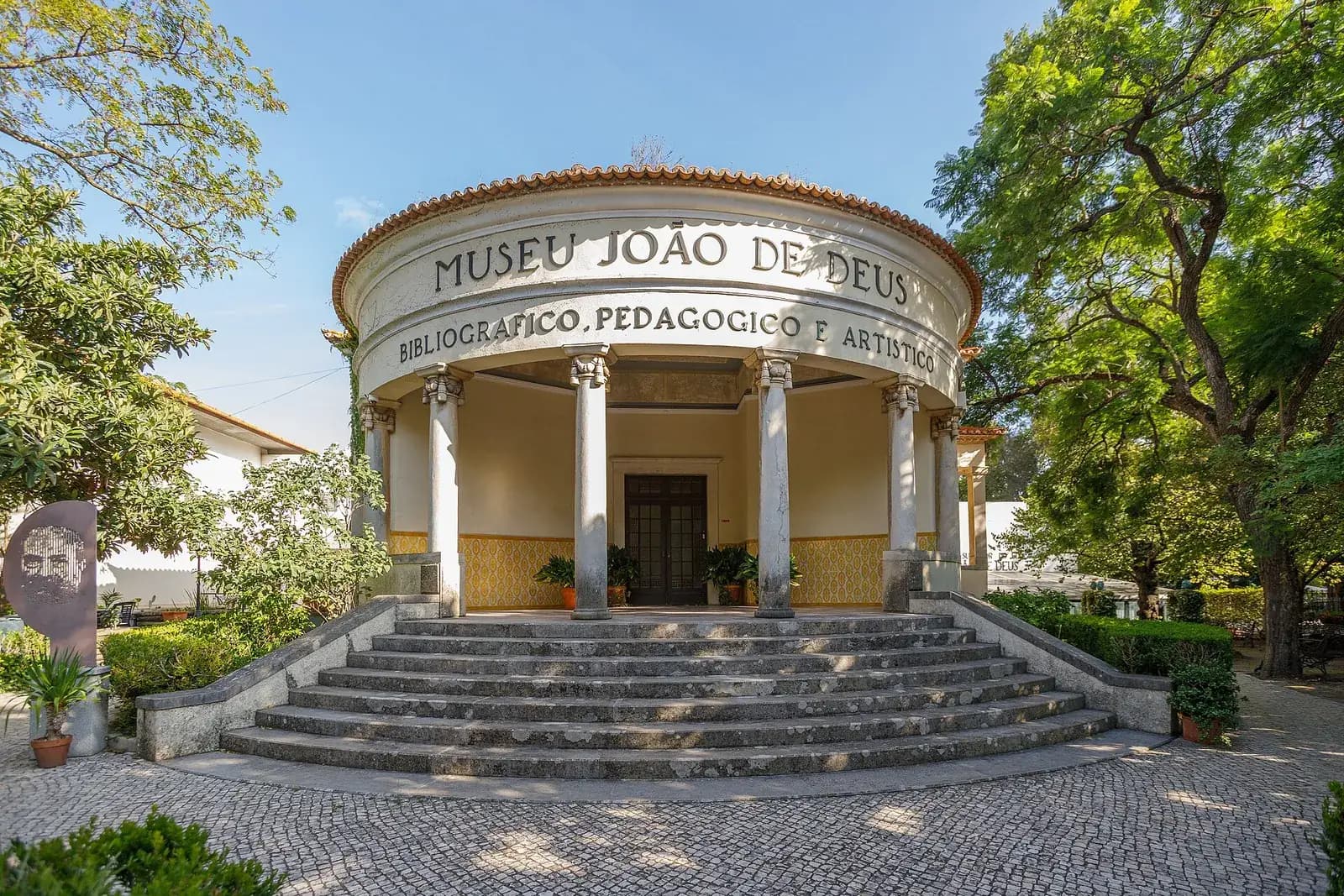
The first Jardim-Escola João de Deus opened in Coimbra in 1911, followed by Figueira da Foz and Alcobaça in 1914. The Lisbon one, designed like the Coimbra school by the architect Raul Lino, took its first children in 1915. Its building and the museum beside it were inaugurated on 11 January 1917, the 21st anniversary of the poet's death.
Children learned to read with the Cartilha Maternal, alongside drawing, handwork, singing and games outdoors. In 2014 the forty schools of the Associação de Jardins-Escolas João de Deus, in mainland Portugal, the Azores and Madeira, were still teaching reading from his primer.
Portugal's illiteracy fell slowly for decades after his death. The First Republic (1910 to 1926) made school compulsory from 7 to 12. Salazar's Estado Novo dictatorship (1933 to 1974) cut compulsory schooling to three years, and literacy only rose quickly from the 1950s.
FAQs
When and where was João de Deus born?
João de Deus de Nogueira Ramos was born on 8 March 1830 in São Bartolomeu de Messines, in the municipality of Silves in the Algarve. He died in Lisbon on 11 January 1896.
What is the Cartilha Maternal?
It is a reading primer by João de Deus, first printed in Porto in 1876. It teaches whole words rather than spelling, and shows the syllables of each word by printing them alternately in plain black and striped grey type, so the word is never broken up.
Is the Cartilha Maternal still used?
Yes. In 2014 the schools of the Associação de Jardins-Escolas João de Deus, founded by the poet's son, were still teaching reading with it. The association had forty schools in 2018.
Where is João de Deus buried?
He was buried at the Jerónimos monastery in Belém after a funeral paid for by the state on 15 January 1896. In 1966 his remains were moved to the National Pantheon, the church of Santa Engrácia in Lisbon.
Is João de Deus the same person as Saint John of God?
No. Saint John of God (São João de Deus) was born in Montemor-o-Novo on 8 March 1495 and cared for the sick in Granada. The poet was born on the same day of the year in 1830; his friends called him São João de Deus.
On the timeline
Open the timelineNearby moments from invasions, brazil and the liberal wars (1807–1851).
The 'Belfastada': the steamer 'Belfast' lands a party of 29 exiled liberals led by the Marquis of Palmela at Matosinhos, near Porto, to take charge of the city's revolt against the absolutist Miguel I. With Miguelist troops closing in, they soon abandon the rebellion and flee aboard the same ship — a fiasco that gives the episode its mocking name and begins years of Liberal exile.
The Cortes of the Three Estates, summoned by Miguel of Braganza, close with a formal act ('assento') declaring him the rightful King Miguel I, in defiance of the Constitutional Charter granted by his brother Pedro IV and of the claim of Pedro's daughter Maria. The usurpation leads to the Liberal Wars, which pit absolutists against constitutionalists until 1834.
Félix de Avelar Brotero, Portugal's foremost botanist, dies in Belém, Lisbon. Having fled to Paris when he fell under suspicion of the Inquisition, he returned to teach botany at Coimbra, wrote the landmark 'Flora Lusitanica' (1804) and later directed the Ajuda Botanical Garden.
João de Deus and the Cartilha Maternal
Birth of João de Deus de Nogueira Ramos in São Bartolomeu de Messines, Algarve. The most popular Portuguese poet of his day, he also wrote the 'Cartilha Maternal' (1876), a reading primer used for generations.
Pedro I abdicates the Imperial Crown of Brazil in favour of his five-year-old son Pedro II, adopting the title of Duke of Bragança. He returns to Portugal to lead the liberal cause in the Civil War against his brother Miguel.
Aboard the frigate 'Rainha de Portugal', the former Emperor of Brazil Pedro IV lands at Mindelo, north of Porto, with 7,500 men. The disembarkation, defended only by a handful of Miguelist patrols, opens the Liberal phase of the Portuguese Civil War that would end two years later at Evoramonte.
During the Liberal Wars, the Liberal squadron under the British-born Charles Napier inflicts a decisive defeat on the Miguelist fleet at the Battle of Cape St. Vincent. The victory opens the Algarve coast and the road to Lisbon to the constitutionalist forces of Pedro IV.
Coming up in history
All long reads 10 March 1826The death of João VI and the fight over his crown, 1826
 11 March 197511 March 1975: the coup that pushed Portugal's revolution to the left
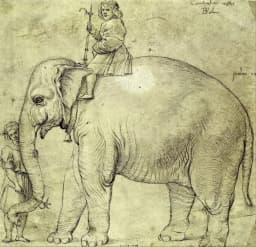 12 March 1514Hanno, the white elephant Manuel I sent to the Pope: Rome, 12 March 1514
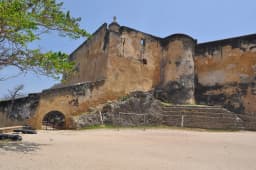 13 March 1696The 33-month siege of Fort Jesus, Mombasa, 1696 to 1698
16 sources
Archives, scholarship and reporting this article was checked against.
- 1
La Méthode Maternelle ou Art de lire de João de Deus (1876) : inventions typographiques et alphabétisation populaire au PortugalJustino Magalhães, Histoire de l’éducation, no. 138 (2013), OpenEdition Journals
- 2
João de Deus (1830-1896)Panteão Nacional, Museus e Monumentos de Portugal
- 3
Diário da Câmara dos Senhores Deputados, session no. 6, 13 January 1896Assembleia da República, Debates Parlamentares
- 4
“Os festejos a João de Deus”, O Occidente, no. 584, 15 March 1895O Occidente, Lisbon (scan on Internet Archive)
- 5
- 6
As Escolas Móveis em Vila Nova de GaiaEva Baptista, Sarmiento, no. 27 (2023)
- 7
- 8
Culturas da alfabetização e culturas do analfabetismo em Portugal: uma introdução à História da Alfabetização no Portugal contemporâneoRui Ramos, Análise Social, vol. XXIV, no. 103-104 (1988)
- 9
- 10
História da alfabetização em Portugal: fontes, métodos, resultadosFrancisco Ribeiro da Silva, Faculdade de Letras da Universidade do Porto
- 11
Ramo de Flores (Porto, Typ. da Livraria Nacional, 1869)Project Gutenberg (eBook 24847)
- 12
- 13
- 14
“Chronica da semana: Escolas móveis pelo methodo João de Deus”, A Illustração Popular, no. 26, 25 December 1884Hemeroteca Digital, Câmara Municipal de Lisboa
- 15
- 16
St. John of GodF. M. Rudge, The Catholic Encyclopedia, vol. 8 (1910), New Advent
Image credits
- The Museu João de Deus in Lisbon, part of the kindergarten and museum raised in the poet's memory and inaugurated on 11 January 1917, the 21st anniversary of his death. Photographed in 2020. Camilla Morselli, CC BY-SA 4.0, via Wikimedia Commons.
- João de Deus around 1860, in his Coimbra years, from a photograph reproduced in Pedro Eurico's Figuras do Passado (1915). Unknown author, Public domain, via Wikimedia Commons.
- Title page of the third edition, printed by the state press in Lisbon in 1878. It quotes three backers: Carolina Michaëlis de Vasconcelos, Alexandre Herculano and Adolfo Coelho, who called the book the greatest service done for Portuguese children until then. The stamp is the National Library's. João de Deus de Nogueira Ramos (1830–1896), Public domain, via Wikimedia Commons.
- The tomb of João de Deus in the National Pantheon, the church of Santa Engrácia in Lisbon, in 2020. His remains were moved here from the Jerónimos in 1966. António Fragoso, CC BY 2.0, via Wikimedia Commons.
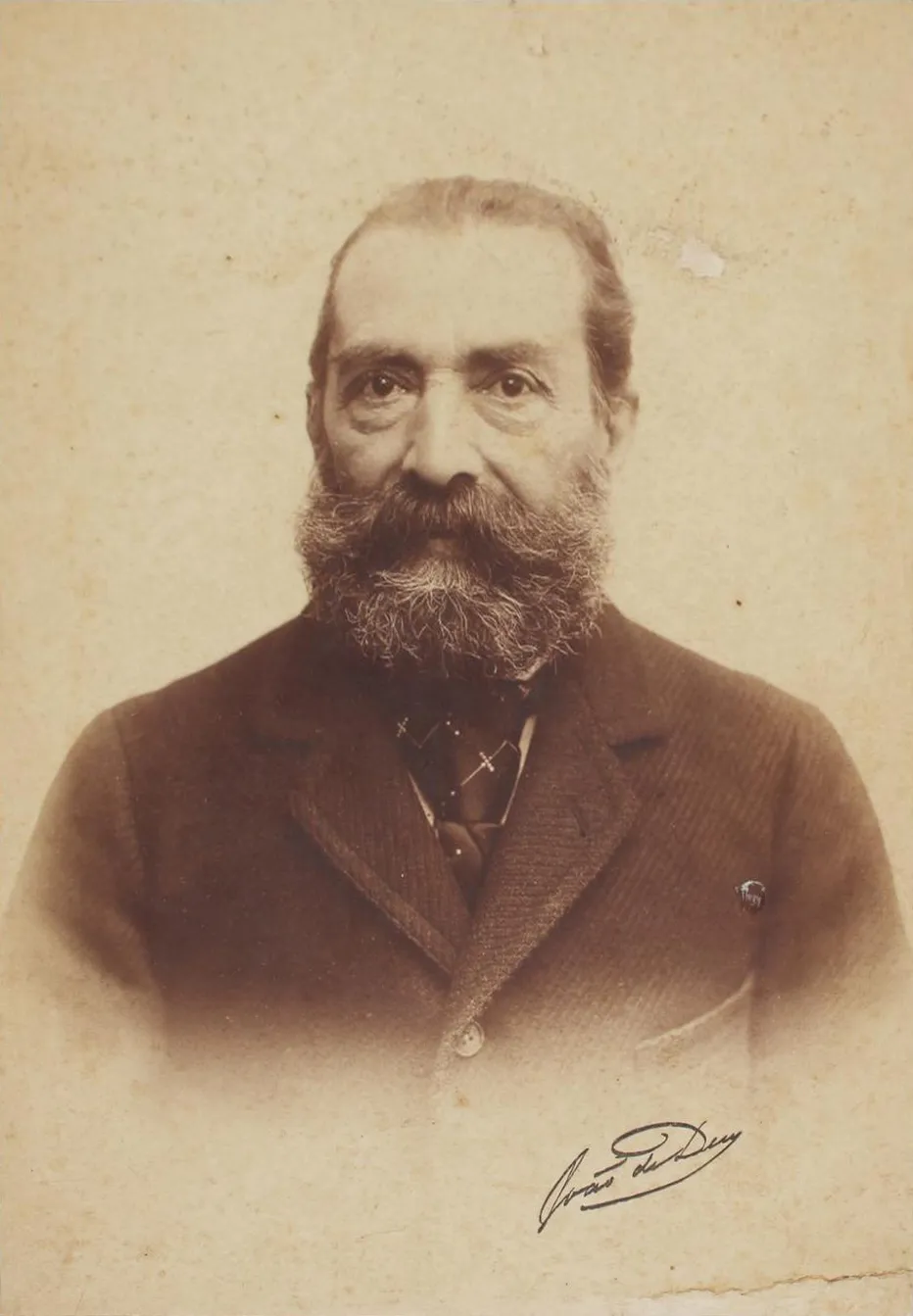
- João de Deus in a signed studio portrait from his later years. The photographer and date are not recorded. Unknown author, Public domain, via Wikimedia Commons.
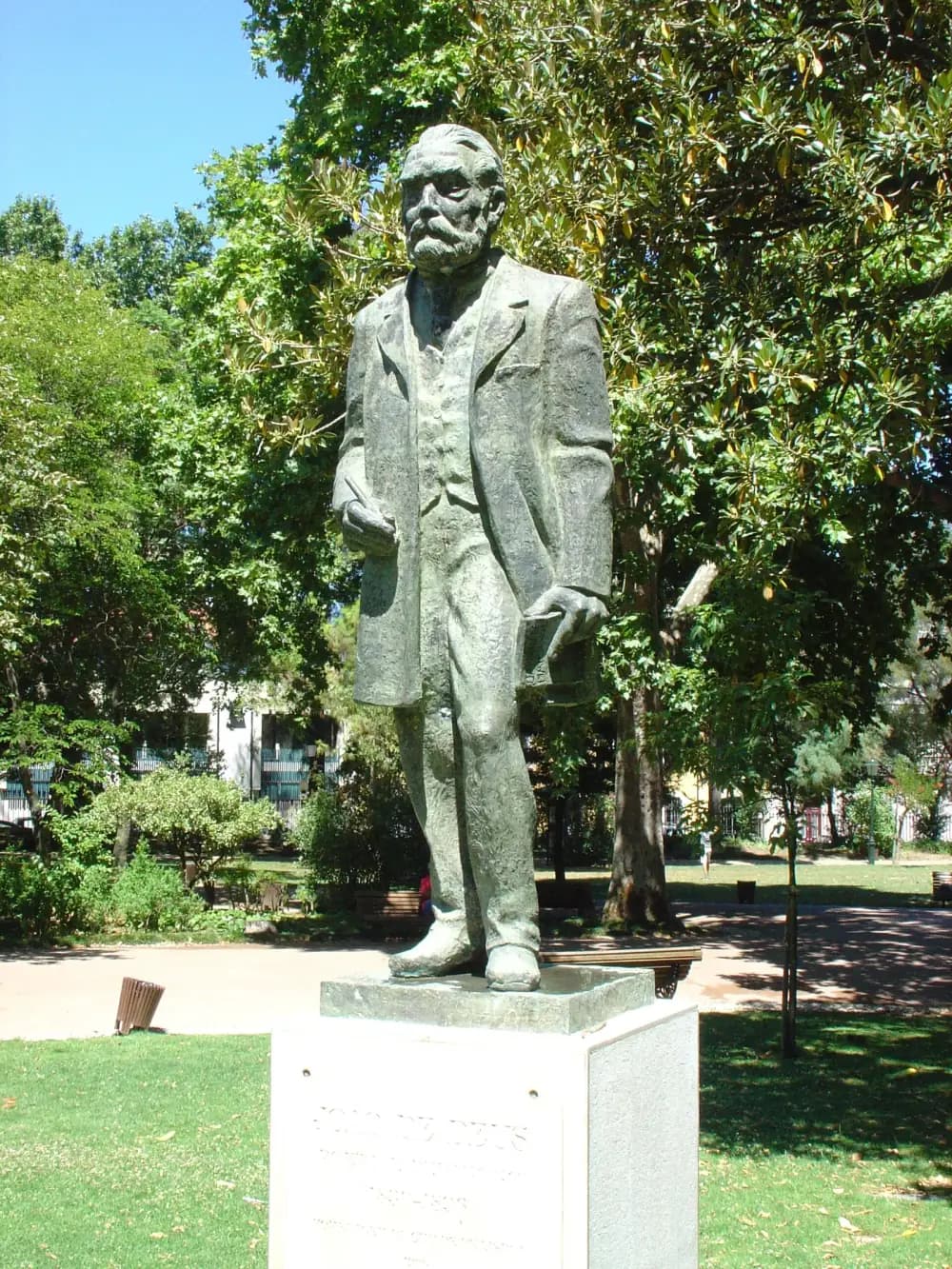
- The statue of João de Deus in the Jardim da Estrela, Lisbon, in 2010. Yelkrokoyade, CC BY-SA 3.0, via Wikimedia Commons.