

Masséna's retreat from Santarém: the French leave Portugal, March 1811
After a winter of hunger in front of the Lines of Torres Vedras, the French Army of Portugal marched for Spain. Wellington followed it through central Portugal, and the villages on its road paid the price.
At a glance
- On the night of 5 March 1811 the last French troops left their entrenchments at Santarém, ending a four-month stand on the Tagus and starting Marshal André Masséna's retreat from Portugal.
- Marshal Ney's rearguard fought Wellington's Anglo-Portuguese vanguard at Pombal, Redinha, Casal Novo and Foz de Arouce between 11 and 15 March, while the rest of the army escaped towards the Spanish border.
- On 13 March Masséna gave up his plan to cross the Mondego at Coimbra and turned east into the mountains. The city, held by a few thousand militia, was spared.
- The retreat was marked by burned towns and murdered civilians. One study of parish priests' returns for the diocese of Coimbra counts at least 3,305 civilians killed by soldiers during the invasion, most of them on the roads the French used for winter raids and the retreat.
- After a last fight at Sabugal on 3 April the French crossed into Spain. The historian Charles Oman put the Army of Portugal's losses over the whole campaign at just under 25,000 men, about 38 per cent of its original strength.
A night march out of Santarém
On 5 March 1811 Wellington rode along the front at Santarém and studied the French lines. The outposts were where they had been all winter, and the soldiers on the heights were fully equipped. But there were no howitzers in the big work across the high road, and bushes had been laid over the places where guns had stood the day before.
He concluded that the French were sending off their baggage and heavy guns but that the fighting part of the army had stayed. He was wrong. Five of Masséna's eight divisions had already marched north. After dusk General Heudelet's division, the last French troops in the Santarém lines, marched off through the night, blowing up the bridge on the Alviela behind it.
Early on 6 March the allies found the town empty. A British rifle officer, George Simmons of the 95th, described houses torn apart, streets strewn with half-burnt furniture and blocked with filth, rotting animals, and a few inhabitants “like living skeletons”. In the countryside beyond lay burned cottages and the bodies of murdered peasants.
“The enemy retired from the position which they had occupied at Santarem and the neighborhood on the night of the 5th instant. I put the British army in motion to follow them on the morning of the 6th.”
For the next month Wellington's army followed the French from the Tagus to the Côa, through a country stripped and burned on either side of the road.
A winter of hunger on the Tagus
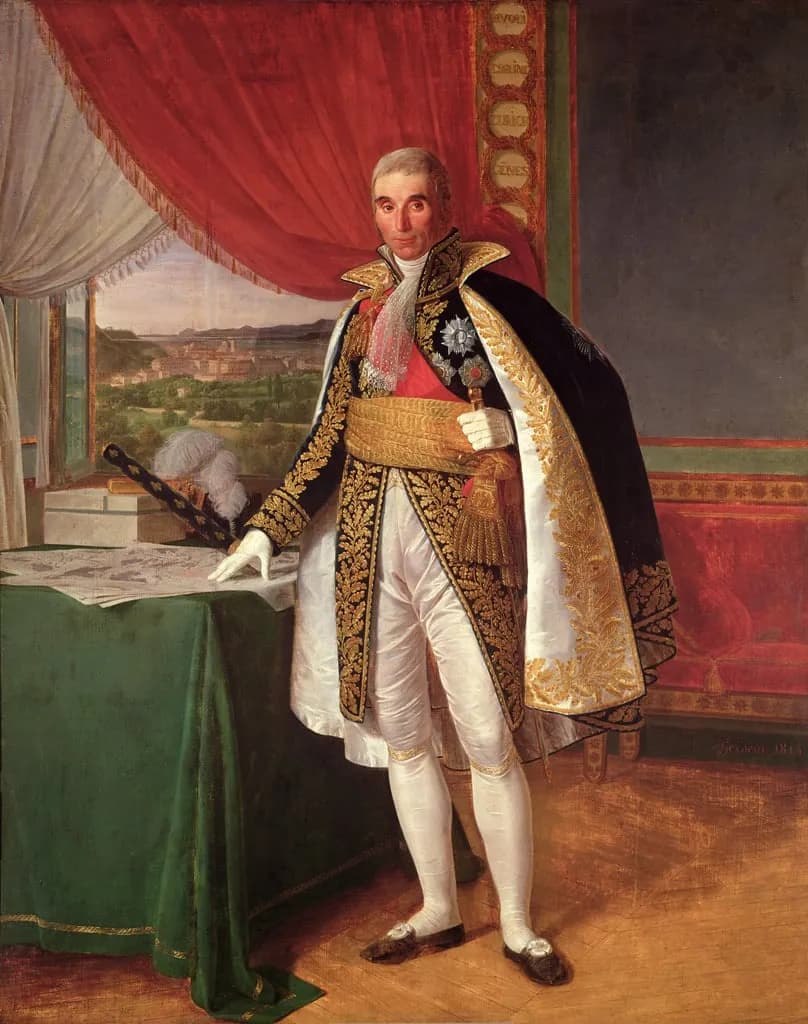
Napoleon had sent Masséna, Prince of Essling and the most prestigious of his generals, to conquer Portugal and drive the British out of the Peninsula. The Army of Portugal crossed the frontier in July 1810, was beaten off at Buçaco in September and followed Wellington south, only to find the road to Lisbon closed by the fortified Lines of Torres Vedras. In November it fell back to Santarém.
The French survived the winter by marauding further and further afield, up the Zêzere valley and into the Serra da Estrela. By February the army's cavalry and artillery had lost 5,088 horses since November, and the transport animals had fared worse. Masséna waited in vain for Marshal Soult's army to come up from Andalusia.
On 19 February Masséna called his corps commanders, Marshal Michel Ney and the generals Junot and Reynier, to Golegã. Ney wanted to cross the Tagus and join Soult. Masséna argued him down: the army would hold on a few more days, then fall back to the Mondego, where the country was less damaged and food could be found.
In late February the divisions burned surplus caissons so that their remaining horses could pull the guns. About fifteen days' biscuit had been hoarded for the whole army and was issued with orders not to touch it until the march began, but some regiments were so hungry they started with only eight or ten days' worth. Masséna issued the orders to retreat on 3 March.
Ney's rearguard: Pombal, Redinha and Condeixa
Masséna sent his army north by three roads to spread out the columns and the foraging. Junot and Ney headed for Pombal, on the main road from Lisbon to Coimbra, with Ney's corps as rearguard. In mid-March Masséna had about 44,000 men under arms, besides a division of some 5,000 sent ahead and the sick and wounded. Wellington could put about 46,000 in the field: 32,080 British and 14,250 Portuguese.
With the armies close to equal, Wellington did not throw his leading divisions at each position Ney took up. He waited for enough men, then sent columns round the flanks. Ney held on just long enough and slipped away.
At Pombal on 11 March a Portuguese light battalion, the 3rd Caçadores, charged across the bridge into the town. Ney pushed them back, brought off his men from the ruined castle and set fire to the main street as he left. The allies lost 37 men, 31 of them Caçadores; the French lost 63.
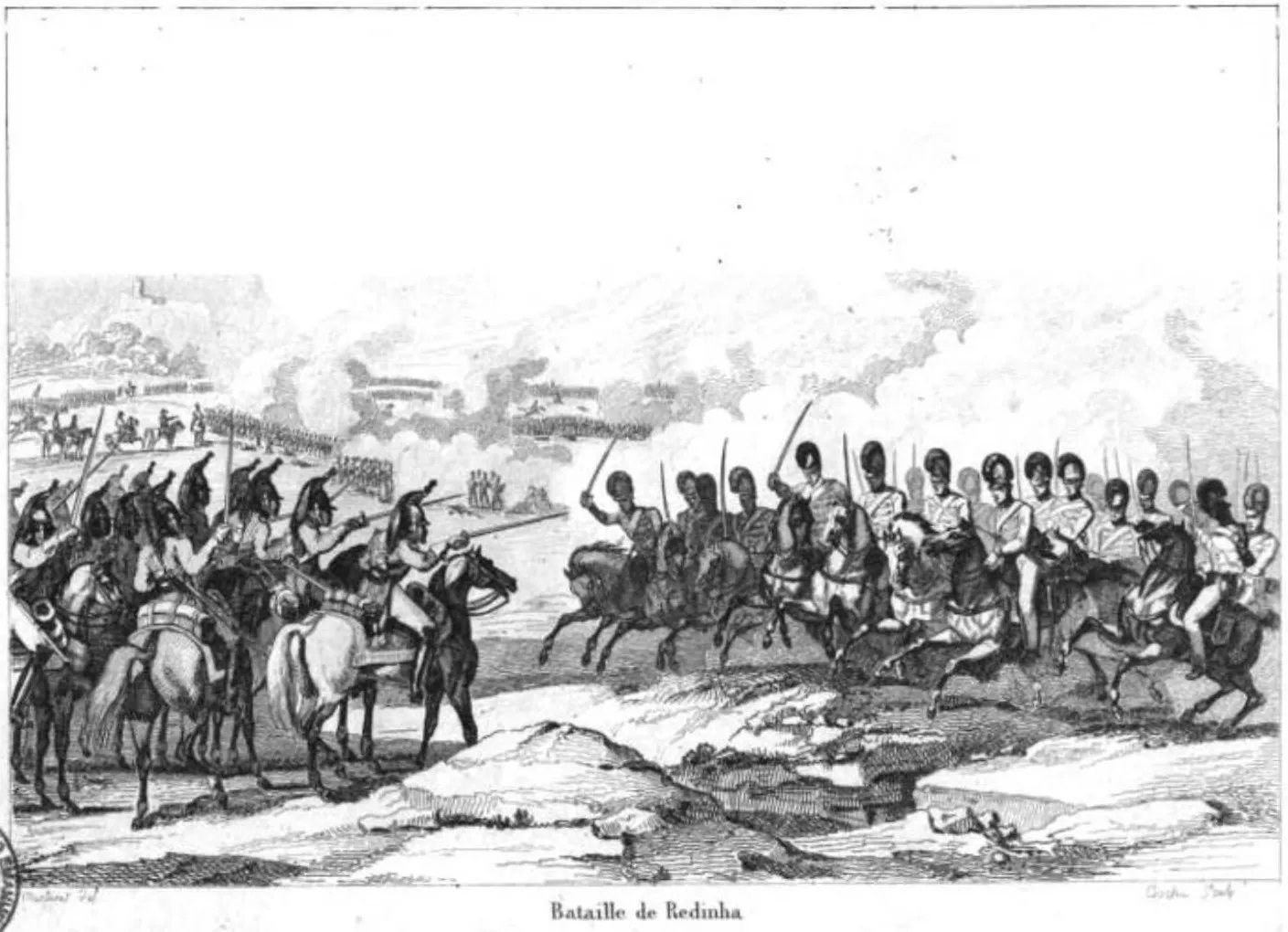
Next day Ney stood at Redinha, a village with a narrow bridge over a river behind it. Wellington waited until early afternoon, when enough divisions were up, then turned both French flanks through the woods. Mermet's battalions jammed at the bridge as they fell back and lost heavily. Ney took up a second position, was turned again and retired to Condeixa. The French lost 227 men; the allies about 205.
Masséna still hoped to cross the Mondego at Coimbra and settle his army in the less damaged country to the north. On 10 and 11 March his cavalry under General Montbrun looked at the river. They found the bridge with two arches broken, the river in flood, guns on the far bank and no fords they could use. Coimbra was held by Colonel Trant with seven battalions of Portuguese militia, some 3,000 men, and six guns.
On the morning of 13 March Montbrun tried words instead. His envoy walked onto the broken bridge and demanded the city's surrender. A Portuguese sergeant, José Correia Leal, kept him waiting for hours, saying he must wait for Trant's answer while hiding the fact that Trant was not there. At noon Montbrun heard that Ney had been forced out of Condeixa, and he had to escape by a rough track along the river.
That morning Masséna had made his choice. Condeixa was the last fork south of the Mondego where a road branched east towards the Spanish frontier. Short of food and ammunition, with his corps commanders set on leaving Portugal, he sent Junot's corps and the baggage east towards Miranda do Corvo. Ney, his flank threatened by a British division marching round from Soure, set fire to Condeixa and followed. For Oman this was the most critical day of the campaign: Coimbra was safe, and the whole French army had been turned onto the road to Spain.
Fog at Casal Novo, a flooded river at Foz de Arouce
At dawn on 14 March a dense fog lay over the hills. General Sir William Erskine, commanding the British vanguard, marched the Light Division straight at Casal Novo, a walled village held by Ney's rearguard. When the fog lifted, its five battalions found themselves on the road below a French battery and eleven battalions. They had to fight hard until Picton's 3rd Division worked round the French flank. The allies lost 155 men that day, more than half of them in the early-morning blunder.
That night at Miranda do Corvo, Masséna lightened his army for the mountains. Almost all its remaining wagons and baggage were burned; Ney set the example with his own carriages. The sick and wounded were moved onto pack animals, and many hundreds of them died or were left behind in the next two days. The animals judged unfit were hamstrung to avoid the noise of shooting them. Pursuing soldiers found more than 500 horses, mules and donkeys lying maimed outside the town.
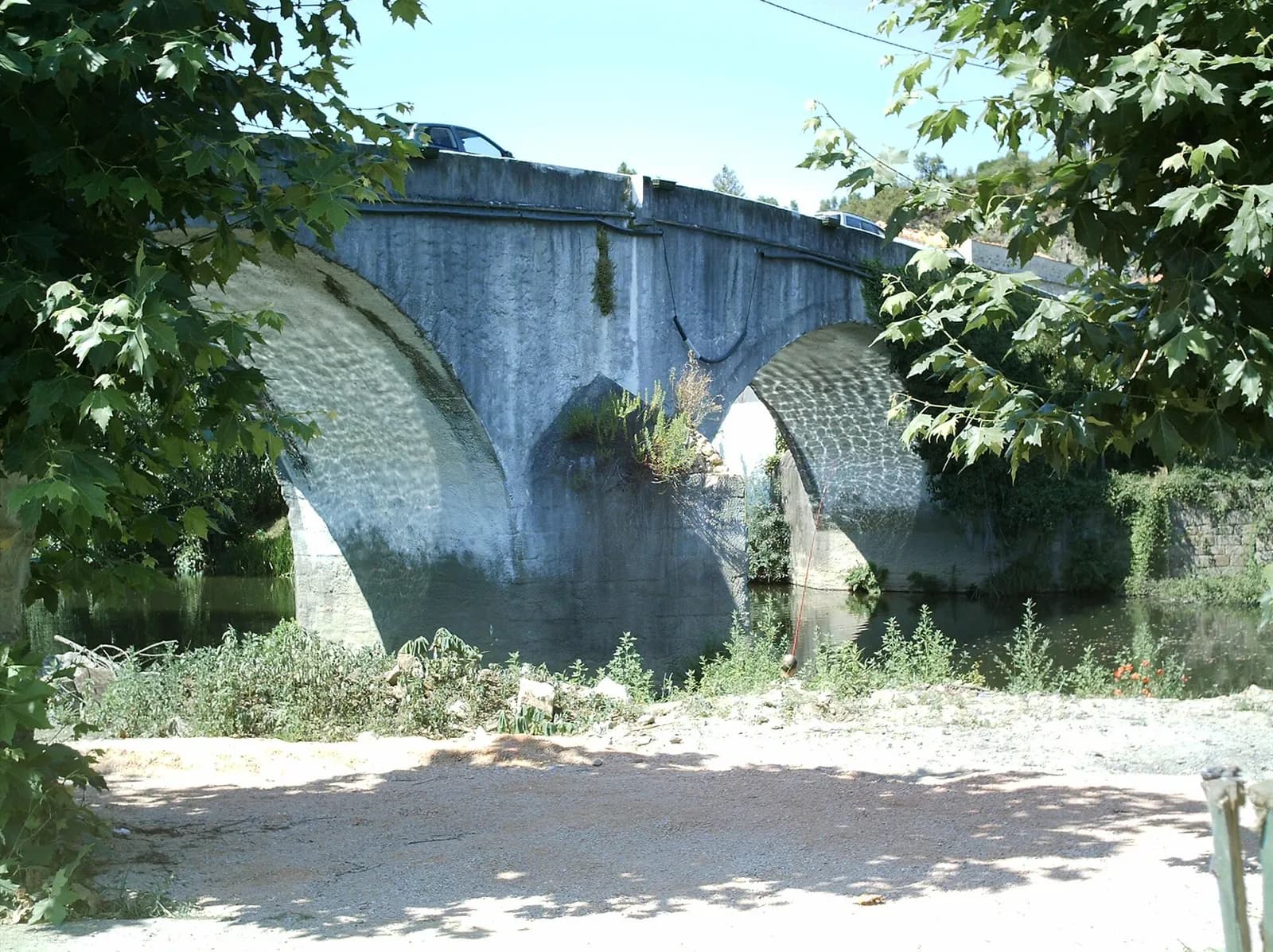
After a night march the French reached the river Ceira at Foz de Arouce on 15 March. Masséna had ordered Ney to cross and break the bridge, but Ney kept half his corps on the near bank, with the river in flood behind it and a single damaged bridge to get back over. Wellington arrived near dusk, saw that the French did not expect an attack and sent in two divisions at once.
Riflemen got into the village close to the bridge, and the French 39th Regiment panicked. Its men ran for the bridge, found it blocked by their own cavalry and plunged into a deep ford downstream, where many drowned and the regiment's eagle standard was lost. Ney led a counter-charge, got his men across in the dark and blew up the bridge. French accounts put their loss at 150 to 400; Oman thought about 250. The allies lost 71.
| Date | Place | What happened | Allied losses | French losses |
|---|---|---|---|---|
| 11 March | Pombal | Ney holds the town and castle, then retires after dark | 37 | 63 |
| 12 March | Redinha | Ney turned out of two positions in turn | 205 to 240 | 227 |
| 13 March | Condeixa | Ney burns the town and falls back; Masséna turns east | A few musket shots | A few musket shots |
| 14 March | Casal Novo | The Light Division attacks in fog and is caught below the French line | 155 | 55 officially; Oman thought 100 or more |
| 15 March | Foz de Arouce | Ney caught on the wrong side of the flooded Ceira | 71 | About 250 (French accounts 150 to 400) |
| 3 April | Sabugal | The Light Division fights most of Reynier's corps in fog and rain | 162 to 179 | 750 to 760 |
Killed, wounded and missing. Allied figures are British and Portuguese casualties from Oman's tables of losses; where his text gives a different total (Redinha, Sabugal) both are shown. French figures are those Oman took from French returns and officers' casualty lists. Wellington's dispatch of 14 March also reports about 200 prisoners taken before Pombal.
A road of burned villages
The French had little food left, and what they ate they took from the people along the road. In his dispatch of 14 March Wellington listed what his army had found: the towns of Torres Novas, Tomar and Pernes, where some French corps had kept their headquarters for four months and promised the inhabitants good treatment, plundered on the night the army left; the convent of Alcobaça burned on orders from headquarters; the bishop's palace and the whole town of Leiria burned.
“I am concerned to be obliged to add to this account, that their conduct throughout this retreat has been marked by a barbarity seldom equalled, and never surpassed.”
At Porto de Mós a soldier of the 94th found a room beside the church full of half-burned human bodies. When Oman visited in 1910, the sacristan showed him the ruined chamber and said that 200 people had been burned there “in the time of the French”. Peasants who had hidden in the woods came out to kill French stragglers and sick men, and the violence went both ways.
The best count of the dead comes from the Church. A royal order of 25 March 1811 told parish priests to list the damage, fires and deaths in their parishes. In December 1811 the provisor of the diocese of Coimbra, the bishop's deputy, summed up the returns: only 26 of its 290 parishes had escaped the enemy, about 3,000 people had been killed by soldiers and at least 35,000 had died in the epidemic that followed.
The historian Maria Antónia Lopes, going back to the priests' returns in the archive of the University of Coimbra, counted 3,305 civilians killed, 919 of them women, in the returns that give the victims' sex; they do not cover every parish. Mapped parish by parish, most killings lie along the roads south of the Mondego used for the winter raids and the 1811 retreat, not on the route in. The worst-hit parish was Redinha, where 341 civilians were killed, about one in five of its people.
Civilians killed by soldiers in five selected parishes of the diocese of Coimbra
people killed
Civilians killed by soldiers during the 1810 to 1811 invasion, from parish priests' returns made after the royal order of 25 March 1811, as given by Maria Antónia Lopes (2011). These are selected examples, not a total: Redinha, Penela and Lousã are the three worst-hit parishes she names, and Mata Mourisca (Pombal) and Pelmá (Alvaiázere) are other cases she cites. Her count for the diocese is 3,305. The returns leave out deaths in combat and most people who died later of their injuries.
Show the data
| Civilians killed, from parish priests' returns | |
|---|---|
| Redinha | 341 |
| Penela | 188 |
| Lousã | 106 |
| Mata Mourisca | 62 |
| Pelmá | 56 |
Lopes found that the violence was worst during the retreat, when hunger drove the soldiers hardest, and that the retreat may have been worse still for women. At Foz de Arouce the French killed 14 men and 4 women in December 1810, and 16 men and 20 women in March 1811. Women were the keepers of the food in peasant households, and she suggests that many were tortured or killed for refusing to give it up. Priests also recorded rapes.
Disease killed many more. In Figueira da Foz, which the French never entered, 4,135 locals and refugees died of illness. In Miranda do Corvo the parish registers record 728 deaths between March and July 1811; the average in the four years before had been 17. Doctors blamed hunger, flight into the cold and wet hills, and refugees crowded into small houses.
“We found the villages sacked and deserted, and many houses burned. The few inhabitants who came to meet us on the road, men, women and children, looked utterly wretched; starving, covered in rags, and some seeming to have lost their reason.”
Ney dismissed, and a last fight at Sabugal
After Foz de Arouce the French marched up the south bank of the Mondego. On 18 March the allies forced the ford of Pombeiro on the Alva, and the French made a night march of more than twenty miles over mountain roads. Wellington reported 600 prisoners taken on 19 March, mostly foragers cut off from their regiments.
By 22 March the French were at Celorico and Guarda, three or four marches from their fortresses at Almeida and Ciudad Rodrigo. Their officers and men wanted to go back to them, rest and refit. Masséna instead ordered the army to turn south-east through the mountains towards Coria and Plasencia, in Spanish Extremadura, to threaten Portugal from a new direction.
Ney refused. In three letters that afternoon he protested that the army had no shoes, clothing or food, then announced that he would march his corps towards Almeida. Masséna removed him from command and sent him to Spain. Ney's officers urged him to arrest Masséna and take over the army; he declined and left.
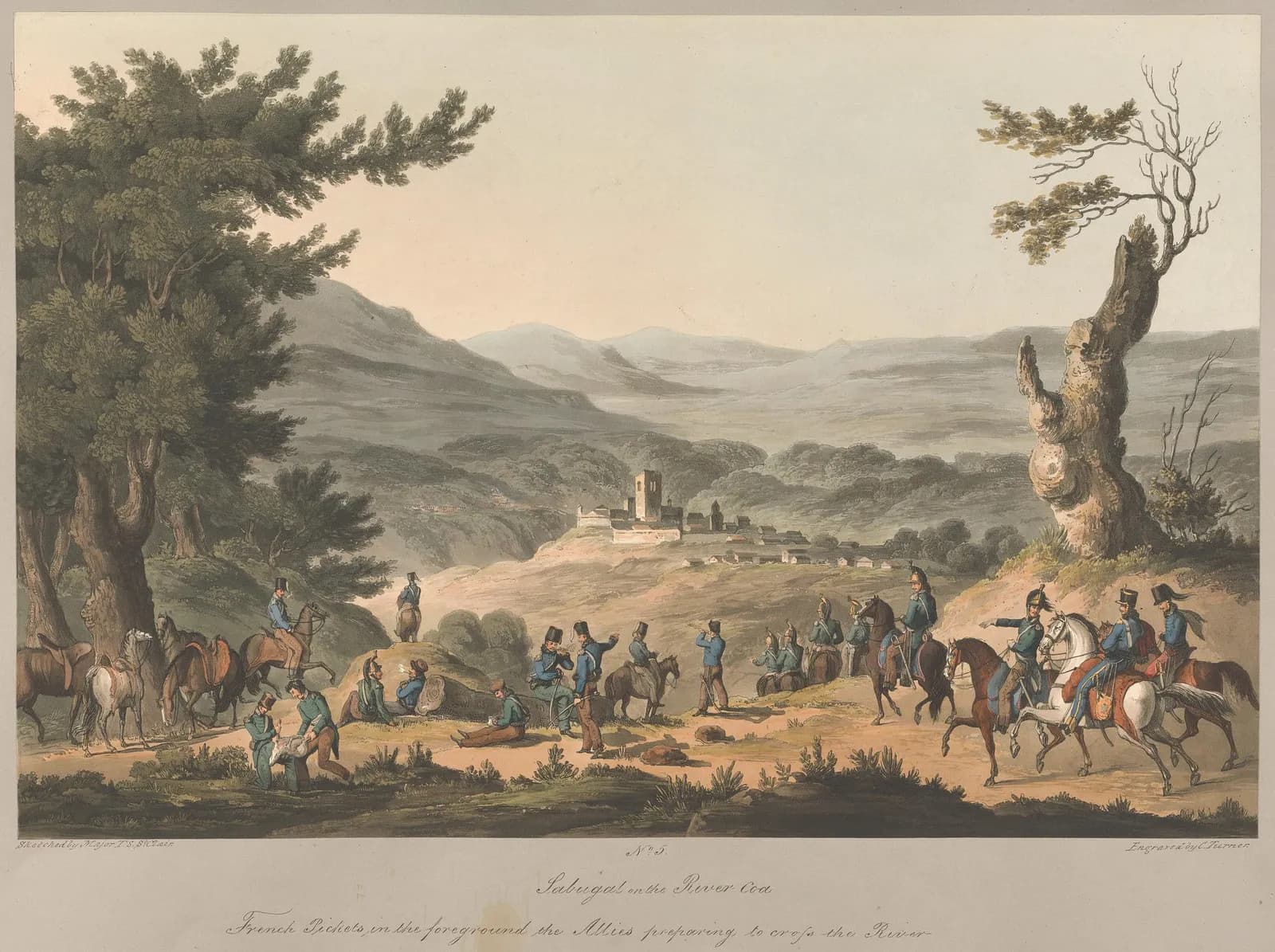
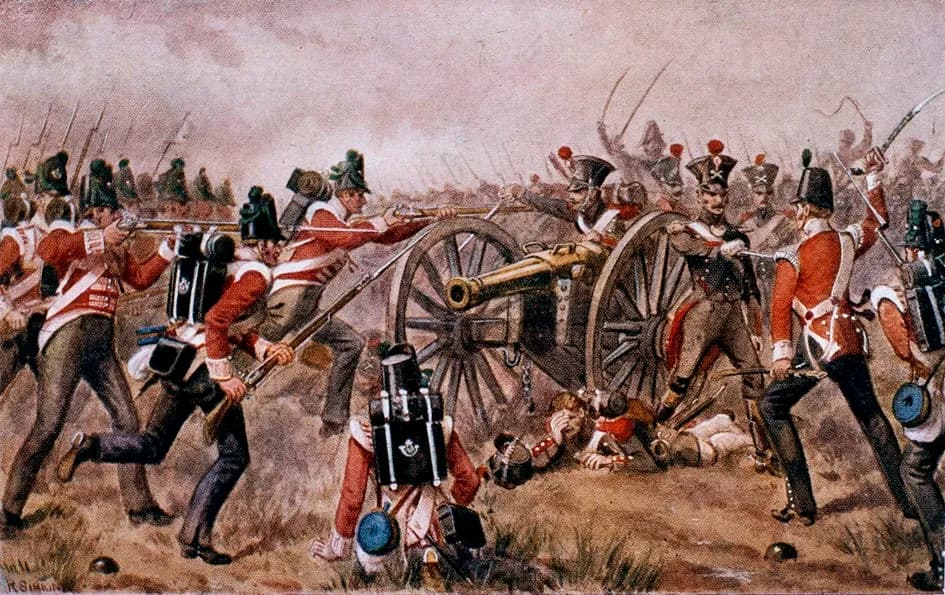
The march south did not get far, and the French gathered behind the river Côa. On 3 April Wellington tried to trap Reynier's corps at Sabugal with a frontal attack and a turning column. Thick fog ruined the timing. Erskine sent the Light Division across the river alone, and for a time about 3,500 men fought most of Reynier's corps on the hill above the town.
When the fog lifted, Reynier saw two more allied divisions coming down to the fords and ordered a retreat. Torrential rain then hid the field, and Wellington halted the pursuit. The French lost about 750 men, a gun and 186 unwounded prisoners; the allies lost fewer than 180. Wellington called it “one of the most glorious that British troops were ever engaged in”. The next morning the whole French army marched for Spain.
The cost of the third invasion
On 4 April the French crossed into Spain. They left a garrison in Almeida, the Portuguese border fortress they had taken in August 1810. Masséna came back to relieve it and failed to break through at Fuentes de Oñoro, just across the Spanish border, on 3 to 5 May. On the night of 10 to 11 May the garrison blew up the walls and broke out to rejoin the French army.
Napoleon had already decided on 20 April to recall Masséna. In May Marshal Marmont took over the Army of Portugal. Oman reckoned that it had lost just under 25,000 men since September 1810, about 38 per cent of its original strength: some 8,000 taken prisoner, not more than 2,000 killed in action, and the rest dead of hunger and disease. It came back with 36 wagons and had lost 5,872 of its 14,000 horses.
- Retreat begins
- Night of 5 to 6 March 1811, from Santarém
- French commander
- Marshal André Masséna, Prince of Essling
- Allied commander
- Wellington, with British and Portuguese troops
- Main actions
- Pombal, Redinha, Casal Novo, Foz de Arouce, Sabugal
- French leave Portugal
- 4 April 1811; the Almeida garrison breaks out on 10 to 11 May
- French losses, whole campaign
- Just under 25,000 men (Oman)
- Civilians killed, diocese of Coimbra
- 2,969 to 3,305, by different counts
19 February 1811
Masséna meets his corps commanders at Golegã and argues for retreat
3 March
Orders for the retreat are issued
5 to 6 March
The last French troops leave Santarém at night
11 March
Combat of Pombal
12 March
Combat of Redinha
13 March
Ney leaves Condeixa; Masséna turns east and Coimbra is saved
14 March
Combat of Casal Novo; baggage burned at Miranda do Corvo that night
15 March
Combat of Foz de Arouce
18 to 19 March
The allies cross the Alva; the French make a long night march
22 March
At Celorico Ney refuses Masséna's new plan and is dismissed
3 April
Combat of Sabugal
4 April
The French army crosses into Spain
3 to 5 May
Battle of Fuentes de Oñoro
10 to 11 May
The French garrison breaks out of Almeida
For the people of central Portugal the invasion did not end when the soldiers left. People from Miranda do Corvo, Lousã and the country up to the Alva, ordered north of the Mondego, were allowed home only from 10 April, to find their houses stripped and their fields barren. Food prices soared, and typhus lingered for months. Allied troops foraged too: a priest near Arganil wrote that what the enemy missed, “our troops” cleared out. Money raised in Britain by Parliament and private donors was handed out through the bishops; most of the people helped in Coimbra in 1812 and 1813 were women.
Why it still matters
Dores Costa calls the turn of 1810 and 1811 the most dramatic period in Portuguese history once the direct effects of war are counted. In Beira Alta more than 5,000 households disappeared between 1801 and 1811, a fall of 5.5 per cent, against 1.2 per cent for the country as a whole.
In 2021 Lopes told the Diário de Notícias that the Portuguese civilian population never again suffered as it did in the third invasion. She also warned that the figures are probably too low and that the subject still needs research. Her study set out to count the humblest victims, the ones historians had traditionally ignored.
In Portugal the period is remembered as the Invasões Francesas, the French invasions, and Lopes notes that they still live in popular memory. Wellington's plan of forts and famine had worked, though, as Oman notes, it took many more weeks than he expected.
FAQs
When did Masséna retreat from Portugal?
The French left their lines at Santarém on the night of 5 to 6 March 1811. After a month of rearguard fighting they crossed into Spain on 4 April. Their garrison in Almeida held out until it broke out on the night of 10 to 11 May.
Why did the French army leave Portugal?
Hunger. The Lines of Torres Vedras stopped Masséna short of Lisbon, and the country around his winter quarters had been emptied of food on Wellington's orders. With Soult's army never arriving and his horses dying, he fell back towards the Mondego and then, after Wellington turned him away from Coimbra, towards Spain.
How many people died during the retreat?
Exact figures do not exist. In the diocese of Coimbra parish priests reported about 3,000 civilians killed by soldiers during the whole invasion; Maria Antónia Lopes counted 3,305 in their returns, and the worst killings were on the 1811 retreat roads. At least 35,000 more died in the epidemic that followed. Oman put the French army's losses over the campaign at just under 25,000 men.
What battles were fought during Masséna's retreat?
The main actions were at Pombal (11 March), Redinha (12 March), Casal Novo (14 March), Foz de Arouce (15 March) and Sabugal (3 April 1811). All were rearguard fights, not pitched battles. The big battle came afterwards, at Fuentes de Oñoro in Spain on 3 to 5 May.
On the timeline
Open the timelineNearby moments from invasions, brazil and the liberal wars (1807–1851).
During the French siege of Almeida, a shell ignites a trail of gunpowder leading into the fortress's main magazine; the explosion kills some 600 defenders of the largely Portuguese garrison and forces its surrender the next day, opening the way for Masséna's invasion of Portugal.
At the Battle of Buçaco, Wellington's Anglo-Portuguese army repels repeated assaults by Marshal Masséna's invading French forces on the Buçaco ridge in central Portugal, inflicting some 4,500 casualties before withdrawing in good order to the Lines of Torres Vedras.
Masséna's invading French army comes up against the Lines of Torres Vedras near Sobral de Monte Agraço: a secret chain of forts and redoubts built on Wellington's orders to shield Lisbon. Unable to break through in a land stripped bare by scorched-earth tactics, the starving French held on for a month before falling back to Santarém.
Masséna's retreat, 1811
Marshal Masséna's starving French army abandons its lines at Santarém and begins its retreat from Portugal, pursued through central Portugal by Wellington's Anglo-Portuguese forces in a month of running rearguard fights.
In thick fog and driving rain on the Côa river, Wellington's Anglo-Portuguese army defeats General Reynier's corps at the Battle of Sabugal. Within days Masséna's exhausted army was back in Spain, ending the third French invasion of Portugal apart from the besieged garrison at Almeida.
At the Battle of Salamanca, an Anglo-Portuguese army of some 50,000 under the Earl of Wellington crushes Marshal Marmont's French Army of Portugal in roughly 40 minutes of devastating manoeuvre. Portuguese brigades — by now seasoned veterans of the Peninsular War — play a central role, and the victory clears the path for Wellington to liberate Madrid the following month.
At the Battle of Vitoria, in northern Spain, the Marquis of Wellington routs the army of King Joseph Bonaparte. The Anglo-Portuguese-Spanish force effectively ends French rule in Spain and opens the road to the invasion of France itself, with Portuguese brigades — veterans of six years of campaigning — playing a central role in the victory.
Coming up in history
All long reads


6 sources
Archives, scholarship and reporting this article was checked against.
- 1
A History of the Peninsular War, vol. IV: December 1810–December 1811 (Charles Oman)Clarendon Press, Oxford, 1911; Project Gutenberg edition
- 2
The Dispatches of Field Marshal the Duke of Wellington, vol. VII (compiled by John Gurwood)John Murray, London, 1837; digitised by the Internet Archive from a University of Toronto copy
- 3
Sofrimentos das populações na terceira invasão francesa. De Gouveia a Pombal (Maria Antónia Lopes)Universidade de Coimbra (Estudo Geral); published in O Exército Português e as Comemorações dos 200 Anos da Guerra Peninsular, vol. III, 2011
- 4
Conflictos entre Wellington y los gobernadores de Portugal durante la campaña de 1810-1811 contra Masséna (Fernando Dores Costa)Cuadernos de Historia Moderna, Anejos IX (2010), pp. 123–145, Universidad Complutense de Madrid
- 5“Nunca mais a população portuguesa voltou a sofrer tanto como na terceira invasão francesa” (interview with Maria Antónia Lopes by Leonídio Paulo Ferreira)Diário de Notícias, 3 May 2021
- 6
Image credits
- Sabugal on the River Côa, with French pickets in the foreground and the allies preparing to cross the river: plate 5 of a set of campaign views sketched by Major Thomas St Clair and engraved by Charles Turner, published between 1810 and 1815. Charles Turner, CC0, via Wikimedia Commons.
- Marshal André Masséna (1758–1817), Prince of Essling, painted by Louis Hersent. He commanded the Army of Portugal from 1810 until May 1811. Louis Hersent (1777-1860), Public domain, via Wikimedia Commons.
- “Bataille de Redinha”, a print from Abel Hugo's history France militaire (Paris, 1837). It imagines the action of 12 March 1811 as a cavalry fight; most of the work was done by infantry working round Ney's flanks through the woods. Unknown author, Public domain, via Wikimedia Commons.
- The bridge over the Ceira at Foz de Arouce, near Lousã, in 2007. Ney's rearguard fought its way back across the river at this crossing at dusk on 15 March 1811 and blew up the bridge behind it; Wellington's engineers mended it the next day. David Francisco, CC BY 3.0, via Wikimedia Commons.
- The 43rd Regiment takes a French gun at Sabugal on 3 April 1811, as painted by Richard Simkin long after the event. One French howitzer was captured that day. Richard Simkin, Public domain, via Wikimedia Commons.