

Storm-driven into the Tagus: Columbus and João II, March 1493
Coming home from his first Atlantic crossing, Columbus was blown into the river of the king who had turned him down. João II received him, said the islands were Portugal's, and set off a year of diplomacy that ended at Tordesillas.
At a glance
- On 4 March 1493 Christopher Columbus, sailing home to Castile from the Caribbean in the caravel Niña, was driven by a storm into the Tagus and anchored at Restelo, below Lisbon.
- King João II, who had rejected Columbus's plan to sail west about ten years earlier, received him on 9 March at Vale do Paraíso, about nine leagues from Lisbon, where the king was staying to avoid plague.
- The king told Columbus that, under the Treaty of Alcáçovas of 1479, the lands he had found belonged to Portugal. Columbus answered that he had been ordered to keep away from Guinea and Mina.
- The royal chronicler Rui de Pina wrote that courtiers offered to kill Columbus, and that the king forbade it and sent him away with honours. Columbus sailed on 13 March and reached Palos on the 15th.
- João II prepared a fleet and sent envoys to Castile; Castile turned to the pope. The dispute ended with the Treaty of Tordesillas of 7 June 1494, which set the dividing line 370 leagues west of Cape Verde.
Under bare poles off the Rock of Sintra
After sunset on Sunday 3 March 1493, a squall hit the caravel Niña and split all her sails. The crew ran before the gale under bare poles, in a heavy sea, somewhere off the coast of Portugal. They drew lots to send one of their number on pilgrimage, in his shirt, to Santa Maria de la Cinta at Huelva, and the lot fell on the man who commanded them: Christopher Columbus.
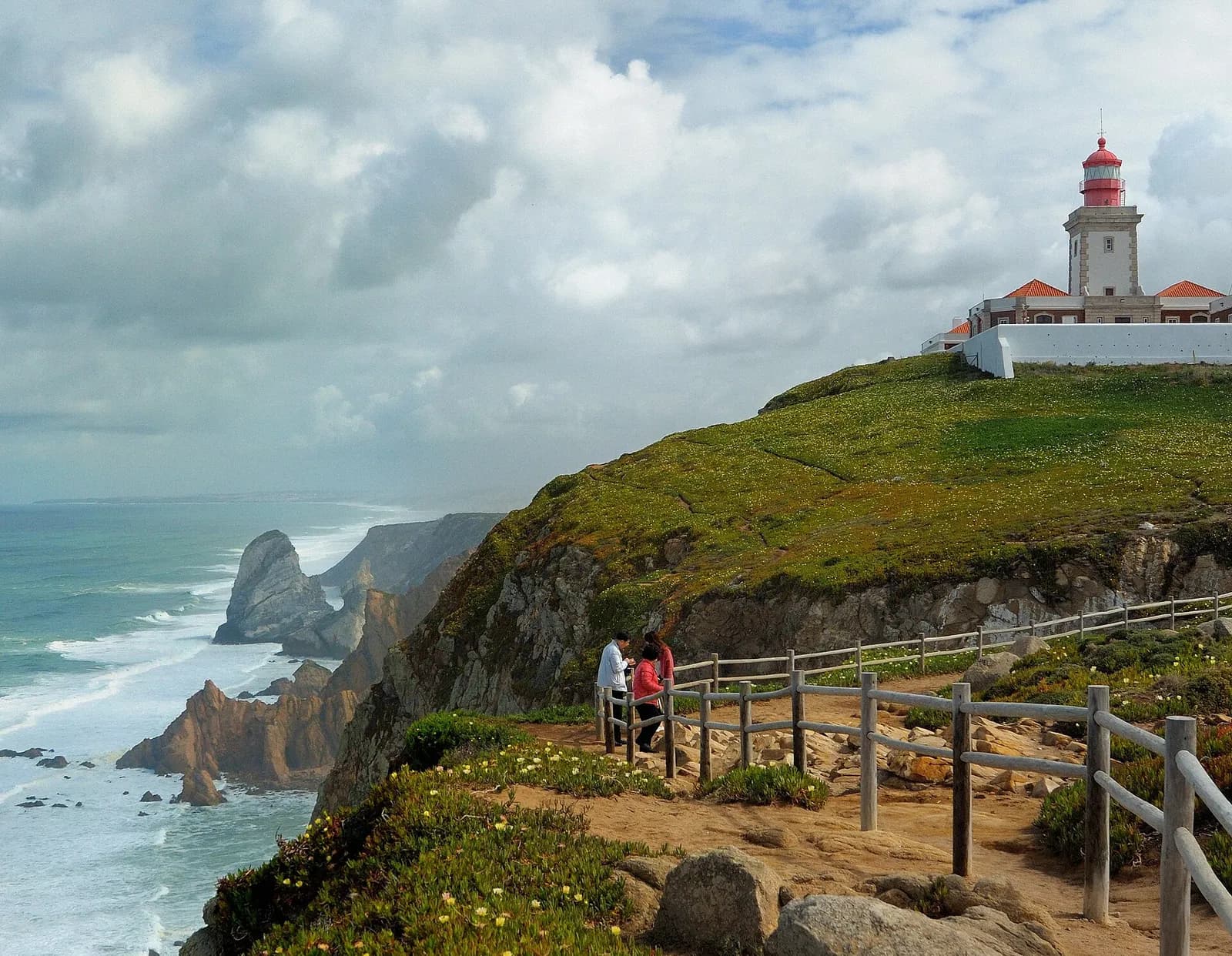
The night was worse. Cross-seas threatened to swamp the little ship, there was rain and lightning on several sides, and the wind seemed to lift the caravel into the air. In the first watch the sailors saw land. Columbus could not tell whether there was a harbour to run for, so he set the mainsail and held on, in great danger, until daylight. At daybreak he knew the coast: it was the Rock of Sintra, at the mouth of the river of Lisbon, and he decided to run in because there was nothing else to be done.
“So terrible was the storm, that in the village of Cascaes, at the mouth of the river, the people were praying for the little vessel all that morning.”
Those words, like most of what is known of the voyage, are not quite Columbus's own. His log does not survive. The text called his journal is an abridgement in the hand of the friar Bartolomé de Las Casas, who now and then quotes the Admiral but mostly retells him in the third person. The historians David Henige and Margarita Zamora call it at least a third-hand transcription.
Once the Niña was inside the bar, people came out to her and called her escape a miracle. At the third hour of the day she passed Restelo, then a small village and sheltered anchorage downstream from Lisbon, and anchored. The locals told the crew that nobody remembered such a winter: 25 ships had been lost in Flanders, and others had been stuck in the river for four months waiting for the wind.
Columbus was coming back from the other side of the Atlantic. He had sailed from Palos, in Andalusia, on 3 August 1492 with three ships and sighted Guanahani, in the islands of the Lucayos, in the night of 11 to 12 October. He left 39 men (38 in Barros) in a wooden fort on Hispaniola and was bringing home ten or twelve islanders and some gold. The Pinta had vanished in an earlier storm on 14 February. Now he was in the harbour of the king who had turned him down.
The Genoese whom Portugal turned down
Columbus, a Genoese, had learned much of his seamanship in Portugal. His voyages took him to Lisbon, England, the Azores, Madeira and Porto Santo, and down the African coast to Guinea, though the dates and some of the voyages are uncertain. In about 1483 he asked King João II for ships to sail west across the Atlantic to Asia.
João de Barros, the sixteenth-century historian of Portuguese Asia, says the king found Columbus a great talker, vain of his abilities, and gave him little credit. Pressed, João passed the plan to Diogo Ortiz, Bishop of Ceuta, and to Master Rodrigo and Master José, the experts he consulted on cosmography. They dismissed it as vanity, built on Marco Polo's tales of Cipango, as Japan was then called. Columbus left for Castile with his son Diego and was at Palos by 1485.
The door did not close at once. In March 1488 João wrote from Avis inviting him back and promising that he would not be arrested or sued over any civil or criminal matter while in Portugal. Historians have suggested several reasons for the safe-conduct: debts left in Lisbon, a quarrel with his Genoese employers, or a part in the Duke of Viseu's conspiracy against João in 1484.
“your industry and good wit will be necessary to us”
Then, in December 1488, Bartolomeu Dias sailed into Lisbon with news that he had rounded the southern tip of Africa. A note in a book owned by Columbus says its writer was present when Dias showed the king his chart; whether Columbus wrote it himself is still argued. With the sea road to India in sight, the chance of Portuguese backing for a western voyage faded. Castile took Columbus up once Granada fell in January 1492.
Nine days in the Tagus
On 4 March, the day he arrived, Columbus wrote to João II, who was staying nine leagues from Lisbon. He said the Sovereigns of Castile had told him to put into His Highness's ports and pay for what he needed, and asked leave to bring the caravel up to the city. He was afraid that robbers, hearing that he had gold on board, might attack him at a lonely anchorage, knowing he came from the Indies and not from Guinea.
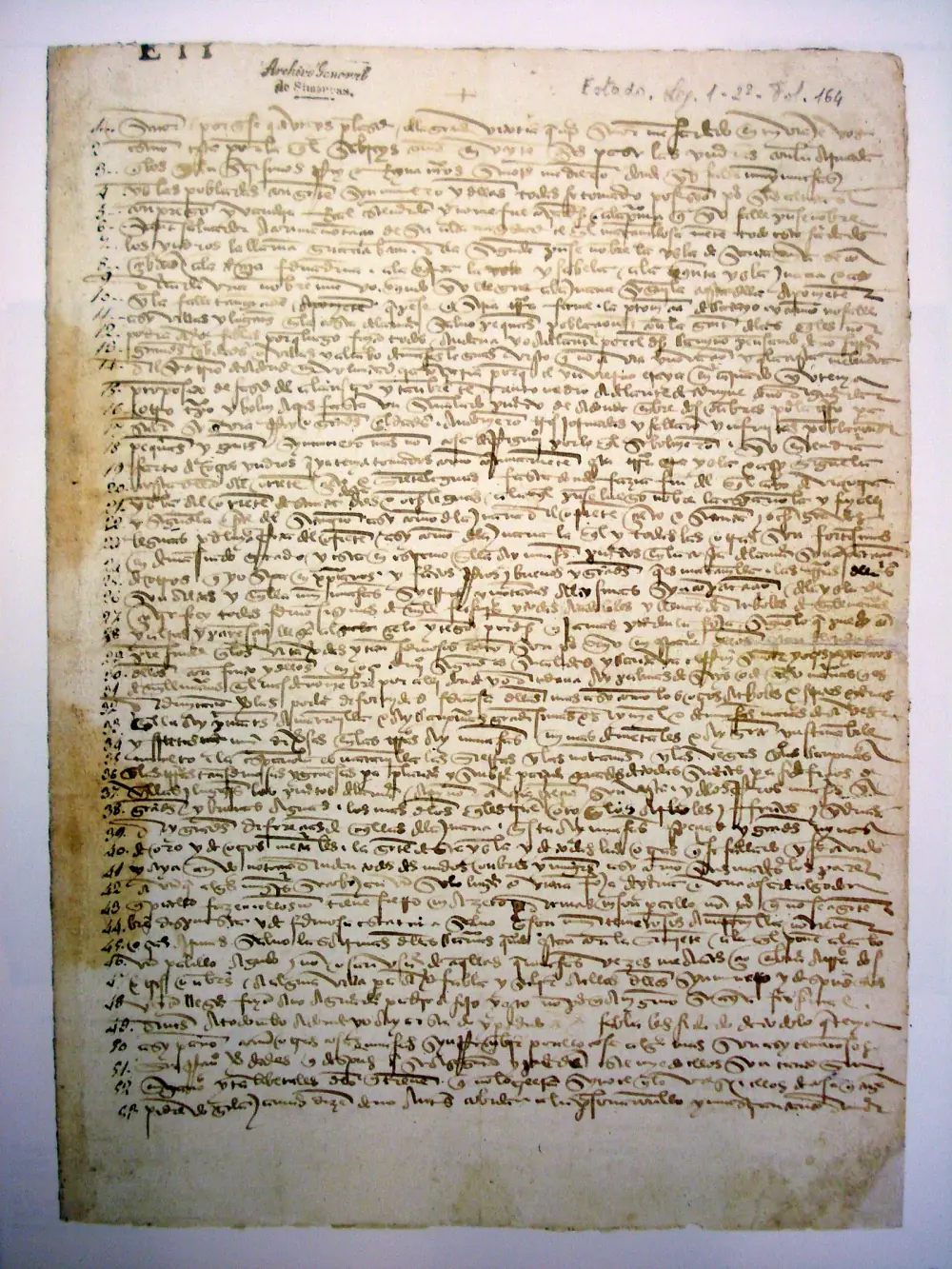
He probably also added a postscript that day to the letter he had written at sea for Luis de Santángel, the Aragonese court official who had helped pay for the voyage. “I ran hither to-day into this port of Lisbon, which was the greatest wonder in the world,” it says, in Bourne's translation. The printed letter carries the date 14 March; the editor R. H. Major thought Columbus redated it when he reached Spain.
On 5 March a Portuguese warship lay at Restelo too, the king's great ship, with the best provision of artillery and arms Columbus had ever seen. Her master, named in the journal as Bartolomé Diaz of Lisbon, came over in an armed boat and ordered Columbus to come and give an account of himself to the king's agents. Columbus refused: he was Admiral of the Sovereigns of Castile and would leave his ship only by force.
The master backed down and asked to see the Castilian sovereigns' letters, which Columbus showed him. Then the warship's captain, Álvaro Dama, came across with trumpets and drums and offered whatever help the Admiral needed. On 6 and 7 March, crowds came out from Lisbon to see Columbus and the islanders he had brought, among them knights and the king's agents.
On 8 March Dom Martinho de Noronha brought a letter from the king inviting Columbus to visit him, since the weather was not fit for sailing. João had ordered his officers to give the Admiral, his crew and the caravel everything they needed, free of charge. Columbus went “to prevent suspicion, although he did not wish to go”, and spent the night at Sacavém.
The king was at Vale do Paraíso, above the monastery of Santa Maria das Virtudes, where he was staying because of plague in the main towns of the district. Today the village is a parish of the municipality of Azambuja. Slowed by rain, Columbus did not arrive until nightfall on 9 March. The king's chief officers met him, and João received him warmly, made him sit and talked pleasantly. Then he came to the point.
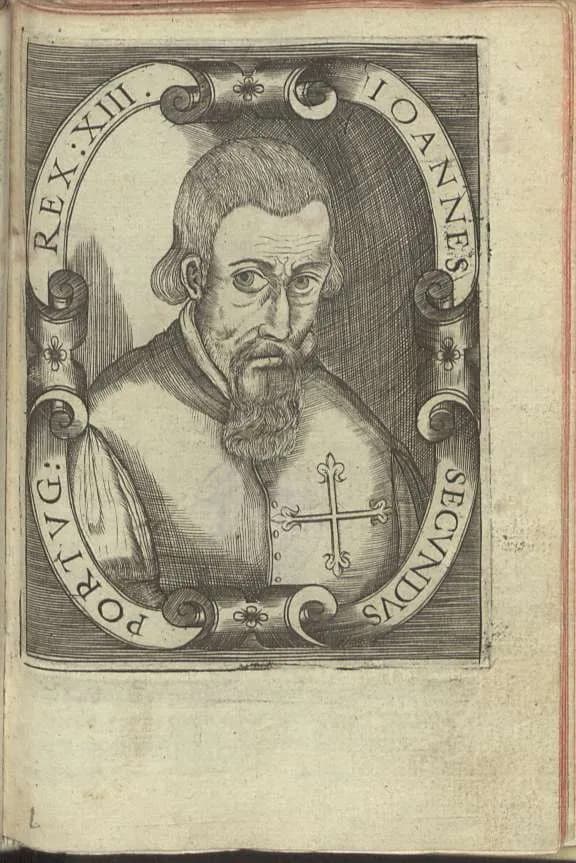
“He said further that he understood that, in the capitulation between the Sovereigns and himself, that conquest belonged to him.”
The “capitulation” was the Treaty of Alcáçovas. Columbus replied that he had not seen it. He knew only that his sovereigns had forbidden him to go to La Mina or any other port of Guinea, and had had that order proclaimed in every port of Andalusia before he sailed. The king answered graciously that he was sure there would be no need for arbitrators. Columbus was lodged with the Prior of Crato, the leading figure in the place.
Rui de Pina, who later wrote the chronicle of João's reign, told the story less politely. In Bourne's translation, he wrote that the king “felt disgusted and grieved”, believing the discovery had been made within the seas and bounds of his lordship of Guinea, and because Columbus, a little puffed up, always went beyond the truth and made his gold, silver and riches much greater than they were. He adds that João was charged with negligence for having sent Columbus away years before for want of trust in him; the Portuguese can also mean that the king blamed himself.
According to Pina, some at court urged João to let them kill Columbus there and then. Since he was discourteous and elated, they said, a quarrel could be picked that would make his own faults seem the cause of his death, and Castile's enterprise would die with its discoverer. The king, “like a most God-fearing prince”, forbade it, honoured Columbus and sent him away. Bourne thought Pina was probably an eyewitness.
“He was very sad when he saw that the people of the land who came with him were not black, with curly hair and features like those of Guinea, but in look, colour and hair like those he was told the people of India were.”
| Columbus's journal (Las Casas abstract) | Rui de Pina, chronicle of João II | João de Barros, Década I (1552) | |
|---|---|---|---|
| Arrival at Restelo | 4 March | 6 March | 6 March, at the port of Lisbon |
| Where the king was | Valparaíso, nine leagues from Lisbon | Vale do Paraíso, above Santa Maria das Virtudes, avoiding plague | Vale do Paraíso, by Nossa Senhora das Virtudes, in the territory of Santarém, avoiding plague |
| The king's mood | Gracious; claims the lands under the treaty | Disgusted and grieved; believes the lands are in his Guinea | Welcoming, but saddened that the islanders looked like Indians, not Africans |
| Plot to kill Columbus | Not mentioned | Courtiers offer; the king forbids it | Some nobles offer; the king rebukes them |
| How it ended | Honours, and a mule for Columbus and his pilot | Honours and favours | Gifts; the islanders dressed in scarlet cloth |
The journal survives only in Las Casas's abridgement. Pina and Barros both date the arrival two days later than the journal.
On Sunday 10 March, after mass, the king talked with Columbus at length about the voyage, always asking him to sit. On the 11th Columbus took his leave with messages for Ferdinand and Isabella. Noronha and a party of knights rode out with him. On the way he called at a monastery of Santo António near Vila Franca, where the queen had asked to see him, and kissed her hand. A duke and a marquis were with her; Bourne suggested the duke was her brother Manuel, Duke of Beja, who became king in 1495. Columbus slept that night at “Llandra”, probably Alhandra.
On 12 March a squire of the king caught up with him, offering lodgings and animals if he wanted to go home to Castile overland. Columbus kept to the sea, but the squire had a mule given to him and another to his pilot, who also received twenty espadins, gold coins of João II worth about twenty ducats. At eight o'clock on 13 March the Niña weighed anchor with the flood tide. At noon on 15 March she crossed the bar of Saltes into the port she had left on 3 August.
14 February
Storm in mid-Atlantic
The Pinta disappears. Columbus seals an account of the voyage in a barrel and throws it overboard.
18 to 24 February
Santa Maria, in the Azores
The Portuguese captain of the island detains half the crew, who had gone ashore to fulfil a vow.
3 March
A squall splits the sails
The Niña runs under bare poles towards the Portuguese coast.
4 March
Into the Tagus
Columbus recognises the Rock of Sintra, runs in past Cascais and anchors at Restelo.
5 March
Challenged by the king's ship
Columbus refuses to report to the king's agents.
8 March
The king's invitation
Martinho de Noronha brings the letter; Columbus sleeps at Sacavém.
9 to 11 March
Vale do Paraíso
Audience with João II; then a visit to the queen near Vila Franca.
13 March
Sails from Lisbon
15 March
Arrives at Palos
A fleet, three embassies and four bulls
The king could not let it rest. Pina says he held a first council at Aldeia Gavinha and more at Torres Vedras after Easter, which decided to arm a fleet against “those parts”. João made Dom Francisco de Almeida, son of the Count of Abrantes, its captain-major. It never sailed, but news of it was enough to bring Castile to the table.
Ferdinand and Isabella heard of the preparations from the Duke of Medina-Sidonia; their letter to him on the subject is dated 2 May 1493. They sent an envoy, Lope de Herrera in the Spanish sources and a messenger called Ferreira in Pina, to ask João to hold the fleet back until it was settled in whose seas the islands lay. João agreed. Meanwhile João had sent Rui de Sande to propose that the parallel of the Canaries divide the ocean, with everything to the south left to Portugal.
Castile also went to Rome, where Pope Alexander VI, a Valencian and a friend of Ferdinand, issued four bulls in its favour in 1493. The best known, Inter caetera, is dated 4 May but was drawn up in June, and gave Castile everything west of a line 100 leagues beyond the Azores and Cape Verde islands; the bulls and the line have their own article.
In mid-August the Portuguese envoys Pero Dias and Rui de Pina, the same man who wrote the chronicle, reached the Catholic Monarchs at Barcelona. Nothing was agreed. Pina blamed Castile for stalling until its ships came back with more news, and said the proposals of the Castilian envoys who came to Lisbon in November were so unreasonable that the delaying tactic was plain.
Once Castile's second fleet had reported, João sent new envoys, and at Tordesillas, on 7 June 1494, the two crowns agreed a line 370 leagues west of the Cape Verde islands.
Where to draw the line: positions of 1493 and 1494
leagues west of the islands
The papal line was measured from any of the Azores or Cape Verde islands; the Tordesillas line from the Cape Verde islands. During the 1494 talks João II refused compromises of 270 and 350 leagues and Castile accepted his 370; the source gives no dates or order for the two offers. Sources: Davenport (1917); Encyclopaedia of Portuguese Expansion.
Show the data
| Distance of the line | |
|---|---|
| Inter caetera, 1493 | 100 |
| Compromise offer (undated) | 270 |
| Higher offer (undated) | 350 |
| Tordesillas, 1494 | 370 |
Why it still matters
The week in the Tagus is when the two crowns' claims first collided. Alcáçovas had been written with Africa in view: it left Portugal the islands “from the Canary Islands down toward Guinea”. Columbus's landfall made each side read it its own way, João as a parallel running west from the Canaries, Castile as a deal about the African coast alone. Tordesillas replaced it with a meridian running from pole to pole.
The 370 leagues mattered for India as much as for America. João's stated reason was the Cape route: ships coming home from the Cape had to swing far out into the open Atlantic, and the wider margin kept that loop in Portuguese waters. Some historians think he also suspected land in the south-west Atlantic. With the knowledge of the time nobody could place the meridian exactly, and where it ran was argued over for centuries.
What happened at Vale do Paraíso is known only from a few texts, each with an angle. The journal survives only in Las Casas's abridgement. Pina was one of João's envoys in the dispute that followed and wrote his chronicle years later; Barros wrote half a century on. They disagree even on the day Columbus arrived, 4 or 6 March. Bourne, the journal's editor, and Portugal's Navy Museum follow the journal's 4 March.
FAQs
Why did Columbus stop in Lisbon on his way back from America?
He did not plan to. A storm split the Niña's sails on the night of 3 March 1493, and at dawn on the 4th he found himself off the Rock of Sintra and ran into the Tagus for shelter, anchoring at Restelo.
Where and when did João II meet Columbus?
At Vale do Paraíso, near the monastery of Santa Maria das Virtudes, about nine leagues from Lisbon, where the king was staying to avoid plague. Columbus arrived on the night of 9 March 1493 and left on the 11th.
Why did Portugal claim the lands Columbus found?
João II argued that they fell within the zone the Treaty of Alcáçovas of 1479 left to Portugal, the islands found or to be found from the Canaries down toward Guinea. Castile said the treaty only covered the African coast.
Had Portugal turned Columbus down before?
Yes. In about 1483 he asked João II for ships to sail west to Asia. Barros says a committee of the Bishop of Ceuta and two cosmographers rejected the plan, and Columbus went to Castile. In 1488 the king invited him back, but after Bartolomeu Dias returned from the Cape he lost interest.
Did João II want Columbus killed?
Rui de Pina says some of his courtiers offered to kill Columbus and make it look like the result of a quarrel, and that the king forbade it. Barros tells a similar story. Columbus's own journal does not mention it.
On the timeline
Open the timelineNearby moments from the age of discoveries (1415–1580).
Nzinga a Nkuwu, ruler of the Kingdom of Kongo, is baptised by Portuguese missionaries and takes the Christian name João, after Portugal's king. The alliance brings priests and masons, but within a generation his son Afonso I is writing to João III to protest that Portuguese slave traders are depopulating his kingdom.
Death at age 16 of Prince Afonso, only legitimate son and heir of King João II and Queen Eleanor, after a fall from a horse on the banks of the Tagus near Santarém. The tragedy ends the direct Avis succession and sets in motion the dynastic chain that, three generations later, will deliver Portugal into the hands of the Habsburgs.
Ferdinand and Isabella of Spain sign the Alhambra Decree, ordering the expulsion of all Jews who refuse to convert. Tens of thousands of Spanish Jews flee to Portugal, significantly increasing the Jewish population until Manuel I's own expulsion edict in 1496.
Columbus in Lisbon, 1493
Christopher Columbus, returning from his first voyage to the Americas, is driven by a storm into the Tagus and anchors at Restelo, near Lisbon. João II receives him on 9 March and claims the new lands for Portugal, a dispute settled by the Treaty of Tordesillas.
Pope Alexander VI's bull 'Inter caetera', dated this day but issued in June, grants Castile all lands west of a line 100 leagues beyond the Azores and Cape Verde islands. Portugal's objections to the line lead to the Treaty of Tordesillas the following year.
The Treaty of Tordesillas is signed between Portugal and Spain, dividing newly discovered lands outside Europe along a meridian 370 leagues west of the Cape Verde islands. Portuguese diplomacy secures the shift of the line westwards from the 100 leagues set by the papal bull of 1493, a decision that would give Portugal its claim to Brazil after Cabral's 1500 landfall.
Birth of João Cidade (later Saint John of God / São João de Deus) in Montemor-o-Novo. He would found the Brothers Hospitallers religious order and become the patron saint of hospitals, the sick, and healthcare workers.
Coming up in history
All long reads
13 sources
Archives, scholarship and reporting this article was checked against.
- 1
Journal of the First Voyage of Columbus and Letter of Columbus to Luis de Santangel, in The Northmen, Columbus and Cabot, 985-1503 (J. E. Olson and E. G. Bourne, eds.)Original Narratives of Early American History, Charles Scribner's Sons, 1906 (Project Gutenberg)
- 2
Chronica d'ElRey D. João II (Rui de Pina), chapter LXVI, “Descubrimento das Ilhas de Castella per Collombo”, in Collecção de livros ineditos de historia portugueza, vol. IIAcademia Real das Sciencias, Lisbon, 1792 (Internet Archive)
- 3
- 4
- 5
Tordesillas Treaty (José Luís Ferreira)Encyclopaedia of Portuguese Expansion, NOVA FCSH, 2009
- 6
La protección portuguesa para la navegación de Colón (Rubén Gálvez Martín)Universidad Complutense de Madrid, 2013
- 7
Efeméride: Cristóvão Colombo regressa a LisboaMuseu de Marinha, Direção Cultural da Marinha, 4 March 2021
- 8
Text, Context, Intertext: Columbus' diario de a bordo as Palimpsest (David Henige and Margarita Zamora)The Americas, vol. 46, no. 1, July 1989, pp. 17-40 (Cambridge University Press)
- 9
Mosteiro dos Jerónimos: fundação, o mosteiro, panteãoMuseus e Monumentos de Portugal, Mosteiro dos Jerónimos e Torre de Belém
- 10
- 11
- 12
Vale do Paraíso (Azambuja, Portugal)ROSSIO Places vocabulary, NOVA FCSH
- 13
Image credits
- Cabo da Roca, where the Sintra hills meet the Atlantic, west of Lisbon. At dawn on 4 March 1493 Columbus recognised “the rock of Cintra”, this headland or the hills behind it, and ran for the Tagus. Photographed in 2012; the lighthouse was built long after Columbus. Ввласенко, CC BY-SA 3.0, via Wikimedia Commons.
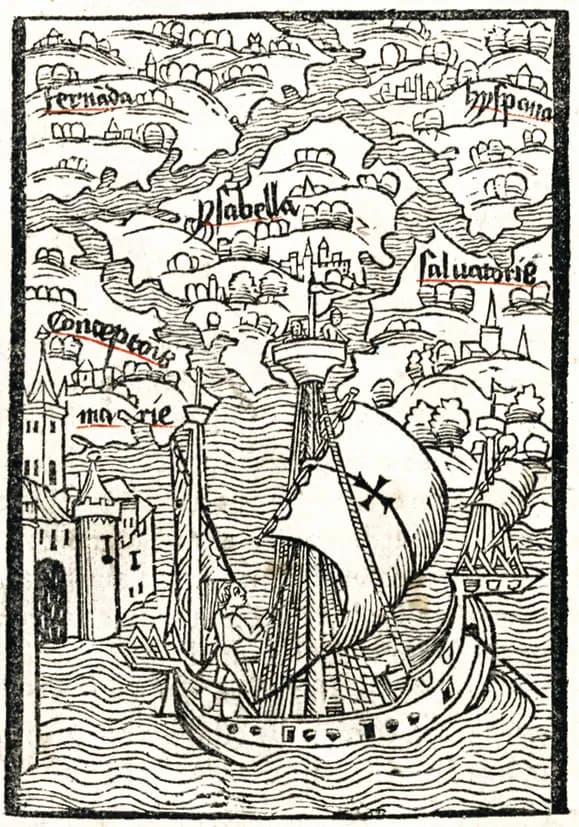
- A woodcut from the Basel edition of Columbus's printed letter, 1493: an imagined ship among the islands he had named, labelled here Fernada, Hyspana, Ysabella, Salvatorie and Conceptoris Marie. The Latin translation of the letter was how most of Europe outside Spain first heard of the voyage. Unknown, probably a Swiss artist, Public domain, via Wikimedia Commons.
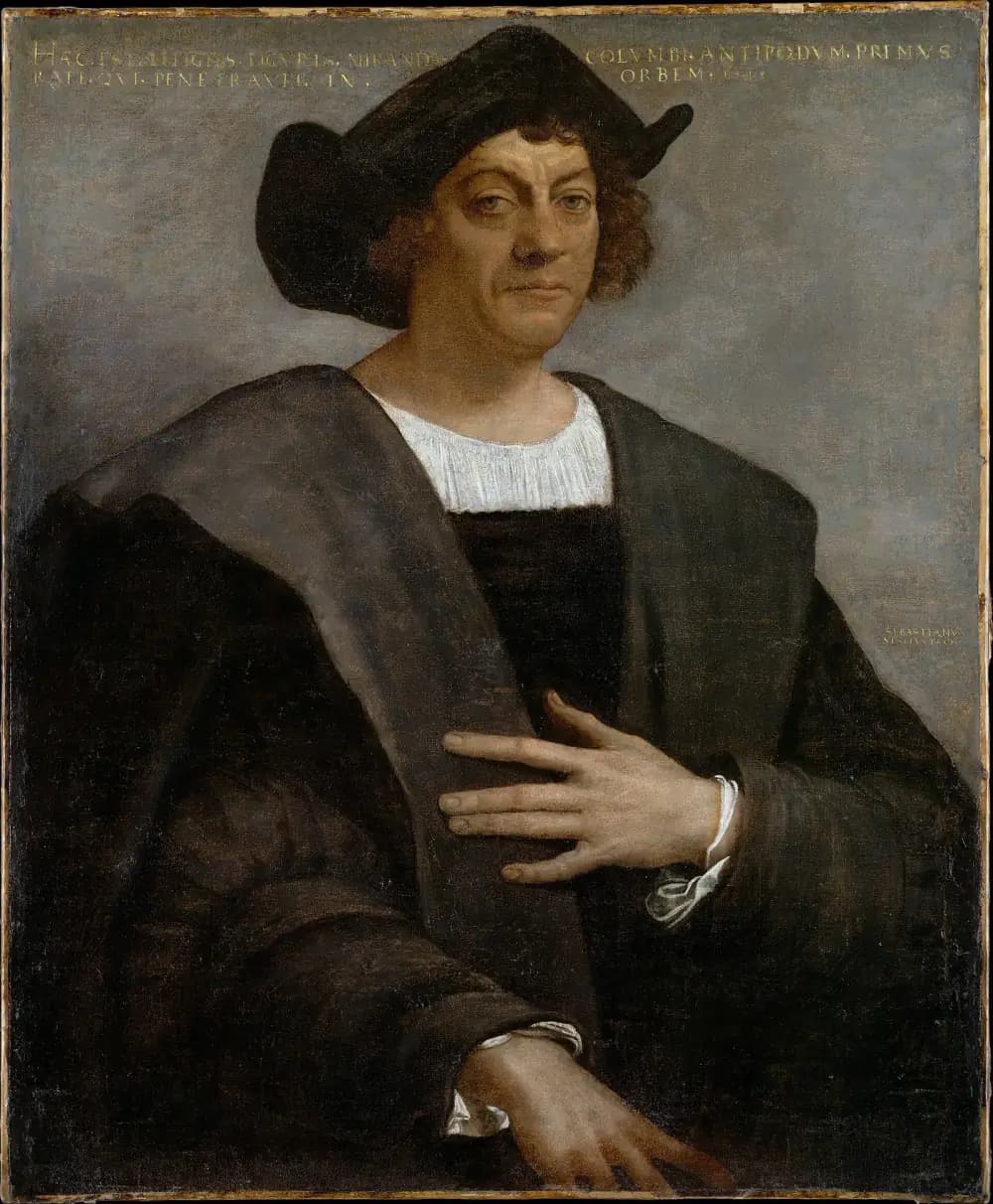
- Portrait of a man said to be Christopher Columbus, painted by Sebastiano del Piombo in 1519, thirteen years after Columbus died. Sebastiano del Piombo, Public domain, via Wikimedia Commons.
- A manuscript copy of Columbus's letter to Luis de Santángel on the first voyage, dated off the Canaries on 15 February 1493, in the Archivo General de Simancas. Christopher Columbus or Luis de Santángel, Public domain, via Wikimedia Commons.
- João II, thirteenth king of Portugal, as imagined in Pedro de Mariz's Diálogos de vária história, 1594, a century after he received Columbus. Unknown author, Public domain, via Wikimedia Commons.