

Fernão de Ornelas, the young mayor who rebuilt Funchal
Appointed by the Estado Novo at 26, he paved, lit, drained and rebuilt Madeira's capital in under twelve years. Then the civil governor took offence at a banquet in his honour.
At a glance
- Fernão Manuel de Ornelas Gonçalves was born in the parish of São Pedro, Funchal, on 14 June 1908 and trained as a lawyer in Lisbon.
- The Estado Novo regime made him president of Funchal's council on 12 January 1935, when he was 26. He held the post until 22 October 1946.
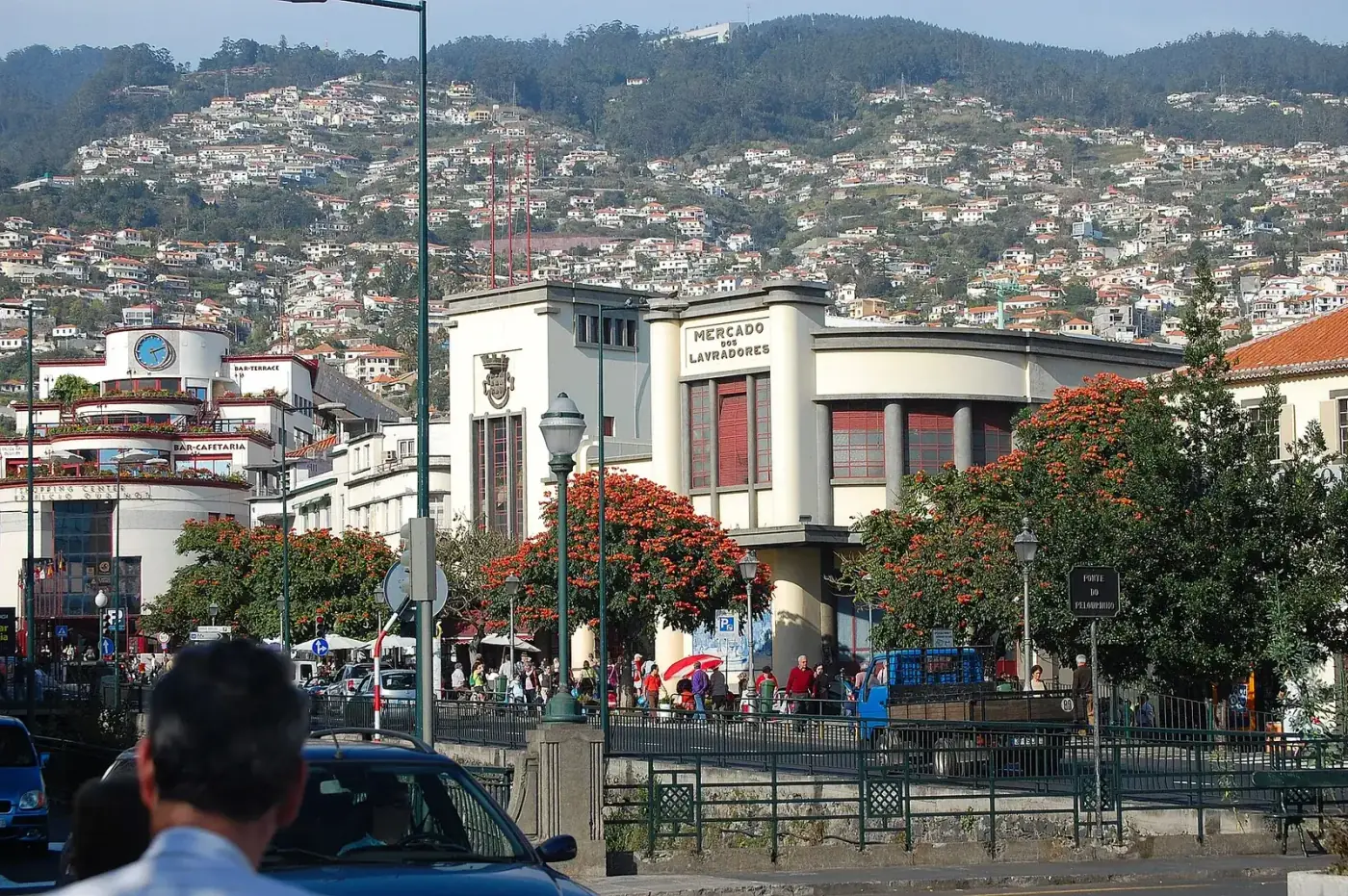
- His council paved and lit the city, laid sewers, built fountains, housing estates, the Mercado dos Lavradores (opened 24 November 1940) and the seafront Avenida do Mar.
- He fell out with the civil governor, Daniel Vieira Barbosa, after friends gave him a banquet for about 300 people on 5 October 1946, and was dismissed within three weeks.
- He died in Lisbon on 24 May 1978. A Funchal street has borne his name since 1946, a bust of him has stood there since 2019, and the local press reports a posthumous city Medal of Honour in 2008.
A Sunday at the new market
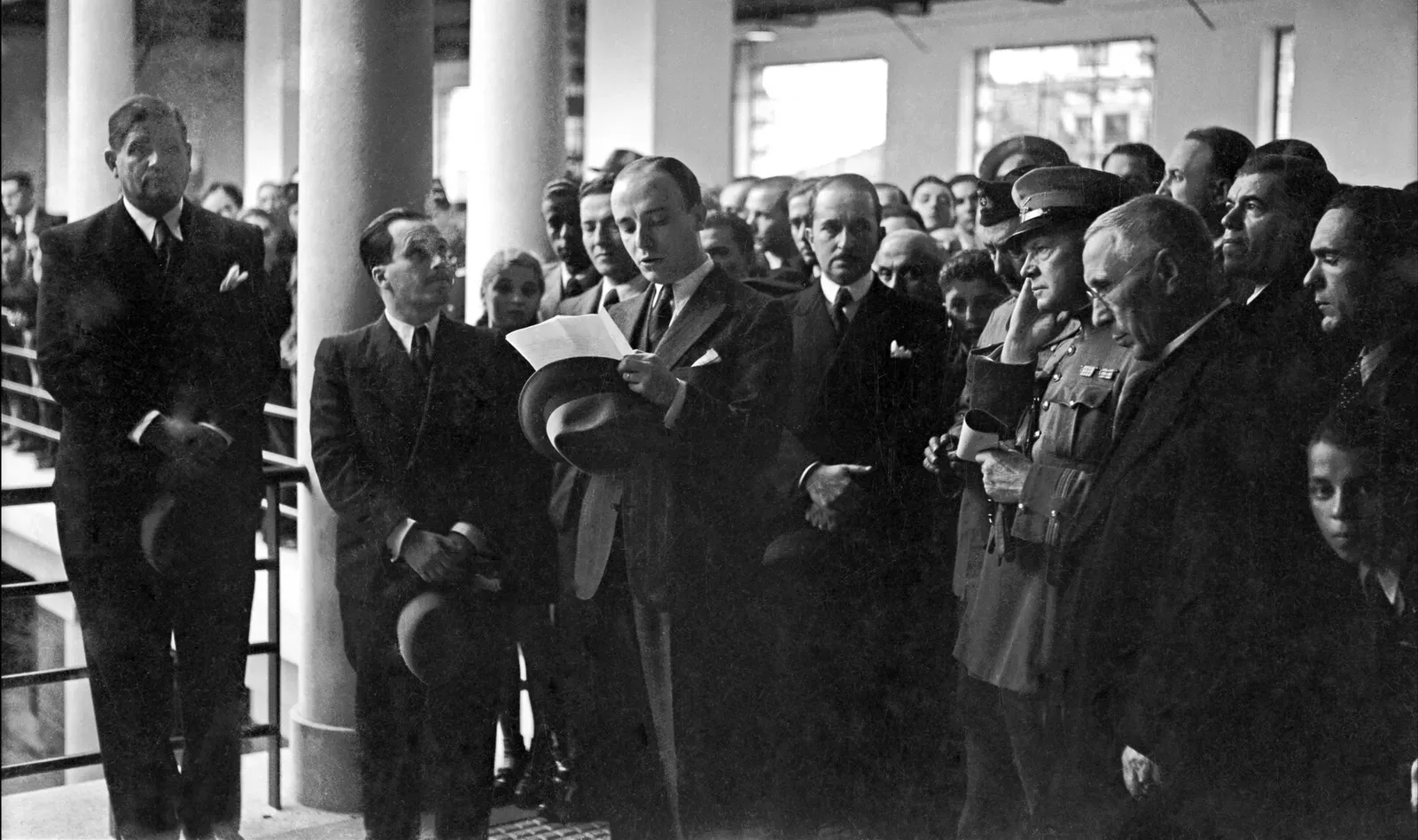
On Sunday 24 November 1940, a month before Christmas, Funchal's market traders moved house. The city's new farmers' market, the Mercado dos Lavradores, opened that day in Santa Maria, the old quarter, and all sales to the public moved there. The old Mercado de D. Pedro V was to be demolished within weeks.
Among the officials under the white columns stood the president of the city council, Fernão de Ornelas, aged 32, his hat in one hand and his speech in the other. The architect Edmundo Tavares had designed the building in a geometric Art Deco with Madeiran touches. Outside, a blue-and-white tile panel by João Rosa Rodrigues, made by the Battistini factory in Lisbon, showed the stalls and flower sellers of the market it replaced.
The market was one of a run of openings timed for the 1940 centenary celebrations of Portugal's foundation and independence. The minutes set the same day for a new slaughterhouse, which may have opened later, two estates of cheap housing with 168 homes had been due on 10 November, and the council published Padre Eduardo Pereira's survey of the archipelago, Ilhas de Zargo.
In under six years Ornelas had paved and lit the city, laid sewers and taken water to the hillside parishes. By October 1946 he was gone, dismissed after a quarrel over a dinner given in his honour.
An island in crisis
Madeira entered the 1930s in trouble. After the crash of 1929 Funchal's banks failed one after another. When Lisbon handed the island's flour trade to a single milling company, Madeirans rose in the 'flour revolt' and then in the Madeira revolt of 1931, and many believed the neglect that followed was the regime's punishment.
The council itself was in poor shape. Quarrels under its last two presidents, Gastão de Deus Figueira and Luís da Rocha Machado, had stalled the city's development. Its budget was small, its debts large, and its public works depended on state grants that often arrived late.
Plans existed. In 1915 the council had commissioned the architect Ventura Terra to remodel the city on the lines Haussmann had followed in Paris: broad avenues and squares, a seafront avenue widened on reclaimed land, streams covered over to make roads, two large parks. Nothing was built, and Emanuel Janes describes the Funchal of the early 1930s as an 'almost rural borough with medieval features'. Ornelas would take the plan out of the drawer.
A lawyer of 26
Fernão Manuel de Ornelas Gonçalves was born on 14 June 1908 in the parish of São Pedro, in Funchal, the second of five children of a doctor, Fernão de Sousa Gonçalves, and Gabriela de Ornelas, of one of the island's oldest families.
He left for Lisbon at 17 to read law, graduated in July 1931 with high marks and in August 1932 was appointed a deputy public prosecutor. A member of the União Nacional, the regime's party, he was named to the city council in January 1934. The council's president, Gastão de Deus Figueira, praised him, and the Diário de Notícias reported him being hailed as 'a splendid element of the National Revolution'.
A year later, on 12 January 1935, he was made president of the administrative commission, in effect mayor of Funchal. In his inaugural speech on 14 January he promised to pay the council's debts in order of age, house the municipal services and the courts properly, pave the streets, improve the lighting, build fountains in the rural parishes and take care of 'the aesthetics of the city'.
- Born
- 14 June 1908, São Pedro parish, Funchal
- Trained
- Law, Lisbon Faculty of Law, graduated July 1931
- In office
- 12 January 1935 to 22 October 1946, president of Funchal's administrative commission
- Party
- União Nacional, the Estado Novo's party
- Also
- Member of the Câmara Corporativa for Madeira's local administration while mayor
- Died
- 24 May 1978, Lisbon, aged 69
Setts, lamps and fountains
Ornelas started with what visitors saw first, because Funchal lived from tourism. The council built viewpoints with small gardens at Socorro, Cruzes, Pináculo and other spots around the city, which the town had wanted for years. Every street was relaid with square stone setts, and owners who dug them up to lay drains had to relay them.
Under the paving went a sewer network, and owners were ordered to connect to it. Above the city, in the rural parishes where families still carried water from wells and streams, the council built public fountains: 139 when Ornelas took office, 211 by November 1939.
Public fountains in the municipality of Funchal
fountains
Fountains supplying drinking water, mostly in the rural parishes, when Ornelas took office and almost five years later. Figures from the council minutes of 16 November 1939, cited by Emanuel Janes (2021).
Show the data
| Public fountains (fontanários) | |
|---|---|
| January 1935 | 139 |
| November 1939 | 211 |
He also set out to change how the city behaved. Flower sellers had to wear traditional dress, shoeshine boys overalls and blue berets, street sweepers dark blue with a numbered cap. By-laws banned spitting in the street, going barefoot and dropping litter. Façades were to be painted in a single colour, and cattle were banned from the streets.
Not everything worked. From 1 January 1937 the council ran Funchal's buses itself, one of the most contested decisions of his presidency. They lost 289,261 escudos in eleven months of 1938, and in June 1939 the council sold the routes and vehicles to the only bidder for 755 contos (a conto was 1,000 escudos).
The sale showed how he dealt with dissent. When a councillor, Francisco Leão de Faria, refused to withdraw a written objection to it, Ornelas said he would ask the governor to remove him, and Faria was removed.
What paid for everything else was the accounts. The council collected taxes strictly, found small new revenues, down to an annual auction of the hire of fish trays at the market, and paid off its debts oldest first. By the end of 1939 the inherited debts were cleared, and according to Janes senior officials came to regard Funchal as the best-run council in the country.
A new city for 1940
Clearing the debts changed what the council could attempt. With its credit restored it could borrow for the expropriations that new streets needed, and in late 1939 the war in Europe began putting Madeirans out of work. The council pressed ahead with larger works, many of them timed for the 1940 centenaries.
This was when Ventura Terra's plan of 1915 came out of the drawer. It had proposed covering the streams to make roads, and the council now covered the Ribeira de São João, one of the streams that run through the city. It also extended the Avenida Arriaga and laid out the Rotunda do Infante roundabout.
| Work | Key date | What it was |
|---|---|---|
| Street paving and lighting | From 1935 | Square stone setts on every city street; modern lamps on the main streets and squares |
| Praia da Barreirinha | Due to open 28 May 1939 | A bathing beach adapted for 'the poorer classes' |
| Santa Maria and São Gonçalo housing estates | Inauguration set for 10 November 1940 | 168 houses (100 and 68) |
| Mercado dos Lavradores | Opened 24 November 1940 | Market hall by Edmundo Tavares, tiles by João Rosa Rodrigues |
| Municipal slaughterhouse | Inauguration planned for 24 November 1940 | New slaughterhouse on the Ribeira de João Gomes |
| Registries and tax office | From late 1939 | A new block for the registries and the tax office |
| Avenida do Mar | Decided late 1939; named 20 June 1940 | Seafront avenue carried on to the Campo Almirante Reis |
| Fountain, Largo da Restauração | 1941 | Designed by the architect Januário Godinho |
| Viveiros civil prison | September 1943 | Prisoners moved from the old São Lázaro jail |
| Fountain, Rotunda do Infante | Dated 1946; inaugurated November 1948 | Architect Faria da Costa, sculptor António Duarte; finished after Ornelas left |
Janes (2021) gives 28 May 1940 for the market's opening. The council minutes cited by Lopes, the 2021 classification order ('November 1940'), the regional tourism board and photographs of the ceremony dated 24 November 1940 all point to November. The minutes set the slaughterhouse's opening for the same day, but Rui Carita dates its design to 1941, so it may have opened later.
The Estado Novo liked to be seen housing the poor. At Santa Maria the council's houses were let for no more than 30 escudos a month, and a third estate, at Ajuda, was held up by the war.
Even the town hall changed. From 1940 Ornelas had the old Carvalhal family palace that housed the council remodelled into its present form, and the painter Alfredo Miguéis, who sat on his council from 1941, painted the ceiling of its main hall. The city's tourism website dates the ceiling to 1940; the council minutes record the commission in August 1941.
The council also built schools, among them a model school at Ilhéus named after Salazar, set up a municipal health service with council-paid doctors in 1940, revived the journal Arquivo Histórico da Madeira and reprinted the island's encyclopedia, the Elucidário Madeirense.
Opening the city to the sea
The work that most changed the shape of Funchal began partly as relief work. To ease wartime unemployment, the council decided at the end of 1939 to carry the seafront avenue on to the Campo Almirante Reis, at the eastern end of the bay. On 20 June 1940 it named the road Avenida do Mar.
Building it meant clearing the shore. In February 1938 the owners of the sheds on the Campo Almirante Reis had been given 60 days to pull them down. The first tender for bridges over the Santa Luzia and João Gomes streams drew a single bid, about a fifth over the base price, and the council refused it; the contract was finally let in April 1941.
The seafront was not the council's alone. The council minutes of December 1939 note that the port board, the Junta Autónoma dos Portos, had just finished the avenue's first stretch. According to the historian Rui Carita, the port board, led by João Abel de Freitas, was in overall charge of the avenue, while the council took the eastern stretch. The two clashed: in April 1942 the council objected to stairways the board wanted on the avenue's pavement and asked the governor to step in.
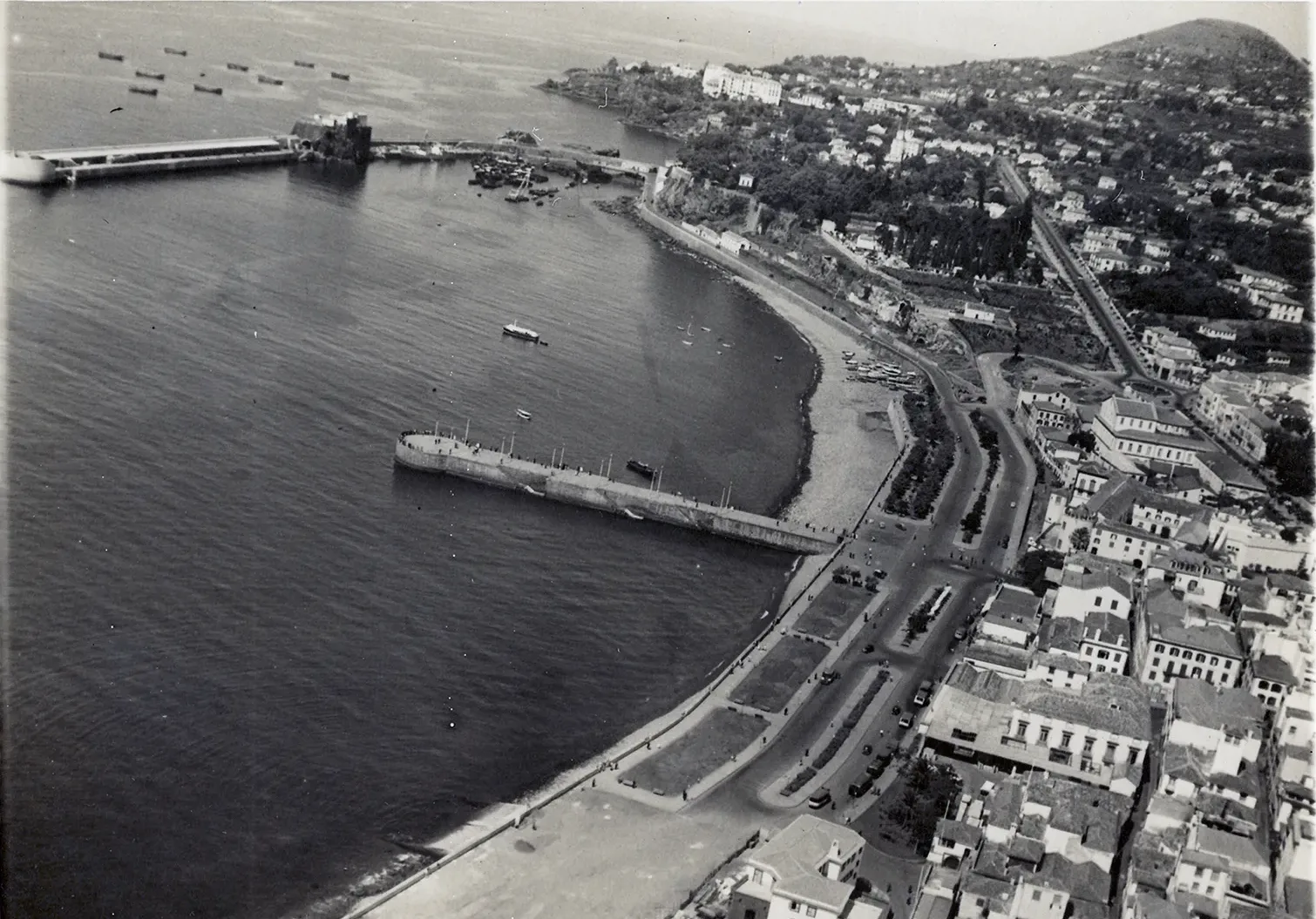
Inland, earthworks for the Avenida do Infante began in 1941. In 1945 the urban planner João Guilherme Faria da Costa, working for the council, drew up a study for the seafront built on three axes: the Avenida do Mar; the Avenida do Infante and Avenida Arriaga; and the Rua da Carreira and the town hall square.
Deciding without much talk
Ornelas governed by decision. Alberto João Jardim, later president of Madeira's regional government, grew up in the house of a grandfather who sat on Ornelas's council. In 2002 he recalled his grandfather praising the mayor's ability to decide 'without much conversation'.
“What matters is to get things done. If we argue too long over an idea, they all fall out and nothing gets done.”
Jardim also remembered the story of the prison. Without waiting for the Ministry of Justice, Ornelas had the prisoners moved to the building at Viveiros, and it was done in a single night. The council minutes record the move in September 1943, after an inspection found the old jail at São Lázaro unfit for use.
His plans ran through private property, and owners resisted. Most expropriations were settled by agreement, but many went to court, and on the Rua da Carreira one house had to be cut back to widen the street. Lopes, who read the minutes for every year of the presidency, found that the contested expropriations caused the sharpest disputes.
Funchal's humorous paper Re-Nhau-Nhau mocked the new commission from its first week. Opposition inside the regime was quieter. When the councillor Guilherme Rodrigues da Silva stepped down in September 1945, he denounced a 'muffled and inconceivable campaign' against Ornelas by 'individuals who say they serve the same national cause'.
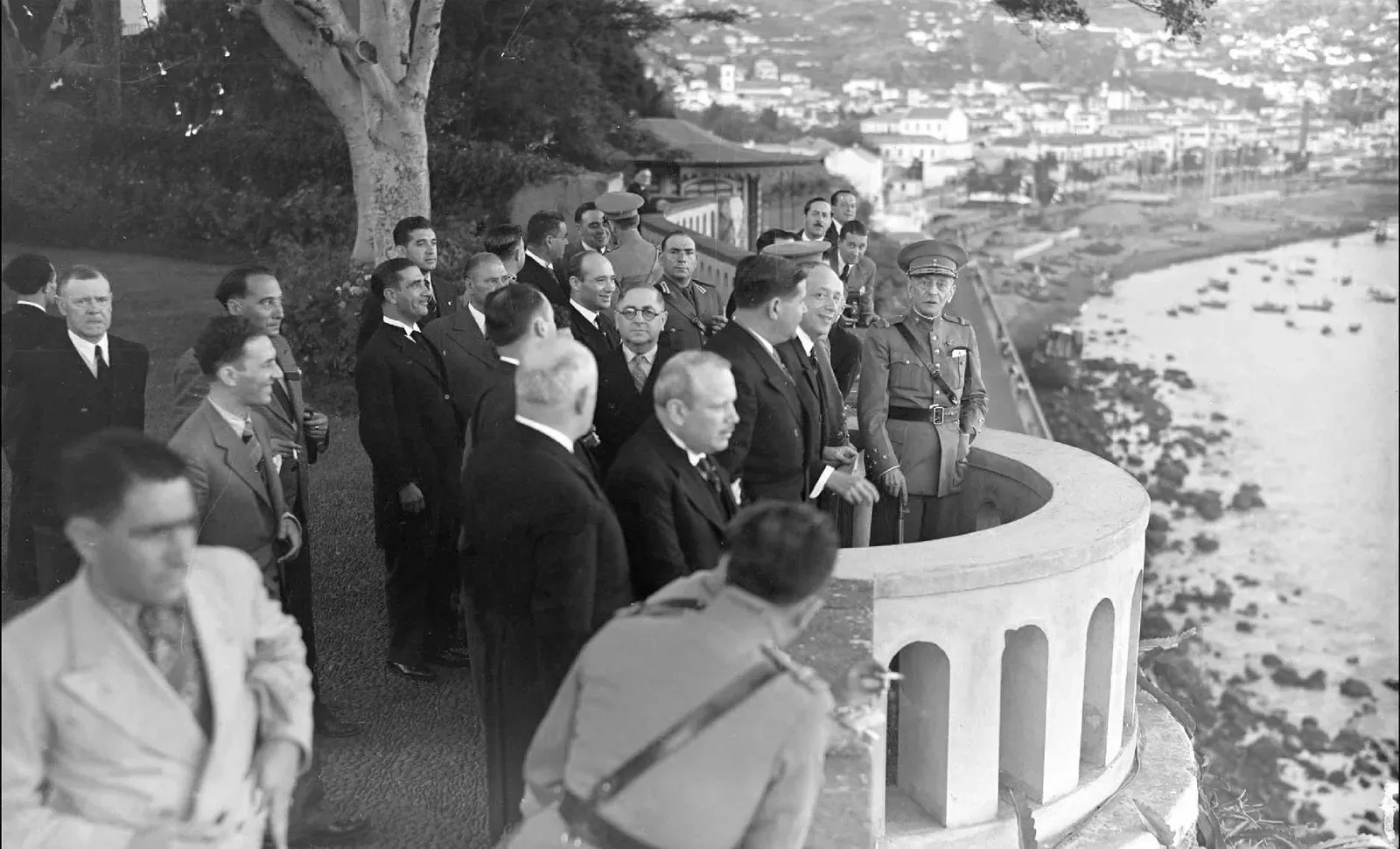
The regime rewarded him. In July 1938 the President of the Republic made him an officer of the Order of Christ, and his council and staff congratulated him at the meeting of 14 July. Later biographical entries give him the higher rank of commander. While mayor he also sat in the Câmara Corporativa, the regime's corporative chamber in Lisbon, as Madeira's representative in its local administration section.
A dinner at the Savoy
The end came out of a dinner. In 1946 Ornelas travelled to Brazil, returning on 22 September. While he was away, a clandestine trade in sugar came to light in Funchal, with a fraud by an official of a state trade-control board, and rumours spread. The civil governor, the engineer Daniel Vieira Barbosa, later wrote that he had shielded the absent mayor, though he blamed slack control for which Ornelas was responsible.
Ornelas's friends answered with a banquet in his honour at the Hotel Savoy on Saturday 5 October 1946, attended by about 300 people. Barbosa said he had asked for it to be put back a week so that he could be back from Lisbon; it went ahead, and the acting governor was invited only the day before.
“There were moments when I felt almost alone. The men who understood me did not number more than half a dozen. Meanwhile my conscience advised me to carry on, not straying from the line I had set, even if the end of my public life came of it.”
On Sunday 20 October Barbosa sent a long letter to Ornelas's house. He accused Ornelas of having stopped showing him consideration once rumour said he would not return from Lisbon, and the organisers of sending the least important members of their committee to deliver the last-minute invitation to the acting governor. It ended with an ultimatum.
“It is not easy for me to separate the dignity of my own person from the dignity of the office with which I am invested, and so you will understand that from now on I dispense with your collaboration. […] You will choose which of us settles the matter, and I await your reply until five o'clock tomorrow.”
The letter and Ornelas's reply were read to an extraordinary council meeting on Monday 21 October. In the reply he gave his word of honour that the governor had never mentioned postponing the dinner. Nothing, he wrote, could lead him in conscience to resign, but he would hand over his office whenever the governor decided. The vice-president and the four councillors present asked the governor to end their mandates too.
He was relieved of office on 22 October 1946. Janes says he resigned, but his reply had refused to, and Janes himself then speaks of his exoneração, a formal removal. In solidarity, the council's next regular meeting did not take place, and the vice-president, José Rafael Basto Machado, ran the council as a caretaker until a new president, the doctor Óscar Baltazar Gonçalves, held his first meeting on 8 May 1947.
Lopes, the historian of his presidency, reads the banquet as the occasion rather than the cause: years of expropriations and disputes had made Ornelas enemies, and the end came in a clash between two decorated men of the same regime. Barbosa went on to become a minister.
Lisbon, a street and a bust
Disappointed with politics, Ornelas settled in Lisbon as a lawyer. He became a director of the Banco da Madeira, sat on the board of the state savings bank, the Caixa Geral de Depósitos, and was a director of the Hidrotécnica do Cávado and the Banco Pinto & Sotto Maior. He died in Lisbon on 24 May 1978, aged 69.
Funchal honoured him quickly. On 7 November 1946 the council named after him the new street being built from the Ponte do Bettencourt to the Mercado dos Lavradores, with a plaque saying that he 'served well, as president of the council, the land where he was born (1935-1946)'. The plaque went up only on 30 December 1950.
His successors kept to his lines. Janes credits Óscar Gonçalves with taking the electricity supply into municipal hands, António Sardinha with balancing the books and Fernando Couto with Funchal's first master plan, all following 'the ideas of Fernão de Ornelas Gonçalves'. When he died, both Madeiran dailies called him a controversial figure; the Jornal da Madeira wrote that Funchal owed him 'its modernisation'.
14 June 1908
Born in São Pedro parish, Funchal
July 1931
Graduates in law in Lisbon
January 1934
Named to Funchal's council
12 January 1935
Appointed president of the council, aged 26
1 January 1937
Council takes over the bus services (sold off in 1939)
July 1938
Made an officer of the Order of Christ
End of 1939
Council's inherited debts paid off
24 November 1940
Mercado dos Lavradores opens; slaughterhouse opening set for the same day
5 October 1946
Banquet at the Hotel Savoy
20 to 22 October 1946
Governor's ultimatum, council meeting, dismissal
7 November 1946
Council names a new street after him
24 May 1978
Dies in Lisbon, aged 69
2008
Medal of Honour of the City of Funchal, posthumously (as reported in 2019)
18 May 2019
Renovated Rua Dr. Fernão de Ornelas reopens with a bust of him
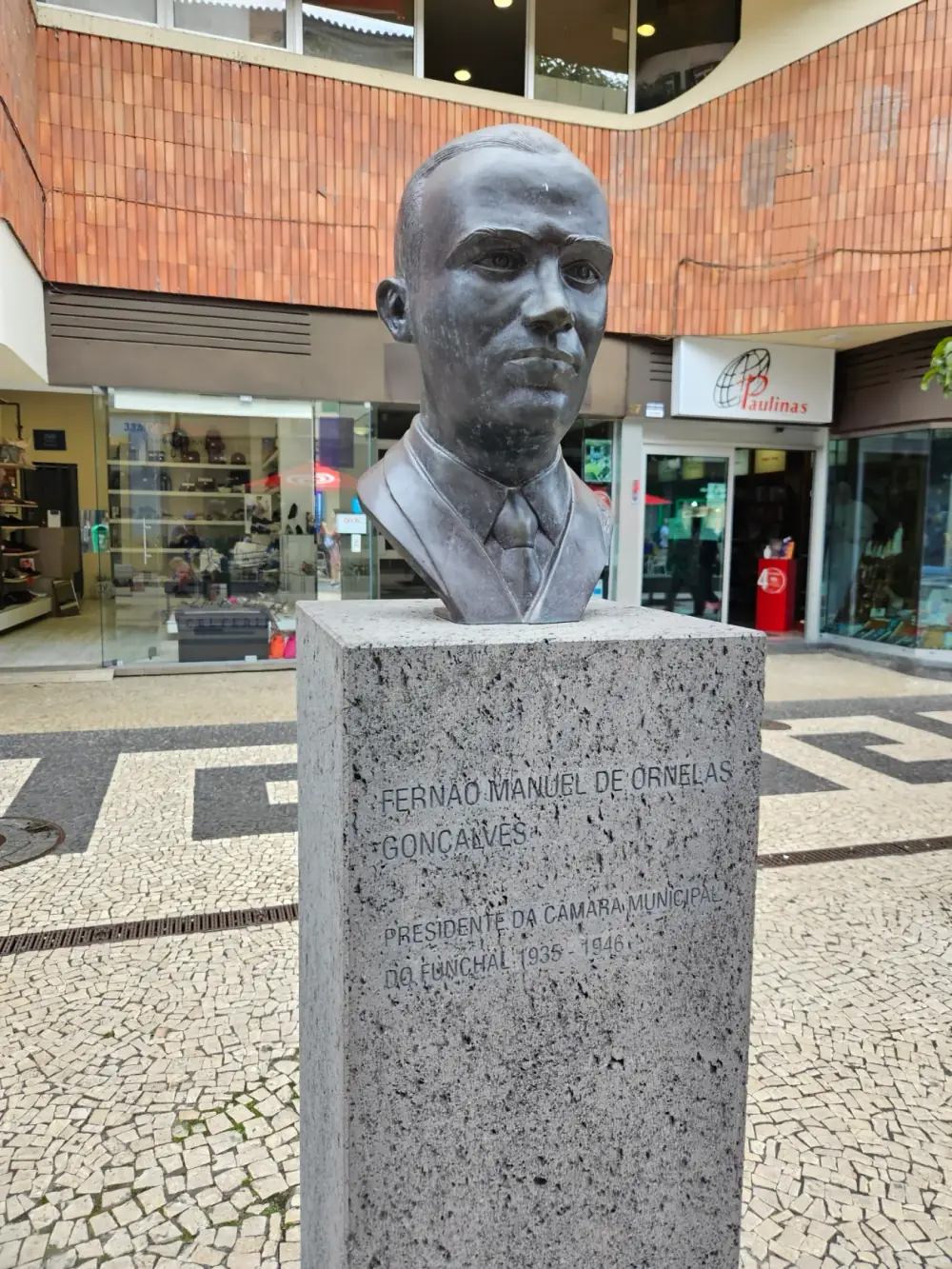
In 2008, the centenary of his birth, Lopes's study was published in the city's Funchal 500 Anos collection, and according to the Funchal Notícias the city gave Ornelas its Medal of Honour posthumously that year. On 18 May 2019 the renovated street that bears his name reopened, mostly closed to cars, and the council marked the day with a bust of him, inviting his grandson, André Gonçalves.
Why he still matters
Much of central Funchal still follows lines his council drew or began: the Avenida do Mar, the Avenida do Infante and Avenida Arriaga, the covered stretches of the streams, the market, and the Parque de Santa Catarina on the site of a cemetery he moved out to São Martinho. Janes judges that he built a new city 'without disfiguring the old one'.
He was also an appointed official of a dictatorship who never faced a popular vote. His council could expropriate and fine, put sweepers and flower sellers into uniform and forbid people to go barefoot, and he lost office the way he had gained it, at a governor's will. Even Lopes, an admirer, writes that it defended the public interest 'without regard to the means'.
FAQs
Who was Fernão de Ornelas?
Fernão Manuel de Ornelas Gonçalves (1908 to 1978) was a Madeiran lawyer and Estado Novo politician. Appointed president of Funchal's council in January 1935 at the age of 26, he ran the city until October 1946 and led the programme of public works that modernised it.
What did Fernão de Ornelas build in Funchal?
His council paved and lit the city's streets, laid a sewer network, built public fountains in the rural parishes, opened the Mercado dos Lavradores in 1940, planned a new slaughterhouse for the same day (it may have opened later), built housing estates at Santa Maria and São Gonçalo, began the Avenida do Mar and the Avenida do Infante, and extended the Avenida Arriaga.
Why was Fernão de Ornelas dismissed?
The civil governor, Daniel Vieira Barbosa, took offence at a banquet given in Ornelas's honour on 5 October 1946 while he was in Lisbon. In a letter of 20 October he told Ornelas he no longer wanted his collaboration. Ornelas refused to resign and was dismissed on 22 October. His historian, Agostinho do Amaral Lopes, sees years of expropriations and enemies behind the quarrel.
When did the Mercado dos Lavradores open?
On 24 November 1940, as part of Funchal's celebrations of the 1940 centenaries. It was designed by Edmundo Tavares and decorated with tile panels painted by João Rosa Rodrigues, and it was classified a monument of public interest in 2021.
Where is the Rua Dr. Fernão de Ornelas?
In central Funchal, running from the bridge in front of the Mercado dos Lavradores. The council named it after him in November 1946; it was renovated and mostly closed to cars in 2019, when a bust of him was unveiled there.
On the timeline
Open the timelineNearby moments from regeneration and the last kings (1851–1910).
Republicans and dissident monarchists attempt a coup against João Franco's dictatorship, the 'Elevador da Biblioteca' plot, but it is betrayed and leaders including Afonso Costa are arrested. The crackdown that followed helped set the stage for the regicide four days later.
King Carlos I and Crown Prince Luís Filipe are assassinated by republican revolutionaries at Terreiro do Paço in Lisbon, in what became known as the Lisbon Regicide.
Manuel II takes his oath before the Cortes in Lisbon at his formal acclamation as King of Portugal, three months after inheriting the throne through the assassination of his father Carlos I and elder brother Luís Filipe. He would be Portugal's last king.
Fernão de Ornelas and Funchal
Birth in Funchal of Fernão de Ornelas, the lawyer who as president of the city council from 1935 to 1946 led a sweeping programme of public works that modernised Madeira's capital. Ousted after a clash with the island's governor, he was posthumously given Funchal's Medal of Honour in 2008, according to the local press.
An earthquake centred near Benavente strikes the Tagus valley at about 5 pm, wrecking much of Benavente, Samora Correia, Santo Estêvão and Salvaterra de Magos and killing 46 or 47 people. Aid poured in from across the country, but in 1913 Benavente still had a camp of wooden huts.
Club Sport Marítimo, one of Portugal's historic football clubs, is founded in Funchal on the island of Madeira; it would go on to win the national Campeonato de Portugal in 1926.
Miguel Bombarda, the psychiatrist who directed the Rilhafoles asylum and was one of the leaders of the republican conspiracy, is shot in his office by a former patient and dies that evening, hours before the uprising that proclaimed the Republic on 5 October.
Coming up in history
All long reads 16 June 1808Olhão rises against Napoleon and sails a fishing boat to Brazil, 1808
 17 June 1665Montes Claros, 1665: the last great battle of Portugal's Restoration War
 18 June 1946Goa Revolution Day: Lohia and Menezes defy the ban in Margão, 1946
 19 June 1911Green, red and A Portuguesa: the Republic fixes its flag and anthem, 1911
9 sources
Archives, scholarship and reporting this article was checked against.
- 1
A Obra de Fernão Ornelas na Presidência da Câmara Municipal do Funchal, 1935–1946 (Agostinho do Amaral Lopes, MA thesis)Universidade da Madeira, December 2005 (published by Funchal 500 Anos, 2008)
- 2
O Município do Funchal na Ditadura Militar e no Estado Novo (1926-1974) (Emanuel Janes)Arquivo Histórico da Madeira, Nova Série, no. 3 (2021), pp. 561-625, Direção Regional do Arquivo e Biblioteca da Madeira
- 3
Portaria n.º 1/2021/M: classifies the Mercado dos Lavradores as a monument of public interestDiário da República, 2.ª série, no. 206, 22 October 2021 (Regional Government of Madeira)
- 4
Avenida do Mar, fotografia aérea Perestrellos, 1942 (c.): catalogue note by Rui Carita (Universidade da Madeira)Arquipélagos image bank, coordinated by Rui Carita, Universidade da Madeira
- 5
A “nova” rua “Dr. Fernão de Ornelas” presta homenagem ao homem que fez História no FunchalFunchal Notícias, 17 May 2019
- 6
Mercado dos Lavradores (Farmers' Market)Visit Madeira, Madeira Promotion Bureau
- 7
Rua Dr. Fernão de OrnelasVisit Funchal, Câmara Municipal do Funchal
- 8
Arte Pública: fontes e chafarizes do FunchalCâmara Municipal do Funchal, municipal editions, 2016
- 9
Image credits
- Fernão de Ornelas reads his speech at the opening of the Mercado dos Lavradores in Funchal on 24 November 1940. He was 32 and had run the city for almost six years. Perestellos Photographos, Public domain, via Wikimedia Commons.
- The Mercado dos Lavradores in 2008, seen from the Ponte do Pelourinho. It is still the city's main market and was classified a monument of public interest in 2021. Luke H. Gordon, CC BY 2.0, via Wikimedia Commons.
- Funchal's seafront from the air around 1942, with the new Avenida do Mar and its gardens running along the bay past the city pier. ABM/ARM, Public domain, via Wikimedia Commons.
- General Óscar Carmona, President of the Republic (in uniform at the balustrade), with local officials on the terrace of the Quinta Vigia above Funchal harbour on 13 July 1938. The island's photo archive lists Fernão de Ornelas and João Abel de Freitas in the group. ABM/ARM/PHF, Public domain, via Wikimedia Commons.
- The bust of Fernão de Ornelas on Rua Dr. Fernão de Ornelas, photographed in 2024. The plinth reads 'Fernão Manuel de Ornelas Gonçalves, presidente da Câmara Municipal do Funchal 1935-1946'. GualdimG, CC BY-SA 4.0, via Wikimedia Commons.