

Olhão rises against Napoleon and sails a fishing boat to Brazil, 1808
A colonel tore down a French notice at a church door on the feast of Corpus Christi, and an Algarve fishing village took up arms. Three weeks later a two-masted fishing boat set out across the Atlantic to tell the prince in Rio.
At a glance
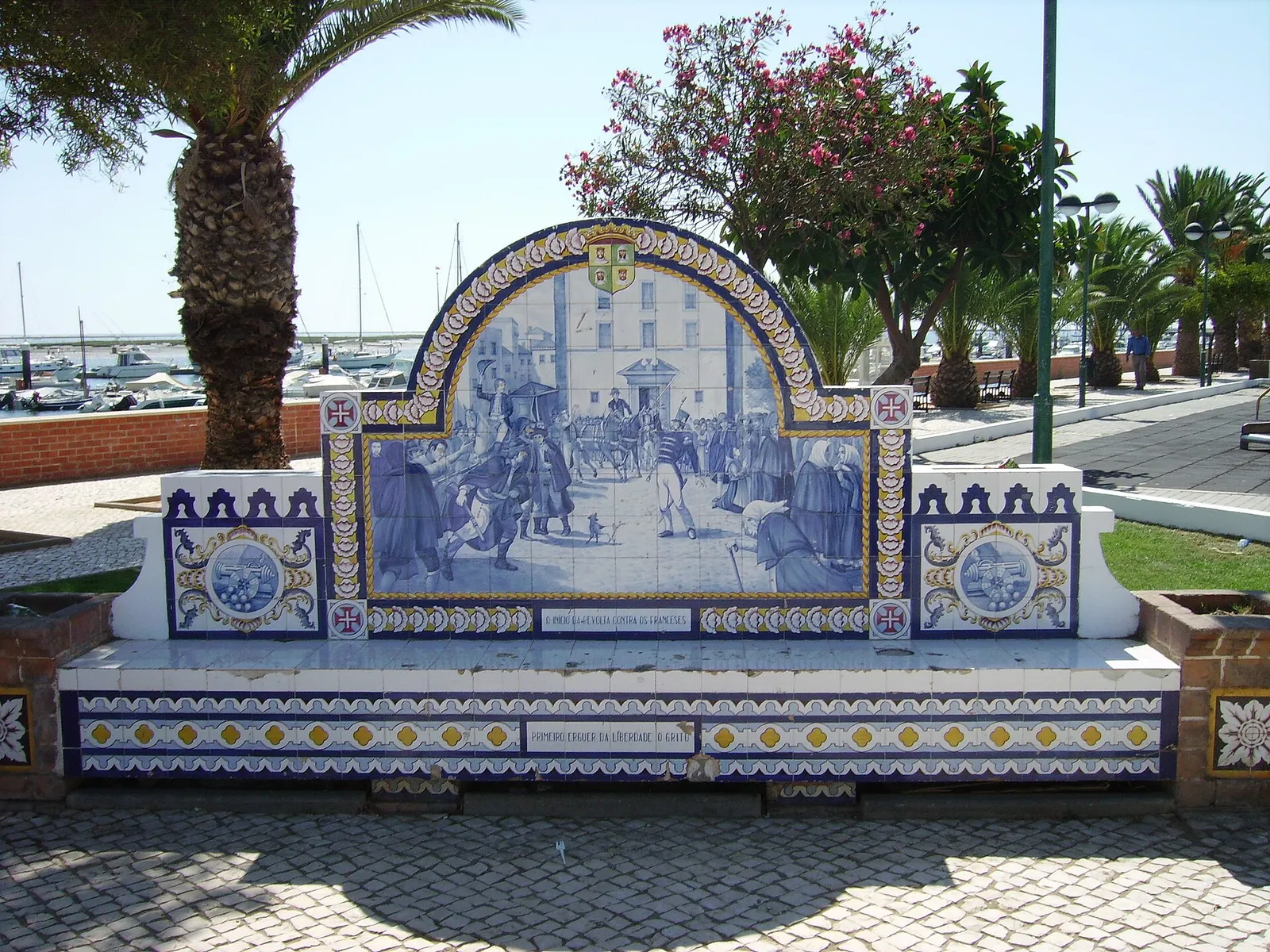
- On Thursday 16 June 1808, the feast of Corpus Christi, Colonel José Lopes de Sousa tore down a French proclamation at the door of the parish church of Olhão, a fishing village in the Algarve, and the villagers took up arms.
- Over the next three days the people of Olhão captured French soldiers on the lagoon and fought them near the bridge of Quelfes; on 19 June Faro rose as well, and the French left the Algarve.
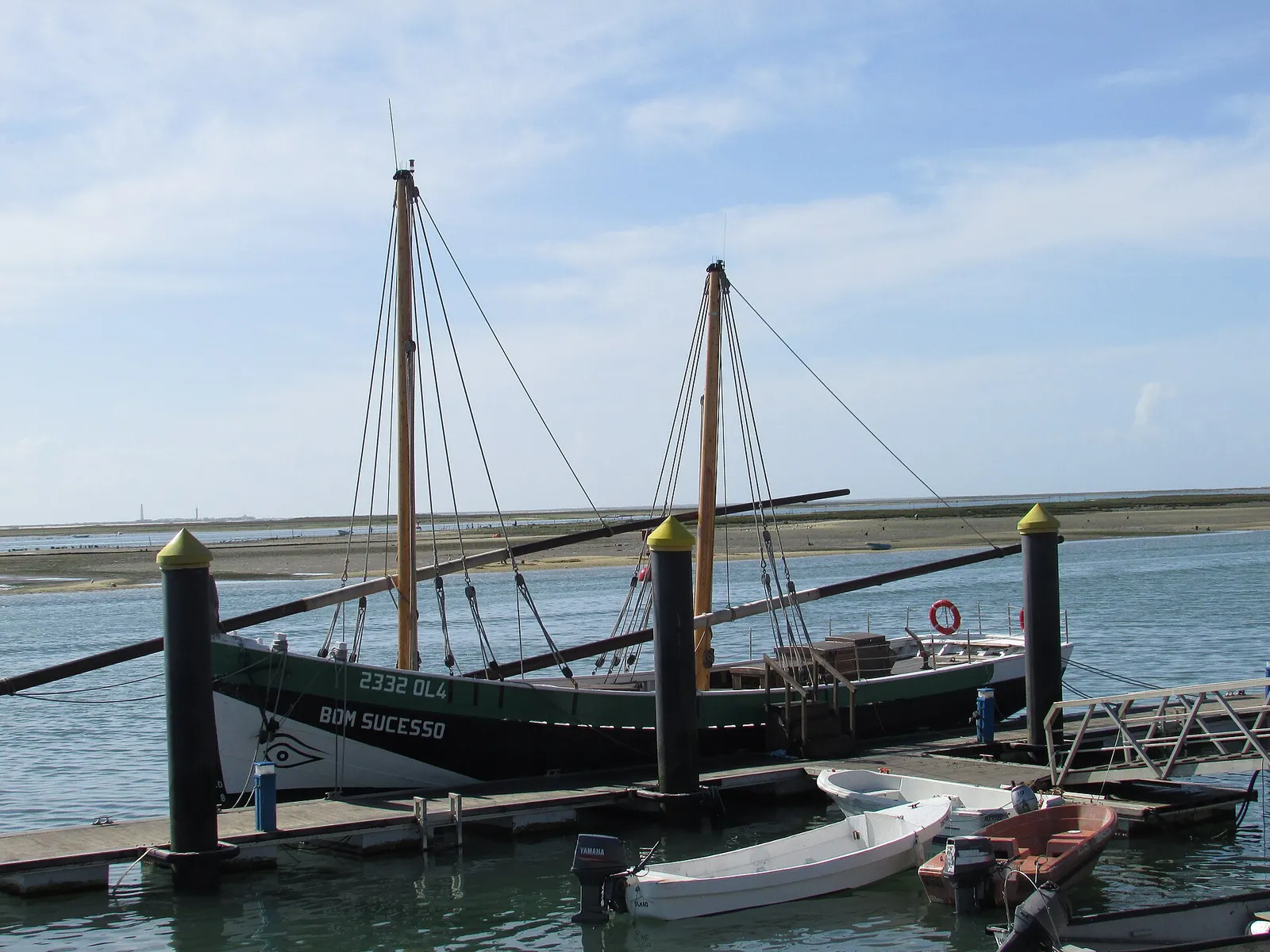
- On 6 July the caique Bom Sucesso, a two-masted fishing boat of about 15 to 20 metres by the historian Alberto Iria's estimate, sailed with 17 Olhão men to carry the news to the Prince Regent, who had moved his court to Rio de Janeiro.
- After a voyage of about eleven weeks, with a stop in Madeira and a landfall near French Cayenne, the boat entered Rio de Janeiro on 22 September 1808, by the usual account.
- By an alvará of 15 November 1808 the prince made the village a town, the Vila do Olhão da Restauração, but it had no council of its own until 1826.
A notice on the church door
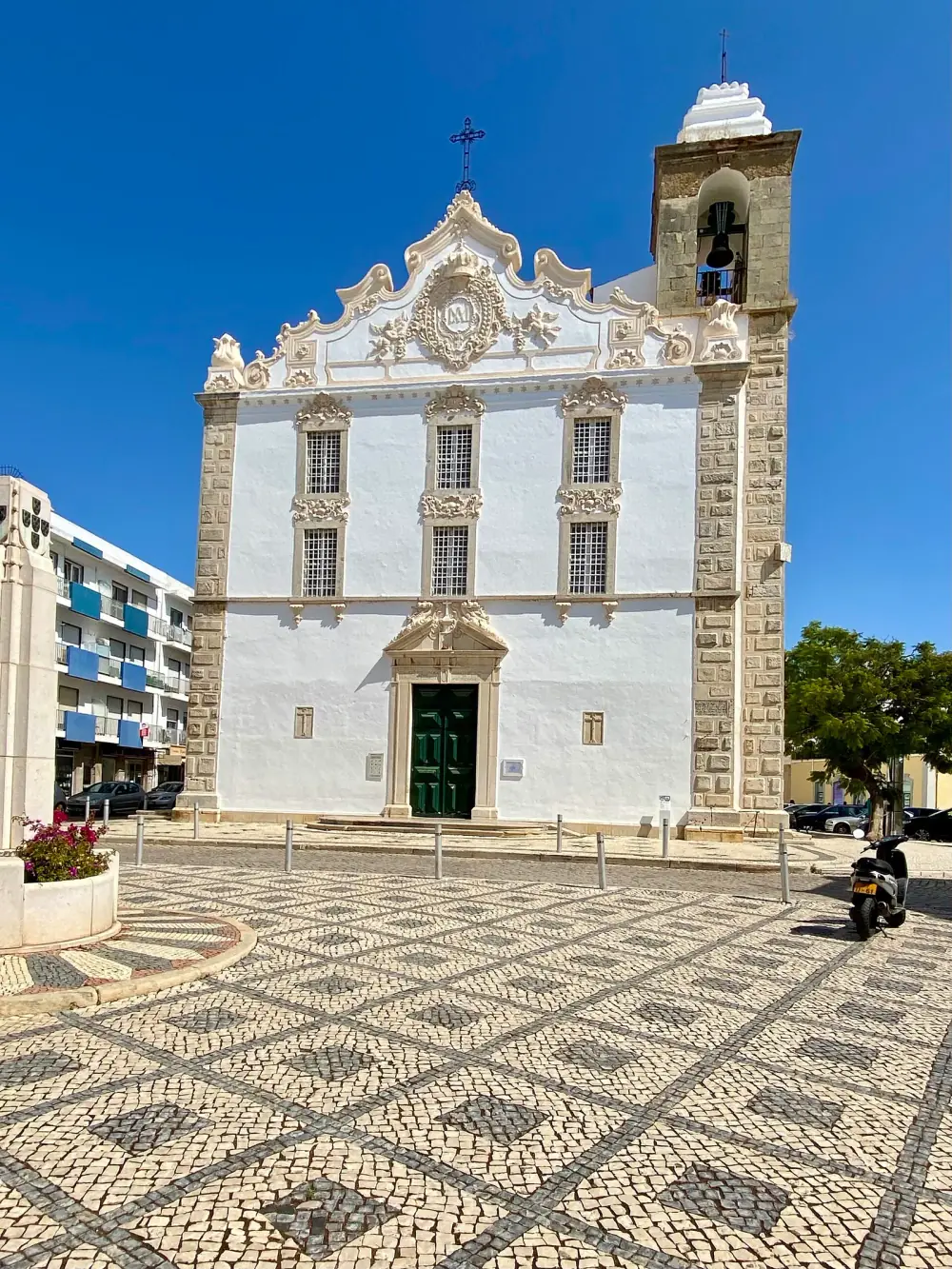
The bells of Nossa Senhora do Rosário were calling Olhão to the half-past-ten Mass. It was Thursday 16 June 1808, the feast of Corpus Christi, one of the great holy days of the Catholic year. In the churchyard a knot of fishermen stood around the main door, where the French had posted a notice. They were trying to read it.
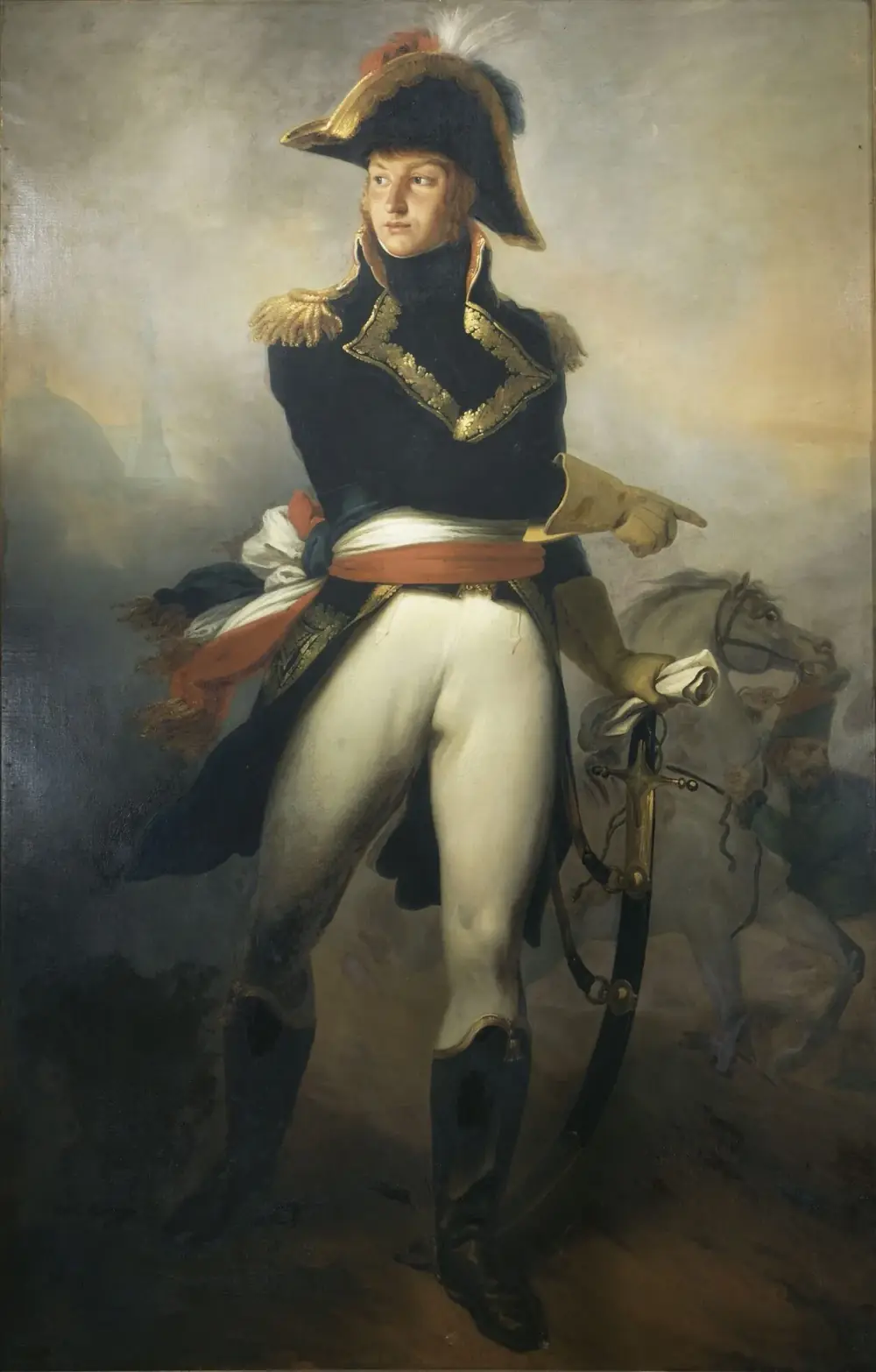
The notice, dated 11 June, was a proclamation from General Junot, the commander of the French army that had occupied Portugal since November. It called on the Portuguese to take up arms on France's side against Spain, which had risen against Napoleon (and, in Lopes de Sousa's telling, against Britain too).
Colonel José Lopes de Sousa, the governor of Vila Real de Santo António, was on his way into Mass with his family. He had come to Olhão some two months earlier to recover from an illness; the fishermen's guild later wrote that he had also refused to serve under Junot.
In his own account, printed later that year, the colonel pushed through the crowd, tore the notice down, ripped it up and trampled it. Then he turned to the men around him and spoke of the state of the country.
His own account gives none of his words. In the retelling by the local historian Antero Nobre, drawn from accounts of the time, he ended with an outburst: the Portuguese, he said, no longer deserved the name and were nothing now.
There was a silence, and then many voices answered that they were still Portuguese and ready to die for religion, prince and country. During Mass the murmuring never stopped, and the priest, António de Matos Malveiro, said the prayer for the king that the French had banned. When Lopes de Sousa came out, a crowd was waiting to make him its leader. The Portuguese flag went up on the church tower and the bells rang the alarm.
A fishing village under French rule
Portugal had been occupied without a fight. When Junot's army marched on Lisbon in November 1807, the Prince Regent João, who ruled for his mentally ill mother, Queen Maria I, sailed for Brazil with the court the day before the French arrived. He left orders that the invaders be received as friends. Junot then disbanded most of the Portuguese army and levied heavy taxes to meet a fine of 100 million francs that Napoleon had imposed on the kingdom.
The Algarve, the southernmost province, was promised under a secret Franco-Spanish treaty to Manuel Godoy, the Spanish chief minister, as a principality. Spanish troops took over its fortresses in January 1808, and on 23 February the French entered Faro under General Maurin, who became governor of the province.
Olhão, just east of Faro on the Ria Formosa lagoon, was not even a town. It was a village of fishermen and coasting skippers inside Faro's municipality, with 4,781 people in 1802 and a lively trade in contraband. Its seamen ran cargoes to Gibraltar and fished off Larache, in Morocco. Their guild, the Compromisso Marítimo, founded in 1765, acted as the village's voice.
Population of Olhão, 1732 to 1880
inhabitants
The village was growing fast before 1808. The fall in 1835 followed the civil war and an outbreak of plague. Figures as given by Antero Nobre; 1802 is the count nearest to the revolt.
Show the data
| Inhabitants | |
|---|---|
| 1732 | 1,016 |
| 1756 | 2,360 |
| 1802 | 4,781 |
| 1826 | 5,900 |
| 1835 | 3,202 |
| 1837 | 5,500 |
| 1862 | 6,720 |
| 1875 | 7,016 |
| 1880 | 9,069 |
Occupation hit the village hard. Writing to the prince in July, the guild said it had been made to pay the French general 88,000 réis a month for his table, so that its men could go fishing, on top of a fifth of their catch. From 14 April a garrison of 20 to 24 French soldiers was billeted in the village at the guild's expense.
In May 1808 Spain rose against Napoleon, who had put his brother Joseph on the Spanish throne, and the Spanish divisions in Portugal broke with their French allies: on 6 June General Belesta arrested the French commander in Porto and marched his men home. Between 9 and 12 June the province of Trás-os-Montes, in the far north-east, took up arms. News of the risings reached Olhão on fishing boats from the Douro.
On 12 June, the eve of the feast of Saint Anthony, João da Rosa, the guild's clerk, uncovered the royal arms of Portugal on the guild's altar in the parish church, which the French had ordered kept covered. That night a Portuguese flag was hoisted on a mast in the village and people cheered the royal family. On the 13th, the boats on the beach were dressed with flags. The garrison did nothing.
Three days on their own
After the Mass of 16 June the village prepared to fight. According to local histories, the French garrison was seized and locked up, and men went out in their boats to fetch two bronze field guns from the battery on the island of Armona. Lopes de Sousa sent João Gomes Pincho to ask a British squadron off the Spanish coast for arms. It had none to spare, so Pincho went on to the Spanish insurgent junta at Ayamonte, across the Guadiana, which gave him and a Tavira militia captain, Sebastião Martins Mestre, 130 muskets.
11 June
Junot's notice
Date of the proclamation calling on the Portuguese to fight Spain; copies are posted at Olhão's church and jail.
12–13 June
Saint Anthony
The royal arms are uncovered in Olhão's church; flags appear on the boats.
16 June, morning
Corpus Christi
Lopes de Sousa tears down the notice; the village takes up arms and rings the alarm.
17 June, night
Muskets from Spain
Martins Mestre and Pincho bring 130 muskets from Ayamonte.
18 June, morning
Barra Nova
Boats from Olhão capture three caiques carrying French troops from Tavira to Faro.
18 June, afternoon
Quelfes and Meia-Légua
Villagers ambush a French column near the old bridge of Quelfes and harry it towards Faro.
19 June, afternoon
Faro rises
The French attack on Olhão is called off; General Maurin is taken prisoner in Faro.
22 June
Last attack
A French force is beaten off from Olhão and retreats north; Faro elects a Supreme Council for the Algarve.
26 June
Beja
The French column leaving the Algarve storms and sacks Beja, in the Alentejo.
Maurin, at Faro, called in his garrisons from Tavira and Vila Real. On the morning of the 18th the Tavira detachment came up the lagoon in three caiques, and boats from Olhão, which the French took for fishermen, boarded them near the Barra Nova channel. Lopes de Sousa counted 77 soldiers, three officers and a quartermaster taken.
That afternoon, 185 grenadiers marching from Vila Real were ambushed near the old bridge at Quelfes and chased across the fields as far as Meia-Légua, on the road to Faro. Lopes de Sousa wrote only that the French hid their losses; Antero Nobre puts them at 18 dead and 12 wounded at the bridge and 25 casualties at Meia-Légua. Lopes de Sousa counted an old man and two boys killed on the Portuguese side.
That night the families who could not fight slept on the boats and on the Ilha do Coco, an island in the lagoon. On the 19th the French marched out of Faro towards Olhão, and Faro rose behind them. At about three in the afternoon a seaman rang the alarm from the tower of the Carmo church, and the people of Faro seized the French general. The British historian Charles Oman wrote that Maurin was ill in bed when he was taken.
Maurin's deputy, Colonel Maransin, had only about 1,200 men and no contact with Lisbon. He pulled out of the Algarve over the hills to Mértola, and on 26 June stormed Beja, which he sacked. On the same day Junot, in Lisbon, issued a proclamation to the rebels of the Minho and the Algarve.
“Every city or village where arms have been taken up against my army, and whose inhabitants fire on French troops, will be given over to plunder and utterly destroyed, and its inhabitants put to the sword.”
Seventeen men in a fishing boat
On 22 June the people of Faro elected an interim government, the Supreme Council of the Algarve, under the Count of Castro Marim. On 2 July a false alarm that the French were coming back sent almost every able-bodied man in Olhão marching to Faro, armed as best they could. Olhão's historians believe this show of loyalty is why the council chose Olhão seamen to carry its news to the prince.
The boat belonged to Miguel do Ó, an Olhão skipper who sat on the council, and he lent it without charge. It was a caique, the lateen-rigged two-master of the Algarve coast, used for fishing and smuggling in the Mediterranean and off Morocco, never for ocean crossings. Iria gives it 15 to 20 metres in length, and three or four in beam.
The council's safe-conduct, dated 6 July, names the boat as the Bom Sucesso, “by nickname Drago”, sailing as the council's maritime courier to Rio de Janeiro under its master, Manuel Martins Garrocho. Iria read the nickname as the master's in 1941 and as the boat's in 1985. In the mail were letters from the council, the Bishop of the Algarve, the town council of Faro and the guild of Olhão. The boat also carried a prisoner, Mateus Garcia, with his wife and two small children, to be set free in Madeira.
The crew heard Mass in the parish church, the same church where the rising had begun three weeks earlier, and sailed from the beaches of the Ria Formosa on 6 July. Seventeen Olhão men were aboard. The navigation fell to the pilot, Manuel de Oliveira Nobre.
- Boat
- Caique Bom Sucesso, owned by Miguel do Ó; the nickname Drago appears on its safe-conduct
- Size
- About 15 to 20 metres long and 3 to 4 metres wide, by Iria's estimate
- Crew from Olhão
- 17: master Manuel Martins Garrocho, pilot Manuel de Oliveira Nobre and 15 seamen
- Joined at Madeira
- Francisco Domingos Machado, an apprentice pilot
- Sailed
- 6 July 1808, after Mass in Olhão's parish church
- Funchal
- Reached about eight days later; left on or about 16 July
- Arrived
- Rio de Janeiro, 22 September 1808 by the usual account
They reached Funchal about eight days later. The governor of Madeira, Pedro Fagundes Bacelar de Antas e Meneses, handed over his own letters for the court, and the caique took on water and stores for the crossing. The pilot also took on a young apprentice, Francisco Domingos Machado, in case he himself fell ill or died. Machado had sailed from Lisbon to Macau in the galera Voadora; Nobre remarks that in the end he was of no help.
From Madeira the caique headed out into the Atlantic, probably on 16 July. The pilot later told the poet José Agostinho de Macedo that he did not know the Brazil route and had left his charts in Lisbon. He steered by a very uncertain reckoning, and his main care was to watch the direction of the ocean currents and set his course by them.
Through storms and calms, by the account of the local heritage association APOS, the trade winds and currents carried the boat south and west to the coast of South America. The first land they sighted was near Cayenne, in French Guiana, about five degrees north of the equator: enemy territory, and far north of where they meant to be.
They put back out to sea and worked south along the coast against the current and the wind, APOS supposes with long stretches under oars. Only past Cape Santo Agostinho, near Recife, did they find fair winds again. They put in at Pernambuco after more than a month and a half between sea and sky, then followed the Brazilian coast south to Rio de Janeiro.
The crossing from Madeira took a little over two months. Later tellings add a violent storm and escapes from French ships, privateers and slavers. Nobre took these from the Brazilian writer Jorge Rodrigues, who also wrote that the pilot had no instrument or chart of any kind.
| Name | Role |
|---|---|
| Manuel Martins Garrocho | Master |
| Manuel de Oliveira Nobre | Pilot |
| António da Cruz Charrão | Seaman |
| António Pereira Gémeo | Seaman |
| António dos Santos Palma | Seaman |
| Domingos do Ó Borrego | Seaman |
| Domingos de Sousa | Seaman |
| Francisco Lourenço | Seaman |
| João Domingos Lopes | Seaman |
| João do Moinho | Seaman |
| Joaquim do Ó | Seaman; first clerk of Olhão's town council in 1826 |
| Joaquim Ribeiro | Seaman |
| José da Cruz | Seaman |
| José da Cruz Charrão | Seaman |
| José Pires | Seaman |
| Manuel de Oliveira | Seaman |
| Pedro Nínil | Seaman |
| Francisco Domingos Machado | Apprentice pilot, joined at Funchal; not from Olhão |
Names as recovered by Alberto Iria from the archives and printed by him in 1941 and 1985; spellings vary slightly between his lists (Gémio or Gémeo, João de Munho or do Moinho, Domingues or Domingos).
A caique in Guanabara Bay
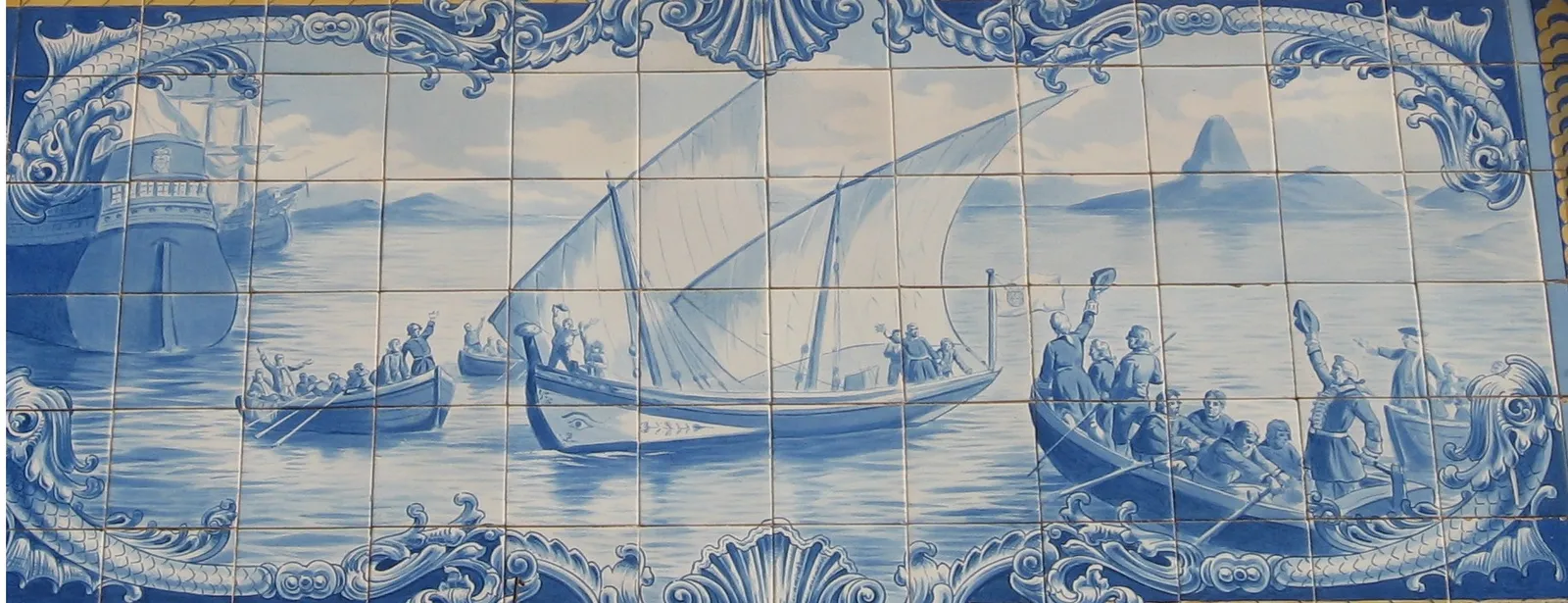
The court had been in Rio for just over six months. On 16 June, the day Olhão rose, the prince and his court had walked through Rio's streets in the Corpus Christi procession, the first time the New World had seen a European sovereign do so, and the Royal Chapel had been inaugurated. Now a small sail flying the Portuguese arms was seen coming into the bay, recognised from afar as a boat from the coast of Portugal.
A court record copied by the historian Ângelo Pereira describes the landing: a large number of Algarve men wearing a red ribbon tied on the left arm, announcing that the Algarve had been freed. They were taken to the prince, who received them warmly and read their letters. The record leaves the day blank, and dates a Council of State on the news to 10.30 on the morning of 21 September, a day before the date usually given for the arrival. The receipt for the reward, by contrast, is dated 22 September.
“Portuguese daring, an incredible thing! fearlessly crosses an immense gulf in a small and fragile caique and comes to bring the sovereign glad news.”
In 1839 the writer João Baptista da Silva Lopes recalled that the city's people, Brazilian and foreign, marvelled that men who had never sailed a hundred leagues from the coast of Portugal had crossed the ocean in so frail a craft. Many foreigners, the English above all, took down the caique's plan and dimensions.
The prince paid the men 1,200,000 réis in alvíssaras, the customary reward for good news. Padre Perereca says he gave the boat's commander the habit of the Order of Christ and the rank of first lieutenant in the navy, bought the caique and sent the crew home in a safer vessel. Nobre puts the price at 6,000 cruzados and says the new boat was a yacht.
Six days after the caique, the brig São José Americano arrived from Porto with fuller news: the north of Portugal had risen too and set up its own junta. On 30 September the royal family heard a Te Deum in the Royal Chapel, and the city was lit up for three nights.
| Vessel | From | Sailed | Reached Rio | News |
|---|---|---|---|---|
| Caique Bom Sucesso | Faro and Olhão | 6 July | 22 September | The Algarve freed; the revolt began at Olhão |
| Brig São José Americano | Porto | Not known | 28 September | Risings in Porto, the Minho, Trás-os-Montes and parts of Beira |
| Yacht Nossa Senhora do Monte do Carmo | Faro | 8 August | Not known; perhaps November or December | Fuller report and an envoy from the Algarve council |
| Frigate Andorinha | Lisbon | 20 October | By 21 December | Official news of the restoration of the kingdom |
Dates from Alberto Iria's research. Padre Perereca says the brig from Porto arrived six days after the caique, which fits 22 and 28 September.
On 15 November the prince signed an alvará, a royal charter, raising the Lugar de Olhão to a town with the name Vila do Olhão da Restauração, the Town of Olhão of the Restoration. It gave the town the privileges of the most notable towns of the kingdom and allowed its people to wear a medal with the letter O and the words “Long live the Restoration and the Prince Regent our Lord”.
“services performed with such spirit, honour and valour that they were the first signal for restoring the Monarchy”
On 21 December the Count of Castro Marim was made Marquis of Olhão. Writing to him on 2 January 1809, the prince praised the rising of the Algarve, “beginning in Olhão and continuing in Faro”, and confirmed the council's measures, citing its report of 5 July.
Legend and record
The story was told as an epic from the start. In 1809 José Agostinho de Macedo, a priest and polemicist, published a poem, O Novo Argonauta, which claimed the boat's feat put Columbus and Amerigo Vespucci in the shade. A play, Restauração dos Algarves, ou os Heróis de Faro e Olhão, was printed in Lisbon the same year. Some of the telling has outrun the documents.
The crew is usually given as 17, and 17 men did leave Olhão; with the apprentice pilot taken on at Madeira, there were 18 aboard for the crossing. They sailed under a master and a pilot, as a working crew of Olhão seamen. Popular versions say they had no map or instrument at all. The pilot's own words, through Macedo, are that he had left his charts behind; a local association's account speaks of a compass and a rough map.
The numbers from June are just as unsettled. The guild's letter of 2 July speaks of 58 prisoners; Lopes de Sousa's count for the Barra Nova alone is 81, and Nobre and APOS put the prisoners held in Olhão by the 18th at about a hundred. Oman dates the rising in Faro to the 18th, while the letters written in the Algarve that summer say the 19th.
A town that had to wait
The title of town changed less than Olhão hoped. News of the charter reached Olhão about two months after it was signed, Nobre says, brought by the crew of the Bom Sucesso on their return from Brazil. The village celebrated, but the charter gave it no municipal territory, no council and no judge. Olhão remained a parish under Faro. On 4 March 1809 Faro's council opposed the village's petition for neighbouring parishes, the title of Loyal and a monument inscribed simply “Loyalty”, and the petition got no answer.
Only on 20 April 1826 did a new alvará give the town its own territory, a town council and a judge. The first council met on 28 August 1826, and its first clerk was Joaquim do Ó, one of the crew of the Bom Sucesso, whom João VI had named to the post years earlier as a reward for the voyage.
Olhão still dates itself from that June morning. The 16th of June is the municipal holiday and Dia da Cidade, with flags raised at the town hall and a tribute to the heroes of 1808 in the Largo da Restauração, the square in front of the parish church.
FAQs
What happened in Olhão on 16 June 1808?
On the feast of Corpus Christi, Colonel José Lopes de Sousa tore down a proclamation by General Junot at the door of Olhão's parish church and the fishing village rose against the French occupation. Within three days Faro had risen too and the French left the Algarve.
What was the Bom Sucesso?
A caique, a two-masted lateen-rigged fishing boat of the Algarve, owned by Miguel do Ó. On 6 July 1808 it sailed with 17 Olhão men to carry the news of the Algarve's liberation to the Prince Regent in Rio de Janeiro, arriving on 22 September by the usual account.
Why is Olhão called Olhão da Restauração?
An alvará signed in Rio on 15 November 1808 raised the village to a town named the Vila do Olhão da Restauração, the Town of Olhão of the Restoration, as a reward for the revolt it had begun on 16 June.
Was Olhão the first place in Portugal to rise against the French?
Not quite. It was the first open rising in the Algarve and the first the court in Rio heard about. In the north, Porto had briefly acclaimed a junta on 6 June and Trás-os-Montes took up arms between 9 and 12 June.
Can you see the Bom Sucesso today?
The original was last recorded in Rio's naval arsenal in 1841 and is lost. A replica built for Olhão's town council in 2002 is moored on the waterfront near the municipal markets.
On the timeline
Open the timelineNearby moments from invasions, brazil and the liberal wars (1807–1851).
Two months after fleeing Napoleon's invasion, Prince Regent João signs a royal charter in Salvador da Bahia opening Brazil's ports to trade with friendly nations. The measure ends the colonial monopoly that obliged Brazil to trade only through Portugal and sets it on the road to independence.
The Portuguese Royal Family, having fled Lisbon to escape Napoleon's invasion, arrives in Rio de Janeiro aboard the royal fleet. Prince Regent João would govern the Portuguese Empire from Brazil for the next 13 years.
In Porto, the Spanish general Domingo Belestá, on hearing of the uprising against Napoleon in Spain, arrests the French governor, General Quesnel, and marches his 6,000 troops back to Galicia. The coup emboldens the Portuguese: revolt soon spreads across the north, and a Junta Provisional do Supremo Governo do Reino is formed in Porto under its Bishop, beginning organised resistance in the Peninsular War.
The Olhão uprising of 1808
Fishermen of Olhão, in the Algarve, rise against the French occupation on the feast of Corpus Christi; three days later Faro follows and the French soon abandon the province. On 6 July, 17 Olhão men sail the caique 'Bom Sucesso' for Rio de Janeiro to carry the news to the Portuguese court.
French troops under General Loison crush a Portuguese-Spanish force outside Évora and then brutally sack the city. Loison, who had lost an arm, was known as 'o Maneta' ('the one-handed'), and popular tradition ties his name to the Portuguese expression 'ir para o Maneta', to be done for.
An Anglo-Portuguese force under Sir Arthur Wellesley, the future Duke of Wellington, defeats General Delaborde's French troops at the Battle of Roliça — the first battle fought by the British army in the Peninsular War, on Portuguese soil north of Lisbon.
At the Battle of Vimeiro, Wellesley's Anglo-Portuguese army defeats General Junot's French forces, a victory that leads directly to the French evacuation of Portugal under the Convention of Sintra.
Coming up in history
All long reads 18 June 1946Goa Revolution Day: Lohia and Menezes defy the ban in Margão, 1946
 19 June 1911Green, red and A Portuguesa: the Republic fixes its flag and anthem, 1911
 20 June 1924Seventy-four days to Macau: the 1924 flight of the Pátria
 21 June 1813Vitoria, 21 June 1813: the Portuguese army that helped drive Joseph out of Spain
16 sources
Archives, scholarship and reporting this article was checked against.
- 1
Declaração da Revolução principiada no dia 16 de Junho de 1808 no Algarve, e Lugar de Olhão, pelo governador da Praça de Vila Real de Santo António José Lopes de Sousa (Iria, Doc. 1)APOS transcription by Edgar Cavaco and António Paula Brito de Pina, from the 1808 print in the Biblioteca Nacional de Portugal
- 2
- 3
- 4
- 5
Memorias para servir á historia do reino do Brazil, vol. I (Luiz Gonçalves dos Santos, “Padre Perereca”)Impressão Régia, Lisbon, 1825 (written in Rio de Janeiro in 1821); Internet Archive
- 6
A History of the Peninsular War, vol. I: 1807–1809, from the Treaty of Fontainebleau to the Battle of Corunna (Charles Oman)Clarendon Press, Oxford, 1902; Project Gutenberg edition
- 7
- 8
- 9
- 10
- 11
- 12
- 13
- 14
Terra de Olhão (glossary entry)Arquivo Nacional (Brazil), O Arquivo Nacional e a História Luso-Brasileira
- 15
Olhão comemora 208 anos de expulsão das tropas napoleónicasPostal do Algarve, June 2016
- 16
Image credits
- The replica of the caique Bom Sucesso, built for the town council in 2002, moored in the port of Olhão in February 2017, with the barrier islands of the Ria Formosa behind. Kolforn, CC BY-SA 4.0, via Wikimedia Commons.
- The outbreak of the revolt on 16 June 1808, on a tiled bench on Olhão's waterfront, photographed in 2007. The bench reproduces azulejos designed by Jorge Colaço for a town garden that was later demolished. Olhadura, Public domain, via Wikimedia Commons.
- Jean-Andoche Junot (1771 to 1813), commander of the French army that occupied Portugal in 1807 and 1808, painted by Vincent-Nicolas Raverat in 1834; the painting is at the Palace of Versailles. Vincent-Nicolas Raverat, Public domain, via Wikimedia Commons.
- The parish church of Nossa Senhora do Rosário in Olhão, at whose door Lopes de Sousa tore down Junot's notice on 16 June 1808. Photographed in 2020. Pedro S Bello, CC BY-SA 4.0, via Wikimedia Commons.
- The caique arriving at Rio de Janeiro, with the Sugarloaf on the horizon, in an azulejo panel in Olhão after Jorge Colaço's designs. Photographed in 2007. Olhadura, Public domain, via Wikimedia Commons.