

Amélia Rey Colaço, the actress who ran Portugal's national theatre
A pianist's daughter who made her debut barefoot, she and her husband founded a company in 1921. From 1929 until the revolution of 1974 it held the Teatro Nacional D. Maria II, and she bargained with the censors all the way.
At a glance
- Amélia Rey Colaço was born in Lisbon on 2 March 1898, the daughter of the Tangier-born pianist Alexandre Rey Colaço and Alice Lafourcade Schmidt, who was born in Chile.
- After studying in Berlin and with the actor Augusto Rosa, she made her debut on 17 November 1917 at the Teatro República, now the São Luiz, playing the barefoot heroine of Marianela.
- With her husband, the actor Robles Monteiro, she founded the Companhia Rey Colaço-Robles Monteiro, which first performed on 18 June 1921 at the Teatro de São Carlos.
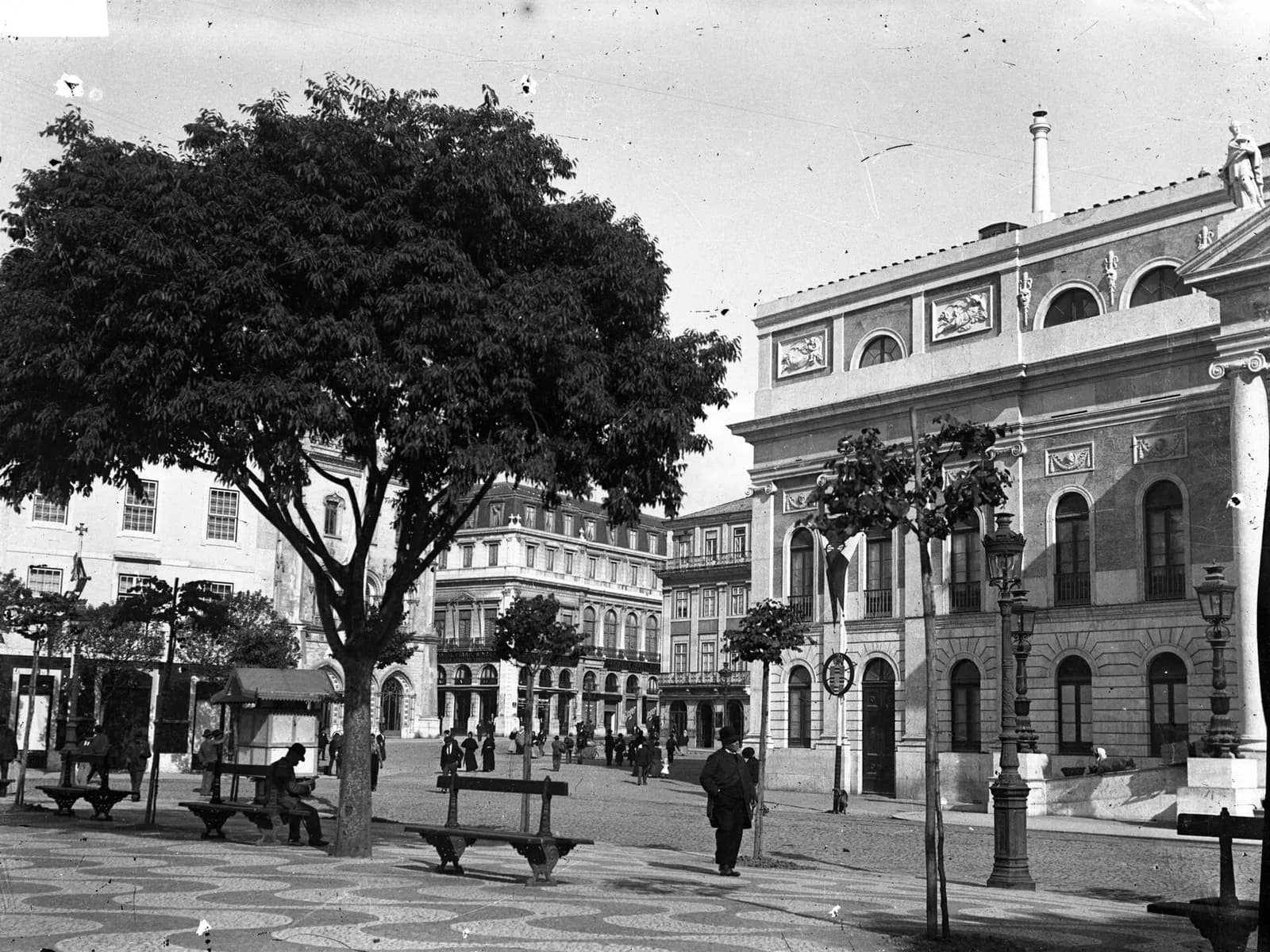
- The company won the concession of the national theatre on 4 December 1929 and held it until 1974, playing in the building on the Rossio until the fire of 1964.
- She closed the company after the revolution of 25 April 1974, played her last great role in 1985 and died in Lisbon on 8 July 1990, aged 92.
A barefoot debut
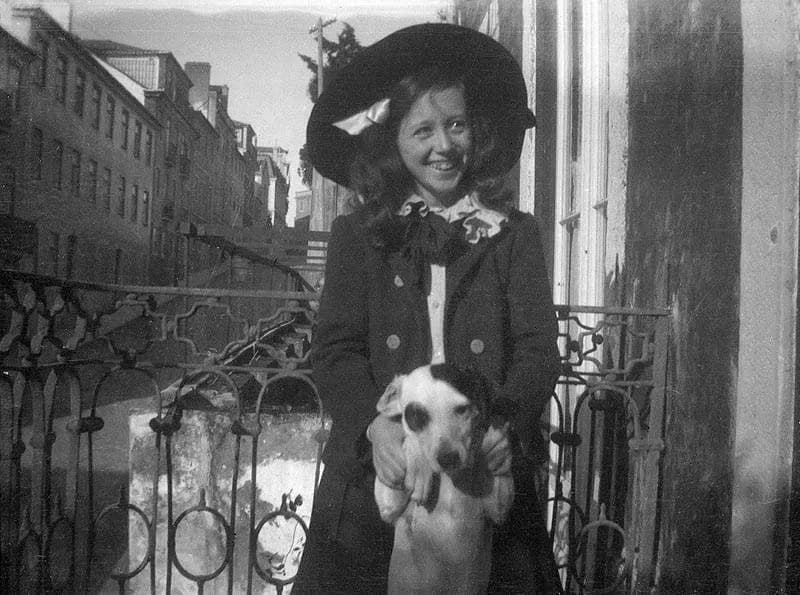
On 17 November 1917 a nineteen-year-old walked onto the stage of the Teatro República in Lisbon with bare feet. Actresses of the time wore stockings to suggest bare skin. Amélia Rey Colaço had worked on her part, the ragged village girl Marianela, with photographs her sister Alice took of her in their parents' garden, and she went without.
The play, a Spanish adaptation of a novel by Benito Pérez Galdós, had been chosen by her father. He wanted his daughter to prove herself in a part with no feathers or finery to hide behind: “a little girl of the people, barefoot, ragged, even somewhat misshapen, but with a great soul”, as he put it. The whole production was built around her, which almost never happened to a beginner.
The critics were won over. The newspaper República called her “born an actress, as one is born a musician”. Just over two weeks later the illustrated weekly Ilustração Portuguesa put her face on its cover.
“Mrs D. Amélia dos Reis Colaço, whose auspicious debut at the República was a true theatrical event.”
That debut began a career of almost seven decades. For 45 of those years the company she founded with her husband held the concession of Portugal's national theatre, the longest in the theatre's history, and most of that time fell under the Estado Novo dictatorship.
A house full of music
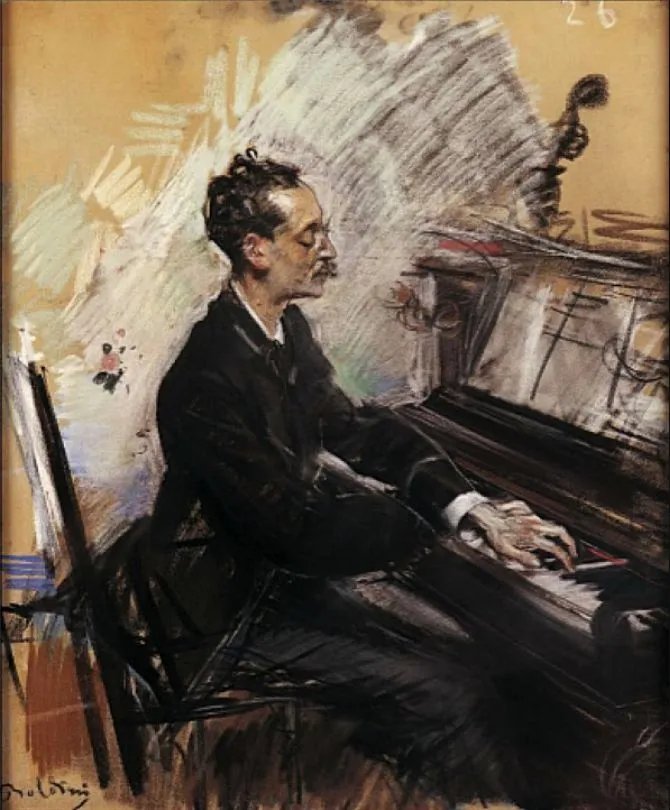
Amélia Schmidt Lafourcade Rey Colaço was born in Lisbon on 2 March 1898. Her father, Alexandre Rey Colaço, was a concert pianist born in Tangier in 1854 to a Portuguese mother and a French father. He had trained in Madrid, Paris and Berlin, and he was piano teacher to Manuel II, Portugal's last king.
Her mother, Alice Lafourcade Schmidt, was born in Chile in 1865 and grew up in Berlin, where her own mother, known as Madame Kirsinger, kept a salon for musicians and artists. Alexandre met Alice there. They settled in Lisbon, and their house in the Rua Ribeiro Sanches became a salon in its turn, visited by the poet Afonso Lopes Vieira, the architect Raul Lino, the composer Vianna da Mota and the actors João and Augusto Rosa.
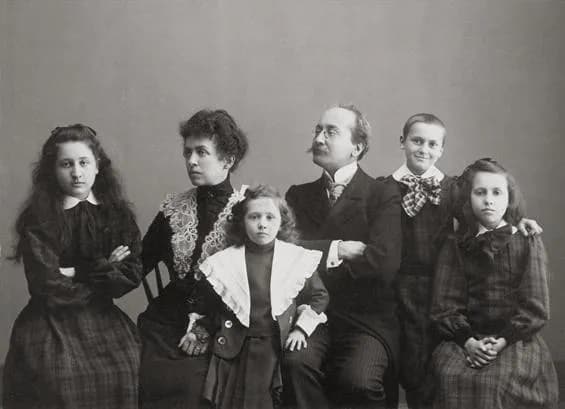
All four daughters learned music. At about thirteen Amélia went to Berlin to study the violin, travelling with her sister Maria, who had a state grant to study the piano. They lived with their grandmother, on whose advice Amélia went to Max Reinhardt's productions at the Deutsches Theater. Those evenings decided her to become an actress.
For a girl of the Lisbon upper class this was an odd choice. Music was a respectable art; the stage was not. Her father, by her own account, reacted with “astonishment” and “perplexity” but never “scandal”. He asked his friend Augusto Rosa, a star of the national theatre in the 1880s and 1890s, to judge whether she had talent.
Rosa took her on. He was strict, and he trained out of her the drawing-room style of reciting that young ladies learned at parties. She called him her “mestre”, her master, for the rest of her life.
From Marianela to Zilda
Playing opposite her in Marianela was another of Rosa's pupils, Felisberto Robles Monteiro, born in 1888 in São Vicente da Beira, near Castelo Branco. He had studied at a seminary for the priesthood until the Bishop of Beja, after seeing him in a school play, advised him to follow his talent for the stage. He courted Amélia; she was cool towards him at first.
Augusto Rosa died in 1918 and the República's company broke up. Amélia and Robles Monteiro both joined Lucinda Simões's company at the Teatro do Ginásio. Her contract let her turn down any part that might harm her reputation, and her father insisted that a maid go with her to rehearsals.
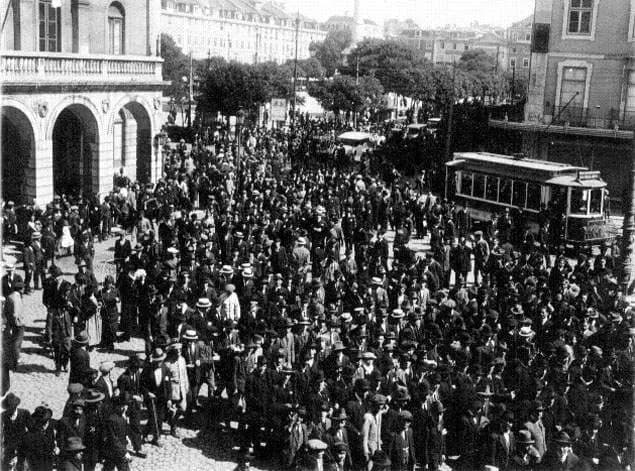
The clause was soon tested. In the comedy Divorçons her parents refused to let her sit on Robles Monteiro's lap, which only fed the gossip about the two of them. She called it her “only theatrical scandal” and left for Madrid, where she took a theatre course at the Institución Libre de Enseñanza, the liberal school her father had once attended.
She came back in 1920, engaged to Robles Monteiro, and they married that December. Both joined the Sociedade Artística, the society of actors then running the national theatre on the Rossio. Since the republic of 1910 it had been called the Teatro Nacional Almeida Garrett; it took back the name of Queen Maria II in 1939.
There, in 1921, she created the title role in Zilda, the first play by Alfredo Cortez to reach the stage. Critics argued about the play's morals but agreed about her acting, and it ran for 42 performances. It also deepened the quarrels inside the society.
A company of their own
The couple soon left to start their own company. They borrowed sixteen contos de réis and recruited António Pinheiro, the director who had staged Zilda. The Companhia Rey Colaço-Robles Monteiro gave its first performance on 18 June 1921 at the Teatro Nacional de São Carlos, Lisbon's opera house, with Zilda.
The work was split. Robles Monteiro ran rehearsals and the business with a reputation for rigour; Amélia Rey Colaço made the sets and costumes an attraction in themselves, sometimes borrowing paintings and crystal from her parents' house. They chose the plays together, she said, though a caricature of 1926 shows her at the oars of a boat with a cautious Robles Monteiro as her passenger.
For eight years they played in rented theatres. They staged light comedies to pay the bills and riskier work in between: O Lodo, Cortez's drama of prostitution in the Mouraria, in which she played a prostitute; Oscar Wilde's Salomé in 1926, when it was still banned on English stages; and a Portuguese cycle of Gil Vicente and António Ferreira's Castro at the Trindade in 1928.
Plays staged by the Rey Colaço-Robles Monteiro company, 1921 to 1929
plays
In its first eight years the company staged 94 plays. The 22 world premieres are new Portuguese plays and are part of the 38 Portuguese plays, not additional to them. Figures from Joana d'Eça Leal (2017).
Show the data
| Plays | |
|---|---|
| Foreign plays | 56 |
| Portuguese plays | 38 |
| Of which world premieres | 22 |
The young company was built on established stars such as Ângela Pinto and Palmira Bastos, who rejoined for good in 1931, but it also gave first parts to beginners. Maria Lalande made her debut there at fourteen and stayed sixteen years. Later came João Villaret, Paiva Raposo, Lourdes Norberto, Eunice Muñoz and João Perry.
Taking on the national theatre
In 1929 the state put the national theatre out to tender again. The terms were harsh. The building was run down, and the winner had to carry out within weeks the repairs that the state had left undone, then rewire the house and rebuild the auditorium over the following year. The Rey Colaço-Robles Monteiro company was the only bidder.
| The company had to | Detail |
|---|---|
| Maintain the building | All upkeep passed from the state to the concessionaire |
| Pay the state | 10% of gross box-office takings, plus the usual levies for the Cofre de Subsídios e Socorros, a relief fund |
| Pay the government commissioner | The salary of the official the government placed in the theatre |
| Perform often | At least 200 performances a season |
| Stage new Portuguese work | Two new Portuguese plays each season |
| Serve the public | A classical play of the sixteenth to eighteenth centuries, a charity performance for public assistance, and one popular performance a month |
| Ask permission | The commissioner approved the repertoire and the cast at the start of each season, and any change during it needed higher approval |
Summarised from Joana d'Eça Leal (2017), who draws on Gustavo de Matos Sequeira's history of the theatre (1955).
The concession was granted on 4 December 1929. Nineteen days later, on 23 December, the theatre reopened after a refit that cost the company 800 contos (800,000 escudos). On the first night actors were still carrying in furniture lent by friends while Robles Monteiro, already in wig and Louis XVI costume, set the stage with sweat running down his face. The boxes were cleaned with the audience waiting in the foyer.
The press praised the restored house, and about eighteen months later the government eased the financial terms. The state reopened the tender only twice before 1974, in 1952 and 1958, and both times kept the company. In 1958 its only rival was the Teatro d'Arte de Lisboa.
At the Rossio the company revived the Portuguese classics, above all Gil Vicente, whose plays had been left to drama students, as well as Camões, Garrett and António José da Silva, and put on Schiller, Molière, Goldoni and Shakespeare. Few living Portuguese playwrights went unstaged, among them Alfredo Cortez, José Régio, Luís de Sttau Monteiro, Bernardo Santareno and Luiz Francisco Rebello. In the open air it played A Midsummer Night's Dream in Palhavã park in 1941 and Castro in front of the monastery at Alcobaça, to 6,000 people.
Playing to the censors
As the national company it had a censor of its own. Other companies sent their plays to the state's censorship commission. At the Nacional the final word lay with the government commissioner, usually a man of letters, who could cut or ban a play.
That could work either way. The commissioner let the company open A Locomotiva in 1968, a play the censorship commission later banned when it was submitted for a run in Porto. In the other direction, José Régio's A Salvação do Mundo stayed banned at the Nacional from 1954, although students played it in 1956 and another company staged it at the São Luiz in 1971.
Amélia Rey Colaço was conservative in her habits and kept her politics to herself, as her father had done. She used charm and connections. When the commissioner banned Friedrich Dürrenmatt's The Visit, she went to Cardinal Cerejeira, the Patriarch of Lisbon, argued for the play's morals and won his support. It became one of the company's big successes.
Other battles she lost. She asked again and again to stage Brecht's Mother Courage and Luís de Sttau Monteiro's Felizmente há luar!, and was refused each time. O Motim, a play about a revolt in eighteenth-century Porto, was banned too, along with a large share of the modern plays she wanted.
Politics reached the cast as well. In 1946 her daughter Mariana Rey Monteiro made her debut as Antigone, with Maria Barroso, a young actress from a family of opposition democrats, as her sister Ismene. Barroso later played in the company's staging of Lorca's The House of Bernarda Alba.
The political police, the PIDE, questioned Barroso for days over her opposition work, and in the end a dismayed Amélia Rey Colaço told her she could not stay. Barroso's foundation dates the ban to 1948; a 2025 study puts it in 1946. Amélia Rey Colaço tried several times to bring her back, and the two remained close friends.
Some modern American drama did get through. On 3 May 1963 the company opened Tennessee Williams's A Streetcar Named Desire at the D. Maria II, in a translation by António Quadros, directed by Henriette Morineau, with Mariana Rey Monteiro, Varela Silva, José de Castro and Lourdes Norberto. The historian Eugénia Vasques found no file on it in the surviving archive of the censorship commission.
- Born
- 2 March 1898, Lisbon
- Debut
- 17 November 1917, Teatro República, in Marianela
- Company founded
- 1921, first performance 18 June at the São Carlos
- National theatre concession
- 4 December 1929 to 1974
- Partner
- Robles Monteiro (1888-1958), her husband from December 1920
- Last great role
- 1985, aged 87, in José Régio's El-Rei Sebastião
- Died
- 8 July 1990, Lisbon, aged 92
Losing the house
Robles Monteiro fell ill in 1958 and died that November. Their daughter Mariana, widowed the same year, stood by her mother. Amélia Rey Colaço kept the company going, handing much of the directing to Pedro Lemos and the design to Lucien Donnat, who had made almost all its sets and costumes since the 1940s, and took over the management herself with a hired administrator.
In the early hours of 2 December 1964, during the run of Macbeth, fire gutted the theatre on the Rossio, and the company lost its whole wardrobe and its sets. That night has its own article on this site. After 35 years in the building, she missed above all her dressing room.
“It was there, with the theatre completely empty, that I, forgetting that I was in the centre of the city, made my plans, kept my notebooks, worked out the casting. [...] Those boards were everything to me.”
The government kept the contract alive. Two weeks after the fire the company played Macbeth again at the Coliseu dos Recreios, in everyday clothes against black curtains. To keep up the concession she sublet the Teatro Avenida and spent the insurance money on doing it up. Leal puts that money at 1,200 contos; Nuno Costa Moura, in a history of the Avenida, says about 1,000 contos went on the work, almost all of a payout that fell short of what the fire had destroyed.
The Avenida reopened on 6 February 1965 with O Motim, a play about the 1757 revolt in Porto over the wine trade, which was already in rehearsal when the Rossio burned. President Américo Thomaz attended. The audience cheered and saw the 1960s in it, and within days the play was banned and the police shut the doors.
In December 1967 the Avenida burned too. The company moved on to the Capitólio, then shared the Trindade with an operetta company. It kept staging Gil Vicente and new foreign writers, balanced by light shows to pay the bills, but audiences booed more and more. Leal suggests the anger fell on the company perhaps because it could not be aimed at the government.
After 25 April
Early in 1974 she took the company to the São Luiz, the old Teatro República where she had made her debut. On 22 April she wrote to President Thomaz that it faced insolvency. Three days later the Carnation Revolution overthrew the regime.
She tried to revive O Motim as an act of justice to its author, but threats of boycotts and of damage to the theatre made her give up. She closed the company, 53 years after it began, with debts she could not pay. One account dates its dissolution to a month after the revolution; the RTP documentary says it was formally wound up only in 1988.
In the new Portugal she was cast aside as a symbol of the old regime. Leal writes that she could find no work in the theatre and could not pay off her loans. In 1976 the secretary of state for culture, the poet David Mourão-Ferreira, asked the cabinet in vain to help her.
“Despite the inevitable concessions that circumstances demanded, it managed to put on performances of great artistic quality.”
Lisbon's street-names office records that from 1978 to 1980 she directed a Companhia de Teatro Popular at the São Luiz, appointed by a later secretary of state for culture, António Reis. Leal does not mention it.
Help also came from Manuela Eanes and from her old friend Maria Barroso, by then the wife of the Socialist leader Mário Soares, who found her work. She backed the creation of the Museu do Teatro, set up in Lisbon in 1982, and gave it her books. In 1985, at 87, she played her last great role, Queen Catarina in José Régio's El-Rei Sebastião. She auctioned her possessions to leave her daughter some security and died in Lisbon on 8 July 1990, aged 92.
2 March 1898
Born in Lisbon
c. 1911
Goes to Berlin to study the violin and sees Max Reinhardt's productions
17 November 1917
Debut in Marianela at the Teatro República
1918
Augusto Rosa dies; she joins Lucinda Simões's company
1920
Returns from Madrid, joins the Sociedade Artística and marries Robles Monteiro
1921
Creates Zilda; the new company's first performance at the São Carlos on 18 June
4 December 1929
The company wins the concession of the national theatre
November 1958
Robles Monteiro dies
2 December 1964
Fire destroys the theatre on the Rossio
6 February 1965
The company reopens the Teatro Avenida with O Motim, soon banned
1974
Moves to the São Luiz; closes the company after 25 April
1978-1980
Directs a Companhia de Teatro Popular at the São Luiz, by the city's account
1985
Last great role, in El-Rei Sebastião
8 July 1990
Dies in Lisbon
How long, and why it still matters
Her company's time at the national theatre is counted in different ways, and the round numbers in circulation do not agree. The difference lies in whether you count the years in the building or the years of the contract.
| Figure | What it counts | Given by |
|---|---|---|
| 35 years | In the building on the Rossio, from the concession of 1929 to the fire of 1964 | Joana d'Eça Leal (2017); the theatre's own history gives 1929 to 1964 |
| 45 years | The concession, from 1929 to its end with the revolution of 1974, including the years in other halls | Artcena's Dictionnaire des théâtres du monde; Barlavento on the D. Maria II's exhibition (2023) |
| 46 years | Not explained | RTP documentary page; Gulbenkian Art Library; Time Out Lisboa (2018) |
The company existed for 53 years, from 1921 to 1974. Before 1929 its leaders had played at the national theatre only as members of the Sociedade Artística, in 1920 and 1921.
Her standing is easier to measure in people. Her company launched young actors such as Eunice Muñoz, Carmen Dolores, Maria Barroso, João Perry, Rogério Paulo and Ruy de Carvalho. When Mother Courage was finally staged in 1986, as a co-production between the national theatre and the Novo Grupo/Teatro Aberto, the title role went to Eunice Muñoz.
Her reputation has recovered. A month after her death Lisbon named a street in Benfica after her. In 2018 the national theatre marked her 120th birthday with an exhibition, simply titled Amélia, and RTP has shown a 2020 documentary about her, A Senhora Dona Amélia. Leal's verdict is that someone more openly political could hardly have kept the national theatre under the dictatorship, and that her diplomacy broke some of the rules, though not as many as one might wish.
FAQs
Who was Amélia Rey Colaço?
A Portuguese actress, director and theatre manager, born in Lisbon on 2 March 1898 and died there on 8 July 1990. With her husband Robles Monteiro she founded the Companhia Rey Colaço-Robles Monteiro in 1921, which ran Portugal's national theatre from 1929 to 1974.
When and where did she make her debut?
On 17 November 1917 at the Teatro República in Lisbon, now the São Luiz, as the title character of Marianela, an adaptation of a novel by Benito Pérez Galdós. She played the part barefoot.
How long was her company at the Teatro Nacional D. Maria II?
It won the concession on 4 December 1929 and kept it until 1974, about 45 years. It played in the building on the Rossio for 35 of them, until the fire of 2 December 1964, and then in other Lisbon theatres. The figure of 46 years often quoted is not explained by the sources that give it.
Did the censors stop her staging Brecht?
Yes. She asked repeatedly to stage Mother Courage and was refused, as she was for Luís de Sttau Monteiro's Felizmente há luar!. Mother Courage was staged only in 1986, as a co-production between the national theatre and the Novo Grupo/Teatro Aberto, with her former pupil Eunice Muñoz in the lead.
Why did her company end in 1974?
It was already near insolvency after the fires of 1964 and 1967. After the revolution of 25 April 1974 she was seen as a figure of the old regime, and threats of boycotts led her to close the company that year. One account dates its dissolution to a month after the revolution; RTP says it was formally wound up in 1988.
On the timeline
Open the timelineNearby moments from regeneration and the last kings (1851–1910).
Gungunhana, the last ruler of the Gaza empire in southern Mozambique, lands in Lisbon as a prisoner after his capture by Mouzinho de Albuquerque at Chaimite. Jeering crowds line the streets as open carriages take him from the Arsenal to the fort of Monsanto; he was later exiled to Terceira in the Azores, where he died in 1906.
Death of José Tomás de Sousa Martins, the Lisbon physician revered for treating the poor and for promoting the Serra da Estrela as a refuge for tuberculosis patients. His statue on the Campo dos Mártires da Pátria is still surrounded by candles, flowers and marble ex-voto plaques from people who credit him with cures.
The architect José Ângelo Cottinelli Telmo is born in Lisbon. He designed the modernist Sul e Sueste ferry station on the Terreiro do Paço, directed the hit comedy 'A Canção de Lisboa' and was chief architect of the 1940 Exposição do Mundo Português. As architect to the regime's prison-building commission from 1934, he is also credited with plans for the Tarrafal prison camp in Cape Verde.
Amélia Rey Colaço
Birth in Lisbon of Amélia Rey Colaço, a towering figure of 20th-century Portuguese theatre. With her husband Robles Monteiro she ran a company that held the concession of the Teatro Nacional D. Maria II from 1929 to 1974, staging Lorca and Tennessee Williams despite the censors and training actors such as Eunice Muñoz.
Birth of novelist José Maria Ferreira de Castro in Ossela, near Oliveira de Azeméis. Emigrating to Brazil at the age of 12, he spent almost four years on an Amazon rubber estate on the Madeira river, the experience behind his novel 'A Selva' (1930). A pioneer of Portuguese social realism, he was nominated seven times for the Nobel Prize.
António Aleixo is born in Vila Real de Santo António. A barely literate weaver's son who sold lottery tickets and sang his verses at Algarve fairs, he became one of Portugal's best-loved popular poets, his ironic four-line 'quadras' written down and published by a friend, Joaquim de Magalhães.
In a secret declaration signed in London by Lord Salisbury and Portugal's minister Luís de Soveral, Britain and Portugal reaffirm their ancient alliance, including the treaties of 1642 and 1661. Portugal undertakes to stop arms reaching the Boers through its territory and not to declare neutrality, while Britain's old pledge to defend Portugal's colonies is restated.
Coming up in history
All long reads 4 March 1493Storm-driven into the Tagus: Columbus and João II, March 1493
 5 March 1811Masséna's retreat from Santarém: the French leave Portugal, March 1811
 6 March 1921The Portuguese Communist Party is founded in Lisbon: 6 March 1921
 7 March 19577 March 1957: RTP begins regular television broadcasts in Portugal
18 sources
Archives, scholarship and reporting this article was checked against.
- 1
Da vida pelo teatro: a atriz e empresária Amélia Rey Colaço (Joana d'Eça Leal)Historiæ, vol. 8, no. 2, pp. 219-237, Universidade Federal do Rio Grande, 2017
- 2
HistóriaTeatro Nacional D. Maria II
- 3A Senhora Dona Amélia (documentary, 2020)RTP
- 4
Cover portrait of Amélia Rey Colaço, Ilustração Portuguesa, II série, no. 615, 3 December 1917Hemeroteca Digital, Câmara Municipal de Lisboa
- 5
A Nova Antígona de Hermínia Silva: paródia sociopolítica (1946 e 1976) (Nuno Simões Rodrigues and Catarina Madeira)Forma Breve, no. 21, Universidade de Aveiro, 2025
- 6
Tennessee Williams e a Censura em Portugal (1956-1972) (Eugénia Vasques)Repositório Científico do Instituto Politécnico de Lisboa
- 7
Teatro Avenida: hoje e sempre, fora dos eixos (Nuno Costa Moura)Sinais de Cena 2, Centro de Estudos de Teatro, Universidade de Lisboa, 2004
- 8
«Quem és tu? – um teatro nacional a olhar para o país» inaugura hoje em FaroBarlavento, 24 November 2023
- 9
A senhora Amélia Rey Colaço numa rua de BenficaToponímia de Lisboa (Câmara Municipal de Lisboa), 9 July 2014
- 10
Exposição que homenageia Amélia Rey Colaço inaugura esta sexta-feiraTime Out Lisboa, 1 March 2018
- 11
Zilda: a arte dramática de Alfredo Cortez (Maria Manuela Borges, master's dissertation)Repositório Aberto, Universidade Aberta, 2013
- 12
O Estado Novo (1933-1974)Assembleia da República
- 13
Photos with history: ActressesBiblioteca de Arte, Fundação Calouste Gulbenkian
- 14
Biografia de Maria BarrosoFundação Mário Soares e Maria Barroso
- 15
Maria Barroso, uma protagonista nos bastidoresVisão, 7 July 2015
- 16
- 17
Colaço, Amélia Rey (Carlos Porto)Dictionnaire des théâtres du monde, Bordas, 2008 (Artcena)
- 18
Macbeth defies curse as Lisbon's Teatro D. Maria II reopensEuronews, 18 September 2026
Image credits
- The side of the Teatro Nacional on the Rossio in Lisbon, right, with the Rossio station and the Hotel Avenida Palace across Praça Dom João da Câmara, in a photograph taken before 1919. Amélia Rey Colaço first acted there in 1920, and in 1929 her company took the building over. José Artur Leitão Bárcia, Public domain, via Wikimedia Commons.
- The Rey Colaço family on 19 March 1905. From left: Maria, her mother Alice, Amélia in the white collar, Alexandre, Jeanne and Alice. Amélia had turned seven that month. Anonymous, Public domain, via Wikimedia Commons.
- Amélia Rey Colaço as a girl, holding her dog Sidi on the balcony of the family house at 28 Rua Ribeiro Sanches, Lisbon, in the 1900s or 1910s. Unknown author, Public domain, via Wikimedia Commons.
- Giovanni Boldini's portrait of the pianist Alexandre Rey Colaço, Amélia's father, at the piano, painted in about 1885. Giovanni Boldini, Public domain, via Wikimedia Commons.
- Crowds at the funeral of the actor Augusto Rosa, Amélia Rey Colaço's teacher, in Praça Dom João da Câmara beside the Rossio in May 1918. Joshua Benoliel, Public domain, via Wikimedia Commons.