

A leap-day charter: Lisbon gets a public library, 29 February 1796
A charter signed at Queluz on a leap day turned the book store of a defunct censorship board into a library open to the public. It has moved twice since, and by law copies of most publications printed in Portugal still go there.
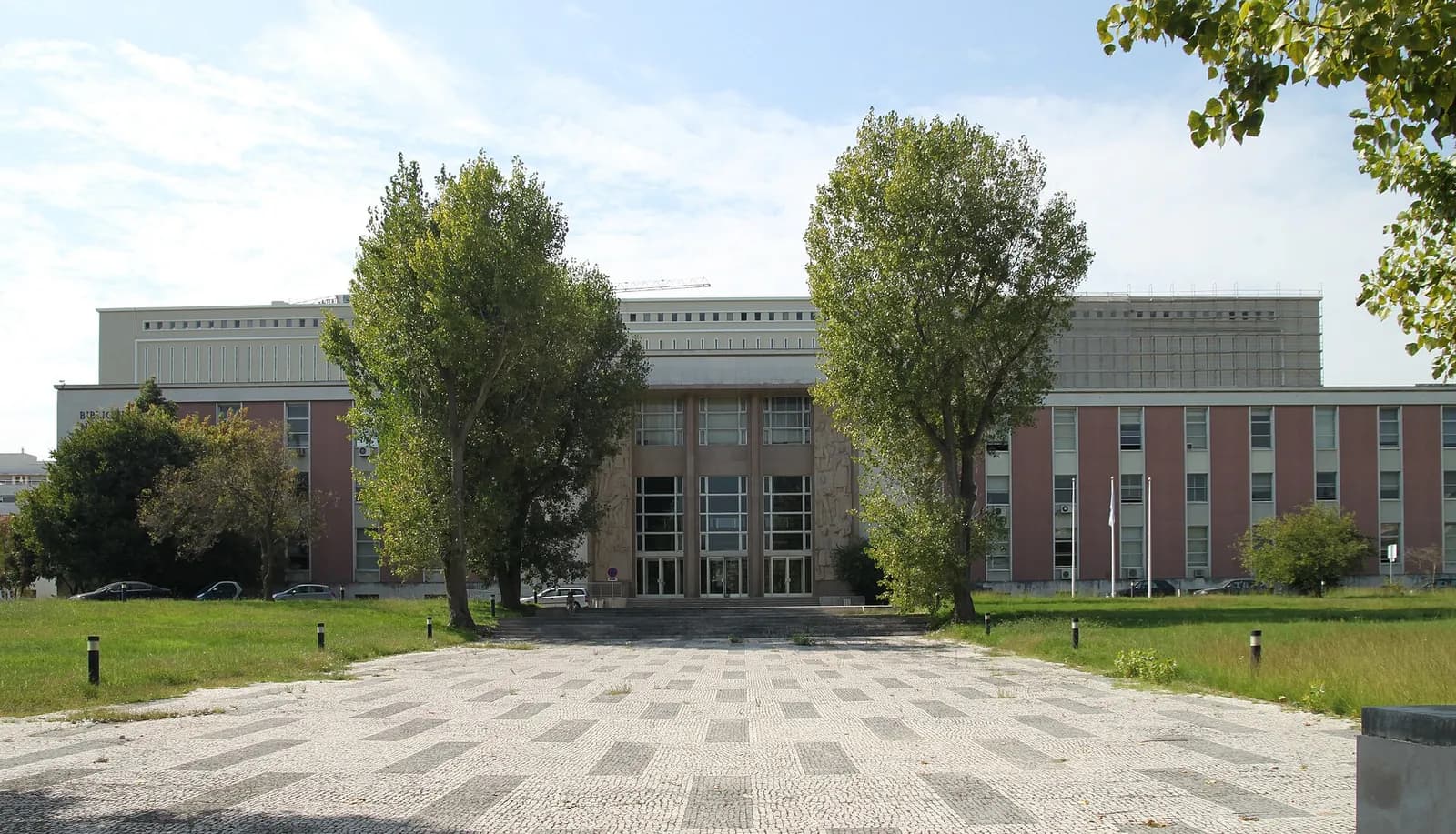
At a glance
- A royal charter dated 29 February 1796, issued in Queen Maria I's name and signed by her son Prince João at the Palace of Queluz, created the Real Biblioteca Pública da Corte in Lisbon.
- Its first stock was the library of the abolished royal censorship board, which had absorbed the libraries of the Jesuits after their expulsion in 1759; its first chief librarian was the Coimbra canon lawyer António Ribeiro dos Santos.
- The library opened to readers on 13 May 1797, in 16 rooms of the western pavilion of Terreiro do Paço, the riverside square now called Praça do Comércio.
- In 1836 it became the Biblioteca Nacional de Lisboa and moved into the former convent of São Francisco in the Chiado, swollen by books from the convents closed in 1834.
- The present building on Campo Grande opened on 10 April 1969. In 2025 the library received 362,431 items under legal deposit, the rule that printers must hand over copies of what they print.
A charter signed at Queluz
On Monday 29 February 1796, an extra day in a leap year, a royal charter was signed at the palace of Queluz, just north-west of Lisbon. It spoke in the first person of the queen. “Eu a Rainha”, it began: “I the Queen make known to those who see this charter.” The signature at the foot was not hers. It read simply “Principe”.
Queen Maria I had suffered a mental collapse in February 1792, and since then her son João had carried out the royal functions in her name. He took the formal title of prince regent only in 1799. So it was the prince who put his name to the alvará, a royal charter with the force of law, while the text spoke as the queen. Below it the Marquis of Ponte de Lima, the queen's chief steward and minister of the royal Treasury, added his.
The document ordered that a public, well-stocked library be set up in Lisbon at once, under the name Real Bibliotheca Pública da Corte, the Royal Public Library of the Court. It was registered at the Treasury secretariat on 5 April and published through the royal chancery on 9 April 1796, and it ordered the original to be kept in the royal archive in the Torre do Tombo.
“I order that in My Court and City of Lisbon there be erected and established at once a Public and well-provided Library, which shall be called the Royal Public Library of the Court ... And I wish the special and proper use of this Library to be that it shall be perpetually devoted to the good of Letters and the continual benefit of My Subjects.”
That library is today's Biblioteca Nacional de Portugal, the country's largest library and the keeper of its printed heritage. It was not built from nothing. Its first shelves came from an institution set up to keep books away from readers: the royal board of censors.
Censors, Jesuit books and a bishop's plan
Until 1768 every book published in Portugal had to be passed by three authorities: the bishop, the Inquisition and the Desembargo do Paço, the king's high court for matters of grace. A law of 5 April 1768, under King José I's chief minister, the future Marquis of Pombal, merged the three into a single crown body, the Real Mesa Censória, staffed by royal censors.
The board soon had a large library of its own. Pombal had expelled the Jesuits in 1759, and their colleges' libraries, more than 60,000 volumes, were placed in its care. It also ran the Subsídio Literário, a new tax raised to pay for schools, and the first use its president set for the money was buying books for a public library.
That president was Frei Manuel do Cenáculo, a Franciscan theologian who became Bishop of Beja in 1770 and led the board until 1777. As a young professor he had travelled to Rome in 1750 and visited the great libraries of Italy, France and Spain. Under him the board set out to found a public library to rank with the best in Europe, open to “the curious and the learned”, which would also serve the censors at their work.
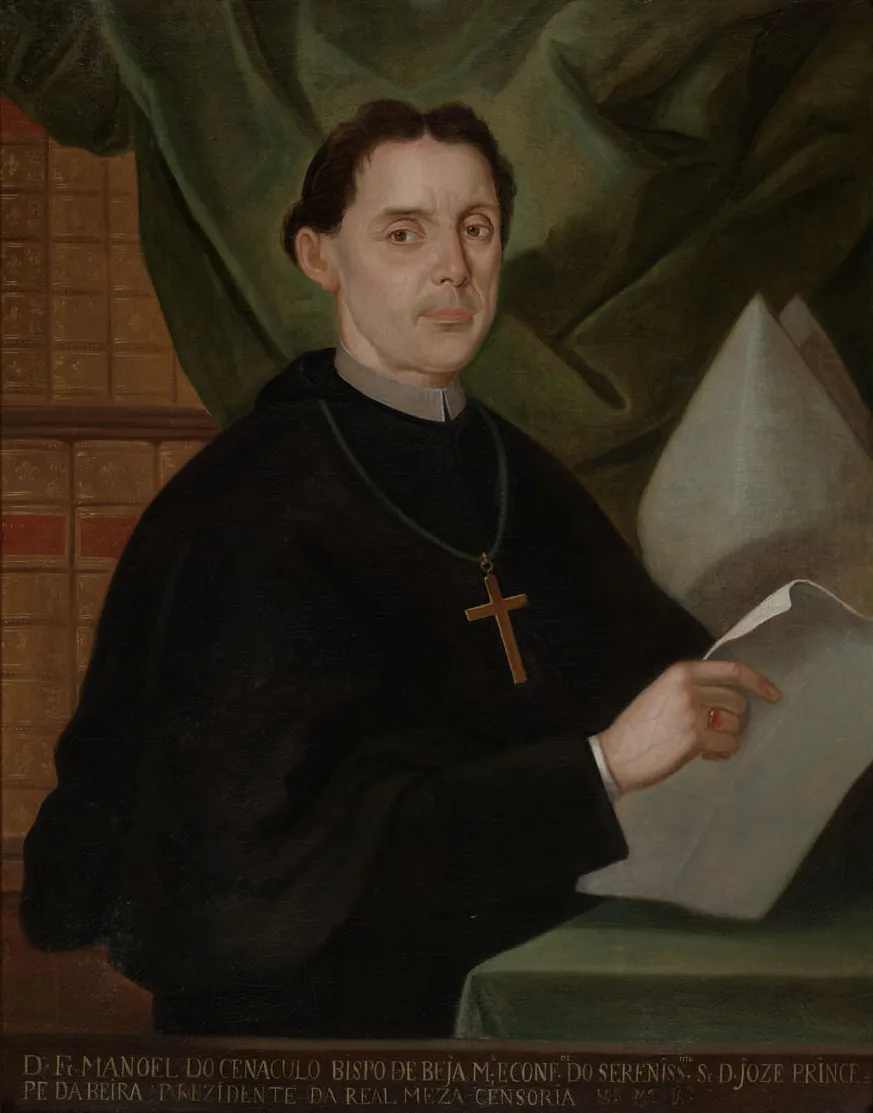
The plan stalled when José I died in February 1777 and Pombal fell. Cenáculo withdrew to his diocese in Beja. On 21 June 1787 Maria I replaced the board with a new one, the Real Mesa da Comissão Geral sobre o Exame e Censura dos Livros, which gave the Church back a say in censorship. Its rulings drew sharp criticism, and a law of 17 December 1794 abolished it as “useless and ineffective” and restored the old threefold system.
That left the censors' library without an owner. The government asked António Ribeiro dos Santos, a former librarian of the University of Coimbra, to report on it. His report of 5 January 1796 painted a grim picture of neglect, but counted more than 50,000 volumes, among them, he wrote, excellent and costly books and valuable collections that made “a great fund” for a royal library at court. Cleaning, sorting and cataloguing began at once.
What the charter ordered
The alvará has nine short articles. The second makes the books of the abolished board “the first fund” of the new library and assigns it part of the Subsídio Literário for its growth and running costs. The third places it directly under the Crown, answerable only to the Treasury secretariat, and declares it part of the Crown's public property, never to be broken up “by any title or pretext”. The fifth says that until a building of its own was put up, it was to stay in the rooms the board had used.
The fourth article made the minister of the Treasury, who was then Ponte de Lima, Inspector General of the library. The sixth listed the staff, from the chief librarian down to a doorkeeper. Six bibliographers were to hand out books, manuscripts and other objects to members of the public who wished “to see and consult” them.
| Post | Number | Duties set out in the charter |
|---|---|---|
| Bibliotecário maior (chief librarian) | 1 | General administration of the library |
| Segundo bibliotecário (second librarian) | 1 | Day-to-day running; deputises for the chief librarian |
| Guarda-mor (chief keeper) | 1 | Custody, security, shelving and cleaning; furniture and papers |
| Oficiais escriturários (clerks) | 2 | Catalogues, accounts and copying manuscripts |
| Oficiais bibliógrafos (bibliographers) | 6 | Serve the public in the reading rooms |
| Contínuos (attendants) | 6 | Help the bibliographers and watch the rooms |
| Porteiro (doorkeeper) | 1 | Guards the main door |
| Agente (agent) | 1 | Handles the library's outside business |
Nineteen posts in all. Under article 7, candidates for every post below the chief librarian were to be proposed by him to the Treasury minister for royal approval.
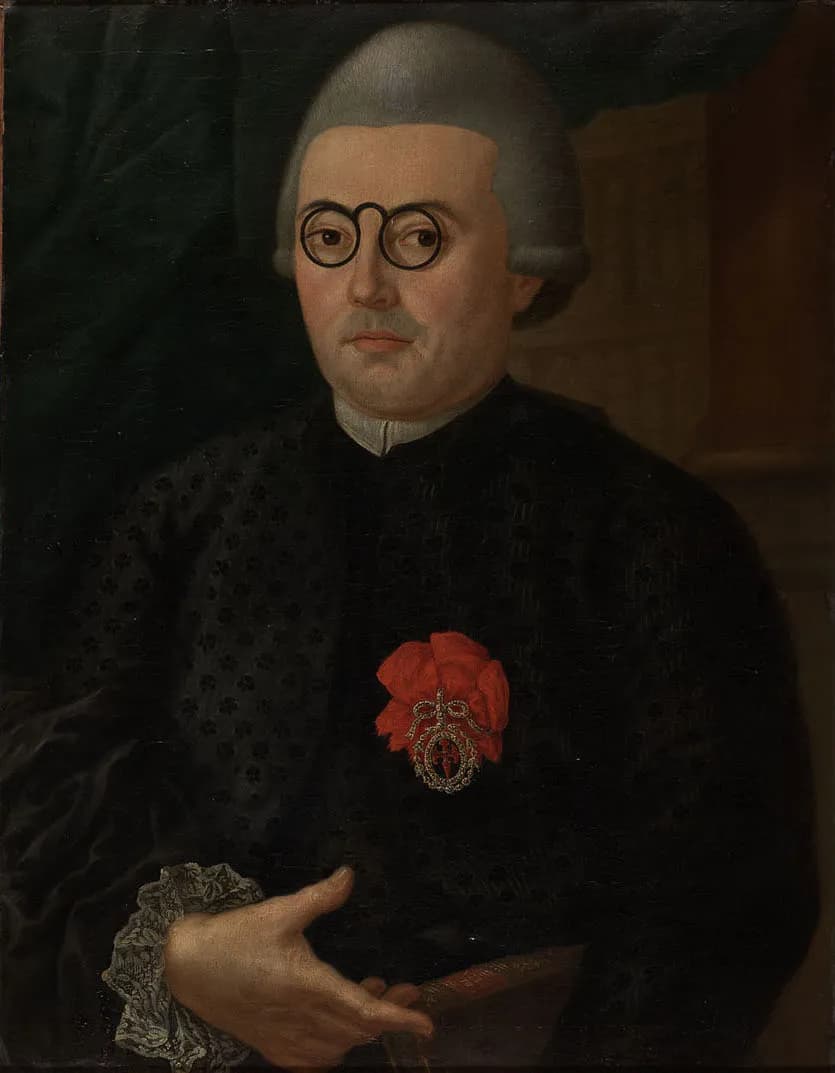
Ribeiro dos Santos became the first chief librarian. The library's own account gives his term as 1796 to 1816; the Dicionário de Historiadores Portugueses biography dates his title of chief librarian to 1804. Born in Porto in 1745, he spent his teens in Rio de Janeiro, studied canon law at Coimbra and became the university's librarian in 1777. He was also a royal censor, a historian of the sacred literature of Portugal's Jews, and an Arcadian poet who wrote as Elpino Duriense.
Opening the doors, 13 May 1797
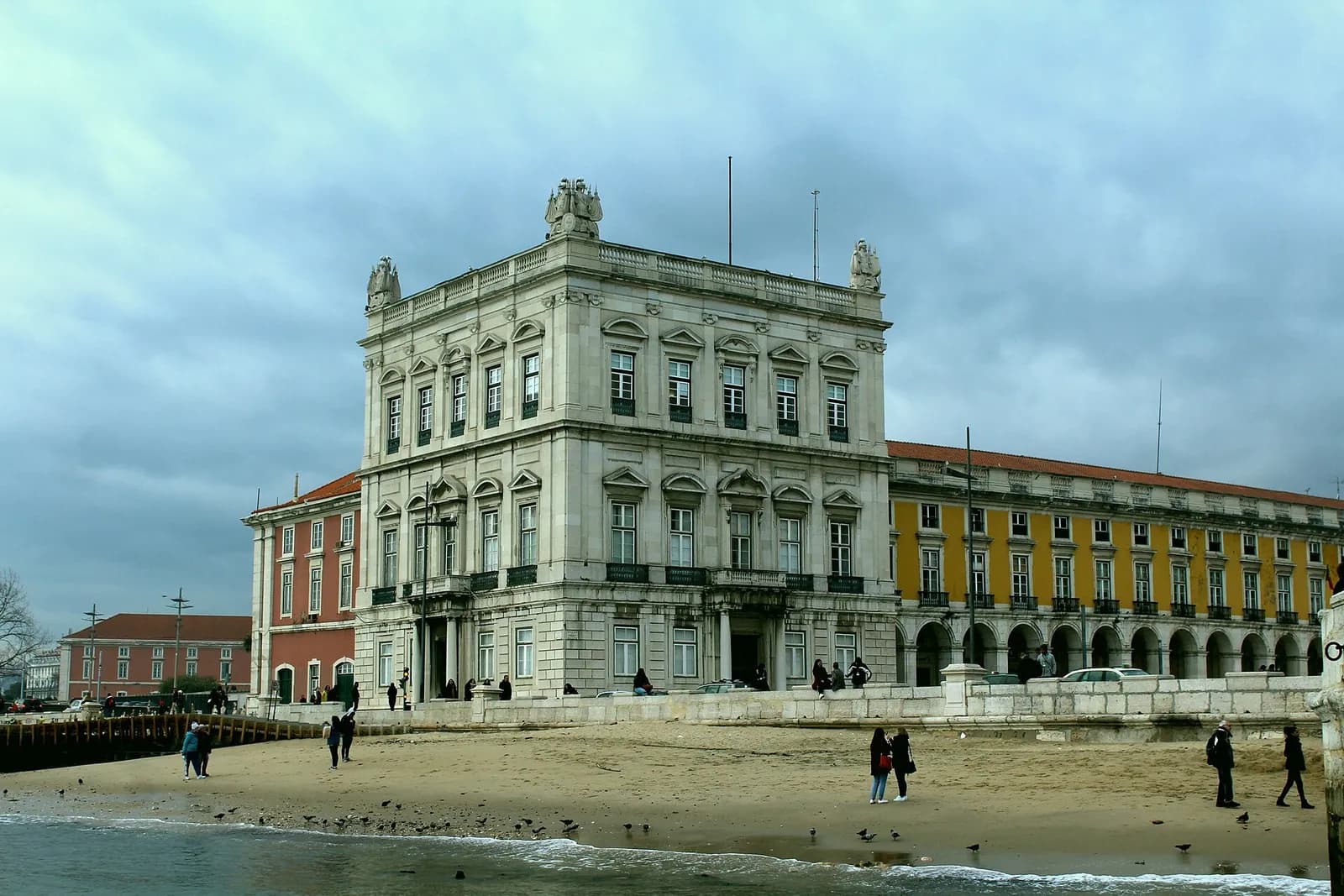
The library opened to the public on 13 May 1797, Prince João's birthday. It occupied 16 rooms in the Torreão Ocidental, the western corner pavilion of Terreiro do Paço, the great square on the Tagus waterfront. The books were arranged in twelve sections by subject, with numbered rooms for history, belles-lettres, the natural sciences, law and politics, theology, general works, and manuscripts and antiquities.
Months before the opening, Ribeiro dos Santos wrote to Cenáculo in Beja to tell him the news, calling him the library's “first benefactor and director”. The bishop answered by giving it a large part of his own collection, rare printed books and manuscripts, and a cabinet of more than 3,000 coins and medals. The books travelled to Lisbon between December 1796 and January 1798. Ribeiro dos Santos catalogued them himself and called the gift the Casa dos Livros de Beja.
“The Royal Library which Her Majesty was pleased to order to be erected in this Court for the good of National Literature is soon to open to the public the precious collections of books with which Your Excellency prepared and enriched it in the happy days of your literary government.”
Cenáculo's formal deed of gift to the prince, dated Beja, 24 March 1797, praised a ruler whose aim, he wrote, was to repeat at his court the Museum of Alexandria. It also asked a favour: the salary arrears he said he was owed for his years as president of the censorship board. According to Manuela Domingos, who organised the library's 2006 exhibition on the gift, the promised rewards came late and reached only his relatives.
The new library drew distinguished visitors. The library's historians single out a visit on 16 October 1797 by the Marquise of Alorna, a poet and one of the best-known women of letters of her day, as a sign of the public recognition the new institution won. Under Ribeiro dos Santos's successors, up to the end of the civil war in 1834, it kept growing and lengthened its opening hours despite real difficulties.
Other early stock came from the library of the defunct Royal Academy of History and from Ribeiro dos Santos's own books. Then came legal deposit, the rule that printers send the library copies of what they print. The library's own history dates the first legal deposit law to 1805 and says it extended to printing houses the duty to deposit one copy of everything they printed.
The date is not settled. The library's 2006 exhibition and the European national librarians' conference also give 1805. The Dicionário de Historiadores Portugueses entry on the library dates legal deposit to 8 June 1796, and a Brazilian study cites an alvará of 12 October 1805 that required a copy of every edition published in Portugal to be offered to the library of the court.
The first decades were hard. The Dicionário entry says the library never became the great public library Ribeiro dos Santos hoped for in his twenty years in charge. It competed with a second royal library at Ajuda and with the national archive, and was asked to give up books to rebuild Ajuda's. When the court fled to Brazil in 1807, much of the government's attention went with it.
From the Chiado convent to Campo Grande
The library's second life began with a change in ownership. After the liberals won the civil war in 1834, Portugal's religious orders were abolished and their property nationalised. On 16 October 1834 a depot for the books, archives and paintings of the closed convents was set up in the Franciscan convent of São Francisco, on the hill of the Chiado. Its holdings ran to more than 300,000 books and over 6,000 paintings.
A decree of 7 December 1836 renamed the institution the Biblioteca Nacional de Lisboa, and from that year it shared the convent with the depot and the Academy of Fine Arts. On 12 November 1841 the depot was formally merged into the library. Time Out Lisboa dates the library's move to the convent to 1841, the year of the merger. The library's own history, which counts more than 130 years in the Chiado, fits the earlier date.
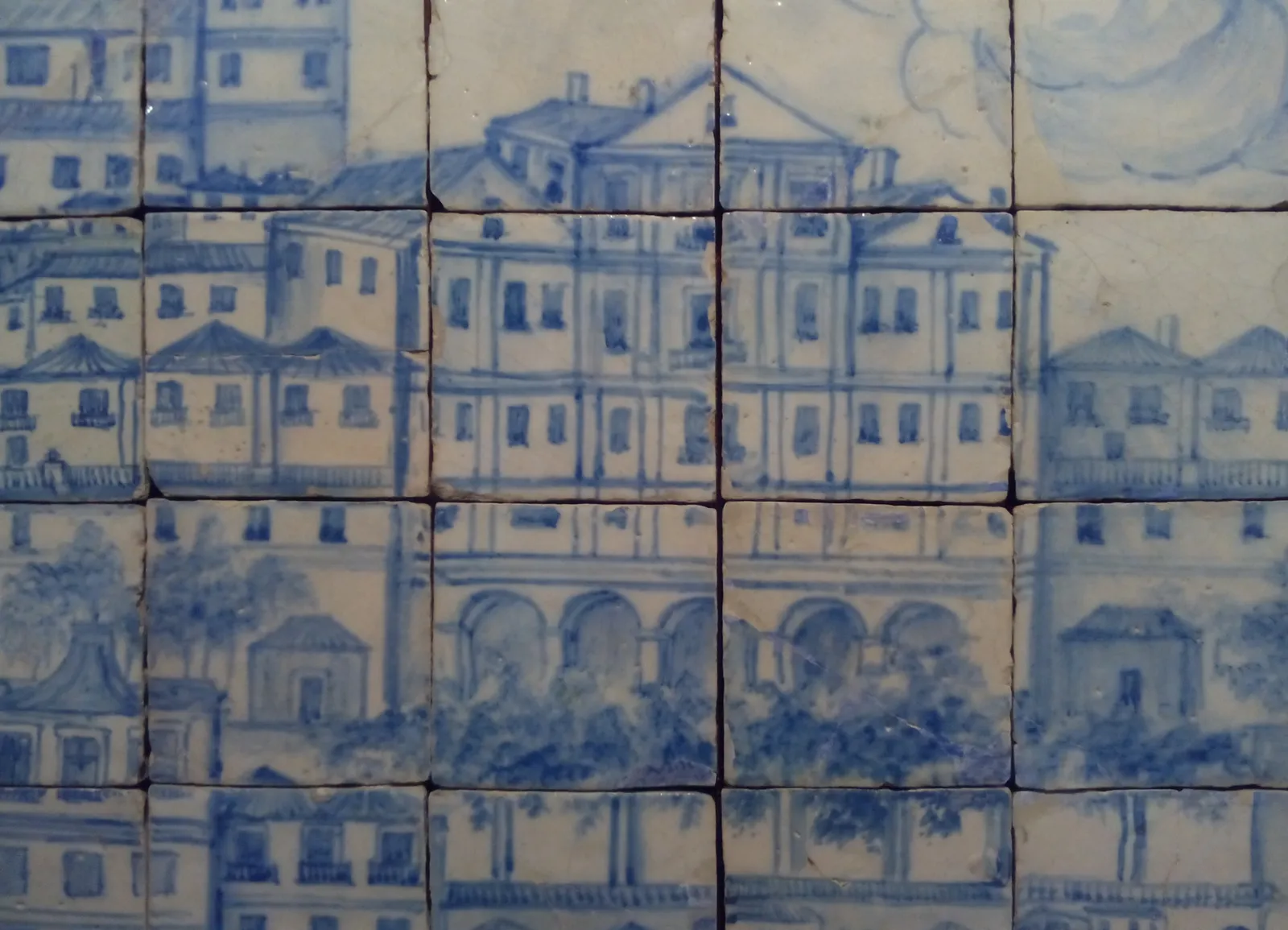
Sorting the convent books took decades. According to the Dicionário, the depot received 183,000 works in 1841; by 1865, after some 19,000 works in Spanish and especially Latin had been sold off in lots and by weight, 13,000 were left. The library's own printed stock doubled between 1843 and 1857, to 147,000 volumes. Of the convent paintings, the Academy of Fine Arts picked the best for a planned national gallery of painting.
Who the library was for remained an argument. Laws of 1863 and 1884 counted “public reading” among its functions, and it kept evening opening hours. In the early 1900s the director Xavier da Cunha wanted it reserved for scholars; the first republican director, Faustino da Fonseca, threw it open again, and reader numbers almost doubled between 1910 and 1911. A decree of 27 June 1931 defined it as the national, central repository of Portuguese books.
Under the First Republic the library was run by writers and historians. Jaime Cortesão, a doctor decorated for his service in the First World War, became director, with the essayist Raul Proença pushing a technical reform of the catalogues; their circle was known as the Grupo da Biblioteca. Both were dismissed after taking part in the failed revolt of February 1927 against the military dictatorship, and Cortesão went into exile. After a brief return by the historian Fidelino de Figueiredo, the military historian Lieutenant-Colonel Augusto Botelho da Costa Veiga ran it from 1928 to 1950, under the dictatorship.
By the middle of the twentieth century the convent was full and falling apart. Time Out Lisboa describes rain coming through the roof of the reading room and staff catching it in jugs and basins. A commission appointed in 1951 chose a new building over repairs. The architect Porfírio Pardal Monteiro began the studies in 1953; after his death in 1957 his nephew António Pardal Monteiro carried the project through. Building work began in 1958.
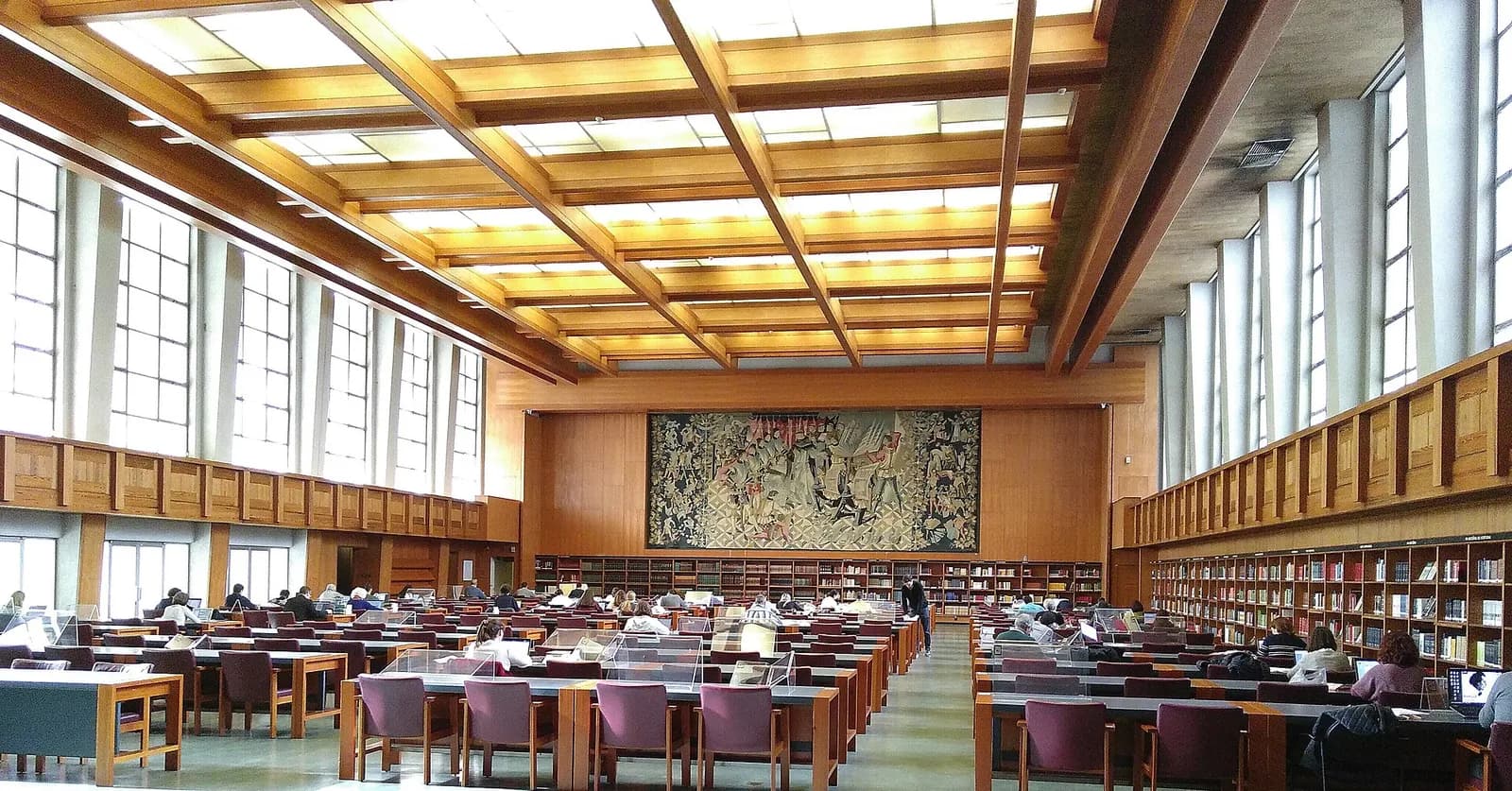
The new Biblioteca Nacional on Campo Grande was inaugurated on 10 April 1969 by the President of the Republic, Admiral Américo Tomás, and blessed by Cardinal Cerejeira. It had a ten-storey book tower with room for more than a million books and a general reading room for 250 readers. Daciano da Costa designed the furniture and lighting, Guilherme Camarinha the great woven hanging in the reading room, and Leopoldo de Almeida the reliefs on the façade.
| Years | Building | Name |
|---|---|---|
| 1797 to 1830s | Western corner pavilion (Torreão Ocidental) of Terreiro do Paço, now Praça do Comércio | Real Biblioteca Pública da Corte |
| 1836 to 1969 | Former convent of São Francisco da Cidade, Chiado | Biblioteca Nacional de Lisboa (from 1836) |
| 1969 to today | Campo Grande 83, by Porfírio and António Pardal Monteiro | Biblioteca Nacional, now Biblioteca Nacional de Portugal |
The library is dated to São Francisco from 1836 by the Dicionário de Historiadores Portugueses and Clara Moura Soares, and from 1841 by Time Out Lisboa; the library's own history counts more than 130 years in the Chiado.
5 April 1768
Real Mesa Censória created
It takes charge of the Jesuit libraries.
21 June 1787
Replaced by the Real Mesa da Comissão Geral
17 December 1794
The censorship board is abolished
5 January 1796
Ribeiro dos Santos reports on the board's library
29 February 1796
Alvará creates the Real Biblioteca Pública da Corte
13 May 1797
The library opens to the public at Terreiro do Paço
1805
First legal deposit law
One source dates legal deposit to 8 June 1796.
16 October 1834
Depot for the closed convents' books set up at São Francisco
7 December 1836
Renamed Biblioteca Nacional de Lisboa
12 November 1841
The convent depot is merged into the library
1958
Building work begins on Campo Grande
10 April 1969
The Campo Grande building is inaugurated
3 March 1982
Decree-Law 74/82 sets today's legal deposit rules
27 February 2026
The library marks 230 years
Why it still matters
The library's mission, as its current statutes put it, is to collect, process and preserve Portugal's documentary heritage, in Portuguese and about Portugal, in every format, and to make it available. It says it still pursues, in essence, the aims for which it was created in 1796. It is also the national bibliographic agency: it issues legal deposit numbers and ISSNs, compiles the national bibliography and runs PORBASE, the national union catalogue.
Legal deposit is the clearest thread back to the early years. Under Decree-Law 74/82 of 3 March 1982, printers must deposit 11 copies of most publications printed in Portugal (one copy for small print runs, theses and maps), and the library passes most of them on to other libraries. In 2025 it unpacked and checked 362,431 items, kept 75,313 for its own collections, including 2,450 theses, and sent 287,118 to the other beneficiary libraries.
Items received by legal deposit at the Biblioteca Nacional, 2020 to 2025
items
Includes copies the library forwards to other libraries. Figures from Table 13 of the Biblioteca Nacional de Portugal's 2025 activity report.
Show the data
| Items unpacked and checked | |
|---|---|
| 2020 | 420,175 |
| 2021 | 369,787 |
| 2022 | 380,614 |
| 2023 | 332,893 |
| 2024 | 381,019 |
| 2025 | 362,431 |
The reading rooms on Campo Grande counted 25,949 readers in 2025, down from 31,995 in 2024; the activity report puts the fall mainly down to microfilm users moving to digitised copies. Anyone over 18 with a reader's card can use the collections. The library also runs the Biblioteca Pública de Évora, the library Cenáculo founded in 1805 after he became Archbishop of Évora, so the library he helped to stock and the one he founded now belong to the same institution. In 2026, a year without a 29 February, it marked its 230th anniversary on 27 February.
- Founded
- 29 February 1796, by alvará issued at Queluz in Maria I's name and signed by Prince João
- Original name
- Real Biblioteca Pública da Corte
- First stock
- Library of the abolished royal censorship board; over 50,000 volumes in January 1796
- First chief librarian
- António Ribeiro dos Santos, 1796 to 1816 by the library's account
- Opened to readers
- 13 May 1797, western pavilion of Terreiro do Paço
- Present building
- Campo Grande 83, Lisbon, opened 10 April 1969
FAQs
When was the Biblioteca Nacional de Portugal founded?
A royal charter (alvará) dated 29 February 1796 created the Real Biblioteca Pública da Corte in Lisbon. It was issued in Queen Maria I's name but signed by her son Prince João, who had governed for her since her illness in 1792. The library opened to readers on 13 May 1797.
Where did the library's first books come from?
Mostly from the library of the abolished royal censorship board, which had taken in the libraries of the Jesuits after their expulsion in 1759. Gifts from Frei Manuel do Cenáculo, the library of the Royal Academy of History and Ribeiro dos Santos's own books followed.
Who was the first director of the National Library?
António Ribeiro dos Santos (1745 to 1818), a canon lawyer, historian and poet who had been librarian of the University of Coimbra. The library's own account makes him chief librarian from 1796 to 1816; one biographical dictionary dates his title to 1804.
Where has the National Library been located?
First in the western corner pavilion of Terreiro do Paço, now Praça do Comércio. From 1836 (some accounts say 1841) it was in the former convent of São Francisco in the Chiado, and since 1969 it has been in its own building on Campo Grande.
What is legal deposit in Portugal?
The rule that printers must hand over copies of what they print. The library's own history dates the first legal deposit law to 1805 (one source gives 1796); today Decree-Law 74/82 requires 11 copies of most publications, which the library keeps or passes on to other libraries.
On the timeline
Open the timelineNearby moments from earthquake and enlightenment (1750–1807).
João Carlos de Saldanha, later Duke of Saldanha, is born. A grandson of the Marquis of Pombal, he fought in the Peninsular War, commanded liberal forces in the civil war of 1832–34 and dominated politics for decades, serving several times as prime minister and twice seizing power by military pronouncement.
Joaquim José da Silva Xavier, known as Tiradentes ('Tooth-Puller'), is hanged in Rio de Janeiro for his leading part in the Inconfidência Mineira, a plot for Brazilian independence from Portugal betrayed in 1789. He is now Brazil's national hero.
Bernardo de Sá Nogueira de Figueiredo, later Marquis of Sá da Bandeira, is born in Santarém. A liberal soldier and statesman, he served as Prime Minister five times and led the drive to abolish the slave trade in the Portuguese empire.
The founding of the Biblioteca Nacional
A royal charter issued in Queen Maria I's name and signed by her son Prince João, acting for her during her illness, creates the Real Biblioteca Pública da Corte in Lisbon, today's Biblioteca Nacional. Built around the library of the royal censorship board, it opened in 1797 in the western pavilion of Terreiro do Paço to the general public, not just to scholars.
Off Cape São Vicente, the south-western tip of the Algarve, 15 British ships of the line under Sir John Jervis defeat a Spanish fleet of up to 27. Commodore Horatio Nelson makes his name by leaving the British line and boarding two Spanish ships in succession, the San Nicolás and the San José.
Porto's Real Teatro de São João opens on the birthday of Prince João, the future João VI, with the comedy 'Os Militares Heróis ou as Vivandeiras Ilustres'. Gutted by fire in 1908, it was rebuilt to a design by José Marques da Silva and reopened in 1920; today it is the São João National Theatre.
António Luís de Seabra is born at sea, aboard the ship 'Santa Cruz' off Cape Verde on its way to Rio de Janeiro. A judge, minister and rector of Coimbra University, he wrote Portugal's first Civil Code, approved in 1867 — the 'Código de Seabra', which governed private life in the country for a full century.
Coming up in history
All long reads 2 March 1898Amélia Rey Colaço, the actress who ran Portugal's national theatre
 3 March 1803A classroom in a fort: the founding of the Colégio Militar, 1803
 4 March 1493Storm-driven into the Tagus: Columbus and João II, March 1493
 5 March 1811Masséna's retreat from Santarém: the French leave Portugal, March 1811
23 sources
Archives, scholarship and reporting this article was checked against.
- 1
Alvará de 29 de Fevereiro de 1796 que cria a Real Bibliotheca Pública da Corte (Antologia)Cadernos de Biblioteconomia, Arquivística e Documentação, Coimbra, vol. 5, no. 4 (October 1968), pp. 131-134
- 2
Biblioteca Nacional de Portugal (1796 – )Biblioteca Nacional de Portugal, Dicionário de Historiadores Portugueses
- 3
Frei Manuel do Cenáculo e a Biblioteca Pública (Manuela D. Domingos), in «Casa dos Livros de Beja»: exhibition guideBiblioteca Nacional de Portugal, 2006
- 4
- 5
Memória do Espólio da Real Mesa da Comissão Geral sobre o Exame e Censura dos Livros (1795), ed. Maria Teresa Payan MartinsCHAM, NOVA FCSH, 2024 (CHAM eBooks, Fontes 1)
- 6
O restauro das pinturas conventuais à guarda da Biblioteca Nacional (1835-1913) (Clara Moura Soares)ARTis ON, special issue no. 3 (2016), Faculdade de Letras da Universidade de Lisboa
- 7
- 8
Maria I: biographyArchontology.org
- 9
- 10
- 11
National Library of PortugalConference of European National Librarians (CENL)
- 12
- 13
- 14
Releitura da Biblioteca Nacional (Célia Maria Portella)Estudos Avançados, vol. 24, no. 69 (2010), Universidade de São Paulo
- 15
D. João VI e os livros no Brasil: o caso da Real Biblioteca (Lilia Moritz Schwarcz)Convergência Lusíada 24 (2007), Real Gabinete Português de Leitura, Rio de Janeiro
- 16
Histórico: 1808–1820Fundação Biblioteca Nacional (Brazil)
- 17
O Pátio das Antigas: a Biblioteca Nacional que metia águaTime Out Lisboa
- 18
Biblioteca Nacional de Portugal, LisboaPardal Monteiro Arquitectos
- 19
Biblioteca Nacional de Portugal (Open House Lisboa)Trienal de Arquitectura de Lisboa
- 20
- 21
- 22
- 23
Image credits
- The Biblioteca Nacional de Portugal on Campo Grande, Lisbon, in 2011. Designed by Porfírio Pardal Monteiro and finished by his nephew António, the building opened in 1969. João Carvalho, CC BY-SA 3.0, via Wikimedia Commons.
- Frei Manuel do Cenáculo, Bishop of Beja and president of the Real Mesa Censória, in a portrait by an unknown Portuguese painter, probably of the 1770s, in the Biblioteca Nacional's collection. The inscription gives his titles, including tutor and confessor to Prince José. Unknown author, Public domain, via Wikimedia Commons.
- António Ribeiro dos Santos (1745–1818), first chief librarian of the Real Biblioteca Pública, in a portrait by an unidentified painter dated to around 1790. Unidentified painter, Public domain, via Wikimedia Commons.
- The western corner pavilion (torreão) and west wing of Praça do Comércio, formerly Terreiro do Paço, in 2017. The library's own history places the Real Biblioteca Pública of 1797 in this western pavilion. Dguendel, CC BY 4.0, via Wikimedia Commons.
- The convent of São Francisco da Cidade as shown in the Great Panorama of Lisbon, an early-eighteenth-century tile panel in the National Tile Museum. This is the convent before the earthquake of 1755; the library occupied the rebuilt convent from the 1830s to 1969. RickMorais, CC BY-SA 4.0, via Wikimedia Commons.
- The general reading room of the Biblioteca Nacional in November 2019. The woven hanging on the end wall is by Guilherme Camarinha. Beireke1, CC0, via Wikimedia Commons.