

The Treaty of Paris and the Fantastic War: Portugal, 1762 to 1763
Portugal tried to sit out the Seven Years' War. In 1762 a Spanish army marched in anyway, and the peace signed in Paris made Spain hand back its conquests, from the fortress of Almeida to Colónia do Sacramento on the River Plate.
At a glance
- The Treaty of Paris of 10 February 1763 ended the Seven Years' War. Britain, France and Spain signed it; Portugal did not sign but acceded the same day and was counted as a full contracting party.
- Portugal was dragged in because it refused to leave its alliance with Britain and join the Bourbon Family Compact of France and Spain. A Spanish army entered Trás-os-Montes on 1 May 1762.
- The invaders took Miranda do Douro, Bragança, Chaves and, in August, the fortress of Almeida, but hunger, peasant attacks and an Anglo-Portuguese army under Count Wilhelm of Schaumburg-Lippe stopped them short of Abrantes.
- There was no battle of note, so historians came to call the campaign the Fantastic War. Article XXI of the treaty made France and Spain give back what they had taken from Portugal. Spain returned Colónia do Sacramento on the River Plate but kept Rio Grande in Brazil.
- Lippe stayed to rebuild the Portuguese army. His infantry regulation became law on 18 February 1763, and in the same year he began the Forte da Graça at Elvas.
Three signatures in Paris
On 10 February 1763, in Paris, three ambassadors signed the peace that ended the Seven Years' War: the Duke of Bedford for George III of Britain, the Duke of Praslin for Louis XV of France and the Marquis of Grimaldi for Charles III of Spain. The treaty also named a fourth envoy, Martinho de Melo e Castro, ambassador of José I of Portugal to the French court. His signature is not on it.
Portugal's place was settled in a separate article signed the same day. The three crowns agreed that the King of Portugal, though he had not signed, was included in the treaty as a contracting party, and promised to carry out every clause once he had formally acceded. The printed text calls itself a treaty between three kings, “to which the King of Portugal acceded on the same day”.
“Though the King of Portugal has not signed the present definitive treaty, their Britannick, Most Christian, and Catholick Majesties, acknowledge, nevertheless, that his Most Faithful Majesty is formally included therein as a contracting party, and as if he had expressly signed the said treaty.”
For Portugal one clause mattered most. Article XXI ordered French and Spanish troops out of every town, place and castle they had taken from Portugal in Europe, and told them to leave the guns and ammunition they had found there. Nine months earlier Spanish soldiers had marched into the north of the kingdom. In South America, a Spanish governor had taken the Portuguese town of Colónia do Sacramento.
A war Portugal tried to avoid
The Seven Years' War began in 1756 as a contest between Britain and France, fought in Germany, North America, the West Indies, India and at sea. Spain stayed out at first. In 1761 Charles III bound himself to France in the Third Family Compact, an alliance of the Bourbon kings, and Britain declared war on Spain in January 1762.
Portugal wanted to stay neutral. Its government was run by José I's minister Sebastião José de Carvalho e Melo, then Count of Oeiras and later Marquis of Pombal. In the spring of 1762 France and Spain sent Lisbon two ultimatums demanding that it give up the British alliance and join the Family Compact. José I refused.
The kingdom was in no state to fight. In December 1761 Portugal's envoy in London sent the British a return of the army: 31,000 men on paper, but only 16,500 in fact, because the cost of rebuilding Lisbon after the earthquake of 1755 had forced cuts. It was short of artillery, provisions and horses. Pombal himself argued that Portugal had gone too long without a European war to have officers with the right experience.
“the safety of Portugal is most essential to the interest of this country”
The next day British ministers agreed to send troops. Charles III told the French he hoped they would: he could then treat Portugal as an enemy and take land there to make up for losses elsewhere. Spain promised France an invasion force of 56,000 men.
Into Trás-os-Montes
Spain's invading army was called the Ejército de Prevención. Its commander, the elderly Marquis of Sarria, had printed notices put up in Portuguese towns from 30 April 1762, saying that his troops came as friends, wanted no fighting and would pay for what they took. The official reason was to protect Portugal's coasts from the British. On 1 May the army crossed into Trás-os-Montes, the mountainous north-east of the country. Black, writing from British papers, puts the invasion at the end of April.
Resistance was almost nil. At Miranda do Douro a powder magazine exploded on 8 May and killed several hundred people, and the town fell without the besiegers using, in the words of a letter from Chaves, so much as a charge of powder. Bragança, Chaves, Moncorvo, Vimioso and Outeiro had fallen by 24 May. Several of them had no garrison at all.
Taking towns was easy; holding the country was not. Peasants attacked supply columns and killed stragglers, and Spanish soldiers in Chaves were reported to be too frightened of them to go out. According to Charles-François Dumouriez, a French officer who toured Portugal four years later, three or four hundred peasants turned back 3,000 Spanish light troops heading for Porto. A Spanish attempt to cross the Douro near Vila Nova de Foz Côa failed.
The historian David Martín Marcos, following earlier work, sees panic and the defence of the peasants' livelihoods, more than patriotism, behind these attacks. The violence crossed the border. On 3 August Portuguese villagers raided Navasfrías, a Spanish village near the frontier, killed three militiamen and took the parish priest prisoner. Almost a year later he was still writing to Madrid from the prison at Belém.
War was declared only after the invasion. On 18 May 1762 José I ordered every subject of France and Spain to leave Portugal within fifteen days, and Spain answered by expelling the Portuguese and confiscating their goods. Shopkeepers, shepherds and families who had lived for years across the frontier became enemy aliens overnight, and many petitioned to stay.
A German count and a British army
Pombal asked Britain for troops and for a general. On George III's recommendation the choice fell on Wilhelm, Count of Schaumburg-Lippe, the 38-year-old ruler of a small German state. Born in London in 1724, he had commanded the artillery of the Hanoverian army earlier in the war. Lippe reached Portugal in early July, and a decree of 3 July 1762 made him marshal general of all the king's armies.
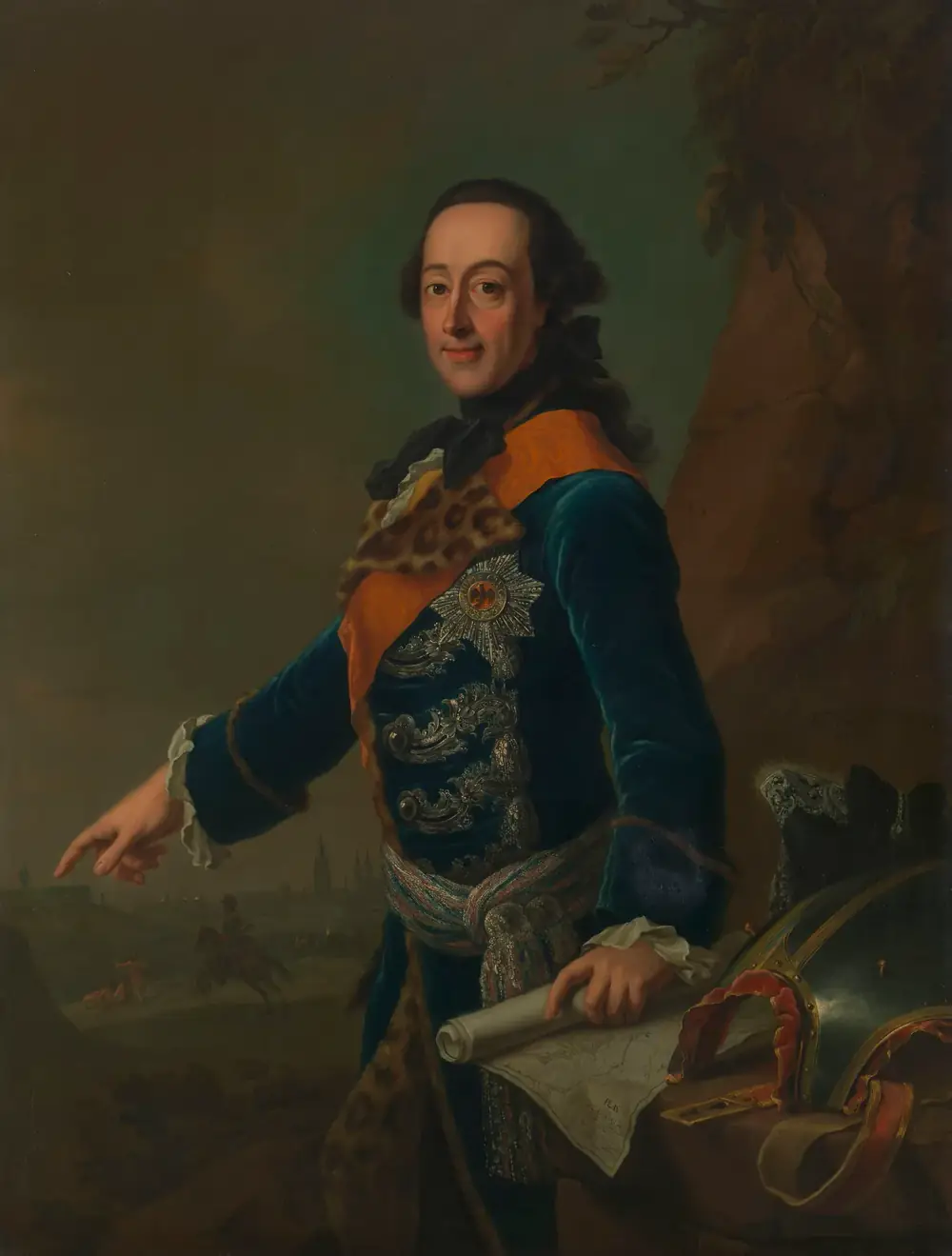
He commanded the British too. Instructions for the army's daily service, printed in Lisbon that year, give him both titles: marshal general of the armies of His Most Faithful Majesty and general in chief of the auxiliary troops of His Britannic Majesty. The British contingent was led first by Lord Tyrawley and then by the Earl of Loudoun, who was held in the Channel by contrary winds and arrived in July.
Supplies were a constant problem. One British brigadier reported that nine men of the Buffs died on a single day's march to Santarém in the summer heat, and that they found the houses shut and no bread or beef waiting. One captain complained that he could not gather intelligence without an interpreter. The Earl of Bath passed on his son's verdict from Lisbon, where he served as a lieutenant-colonel: the Portuguese were “scarce worth saving from destruction”.
| Force | Figure | Given by |
|---|---|---|
| Portuguese army, December 1761 | 31,000 on paper, 16,500 in fact | Portugal's envoy in London, as reported by Jeremy Black |
| Portuguese army, 1762 | 17,000 on paper, under half in reality; 5,000 at Lippe's first camp | Dumouriez, 1766 |
| British troops sent | 6,000 ordered to Lisbon | Dumouriez, 1766 |
| Lippe's field army | 7,000 to 8,000 British and as many Portuguese | Portugal: Dicionário Histórico (1904 to 1915) |
| Spanish army promised to France | 56,000 | Spanish assurance to France, early 1762 (Black) |
| Spanish army entering Portugal, May 1762 | More than 30,000 | Barbosa (2017) |
| Franco-Spanish army | 42,000 men and 93 guns | Portugal: Dicionário Histórico |
| Spanish army at the end of the campaign | 25,000 left of 40,000 | Dumouriez, 1766 |
None of these is a muster roll. They come from a diplomat asking for help, a hostile French observer and later historians, and they do not agree.
From Almeida to Abrantes
Charles III changed plan. His troops were to hold what they had taken in Trás-os-Montes while the main blow fell further south. On 30 June, Barbosa writes, the Spanish army, with some French units, crossed into the Beira from Ciudad Rodrigo and moved on Castelo Rodrigo and the fortress of Almeida.
Lippe needed Almeida to hold out while he struck at Spanish depots across the border, and ordered its governor to defend it to the last. It surrendered on 25 August. Dumouriez, telling the story from the Spanish side, says the siege began on 4 August and the town gave up with no breach in its walls, 96 guns and a garrison of 3,600. He blamed the governor, who he says was eighty years old and had last served as a cavalry captain in the War of the Spanish Succession.
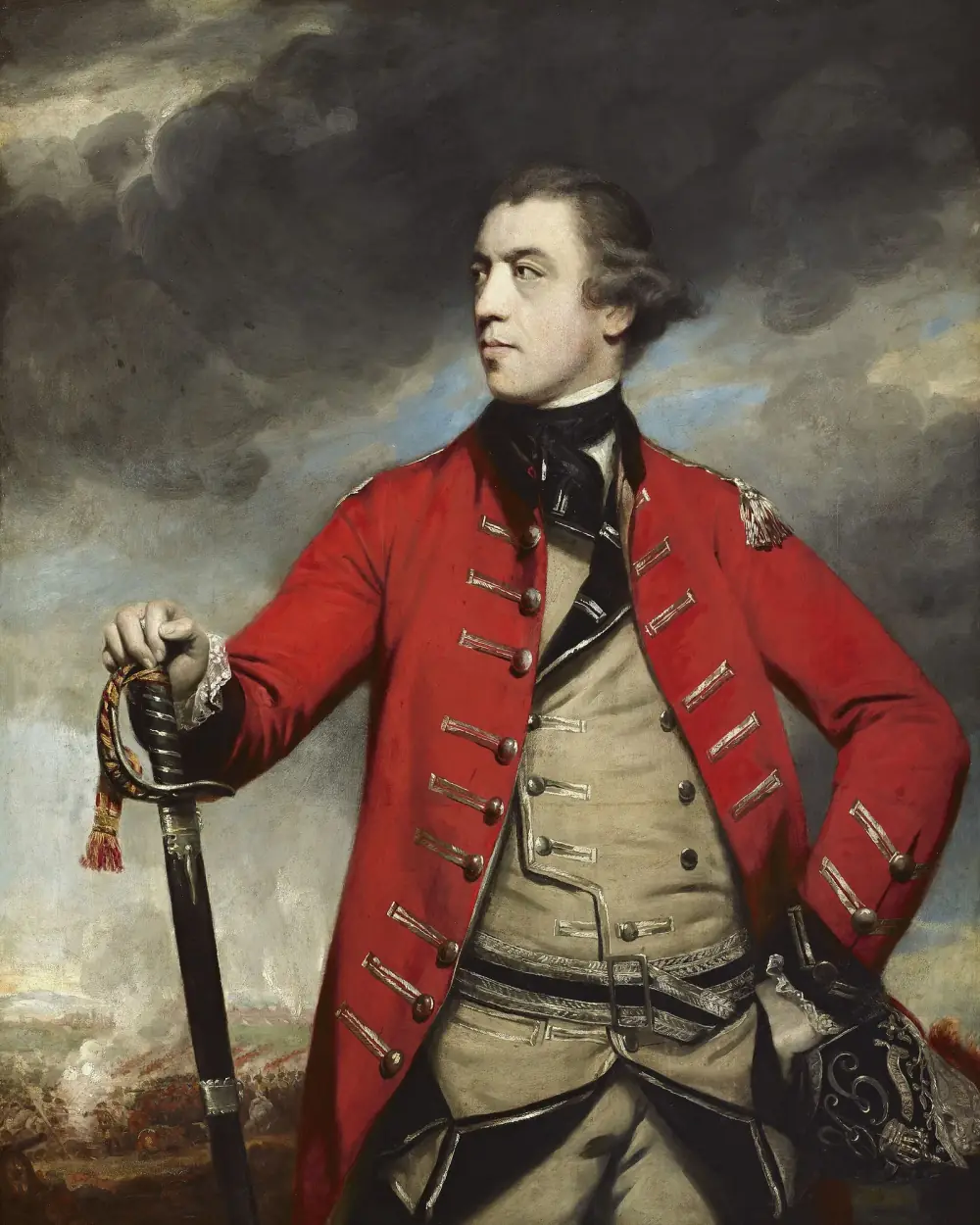
Lippe's raid went ahead all the same. In late August Colonel John Burgoyne crossed the Tagus at Abrantes with British dragoons and six companies of grenadiers, four of them Portuguese, rode into Spain and took the town of Valencia de Alcántara by surprise. A Spanish general, Balanza, was among his prisoners.
The Count of Aranda, who replaced Sarria, then pushed south-west towards the Tagus and Abrantes, on the road to Lisbon. On 9 October the British merchants of Lisbon feared for their lives and goods, and their consul asked Loudoun whether they should send for ships to take them away. “The Kingdom of Portugal seems at present to be generally given up as lost,” Robert Ellison wrote in London on 19 October.
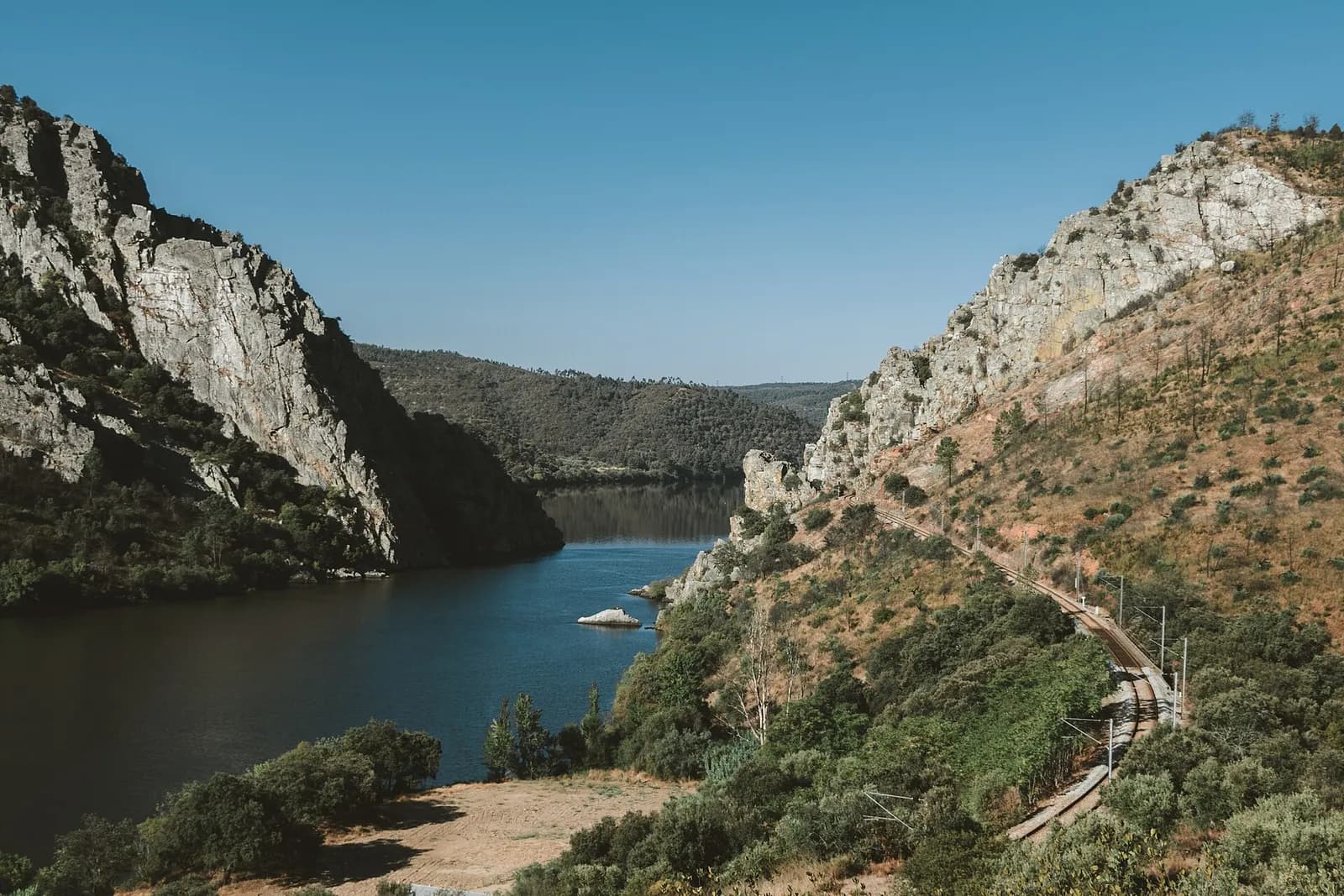
Lippe would not risk a battle. He dug in on strong ground in front of Abrantes, sent Burgoyne to guard the Tagus at Vila Velha de Ródão with batteries on the cliffs, and ordered everything that could feed the invaders removed from their path. On 5 October, Black writes, British and Portuguese troops forded the river by night and stormed a Spanish camp at Vila Velha.
Who led the attack depends on the source. Black credits Burgoyne, who commanded on that stretch of the river. Burgoyne's own report to London, written at the camp four days later, gave the whole credit to “the conduct and bravery of Colonel Lee”: Charles Lee, later a general in the American War of Independence. Dumouriez names a Scottish officer called Hamilton.
Autumn rain, empty country and constant raids did the rest. Aranda fell back on Castelo Branco and then into Spain. Late Spanish attempts on Campo Maior and Olivença, in the Alentejo, failed. Preliminaries of peace had been signed at Fontainebleau on 3 November, and the two commanders agreed an armistice: Martín Marcos dates it from 24 November, Barbosa to 30 November and the old Portuguese dictionary to 1 December.
Nobody counted the Bourbon losses reliably. Dumouriez says the Spanish army, ordered at 40,000 men, came back to the frontier with 25,000, its sick and stragglers “almost all of them massacred by the peasants”. Barbosa speaks of several thousand soldiers lost to hunger and supply failures without a single battle. Combat deaths were few. Because the campaign had no battle of note, only skirmishes and months of marching and countermarching, historians came to call it the Guerra Fantástica, the Fantastic War.
“But whatever the cause might be, the preservation of Portugal cost Spain its glory, its treasure, and an army.”
1761
France and Spain sign the Third Family Compact
January 1762
Britain and Spain go to war
Spring 1762
Two Franco-Spanish ultimatums; Portugal refuses to leave the British alliance
1 May 1762
The Spanish army enters Trás-os-Montes
8 May 1762
Powder magazine explodes at Miranda do Douro; the town falls
18 May 1762
Portugal orders French and Spanish subjects to leave within fifteen days
30 June 1762
Spanish troops, with some French units, cross into the Beira
3 July 1762
Lippe named marshal general
25 August 1762
Almeida surrenders
Late August 1762
Burgoyne takes Valencia de Alcántara
5 October 1762
Spanish camp at Vila Velha stormed by night
3 November 1762
Preliminaries of peace signed at Fontainebleau
24 November to 1 December 1762
Armistice on the Portuguese front
Sources give different dates.
10 February 1763
Treaty of Paris; Portugal accedes the same day
18 February 1763
Lippe's infantry regulation given the force of law
The war on the River Plate
The war reached South America as well. Colónia do Sacramento had been founded in 1680 on the north bank of the River Plate, across the estuary from Buenos Aires, partly to keep silver from the mines of Potosí flowing to Lisbon by contraband. Spain had destroyed or taken it before, and handed it back each time at the peace table, most recently under a treaty of 1715 signed at Utrecht.
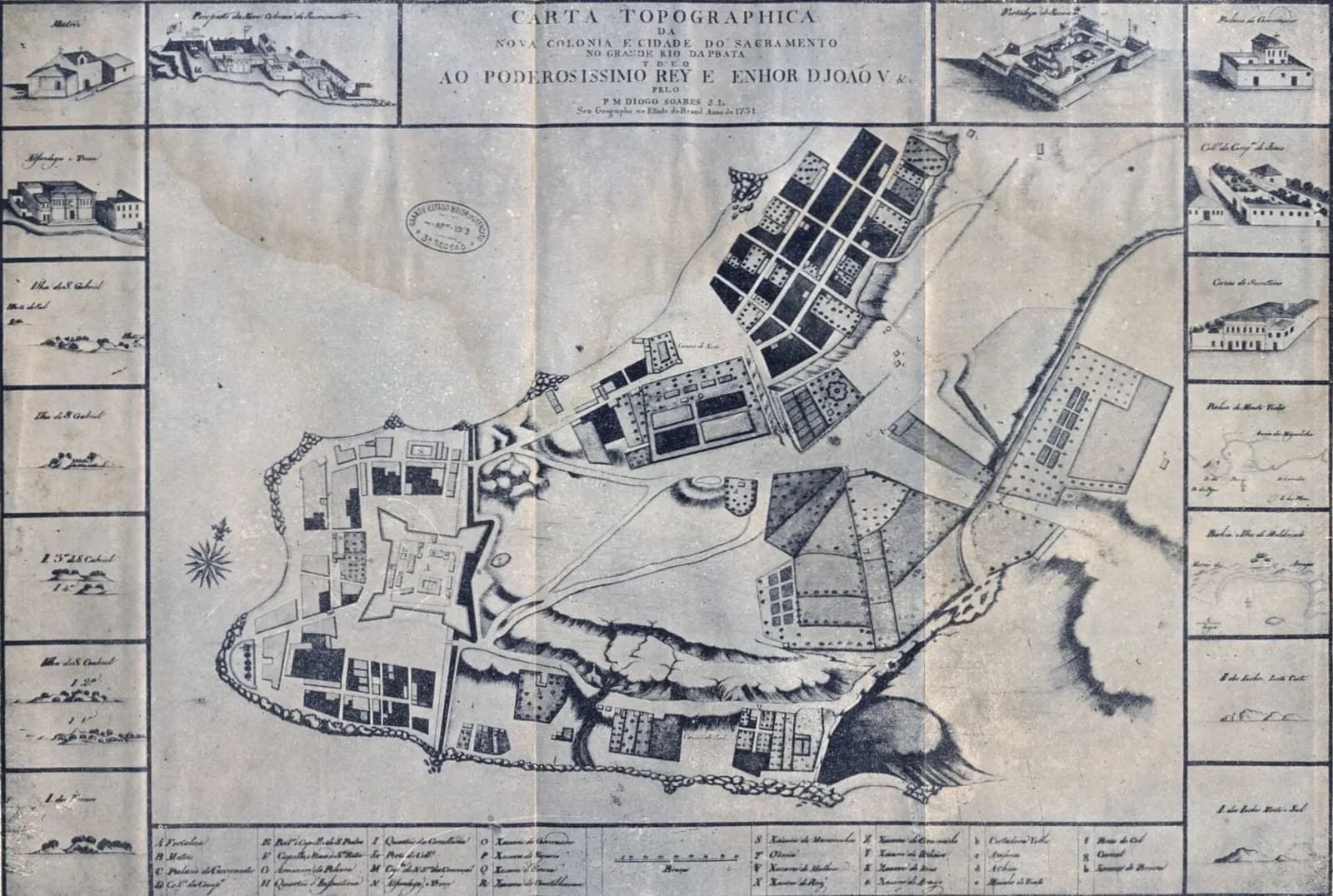
In 1762 the Spanish governor of the River Plate, Pedro de Cevallos, took Colónia, and a Portuguese attempt to win it back failed. The next year he also seized Rio Grande de São Pedro, the Portuguese settlement at the mouth of the Lagoa dos Patos in southern Brazil.
Article XXI covered this too. Any Portuguese colony that had changed hands was to be restored as it had been before the war, under the earlier treaties between France, Spain and Portugal. Spain gave Colónia back. It kept Rio Grande, arguing that the Portuguese had built it on Spanish land, so the treaty did not settle the southern frontier.
What the treaty gave Portugal
- Signed
- Paris, 10 February 1763
- Signatories
- The Duke of Bedford (Britain), the Duke of Praslin (France), the Marquis of Grimaldi (Spain)
- Portugal
- Acceded the same day; named envoy Martinho de Melo e Castro
- Preliminaries
- Fontainebleau, 3 November 1762, to which José I had also acceded
- Ratifications
- To be exchanged in Paris within a month
| Article | What it said |
|---|---|
| I | Perpetual peace by land and sea between the kings of Britain, France, Spain and Portugal |
| II | Renewed the treaties between Spain and Portugal of 13 February 1668, 6 February 1715 and 12 February 1761, and that of 11 April 1713 between France and Portugal |
| XXI | French and Spanish troops to leave all they had conquered from Portugal in Europe, in the same condition and with the same guns; Portuguese colonies to be restored as before the war |
| XXIII | Any other conquests by either side, not named in the treaty, to be returned without compensation |
| XXIV | Portugal's places in Europe returned immediately after the exchange of ratifications; any conquered Portuguese colonies within three months in the West Indies and six in the East Indies |
| XXVI | All four kings to observe the treaty and guarantee it to one another |
| Separate III | Portugal counted as a contracting party although its king had not signed |
The list of renewed treaties tells the story of Portugal's frontier. The treaty of 1668 was the peace in which Spain recognised Portuguese independence after the war that followed 1640. That of 1715 had returned Colónia. That of February 1761, signed at El Pardo, had cancelled the Treaty of Madrid of 1750, which would have swapped Colónia for the Sete Povos das Missões, seven Jesuit mission towns.
Portugal gained no land. For the great powers the treaty was about empires: France gave up Canada to Britain, Britain returned Havana to Spain, and Spain gave Florida to Britain in exchange. For Portugal it meant the restoration of the status quo, with Britain, France and Spain guaranteeing it. In Portugal José I had illuminations lit to celebrate, and the definitive peace was proclaimed on 7 March 1763.
Lippe stays to rebuild the army
Eight days after the treaty, on 18 February 1763, a royal decree with the force of law approved Lippe's Regulation for the Exercise and Discipline of the Infantry Regiments. Its 27 chapters covered drill, uniforms, recruitment, pay and punishment, and the decree ordered every one of them applied literally and without interpretation.
The model was Prussian. Punishments ran from bread and water for light offences, such as turning up drunk for drill or sleeping on guard, to flogging and blows with the flat of a sword. Desertion, mutiny or threatening an officer meant the firing squad or the gallows, judged by a council of war under 29 Articles of War. Soldiers were paid every five days in front of the captain's house, after a sergeant had read the Articles aloud to the new men.
The crown extended the regulation to its troops overseas. In Brazil it stayed in force until independence, and its Articles of War until 1891. Blows with the flat of the sword ended there only after the Revolt of the Lash in 1910. In Portugal Lippe's Articles of War also lasted many years, until a new code of military justice replaced them.
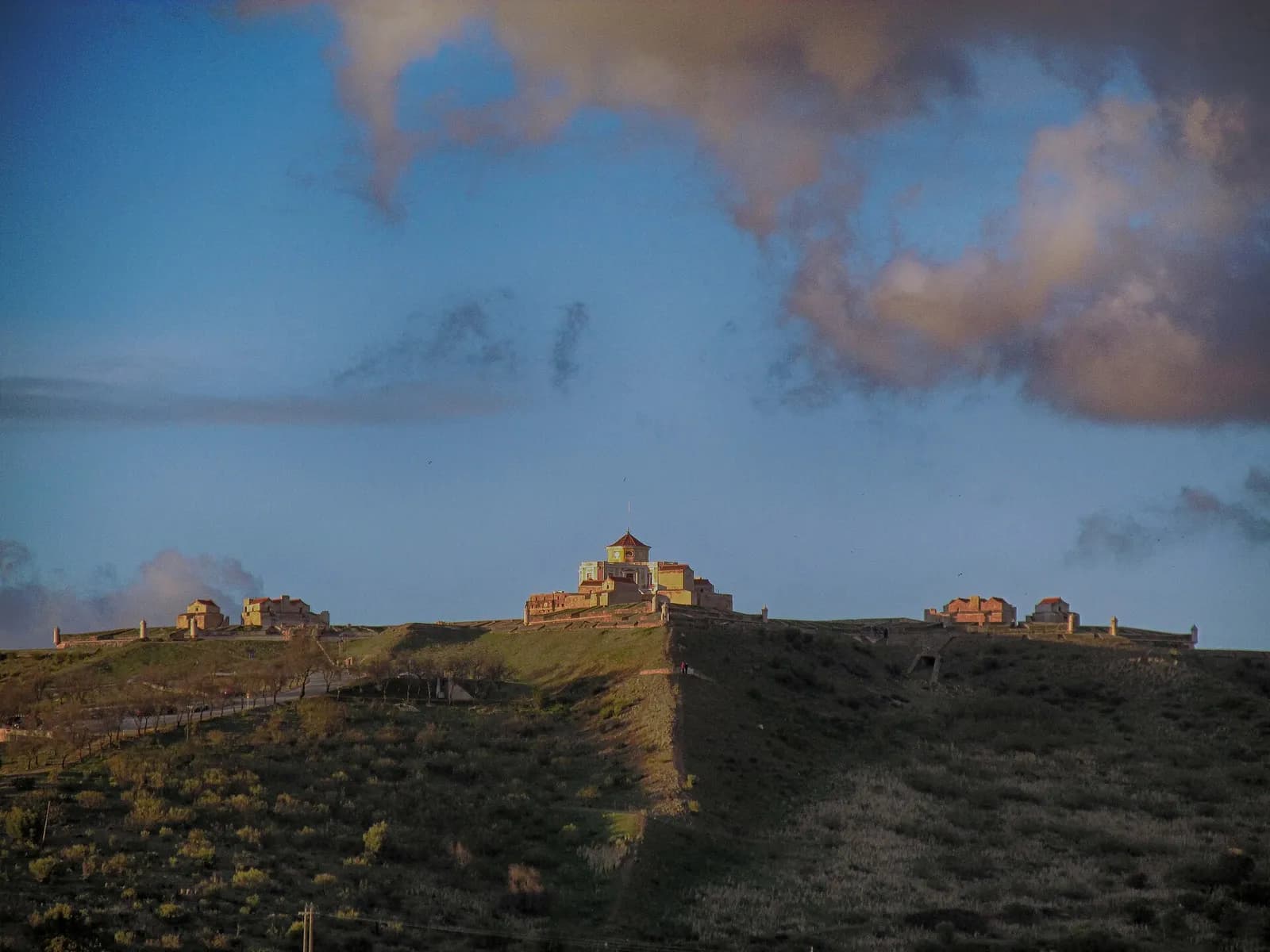
Lippe also looked to the frontier. In 1763 he began a new fort on the hill of Graça above Elvas, where Spanish besiegers had dug in a century before. It took until 1792 to finish and was long known as the Forte de Lippe. When he went home, José I made him a prince of the blood with the style of Highness. According to the old Portuguese dictionary, the king also gave him six gold cannon, each weighing 32 pounds, on ebony carriages plated with silver.
The war also left bills. In August 1762 the crown had ordered a royal military hospital and war stores set up in Coimbra, run by the rector of the university and paid for with a loan of 14.2 million réis from the city's Real d'Água fund. The hospital took in soldiers from 5 September 1762 to 22 October 1763, and its accounts, kept by double entry, were closed only in 1766.
What Coimbra's war hospital and stores cost, 1762 to 1766
réis
Spending of the Hospital Real Militar and Armazéns de Guerra of Coimbra, from the account closed in 1766 in the Arquivo da Universidade de Coimbra, as tabulated by José Luís dos Santos Barbosa. Other combines four headings; its largest item, 3,480,000 réis, paid for horses requisitioned to remount the cavalry. Total: 14,323,750 réis.
Show the data
| Spending | |
|---|---|
| Military hospital | 6,856,293 |
| Other: horses, couriers, building work | 5,363,656 |
| War stores | 2,103,801 |
Why it still matters
The war of 1762 tested the British alliance on land, and it held. A small kingdom whose ports mattered to a naval power was defended by British troops and a foreign general, while its own peasants and its empty roads wore the invader down. Dumouriez thought the war gave Portugal a military spirit it had lacked, though it weakened once Lippe left.
The pattern came back half a century later. Against Napoleon's armies in 1810, Wellington's British and Portuguese troops emptied the country in front of the French, as Lippe's men had done in the Beira in 1762, a story Lisboeta tells separately. The peace on the River Plate was shorter. Spain kept Rio Grande, the Portuguese retook it in the 1770s, and in 1777 the Treaty of San Ildefonso gave Colónia to Spain for good.
FAQs
Did Portugal sign the Treaty of Paris of 1763?
No. Britain, France and Spain signed it on 10 February 1763. Portugal acceded the same day, and a separate article declared that it was included as a contracting party as if its king had signed.
Why is the war of 1762 called the Fantastic War?
Because the armies marched and countermarched in Portugal from May to November 1762 without fighting a battle of note, only skirmishes, and combat deaths were few; the invaders lost far more men to hunger, disease and peasant attacks. Recent historians argue that the name hides the war's real cost to the people of the border.
What did Portugal get back in 1763?
Everything France and Spain had taken from it in Europe, including Almeida, Chaves, Bragança and Miranda do Douro, and Colónia do Sacramento on the River Plate. Spain kept Rio Grande de São Pedro in Brazil, which it had taken in 1763.
Who was the Count of Lippe?
Wilhelm, Count of Schaumburg-Lippe (1724 to 1777), a German ruling count and artillery expert whom Britain recommended to Portugal. He commanded the Portuguese and British armies in 1762, then reformed the Portuguese army and began the Forte da Graça at Elvas.
On the timeline
Open the timelineNearby moments from earthquake and enlightenment (1750–1807).
The Jesuit priest Gabriel Malagrida is garrotted in Lisbon's Rossio square and his body burned, hours after his sentence was read at an Inquisition auto-da-fé in the cloister of São Domingos. He had been condemned as a heretic at the instigation of Carvalho e Melo, the future Marquis of Pombal, whom he had enraged by preaching that the 1755 earthquake was God's punishment for Lisbon's sins.
A charter law of King José I, countersigned by the future Marquis of Pombal, creates the Real Erário (Royal Treasury), abolishing the medieval Contos do Reino e Casa and channelling all crown revenue into a single treasury kept by double entry. Portugal's Court of Auditors, the Tribunal de Contas, counts it among its direct ancestors.
Birth in Lisbon of Marcos Portugal, the most internationally successful Portuguese composer of his age. He premiered at least 21 operas in Italian theatres in the 1790s, then joined the exiled court in Rio de Janeiro in 1811 and stayed on in Brazil until his death in 1830.
The Treaty of Paris, 1763
The Treaty of Paris ends the Seven Years' War. Britain, France and Spain sign it and Portugal accedes the same day. Spain, which had invaded Portugal in 1762, must hand back its conquests, among them Almeida and the colony of Sacramento on the River Plate.
The poet Manuel Maria Barbosa du Bocage, the finest Portuguese exponent of Arcadian verse and a celebrated satirist and improviser, is born in Setúbal.
Nicolau Nasoni, the Tuscan-born architect whose Baroque works include Porto's Clérigos Church and its landmark tower, dies in poverty in the city aged 82 and is buried in the Clérigos Church he designed.
King José I dies in Lisbon after a 27-year reign. Within weeks his daughter and successor, Maria I, removed the all-powerful Marquis of Pombal and freed many of his political prisoners — the change of course remembered as the 'Viradeira'.
Coming up in history
All long reads 12 February 2002José Travassos and the Cinco Violinos, Sporting's forward line
 13 February 1965Operation Autumn: how the PIDE murdered General Humberto Delgado, 1965
 14 February 1797Nelson's bridge off the Algarve: the Battle of Cape St Vincent, 1797
 15 February 1941The 1941 cyclone: the February storm that wrecked Portugal’s coast and forests
16 sources
Archives, scholarship and reporting this article was checked against.
- 1
The definitive Treaty of Peace and Friendship between his Britannick Majesty, the Most Christian King, and the King of Spain, concluded at Paris the 10th day of February, 1763, to which the King of Portugal acceded on the same dayThe Avalon Project, Lillian Goldman Law Library, Yale Law School
- 2
The British Expeditionary Force to Portugal in 1762: International Conflict and Military Problems (Jeremy Black)British Historical Society of Portugal, Annual Report 16 (1989), pp. 66-75
- 3
Persiguiendo al otro: reflexiones sobre el impacto social de la invasión española de Portugal en 1762 (David Martín Marcos)Studia Historica. Historia Moderna 45, no. 2 (2023), pp. 357-381, Ediciones Universidad de Salamanca
- 4
O Hospital Real Militar e os Armazéns de Guerra de Coimbra: assistência aos soldados enfermos e logística de guerra (1762-1766) (José Luís dos Santos Barbosa)Boletim do Arquivo da Universidade de Coimbra XXX (2017), pp. 429-450
- 5
A produção do documento e seus contextos: o Regulamento do Conde de Lippe, 1763 (Bruno César Pereira and Ana Paula Wagner)História Unisinos 27, no. 3 (2023), pp. 649-656
- 6
An Account of Portugal, as it appeared in 1766 to Dumouriez (London, 1797)University of California Libraries copy, Internet Archive
- 7
A última guerra pela Colônia do Sacramento (1777) (Paulo Cesar Possamai)Cuadernos de H Ideas 14 (2020), Universidad Nacional de La Plata
- 8
Review of M. Á. Melón Jiménez, España en la Guerra de los Siete Años. La campaña imposible de Portugal y el Ejército de Prevención (1761-1764) (Ofelia Rey Castelao)Magallánica, Revista de Historia Moderna 9, no. 17 (2022), pp. 539-545
- 9
Schaumbourg Lippe (Guilherme)Portugal: Dicionário Histórico, Corográfico, Heráldico, Biográfico, Bibliográfico, Numismático e Artístico, vol. VI (1904-1915), electronic edition by Manuel Amaral
- 10
- 11
Brigadier J. Burgoyne to E. Hay, “camp near Villa Velha”, 9 October 1762: detailed account of his victory at Vila VelhaThe National Archives, Kew, SP 89/57/85 (State Papers Foreign, Portugal), catalogue description
- 12
- 13
Tratado de Paz de 1668 entre Portugal e EspanhaArquivo Nacional Torre do Tombo
- 14
Forte da GraçaCâmara Municipal de Elvas
- 15
A History of the Peninsular War, vol. III: September 1809–December 1810 (Charles Oman)Clarendon Press, Oxford, 1908; Project Gutenberg edition
- 16
Decision 36 COM 8B.34: Garrison Border Town of Elvas and its Fortifications (Portugal)UNESCO World Heritage Committee, 36th session, Saint Petersburg, 2012
Image credits
- The Portas de Ródão, where the Tagus cuts through a quartzite ridge beside Vila Velha de Ródão. In the autumn of 1762 Lippe sent John Burgoyne to hold this stretch of the river against the Franco-Spanish army. Photographed in 2019. Carla Valongo, CC BY-SA 4.0, via Wikimedia Commons.
- Wilhelm, Count of Schaumburg-Lippe, painted by Johann Heinrich Tischbein the Elder in 1761, a year before he took command in Portugal. Royal Collection. Johann Heinrich Tischbein, Public domain, via Wikimedia Commons.
- John Burgoyne, who led British dragoons in Portugal in 1762, painted by Joshua Reynolds in about 1766. Frick Collection, New York. Joshua Reynolds, Public domain, via Wikimedia Commons.
- Map of Colónia do Sacramento drawn in 1731 by the Jesuit mapmaker Diogo Soares and dedicated to King João V, during the town's most prosperous years. Spain took it in 1762 and had to return it under the Treaty of Paris. Diogo Soares, Public domain, via Wikimedia Commons.
- The Forte da Graça on its hill north of Elvas, photographed in January 2018. Lippe began it in 1763 and it was finished in 1792. Jacinto Júlio Nozes César, CC BY-SA 4.0, via Wikimedia Commons.