

The death of João III, 11 June 1557: a king who outlived all his children
He ruled for 35 years, sent a governor to Brazil, brought the Jesuits to Portugal and moved the university to Coimbra. When he died, nine children had gone before him, and the kingdom rested on a boy of three.
At a glance
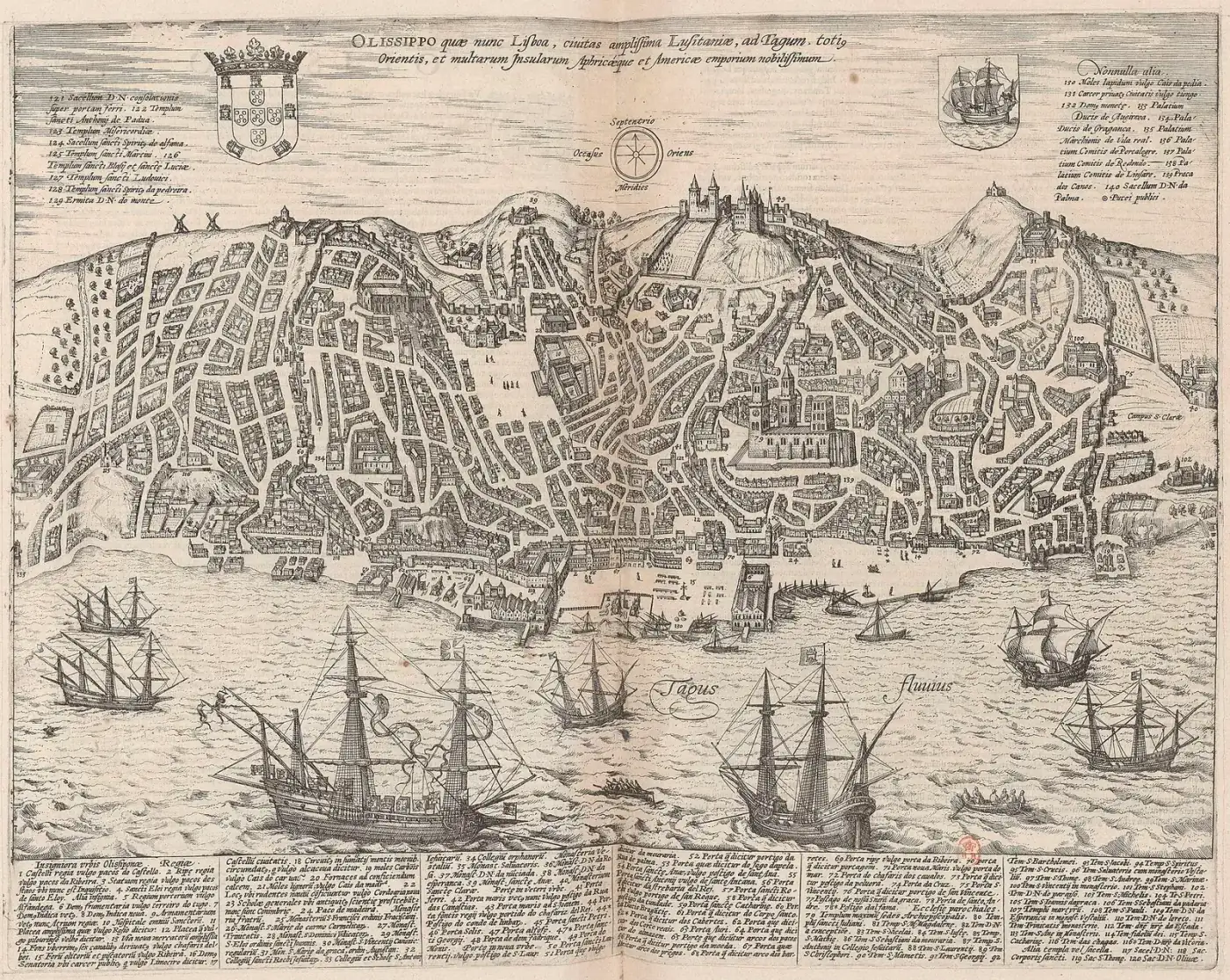
- King João III died in the Ribeira palace in Lisbon in the early hours of Friday 11 June 1557, five days after his 55th birthday, of what his chronicler called a sudden and grave illness.
- He had reigned for 35 and a half years, since December 1521. His wife, Catarina of Austria, bore him nine children; every one of them died before him.
- In Brazil he granted hereditary captaincies to 12 men in 1534 to 1536, then in 1548 named a governor-general, Tomé de Sousa, who founded Salvador in 1549 with the first Jesuits.
- He asked Rome for the Jesuits, who arrived in 1540, moved the university to Coimbra for good in 1537, and gave up Safim, Azamor, Arzila and Alcácer Ceguer in Morocco as too costly to hold.
- The crown passed to his grandson Sebastião, aged three, with Queen Catarina as regent. Sebastião's death at Alcácer Quibir in 1578 opened the way to Spanish rule in 1580.
A Friday night at the Ribeira palace
A little after midnight on Friday 11 June 1557, the feast of Saint Barnabas, King João III died in the Paços da Ribeira, the royal palace on the Lisbon waterfront. He was 55. The illness had been sudden and grave, his chronicler wrote, but not so quick that he could not take all the sacraments of the Church.
That chronicler, Francisco de Andrada, wrote the official history of the reign decades later, on the orders of Philip II of Spain, by then also king of Portugal. He describes a man of middle height, more stout than slender, fair and somewhat ruddy, with dark blue eyes. Many who were not used to speaking to him, Andrada wrote, almost lost their words when they did.
At five the next afternoon, a Saturday, the eve of Trinity Sunday, his chaplains and the brothers of Lisbon's Misericórdia, a charitable brotherhood, carried the body out of the city to the monastery at Belém. It was laid at the foot of the tomb of his father, Manuel I. His nephews Duarte and António, sons of his younger brothers, walked with it, followed by the nobles at court. His brother, Cardinal Henrique, stayed in the palace with the widow, Queen Catarina.
On Monday 14 June the queen and the cardinal met in council with the Duke of Aveiro, the counts of Castanheira and Vimioso, the Baron of Alvito, the heads of the royal high court and chancery and the aldermen of Lisbon. They heard a paper the king had drawn up a few days before he died. It named Catarina guardian of their grandson Sebastião and governor of the kingdom until the boy turned 20.
Everyone present signed their agreement in a public deed. Catarina accepted the charge, Andrada wrote, because her wish to carry out her husband's will outweighed her grief, and she took the cardinal as her helper in government. The new king was three years and four months old.
That a toddler should inherit was the last turn of a long run of family deaths. João III and Catarina had nine children between 1526 and 1539. By June 1557 all nine were dead. Two, Maria and Prince João, had lived long enough to leave a son each.
A prince born in a storm
João was born in the Alcáçova, the royal palace inside Lisbon's castle, at about two in the morning of Monday 6 June 1502. He was the first child of Manuel I and his second wife, Maria of Aragon, a daughter of Ferdinand and Isabella of Spain. Andrada records that a storm of rain, lightning and thunder hit the city that day, in the driest season of the year, and that many took it as an omen of a happy reign.
Manuel died in the Ribeira palace on 13 December 1521. Six days later, on Thursday 19 December, the 19-year-old prince rode from the same palace to the porch of the church of São Domingos to be raised as king. He inherited a monarchy that drew pepper and spices from India round the Cape of Good Hope, held forts on the coast of Morocco and had claimed, but barely settled, the coast of Brazil.
On 5 February 1525 he married Catarina of Austria, sister of the Emperor Charles V and of his own stepmother, Leonor, who had been Manuel's third wife. The marriage treaty, agreed at Burgos on 19 July 1524, gave Catarina a dowry of 200,000 Castilian gold dobras. In 1526 Charles married João's sister Isabel, so the two monarchs were brothers-in-law twice over.
Nine children, none surviving
The first child, Prince Afonso, was born at Almeirim in February 1526 and died very young. Two daughters, Isabel and Beatriz, born in Lisbon in 1529 and 1530, died young. Manuel, born at Alvito in 1531, was sworn heir to the throne in June 1535 and died in Évora in April 1537, aged five. Filipe, sworn heir after him, died at six in 1539.
| Child | Born | Died | Age at death |
|---|---|---|---|
| Afonso, prince | Almeirim, 24 February 1526 | Very young | Not recorded |
| Maria, later Princess of Asturias | Coimbra, 15 October 1527 | Valladolid, 12 July 1545, in childbirth | 17 |
| Isabel | Lisbon, 28 April 1529 | As a child | Not recorded |
| Beatriz | Lisbon, 15 February 1530 | As a child | Not recorded |
| Manuel, prince | Alvito, 1 November 1531 | Évora, 14 April 1537 | 5 |
| Filipe, prince | Évora, 25 March 1533 | 29 April 1539 | 6 |
| Dinis | Évora, 16 April 1535 | Évora, 1 January 1537 | 1 |
| João, prince | Évora, 3 June 1537 | 2 January 1554 | 16 |
| António | Lisbon, 9 March 1539 | 20 January 1540 | Under one |
Dates as given by António Caetano de Sousa in 1737, who drew on Andrada's chronicle and other records. Ages are completed years, worked out from those dates. Caetano de Sousa gives no death dates for Afonso, Isabel and Beatriz. Andrada wrote that Manuel lived only three years; Caetano de Sousa preferred 14 April 1537, from a manuscript note by Manuel de Faria Severim. The king also had a son before his marriage, also called Duarte (1521–1543), who was chosen archbishop of Braga but died of smallpox before he could be consecrated.
How long João III's children lived
years
Age at death, to one decimal place, of the six children whose birth and death dates Caetano de Sousa records, worked out from those dates. Afonso, Isabel and Beatriz also died in childhood. João III himself lived to 55.
Show the data
| Age at death | |
|---|---|
| Maria (b. 1527) | 17.7 |
| Manuel (b. 1531) | 5.5 |
| Filipe (b. 1533) | 6.1 |
| Dinis (b. 1535) | 1.7 |
| João (b. 1537) | 16.6 |
| António (b. 1539) | 0.9 |
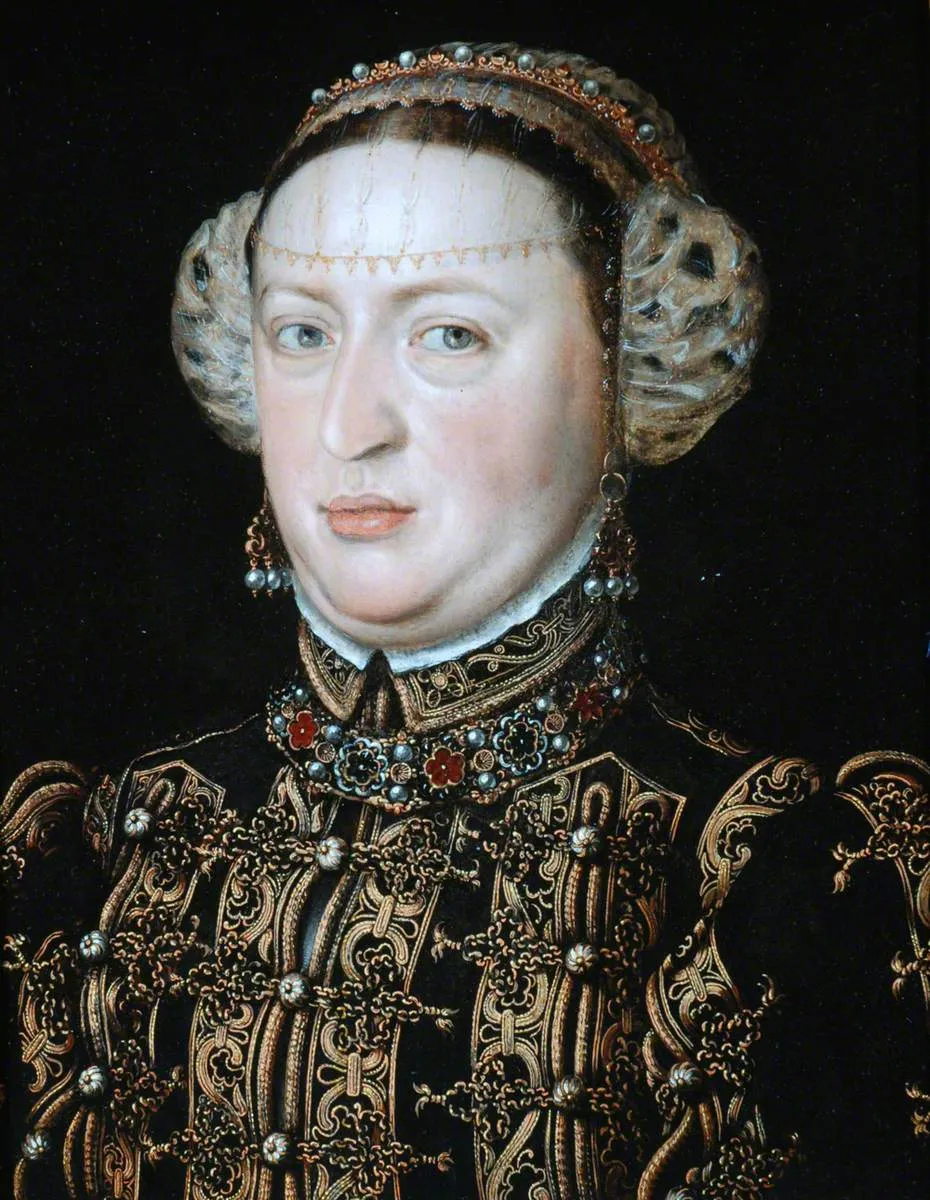
Maria lived to grow up. Born in Coimbra in 1527, she was married at Salamanca on 15 November 1543 to her double first cousin Philip, heir of Charles V, with a dowry of 400,000 cruzados from her father. Four days before the wedding, on 11 November, the king's son Duarte died of smallpox in Lisbon, and João III, Caetano de Sousa says, shut himself away for five days. Maria died at Valladolid on 12 July 1545, aged 17, after giving birth to a son, Carlos.
That left Prince João, born in Évora in 1537. In 1551 Pope Julius III sent him the Golden Rose, a papal honour, with a letter calling him the only hope of his parents and of the kingdom. In January 1552, aged 14, he was married by proxy to his cousin Joana, a daughter of Charles V. He died on 2 January 1554, aged 16, and Joana gave birth to Sebastião 18 days later. Lisboeta tells the story of that birth in a separate article.
“In one heir João left many, for Sebastião alone stood for many.”
Without the baby, the next in line would have been Carlos, son of Maria and Philip, by then heir to Spain. Caetano de Sousa, citing Cardinal Álvaro Cienfuegos's life of the Jesuit Francisco de Borja, says Charles V sent Borja to Portugal in 1557 to propose that Carlos be sworn heir to the Portuguese crown on condition, in case Sebastião died. Catarina would not hear of it, and the emperor told Borja to let the matter drop.
Brazil: from captaincies to a governor
For three decades after Pedro Álvares Cabral landed in 1500, Portugal paid Brazil little attention. Andrada explains why: the crown's attention went to India, whose trade was worth far more, while Brazil's profits would have to come from working the land. French ships traded along the coast all the same.
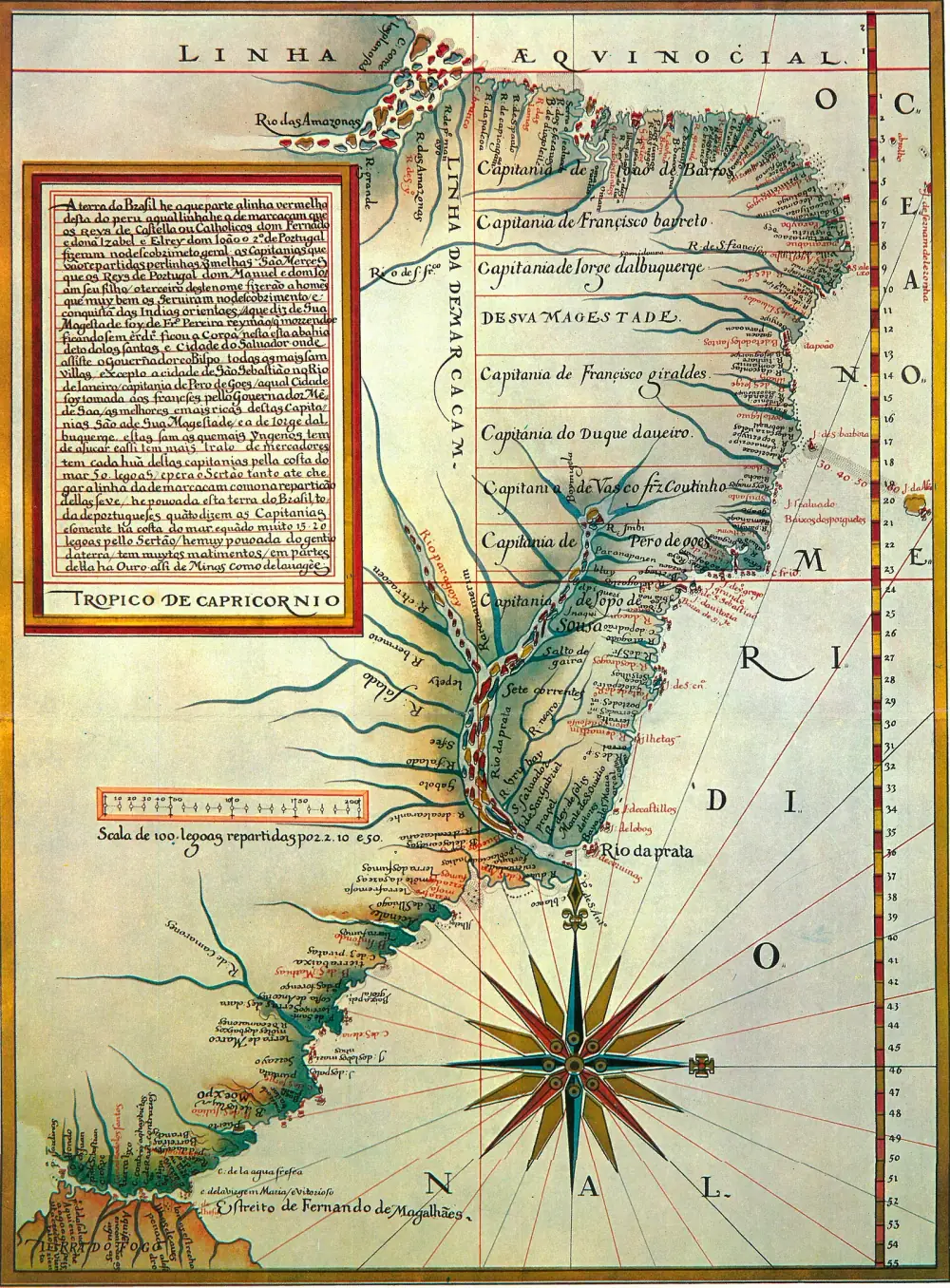
João III's answer, from 1534, was to hand the coast to private men. He divided it into hereditary captaincies, stretches of coast that ran inland towards the line agreed with Spain at Tordesillas, and granted them to 12 donees between March 1534 and January 1536. Each was to settle his grant at his own cost and govern it with wide civil and criminal powers.
Some took root: at Olinda, in Duarte Coelho's Pernambuco, Andrada counted nearly 700 households and five sugar mills. Others failed. The captains, Andrada wrote, lacked the capital to work their land, quarrelled among themselves and ruled the Indigenous people by force rather than goodwill. The donee of Bahia, Francisco Pereira Coutinho, was dead by 1549.
So the king took back many of the captains' powers and put a governor-general over all of them. His instructions to the first, Tomé de Sousa, a nobleman who had served in North Africa and India, are dated 17 December 1548: he was to build a fortress and a city on the Bay of All Saints, defend the other captaincies and spread the faith.
Sousa sailed from Lisbon on 1 February 1549 with six Jesuits led by Manuel da Nóbrega and reached the bay at the end of March: Andrada gives the 28th, Nóbrega's letter home the 29th. The city he built there, Salvador, became the seat of royal government in Brazil, and a bishop for Bahia arrived in 1552.
- Captaincies granted
- 1534 to 1536
- Donees
- 12
- Governor's instructions
- 17 December 1548
- Fleet left Lisbon
- 1 February 1549
- Reached Bahia
- 28 or 29 March 1549
- Jesuits aboard
- 6, under Manuel da Nóbrega
Jesuits, colleges and a university on the hill
The Jesuits were João III's doing. Diogo de Gouveia, a Portuguese who ran the college of Sainte-Barbe in Paris, told him about Ignatius of Loyola's companions, and the king had his ambassador in Rome ask for some as missionaries. In 1540 two came to Lisbon, Simão Rodrigues and Francis Xavier. The king kept Rodrigues to build the order in Portugal and let Xavier sail for India in April 1541.
The king endowed a Jesuit college at Coimbra with 100 scholarships. By the mid-1540s it had sixty students, and from 1545 new Jesuit missionaries sailed from Lisbon for India. Andrada, writing under Spanish rule in the early seventeenth century, counted it among the king's merits that he brought the Society to Portugal, favoured it from the start and built it colleges in several parts of the kingdom.
The university was his other project. Since 1290 it had moved four times between Lisbon and Coimbra. In 1537 João III settled it in Coimbra for good, and on 13 October that year it moved into the old royal palace at the top of the town. He paid professors partly from the rich revenues of the Augustinian monastery of Santa Cruz and, Andrada says, brought in learned men from other kingdoms.
For Latin, Greek and philosophy he founded a separate school, the Colégio das Artes, staffed by masters fetched from Paris; people long called it the college of the French. One of its first teachers was the Scottish humanist George Buchanan. Later it was handed to the Jesuits, and its first building, by Andrada's time, housed the Coimbra tribunal of the Inquisition.
Following his reforms the university gained more than twenty residential colleges, on the hill around the palace and along a new street, the Rua da Sofia, cut through the lower town. The Jesuits established their own Colégio de Jesus in Coimbra in 1547.
An empire stretched thin
In Asia João III paid to end a quarrel with Spain. By the Treaty of Zaragoza of 22 April 1529, Charles V pledged to Portugal his claims to the Moluccas, the clove islands of eastern Indonesia, for 350,000 ducats, keeping a right to buy them back. In India the governor Nuno da Cunha obtained Bassein from the sultan of Gujarat in 1534 and permission to build a fortress at Diu in 1535.
Diu had to be held twice. A Gujarati army and an Ottoman fleet besieged it in 1538, and a second siege in 1546 lasted about eight months before the governor João de Castro broke it in November. Further east, Portuguese traders reached Japan in the early 1540s and settled at Macau in the 1550s. The Macao government's history gives 1553; the historian Tang Kaijian argues for 1554, with the settlement made more official in 1557, the year the king died.
In North Africa the king retreated. Safim, in Portuguese hands for 36 years by Andrada's count, was abandoned in 1541. Andrada says the council, veteran soldiers and some Christian princes he consulted all agreed it cost a great deal, earned little or nothing and could not be defended. Azamor followed in 1542, and its people and guns were moved to Mazagão, which the king had newly fortified. Arzila and Alcácer Ceguer were emptied of settlers in 1549 and given up by 1550, leaving Ceuta, Tangier and Mazagão.
“He was a friend of peace and always kept it, as long as the safety of his lands and the need of his subjects did not force him to take up arms, for he understood how costly and harmful wars are, even when they go well, and how much more is lost in what is spent than is gained in what is won.”
Andrada was a court historian, and he turned withdrawal into prudence. He wrote that the king, with the kingdom in the state it was then in, judged it more honourable to hold fewer places well than to defend all of them badly, and that he gave the orders with great sorrow and against his own inclination. Other bills were large too: Maria's dowry alone was 400,000 cruzados, payable over two years.
A three-year-old king
The king's paper had named Catarina to govern until Sebastião turned 20, but in 1562 she passed the regency to Cardinal Henrique, and Sebastião took power at 14, in 1568. Ten years later he led an army into Morocco and was killed at Alcácer Quibir on 4 August 1578, unmarried and childless. The cardinal, his great-uncle, became king and died in 1580 without naming an heir, and Philip II of Spain, son of João III's sister Isabel, took the crown.
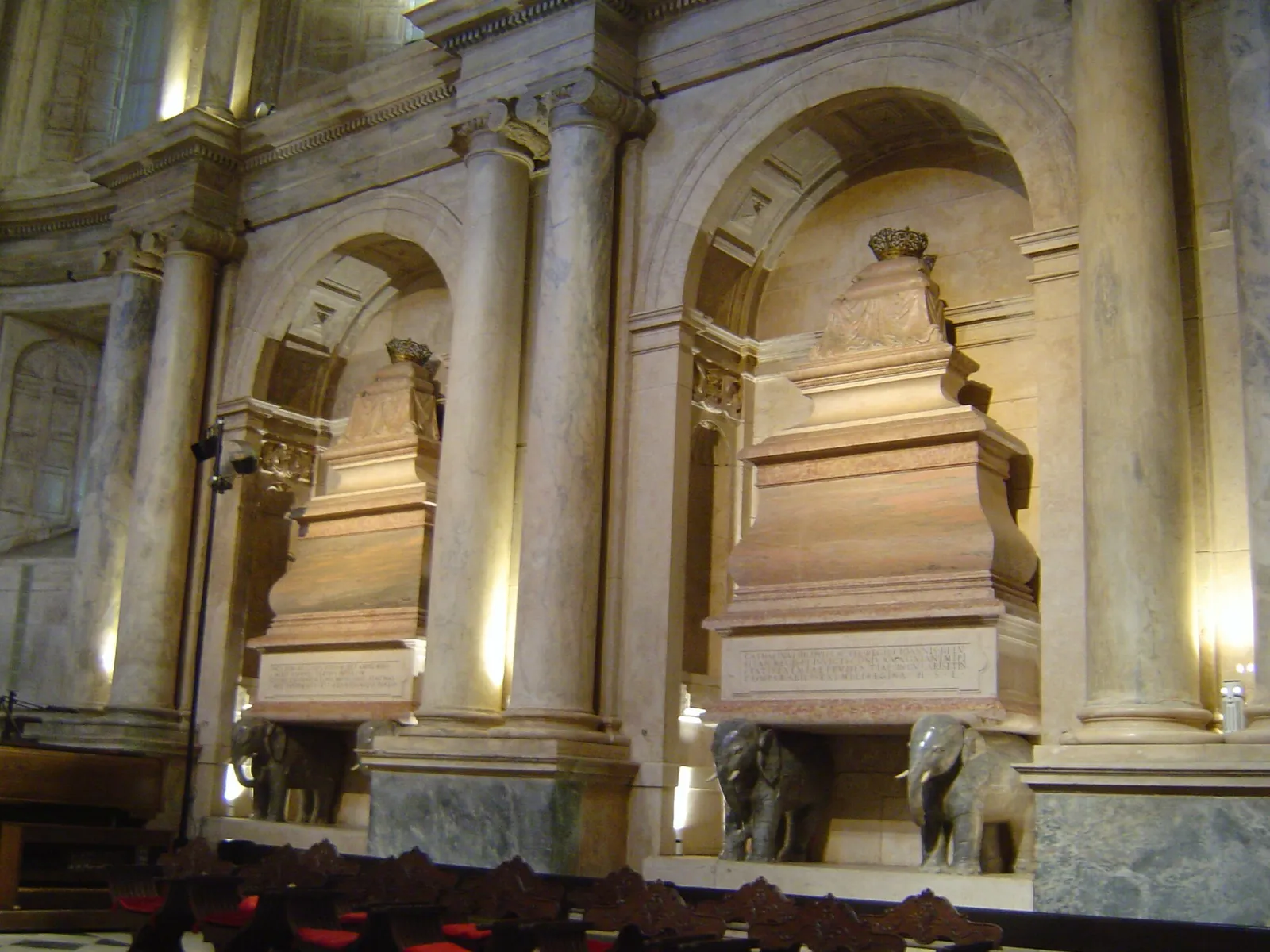
Catarina also saw to the tombs. The chancel of the church at Belém, where João III, Manuel I and their queens now lie, was rebuilt on her initiative in Estremoz marble. The monastery's own history dates the work to 1557 to 1562; its notes for Google Arts & Culture say she commissioned the high altar in 1571, to designs by Jerónimo de Ruão. In 1582 Philip II had Sebastião's supposed remains brought from Ceuta to the same church.
“With wonderful rule, in peace at home and war abroad, João III enlarged the empire. He brought Athens to his kingdom. Here at last lies the king and father of his country.”
Why it still matters
Much of what João III set up outlived his dynasty. The instructions of 1548 became the model for royal government in Brazil, and Salvador, founded in 1549, was its first seat. The Jesuits he invited taught at Coimbra and Évora and ran missions from Brazil to Asia until Portugal expelled them in 1759.
The University of Coimbra is still in the royal palace where he installed it in 1537 (it bought the building in 1597), and the university buildings on the hill and along the Rua da Sofia were made a UNESCO World Heritage Site in 2013. The Inquisition he won from Rome lasted until 1821.
His death also opened the way to the succession crisis of 1580. Because all his children died young, his line hung on two grandsons, and Maria's son Carlos died in Spain in 1568. When Sebastião was lost in Morocco, João III had no descendant left, and after the old cardinal's brief reign Philip II took the crown.
FAQs
When and where did King João III die?
In the Ribeira palace on the Lisbon waterfront, a little after midnight on Friday 11 June 1557, of a sudden illness. He was 55 and had reigned since December 1521. His body was taken the next day to the monastery of Belém.
Why did João III's grandson inherit instead of a son?
All nine of his children by Catarina of Austria died before him. The last surviving son, Prince João, died on 2 January 1554, 18 days before his own son Sebastião was born. Sebastião was three when he became king in 1557.
What did João III do in Brazil?
From 1534 to 1536 he divided the coast into hereditary captaincies granted to 12 donees. When most of them struggled, he named a governor-general, Tomé de Sousa, whose instructions are dated 17 December 1548. Sousa founded Salvador in Bahia in 1549, and six Jesuits under Manuel da Nóbrega came with him.
Where is João III buried?
In the chancel of the church of Santa Maria de Belém at the Jerónimos monastery in Lisbon. His body was taken there the day after he died and laid at the foot of his father's tomb; his widow, Catarina, had the chancel rebuilt in marble, between 1557 and 1562 according to the monastery's history, though its notes elsewhere date her commission to 1571.
Who ruled Portugal after João III died?
His widow, Catarina of Austria, whom the king's paper named to govern until Sebastião turned 20. She was regent until 1562, then Cardinal Henrique until Sebastião took power at 14 in 1568.
On the timeline
Open the timelineNearby moments from the age of discoveries (1415–1580).
Tomé de Sousa arrives at the Bay of All Saints (Baía de Todos os Santos) in Brazil as the first Governor-General, accompanied by approximately 1,000 settlers, soldiers, and six Jesuits. He founds the city of Salvador, establishing it as the capital of Portuguese Brazil.
Sebastião, the future king known as 'o Desejado' (the Desired), is born in Lisbon and named after the saint whose feast falls that day. His disappearance at Alcácer Quibir in 1578 would give rise to Sebastianism, the enduring legend that he would one day return to save Portugal.
Jesuit missionaries sent by Manuel da Nóbrega, among them the young José de Anchieta, celebrate Mass on the Piratininga plateau, where Tibiriçá's people built them a thatched house, on the feast of the Conversion of St Paul, founding the settlement that would grow into São Paulo, Brazil's largest city.
The death of King João III
Death of King João III in Lisbon, aged 55. His reign of more than three decades saw the colonisation of Brazil through hereditary captaincies and the establishment of the Inquisition; having outlived all his children, he leaves the throne to his three-year-old grandson Sebastião, whose disappearance at Alcácer Quibir in 1578 would doom the House of Aviz.
Portuguese captain Estácio de Sá founds the city of São Sebastião do Rio de Janeiro in Brazil, establishing a strategic settlement to expel French colonists from Guanabara Bay.
Dominican friar Gaspar da Cruz dies of plague in Setúbal, where he had carried on nursing the sick after Lisbon's epidemic of 1569. His 'Tratado das cousas da China', finished at the press in Évora two weeks later, is often called the first European book devoted entirely to China.
João de Barros, the humanist historian whose 'Décadas da Ásia' chronicled the Portuguese conquests in the East and earned him the title of the 'Portuguese Livy', dies at Ribeira de Litém near Pombal, aged about 74.
Coming up in history
All long reads 14 June 1908Fernão de Ornelas, the young mayor who rebuilt Funchal
 15 June 1970Almada Negreiros, the rebel of Orpheu, dies in Lisbon: 15 June 1970
 16 June 1808Olhão rises against Napoleon and sails a fishing boat to Brazil, 1808
 17 June 1665Montes Claros, 1665: the last great battle of Portugal's Restoration War
34 sources
Archives, scholarship and reporting this article was checked against.
- 1
Chronica do muyto alto e muyto poderoso rey destes reynos de Portugal Dom João o III deste nome, parte IV (Francisco de Andrada)Real Officina da Universidade, Coimbra, 1796 edition; Internet Archive
- 2
- 3
Royal government, in Early Brazil: A Documentary Collection to 1700 (Stuart B. Schwartz, ed.)Cambridge University Press, 2009
- 4
Reconstruindo o mapa das capitanias hereditárias (Jorge Pimentel Cintra)Anais do Museu Paulista, vol. 21, no. 2, 2013, pp. 11–45
- 5
A Morada da Sabedoria, I: O Paço Real de Coimbra das origens ao estabelecimento da Universidade (António Filipe Pimentel)Almedina, 2005, via Estudo Geral, Universidade de Coimbra
- 6
- 7
- 8
- 9
- 10
Notas sobre a Inquisição portuguesa: história e historiografiaGrayce Mayre Bonfim Souza, Politeia: História e Sociedade (Uesb), v. 20, n. 1, 2021
- 11
O Desejado e o Encoberto: potências de movimento de um mito andarilho (Marcio Honorio de Godoy)Revista USP, no. 82, Universidade de São Paulo, 2009
- 12
Padre Manuel da Nóbrega (1517-1570) (José Luís Ferreira)Enciclopédia Virtual da Expansão Portuguesa, CHAM, NOVA FCSH
- 13
- 14
- 15
University of Coimbra (Eduardo de Hinojosa y Naveros)The Catholic Encyclopedia, vol. 4 (New York, Robert Appleton, 1908), via New Advent
- 16
Coimbra University (Portugal), No 1387: ICOMOS evaluationICOMOS / UNESCO World Heritage Centre, 2013
- 17
- 18
- 19
- 20
History (Macao Yearbook 2023)Government Information Bureau of the Macao SAR
- 21
Review of Tang Kaijian, Aomen kaibu chuqi shi yanjiu (Roderich Ptak)Anais de História de Além-Mar I (2000), CHAM, Universidade NOVA de Lisboa
- 22
- 23
- 24
Frei José Teixeira, defensor do Falso de Veneza: sebastianismo e cultura política na Europa seiscentista (Filipe Duret Athaide)Temporalidades, Revista de História, vol. 8, no. 3, Universidade Federal de Minas Gerais, 2016
- 25
Mosteiro dos Jerónimos: fundação, o mosteiro, panteãoMuseus e Monumentos de Portugal, Mosteiro dos Jerónimos e Torre de Belém
- 26
Nascimento do Cardeal D. HenriqueArquivo Nacional Torre do Tombo
- 27
- 28
Revisitar a Batalha de Alcácer Quibir (Luís Filipe Guerreiro da Costa e Sousa)e-Stratégica, no. 1, 2017, pp. 111-159 (via Dialnet)
- 29
The Royal Journey of Succession to Portugal of King D. Filipe I of Portugal and the architectonic renovation of the palatine residences: the case of the Royal Palace of Lisbon (Milton Pedro Dias Pacheco)Anales de Historia del Arte 30 (2020), pp. 301-323, Universidad Complutense de Madrid
- 30
Church: high altarMosteiro dos Jerónimos, on Google Arts & Culture
- 31
- 32
- 33
What to visitUniversidade de Coimbra, UC Tourism
- 34
The 1755 Lisbon Earthquake: The Catastrophe and the ReconstructionAna Cristina Araújo (University of Coimbra), Storicamente 17 (2021), peer reviewed
Image credits
- Lisbon from the Tagus in the fifth volume of Georg Braun and Frans Hogenberg's Civitates orbis terrarum. The Bibliothèque nationale de France dates the view to 1597, some forty years after João III's death; this copy is from a Cologne printing of about 1640. The Ribeira palace, where Manuel I died in 1521 and João III in 1557, stood on the waterfront below the castle. Unknown author, Public domain, via Wikimedia Commons.
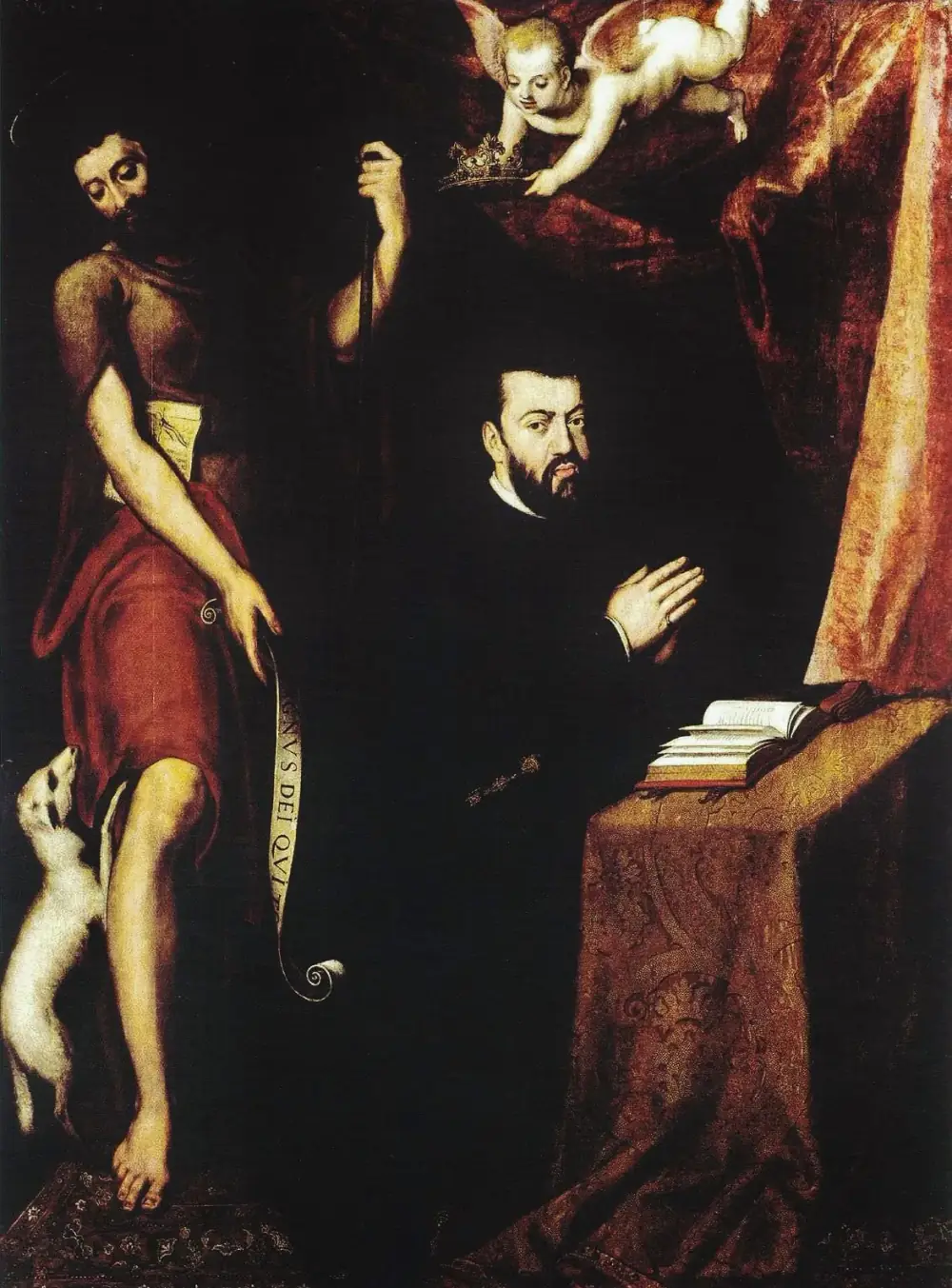
- João III kneeling beside his name saint, John the Baptist, while an angel holds a crown above him. The panel, attributed to Lourenço de Salzedo, was painted in the third quarter of the sixteenth century and hangs in the Madre de Deus convent in Lisbon. Lourenço de Salzedo (attributed), Public domain, via Wikimedia Commons.
- Catarina of Austria, sister of Charles V, João III's wife from 1525 and regent for her grandson Sebastião from 1557 to 1562. A copy by Alonso Sánchez Coello of a portrait by Anthonis Mor, now in the Bowes Museum, County Durham. Alonso Sánchez Coello, Public domain, via Wikimedia Commons.
- Brazil divided into captaincies on a map by Luís Teixeira, dated to about 1574 or, by the Portugaliae Monumenta Cartographica, to 1586, decades after João III's death. By then several grants had changed hands, and the band marked de Sua Magestade, His Majesty's, is Bahia, taken back by the crown as the seat of the governor. The vertical line is the Tordesillas boundary with Spain. Luís Teixeira, Public domain, via Wikimedia Commons.
- The tombs of João III (left) and Catarina (right) on marble elephants in the chancel of the church at the Jerónimos monastery in Belém, which Catarina had rebuilt after his death. Photographed in 2007. Sergio Calleja (Life is a trip) from Barcelona, Spain, CC BY-SA 2.0, via Wikimedia Commons.