

Lagos, 1444: the division of 235 African captives
Six caravels from Lagos came home from the coast of present-day Mauritania with 235 captives. In a field outside the town gate they were split into five lots while Prince Henry watched on horseback, and the royal chronicler wrote down the weeping.
At a glance
- On 8 August 1444, 235 captives brought to Lagos by six caravels were divided into five lots in a field outside the town gate; Prince Henry, who licensed the voyage, took a fifth of 46 people.
- The captives had been seized in raids on islands in the Bay of Arguin and at Cape Branco, on the coast of present-day Mauritania, by a fleet led by Lançarote, the king's tax collector at Lagos.
- Almost all we know comes from Gomes Eanes de Zurara's Chronicle of Guinea, finished in 1453, which describes the families being torn apart and praises Henry for saving the captives' souls.
- By Zurara's count 927 captives had been brought to Portugal by 1448; by the 1480s and 1490s the records show thousands, and Portuguese and Brazilian ships went on to carry more than five million Africans across the Atlantic.
- In 2009 a rubbish dump outside Lagos's walls yielded the remains of 158 people, three with bound hands or feet; since 2016 the building called the Mercado de Escravos has housed a museum of the slave route.
A field outside the town gate
The sailors started work very early on 8 August 1444, because of the heat. In the harbour of Lagos, on the southern coast of the Algarve, they made ready the boats of six caravels and rowed the people held in their holds ashore. There were 235 of them, men, women and children, taken about two months earlier on the coast of Africa beyond Cape Bojador.
They were led into a field outside the town gate. Lançarote, the captain of the fleet, had asked for it the day before: the captives were weak and sick from the long voyage and from grief, he told Prince Henry, so they should be taken off the ships at dawn and divided there into five parts, according to custom, and the prince should choose one.
People came from the town and from the villages and districts around, giving up a day's work to watch. The captives wept, groaned and looked up at the sky. Some struck their own faces, some threw themselves on the ground, some sang laments in the manner of their country. Then the men in charge began to sort them into equal lots.
“For as often as they had placed them in one part the sons, seeing their fathers in another, rose with great energy and rushed over to them; the mothers clasped their other children in their arms, and threw themselves flat on the ground with them; receiving blows with little pity for their own flesh, if only they might not be torn from them.”
Henry, the king's uncle, remembered abroad as Henry the Navigator, sat on a powerful horse with his retinue and took his fifth: 46 people.
The man who wrote all this down, the royal chronicler Gomes Eanes de Zurara, opened the chapter on the division with a prayer. It was not the captives' religion, he told God, but their humanity that made him weep.
Before Lagos: the first captives from beyond Bojador
Portugal's push down the coast of Africa had begun with the capture of Ceuta, in Morocco, in 1415. Henry spent the next decades sending ships south. In 1434 one of his squires, Gil Eanes, sailed past Cape Bojador, on the coast of what is now Western Sahara, which Portuguese sailors had feared to round. For several years the voyages beyond it brought back seal skins and oil, and little else.
In 1441 a young captain, Antão Gonçalves, sent for a cargo of seal skins and oil, seized a man and a woman on the coast instead. Joined there by another captain, Nuno Tristão, his men took more before he sailed home with the first captives. In 1443 Tristão reached the Bay of Arguin and came back with 29 more. Zurara calls them all Moors, the word the Portuguese used for Muslims. Many were Azenegues, Berbers of the Saharan coast; others, he says, were Black.
The Crown made the trade Henry's. Prince Pedro, regent for the boy king Afonso V, granted his brother the royal fifth, the share of all booty owed to the king, to repay what the voyages had cost him, and ruled that no one could sail to those parts without Henry's licence. The pope promised forgiveness of sins to those who fought there under the banner of the Order of Christ.
The captives changed minds at home. Zurara writes that people who had mocked the expense of the voyages fell silent when the first cargoes came in, and began to call the prince another Alexander.
“And, as they saw the houses of others full to overflowing of male and female slaves, and their property increasing, they thought about the whole matter, and began to talk among themselves.”
Henry's captains unloaded their booty at Lagos, and Henry himself spent much of his time in the Algarve, where he was building a town of his own near Cape St Vincent, at what is now Sagres. So the men of Lagos were the first to ask him for a licence to sail to the land the captives came from.
Six caravels under the cross of the Order of Christ
The first to ask was Lançarote, named in some documents as Lançarote de Freitas or Lançarote de Lagos. He had been brought up in Henry's household, was married, and was now almoxarife, the king's collector of taxes, at Lagos. He persuaded friends in the town to join him and fitted out six armed caravels, the small, light ships of the Portuguese voyages. Henry gave his licence gladly and had banners made with the cross of the Order of Christ, one for each ship.
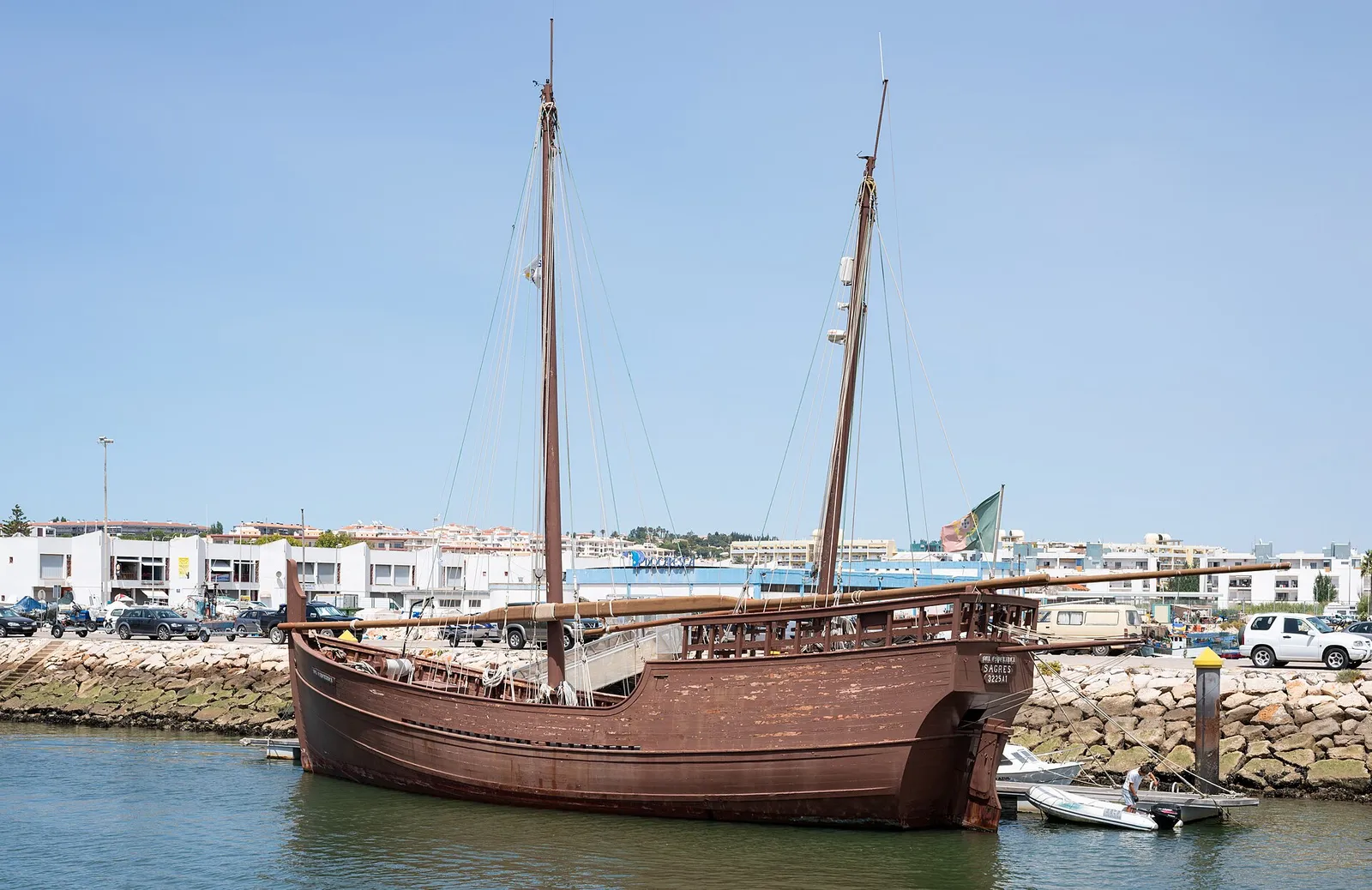
Lançarote's second in command was Gil Eanes, the man who had passed Bojador. The other captains, Zurara says, were Estêvão Afonso, Rodrigo Álvares, João Dias, a shipowner, and João Bernaldes. They reached the Isle of Herons, in the Bay of Arguin, on 10 June, the eve of Corpus Christi, and feasted on young birds, since it was the breeding season.
The raids that followed fill five chapters of the chronicle. Thirty men rowed all night to the island of Naar, where some of Tristão's captives had said almost 200 people lived, and attacked the settlement at daybreak, shouting “St James”, “St George” and “Portugal”. Mothers fled without their children, Zurara writes; some people drowned, and others hid their children under seaweed, where the raiders found them.
Over the next days the boats worked the island of Tider and its neighbours. When a prisoner guiding them led them to an empty village, the raiders beat him to make him tell the truth. They ran down women and children who could not run fast and chased canoes, picking out the smallest people because more of them fitted in the boat.
At Tider about 300 armed men chased them back to their boats. A last landing at Cape Branco ended in a fight and 14 more captives, plus a girl found asleep in an empty village. Then the fleet sailed for Portugal.
| Place | What happened | Captives |
|---|---|---|
| Naar island | Dawn attack on a settlement by 30 men in boats | 165 |
| Tider and nearby | Two days of raids: people on the road, women in a village, women and children on foot, people in canoes | 48 |
| Tider, second landing | Two men, then ten more driving donkeys laden with fish | 12 |
| Cape Branco | Fourteen after a skirmish, and one girl left asleep | 15 |
| Sum of the above | 240 | |
| Total landed at Lagos, per Zurara | 235 |
Lisboeta's sum of the figures in chapters XIX to XXIII. Zurara does not explain the gap of five. Two captives were given away, to the church of Lagos and to the monastery at Cape St Vincent, just before he states the total, and some may have died at sea, but he does not say. A fifth of 235 would be 47, not the 46 he gives for Henry's share.
Before June 1444
Six caravels leave Lagos
Licensed by Henry, flying the cross of the Order of Christ.
10 June
Isle of Herons
The eve of Corpus Christi; the fleet rests in the Bay of Arguin.
11 June
Naar
Dawn raid; 165 people taken.
From 12 June
Tider and nearby islands
Raids over several days; 60 more taken.
Some days later
Cape Branco
Fifteen more taken; the fleet sails for home.
6 August
Back at Lagos
Henry arrives in the town a few hours before the fleet's news reaches him.
7 August
Lançarote reports
He proposes the division in the field outside the gate.
8 August
The division
235 captives split into five lots; Henry takes 46.
The division into fifths
The caravels came in to fine weather. People rowed out in the boats on the beach to greet relatives among the crews. Henry had arrived in Lagos only a few hours earlier, and that first day the captains simply kissed his hand and went home to their wives and children.
“And now these Moors, because of the long time we have been at sea; as well as for the great sorrow that you must consider they have at heart, at seeing themselves away from the land of their birth, and placed in captivity, without having any understanding of what their end is to be; and ... because they have not been accustomed to a life on shipboard; for all these reasons are poorly and out of condition.”
The Polish historian Michał Tymowski points out that this speech is the only fifteenth-century text that describes the state of captives after the voyage. Merchants who bought people on the African coast in the following decades, such as the Venetian Alvise Cadamosto, wrote freely about the purchase and then fell silent once the people were in the hold.
Caravels were small ships with crews of 20 to 30, and packing 30 to 50 captives into a small one as well must have made conditions dreadful. A large caravel could hold up to 120, by the reckoning of the historian A. C. de C. M. Saunders.
Before the division began, the best of the captives was given to the church of Lagos as an offering, and a small boy was sent to the monastery of São Vicente do Cabo, near Sagres, where he later became a Franciscan friar. Then the captives were sorted, and the sorting broke up families: fathers from sons, husbands from wives, brothers from brothers, each going wherever the lot fell.
The crowd made the work harder. Between the captives' resistance and the noise of the onlookers, some weeping and some talking, the men in charge of the division were thrown into confusion. Tymowski reads the scene as ordinary people of Lagos, who gained nothing from the trade, recoiling at what they saw. Zurara himself makes nothing of it beyond the confusion.
Henry quickly handed out his 46 people to others. Once the shares were taken aside, some owners sold their captives on to other districts, and families that had stayed together in the field were split again: Zurara gives the example of a father who stayed in Lagos while the mother went to Lisbon and the children elsewhere. The captains then asked the prince to knight Lançarote, and he did so at once.
- Captives landed
- 235
- Lots
- 5, one for Henry
- Henry's fifth
- 46 people
- Ships
- 6 caravels from Lagos
- Where
- A field outside the town gate
The chronicler's tears and the chronicler's purpose
Zurara wrote nine years after the event. Afonso V asked him in 1452 for a book on Henry's life and deeds, and he finished the Chronicle of Guinea in the royal library on 18 February 1453. Tymowski thinks he probably saw the division himself. Zurara's prayer speaks of the scene before his eyes, but he never says plainly that he was there. He drew on other men's memories and on a lost history of the voyages by Afonso Cerveira.
In the sixteenth century the chronicle seems to have disappeared from Portugal. In 1837 the French scholar Ferdinand Denis found a fine manuscript of it in Paris, and it was printed there in 1841 with an introduction by the Viscount of Santarém. Almost every modern account of 8 August 1444, including this one, rests on Zurara's text.
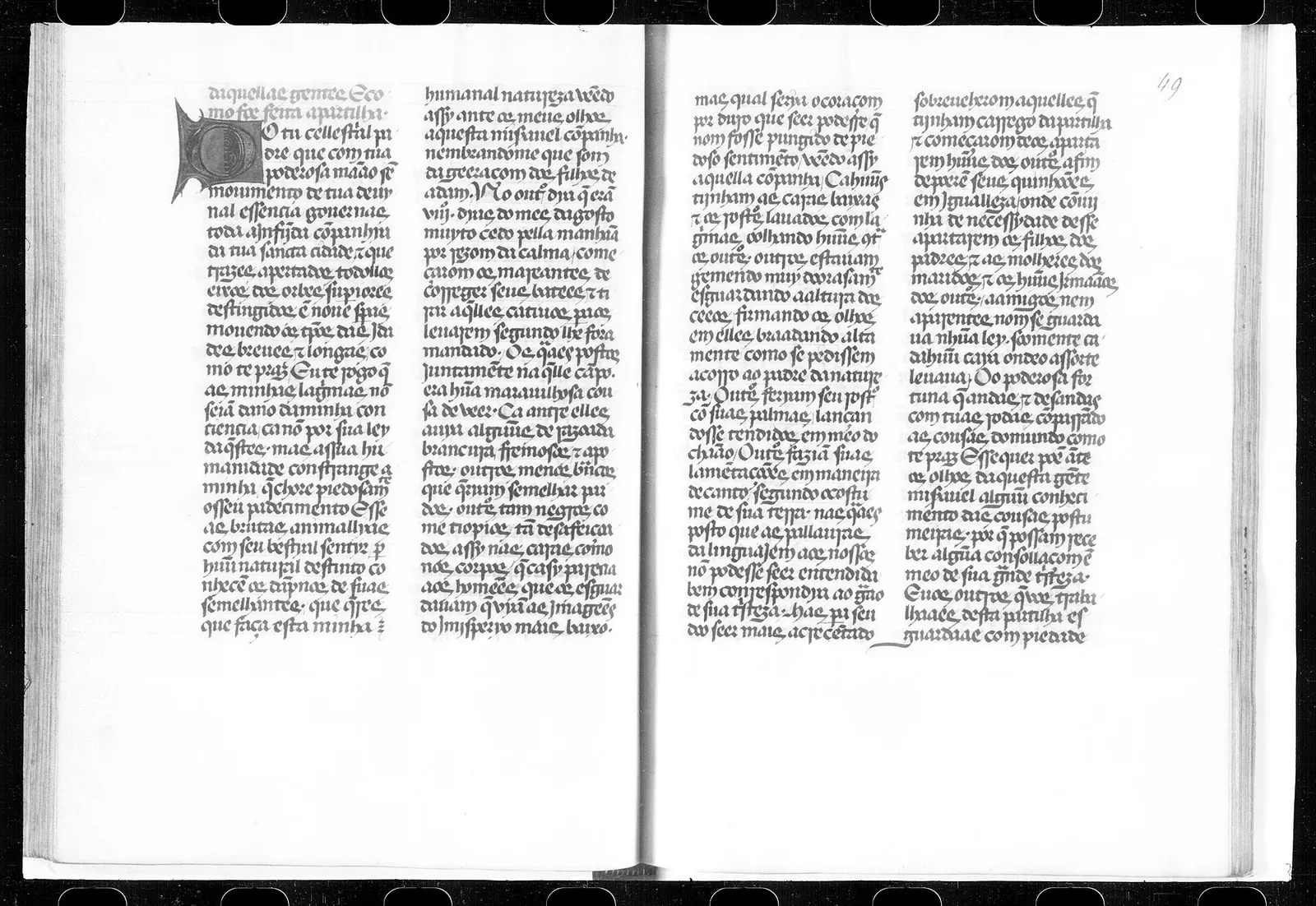
His pity sits beside a judgement of the captives by their colour. In the same paragraph that asks what heart could be so hard, he sorts them into some “white enough, fair to look upon”, some like mulattoes and some “as black as Ethiops”, whom he calls so ugly they looked like images of a lower hemisphere. Most of these criteria would later be used to set the value of slaves.
The next chapter turns to justification. Zurara says he never saw one of these slaves put in irons and that they never tried to run away. Owners, he writes, freed some and married them to Portuguese women, and celebrated their baptisms and weddings as if for their own children.
He adds that the captives had lived “like beasts” in Africa and that their souls were now saved. In the same passage he admits that once they were given Portuguese food their bellies swelled and they fell ill for a time, and that some died, “but as Christians”.
Some claims do not fit the dates. Zurara writes that he had seen in Lagos the children and grandchildren of the first captives, born in Portugal, as good Christians as anyone. In 1453 the first captives had been in the country for twelve years at most. The editors of the English edition point out that some passages speak of Henry as already dead, so the text seems to have been added to after his death in 1460, which may explain some of it.
From raids to a trade
The coast fought back. The next captain sent out, Gonçalo de Sintra, was killed with most of his men on a raid. In 1445 Lançarote led a much larger fleet to avenge him: Zurara counts 14 caravels fitted out at Lagos among 26 that sailed for the coast that year. Raiding was dangerous, and in 1448 Henry began building a fort on the island of Arguin, which later held a garrison and a royal factor, or trading agent.
Zurara ends his chronicle in 1448. Counting from the beginning of the voyages, he found that 927 people had been brought to Portugal, most of whom, he says, became Christians. From then on, he wrote, the business of those parts was done “more by trafficking and bargaining of merchants than by bravery and toil in arms”.
Lagos kept the trade for a while. The Arguin trading station was run from the town until 1463, three years after Henry's death, when Afonso V moved it to Lisbon. In 1455 Pope Nicholas V's bull Romanus Pontifex confirmed Portugal's monopoly south of Bojador and mentioned the “Guineamen and other negroes” already brought to the kingdom.
| Years | Count or estimate | Source of the figure |
|---|---|---|
| 8 August 1444 | 235 landed at Lagos | Zurara, Chronicle of Guinea |
| 1441–1448 | 927 brought to Portugal | Zurara, chapter XCVI |
| 1450s | 800 to 1,000 a year | Alvise Cadamosto's estimate |
| 15 June 1486 – 31 December 1493 | 3,589 from Guinea to Lisbon | Accounts of the Casa dos Escravos, Lisbon |
| Late fifteenth century | 300 to 2,000 a year taken from Africa; about 10,000 Black slaves in Portugal, with slaves of all origins about 1 per cent of the population | A. C. de C. M. Saunders |
| 1530s and 1540s | Slaves nearly 10 per cent of the people of Lisbon and of Évora | A. C. de C. M. Saunders |
| 1551 | 9,950 slaves among 100,000 people in Lisbon | Cristóvão Rodrigues de Oliveira's description of the city |
The figures come from different kinds of record and are not a series. The fifteenth-century counts, as Tymowski stresses, are fragmentary, and some of the people bought were sold on to Castile. The sixteenth-century figures count slaves of every origin, not only Africans.
Tymowski treats this fifteenth-century trade to Portugal as a prelude: small beside the older trade across the Sahara and the Atlantic trade to come. From the 1500s the ships went to the sugar islands of São Tomé and then to the Americas, and the numbers changed scale.
Measured by people who survived the crossing, Jelmer Vos and Kalle Kananoja put the number carried to the Americas on Portuguese and Brazilian ships at more than five million. In mainland Portugal the import of slaves was banned by a law of 1761, and the state of slavery was abolished in every Portuguese territory only in 1869.
What the ground at Lagos kept
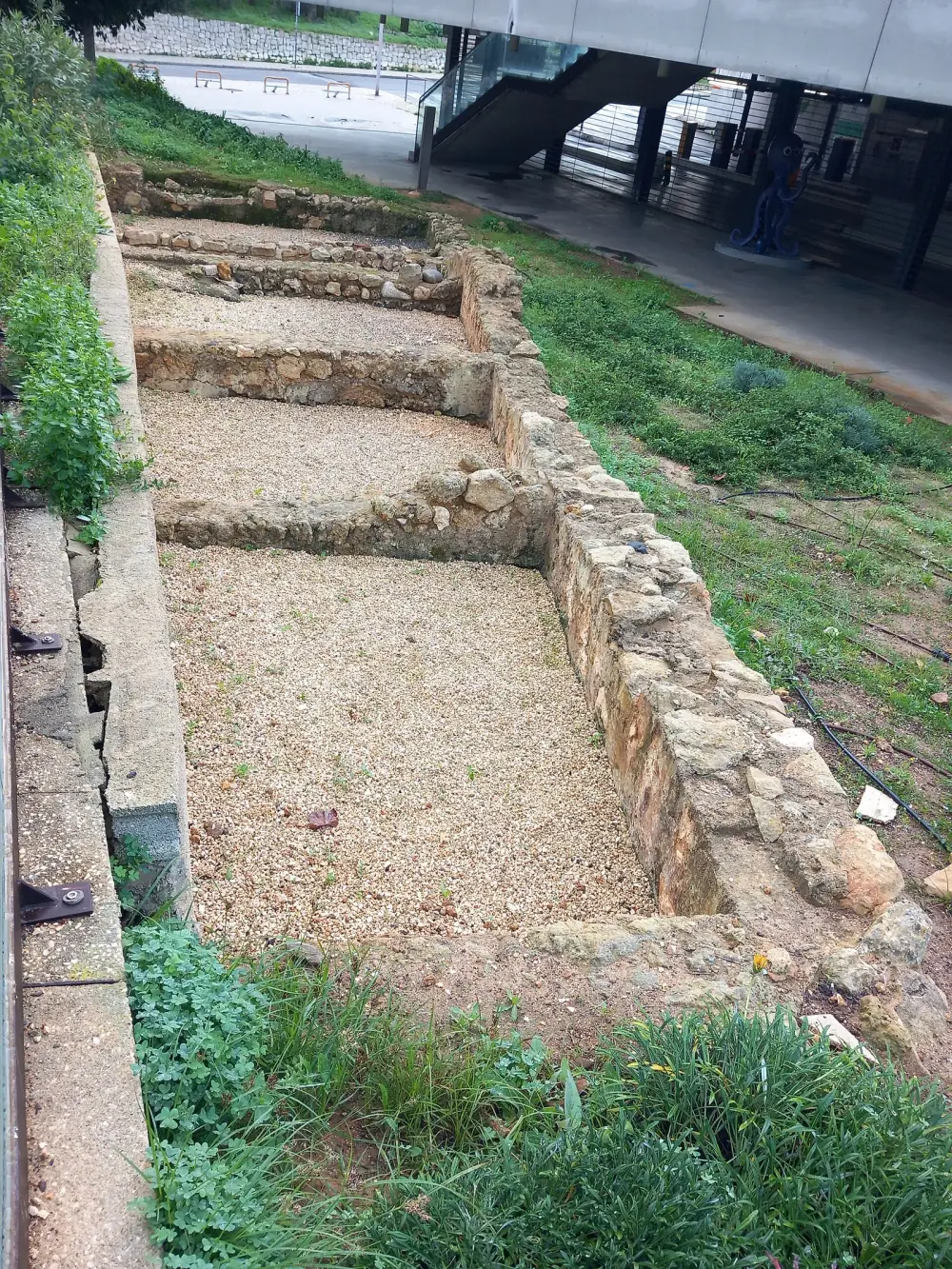
Zurara's chronicle describes the captives' arrival. The burials outside Lagos show what happened to some of those who died. In 2009 building work for an underground car park at the Vale da Gafaria, outside the town walls and beside an old leper hospital, uncovered an urban rubbish dump used between the fifteenth and seventeenth centuries. In it lay the remains of 158 people, men and women, adults and children, thrown in with the town's refuse.
Many lay in unusual positions, and three had their hands or feet bound. Around a third were under 18. One skeleton was radiocarbon dated to between 1420 and 1480, the decades of the first voyages, and DNA from two of the dead pointed to West African or Bantu-speaking ancestry. The Lagos museum describes them as Africans brought to the town as merchandise who were discarded with the rubbish, sick or dying.
Written records show that Africans became a large part of the Algarve's population. Morán and Parreira put enslaved Africans at about one in ten of the region's people in the sixteenth century, and point to hundreds of surviving documents: deeds of ownership, letters freeing slaves, baptisms, burials and the records of Black confraternities of Our Lady of the Rosary.
Why it still matters
In 2010 and 2012, after the discovery at the Vale da Gafaria, the town council of Lagos signed agreements with the Centre for African and Development Studies at ISEG, a Lisbon university school, to create a museum on the slave trade with the Portuguese committee of UNESCO's Slave Route project, and a memorial at the Vale da Gafaria.
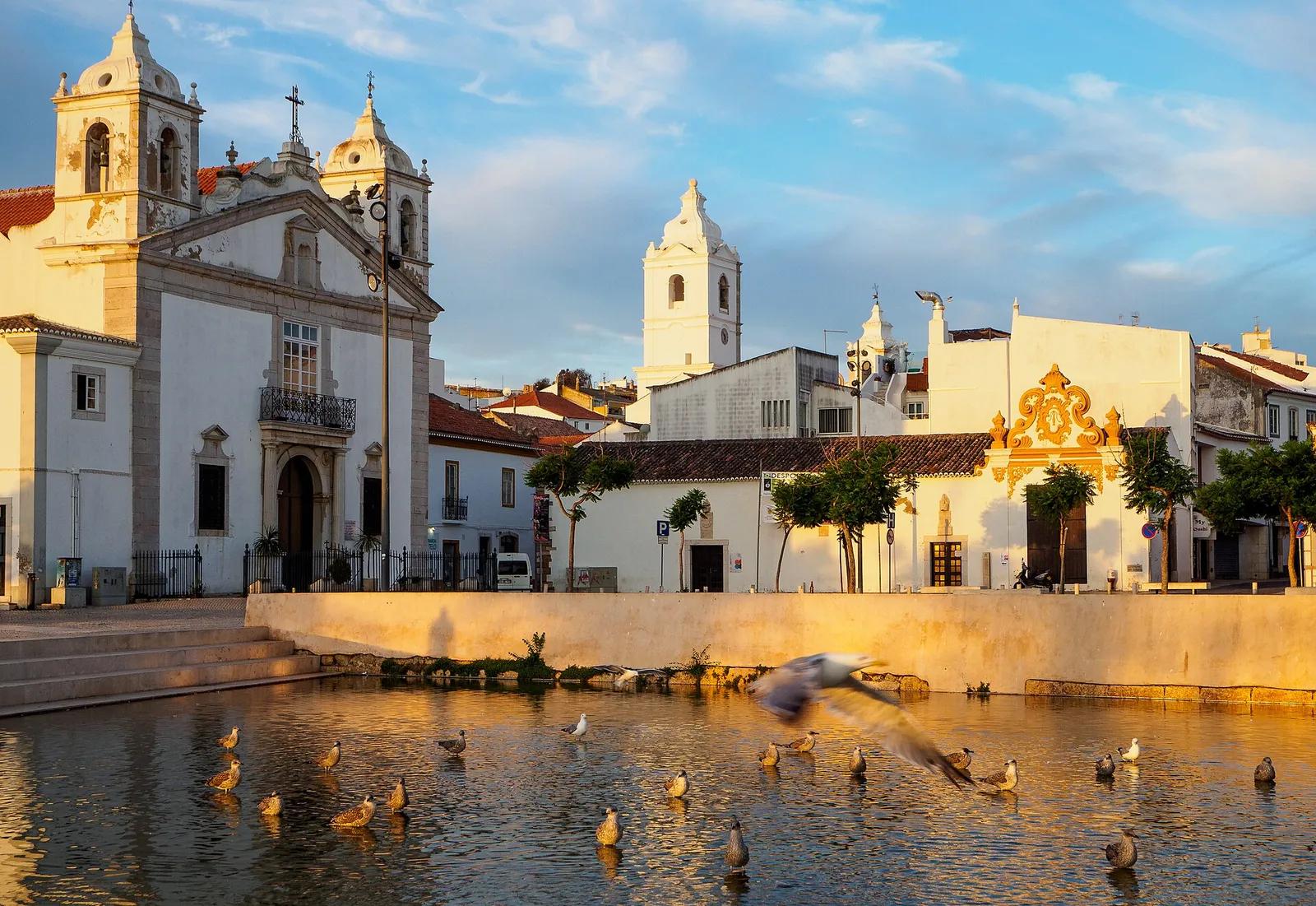
The museum opened on Monday 6 June 2016 in the building on the Praça do Infante that everyone in Lagos calls the Mercado de Escravos, the slave market. The culture minister, Luís Filipe de Castro Mendes, told the guests: “the slave trade was condemnable, but it is part of our history” (translated from Portuguese).
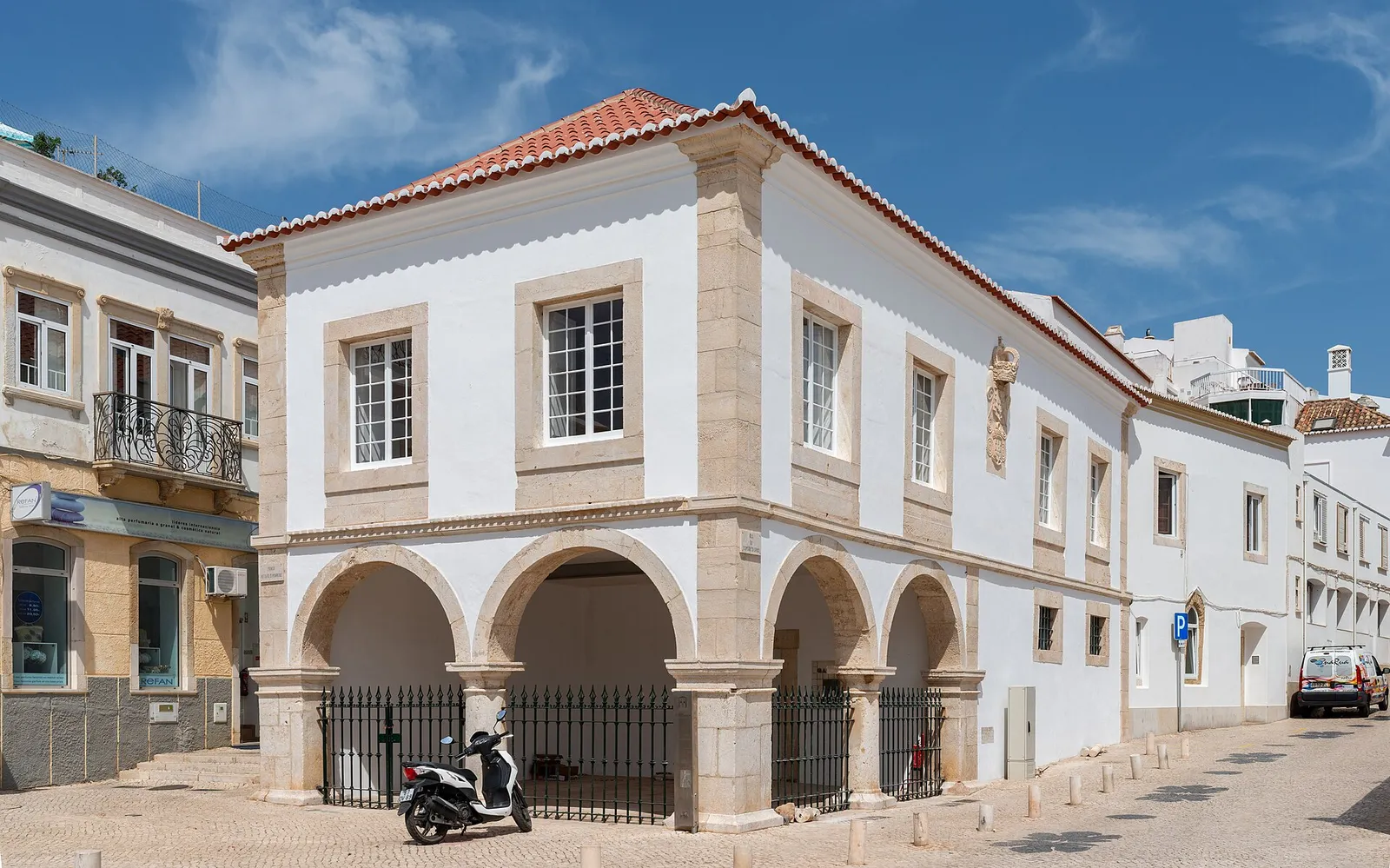
The name is older than the building. The present structure dates from 1691 and was the last of the support buildings of the fortified town to go up; it was classified as a monument of public interest in 2014.
The Algarve press report of the classification says it was built on the remains of a fifteenth-century building used for selling slaves; the passage of the classification order quoted there speaks more carefully, of the memory of the place where the probable first slave market of fifteenth-century Europe stood. Morán and Parreira call it the former military Vedoria, the office that oversaw the garrison, and it later housed the customs. Zurara placed the division of 1444 in an open field outside the gate.
FAQs
Was the 1444 landing at Lagos the start of the Atlantic slave trade?
It was the first large landing of African captives in Portugal on record, but not the first landing: Portuguese captains had brought small groups home since 1441, and Europe had older slave markets supplied from the Mediterranean and across the Sahara. Historians such as Michał Tymowski treat the fifteenth-century trade to Portugal as a prelude to the transatlantic trade, which grew from the sixteenth century.
Was it an auction?
Zurara describes a division, not an auction: the 235 captives were split into five lots in a field outside the town gate, and Prince Henry took one as his fifth. He adds that afterwards some owners sold their captives on to other districts and to Lisbon.
Where did the captives come from?
From islands in the Bay of Arguin, including Naar and Tider, and from Cape Branco, on the Atlantic coast of present-day Mauritania. Zurara calls them Moors; many were Azenegues, Berbers of the Saharan coast, and he describes others as Black.
Was the Mercado de Escravos in Lagos really the slave market?
Not the building you see today, which dates from 1691 and housed the office that oversaw the garrison and later the customs house. The press report of its 2014 classification says it stands on the remains of a fifteenth-century building used to sell slaves, but Zurara says the division of 1444 took place in an open field outside the town gate. Since 2016 the building has housed the Lagos museum's section on the slave route.
How many Africans were brought to Portugal in the fifteenth century?
There are only partial counts. Zurara counted 927 by 1448, Cadamosto estimated 800 to 1,000 a year in the 1450s, and the Lisbon slave house recorded 3,589 arrivals from Guinea between June 1486 and December 1493. A. C. de C. M. Saunders estimated that by the end of the century there were about 10,000 Black slaves in Portugal; slaves of all origins made up about 1 per cent of the population.
On the timeline
Open the timelineNearby moments from the age of discoveries (1415–1580).
The future King Afonso V is born in Sintra, son of Duarte, then heir to the throne. Left king at the age of six, he would earn the nickname 'o Africano' for his conquests in Morocco.
King Duarte I, known as 'the Eloquent' for his philosophical writings, dies at Tomar (the chronicler Rui de Pina's date; others give the 13th). His six-year-old son Afonso V succeeds him, with Queen Leonor named regent under his will.
Death in captivity in Fez of Infante Fernando, 'the Constant Prince'. Left at Tangier in October 1437 as surety that Portugal would return Ceuta, he was never redeemed: the Cortes split, King Duarte delayed and a later deal collapsed. His letters begged for release, but after more than five and a half years a prisoner he was remembered as a martyr who chose chains over Ceuta's surrender, as in Calderón's play 'El príncipe constante'.
The Lagos captives of 1444
At Lagos in the Algarve, 235 captives seized on the coast of present-day Mauritania by six caravels licensed by Prince Henry the Navigator are divided into five lots, some to be sold on: the first large landing of African captives recorded in Portugal.
Pope Nicholas V issues the bull 'Romanus Pontifex', granting the Portuguese crown exclusive rights to conquest, trade and navigation along the African coast south of Cape Bojador and sanctioning the enslavement of non-Christians — a papal charter for Portugal's overseas expansion.
Birth of King João II ('The Perfect Prince') in Lisbon. He would become one of Portugal's most important monarchs, sponsoring Bartolomeu Dias's voyage around the Cape of Good Hope and negotiating the Treaty of Tordesillas.
Cardinal Jaime of Portugal, a grandson of King João I and archbishop of Lisbon, dies in Florence aged 25, after falling ill on the pope's journey towards the Congress of Mantua. His funerary chapel at San Miniato al Monte, with a tomb by the Rossellino brothers and decoration by Luca della Robbia and the Pollaiuolo brothers, is one of the great monuments of the Florentine Renaissance.
Coming up in history
All long reads

17 sources
Archives, scholarship and reporting this article was checked against.
- 1
The Chronicle of the Discovery and Conquest of Guinea, vol. I (chapters I–XL)Gomes Eanes de Zurara, translated by C. R. Beazley and Edgar Prestage (Hakluyt Society, 1896), Project Gutenberg
- 2
The cultural-psychological aspects of the presence of African slaves in Portugal in the fifteenth and early sixteenth centuries (Michał Tymowski)Acta Poloniae Historica 107 (2013), Institute of History, Polish Academy of Sciences
- 3
Lazanrote [Lançarote de Freitas] (Teresa Lacerda)Encyclopaedia of Portuguese Expansion (EVE), CHAM, NOVA FCSH and Universidade dos Açores, 2009
- 4
Genetic evidence of African slavery at the beginning of the trans-Atlantic slave trade (Martiniano, Coelho, Ferreira, Neves, Pinhasi and Bradley)Scientific Reports 4, 5994 (2014), via PubMed Central
- 5
Na rota da escravatura: usos sociais da memória dos escravos negros no Algarve (Elena Morán and Rui Parreira)Postal do Algarve, Cultura.Sul supplement, January 2018
- 6
Núcleo Rota da Escravatura – Mercado de EscravosCâmara Municipal de Lagos
- 7
Table VII: Volume of the Transatlantic Slave Trade from Africa by Nationality of Carrier, 1519–1867 (supplement to David Eltis, “The Volume and Structure of the Transatlantic Slave Trade: A Reassessment”)William and Mary Quarterly, 3rd series, vol. LVIII, no. 1 (January 2001), Omohundro Institute
- 8
- 9
- 10
European Treaties bearing on the History of the United States and its Dependencies to 1648, vol. IFrances Gardiner Davenport (ed.), Carnegie Institution of Washington, 1917 (Internet Archive)
- 11
Escravatura e tráfico negreiro nos documentos dos Cartórios Notariais de Lisboa do Arquivo Nacional Torre do Tombo (Maria Manuel Ferraz Torrão)In Subsídios para a história da escravatura insular, séculos XV a XIX, Edições CHAM, Universidade NOVA de Lisboa
- 12
Portuguese slave trade in the Americas (Jelmer Vos and Kalle Kananoja)Encyclopedia of Global Human Migration, Wiley-Blackwell, 2013 (University of Glasgow repository)
- 13
“Esperança de liberdade”: interpretações populares da abolição ilustrada (1773-1774) (Luiz Geraldo Silva)Revista de História 144 (2001), Universidade de São Paulo, pp. 107-149
- 14
Decree of 25 February 1869 abolishing the state of slavery in all territories of the Portuguese monarchy, with its preamble (Diário do Governo no. 45, 27 February 1869)Faculdade de Direito, Universidade Nova de Lisboa (reproduction)
- 15
Skeletons in mass Portuguese burial site belonged to African slavesTrinity College Dublin, 17 September 2014
- 16
- 17
Image credits
- The building known as the Mercado de Escravos, the slave market, on the Praça Infante Dom Henrique in Lagos, in August 2015. The present building is dated to 1691, and since 2016 it has housed the town museum's section on the slave route. Norbert Nagel, CC BY-SA 4.0, via Wikimedia Commons.
- The Praça Infante Dom Henrique in Lagos at about seven in the morning on 8 August 2017, with the church of Santa Maria on the left. The Mercado de Escravos building stands on the same square. Martin Robson from Brighton, UK, CC BY-SA 2.0, via Wikimedia Commons.
- The Boa Esperança, a replica caravel, moored on the Ribeira de Bensafrim in Lagos in 2015. Lançarote's six ships of 1444 were caravels, though of their exact size and rig nothing is recorded. Norbert Nagel, CC BY-SA 4.0, via Wikimedia Commons.
- Folios 48v and 49r of the Paris manuscript of Zurara's Chronicle of Guinea (Bibliothèque nationale de France, Portugais 41). Chapter XXV opens at top left with Zurara's prayer, and partway down the second column begins the account of the morning: on the next day, which was the 8th of August. Unknown author, Public domain, via Wikimedia Commons.
- Excavated foundations of the Gafaria, the leper hospital outside the walls of Lagos, in 2022. The rubbish dump with the remains of 158 people was found beside it in 2009. Ajpvalente, CC BY-SA 4.0, via Wikimedia Commons.