Housing Protesters Remove Tents Under Police Pressure in Porto
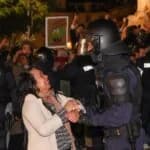
Protesters in Porto's Praça D. João I agreed to take down their tents under pressure from the Public Security Police (Polícia de Segurança Pública or PSP), who permitted them to remain in the square overnight only without camping gear. Demonstrators demanding government action on the housing crisis have maintained temporary encampments across Porto and Lisbon's Rossio square for three weeks, leading to recurring standoffs, dozens of arrests, and several police baton charges.
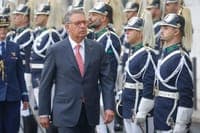
An open letter signed by more than 400 lawyers accused the PSP of using disproportionate force during earlier clearances of the demonstration sites. In parliament, Defence Minister Nuno Melo defended the security forces, asserting that officers had acted with necessary firmness and restraint under difficult conditions.
Nuno Melo is the leader of CDS-PP (Centro Democrático e Social – Partido Popular), a Christian democratic party on Portugal’s centre-right, and Minister of National Defence in Luís Montenegro’s government, where CDS-PP governs in coalition with the PSD. He was previously a Member of the European Parliament.

The PSP (Polícia de Segurança Pública) is Portugal's national civilian police force, founded in 1867. Responsible for defending Republican democracy and safeguarding internal security and citizens' rights, the PSP polices major cities—Lisbon, Porto, Faro—and large urban areas, covering only 4% of Portugal's territory but roughly half the population. Led by a National Director under the Ministry of Internal Affairs, its approximately 21,500 officers handle preventive policing, crime investigation, public order, airport security, diplomatic protection, private security regulation, firearms licensing, and border control (since 2023).
PSP vs. GNR: The PSP is civilian with police-focused training and urban jurisdiction, while the GNR (Guarda Nacional Republicana) is military (gendarmerie) with military training, covering 96% of Portugal's rural and suburban territory. Both share core public safety missions but differ fundamentally in nature, training, and geographic responsibility.