Letters to the editor
Infarmed has referred 19 cases to the Public Prosecutor's Office following inspections into the overbilling of diabetes medications and glucose monitoring devices, uncovering significant irregularities within pharmacies.

Infarmed has referred 19 cases to the Public Prosecutor's Office following inspections into the overbilling of diabetes medications and glucose monitoring devices, uncovering significant irregularities within pharmacies.

Former Minister of Economy Manuel Caldeira Cabral examines how Middle East geopolitical instability and rising oil prices could impact the Portuguese economy and household costs.

Socialist Party members begin voting today to re-elect José Luís Carneiro as secretary-general, with the leader running as the sole candidate in the direct elections.
A new gynaecology and obstetrics referral network is being implemented in Portugal, centralising patient flow to Loures while highlighting critical staffing shortages across multiple regional hospitals.

CDS-PP and Chega have introduced bills to restrict the display of flags on public buildings, proposing that only national, European Union, and official institutional flags be permitted.

Data indicates that infant mortality rates during pregnancy and the first year of life are higher for children of foreign mothers compared to Portuguese mothers, prompting calls for improved healthcare integration and outreach.
Edi Gomes, HR director at INEM, testified before a parliamentary inquiry committee, revealing that staff had already surpassed their overtime limits prior to the 2024 strike, while former officials criticized the lack of political accountability regarding the crisis.

The Portuguese government is proposing legislative changes to allow individual heirs to force the sale of inherited properties, a move intended to increase housing supply but which has sparked significant public and legal debate.

Portugal faces criticism for its vulnerability to spam and online scams, prompting calls from Anacom, the Cybersecurity Alliance, and Deco for legislative reform and enhanced consumer protection measures.

An analysis of the legal framework and consumer rights regarding both physical and digital complaint books as essential tools for customer service.

A study by the consumer protection association Deco reveals that digital customer support systems across 24 companies are largely inadequate, leaving consumers struggling to reach human operators or file complaints effectively.

European Council President António Costa has invited UN Secretary-General António Guterres to an upcoming EU summit to address regional tensions in Iran and discuss strategies for enhancing European economic competitiveness.

Today's top news from Portugal.
Conflict between Israel and Iran is impacting Portuguese households through rising energy and food costs. A 50-liter tank of fuel is now 11.75 euros more expensive than before the war, with further risks if the Strait of Hormuz (Estreito de Ormuz) closes. The International Energy Agency warns of a massive global supply drop this month. Residents should note that these pressures may also lead to interest rate hikes.

Users who have no contact with the National Health Service (Serviço Nacional de Saúde or SNS) may lose their assigned family doctor (médico de família) starting in June. Separately, health officials are warning foreign mothers to prioritize prenatal care following a report on fetal mortality rates. The National Health Council (Conselho Nacional de Saúde or CNS) also warned that service cuts are already occurring across the country despite growing demand. SNS patients should be aware that regular contact with their health unit is necessary to maintain their registration.

A parliamentary inquiry into the National Institute of Medical Emergency (Instituto Nacional de Emergência Médica or INEM) revealed that many staff had already exceeded the legal limit of 150 overtime hours before the 2024 strike. Former head of the National Health Service (Serviço Nacional de Saúde) Fernando Araújo testified that there has been a lack of political accountability for the crisis. The inquiry is investigating the breakdown of emergency services during the industrial action. Those relying on emergency services should note that the system remains under significant strain.
Minimum services (serviços mínimos) are the legally required basic services that must be maintained during a strike to protect public safety—in healthcare this typically covers emergency care, critical ambulance coverage and intensive care. They matter because the INEM workers' committee admitted that late or unclear communication about which teams would be available during the end-of-2024 strike may have reduced operational capacity and confused patients; as an expat, expect limited non-urgent care during strikes and check official updates or call 112 for true emergencies.
Fernando Araújo is a physician and the former Executive Director of the National Health Service (Serviço Nacional de Saúde or SNS), a position he held until mid-2024. He was responsible for the Local Health Units (Unidades Locais de Saúde) reform, which integrated hospital and primary care services to improve efficiency. SNS patients should note that his public criticisms often highlight ongoing issues with emergency room wait times and medical staffing.

The President of the Court of Auditors (Tribunal de Contas) has called for a rigorous debate over government plans to reform the institution. A major point of contention is the proposed end of prior approval (visto prévio) for certain public contracts, which critics say is essential for financial sustainability. Former officials warn that weakening the court's oversight could undermine the state's ability to analyze complex private-sector contracts. Residents should note that these changes aim to speed up public procurement but face significant institutional pushback.
The Court of Auditors (Tribunal de Contas) is Portugal’s independent public audit body that inspects and approves the accounts of state entities, public companies and other bodies that use public funds. Its rejection of an organisation’s accounts signals serious financial irregularities and can lead to recoveries, fines or political fallout, so taxpayers and public-sector contractors should pay attention.

Minister of National Defence Nuno Melo defended a 5.8 billion euro investment in the armed forces through the Instrument of Action for European Security (Instrumento de Acção para a Segurança da Europa or SAFE). The government claims the loans are a “unique opportunity” to modernize equipment and cover full life cycles of military assets. Portugal has now reached the NATO target of 2% of GDP in military spending. Taxpayers should note that the government has refuted accusations of a lack of transparency regarding these loans.
Nuno Melo is the president of CDS-PP (Centro Democrático e Social – Partido Popular), a Christian democratic party in Portugal. In the story he linked Chega's position to socialism, compared André Ventura to Donald Trump, and urged party members to vote 'in conscience' in the presidential runoff on the 8th, a stance that could affect centre‑right voters.

The government is preparing changes to housing policy that would allow one heir to force the sale of an inherited property even if others disagree. The plan also includes measures to accelerate evictions for non-compliance to encourage more owners to put houses on the rental market. While the government is ending the previous policy of forced leasing (arrendamento forçado), critics argue the new “forced selling” measure is equally controversial. Property owners and heirs should be aware of these upcoming legal shifts.

European Council President António Costa has invited UN Secretary-General António Guterres to attend next week’s EU leaders' summit. The meeting will focus on the war in Iran and its global economic repercussions, alongside European competitiveness. This marks a high-profile collaboration between the two former Portuguese prime ministers on the international stage. Residents should note that the summit's outcomes may influence future EU economic policy and energy security.

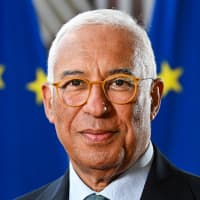
António Luís Santos da Costa (born July 17, 1961, in Lisbon) is a Portuguese lawyer and Socialist politician who served as Prime Minister of Portugal from 2015-2024 and currently serves as President of the European Council since December 1, 2024. After leading the Lisbon Municipal Assembly and practicing law, he was elected MEP (2004-2005) and entered parliament in 2002. He led the Socialist Party from 2014-2024, building unprecedented parliamentary coalitions with the Communist Party and Left Bloc (2015-2019) before winning an absolute majority in 2022. He resigned as PM in November 2023 following a corruption investigation, though subsequently cleared. The 27 EU member states elected him Council President in June 2024, making him the fourth full-time President and the first southern European socialist in that role.
Political Philosophy:
Costa represents moderate European social democracy, combining orthodox fiscal responsibility with progressive social investment. He prioritizes European integration, consensus-building, and pragmatic compromise over ideological confrontation. As Council President, he champions mediation between member states, improved EU inter-institutional relations, shorter decision-making processes, and regular visits to every EU capital to reconnect citizens with European institutions. His approach emphasizes "creative bridges" reconciling divergent interests while maintaining firmness on European values, particularly regarding Ukraine.
António Guterres is the Secretary-General of the United Nations and served as the Prime Minister of Portugal from 1995 to 2002. A member of the Socialist Party (Partido Socialista), he also led the UN Refugee Agency for a decade before taking the top UN post in 2017. Those living in Portugal should note that he remains a highly respected figure whose international influence often brings global attention to Portuguese diplomatic priorities.

The European Investment Bank (EIB) Group increased its lending to Portugal by 43% in 2025, reaching three billion euros. EIB President Nadia Calviño and Finance Minister (Ministro das Finanças) Joaquim Miranda Sarmento announced that 1.5 billion euros is specifically earmarked for social and affordable housing. Other major investments include nearly one billion euros for the high-speed rail project between Porto and Lisbon. Those seeking affordable housing should note that these funds aim to increase supply across the country quickly.
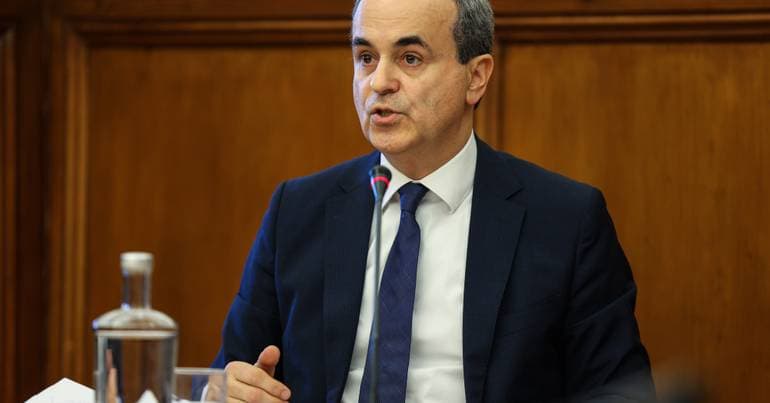
Joaquim Miranda Sarmento is Portugal’s Finance Minister who gave a hearing before the Budget, Finance and Public Administration Committee about fiscal measures affecting housing. His remarks matter to expats because finance ministry decisions — like exemptions and public guarantees for young homebuyers — influence the property market, taxes and programmes that can affect housing affordability.
The European Investment Bank (Banco Europeu de Investimento or BEI) is the lending arm of the European Union, owned by its member states. It provided €1.9 billion in financing to Portugal in 2023, focusing on sustainable transport and energy projects. Residents interested in Portugal's economic development should note its role in funding large-scale public and private infrastructure.
Nadia Calviño is the President of the European Investment Bank (EIB), a role she assumed in January 2024. Before leading the EIB, she was Spain's First Vice President and Minister for Economy and Digital Transformation. Those following European economic policy should note her influence on how the EU funds climate and infrastructure projects in the euro area.

The government is set to approve changes to tenancy laws (Lei do Arrendamento) this Thursday to expedite judicial decisions for non-payment of rent. The measures, led by Minister of Infrastructure and Housing Miguel Pinto Luz, aim to restore landlord confidence and bring thousands of vacant properties back to the market. Tenants should note that while the reform targets persistent non-payment, the government has stated it will include protections for vulnerable residents.
Update: New rules for undivided inheritances and evictions
The Council of Ministers (Conselho de Ministros) has approved three bills to resolve impasses in undivided inheritances (heranças indivisas) and speed up evictions for rent arrears. Minister of the Presidency (Ministro da Presidência) António Leitão Amaro explained that after two years of an inheritance being accepted, a single heir can now initiate a property sale to prevent one person from blocking the process. The government will consult Parliament next week, aiming to finalize the laws by the end of the month.
Miguel Pinto Luz is Portugal's Minister of Infrastructure. On Feb 24, 2026 he told journalists in Viseu that works on the A1 motorway in the Coimbra area would be fully completed and traffic restored to four lanes by the end of that week.
The Lei do Arrendamento (Leasing Law) is the primary legal framework governing rental agreements in Portugal. Recent government updates aim to speed up evictions for non-payment while maintaining protections for vulnerable residents to encourage more property owners to enter the rental market. Tenants should note that these changes may affect notice periods and dispute resolution processes.
The Council of Ministers (Conselho de Ministros) is Portugal’s national cabinet where the prime minister and ministers meet to approve government decisions, laws and emergency measures. In crises it can decide on declarations such as a state of calamity and the measures that follow; those decisions are then published in the Diário da República. Residents should note that a Council declaration can unlock national aid, resources and civil protection support for affected municipalities.
António Leitão Amaro is Portugal's Minister of the Presidency (Ministro da Presidência) in the government led by Luís Montenegro. He is a key figure in the Social Democratic Party (Partido Social Democrata or PSD) and often is the government's spokesperson. Those following housing and rental policy should note his role in announcing the June 2024 measures regarding evictions and inheritances.

The government has approved a 4.3 million euro expenditure to equip police forces with 1,500 new tasers this year. The non-lethal electric weapons will be distributed between the Public Security Police (Polícia de Segurança Pública or PSP) and the National Republican Guard (Guarda Nacional Republicana or GNR). The Ministry of Internal Administration (Ministério da Administração Interna) stated the move aims to improve operational effectiveness and safety for officers. Residents should note that the rollout is planned for 2026.

The PSP (Polícia de Segurança Pública) is Portugal's national civilian police force, founded in 1867. Responsible for defending Republican democracy and safeguarding internal security and citizens' rights, the PSP polices major cities—Lisbon, Porto, Faro—and large urban areas, covering only 4% of Portugal's territory but roughly half the population. Led by a National Director under the Ministry of Internal Affairs, its approximately 21,500 officers handle preventive policing, crime investigation, public order, airport security, diplomatic protection, private security regulation, firearms licensing, and border control (since 2023).
PSP vs. GNR: The PSP is civilian with police-focused training and urban jurisdiction, while the GNR (Guarda Nacional Republicana) is military (gendarmerie) with military training, covering 96% of Portugal's rural and suburban territory. Both share core public safety missions but differ fundamentally in nature, training, and geographic responsibility.

The GNR (Guarda Nacional Republicana) is Portugal's national gendarmerie—a military police force founded in 1911, with origins dating to 1801. With over 22,600 personnel, GNR patrols 94-96% of Portuguese territory, covering rural areas, medium towns, and highways. Members are military personnel subject to military law, responsible for public order, customs, coastal control, environmental protection (SEPNA), firefighting/rescue (GIPS), border control, and ceremonial guards. GNR vs. PSP: The PSP (Polícia de Segurança Pública) is Portugal's civilian police force, covering major cities (Lisbon, Porto, Faro) and large urban areas—only 4% of territory but roughly half the population. PSP handles airport security, diplomatic protection, and private security regulation. Both share core missions (public order, crime prevention), but differ in nature: GNR is military with military training; PSP is civilian with police-focused training.

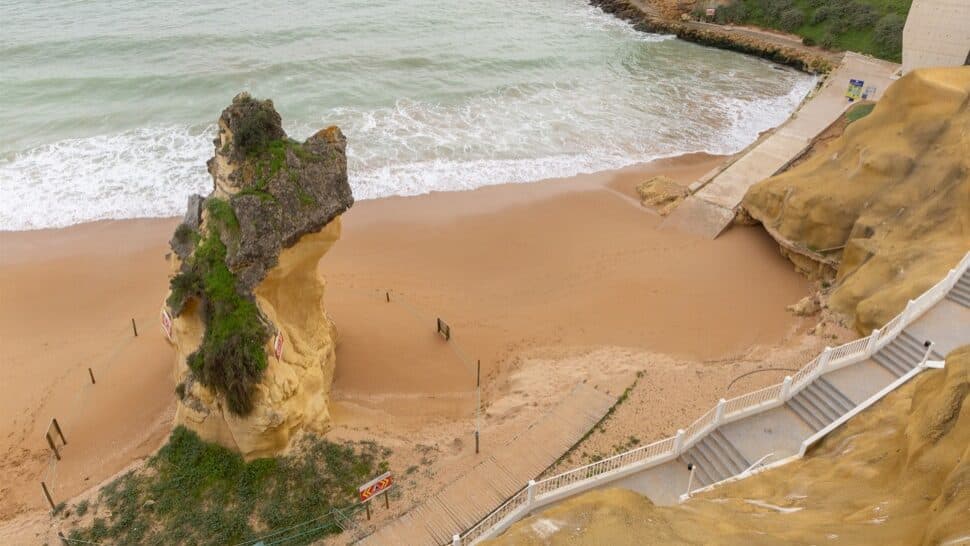
A new report from the Portuguese Environment Agency (Agência Portuguesa do Ambiente or APA) reveals that 35 beaches in the Algarve suffered significant erosion during recent winter storms. Peneco beach in Albufeira saw the most dramatic change, with the shoreline retreating by 24 meters. The agency also warned of increased cliff instability across the region due to the severe weather. Algarve residents should be aware of potential safety hazards and restricted access at affected coastal sites this spring.
APA is the Portuguese Environment Agency (Agência Portuguesa do Ambiente), the national authority that evaluates environmental impacts, enforces environmental law and issues licences or opinions on projects. Its opinions—such as the recent unfavourable view on the Lagoa Salgada mine—carry weight in permitting decisions and can delay or block projects that threaten water or other natural resources.

A parliamentary committee has approved expanding the right to be forgotten (direito ao esquecimento) to include patients with diabetes, HIV, cancer, and hepatitis C. The law ensures that individuals who have recovered or are managing these conditions face the same conditions as others when applying for bank credit or insurance. The proposal, originally from the Socialist Party (Partido Socialista), aims to end discrimination in financial services based on medical history. Those with chronic conditions should note that these changes will take effect once the final law is published.

Socialist Party (PS)
Portugal's other traditional major party suffered a historic collapse in the 2025 election, dropping from 78 to 58 seats and falling to third place for the first time in democratic history. The party was led by Pedro Nuno Santos from January 2024 until his resignation following the May 2025 defeat. José Luís Carneiro, a 53-year-old former Minister of Internal Administration known for his moderate positioning within the party, was elected unopposed as the new Secretary-General with 95% of votes in June 2025. The Socialist Party governed Portugal from 2015 to 2024, including an absolute majority from 2022 to 2024 under António Costa, who resigned in November 2023 amid a corruption investigation. The PS previously led the innovative "Geringonça" (contraption) coalition government from 2015-2019, a minority government supported by the Left Bloc and Portuguese Communist Party that reversed austerity measures and presided over economic recovery.
The right to be forgotten (direito ao esquecimento) is a legal protection that prevents banks and insurance companies from using a person's past medical history, such as cancer or HIV, to deny credit or insurance. In Portugal, this right typically applies ten years after the end of treatment for adults, or five years if the illness occurred before age 21. Residents seeking life insurance or mortgages after recovering from serious illness should be aware of these protections.

Most political parties have criticized a proposal by Chega to require five years of legal residency before immigrants can access social benefits. Critics argue the bill is likely unconstitutional and discriminates against legal residents who contribute to the social security system. The proposal has united both left and right-leaning parties in opposition during parliamentary discussions. Residents awaiting residency should note that the bill faces significant legal and political hurdles and is unlikely to pass in its current form.

Chega ("Enough") is a Portuguese far-right populist party founded in 2019 by André Ventura. It positions itself as an anti-establishment movement against what it calls a "rotten and corrupt system" of PS-PSD dominance. The party surged from 1.3% in 2019 to 22.8% in May 2025, becoming parliament's second-largest force with 60 seats. Chega's core platform emphasizes strict immigration control—ending automatic CPLP residency, deporting non-independent immigrants, implementing job-market quotas, and requiring five-year social security contributions before benefit access. It advocates radical constitutional reform, including reducing parliament to 100 members, abolishing the prime minister position for a presidential system, and dismantling public healthcare. Law-and-order policies include life imprisonment and chemical castration proposals.
The party is defined by inflammatory anti-Romani rhetoric, with Ventura convicted multiple times for discrimination. Chega maintains international alignments with European far-right figures including Marine Le Pen, Santiago Abascal, and Matteo Salvini. Mainstream Portuguese parties, including Prime Minister Luís Montenegro's government, have imposed a cordon sanitaire, refusing coalition with Chega despite its parliamentary strength.
The Portuguese government has extended the temporary protection (proteção temporária) regime for Ukrainian refugees for another year. Minister of the Presidency António Leitão Amaro confirmed that the 60,000 Ukrainians currently in Portugal under this status will remain protected until March 4, 2027. The decision recognizes the high level of integration of the Ukrainian community since the start of the conflict. Visa holders should note that this extension is automatic and maintains their current residency rights.

The National Association of Portuguese Municipalities (Associação Nacional de Municípios Portugueses or ANMP) has rejected claims by Minister of Territorial Cohesion Manuel Castro Almeida, who blamed local councils for delays in housing reconstruction support. Mayors from heavily affected areas like Leiria and Alcácer do Sal argue the government has not yet provided the necessary funds for distribution. Residents awaiting storm repair subsidies should note that the dispute centers on whether local or central authorities are responsible for the slow validation of applications.
Manuel Castro Almeida is Portugal's Minister of Economy and Social Cohesion, a role cited in the article. On 17 February in Sobral de Monte Agraço he said over 4,000 companies had requested storm support totaling nearly €1 billion, figures tied to recent severe weather damage.
The National Association of Portuguese Municipalities (Associação Nacional de Municípios Portugueses or ANMP) is the umbrella group that represents Portugal’s 308 municipalities in talks with the central government. It negotiates funding, shared services and decentralisation plans—for example, it has been involved in the recent agreement to create a commission and a fund to transfer about 4,000 kilometres of roads to municipal control—so local services and road maintenance may shift to town councils that residents deal with directly.