

18 May 2026 – 24 May 2026
Portugal Weekly: Political Tensions Rise Amid Migration and Labor Disputes
This week saw mounting political friction as the government faces criticism over storm responses and labor reforms, while migration issues dominate headlines following a surge in sham marriage investigations and repatriation delays. Meanwhile, public safety concerns were highlighted by a tourist boat rescue in Benagil and a distressing case of child abandonment near Alcácer do Sal.
French couple remanded in custody after abandoning children
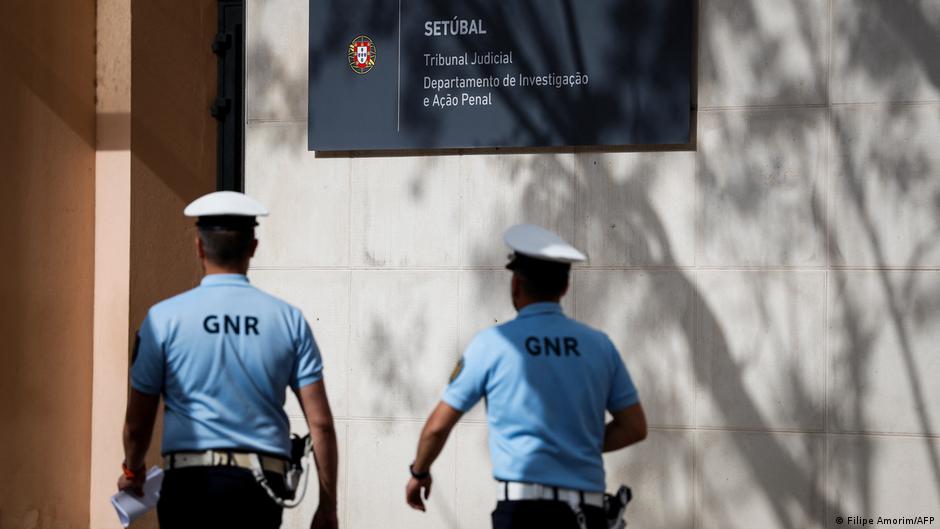
A Portuguese court has ordered the preventive detention of a French mother and her partner after they allegedly abandoned her two young sons on a roadside near Alcácer do Sal. The couple, identified as Marine Rousseau and Marc Ballabriga, face charges of aggravated abandonment, with the stepfather also accused of physical assault. The children are currently in the care of Portuguese authorities while the legal process determines if the parents will be tried in Portugal or extradited to France.
Update: Stepfather filmed assaulting child in café
New evidence has emerged in the case, including footage from a local café showing the stepfather assaulting one of the young children. This discovery has strengthened the charges of qualified physical assault against him as the couple remains in pre-trial detention.
Preventive detention (prisão preventiva) is a court-ordered measure that keeps a suspect in custody before trial when a judge decides there is a real risk they might flee, tamper with evidence, or pose a danger to others. It is temporary and not a conviction; in the recent case five of the 37 alleged members were ordered to await the investigation in preventive detention by the Central Criminal Investigation Court. Those detained should request a lawyer and can seek consular assistance if they are foreign nationals, while family or lawyers can ask the court to review or lift the measure.

Legal challenges against expulsion orders rise in Lisbon
The number of new lawsuits challenging expulsion orders, voluntary departure requests, and residence permit denials reached its highest level in Lisbon this April since at least January 2025. Data from the Superior Council of Administrative and Tax Courts (Conselho Superior dos Tribunais Administrativos e Fiscais or CSTAF) indicates a growing trend in legal disputes involving the Agency for Integration, Migration and Asylum (Agência para a Integração, Migrações e Asilo or AIMA).
Update: Record number of legal challenges filed in Lisbon
Administrative courts recorded 496 new cases in April alone, bringing the total number of pending residency-related disputes to 2,271. This surge follows a review process by AIMA that resulted in a high volume of permit rejections, prompting the establishment of a judicial task force to address the growing backlog.
Temporary residence is a limited residence permit that allows non‑EU nationals to live in Portugal for a set period (commonly one year, renewable) for study, work or other reasons. The Agência para a Integração, Migrações e Asilo (AIMA) launching an online form means eligible students who also work can apply or regularise their status more easily through AIMA’s process rather than only via consular services.
The CSTAF (Conselho Superior dos Tribunais Administrativos e Fiscais) is the governing body responsible for the management and discipline of judges within Portugal's administrative and tax courts. It ensures the independence and proper functioning of these specialized courts, which handle disputes between citizens and the state or tax authorities.
Twelve rescued after tourist boat capsizes in Benagil
Twelve people were rescued from the Benagil caves in Lagoa on Saturday after their tourist boat capsized for unknown reasons. The National Maritime Authority (Autoridade Marítima Nacional or AMN) coordinated the operation with local kayak operators and other maritime-tourism vessels. Two of the rescued individuals sustained minor injuries and were transported to the Portimão Marina for medical assistance.
The AMN (Autoridade Marítima Nacional) is the national maritime authority responsible for coastal surveillance, search and rescue operations, and enforcing maritime safety laws in Portugal. It operates under the Ministry of National Defense and works closely with the Portuguese Navy to manage safety at sea and on beaches.
Left-wing parties call for rejection of labour package
Leaders from the Left Bloc (Bloco de Esquerda or BE) and the Portuguese Communist Party (Partido Comunista Português or PCP) have strongly criticized the government's proposed labour legislation. BE coordinator José Manuel Pureza and PCP secretary-general Paulo Raimundo described the package as a threat to workers' rights and called for participation in a general strike scheduled for June 3. Both parties argue that the current government narrative is an illusion and that the proposed changes will increase precariousness.
José Manuel Pureza is the national coordinator of the Left Bloc (Bloco de Esquerda), the party quoted in the story. In the article he is cited criticizing the president’s stance on the labour package, so his comments reflect the party’s public position on that policy.
PS leader criticizes government response to storms
Socialist Party (Partido Socialista or PS) leader José Luís Carneiro has accused the government of negligence in its response to severe storms that impacted the country earlier this year. His comments follow a report from the Presidency of the Republic, which highlighted failures in coordination and planning during the crisis. The report outlines eleven strategic lessons to improve future responses to extreme weather events.
José Luís Carneiro is a Portuguese politician and member of the Socialist Party (Partido Socialista or PS). He served as the Minister of Internal Administration (Ministro da Administração Interna) from 2022 to 2024 and currently holds a seat in the Assembly of the Republic (Assembleia da República).
Health cards are private membership or discount schemes sold by companies that offer access to consultations, tests or reduced fees at private clinics; they are not the public health service. The Socialist Party (Partido Socialista or PS) has proposed regulation to increase transparency and protect consumers from misleading marketing or unexpected charges.
PSP halts migrant repatriations due to funding shortages
The Public Security Police (Polícia de Segurança Pública or PSP) has postponed migrant repatriation flights due to a lack of funds. The national leadership of the police force cited administrative constraints for the delays, while the Independent Union of Police Agents (Sindicato Independente de Agentes de Polícia or SIAP) also noted broader training and operational issues within the force.

The PSP (Polícia de Segurança Pública) is Portugal's national civilian police force, founded in 1867. Responsible for defending Republican democracy and safeguarding internal security and citizens' rights, the PSP polices major cities—Lisbon, Porto, Faro—and large urban areas, covering only 4% of Portugal's territory but roughly half the population. Led by a National Director under the Ministry of Internal Affairs, its approximately 21,500 officers handle preventive policing, crime investigation, public order, airport security, diplomatic protection, private security regulation, firearms licensing, and border control (since 2023).
PSP vs. GNR: The PSP is civilian with police-focused training and urban jurisdiction, while the GNR (Guarda Nacional Republicana) is military (gendarmerie) with military training, covering 96% of Portugal's rural and suburban territory. Both share core public safety missions but differ fundamentally in nature, training, and geographic responsibility.

Sham marriage investigations reach record high
The Judiciary Police (Polícia Judiciária or PJ) opened a record 177 investigations into sham marriages in 2025, a significant increase from previous years. Authorities report that the rise follows the 2024 abolition of the expression of interest mechanism, which previously allowed foreign nationals to obtain residency through tax contributions. Criminal networks are reportedly recruiting vulnerable Portuguese individuals via social media to participate in these fraudulent unions.

The PJ (Polícia Judiciária) is Portugal's national criminal investigation police agency, founded in 1945. Operating under the Ministry of Justice and supervised by the Public Ministry (prosecutors), the PJ is a "higher criminal police body" specializing in serious and complex crimes. Mission: The PJ assists judicial and prosecuting authorities by investigating terrorism, organized crime, homicide, kidnapping, drug trafficking, corruption, cybercrime, financial crime, and money laundering. It conducts forensic examinations, operates Portugal's Interpol and Europol liaison offices, and maintains specialized units including the National Counterterrorism Unit and National Anti-Corruption Unit. Difference from PSP/GNR: While PSP (civilian urban police) and GNR (military rural police) focus on preventive policing, public order, and investigating minor crimes, the PJ exclusively handles serious crime investigation requiring specialized technical and scientific expertise. PSP and GNR report to the Ministry of Internal Affairs; PJ reports to the Ministry of Justice. PJ officers receive higher pay and prestige but face greater operational risk.

Banking unions reject 2% salary increase proposal
Banking unions, including Mais, SBN, and SBC, have expressed outrage at the banking sector's insistence on a 2% salary increase for this year. The unions, affiliated with the General Workers' Union (União Geral de Trabalhadores or UGT), labeled the offer as insensitive given the record profits reported by the country's five largest banks. They have warned of potential industrial action if the proposal is not improved.

The General Union of Workers (UGT – União Geral de Trabalhadores) is one of Portugal’s two main national trade union confederations. Founded in Lisbon on 28 October 1978, it was created as a social‑democratic alternative to the more communist‑aligned CGTP after the 1974 Revolution, grouping unions close to the Socialist Party and moderate centre‑right currents.
UGT represents around 400,000 workers and is affiliated to the European Trade Union Confederation and International Trade Union Confederation, giving Portuguese labour a voice at EU and global level. Its principles stress union independence from the state, employers, churches and parties, internal democracy and active worker participation.
Historically, UGT’s hallmark has been “propositive” social dialogue: it is usually more willing than CGTP to sign tripartite agreements on wages, labour law and social policy with governments and employers, shaping minimum wage increases, working‑time rules and social protection reforms. This makes UGT a key centrist actor in Portugal’s industrial relations, often mediating between left and right while defending collective bargaining and incremental improvements to labour rights.

Montenegro reaffirms no governing deals with Chega or PS
Prime Minister Luís Montenegro has submitted his strategy motion for re-election as leader of the Social Democratic Party (Partido Social Democrata or PSD), explicitly ruling out any governing agreements with the Socialist Party (Partido Socialista or PS) or the Chega party. Montenegro stated that his commitment to 'no means no' regarding Chega is equivalent to his rejection of a grand coalition with the PS, while dismissing the need for 'sanitary cordons' in Parliament.
Update: Montenegro eyes absolute majority while challenging opposition
In his bid for re-election, Luís Montenegro stated he is aiming for an absolute majority in future elections. He warned that he will force opposition parties to reveal their true positions when voting on state reforms, criticizing those who call for change but resist it in practice.

- Prime Minister, Portugal: 2024 - Present
- Party: Social Democratic Party (PSD)
Luís Filipe Montenegro Cardoso de Morais Esteves (born February 16, 1973, in Porto) is a Portuguese lawyer and center‑right politician who has served as Prime Minister of Portugal since April 2, 2024. A long‑time member of the Social Democratic Party (PSD), he is the leading figure of the post‑Troika generation of Portuguese conservatives. Montenegro was elected to the Assembly of the Republic in 2002 for the Aveiro district and remained an MP for 16 years, becoming PSD parliamentary leader from 2011 to 2017 during the bailout and austerity period under Prime Minister Pedro Passos Coelho. He was a prominent defender of strict austerity measures, arguing in 2014 that “the life of the people is no better, but the life of the country is a lot better,” a phrase that has followed his public image since. After an unsuccessful leadership bid against Rui Rio in 2020, Montenegro won the PSD leadership in 2022. He then forged the centre‑right Democratic Alliance (PSD–CDS‑PP and allies), which won a plurality of seats in the 2024 legislative election. Refusing to partner with the far‑right Chega, which he has called “often xenophobic, racist, populist and excessively demagogic,” he formed a minority government as head of the XXIV Constitutional Government on April 2, 2024. His first government fell in March 2025 after a no‑confidence vote linked to a conflict‑of‑interest affair, but fresh elections saw the Democratic Alliance increase its seat share, allowing Montenegro to return as prime minister leading the XXV Constitutional Government. His importance to Portugal lies in attempting to re‑center the traditional centre‑right after the crisis years, defending liberal‑conservative economics and EU alignment while drawing a sharp line against formal cooperation with the radical right, thus shaping how Portuguese democracy manages its new multi‑party era.

- Leader: Luís Montenegro (Prime Minister)
- Ideology: Liberal conservatism, pro-Europeanism
- Coalition: Social Democratic Party (PSD) + CDS–People's Party (CDS-PP)
The Democratic Alliance (Aliança Democrática, AD) is a center-right coalition primarily composed of the Social Democratic Party (PSD) with 89 seats and the CDS–People's Party (CDS-PP) with 2 seats. Together, they form the current minority government under Prime Minister Luís Montenegro.
The PSD, despite its name, occupies the center-right of Portugal's political spectrum and has been one of Portugal's two dominant parties since 1974, having formed nine governments including four with absolute majorities. The CDS-PP is a smaller Christian democratic party that has historically been the PSD's coalition partner.
The AD coalition governs without a parliamentary majority, requiring case-by-case support from opposition parties to pass legislation. The coalition has imposed a cordon sanitaire against Chega, refusing formal cooperation with the far-right despite its parliamentary strength, which means it must negotiate with the PS or smaller parties to advance its legislative agenda.

André Ventura, born January 15, 1983, is a lawyer, academic, and Portugal's most prominent far-right leader. He founded Chega ("Enough") in 2019 after his PSD mayoral campaign attacked the Romani community. Chega surged from 1.3% in 2019 to 22.8% in May 2025, becoming parliament's second-largest party and making Ventura Leader of the Opposition.
His platform emphasizes immigration restrictions, law-and-order policies, constitutional reform, and contains inflammatory anti-Romani rhetoric that has triggered multiple discrimination convictions and investigations. Politically classified as far-right by international media, Ventura cultivates alliances with European far-right figures including Marine Le Pen and Santiago Abascal.
French children found abandoned near Alcácer do Sal
Two young French brothers, aged three and five, were discovered alone on a road between Alcácer do Sal and Comporta after allegedly being left in a forest by their parents as part of a game. The children were taken to Setúbal Hospital for health checks and are currently under the care of the French embassy while the Public Ministry (Ministério Público) manages the case as an urgent judicial procedure.
The Ministério Público (Public Prosecution Service) is Portugal's independent state prosecution body, responsible for leading criminal investigations, bringing charges, and representing the public interest in court.
The MP operates autonomously from the government and the police, though it directs criminal investigations carried out by the Polícia Judiciária, PSP, and GNR. It is led by the Procurador-Geral da República (Attorney General), who is appointed by the President on the government's proposal.
The MP gets involved in high-profile cases including corruption, financial crime, and incidents of potential institutional negligence. It also defends the legality of government actions and protects citizens' fundamental rights through the courts.

Stepfather and mother accused of abandoning children in Portugal
A stepfather and mother have been formally charged with child abandonment in Portugal.
Storm Kristin. BE accuses government of "incompetence"
The Left Bloc believes that the Open Presidency report reveals the Government's “incompetence” in managing Storm Kristin.

NHS medicine spending exceeds 4.4 billion euros
Expenditure on medicines by the National Health Service (Serviço Nacional de Saúde or SNS) reached 4.417 billion euros in 2025, an 11.7% increase compared to the previous year. Data from the National Authority of Medicines and Health Products (Autoridade Nacional do Medicamento e Produtos de Saúde or Infarmed) shows that spending has risen by over 60% since 2020. Additionally, state expenditure on sickness benefits (subsídio por doença) surpassed one billion euros for the first time last year.
ULS Alto Ave is the Alto Ave Local Health Unit (Unidade Local de Saúde do Alto Ave), a public body that runs hospitals and some primary-care services for the Ave area in northern Portugal. It is part of the National Health Service (Serviço Nacional de Saúde or SNS), and recent staff strikes have affected overtime and complementary work, so residents should check local hospital notices before visiting.
Infarmed (Autoridade Nacional do Medicamento e Produtos de Saúde) is Portugal’s national regulator for medicines and health products that approves drugs, monitors safety and enforces rules on pricing and reimbursement. In 2025 it approved 928 new medicines — 79% were generics, 38 were designated essential and 236 were national products — which affects which medicines are available and how much they cost at pharmacies.
